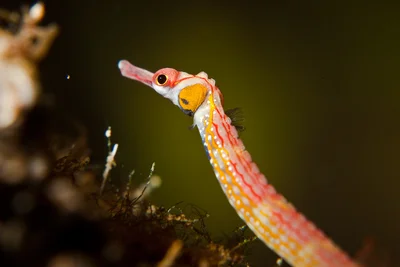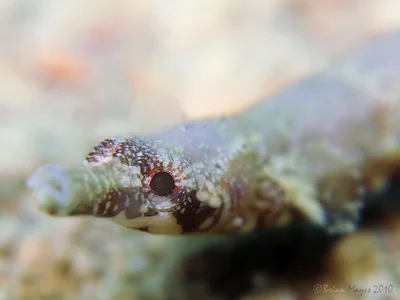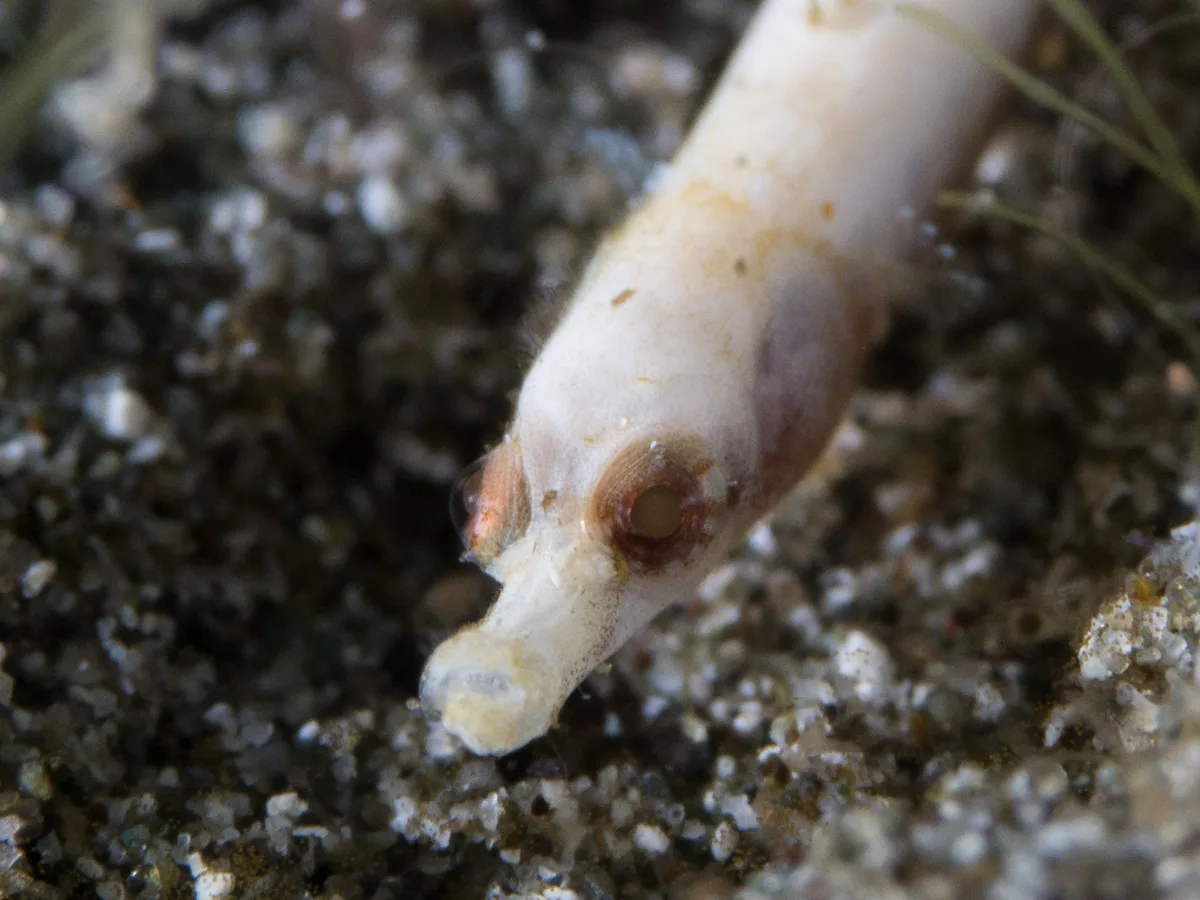
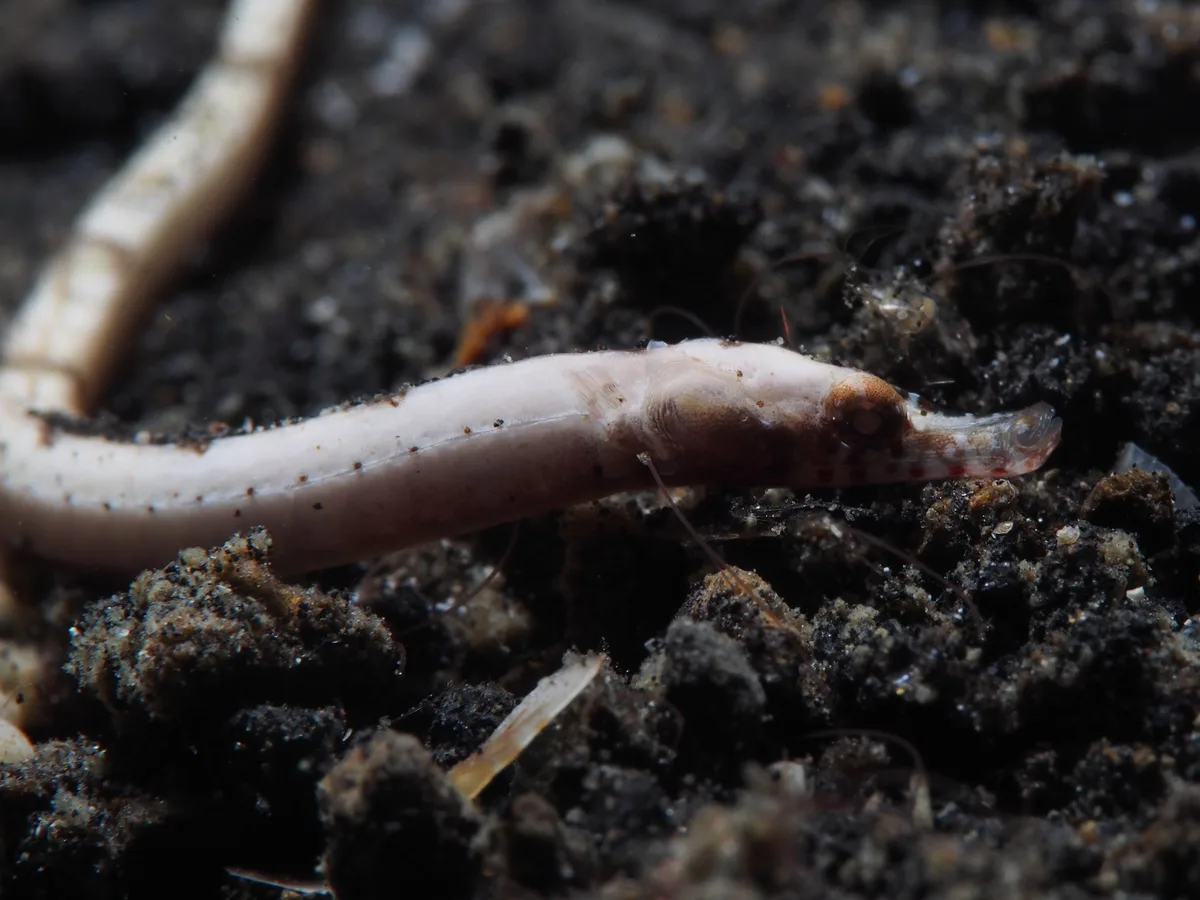
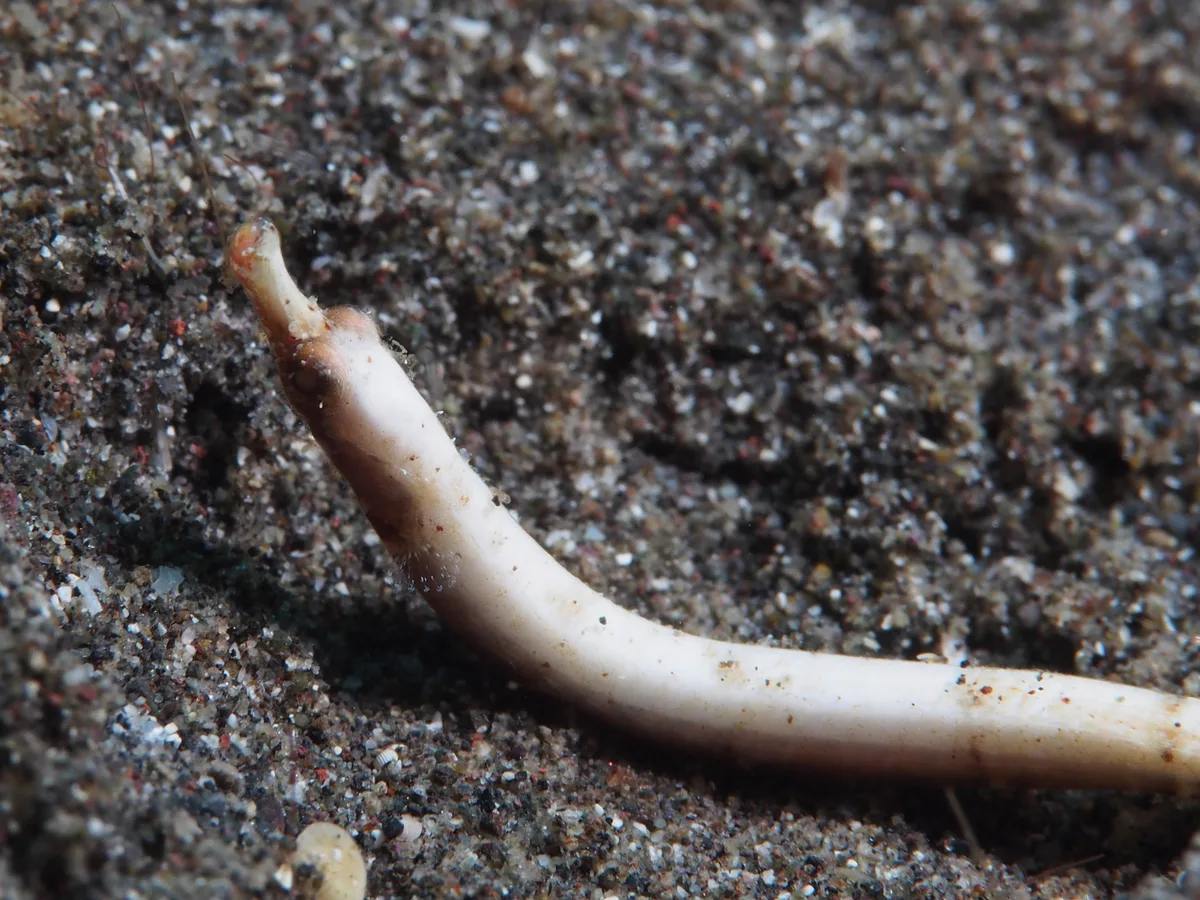
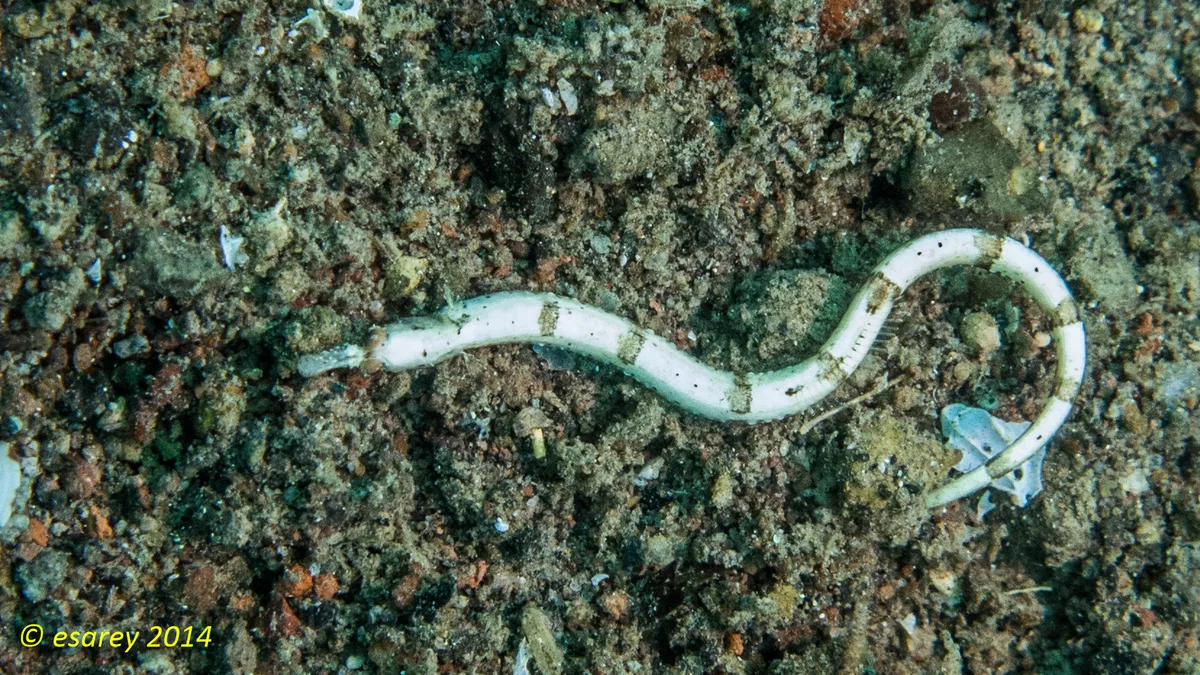
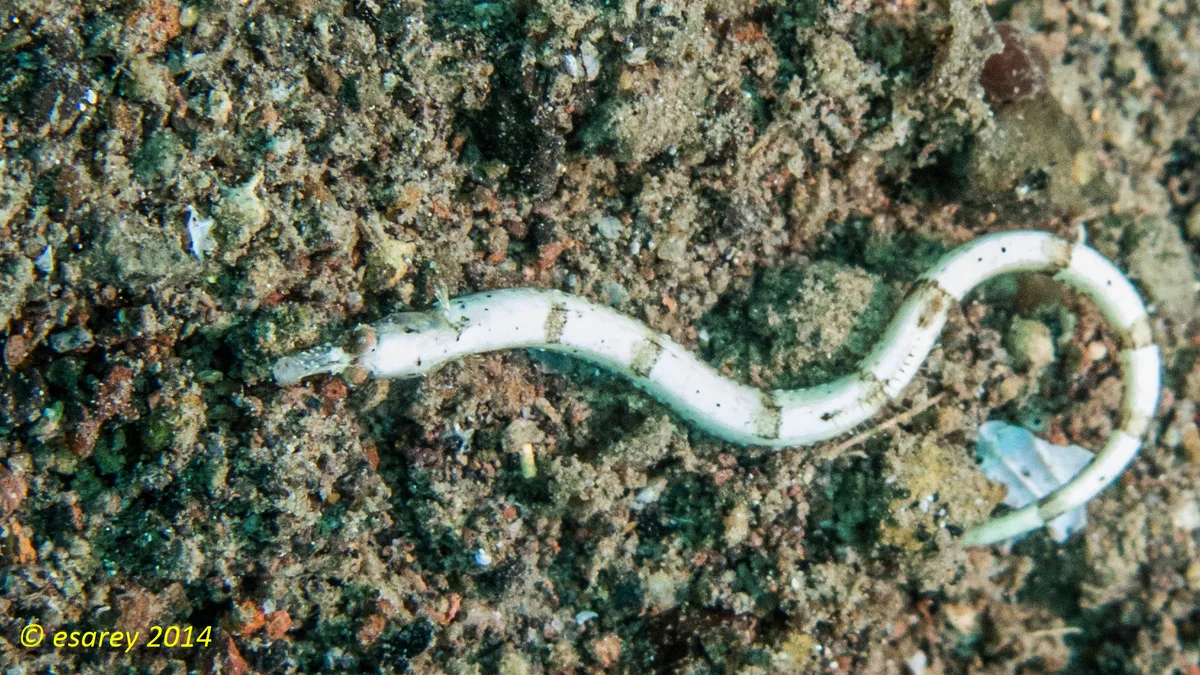
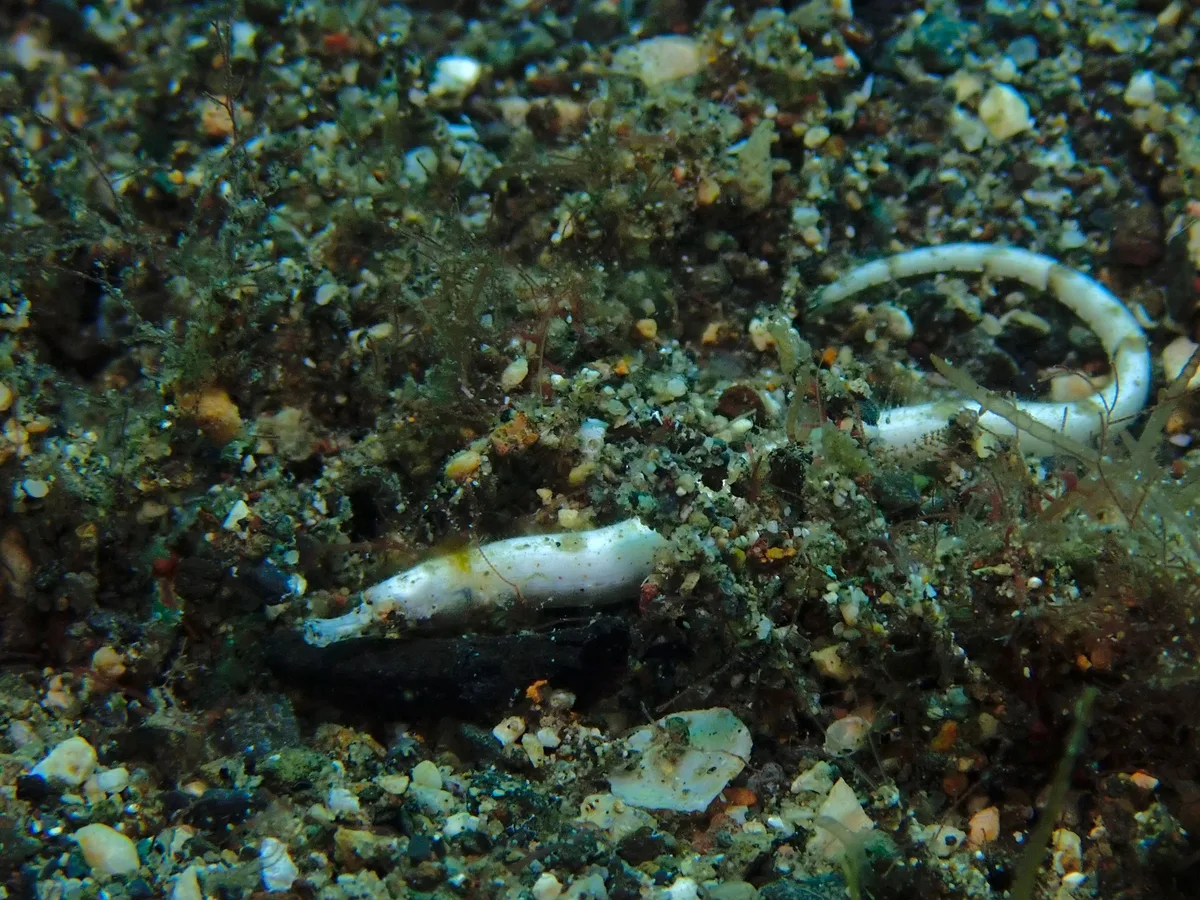
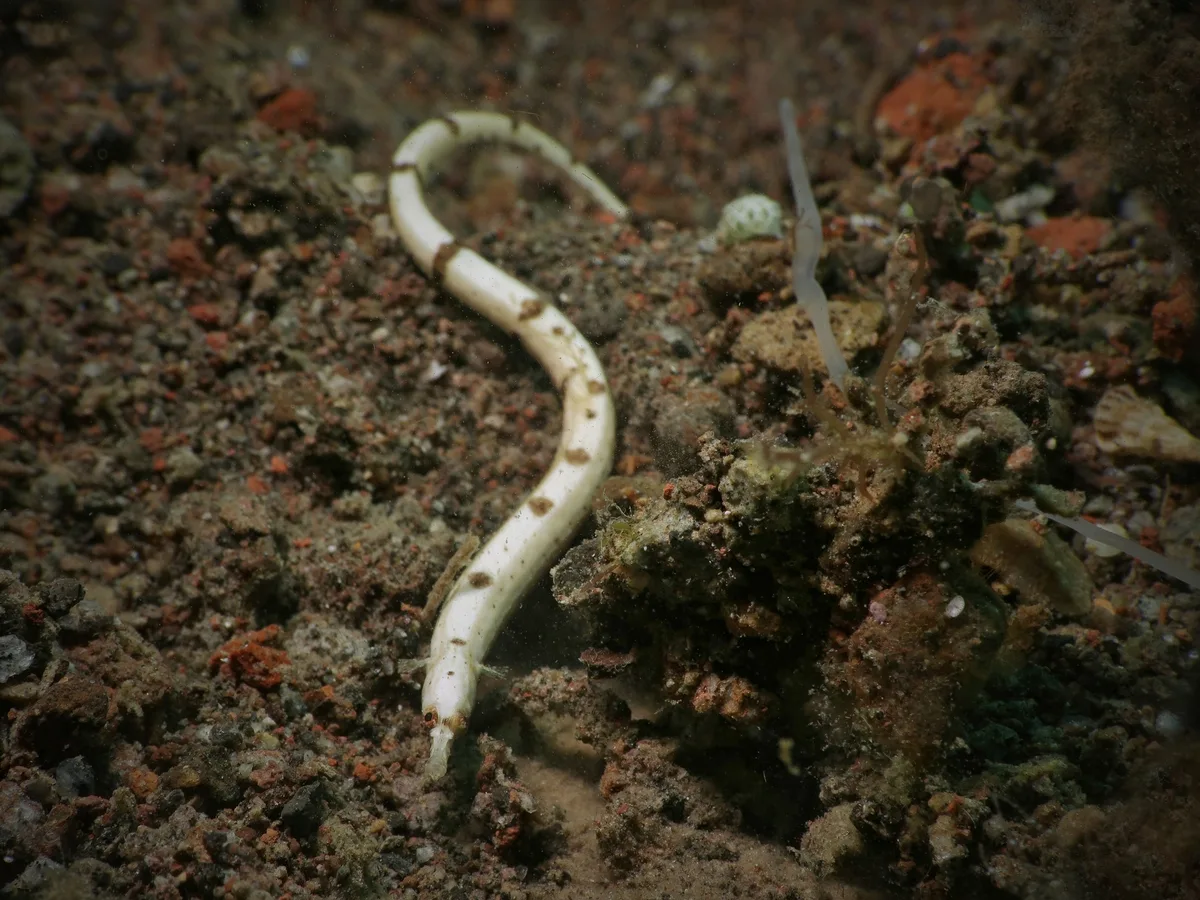
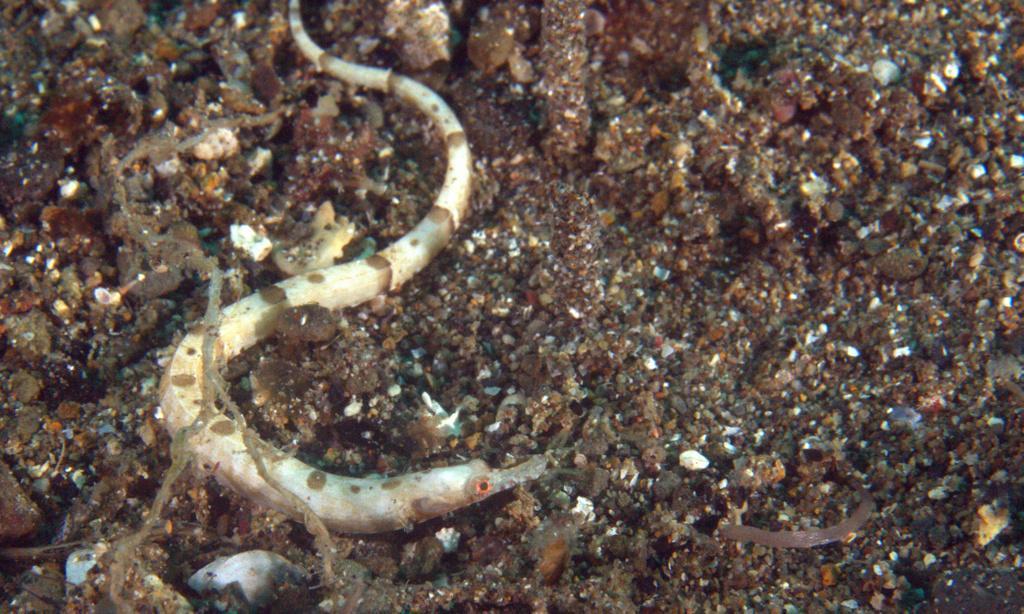
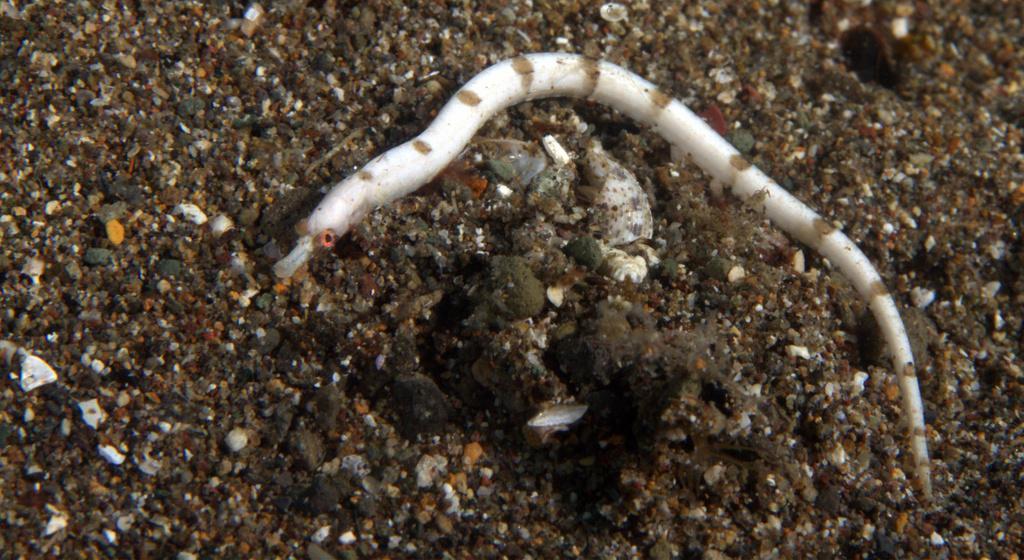
Six centimeters (2.4 in) - barely longer than a matchstick and about as thick, lying against sponge or deep in rubble.
Fish this small are found in one of two ways: by somebody working a patch of reef with a torch and a magnifier for an hour, or by rubble being collected and sorted in a laboratory. Both are how the small end of a reef fauna gets described at all, and it is why the species lists of well-studied reefs keep growing without anyone finding anything large.
It eats copepods and amphipods, one at a time, through the family's pipette snout - at this size, a single copepod is a meaningful meal.
The male carries the eggs. In a fish this small the clutch is a dozen or two, which is a reminder of the trade the whole family made: enormous parental care, very few young, and a population that recovers slowly from anything that goes wrong.
The genus. Cosmocampus Dawson 1979 - kosmos (ornament or decoration) + kampos (mythological sea monster). ETYFish
- tiny pipefish, barely longer than a matchstick
- pale with reddish blotches and a short blunt snout
- deep in rubble or against sponge, rarely in the open
- length up to 6 cm