
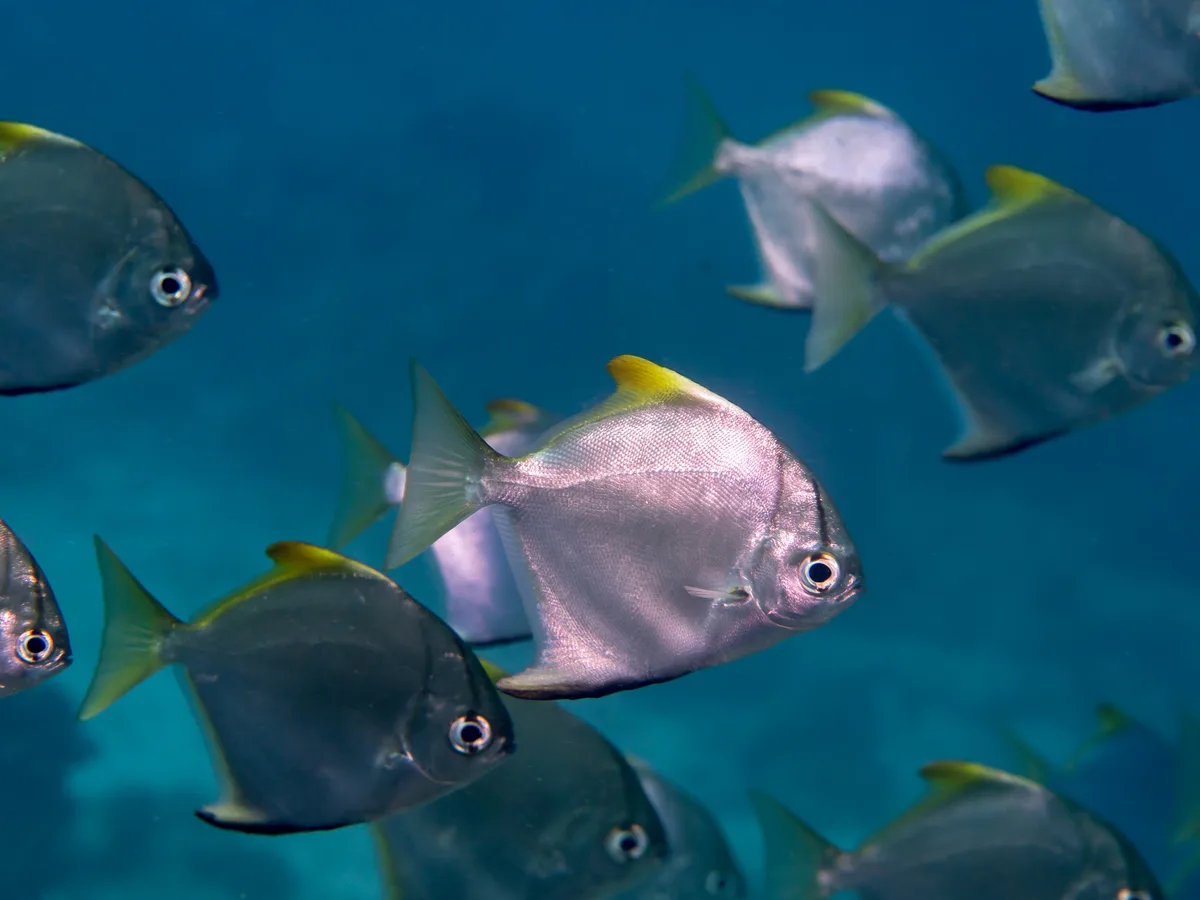
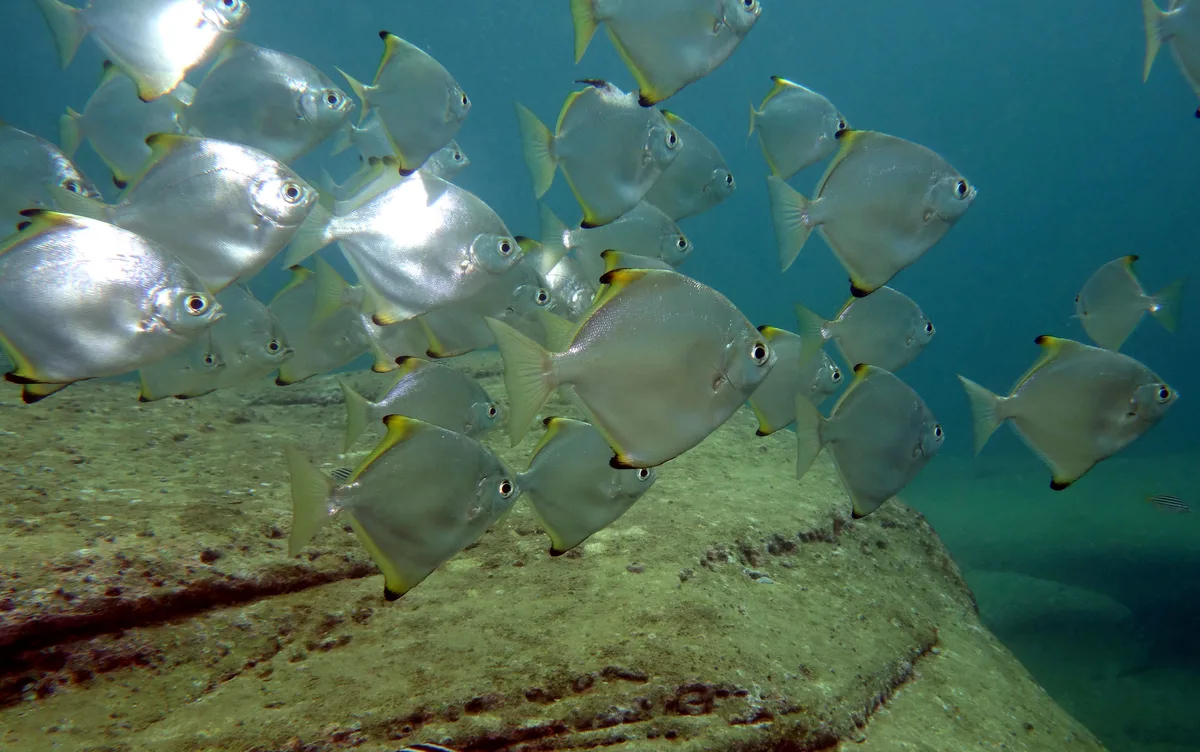
This fish can live in the sea, in brackish water and in fresh water, and it moves between them.
That is a harder trick than it sounds. A fish in seawater is constantly losing water to the sea and has to drink and excrete salt; a fish in fresh water is constantly taking water on and has to pump it out and hold salt back. The two situations require opposite settings of the same machinery, and most fish are locked into one of them. Species that can switch rebuild the function of their gill cells and their kidneys as they move, over hours to days.
What it buys here is the mangrove edge, and mangroves are why this fish is on this coast at all. The shallow brackish water among the roots is one of the safest places a small fish can be: the tangle keeps large predators out, the water is turbid, and food is abundant. Juveniles of a long list of reef species use it as a nursery and leave for the reef as adults.
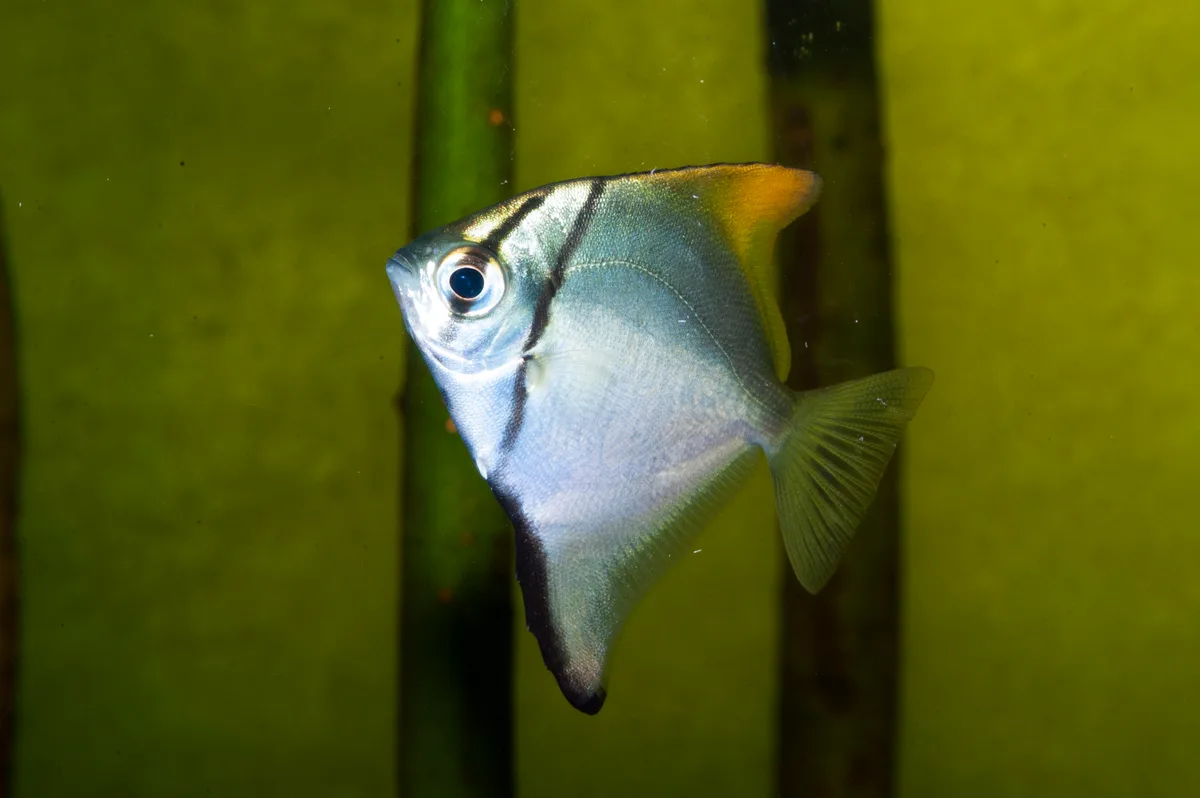
So look for it where the mangroves are, in schools of tall silver discs among the roots, rather than anywhere on the reef proper.
The genus. Monodactylus Lacepède 1801 - monos (one) + daktylos (finger). ETYFish
The species. Monodactylus argenteus (Linnaeus 1758) - silvery. ETYFish
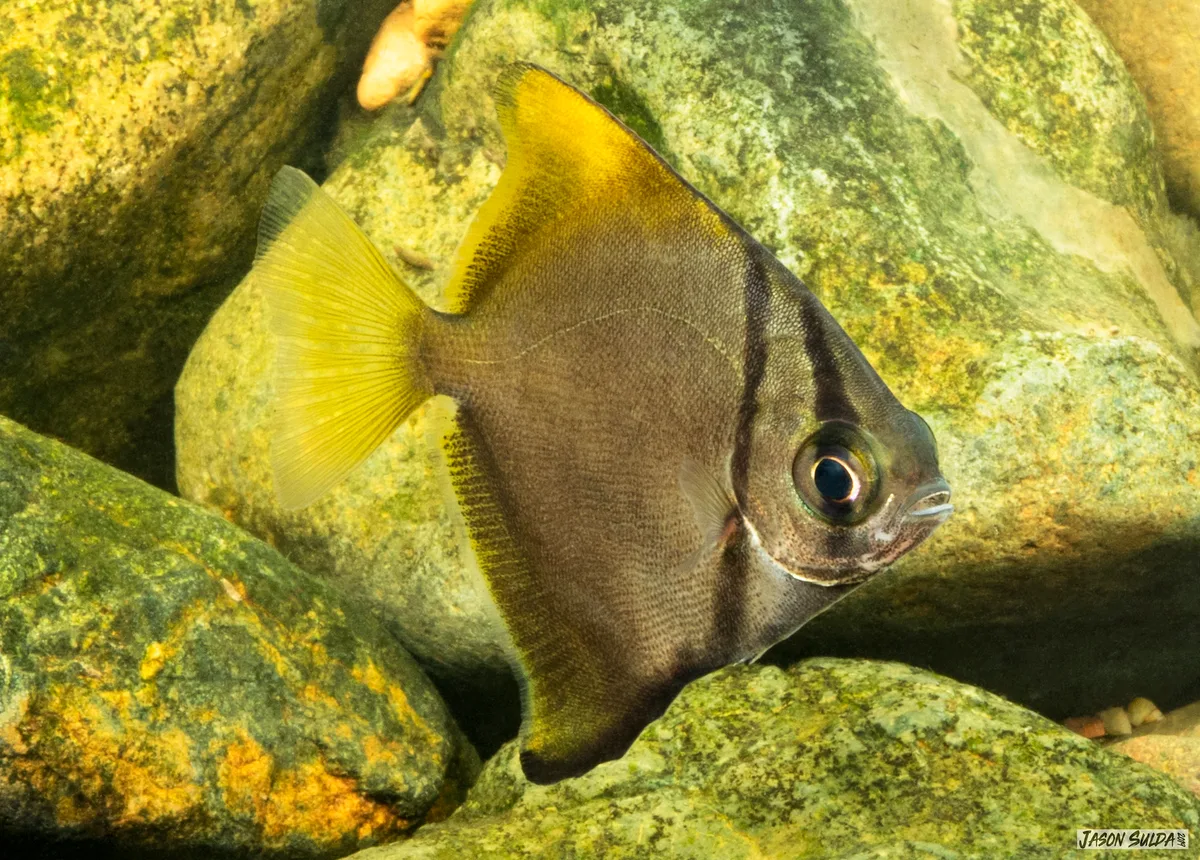
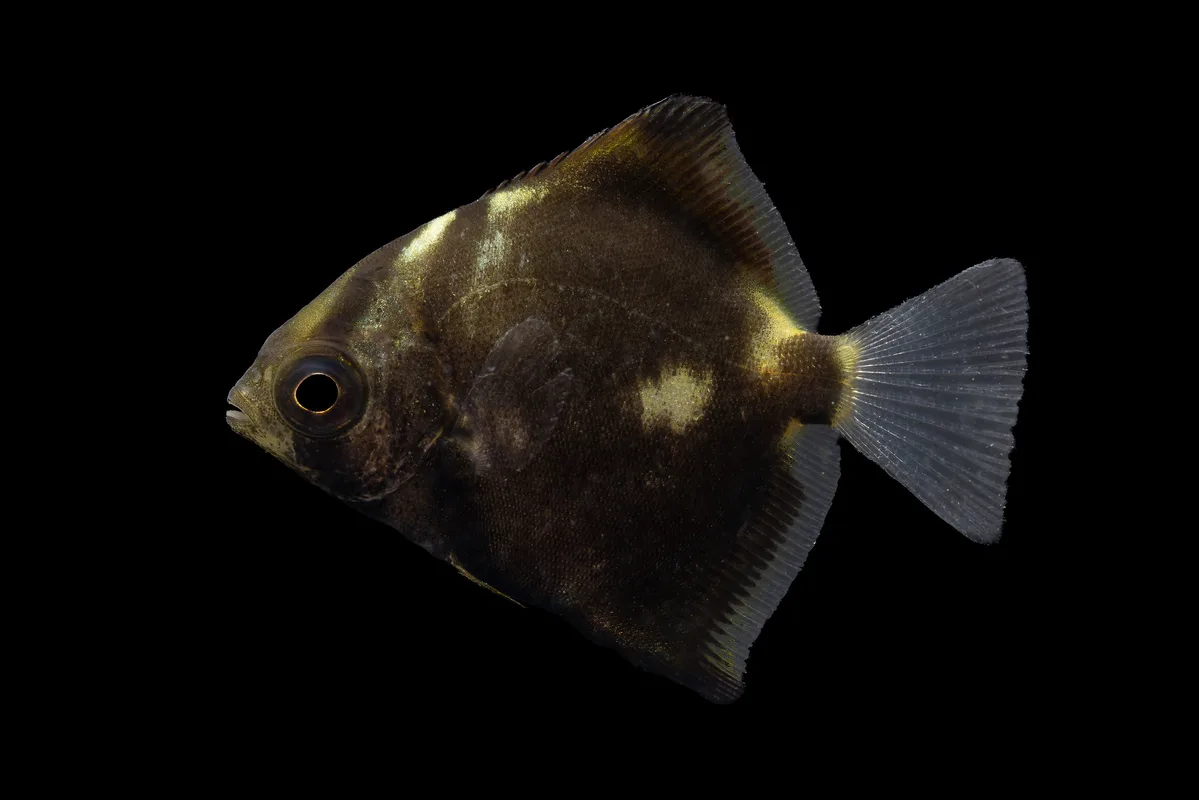
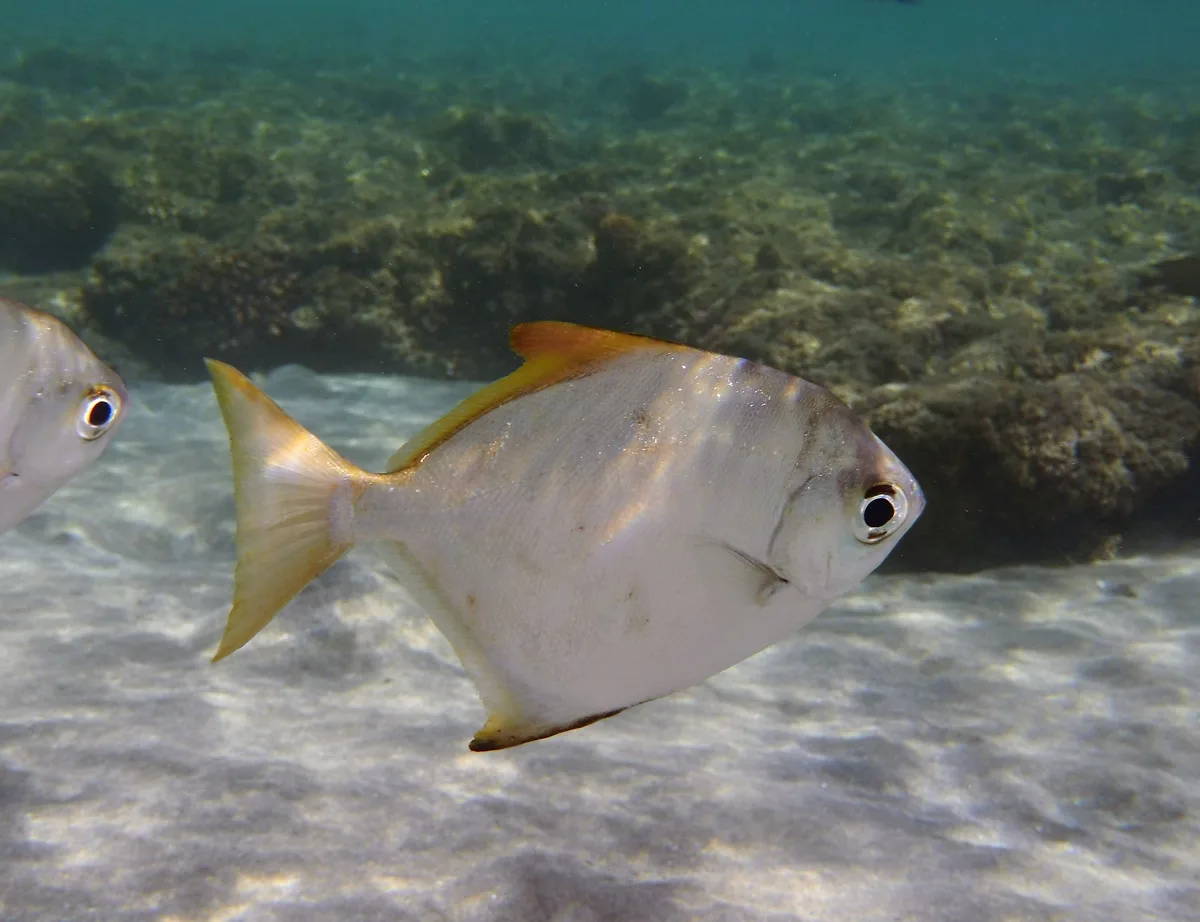
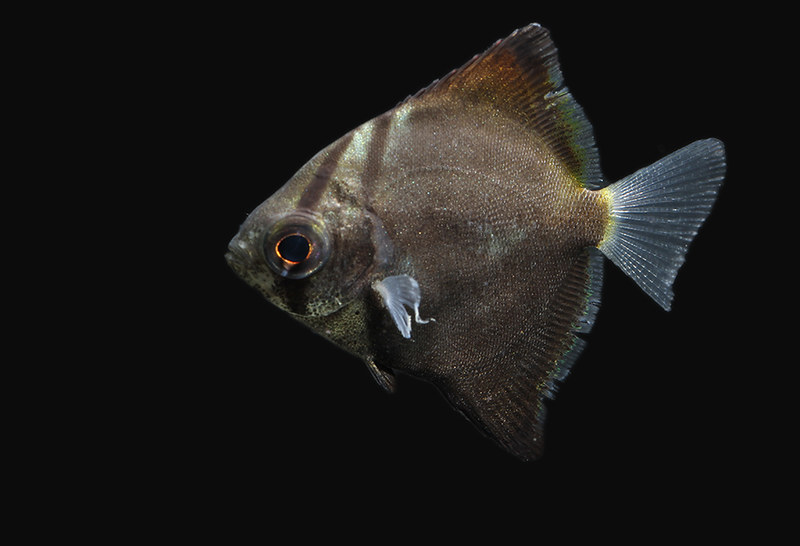
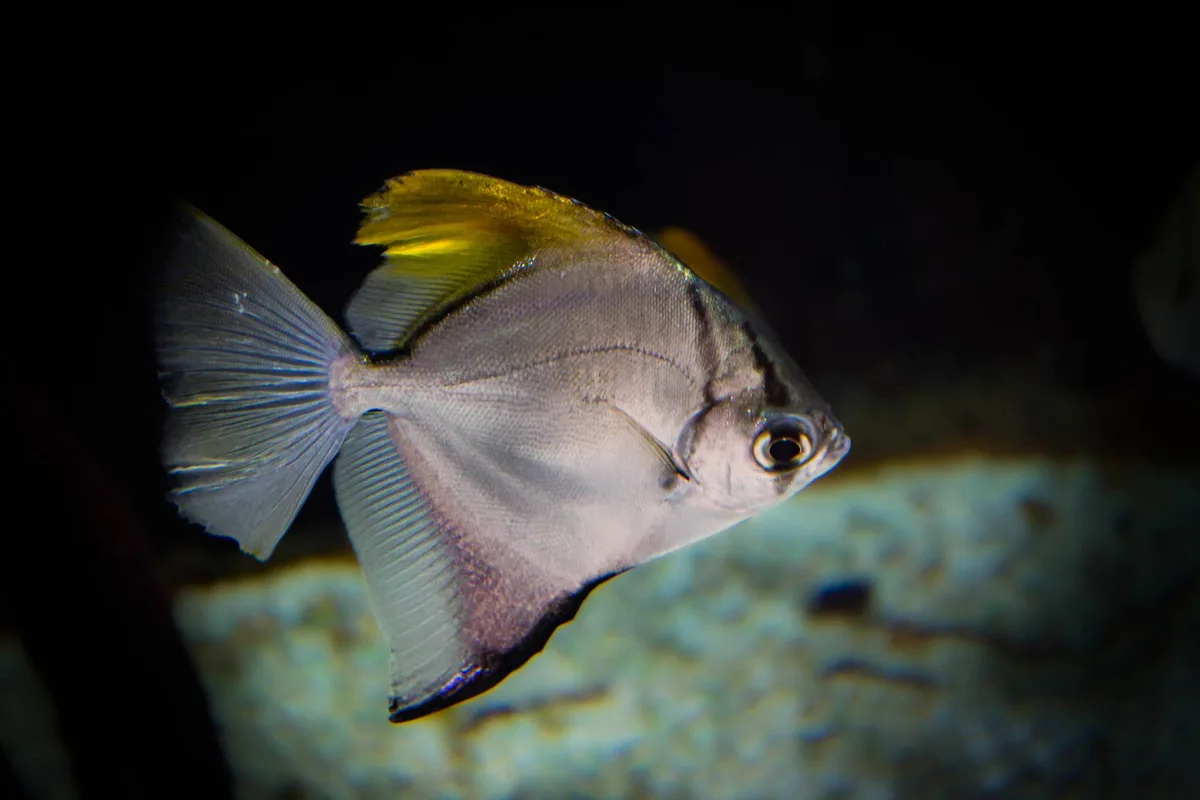
- silver disc of a body, taller than it is long, with yellowish fins
- dark bar through the eye and a second behind the head, fading with age
- in schools among mangrove roots and in sheltered shallows
- up to 27 cm