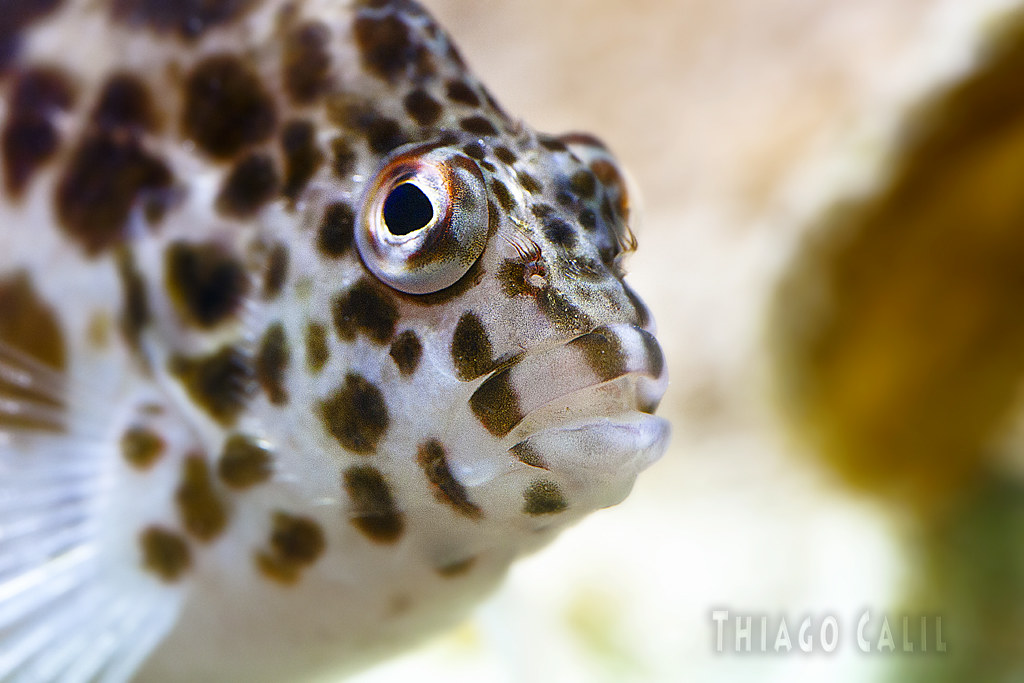
It has no swim bladder, and everything else about it follows from that. Most reef fish carry a gas float that makes hanging in midwater free; a hawkfish carries none, so it sinks the moment it stops swimming.
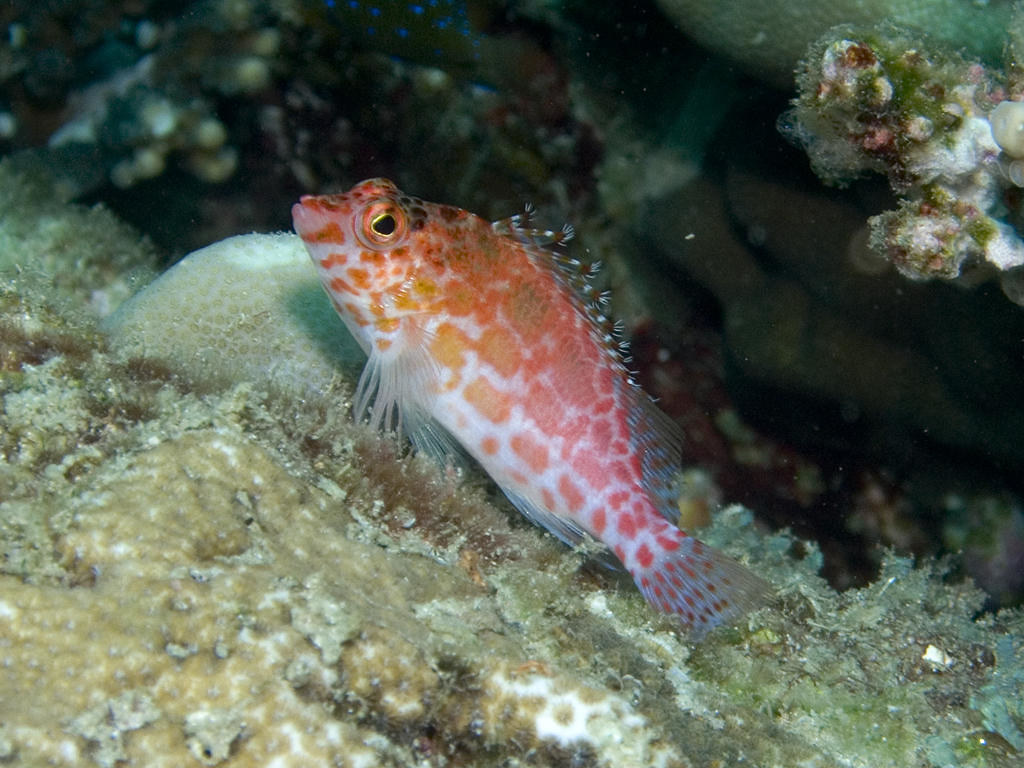
The lower rays of the pectoral fins are thickened, unbranched and longer than the rest, and the fish uses them as legs, wedging them among coral branches and propping itself upright to watch the water. Moving means a short burst to the next perch and a landing. Watch one for two minutes and you will see the whole repertoire: sit, flick, sit.
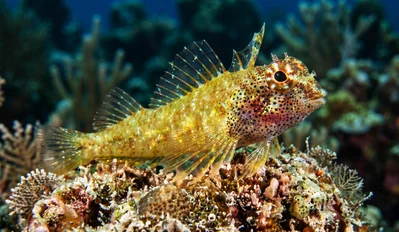
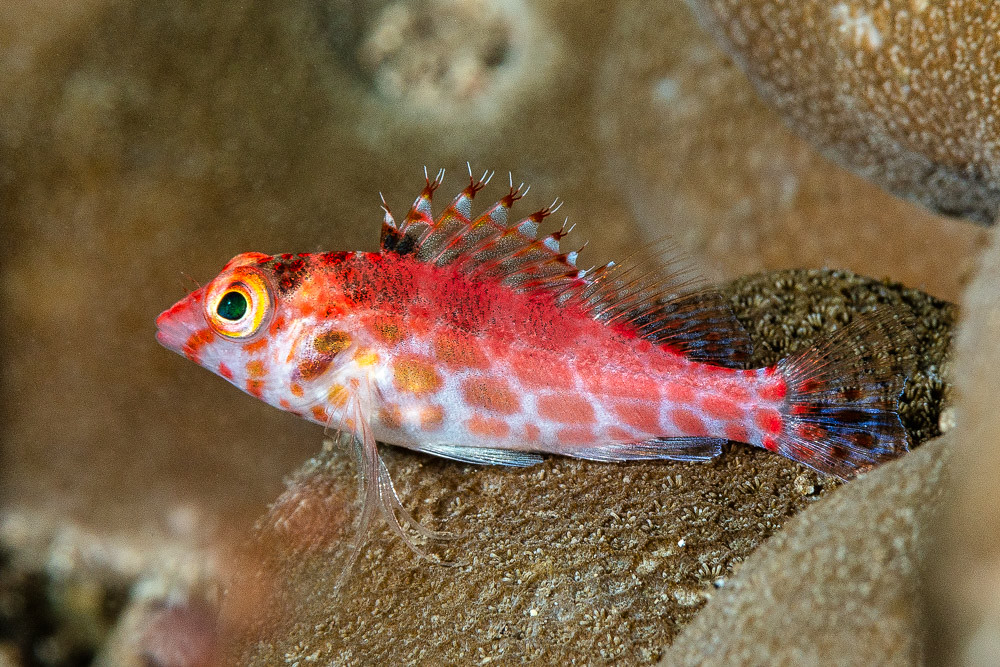
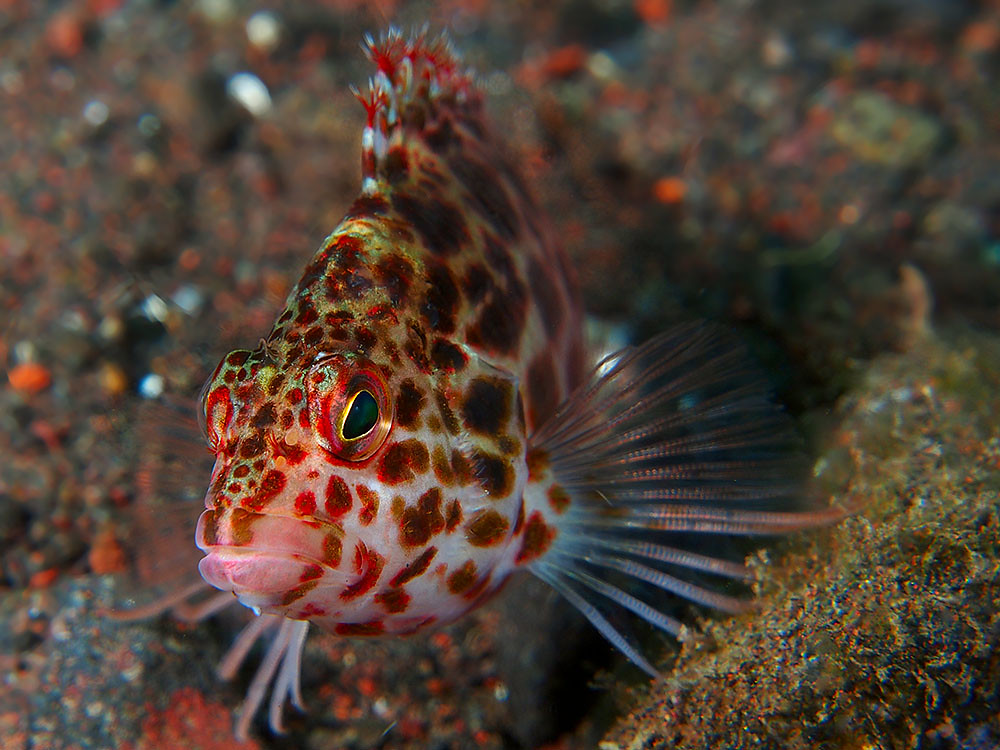
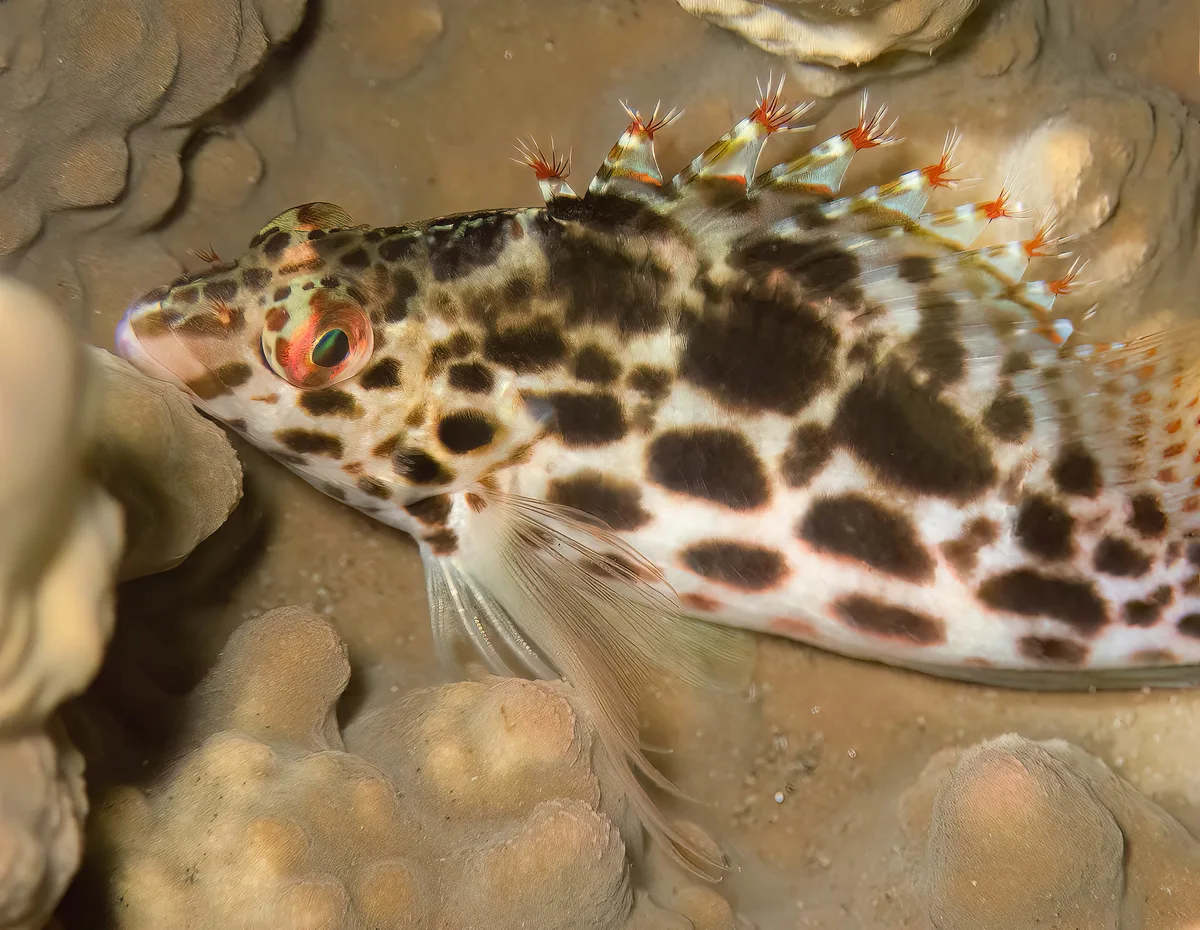
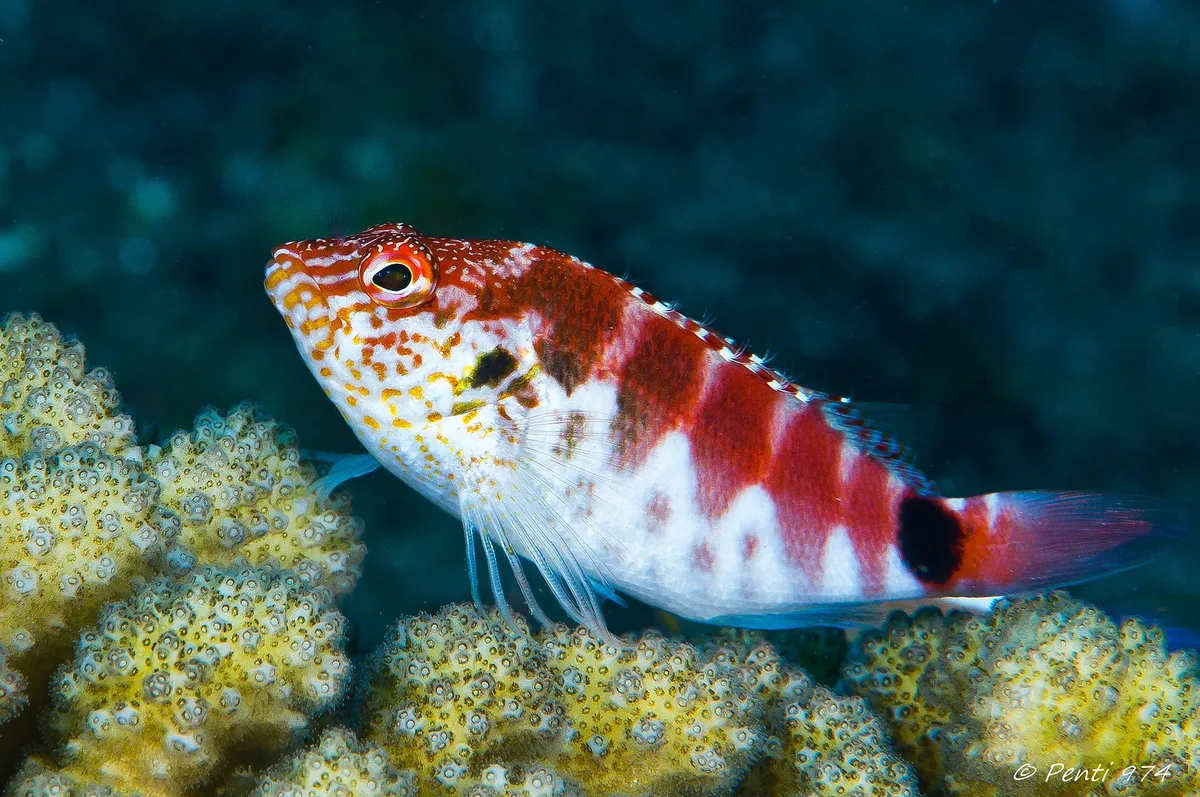
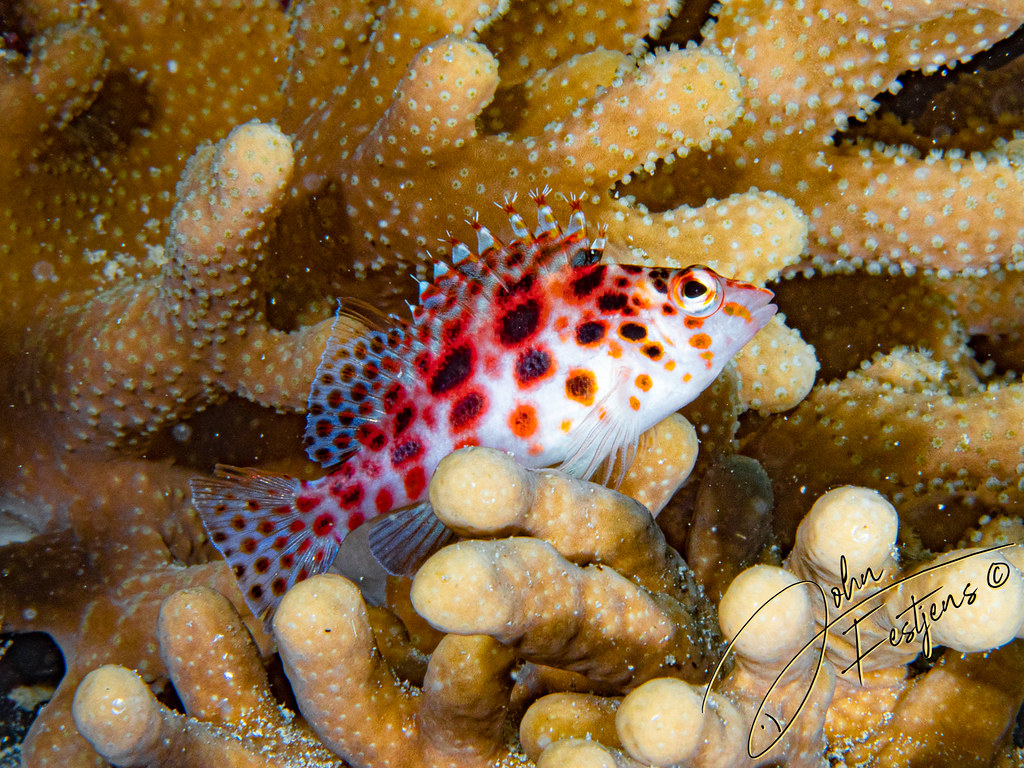
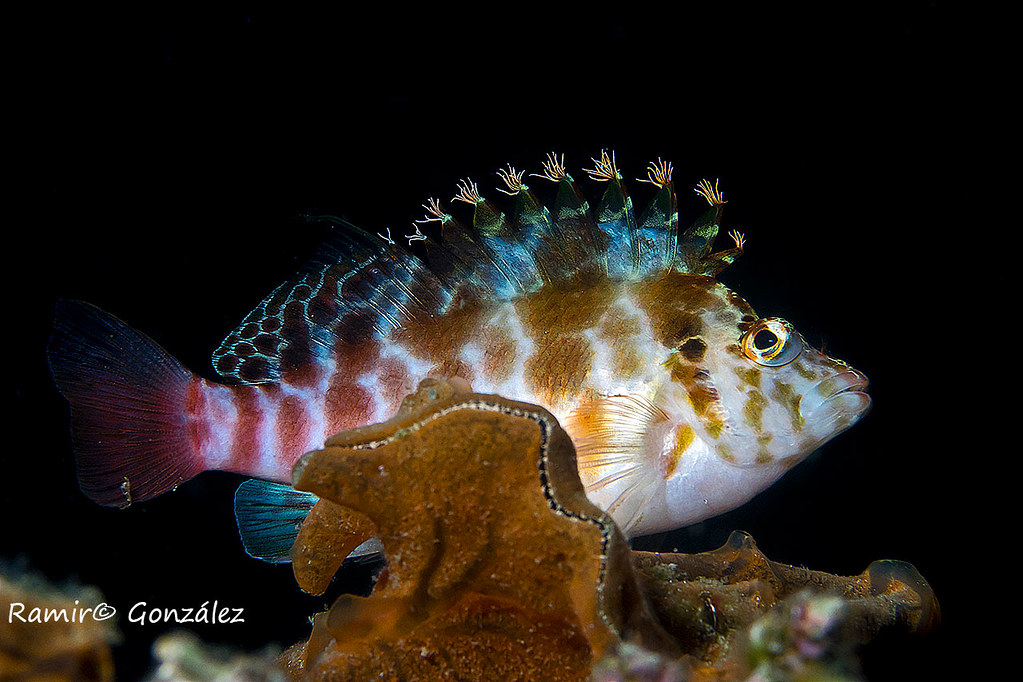
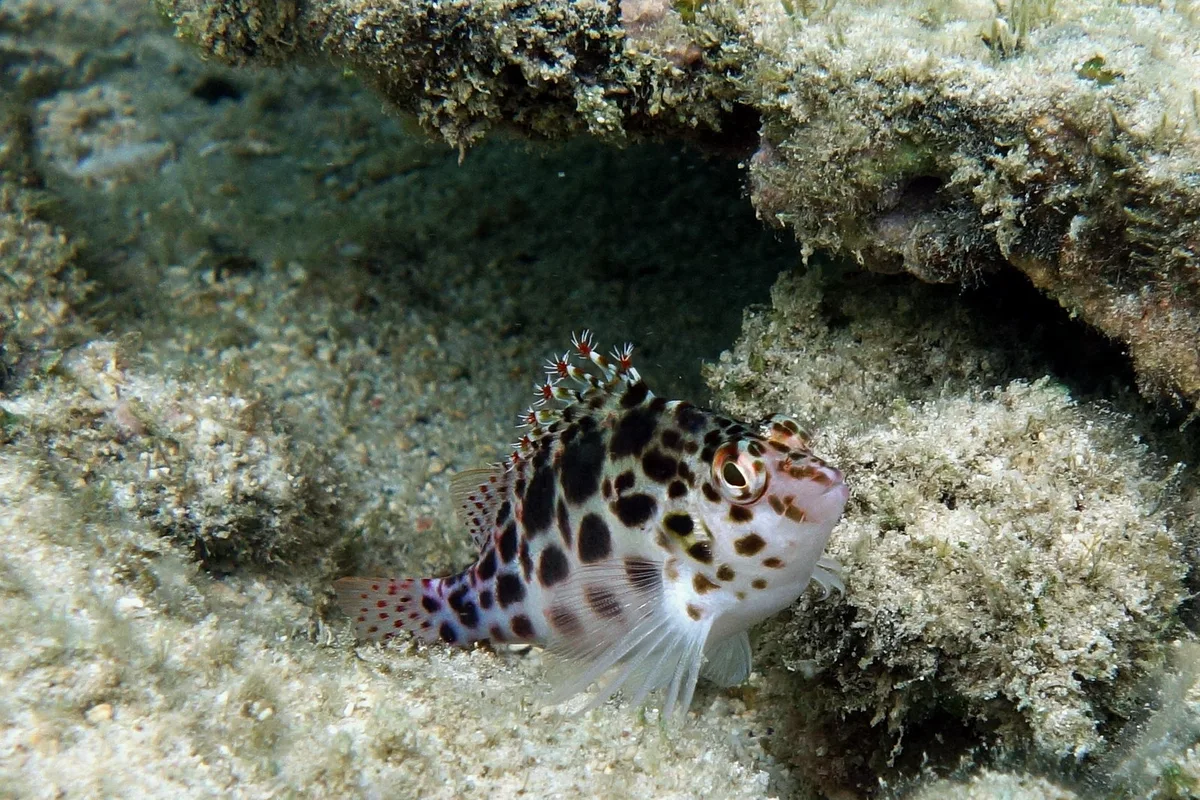
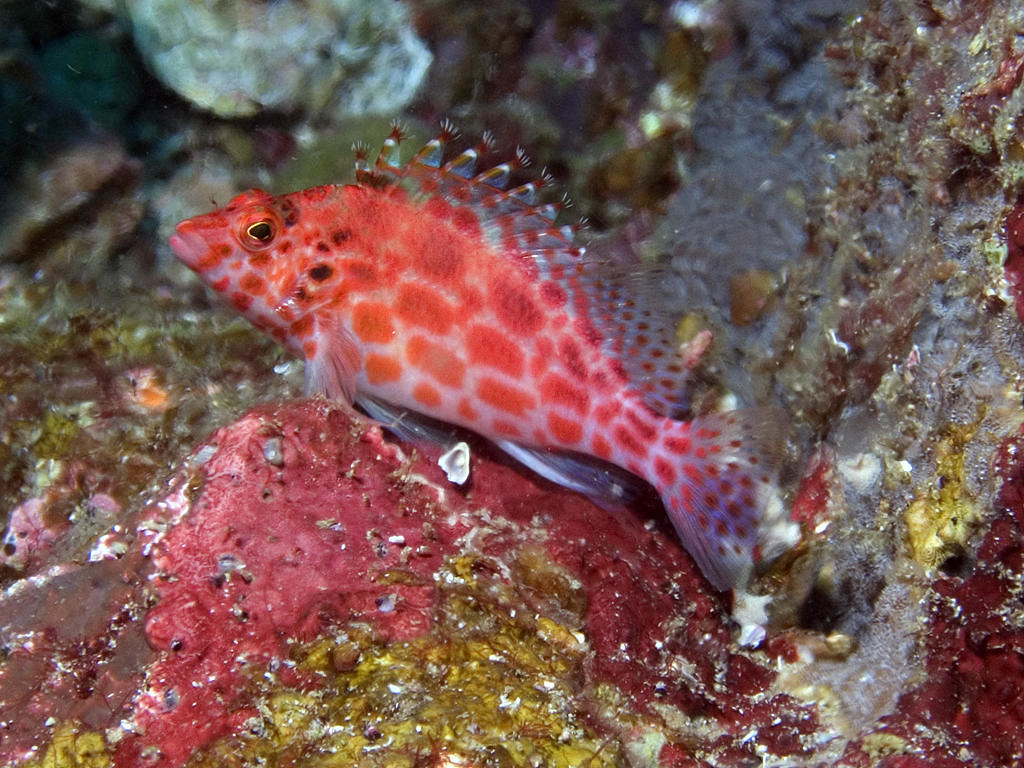
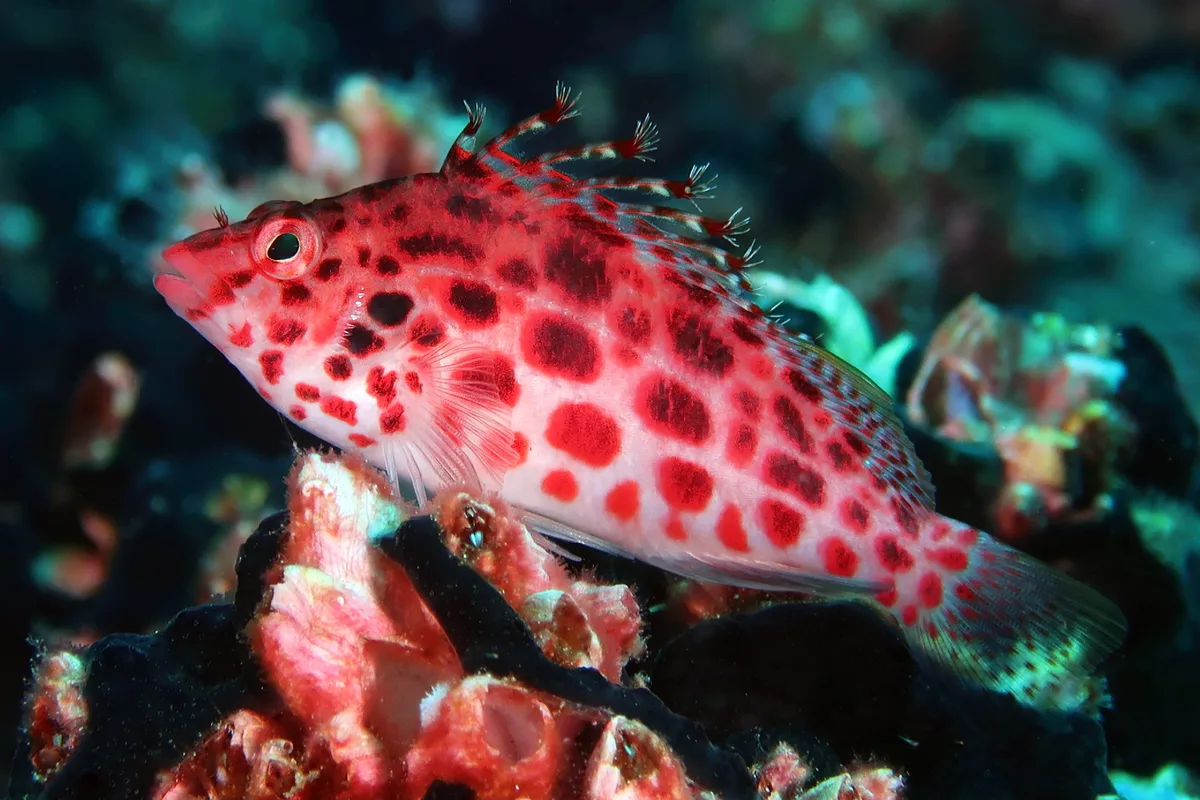
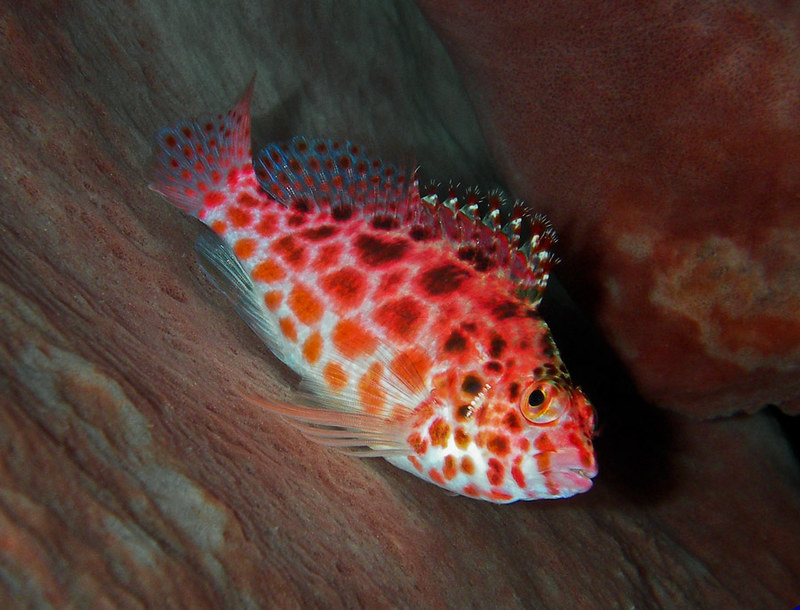
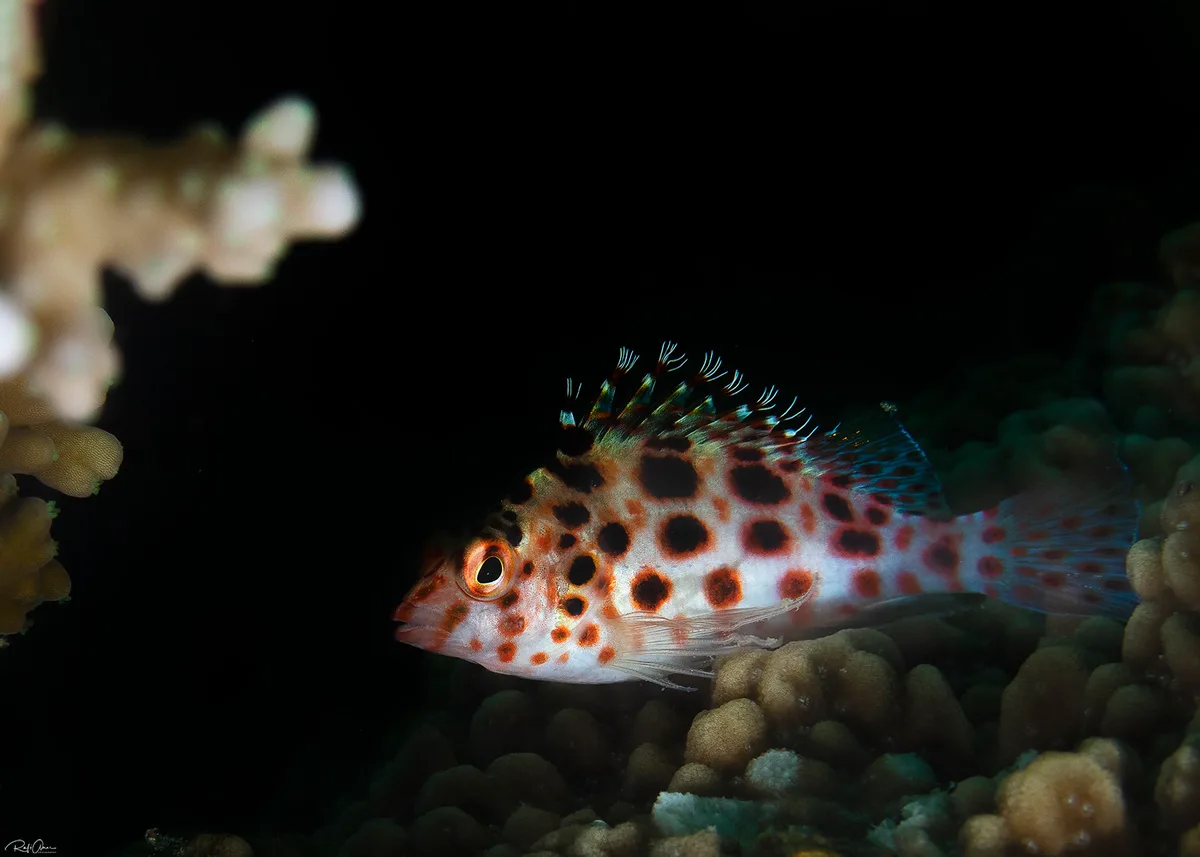
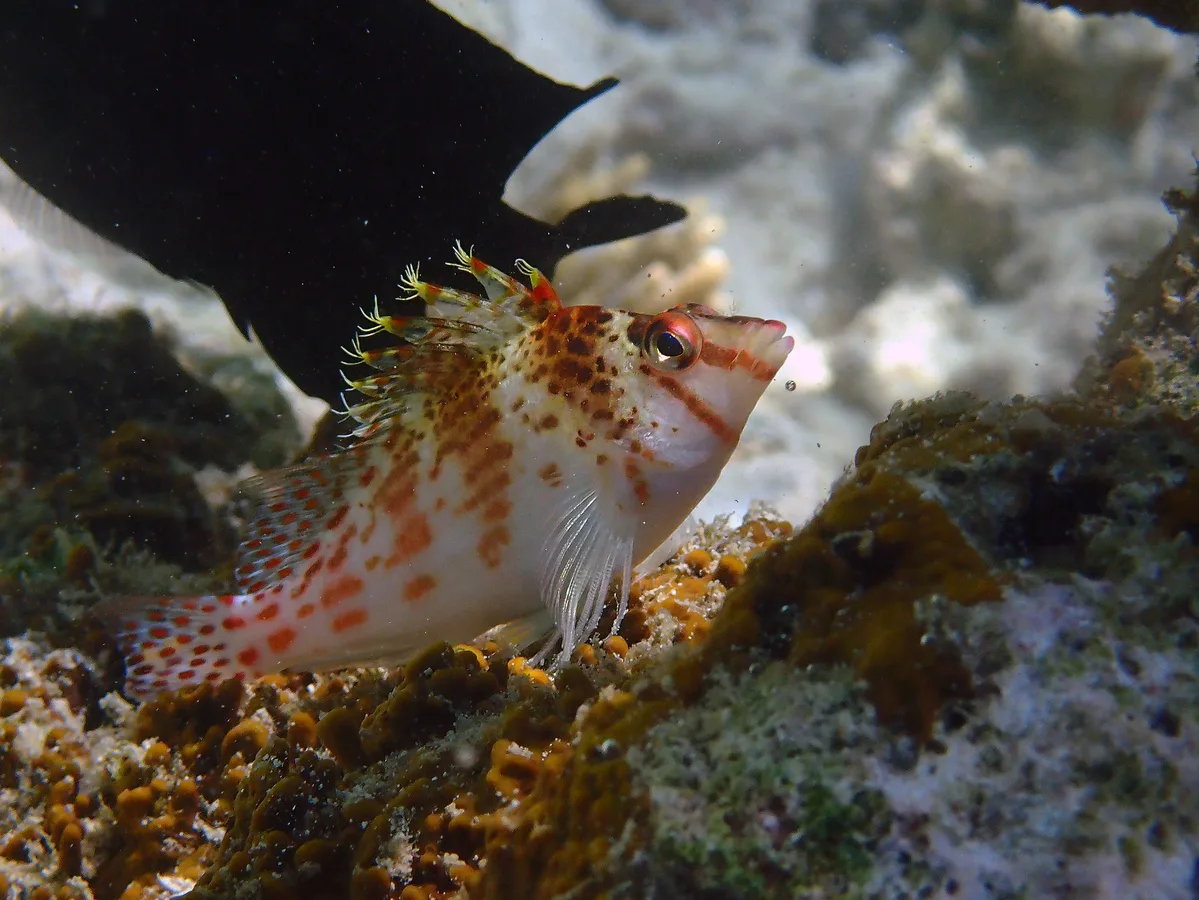
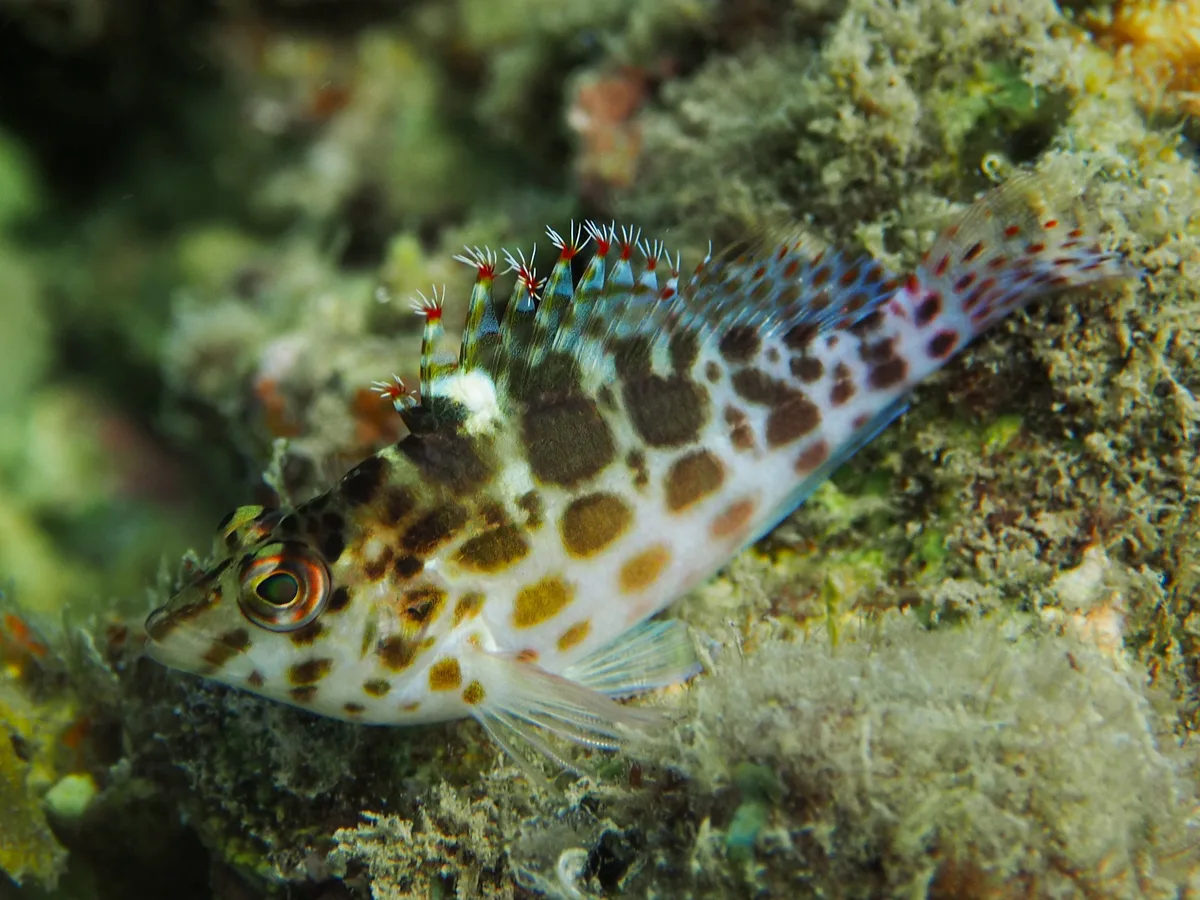
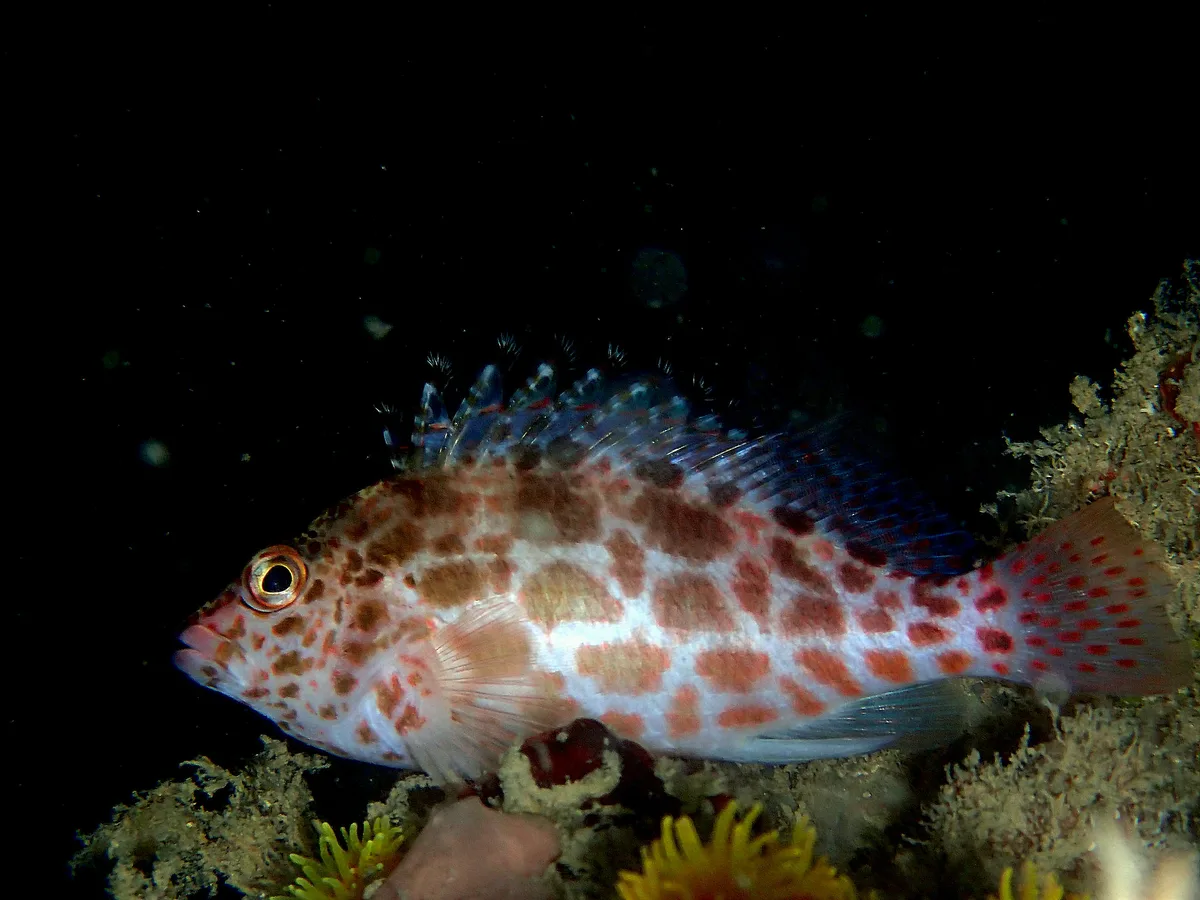
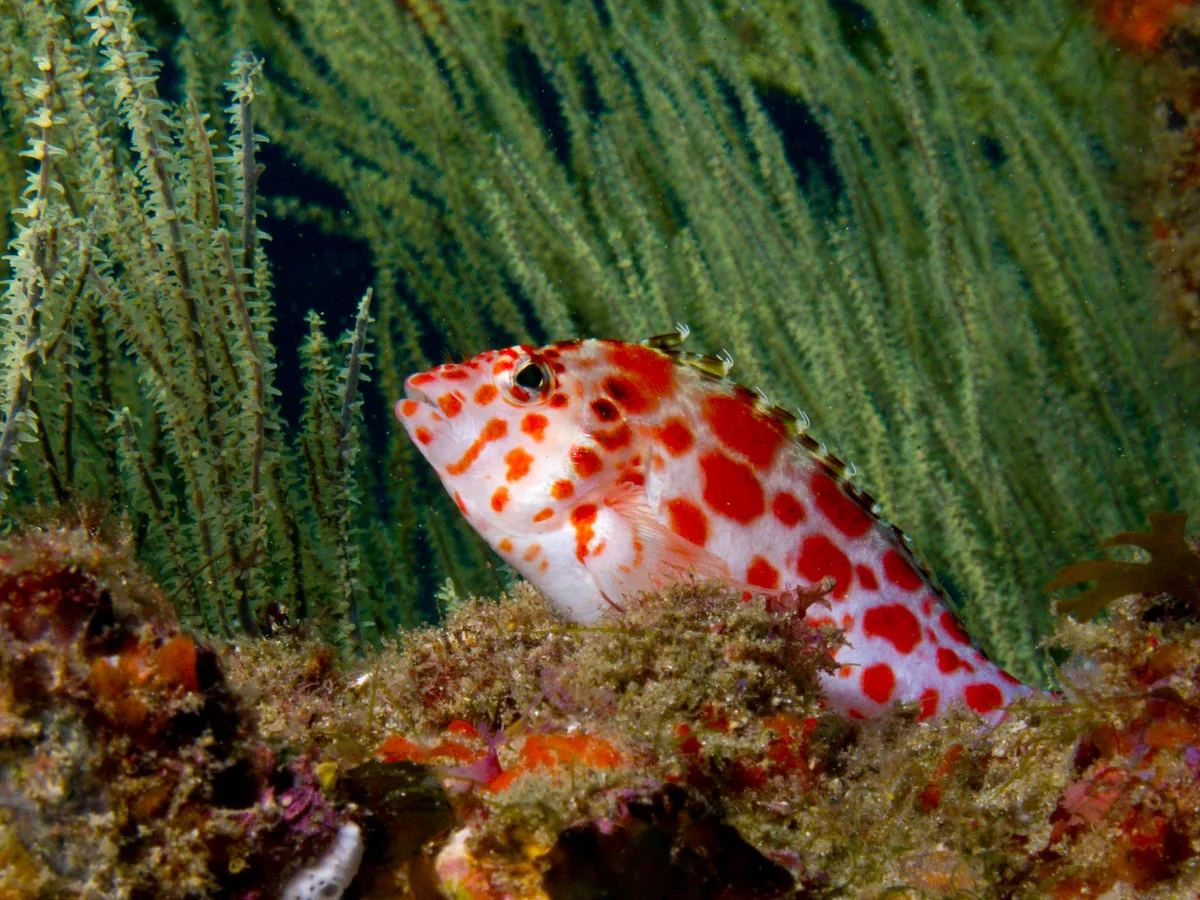
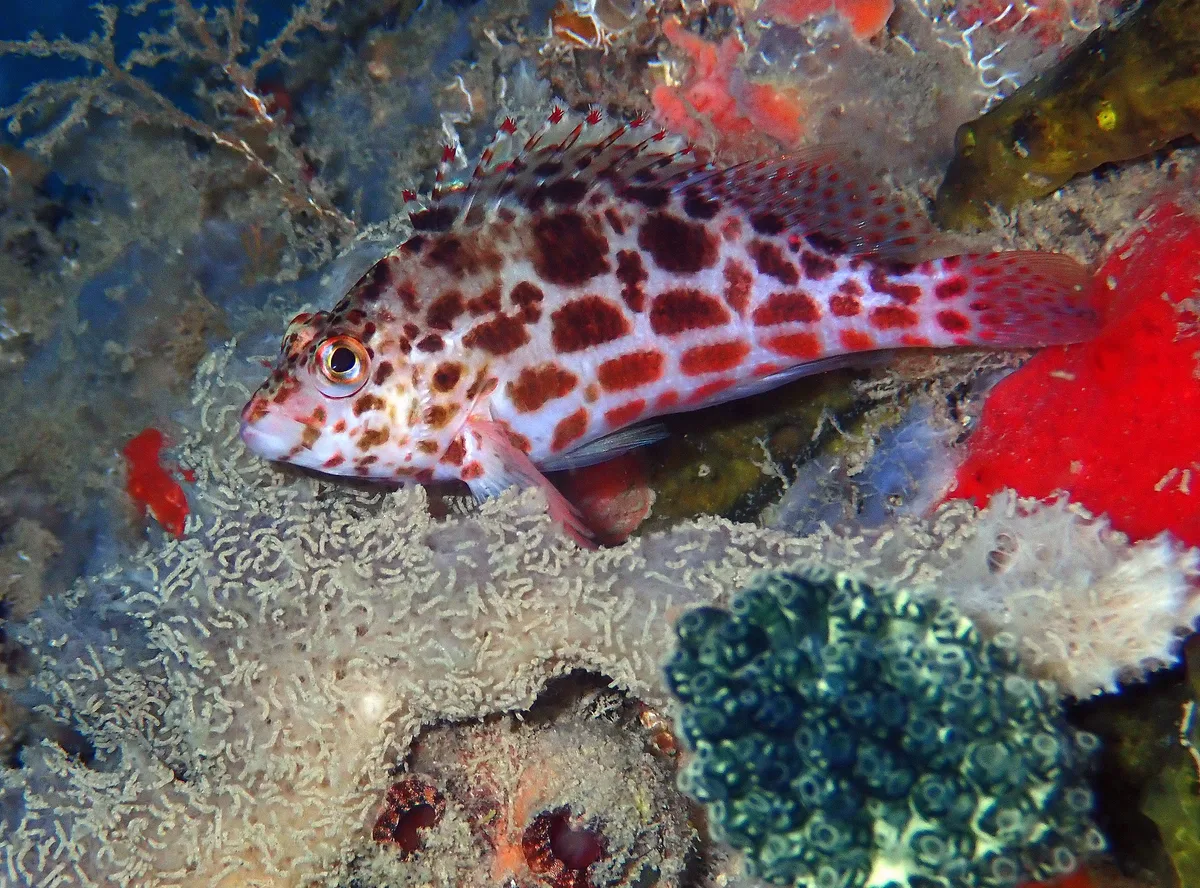
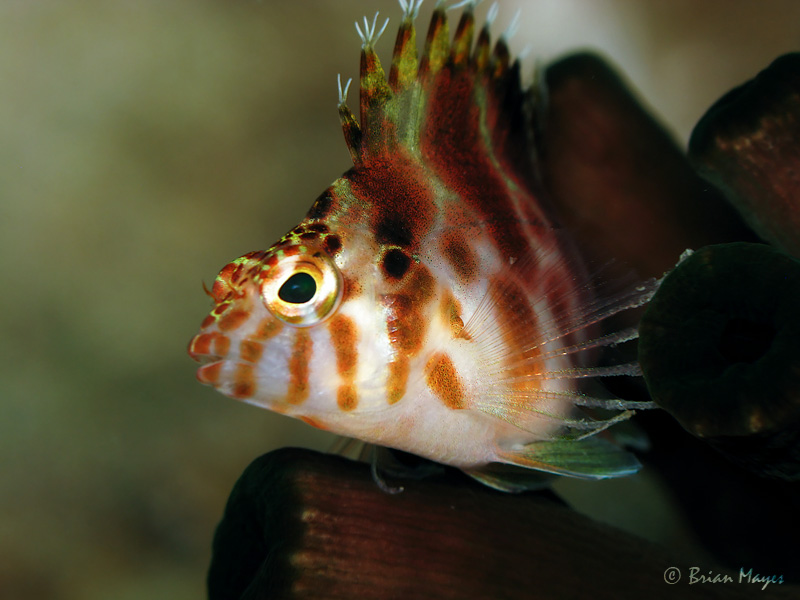
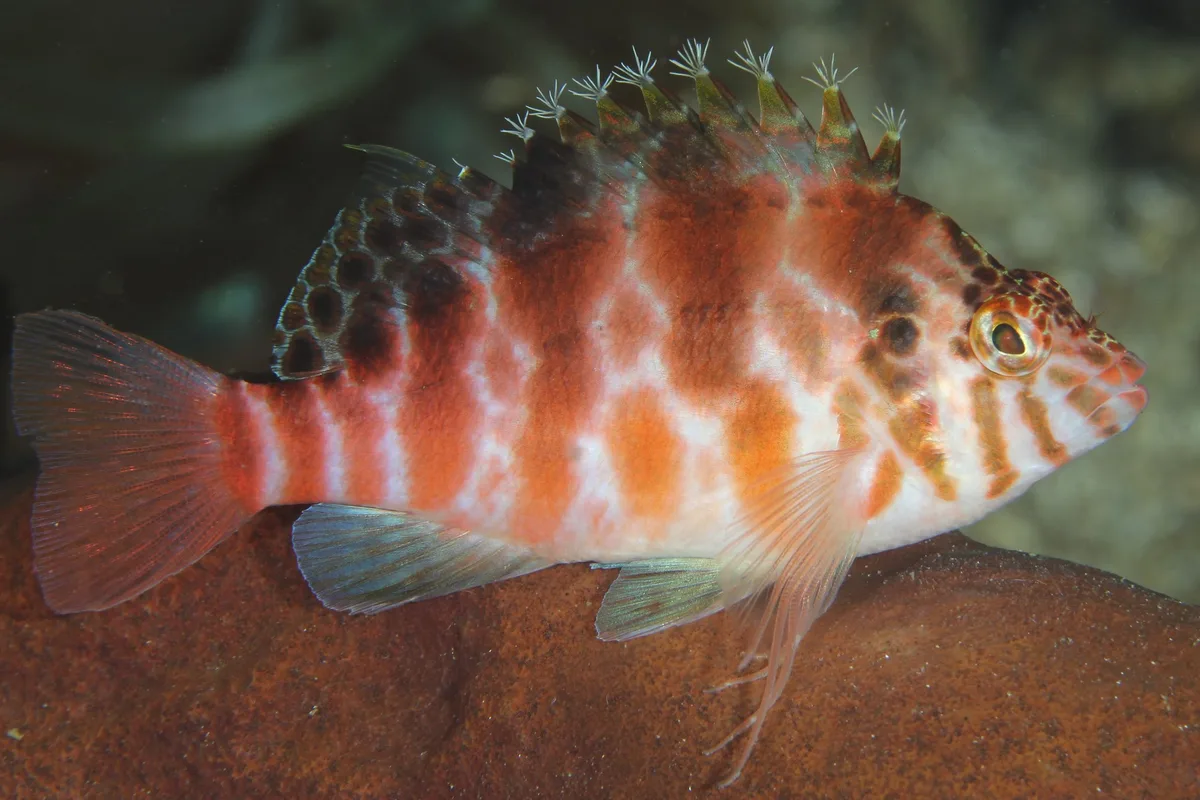
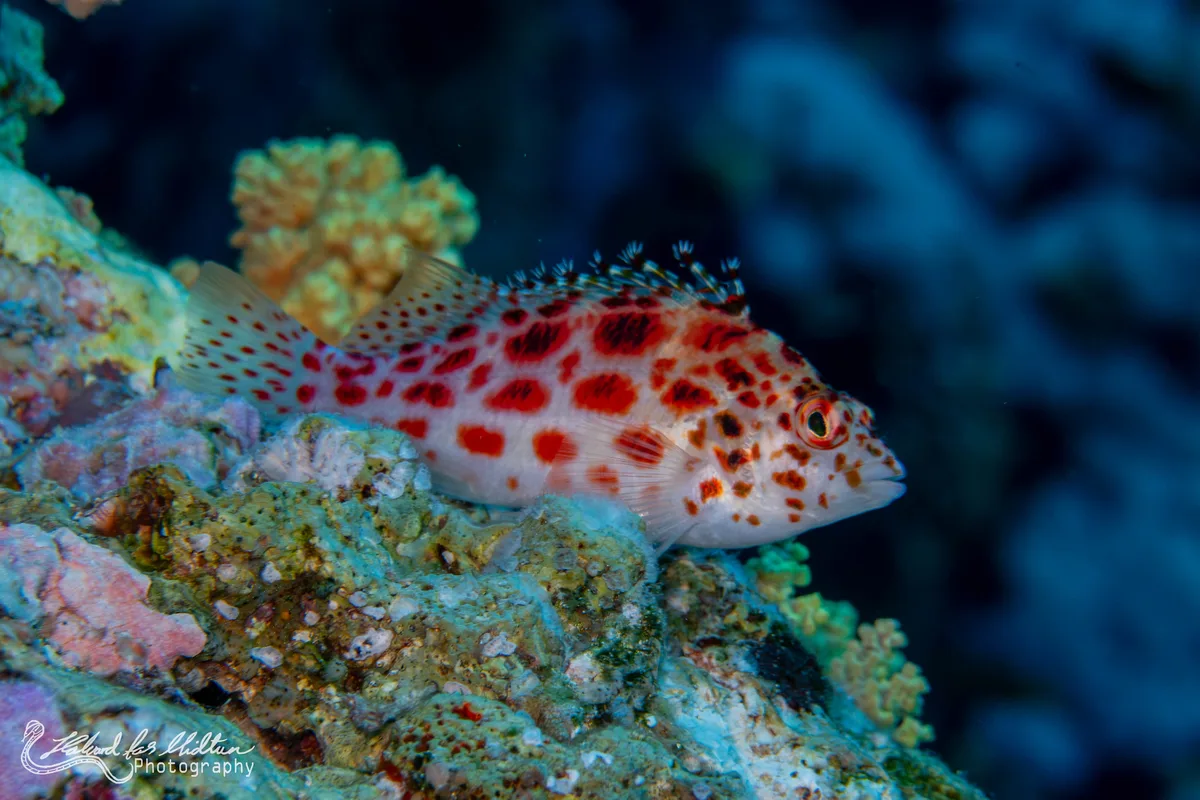
This one perches in and under living coral, in patches of dense growth in clear water on lagoon, channel and outer reefs, below the surge line and down to about 40 m. Look into the branches of a table or a bushy coral head rather than over them. It is white to pink, marked with four lengthwise rows of large red-brown to red-orange blotches and a row of smaller spots along the lateral line. On the tip of every dorsal spine, and on the rear rim of the front nostril, sits a small tuft of filaments. Those tufts are cirri, and they are what the family is named for; a decent close-up will show them.
The perch is a hunting position. It takes small crustaceans and small fishes with a short rush from cover, which is why it chooses a seat with a clear view and something solid behind it. Ten centimeters is the maximum, and most are smaller.
Every one of them starts life as a female. Males are territorial and hold a group of females inside a patch of reef they defend against other males, and some of those females later become male, which is the usual route to a male in this family; in haremic hawkfishes generally, a male that disappears is replaced by the largest female in his group. At dusk a male and a female rise together off the coral and release eggs and sperm into the water above it, and the eggs drift away with the current.
The genus. Cirrhitichthys Bleeker 1857 - ichthys (fish). ETYFish
The species. Cirrhitichthys oxycephalus (Bleeker 1855) - oxy (sharp or pointed) + cephalus (head). ETYFish
- four lengthwise rows of large red-brown blotches on a white to pink body
- row of smaller spots along the lateral line
- tuft of fine filaments on the tip of each dorsal spine
- sits propped on stiff lower pectoral rays instead of hovering
- up to 10 cm