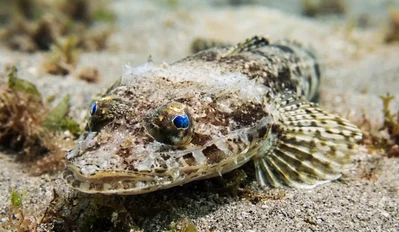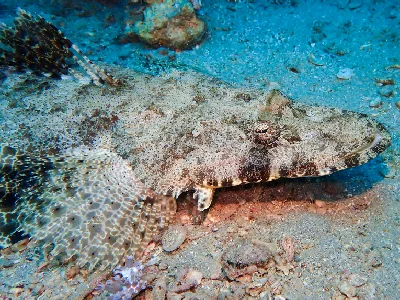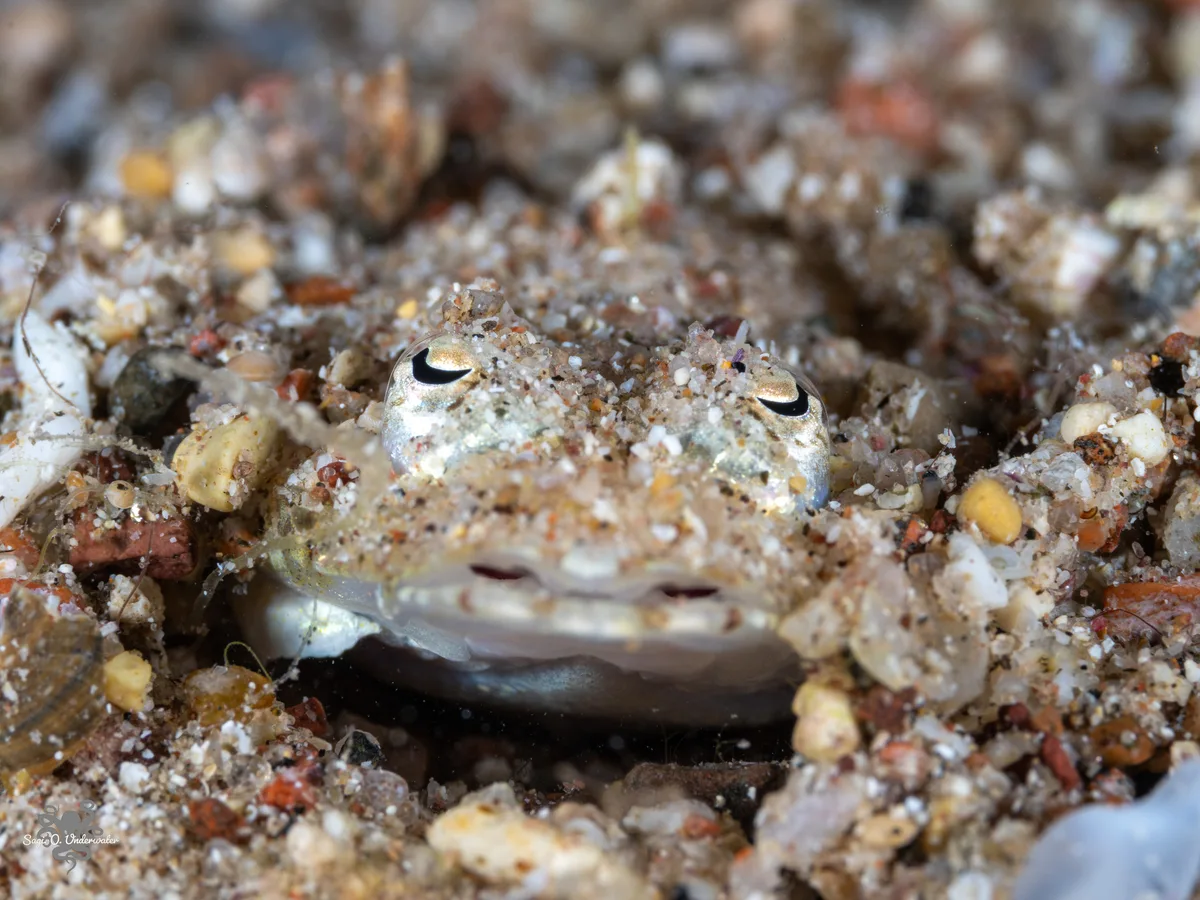
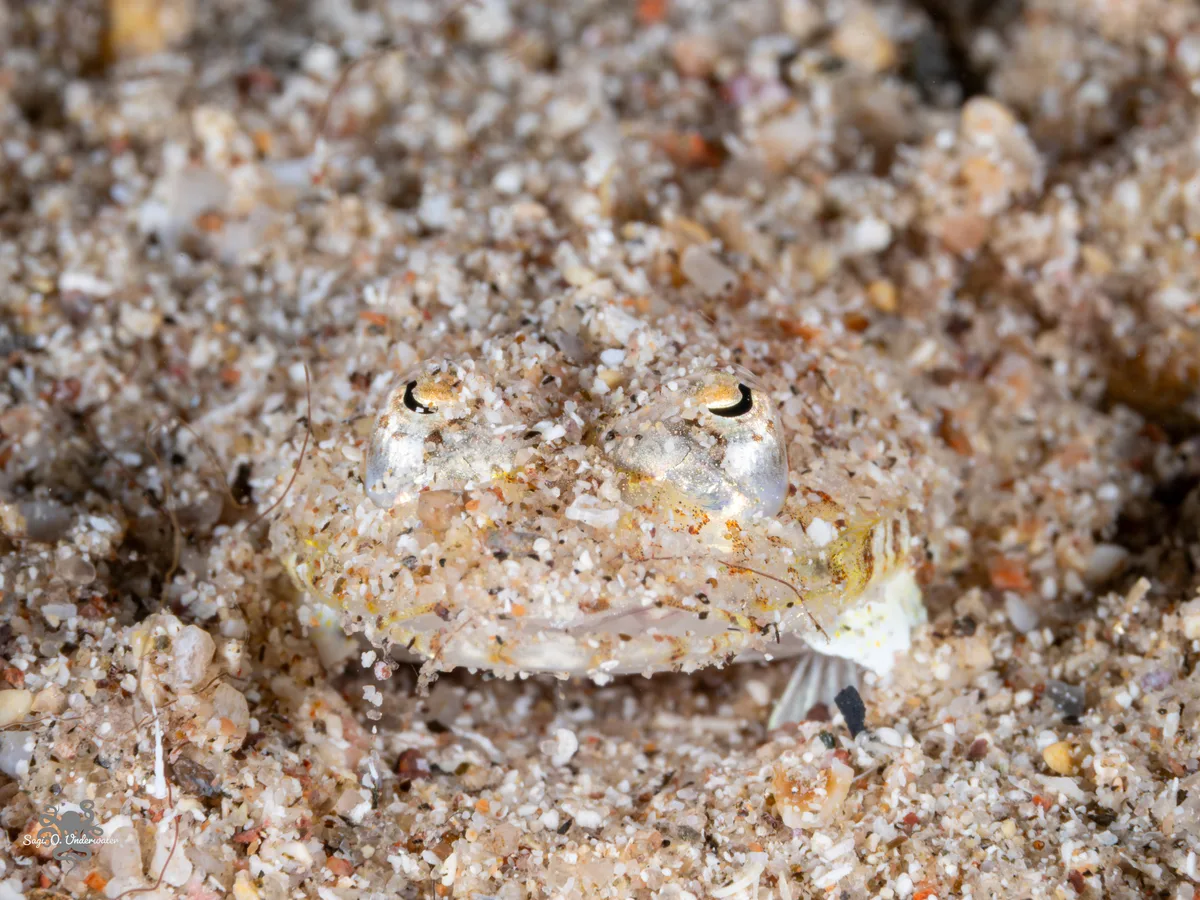
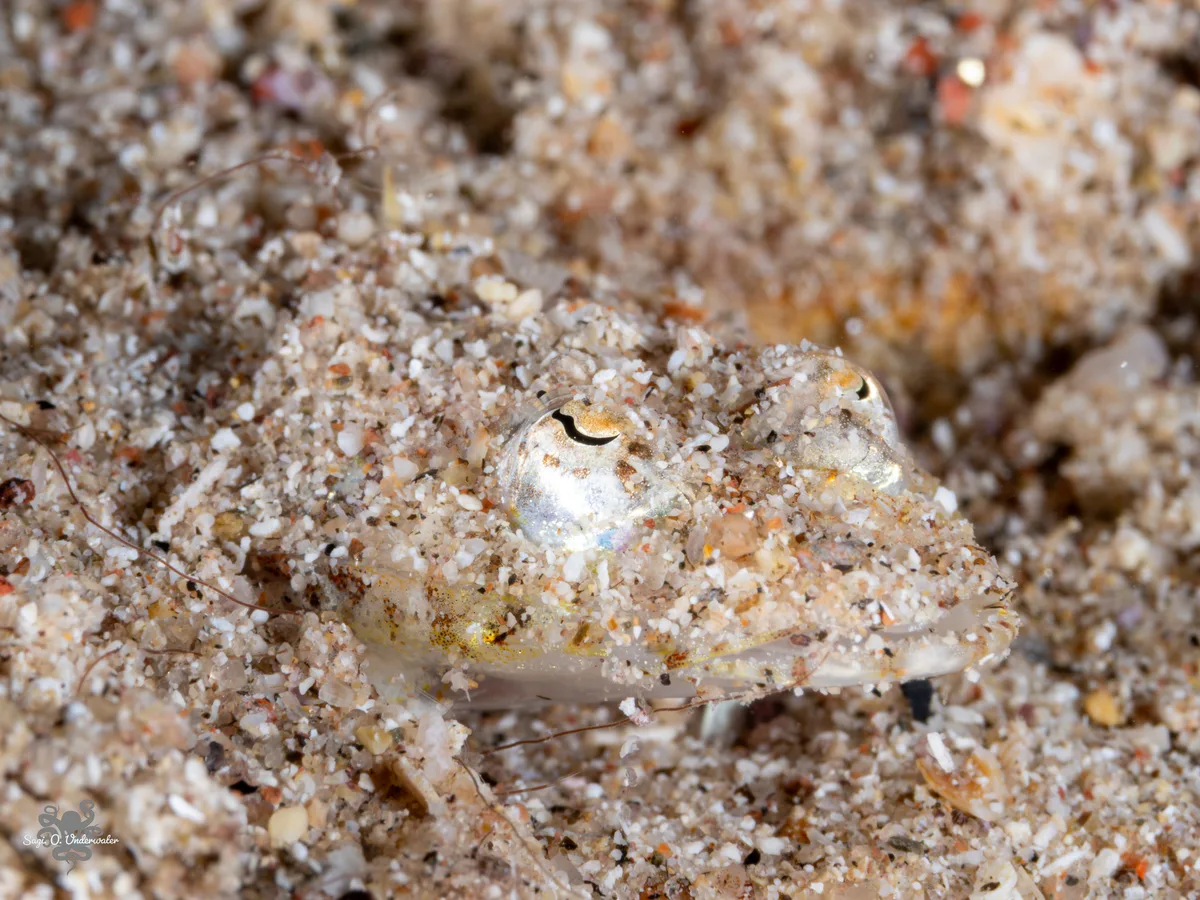
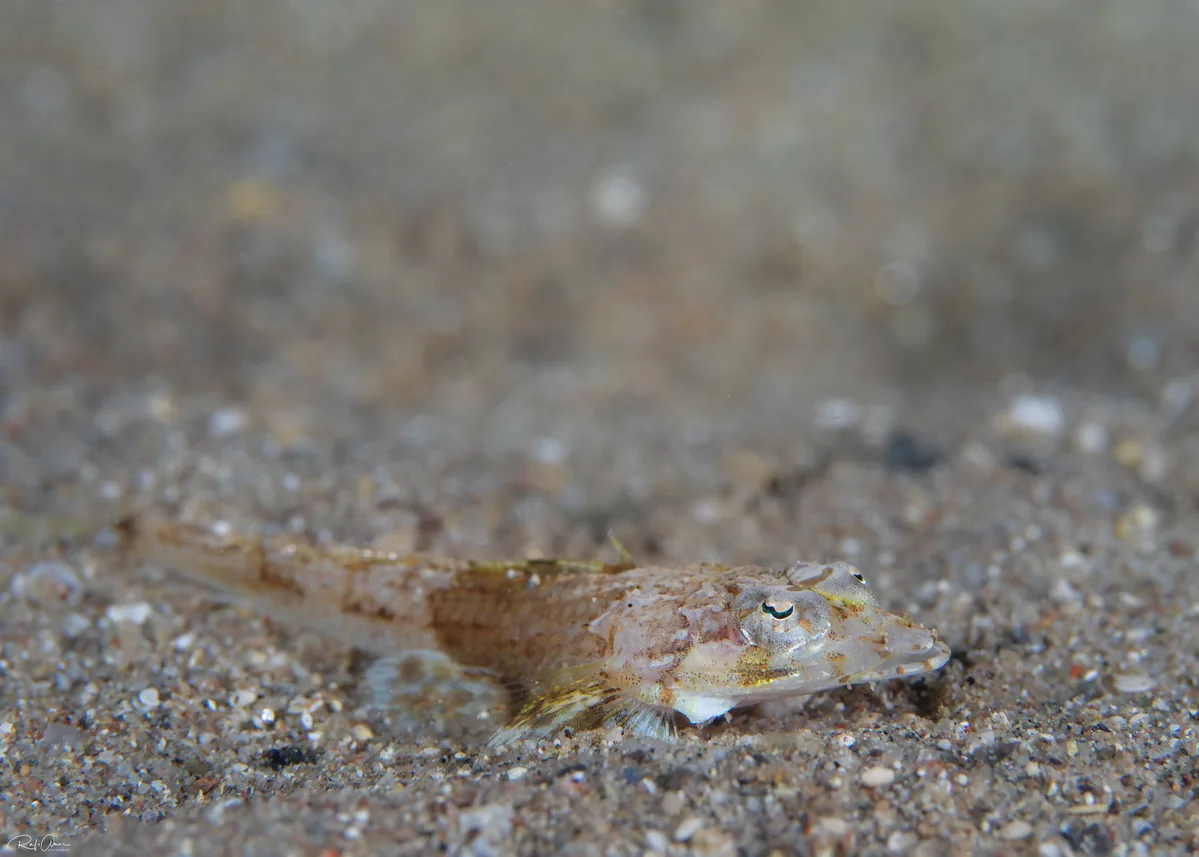
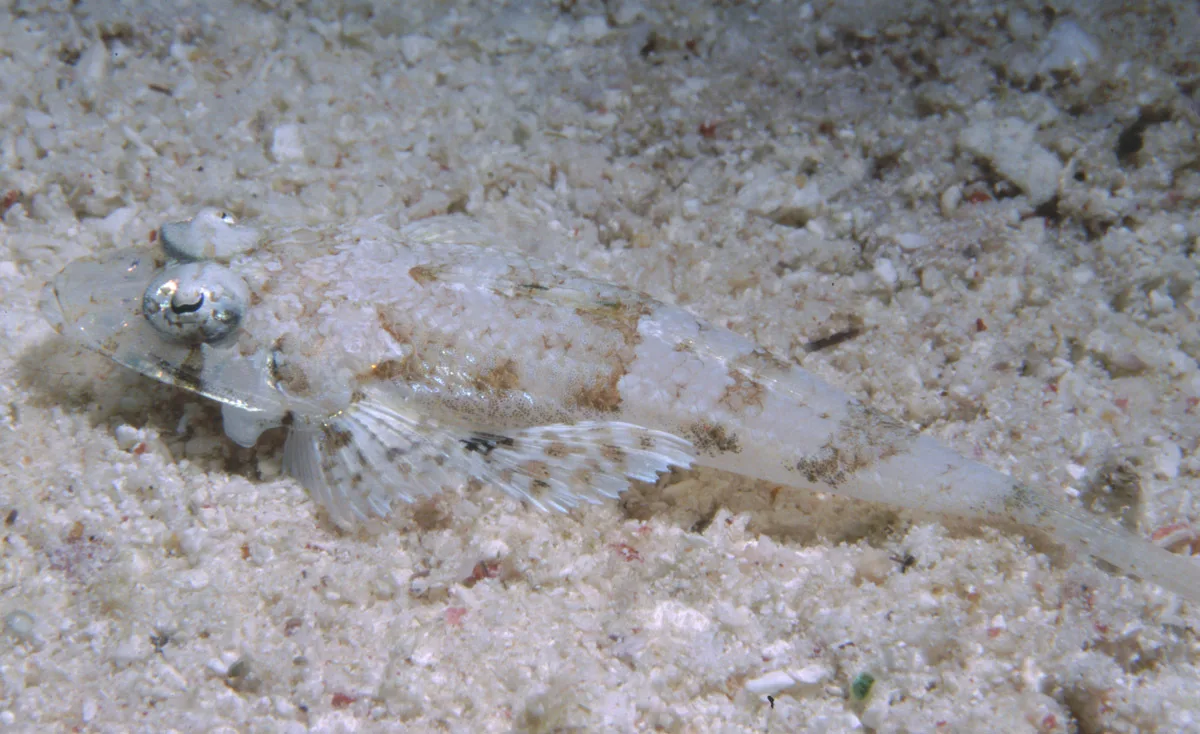
It is a flathead the length of a matchbox, and its relatives on the same sand reach a meter.
That range inside one family is worth noticing, because the design does not change with the size. Crocodilefish, bartail flathead and this one are all built identically: head pressed flat from above, eyes on top, mouth wide, body tapering back, colored to match the sediment exactly, and all of them hunt by lying still until something small enough passes within a body length. Scale the animal down by a factor of ten and it still works, because ambush does not depend on being large, only on being unrecognizable and faster over the first ten centimeters than the prey is.
The difference is only in what counts as prey. The big ones take fish; this one takes small crustaceans and fish fry off the sand.
It carries the family's other feature too: sharp spines on the head and gill covers, which is why picking up a flathead is a bad idea at any size.
Black spots on the pelvic fins are the mark, if you find one at all. At eight centimeters and the color of sand, most are missed.
The genus. Onigocia Jordan & Thompson 1913 - Onigogochi (devil flathead) + gochi (also spelled kochi). ETYFish
The species. Onigocia bimaculata Knapp, Imamura & Sakashita 2000 - bi- (two) + maculata (spotted). ETYFish
- black spots on the pelvic fins
- tiny, up to 8 cm, where the other local flatheads reach a meter
- head flattened from above with the eyes on top
- sharp spines on the head and gill covers
Why it's threatened
There are no major threats to this species.
Threat classification from the IUCN Red List.