Scrawled Filefish
Scrawled filefish
Scrawled filefish
Scrawled filefish
Scrawled filefish
Scrawled Filefish
Scrawled Filefish
Fishes · Bony fishes · Filefishes

Scrawled Filefish

Aluterus scriptus (Osbeck, 1765)
syn. Aleuterus scriptus, Aleuteus scriptus, Alutera armata, Alutera picturata, Alutera scripta, Aluteres pareva +12 more
55 - 110 cm2.5 Kg3-120 m
1338

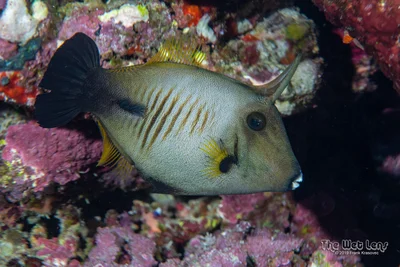
The Aluterus scriptus, commonly known as the scrawled filefish, is a marine species found in warm waters around the globe, including the Atlantic, 🇮🇳 Indian, and 🌊 Pacific Oceans. Affectionately referred to as the scribbled or broomtail filefish, these unique creatures belong to the Monacanthidae family and are often associated with coral reefs and lagoons. They typically inhabit depths ranging from 3 to 20 meters (10 to 66 feet), although they have been found as deep as 120 meters (394 feet).

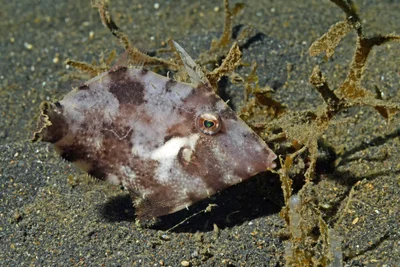
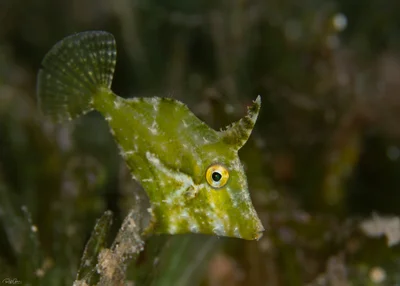
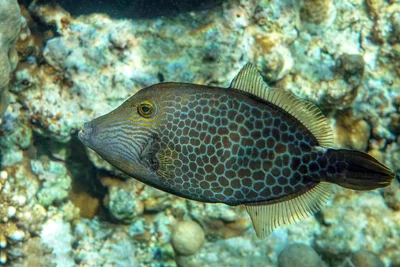
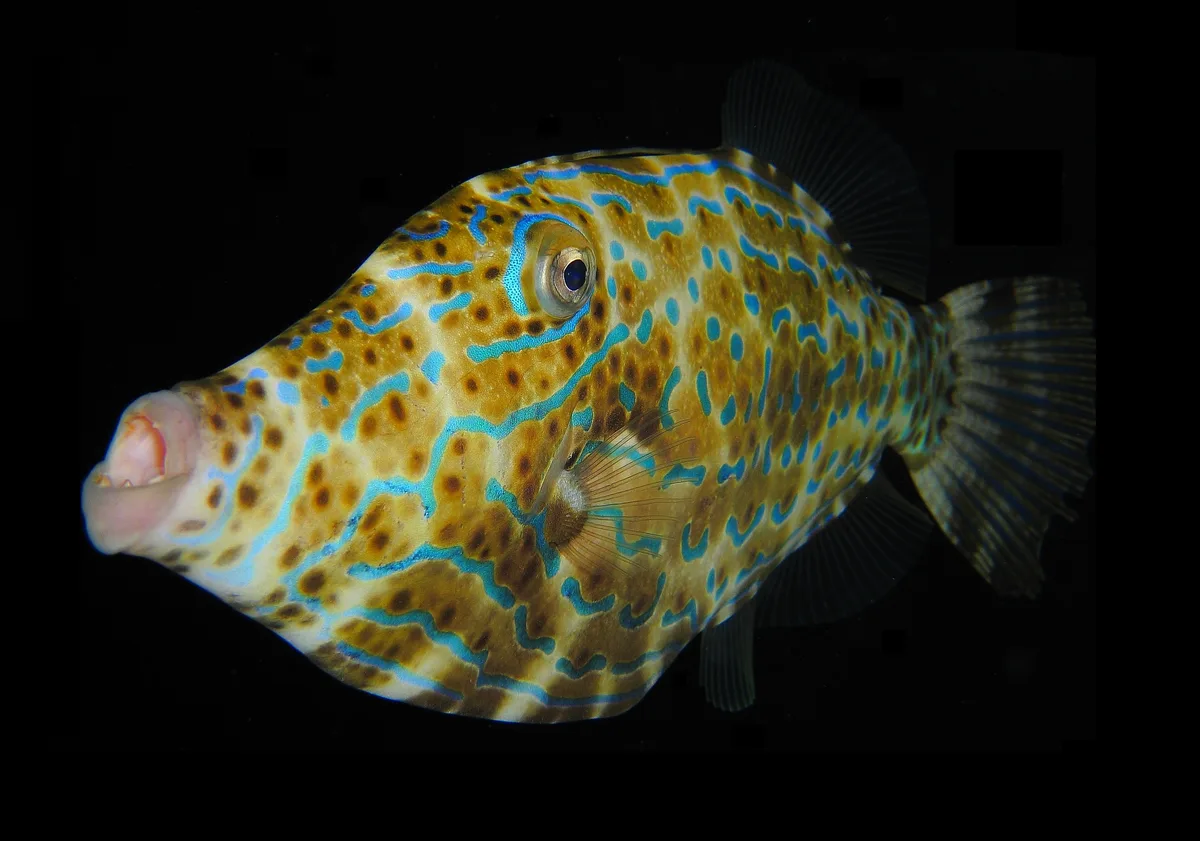
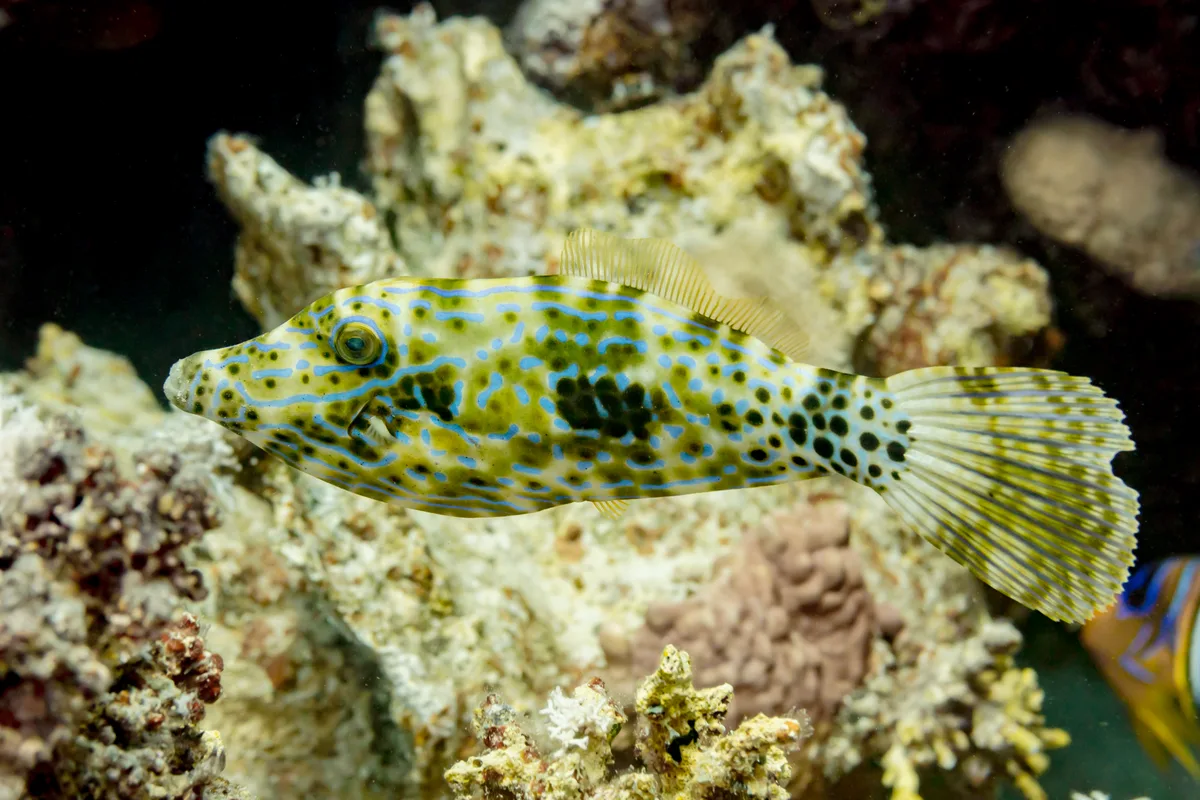
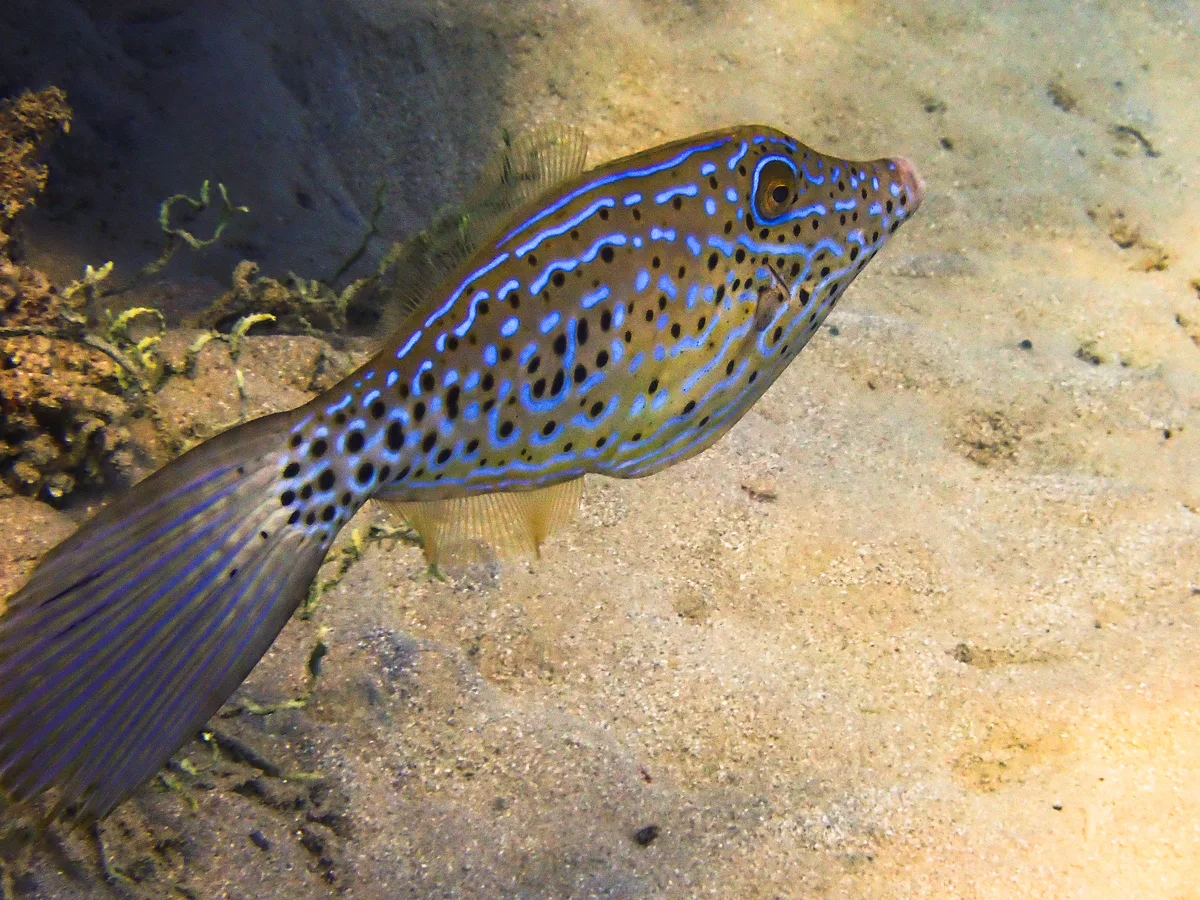
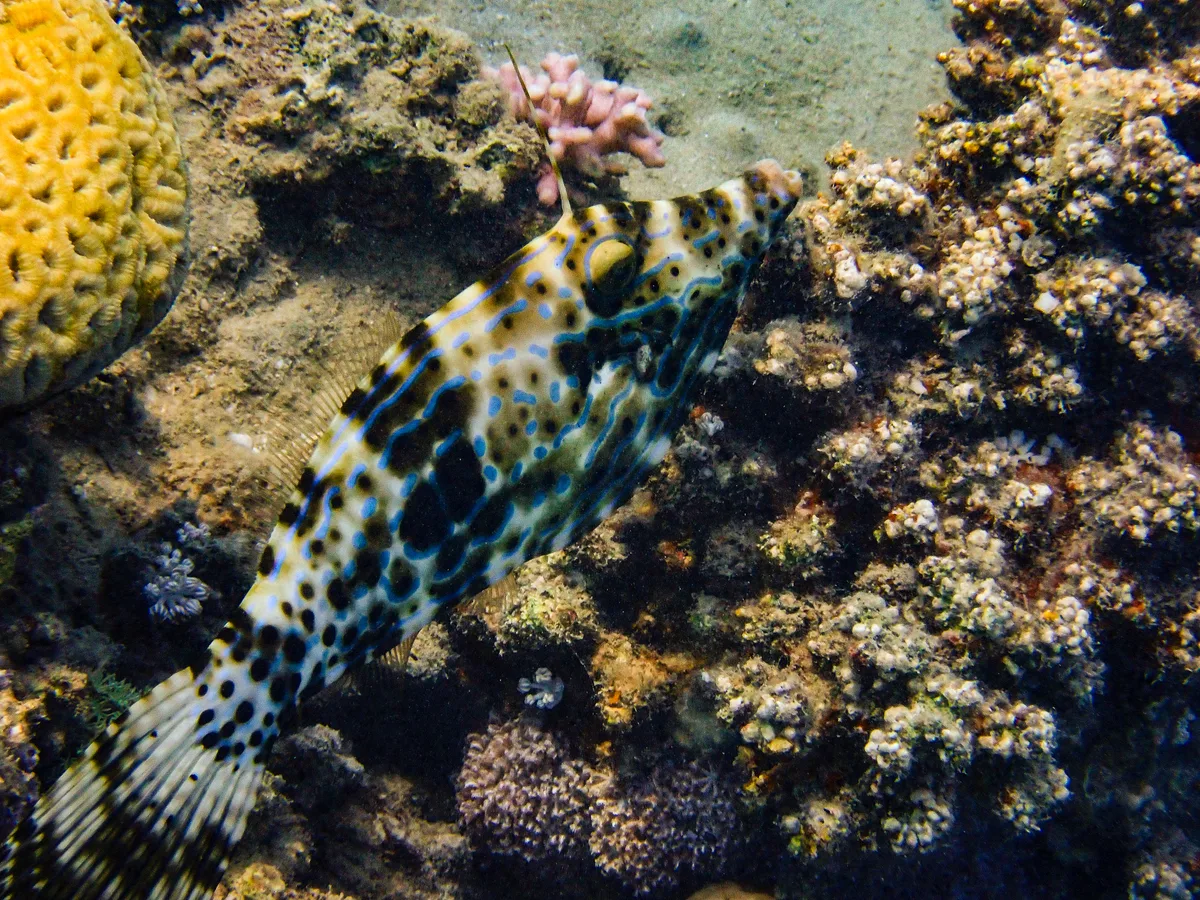
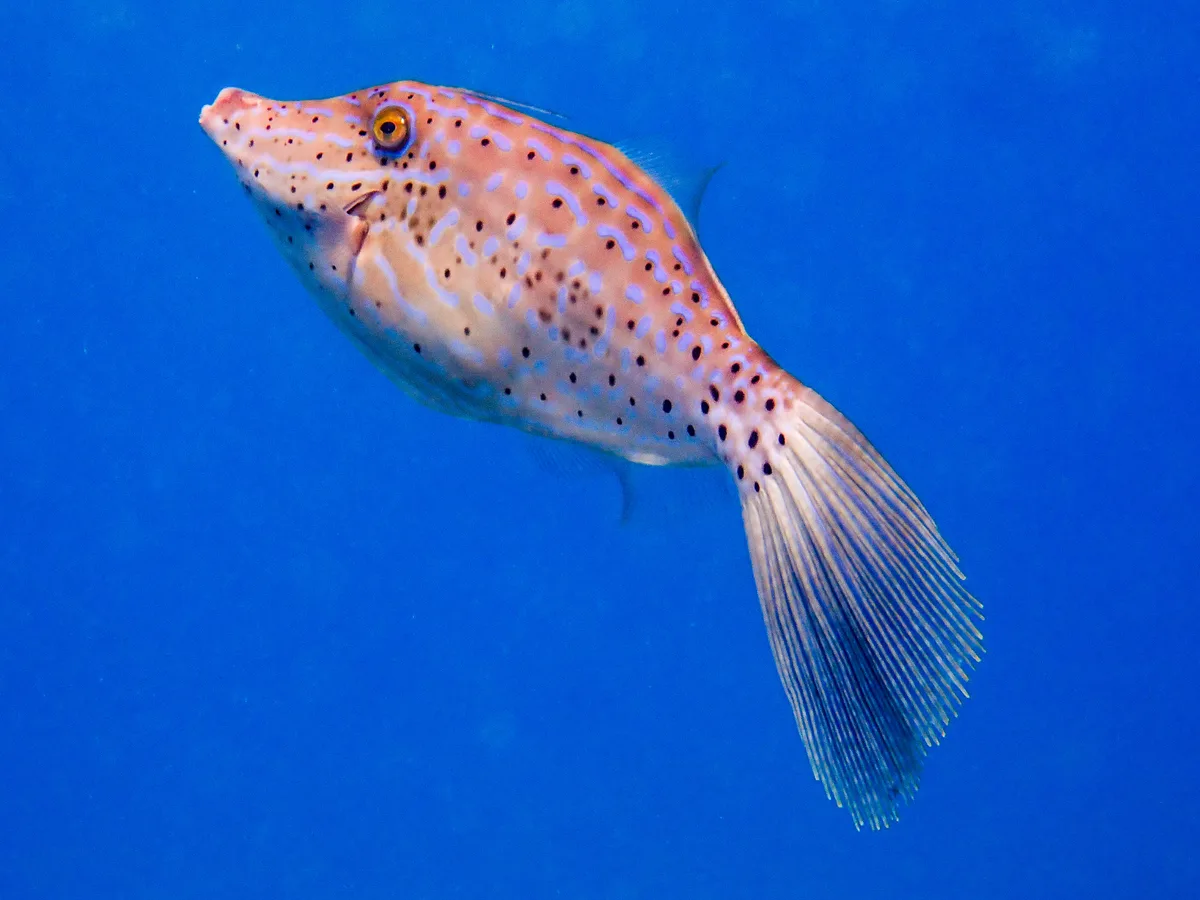
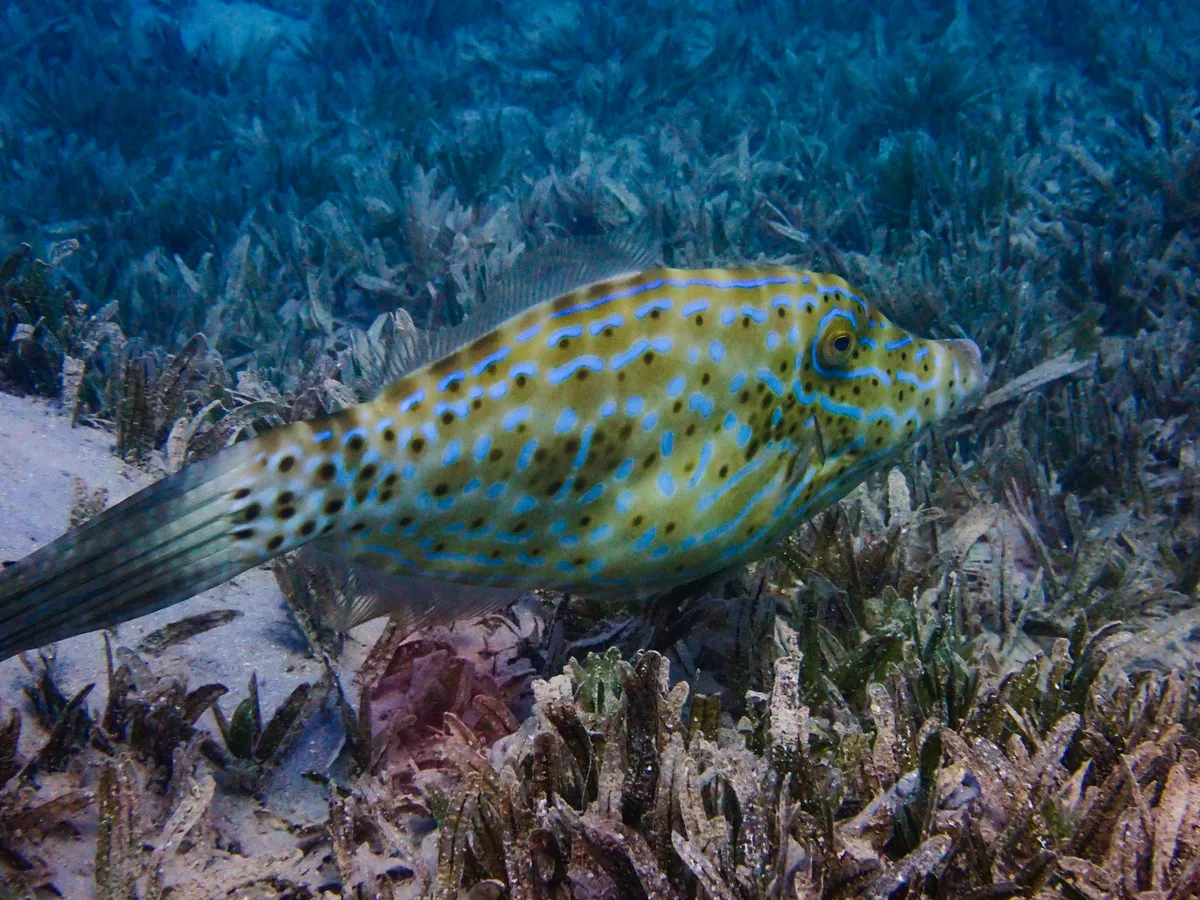
Reaching a maximum length of 110 cm (3.6 feet) and a weight of up to 2.5 kg (5.5 pounds), the scrawled filefish is notable for its elongated, oval-shaped, and strongly compressed body. Its coloration can vary from olive brown to gray, with irregular blue lines and spots, while black spots are dispersed mainly on the head. Juveniles may display a yellowish-brown hue with dark spots. The species is capable of rapid color changes to blend into its surroundings, akin to the adaptive abilities of an octopus.

The scrawled filefish's anatomical features include a small mouth at the tip of a pointed snout, two dorsal spines (one prominent and one smaller for locking), and a rounded, fan-like caudal fin. These fish are lacking in pelvic fins, which is a distinguishing characteristic of their order, Tetraodontiformes.

In terms of diet, the scrawled filefish is an omnivore with diverse tastes. It feeds on small crustaceans, various types of algae, gorgonians, sea anemones, tunicates, corals, seagrasses, and hydrozoans. The juveniles are known to travel great distances in the open ocean, often hitching a ride on floating seaweed.

These fish are generally solitary and demersal, meaning they dwell near the ocean floor, and are predominantly active during the day. They are shy around humans and rarely seen in schools. The name "Aluterus" is derived from Greek, translating to "not free or detached," a nod to their anatomical structure where the pelvis does not form a spiny projection as seen in some related species like triggerfish.

Why it's threatened

There are no know species-specific threats to A. scriptus. Aluterus scriptus is a reef-associated and seagrass-associated species. Although no documented declines in the population have been observed, it may be undergoing population reduction due to habitat loss. As of 2008, fifteen percent of the world’s coral reefs were considered under imminent threat of being “Effectively Lost” (with 90% of the corals lost and unlikely to recover soon), with regions in East Africa, South and South-east Asia, and the wider Caribbean being the most highly threatened (Wilkinson et al. 2008). Of 704 zooxanthellate reef-building coral species which were assessed by using the International Union for Conservation of Nature Red List Criteria, 32.8% are in categories with elevated risk of extinction (Carpenter et al. 2008). One-third of global seagrass species are currently experiencing population declines, and 21% of globally assessed seagrass species are in threatened or near-threatened categories primarily due to coastal development and pollution (Short et al. 2011).

Threat classification from the IUCN Red List.

Comments

Please, sign in to leave a comment

Continue with a social account — yours will be created automatically.

No comments yet — be the first.

Last Update: June 28, 2026