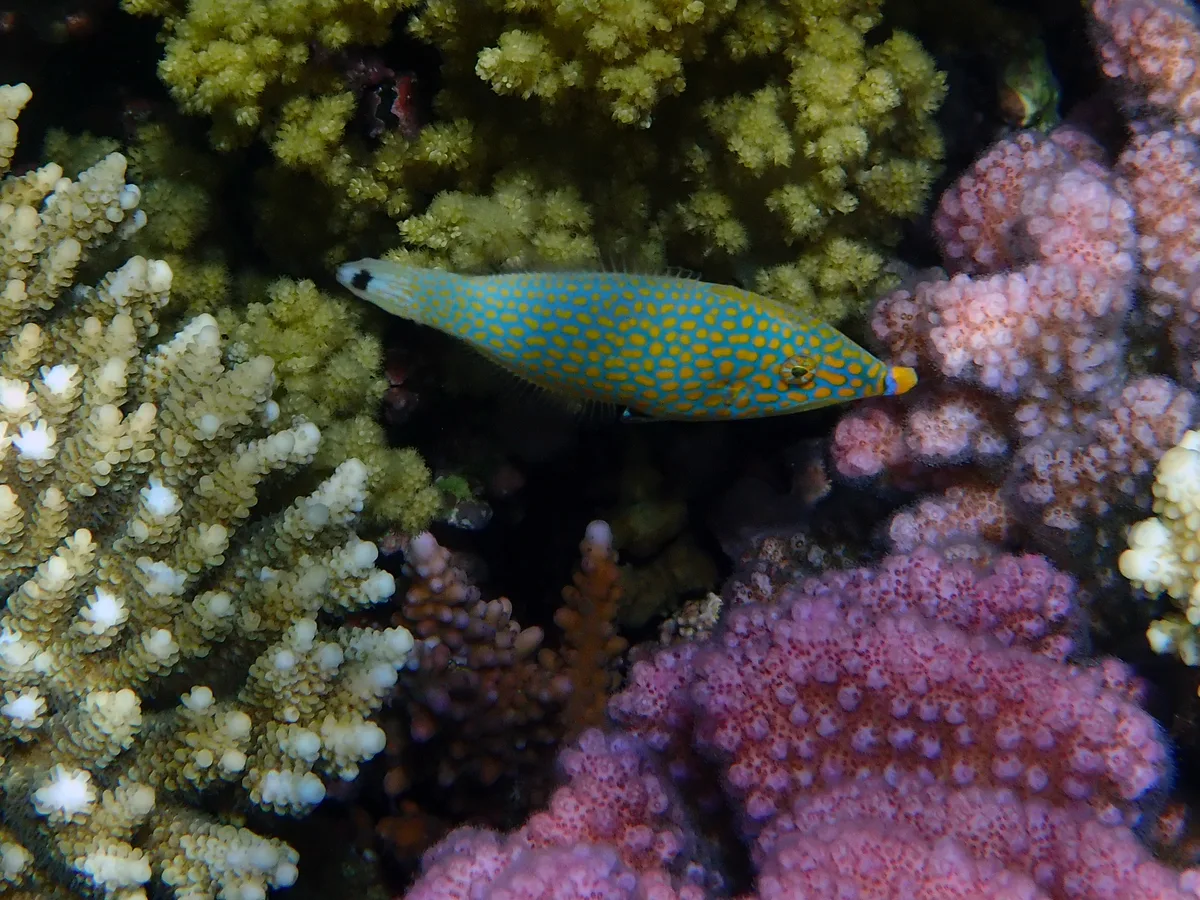
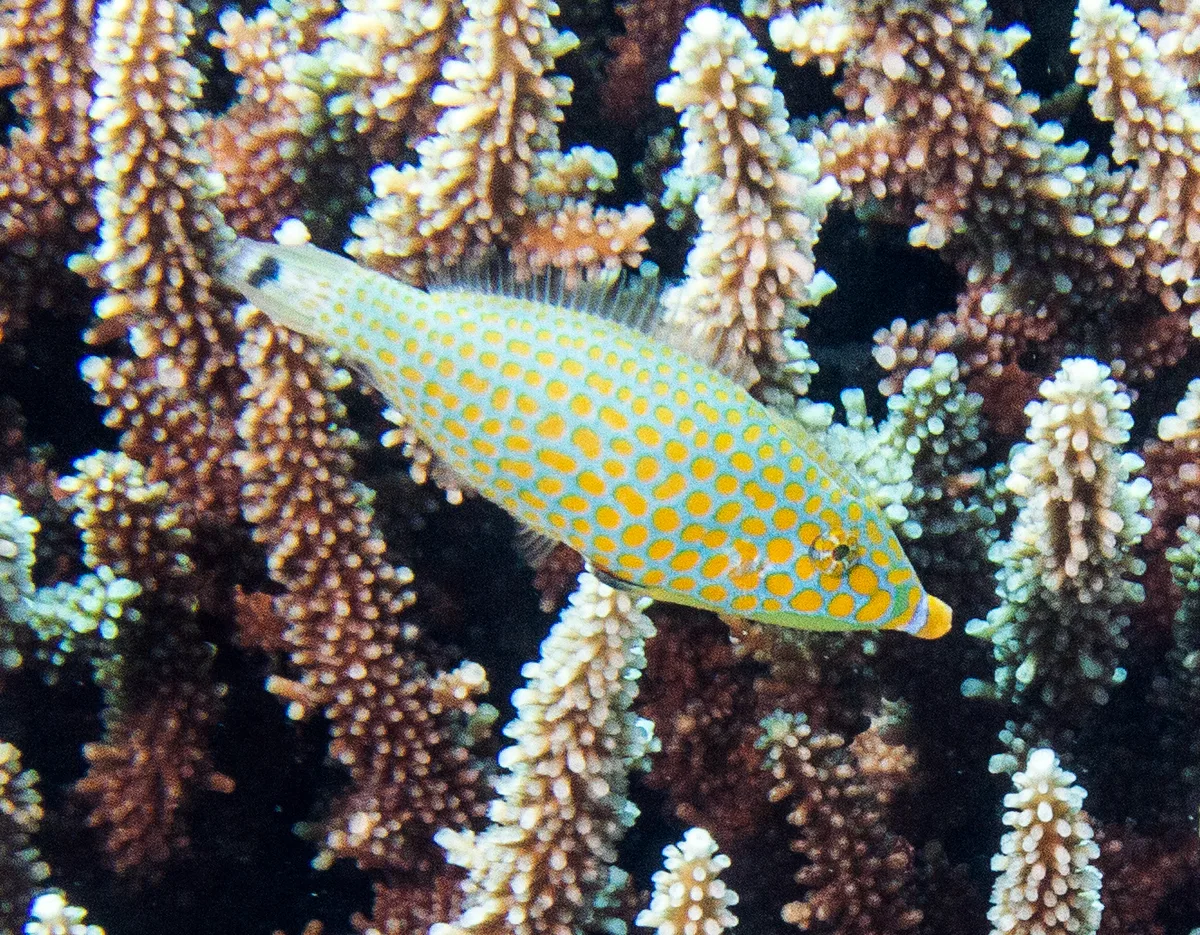
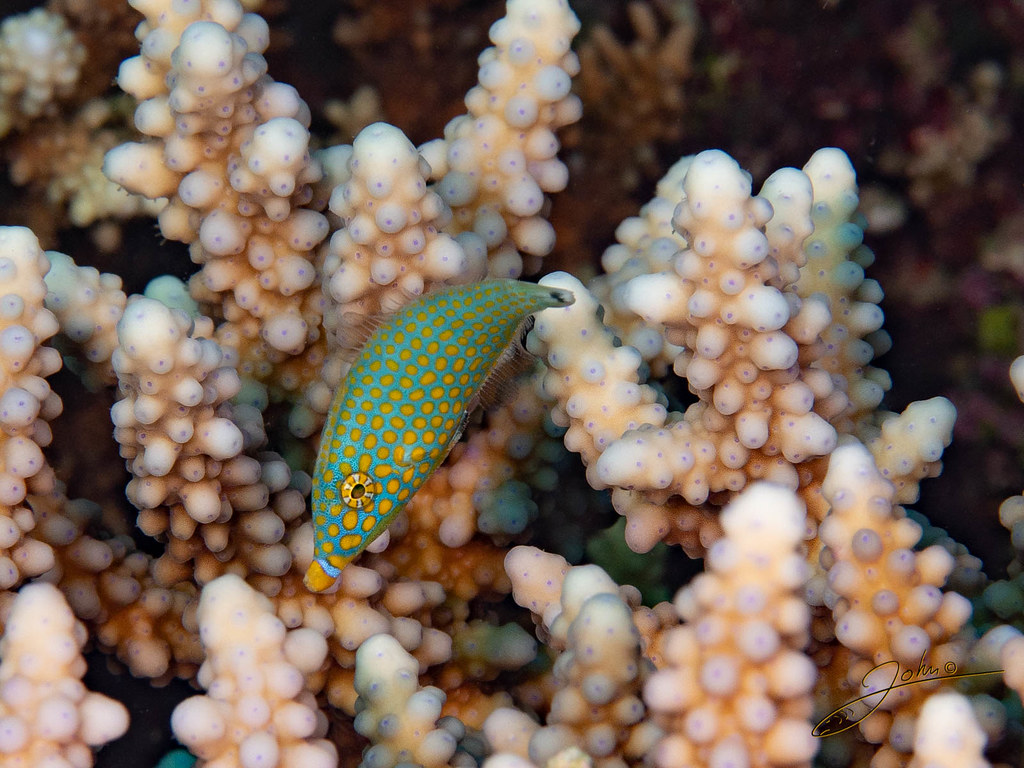
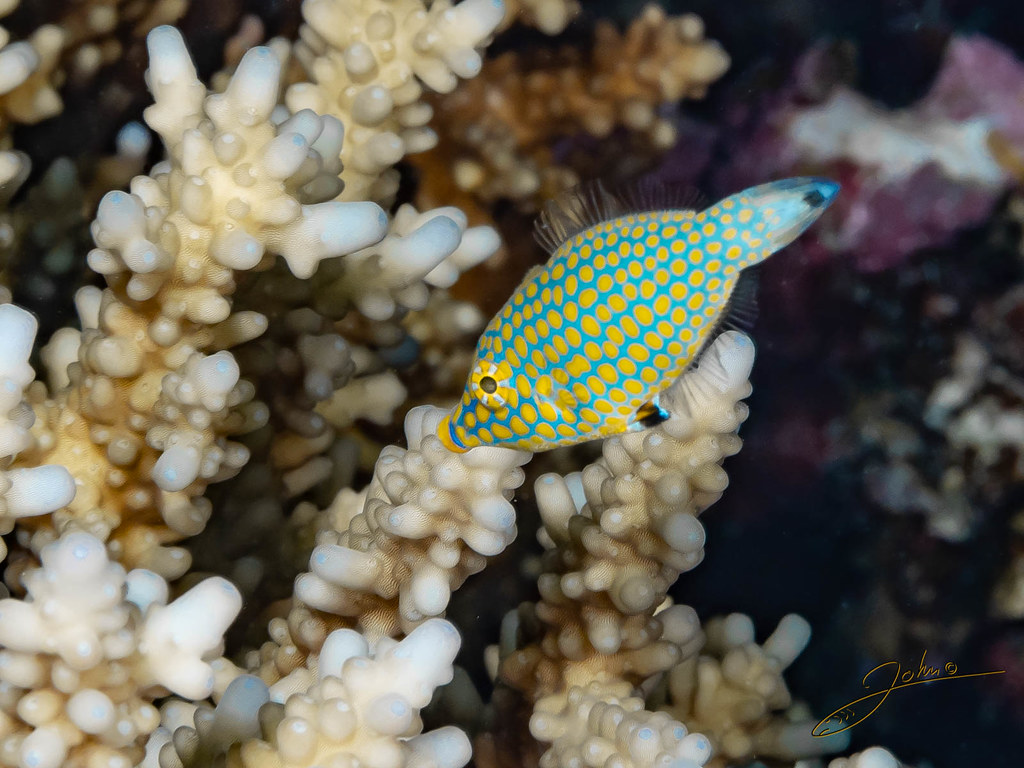
This fish eats one thing, and there is good evidence that the diet makes it smell like its food.
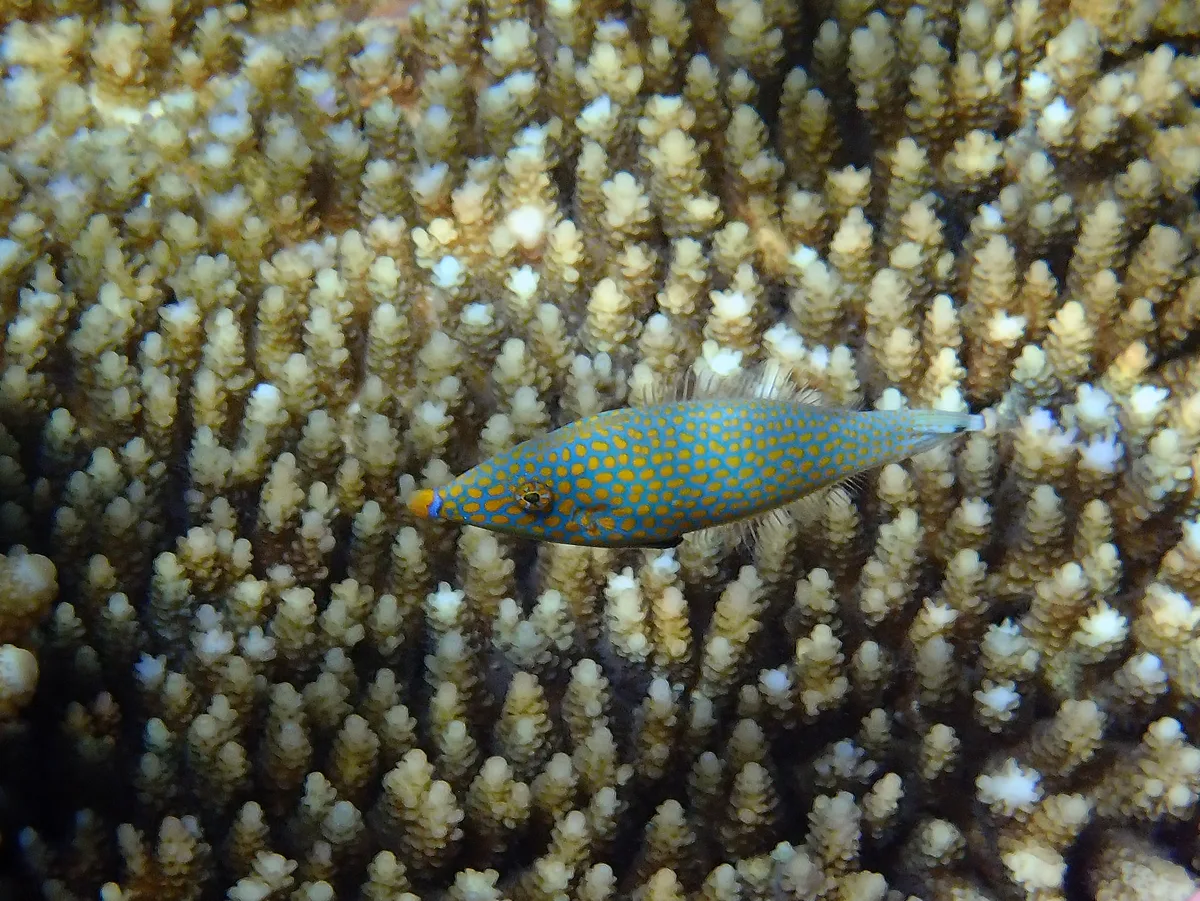
The work was done on its twin. Oxymonacanthus longirostris replaces this species outside the 🌊 Red Sea and takes the same corals, and at Lizard Island researchers showed that filefishes feeding on Acropora take on the coral's chemical signature. Crabs that live inside Acropora, asked to choose by smell alone, could not reliably tell the fish from the coral. A predatory cod paid more attention to a filefish sitting in a coral it had not been eating than to one that matched. The camouflage is an odor rather than a color, and it was the first case found in a vertebrate.
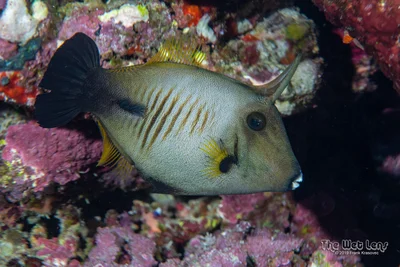
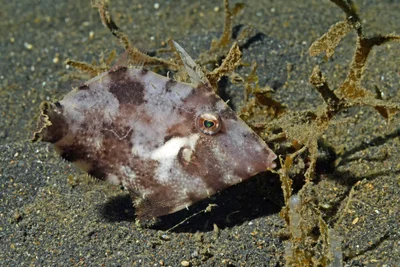
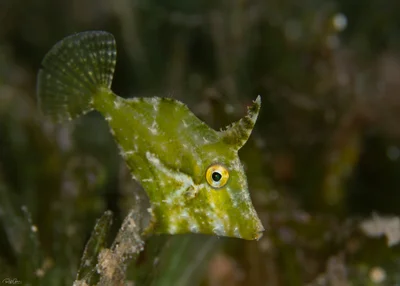
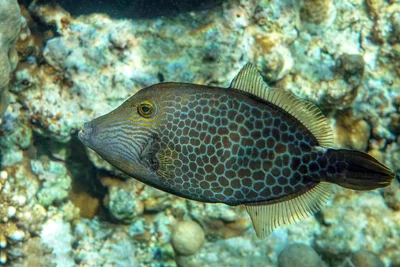
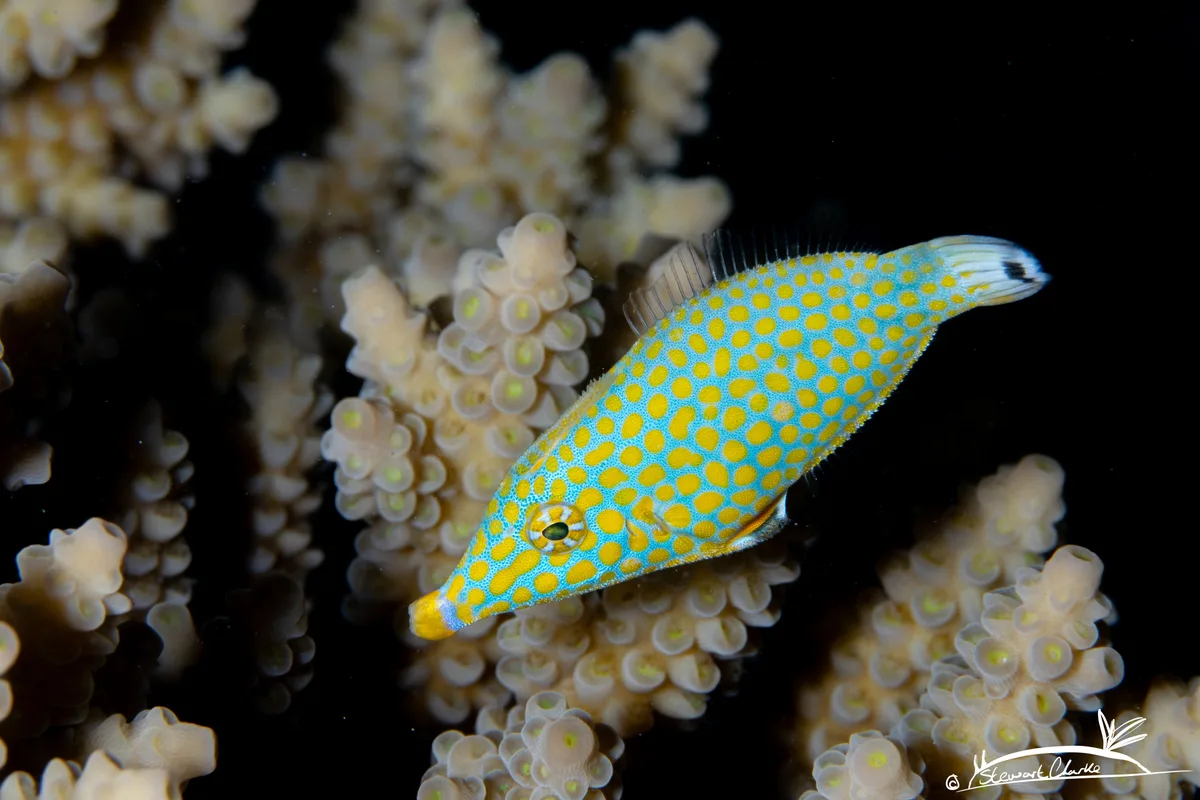
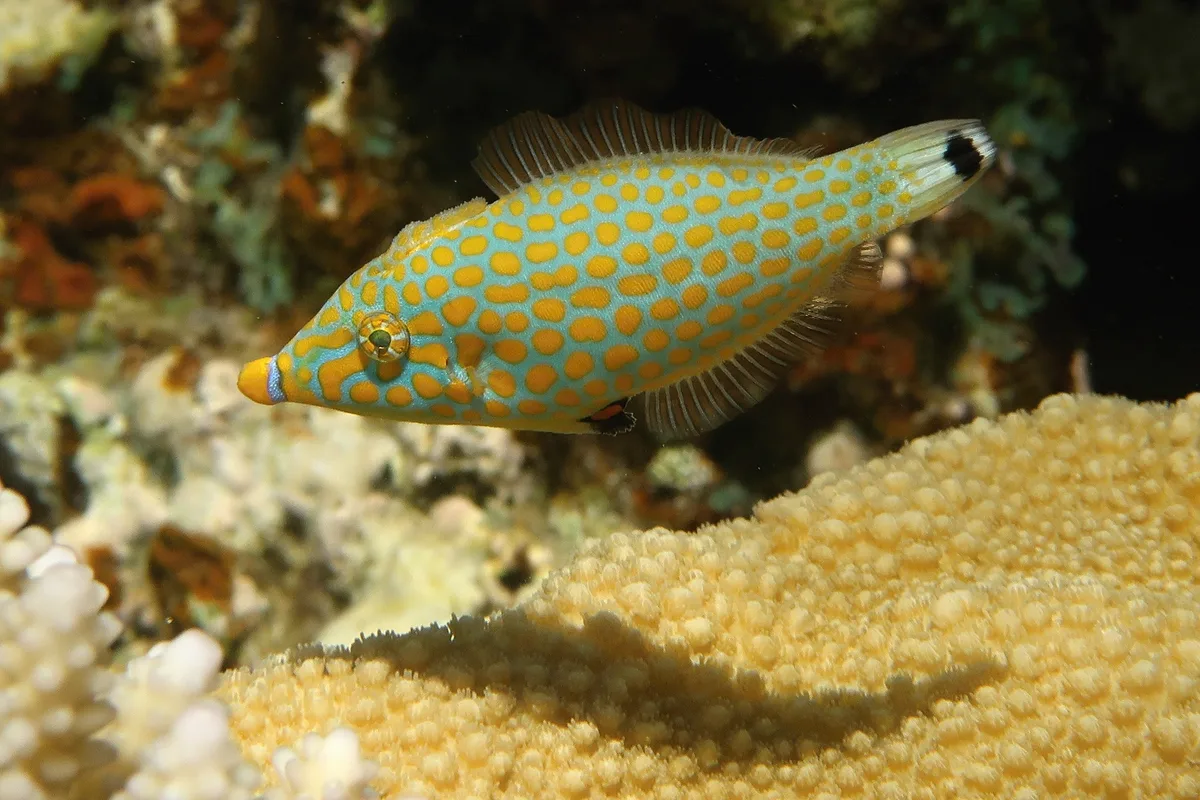
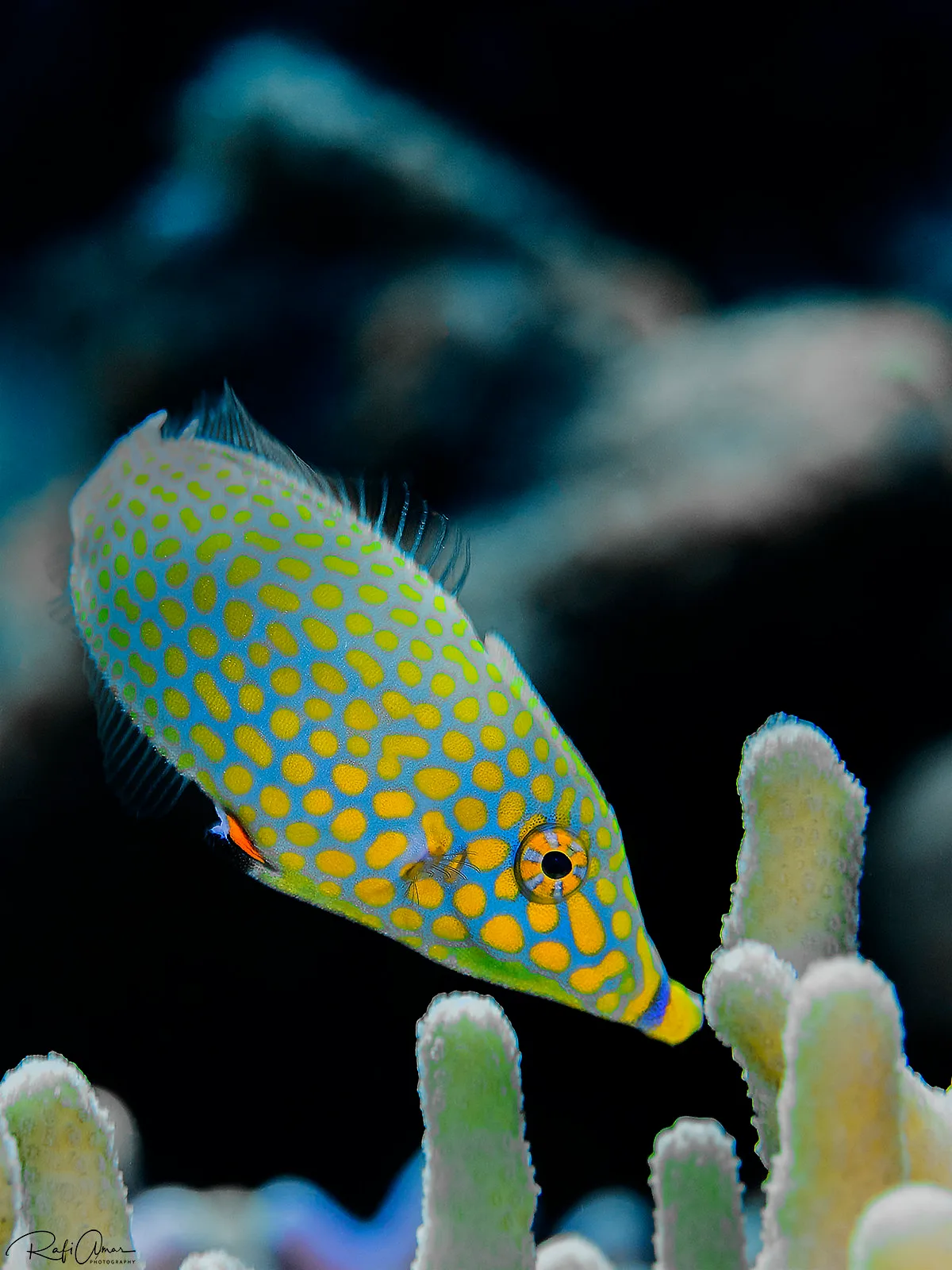
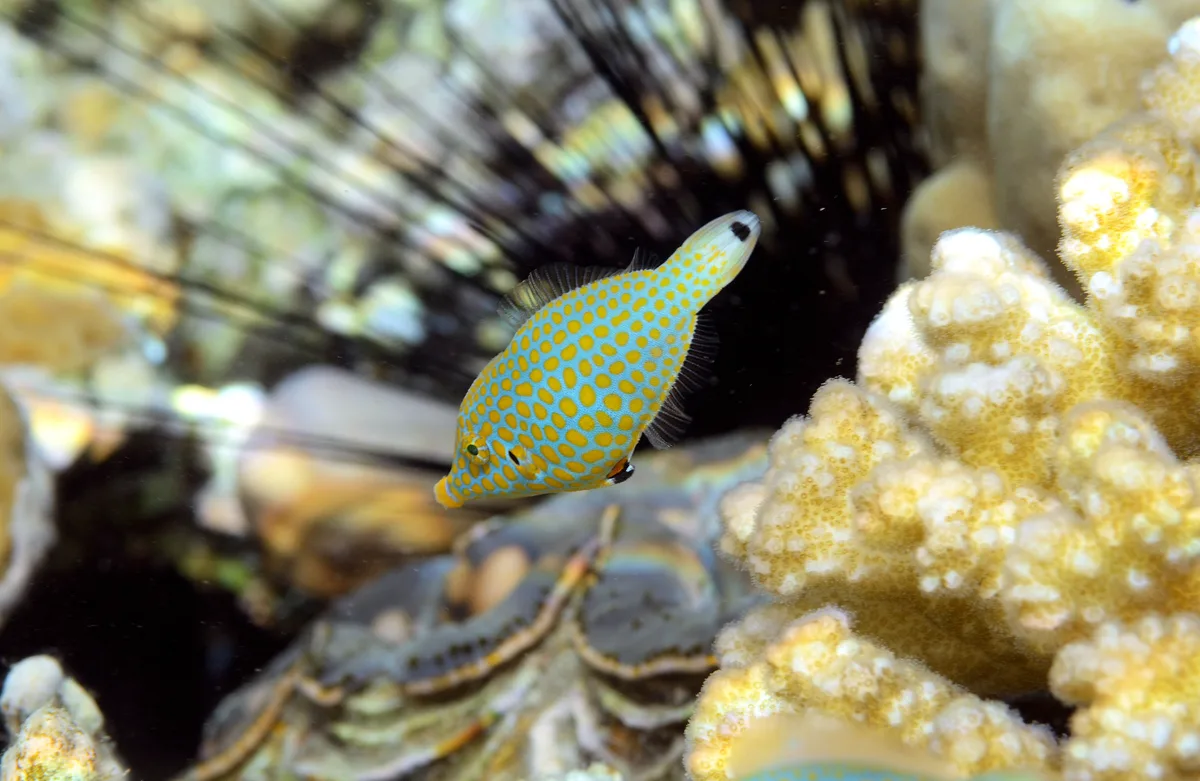
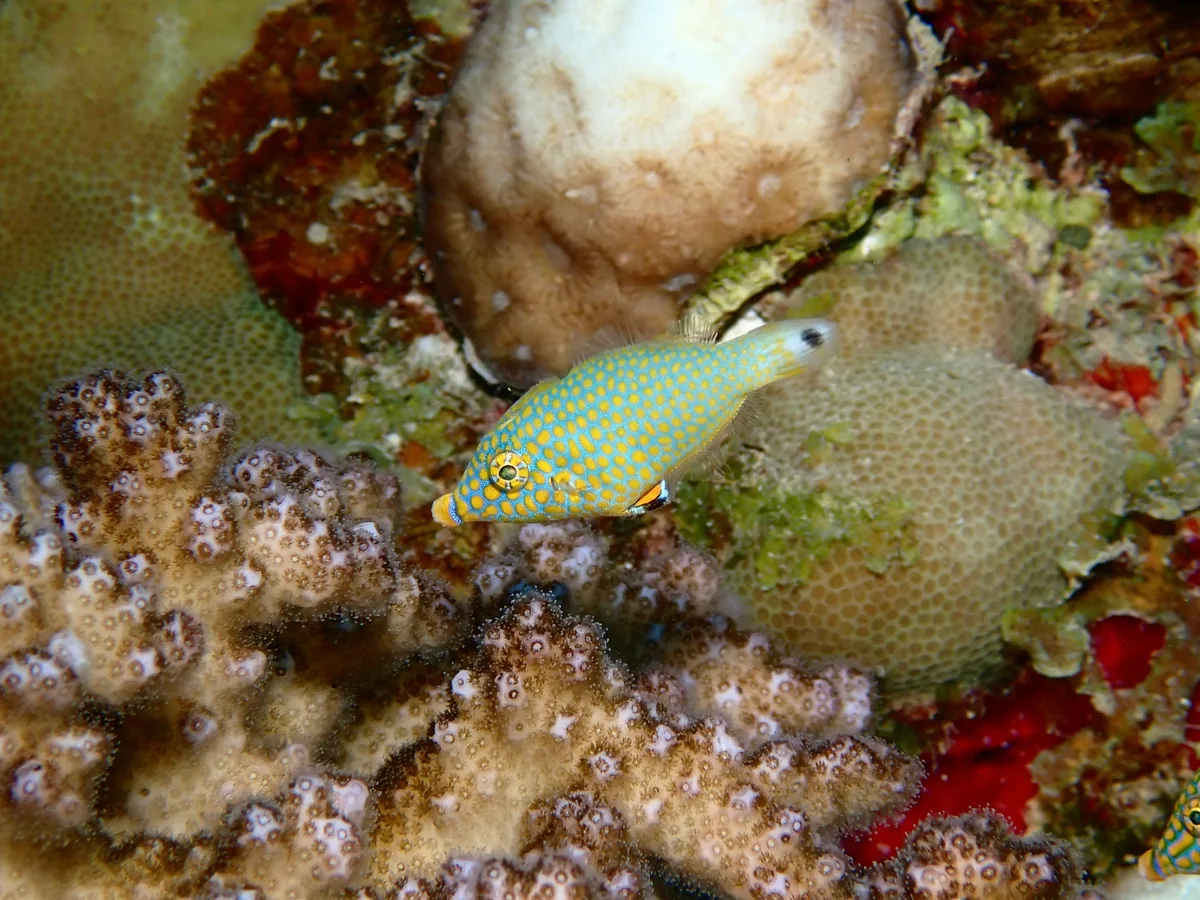
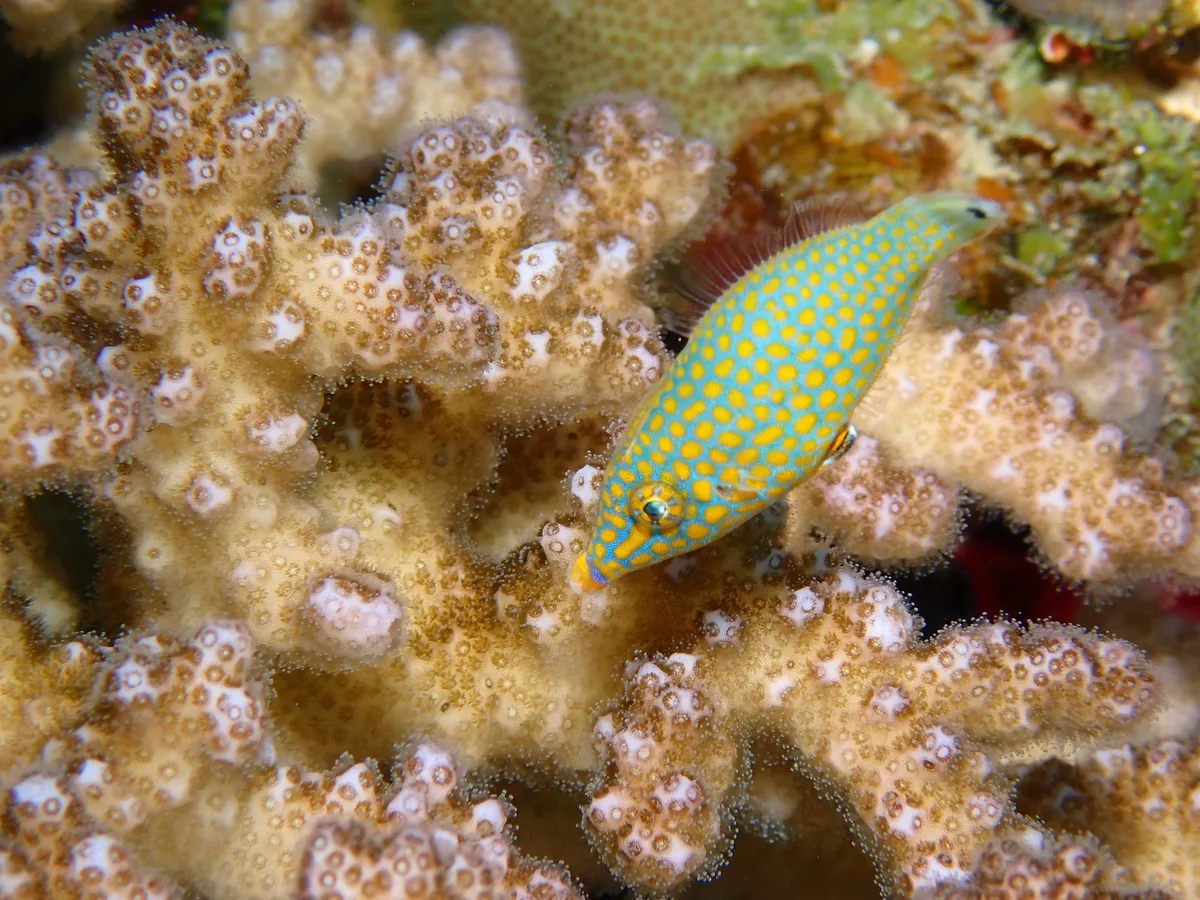
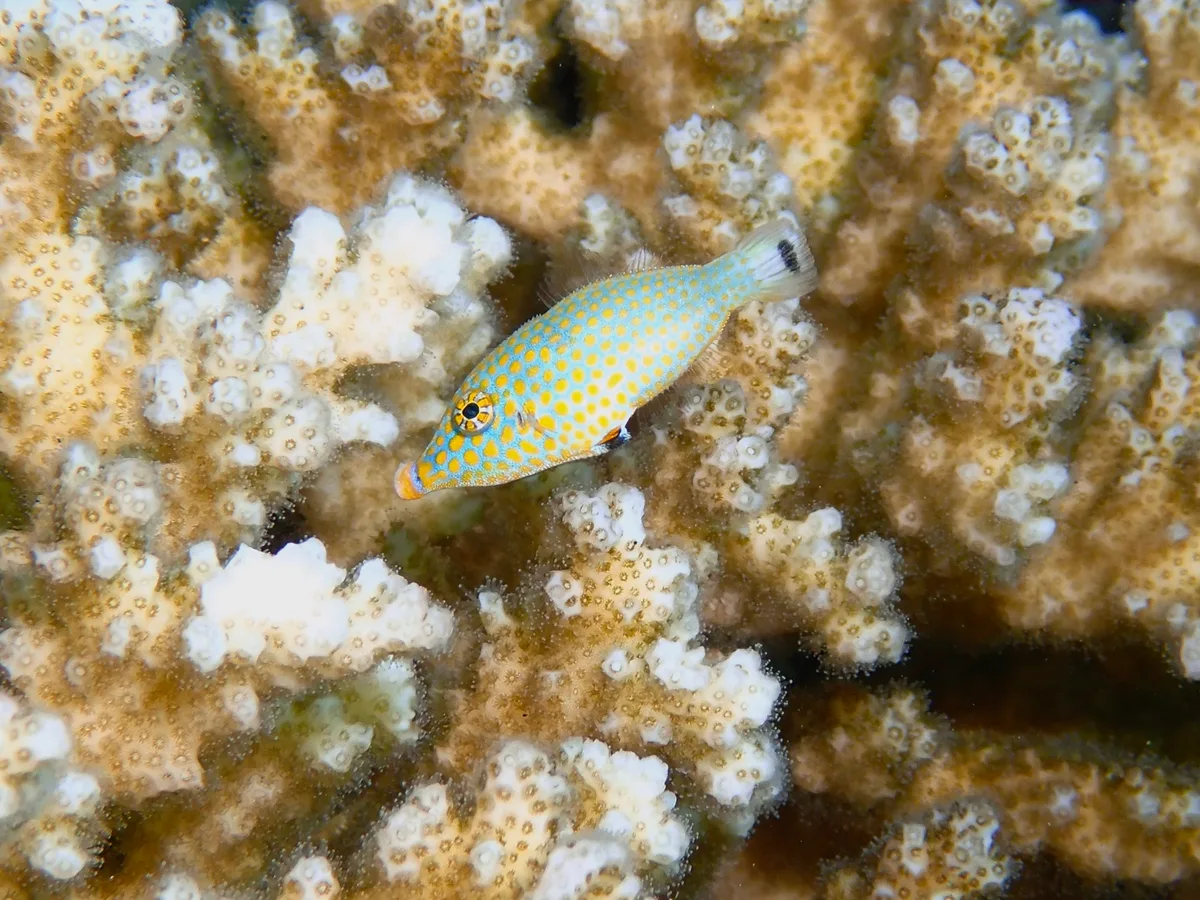
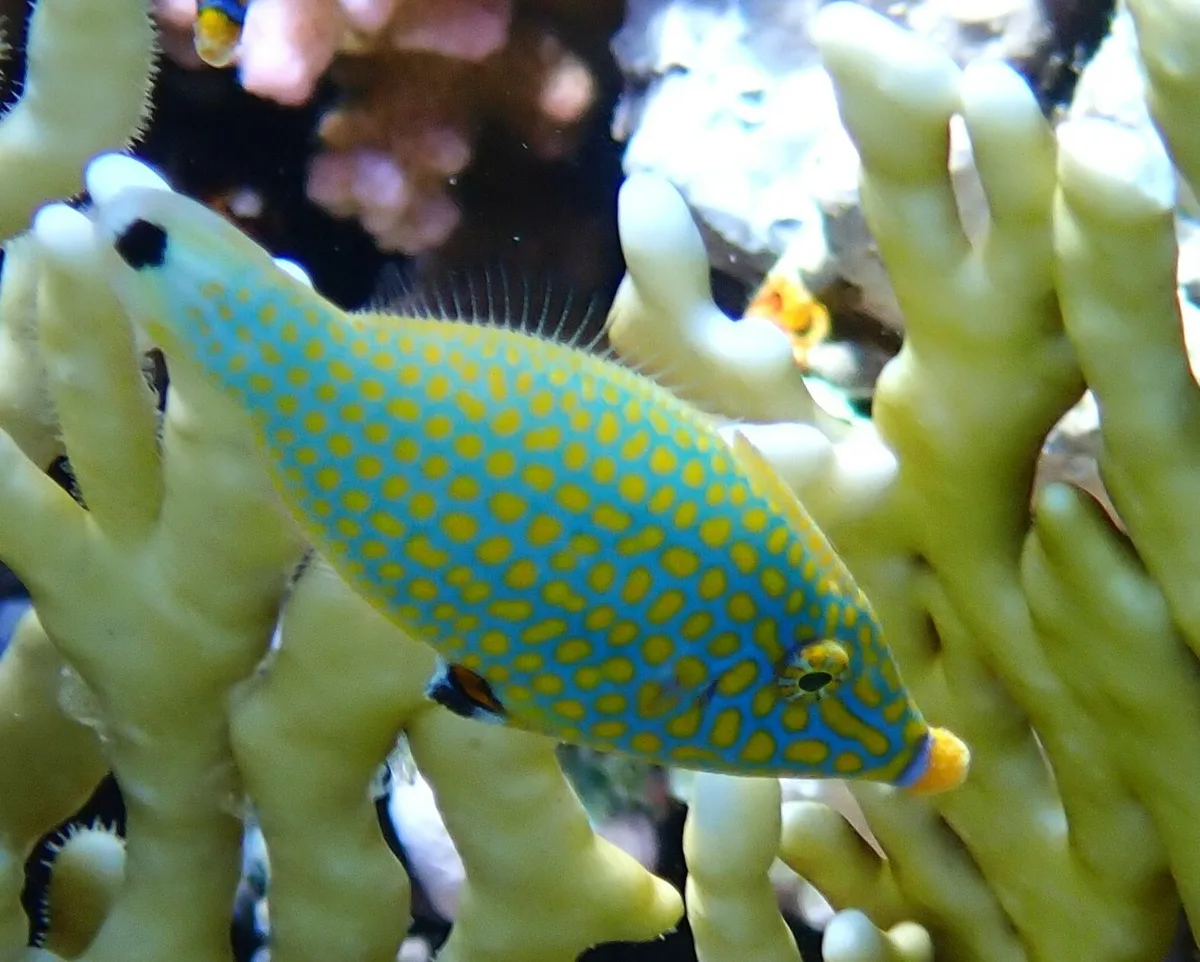
It is small, 7 cm at most, and shaped like nothing else on the reef: a slim body ending in a long tube of a snout with a minute mouth at the tip, usually held nose-down over the branches. The body is greenish blue and carries rows of yellow to orange spots and dashes along the flank, which at a glance read as Acropora. One long spine stands over the eye.
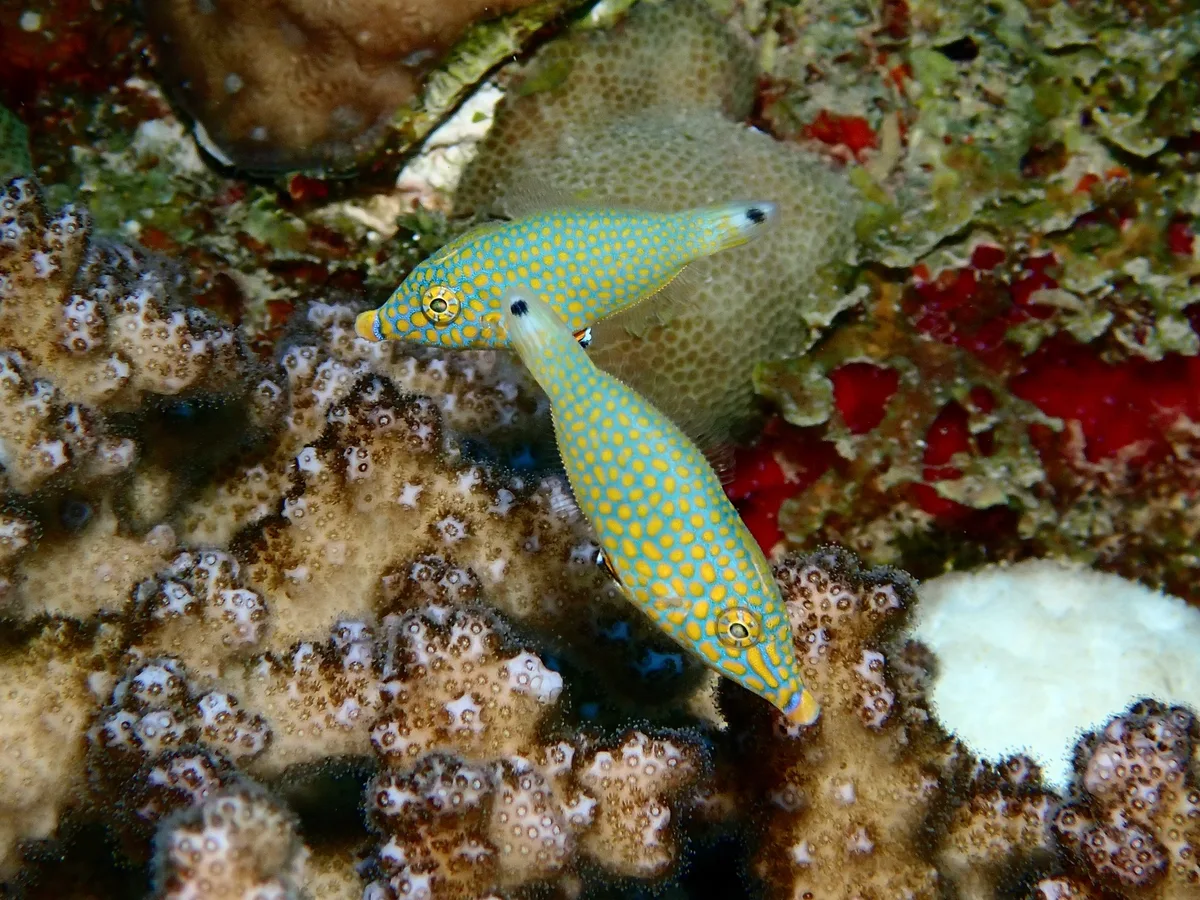
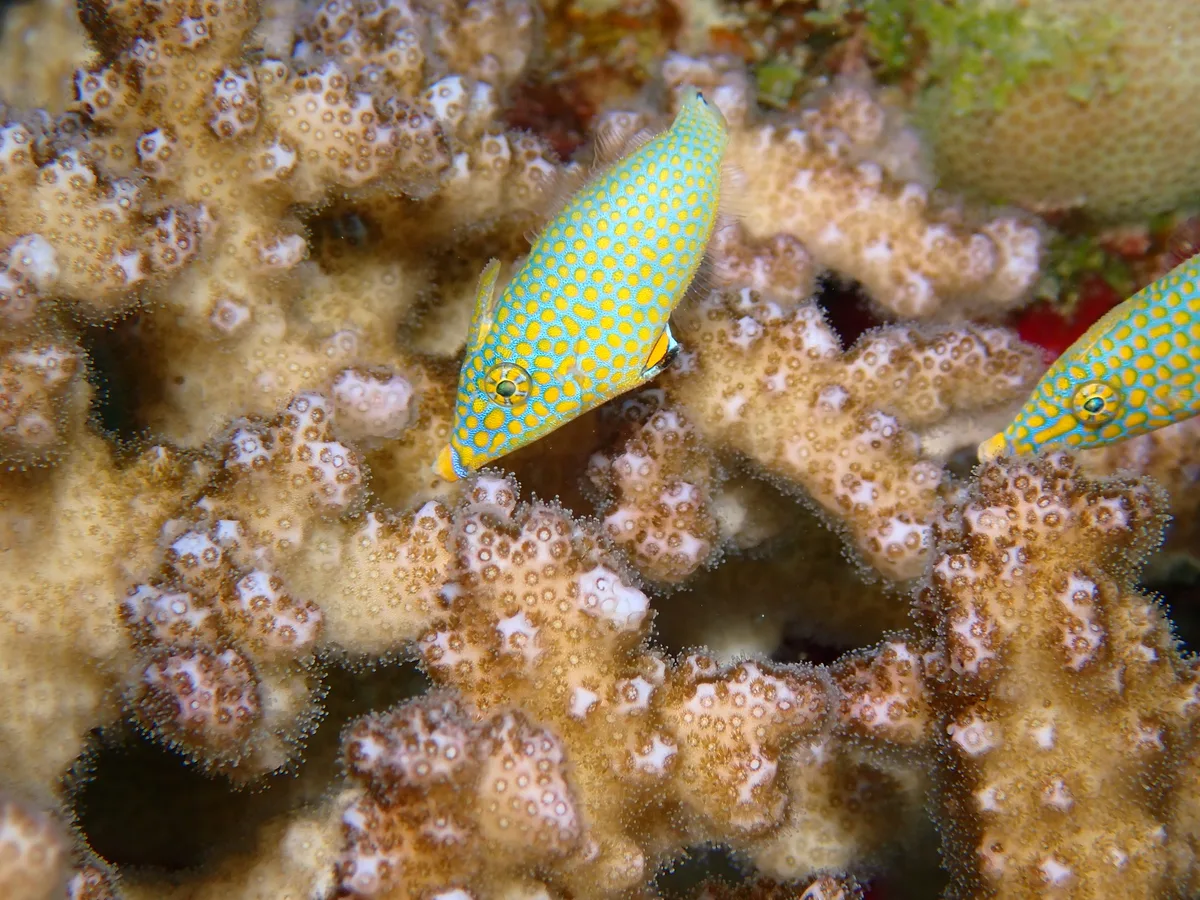
Feeding is slow work, single polyps picked out of branching Acropora with the tip of that snout. It turns up in pairs, sometimes small groups, on coral-rich fringing reefs from just under the surface to about 10 m. In the Indo-Pacific twin the pair holds a joint feeding territory, the bond lasts, and the female lays her eggs in a tuft of algae rather than on the coral itself.
Tying yourself to one coral has a price. The IUCN assessed this fish as Vulnerable in 2017, not because anyone fishes it, but because Acropora is the coral bleaching kills first. Where a thicket dies the filefish goes with it, even if the water never got hot enough to hurt it.
It lives in the 🌊 Red Sea and nowhere else, and is named for the zoologist Harold Wesley Hall. Over healthy Acropora it is not hard to find. Over the rubble that used to be Acropora it is simply absent.
The genus. Oxymonacanthus Bleeker 1865 - oxy (sharp). ETYFish
The species. Oxymonacanthus halli Marshall 1952 - Honours Maj. Harold Wesley Hall. ETYFish
- long tube of a snout with a minute mouth at the tip
- greenish blue body with rows of yellow to orange spots and dashes
- usually in pairs, hanging nose-down over branching Acropora
- one long spine standing over the eye
- up to 7 cm
Why it's threatened
Threat classification from the IUCN Red List.