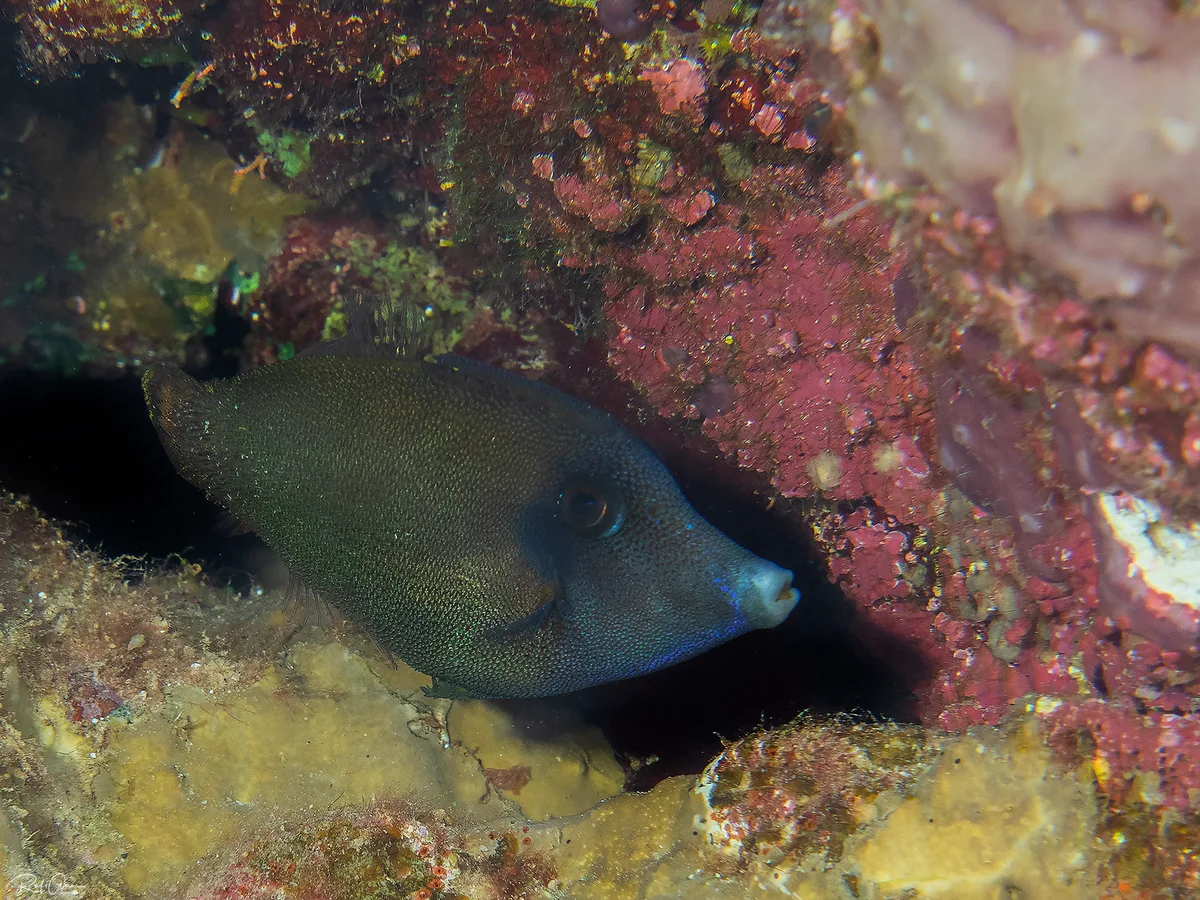
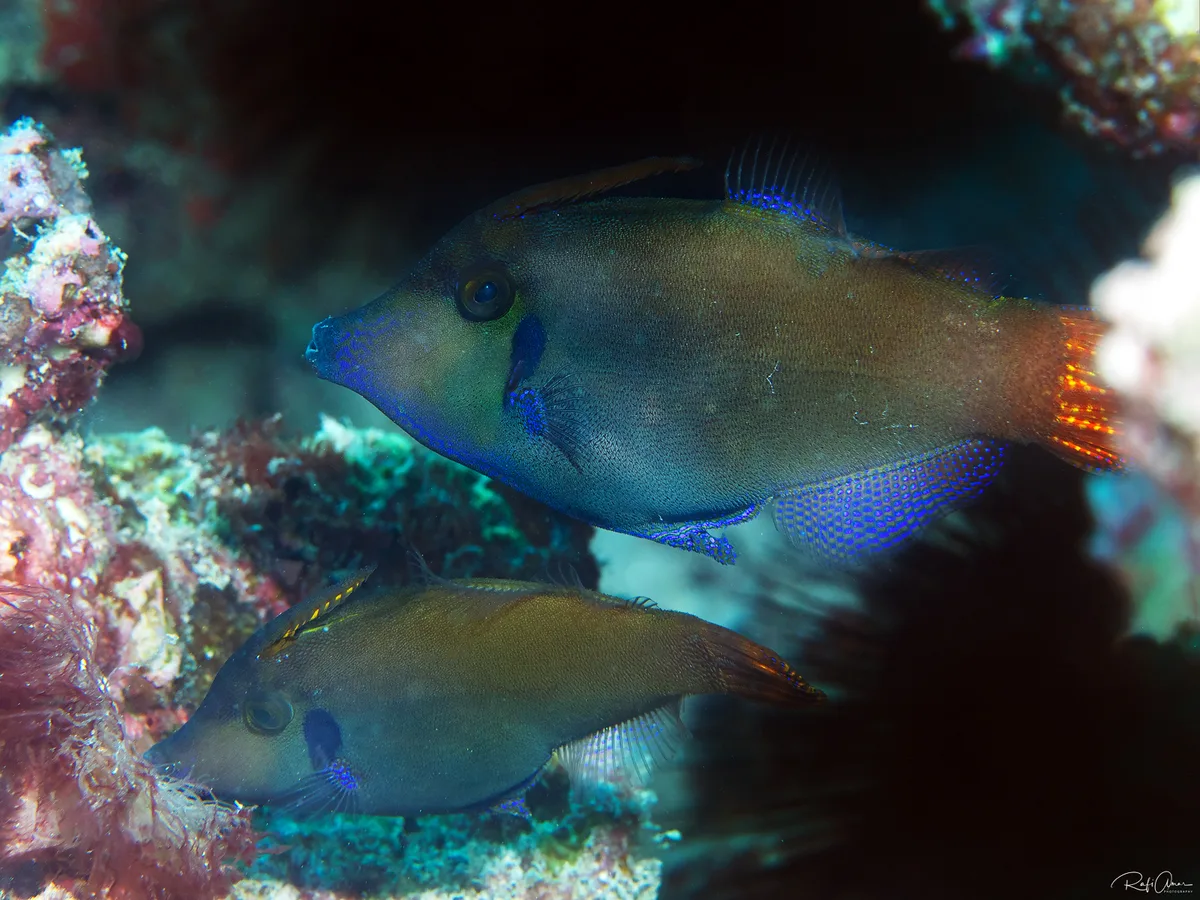
A filefish that lives in the 🌊 Red Sea and the 🌊 Gulf of Aden and nowhere else, that nobody described until 1986, and that stops growing at 7 cm. Hardly anyone sees it.
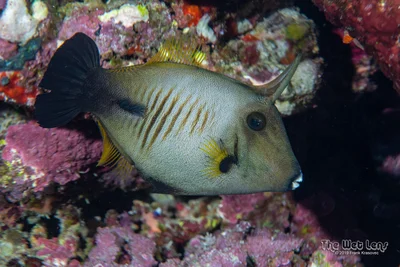
The mark to look for is on the cheek. A large black blotch runs from the middle of the gill slit back to the rear edge of the eye, and a dusky smudge carries on around the eye, onto the forehead and back to the base of the first dorsal spine. Head and body are otherwise plain brown. The tail is the only real color the animal owns: orange, crossed by darker stripes.
The rest is standard filefish equipment, and it is worth knowing because it explains where the fish is. The skin carries minute spinules and is rough as a file, which is where the family name comes from. The long first dorsal spine folds into a groove on the back and locks upright when a small second spine drops in behind it, the same mechanism the triggerfishes use. A fish this size, backed into a hole in the rubble with that spine locked and its belly flap spread, is not coming out for a moray and is not coming out for you.
It lives on shallow coral reefs, from a few meters down to 10 m or more, and it keeps to the untidy parts: rubble, crevices, the undersides of coral heads. Feeding is picking, mostly algae and small invertebrates off dead coral. It works by day, and at night it is inside the reef rather than on it.
Hutchins named it in 1986 for John E. Randall, whose collecting did more than anyone's to sort out the fishes of this sea. The genus name Pervagor means to wander, which suits the family better than it suits this particular fish.
Be realistic about the odds. It is genuinely rare in photographs, the regional guide's picture was taken at Eilat, and a diver who finds one has usually been staring at rubble on purpose for a long time.
- large black blotch from mid gill slit back to the rear edge of the eye
- plain brown head and body, dusky smudge around the eye
- orange tail crossed by darker stripes
- found only in the Red Sea and the Gulf of Aden
- up to 7 cm
Why it's threatened
Threats are unknown.
Threat classification from the IUCN Red List.