Orange Spotted Filefish
Fishes · Bony fishes · Filefishes

Orange Spotted Filefish

Oxymonacanthus longirostris (Bloch & Schneider, 1801)
syn. Balistes hispidus longirostris, Oxymonocanthus longirostris
12 - 18 cm1-30 mVulnerable
1142

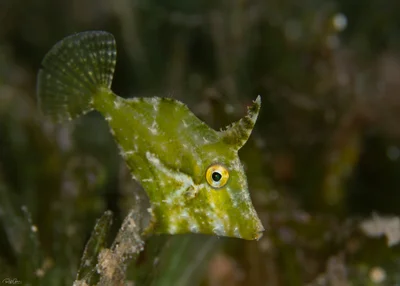
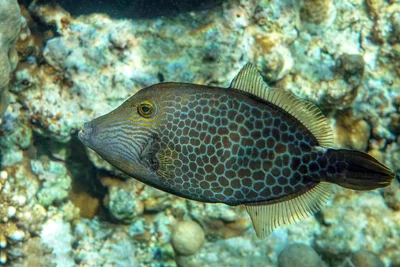
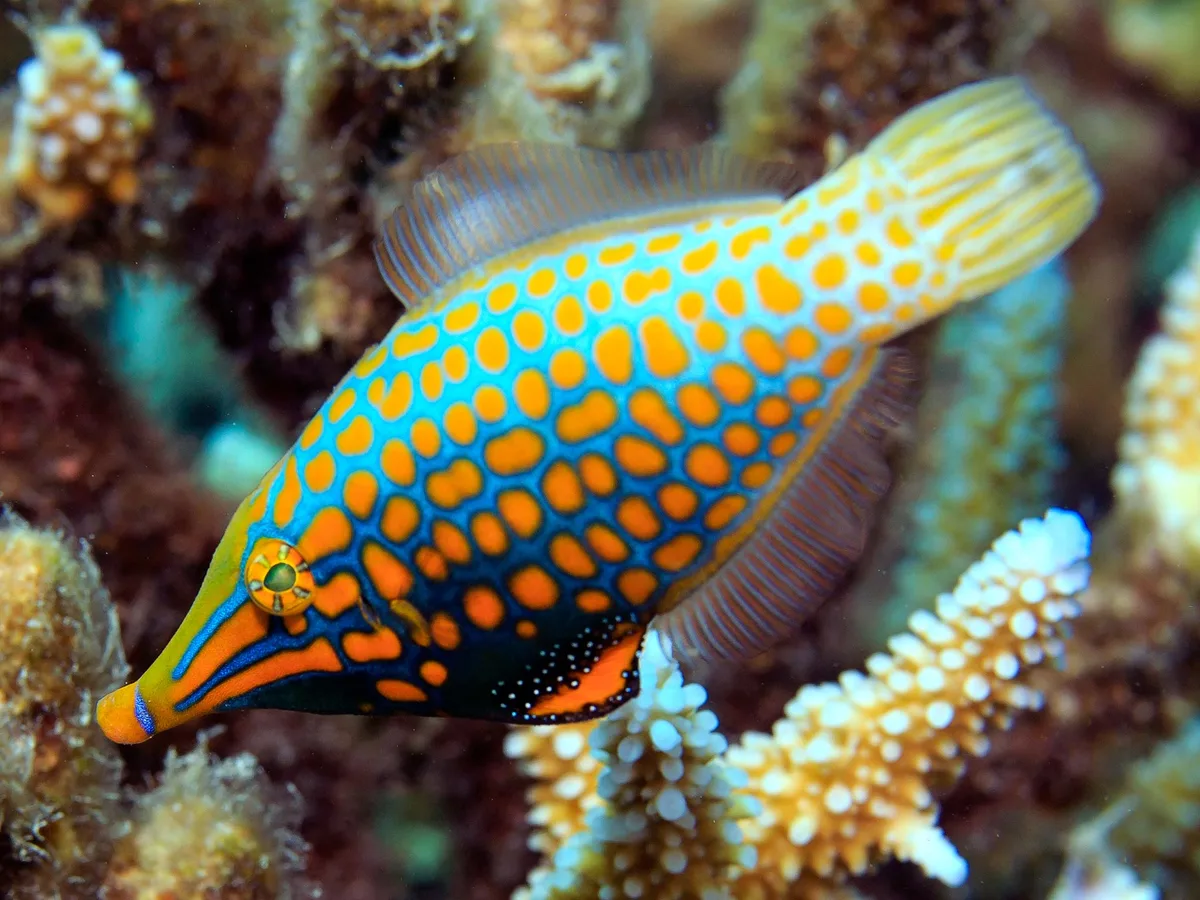
The orange spotted filefish (Harlequin filefish), scientifically known as Oxymonacanthus longirostris, is a member of the Monacanthidae family and can be found in the tropical waters of the Indo-Pacific region, including the 🌊 Red Sea, the 🇲🇻 Maldives, 🇮🇩 Indonesia, the 🇵🇭 Philippines, and 🇦🇺 Australia. It is important to note that the orange spotted filefish should not be confused with the different species referred to as Cantherhines pullus.

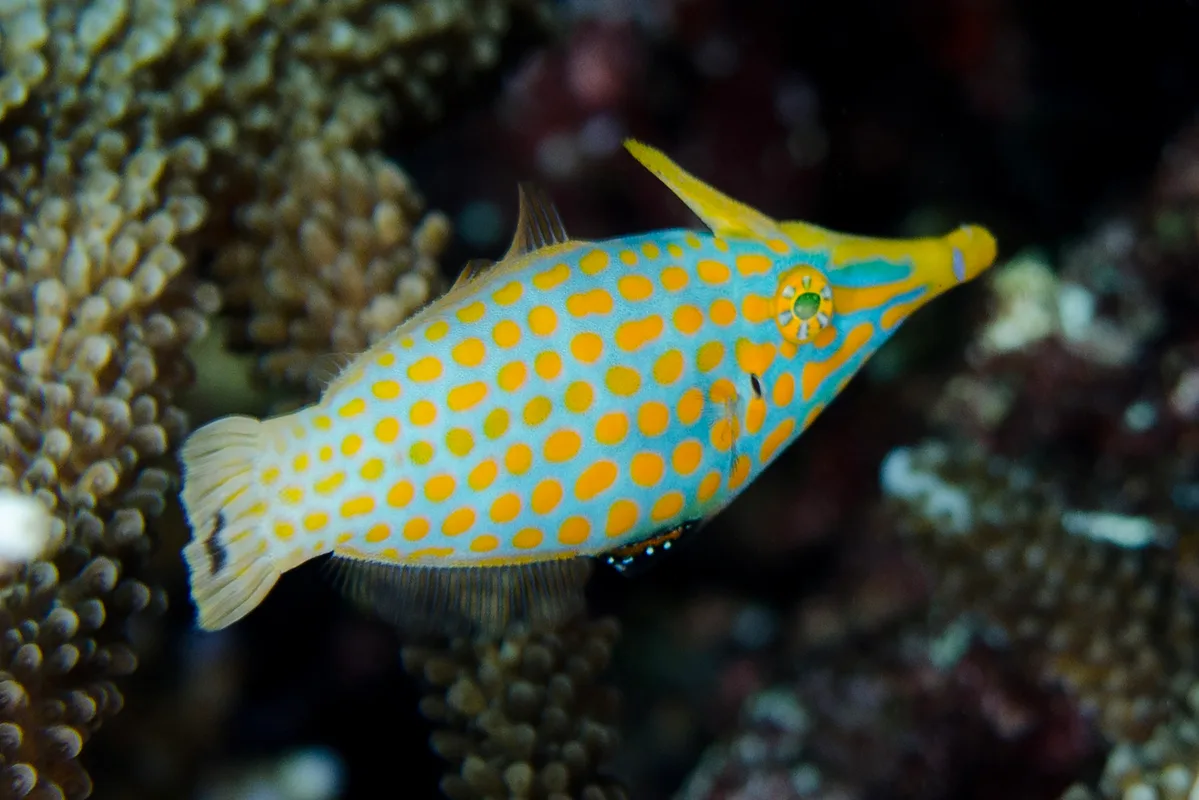
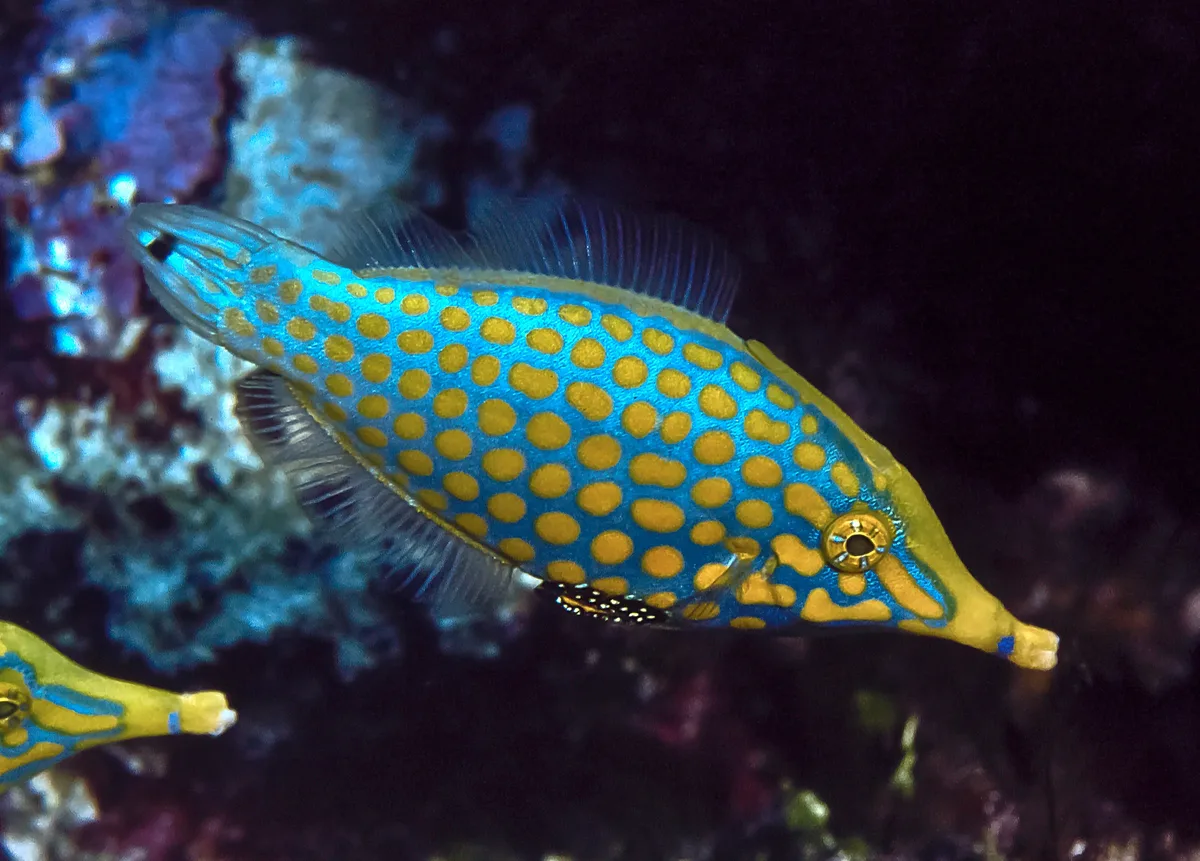
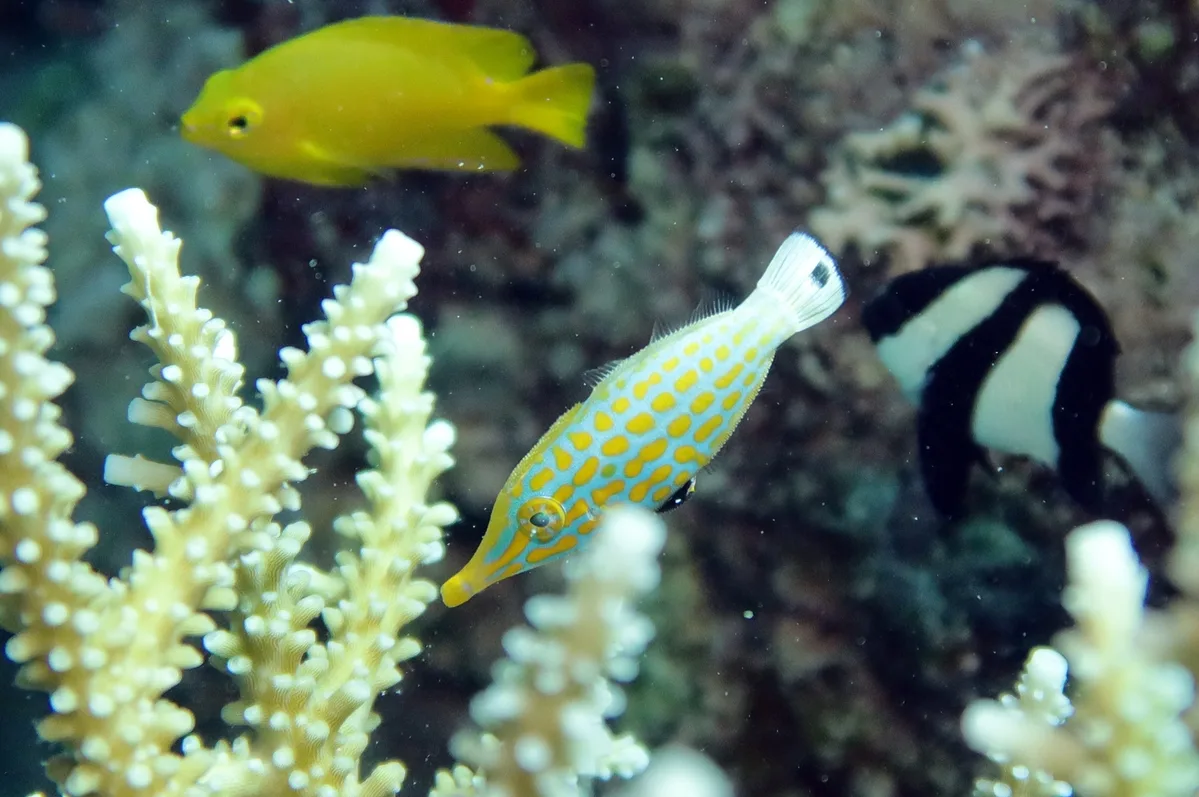
As its name implies, the orange-spotted filefish displays a unique coloration. Its body is primarily white or pale yellow, adorned with striking orange spots that are dispersed throughout its body and fins. The body shape is elongated and laterally compressed, which is characteristic of filefish species. On average, adult orange-spotted filefish measure between 12 and 18 cm (5 to 7 inches) in length.

In their natural habitat, these filefish primarily feed on Acropora polyps, exhibiting a specialized diet.

An intriguing characteristic of the orange spotted filefish is its ability to absorb and utilize chemicals from the Acropora coral it consumes. This behavior enables the filefish to adopt the scent of the coral, providing them with a disguise that helps them evade natural predators such as cod. This unique adaptation sets them apart from other vertebrates. Furthermore, the orange spotted filefish also employs visual camouflage as an additional means of protection.

Overall, the orange spotted filefish is a fascinating species with its distinctive appearance, specific dietary preferences, and remarkable adaptation strategies.
Why it's threatened

Biological resource use
Intentional use: (large scale) [harvest]
Climate change & severe weather
Habitat shifting & alteration

Because of its dependency on Acropora reefs, O. longirostris is susceptible to population declines due to habitat loss in parts of its range. As of 2008, 15% of the world’s coral reefs were considered under imminent threat of being “Effectively Lost” (with 90% of the corals lost and unlikely to recover soon), with regions in East Africa, South and South-east Asia among the most threatened (Wilkinson and Souter 2008). Of 704 zooxanthellate reef-building coral species which were assessed by using the International Union for Conservation of Nature Red List Criteria, 32.8% are in categories with elevated risk of extinction (Carpenter et al. 2008). Of the 167 Acropora species occurring in the Indo-Pacific, 51 (30%) are listed in a threatened category (Vulnerable or Endangered), and another 23 (13%) are Near Threatened. In 1998, an extensive bleaching event was observed in reef areas worldwide. This event severely impacted the fringing reefs of Bise, off the northwest coast of Okinawa, Japan, with most of the living coral dying and filamentous algae quickly covering the dead corals. Of all species, acroporid corals seemed the most susceptible to bleaching (Hoegh-Guldberg and Salvat 1995, McClanahan 2000).

According to a leading expert in aquarium-related fishes, O. longirostris is one of the most difficult ornamental fishes to keep alive in captivity (Michael 1999), yet data from the UNEP World Conservation Monitoring Centre, and the Marine Aquarium Database (GMAD) which was assembled in 2000, indicate O. longirostris is one of, if not the, most heavily traded fishes that have been classified as most unsuitable for maintenance in aquaria (Wabnitz et al. 2003). Reports in the database indicate that 1,393 individuals of Harlequin filefish were traded between the years of 1999-2002, but reports by exporters between the same time period indicate that nearly 16,000 individuals were exported. High collection rates of this fish for the aquarium trade in addition to the higher frequency of natural disaster events such as bleaching observed in recent years may genuinely put at risk local populations and drive stocks below their critical recovery level (Kokita and Nakazono 1999, Kokita and Nakazono 2001).

Threat classification from the IUCN Red List.

Comments

Please, sign in to leave a comment

Continue with a social account — yours will be created automatically.

No comments yet — be the first.

Last Update: June 28, 2026