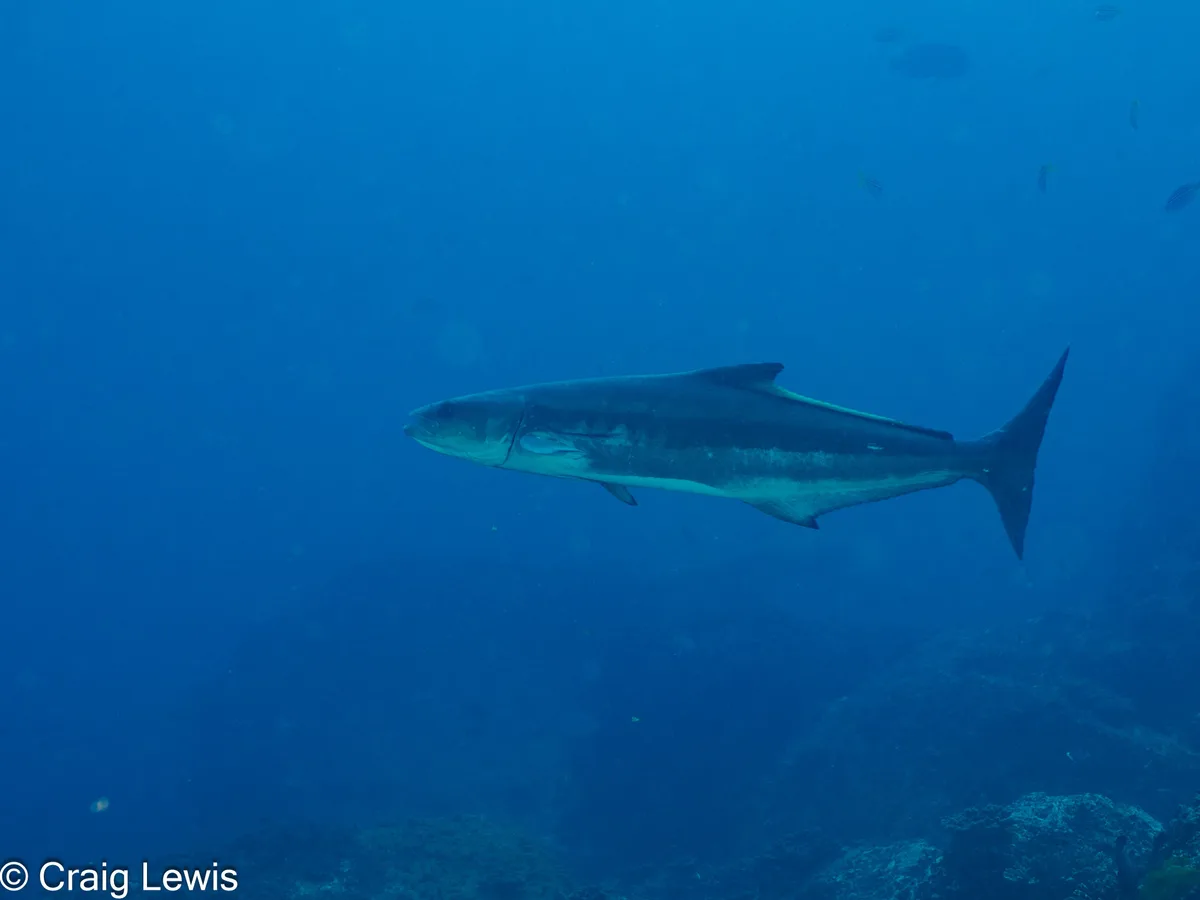
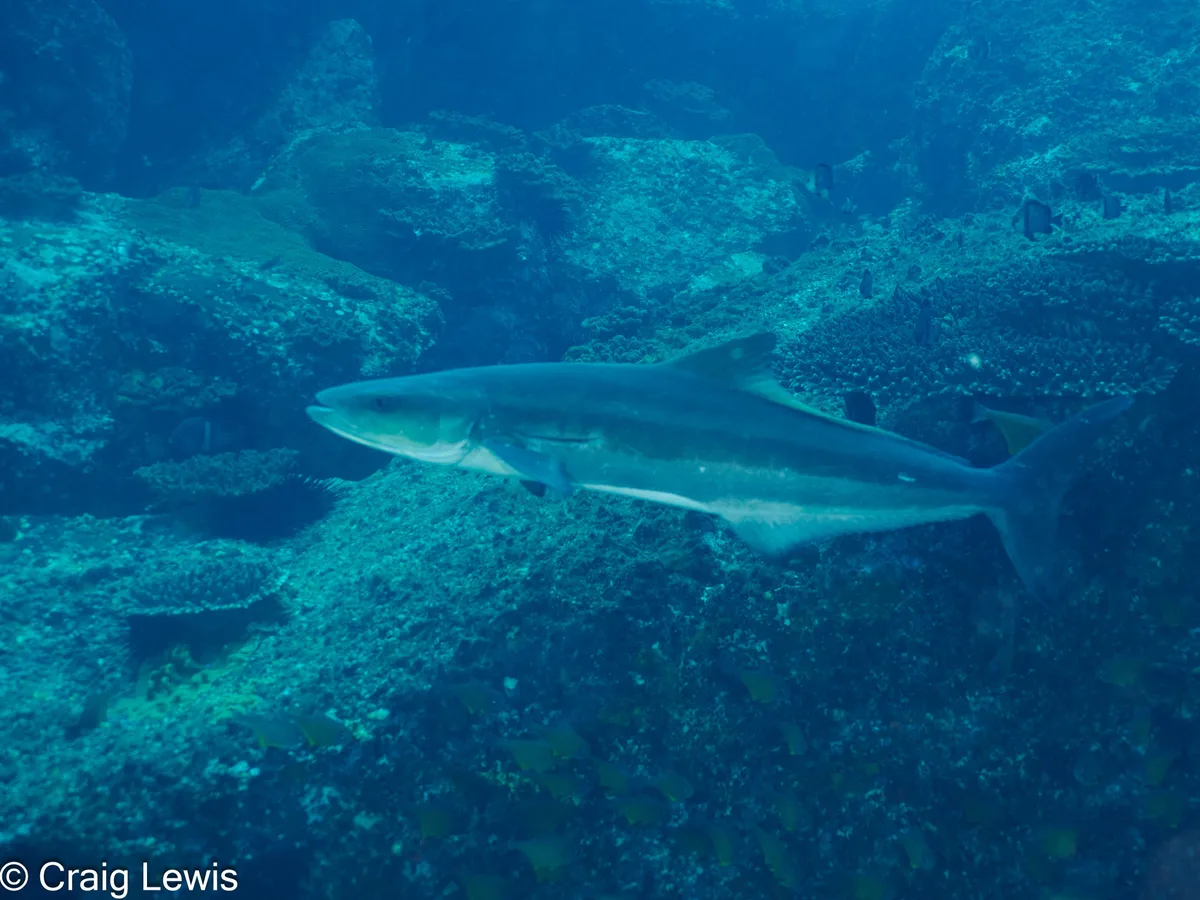
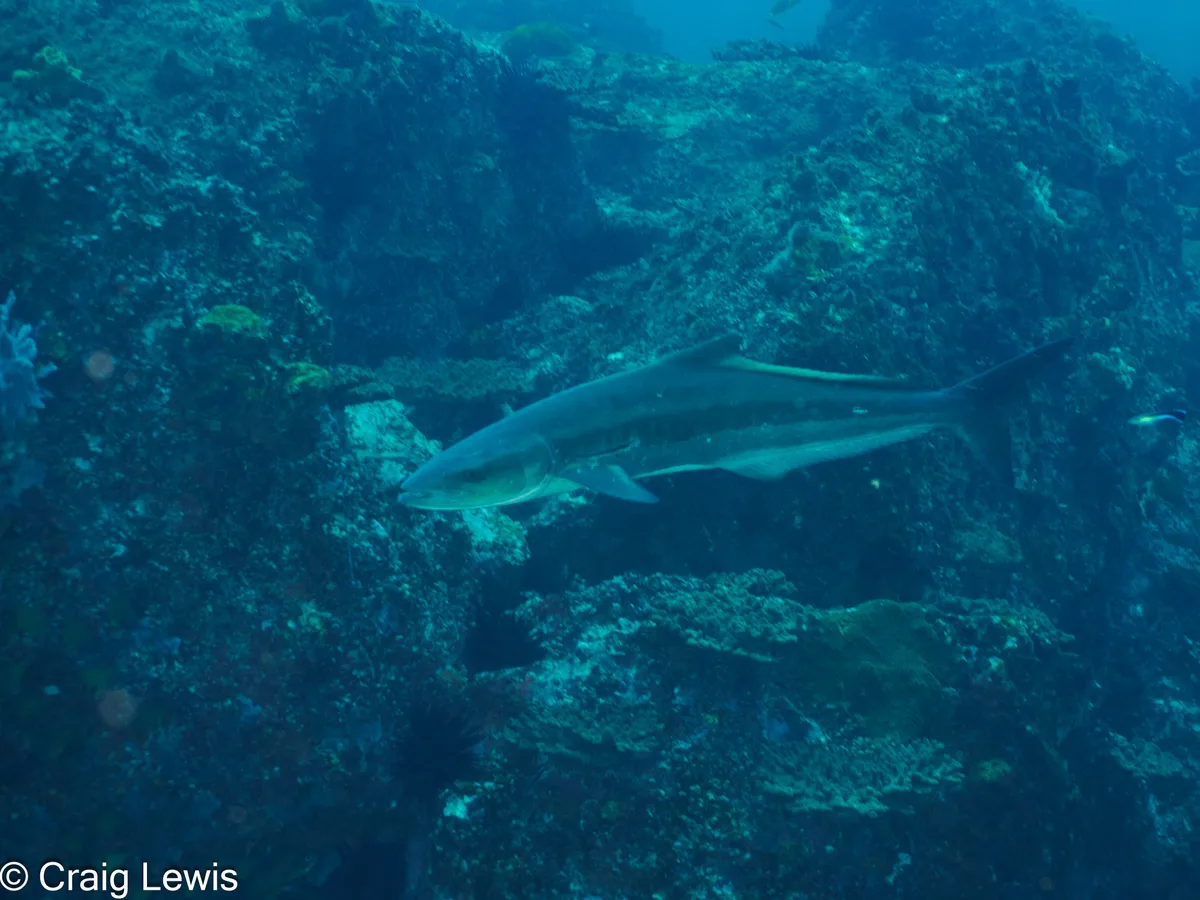
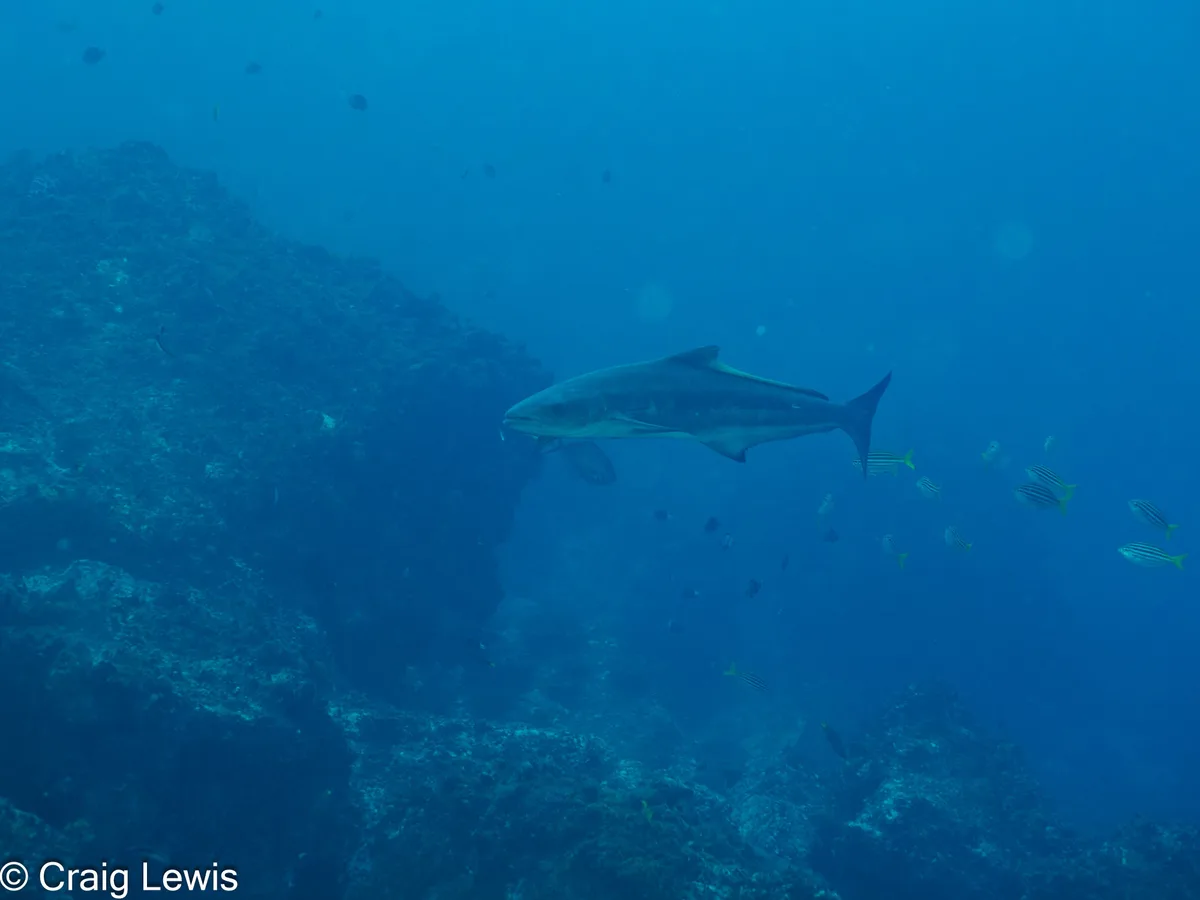
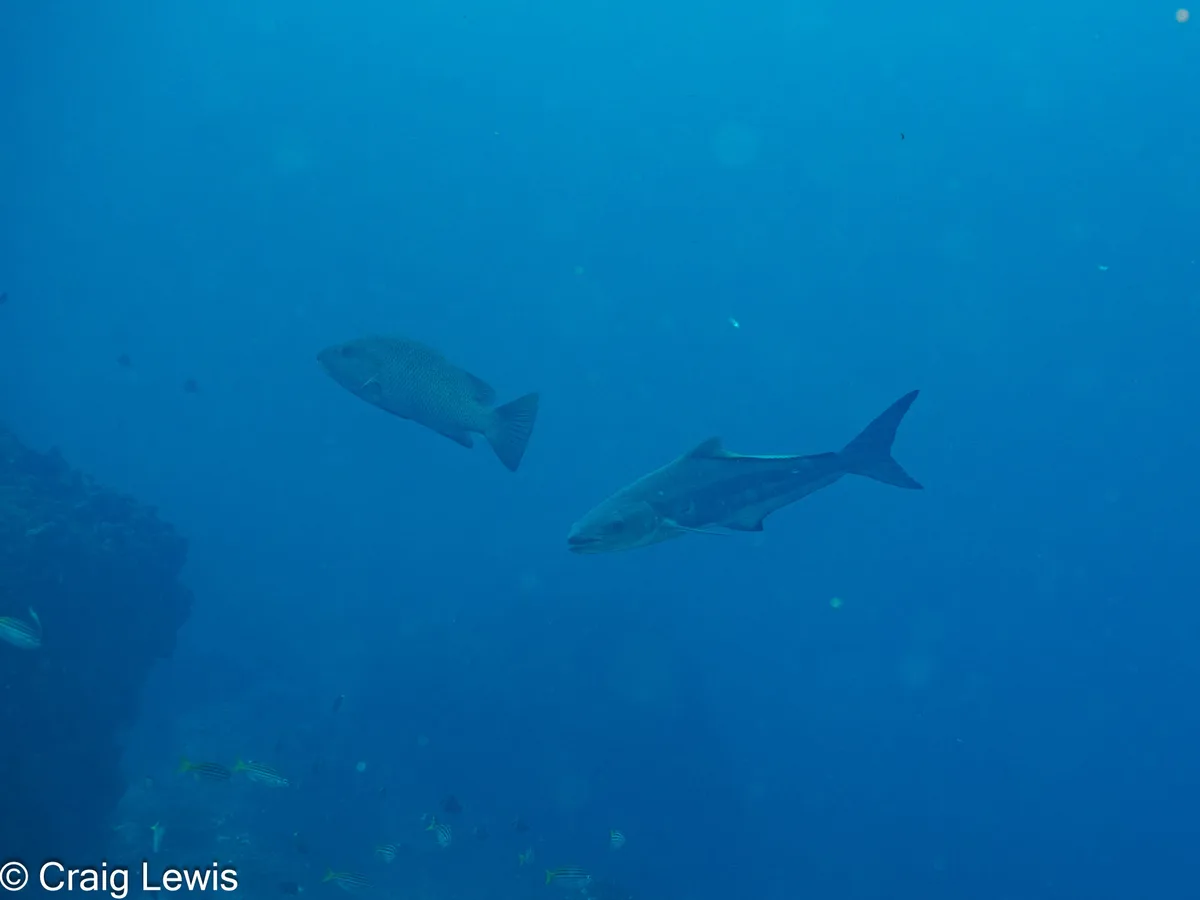
If you meet one, it will probably be following something larger.
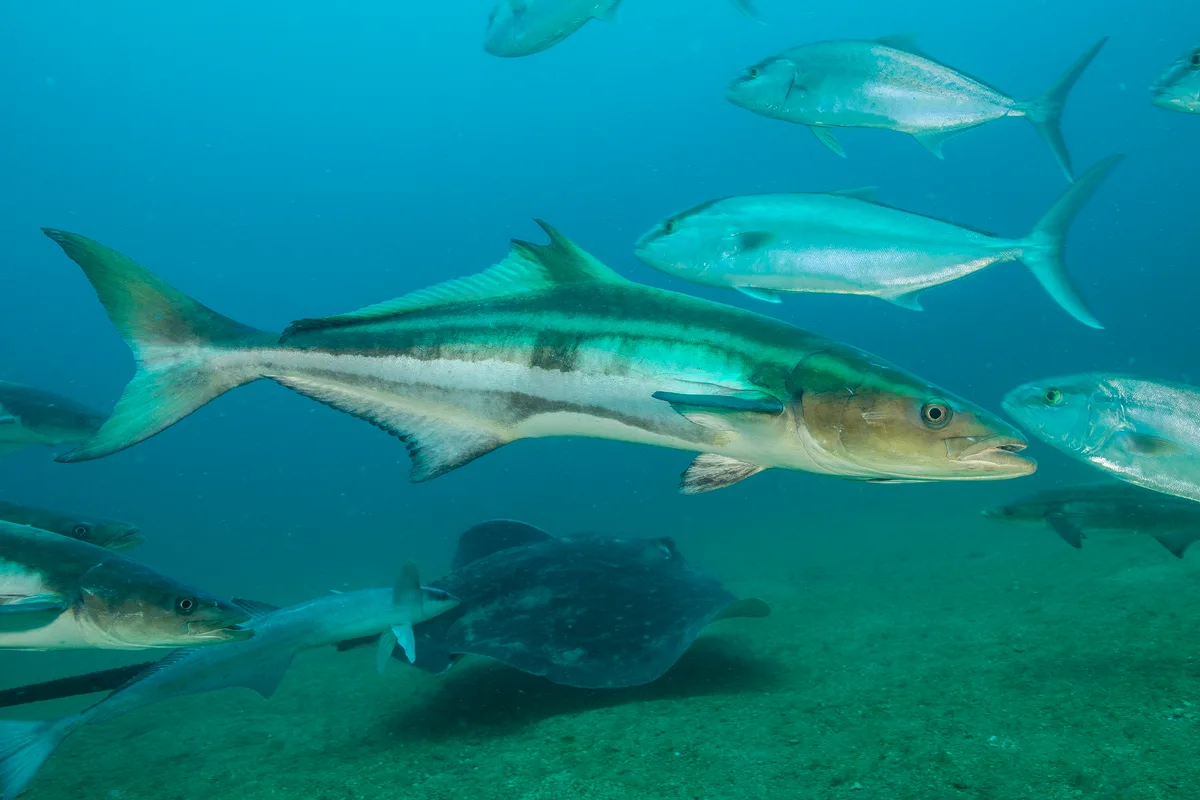
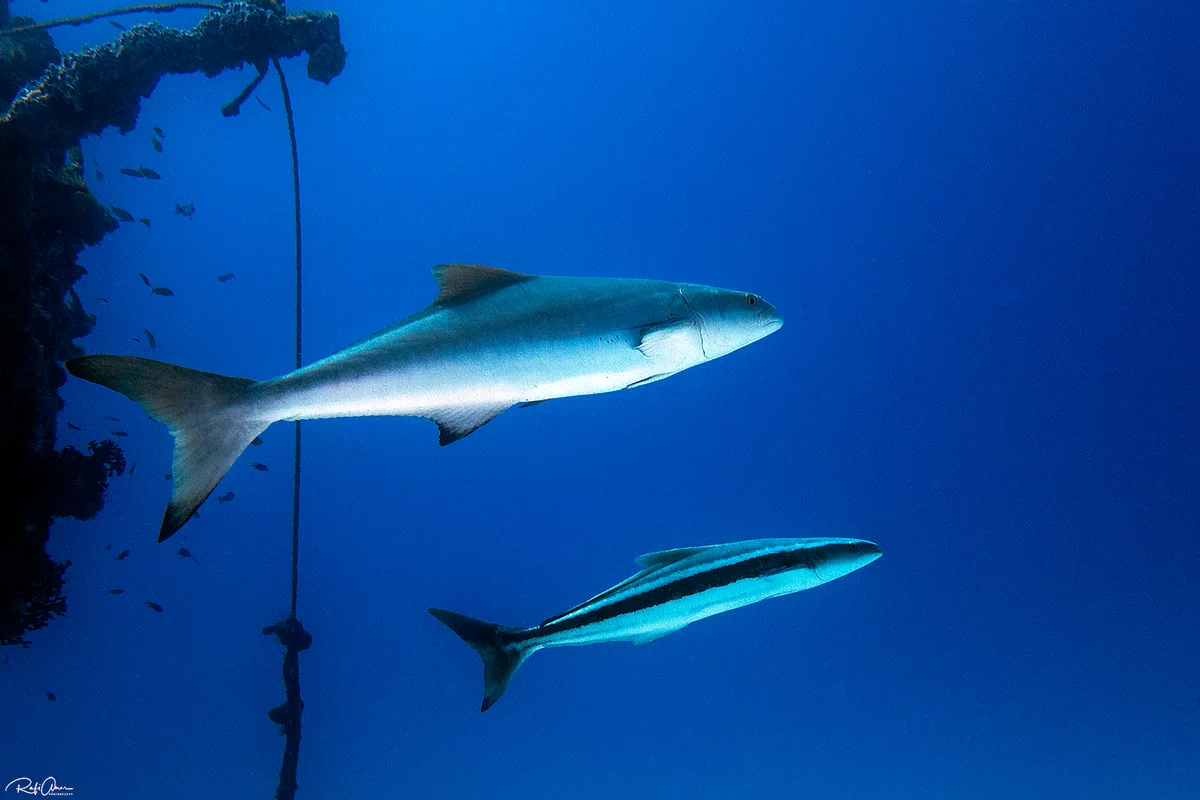
This fish shadows big animals: rays, sharks, turtles, sunfish, and boats and divers when nothing better is available. It swims just above or beside the host, matching its speed for hours, and takes what the host disturbs off the bottom or misses in the water. Remoras do the same thing by attaching; this one does it by keeping station, and remoras are its closest relatives.
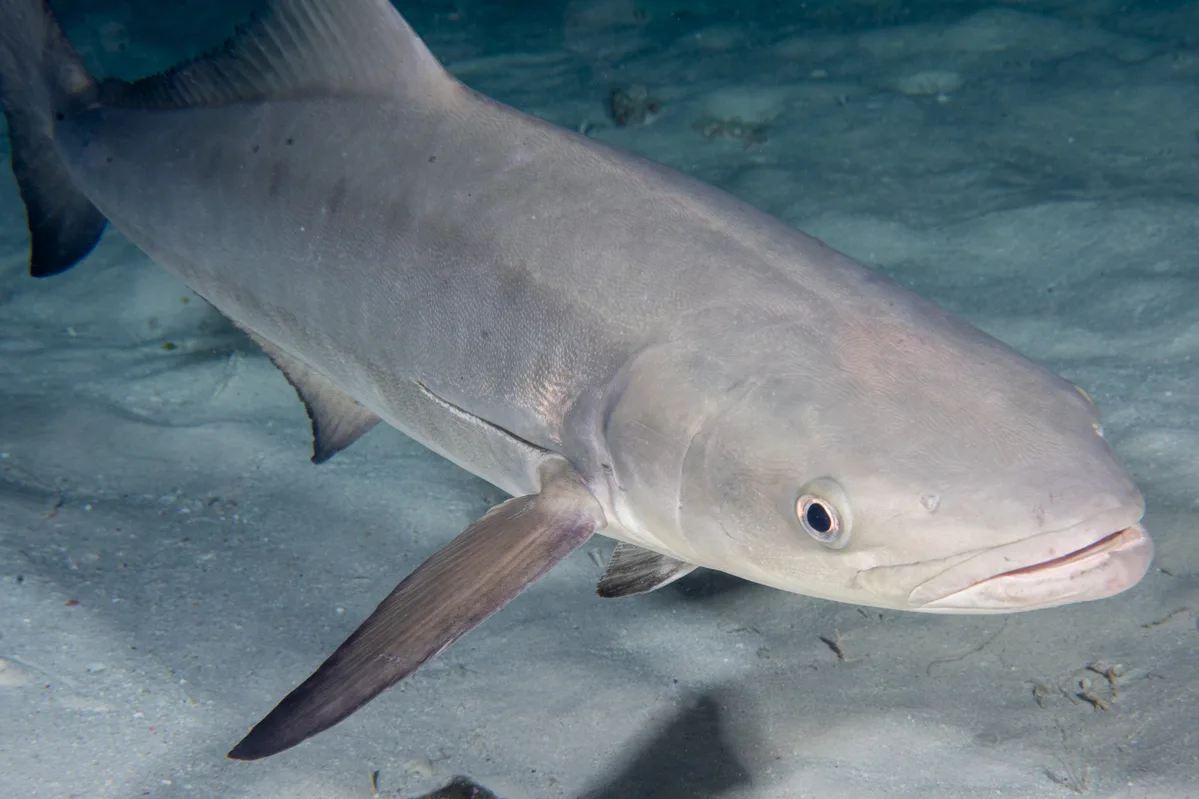
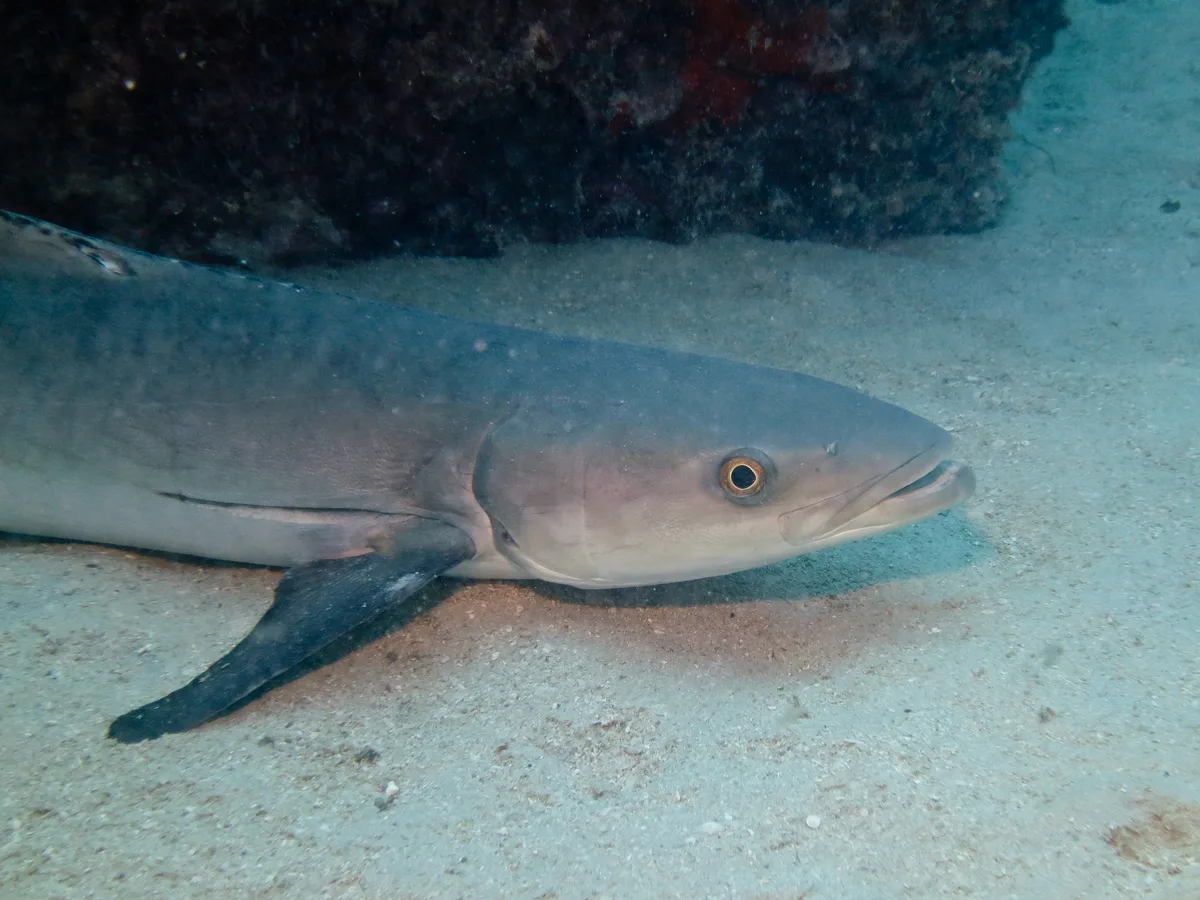
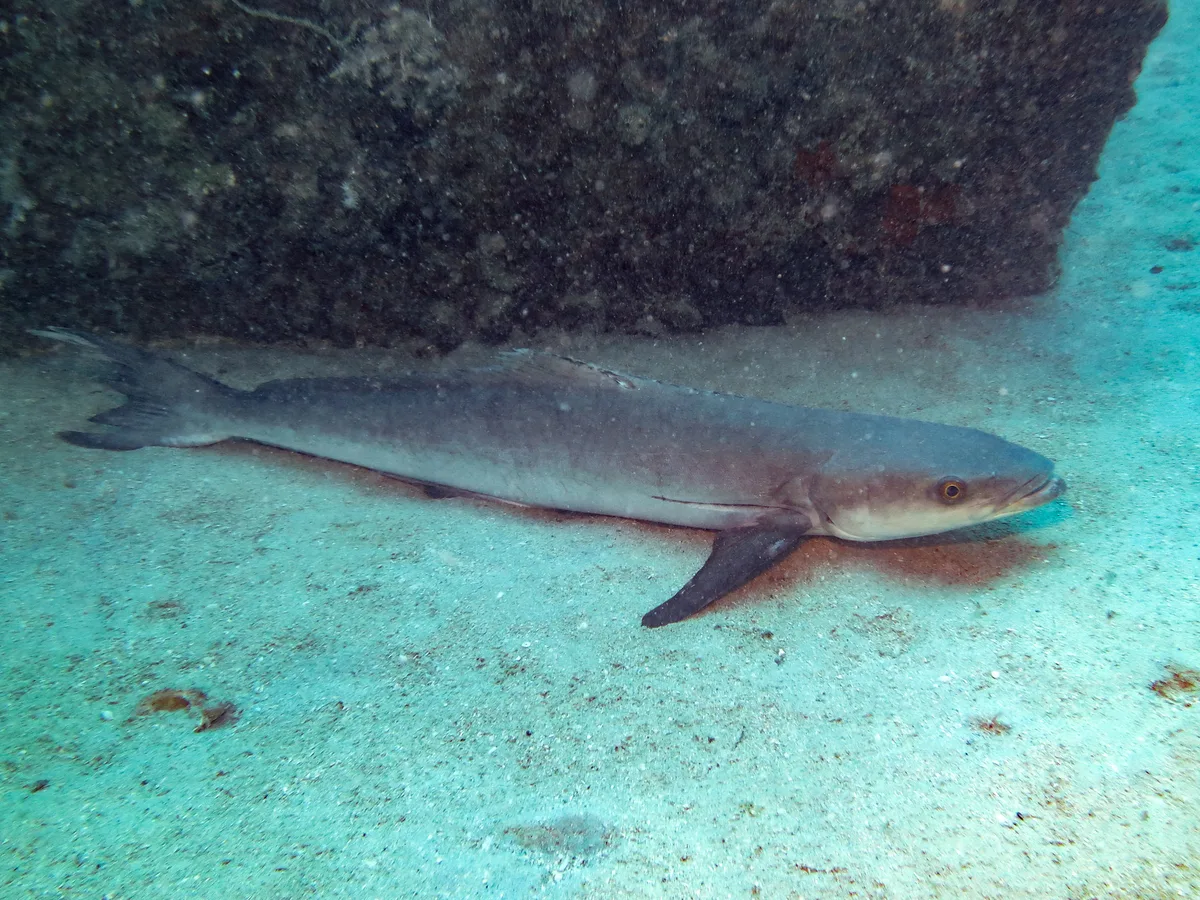
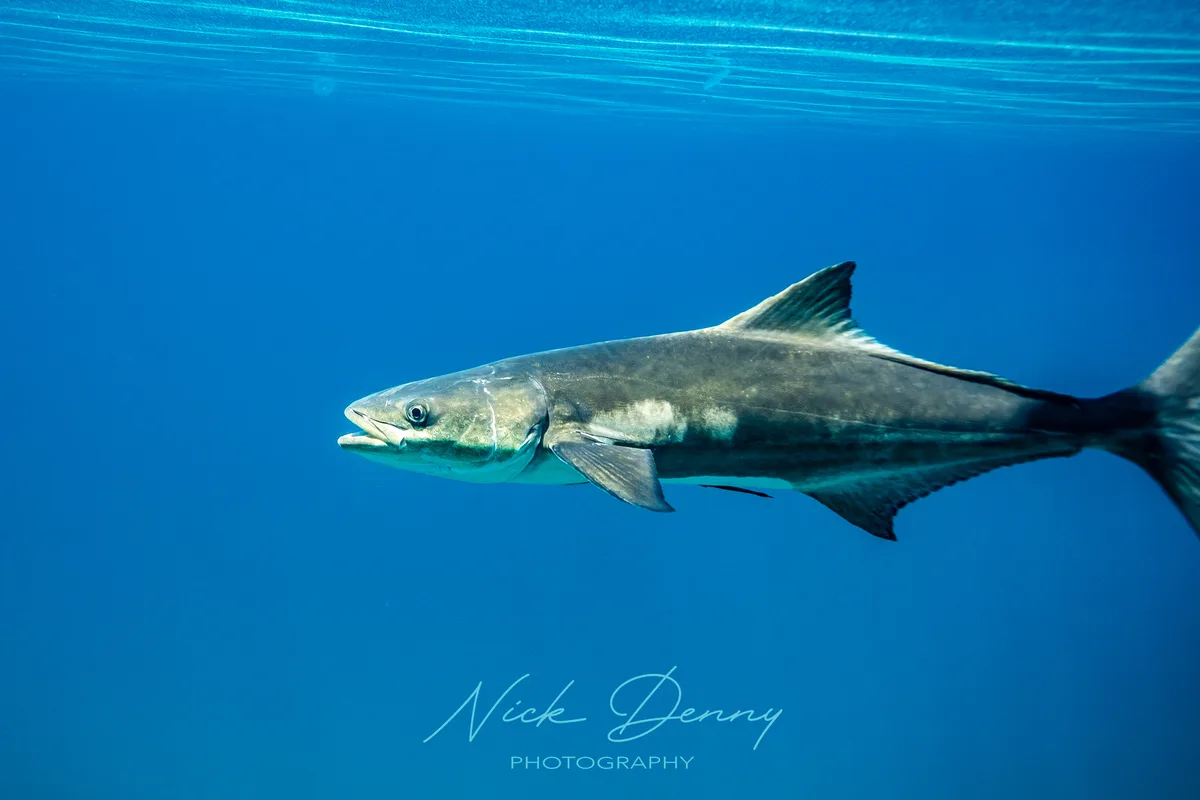
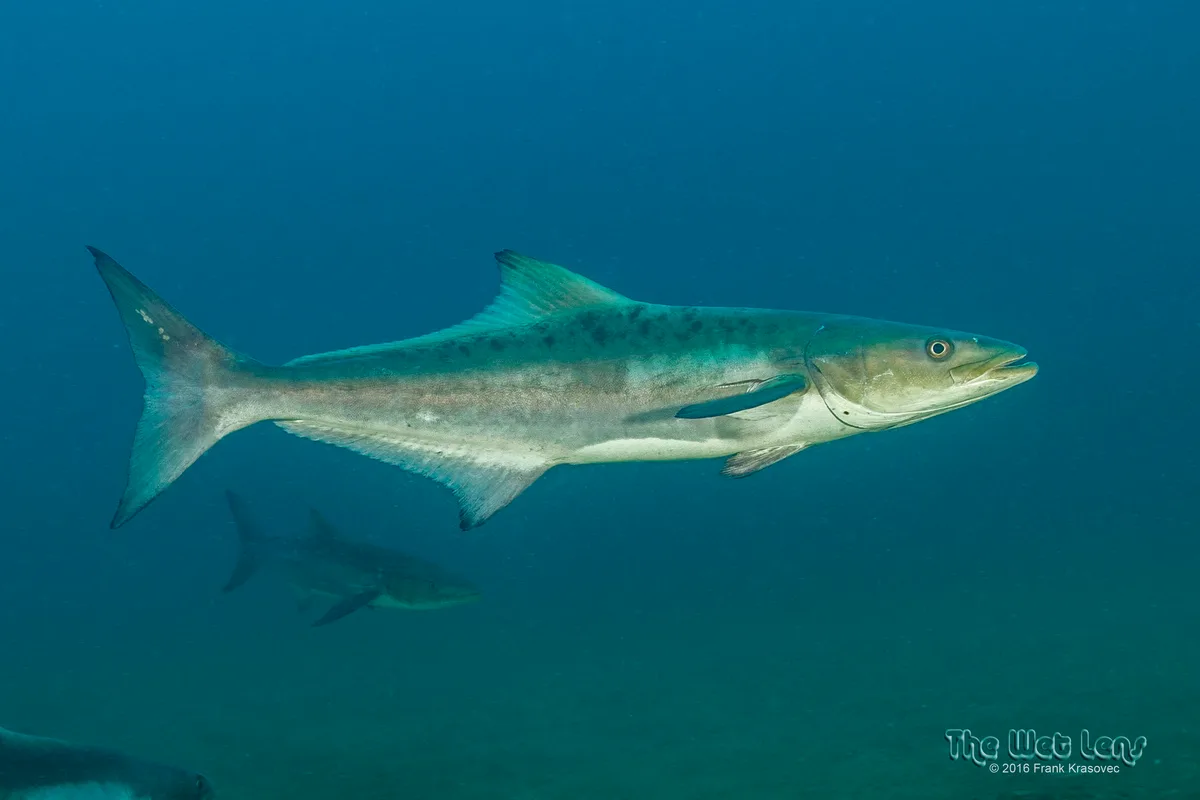
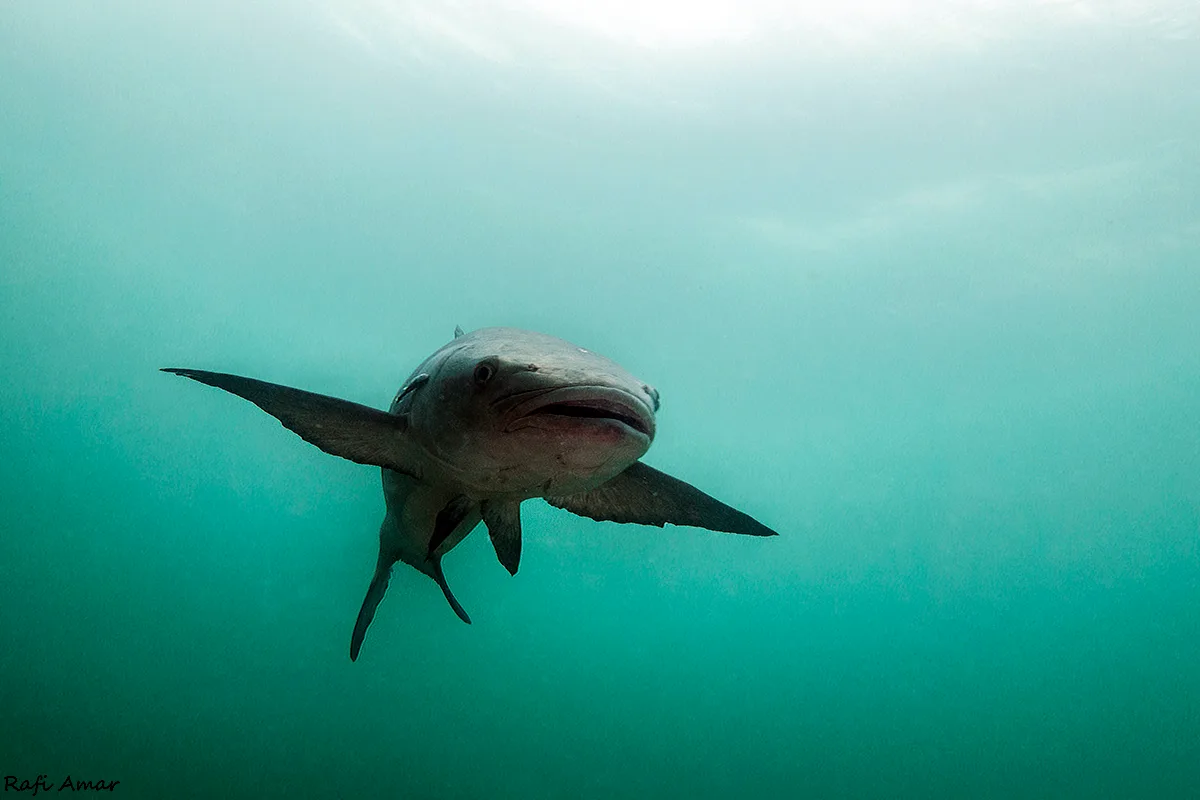
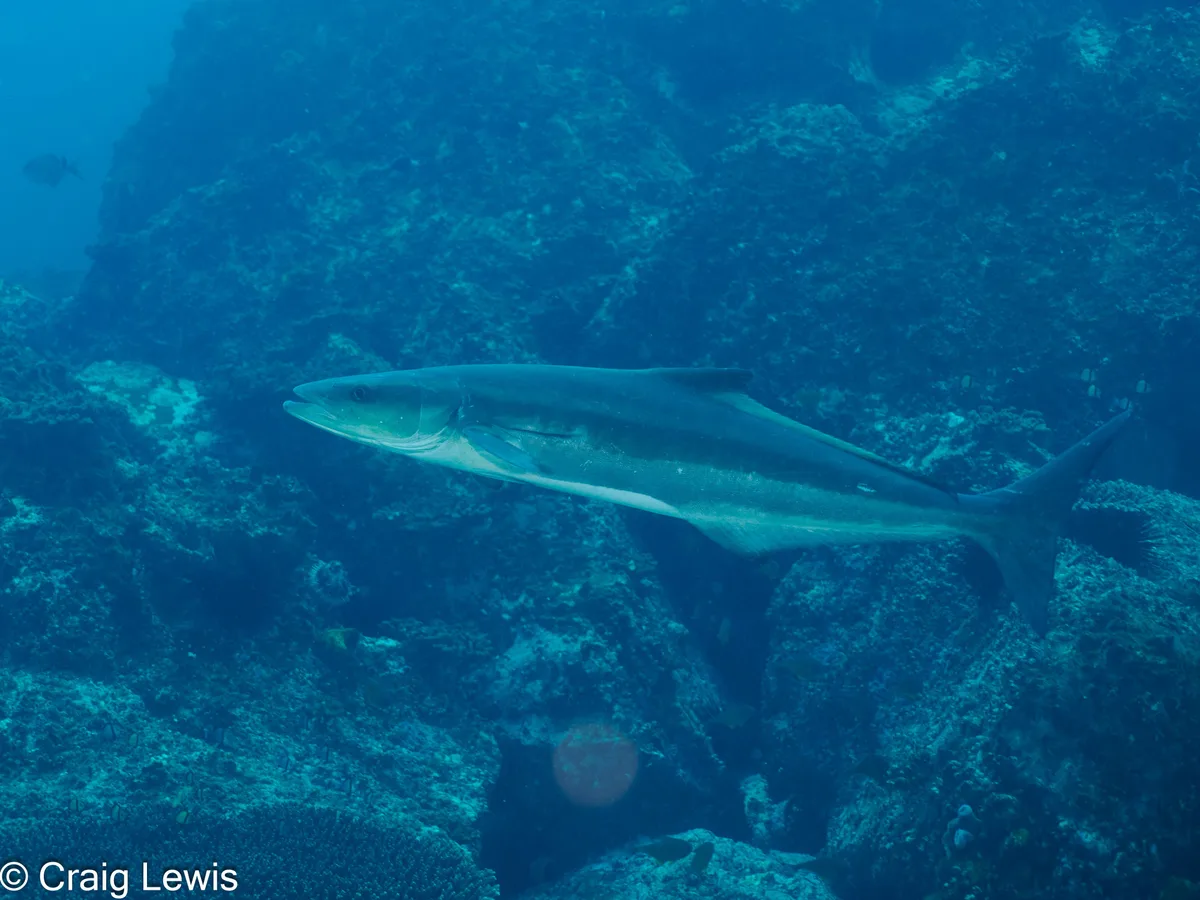
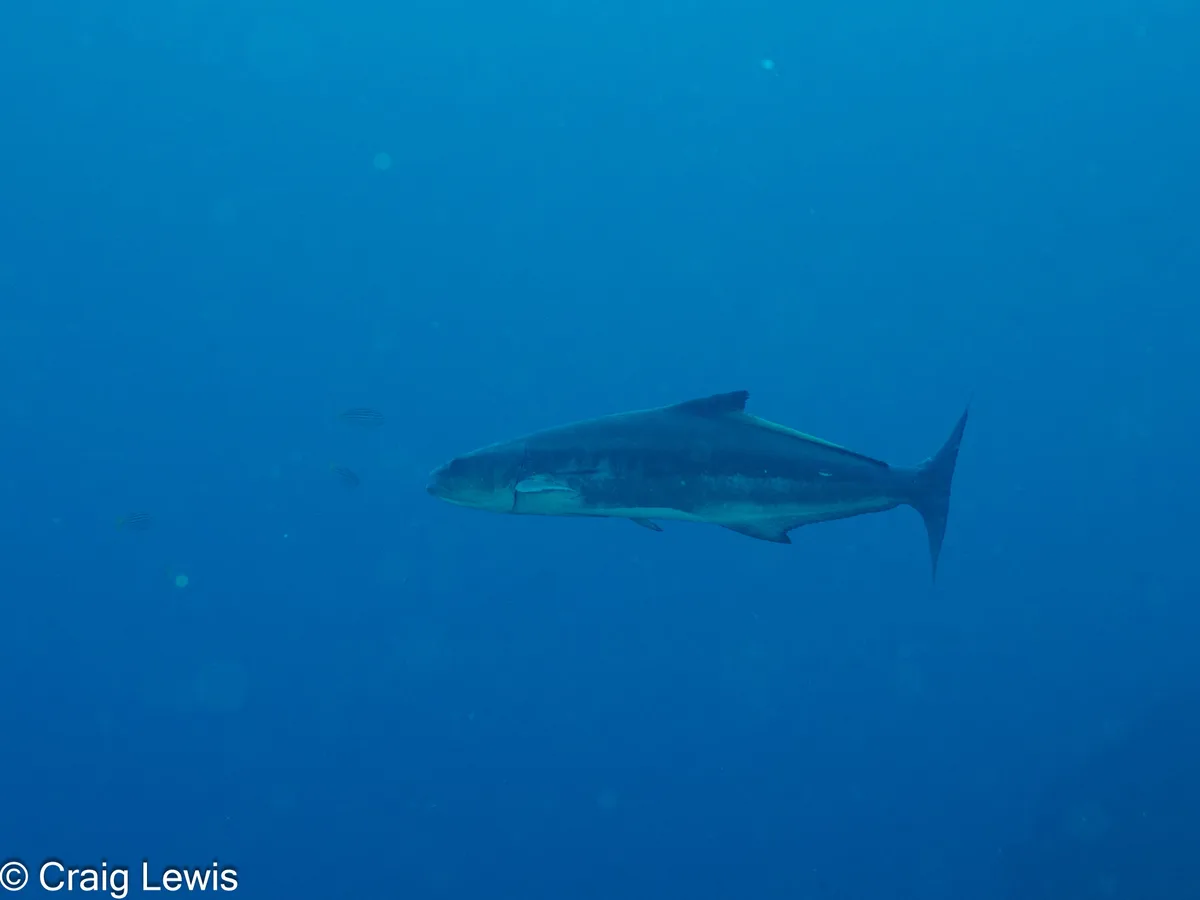
At distance the resemblance to a shark is close enough to cause a moment: two meters of dark brown fish with a flat head, a protruding lower jaw and a pale stripe along the side, moving in the same unhurried way. Divers have reported sharks that turned out to be this, and it is harmless.
It is also the only species in its family, with no close relatives beyond the remoras, and one of the fastest-growing large fish in the sea, which is why it has become a major aquaculture animal: it puts on several kilograms in its first year and takes readily to captivity.
Here it is a rare open-water visitor rather than a resident, most often seen escorting something else.
The genus. Rachycentron Kaup 1826 - rhachis (backbone) + centron (thorn or spine). ETYFish
- long dark brown body with a broad pale stripe along the side
- flat broad head, protruding lower jaw, shark-like at a distance
- row of short separate spines in front of the dorsal fin
- usually escorting a ray, shark or turtle
- up to 2 m
Why it's threatened
Fishing is not considered a major threat at present.
Threat classification from the IUCN Red List.