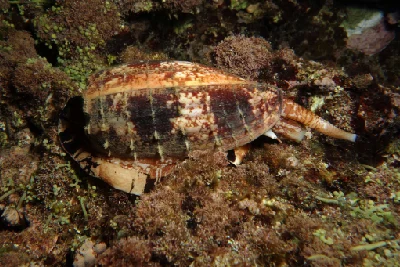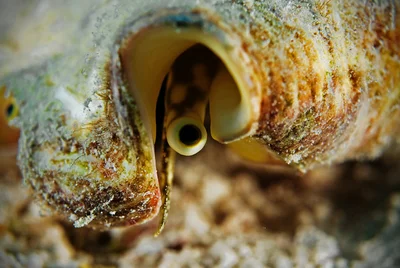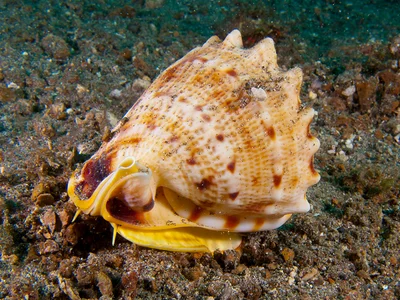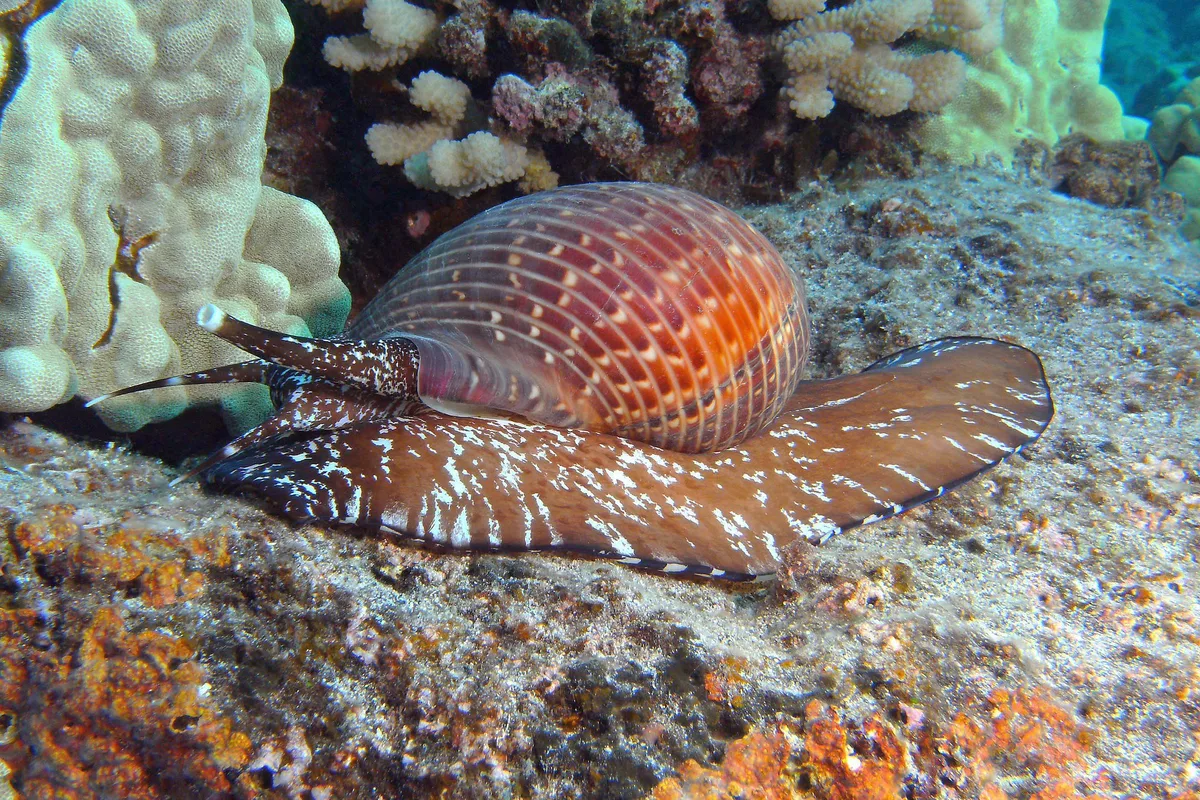
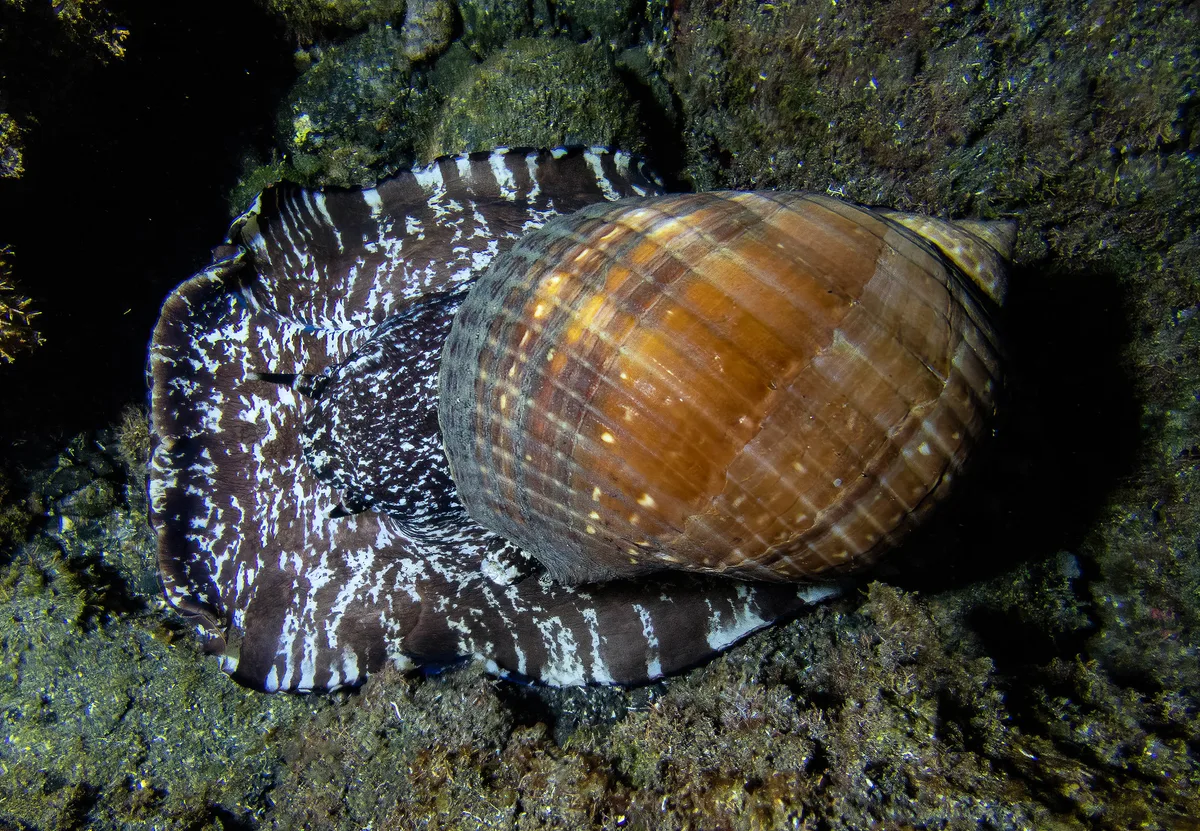
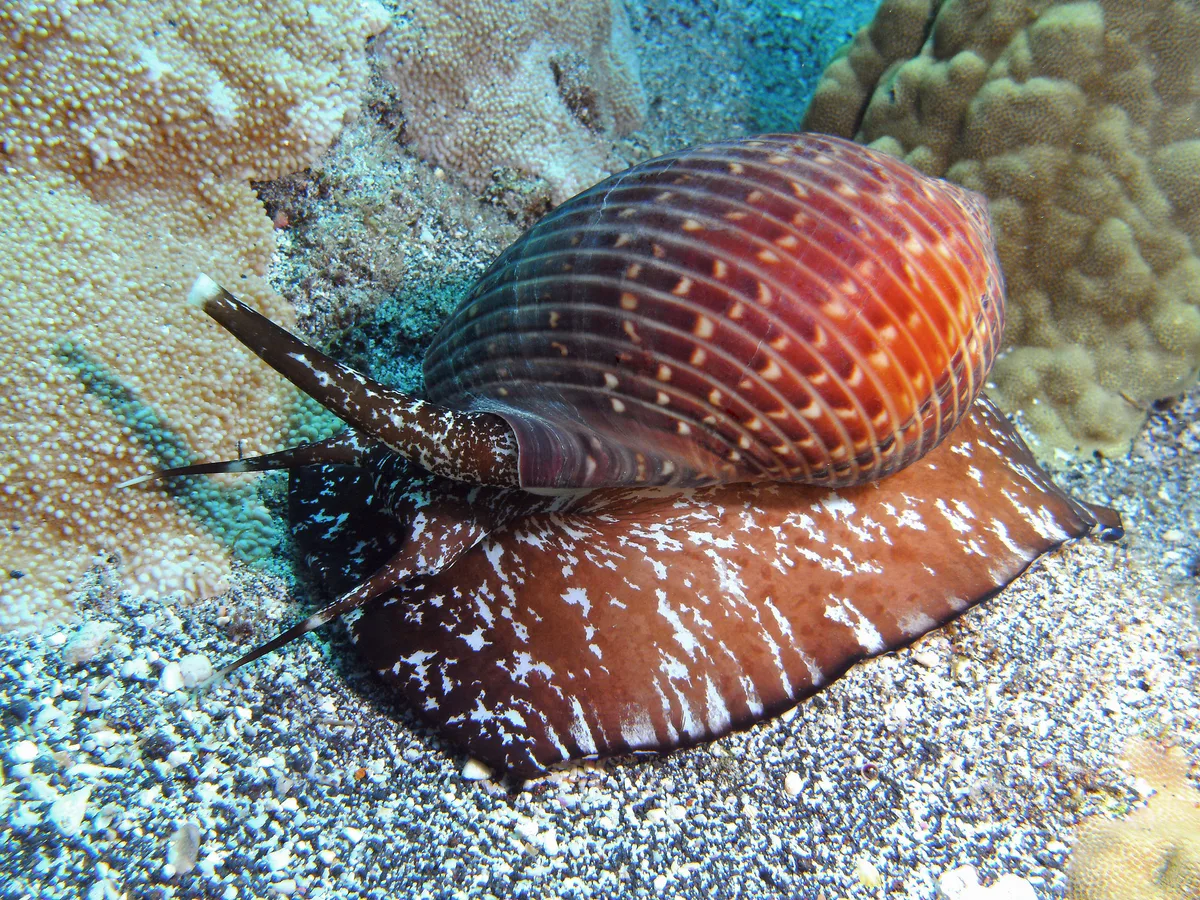
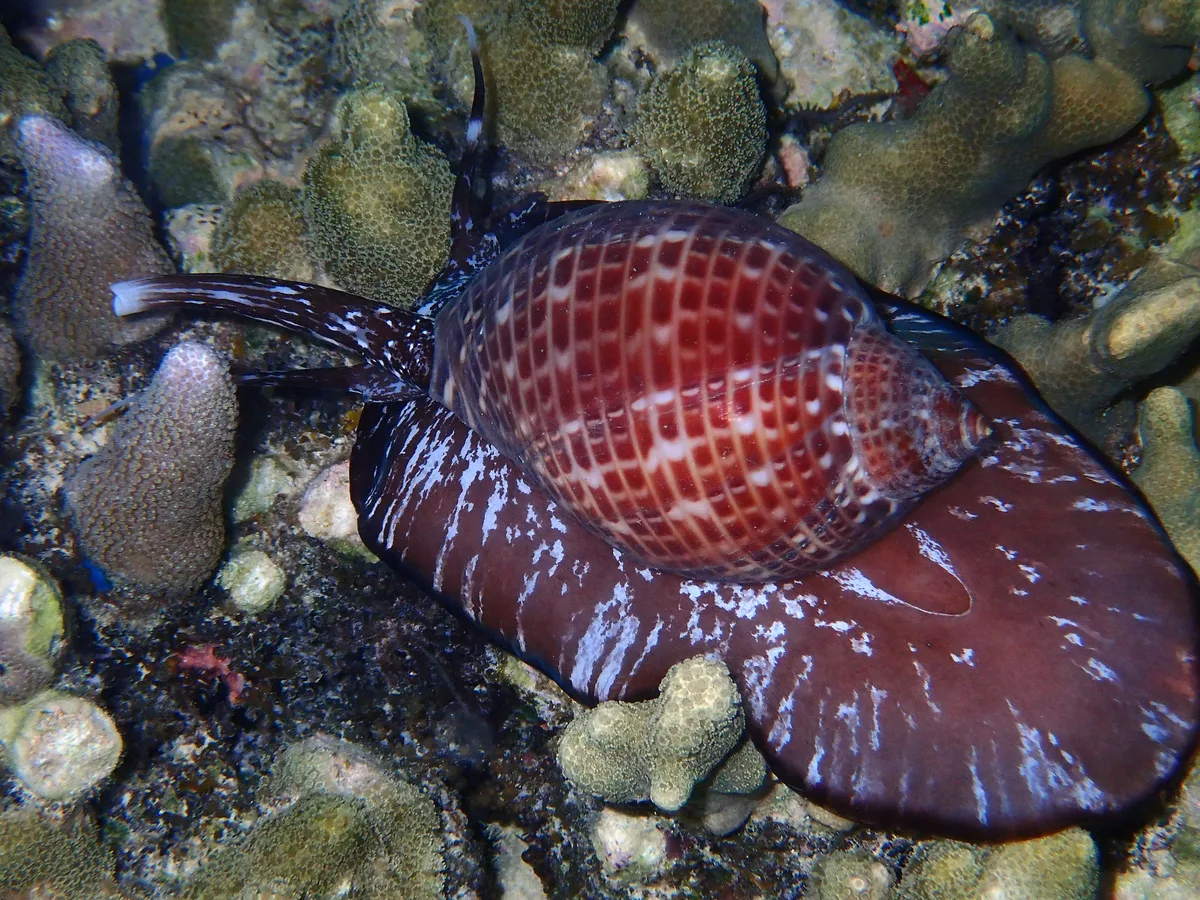
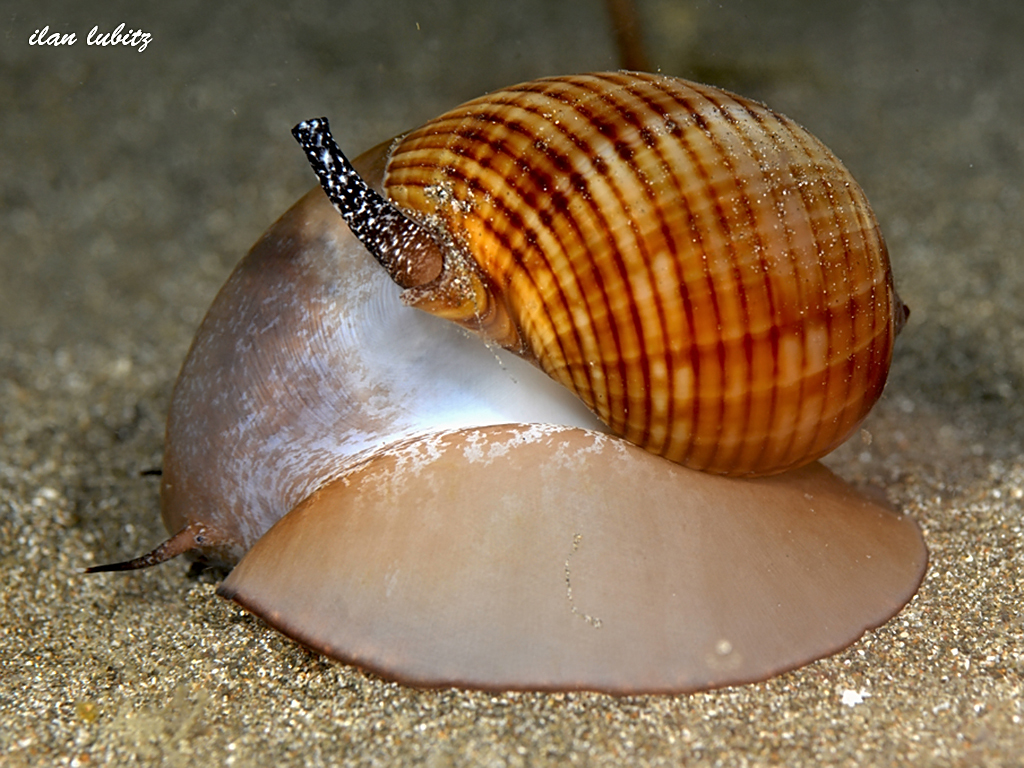
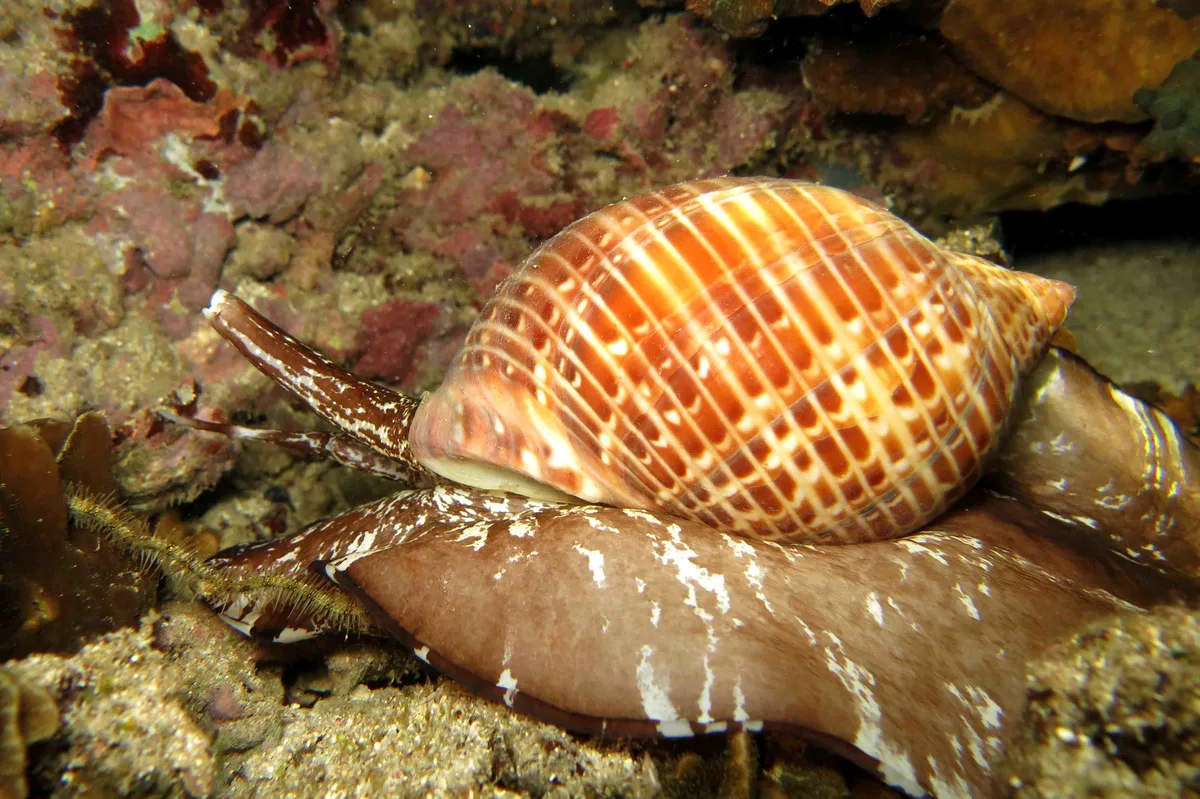
A big, light, balloon of a shell - up to 25 cm (10 in) but thin enough to crush in one hand - ribbed in broad spirals and marked in brown with pale crescents that reminded early naturalists of a partridge's plumage. There is no operculum, no door to close, which tells you this animal does not rely on hiding.
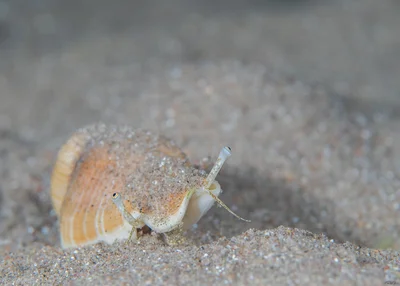
The body is the surprise. Fully extended, the pale foot and flaring mantle are several times the volume of the shell, and the animal looks less like a snail wearing a shell than like a shell being smuggled along under a duvet. It cannot fully retract, and any photograph of a live one shows an animal that has clearly outgrown its own house.
It hunts sea cucumbers, which it swallows whole. The proboscis stretches over prey much larger than the snail's own aperture, helped by saliva containing sulfuric acid strong enough to subdue a holothurian, and the meal goes down entire. Divers who find one on a night dive usually find it mid-swallow.
- large thin globose shell with broad spiral ribs and no operculum
- brown with crescent-shaped white marks, like a game bird's plumage
- pale body far too big to fit back inside the shell
- shell to 25 cm