Sulfuric acid (as a weapon)
Tritons, tun shells and some side-gilled slugs secrete free sulfuric acid near pH 1 to subdue armored prey - stomach acid, applied from the outside.
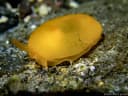
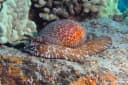
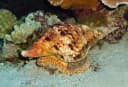
A handful of predatory sea snails attack with acid. Tritons, tun shells and some side-gilled slugs produce saliva or skin secretions carrying free sulfuric acid, strong enough to bring the fluid down near pH 1 - the acidity of stomach acid, produced outside the body and applied to something else.
It solves a specific problem. The prey is usually an echinoderm or another mollusc: armored, chemically defended and perfectly able to leave. Acid subdues and starts to dissolve it in place, so a Triton's Trumpet can pin a crown-of-thorns and work a proboscis in under the arms, and a tun shell can swallow a sea cucumber several times its own length.
The animal producing it is unbothered, which is a piece of biology in its own right: the gland and the tissue around it are built to hold a fluid that would strip most cells. For a diver it is a non-issue - these snails do not use it defensively - but it is worth knowing that the slow-moving shell on the sand outclasses everything it hunts.