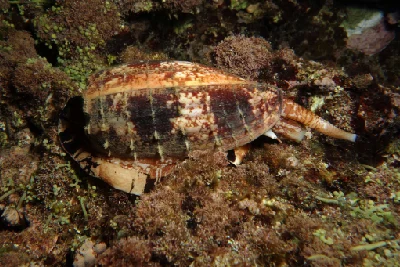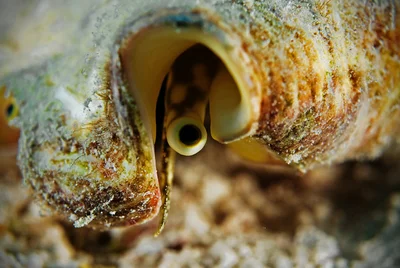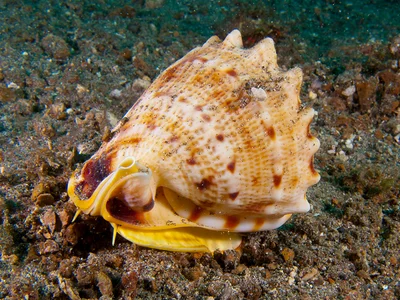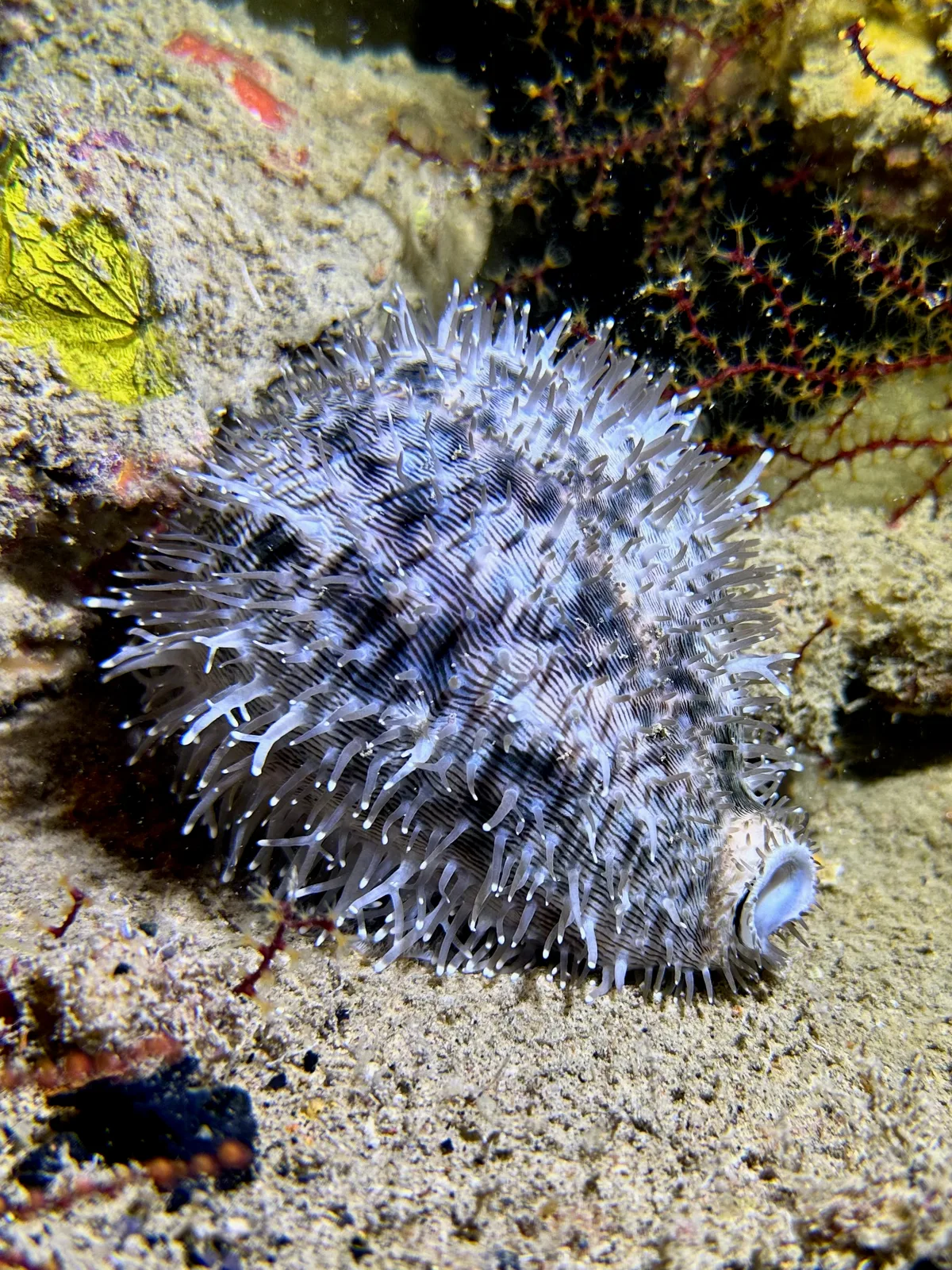
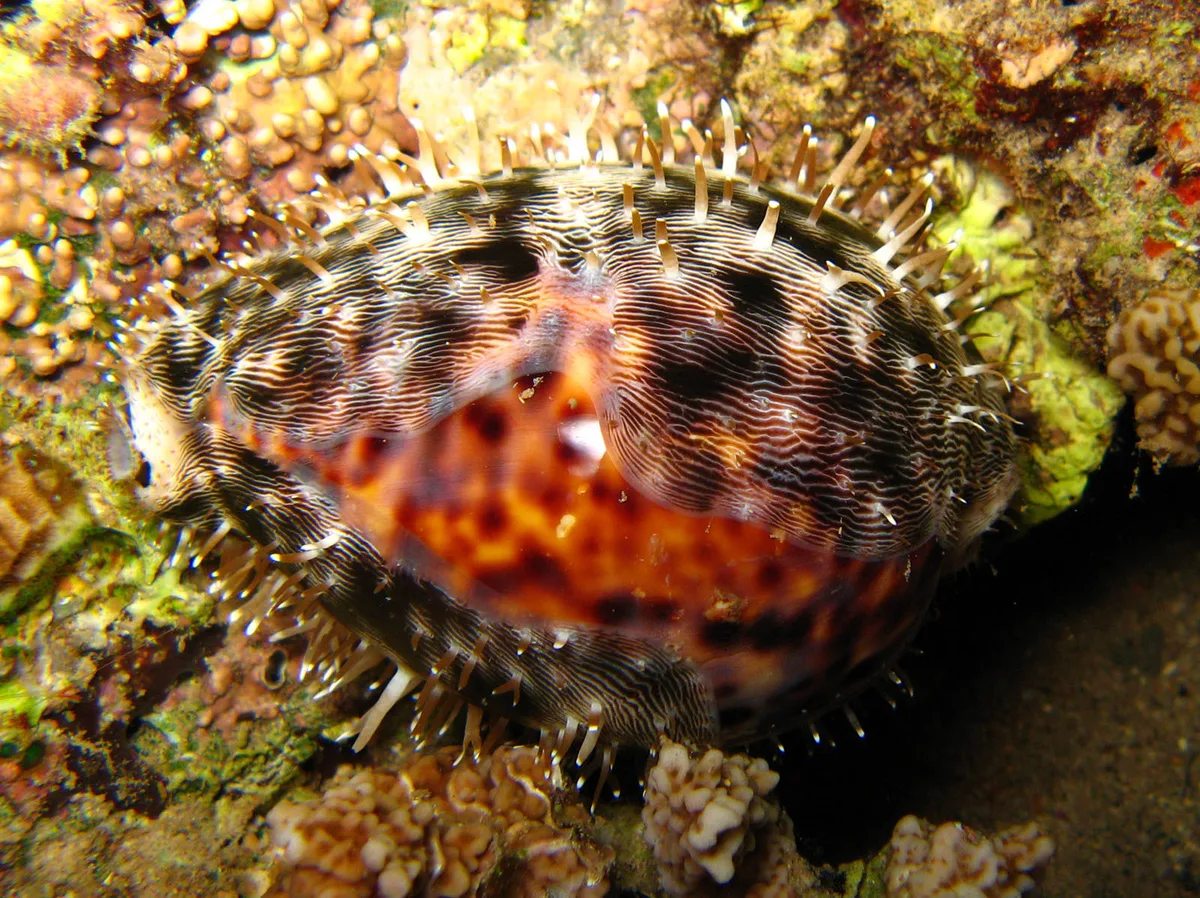
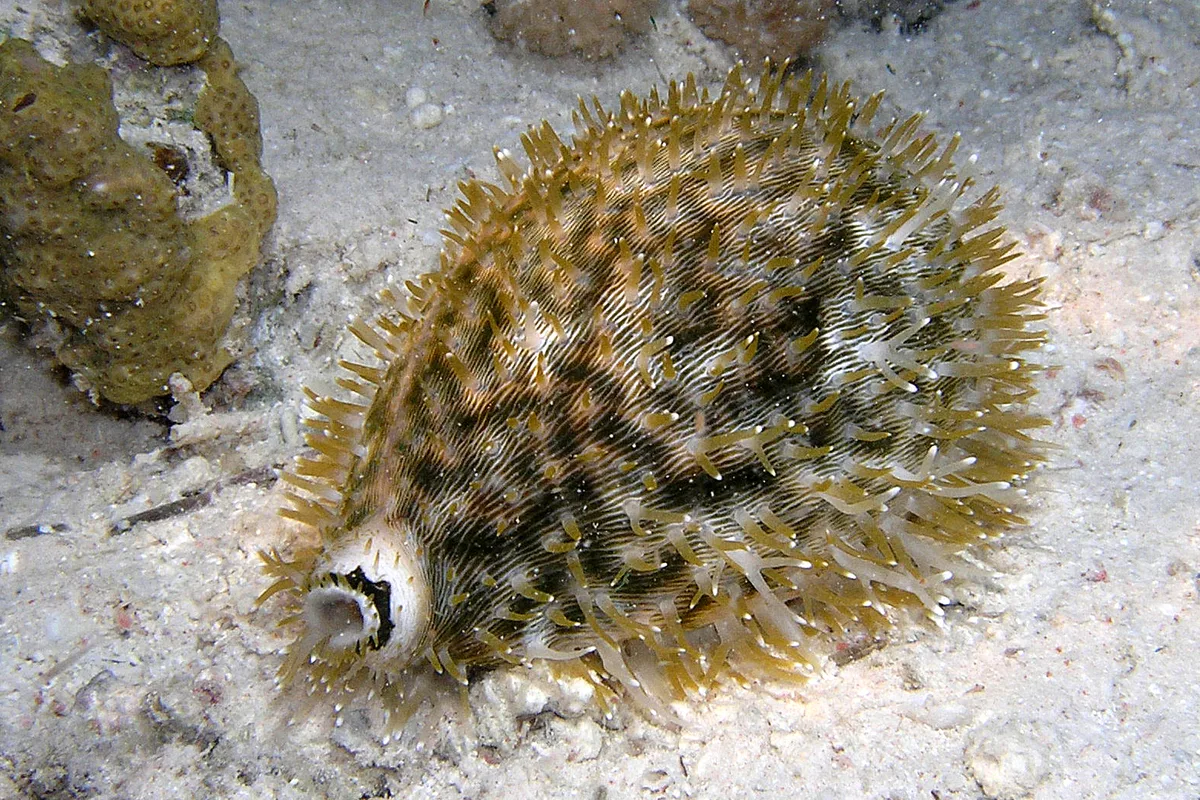
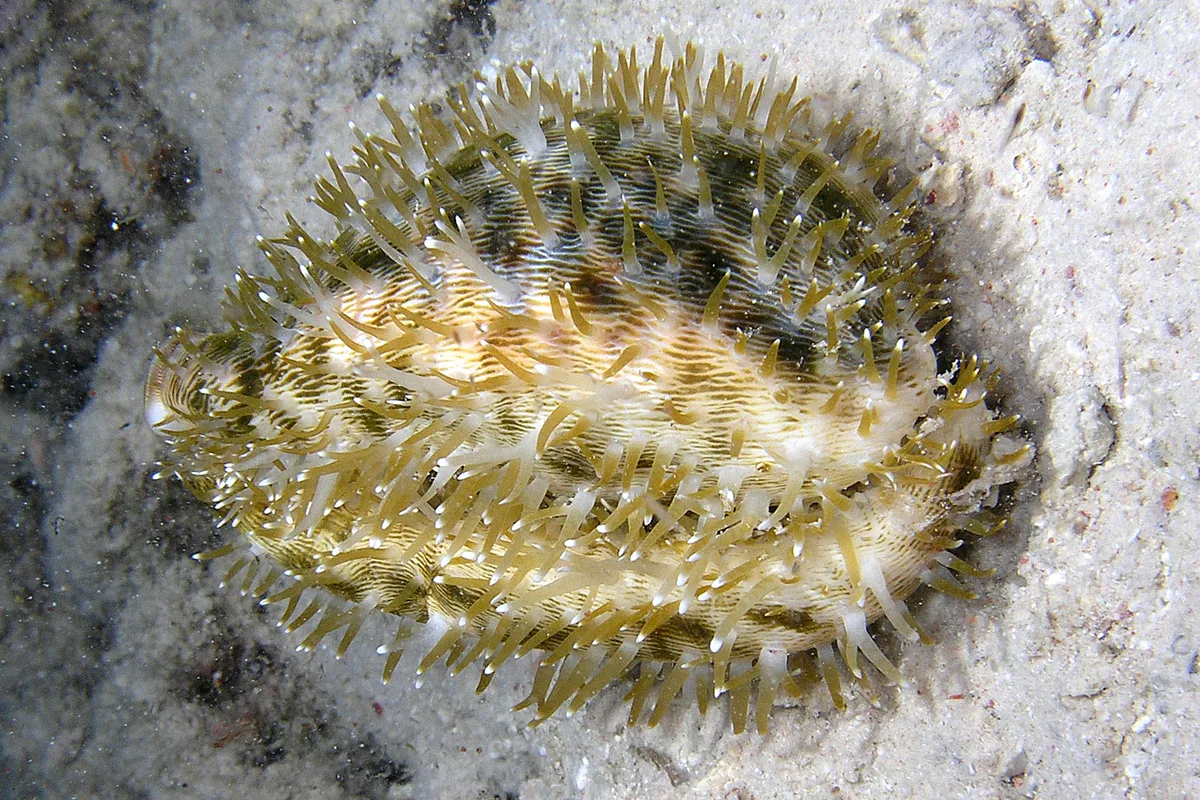
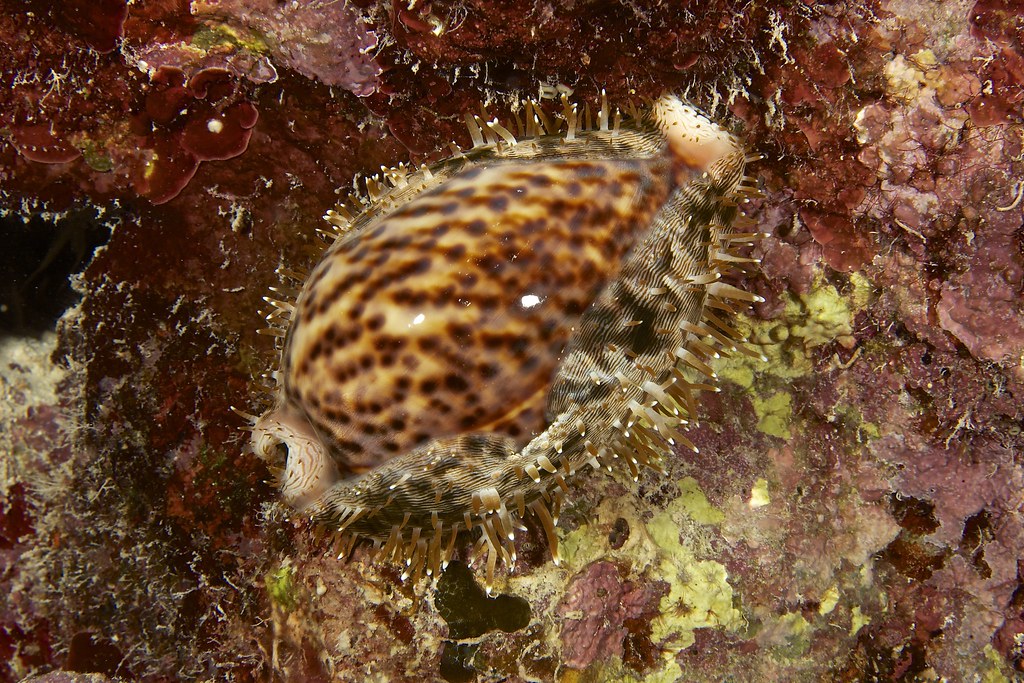
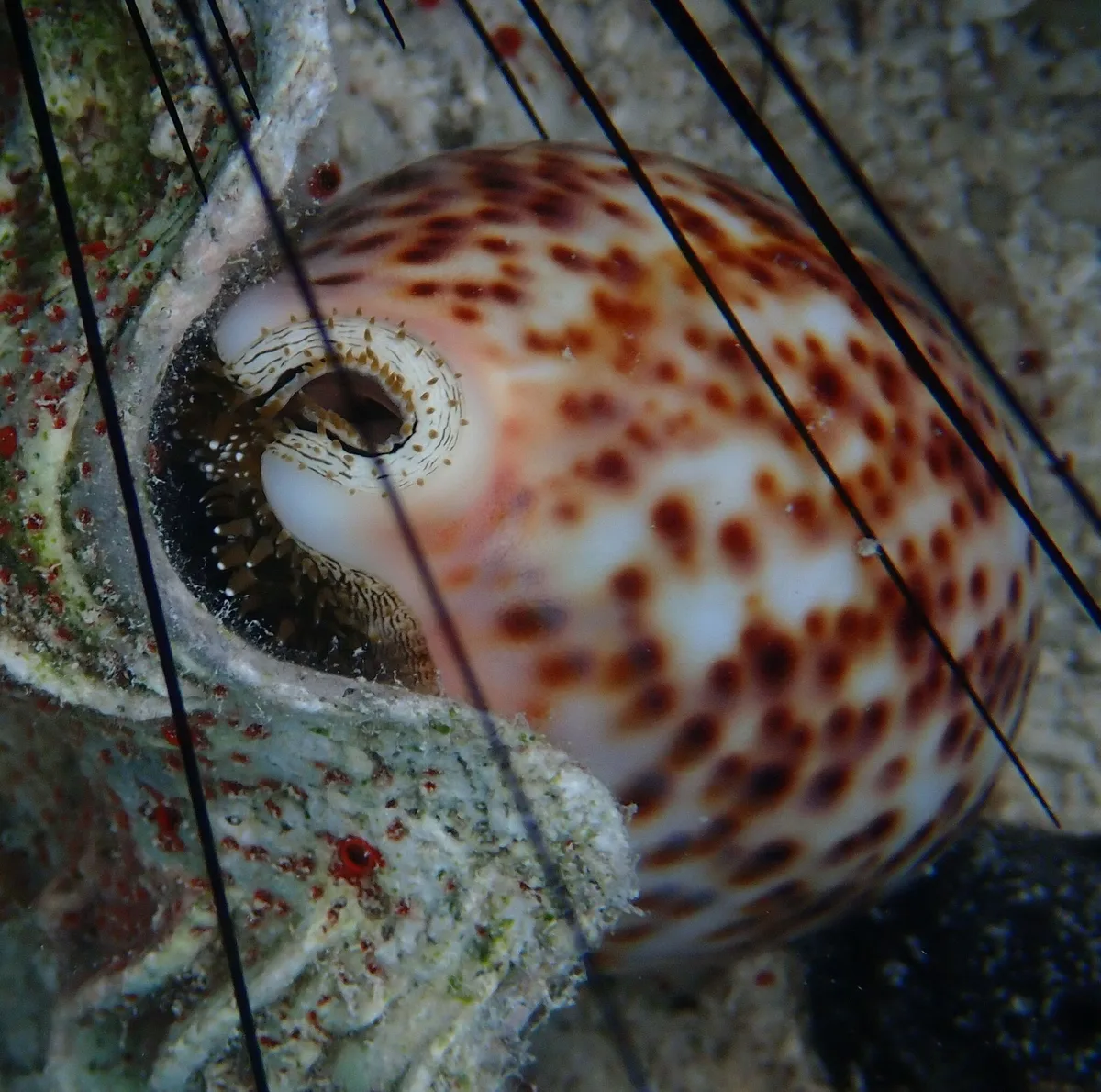
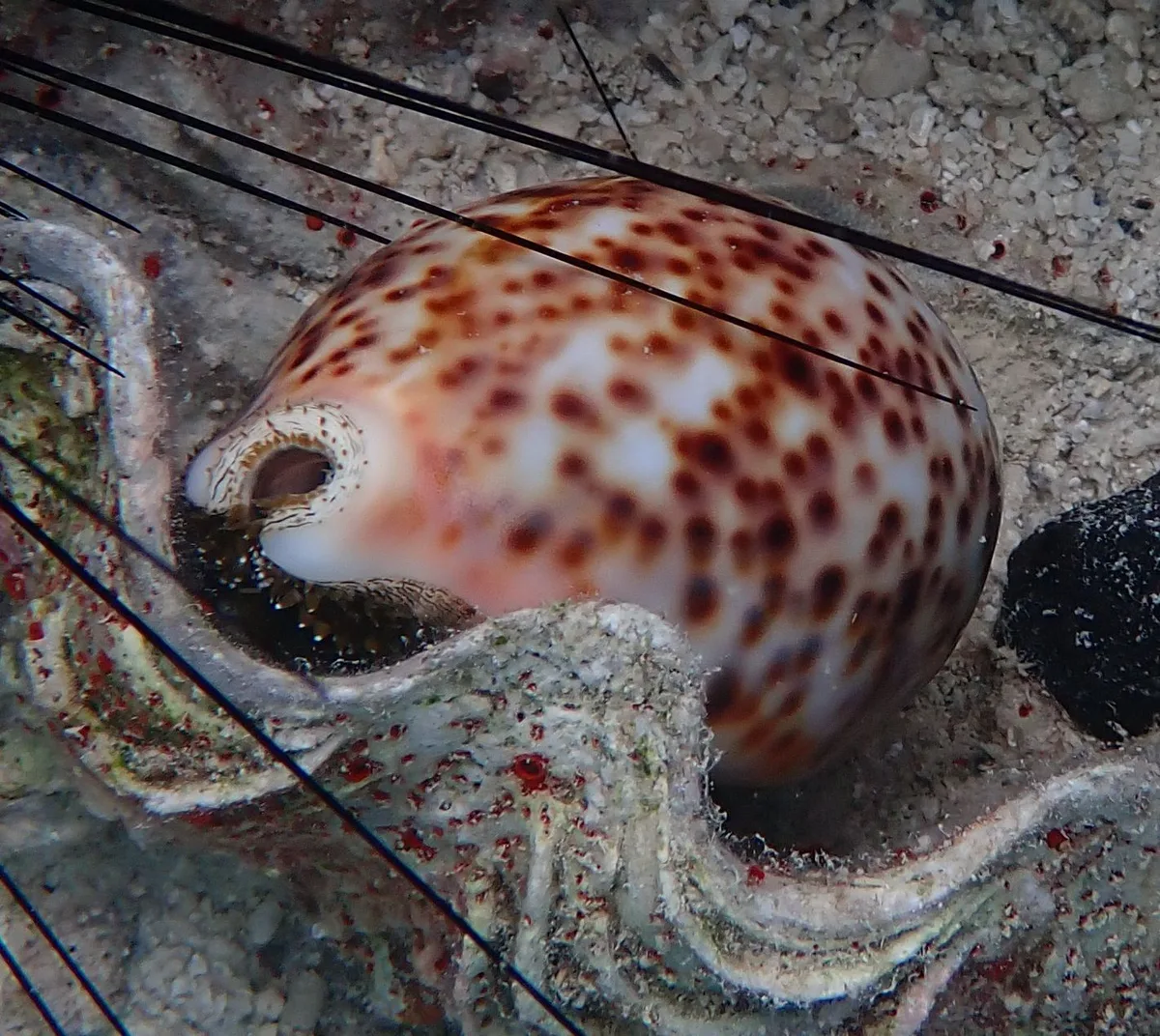
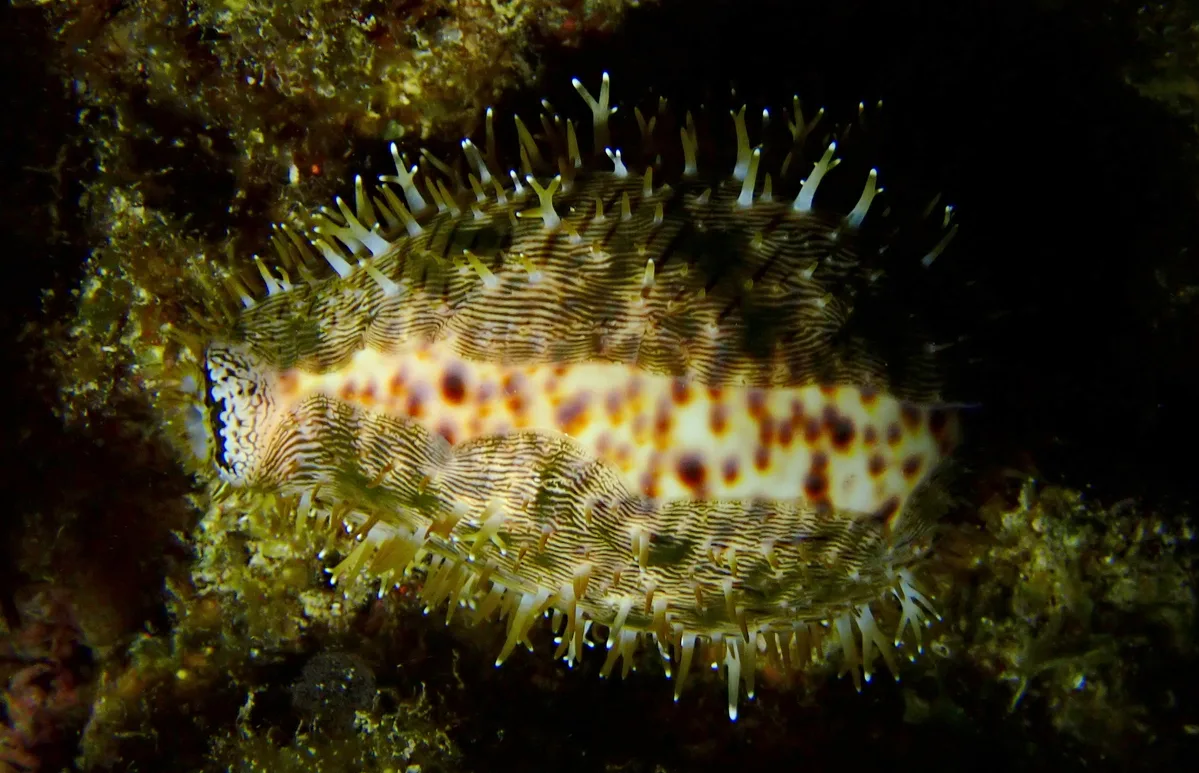
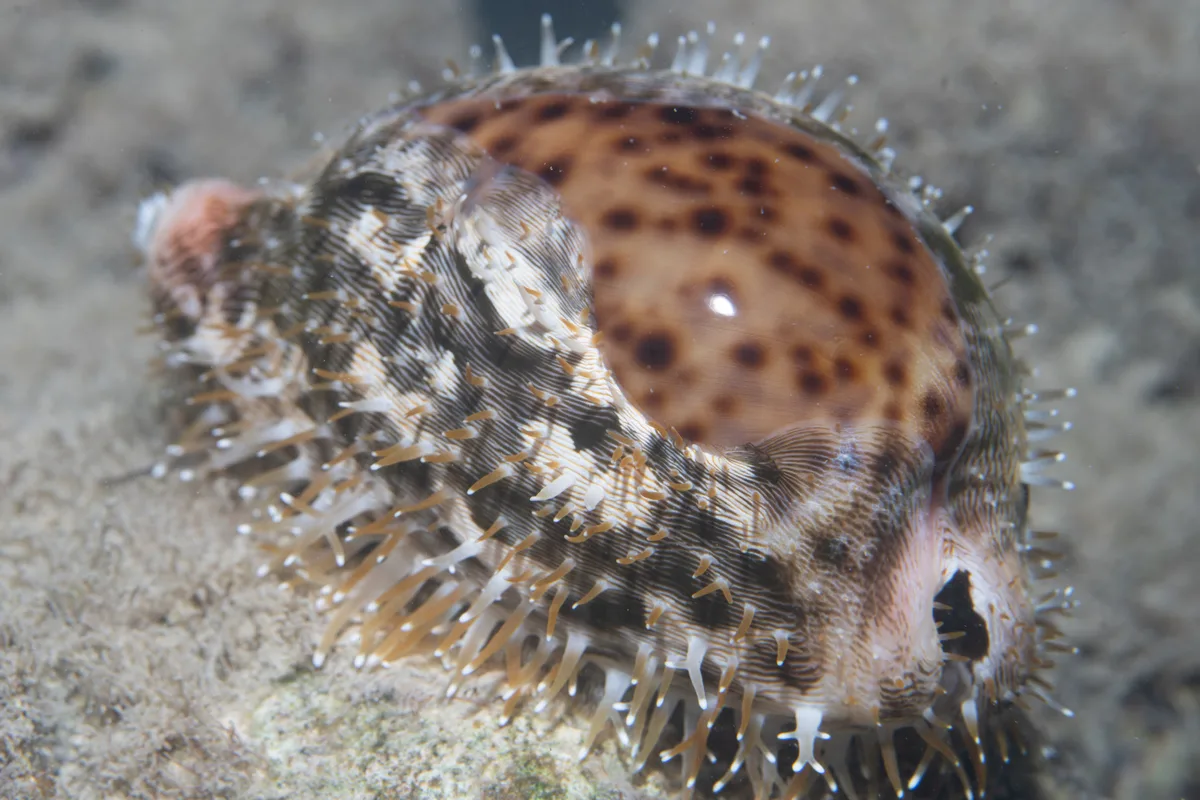
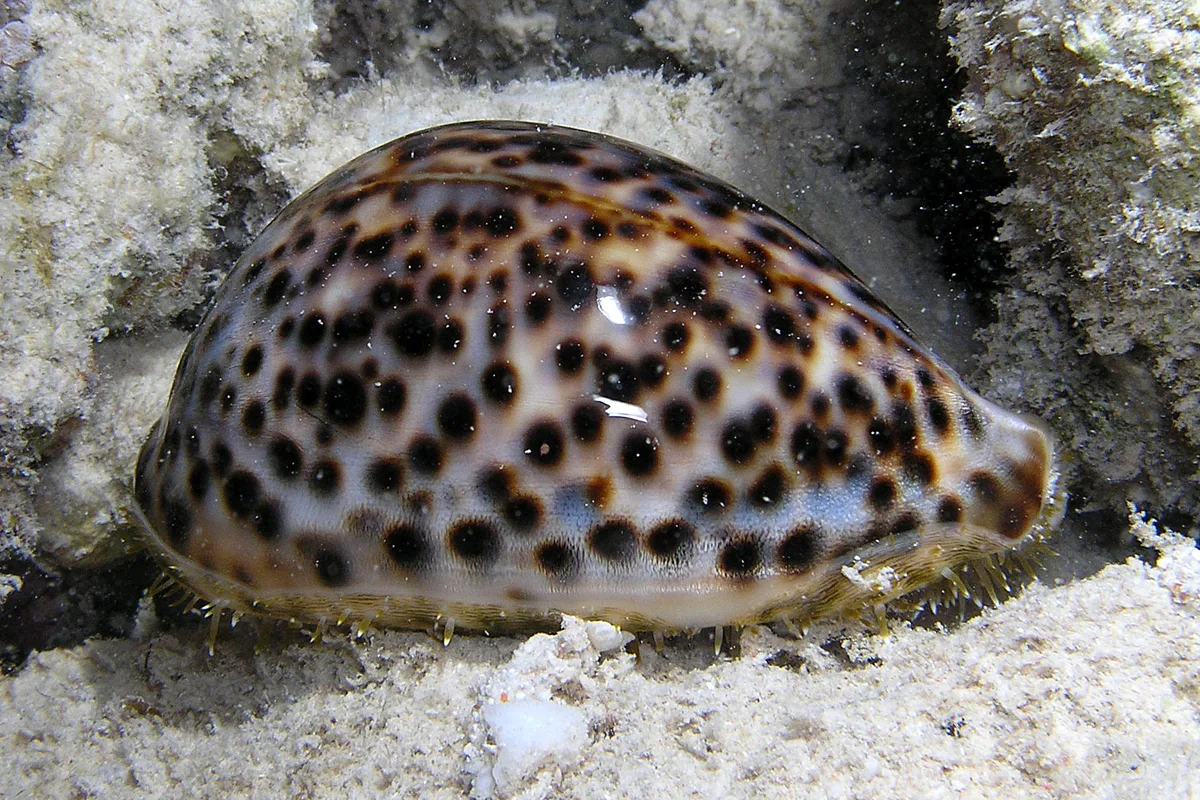
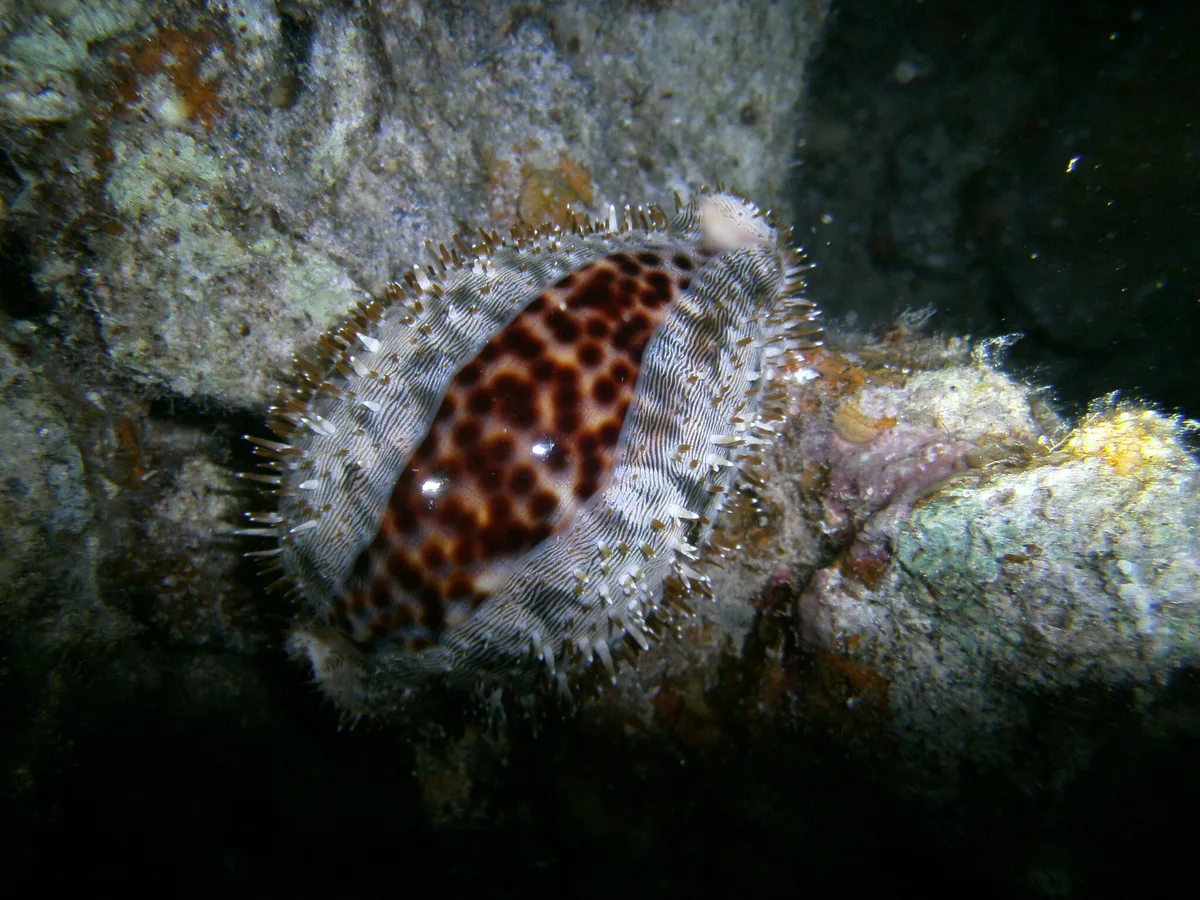
A heavy glossy oval, pale under a dense pattern of dark brown spots, usually 6 cm (2.4 in) and occasionally reaching 12 cm (4.7 in). A blurred reddish line runs down the middle of the back, which is not a marking but a seam: it is where the two halves of the mantle meet when they fold up over the shell from below. The base is white, and the narrow opening is lined with fine teeth along its whole length.
This is a 🌊 Red Sea animal. It lives here, in the Gulf of Aqaba and around into the 🌊 Gulf of Aden, and nowhere else in its natural range, which makes it the largest and most conspicuous endemic mollusc a diver will meet on these reefs. Where its close relative the Tiger Cowry turns up in the same waters, the two do not share ground.
The shell is not built the way it looks. There is no growing spiral: a cowry lays down its final shape at maturity, rolls the lip inward, buries the old spire under a last layer of enamel, and then stops growing in size for good. All further work goes into the surface. Those two mantle flaps close over the shell and repaint it continuously from the outside, which is why a living shell is mirror-polished and a dead one on the beach goes chalky within weeks.
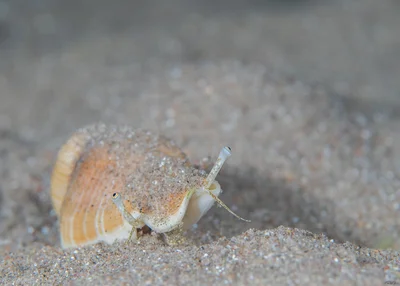
Watching the mantle is the reason to find one at night. It is semi-transparent, finely lined, and studded with long white papillae that break up the outline and double as a sensory net, and it can peel back off the shell in about a second when a torch beam lands on it. That retreat is the thing to photograph, and it only happens once per animal per dive.
There is one wrinkle in calling it a 🌊 Red Sea species. Since the Suez Canal (🇪🇬 Egypt) opened, it has moved north with the Lessepsian traffic and established itself in the Mediterranean around Malta and Lampedusa, so the endemic now has a second home it colonized by itself. It is also the shell of every tourist bazaar from Hurghada to Sharm, which is a heavier pressure on it than the Mediterranean ever was.
- heavy glossy oval shell densely spotted dark brown on pale cream
- blurred reddish line down the midline of the back, where the mantle halves meet
- white base with fine teeth along the whole opening
- lighter and narrower than the Tiger Cowry, shell to 12 cm