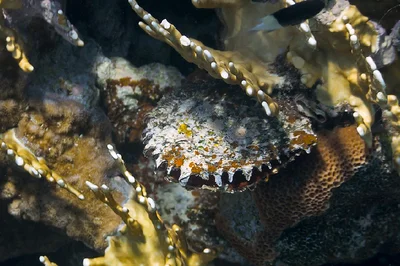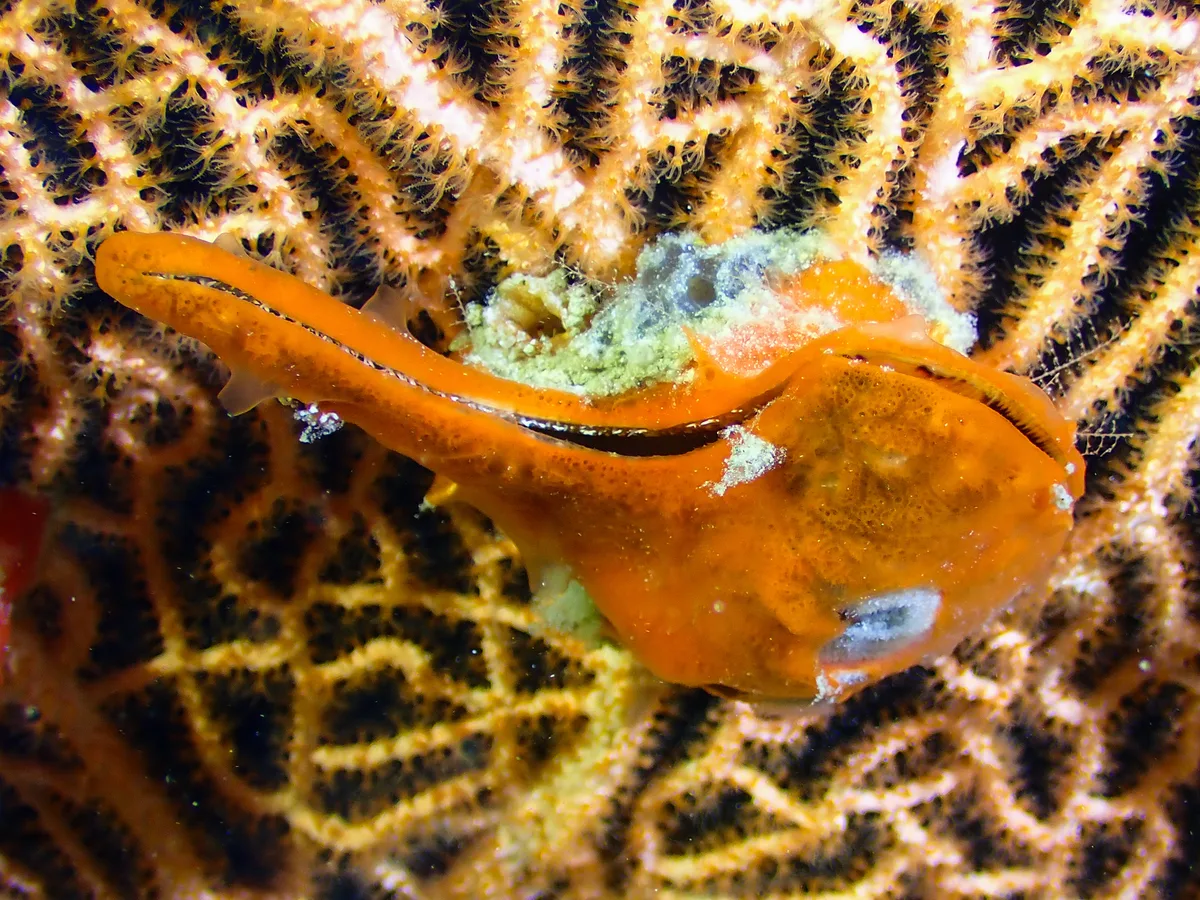
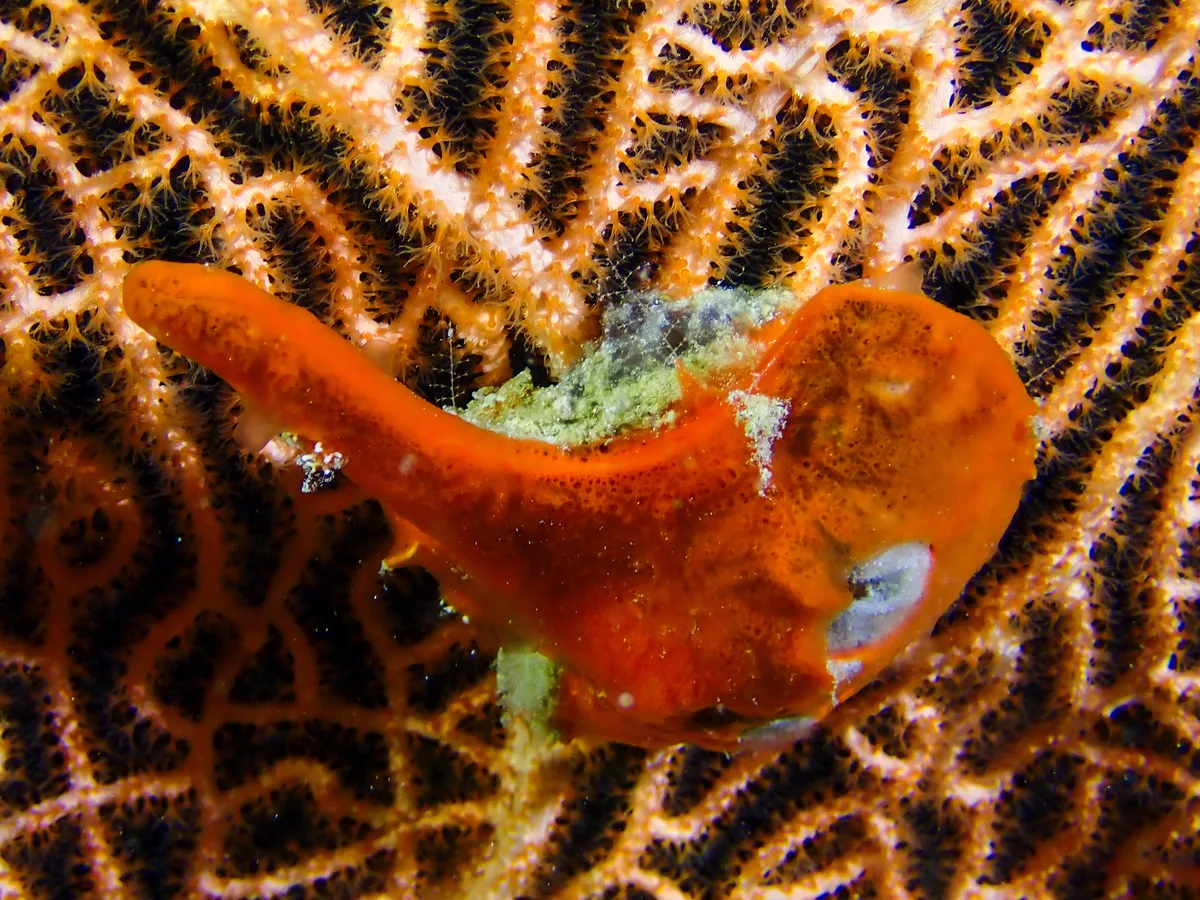
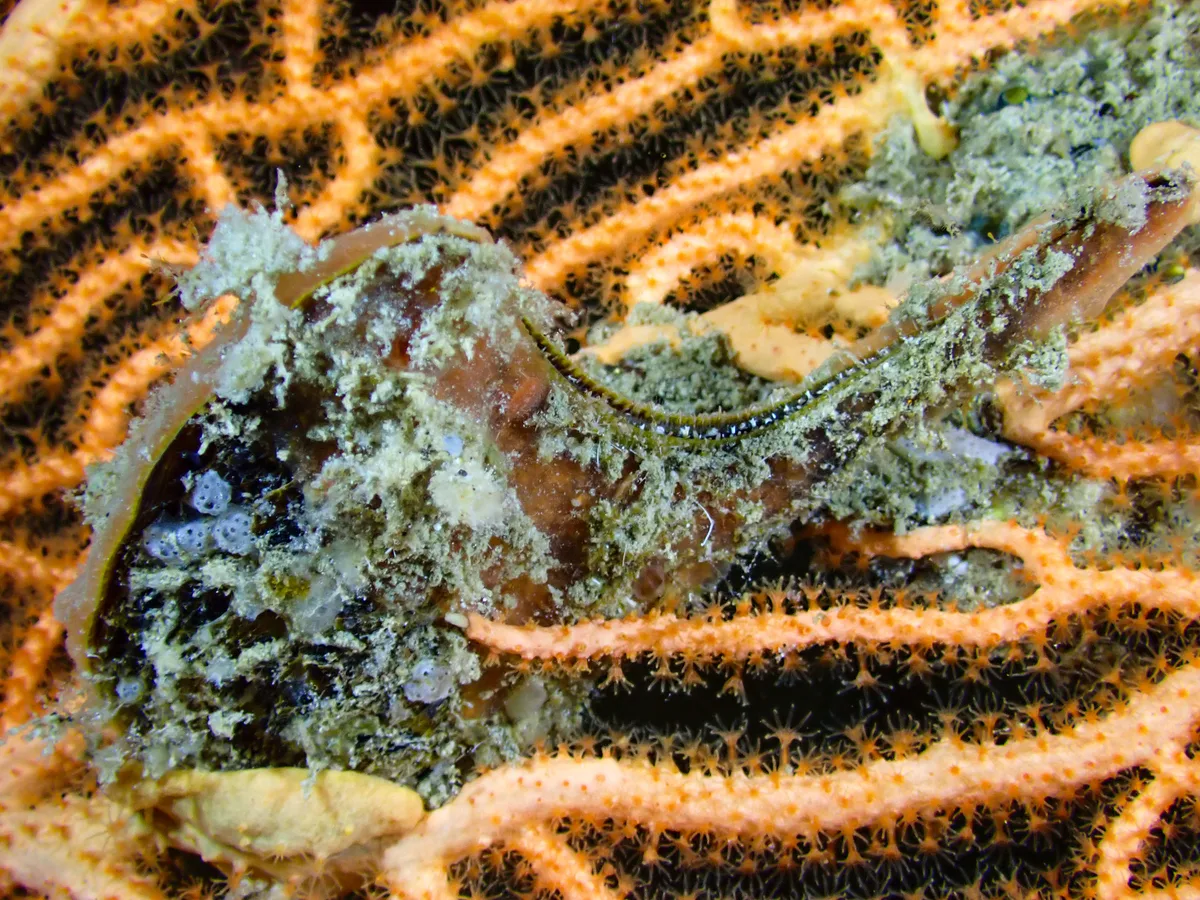
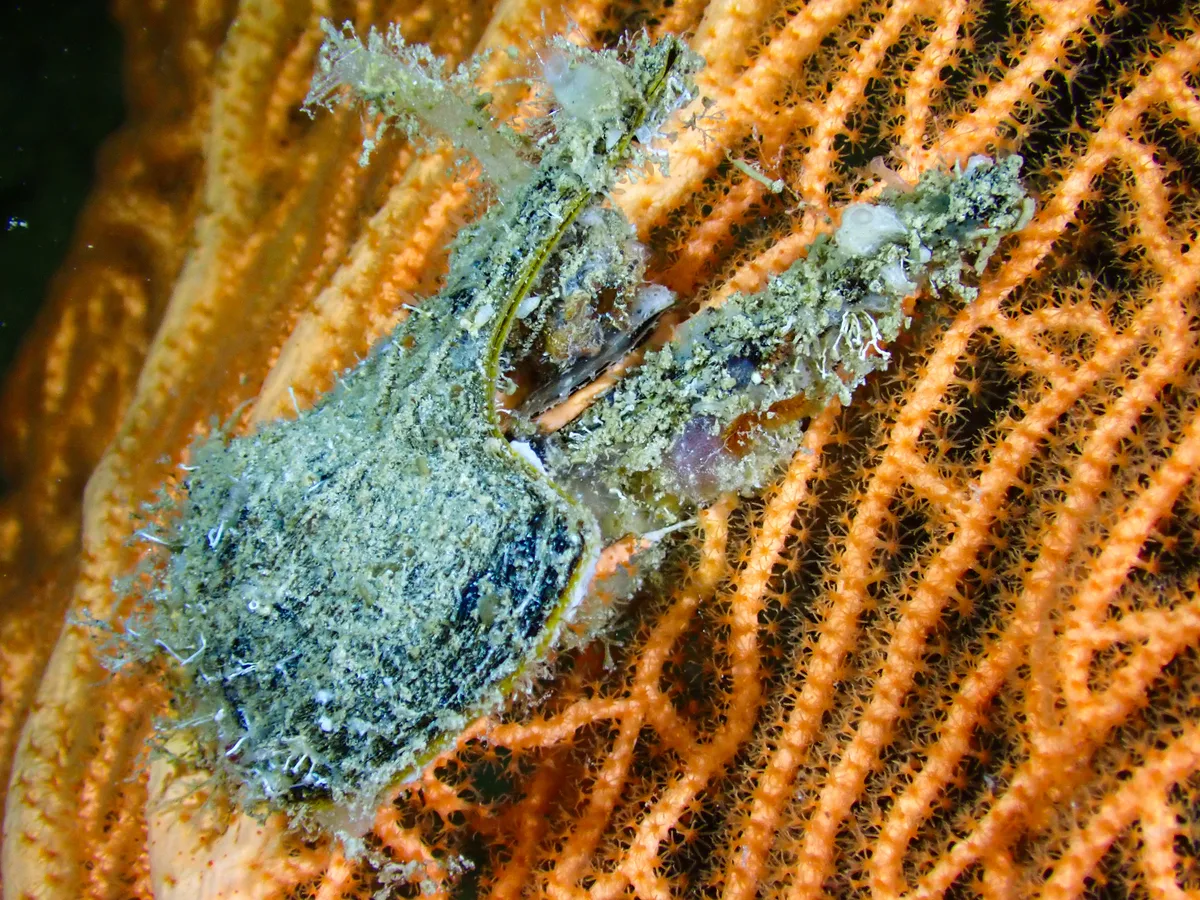
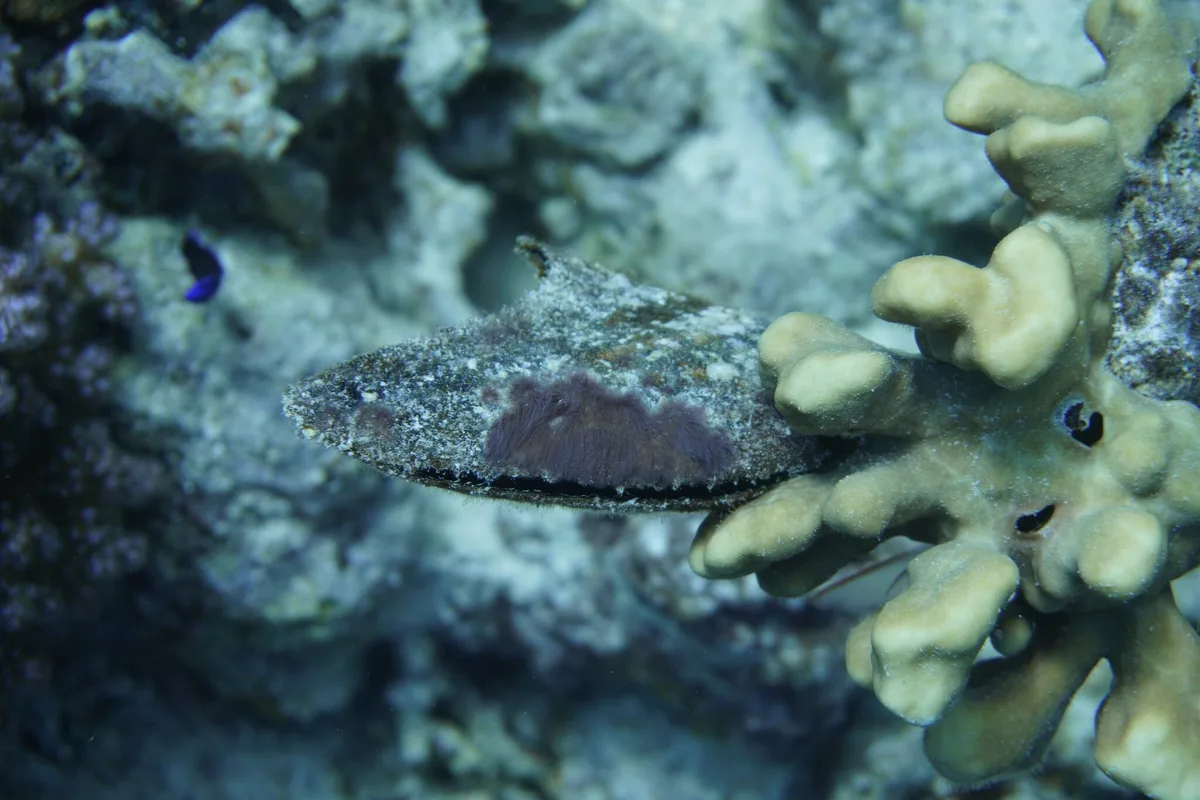
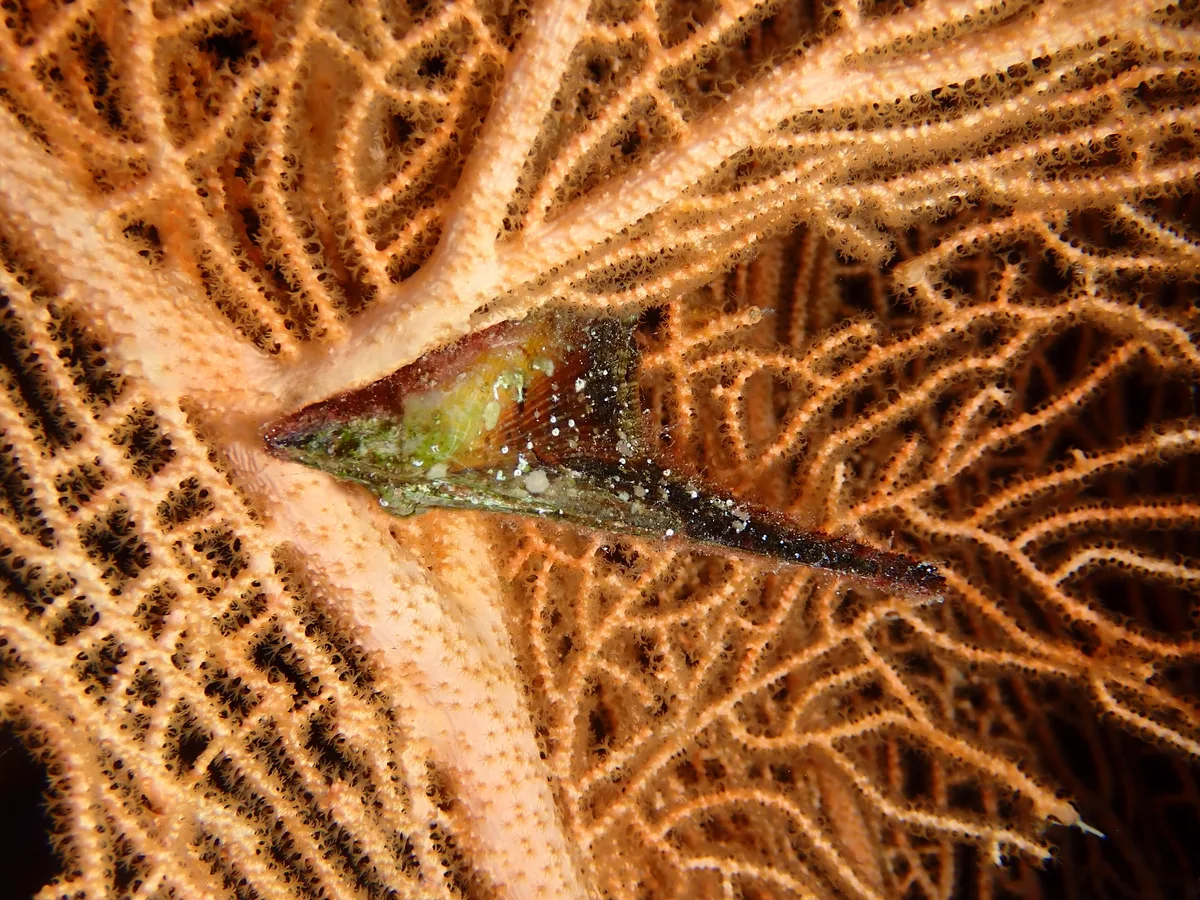
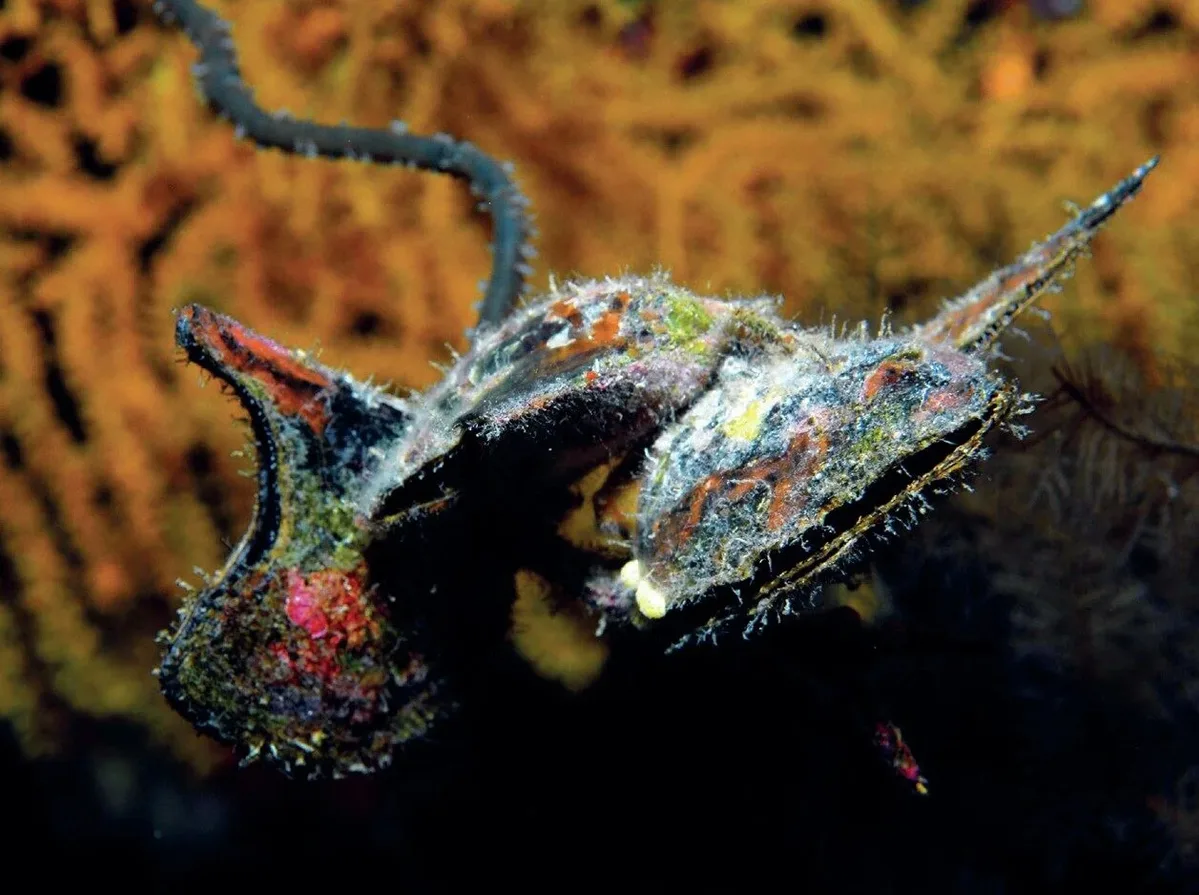
This oyster never touches the bottom. It spends its whole life clamped to a sea whip, a gorgonian branch or a black coral bush, well clear of the reef and out in the current, and that position is the identification: nothing else here is a bivalve sitting on a living cnidarian.
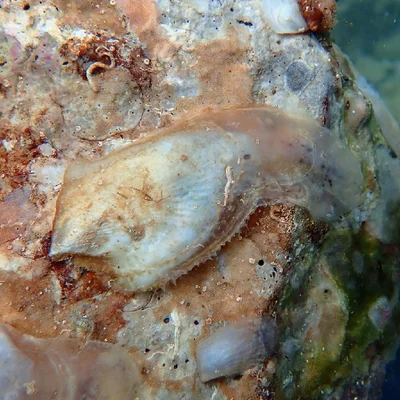
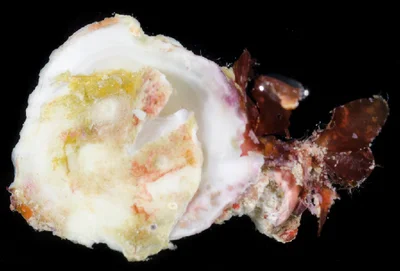
The shell is oblique and flattened, with the hinge drawn out at one end into a long backswept spur, the wing that gives the genus its name from the Greek pteron. The outside is brown to purplish black with a darker reticulate pattern, usually furred with algae and encrusting growth; the inside is nacre. Length is about 10 cm (4 in) including the wing. A tuft of byssal threads does the holding, not cement, so the animal can be lifted off its branch intact, and empty valves stay gripped to the branch for months after the animal has died.
Getting off the bottom is the entire point. An animal that eats what drifts past needs moving water, and the outer branches of a sea fan are the windiest place on the reef. Several oysters often share one colony, each with its gape turned into the flow. The host takes no direct damage, but it is competing for the same drifting food, and a well loaded sea whip bends visibly.
What is inside the shell is a mollusc that gave up its head. There is no face and no jaws: the gills, which in most molluscs only breathe, do the feeding here, combing particles out of the water with cilia and passing them to the mouth in mucus strings. Eggs and sperm go straight into the water, and the larvae drift for weeks before they have to find a branch to settle on.
Dillwyn described it in 1817 from Egyptian material, which the name records. The regional guide treats it as a 🌊 Red Sea endemic; records from further out in the 🌊 Indian Ocean exist but are scattered and easy to confuse with the other winged oysters.
- hinge drawn out into a long backswept wing
- hangs from a sea whip, sea fan or black coral by byssal threads
- brown to purplish black with a darker reticulate pattern
- interior lined with nacre
- up to 10 cm including the wing