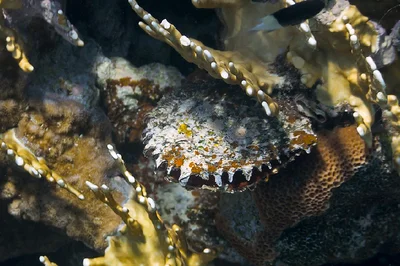
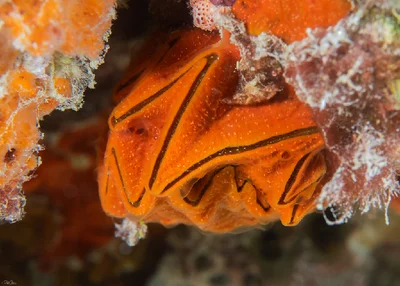
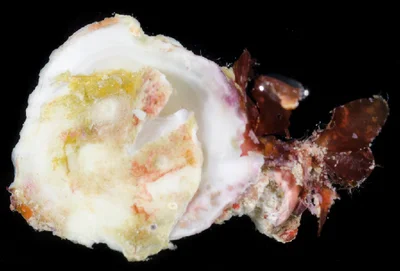
A flat, elongated bivalve shaped like a flattened pod, which is what legumen records. The shell is thin, dull gray to purplish brown outside and partly nacreous within, and the hinge carries a distinctive row of short parallel grooves set like the teeth of a comb - the feature that identifies the tree oysters even from a broken fragment. Length reaches about 8 cm (3 in). Growth is shaped by the space available, so animals from tight crevices come out narrow and bent.
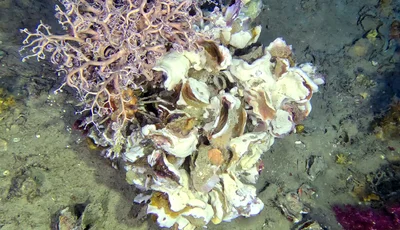
It lives byssally attached in crevices, in dead coral and under boulders on shallow reef flats, usually several packed together in the same gap with their gapes lined up along the opening, from the low tide line down to about 10 m (33 ft). Feeding is by filtration. Because the animals sit inside the reef rather than on it, they are found mainly by looking into cracks, and the flat comb-hinged valves are more often met loose in rubble than in place. The byssus is strong enough that a live animal tears before it lets go, which is why beachworn shells almost always come from dead colonies rather than storm-torn ones. Tree oysters are among the few 🌊 Red Sea bivalves that tolerate the brackish, silty water of sheltered inlets, and they turn up in mangrove channels where reef species do not.
- flat, elongated pod-shaped shell
- hinge with a row of parallel grooves like a comb
- several animals packed into one crevice