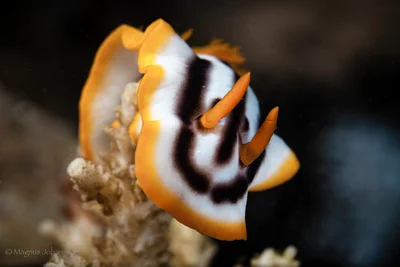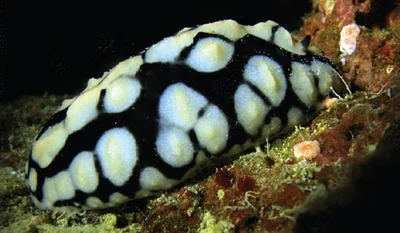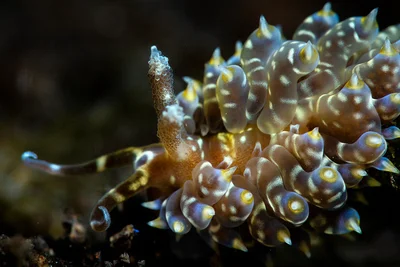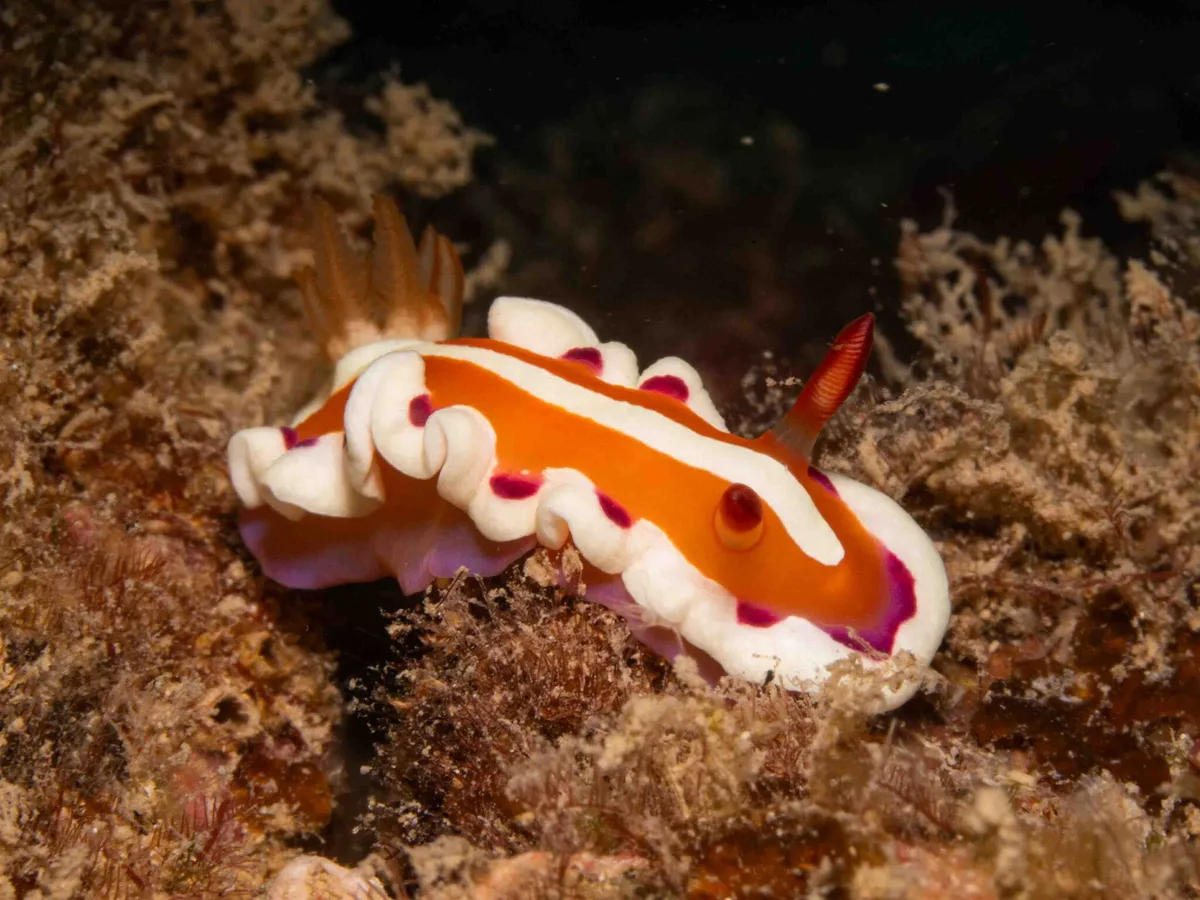
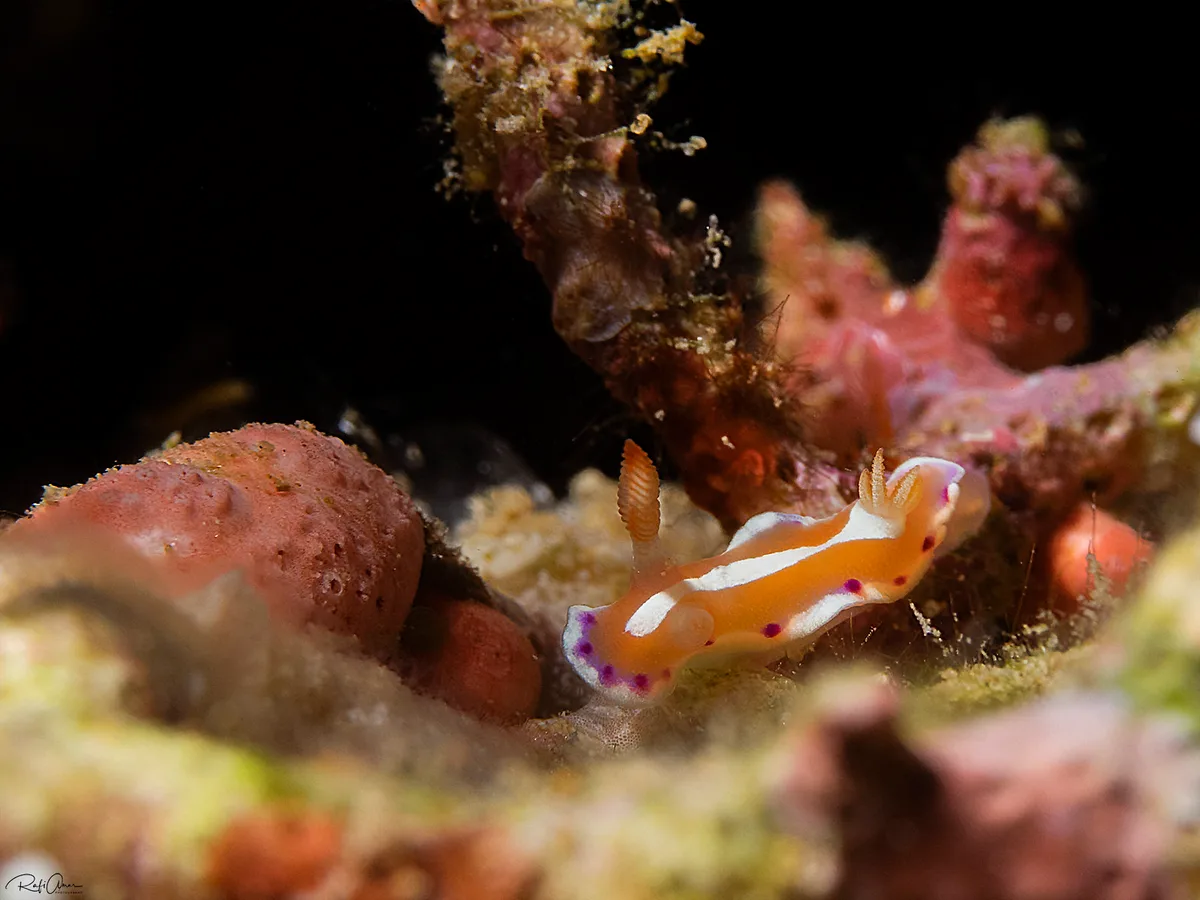
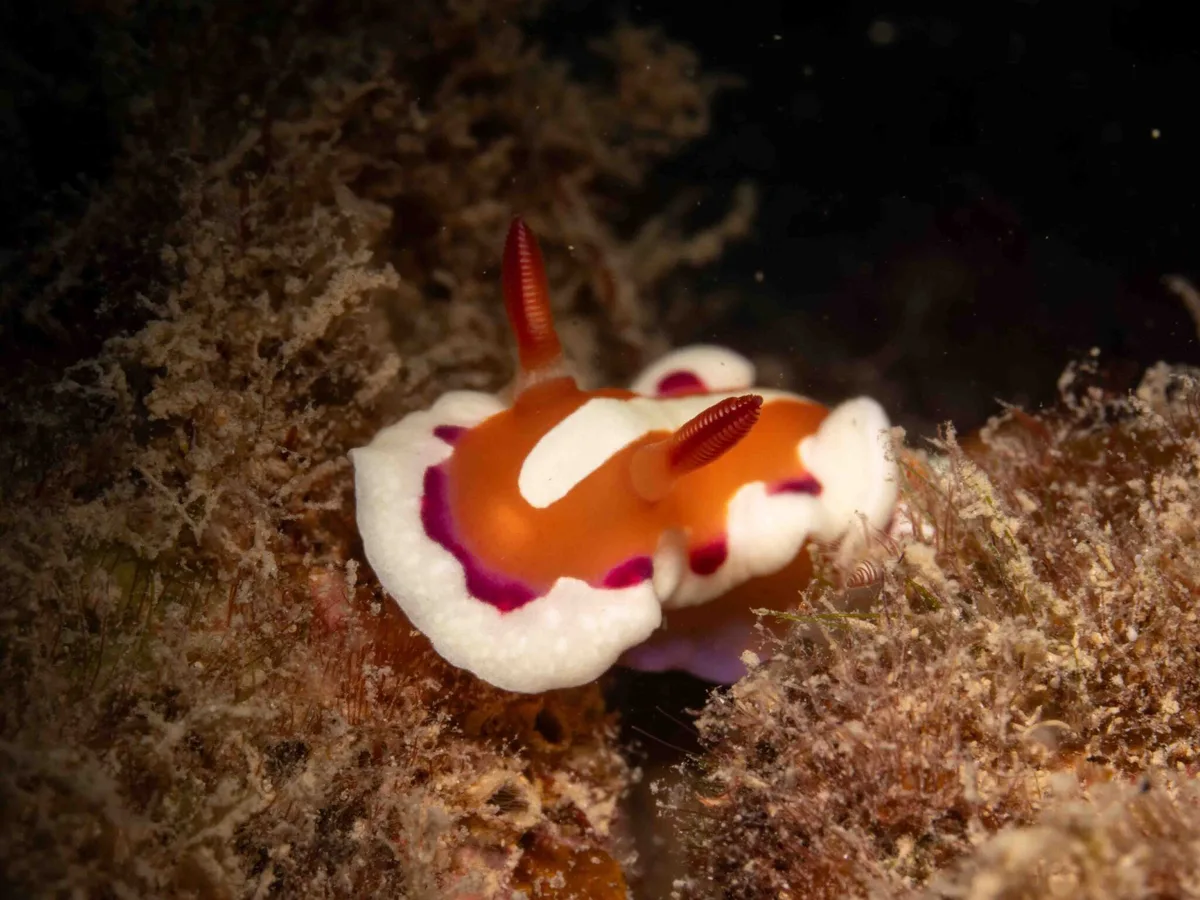
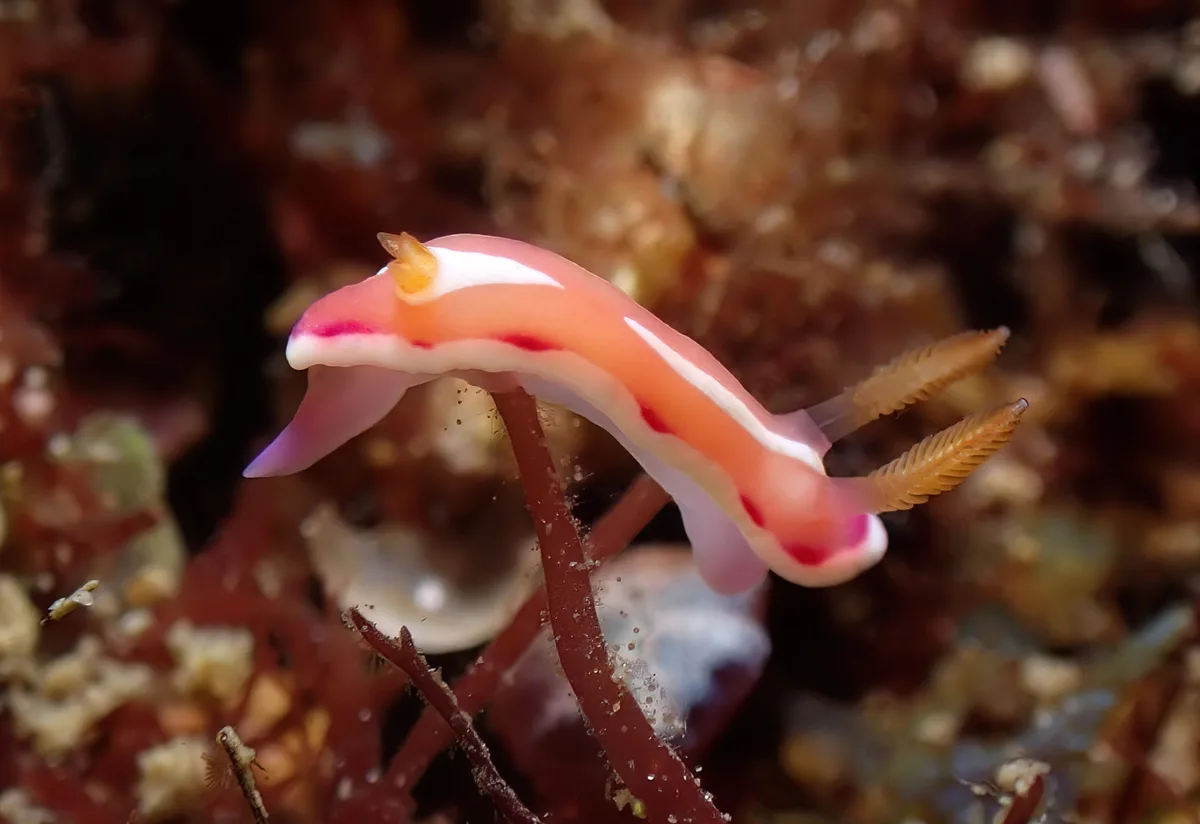
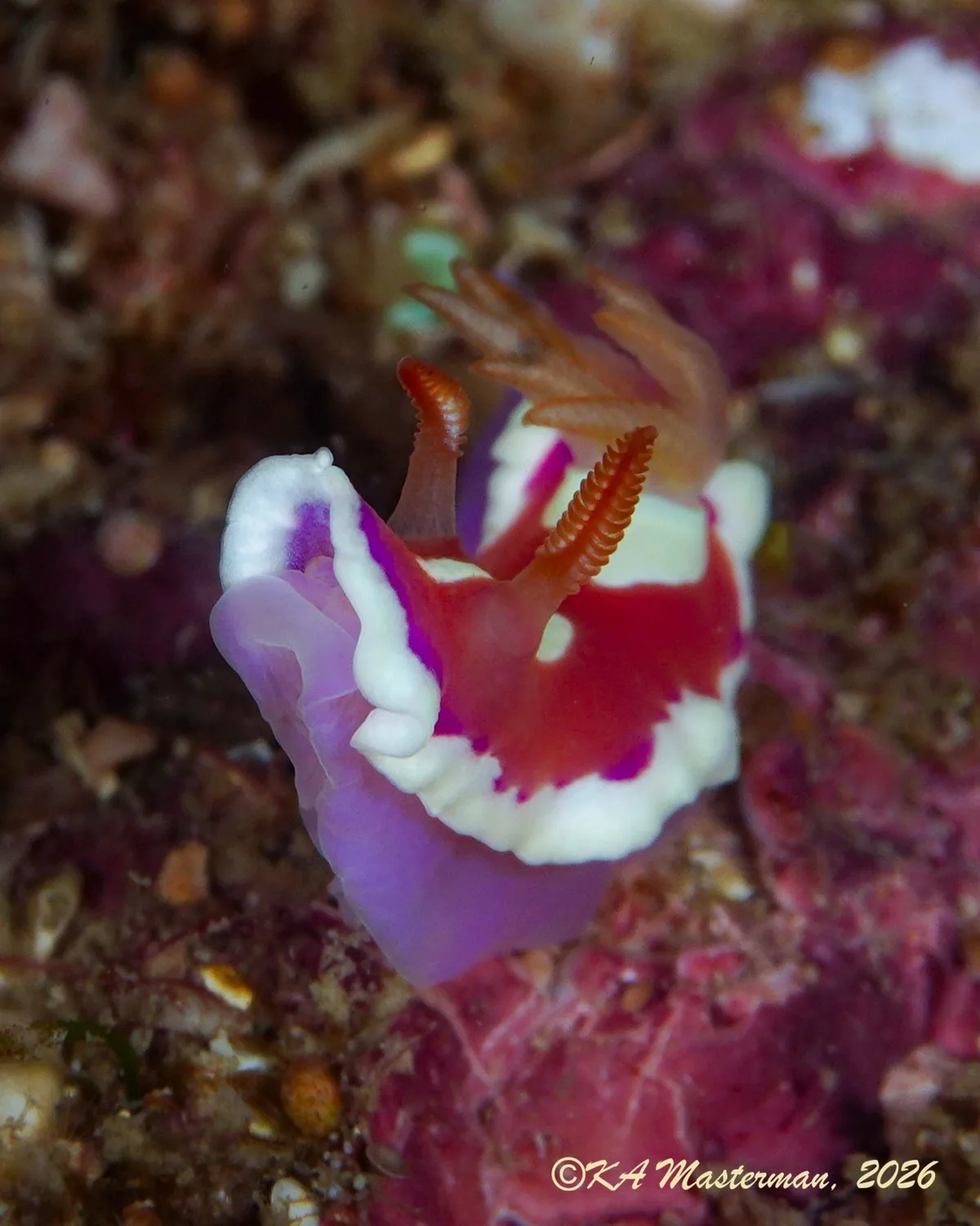
Verconia are the small, thin, translucent end of the chromodorid family. Where their relatives are firm ovals with a bold rim, these are two-centimeter animals with a mantle thin enough that the darker mass of the internal organs shows through the middle of the back, and their patterns are reduced to a line here and a few spots there. They eat sponges and store the sponges' chemistry in the mantle like every chromodorid, which is why something this small and this soft can crawl in daylight without consequence.
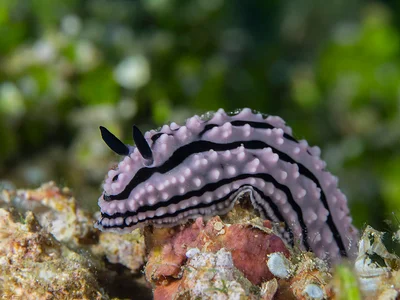
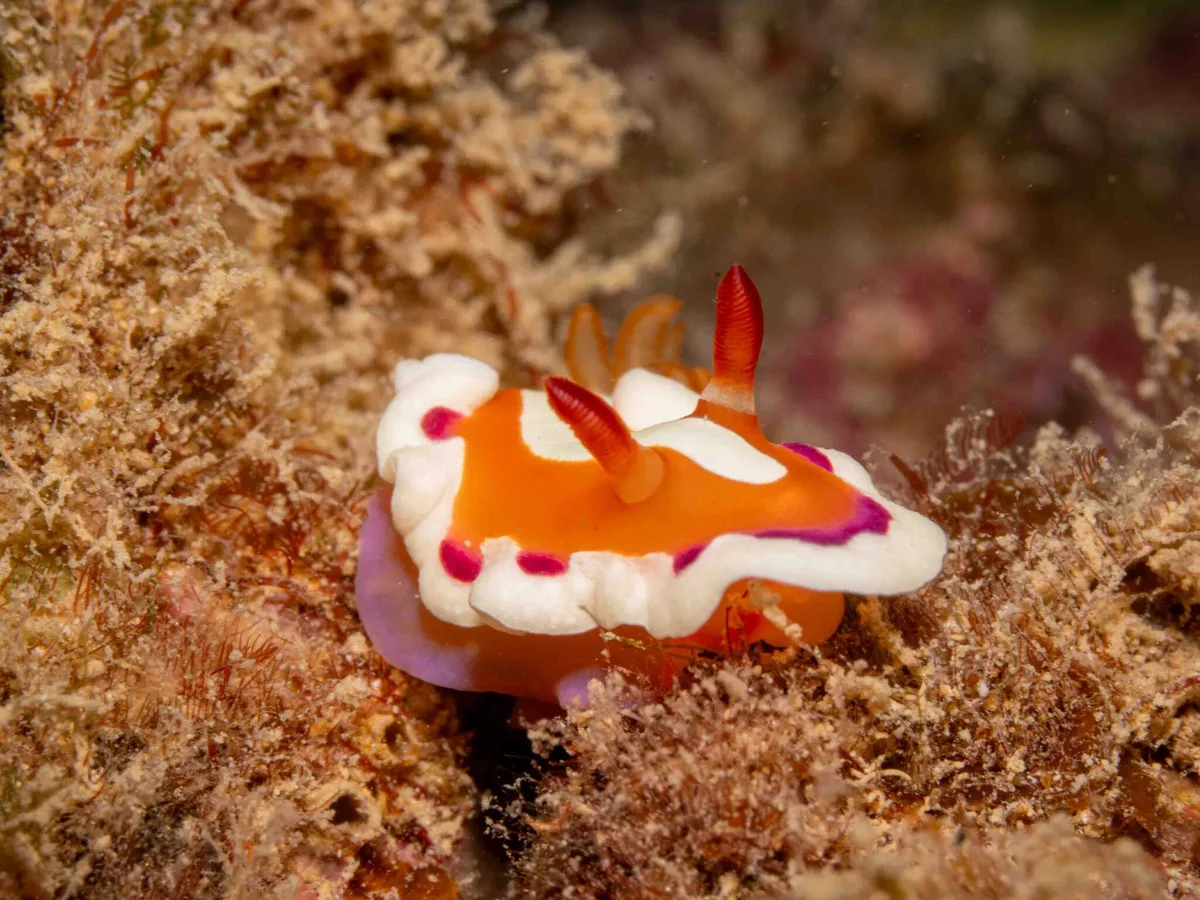
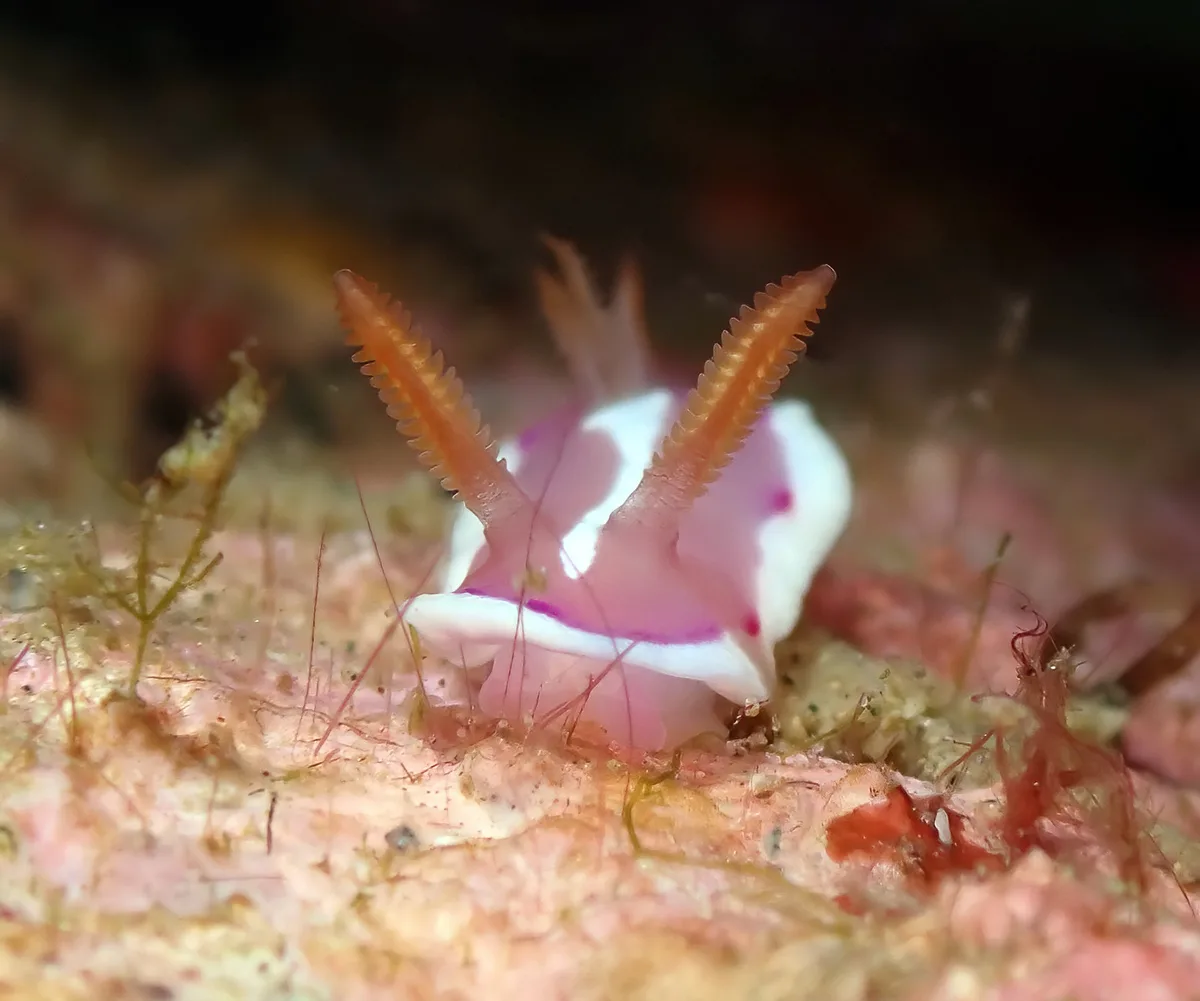
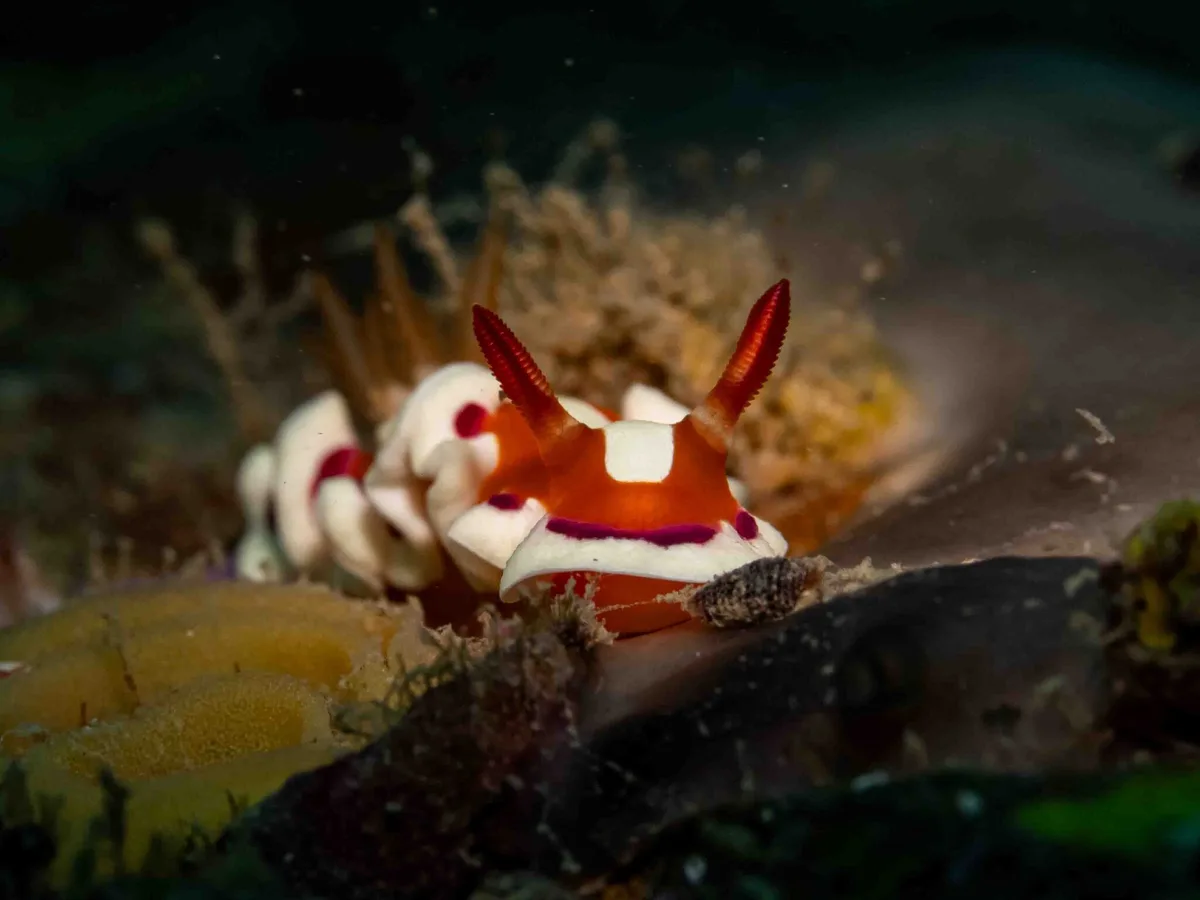
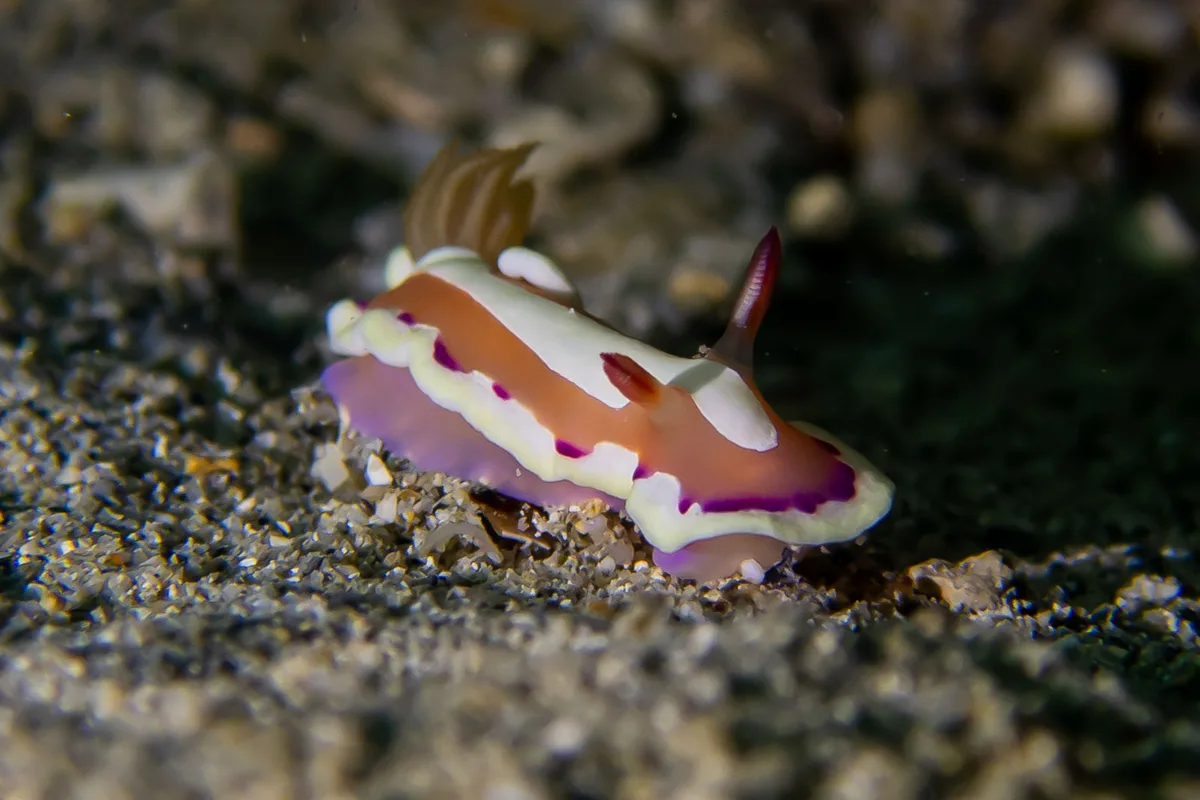
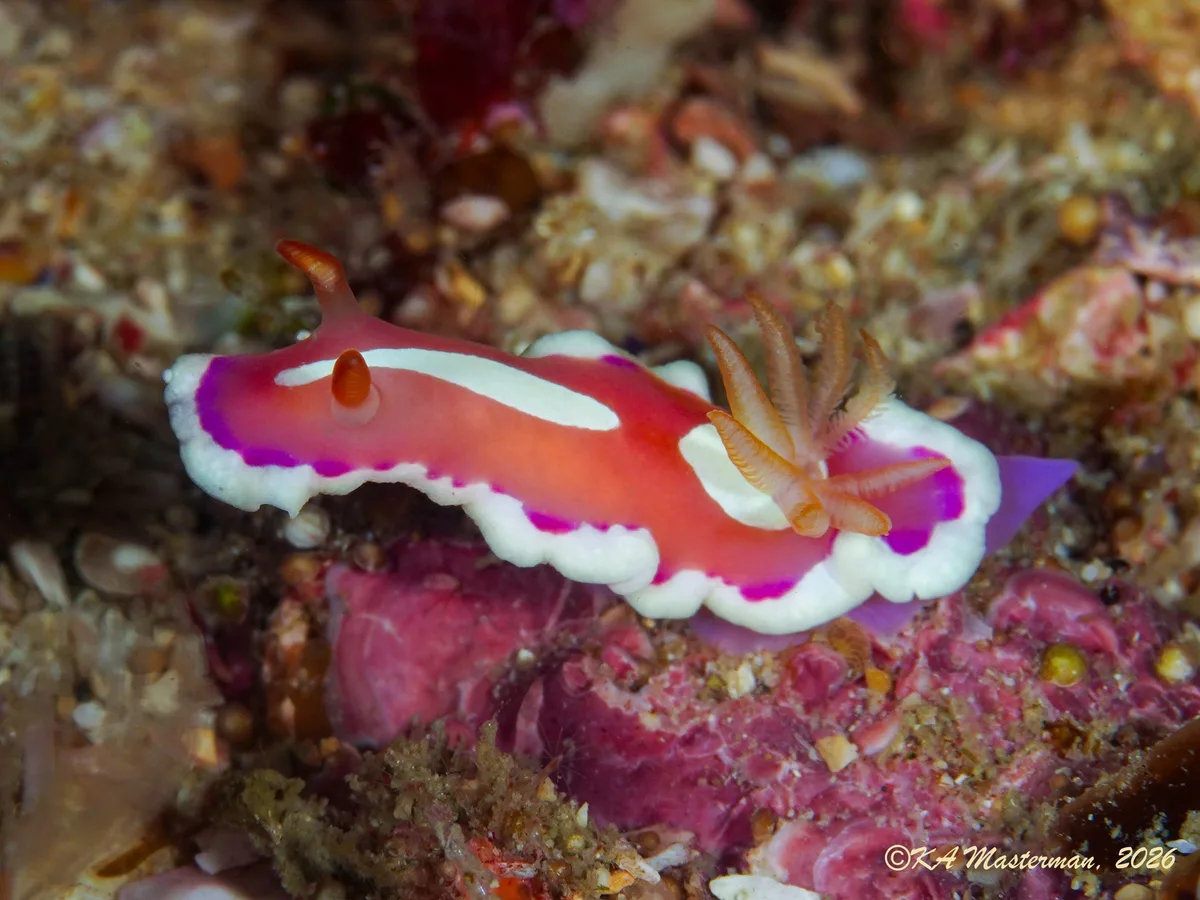
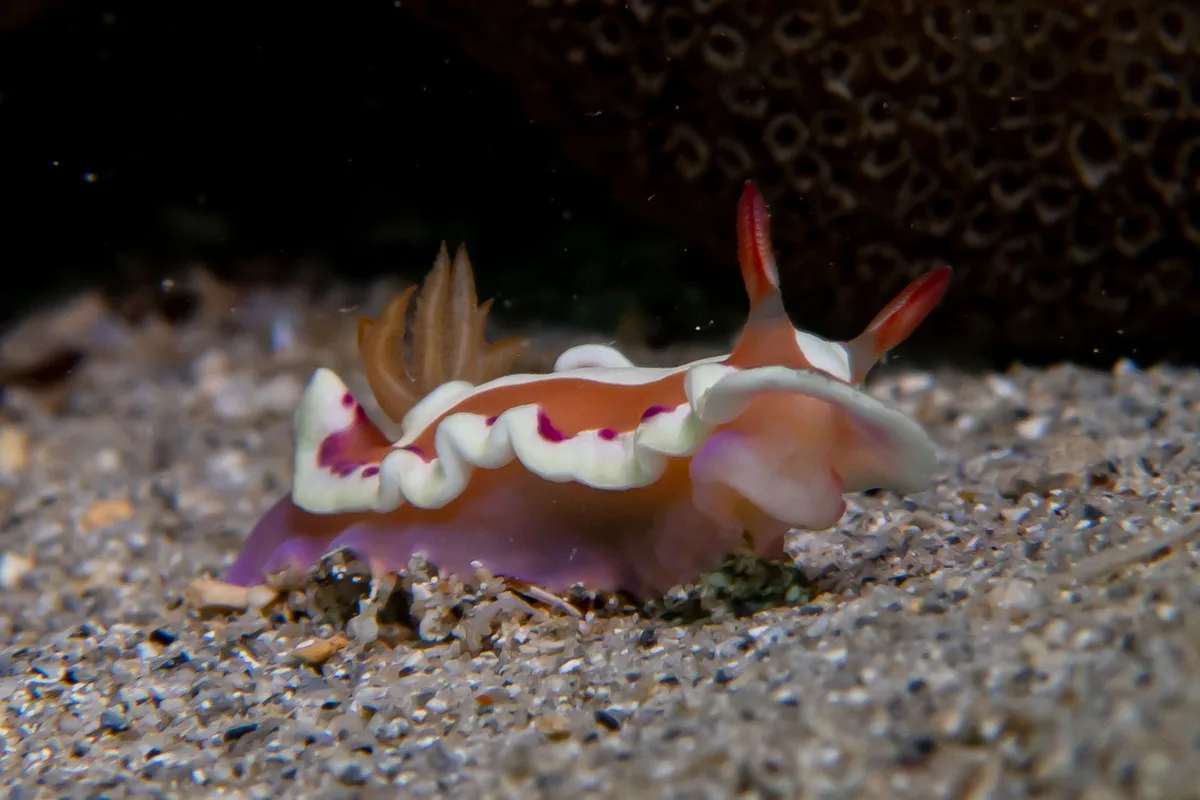
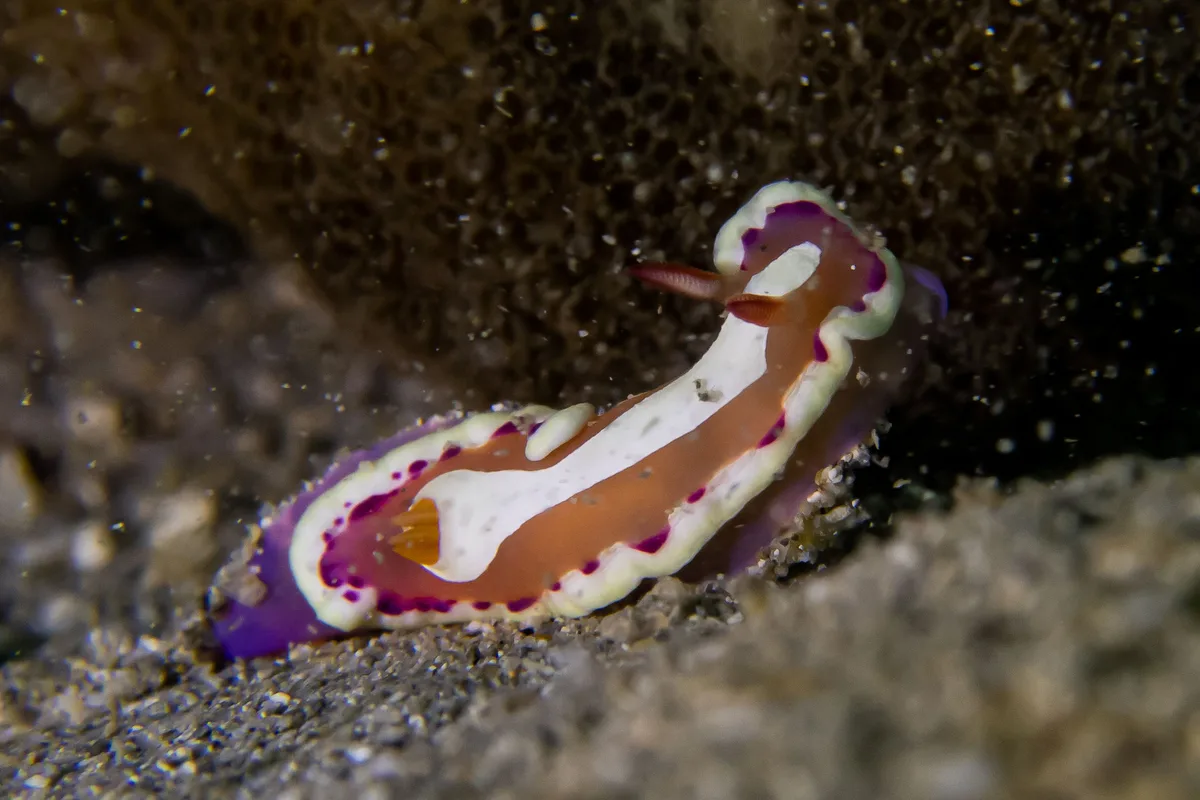
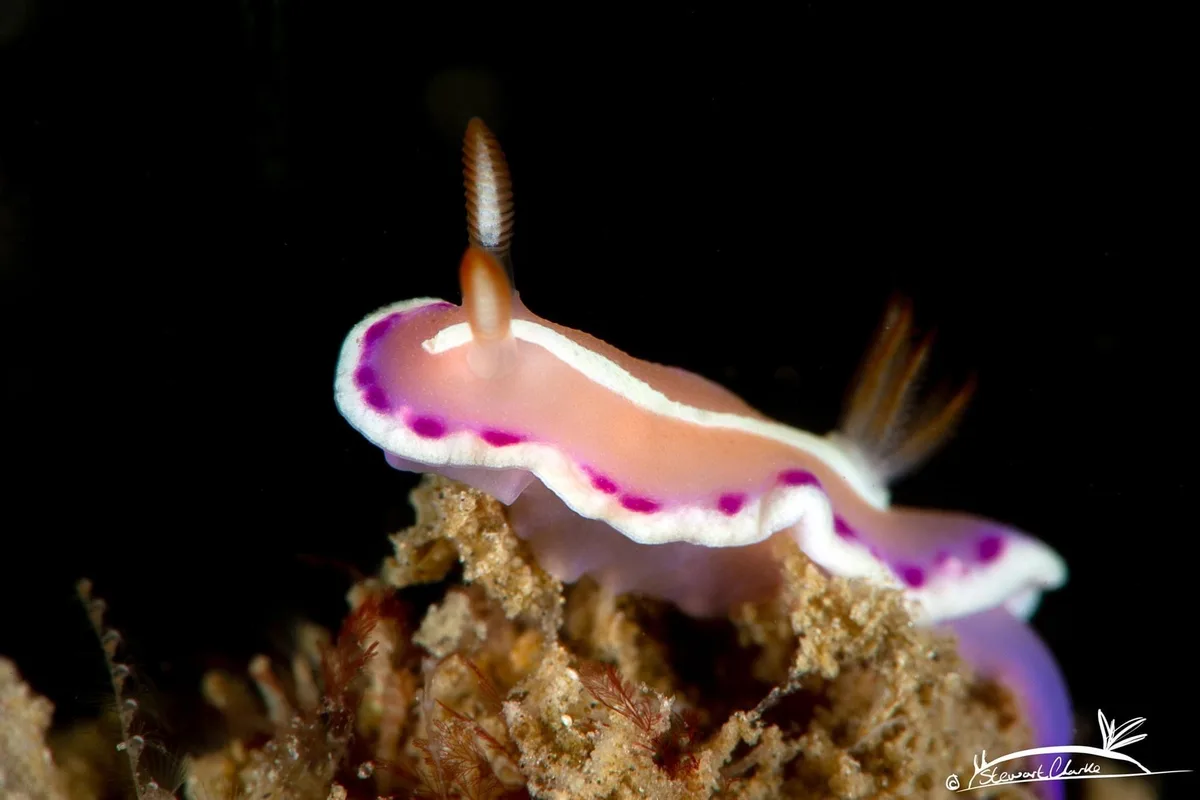
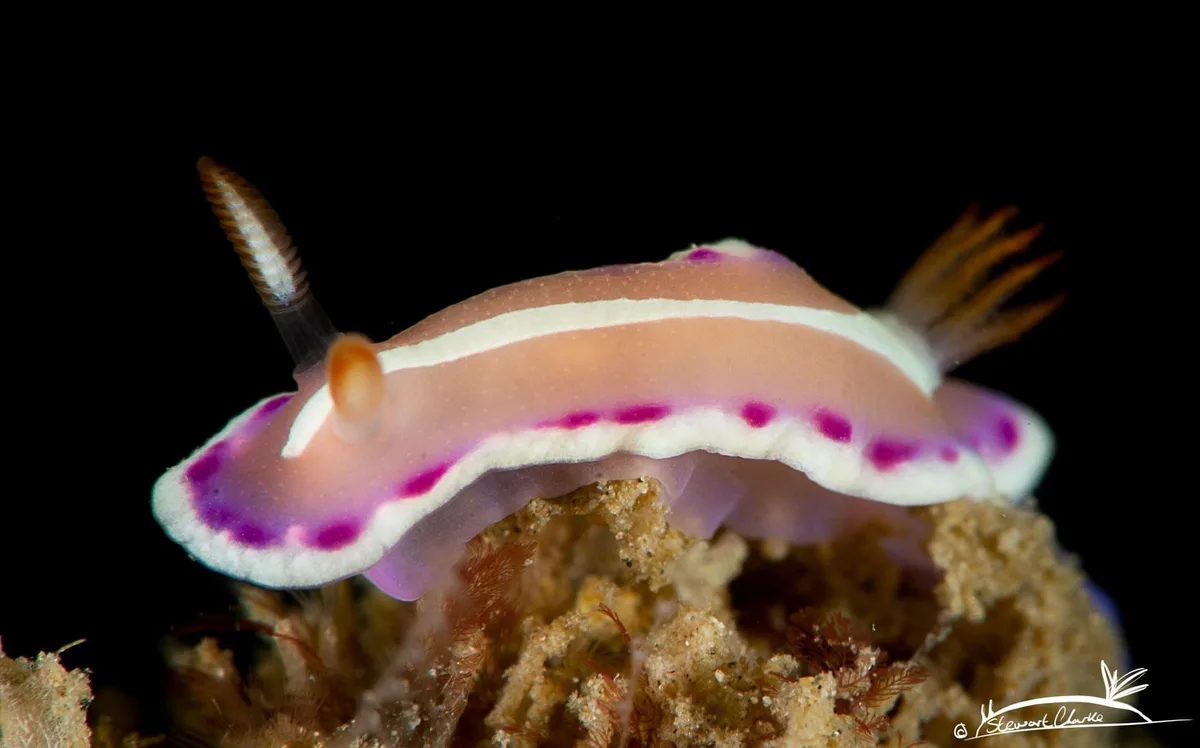
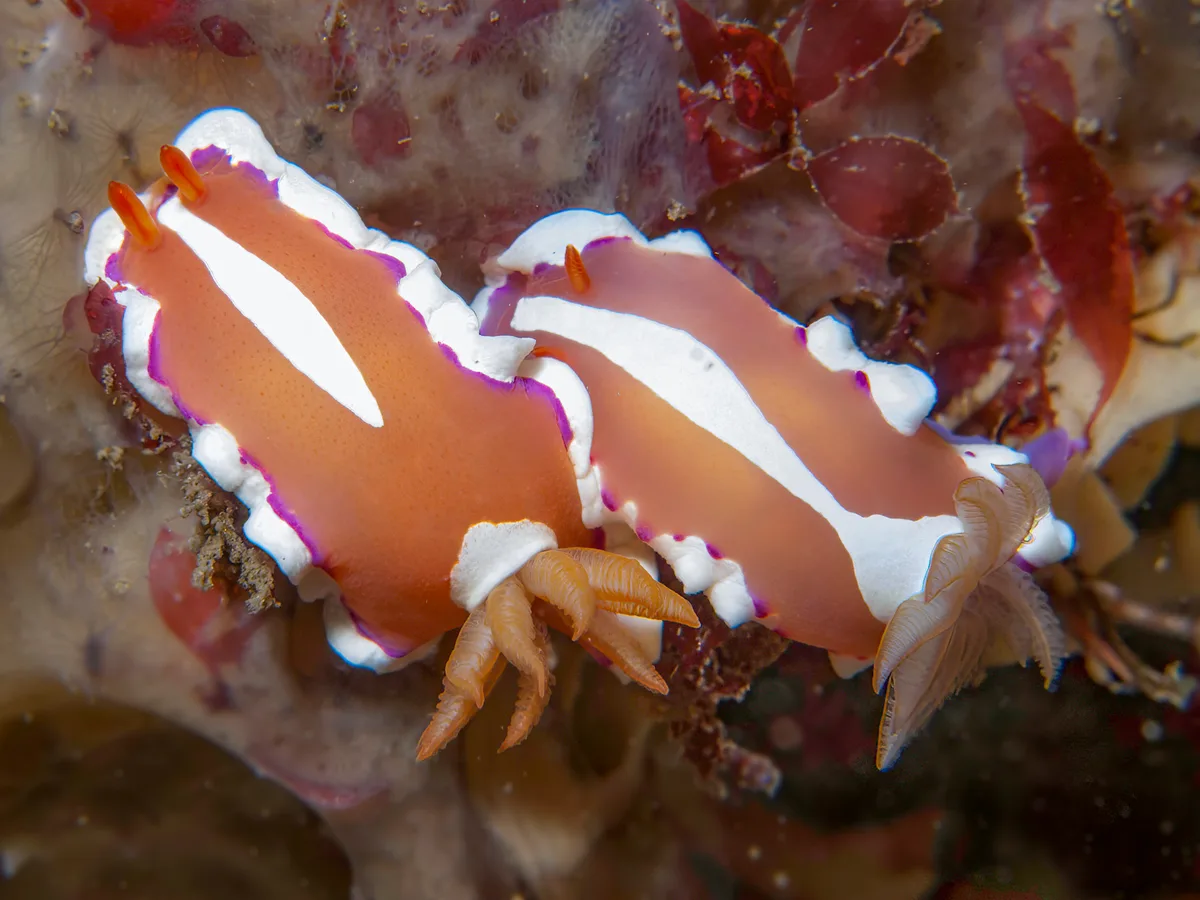
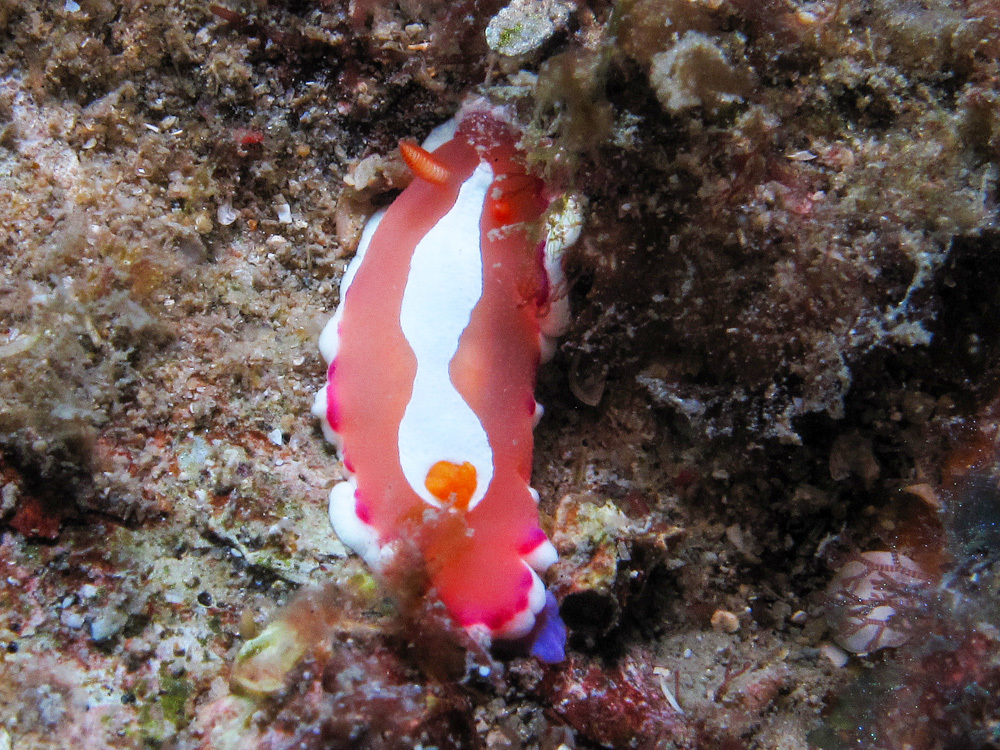
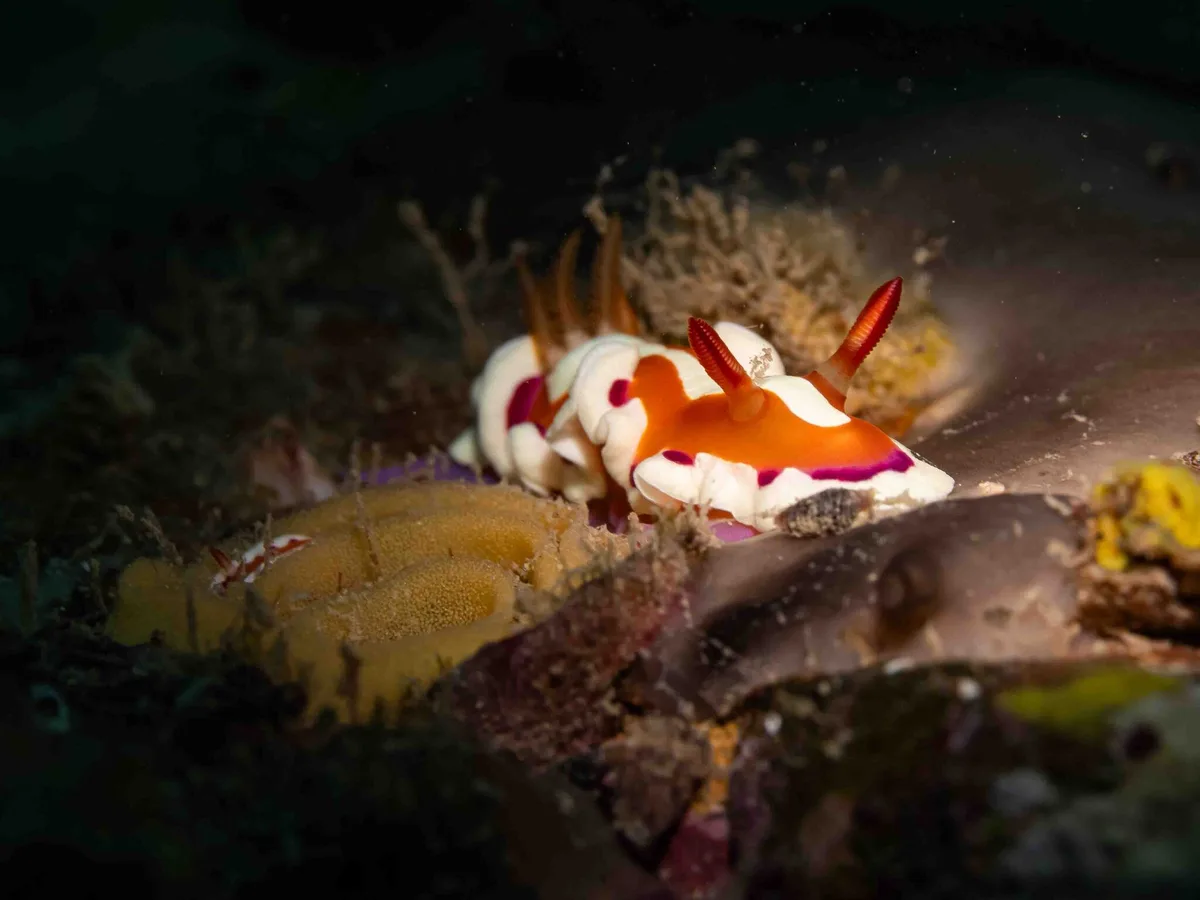
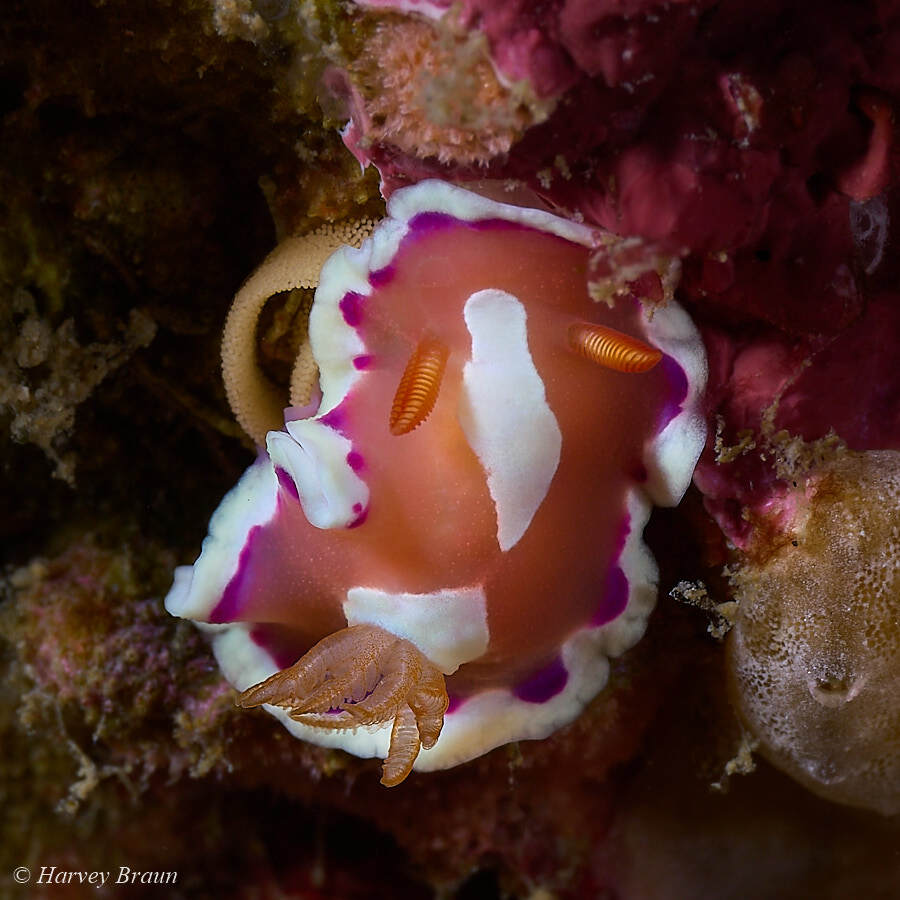
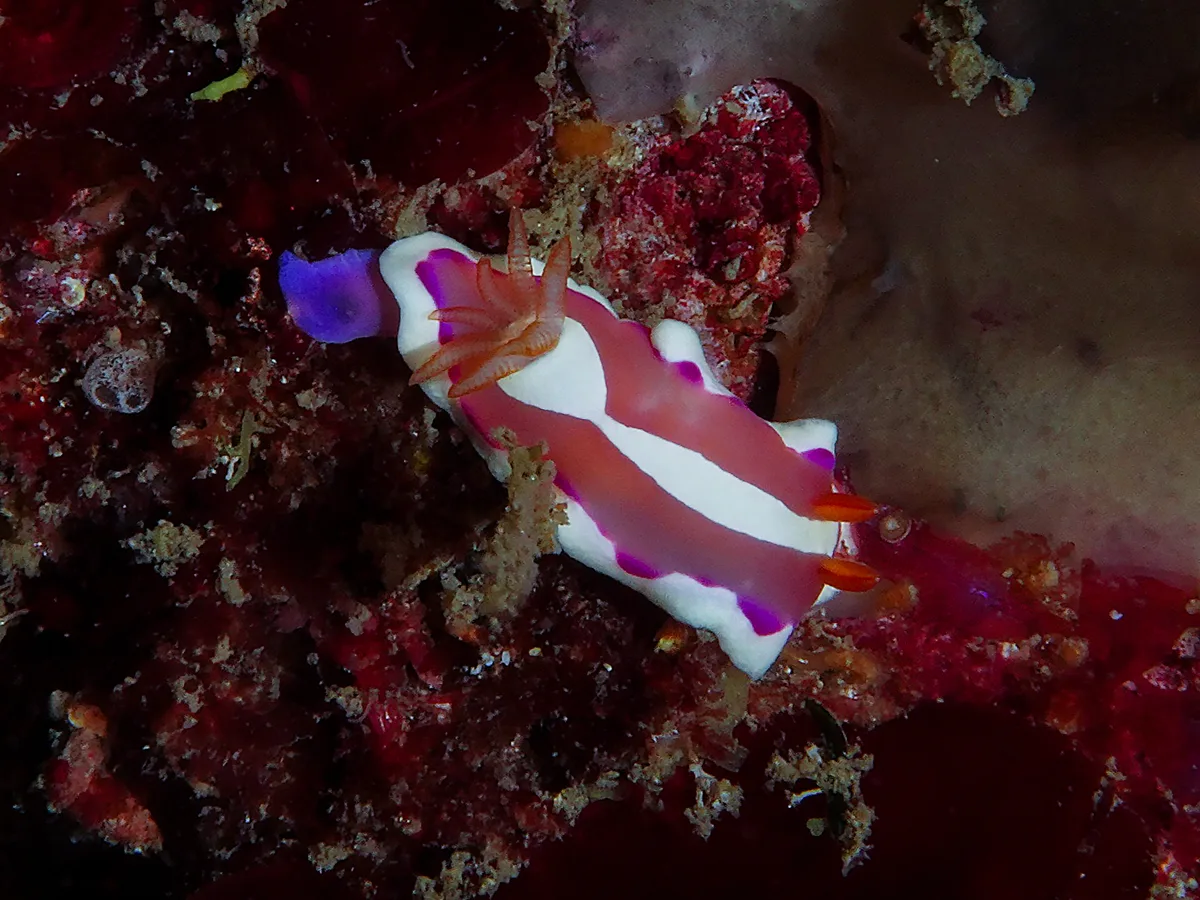
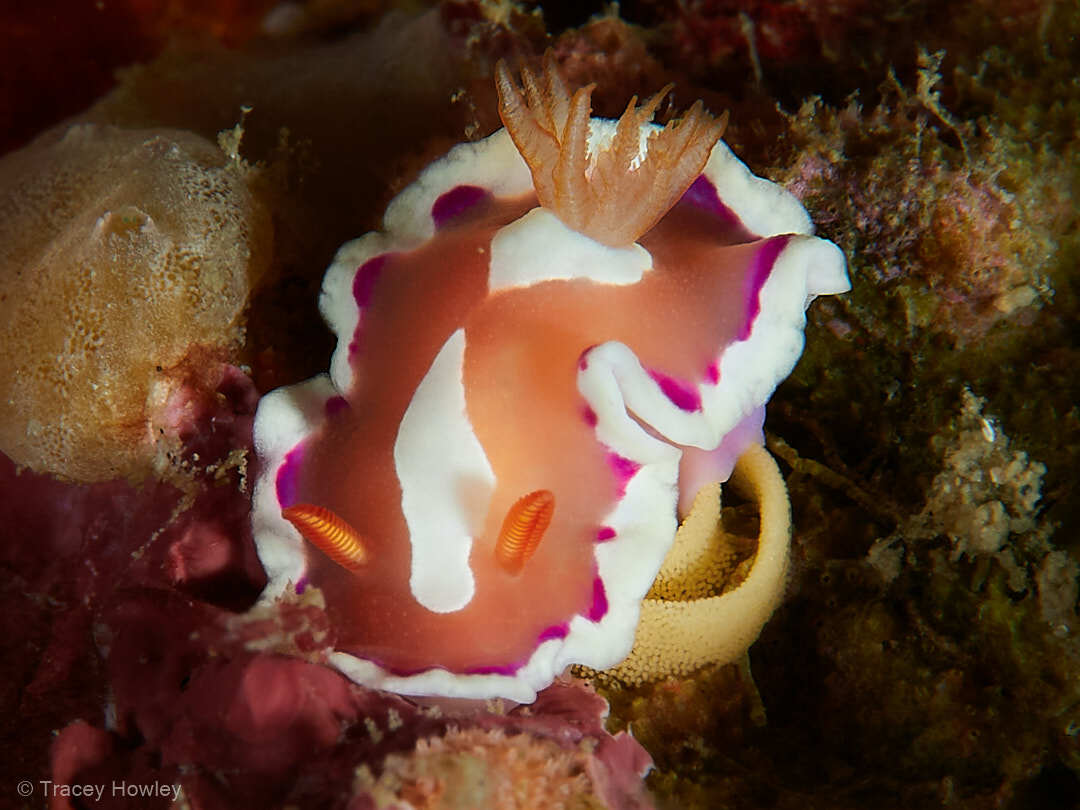
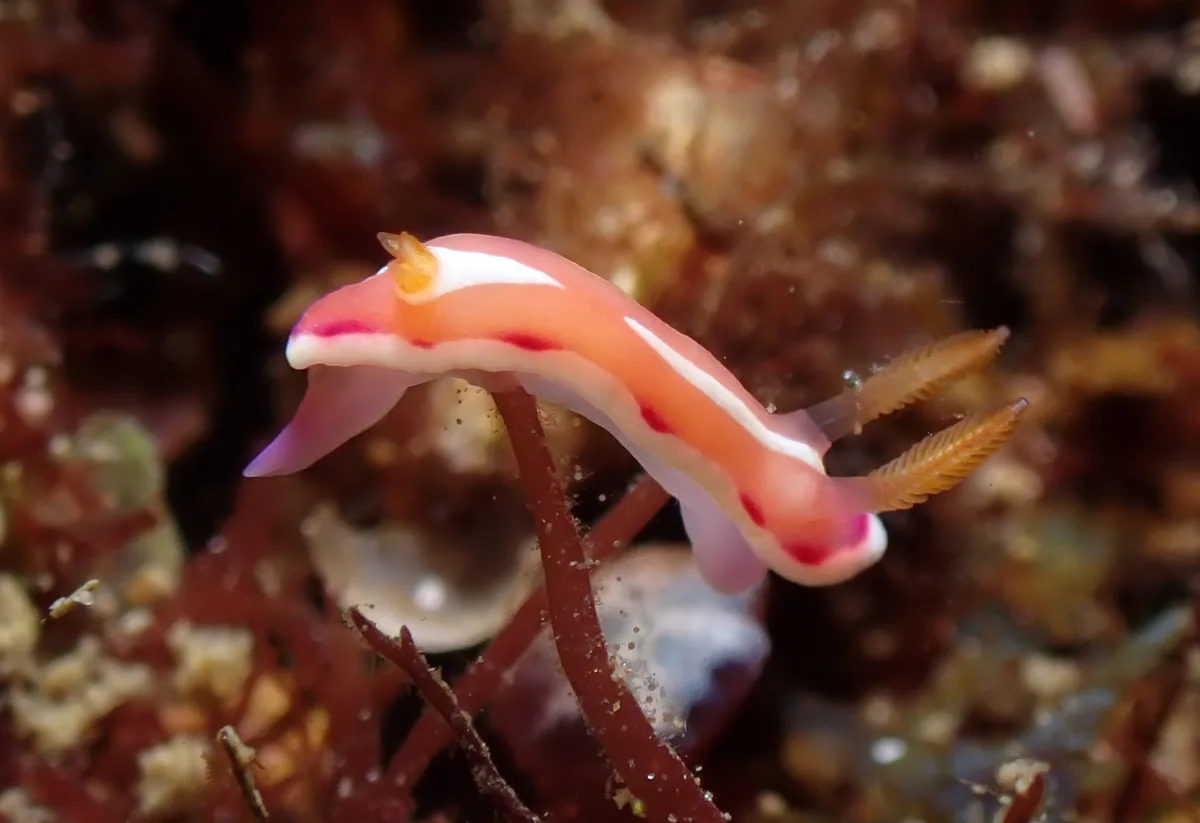
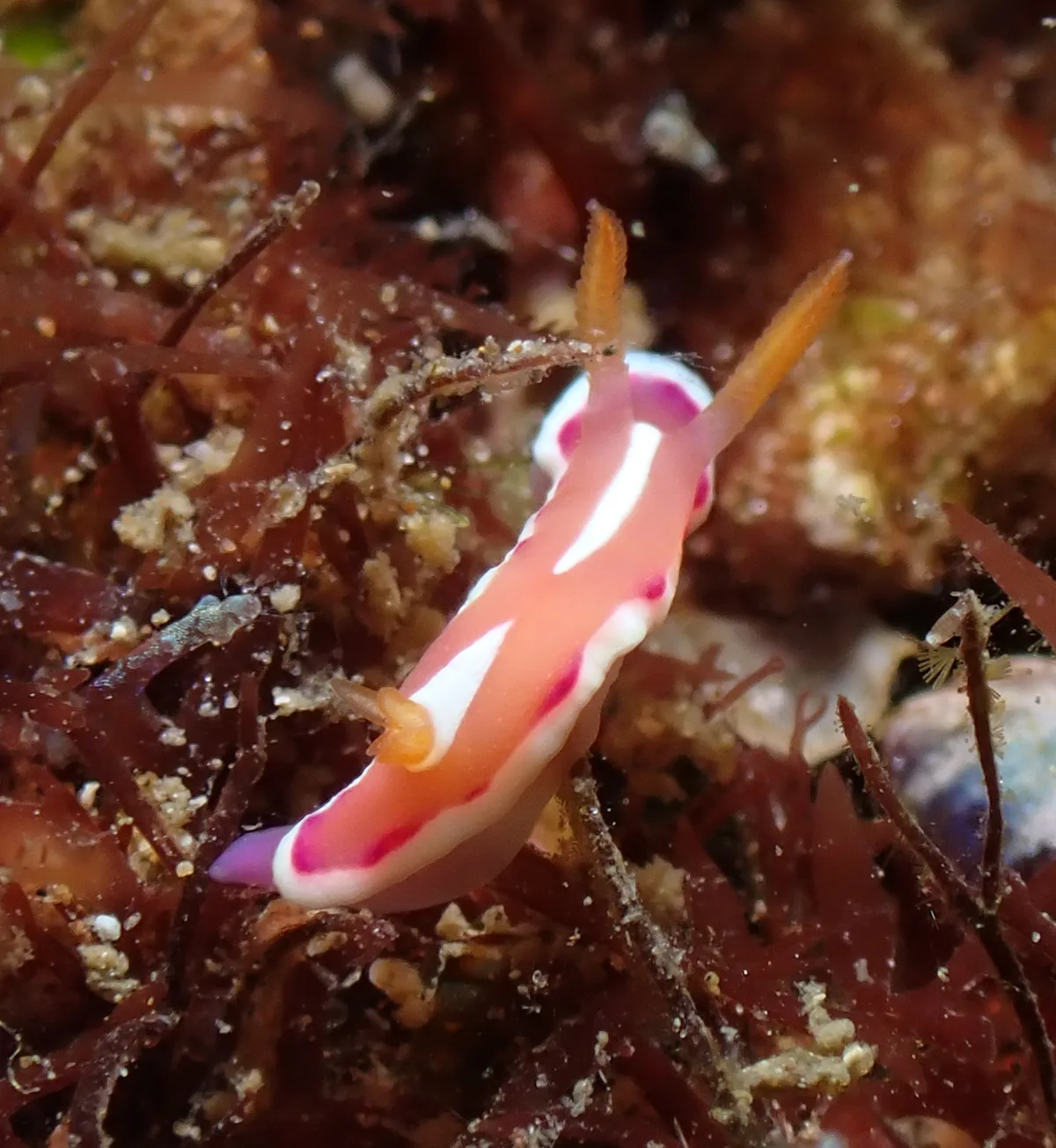
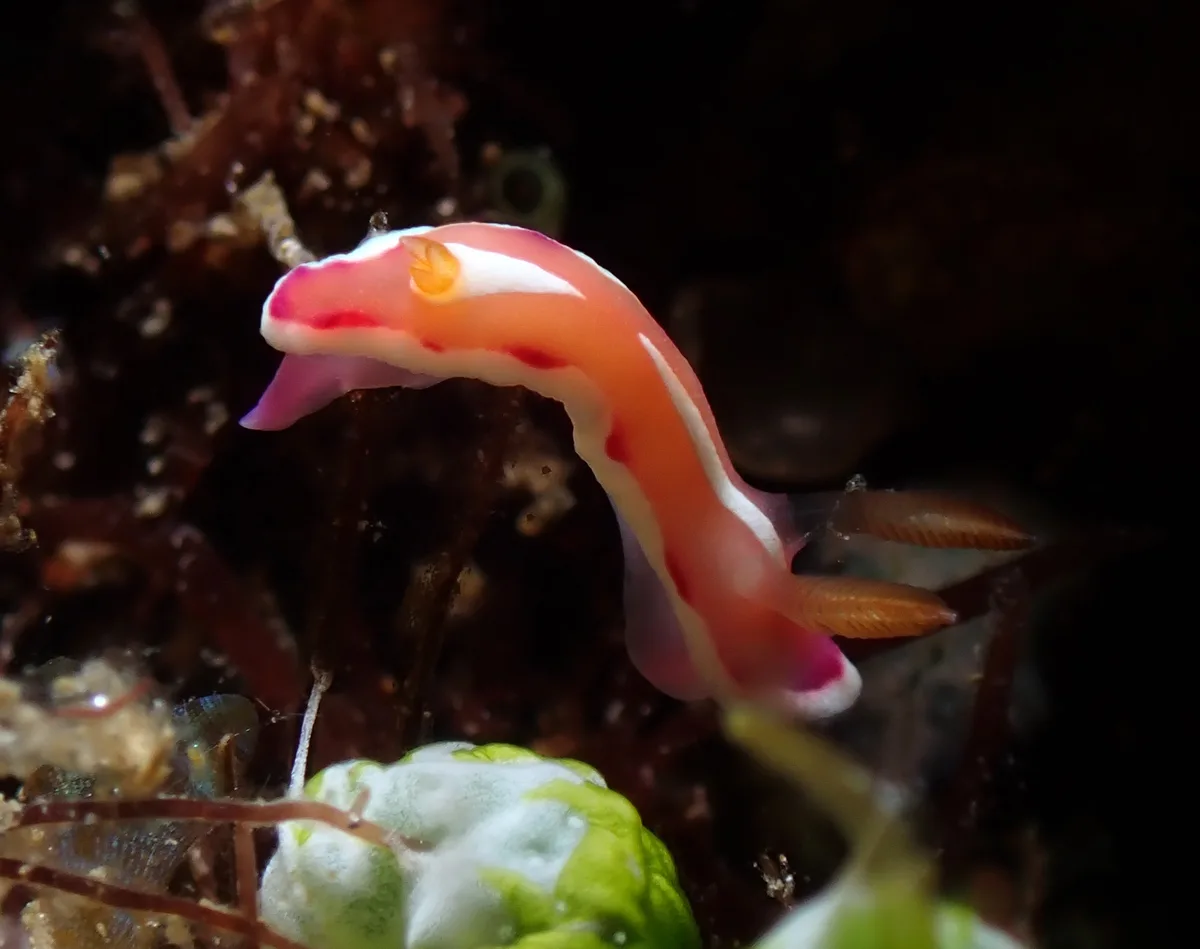
Within that genus this species is the marked one. A single opaque white band runs the length of the midline, and a row of purple spots sits inside the mantle edge rather than on it, forming a broken submarginal ring around a pinkish body.
That placement is the identification and it is worth being precise about, because the other Verconia on this reef is the plain one: translucent white, one unbroken orange line around the rim, and nothing at all on the back. Here the rim is not the story. The back is.
It was described in 1970 by Ernst and Eveline Marcus, a husband and wife who worked through the sea slugs of half the world's coasts together and whose two names appear side by side on a remarkable number of the labels in this group.
At two and a half centimeters (1 in) on sponge-covered rubble, it is a slug you find by working one patch slowly rather than by covering ground.
- an opaque white band running down the midline of the back
- purple spots set just inside the mantle edge, not on the edge itself
- pinkish ground color, translucent enough to show the viscera
- small, low and soft-edged, under three centimeters