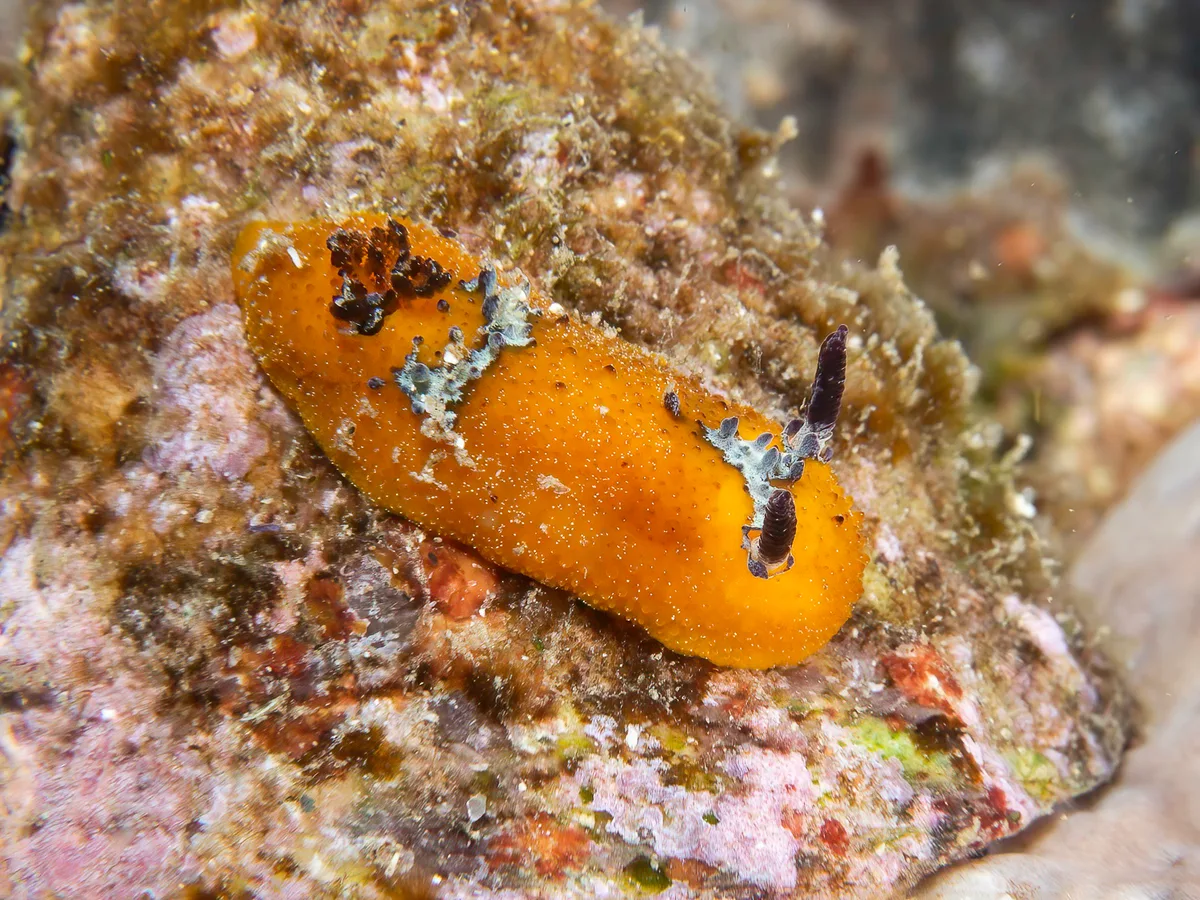
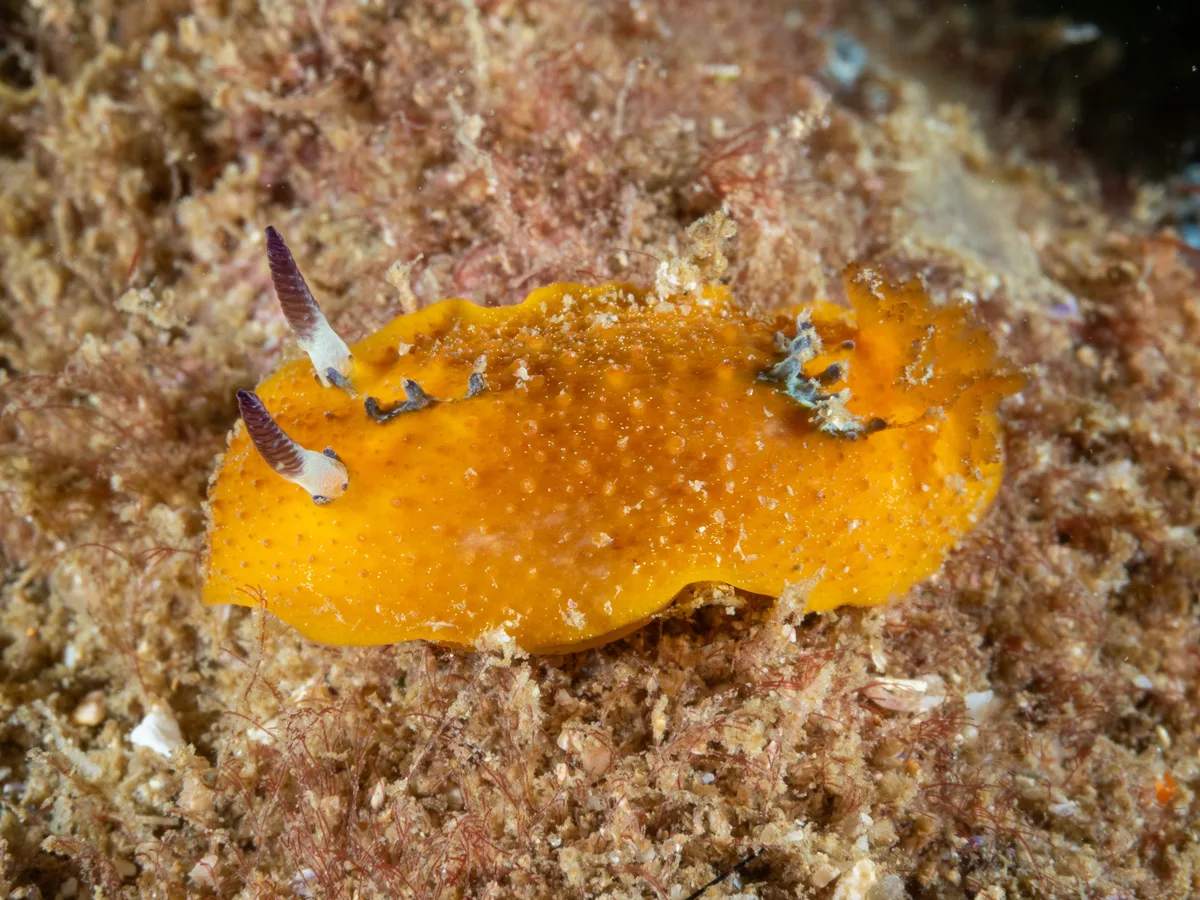
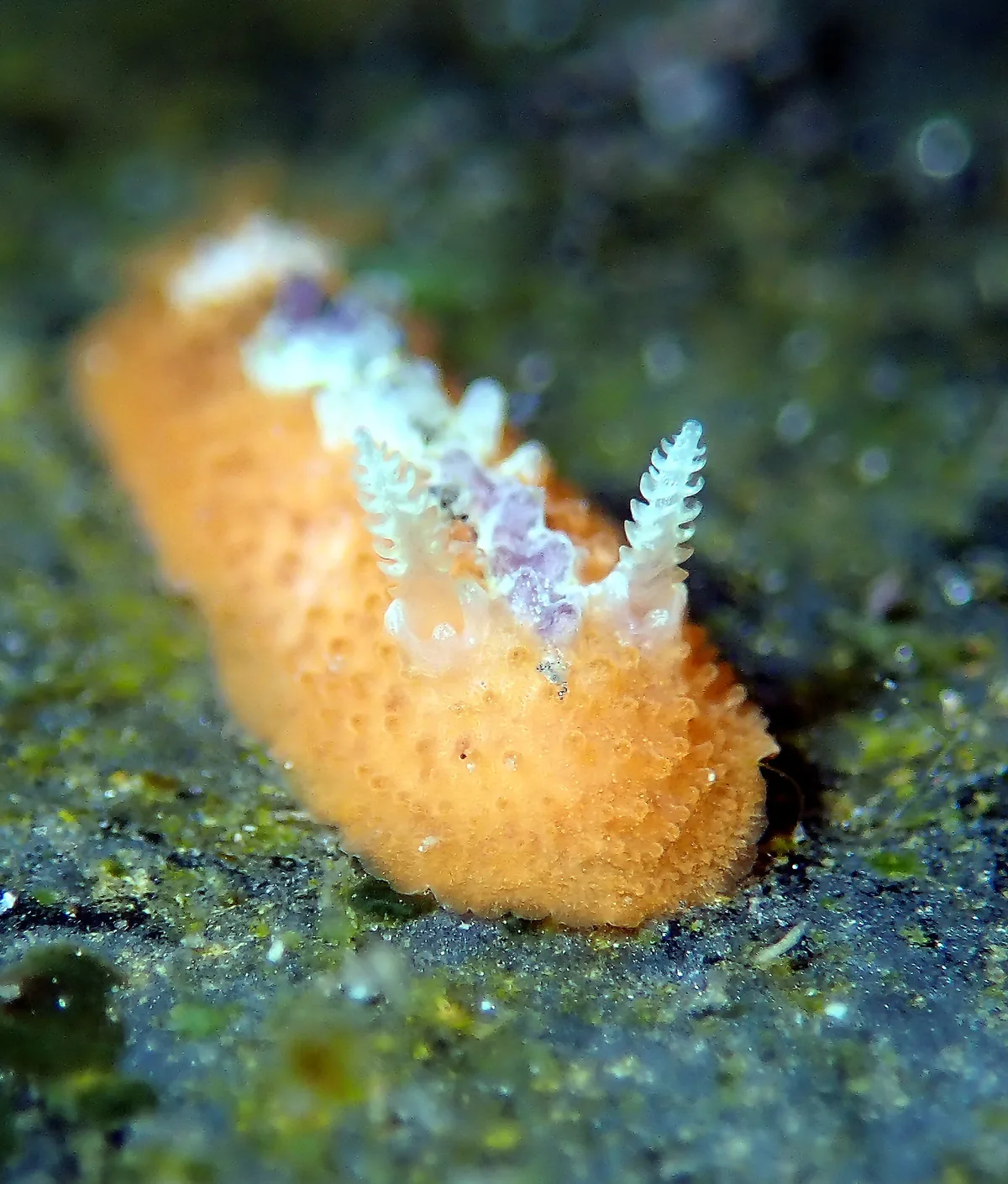
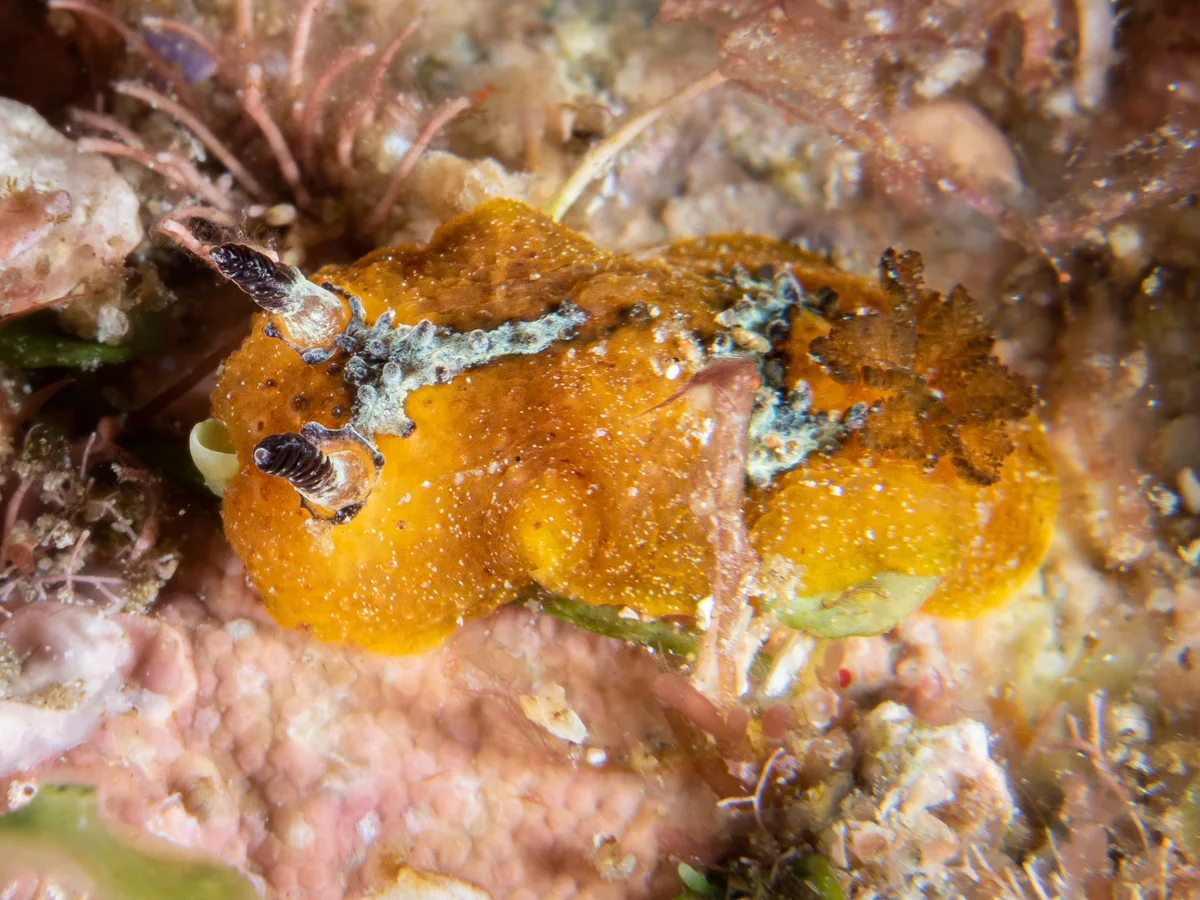
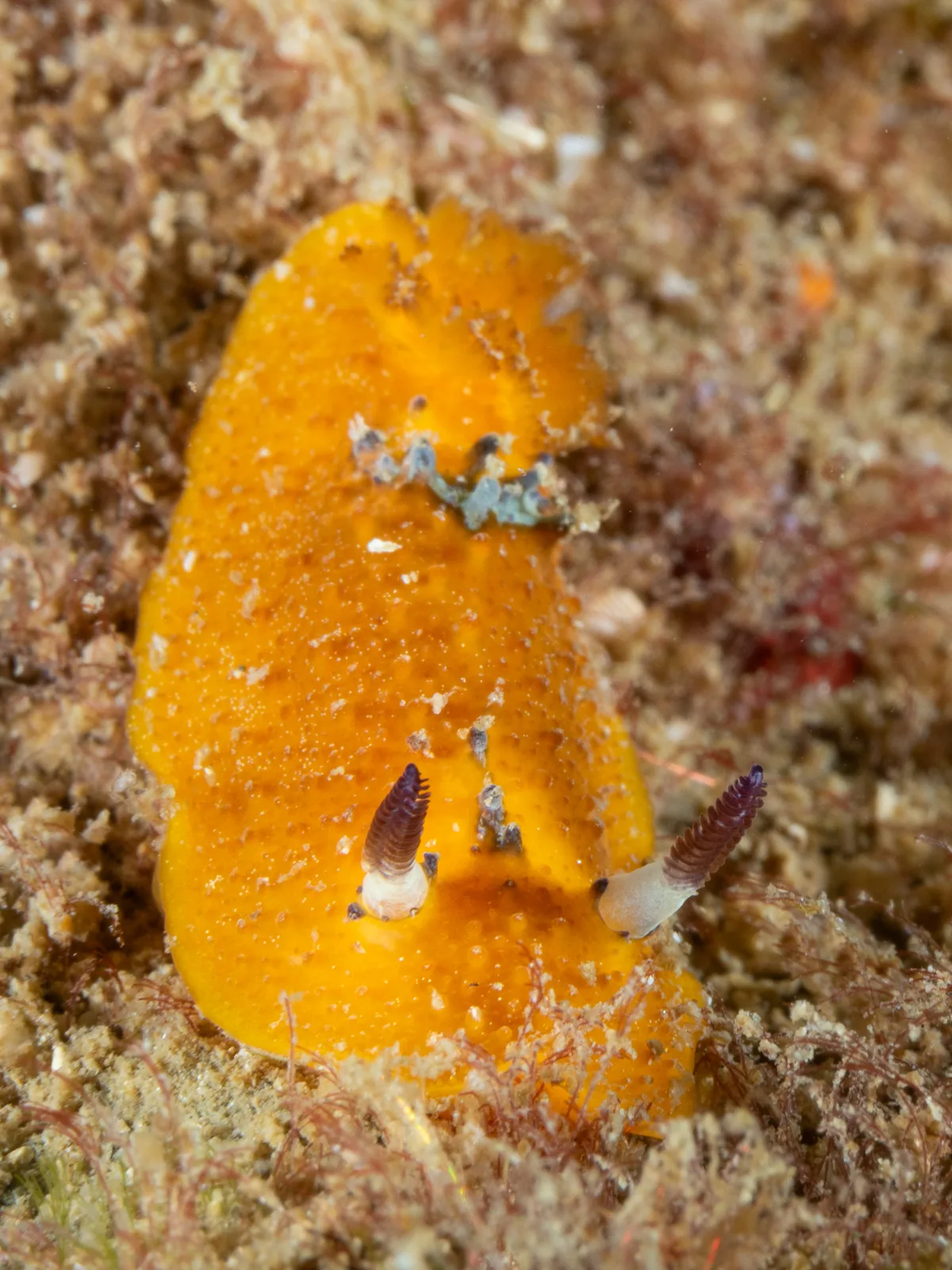
Everything on this page filed as a dorid, several hundred species across dozens of genera, is named after this animal's genus.
Doris was set up by Linnaeus in 1758, in the same work that started the whole system of scientific names. It became the anchor for the entire group: the family Dorididae takes its name from it, and so does the word dorid itself, which is how divers and books refer to the flat sponge-eating sea slugs that make up most of this section. Every time somebody says dorid, they are pointing back at this genus.
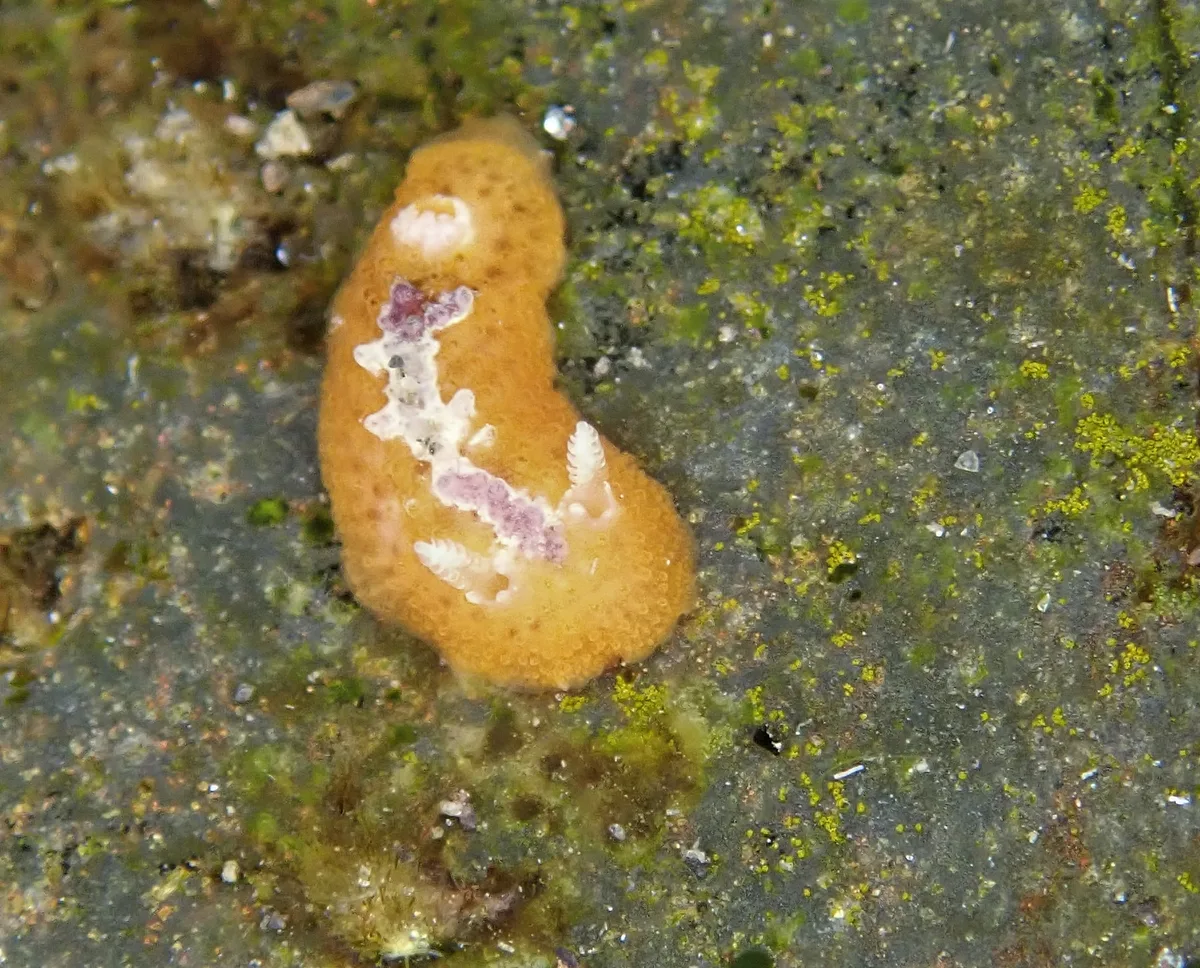
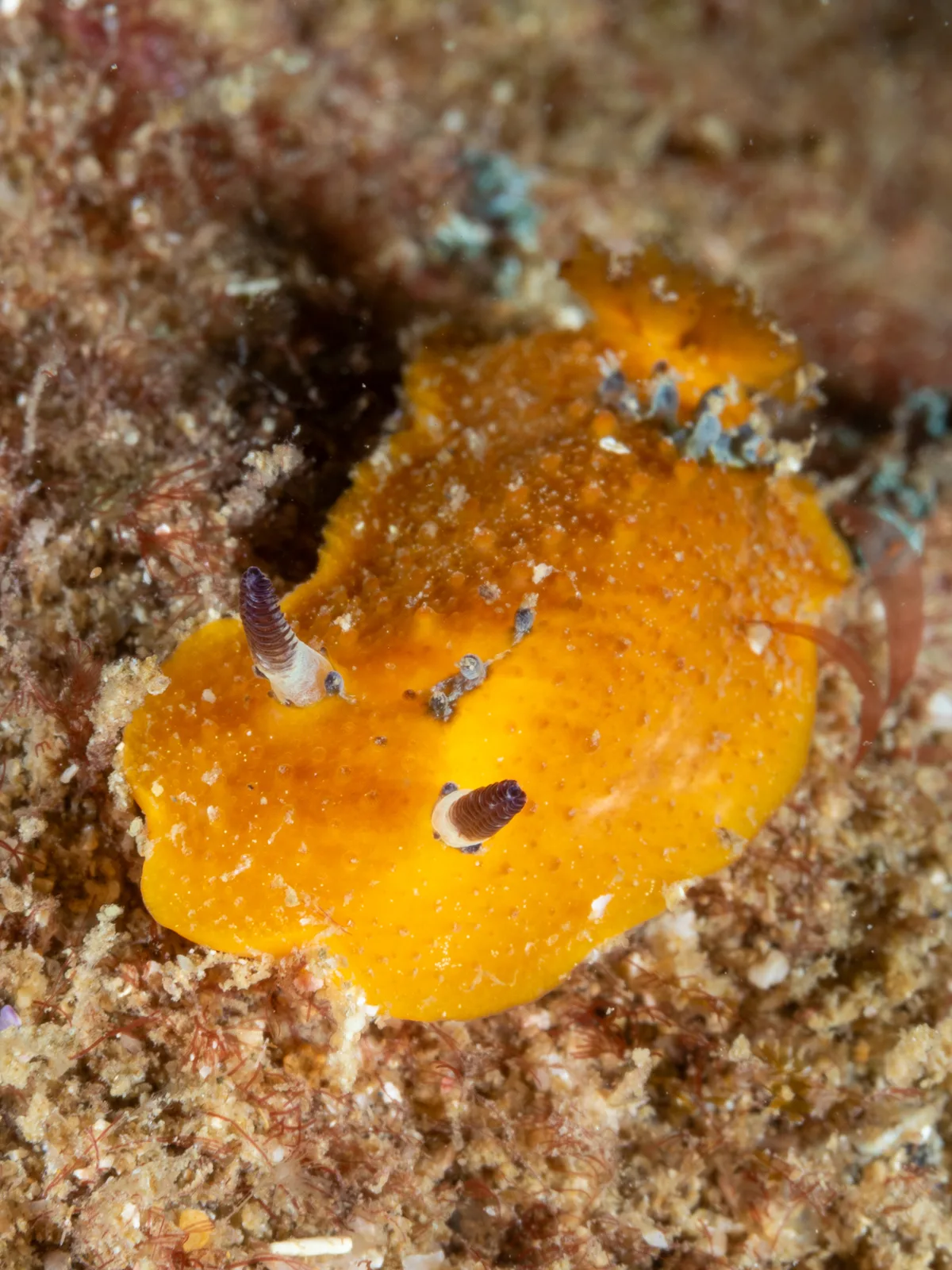
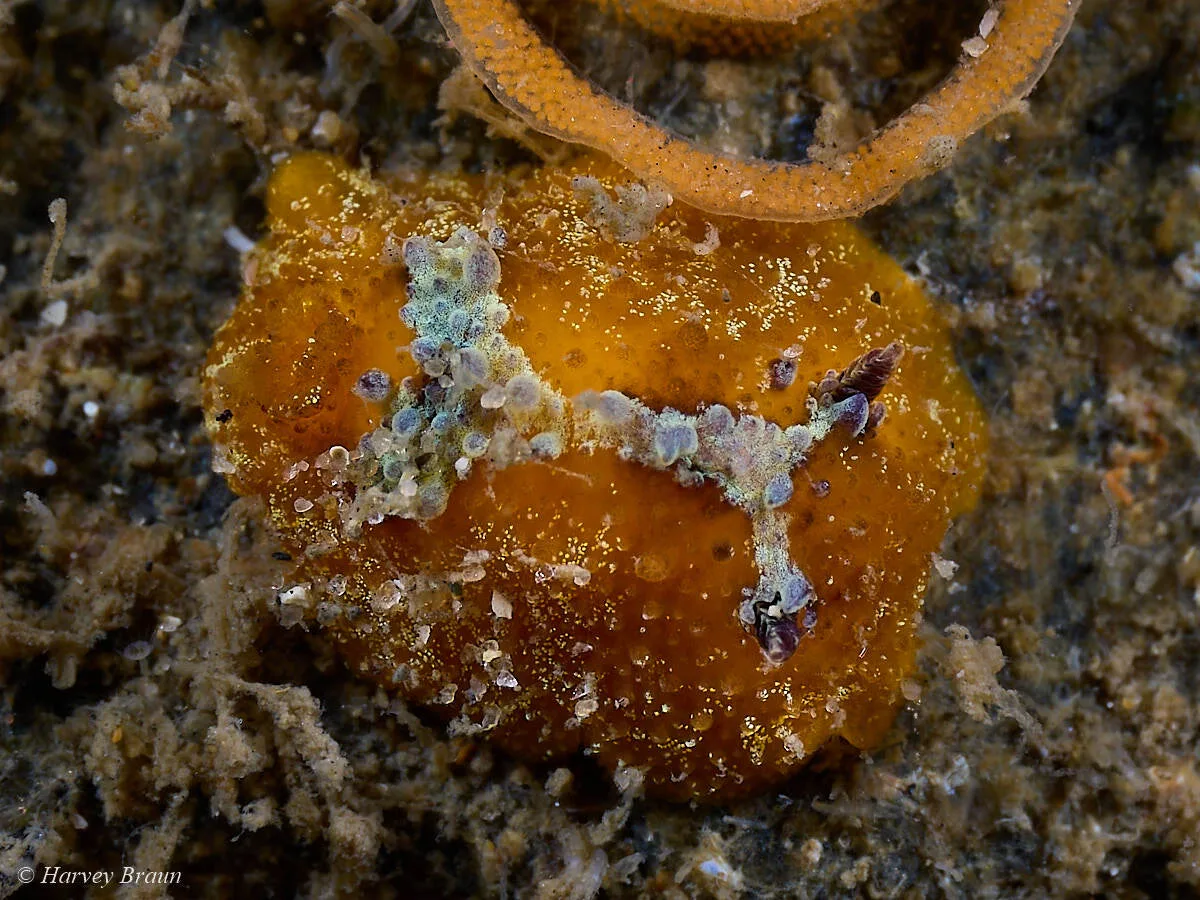
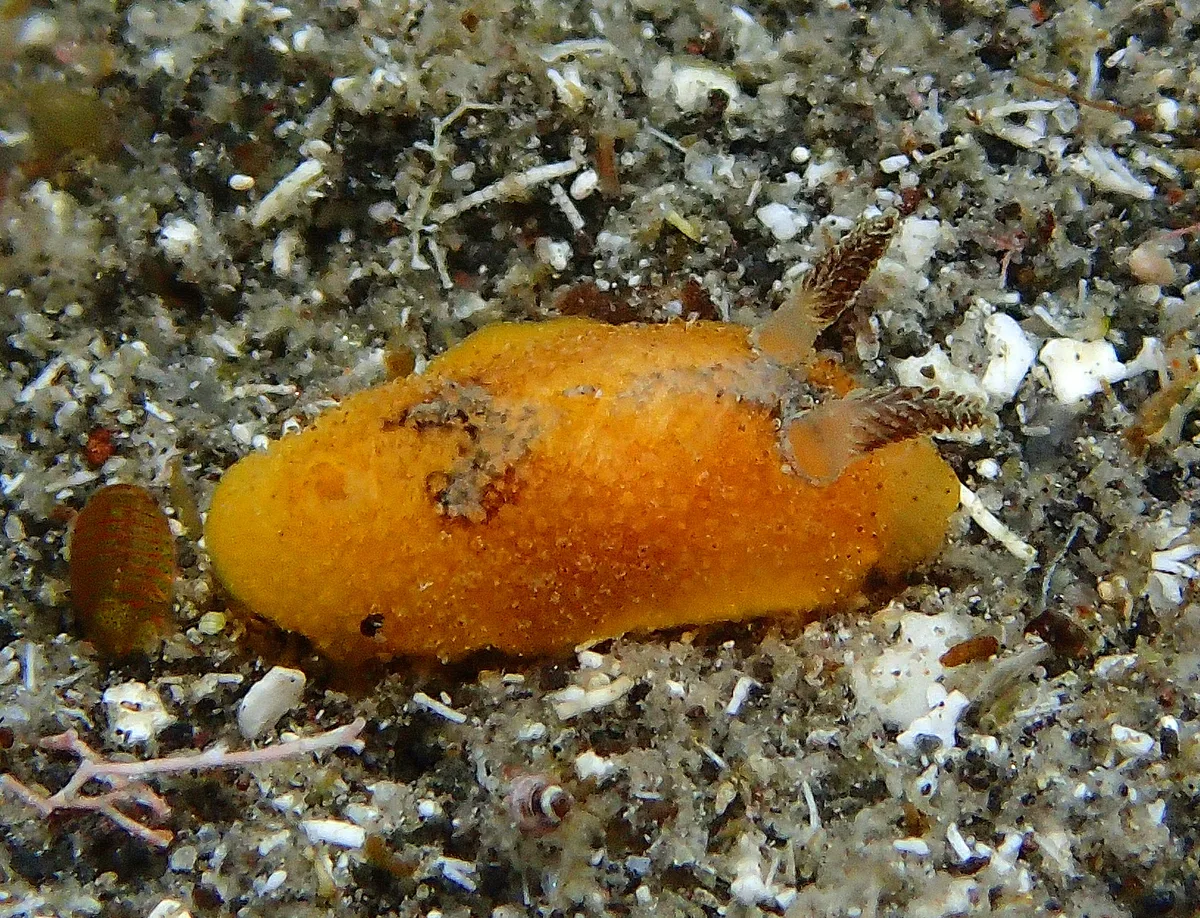
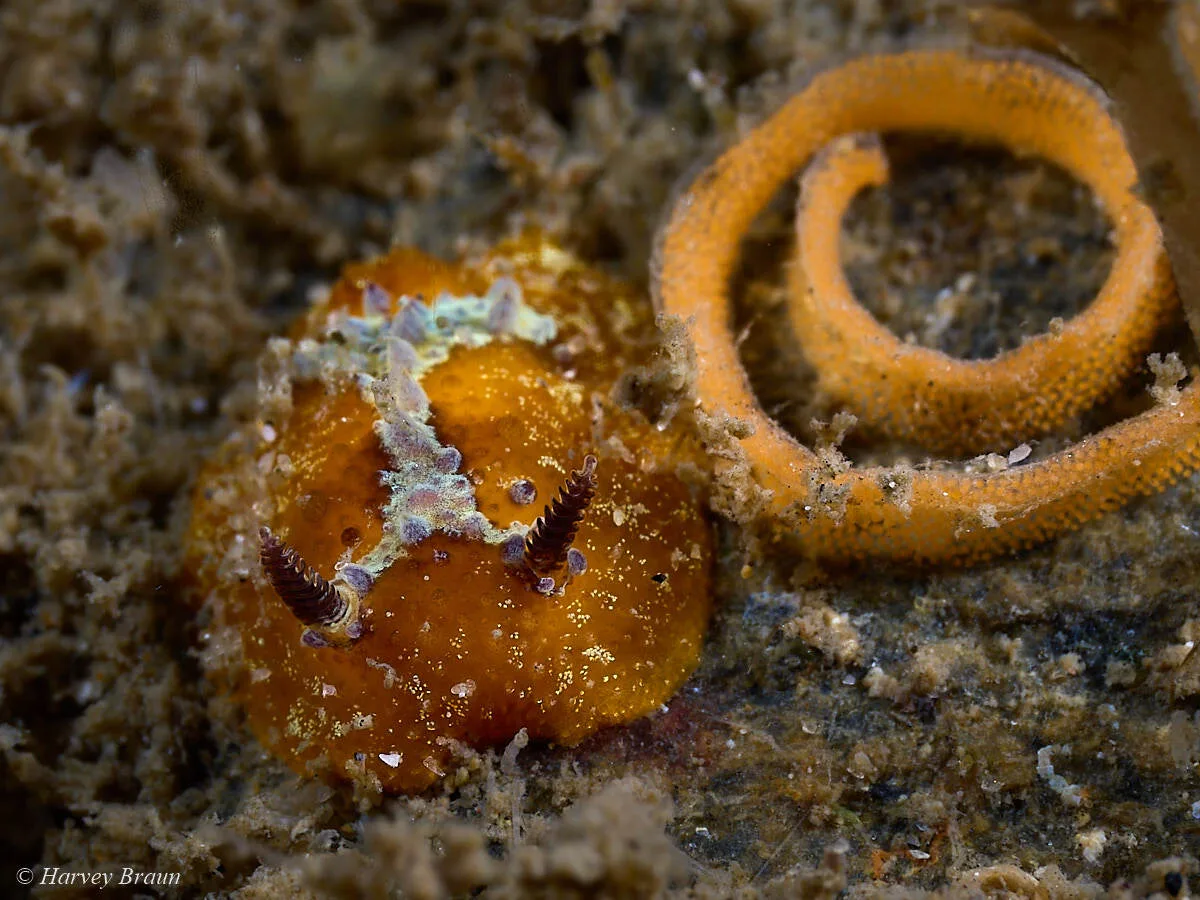
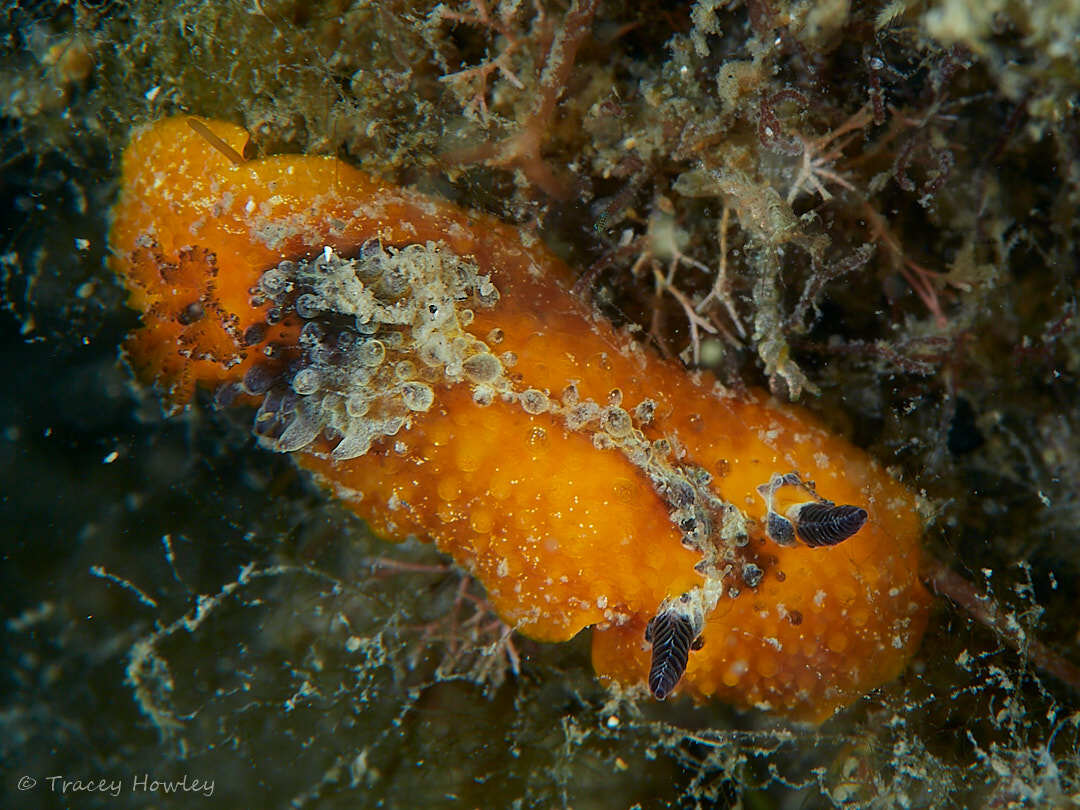
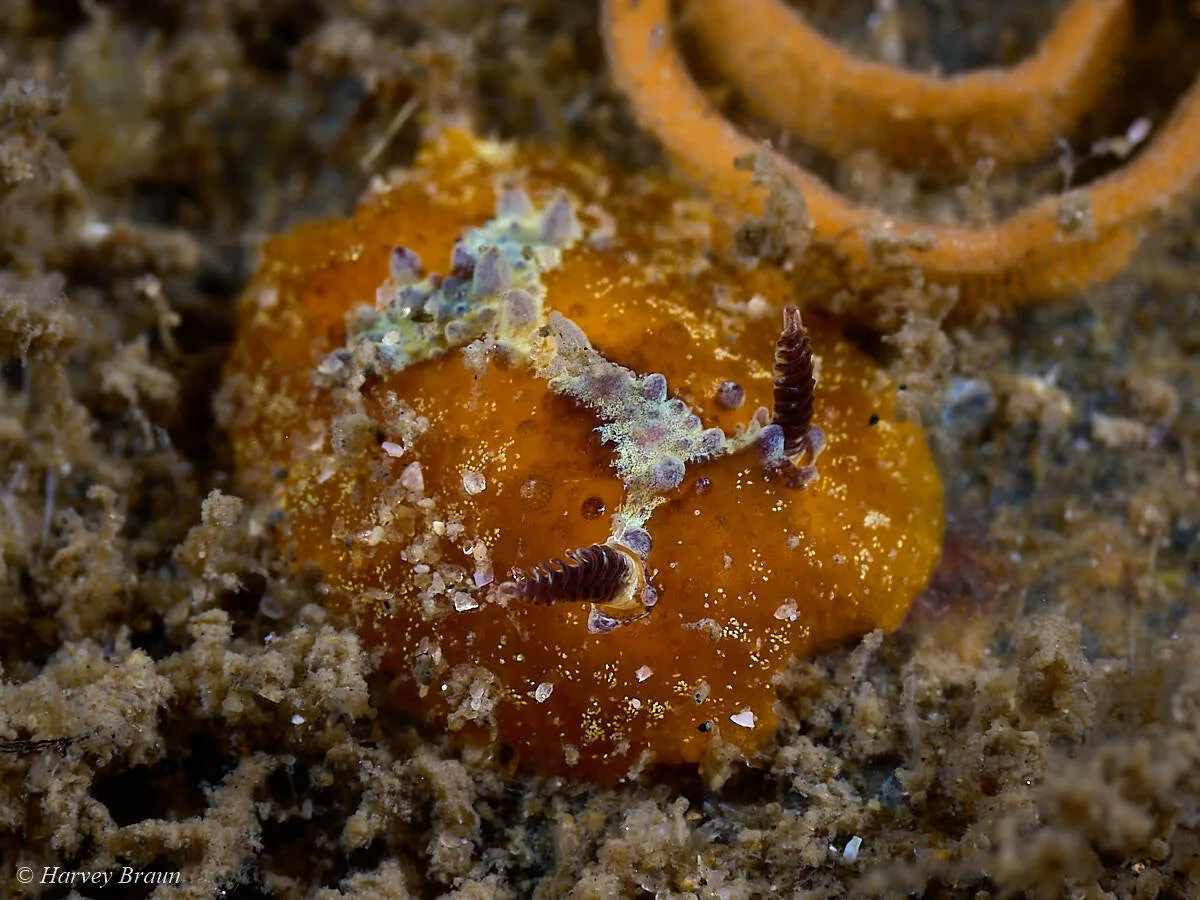
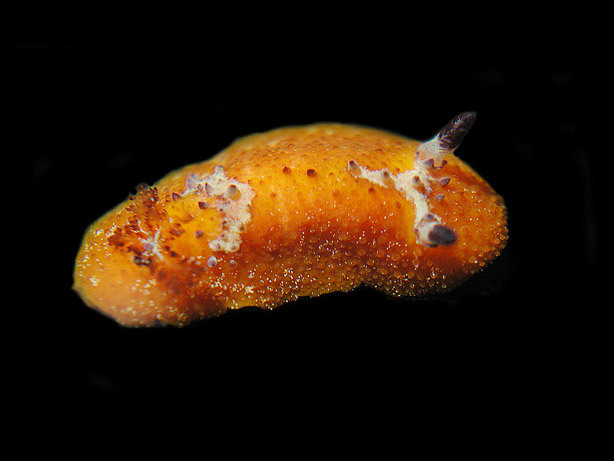
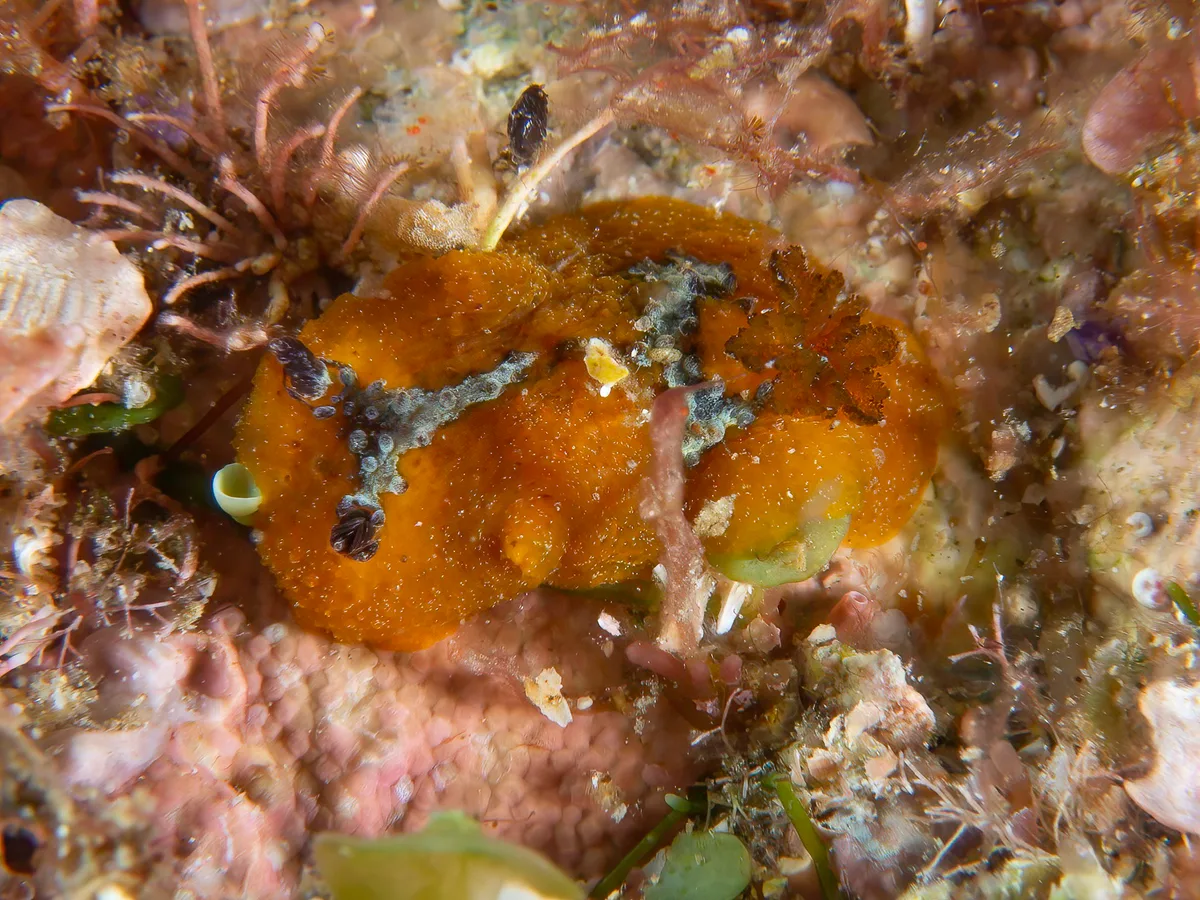
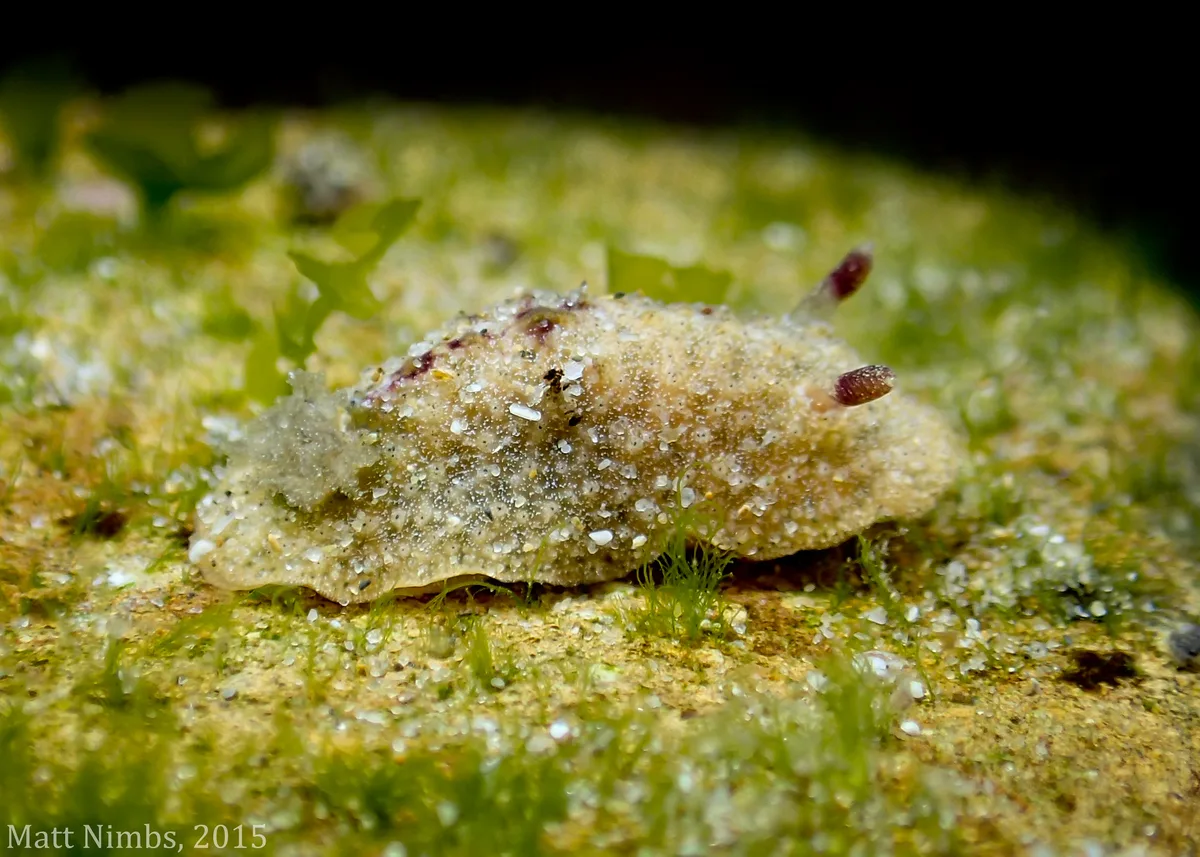
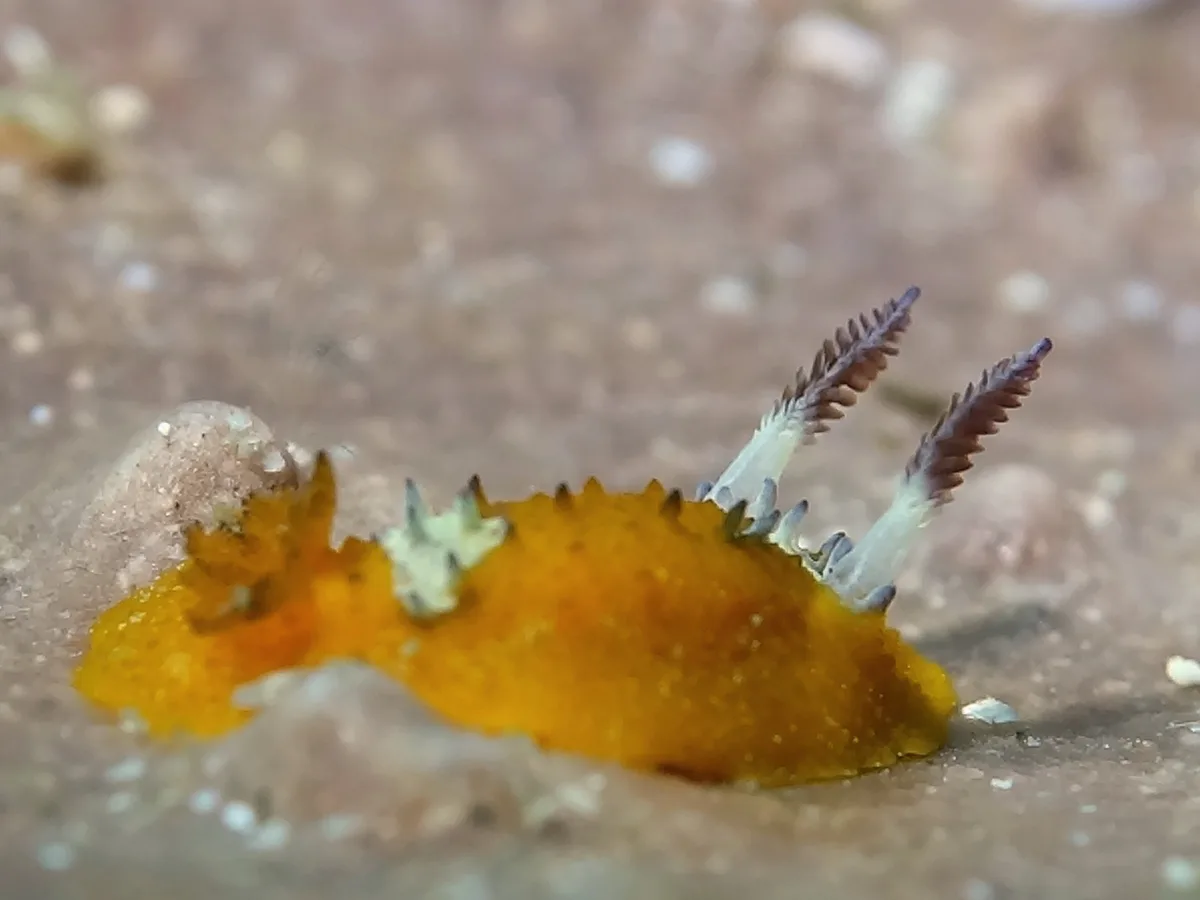
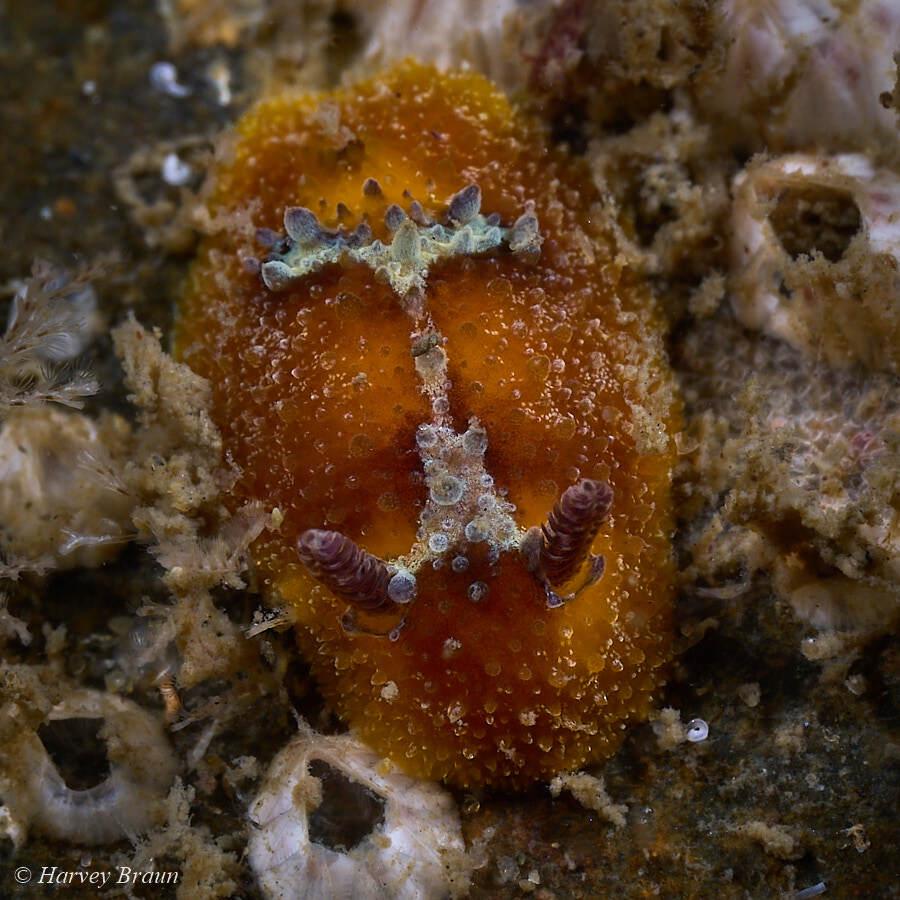
And then you meet the actual animal. It is eighteen millimeters (0.7 in) long, dull brown, covered in small pustules, with a single opaque white streak down the middle of the back and nothing else to look at. The species name is immonda, which is Latin for unclean or filthy, and it was not given as a compliment.
That gap is worth sitting with. The names in this catalogue were fixed by which specimen happened to reach a European desk first, not by which animal was the most representative or the most interesting. A drab brown lump got to the taxonomists early, and two hundred and fifty years of nomenclature has been organized around it, while the Spanish dancer and the whole gaudy chromodorid crowd came later and had to be filed underneath.
It grazes sponges, spends daylight under rubble, and comes out at night. If you find one, you have found the animal that named the group.
- an opaque white streak running down the midline of the back
- back covered end to end in small pustules
- dull brownish ground color with nothing bright anywhere on it
- under two centimeters and easily taken for a lump of sponge