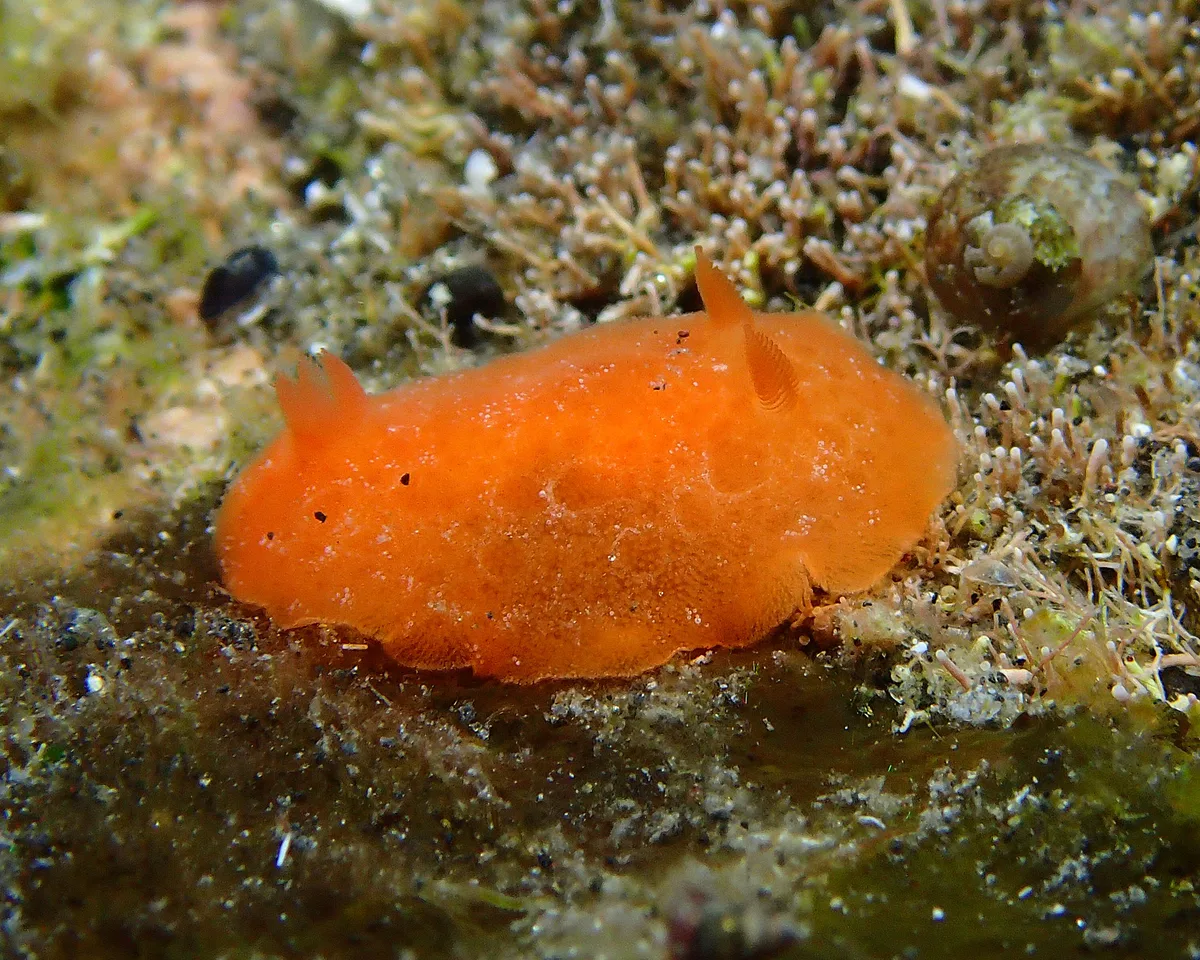
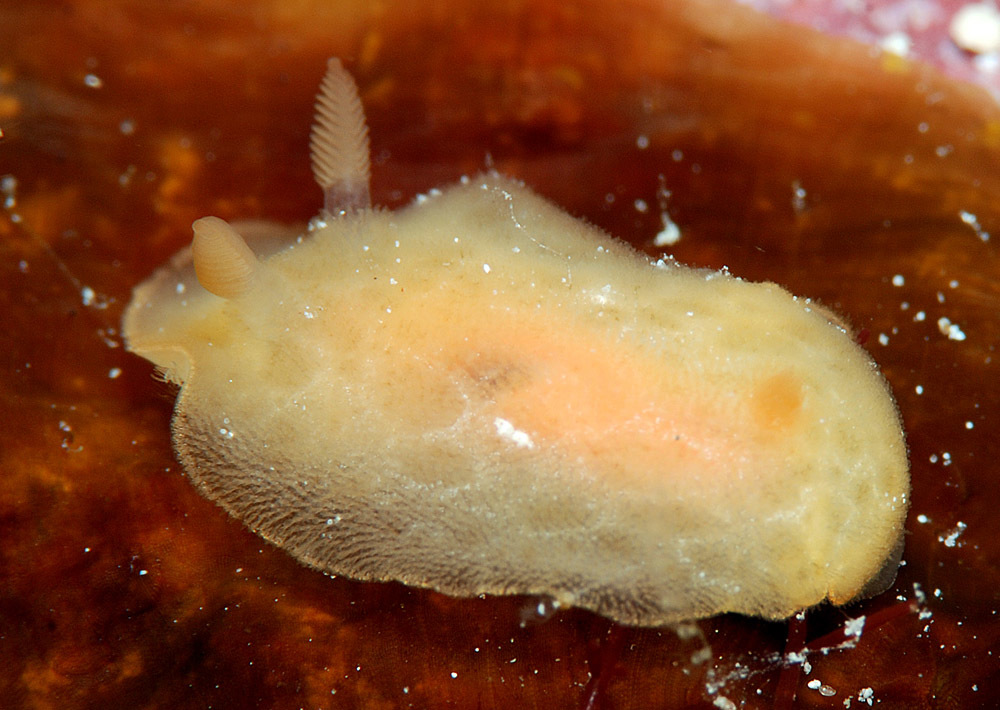
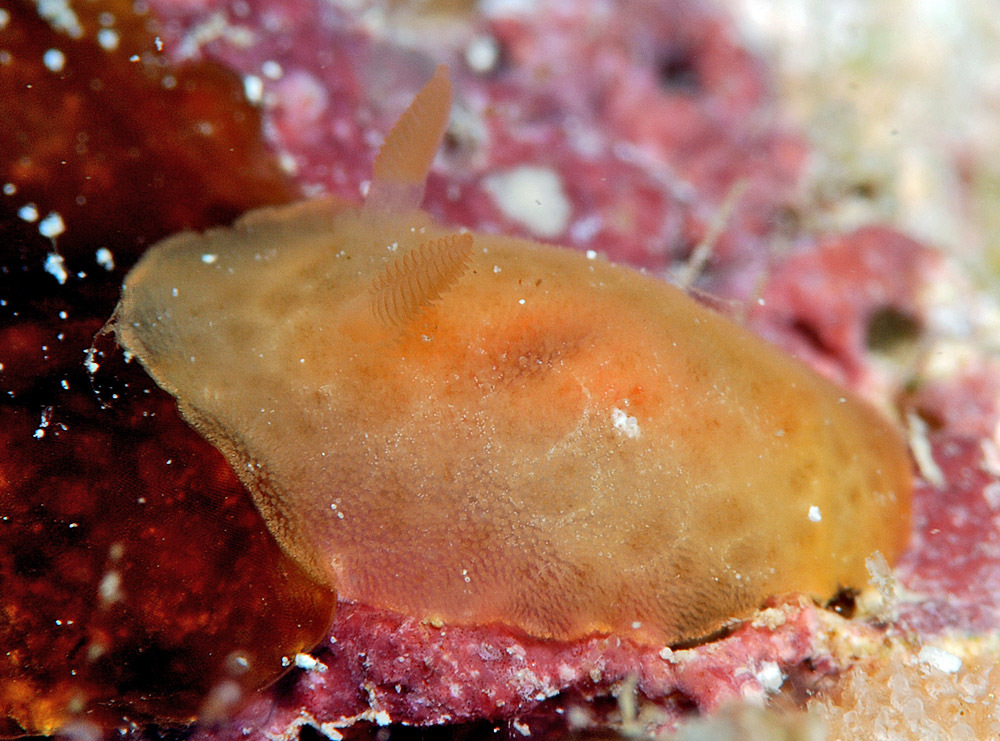
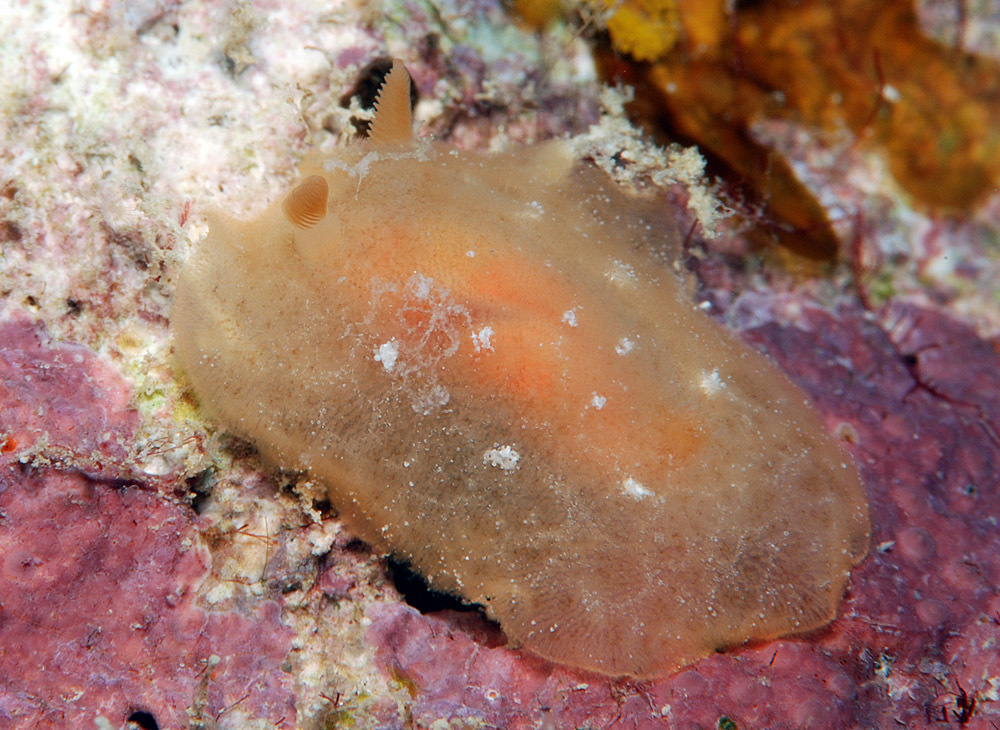
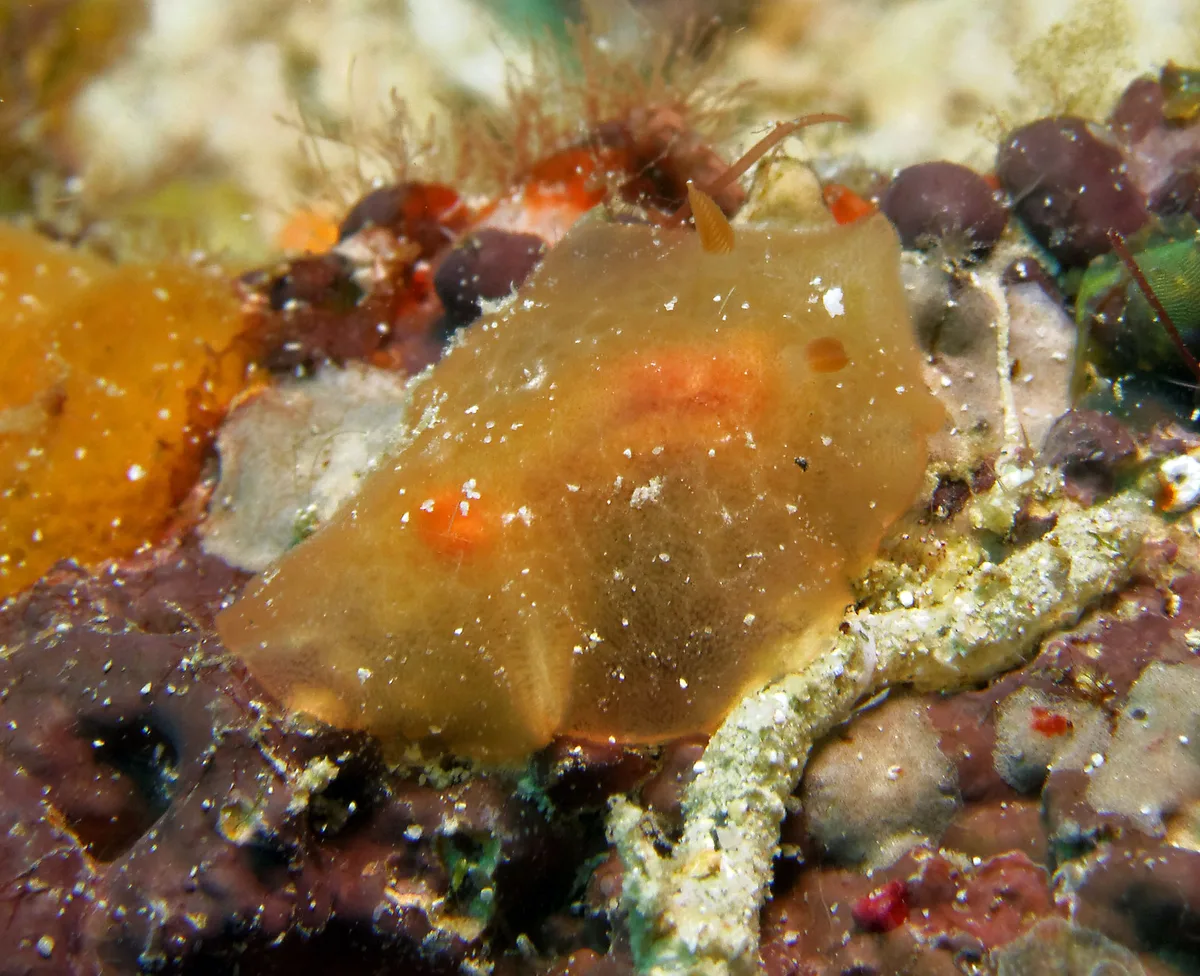
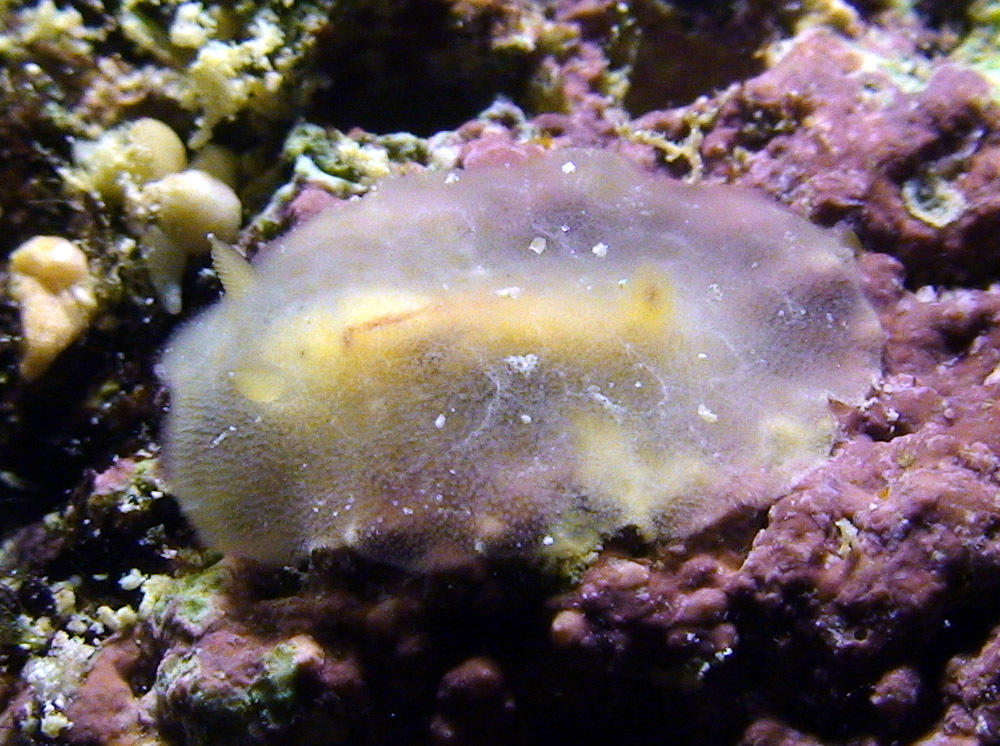
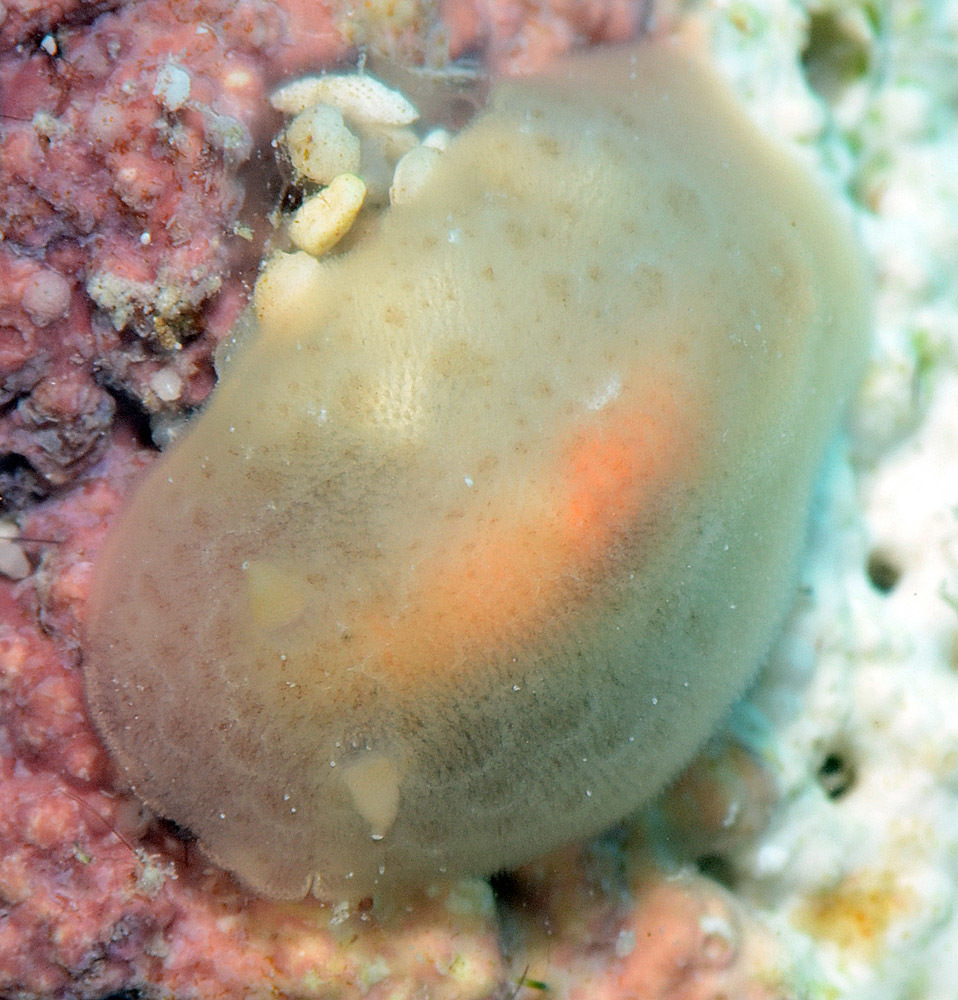
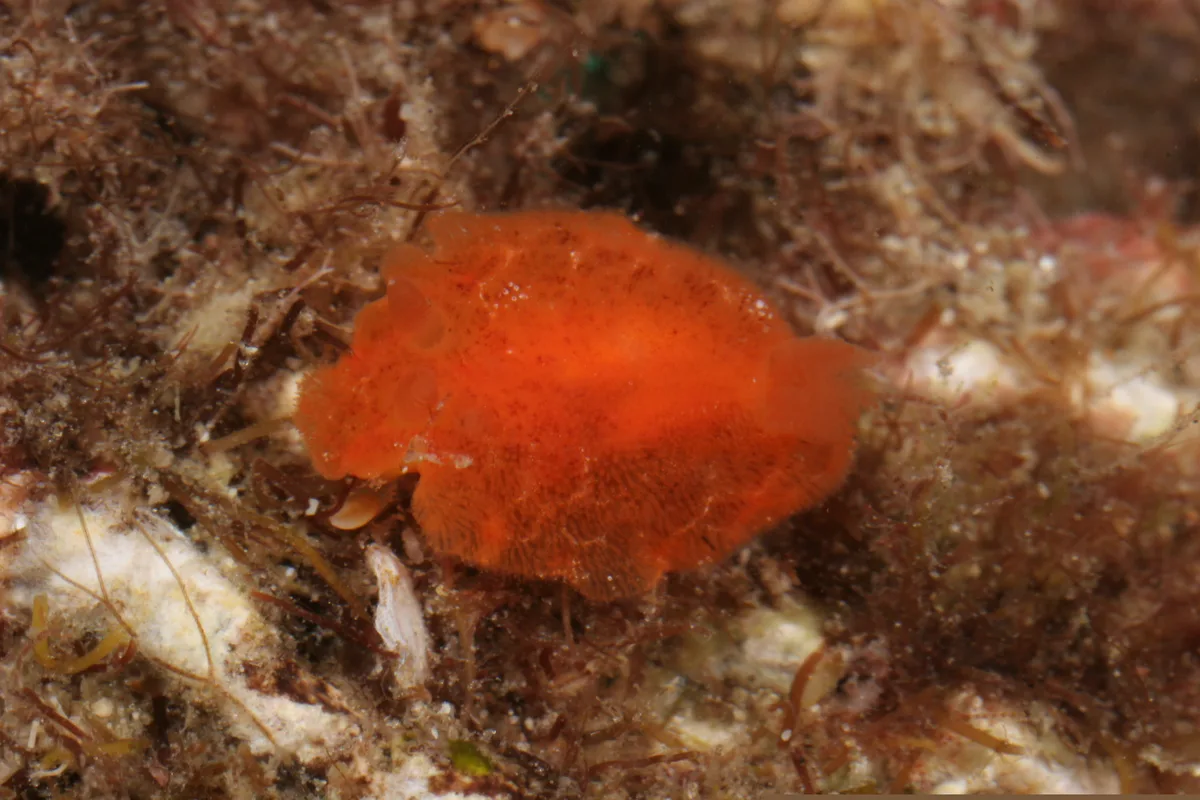
The point of this animal is that you are not supposed to see it, and the thing that usually gives it away is its own spawn.
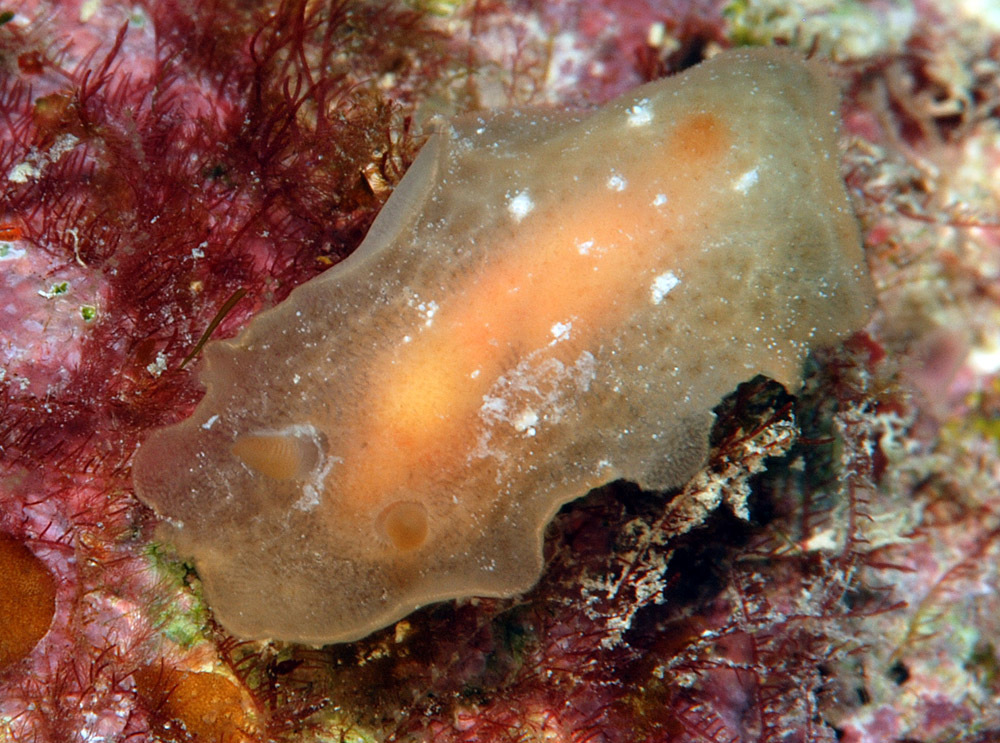
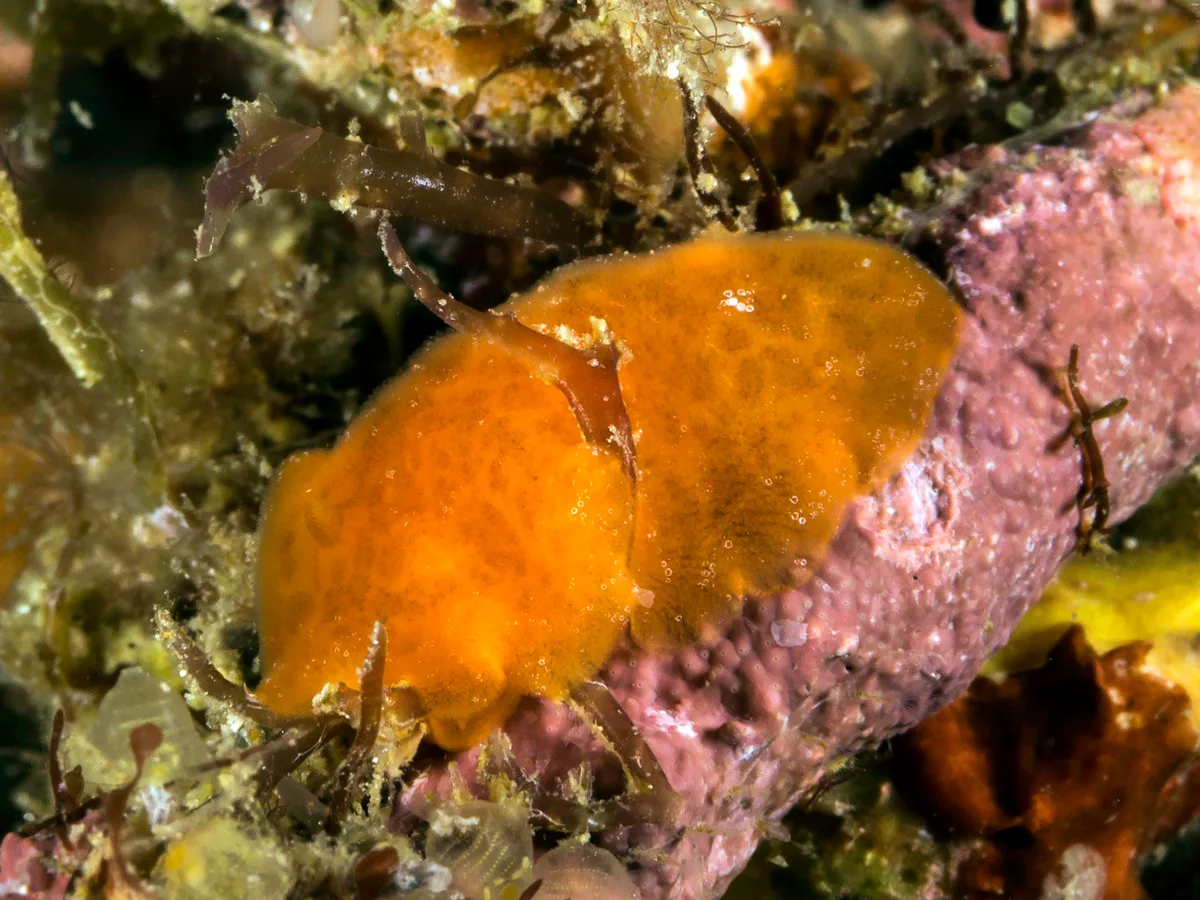
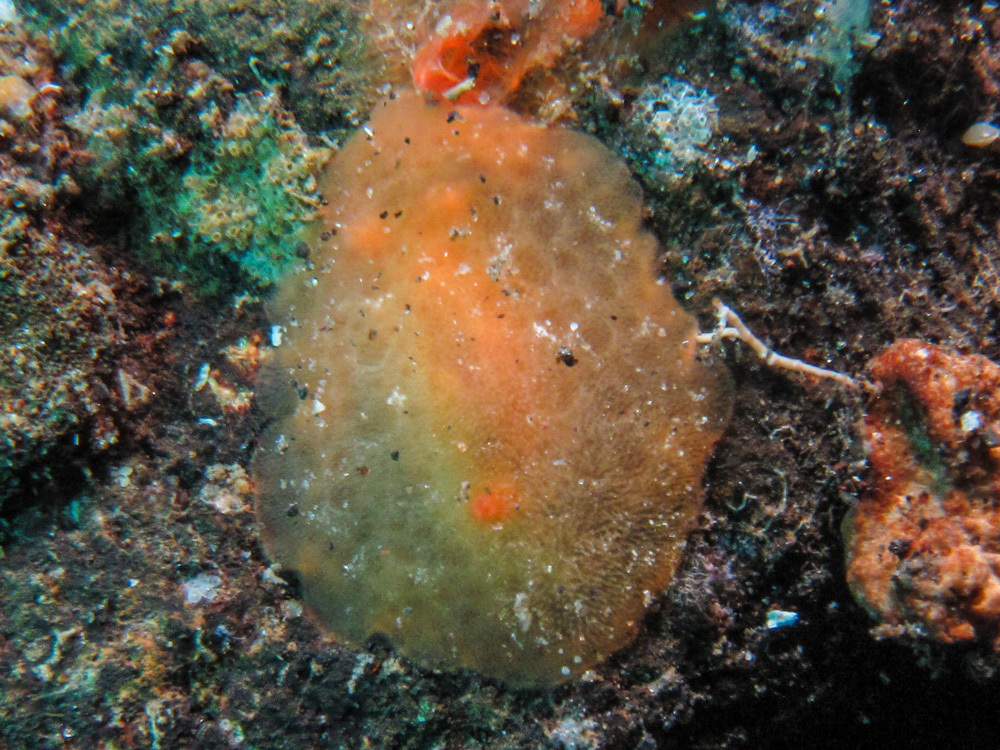
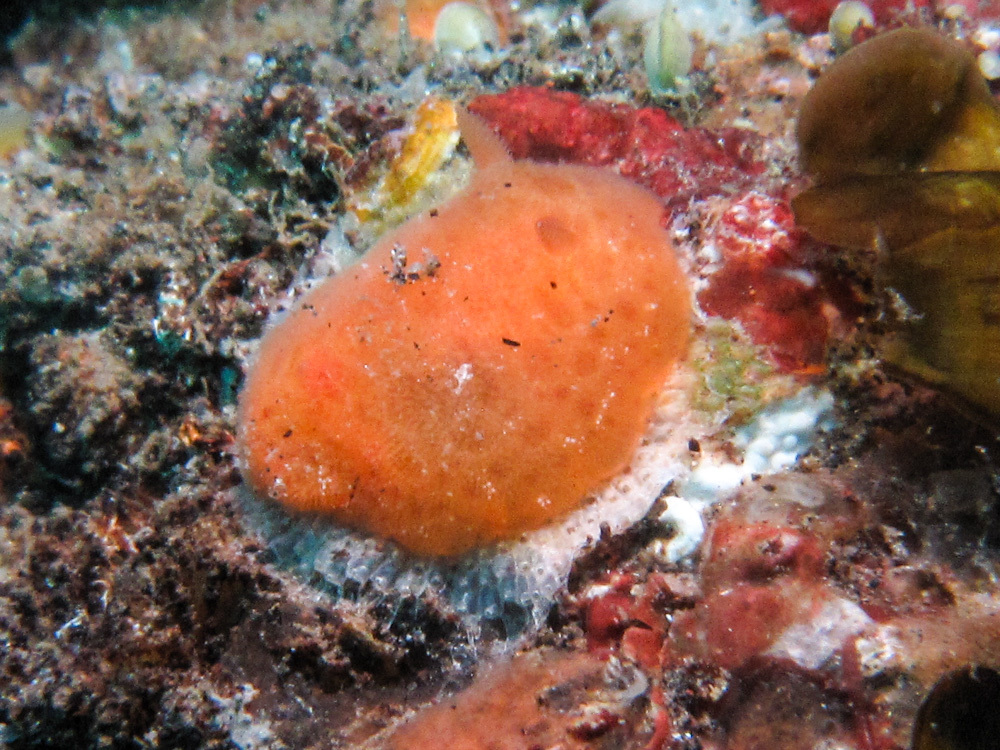
It lives on encrusting sponges, the flat yellow and orange sheets that coat the underside of overhangs and the shaded faces of rubble. It eats them, it takes their pigment, and it ends up the exact shade of the patch it is sitting on. Two and a half centimeters (1 in) of slug on a sponge of the same color, with a finely granular surface that matches the sponge's texture as well: at normal diving speed it does not exist.
Then it lays eggs. The ribbon goes down as a neat spiral coil directly on the sponge, and it is the same yellow-orange as everything else, so it hides too. What it does not do is look like a sponge. A sponge sheet does not have a tidy spiral on it, and that geometric shape in the middle of an amorphous patch is the anomaly the eye actually catches. Divers who photograph these usually found the eggs first and the animal second, sitting somewhere on the same patch.
The rest of the pattern is a scatter of opaque white flecks over the back and a gill plume darker than the body, which are the marks to check once you have found something.
The strategy costs it something. An animal this specialized cannot leave its sponge: it is colored for one background, it eats one thing, and it breeds on the same square of reef it feeds on. Find the sponge and you can go back and find the slug again.
- yellow-orange, the same yellow-orange as the sponge it is sitting on
- scattered opaque white flecks over the back, and gills darker than the body
- surface finely granular rather than smooth
- look for the coiled egg ribbon: it is the same color and it gives the slug away