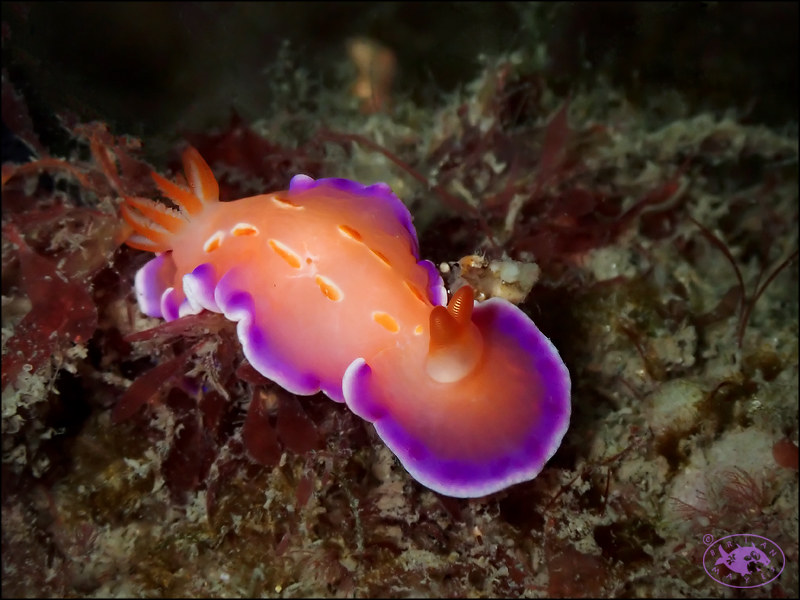
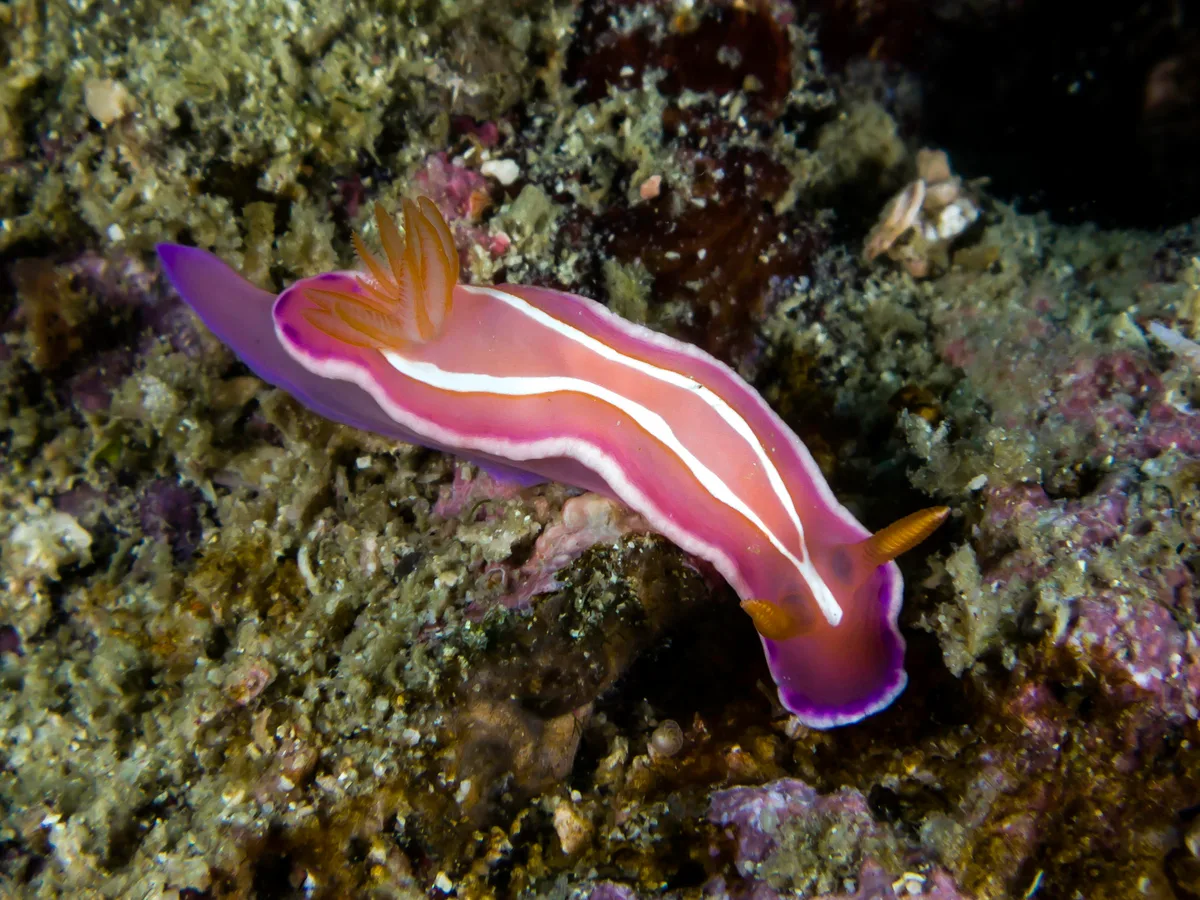
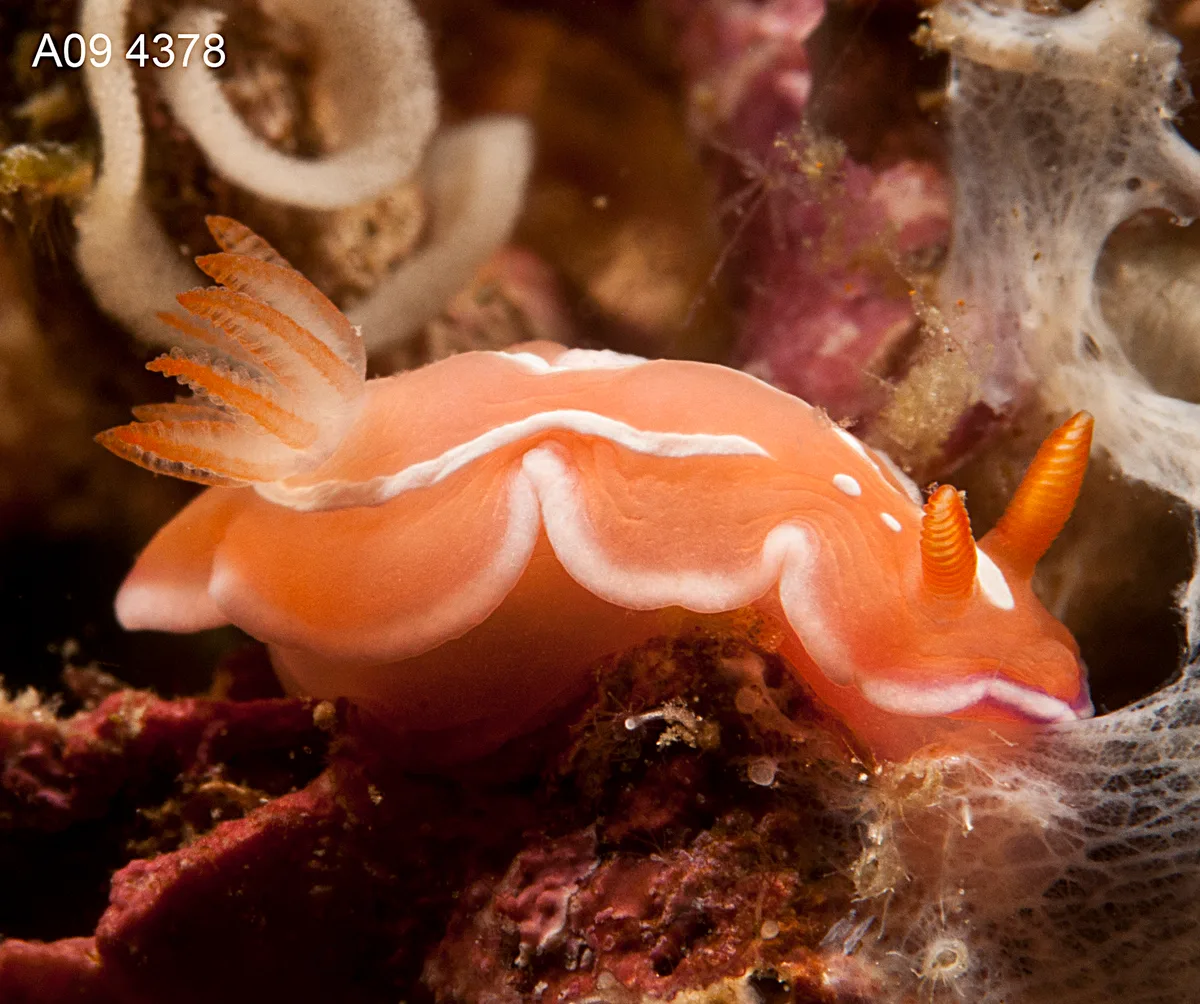
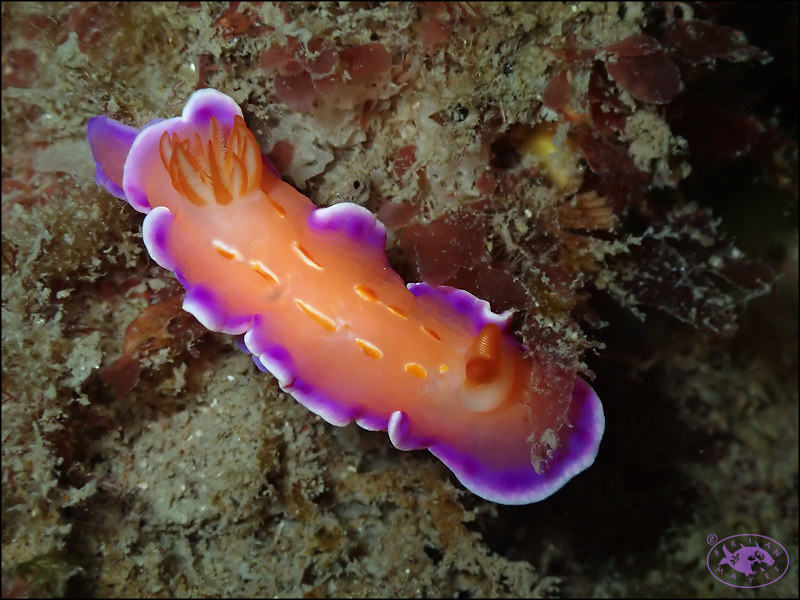
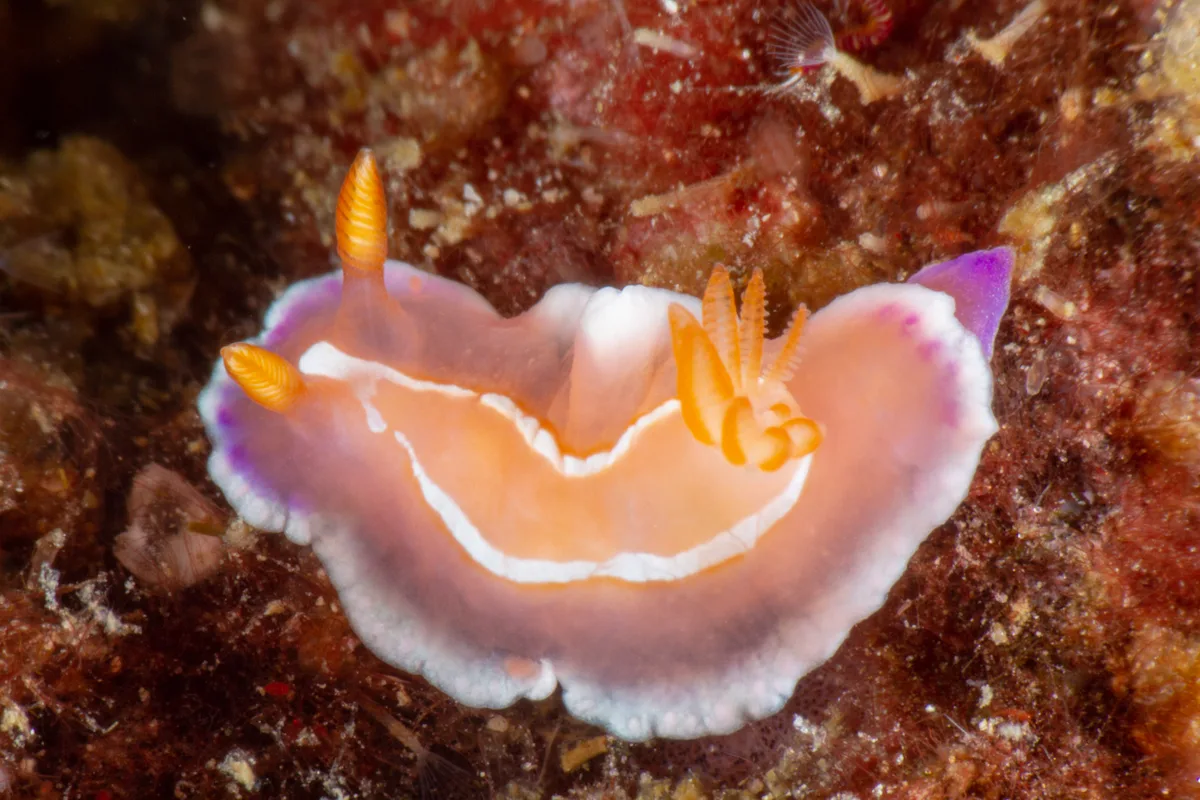
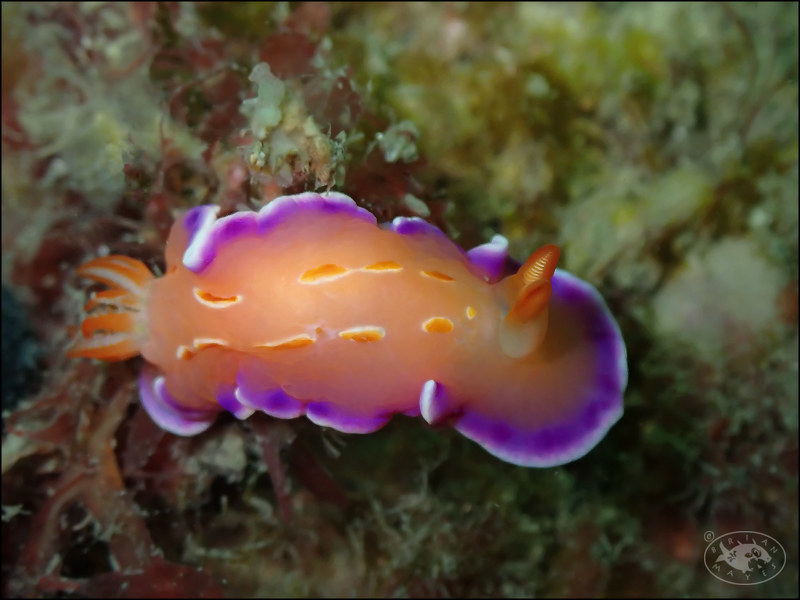
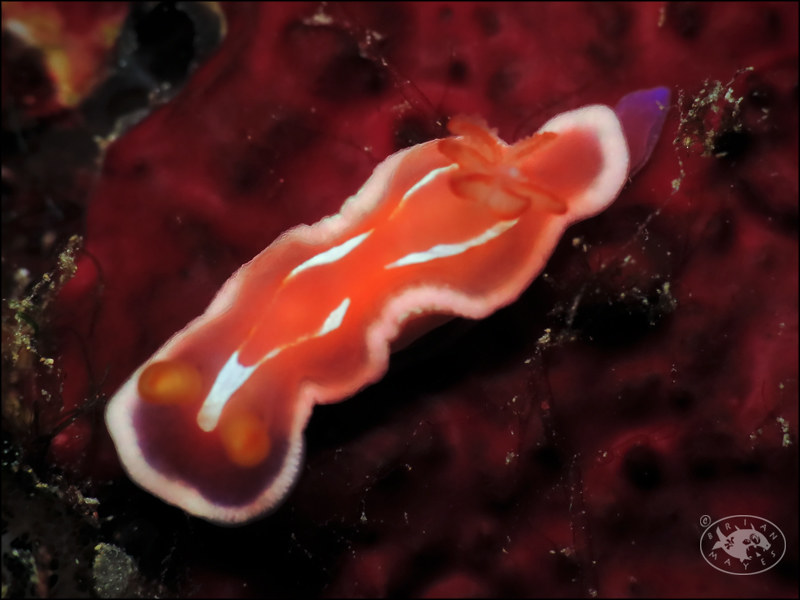
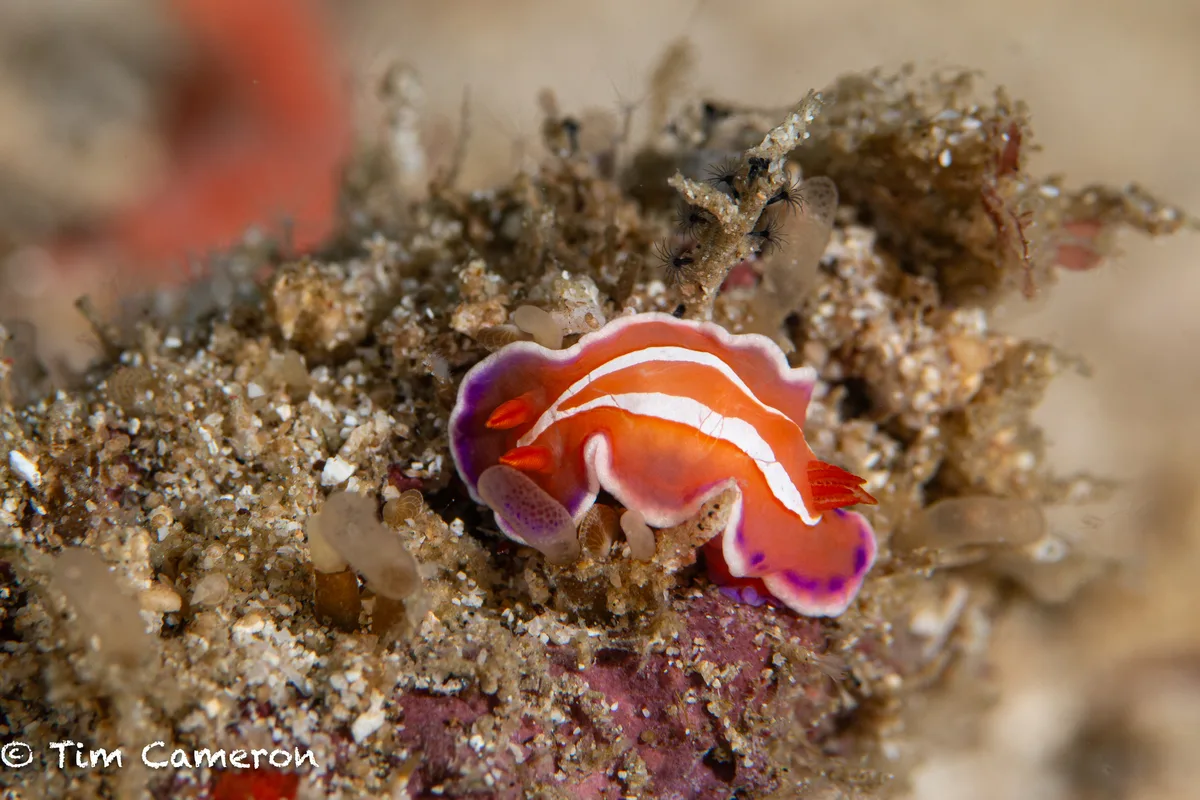
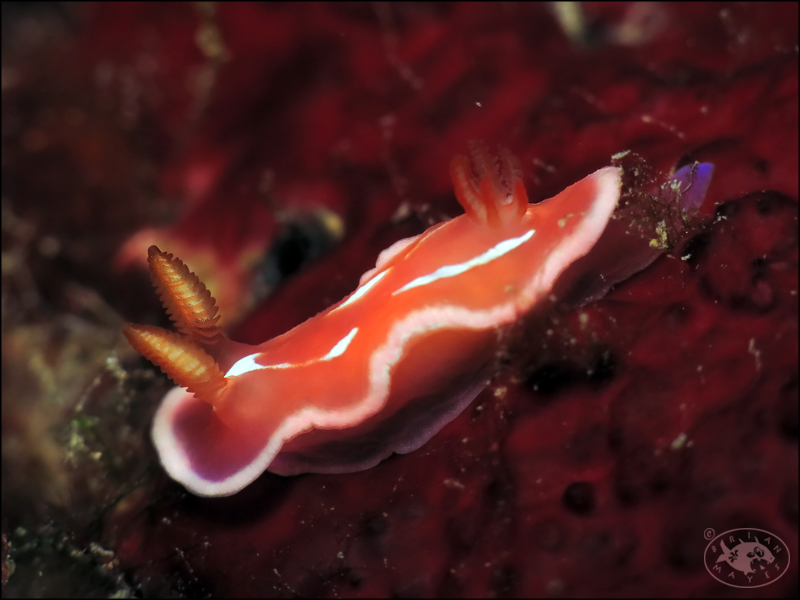
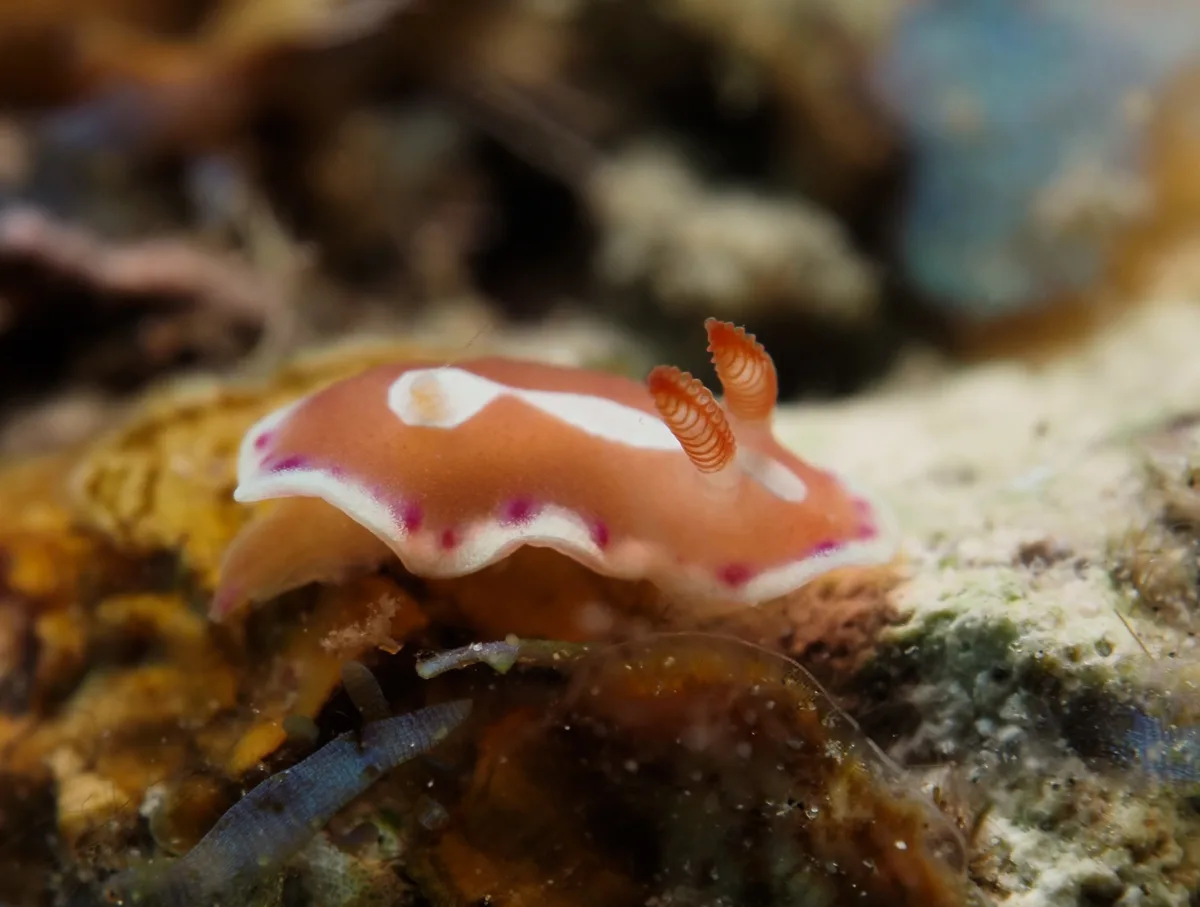
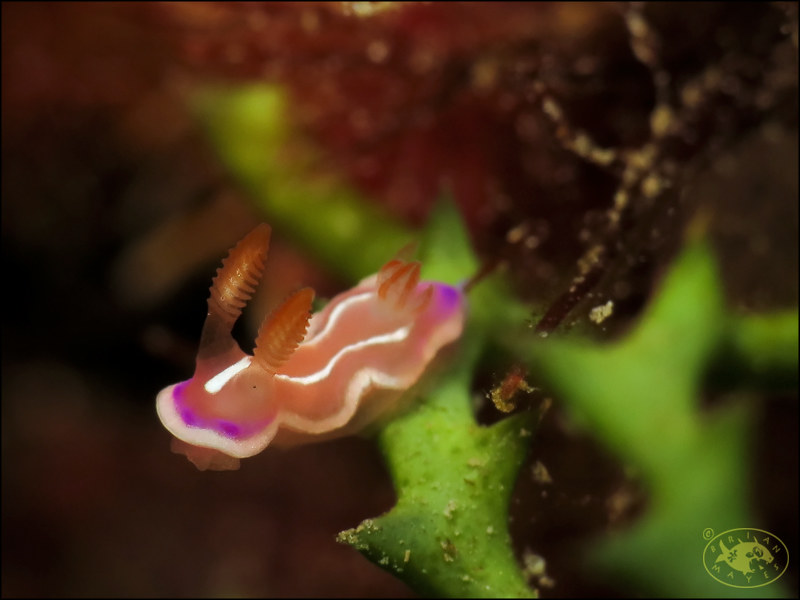
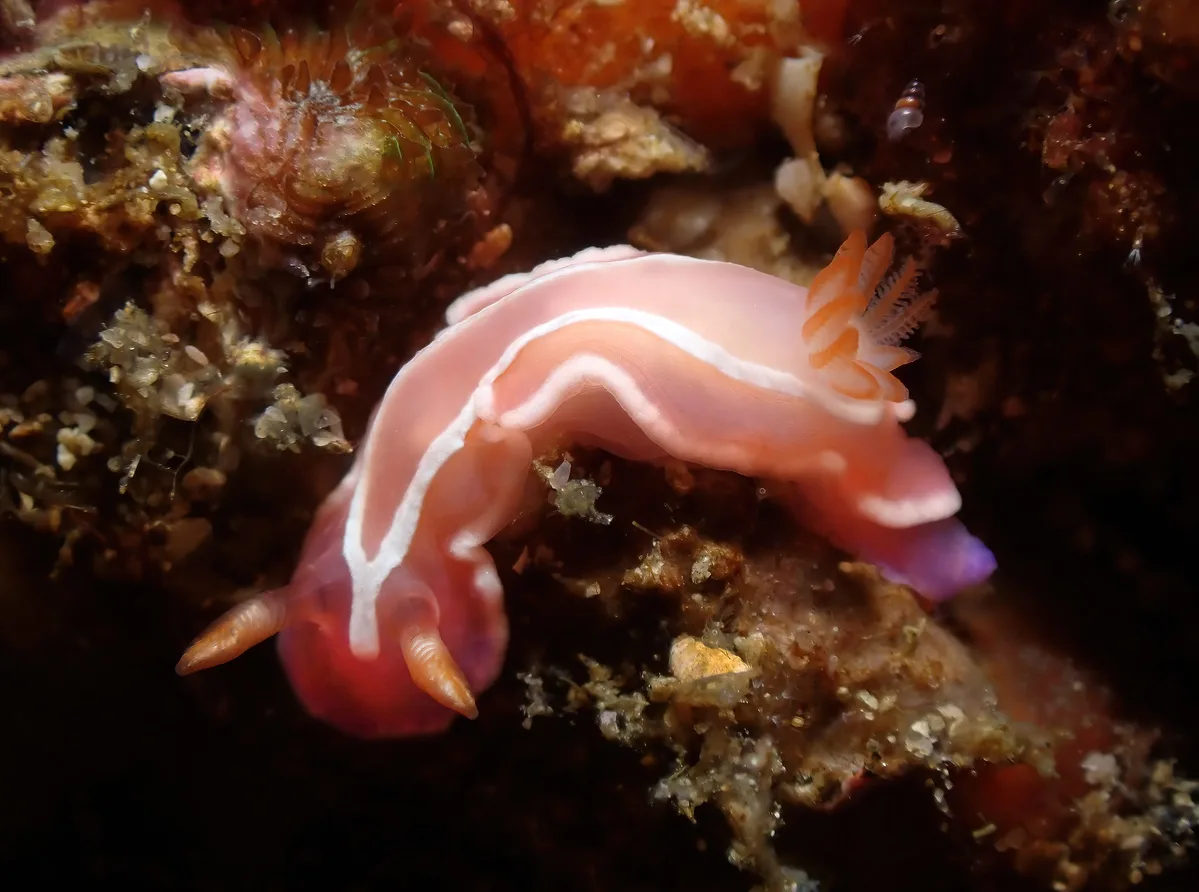
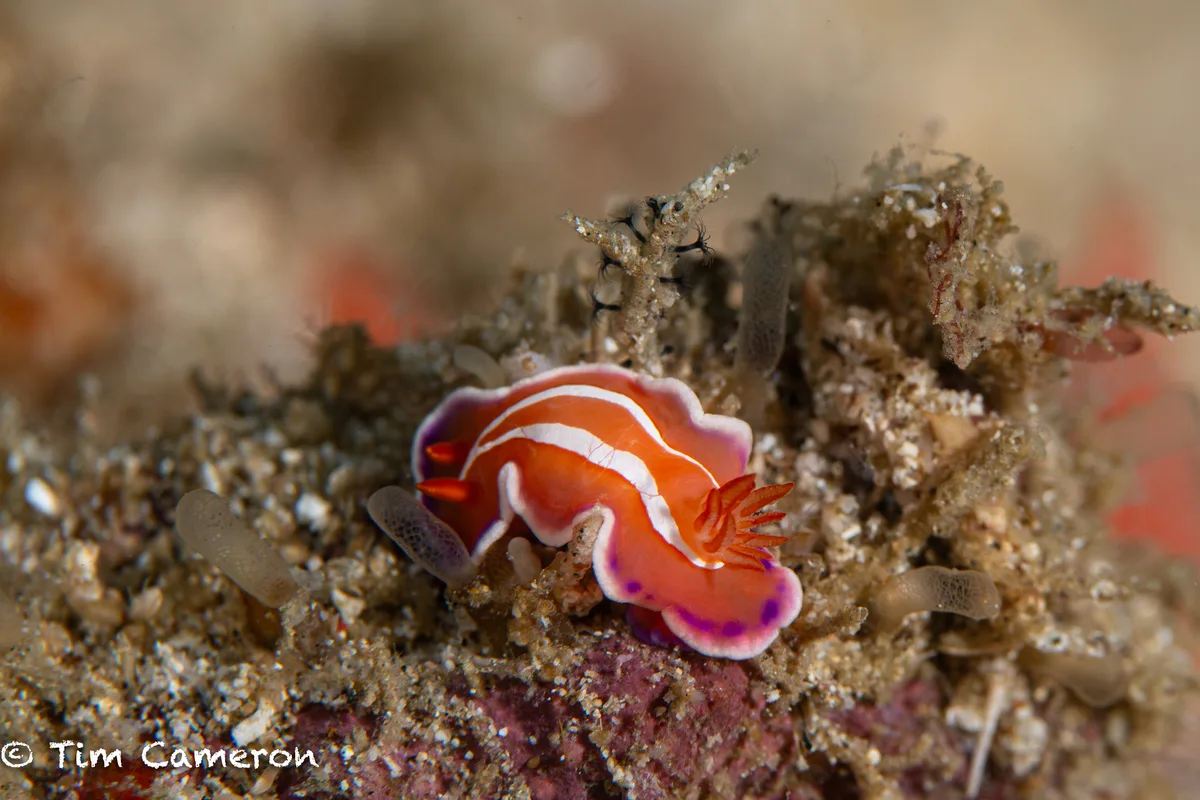
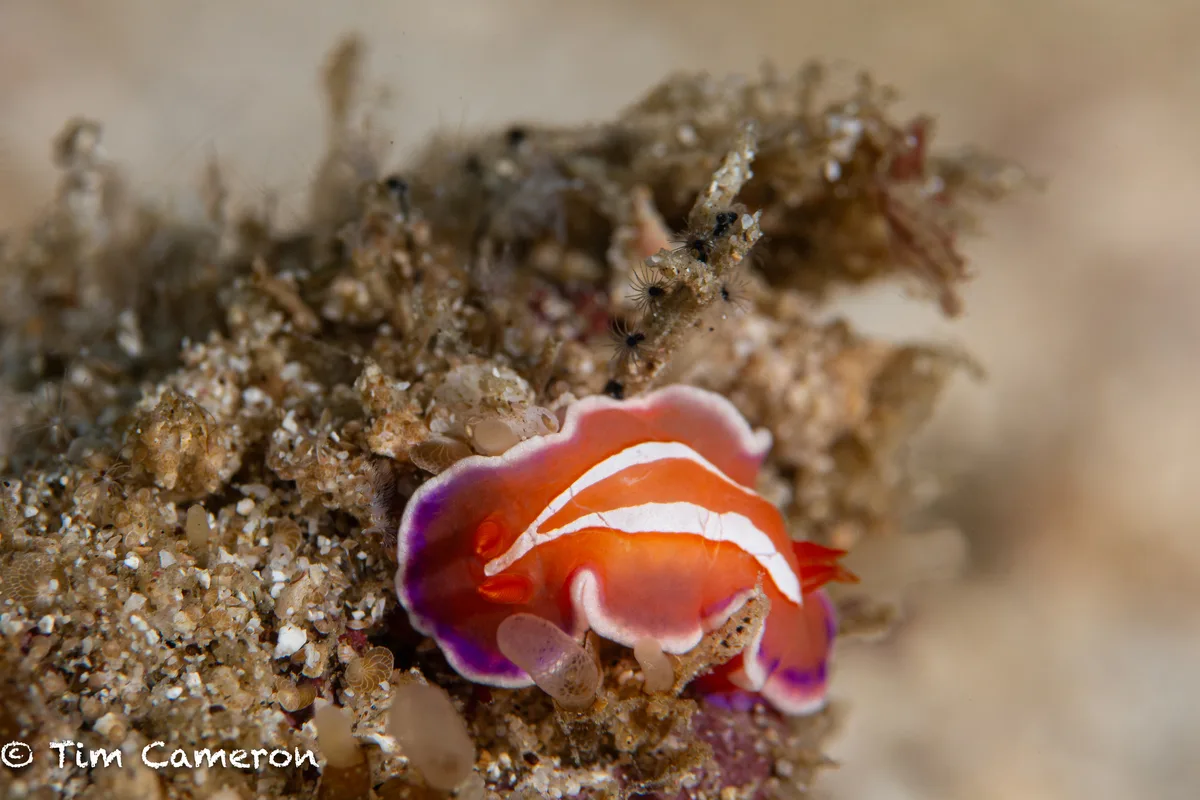
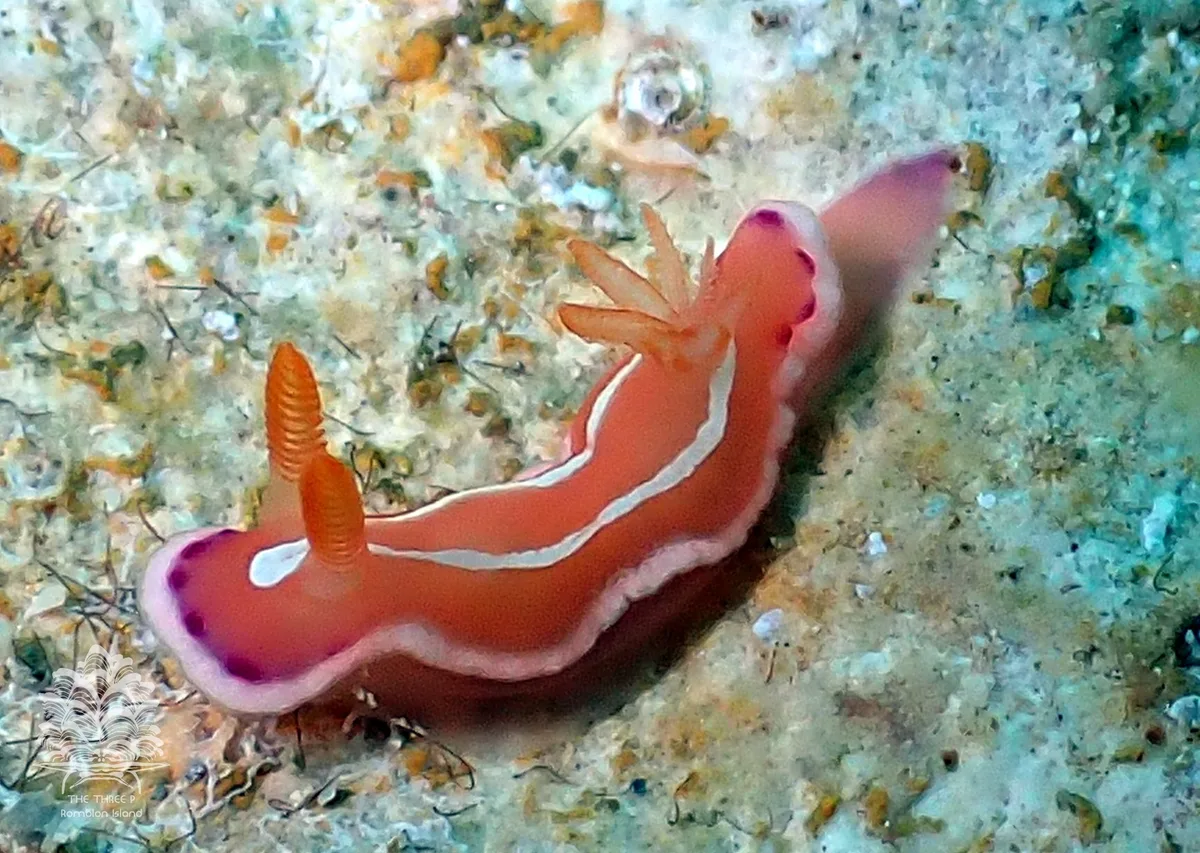
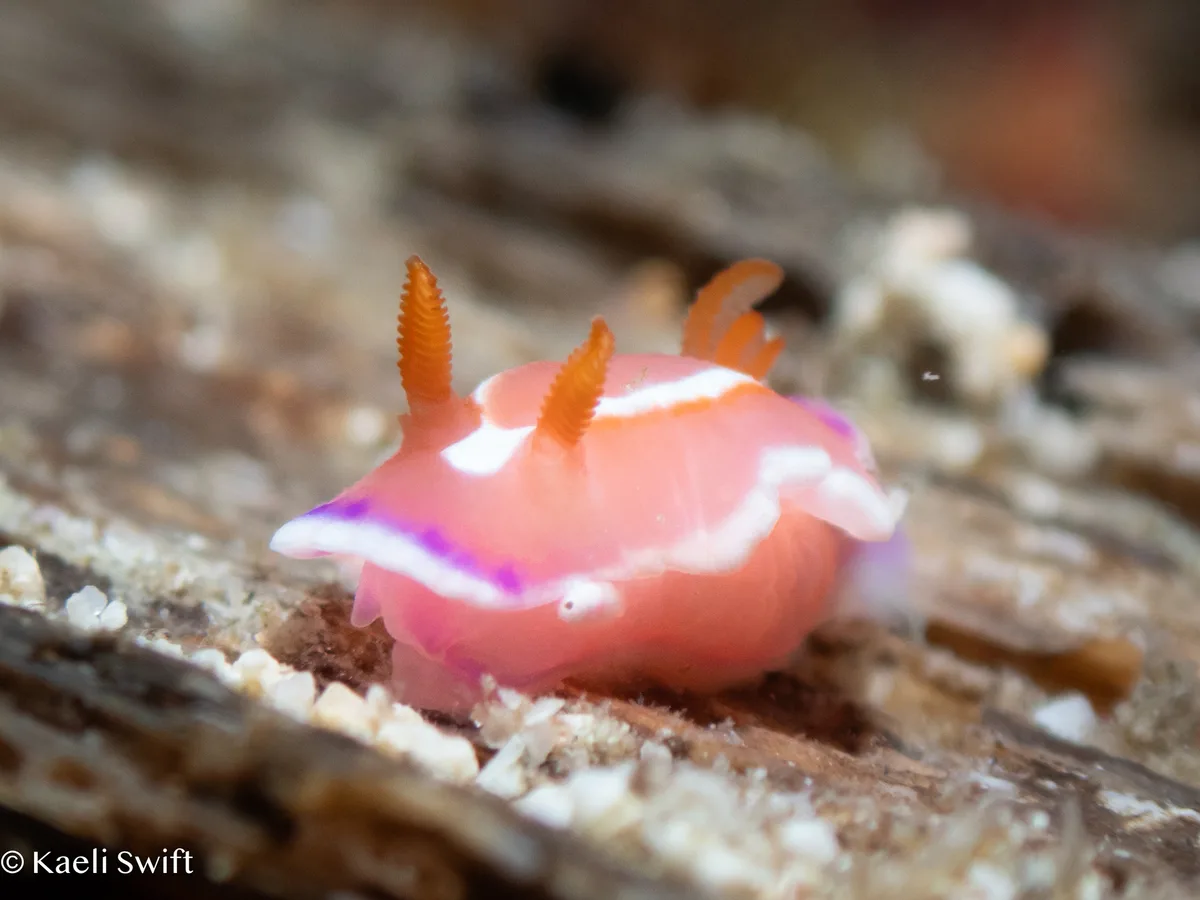
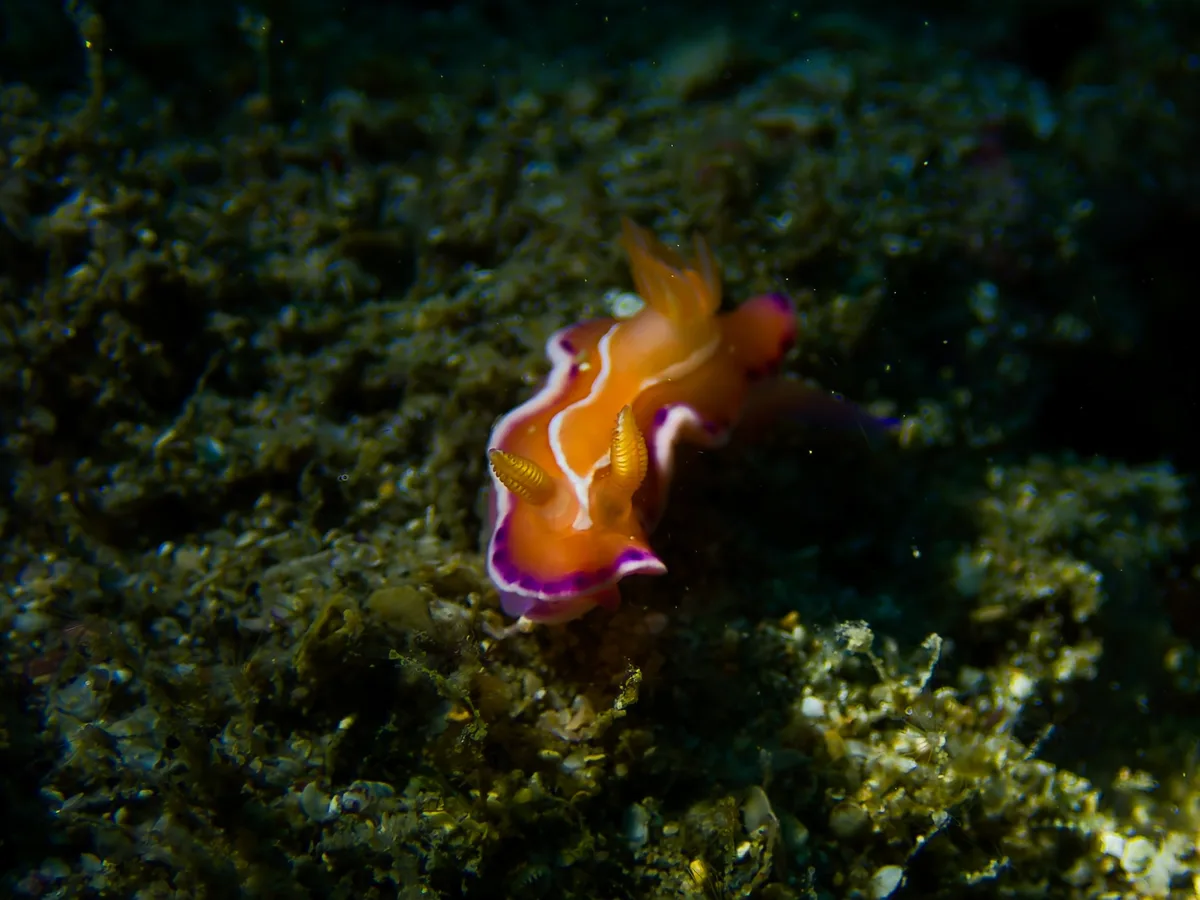
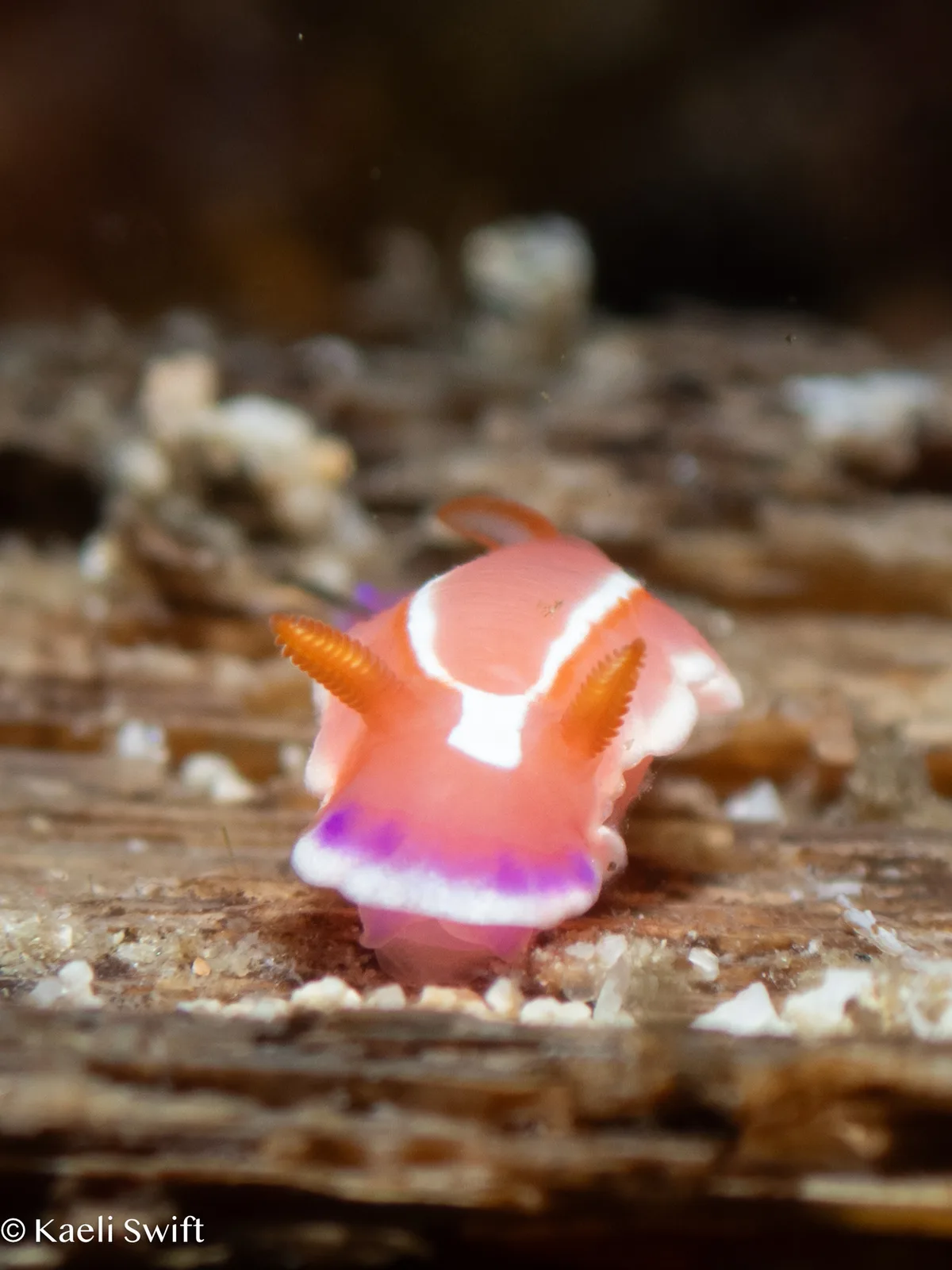
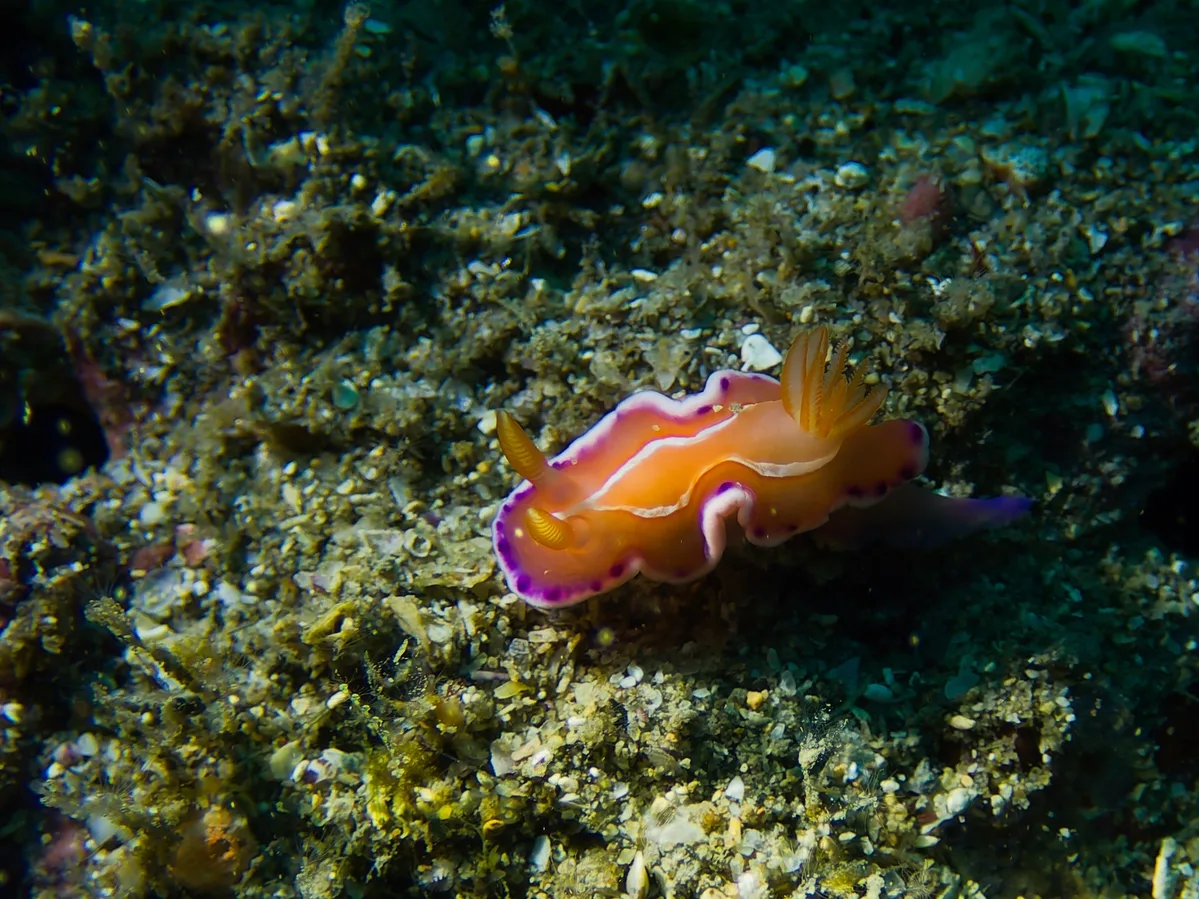
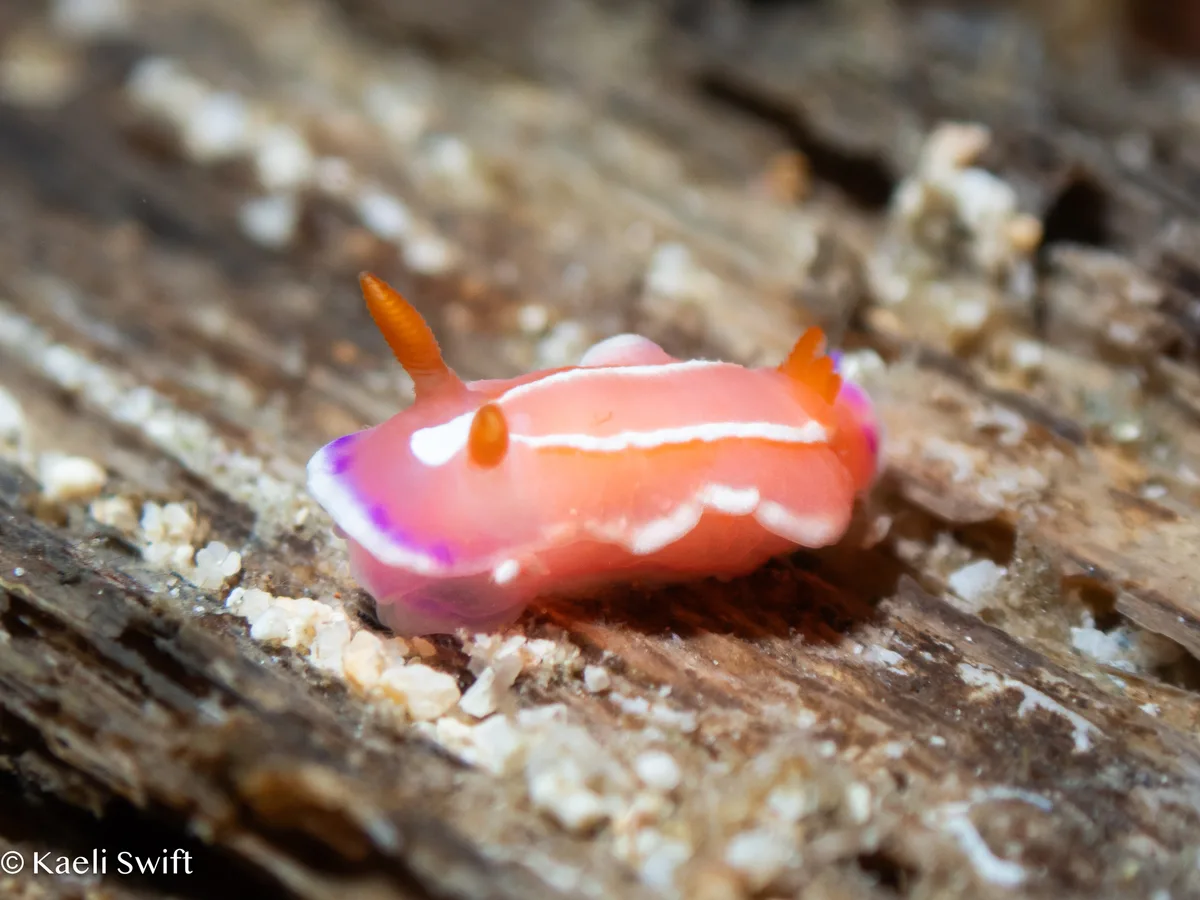
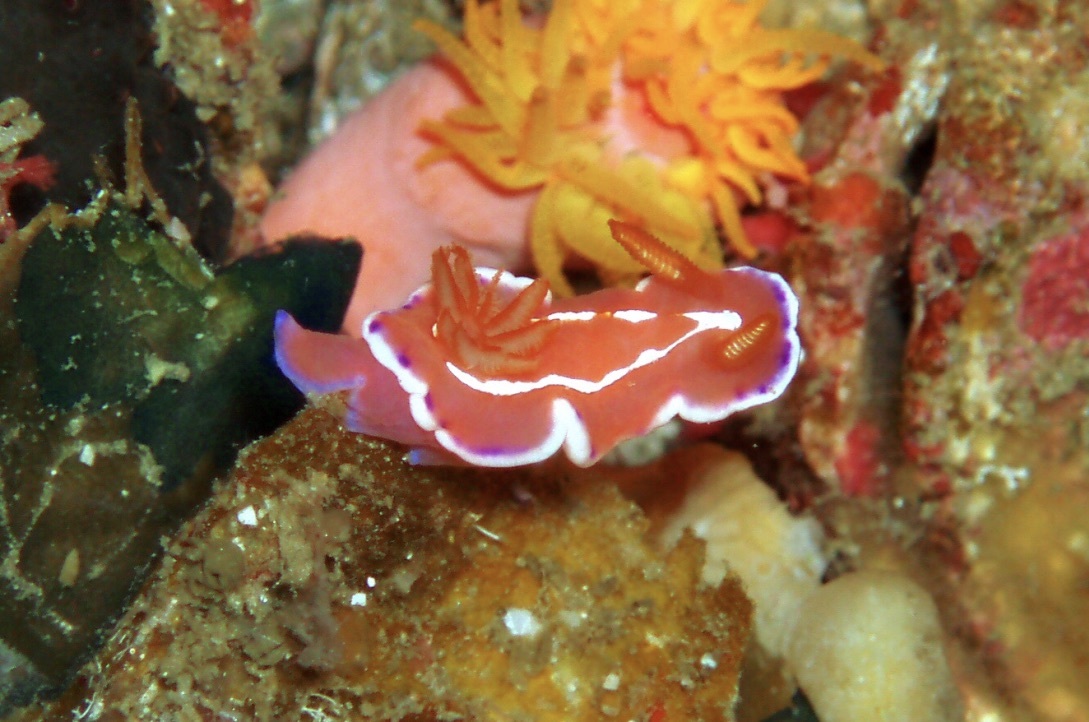
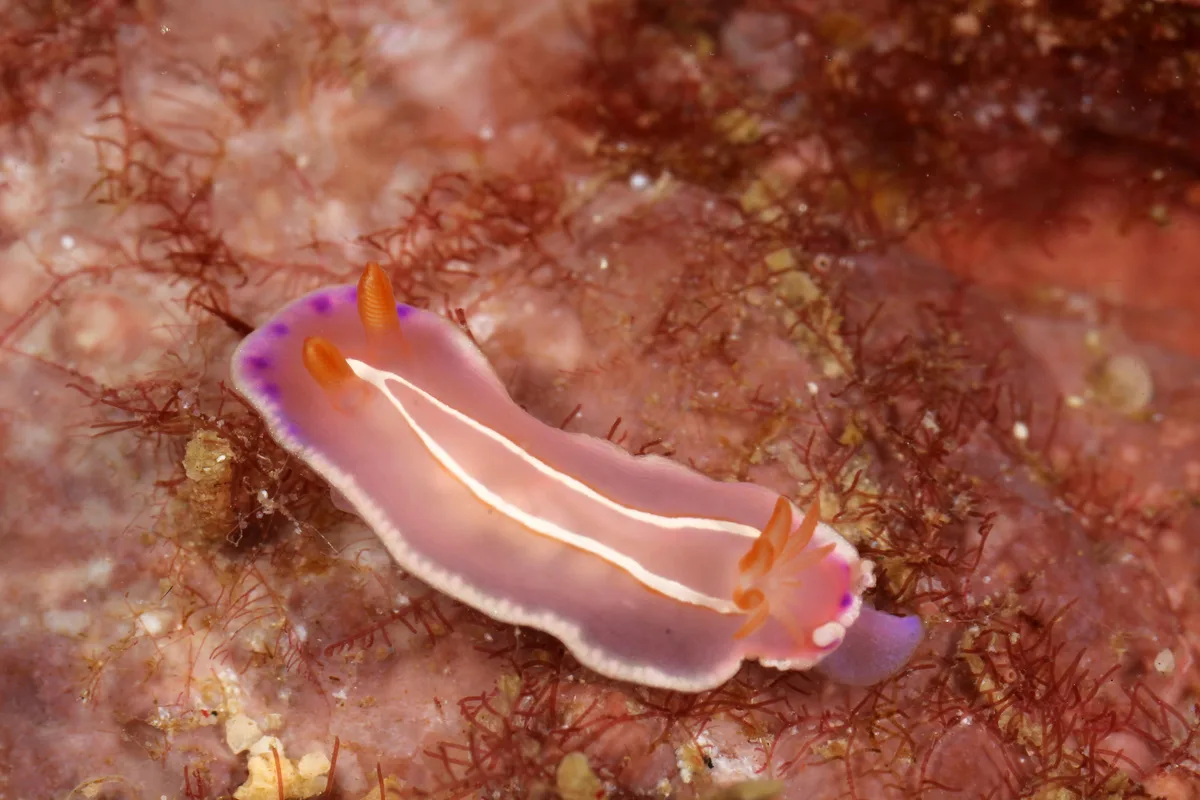
There are four of these on this reef now and they are told apart by one detail each, so it pays to know which detail belongs to which.
On this one it is a white ring. The mantle carries a circle of opaque white drawn around the base of the gill plume, like a target painted on the back, and no other member of the genus here has anything of the kind. The body around it is pinkish and thin enough that the darker mass of the internal organs shows through the middle.
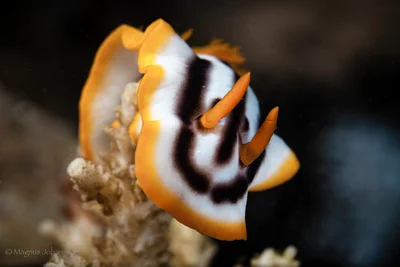
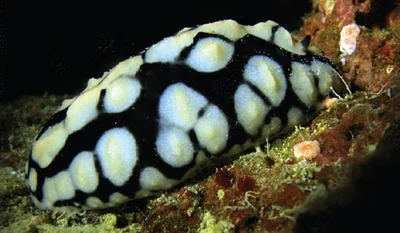
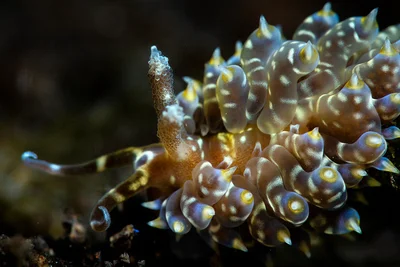
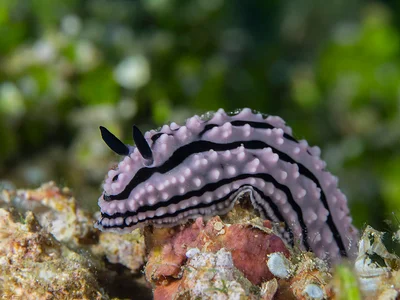
For the record, the other three: one is plain translucent white with a single orange line at the rim and nothing on the back at all; one carries a white stripe down the midline with purple spots set inside the margin; and the smallest has an orange rim with orange-tipped gills. Four small pale slugs, four single characters.
The genus itself is the thin, translucent end of the chromodorid family, where relatives are firm ovals with bold rims and these are little more than a film with a pattern on it. They still work the same way underneath: sponge food, the sponge's chemistry kept rather than digested, concentrated toward the mantle edge, and the animal crawling in daylight on the strength of it.
Two and a half centimeters (1 in). Most of the world's photographs come from the 🇵🇭 Philippines.
- a white ring drawn on the mantle around the base of the gills
- pinkish body, thin enough that the viscera show through
- the ring is the diagnosis: no other Verconia here has one
- two and a half centimeters, low and soft-edged