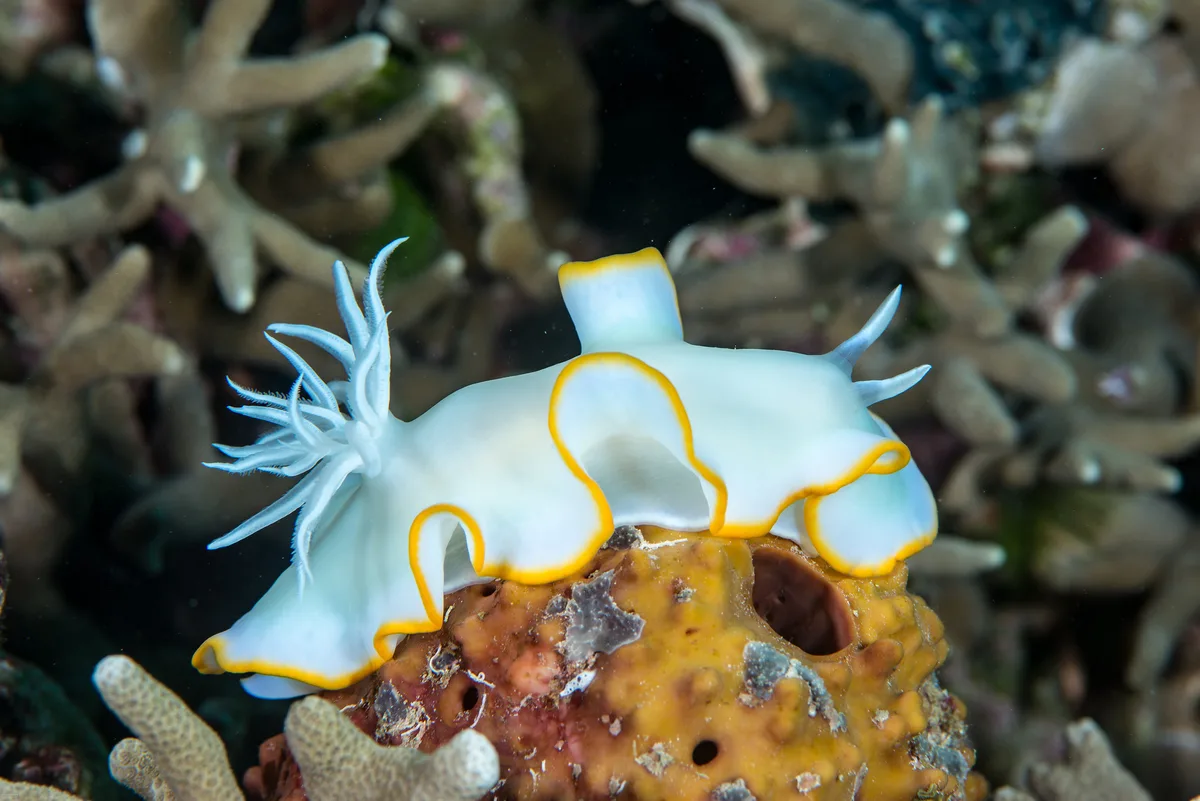
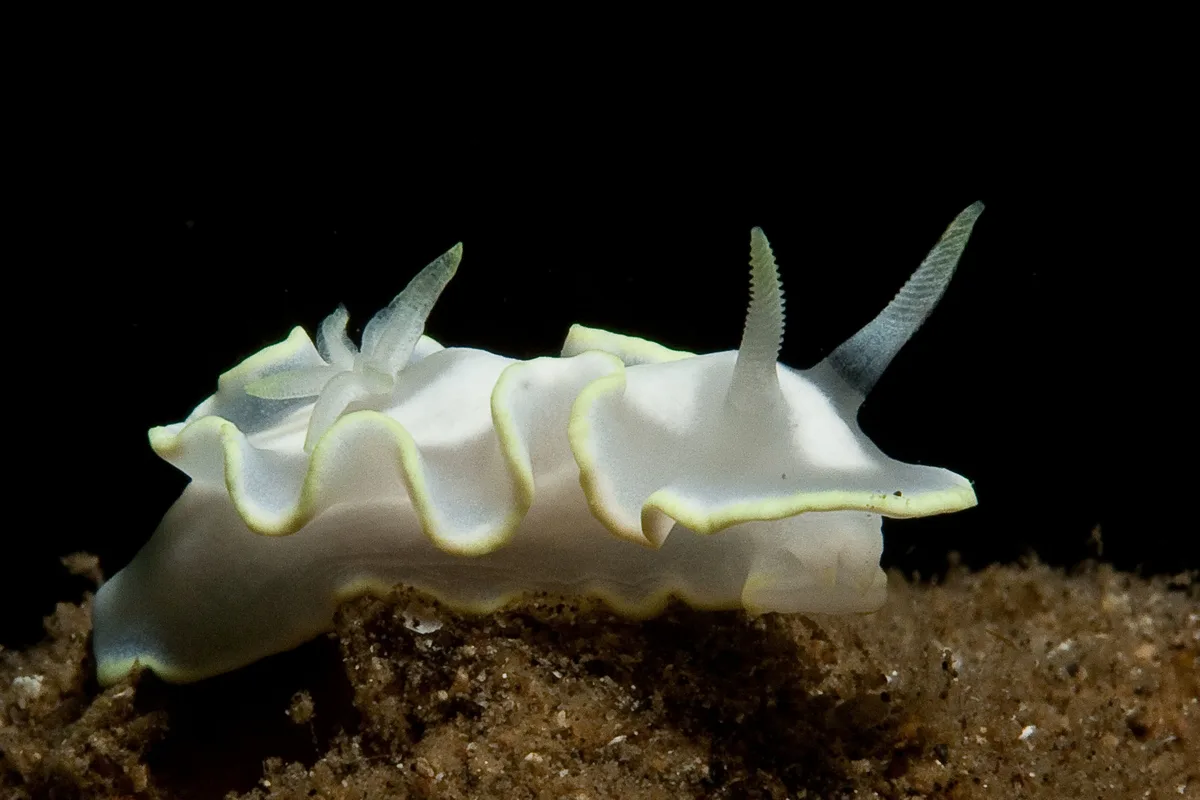
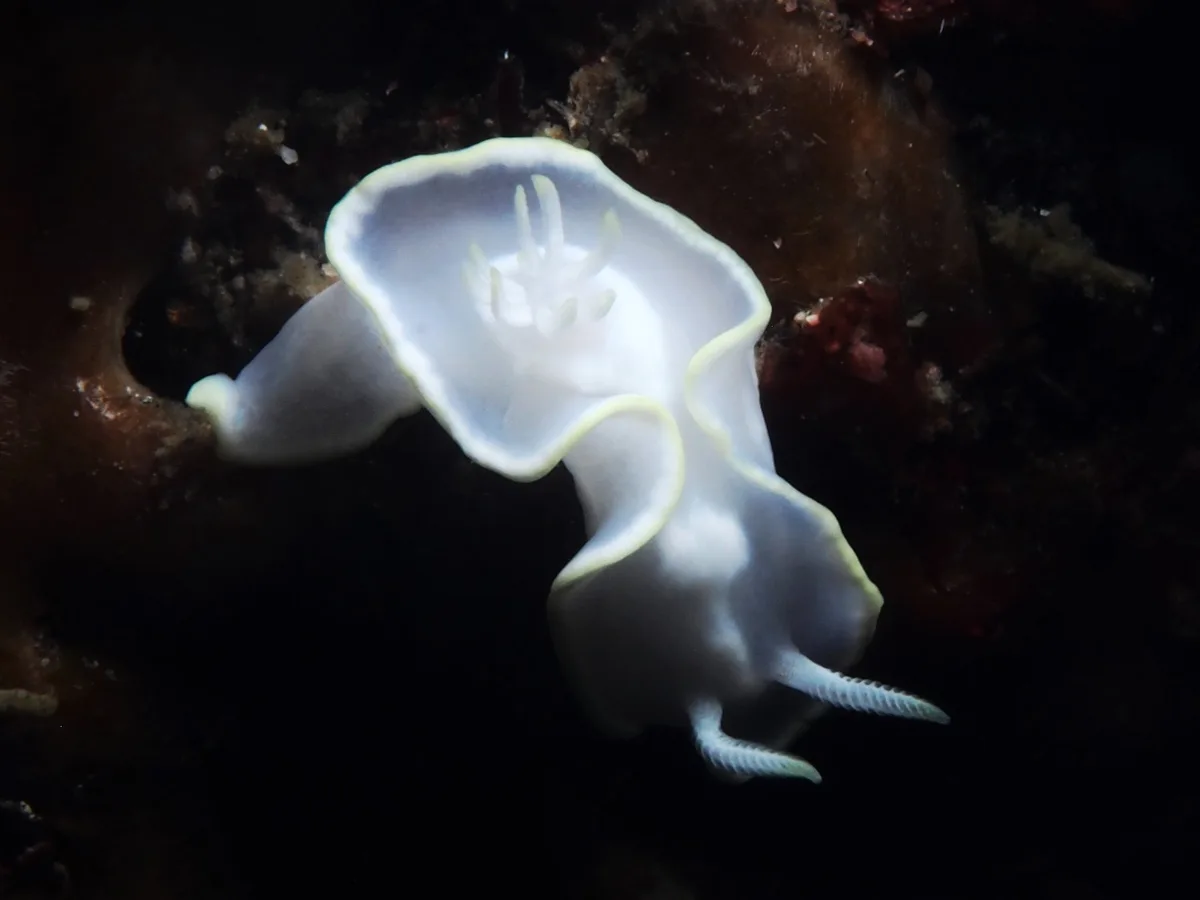
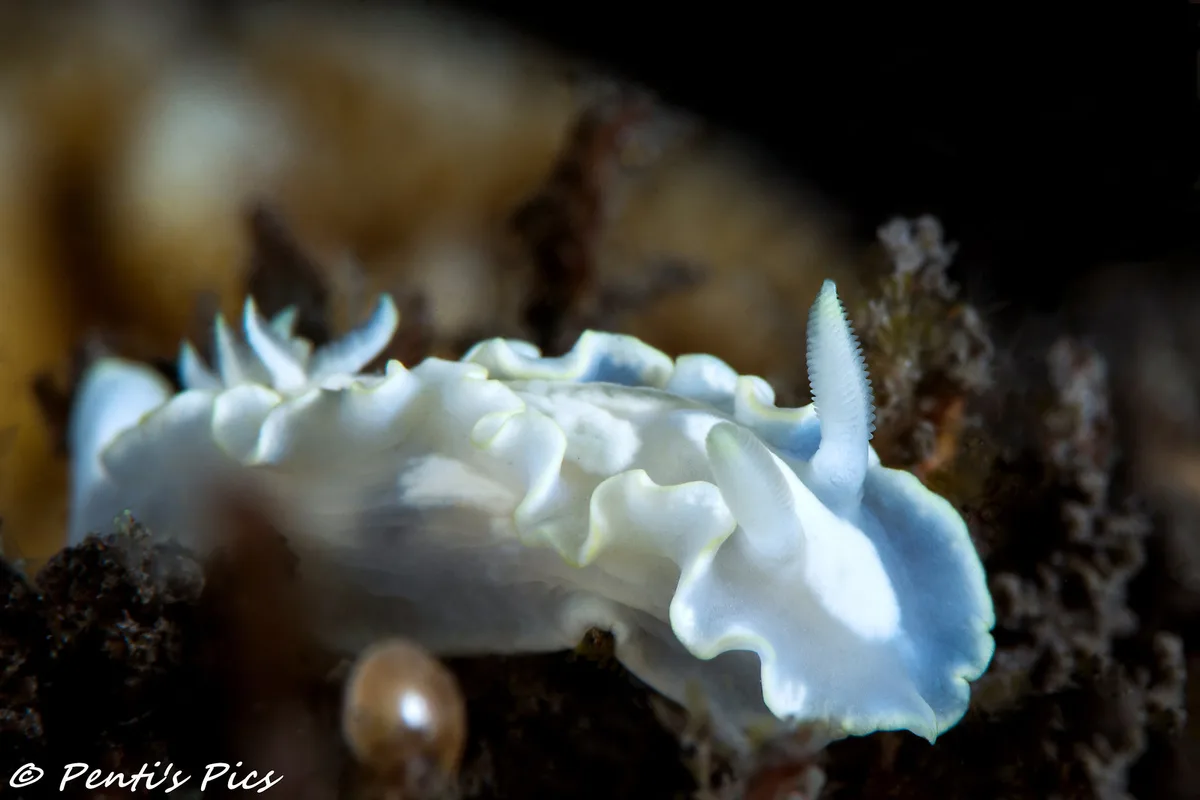
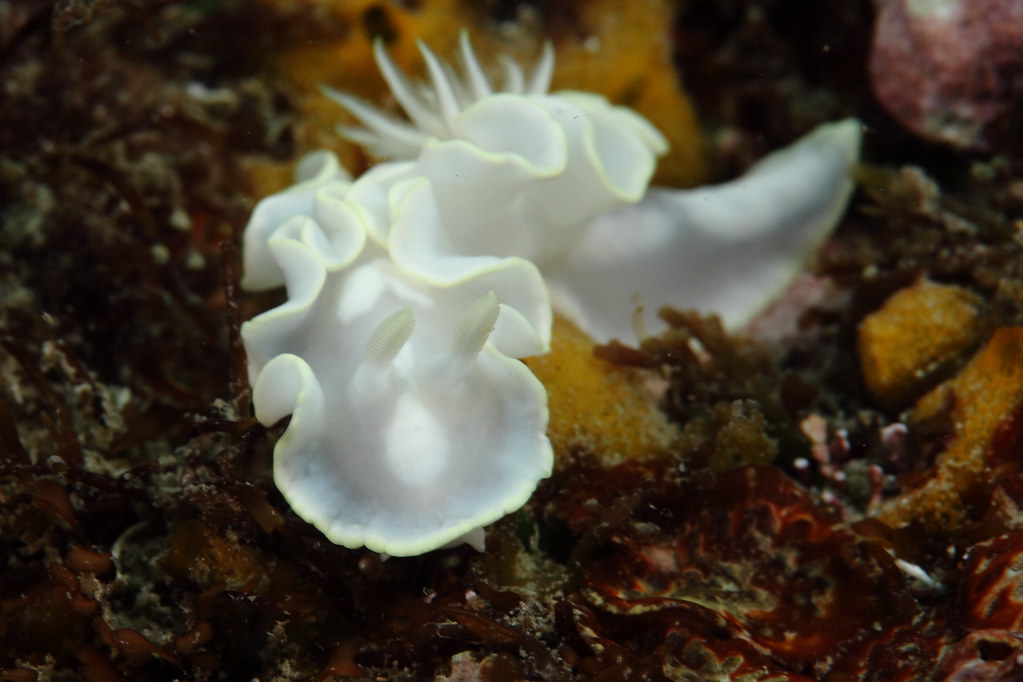
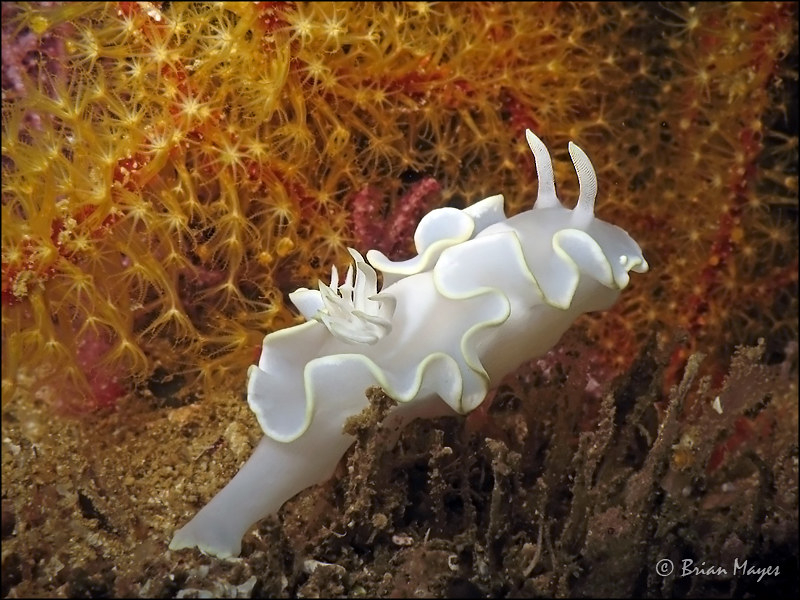
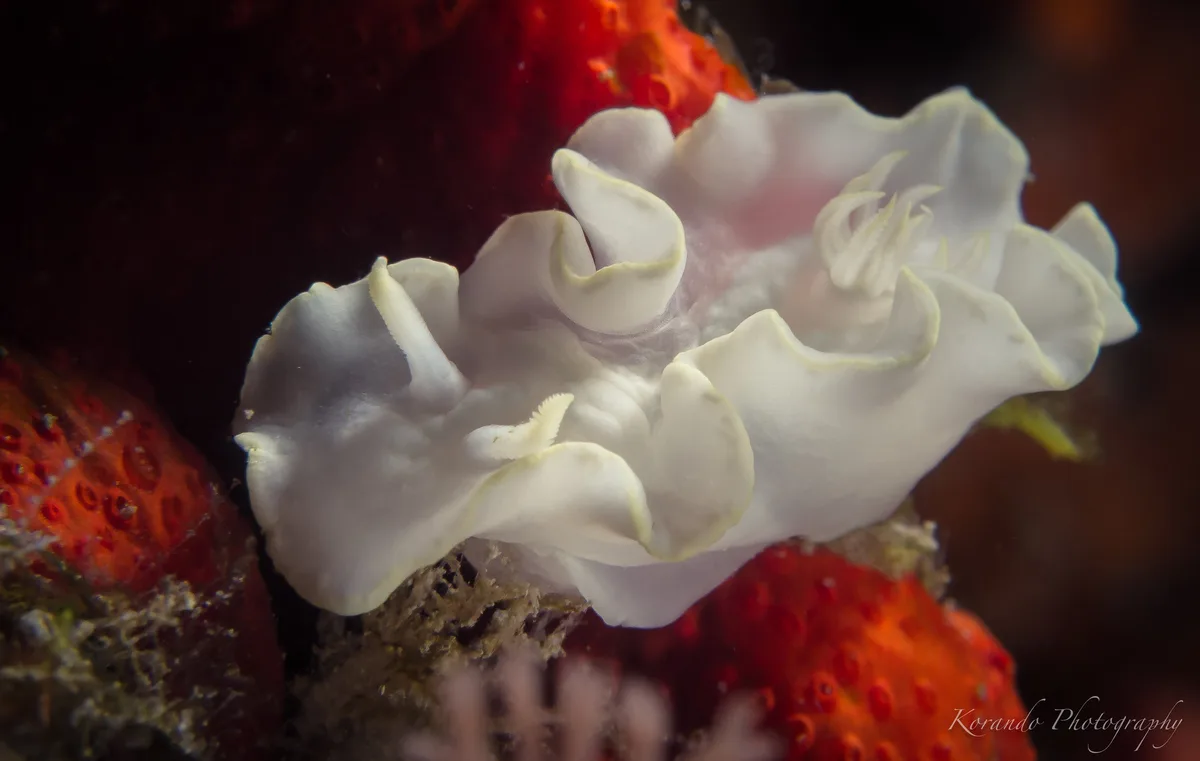
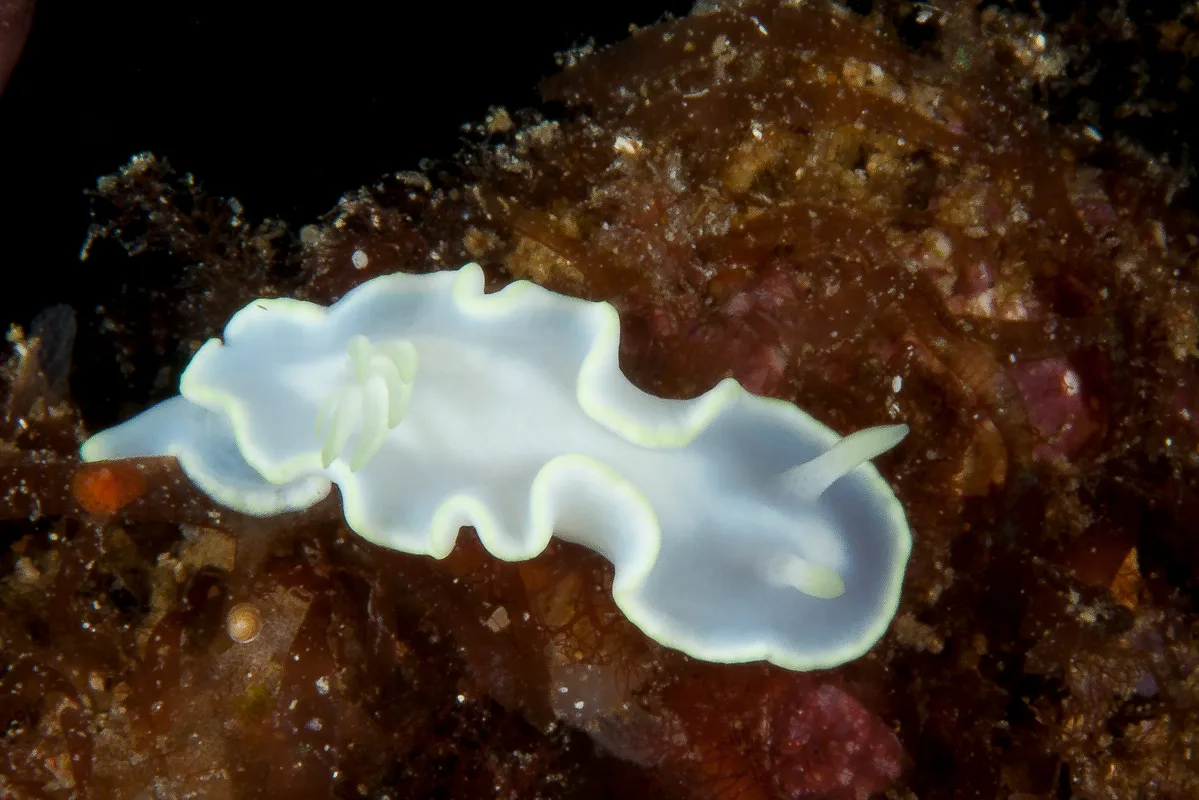
In a family that spends its whole budget on color, this one has left the page nearly blank, and where it did spend is worth understanding.
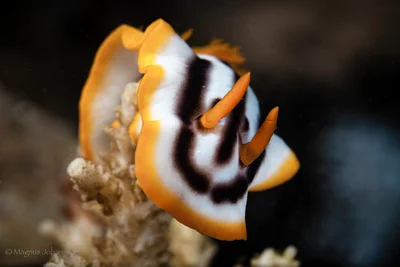
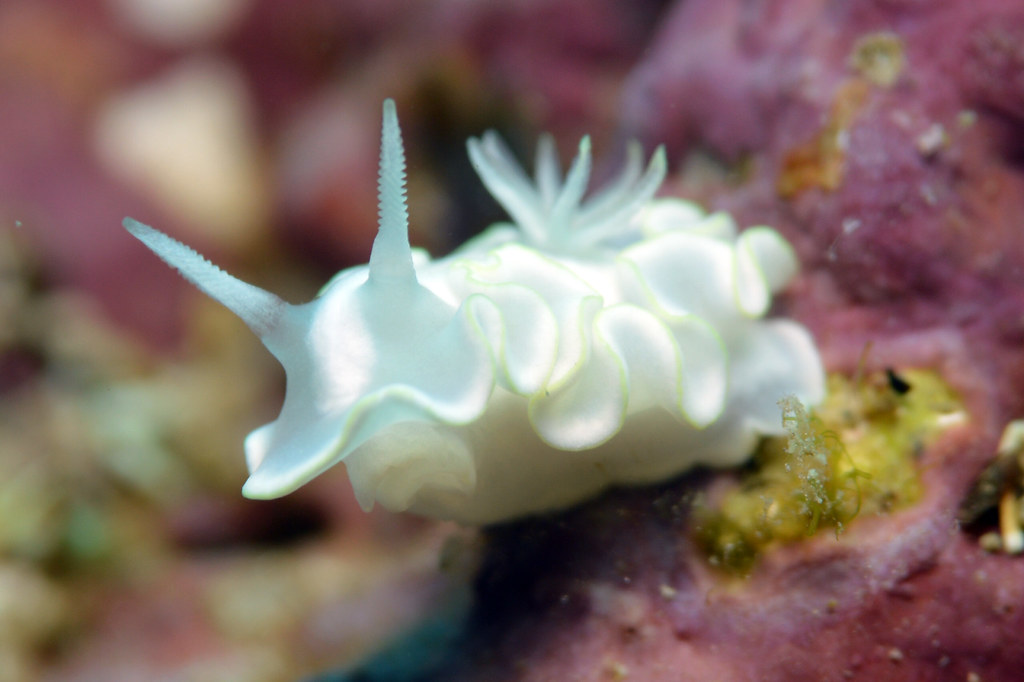
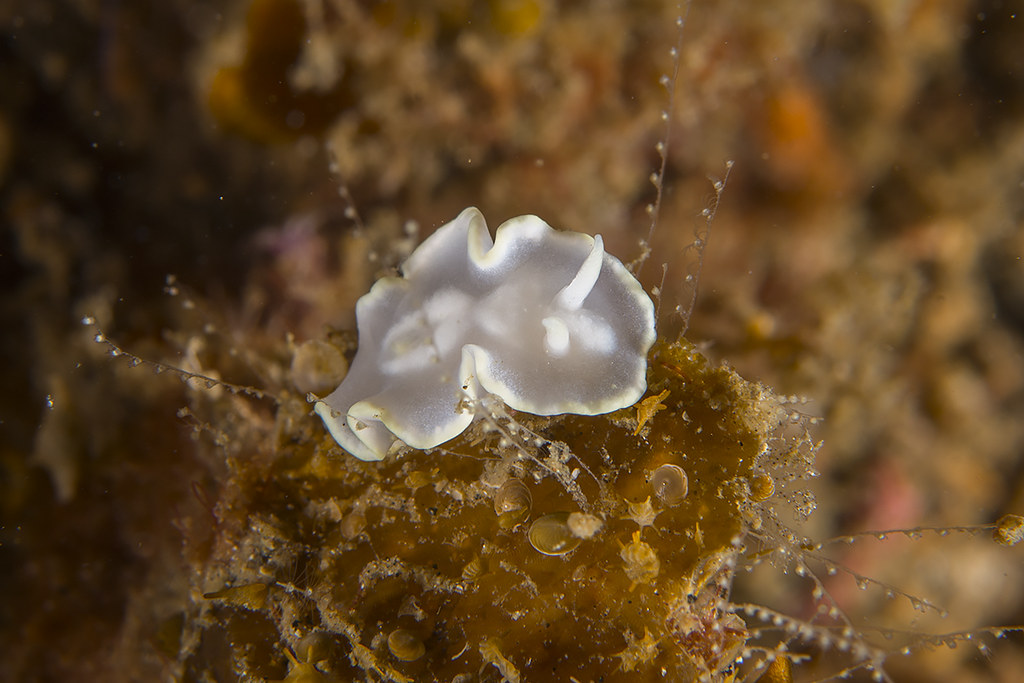
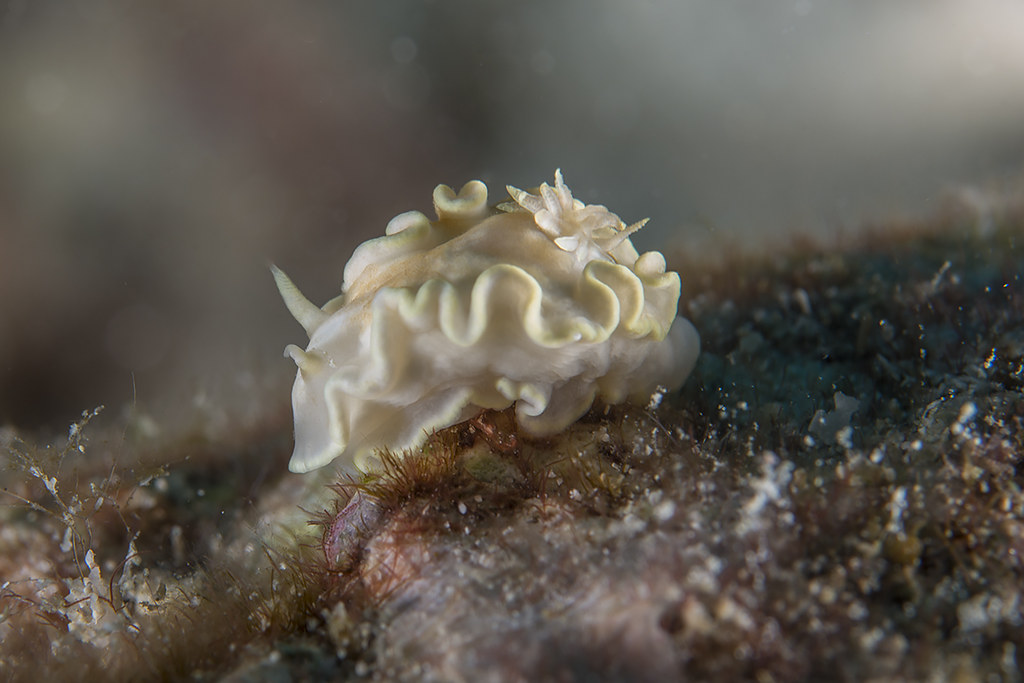
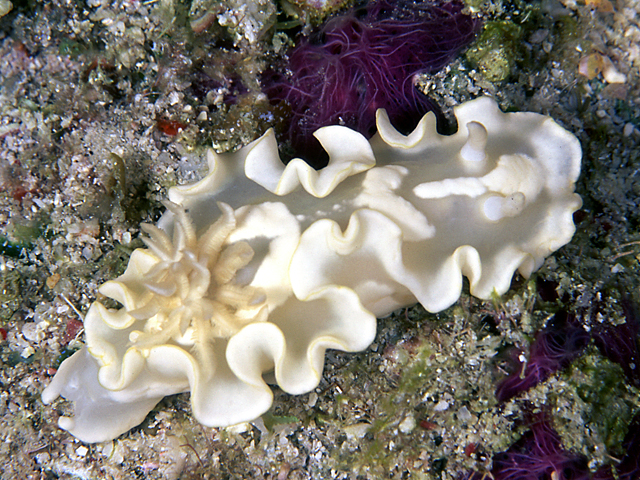
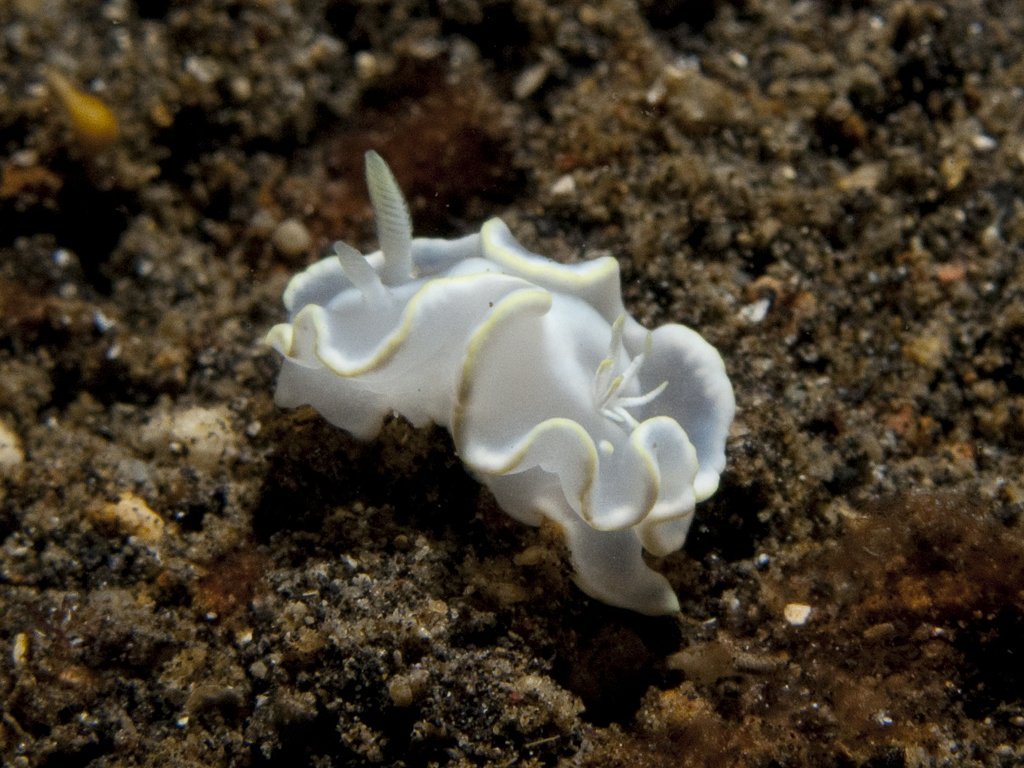
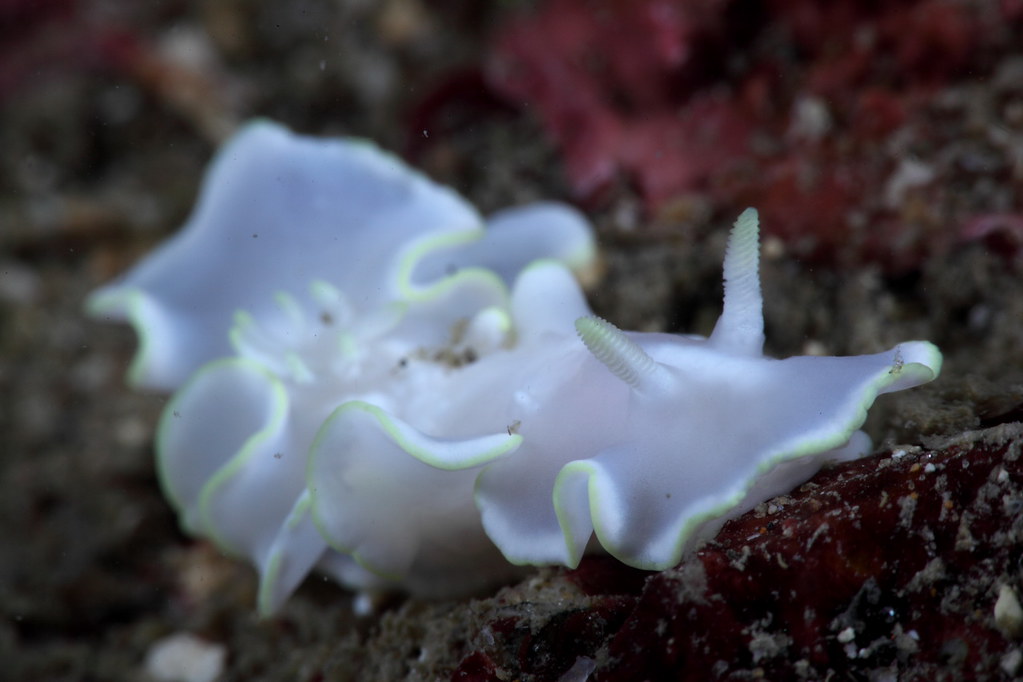
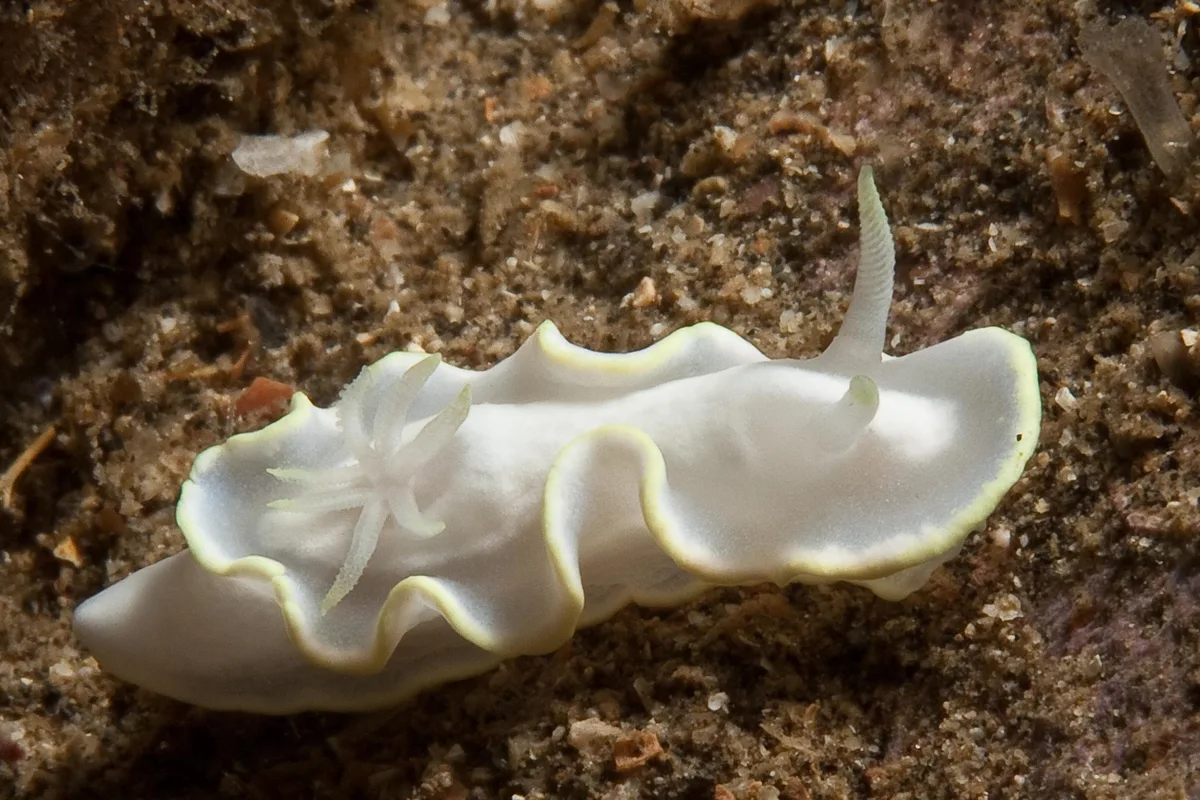
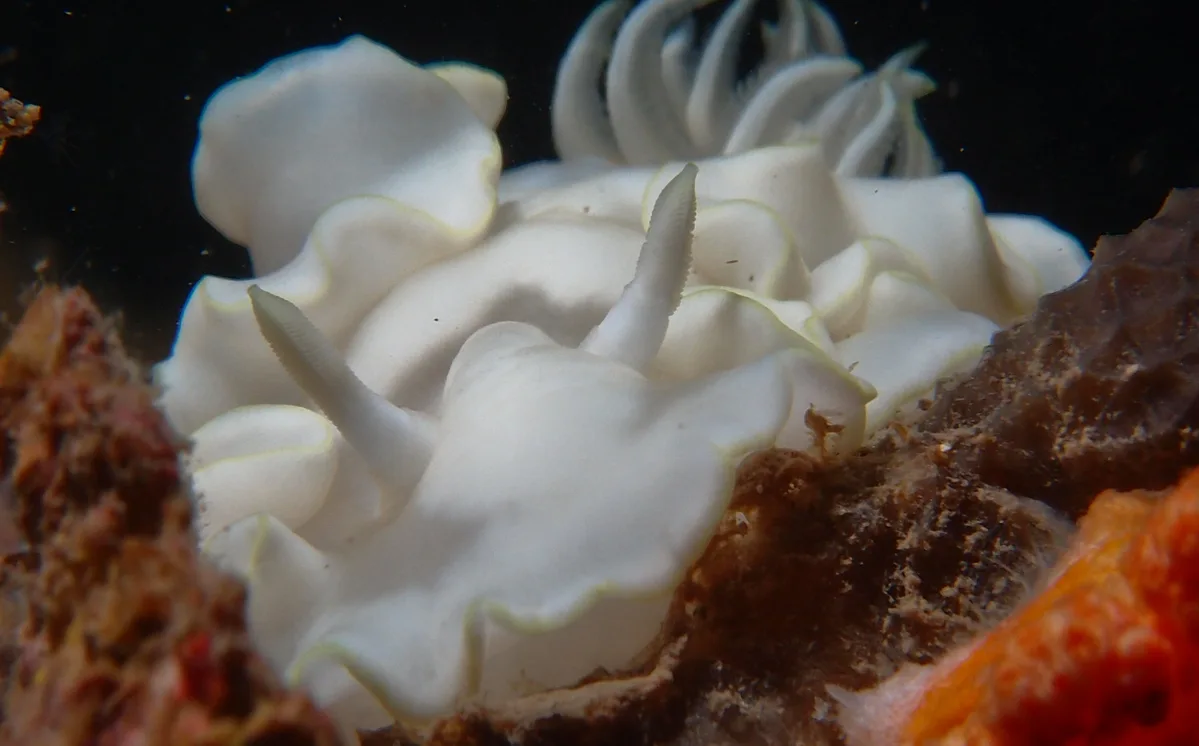
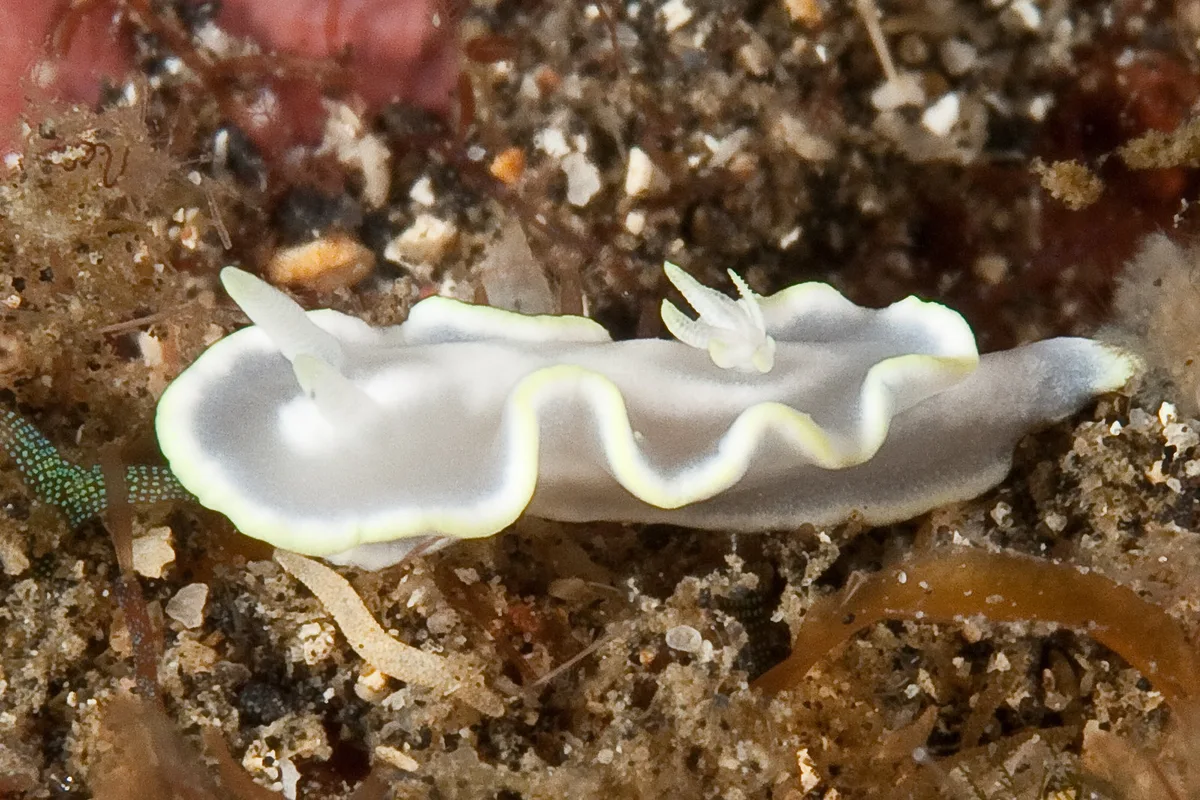
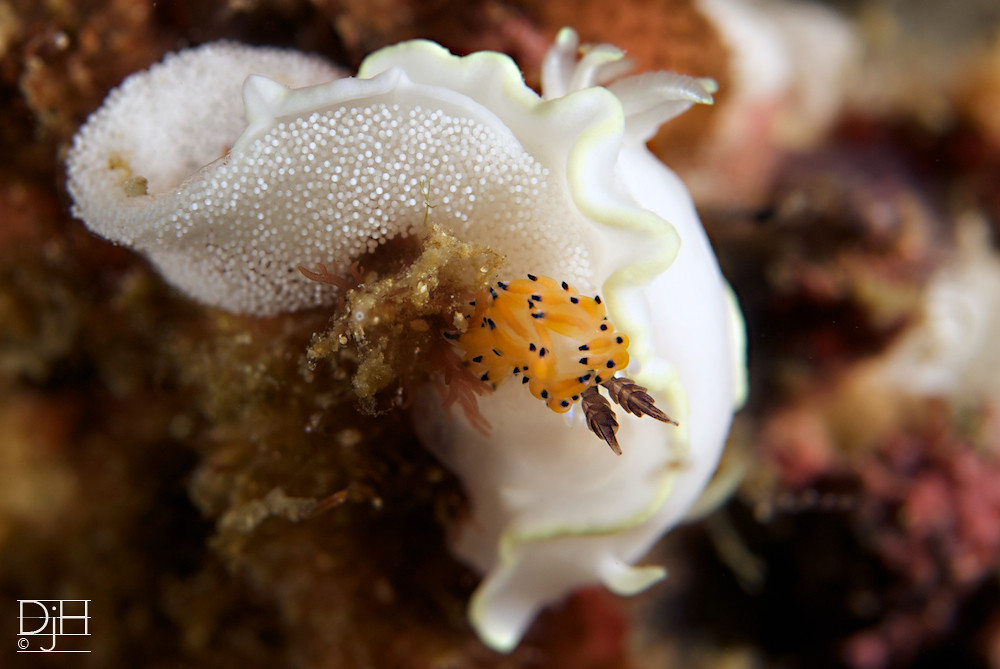
The body is pale, translucent in places, with a scatter of opaque white markings gathered toward the middle of the back. The only real color on the animal is a yellow band running around the outer edge of the mantle. That placement is not aesthetic. Chromodorids take chemical defenses out of the sponges they eat and concentrate them into glands packed along the mantle rim, so the rim is the most unpleasant part of the animal and the part a fish meets first. The yellow band is a label on the loaded edge, and the rest of the animal does not need one.
The genus adds its own signature. Glossodoris carry that skirt wide and held well out beyond the foot, and it ripples as the animal moves, so a specimen in motion looks like it is wearing something loose. What reads as decorative frill is the defended part being waved about.
Four centimeters (1.6 in), crawling in the open in daylight, which is the behavior of an animal that expects to be seen and has arranged for the encounter to end badly.
Rüppell and Leuckart described it from 🌊 Red Sea material in 1830, one of the older names in this catalogue, and it has been photographed at Dahab since.
- a yellow band around the mantle margin and almost nothing else
- opaque white markings gathered in the center of the back
- mantle skirt wide and held out beyond the foot, rippling as it moves
- four centimeters, pale to translucent overall