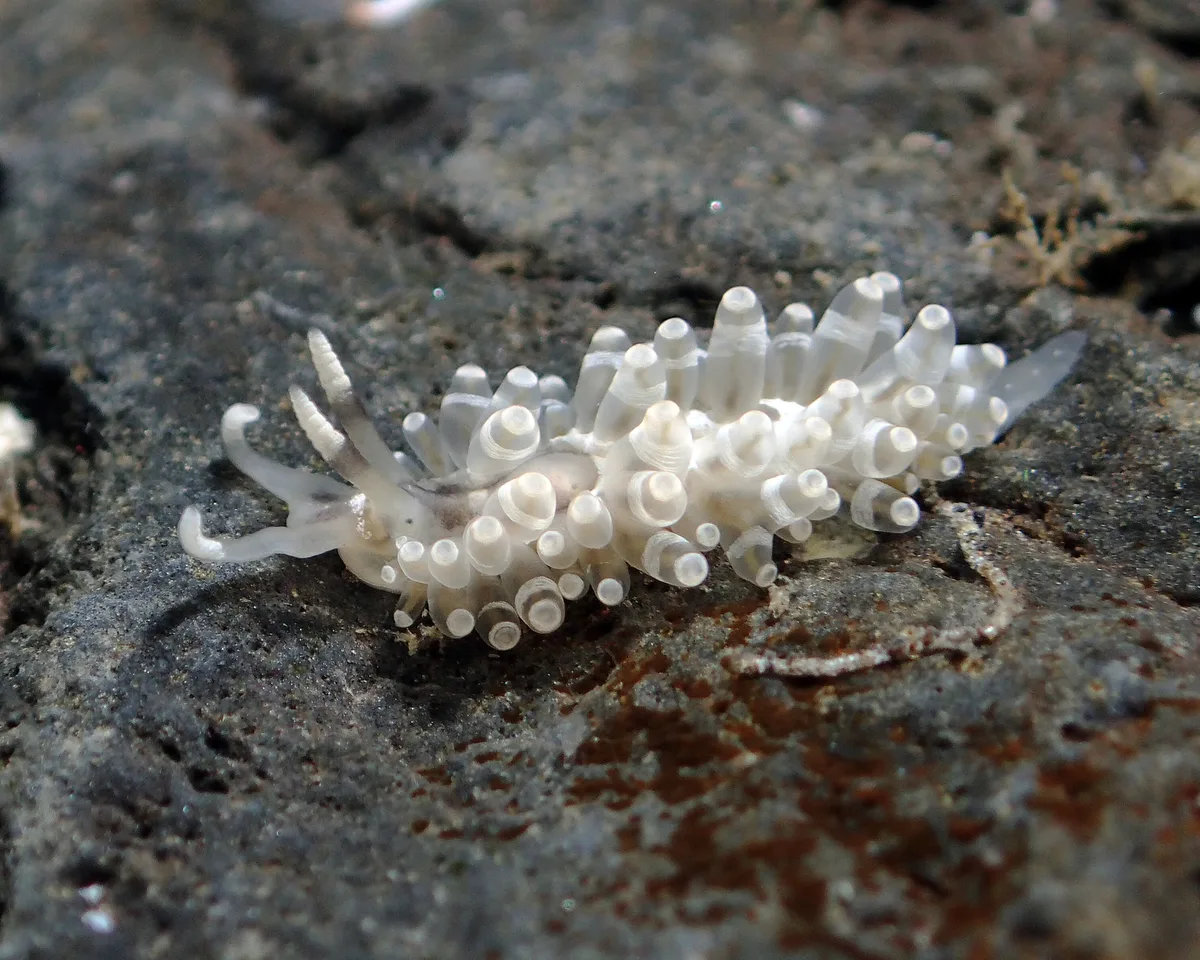
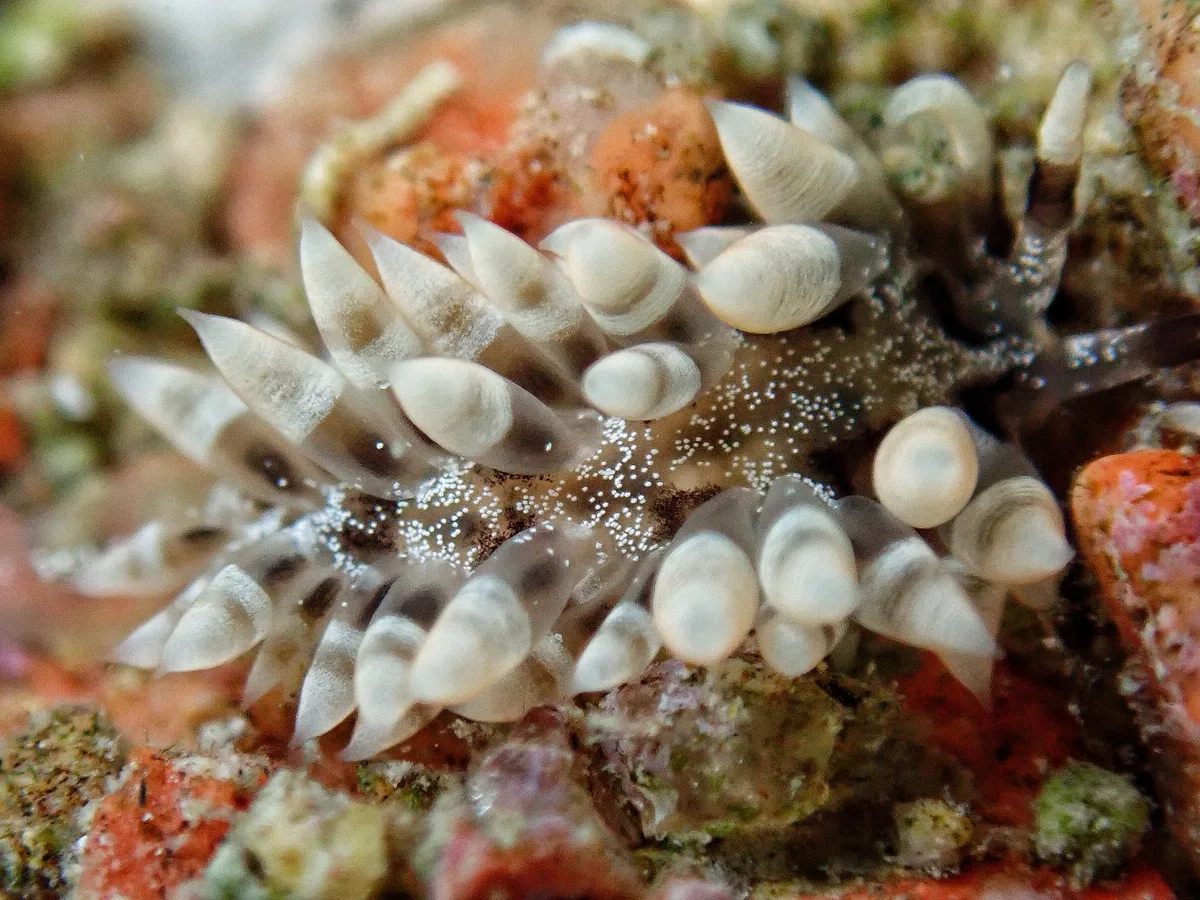
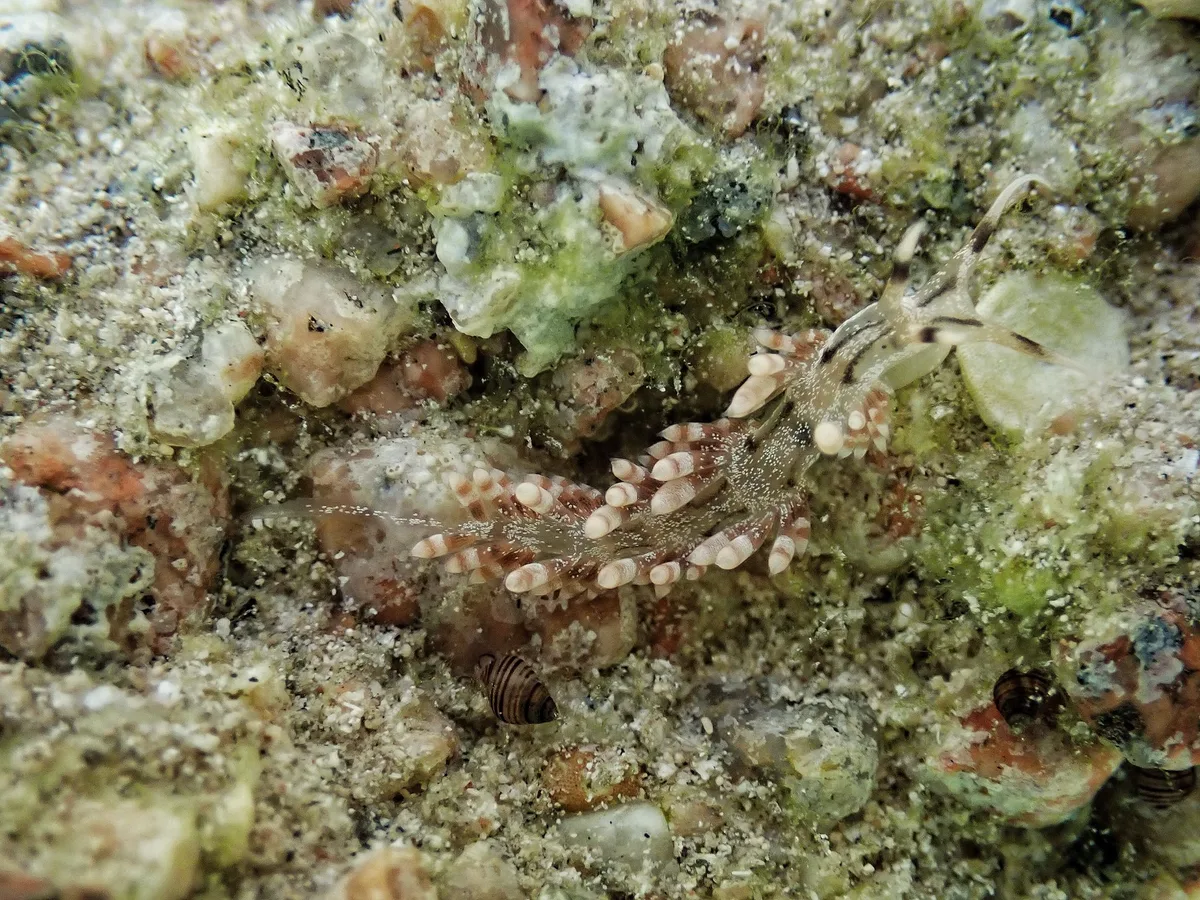
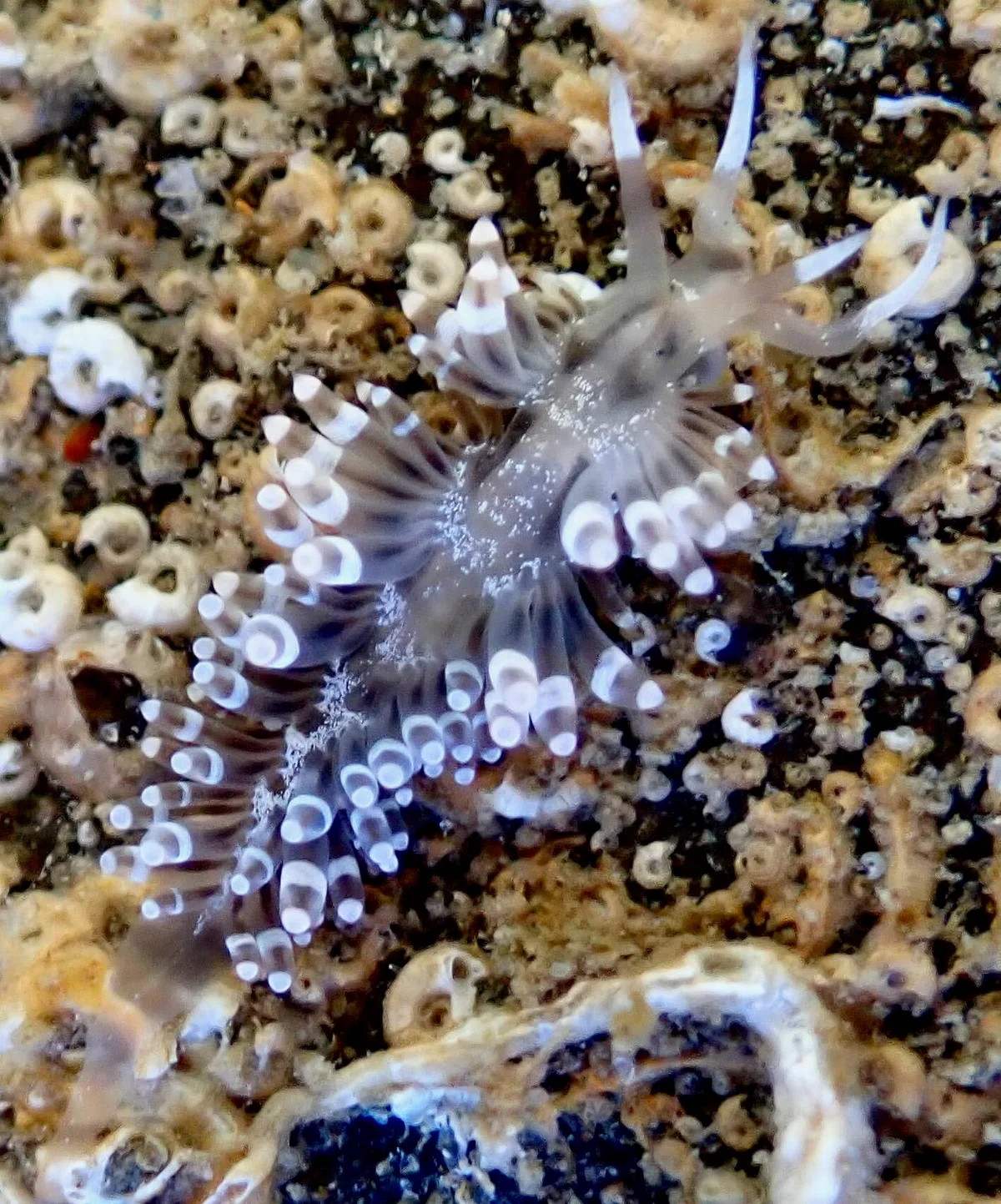
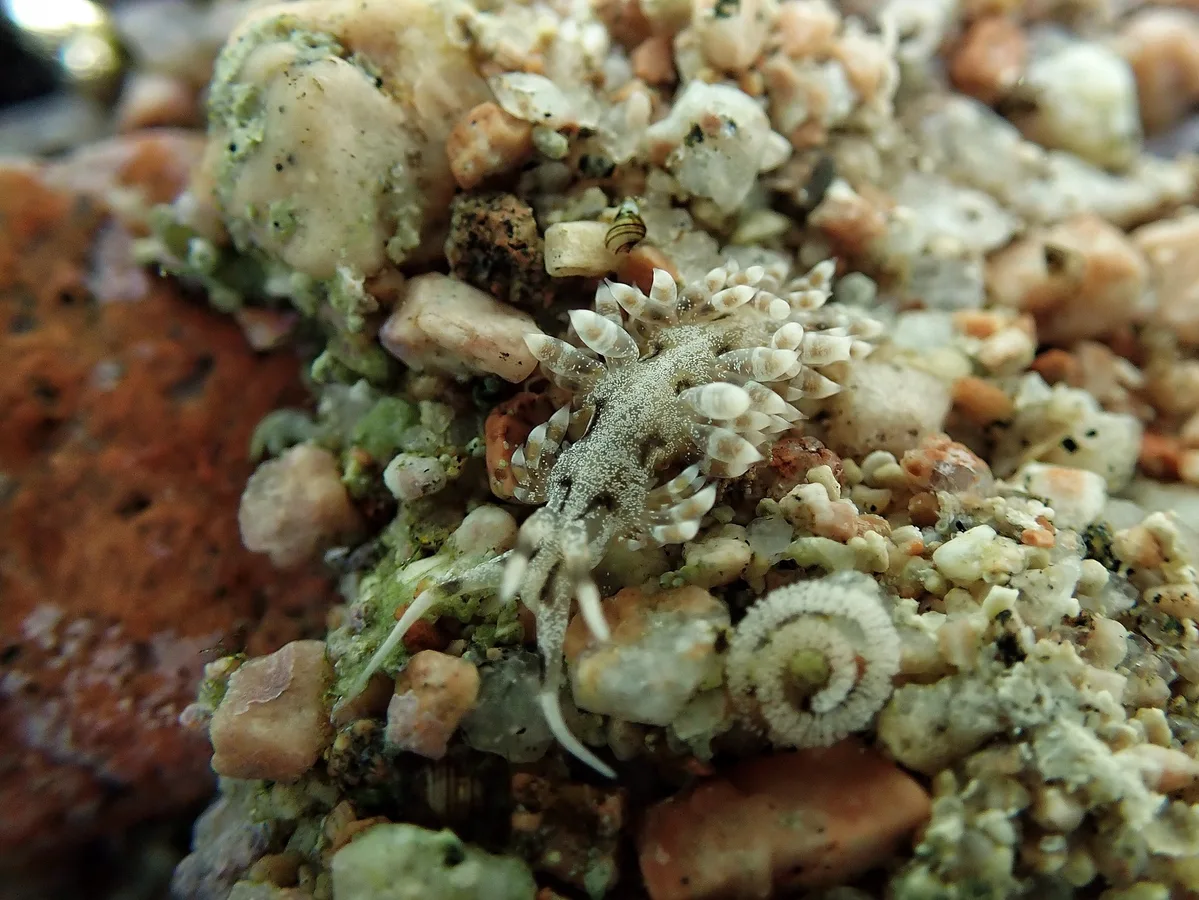
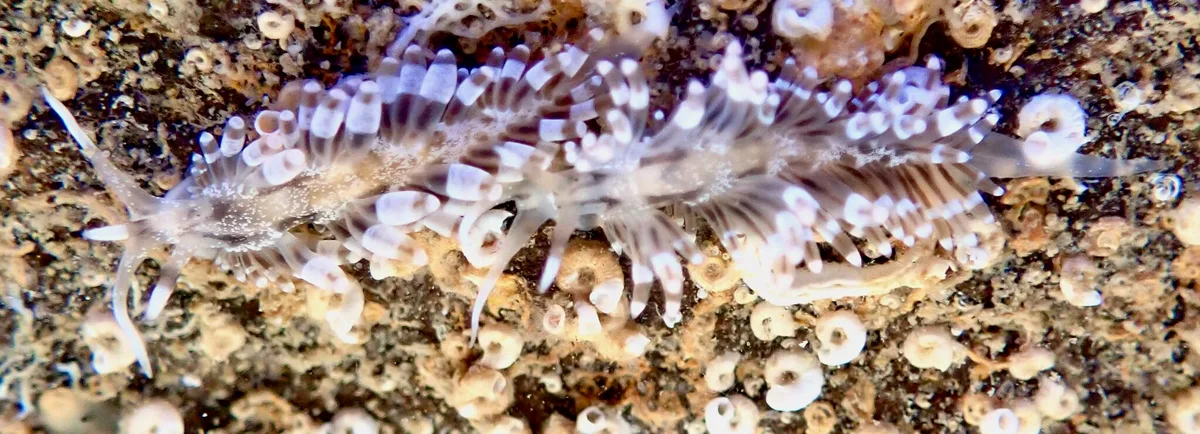
Almost everything about this animal is transparent, so the identification comes down to the few places where it is not.
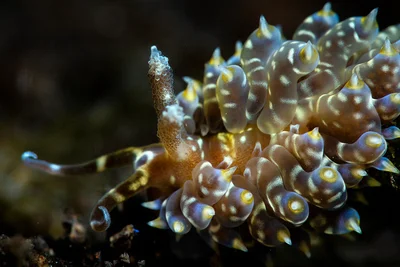
Start with the cerata. Each one carries a dark brown band below the tip, and above that band the very end is opaque white. Those two colors are not decoration; they are anatomy showing through the skin. The dark band is a branch of the digestive gland running up inside the ceras, stained by what the animal has been eating, and the white cap above it is the sac where the stolen stinging cells are stored. On a body this clear you are looking straight at the plumbing.
Then the neck. Two dark lines run backward from behind the rhinophores across the top of the head, and on a two-centimeter (0.8 in) animal with no other markings they are the character that separates this species from the other small pale aeolids on the reef.
What it does for a living is the aeolid trade. It grazes hydroid colonies, swallows their stinging capsules without setting them off, carries them intact through the gut and packs them live into the tips of its cerata, so a soft transparent animal ends up armed with its food's weapons.
One thing the records will tell you if you look them up. Most of the world's photographs of this species come from 🇳🇨 New Caledonia (🇫🇷 Overseas France), and a large share of those from a single observer. The distribution map of a small sea slug is often a map of where somebody patient happens to dive, and this one is a clear example. In this sea it is a genuinely rare find.
- each ceras carries a dark brown band below an opaque white tip
- two dark lines running back from behind the rhinophores, over the neck
- body translucent white, with the internal organs visible through it
- long oral tentacles held forward, longer than the rhinophores