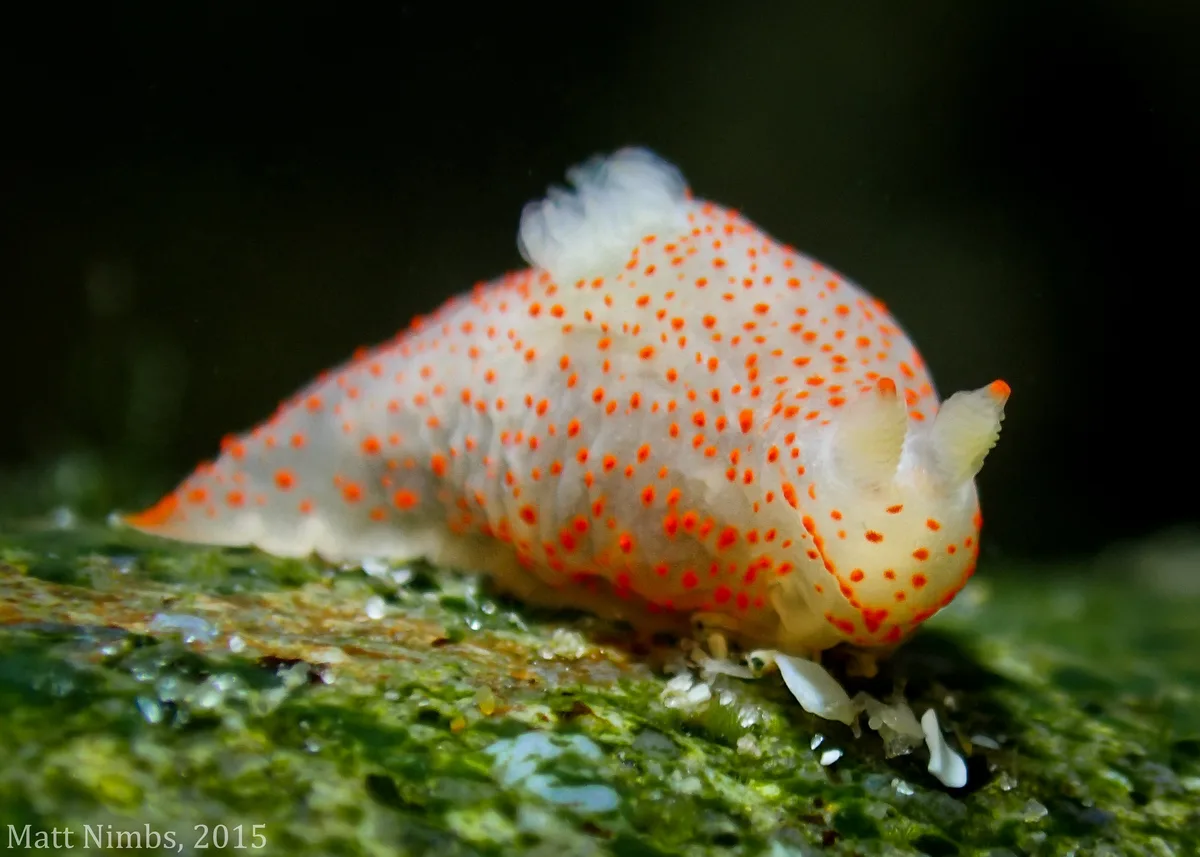
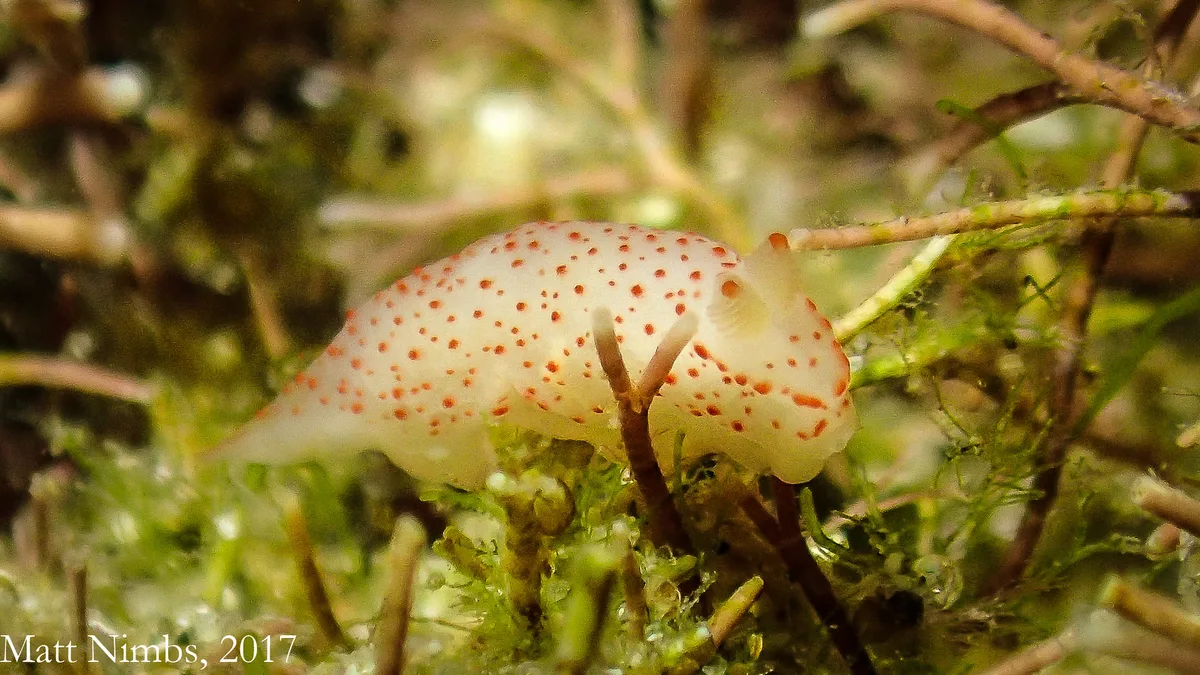
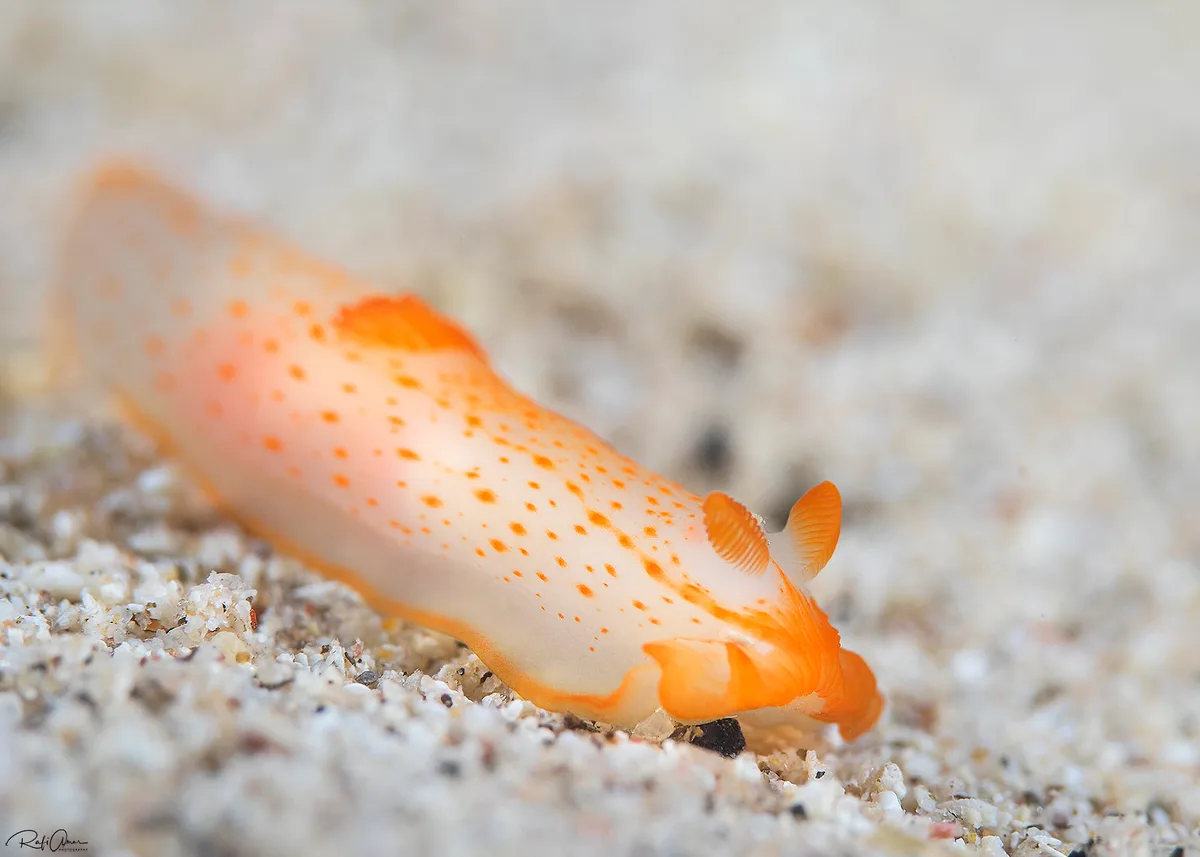
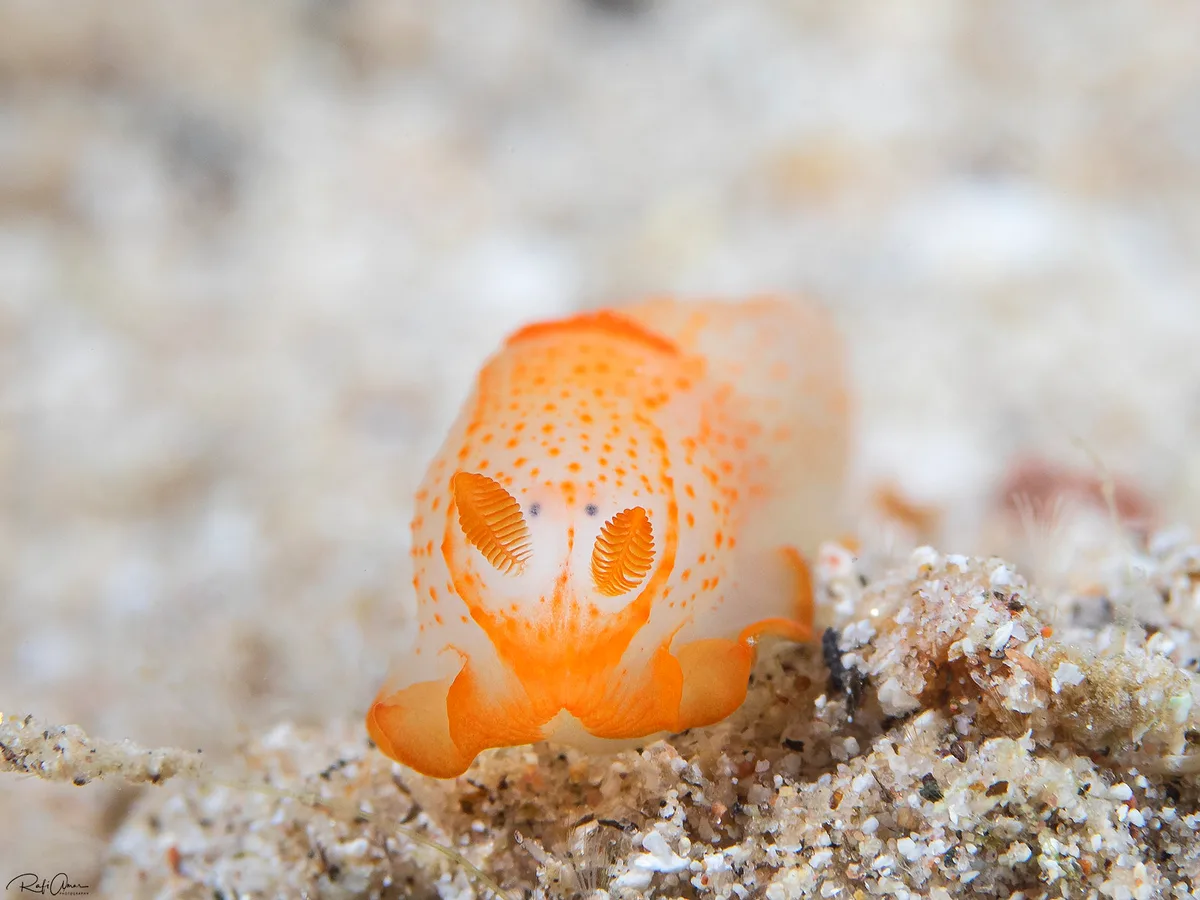
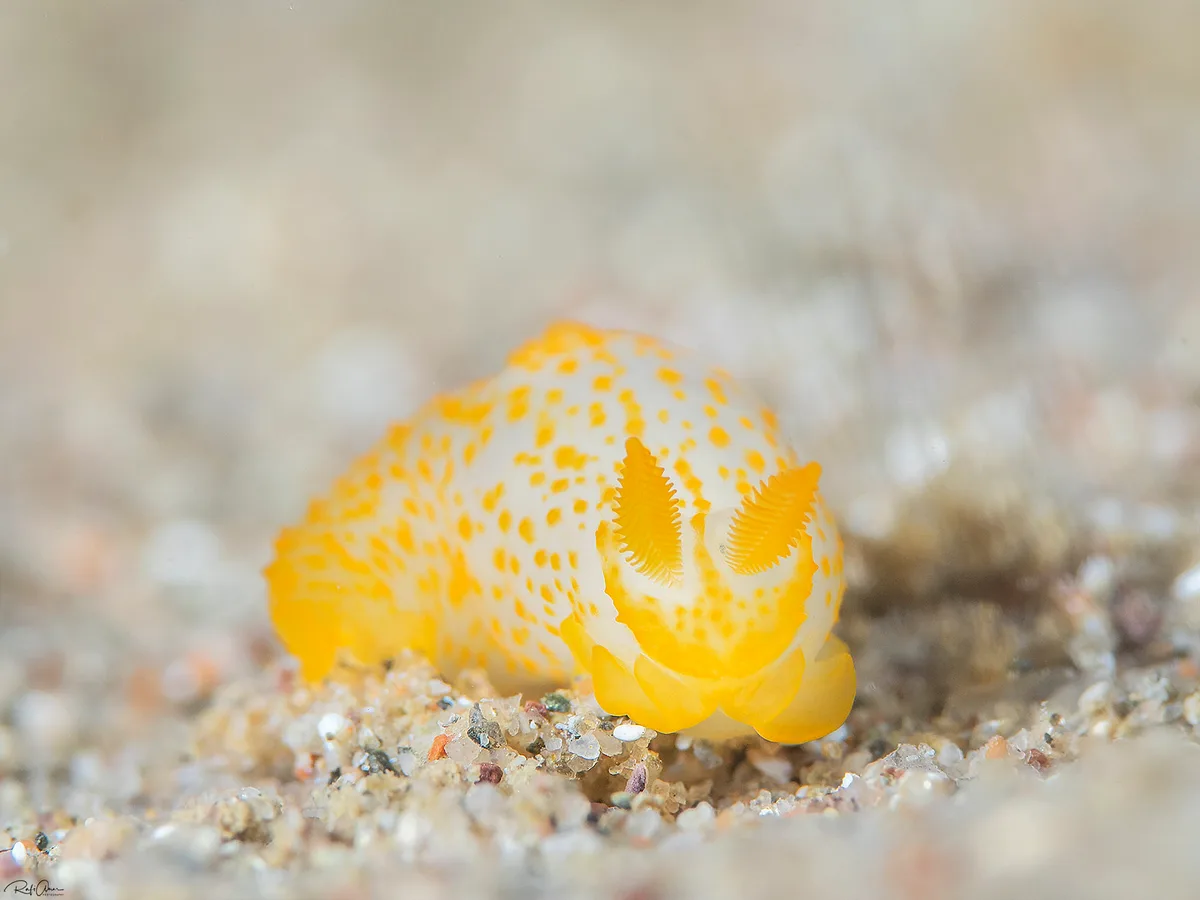
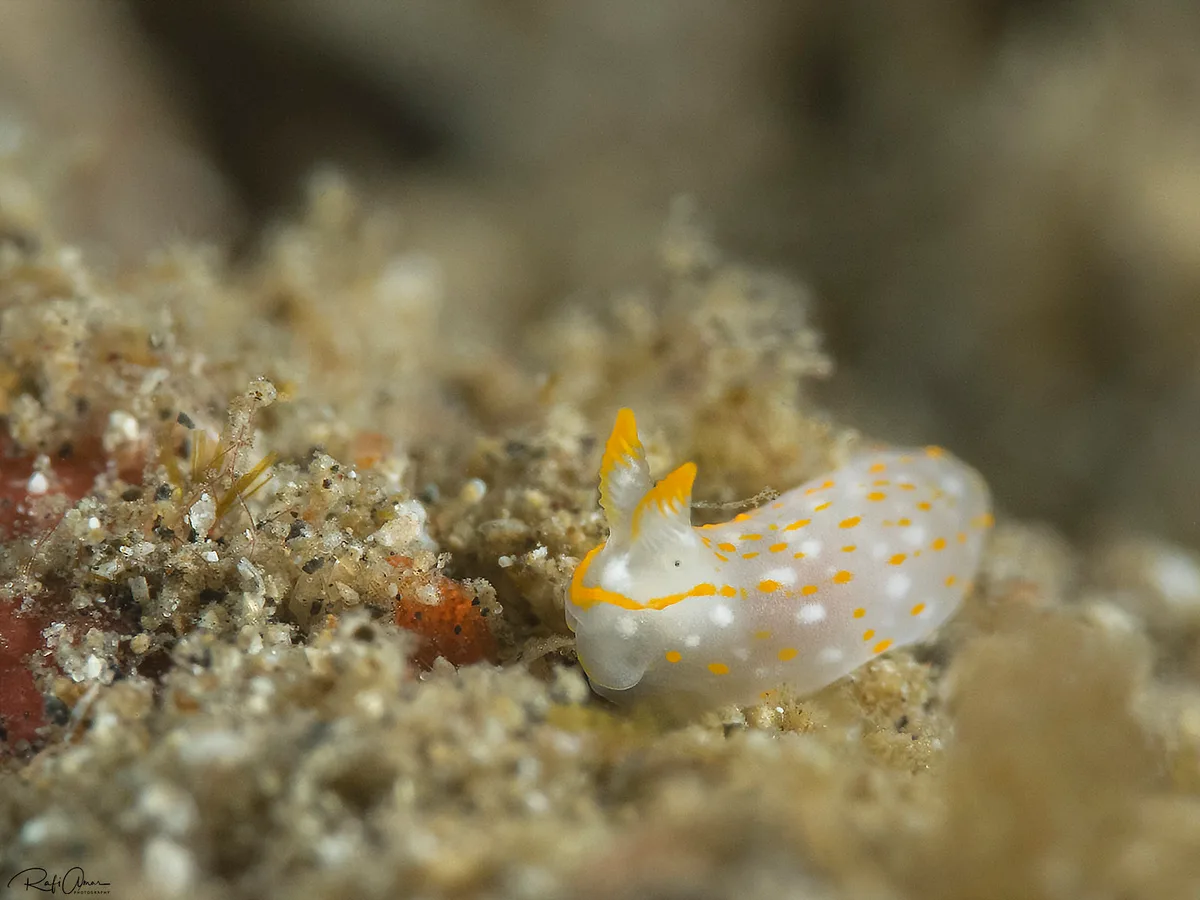
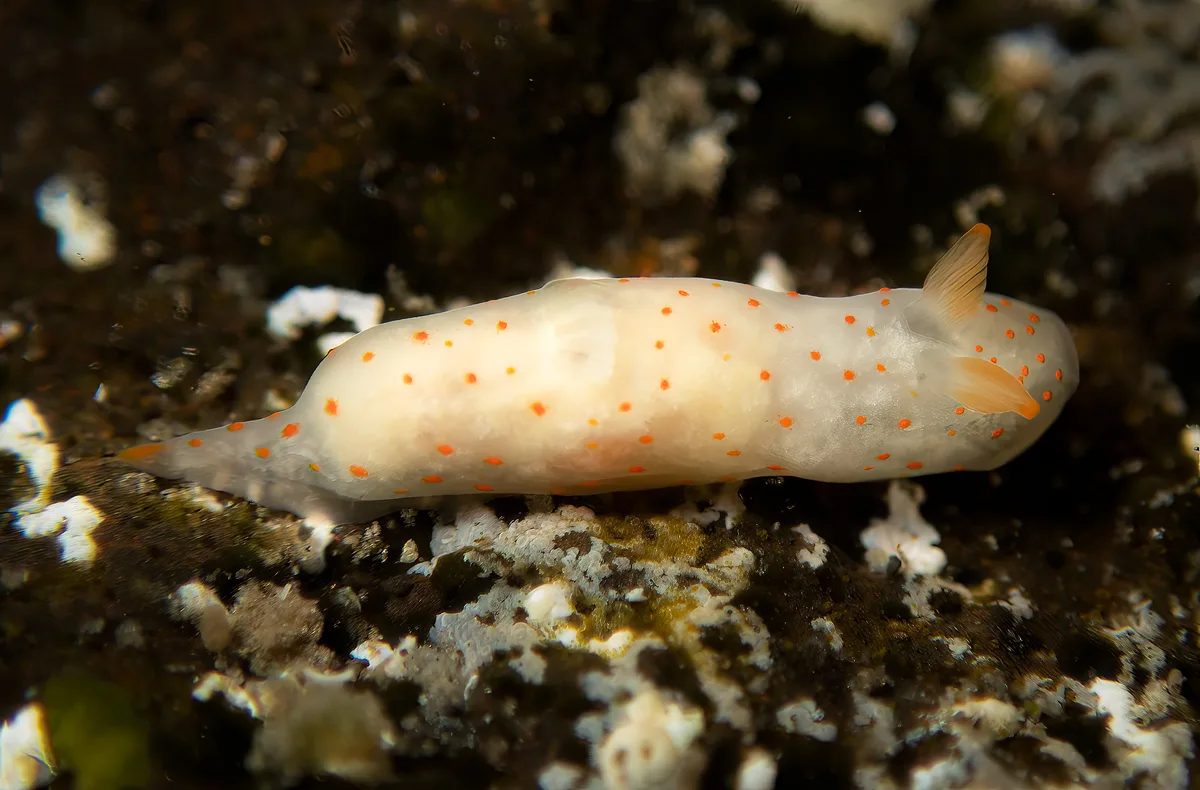
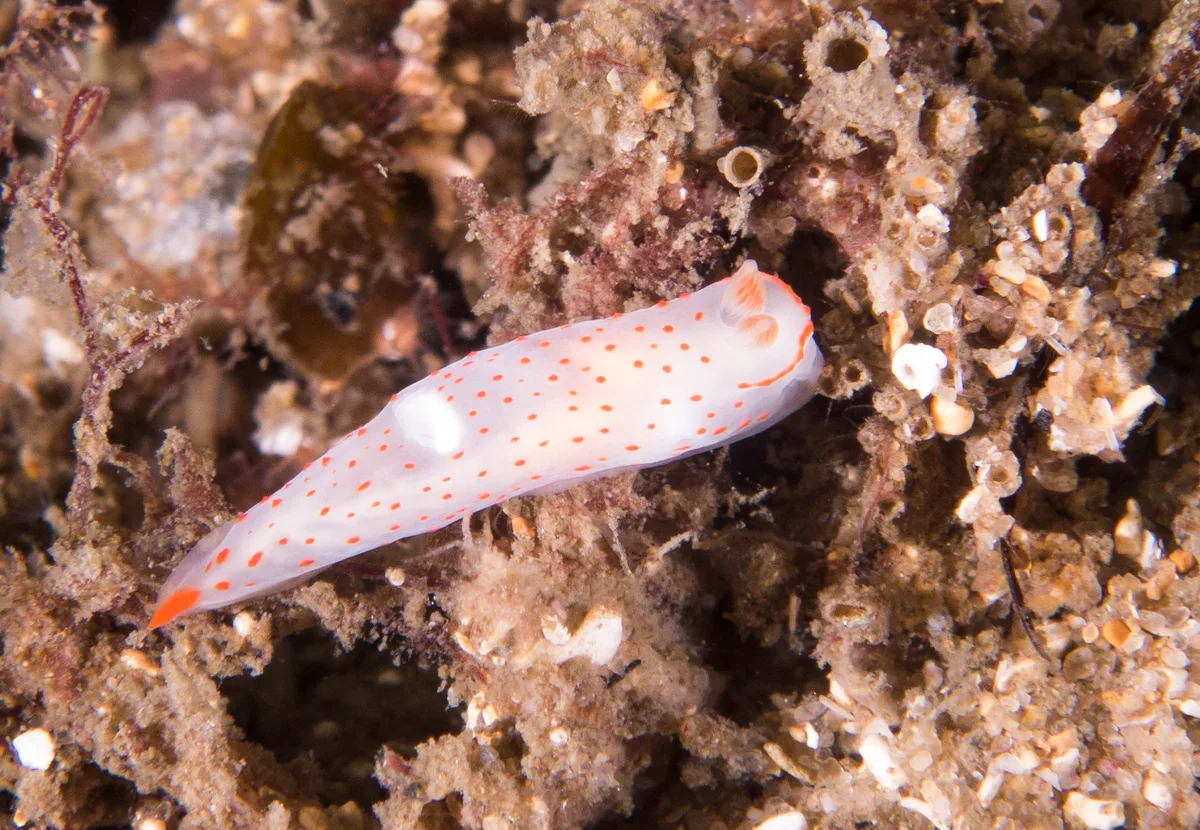
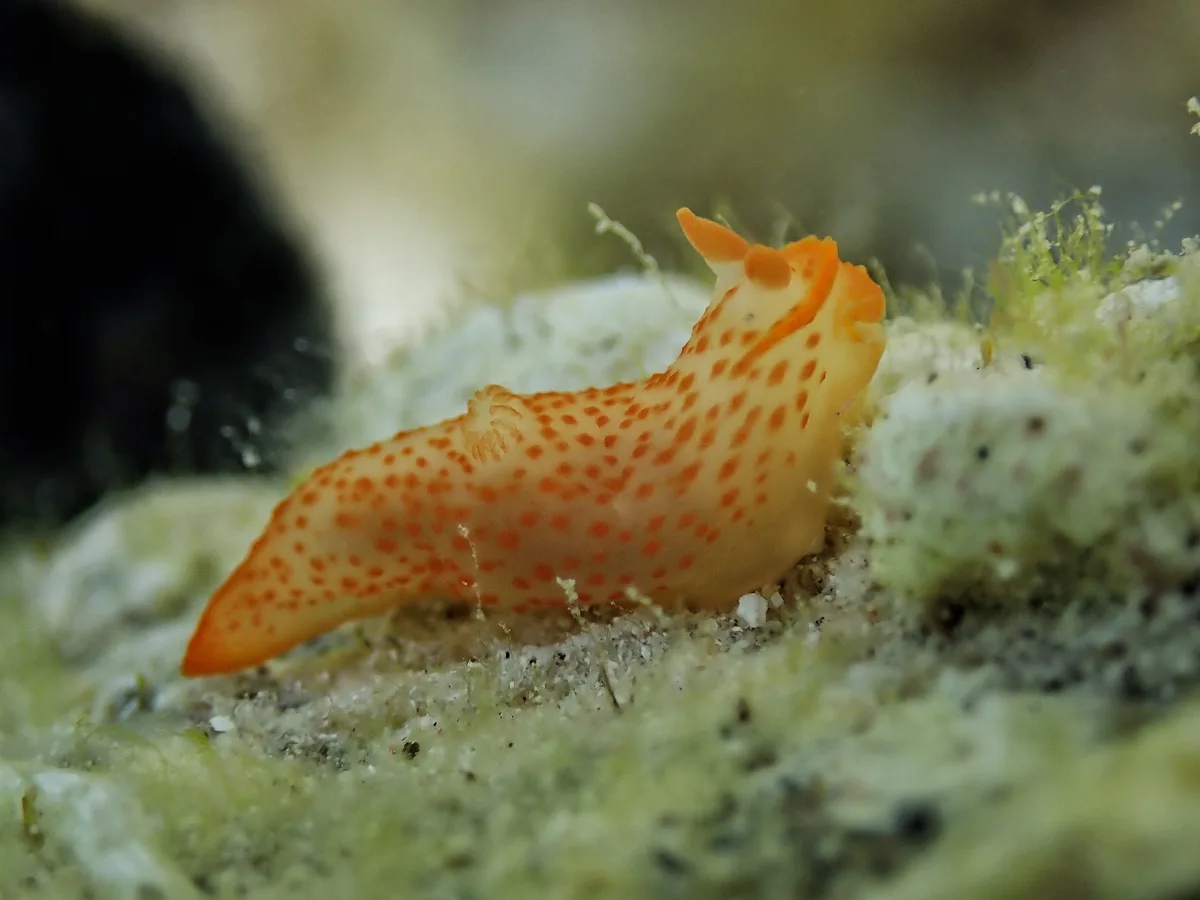
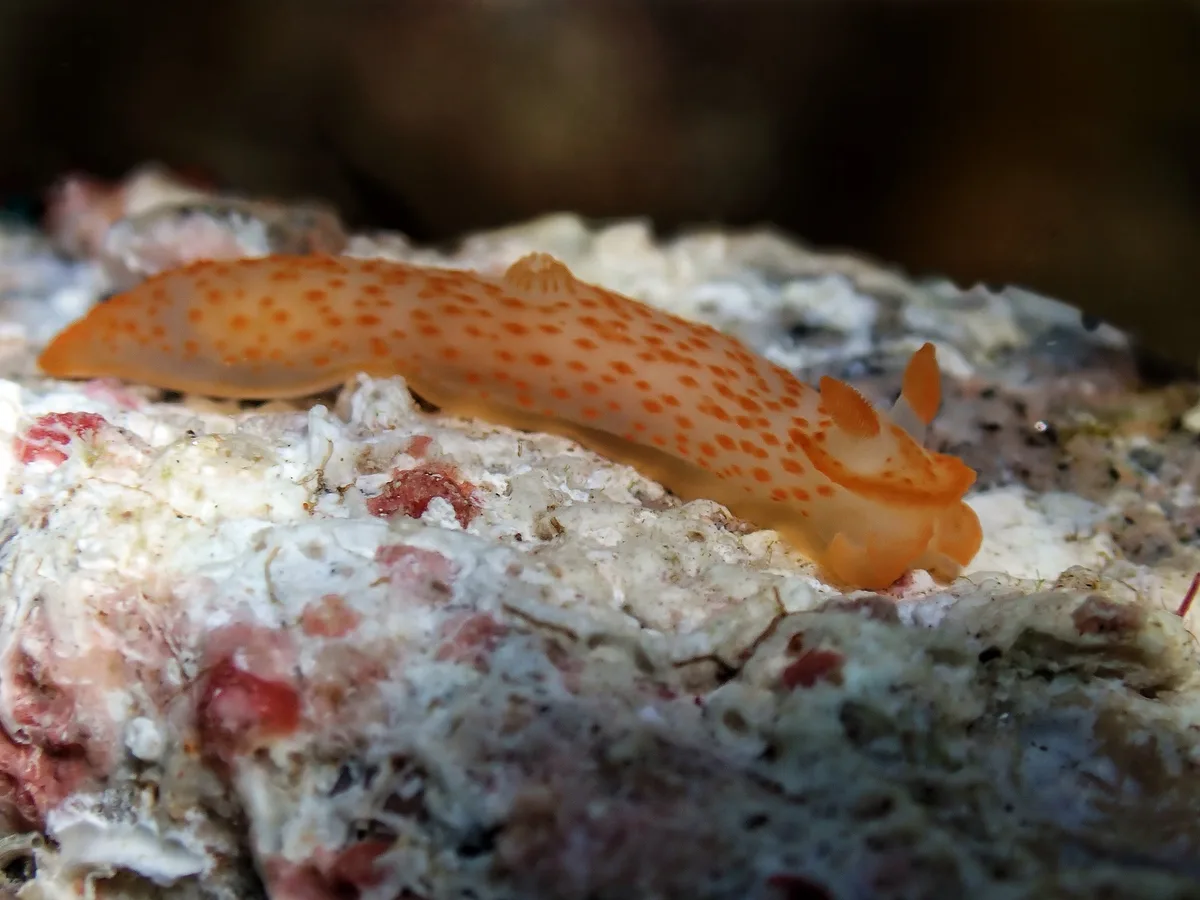
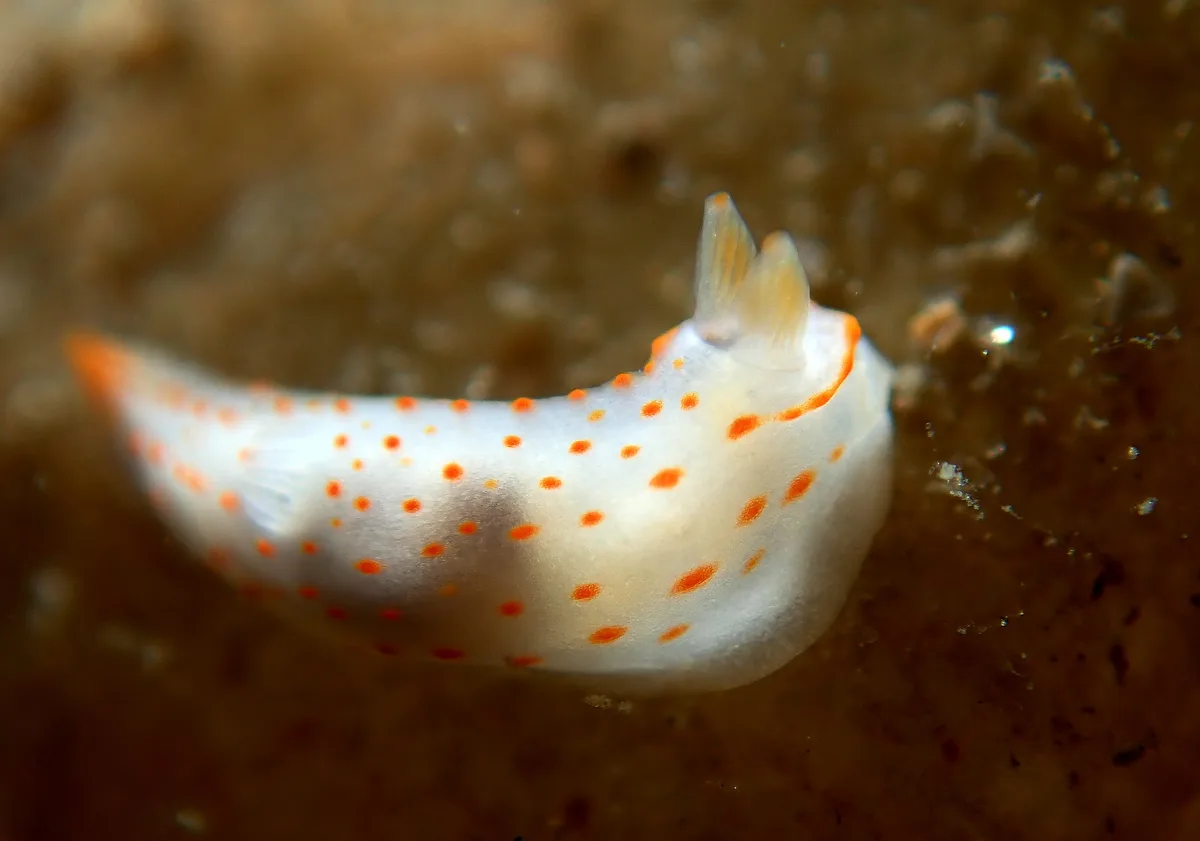
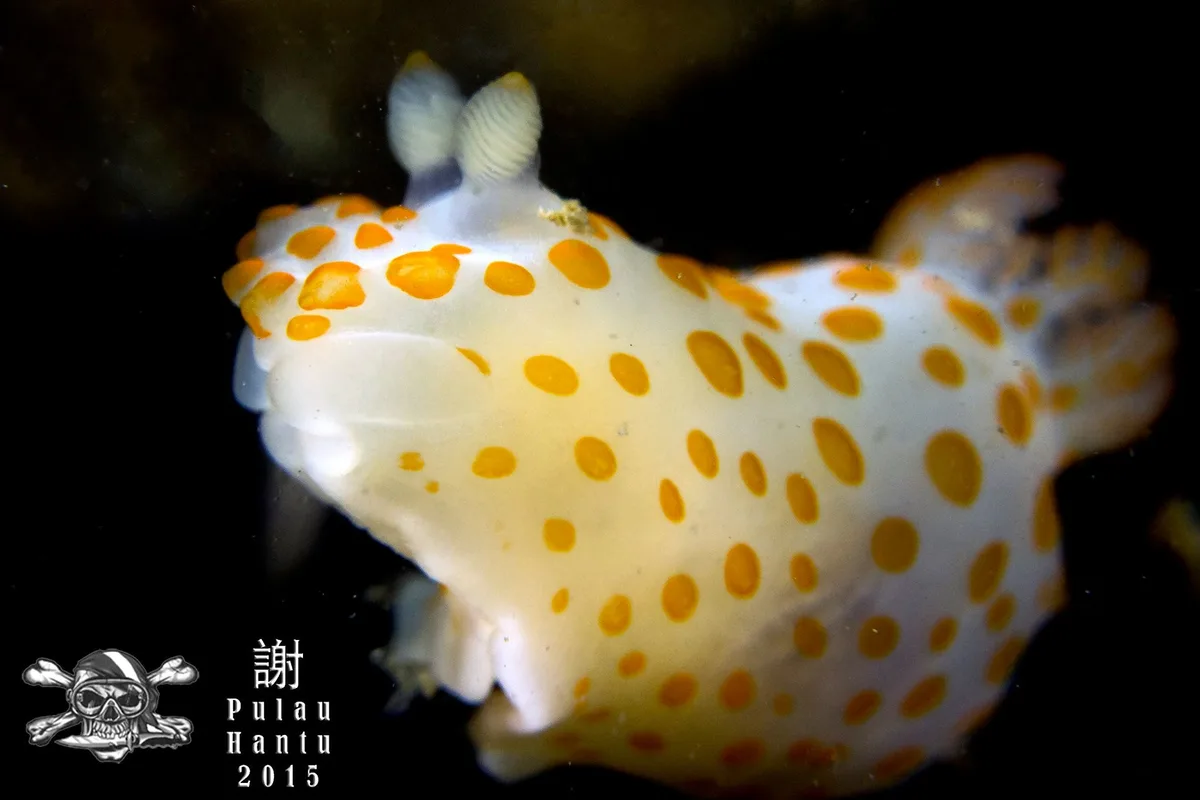
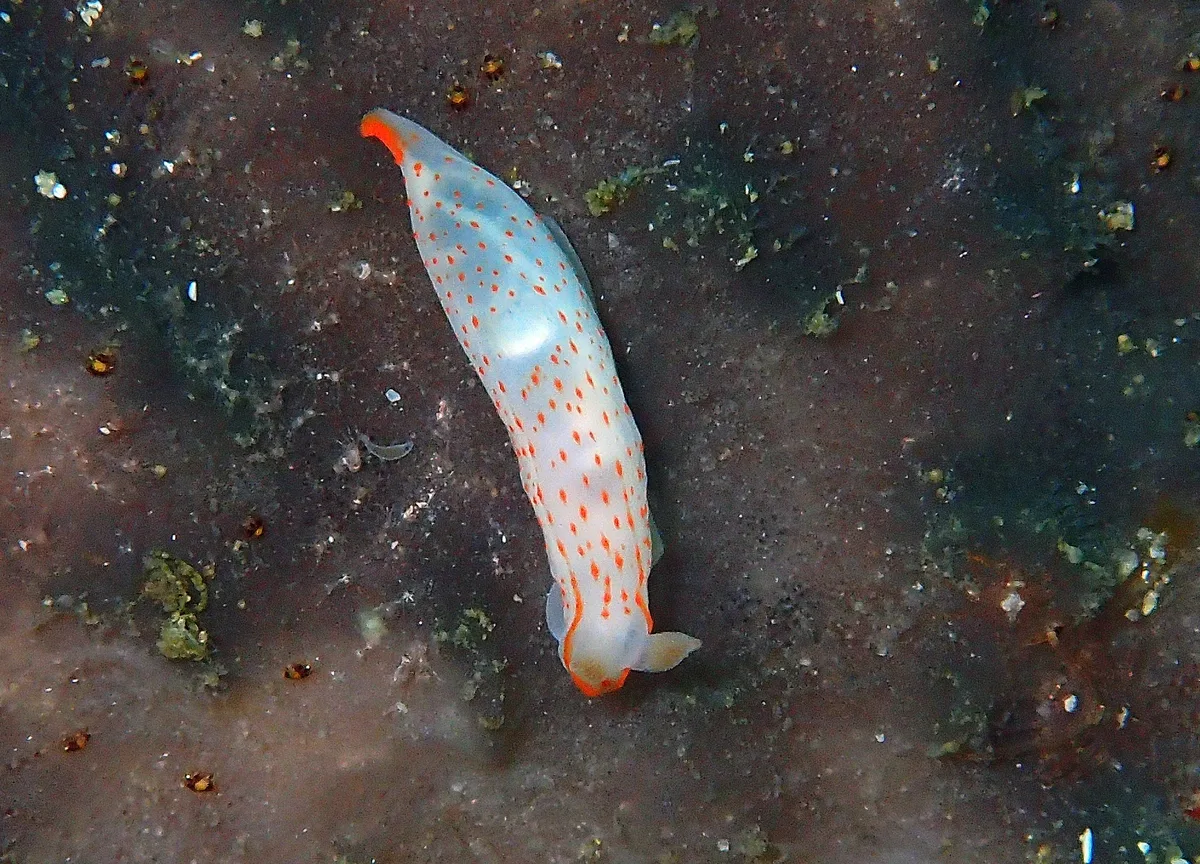
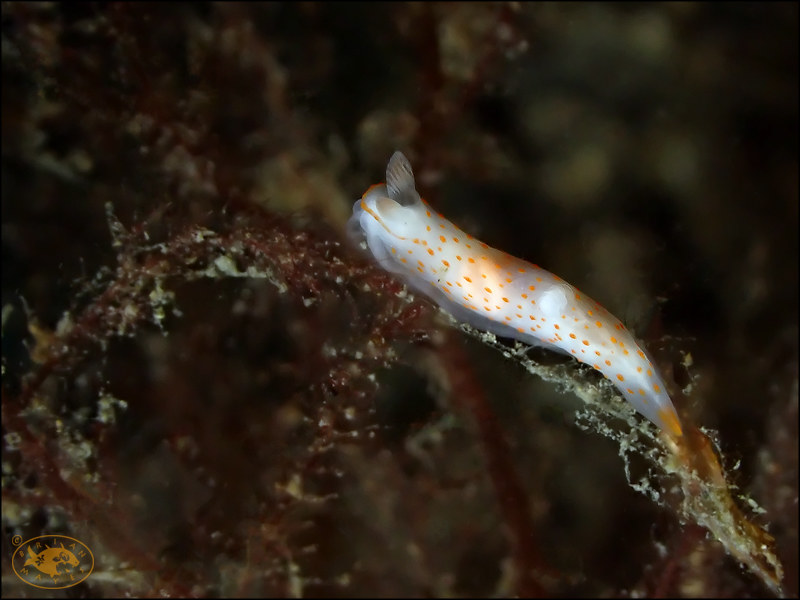
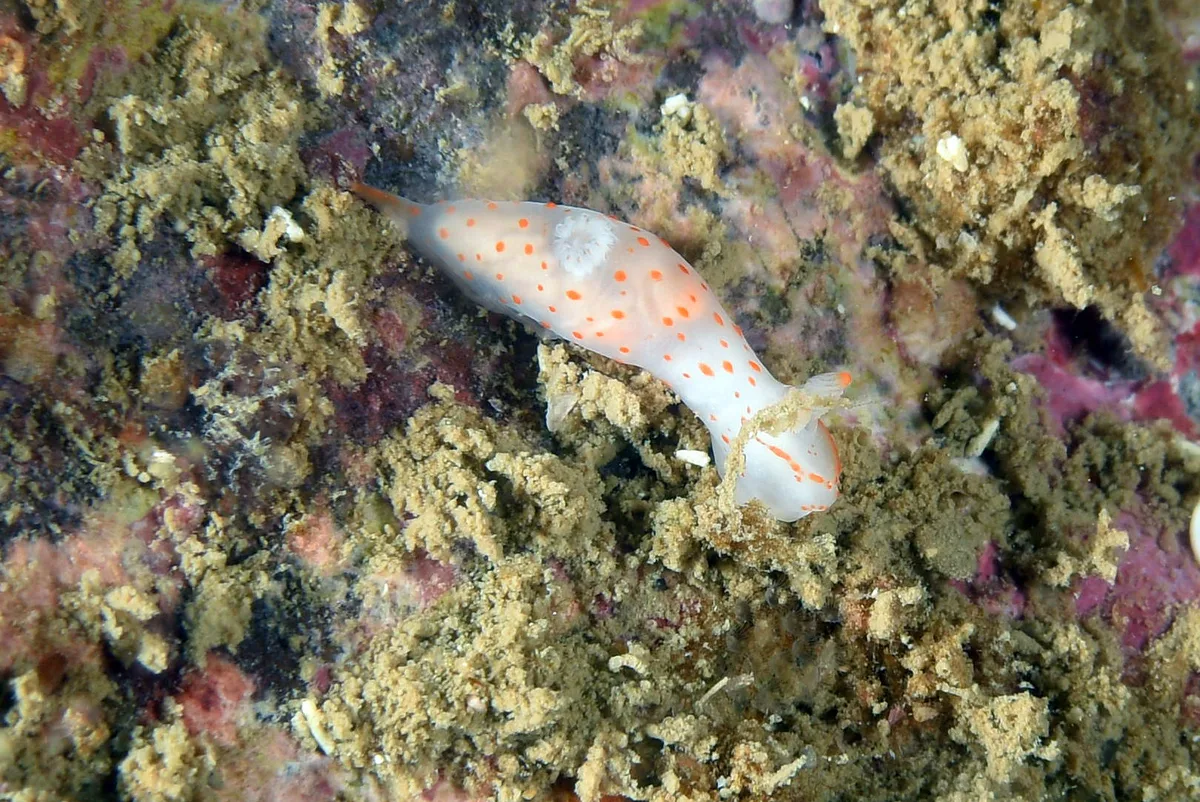
Look at where the gills are. On every ordinary dorid the plume sits at the back end, as far from the head as the body allows. On this animal the gills are set around the middle of the back, well forward of the rear, and once you have noticed that you cannot mistake the genus for anything else.
The rest of the build is about speed. There is no mantle skirt overhanging the foot, so the sides are bare and the outline is a smooth torpedo rather than a frill. That matters because this genus does not graze. It hunts, and what it hunts is other sea slugs, which means catching something that is also trying to leave.
Five centimeters (2 in) of white animal studded with small orange pustules, moving over rubble and weed in daylight, is therefore not a peaceful sight for anything soft in its path.
There is a caveat on the name that the regional book states outright: this is a species complex. What is currently filed under Gymnodoris alba is more than one animal, separable on details nobody has finished sorting, and the name will eventually be split. A white Gymnodoris with orange spots photographed here and another photographed in the 🇵🇭 Philippines may well turn out to be different species with the same label. Worth knowing before treating a photograph as a firm identification.
- gills set around the middle of the back, not at the rear where a dorid keeps them
- white body studded with small orange pustules
- no mantle skirt: the sides of the foot show along the whole animal
- five centimeters, and faster than anything it is chasing