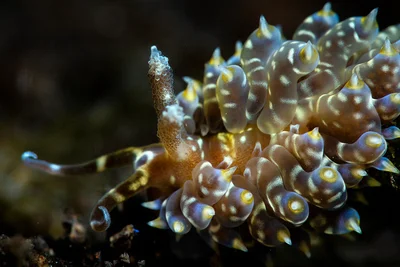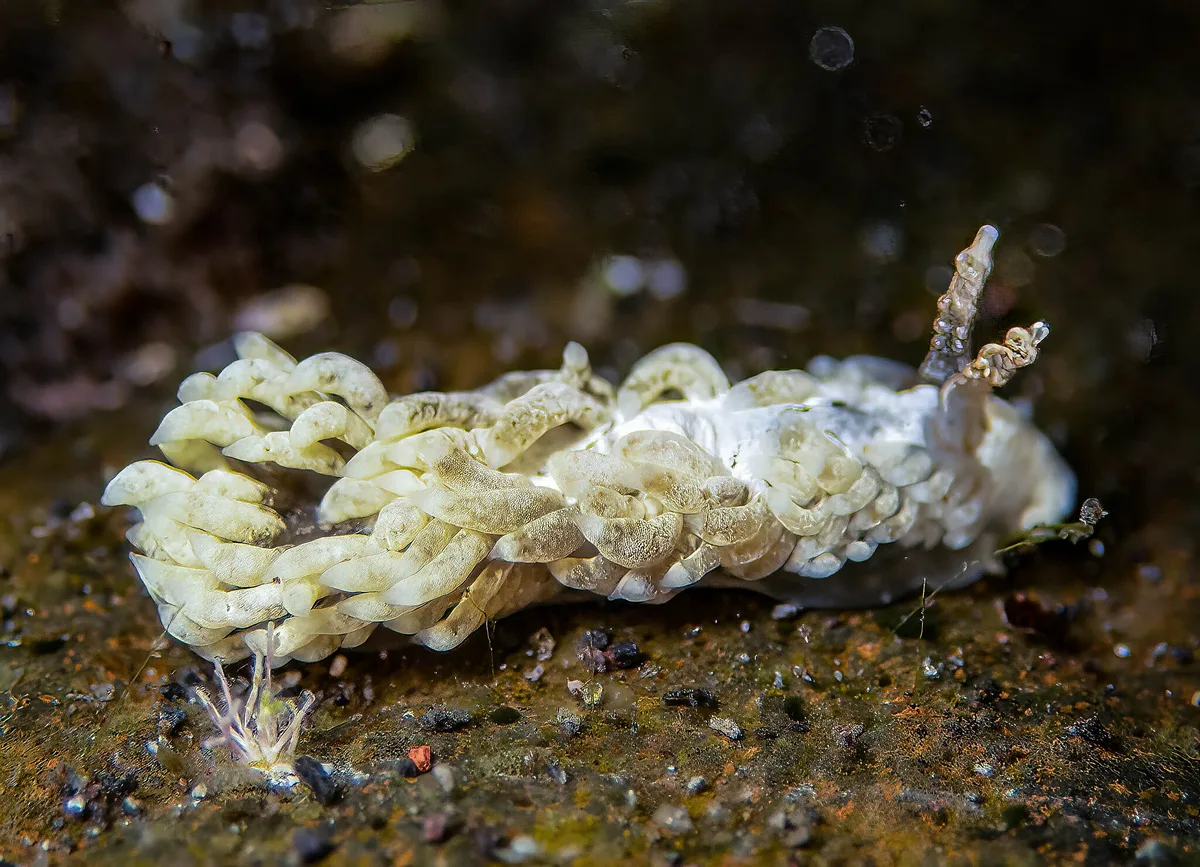
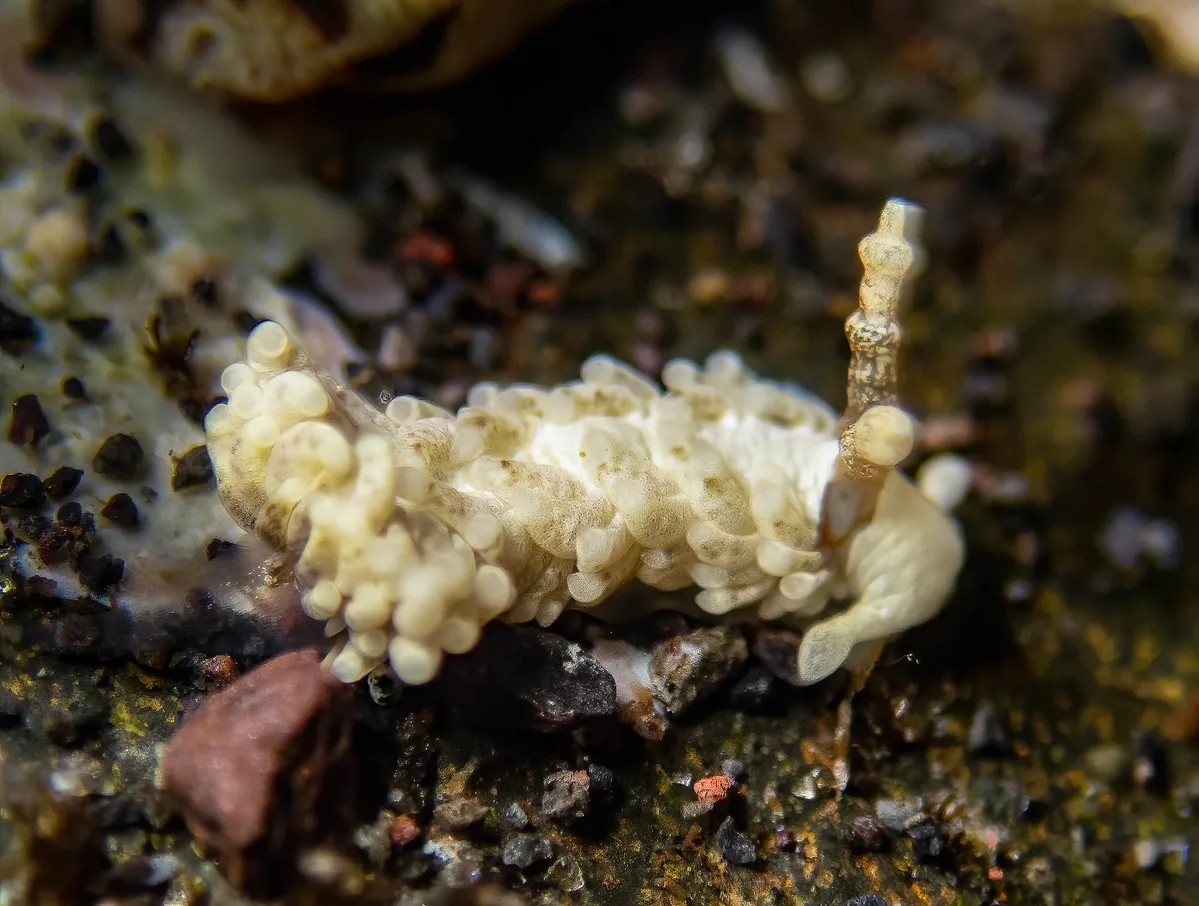
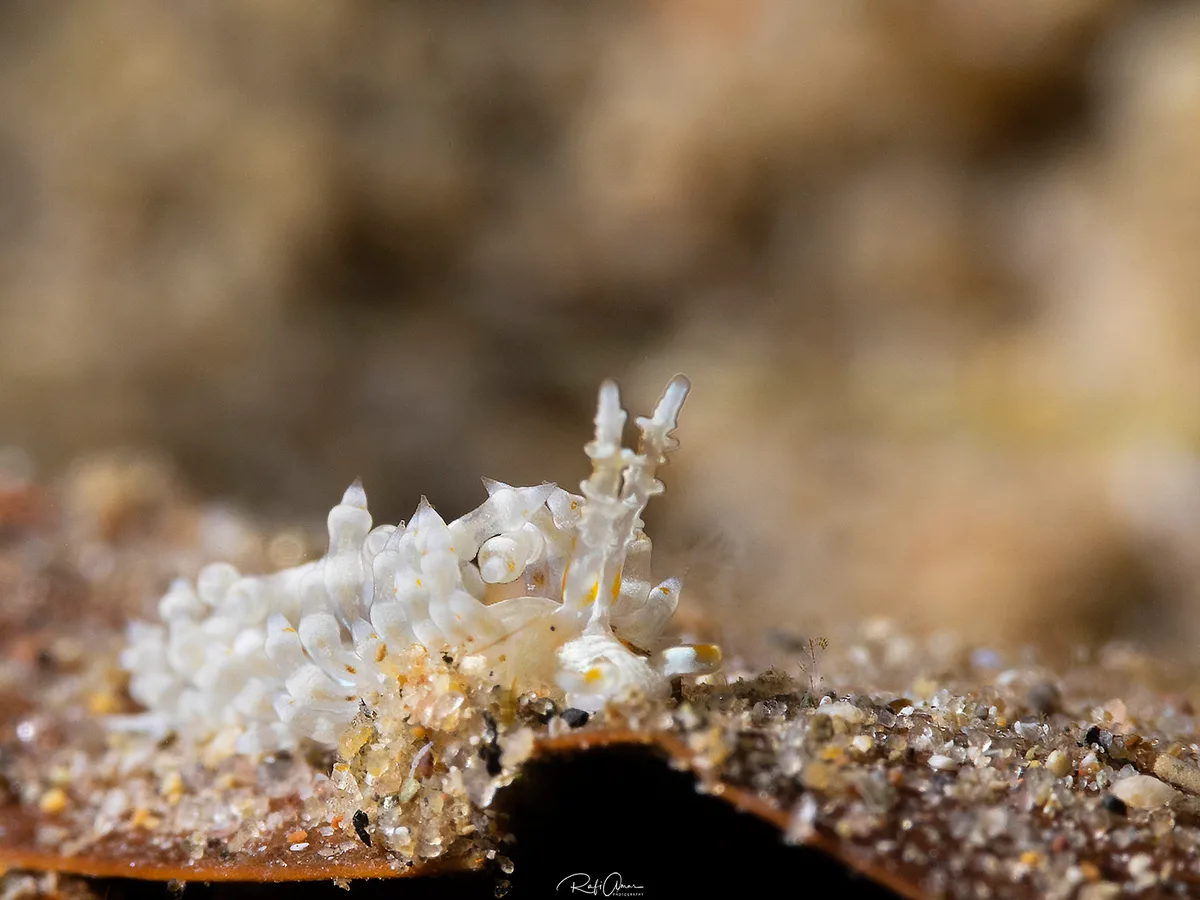
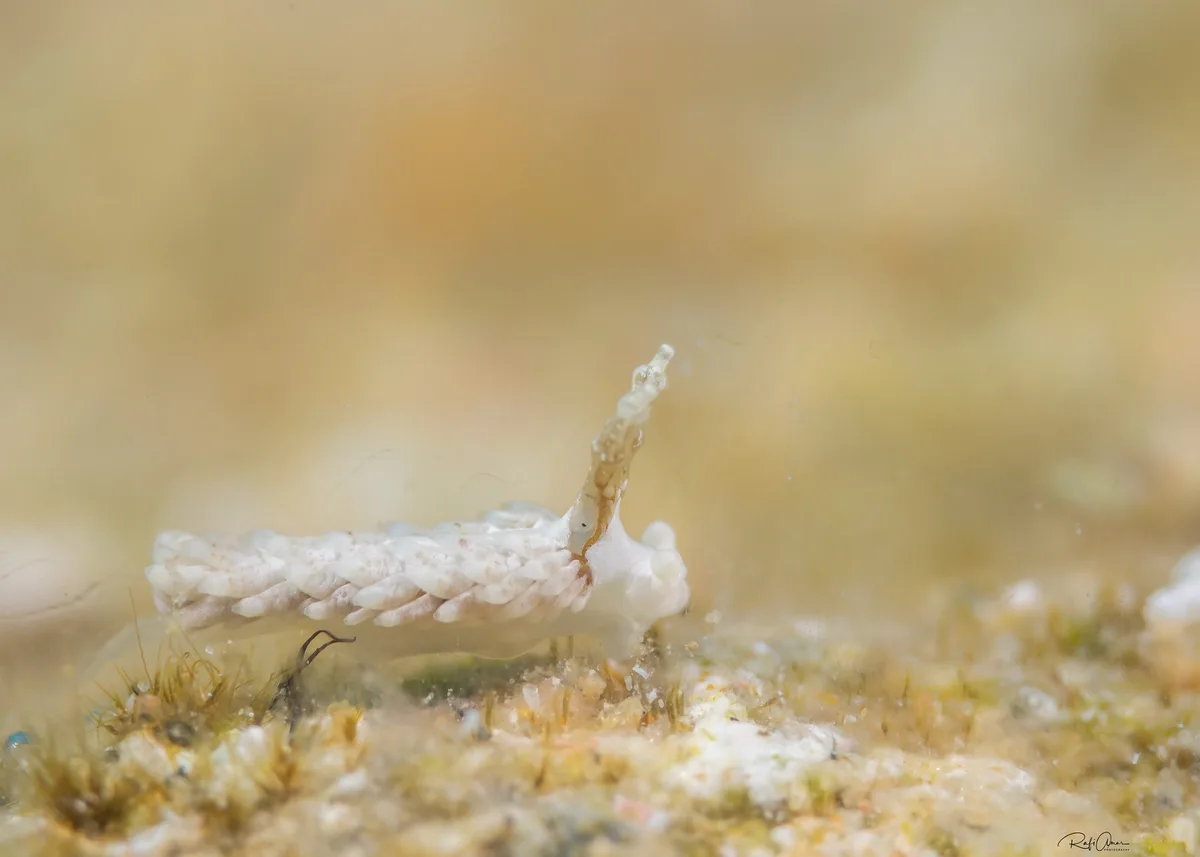
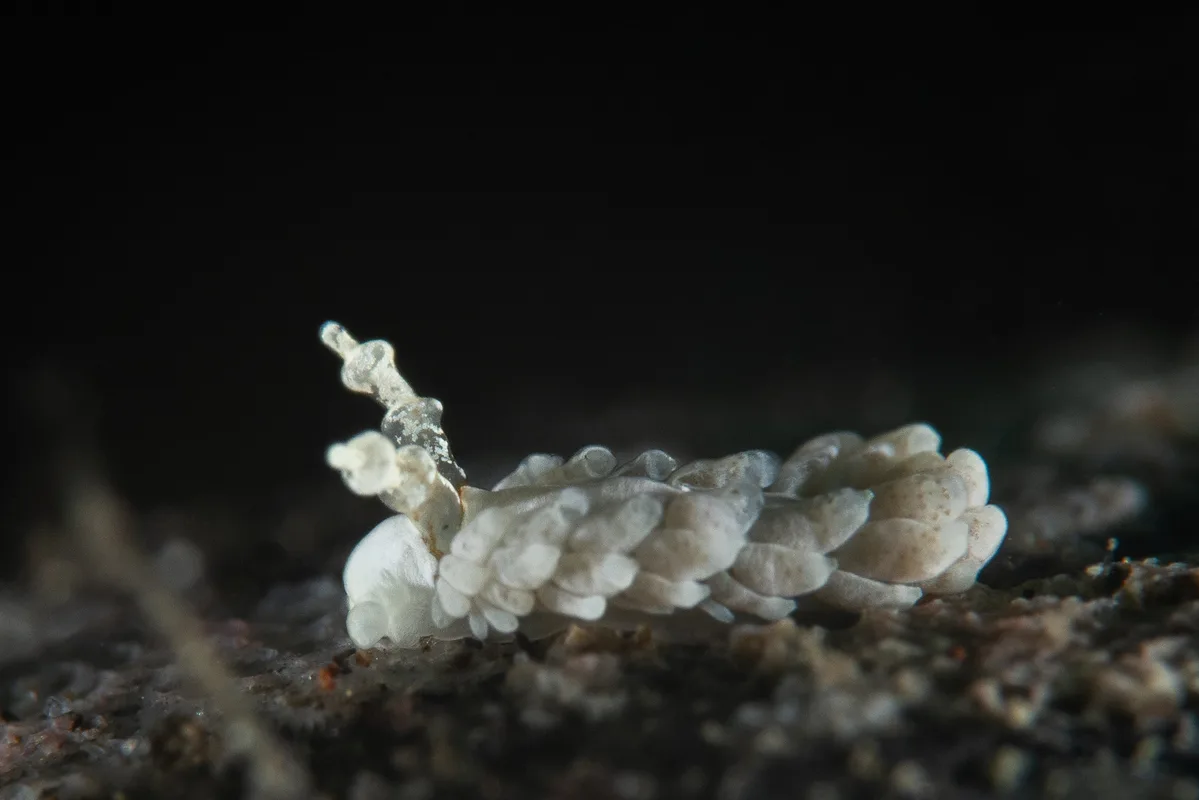
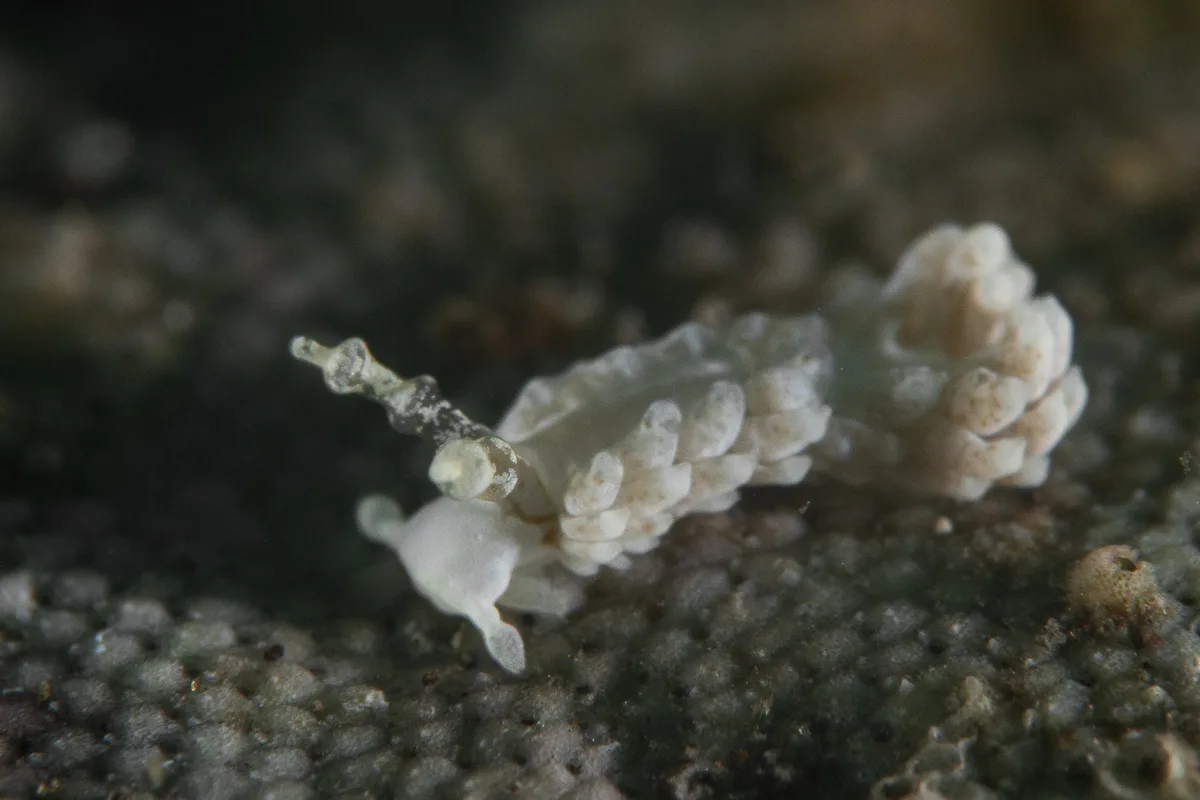
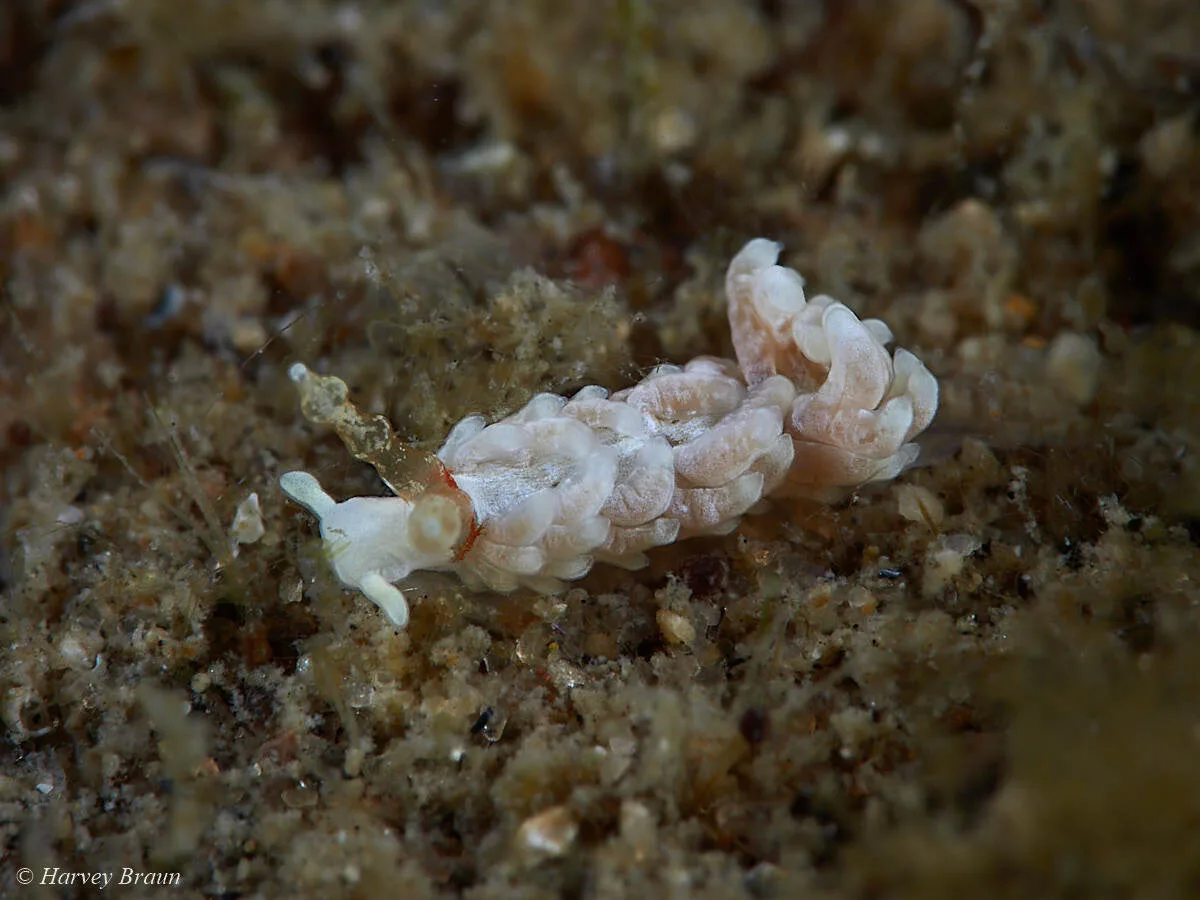
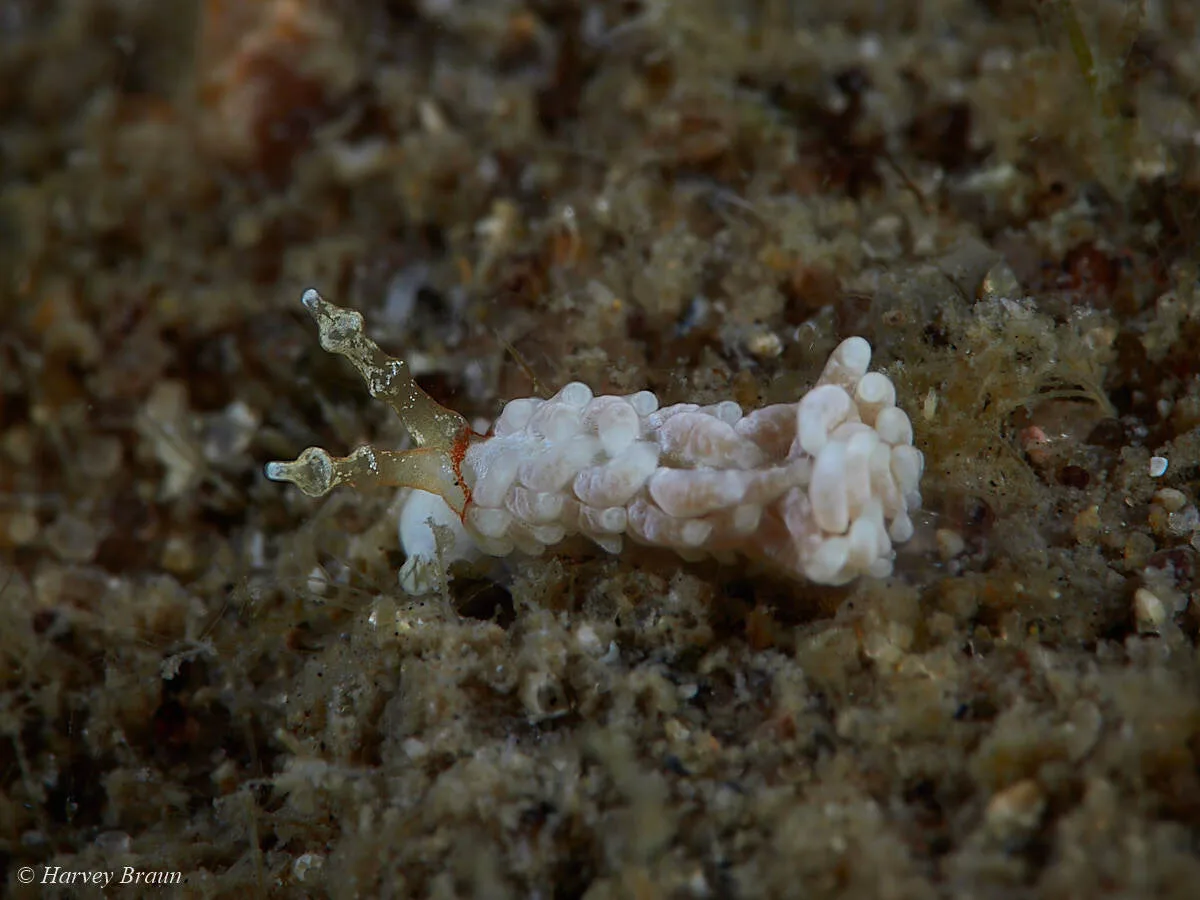
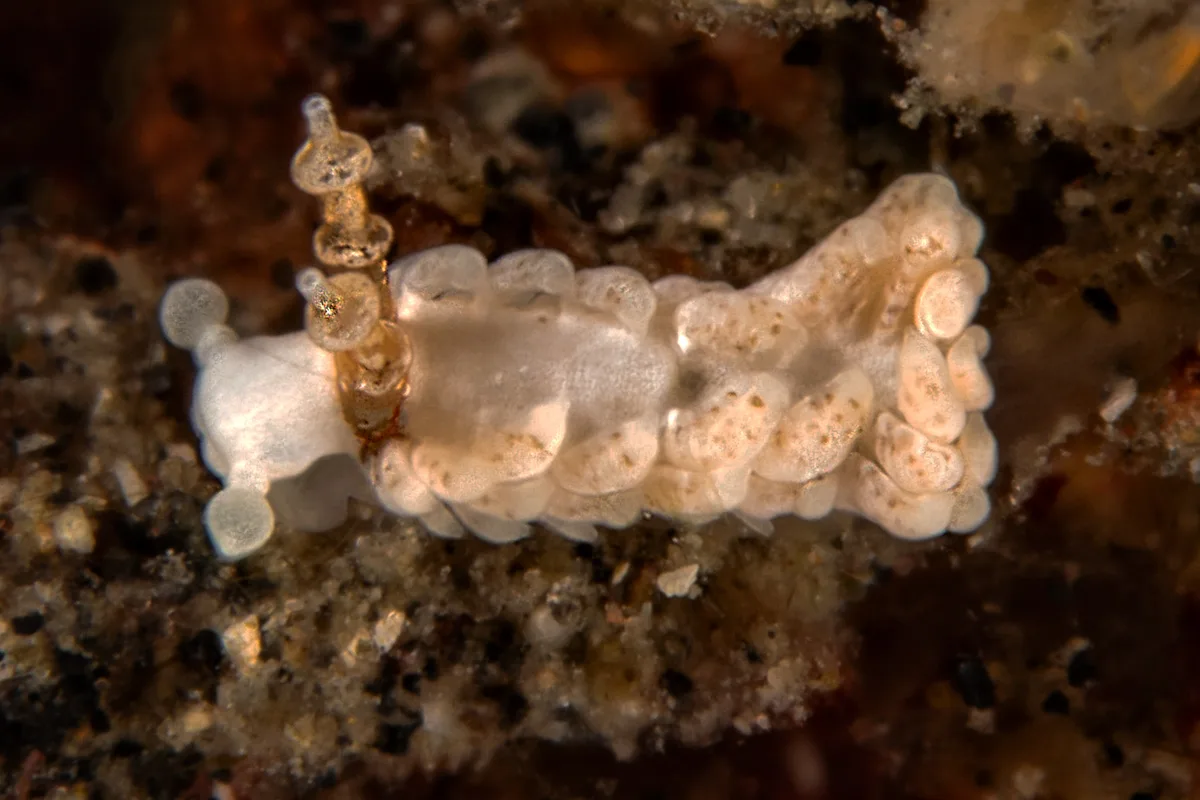
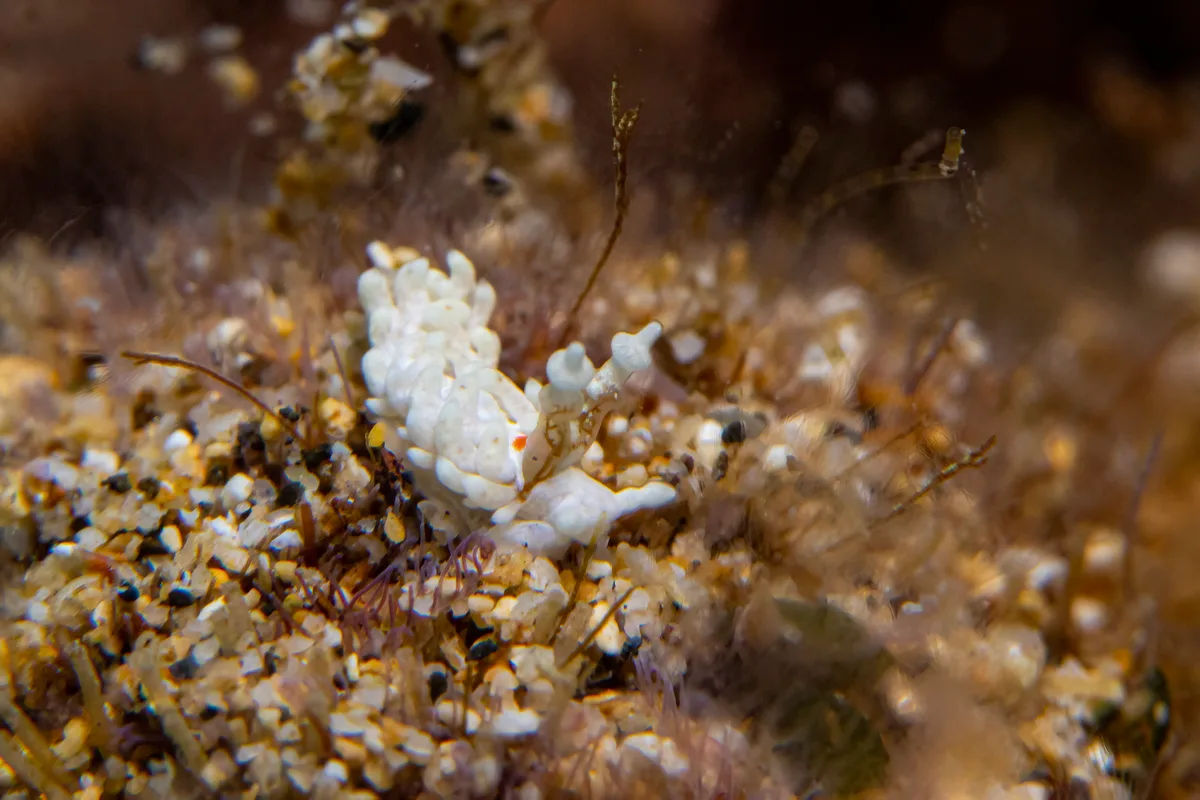
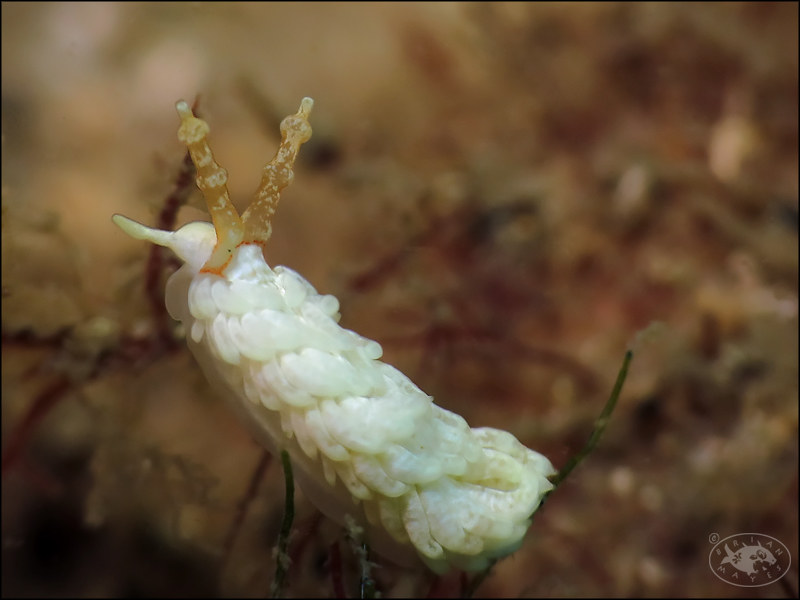
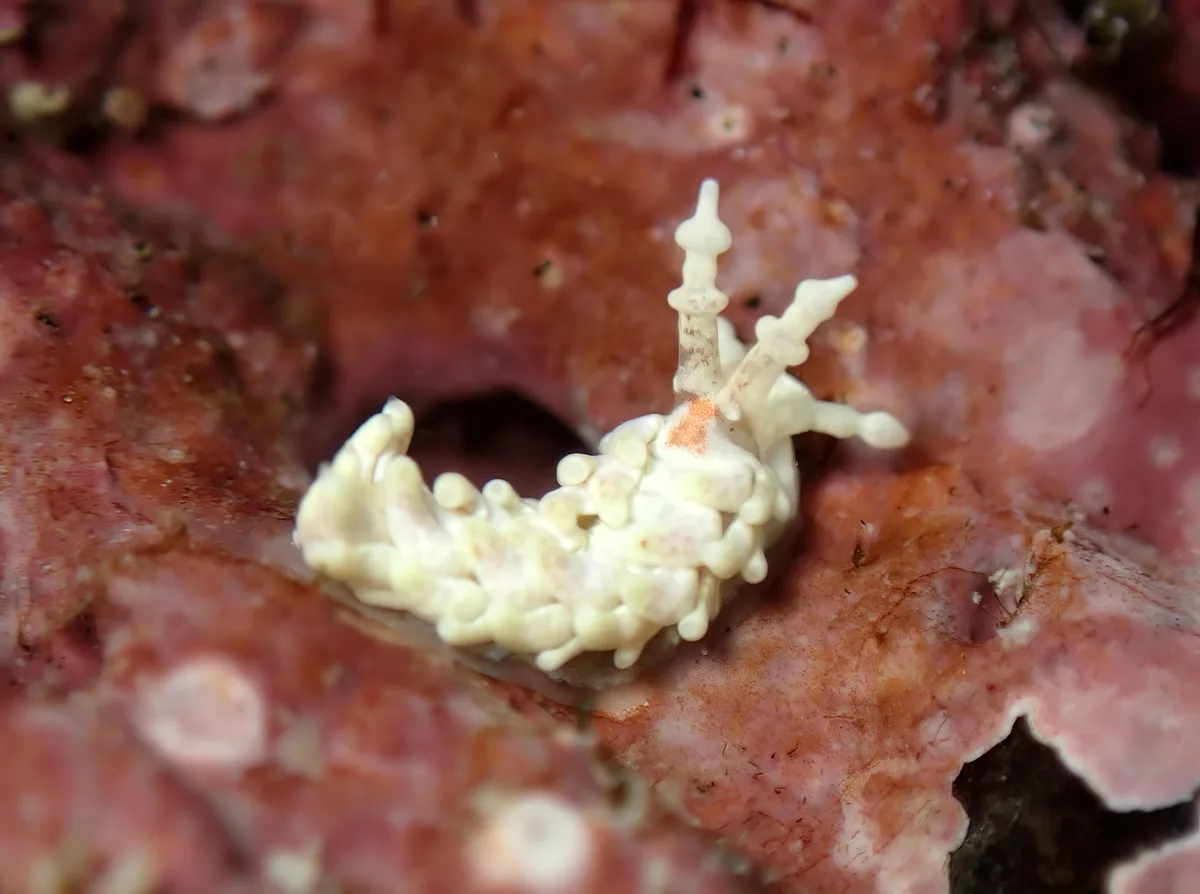
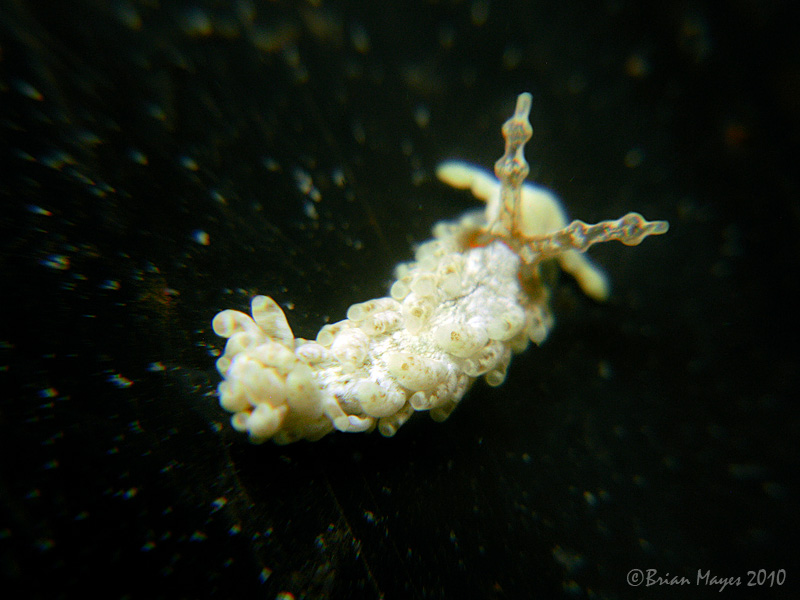
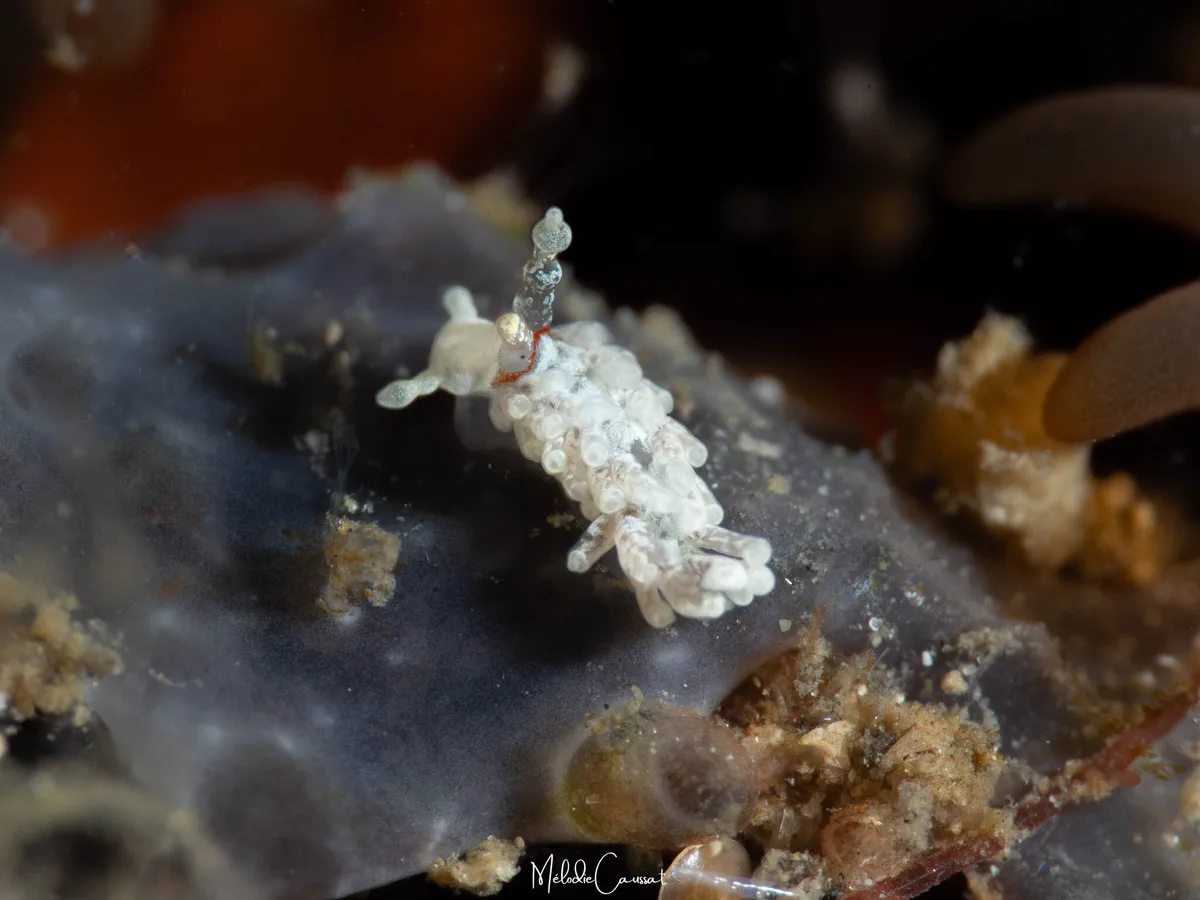
The horns name the genus. Bulbaeolidia means bulb-bearing aeolid, and the rhinophores on these animals are swollen into a series of rounded bulges along their length rather than running smooth or being folded into plates. On this species there is a red stripe at the base of each one, which on a white animal is the mark that carries at a distance.
What it does is climb onto sea anemones and eat them. An anemone is a column whose entire surface is loaded with capsules that fire on contact, and the aeolidiids are the branch of the family that took on that target rather than the smaller hydroids. They get away with it the way the rest of the group does: the capsules pass through the gut unfired and are stored live in sacs at the tips of the cerata, so the slug ends every meal better armed than it started.
What makes this one worth a second look is its range. It is circumtropical, recorded right around the warm belt of the planet, on an animal fifteen millimeters (0.6 in) long that crawls. Either the larvae stay in the plankton long enough to cross oceans, or what is currently called one species will turn out to be several. Both answers are common in this group and neither is settled here.
It has been photographed in the shallows at Dahab, which is a reasonable place to start: small anemones on sand and rubble, and then a very close look at each one.
- rhinophores swollen into a row of bulbs, which is what the genus is named for
- a red stripe at the base of each rhinophore
- white to pale, with the back covered in short cerata
- fifteen millimeters, on or beside a small anemone