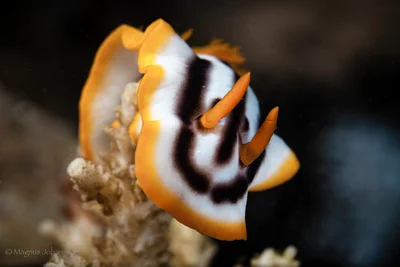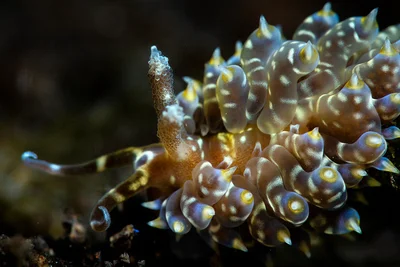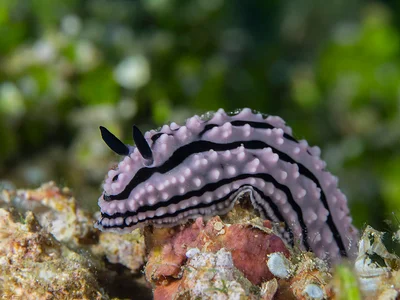
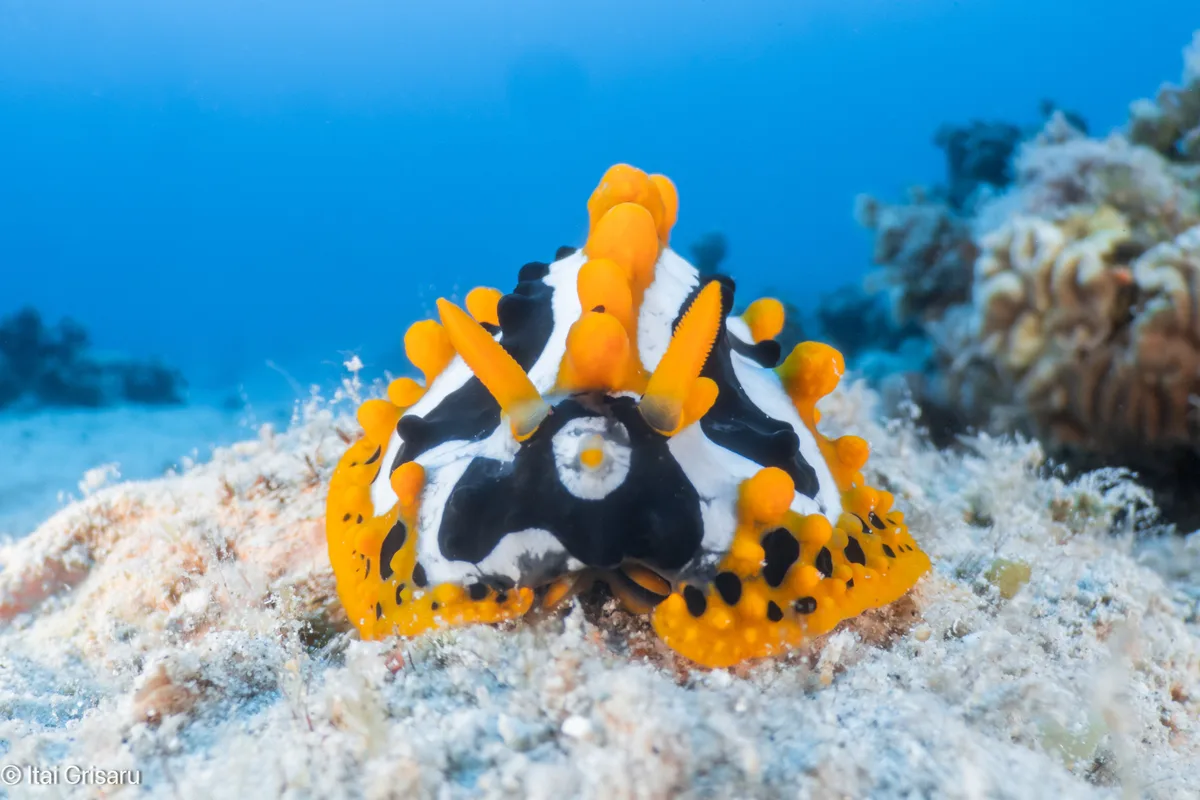
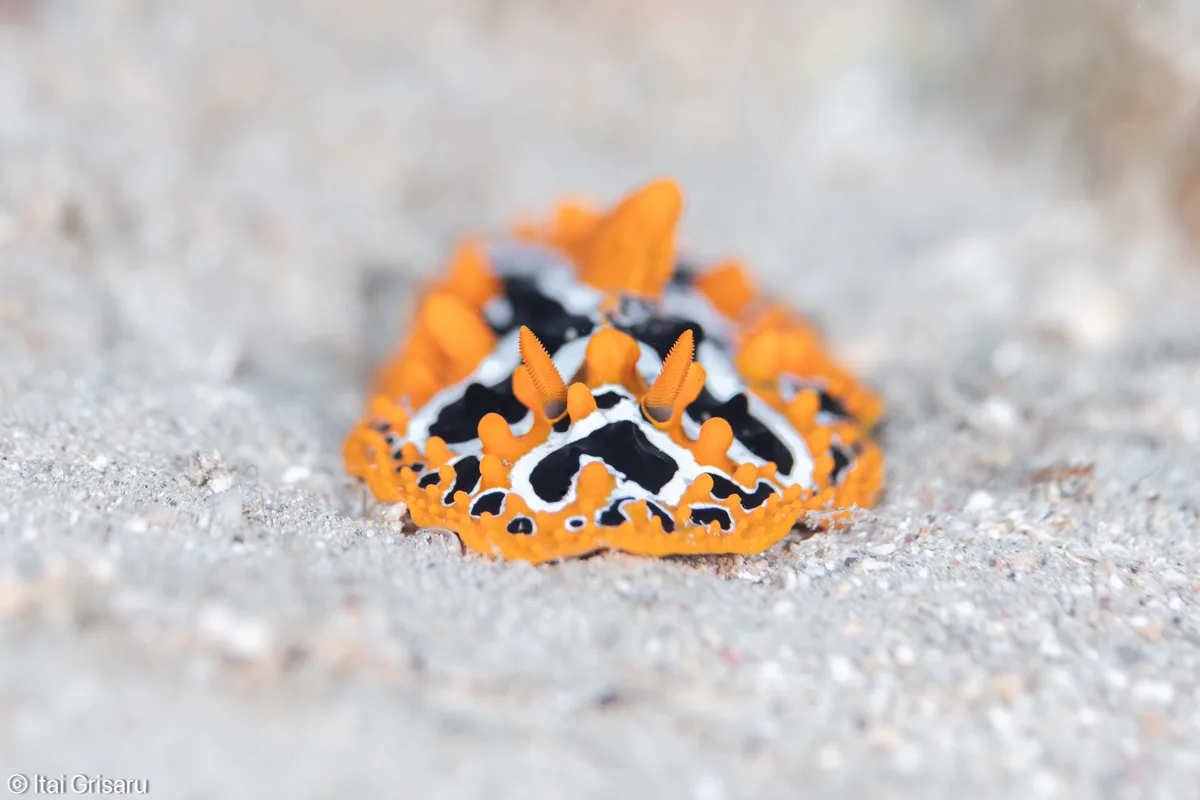
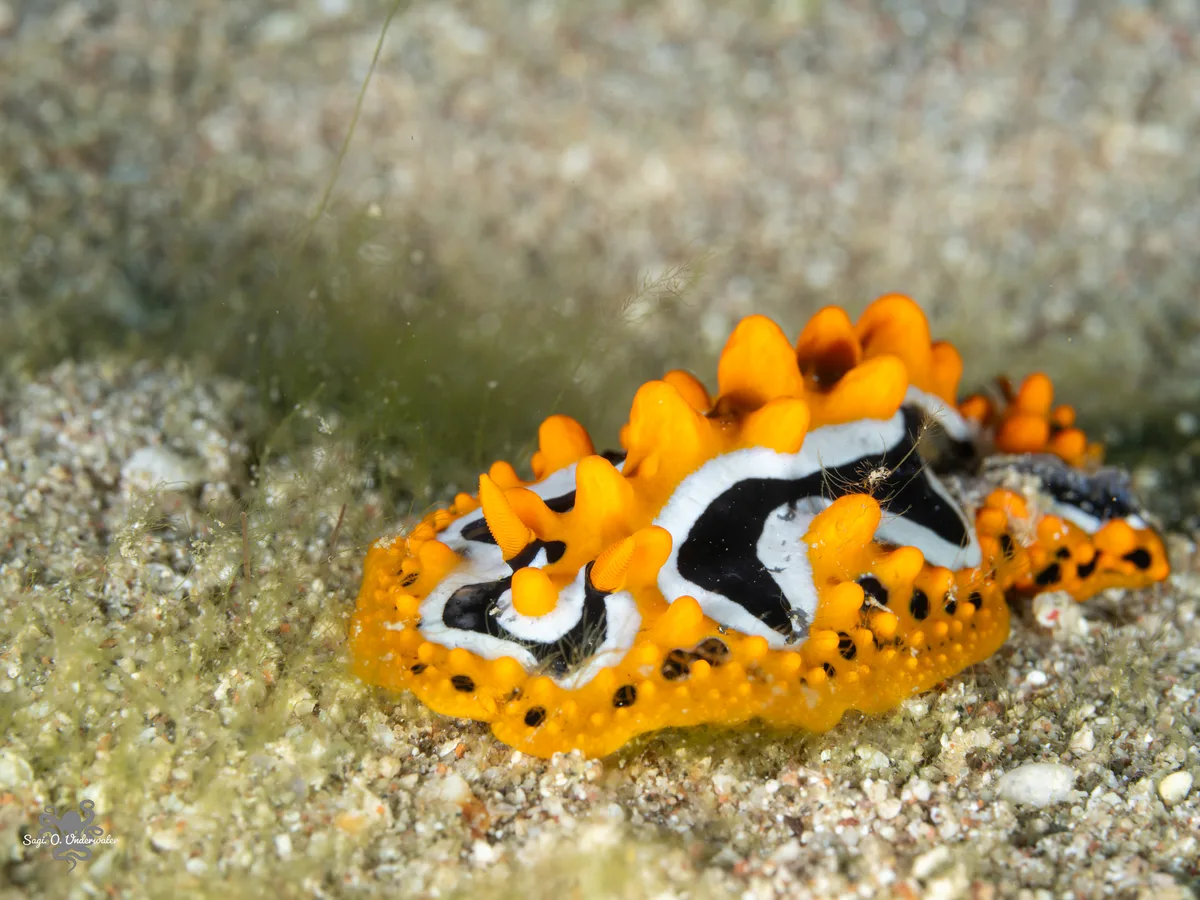
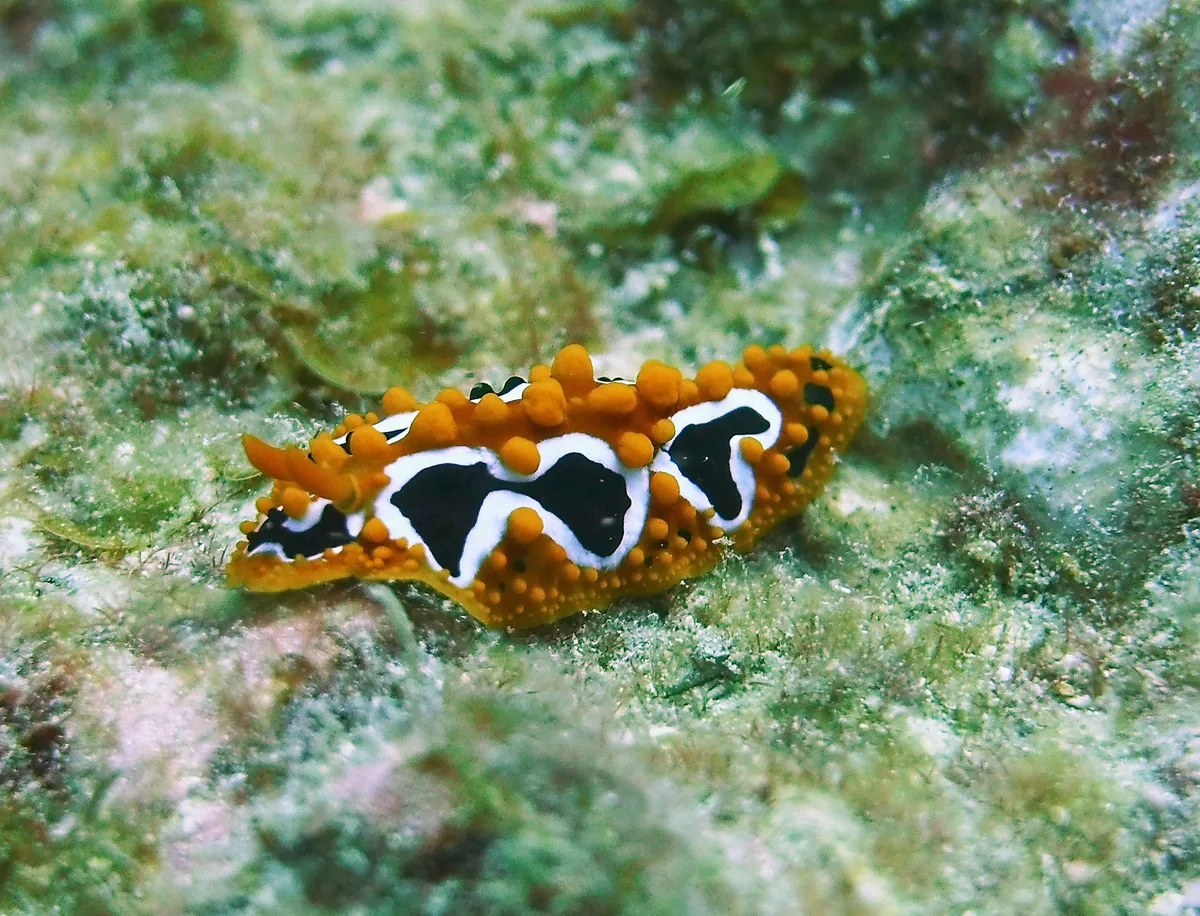
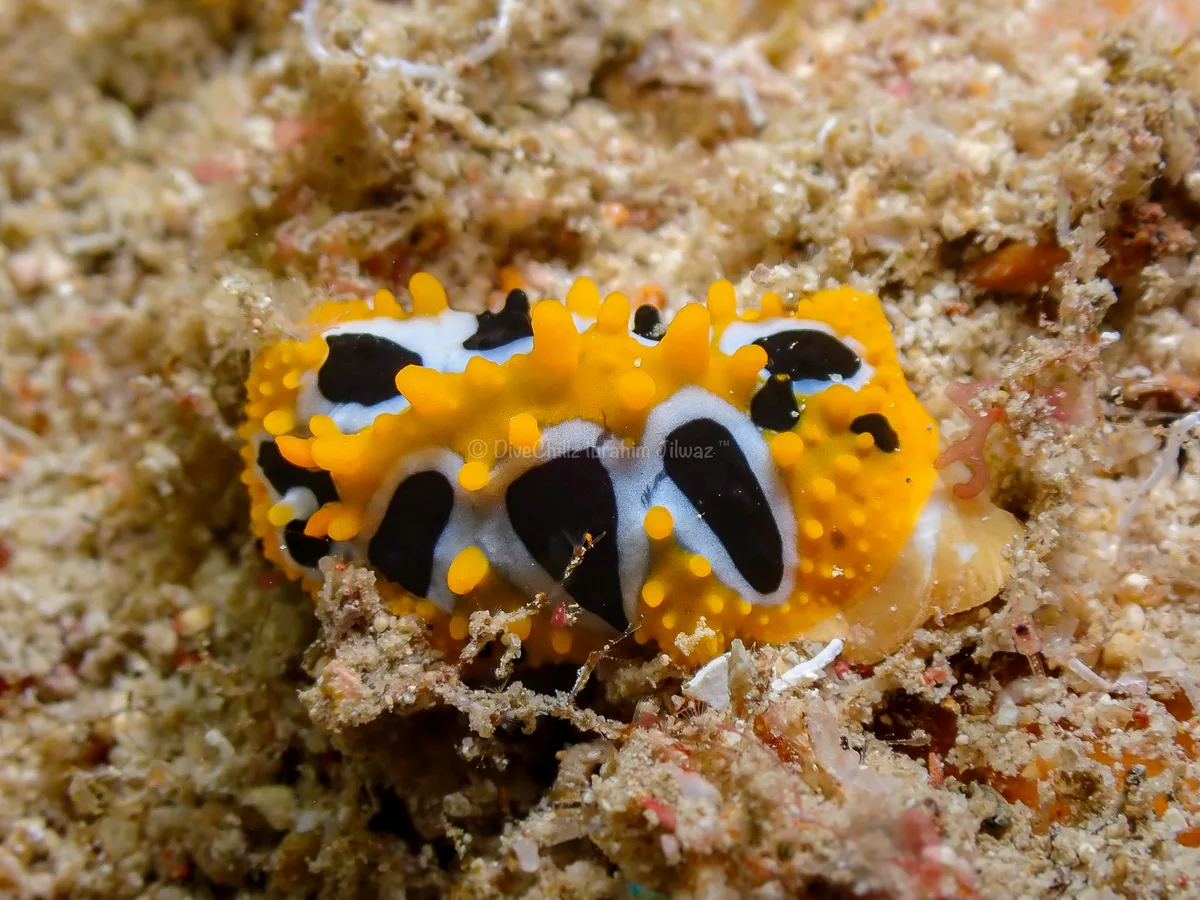
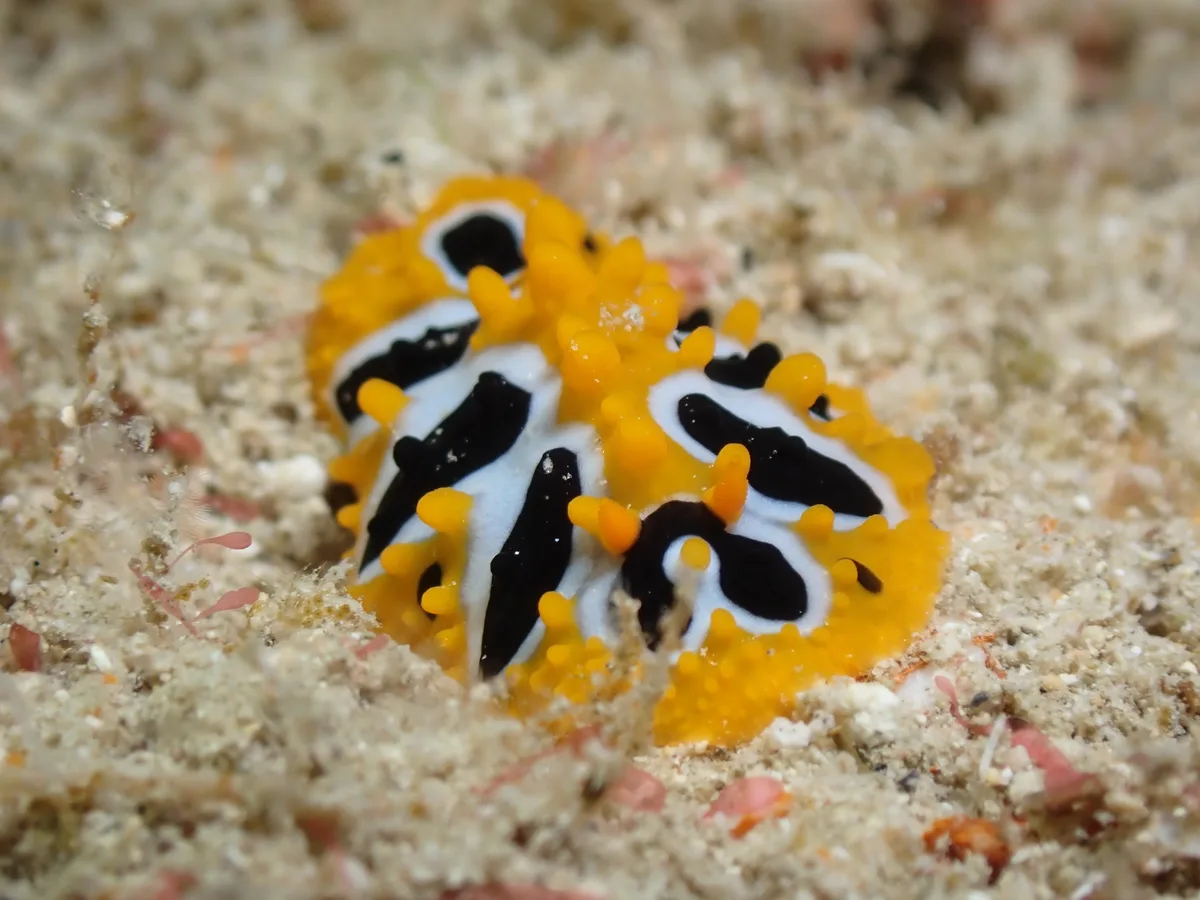
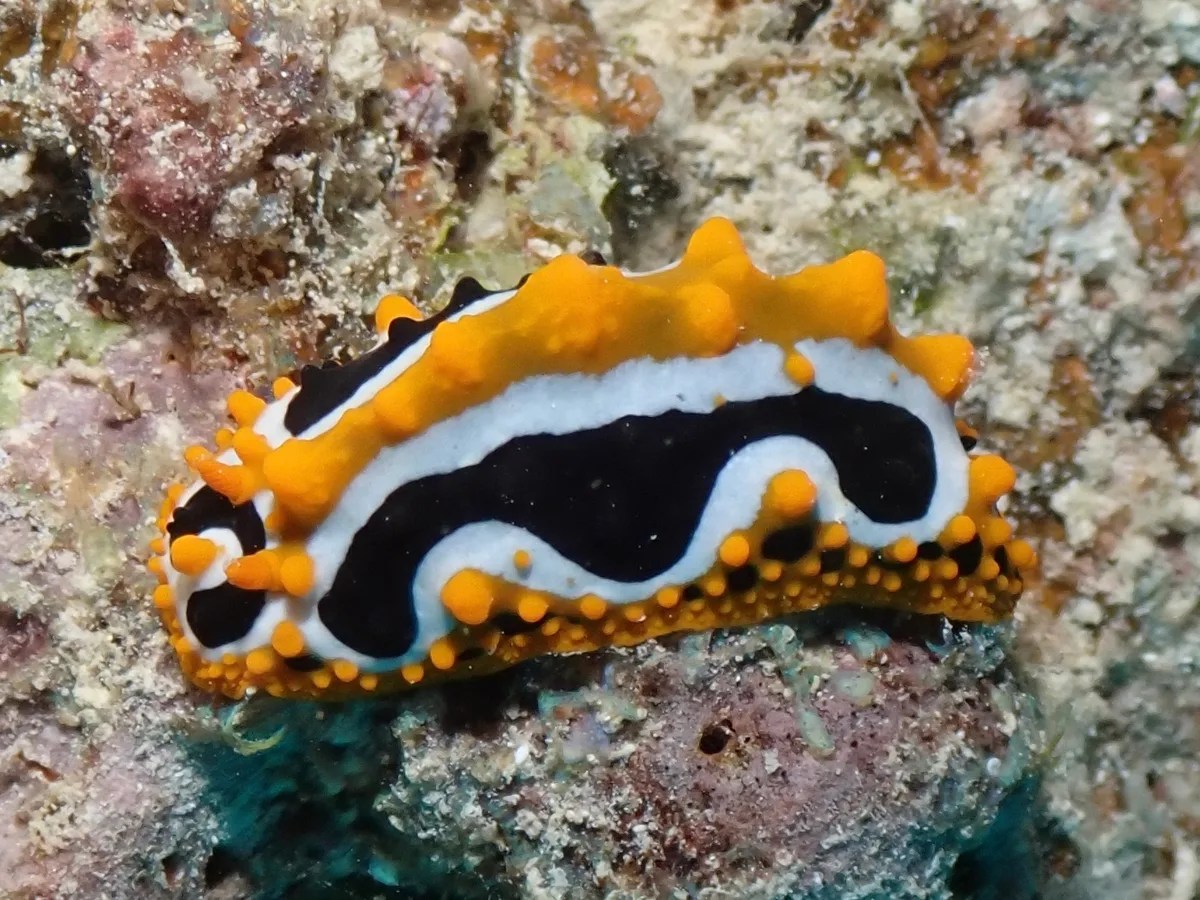
Look for the gills on this animal and you will not find them, which is the whole point of the family.
Almost every sea slug in this catalogue carries a rosette of gills standing up in the middle of the back. Phyllidiids do not have one. They lost it, and breathe instead through rows of small secondary gills tucked into the groove between the foot and the overhanging mantle, out of sight from above. Turn one over, or watch the edge closely, and they are there in a line down each side.
That single difference is the fastest way to place a slug in this family from a photograph, and it comes with a set of others: a firm rubbery body that holds its shape instead of flowing, a back covered in hard ridges and tubercles rather than soft skin, and a habit of sitting in the open on bare rock in daylight without the least concern.
The confidence is chemical. Phyllidiids carry potent compounds through the whole body, not only in the mantle rim, and a disturbed one releases them into the water. Aquarists know the family for exactly that: one of these in a closed container can kill everything else in it, including itself.
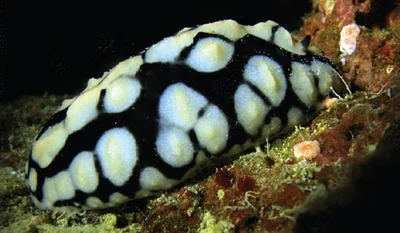
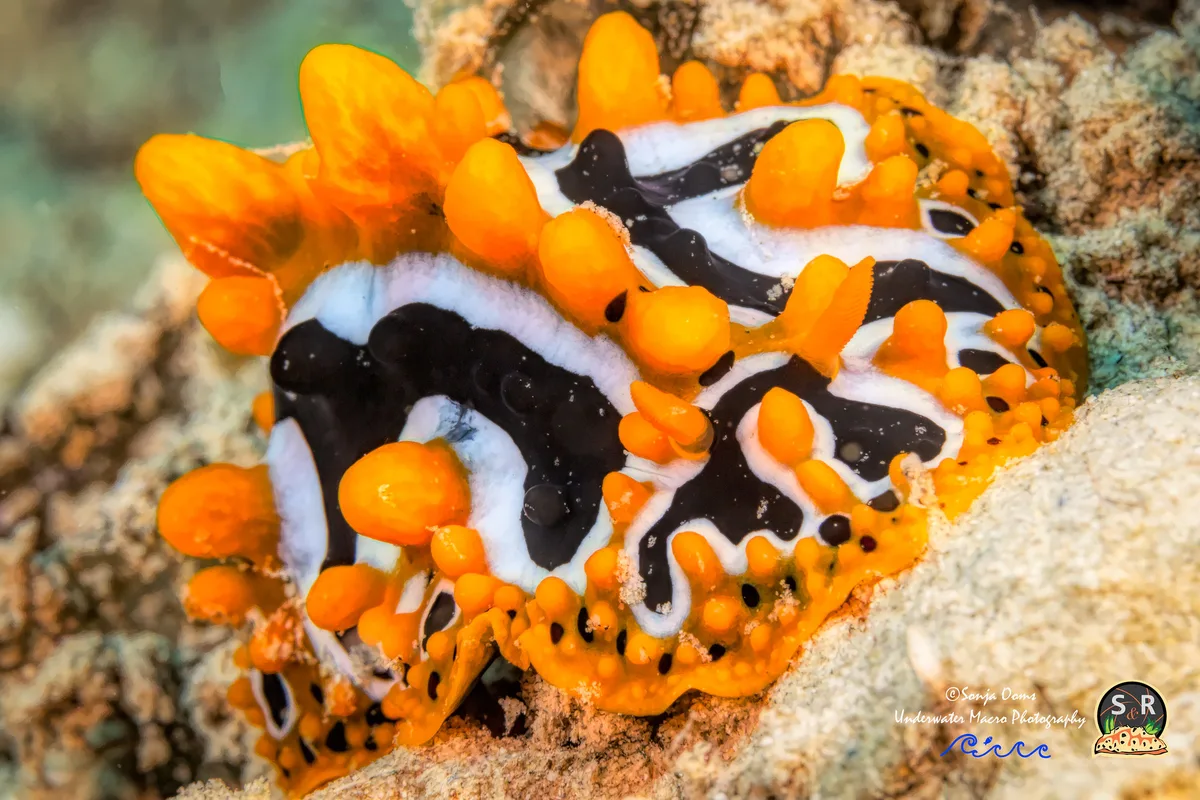
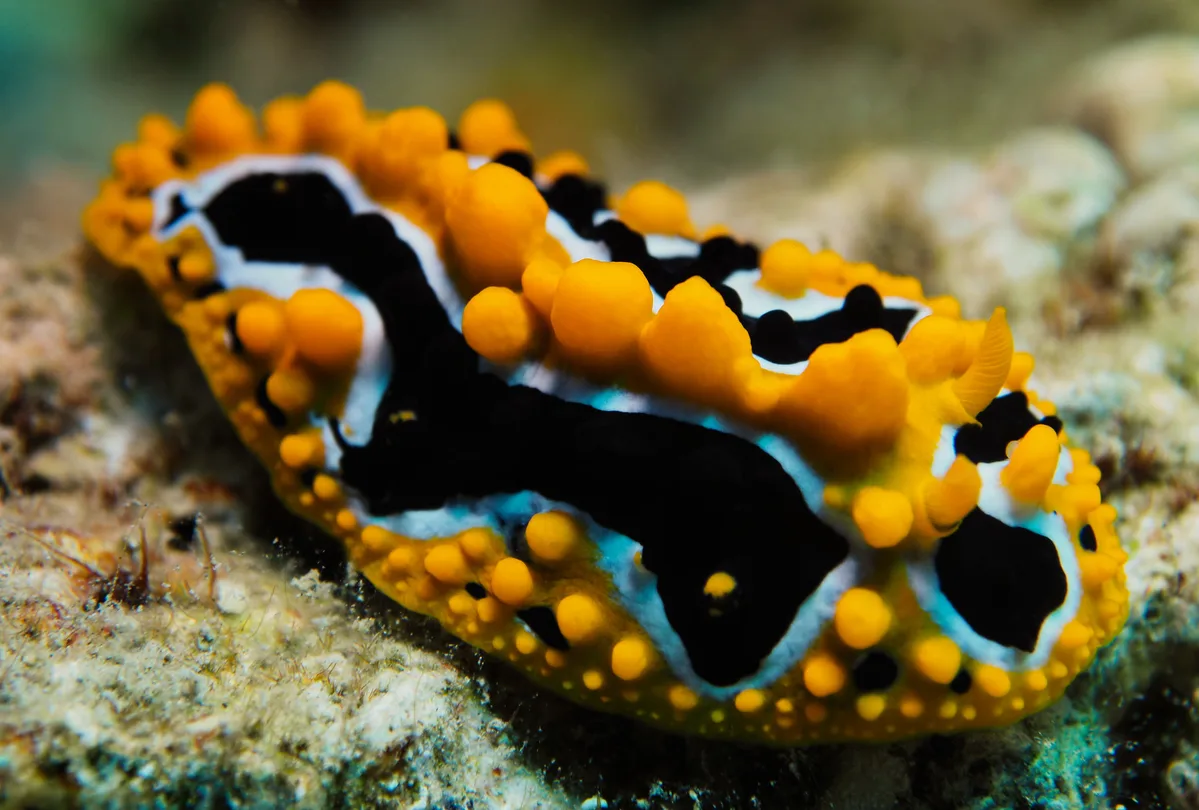
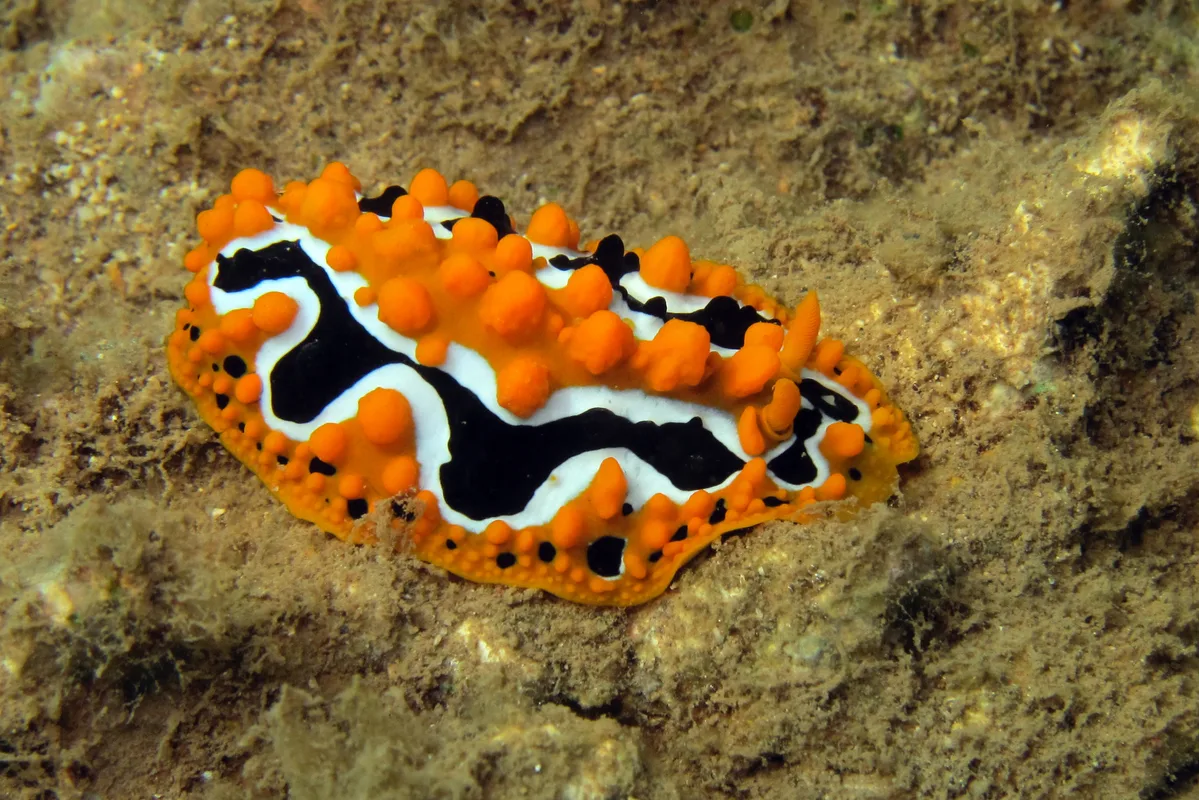
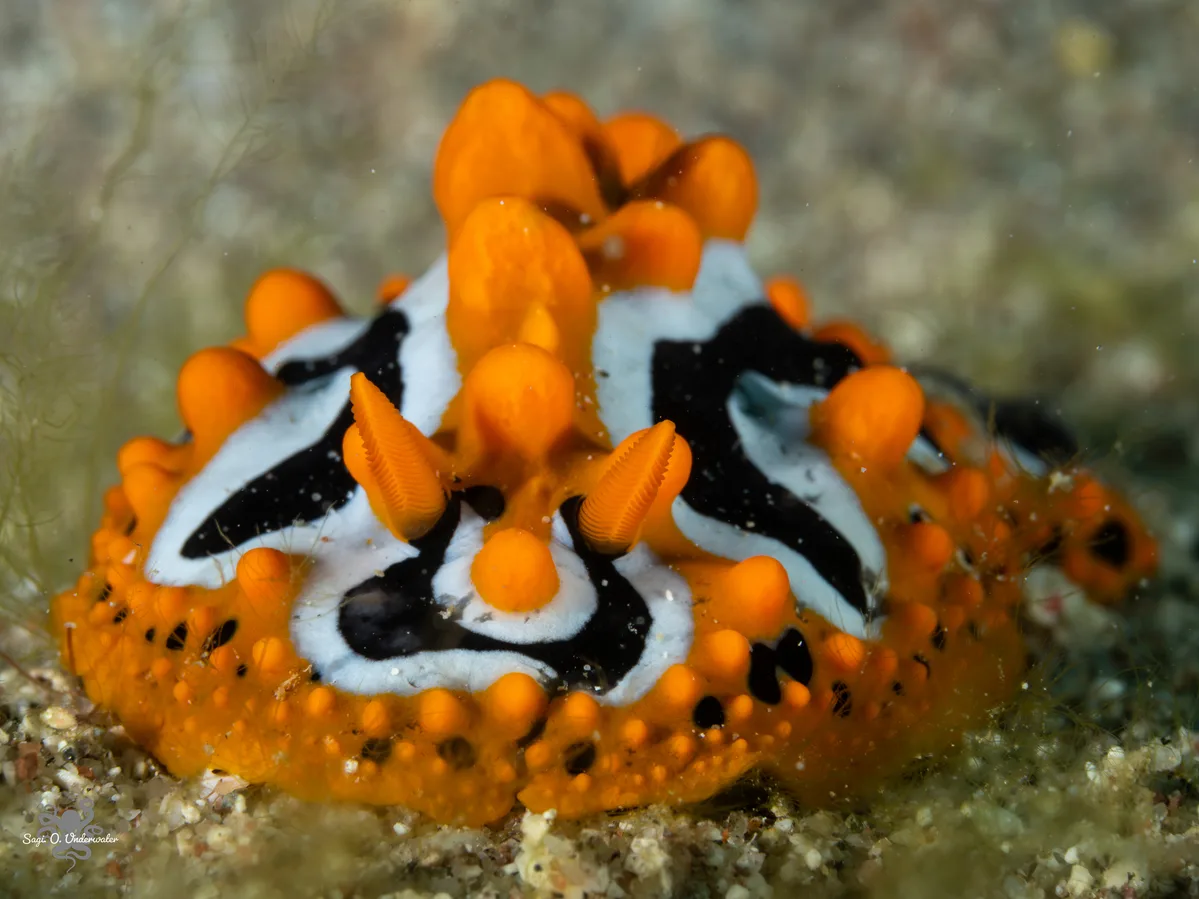
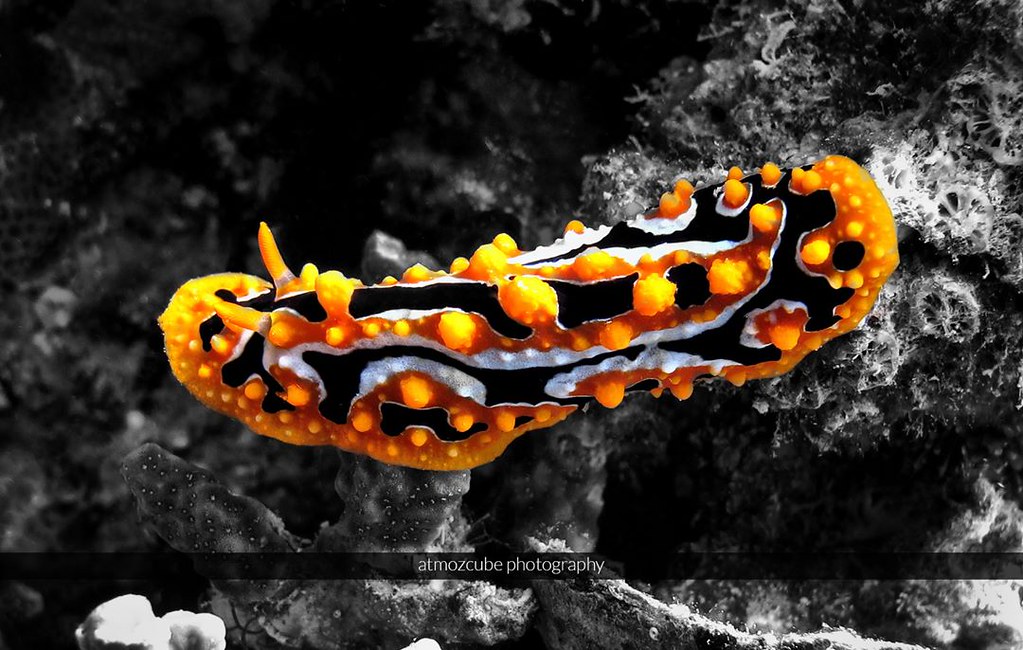
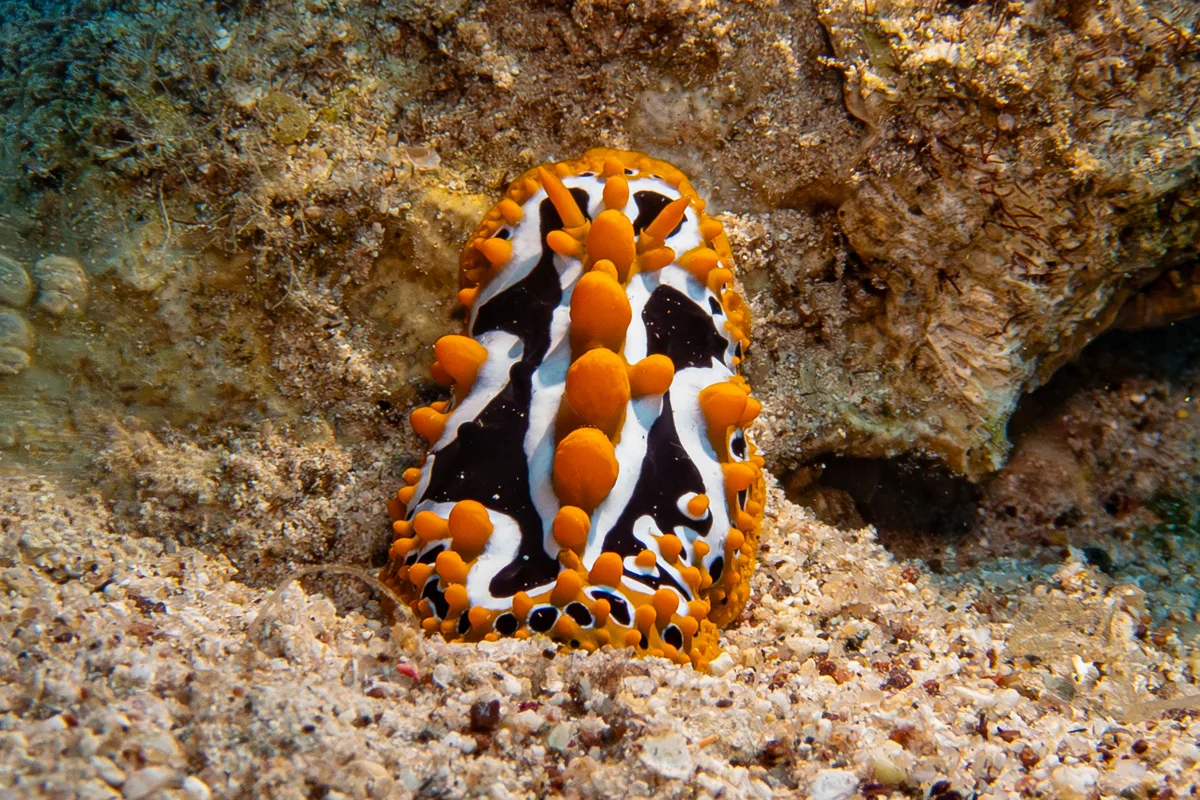
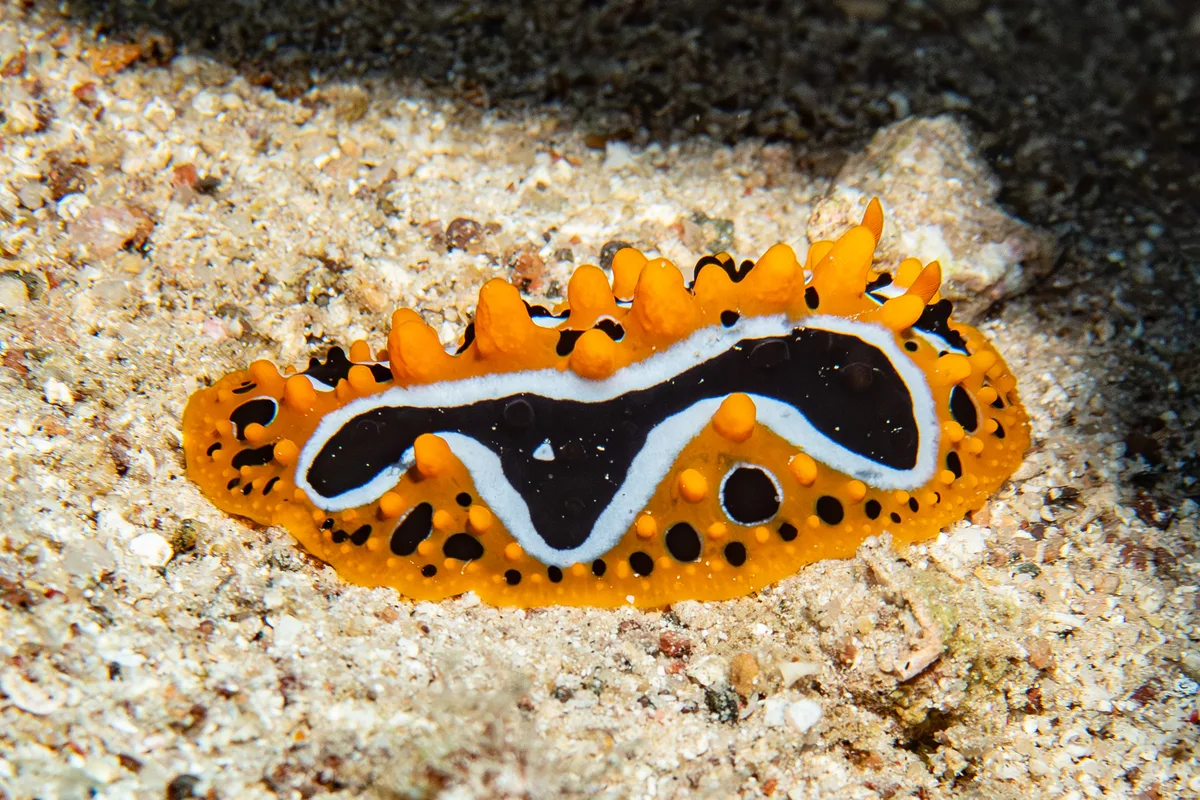
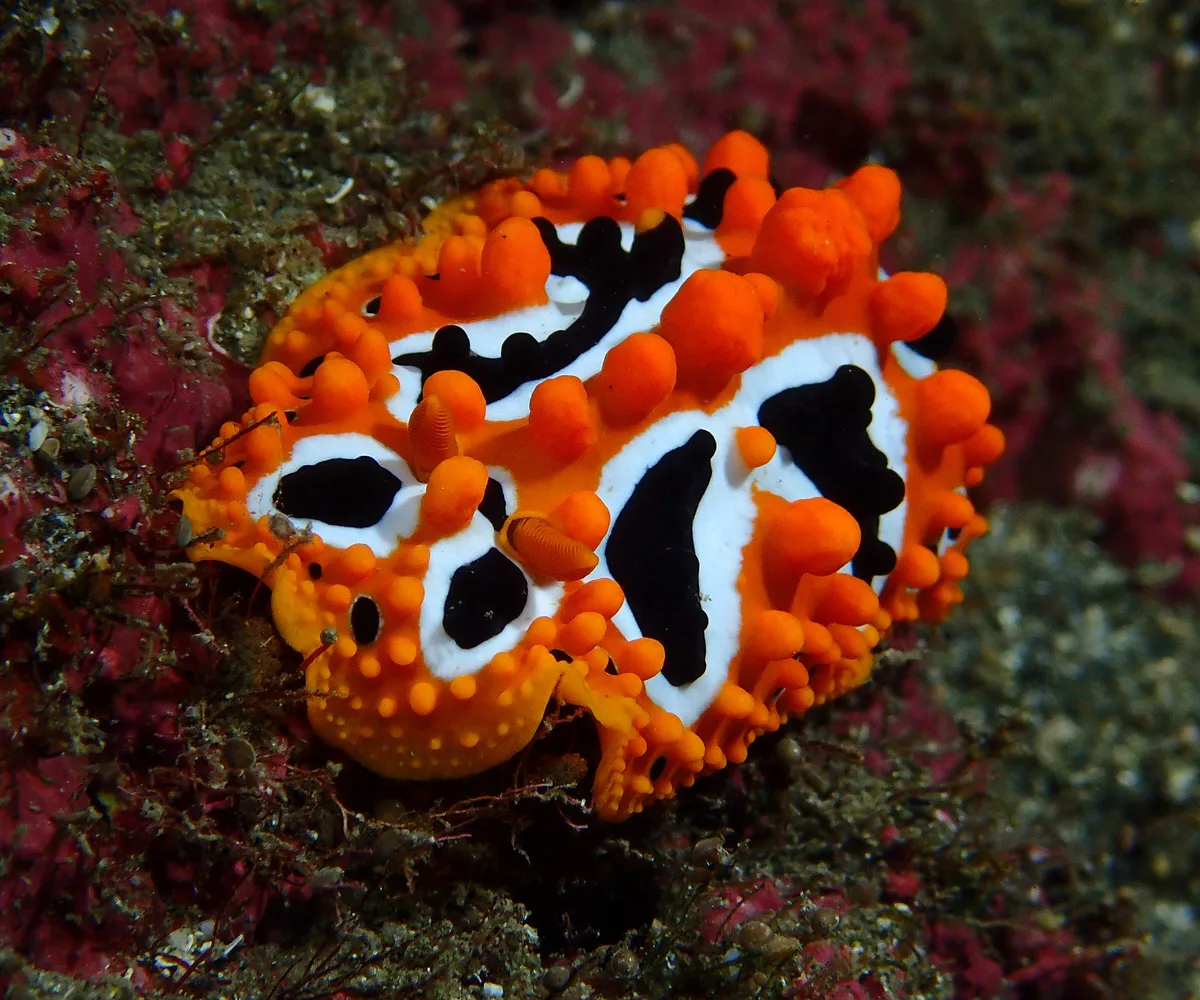
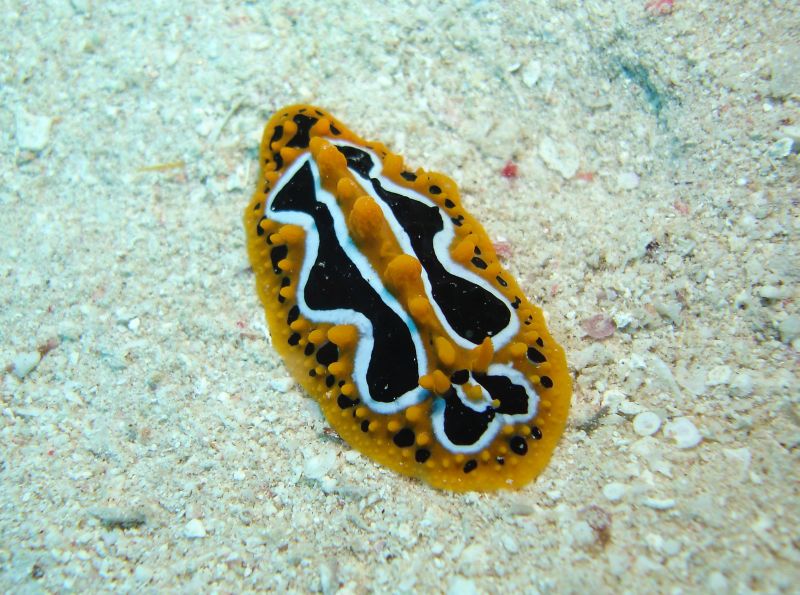
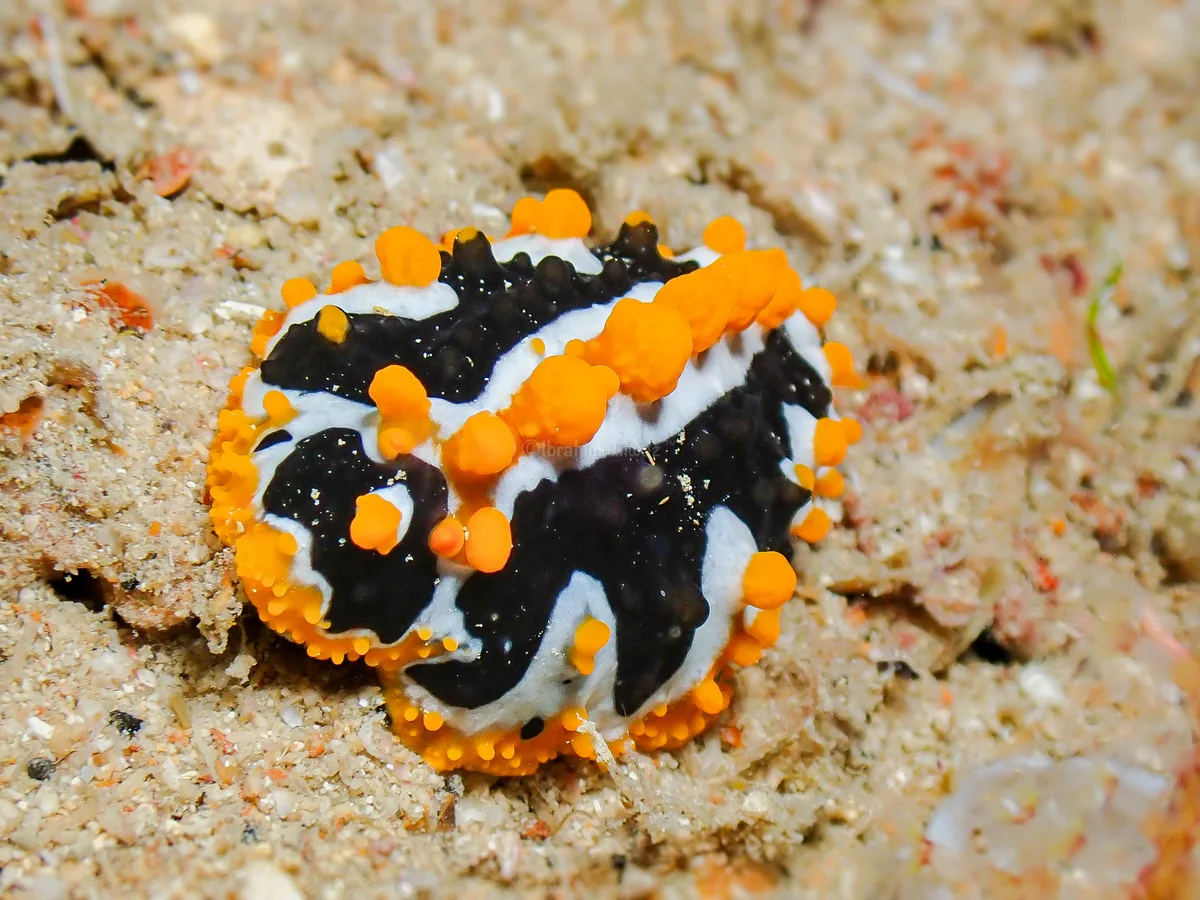
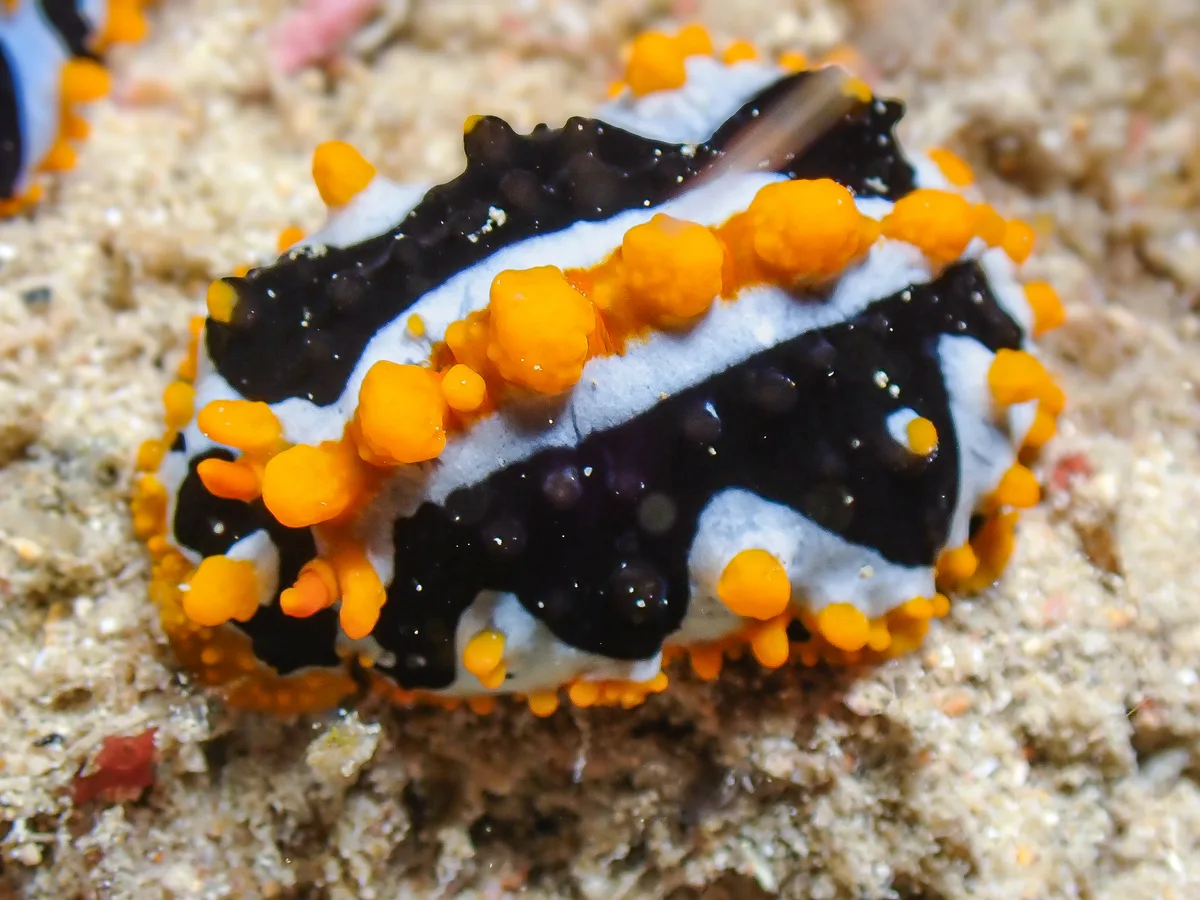
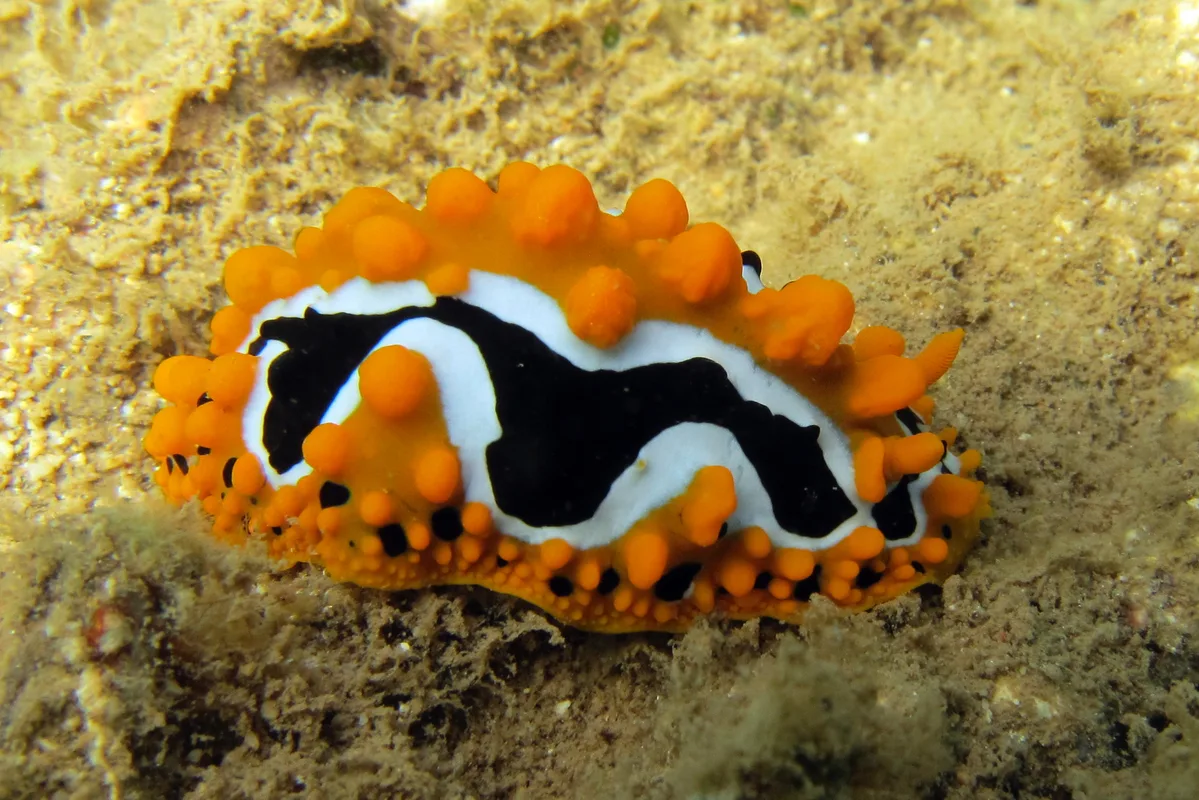
This species is the one with large black patches edged in white over the ridges, up to seven centimeters, from this sea down to 🇿🇦 South Africa.
- large black patches with white edges over a ridged back
- no gill plume anywhere on the back
- firm and rubbery rather than soft, keeping its shape
- up to 7 cm