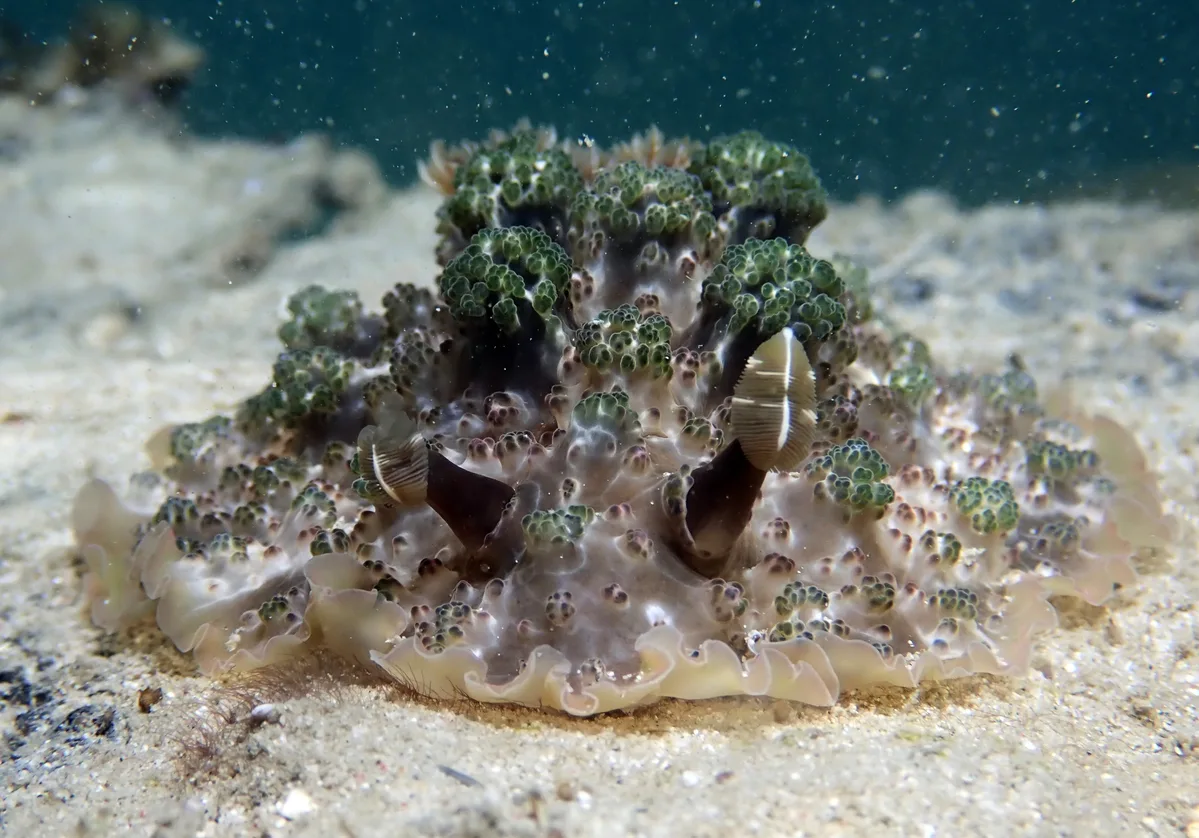
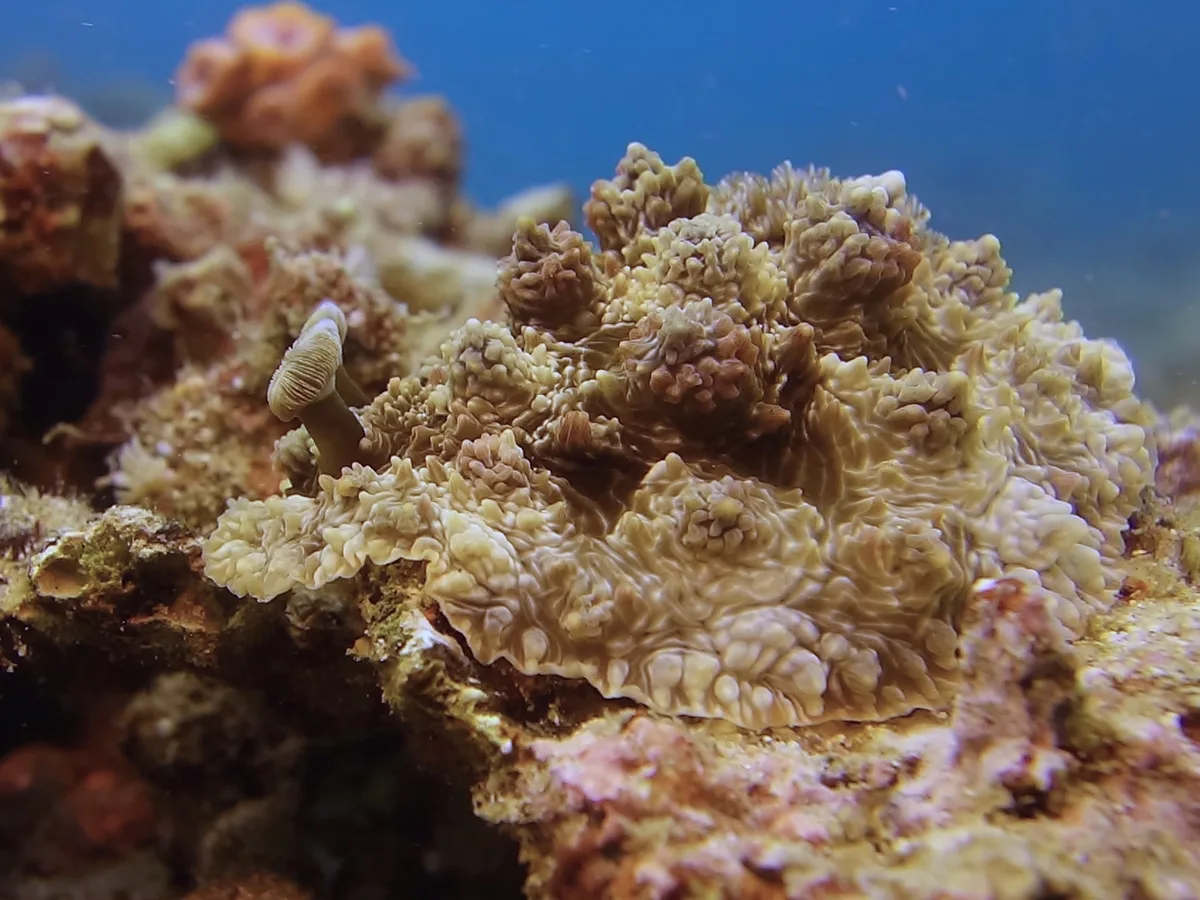
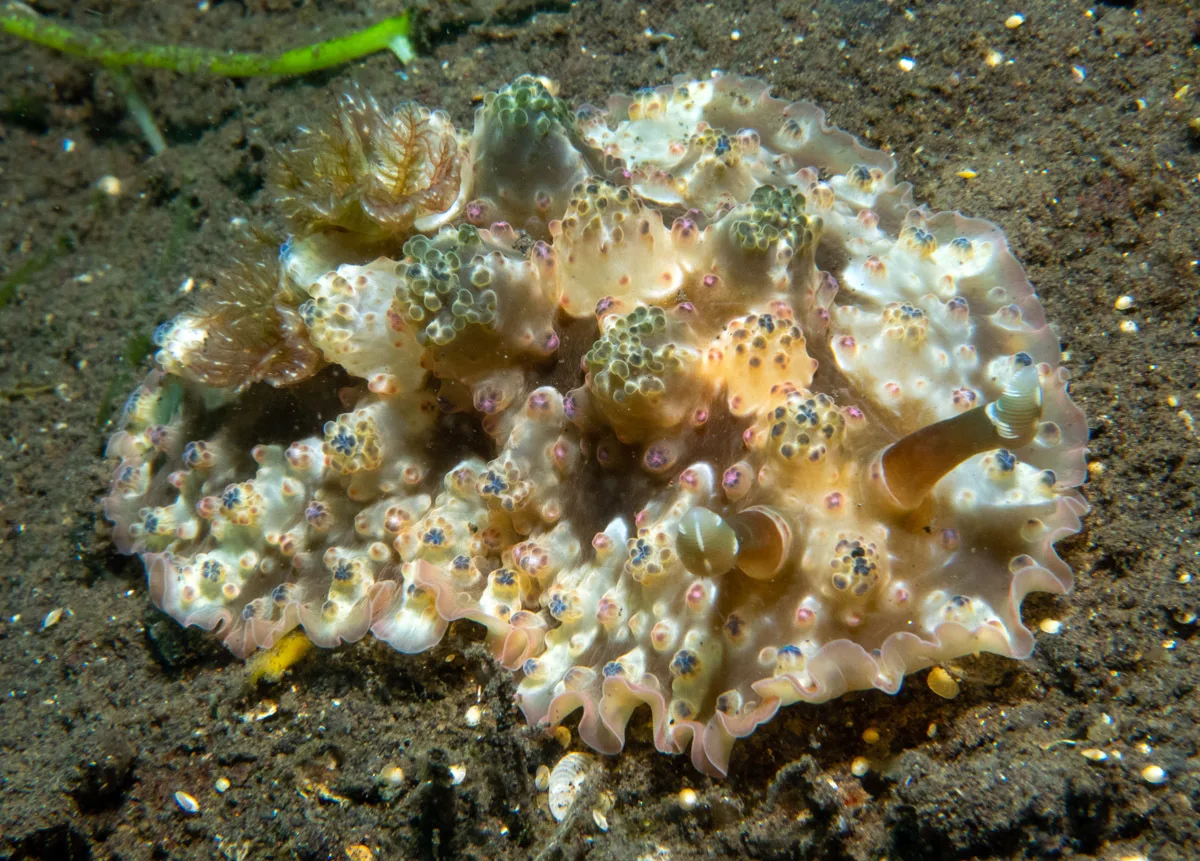
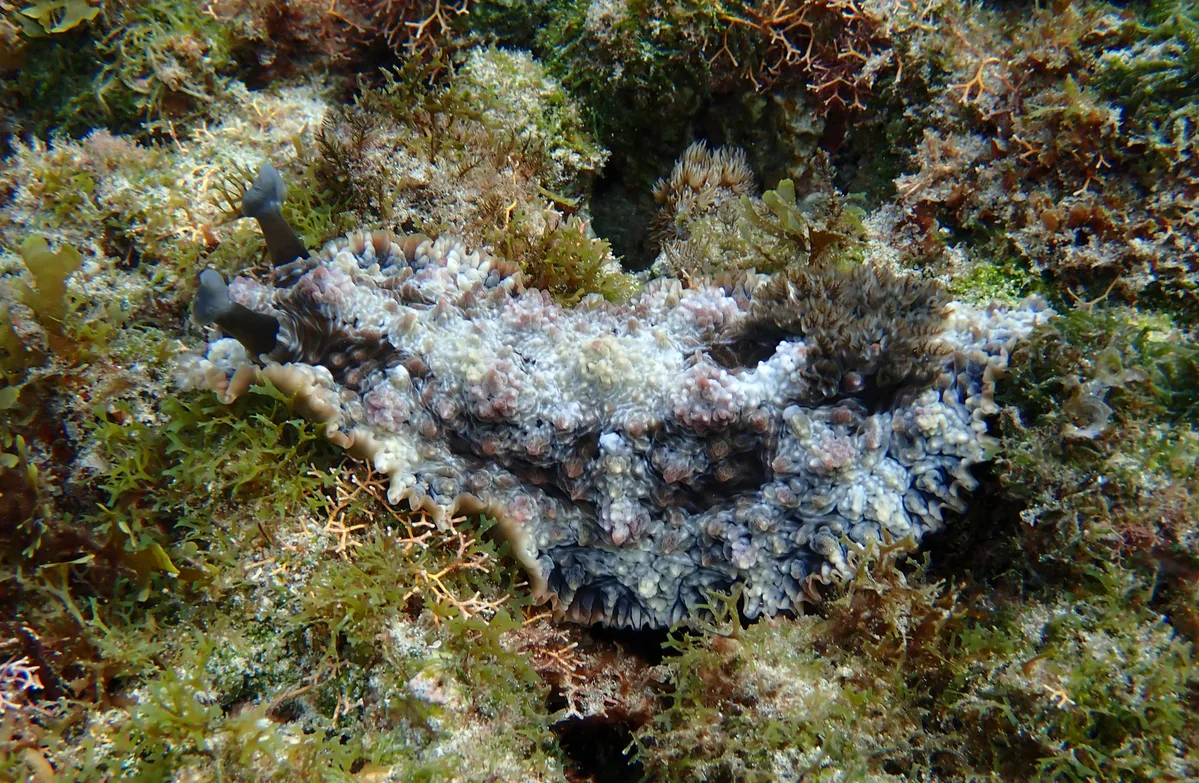
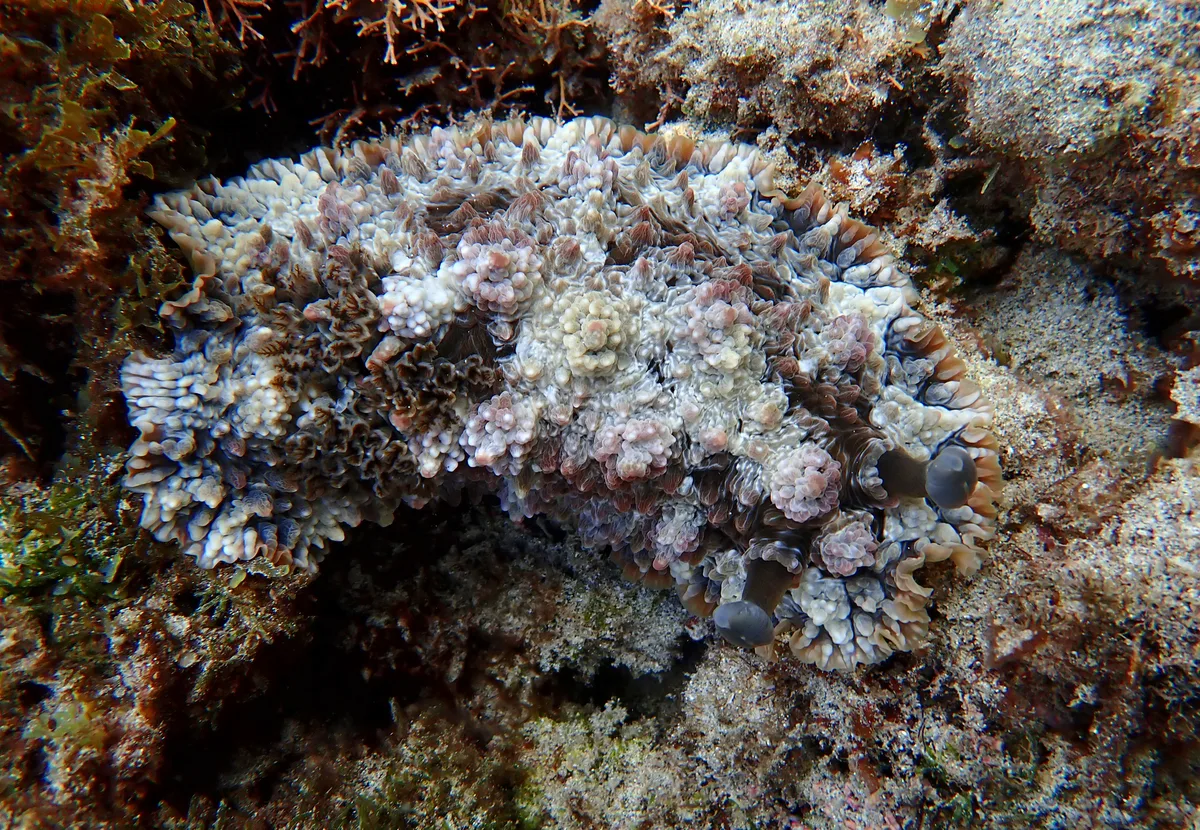
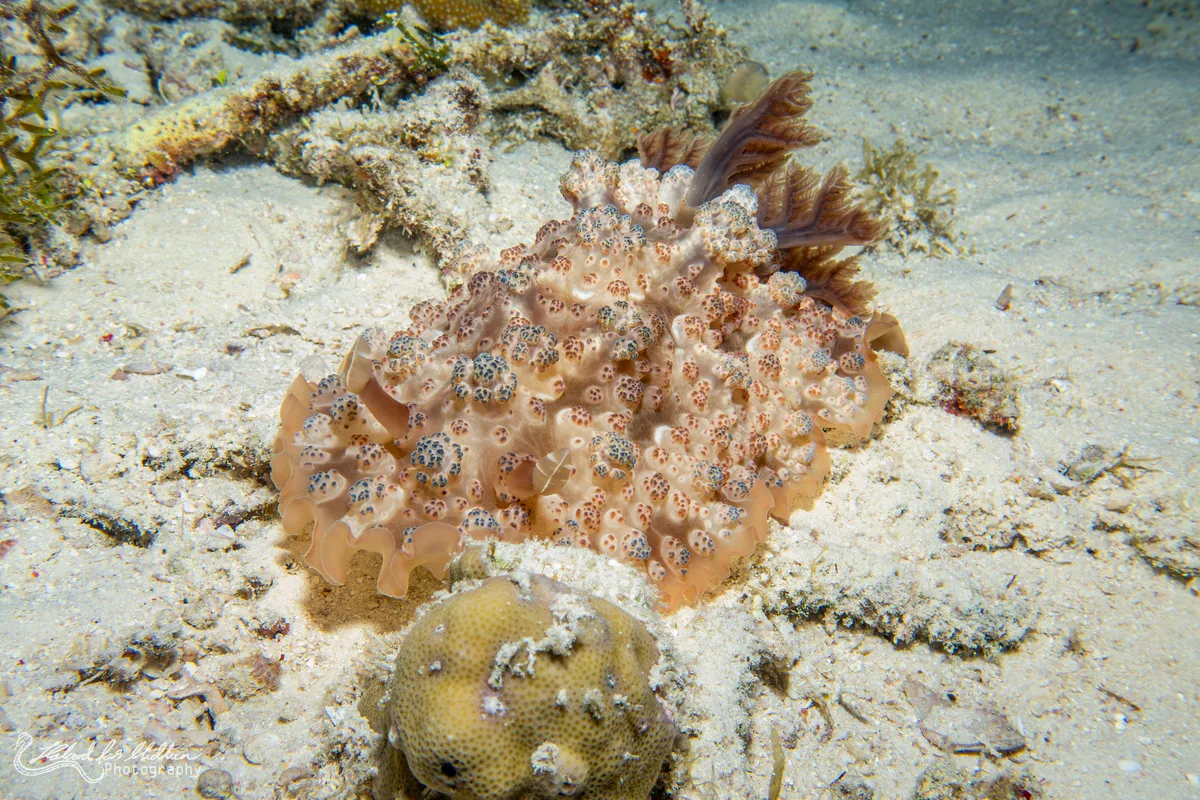
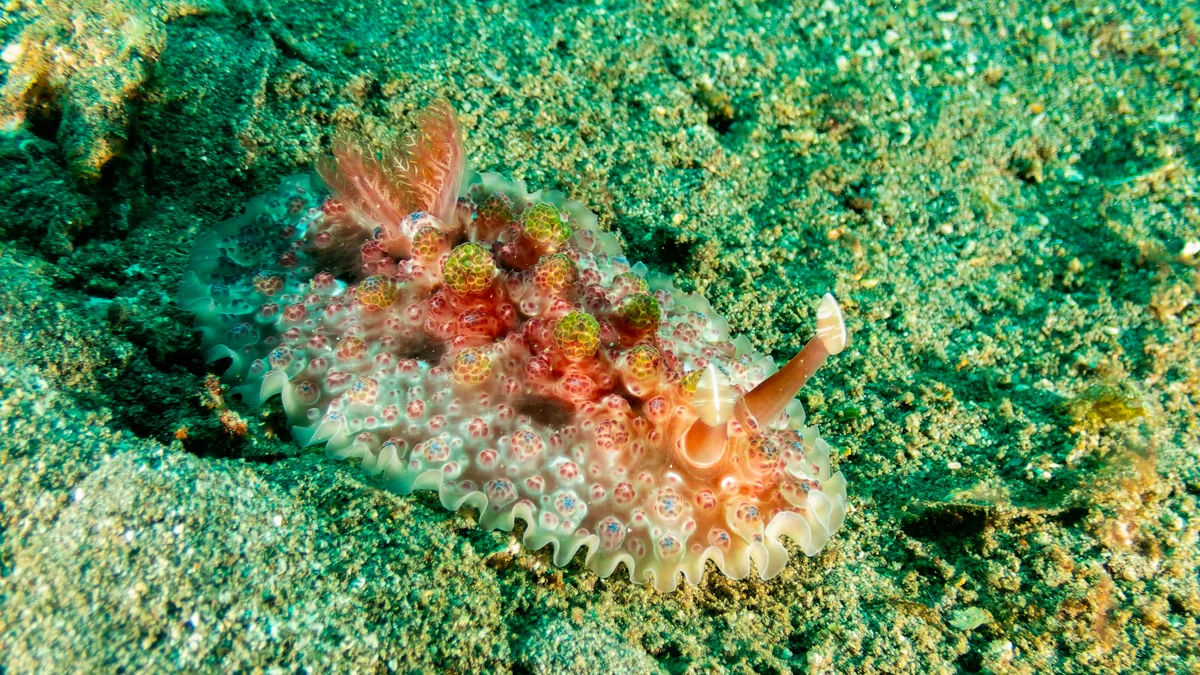
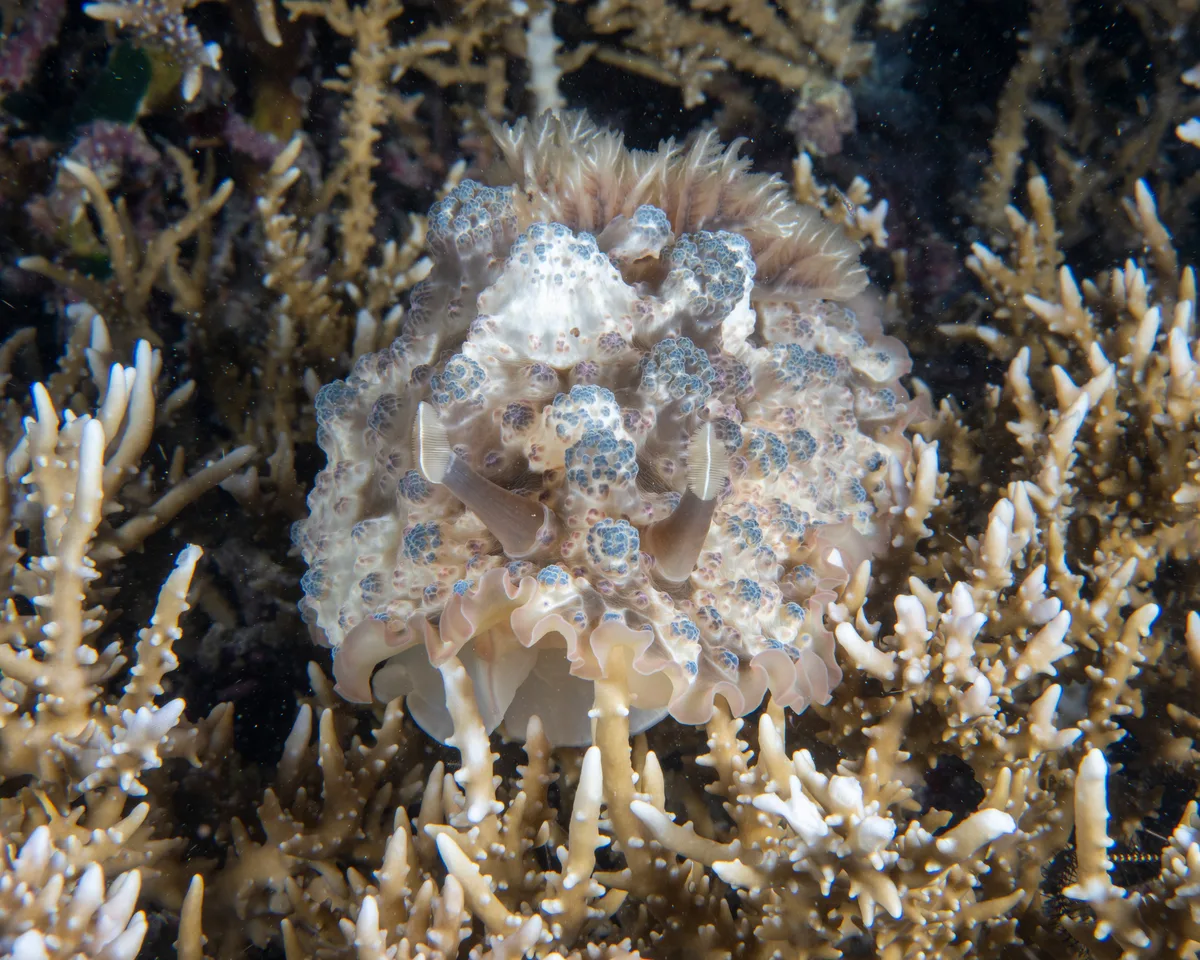
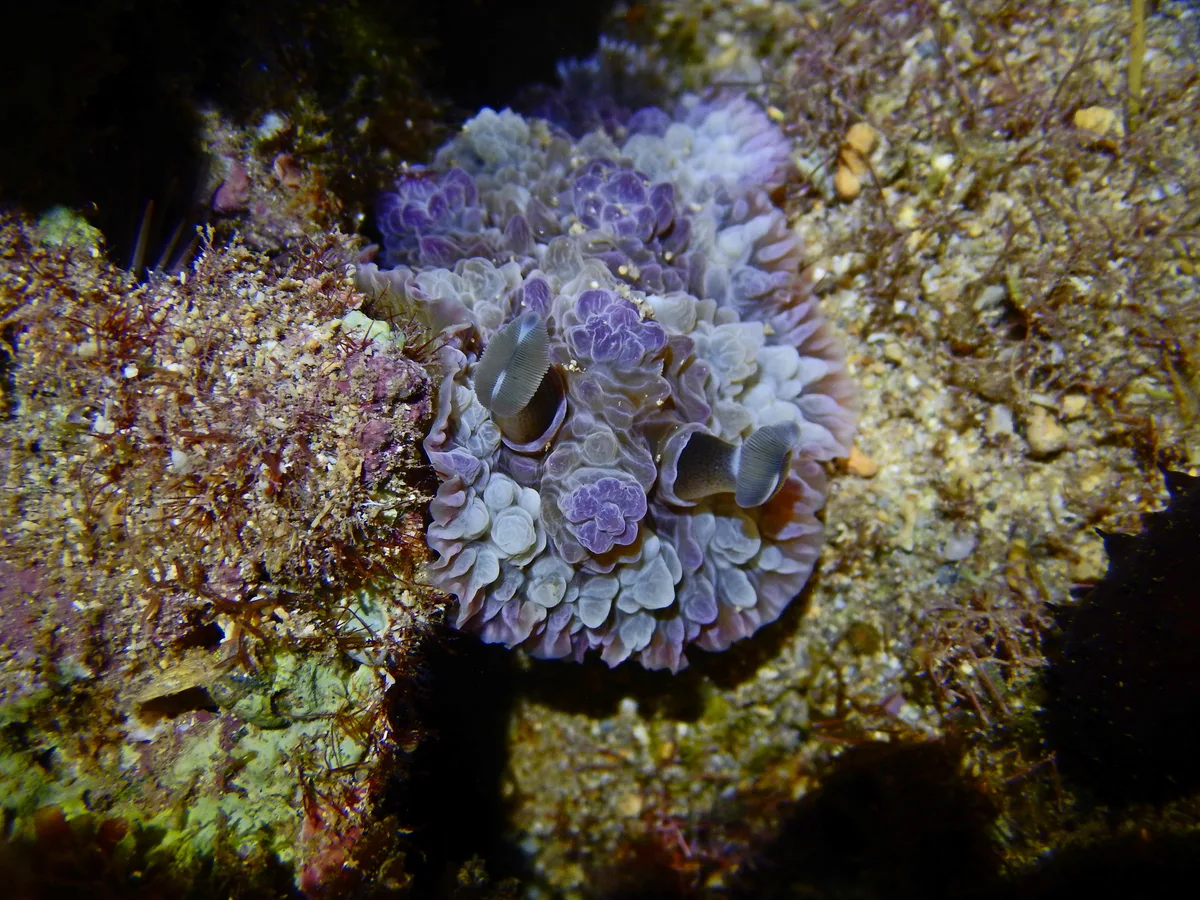
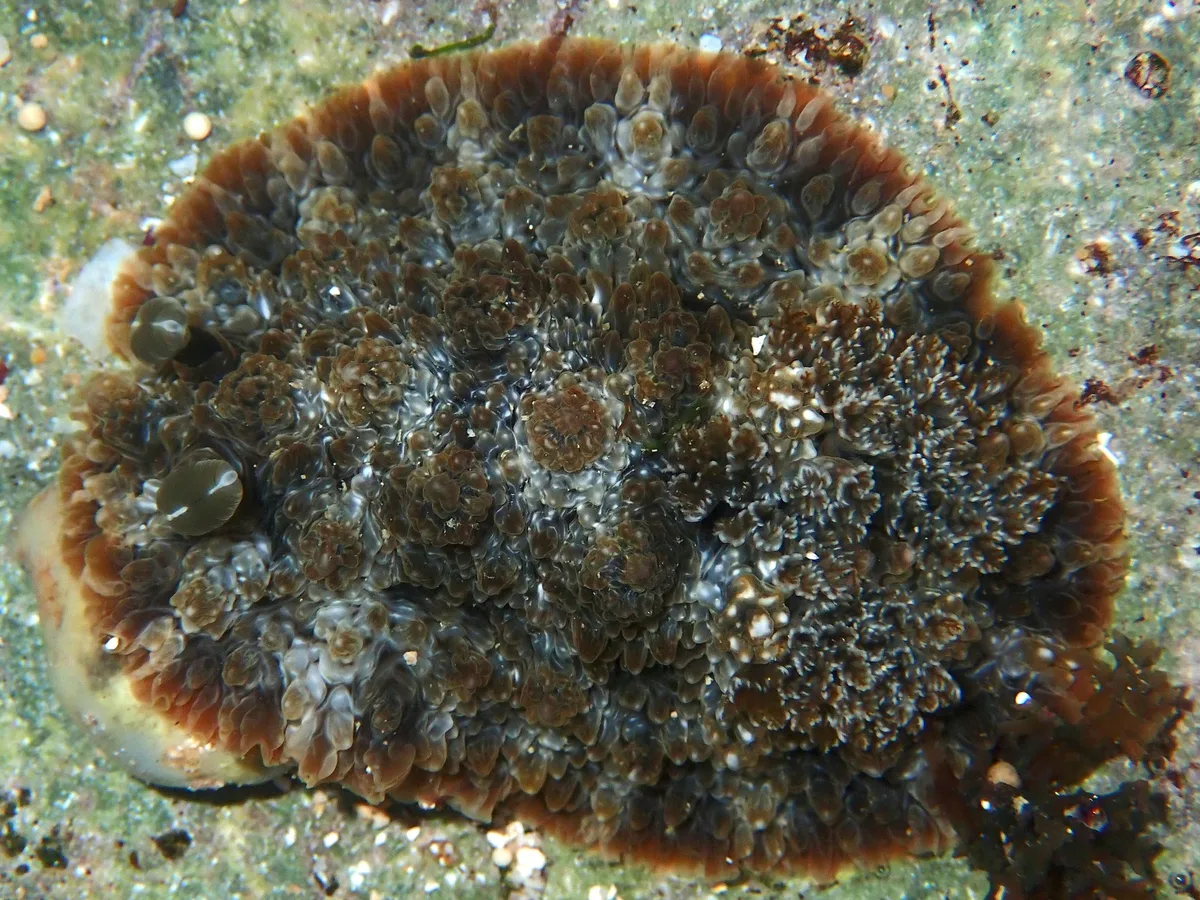
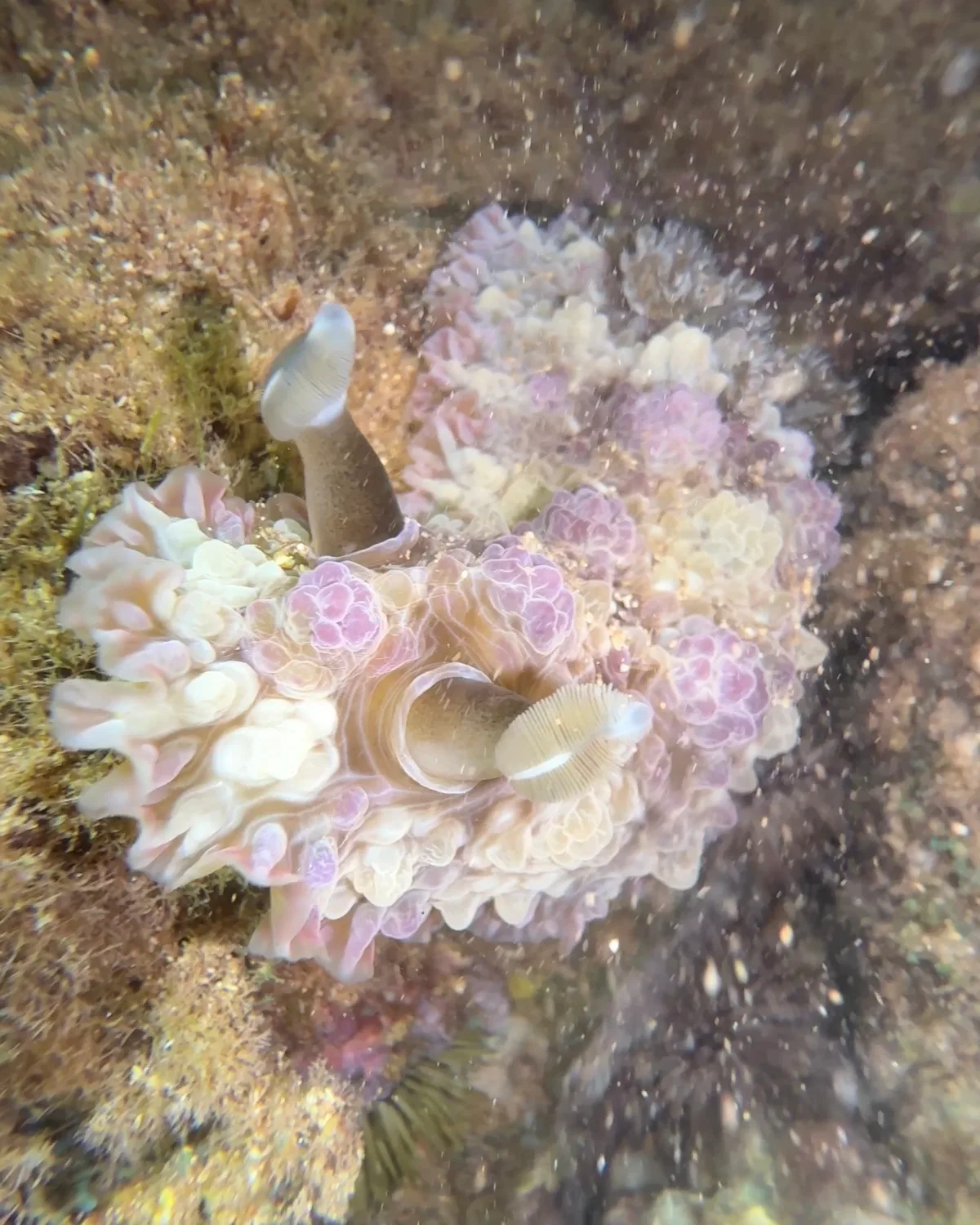
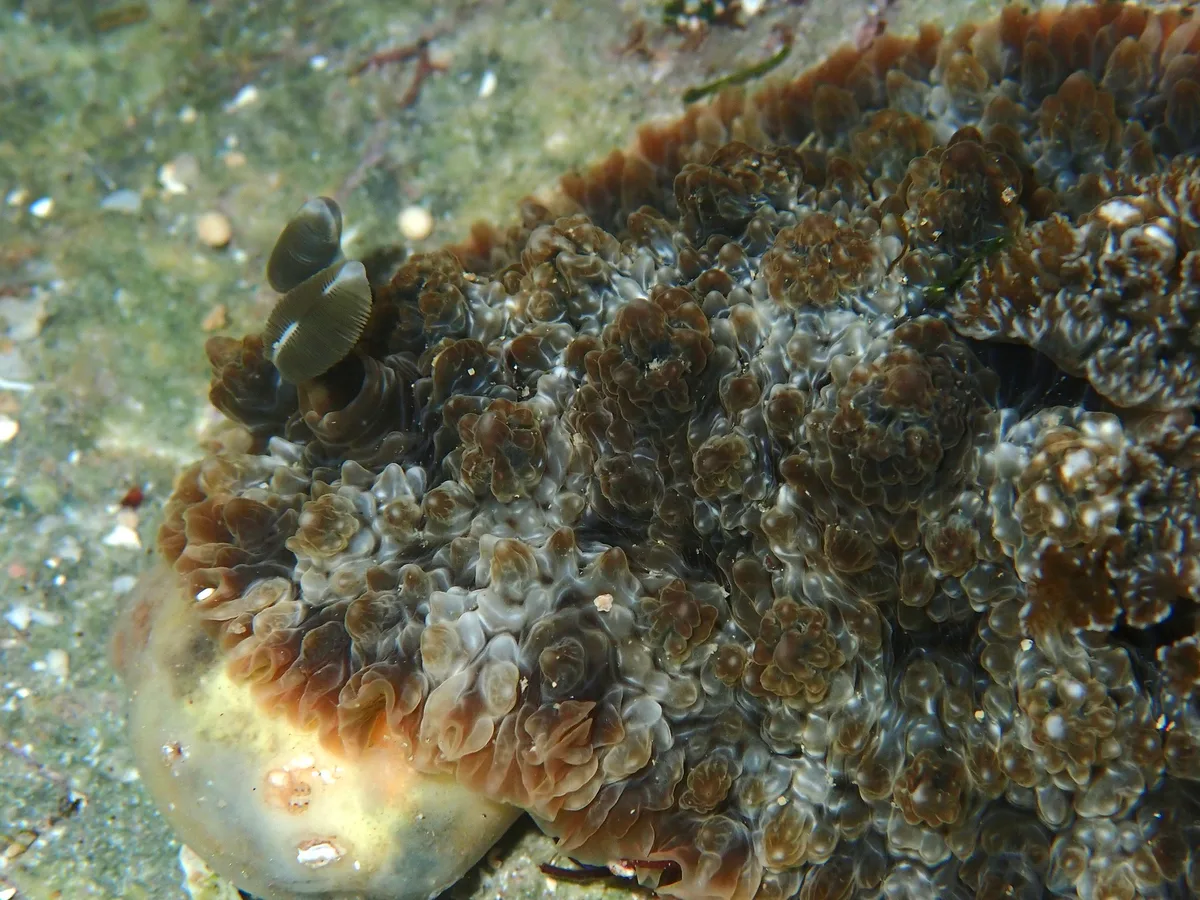
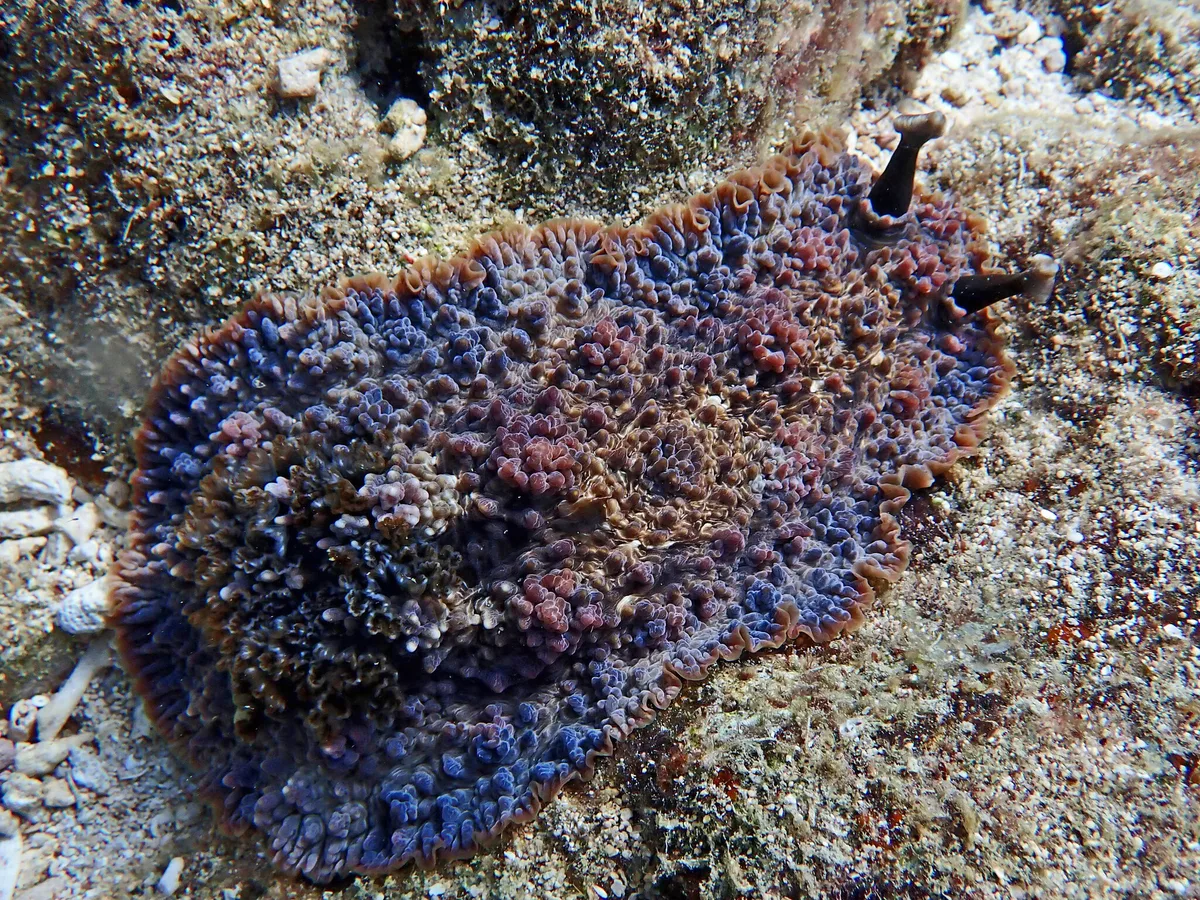
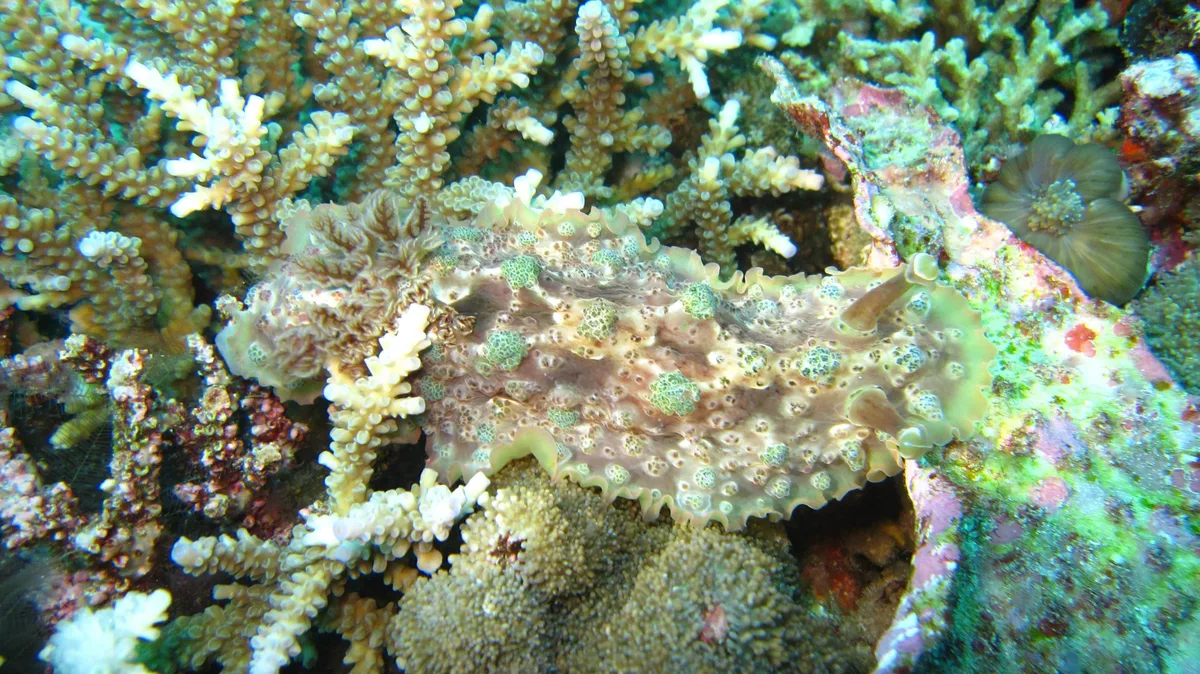
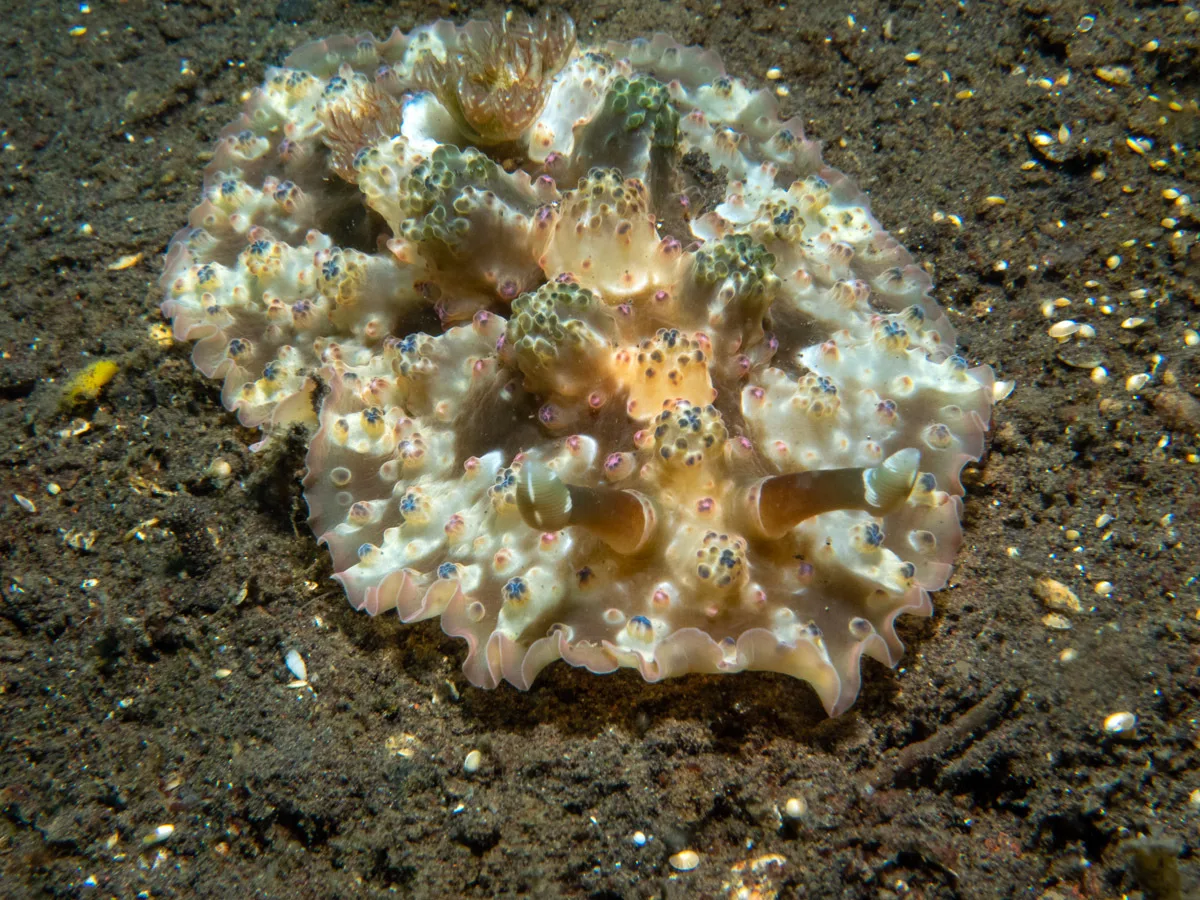
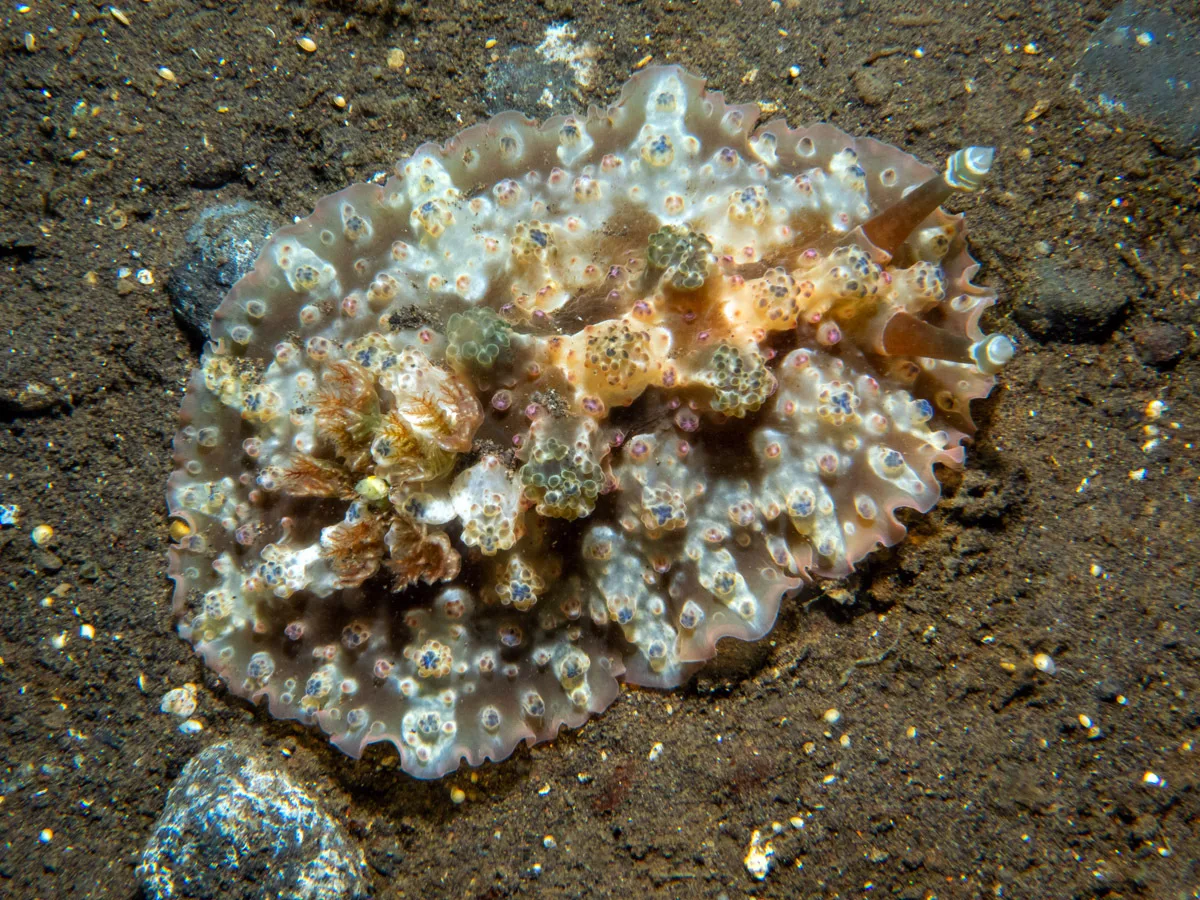
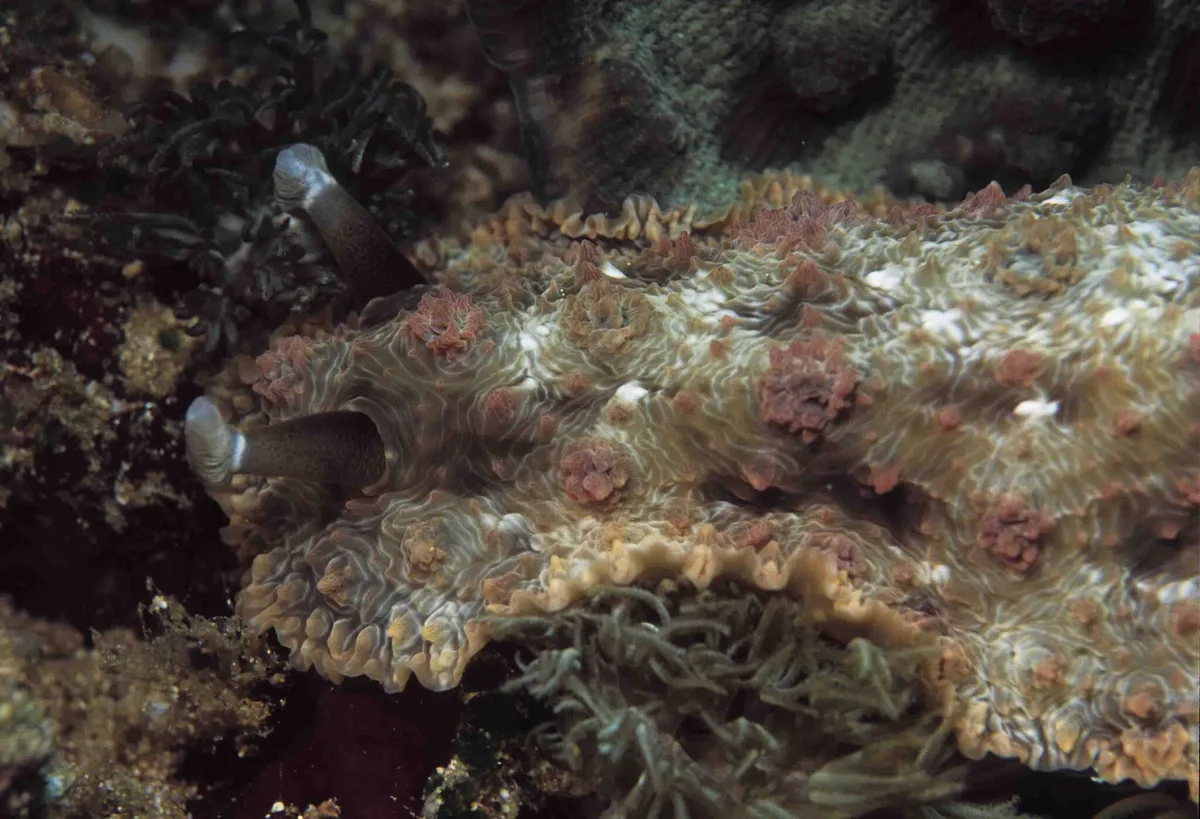
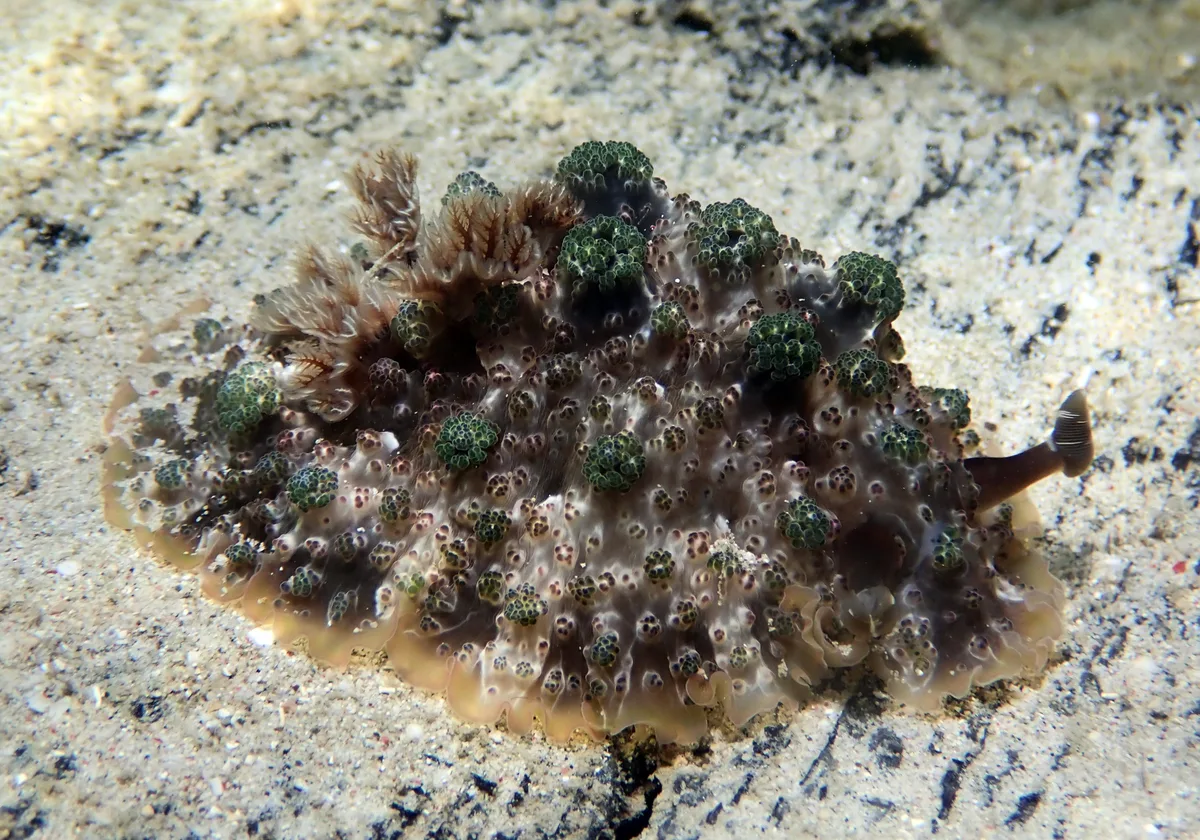
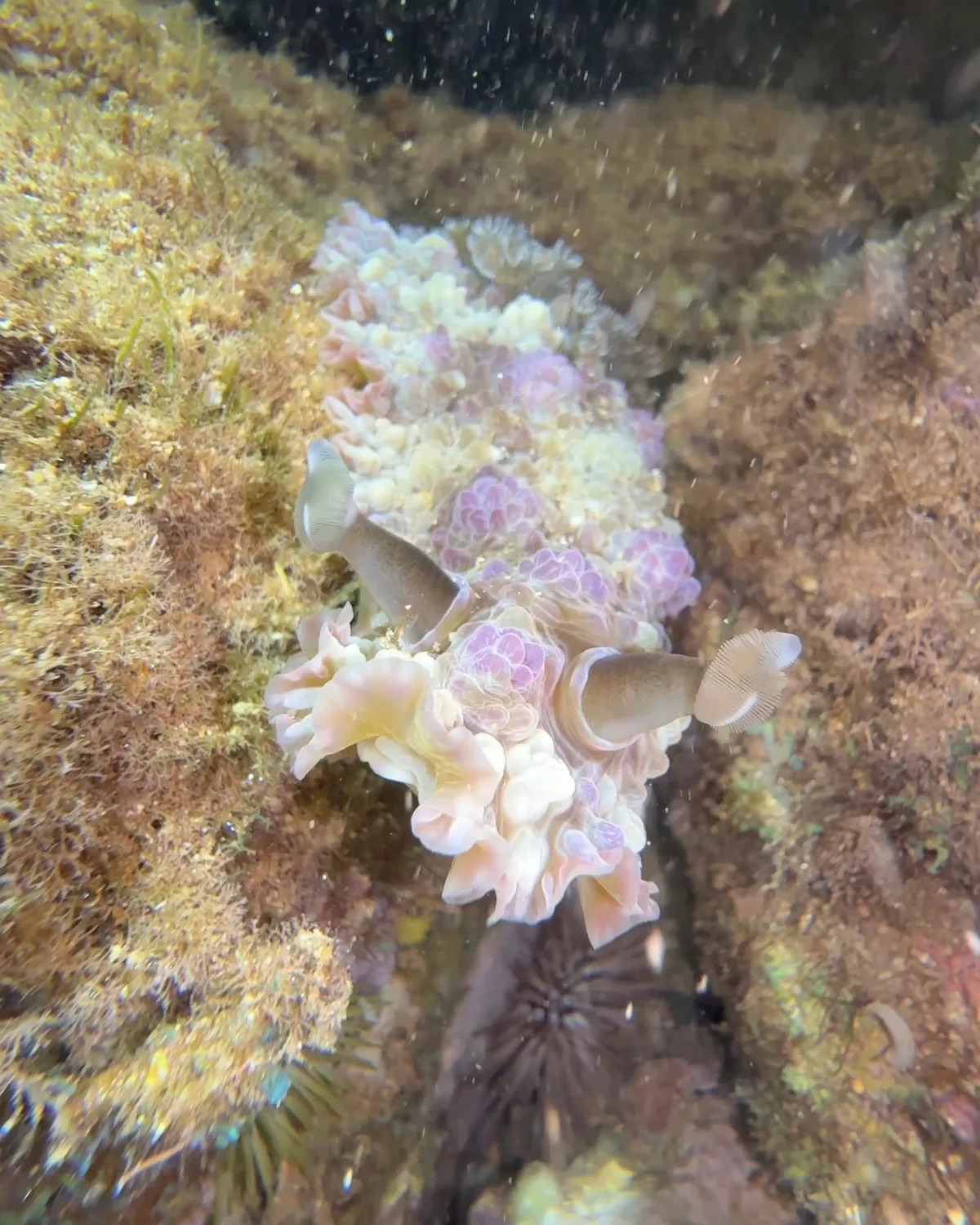
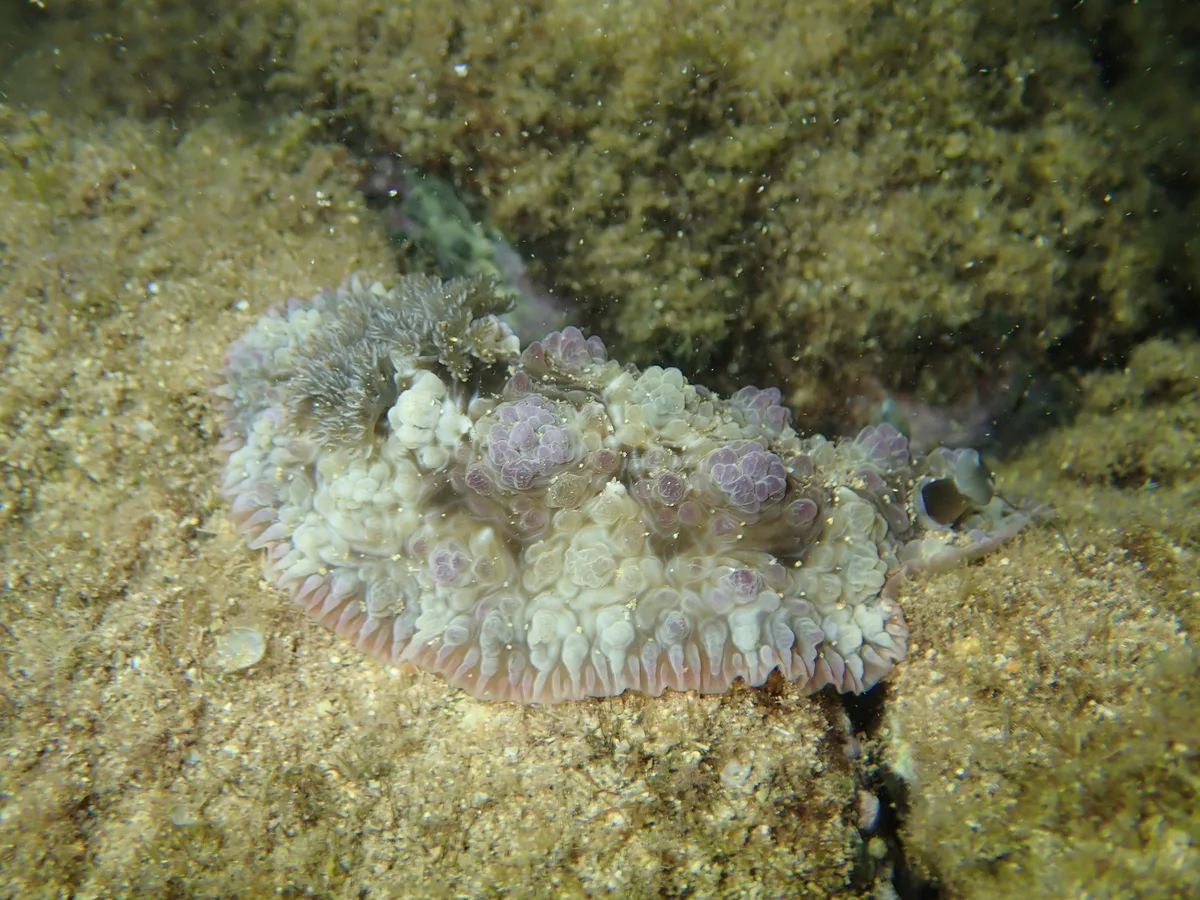
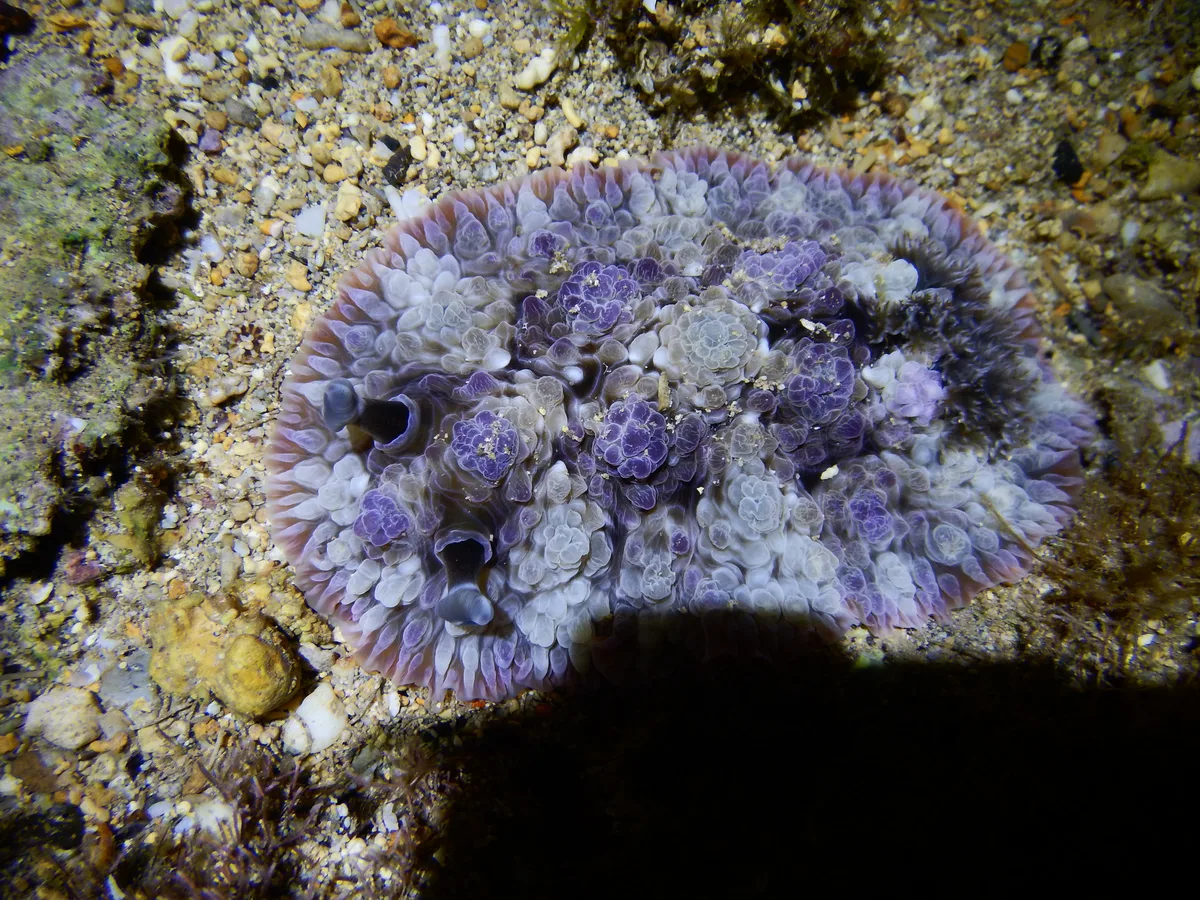
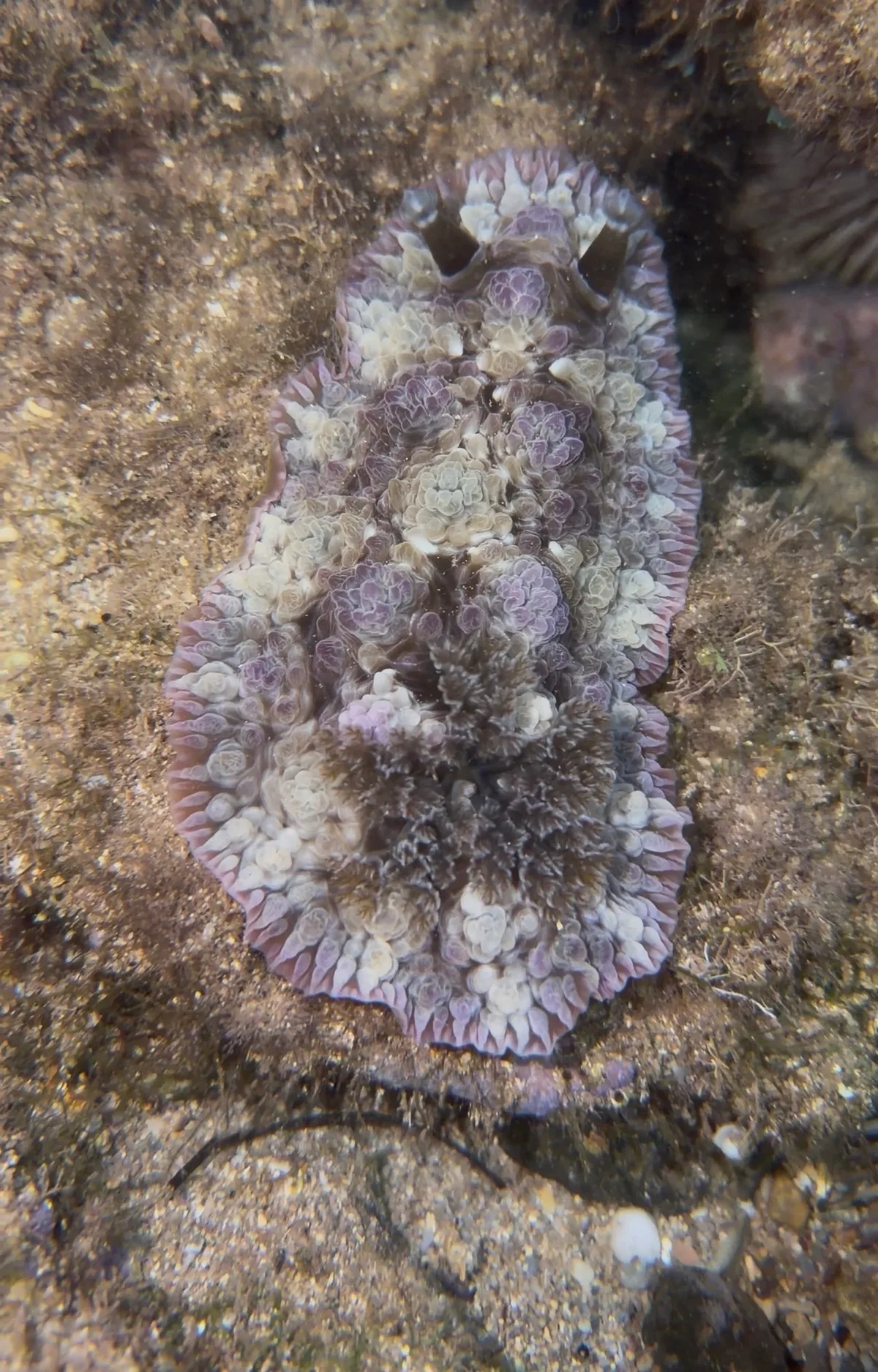
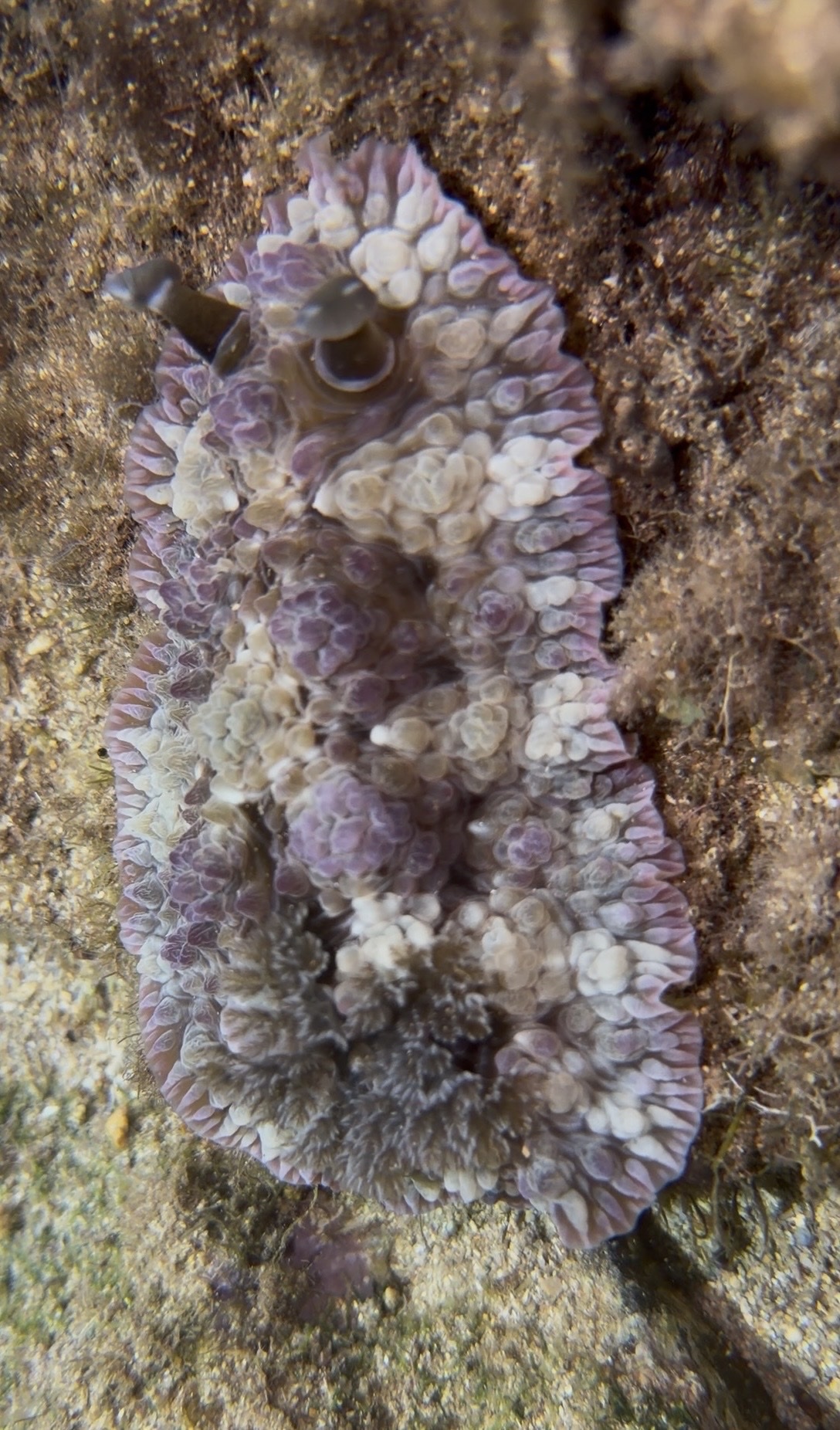
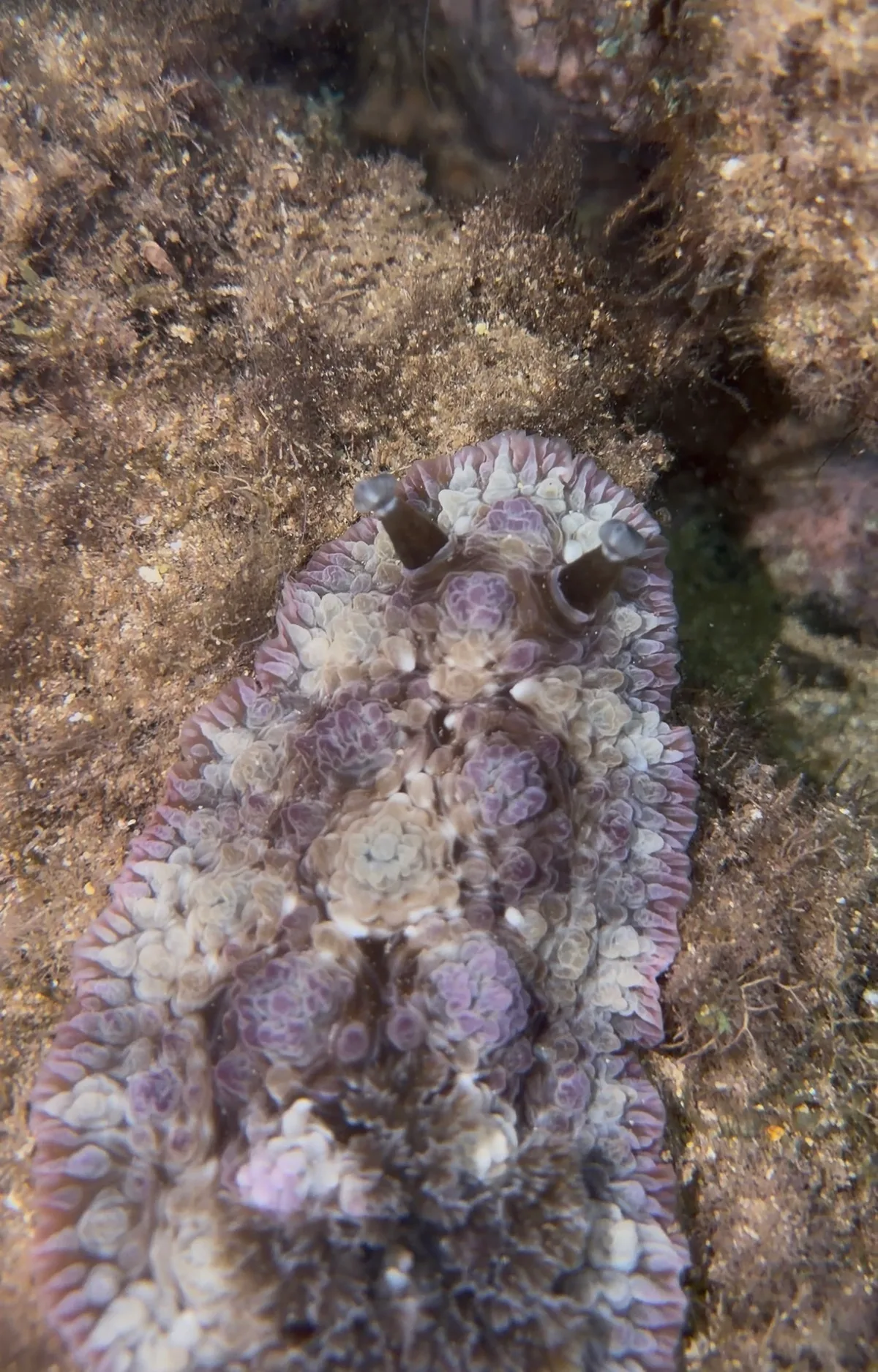
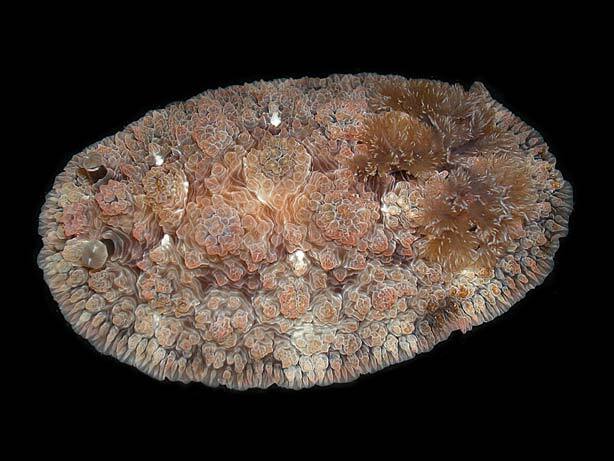
Twenty centimeters of sea slug is a different kind of animal to meet, and this is the largest in the catalogue after the Spanish dancer.
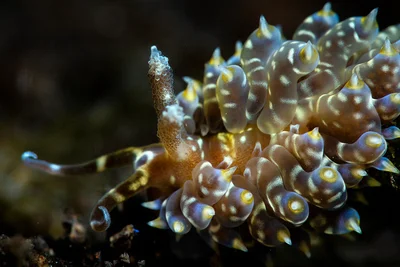
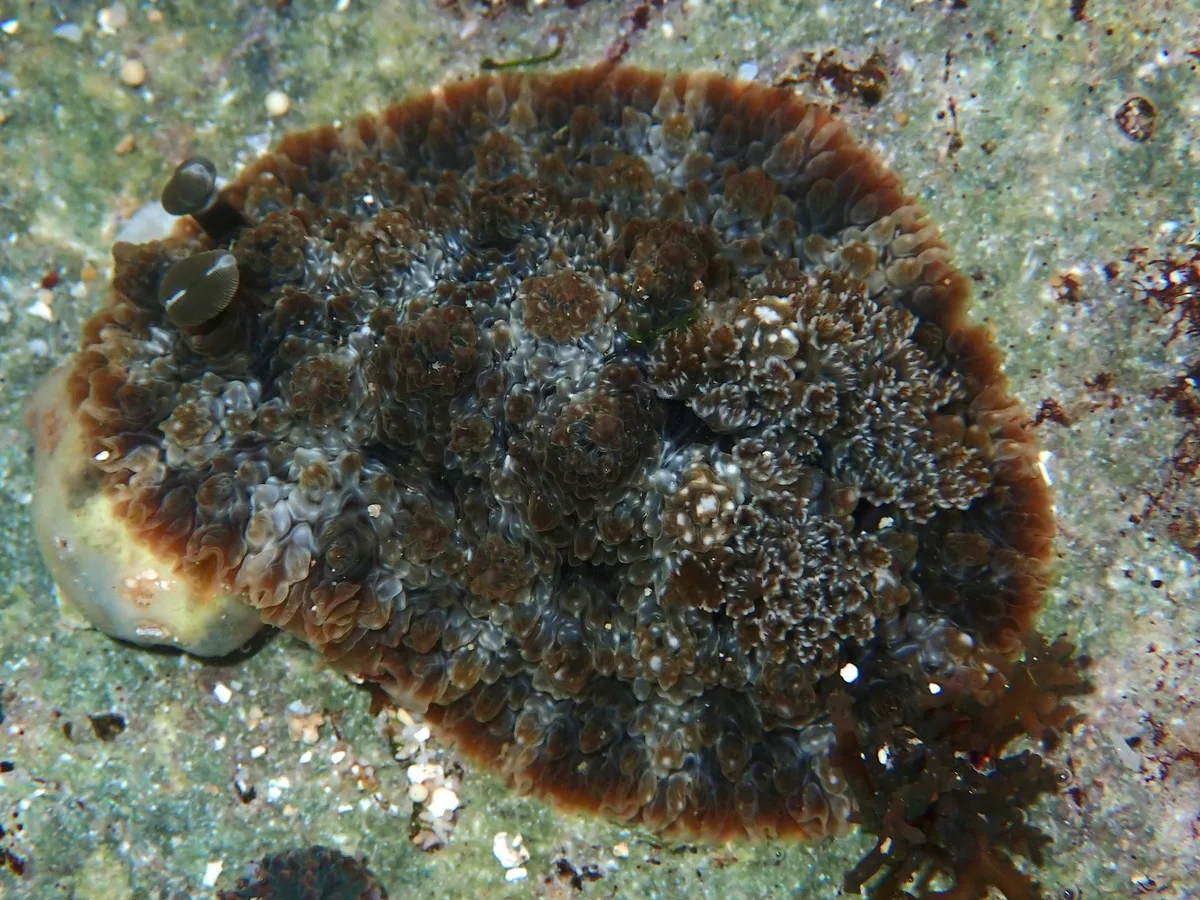
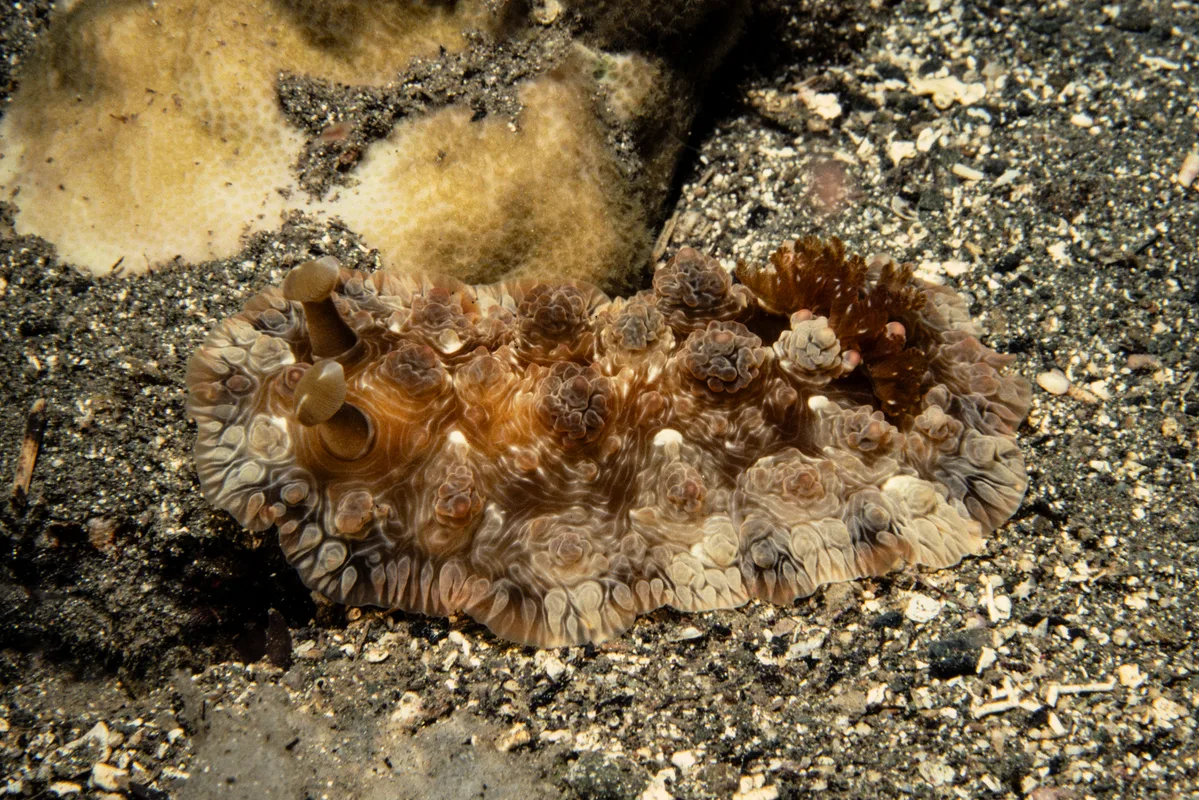
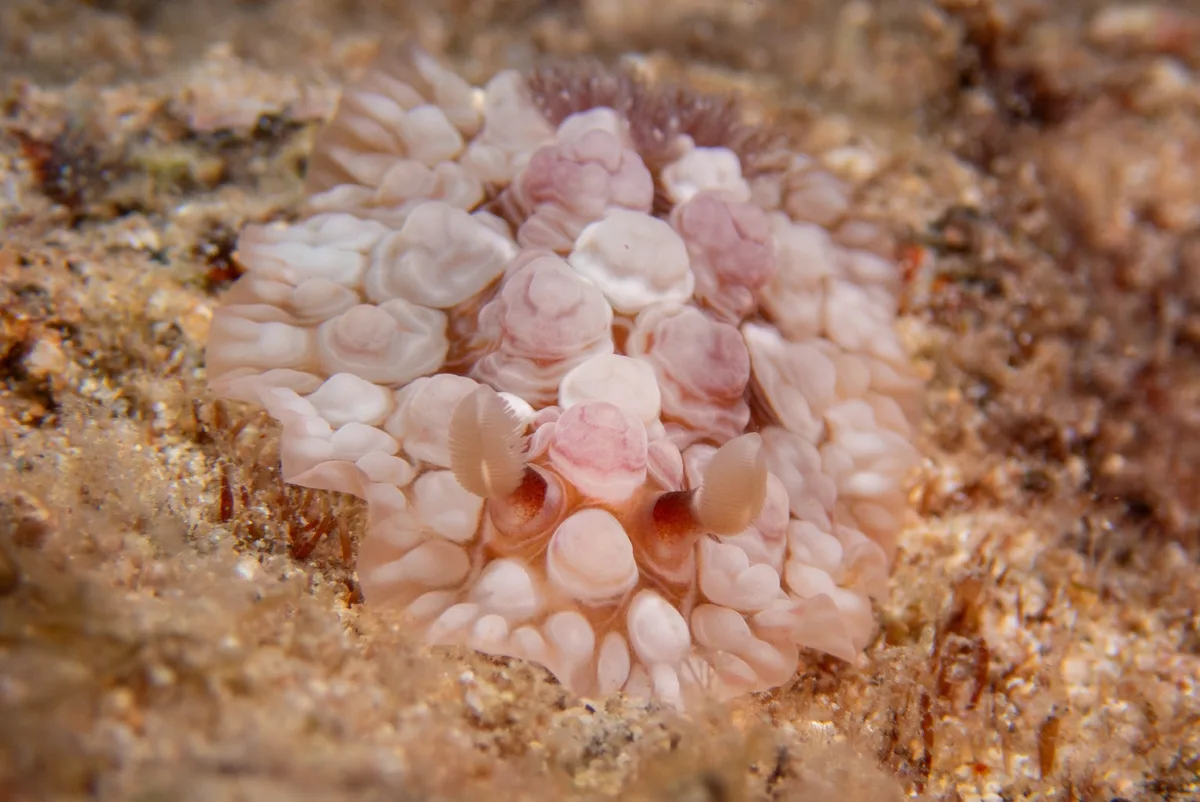
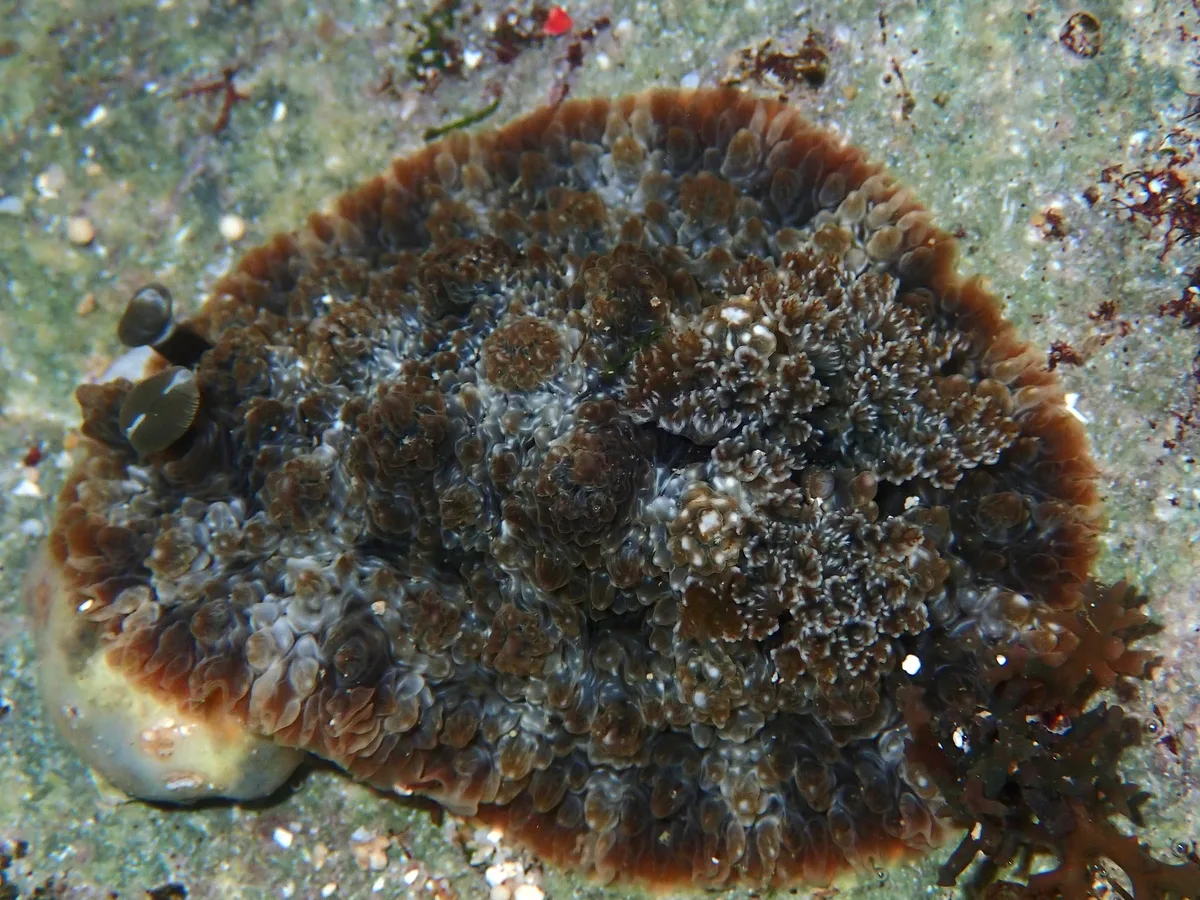
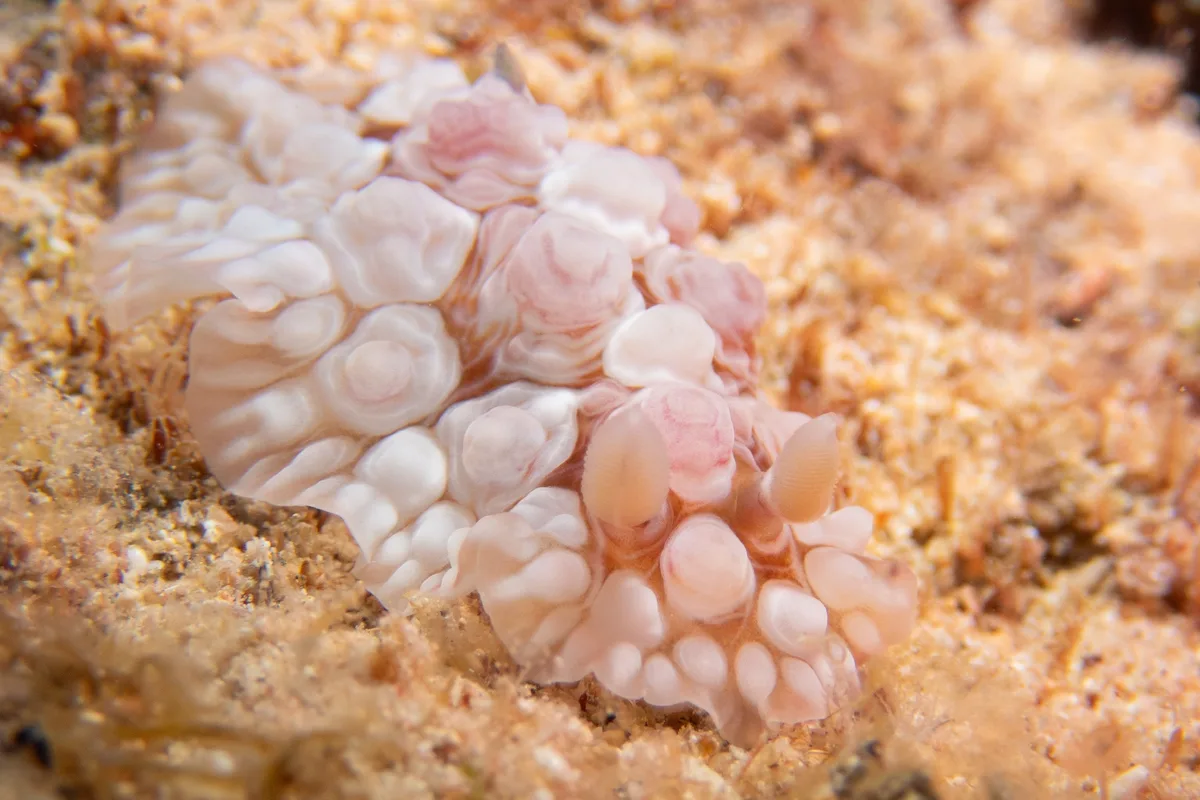
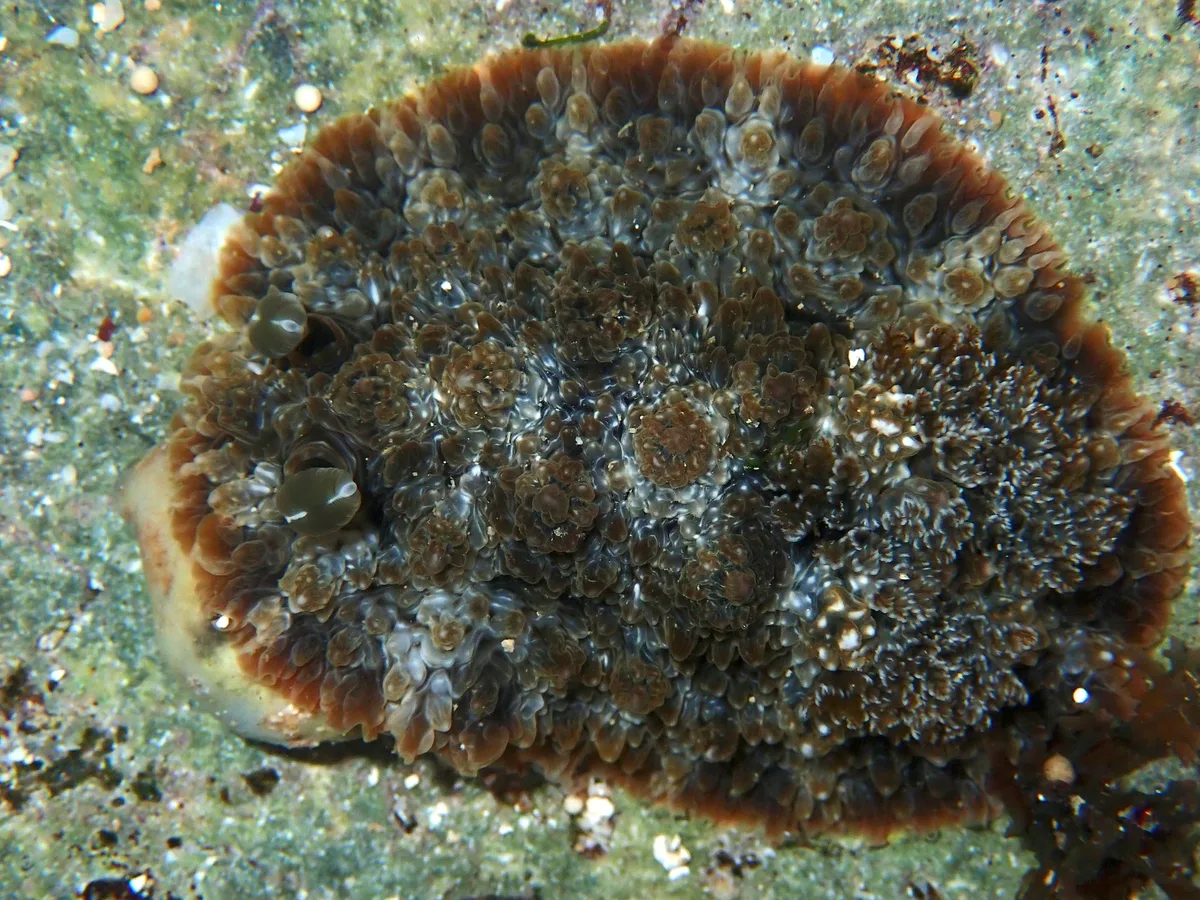
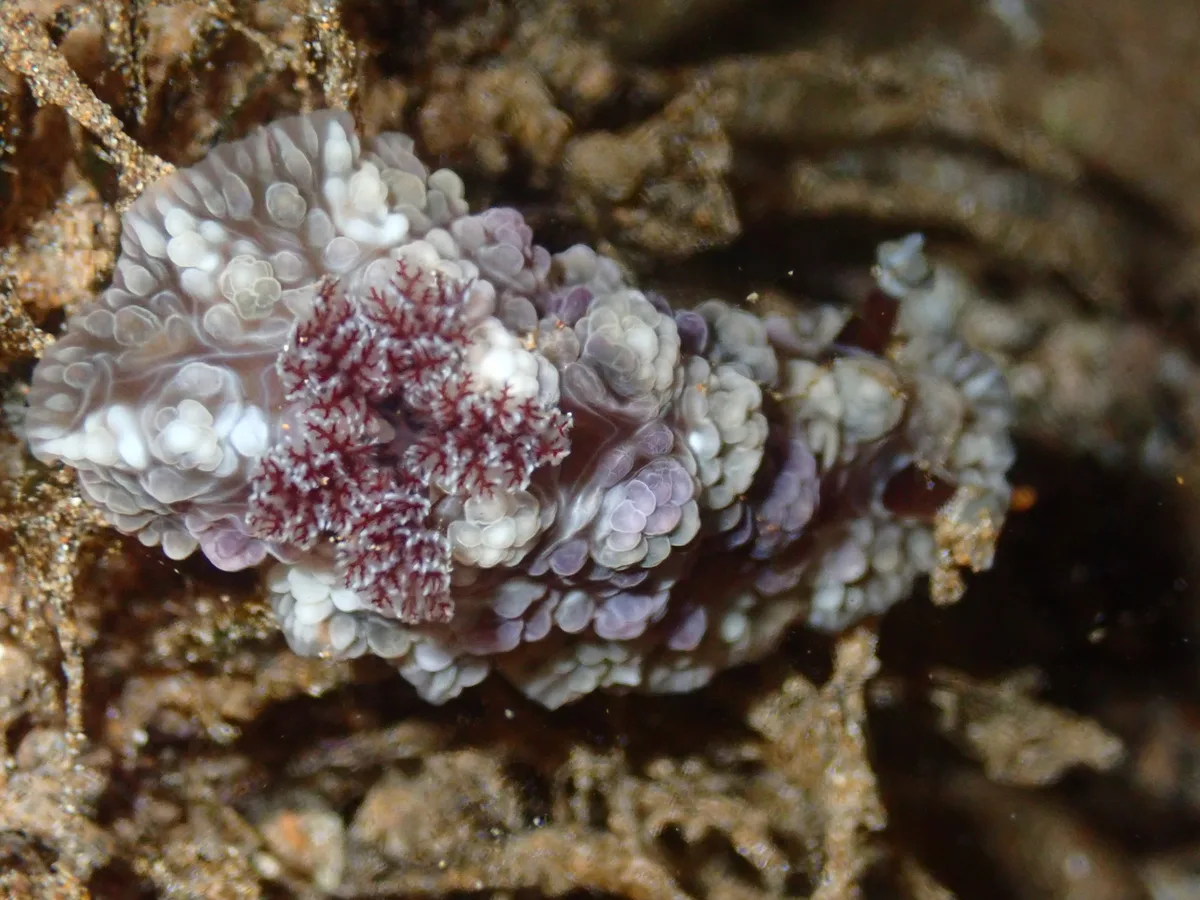
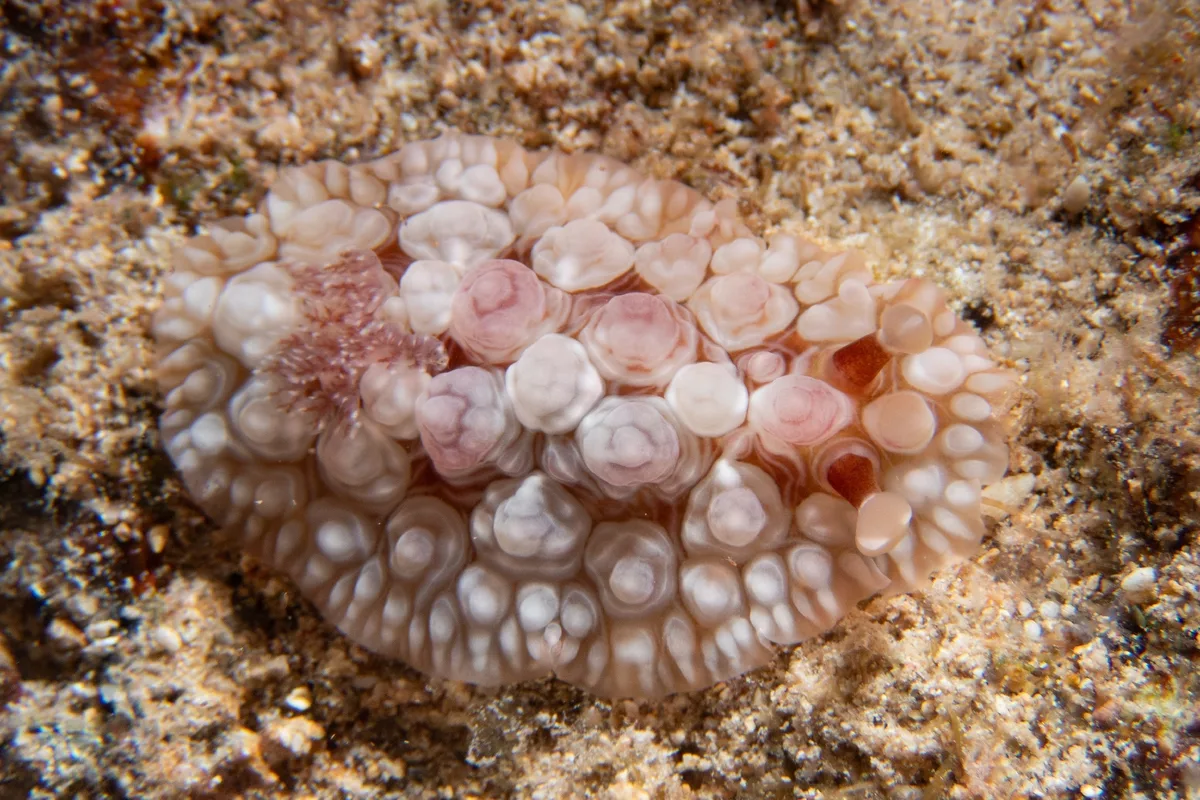
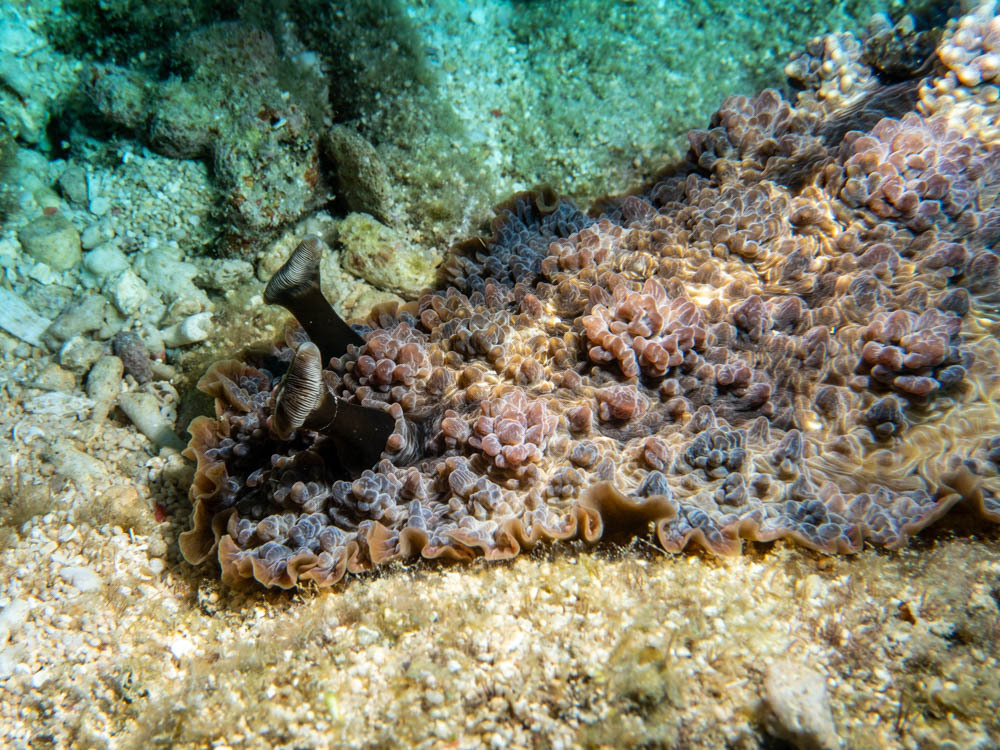
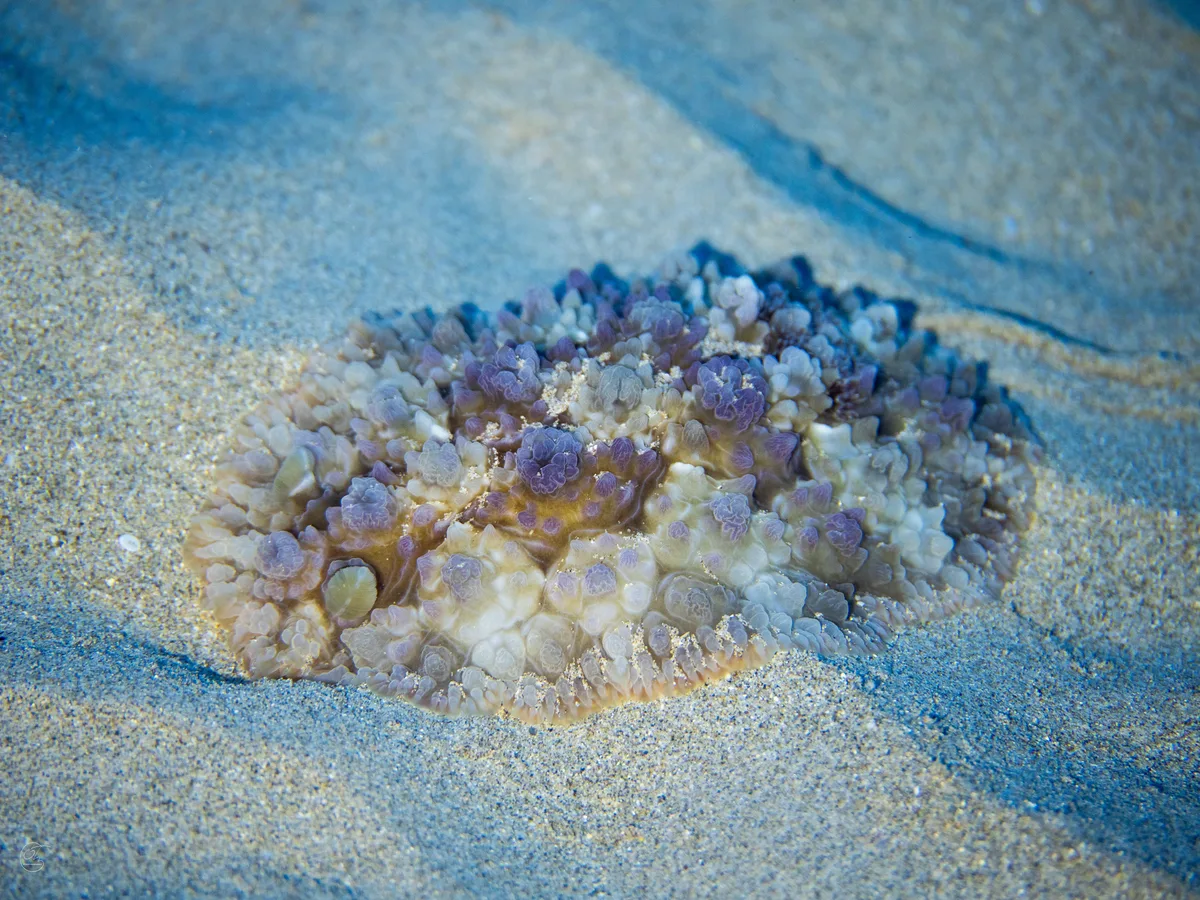
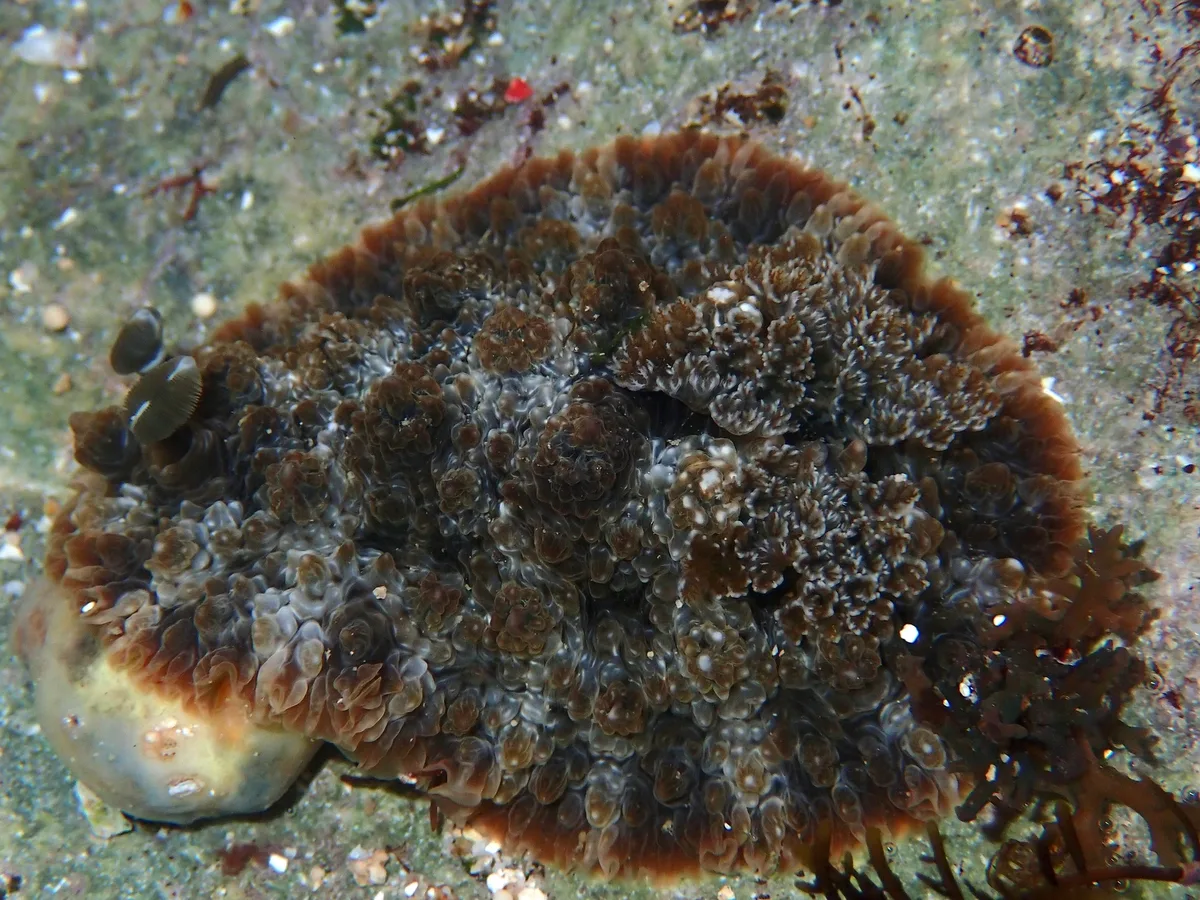
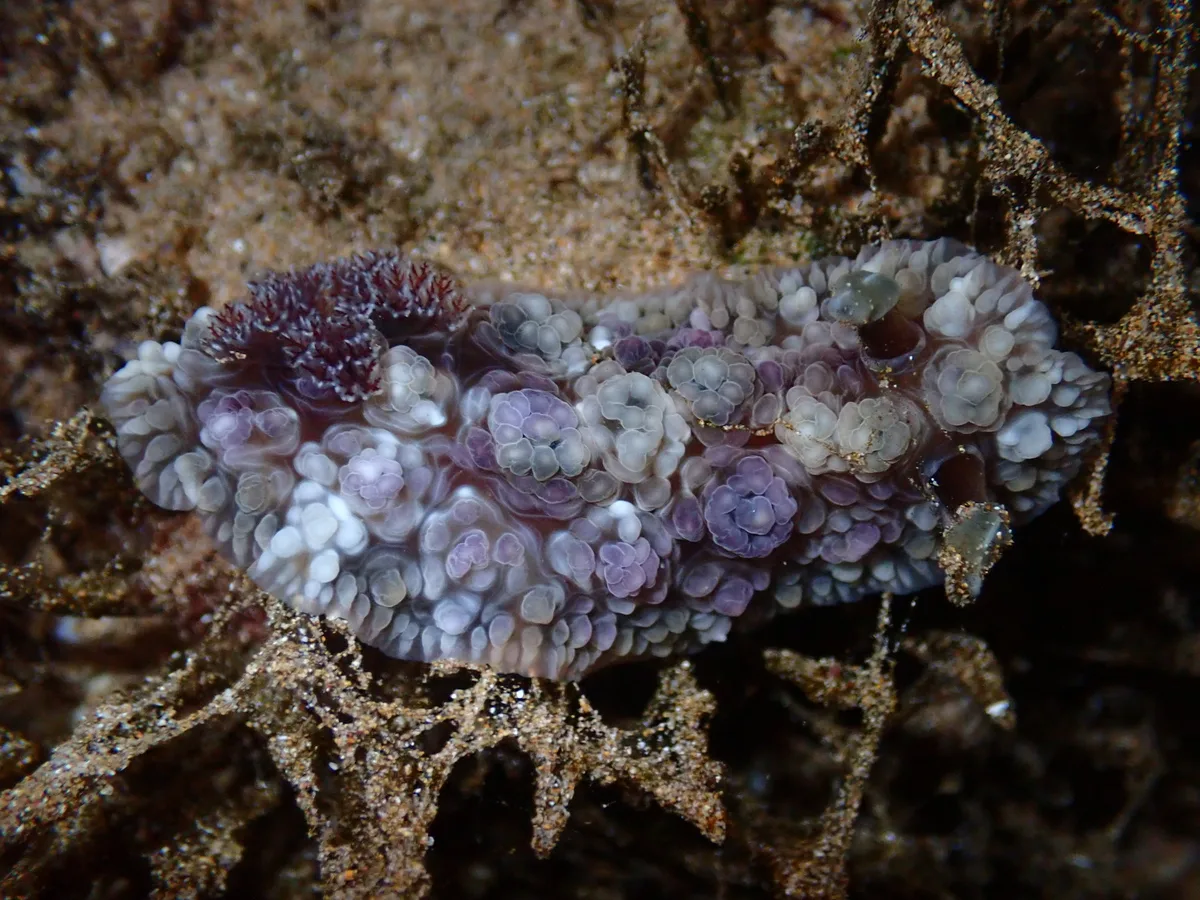
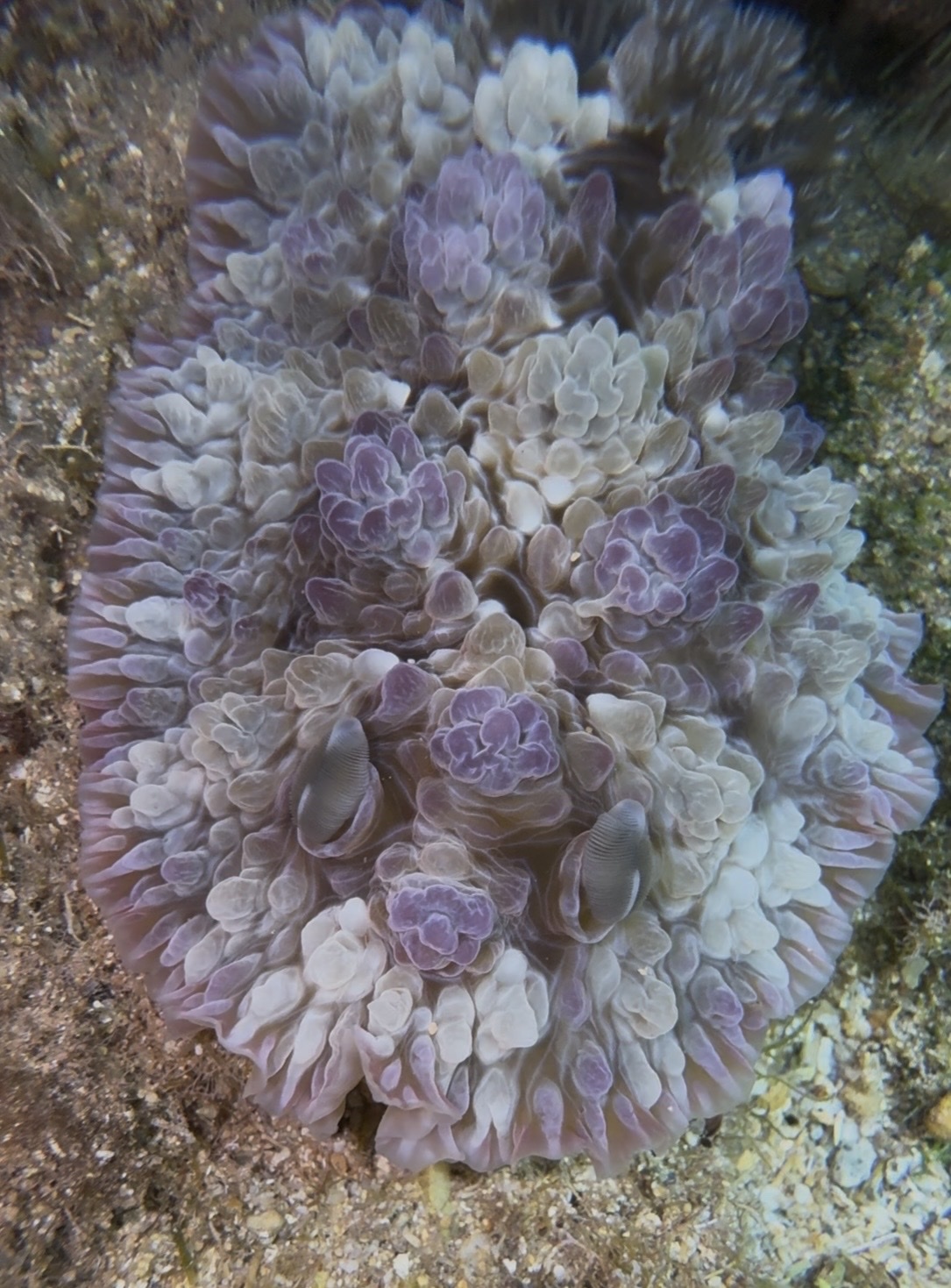
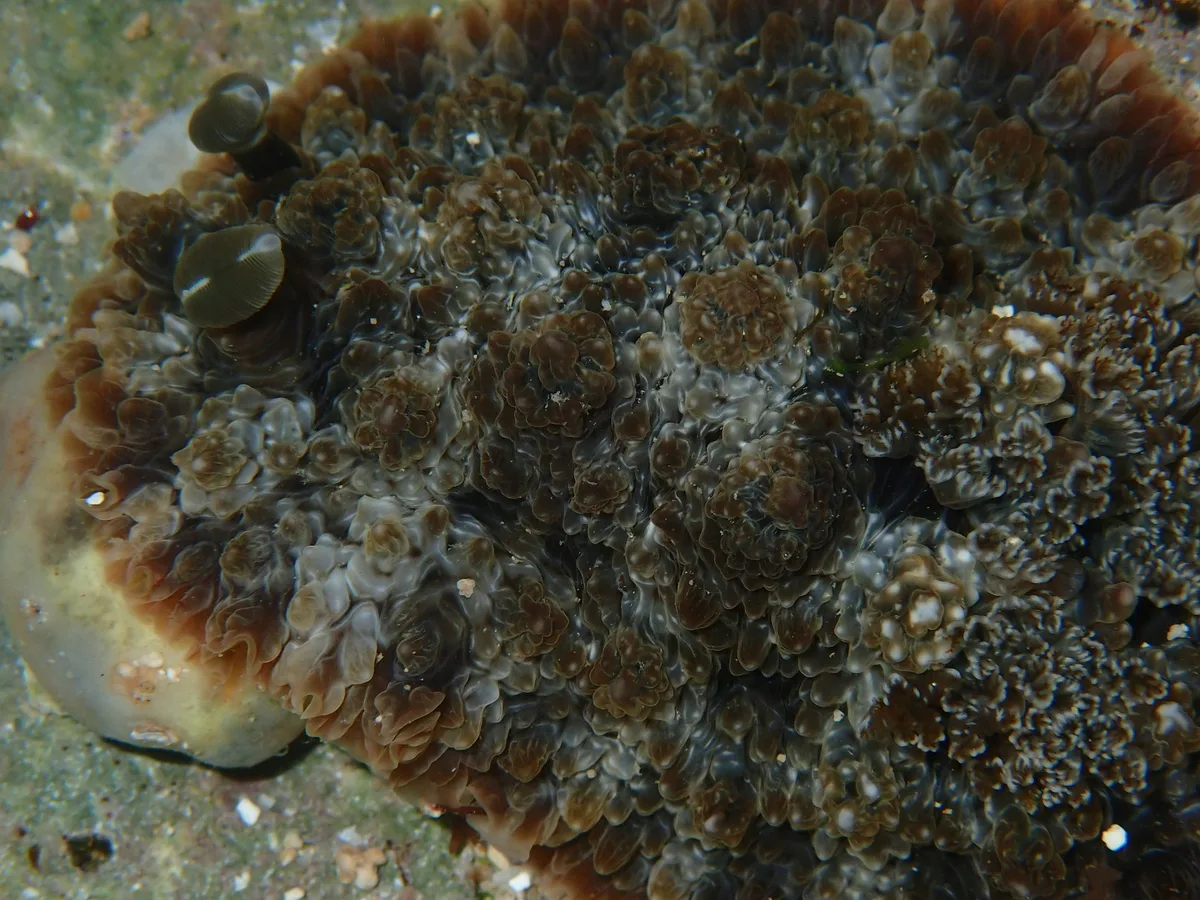
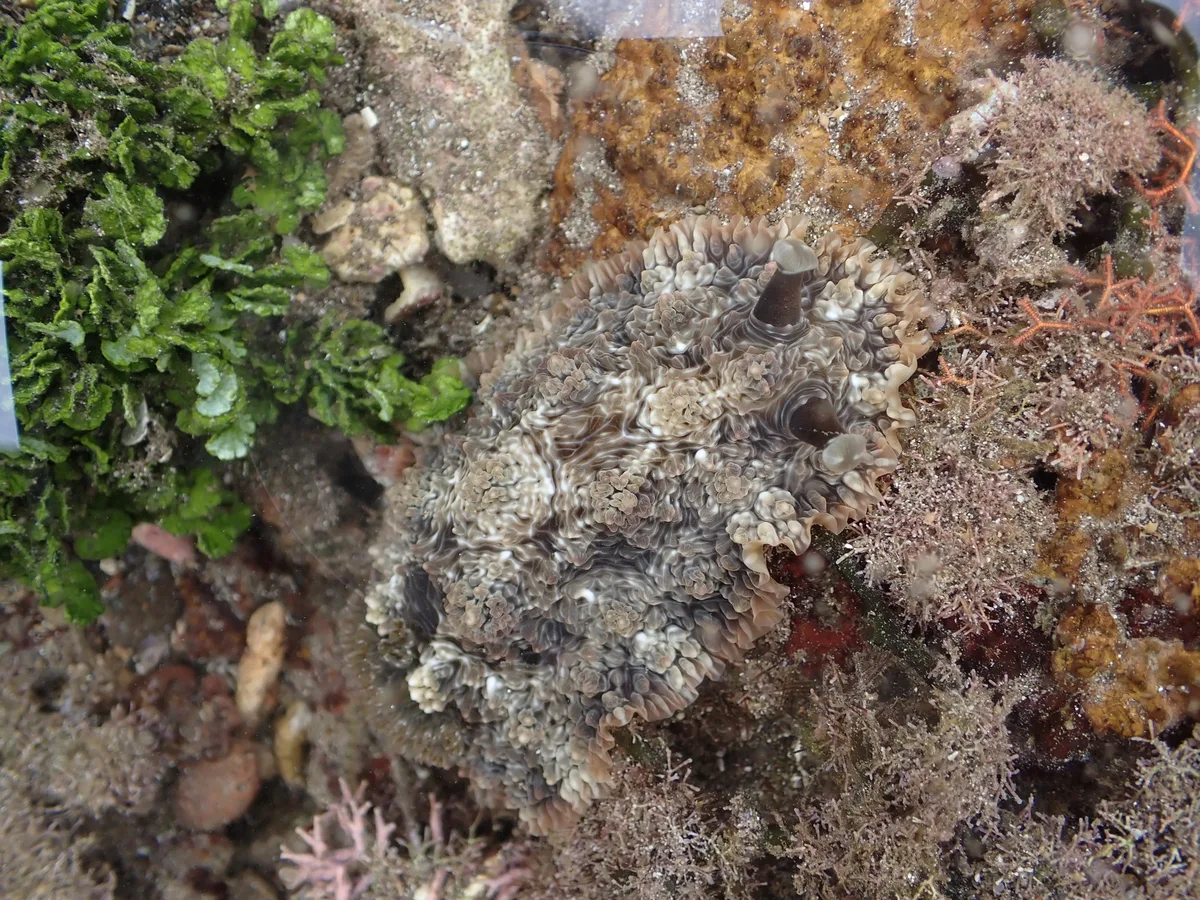
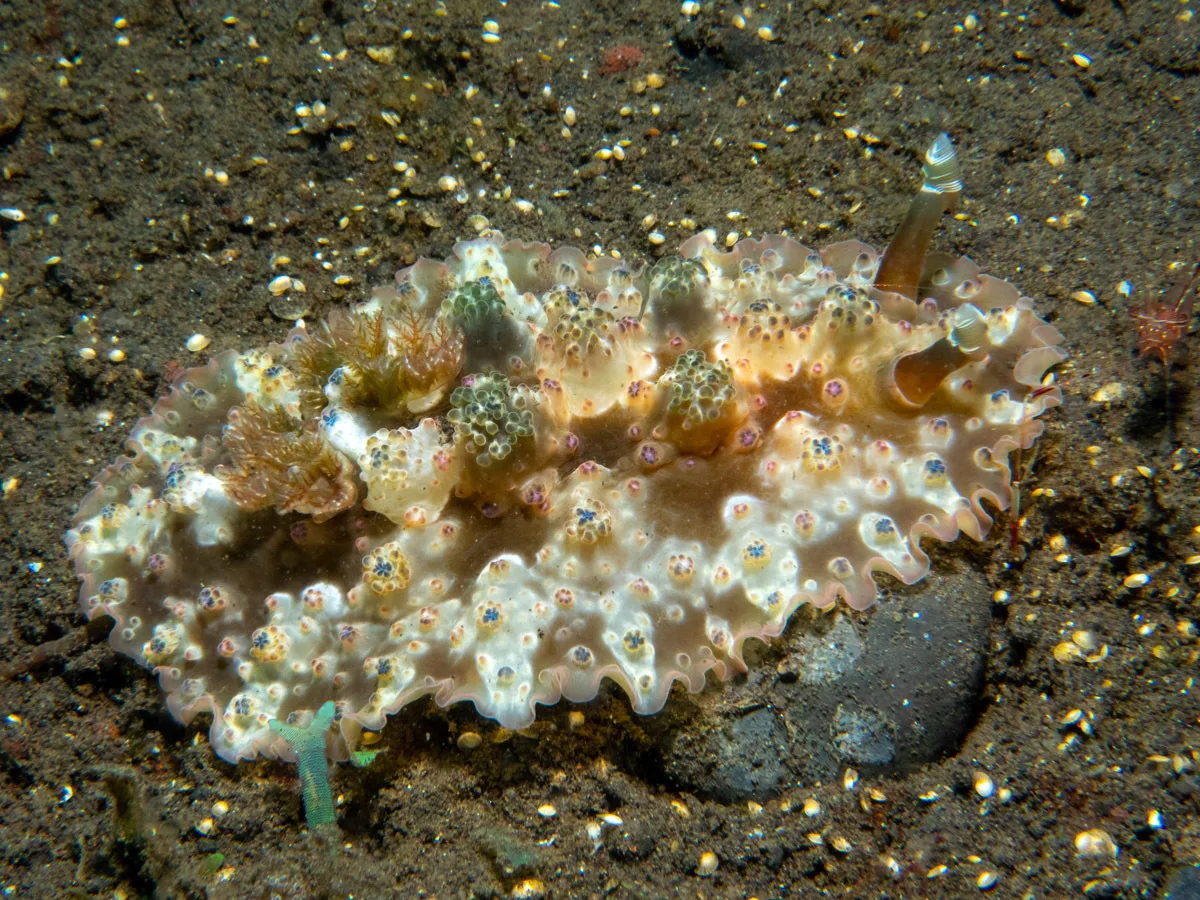
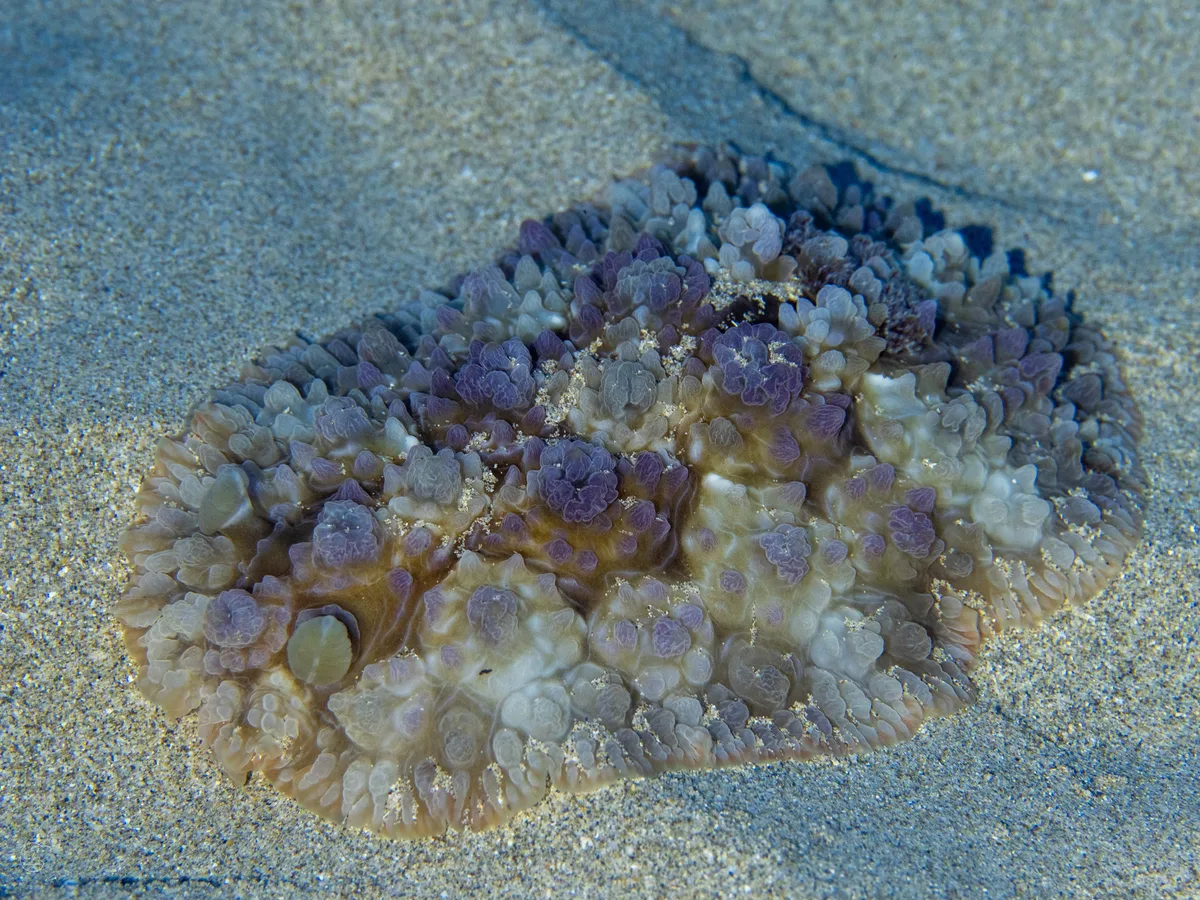
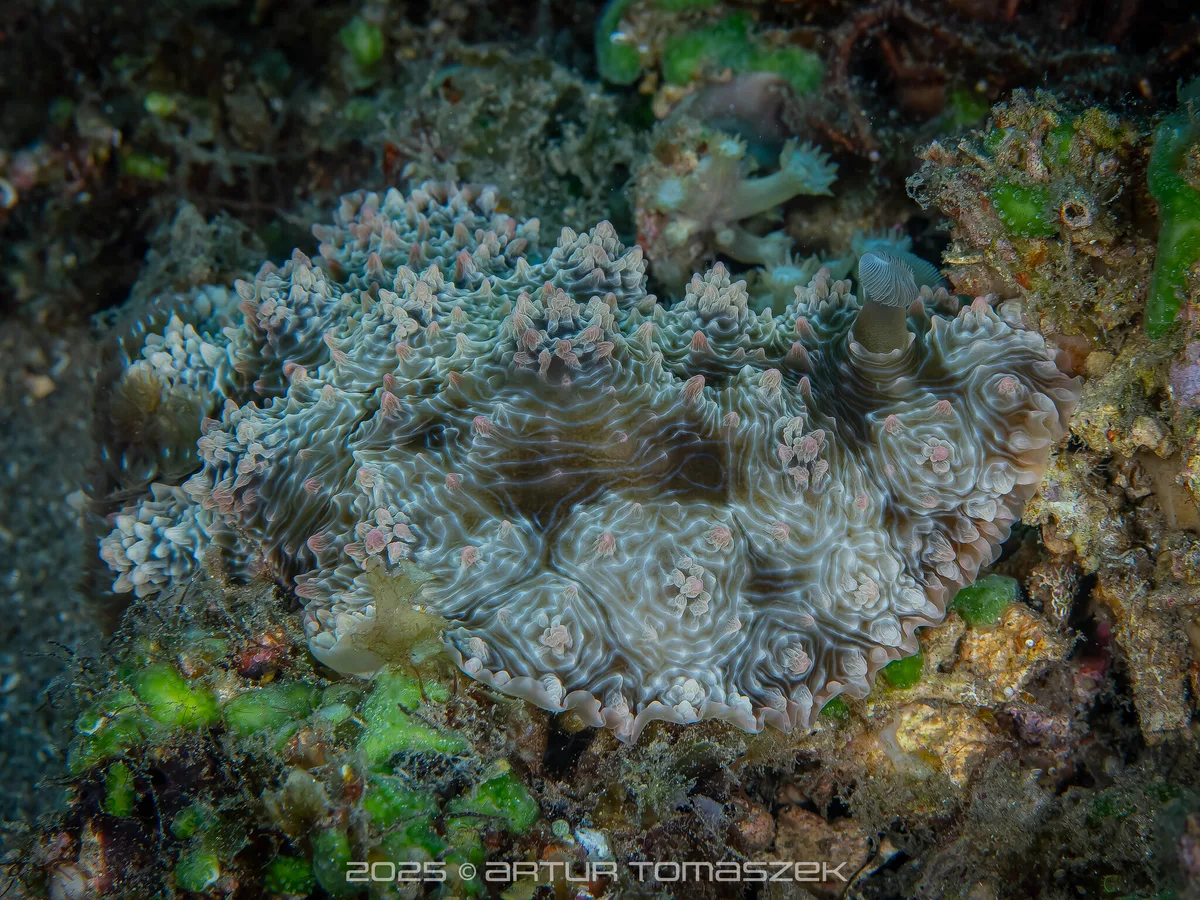
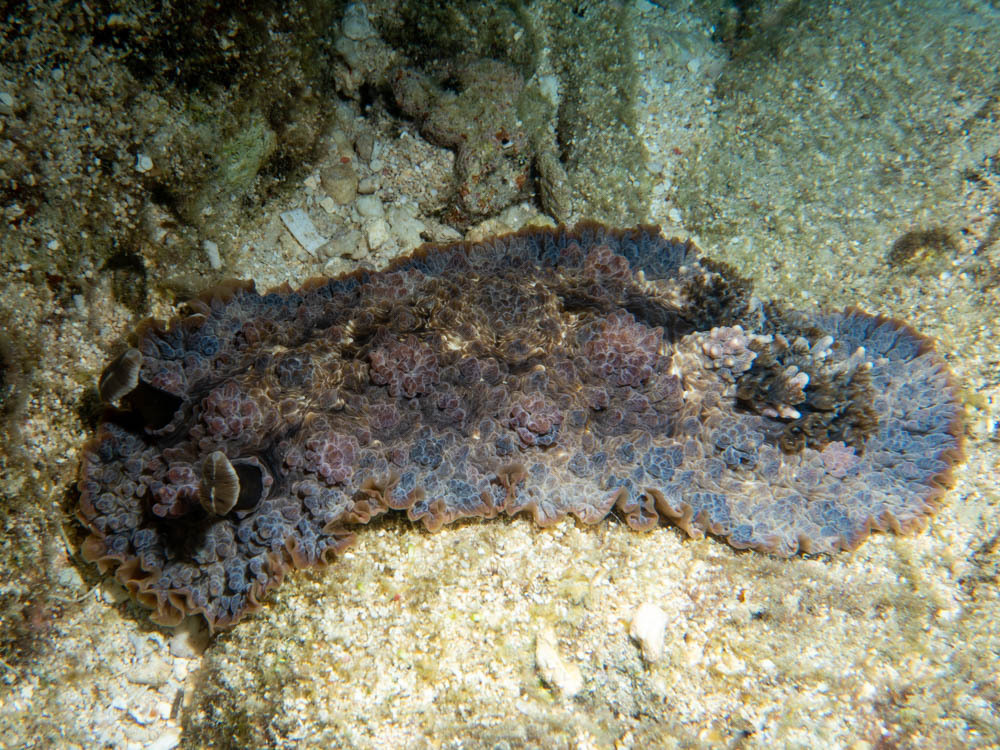
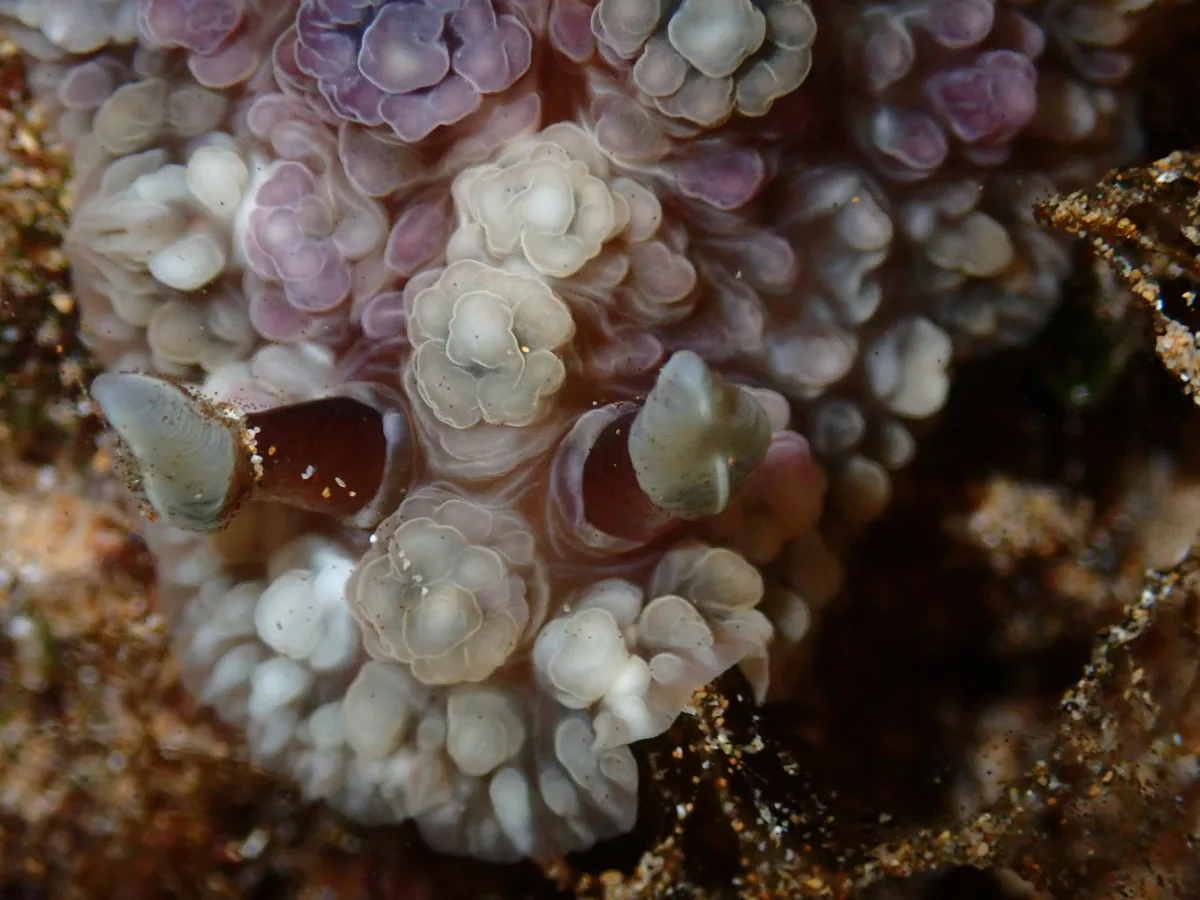
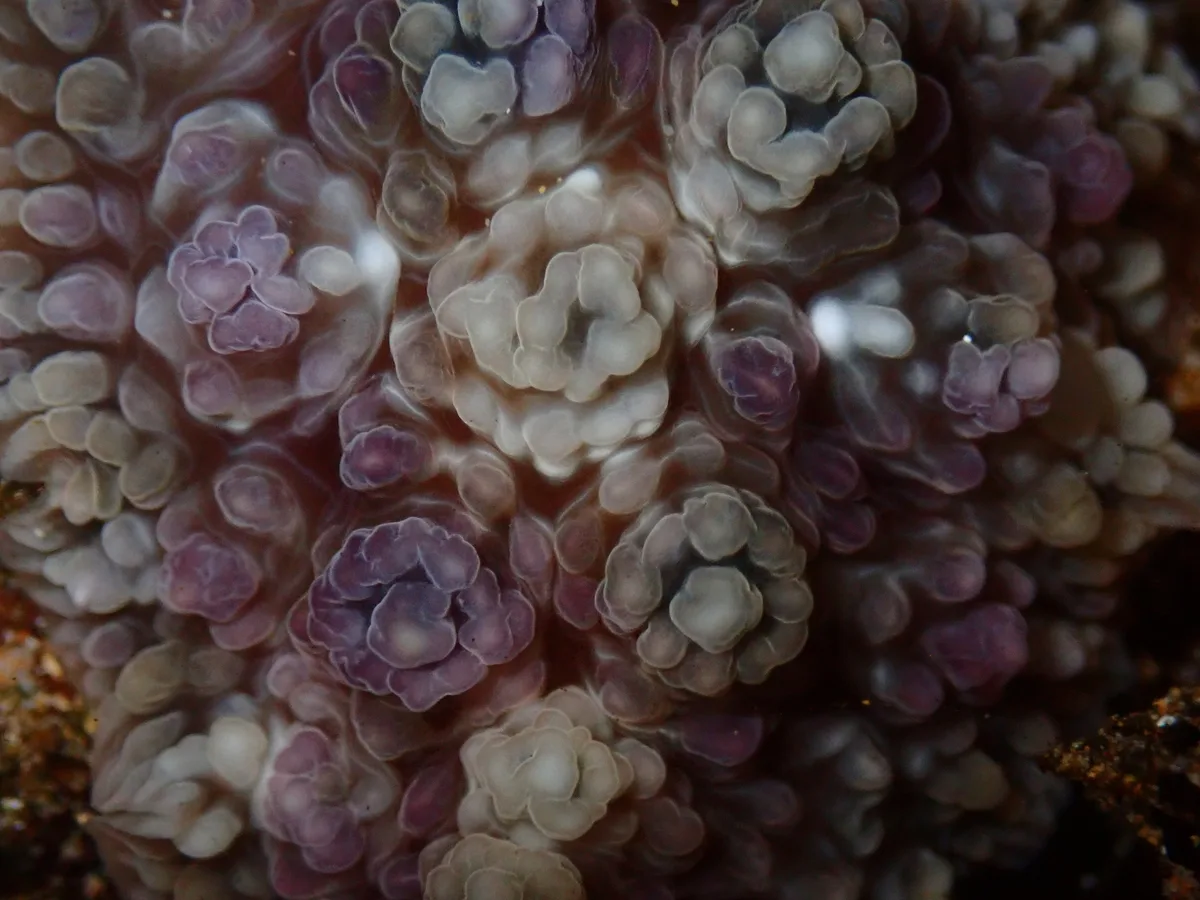
It spends the day wedged under a coral slab or a lump of rubble and comes out on open rock after dark, which is why a group of divers can work a reef for years without seeing one. The surface is the mark: the mantle is covered in compound tubercles that look semitransparent, like clusters of small blisters rather than the hard warts of the wart slugs, and the whole animal is soft and heavy and slightly slumped rather than firm.
Color is no help at all. Brown, green, cream, mottled, sometimes almost red, and two animals from one reef can look unrelated. Size, texture and the nocturnal habit are what identify it.
Like the rest of its genus it has no radula and no teeth. It feeds by pressing its mouth to a sponge, releasing digestive fluid into it and drawing the dissolved tissue back, which works on soft sponges and explains why the family is tied to them.
If you find one on a night dive, look for the egg ribbon nearby: a wide coiled band stuck to the rock, often laid within a body length of the animal that made it.
- very large, up to 20 cm, and soft rather than firm
- mantle covered in semitransparent compound tubercles
- color extremely variable: brown, green, cream, mottled
- under slabs by day, out on rock after dark