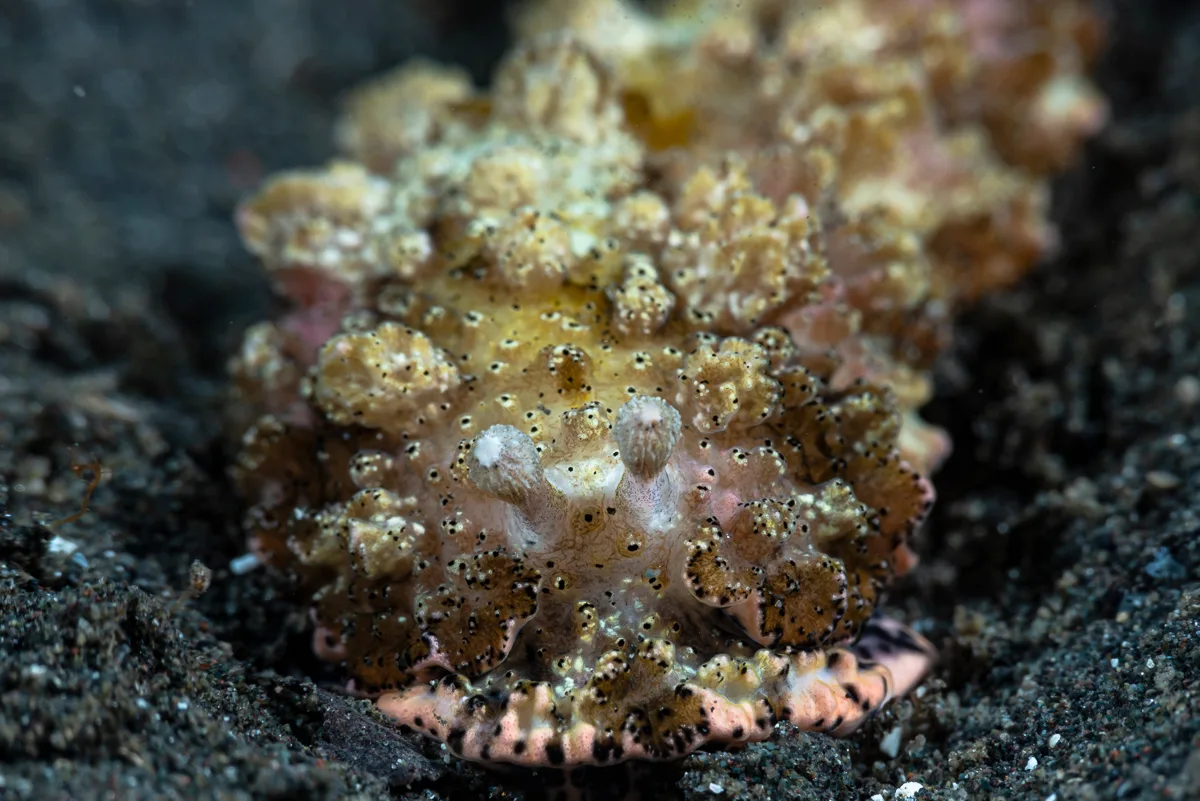
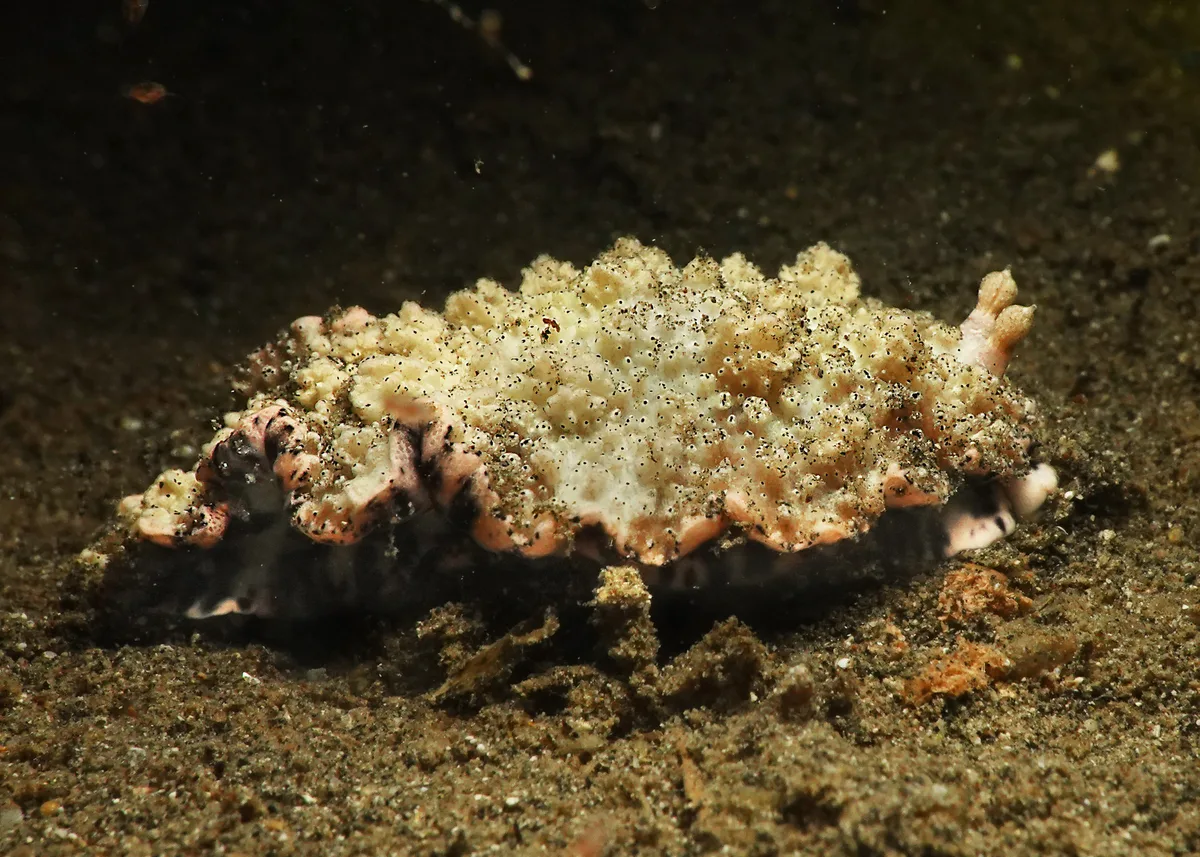
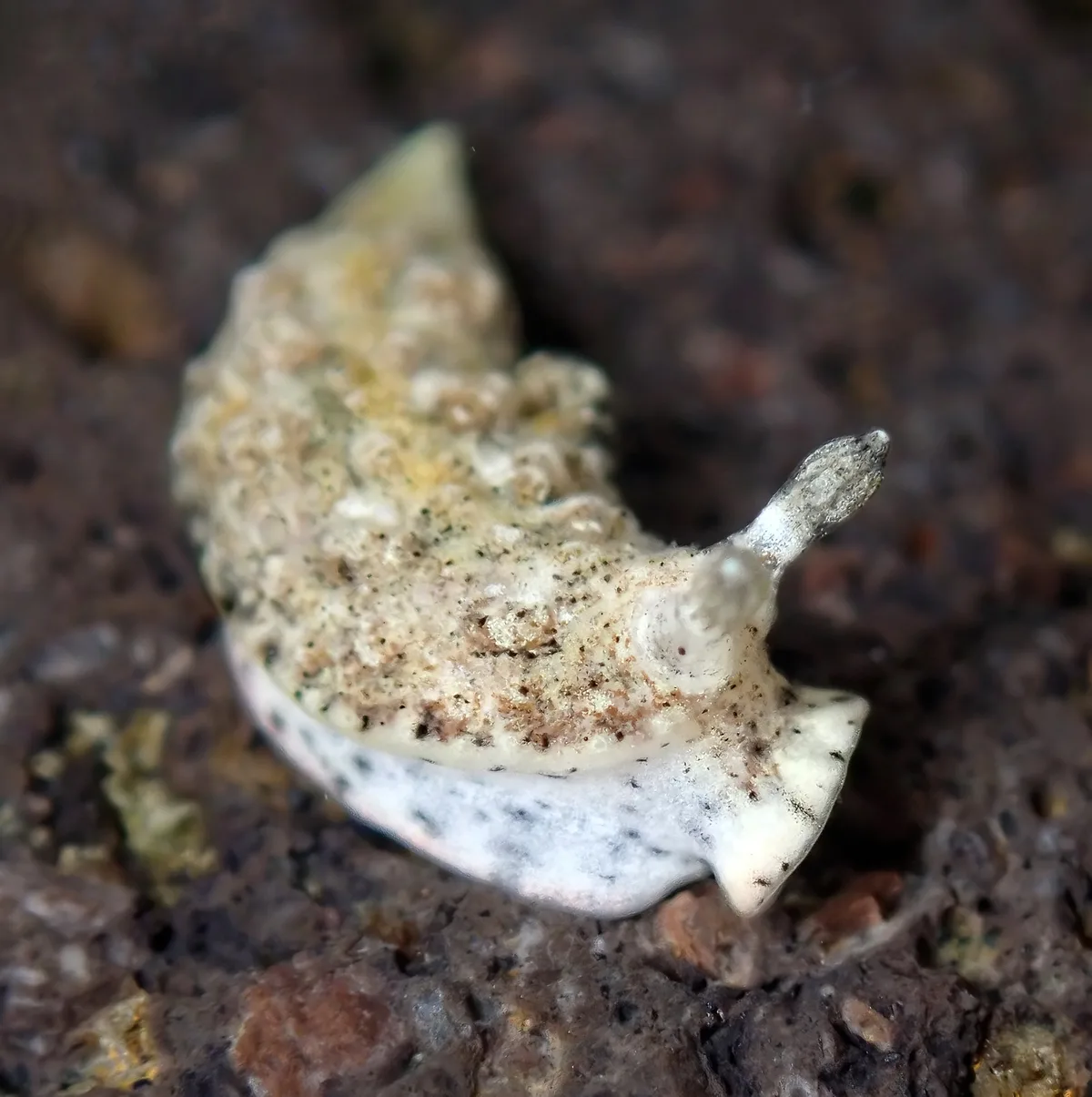
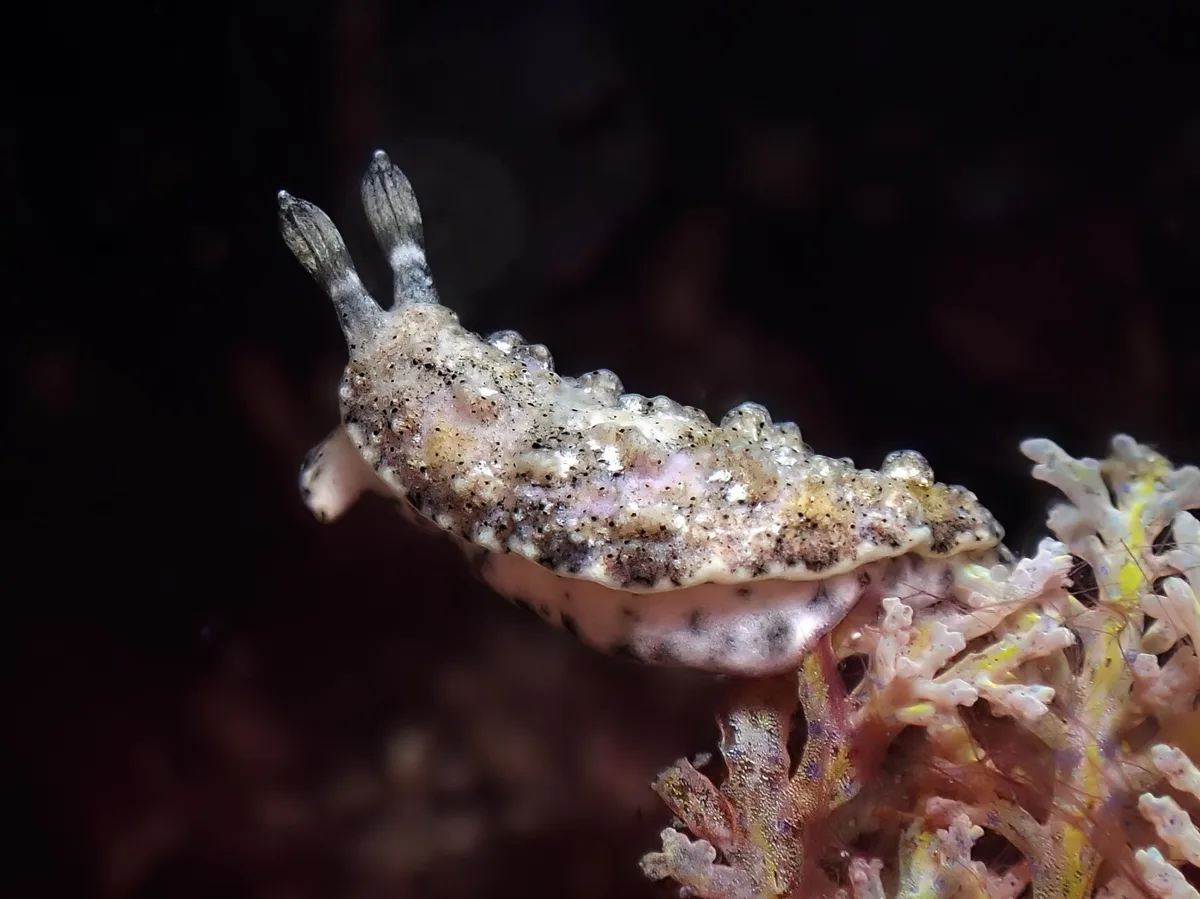
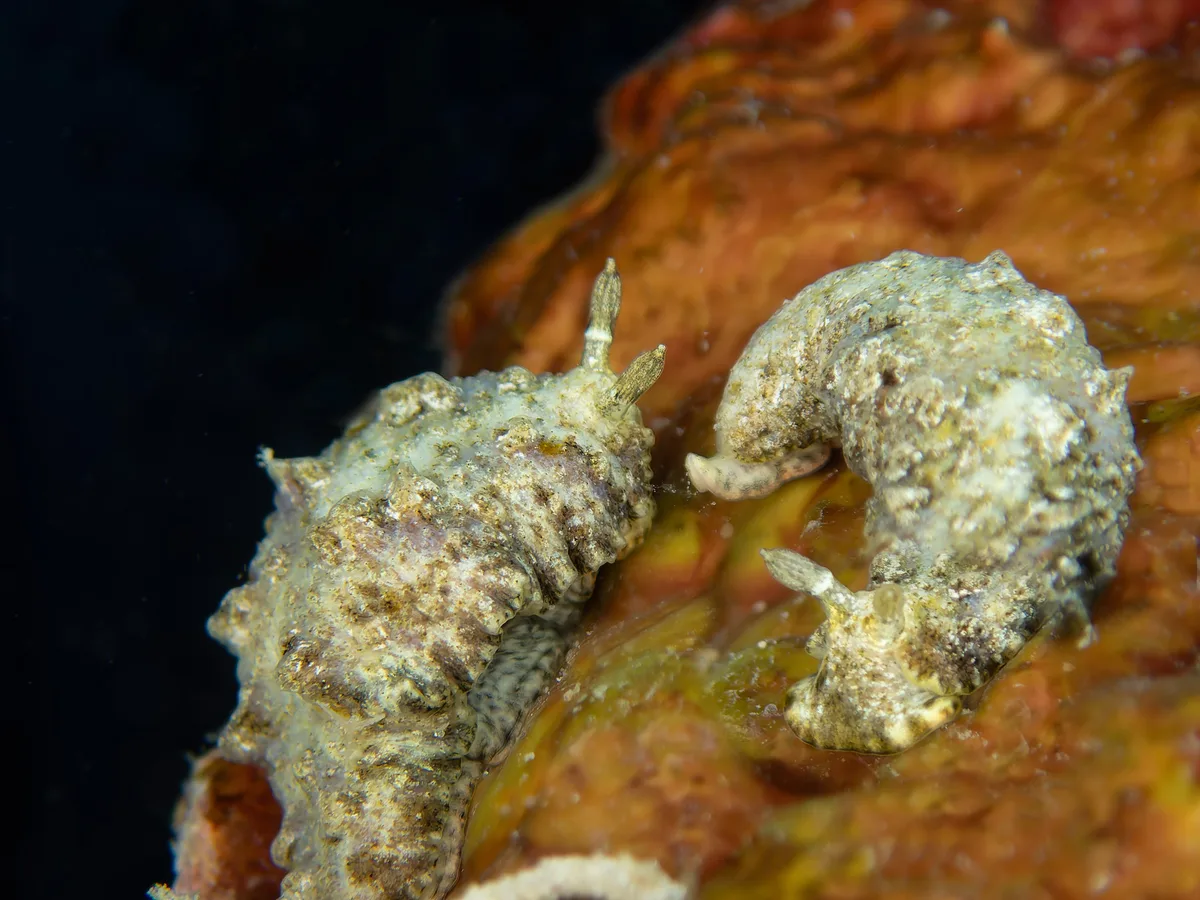
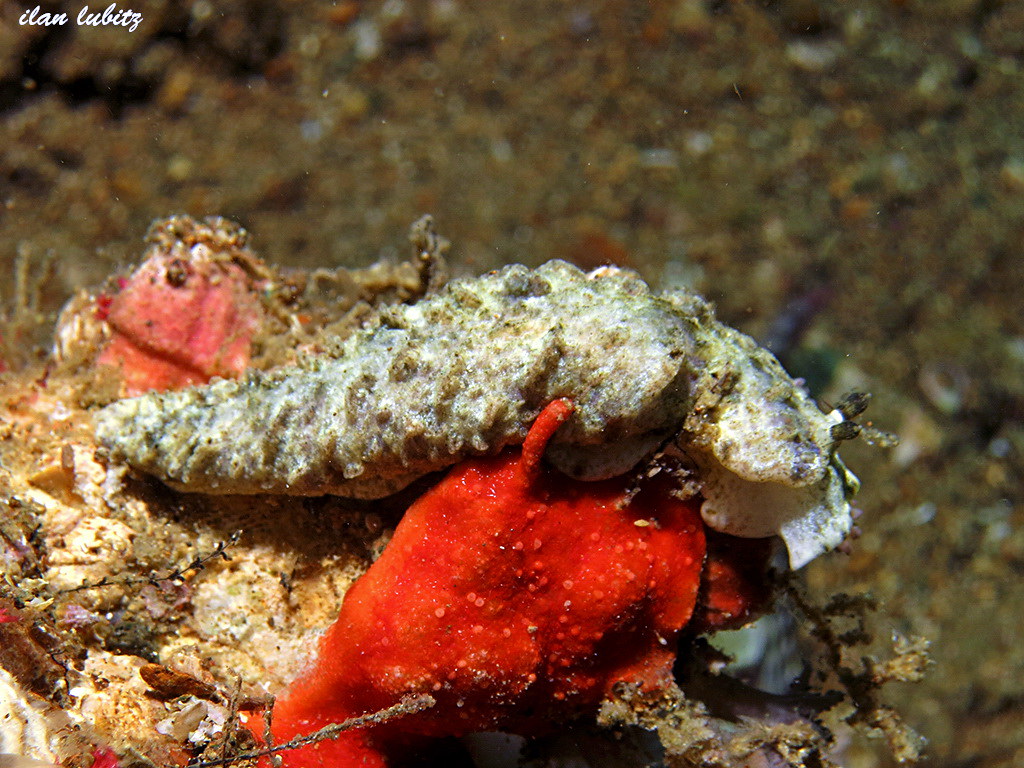
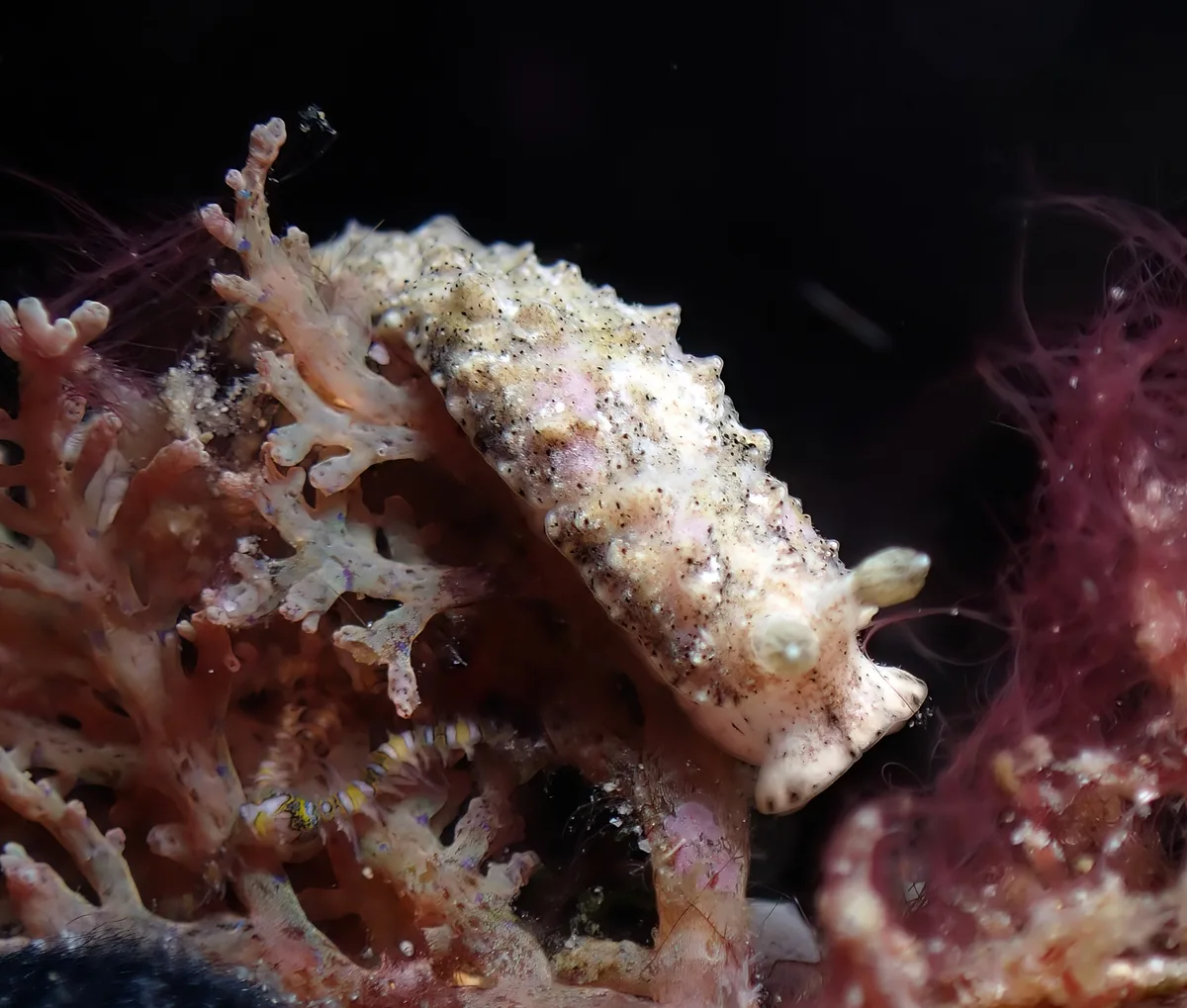
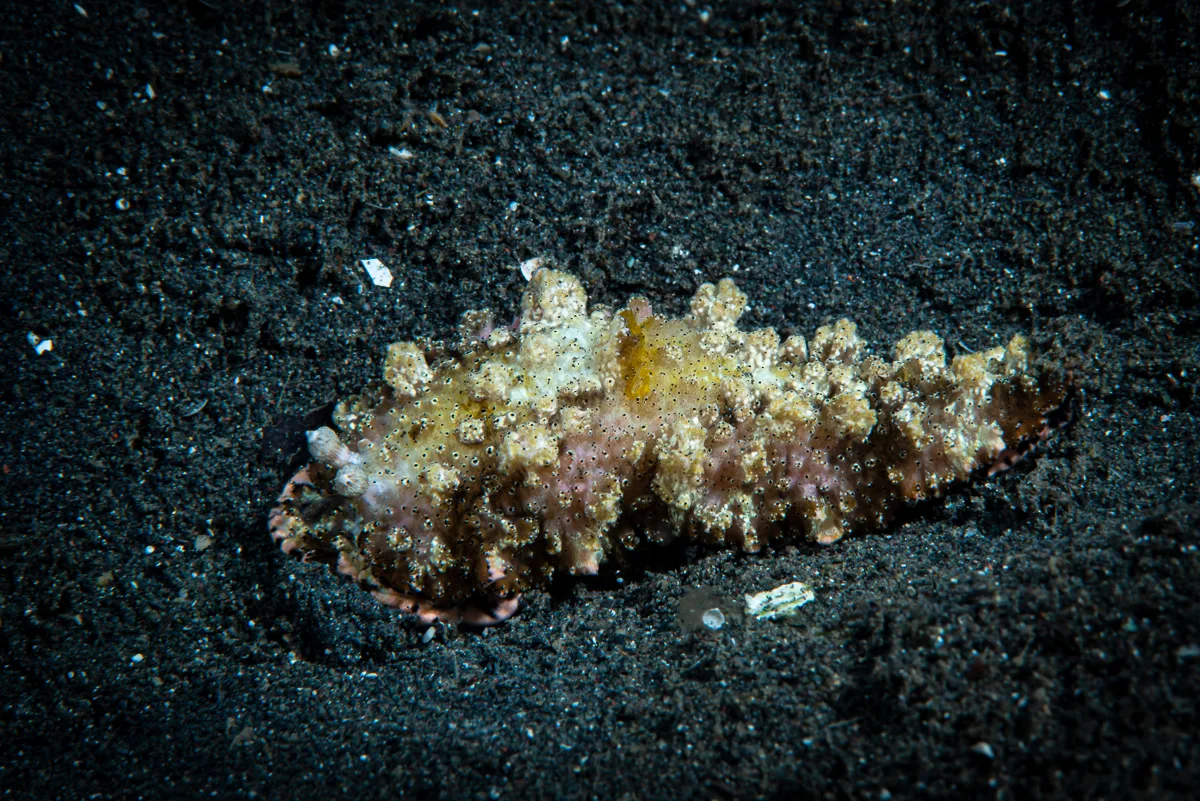
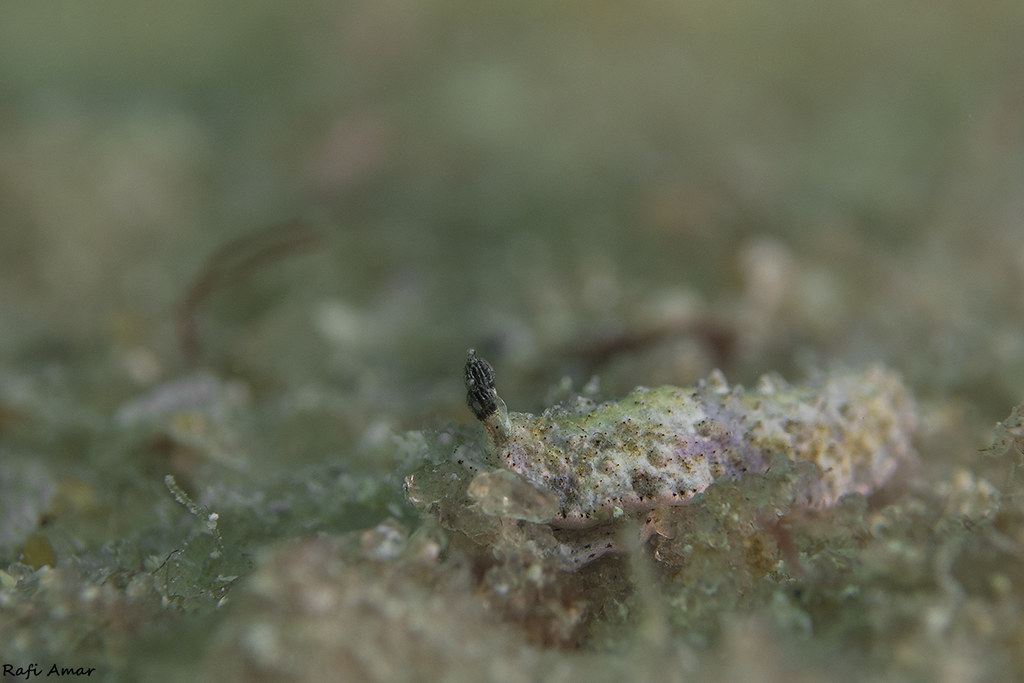
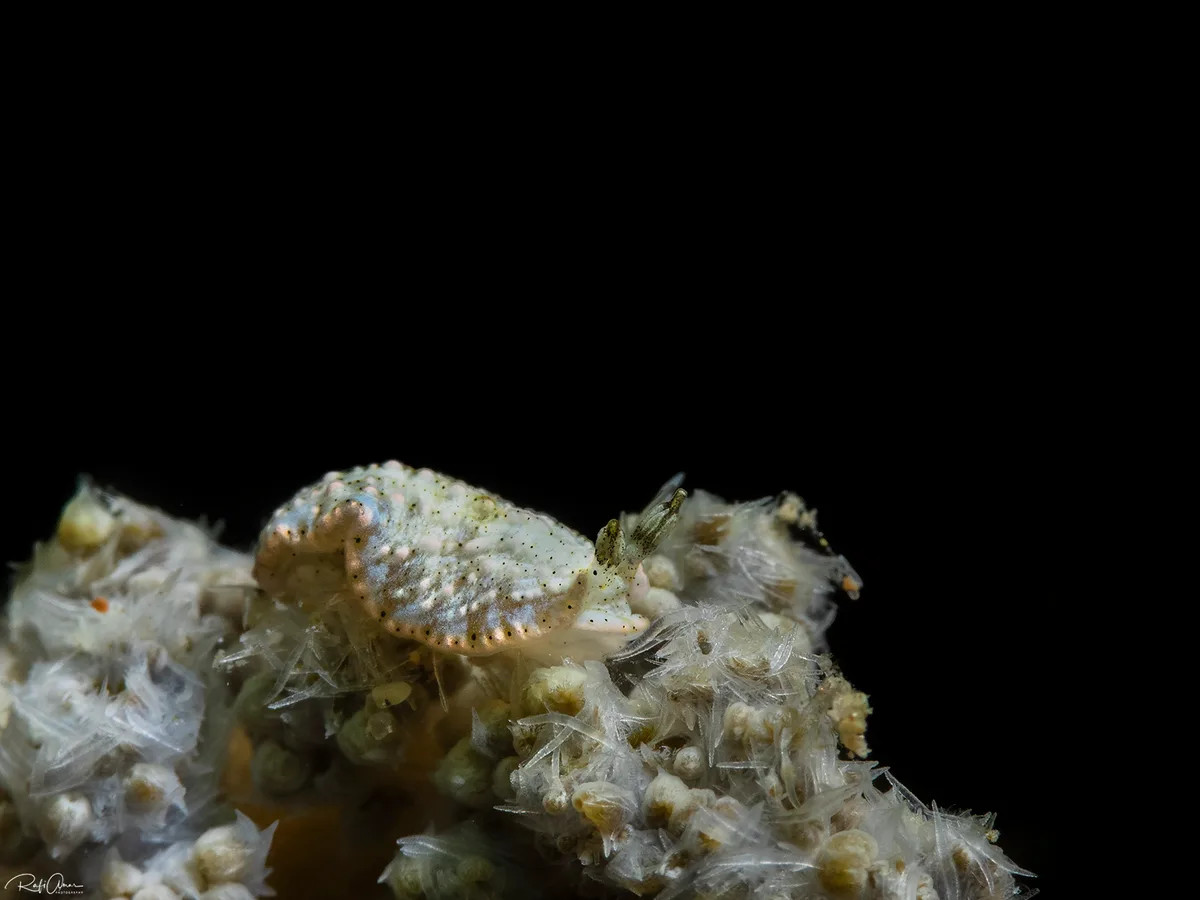
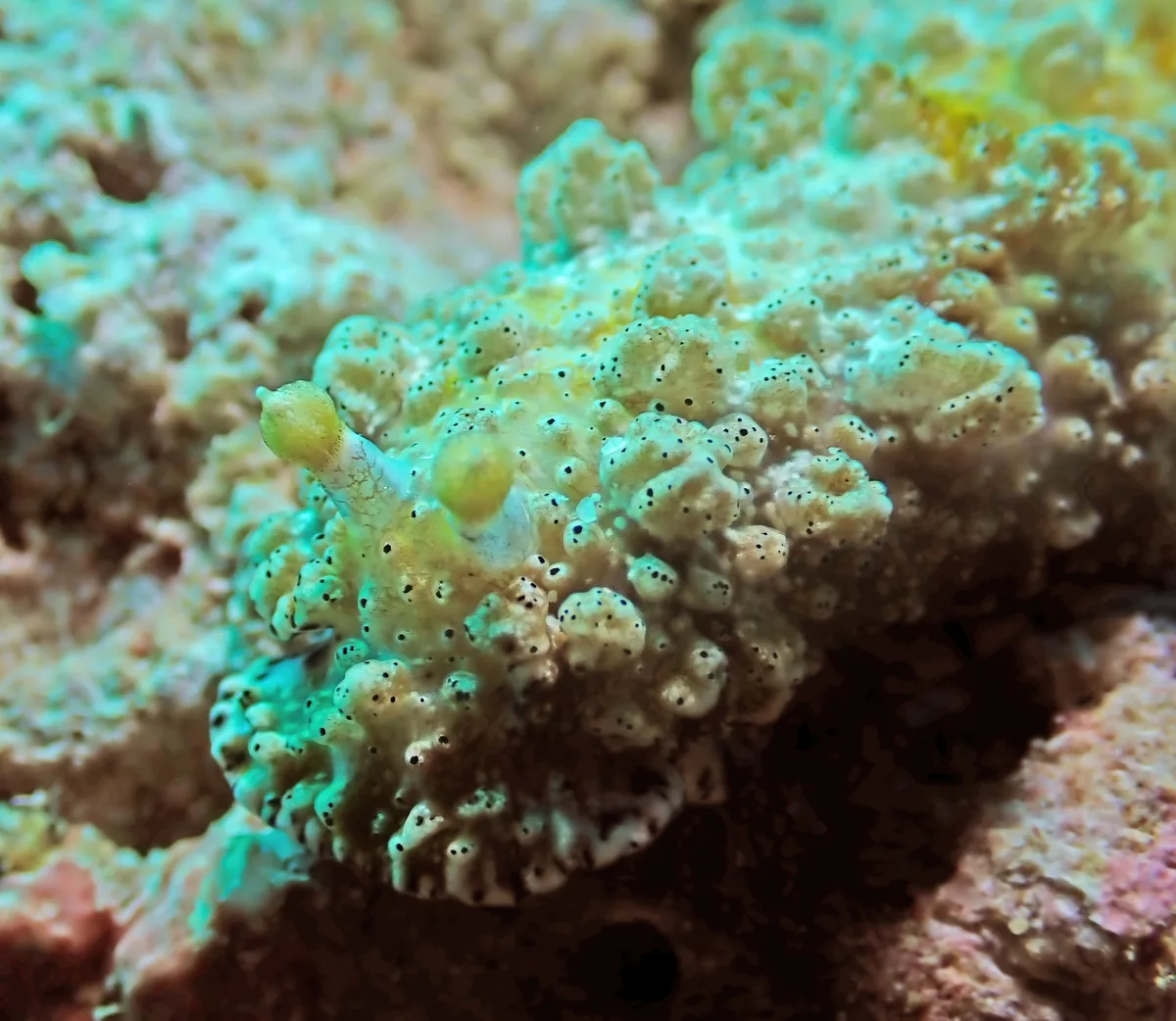
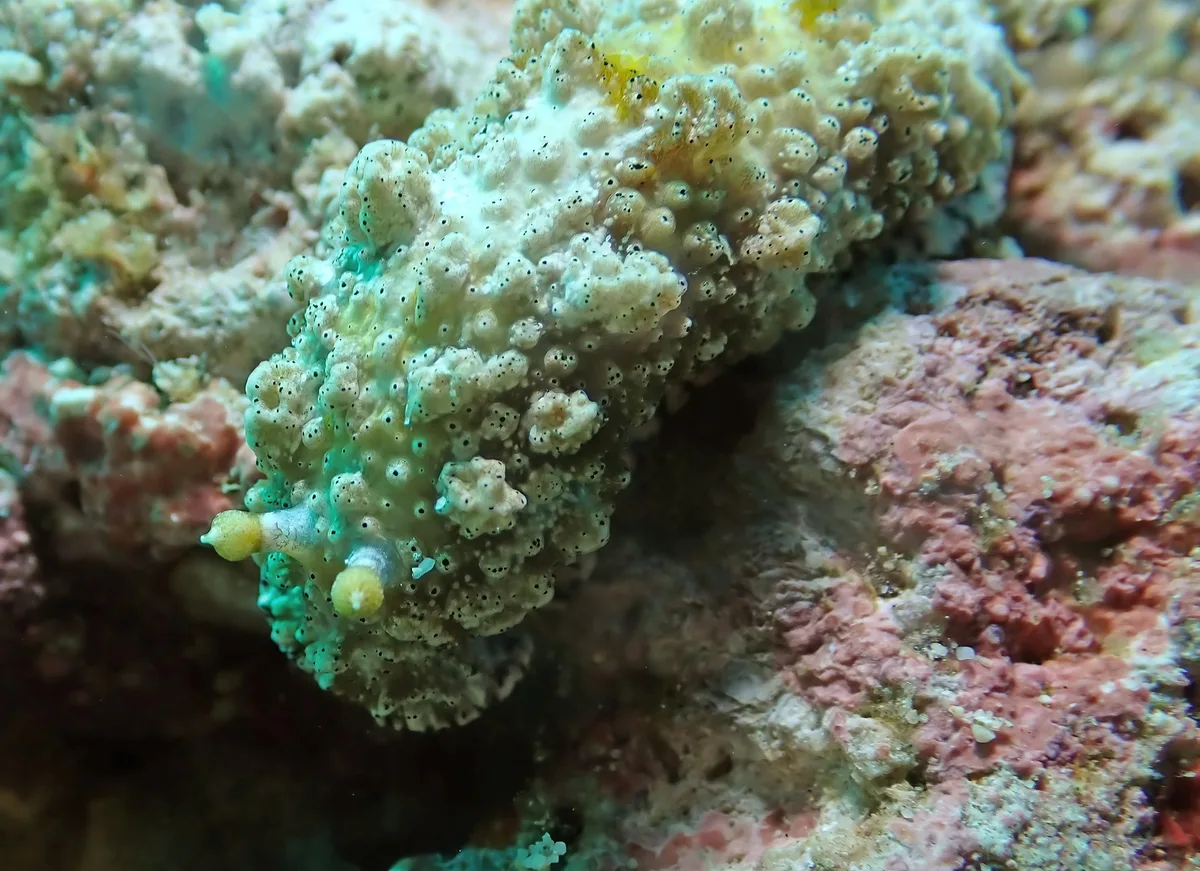
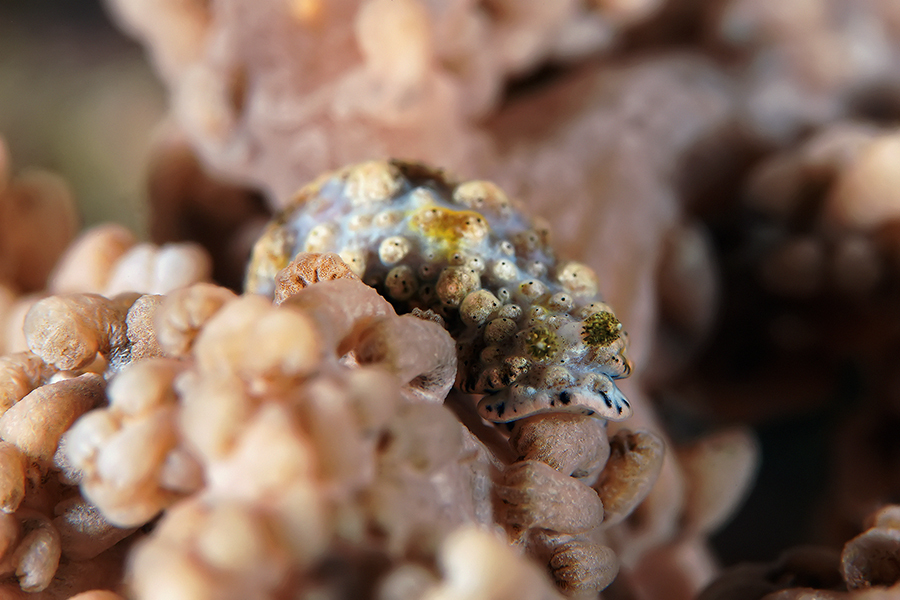
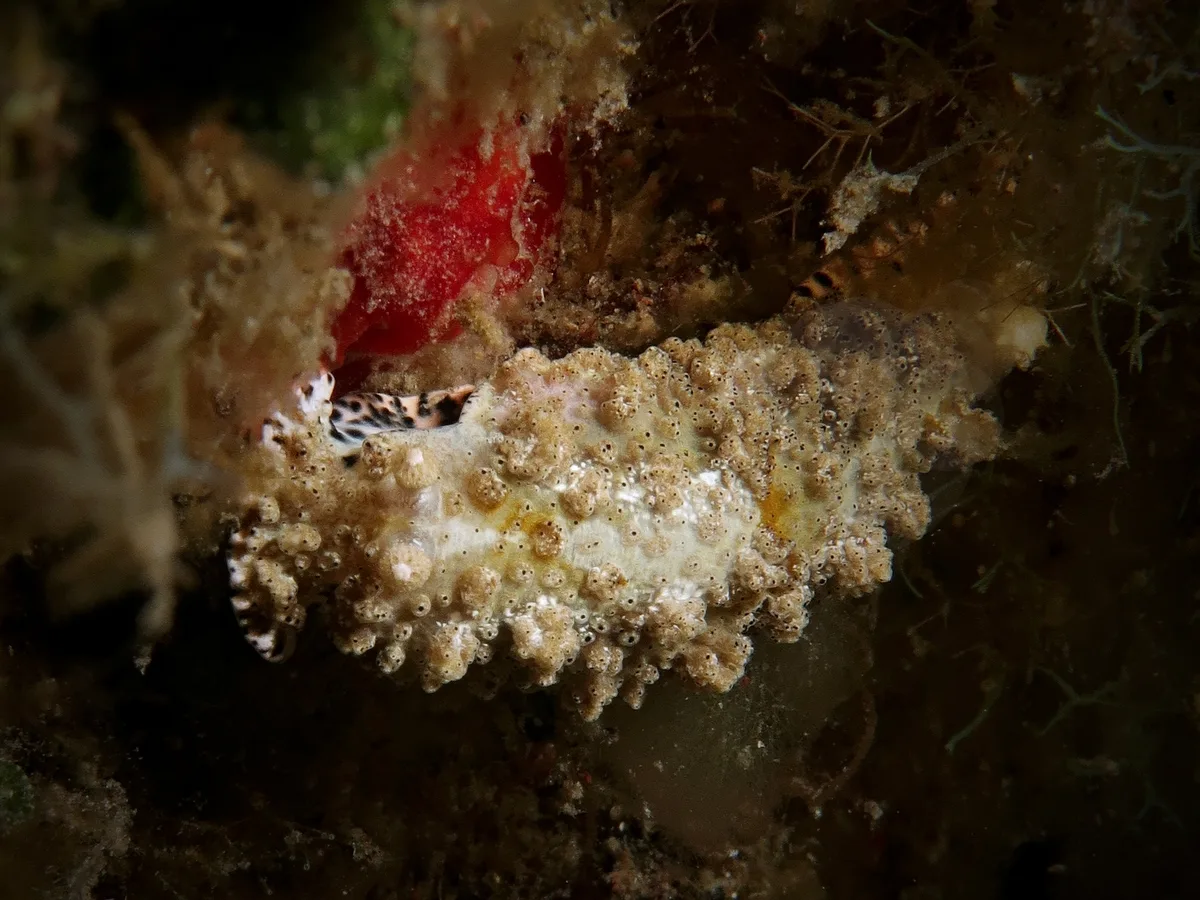
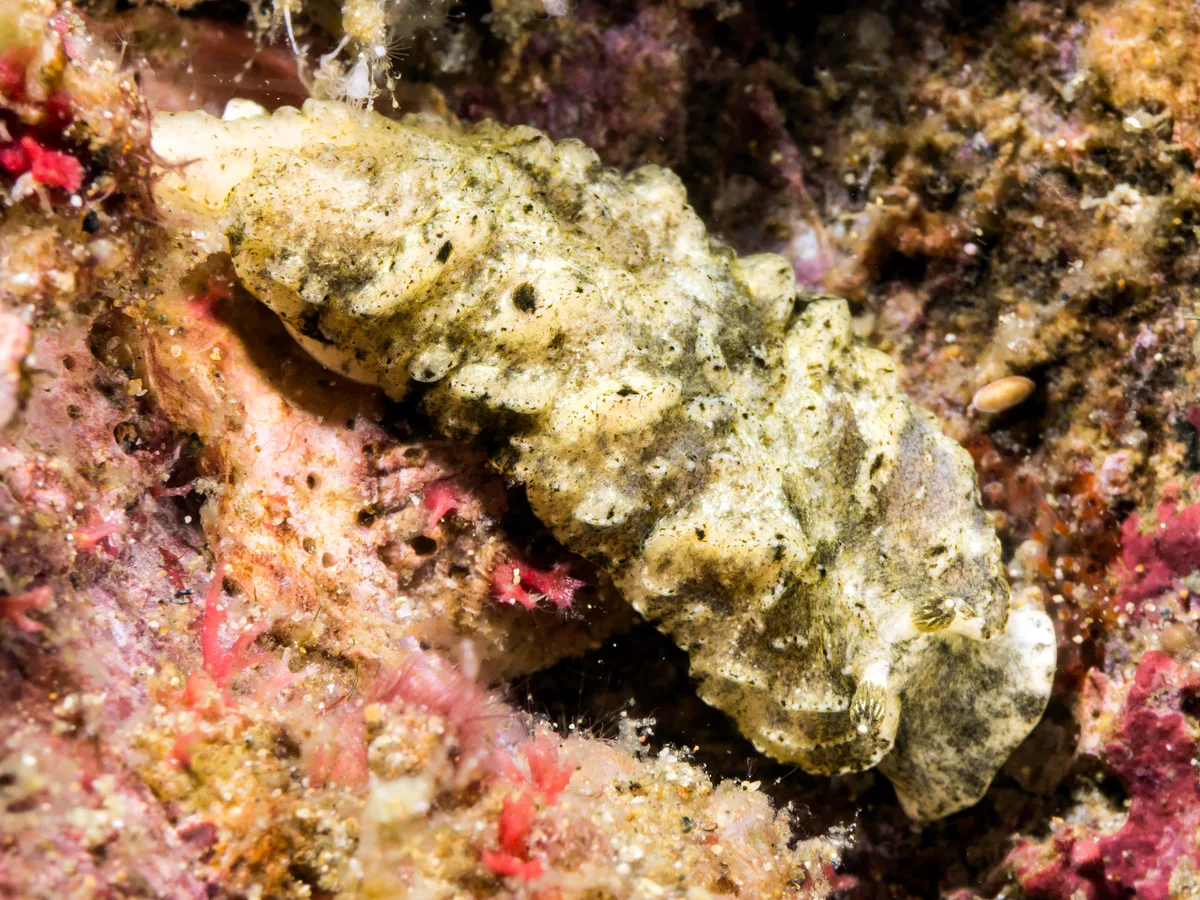
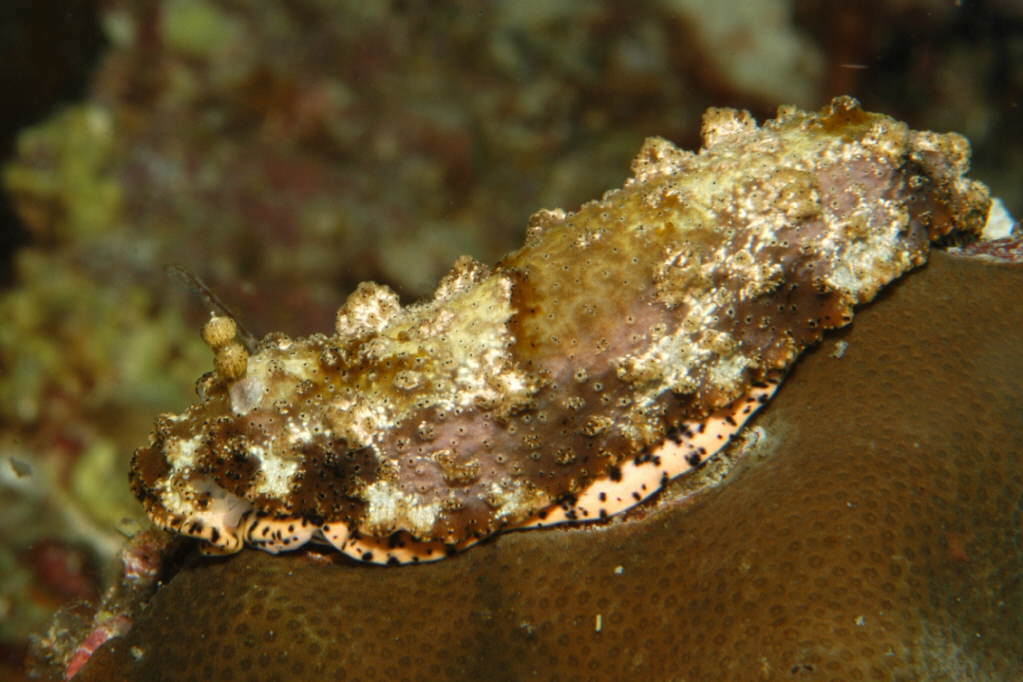
Everything else in this genus is finely ribbed, which is where the pinstripe name comes from. This one is lumpy.
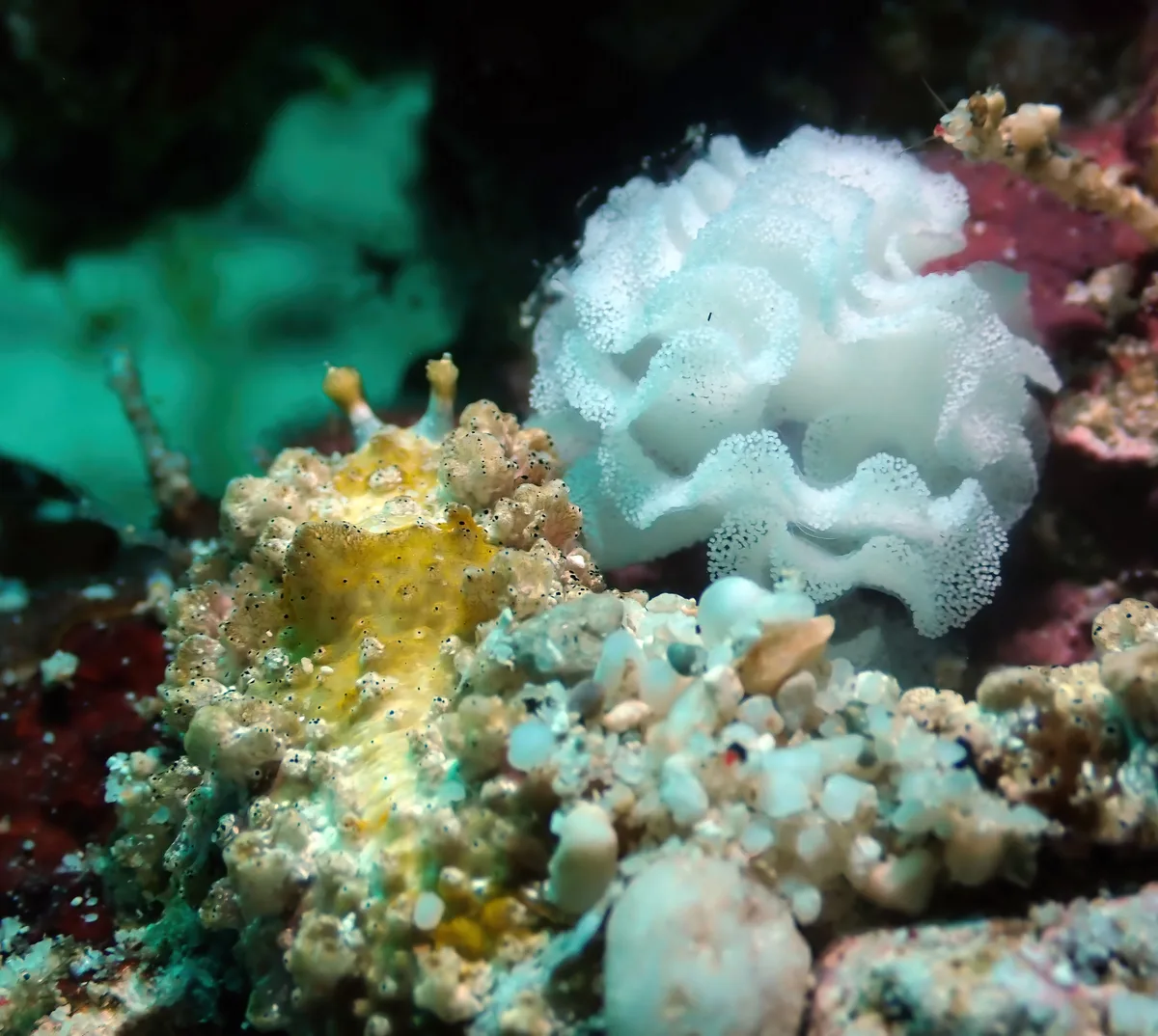
The back carries large irregular tubercles rather than the neat parallel ridges its relatives wear, on a brownish body with an orange margin along the foot. In a group where the identification usually comes down to counting fine lines and reading edges, an arminid covered in coarse bumps names itself.
It is also the only one of the seven with a food on record. It feeds on Xenia, the soft coral whose polyps open and close in a slow continuous pulse all day, and which several other animals in this section have specialized on independently. That is the arminid trade in general: they eat octocorals, the soft corals and sea pens that most grazers avoid because of the chemistry in them, and they take the chemistry along with the meal.
As with the rest of the family there is no gill plume on the back. The breathing surfaces are tucked underneath, in the groove between the mantle skirt and the foot, running down both sides, so a live animal seen from above shows nothing projecting at all.
Seven centimeters (2.8 in), out at night, described by van Hasselt in 1824.
- large irregular tubercles over the back instead of the genus's usual fine ridges
- brownish overall, with an orange margin on the foot
- seven centimeters, second largest of the arminids here
- found on or beside pulsing Xenia coral