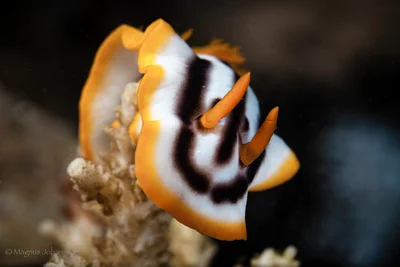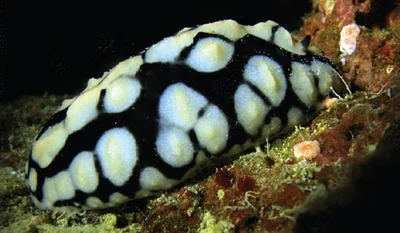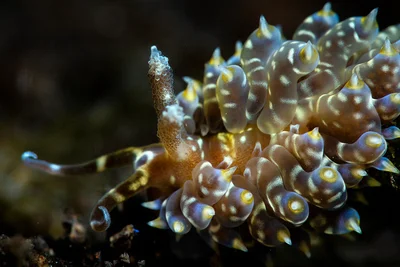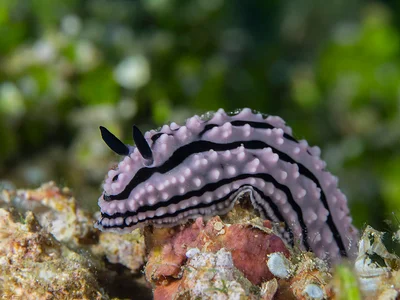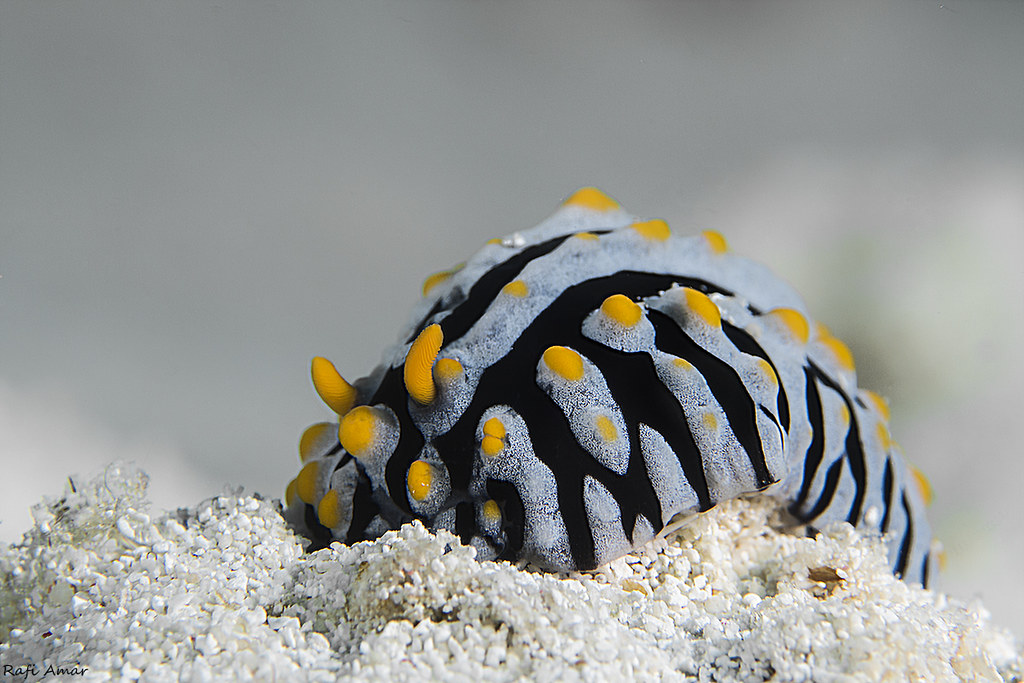
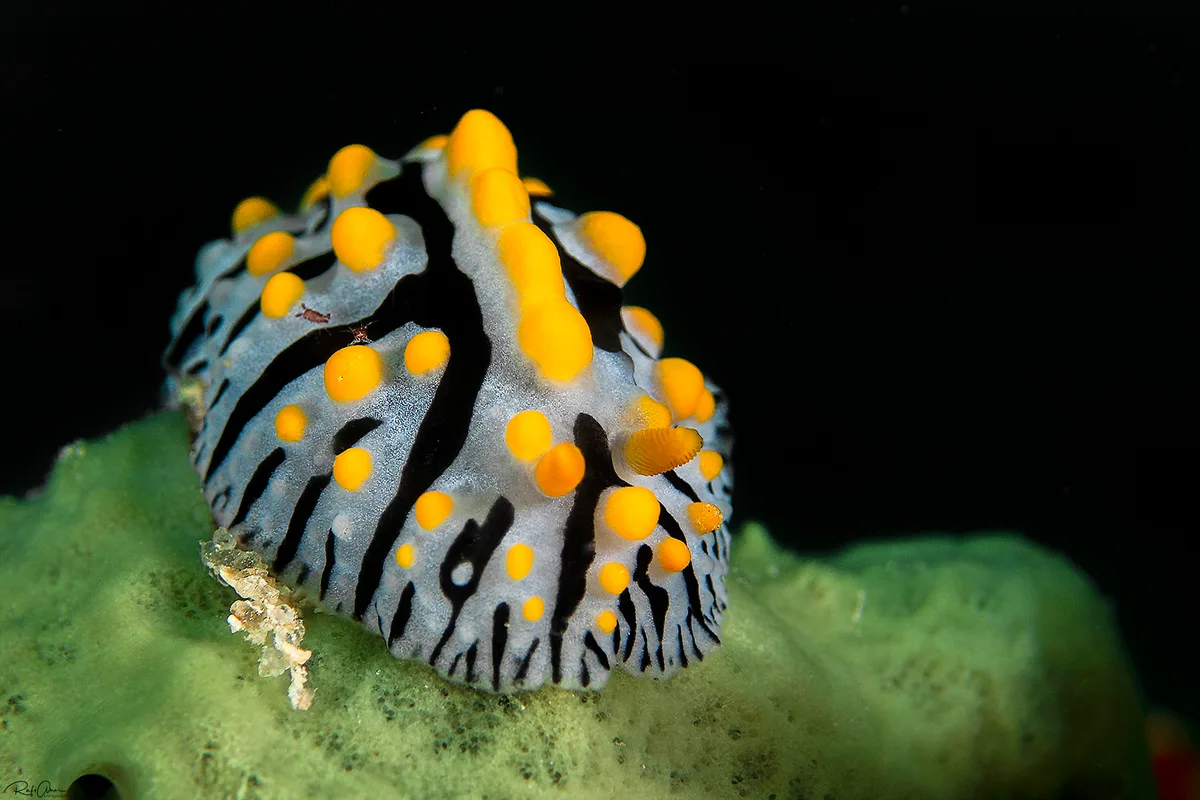
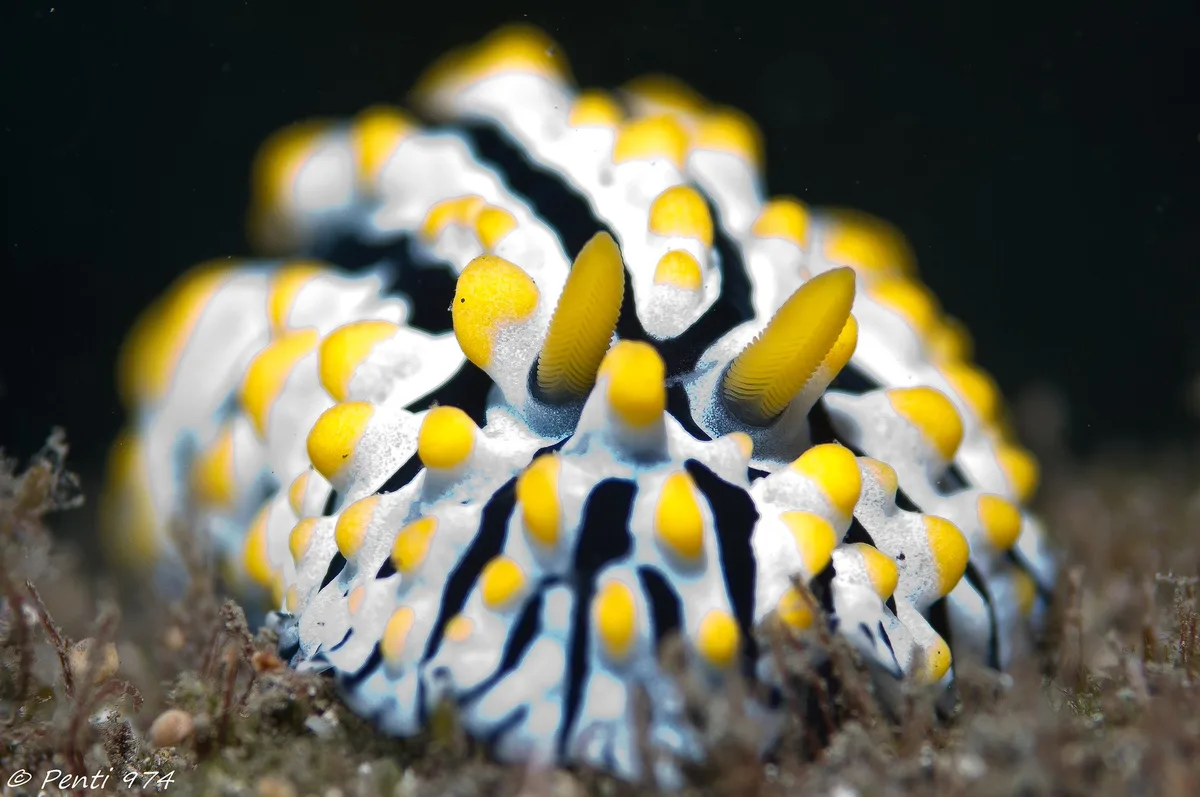
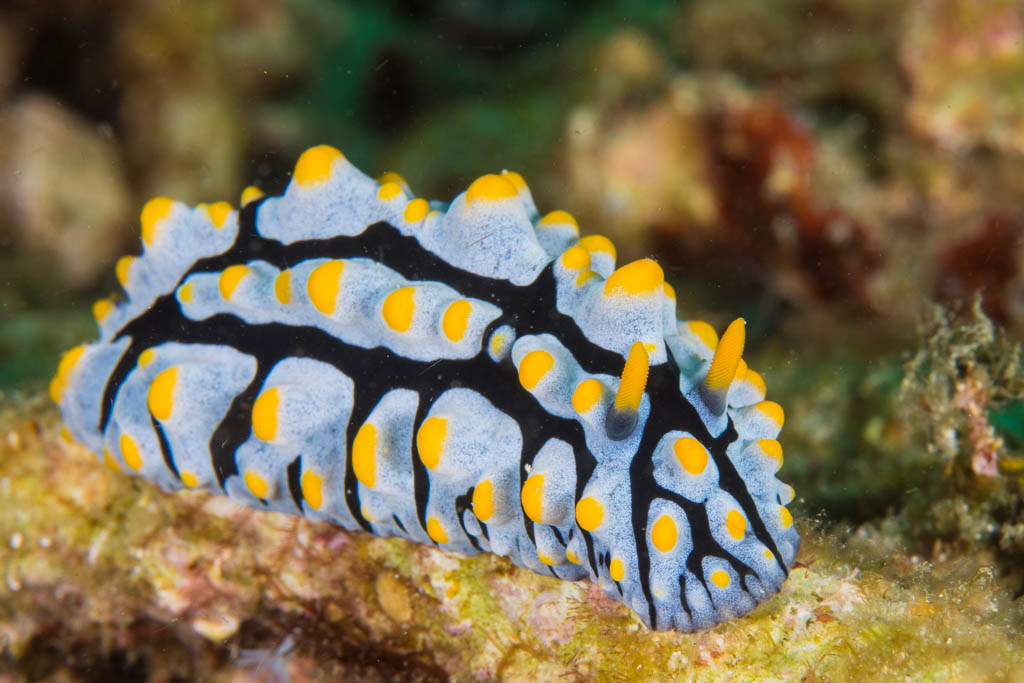
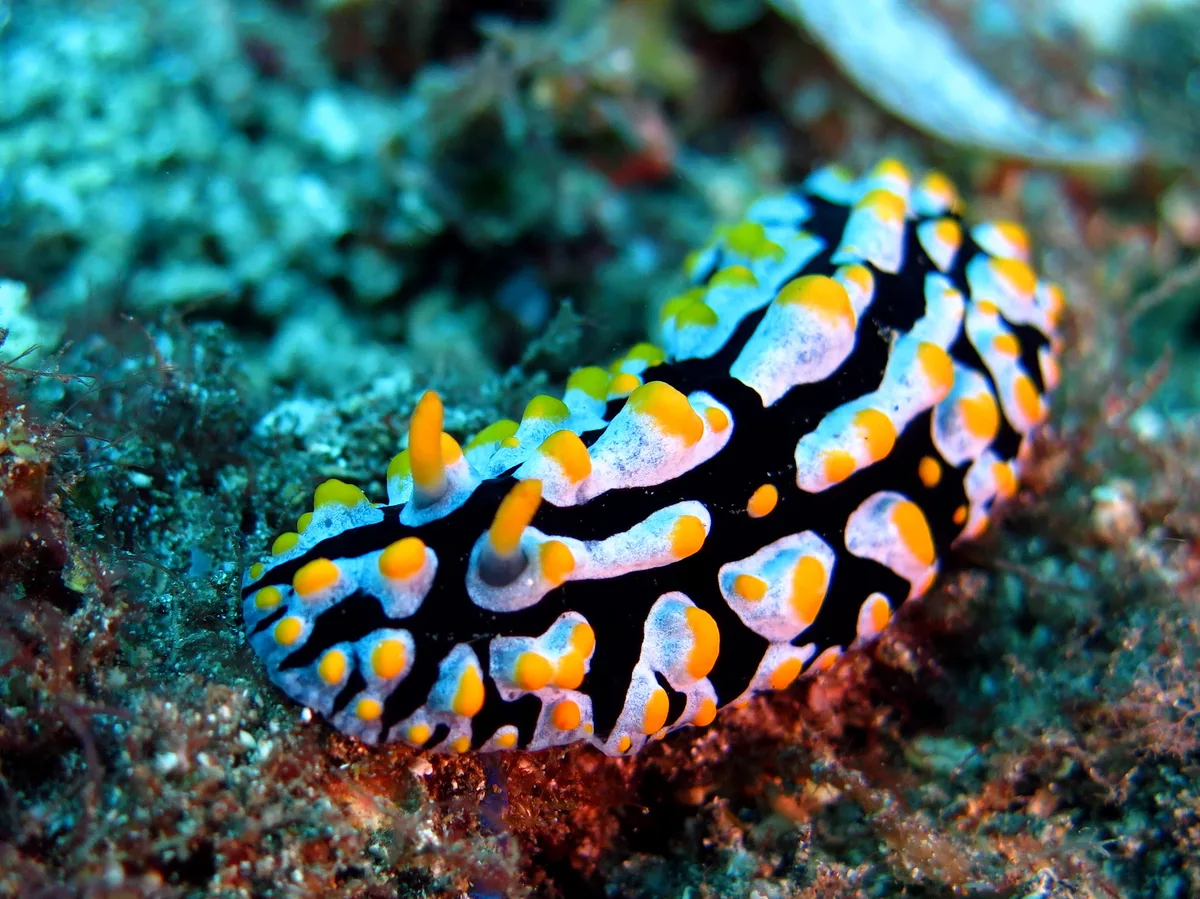
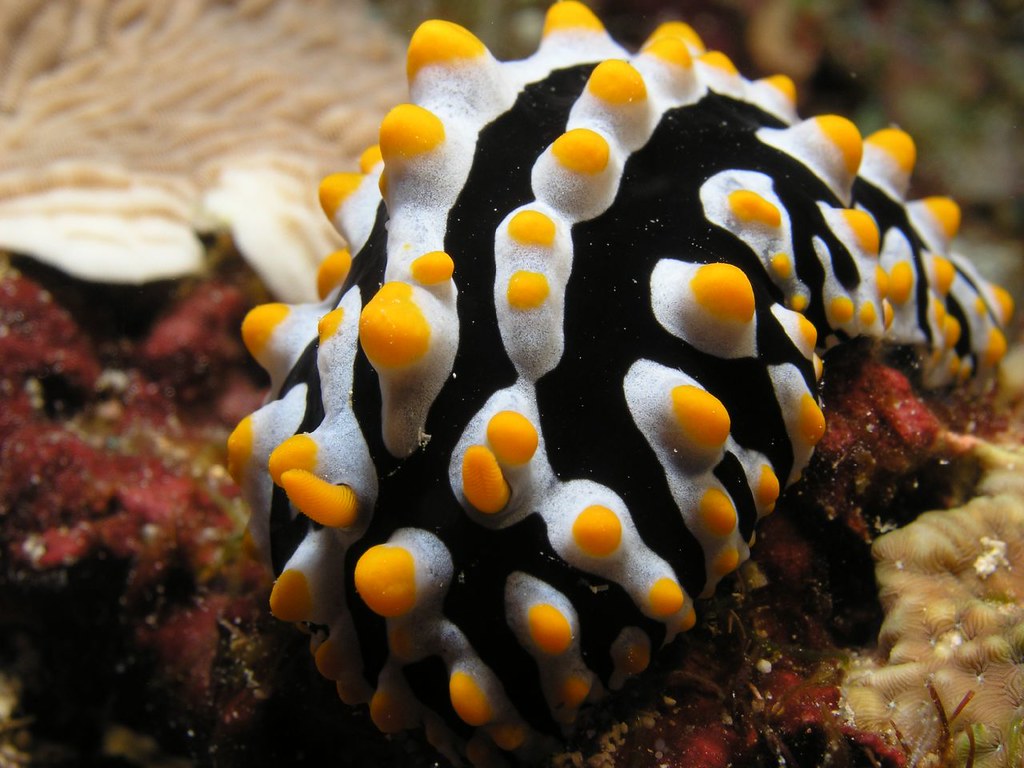
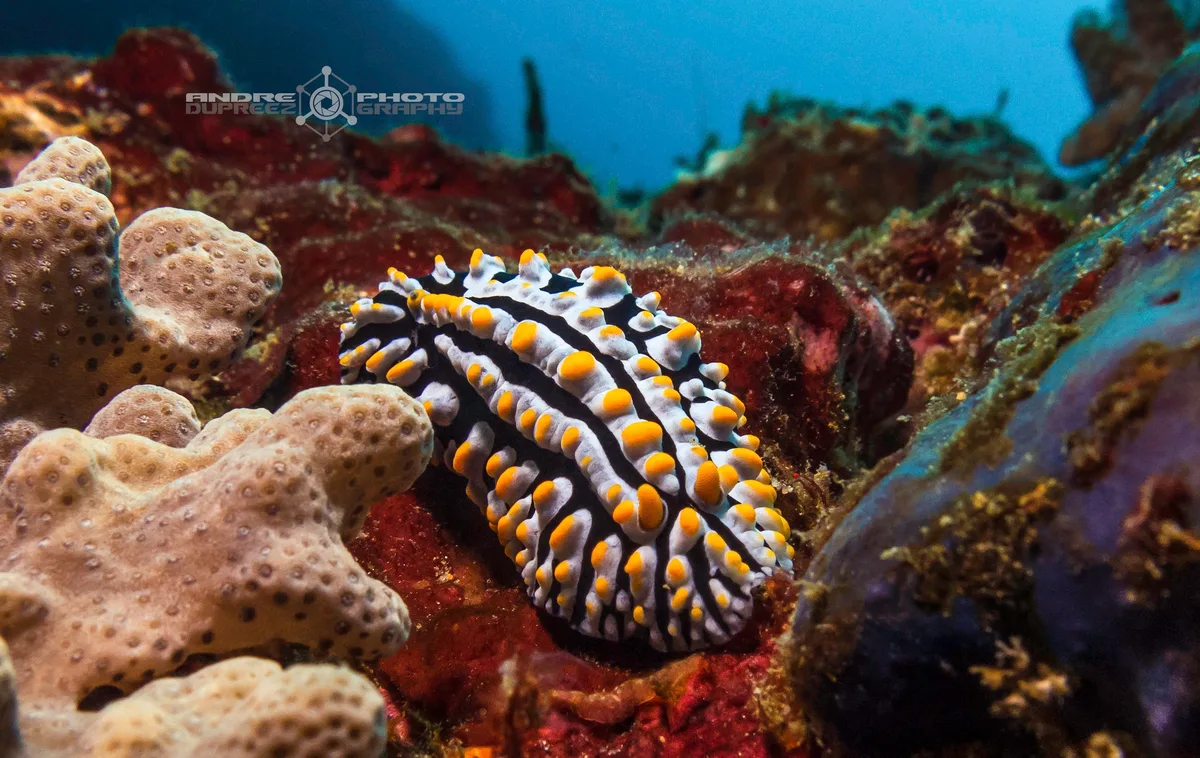
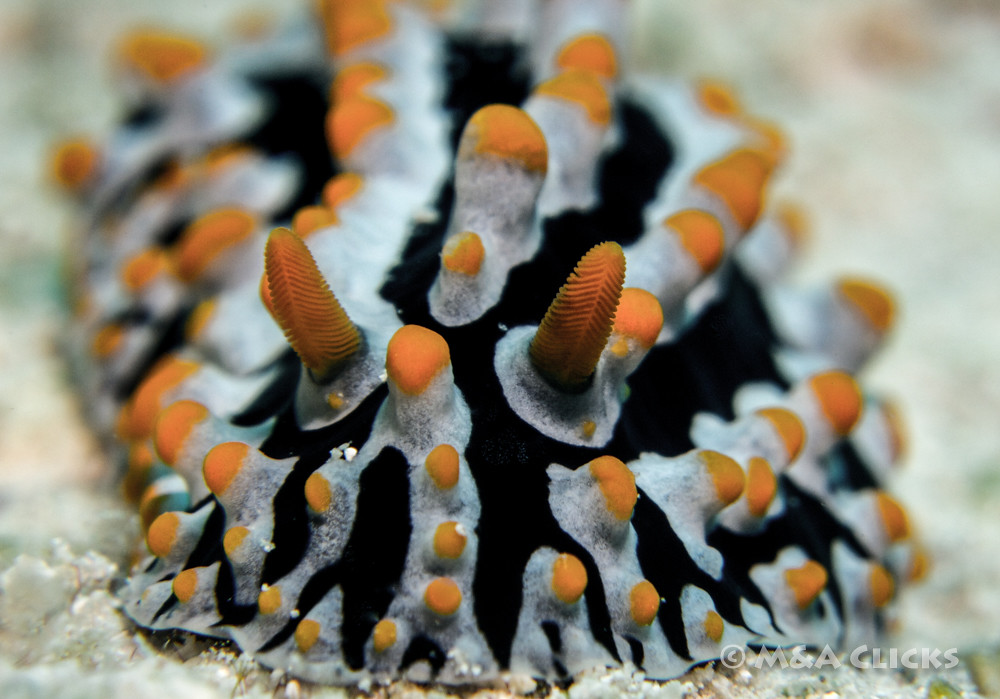
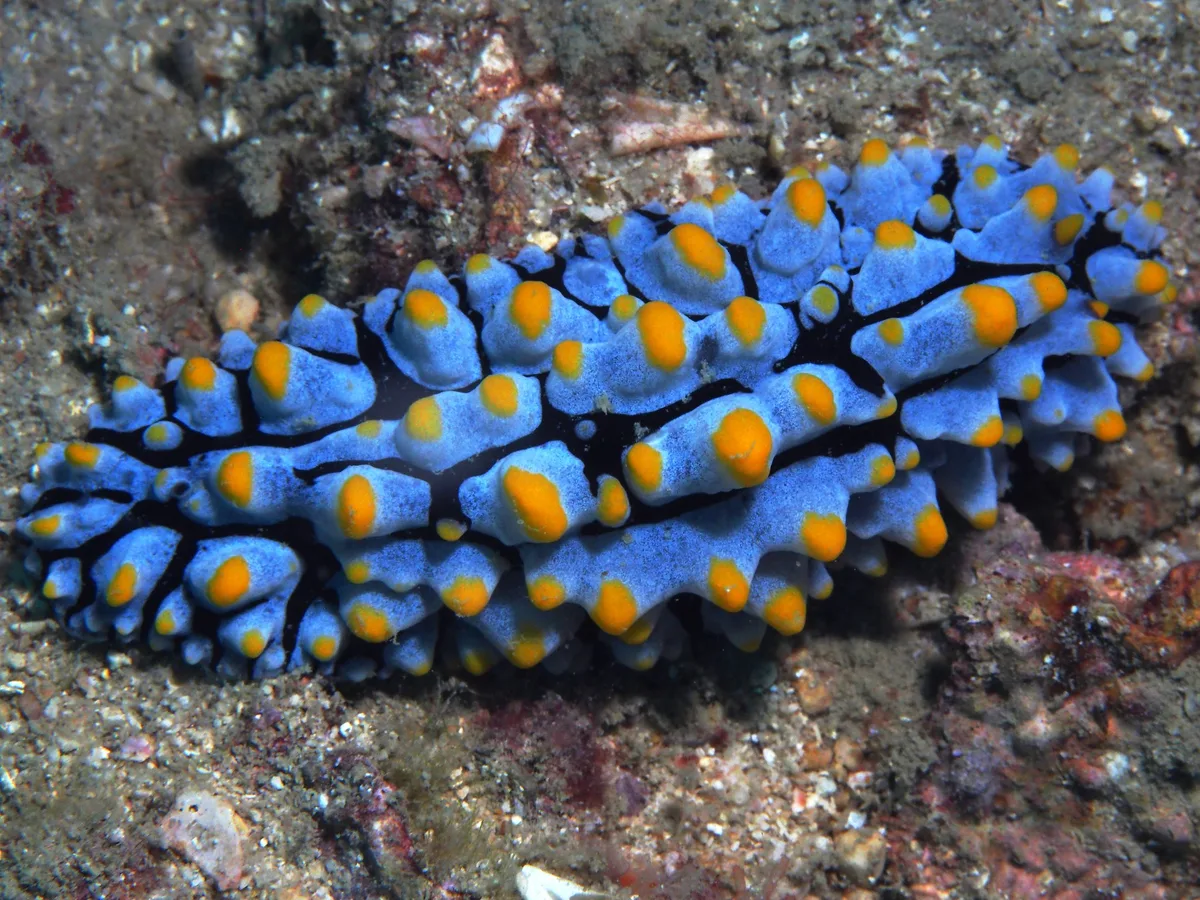
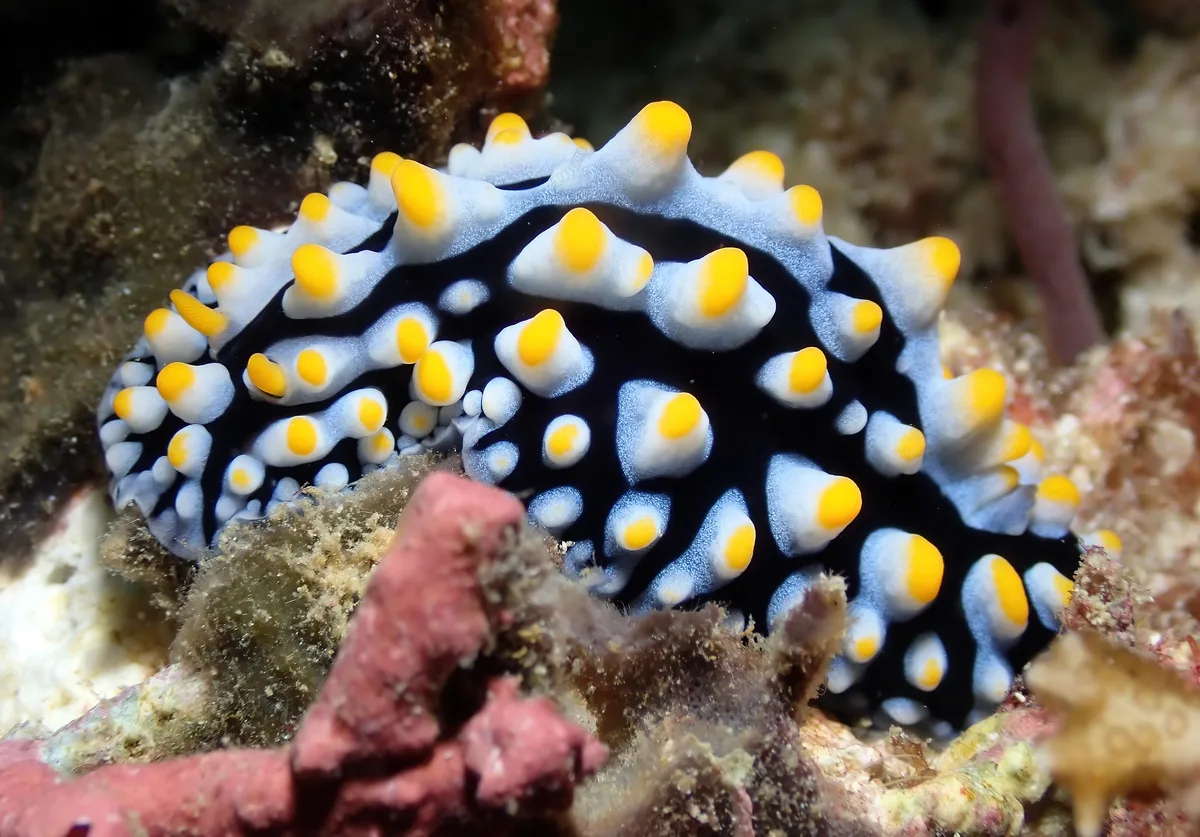
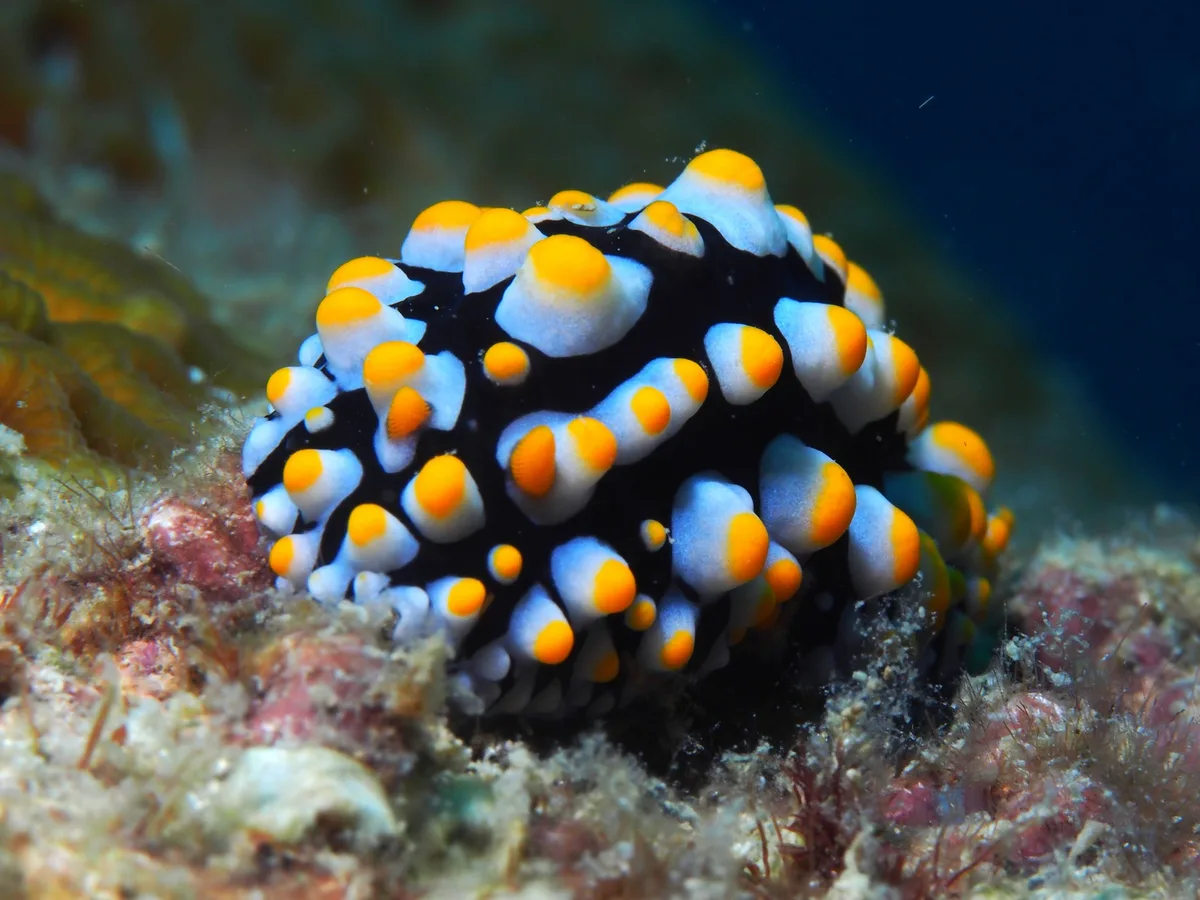
A hard, blue-gray slab of an animal up to 11.5 cm (4.5 in), ridged along its length and studded with bright yellow tubercles, with black lines running between the ridges and orange rhinophores at the front. Unlike most nudibranchs it crawls in the open in daylight, slowly and without any attempt at hiding, which is the first clue to what it is carrying.
The back has no gills. Nearly every other large sea slug on the reef breathes through a feathery rosette on its back - that is what nudibranch means, naked gill - and this family gave that up: the gills are a row of leaflets tucked under the mantle rim, out of sight. The visible surface is a firm, leathery shield instead of soft tissue, which is why a phyllidia feels like a piece of rubber rather than a slug.
It eats sponges, and it does not chew them. The mouth works as a straw: an oral tube is pushed into the sponge and the tissue is drawn out as slurry, so a feeding animal leaves a neat hole rather than a bite.
What comes out of the sponge is the interesting part. This slug concentrates the sponge's chemistry into a defensive mucus, and the compound isolated from it - 9-isocyanopupukeanane - was one of the first marine natural products of its kind ever described, traced from the slug back to the sponge it had been eating. The practical version of that fact is older and blunter: put one in a bucket with fish and the fish die. Divers can handle it with no effect at all, but every aquarist learns to keep it out of a closed tank.
The colors are a label, not decoration. Yellow on black, worn openly by a slow animal with no shell, is the standard advertisement of something that tastes appalling, and it works: nothing on the reef eats an adult phyllidia.
- hard leathery blue-gray body with three raised ridges running its length
- ridges topped with bright yellow tubercles, black lines between them
- orange-tipped rhinophores, no feathery gills anywhere on the back
- crawls in the open in daylight, length up to 11.5 cm