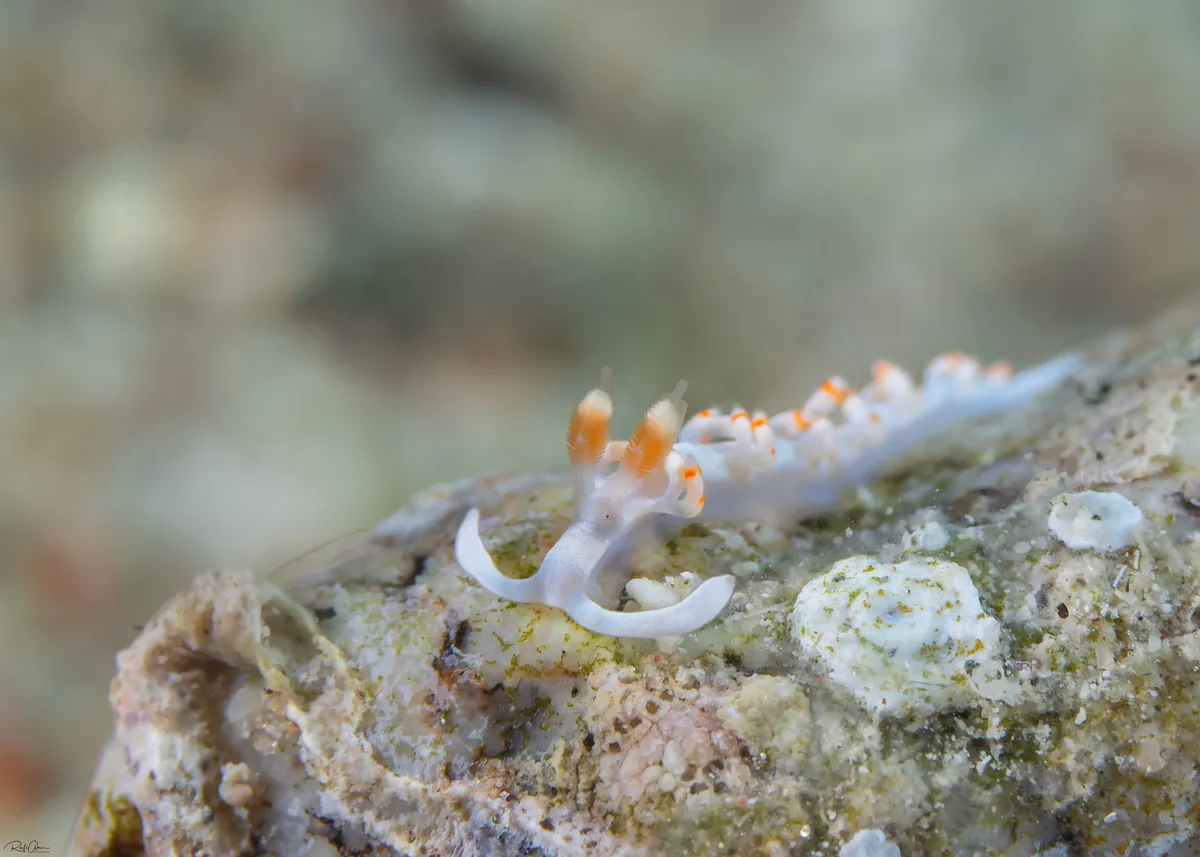
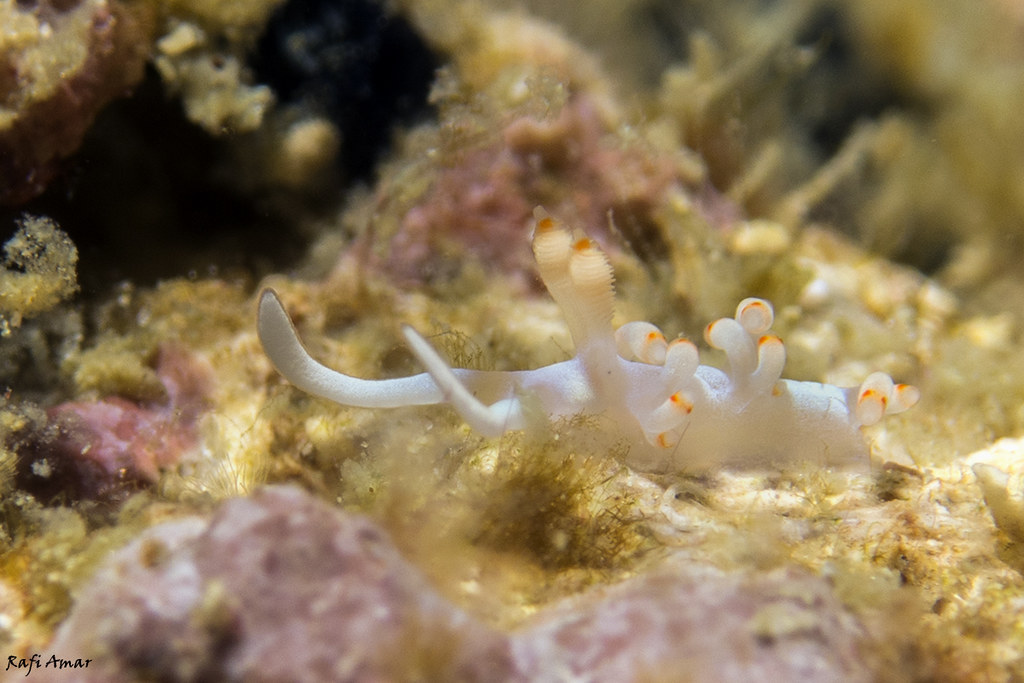
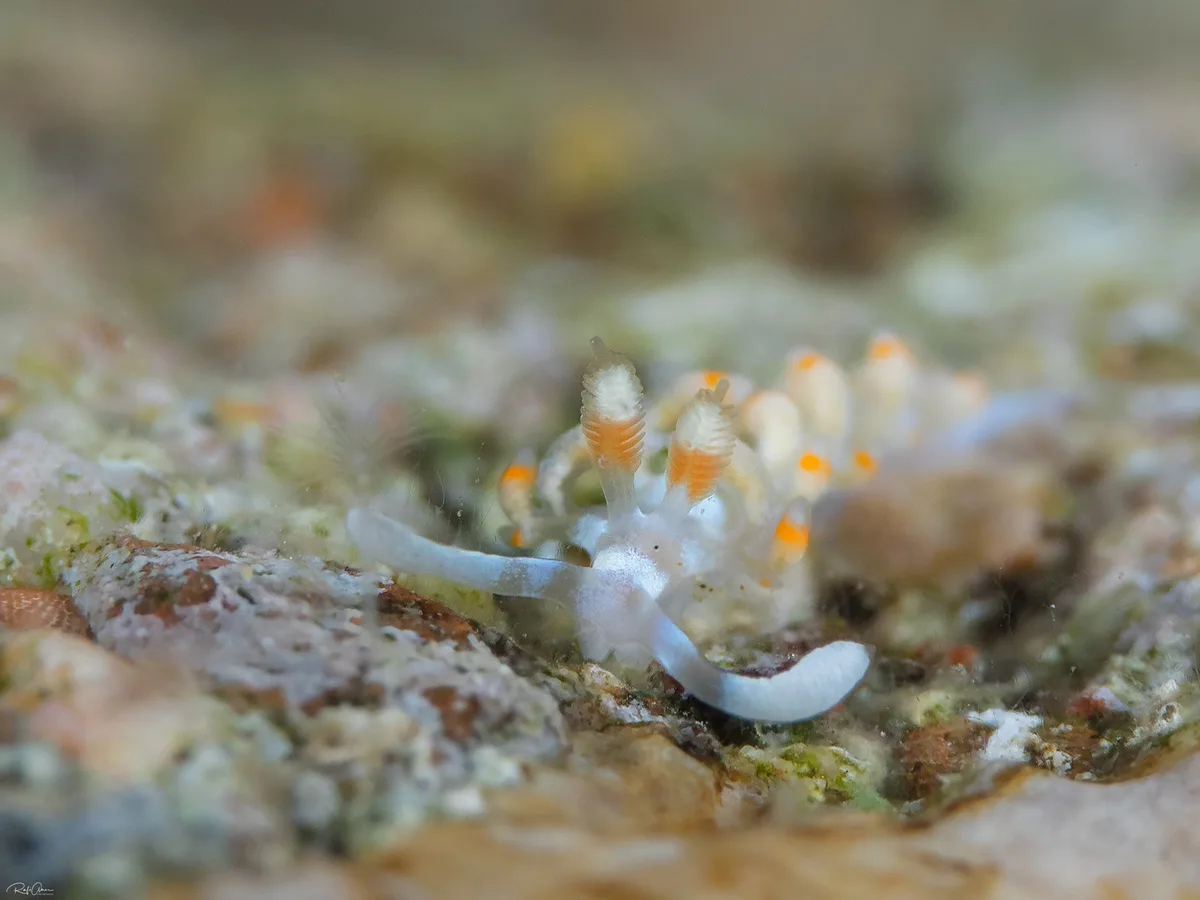
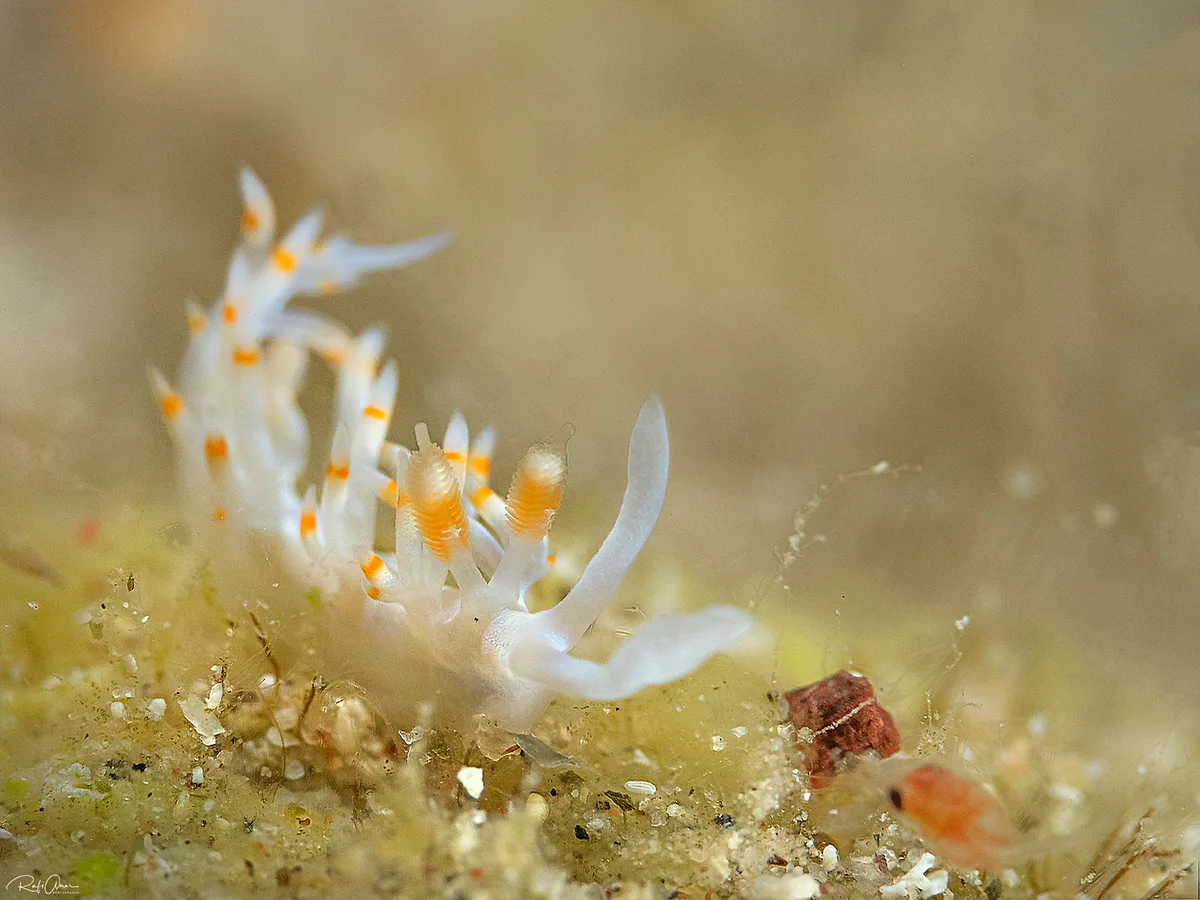
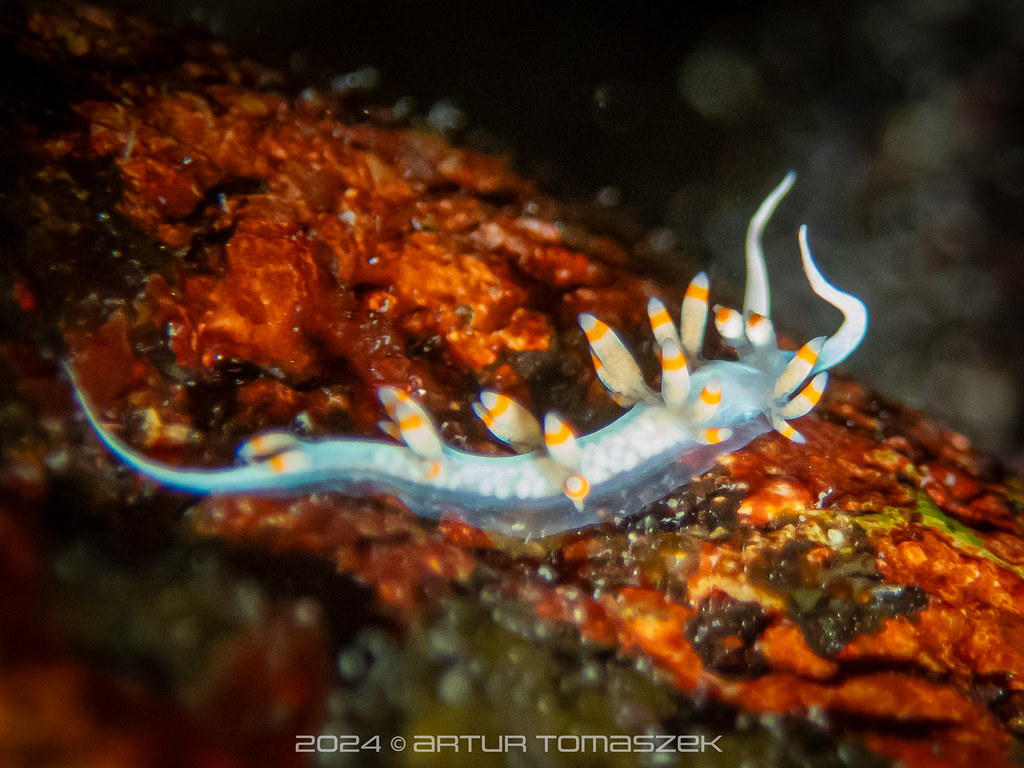
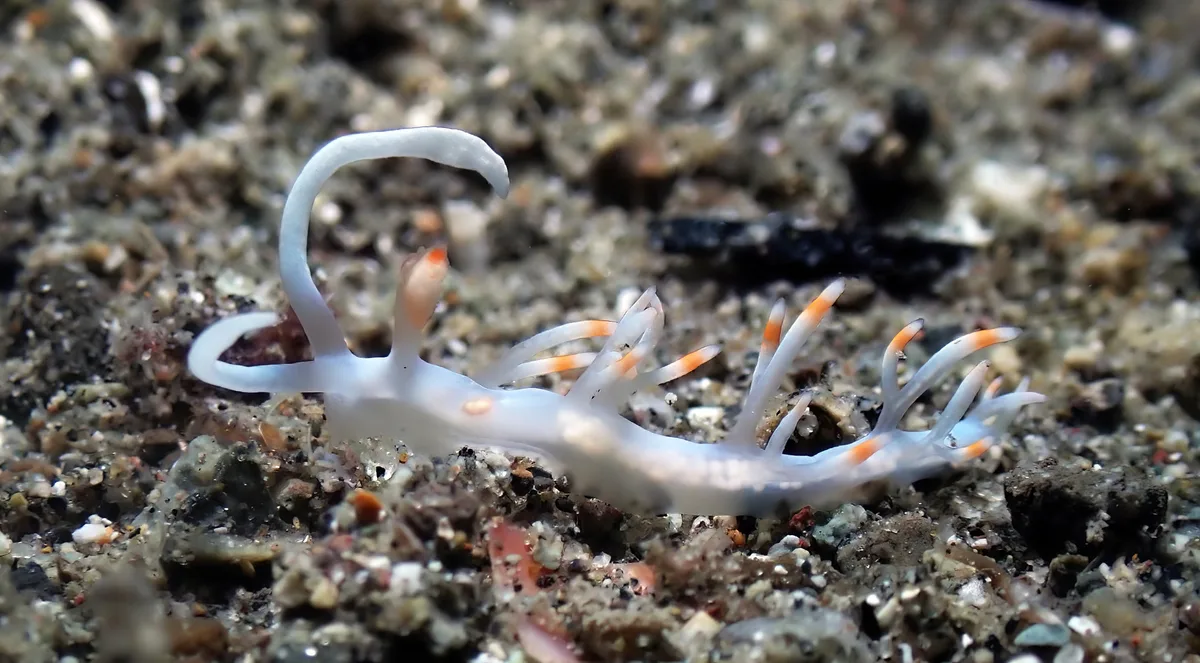
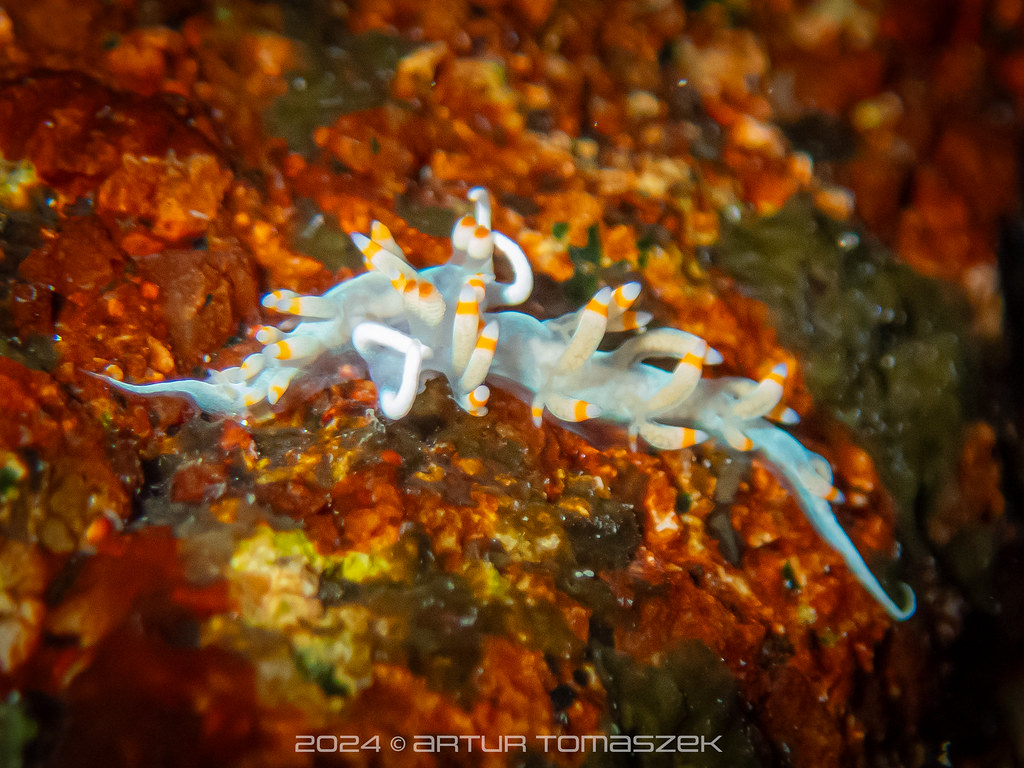
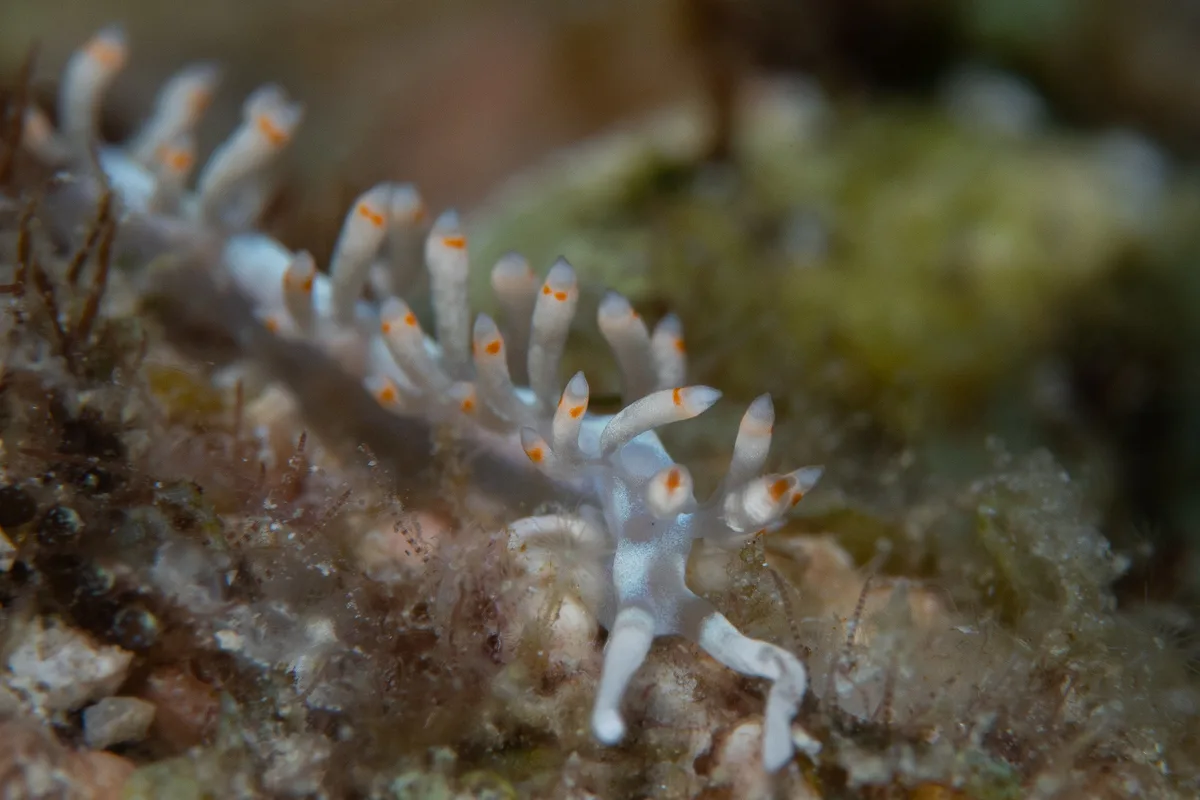
These are the aeolids that steal weapons, and this one does it from a specific supplier.
Its food is Eudendrium, a hydroid that grows as stiff branching colonies on rock and wreck plating. Every polyp on it is armed with stinging capsules that fire on contact, which is what makes hydroids a defended food and what makes them worth eating anyway. The slug swallows the capsules without setting them off, carries them intact through its gut, and stores them live in sacs at the tips of the cerata on its back. It grazes an armory and leaves wearing the stock.
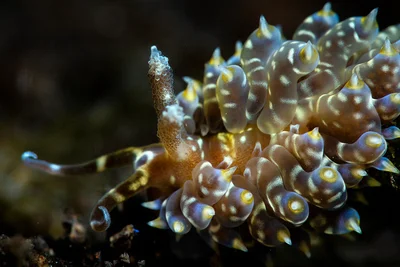
The cerata are grouped in distinct clusters rather than spread evenly, and each cluster can be shed. A fish that bites gets a mouthful of stinging cells discharging in it and a detached tuft still moving, while the slug leaves with the remaining rows intact.
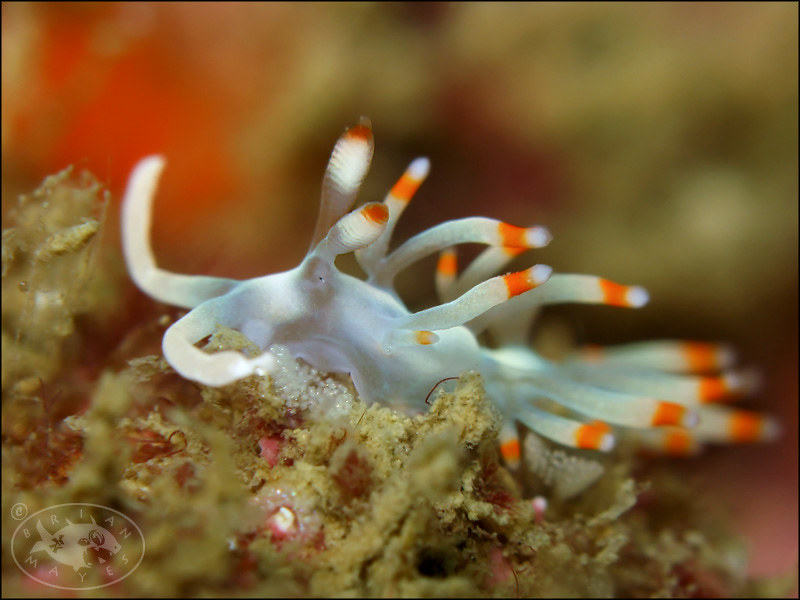
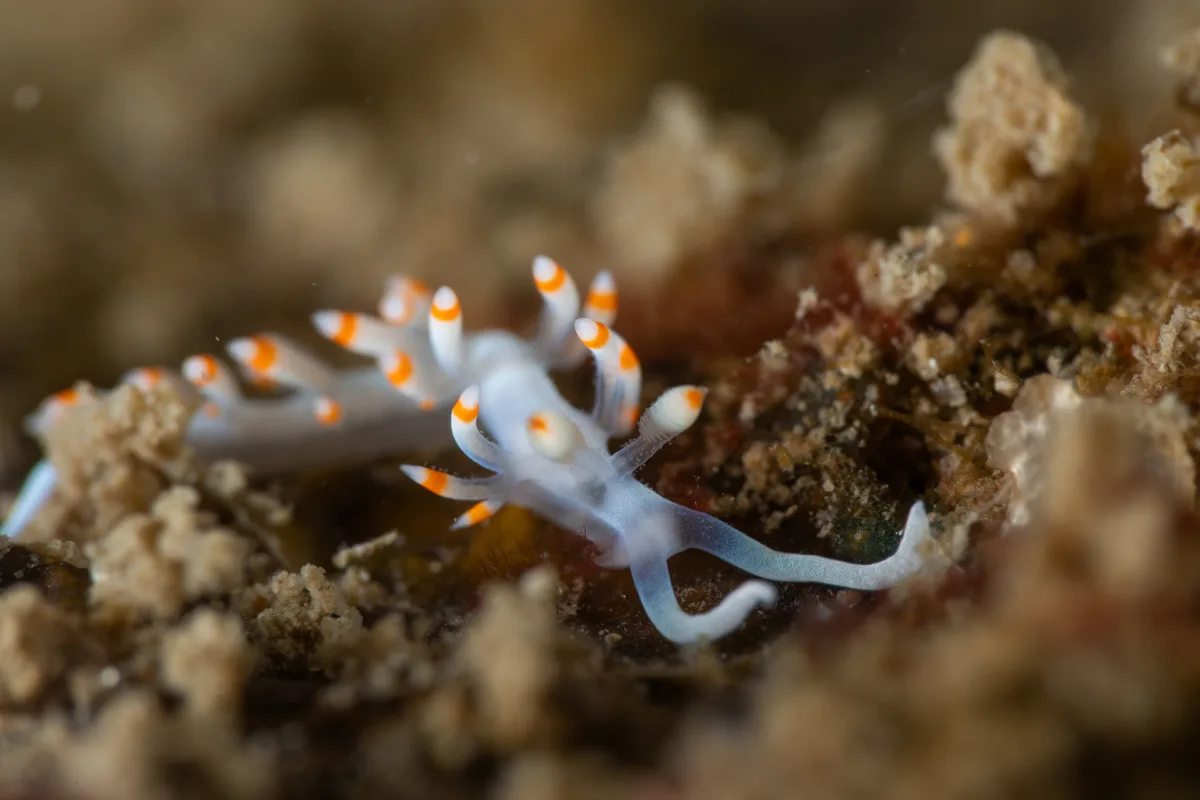
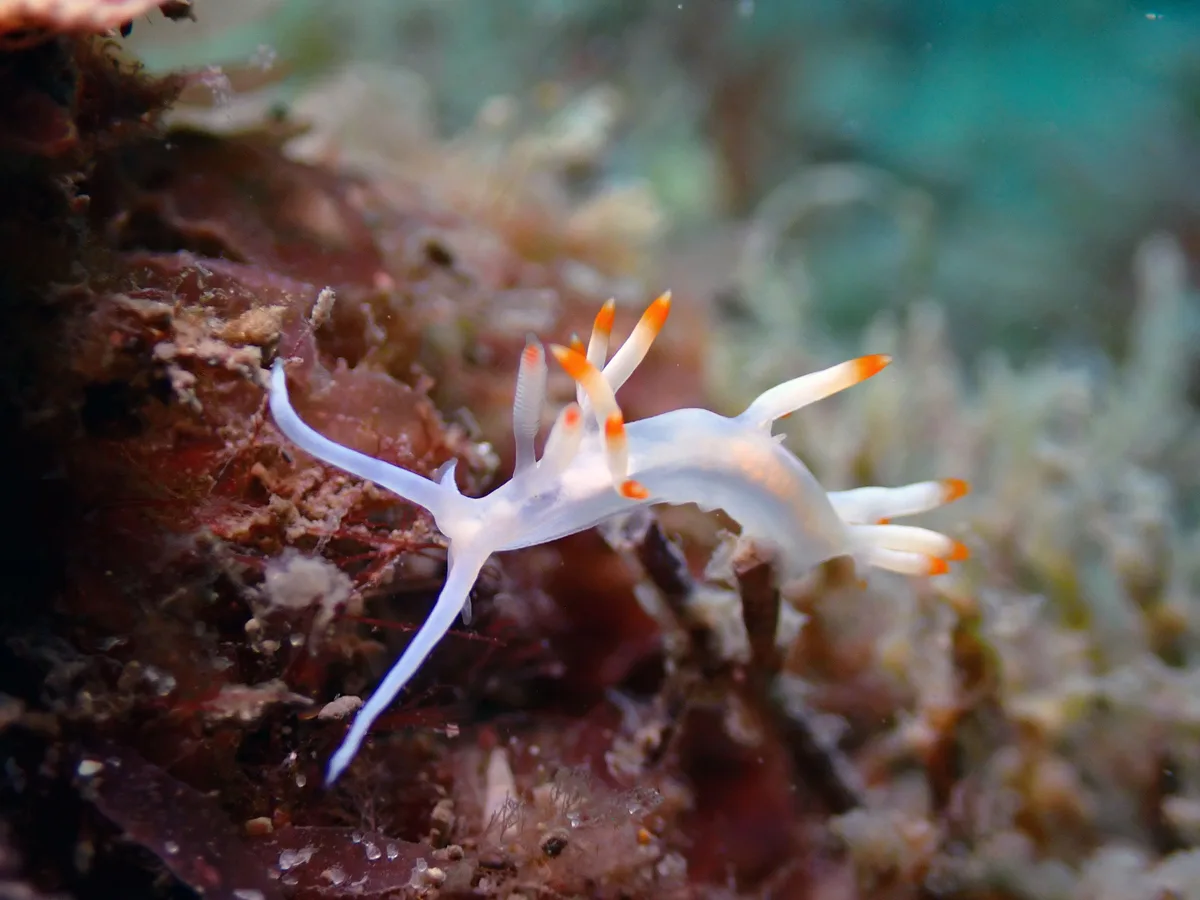
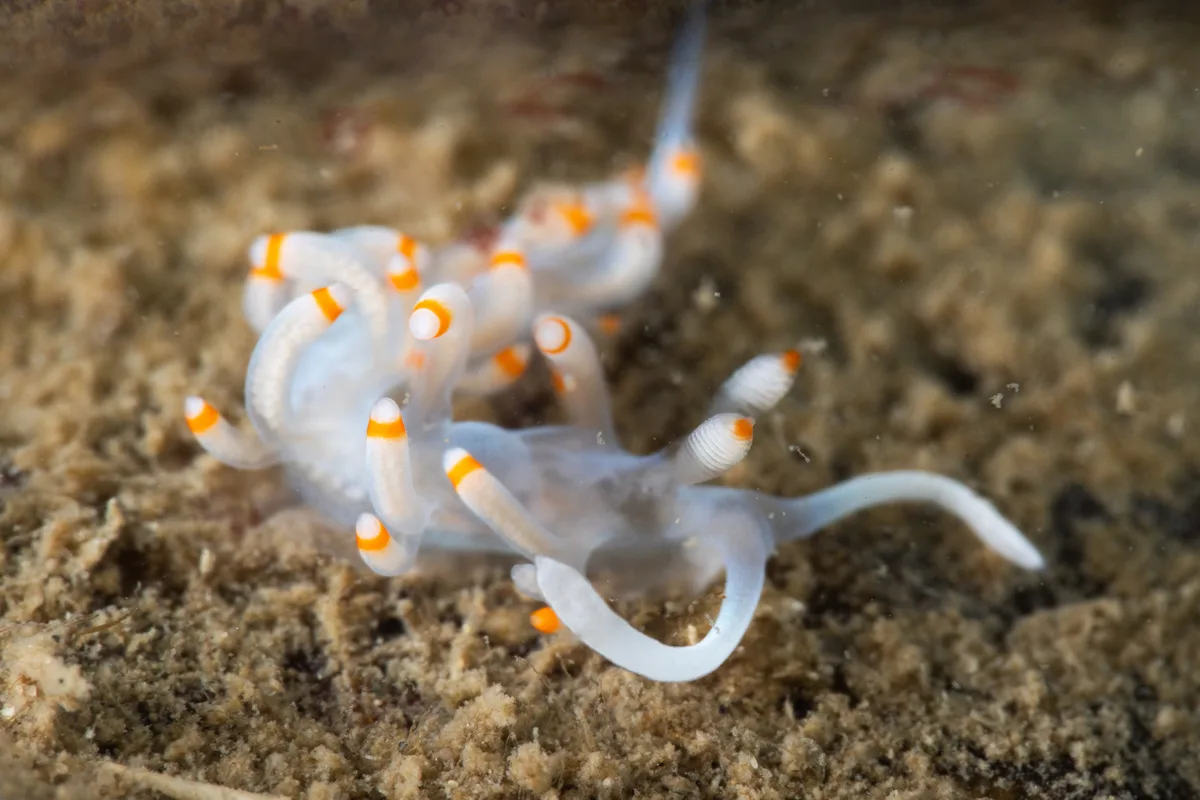
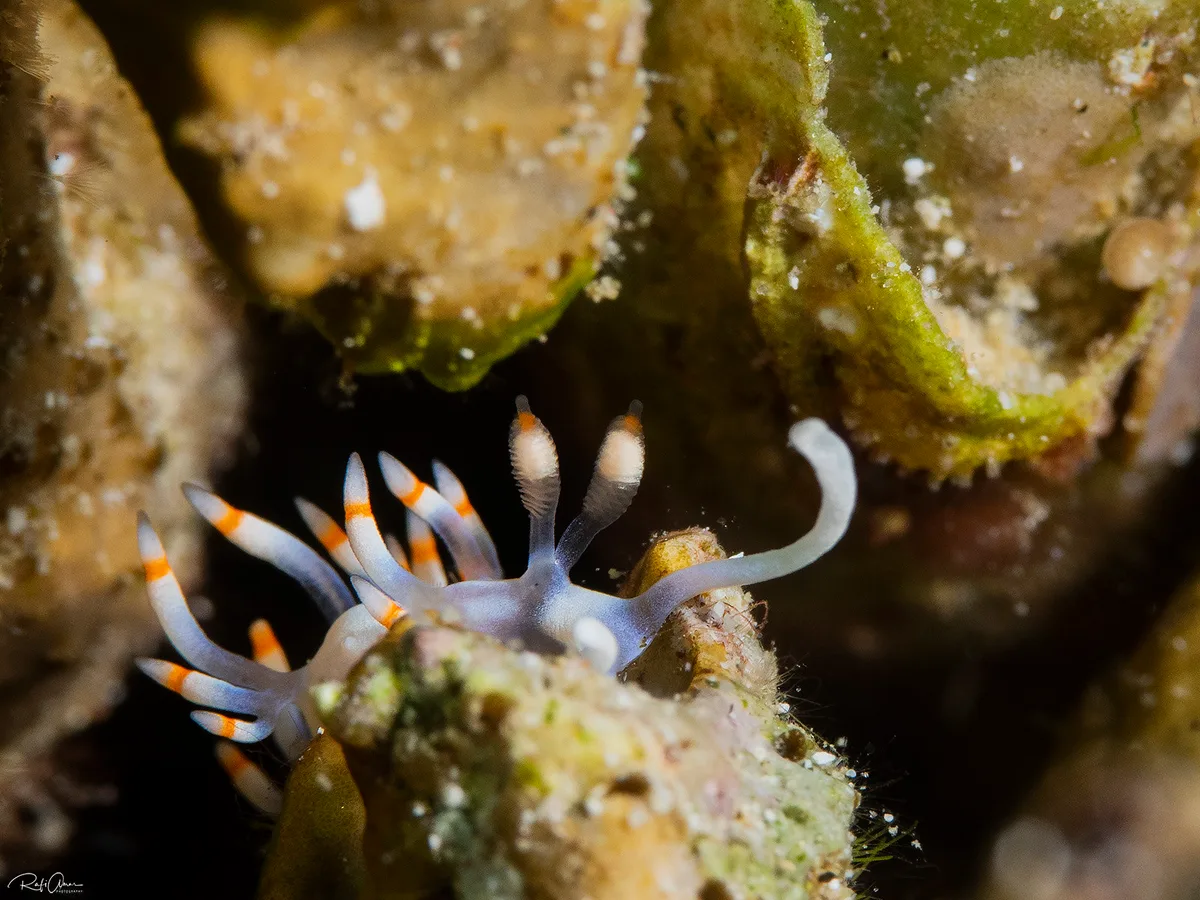
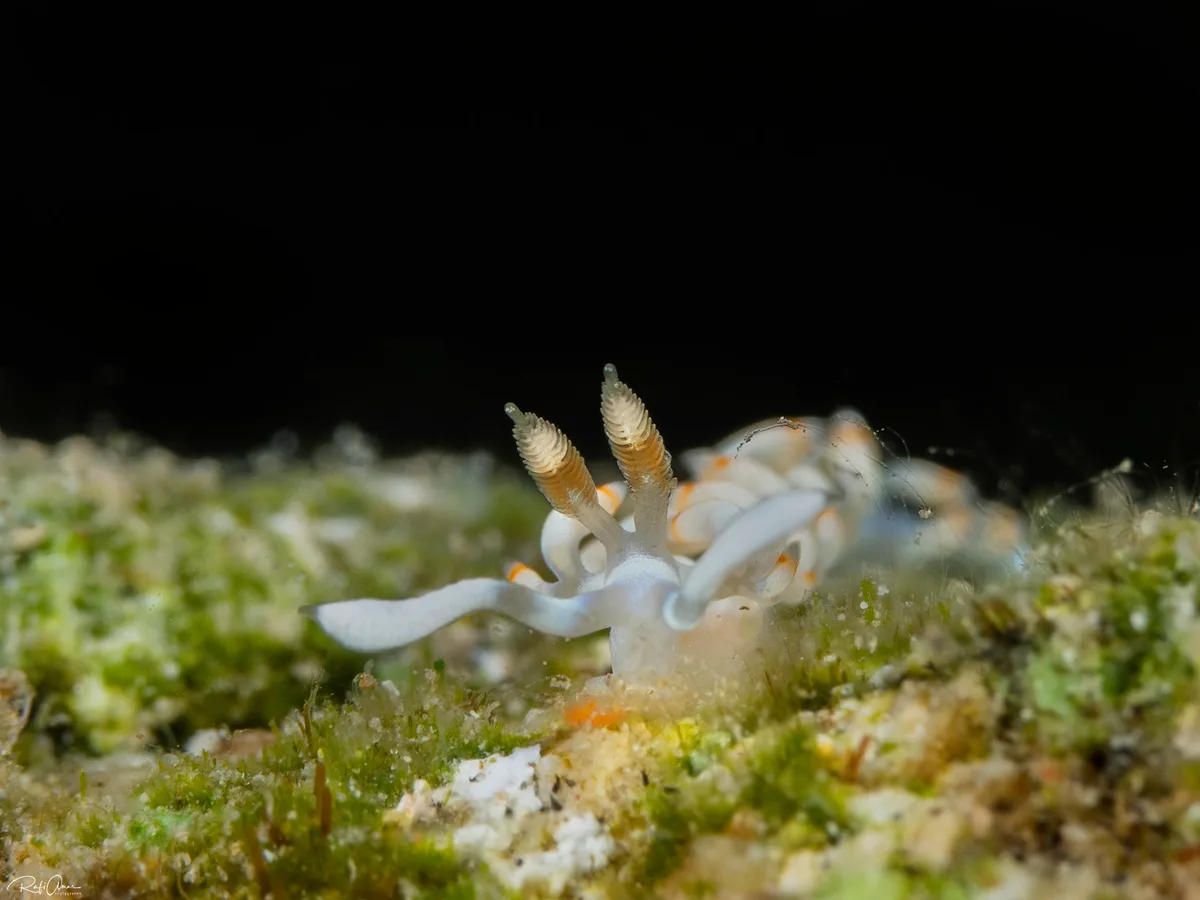
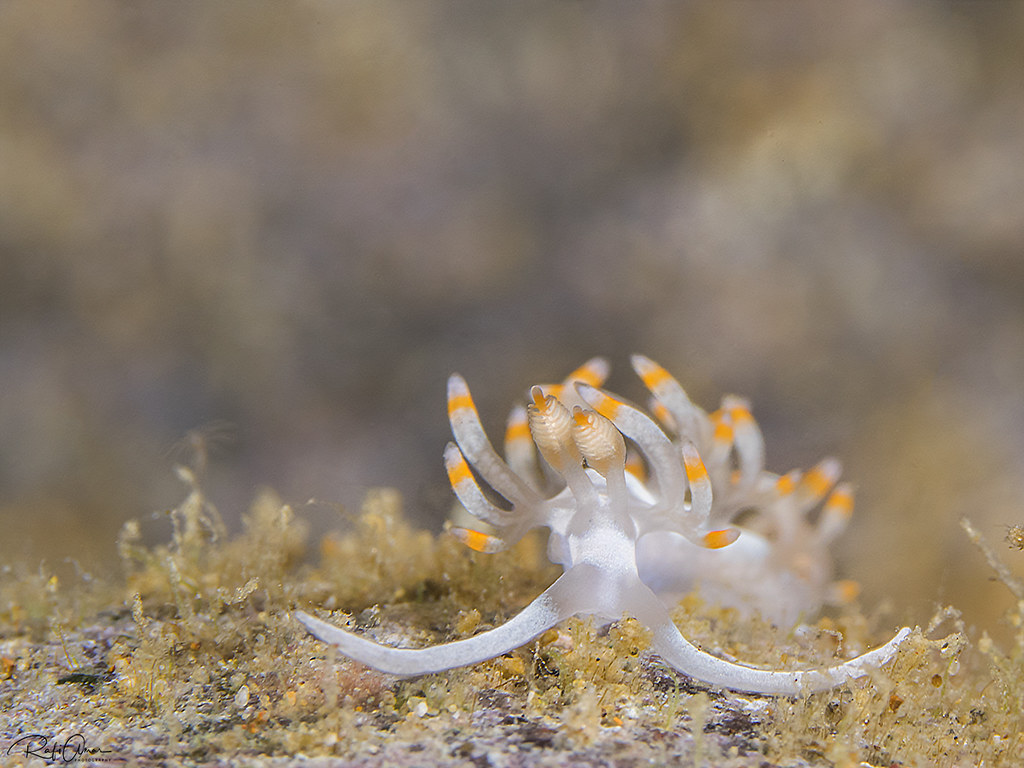
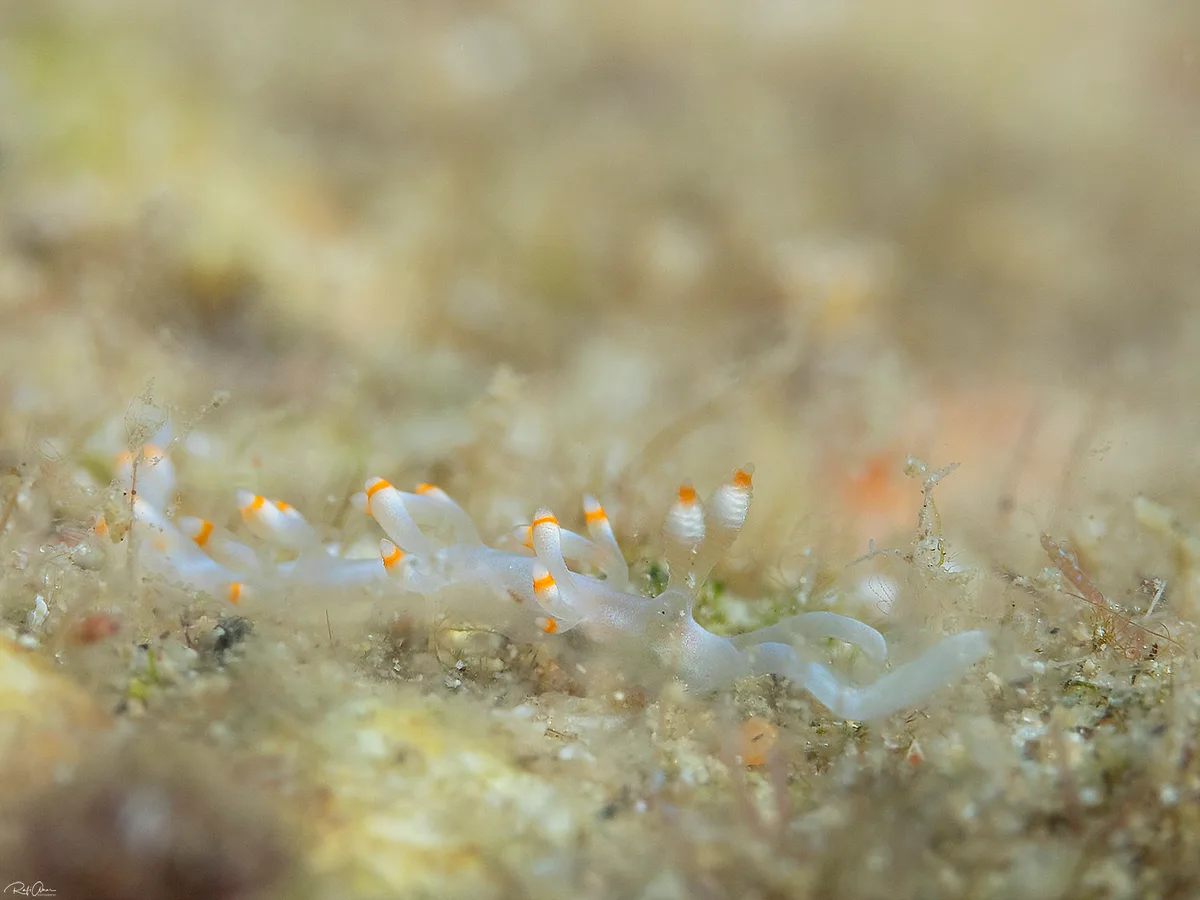
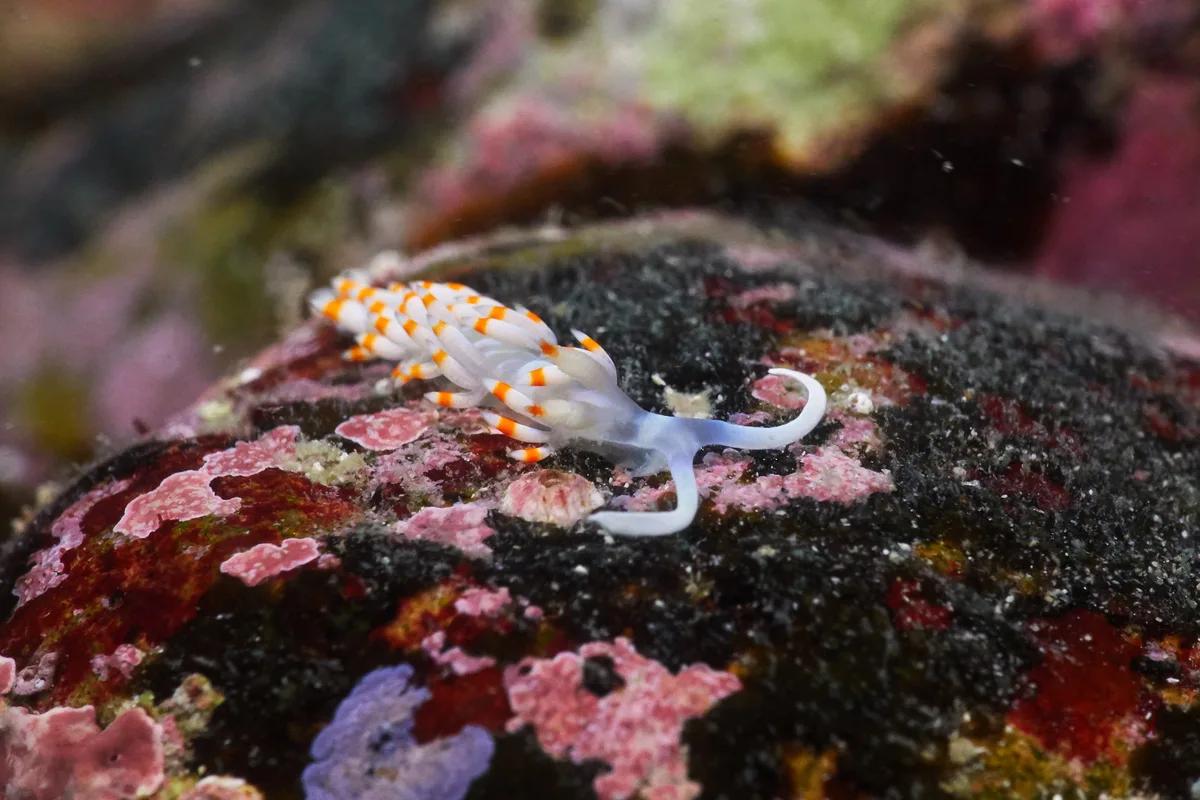
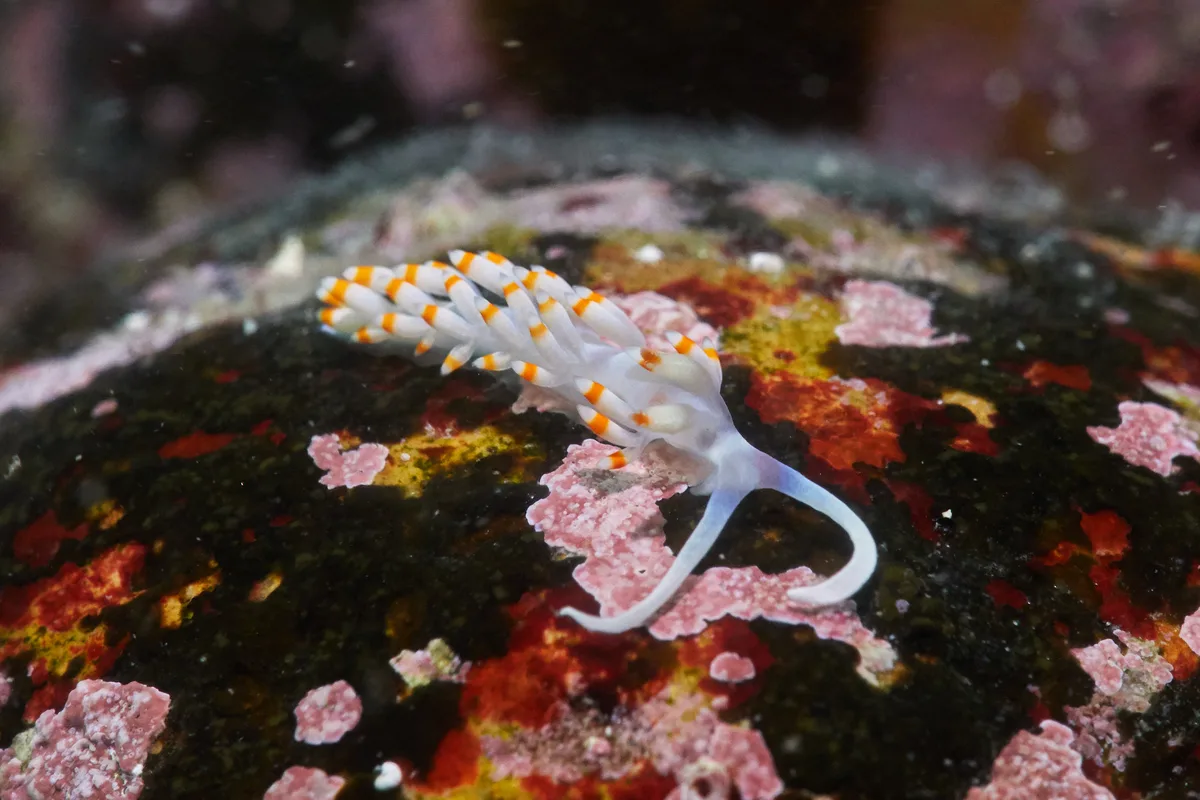
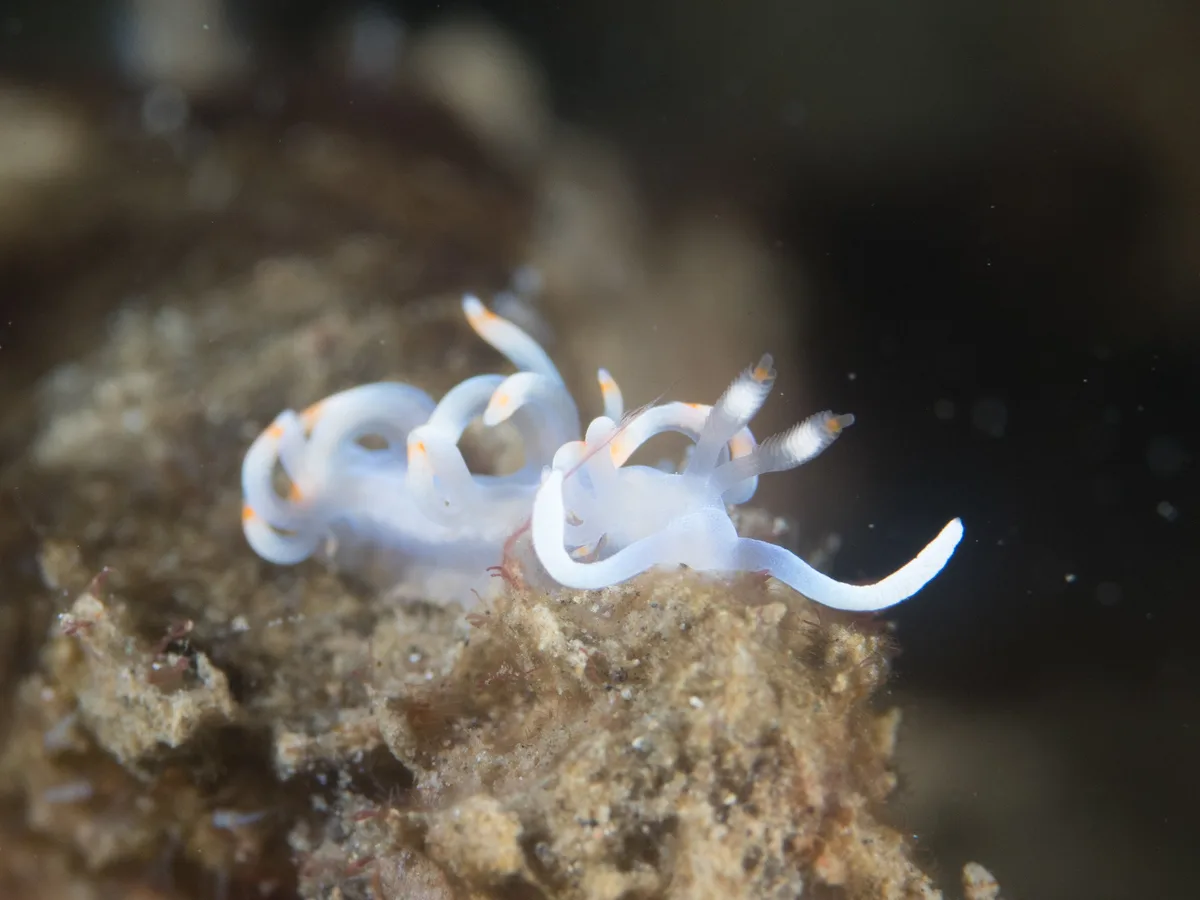
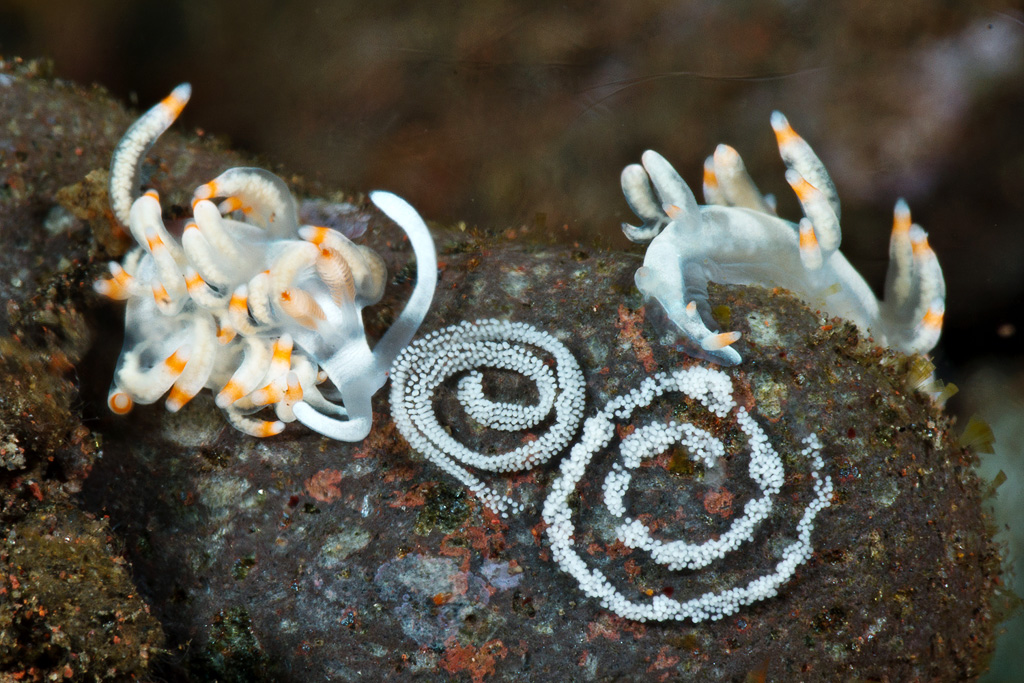
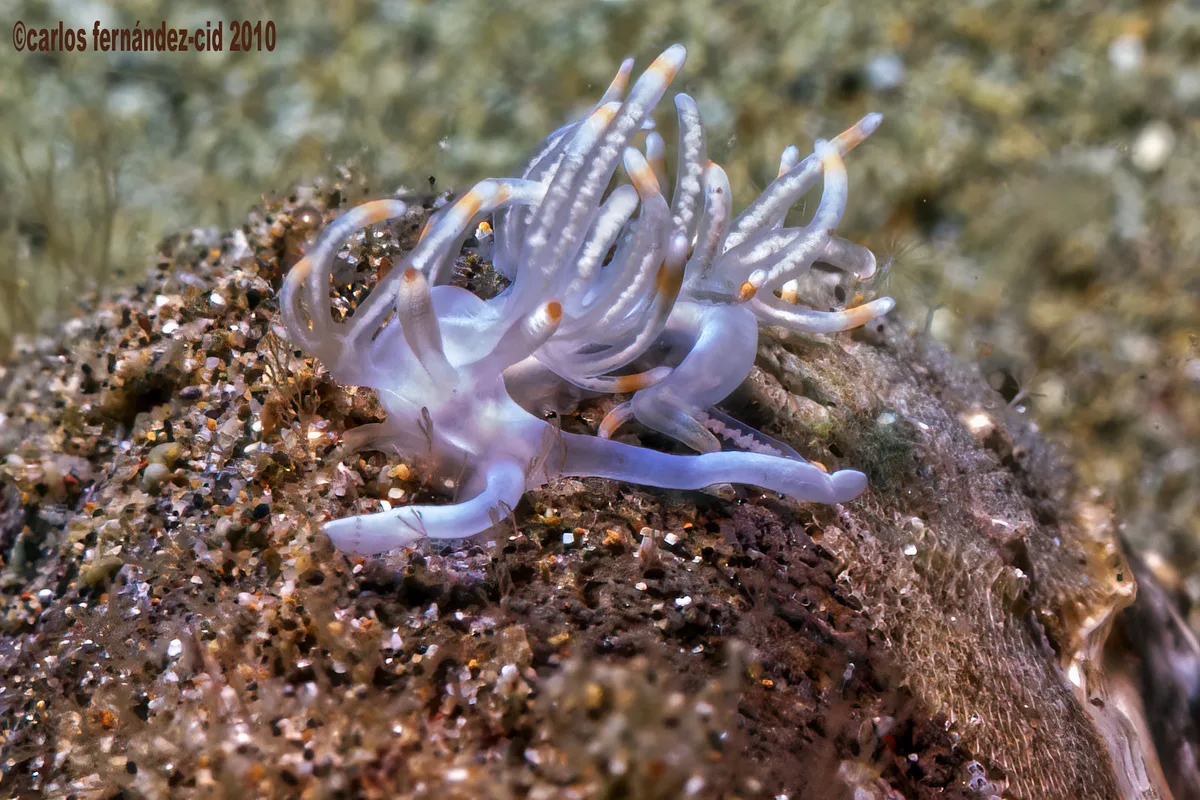
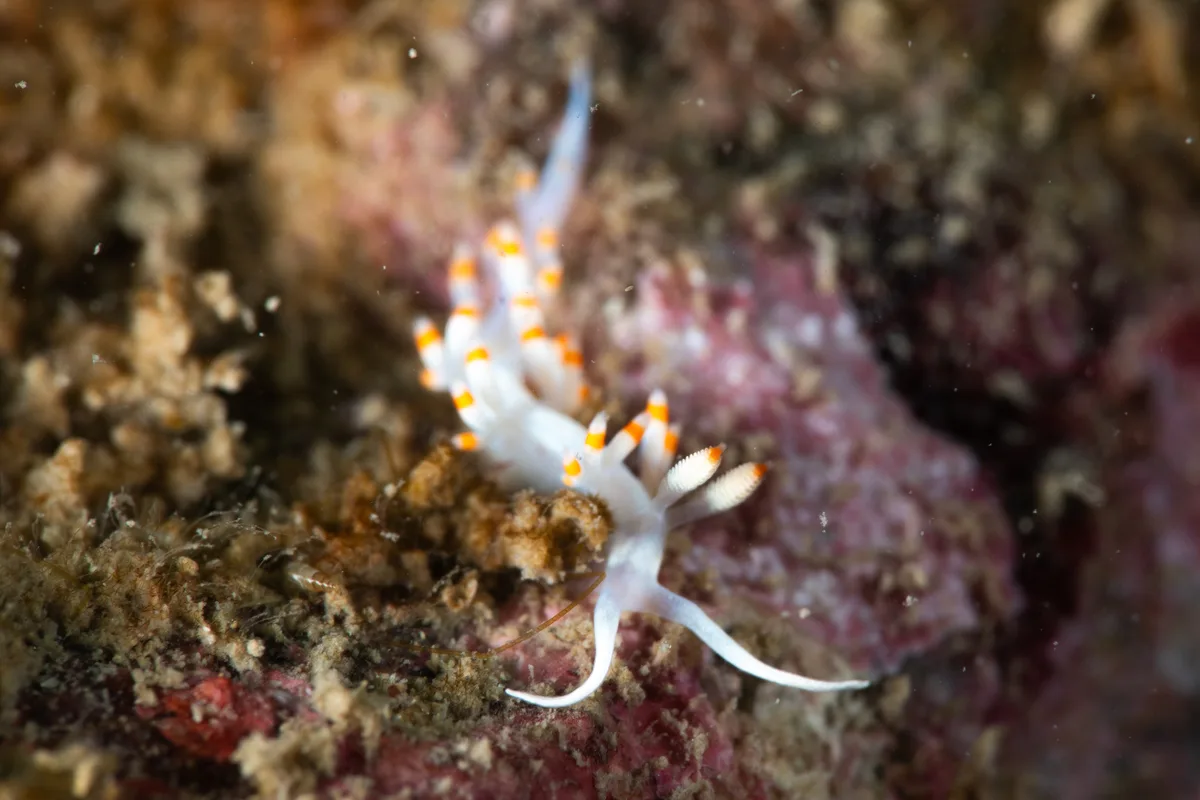
What you are looking at is a centimeter and a half (0.6 in) of translucent purple with opaque white patches on the back and an orange band below the tip of each ceras. Its relative here is orange-brown with a white line down the middle and red-banded cerata, so the two do not confuse once you have either in focus.
Both belong to a family that spent years inside the genus Flabellina and got split out of it, which is why older books and most photo sites still file these animals under that name.
- translucent purplish body with opaque white patches on the back
- cerata carrying an orange band below the tip
- cerata grouped in distinct clusters rather than spread evenly
- on a hydroid colony, not on the reef surface