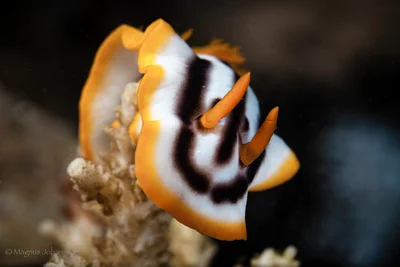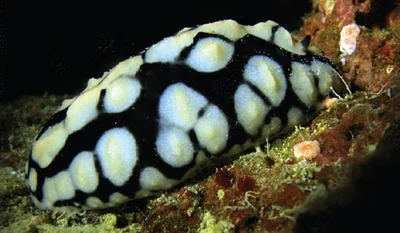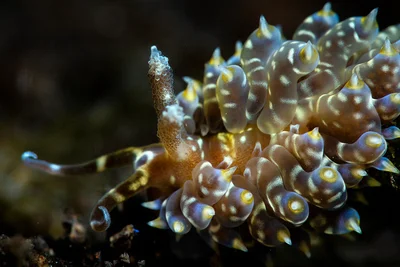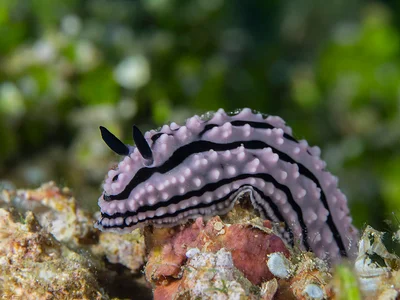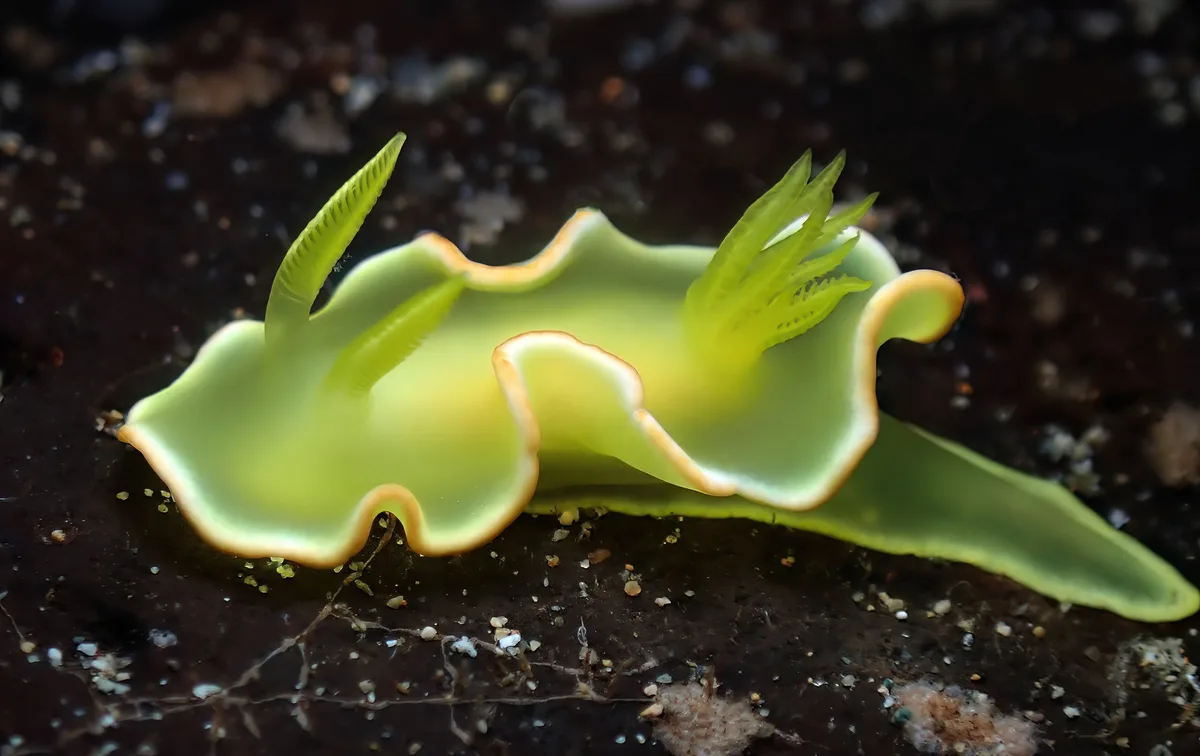
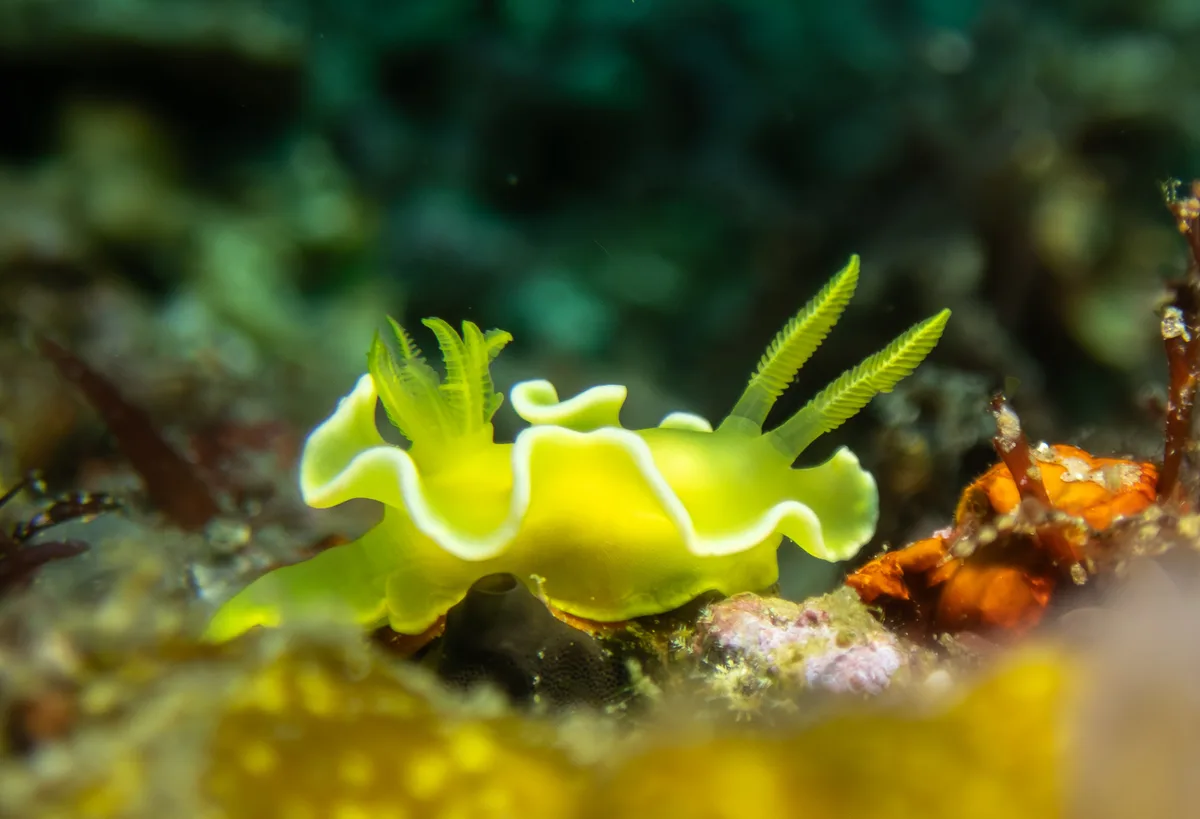
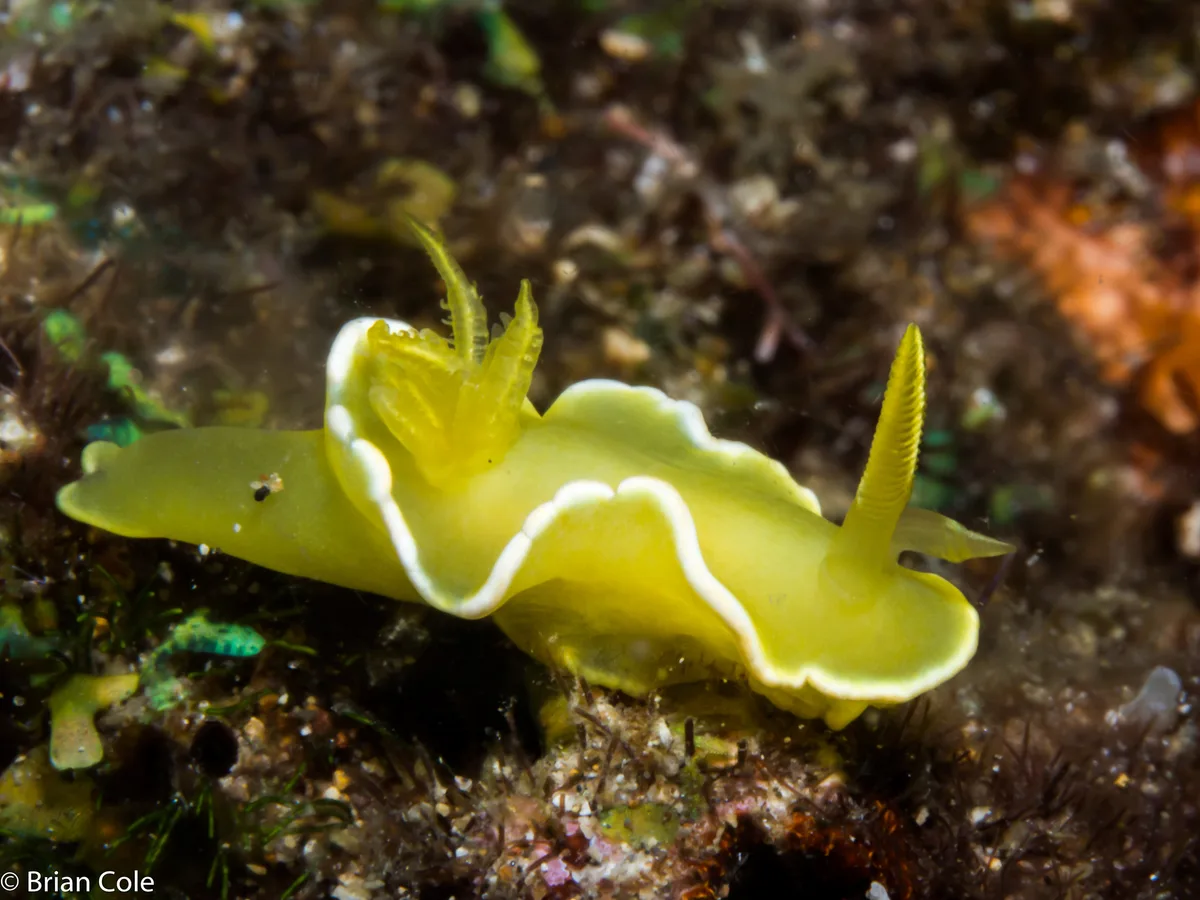
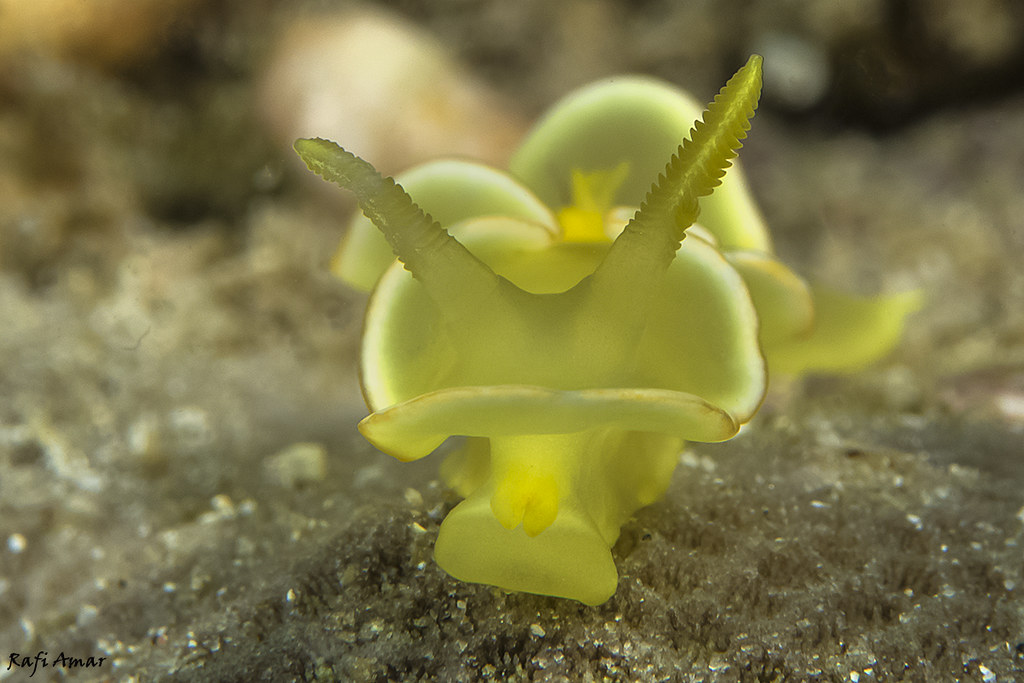
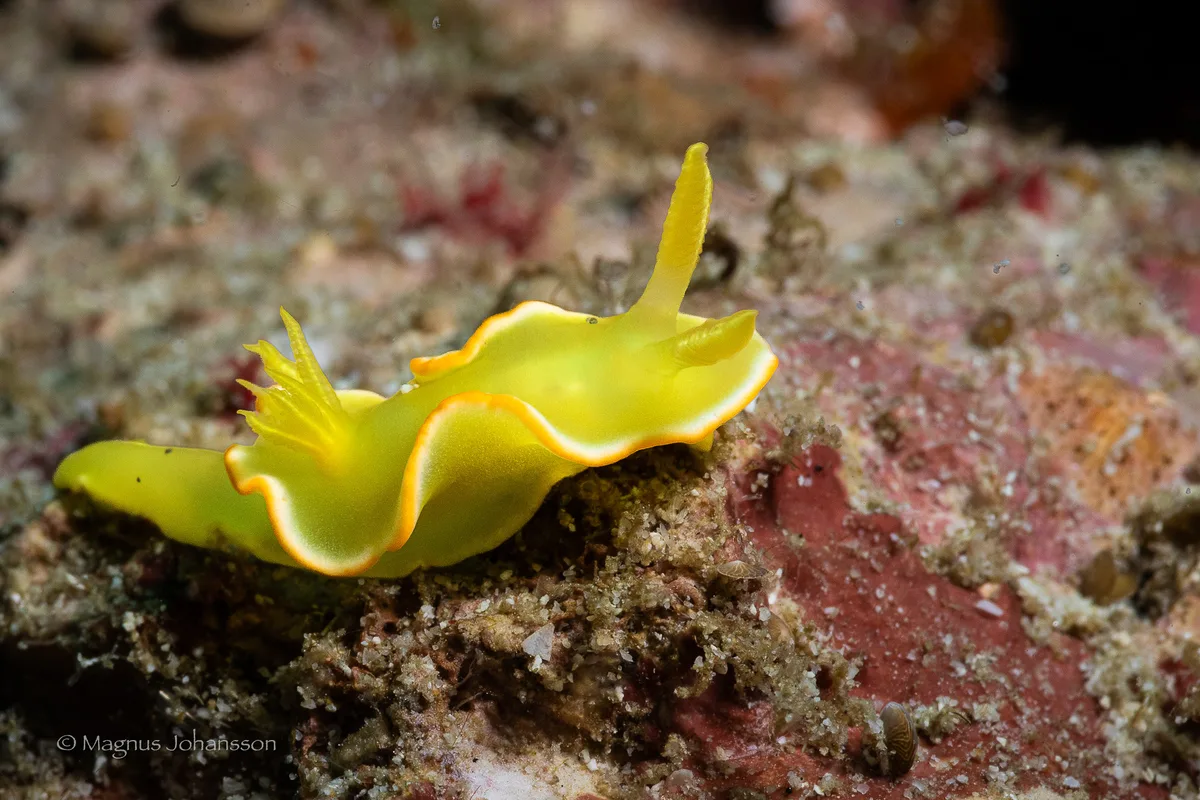
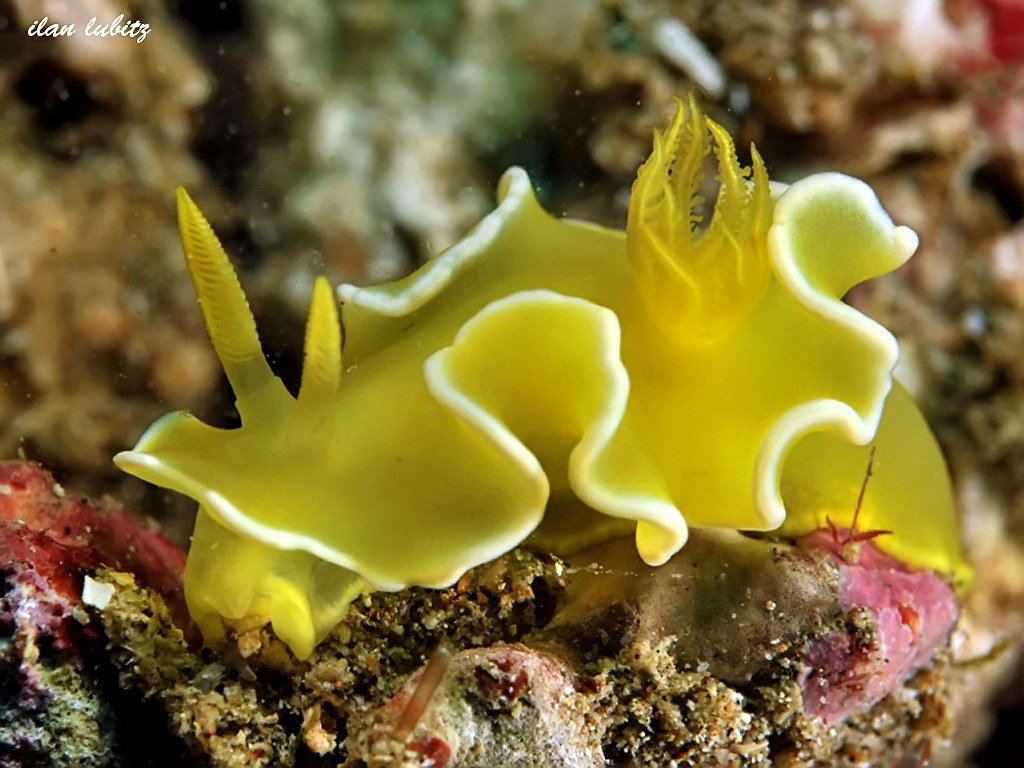
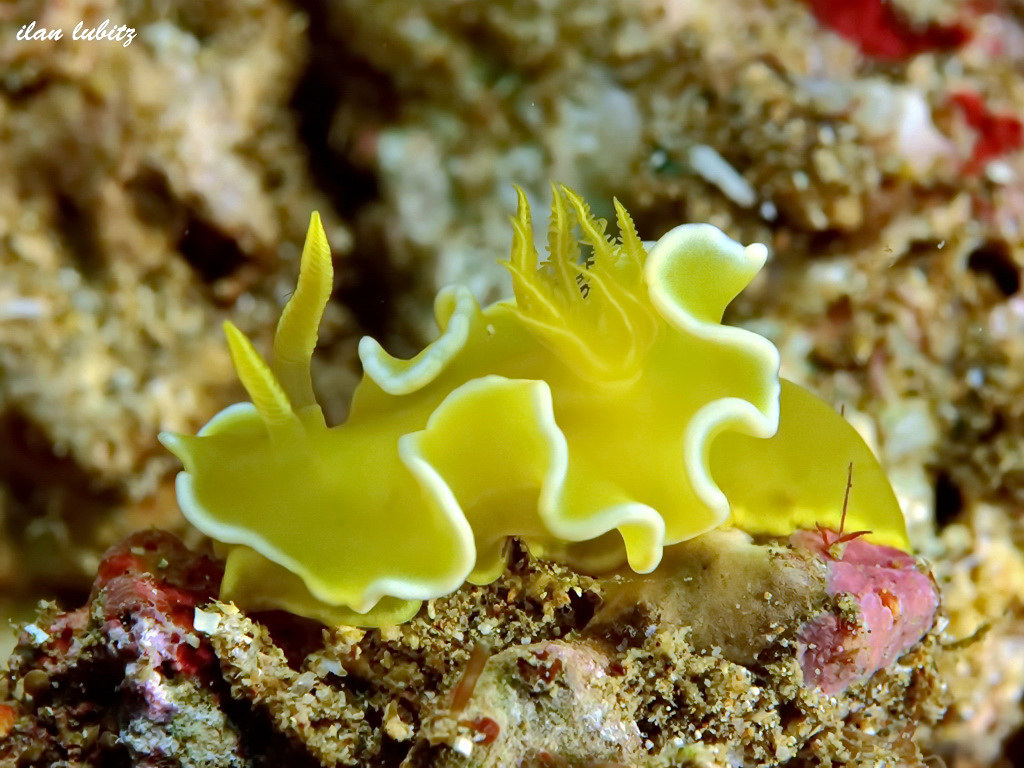
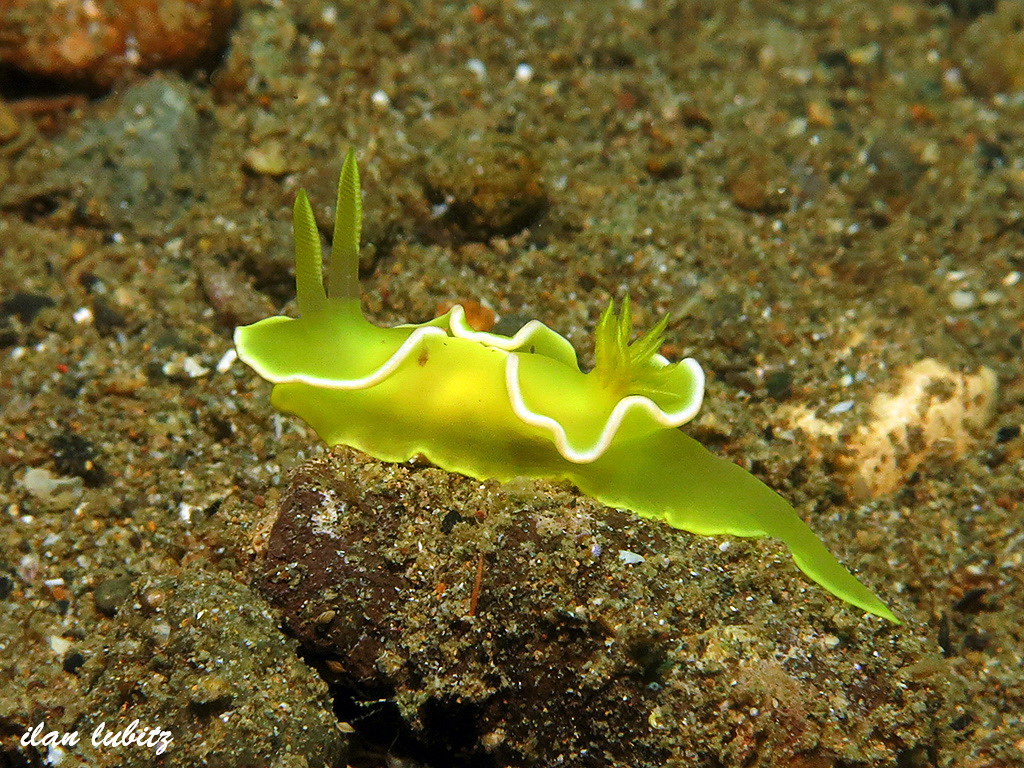
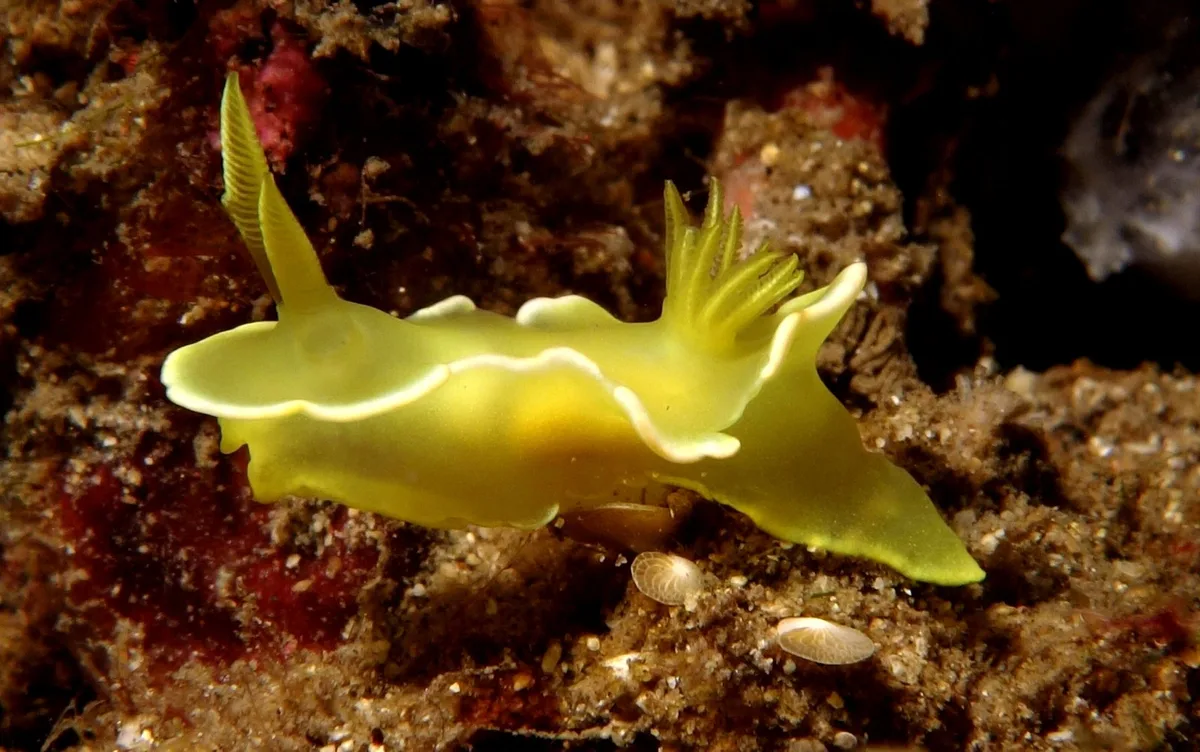
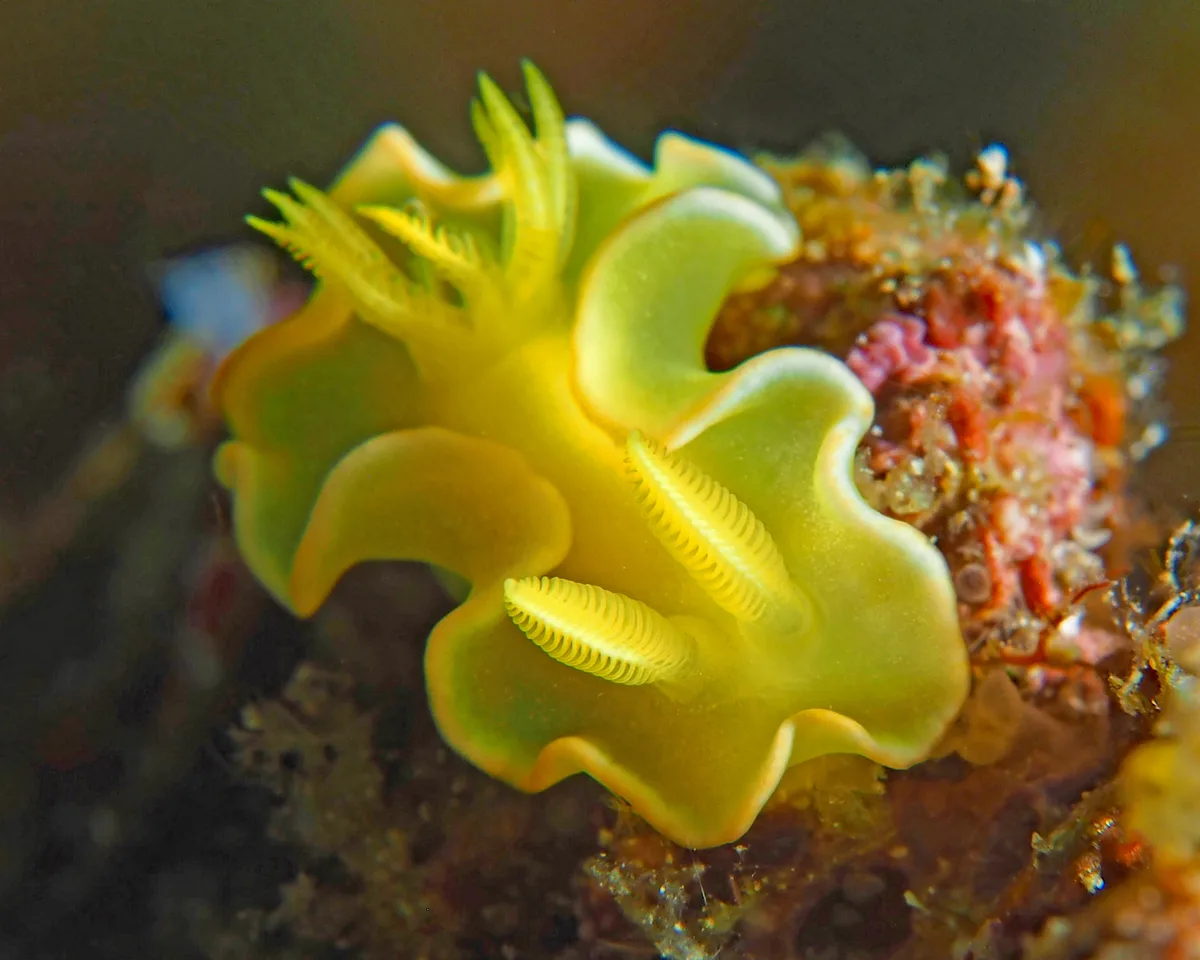
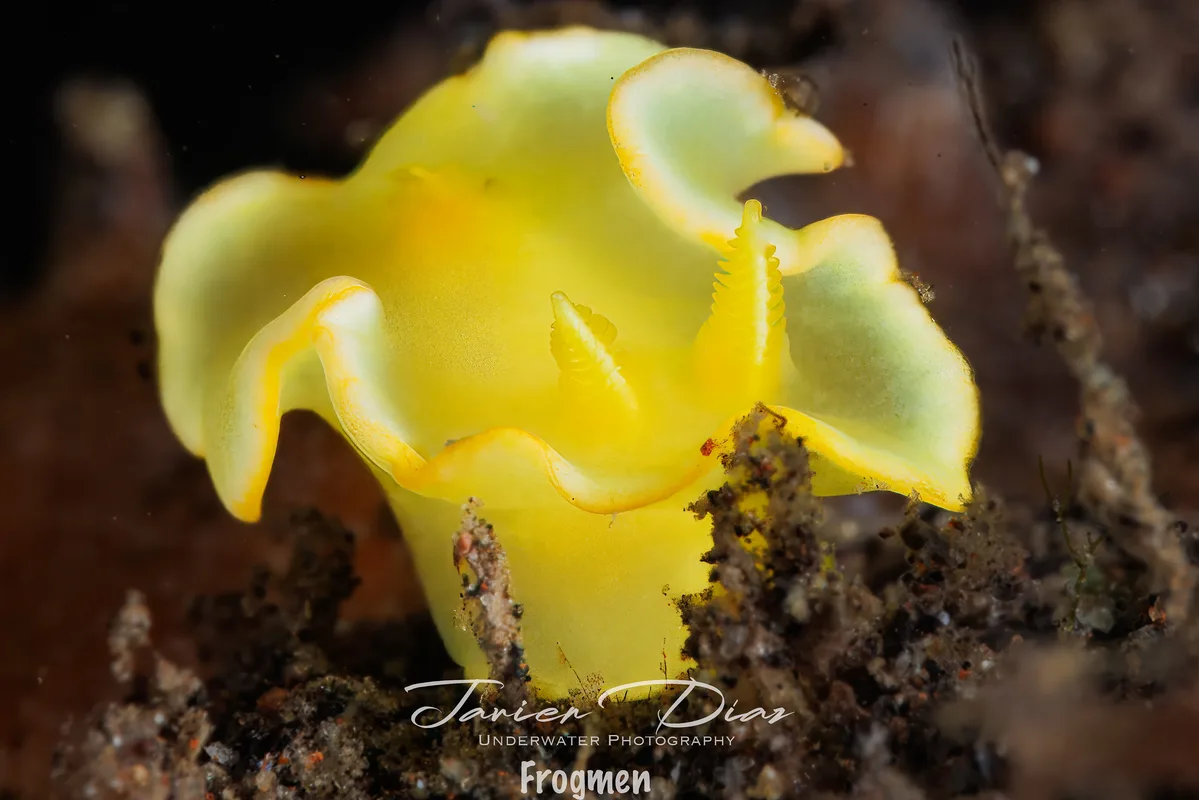
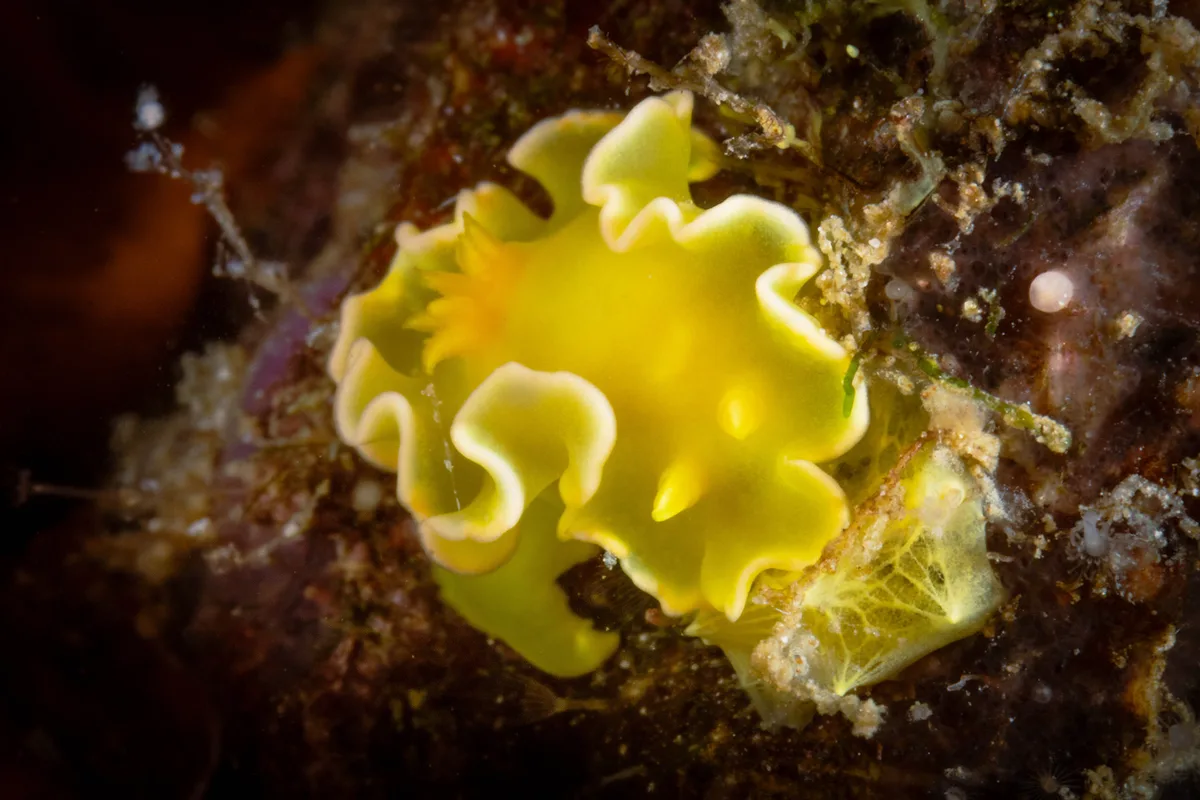
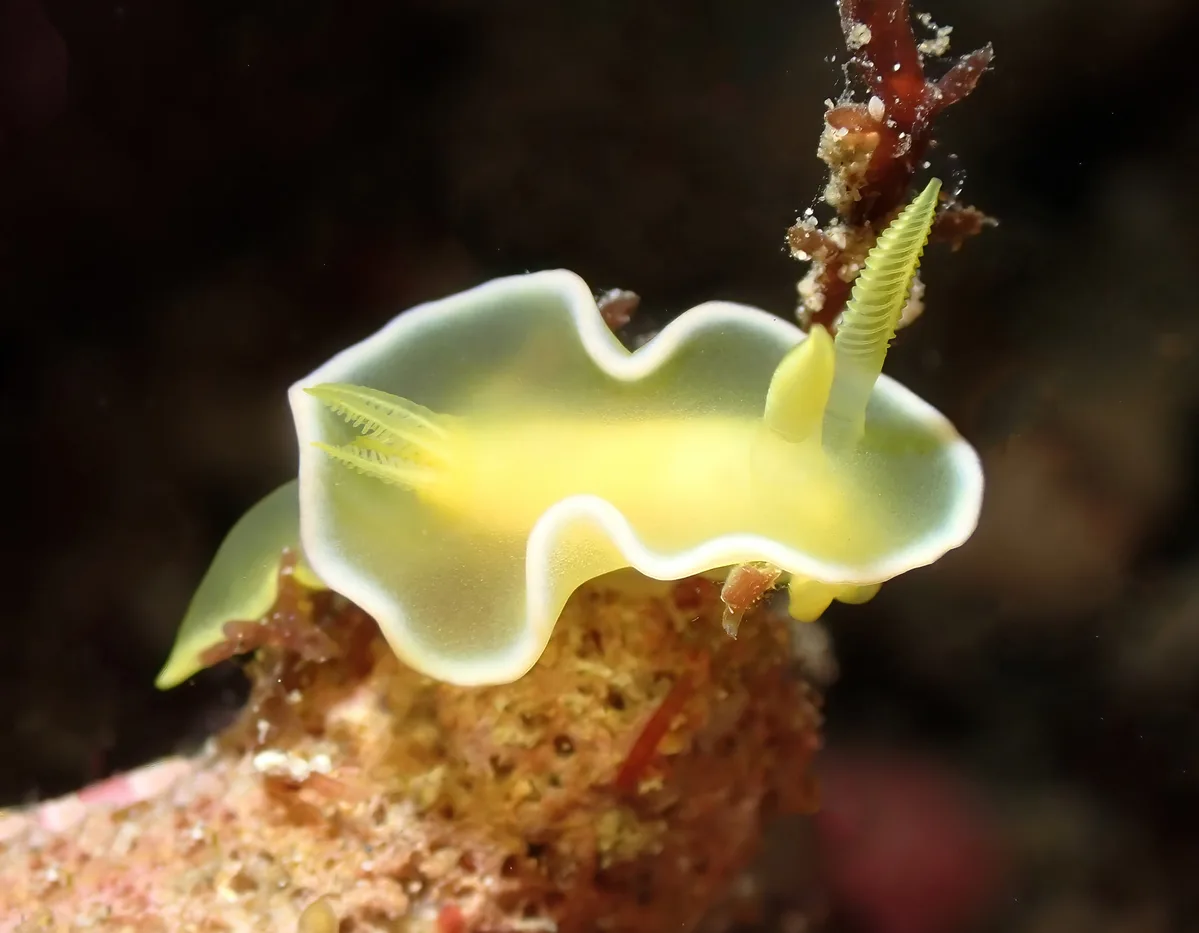
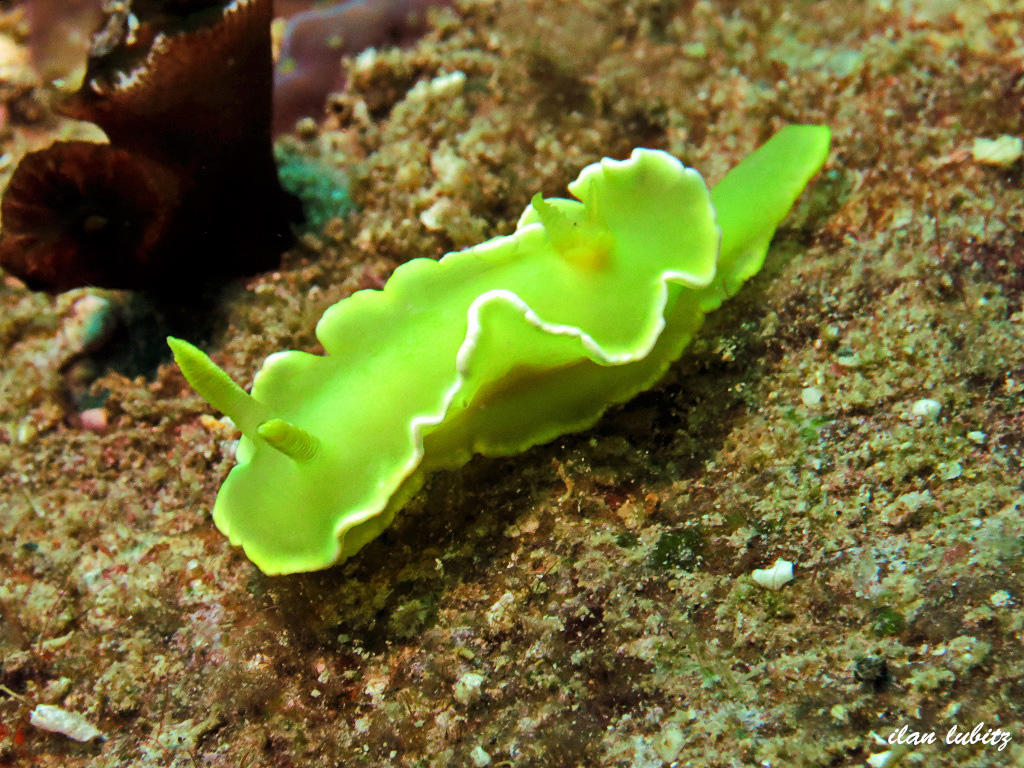
The English name records the part that is easy to miss: the tail sticks out.
On most dorid slugs the mantle is a skirt that overhangs the whole animal, so what you see from above is an oval with nothing protruding. In this genus the foot extends past the back of the skirt into a visible tail, which changes the outline enough to be a field mark on its own. Seen from directly above, the animal is a yellow oval with a point sticking out behind it.
At two and a half centimeters and yellow all over, including the gills, it is the kind of animal that reads as a smear of color until you are close. The one reliable mark besides the tail is a pale line running around the mantle edge.
Like every chromodorid it feeds on sponges and keeps their chemistry in its own skin, which is why it makes no attempt to hide and can be photographed at leisure. Yellow is a common answer in this family because many of the sponges they specialize on are yellow, and the pigments travel with the meal.
Its close relative here is a smaller, paler yellow animal with red on the gills, and the two are regularly confused. Gill color separates them.
- yellow body with a whitish line running around the mantle margin
- yellow gills, not contrasting with the back
- tail projecting well behind the mantle skirt
- small, up to 2.5 cm