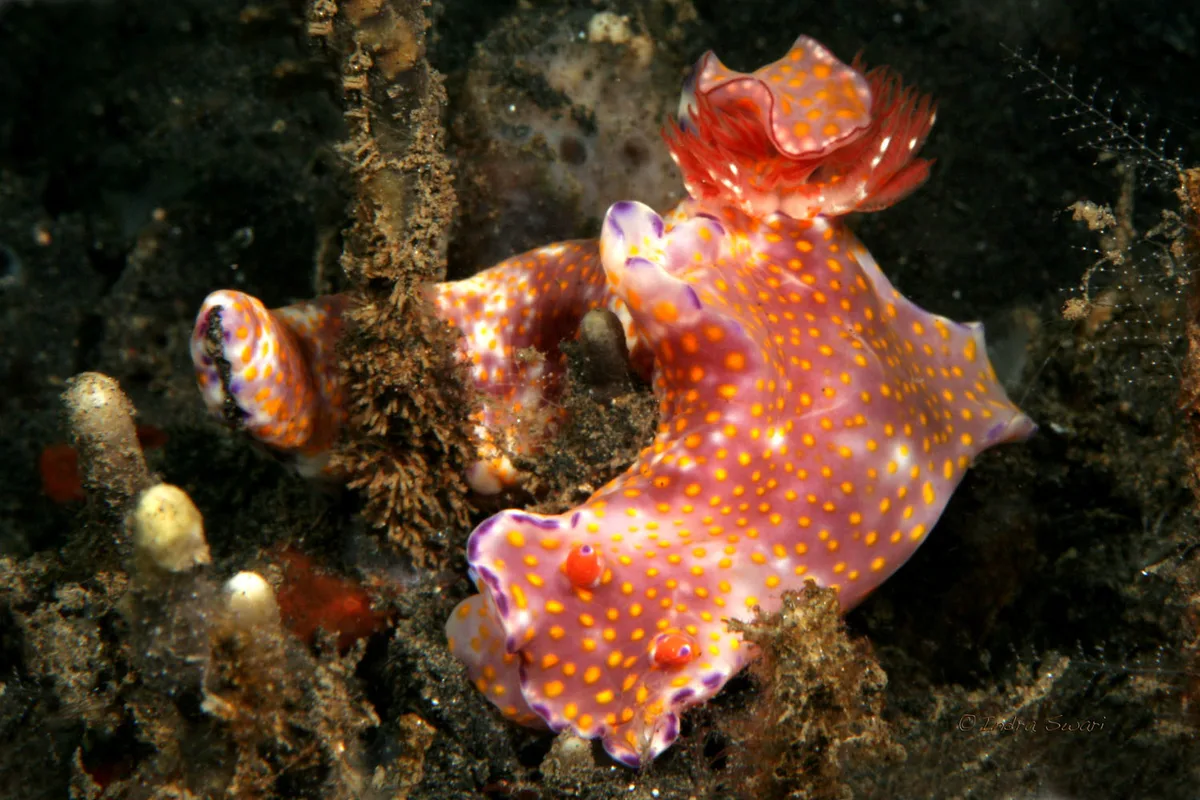
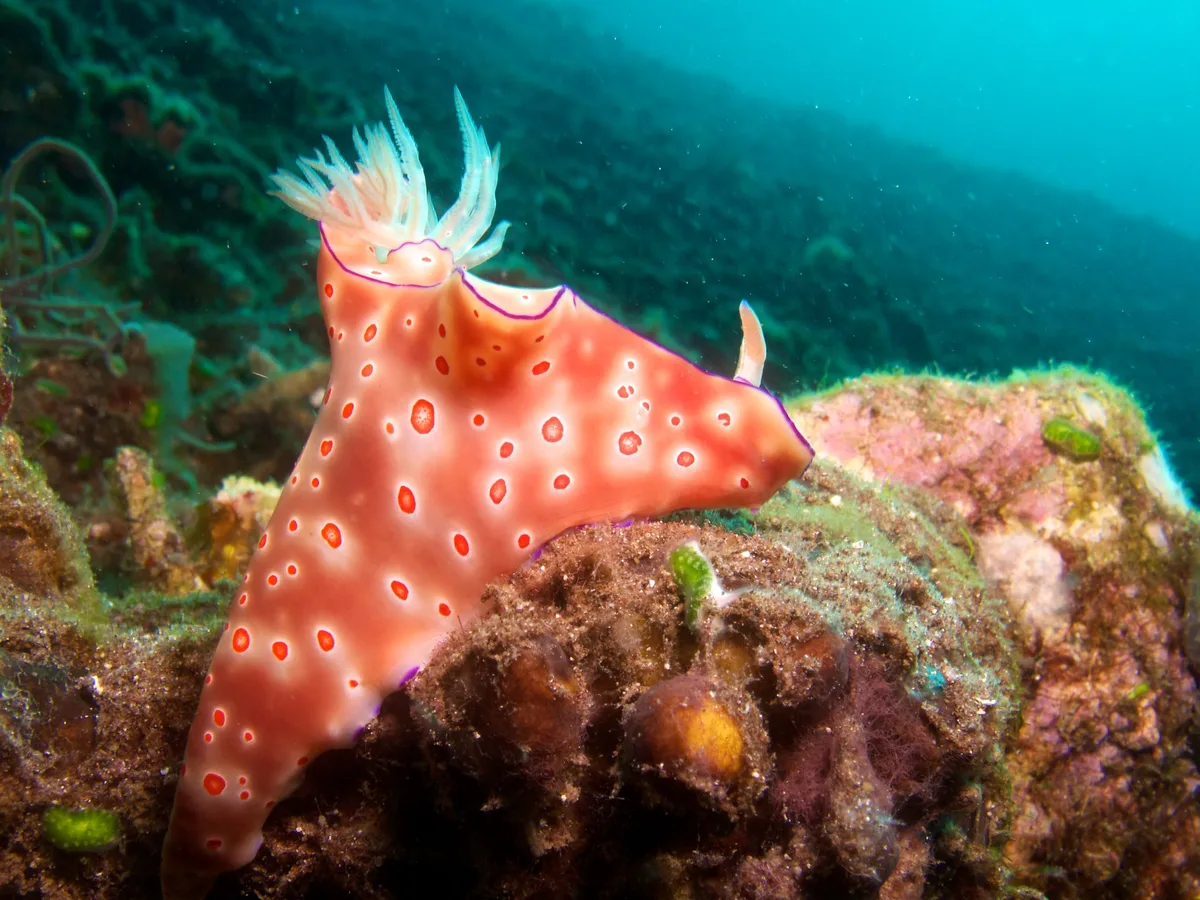
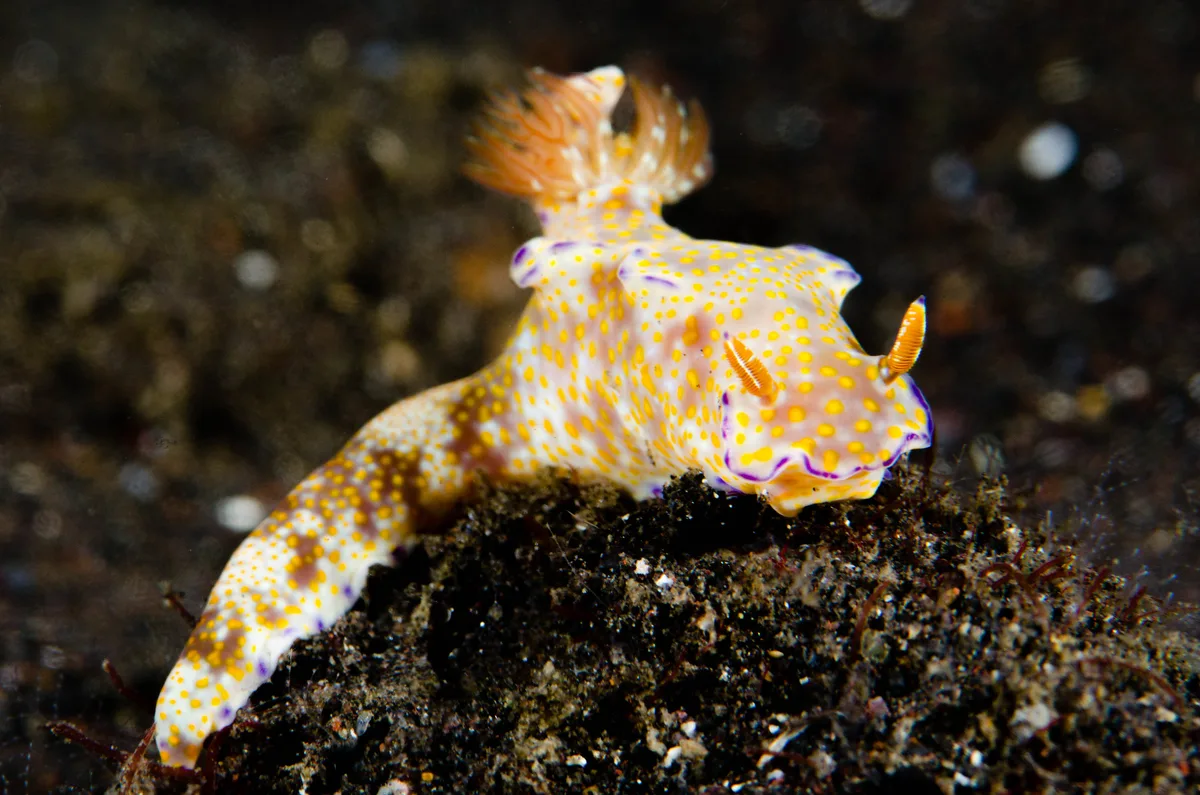
The horn on this animal's back is a decoy, and it works by being the worst part to bite.
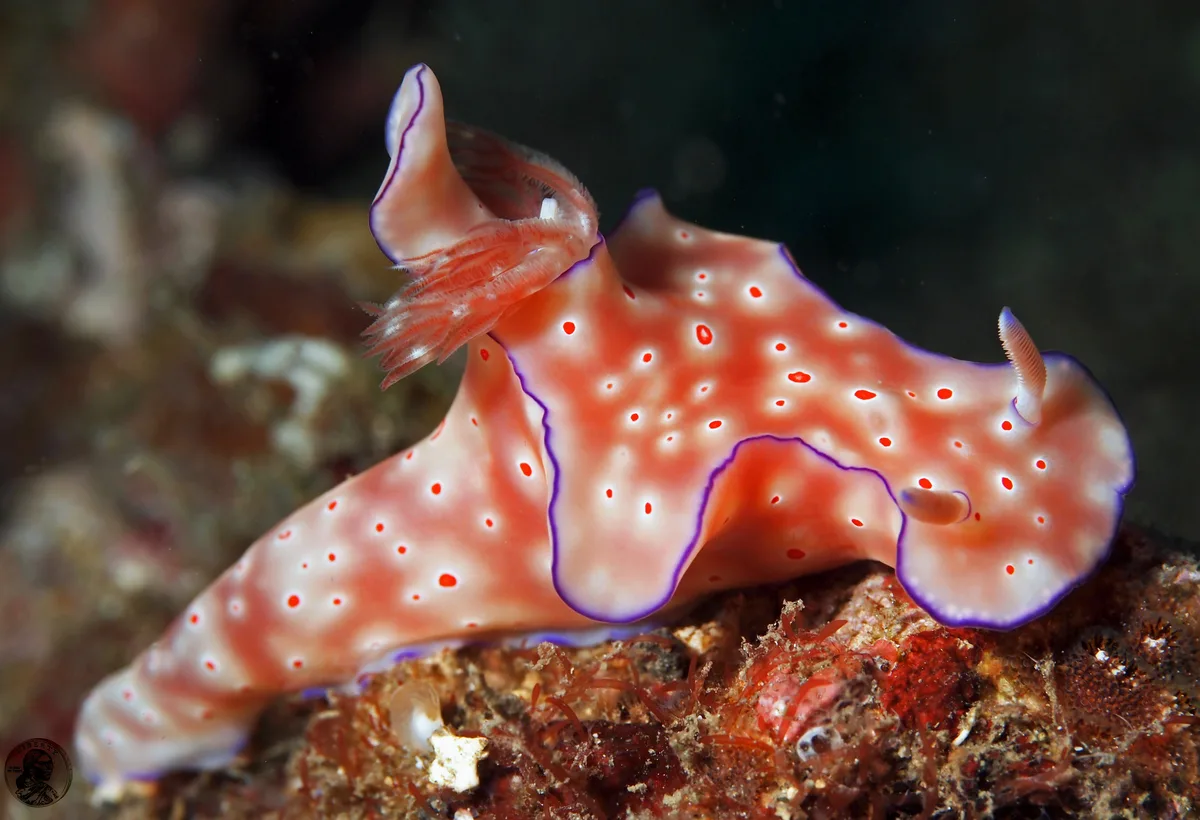
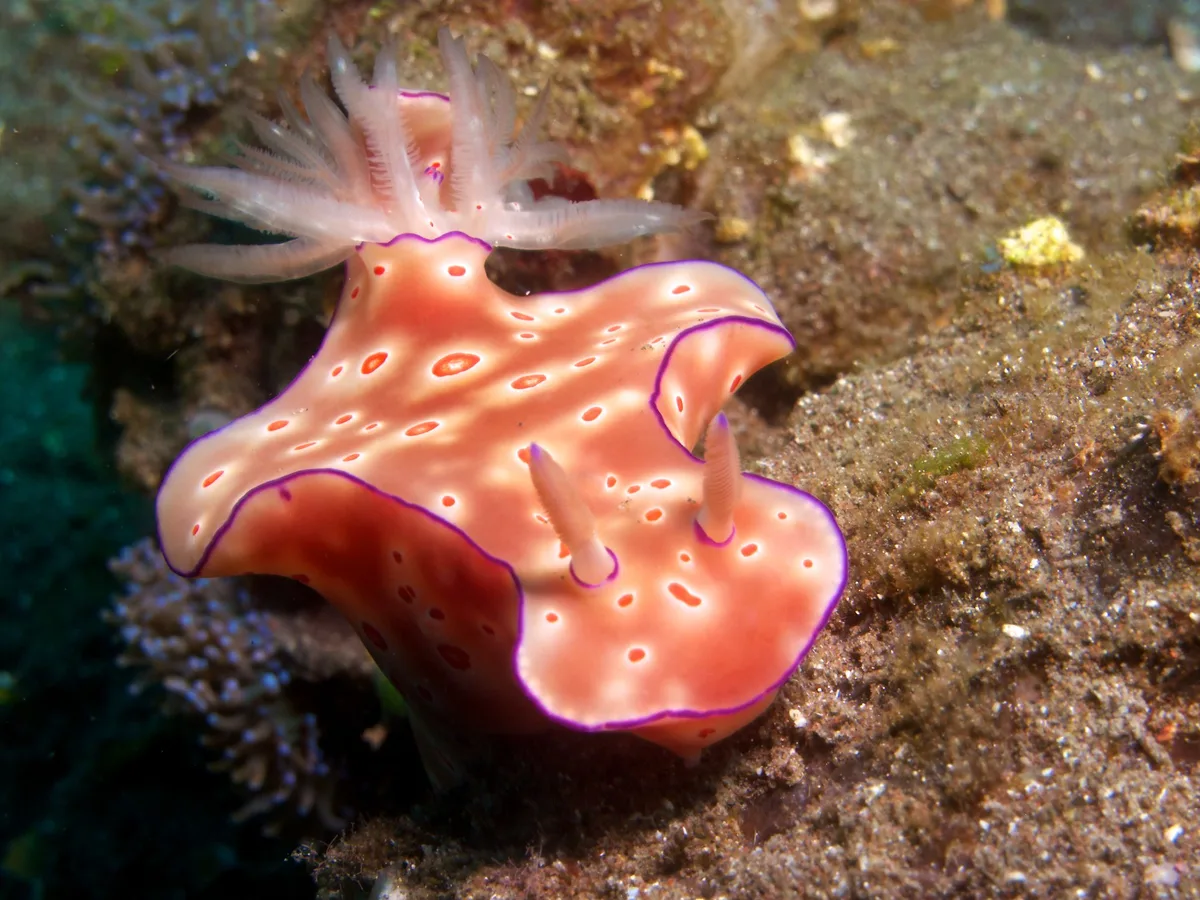
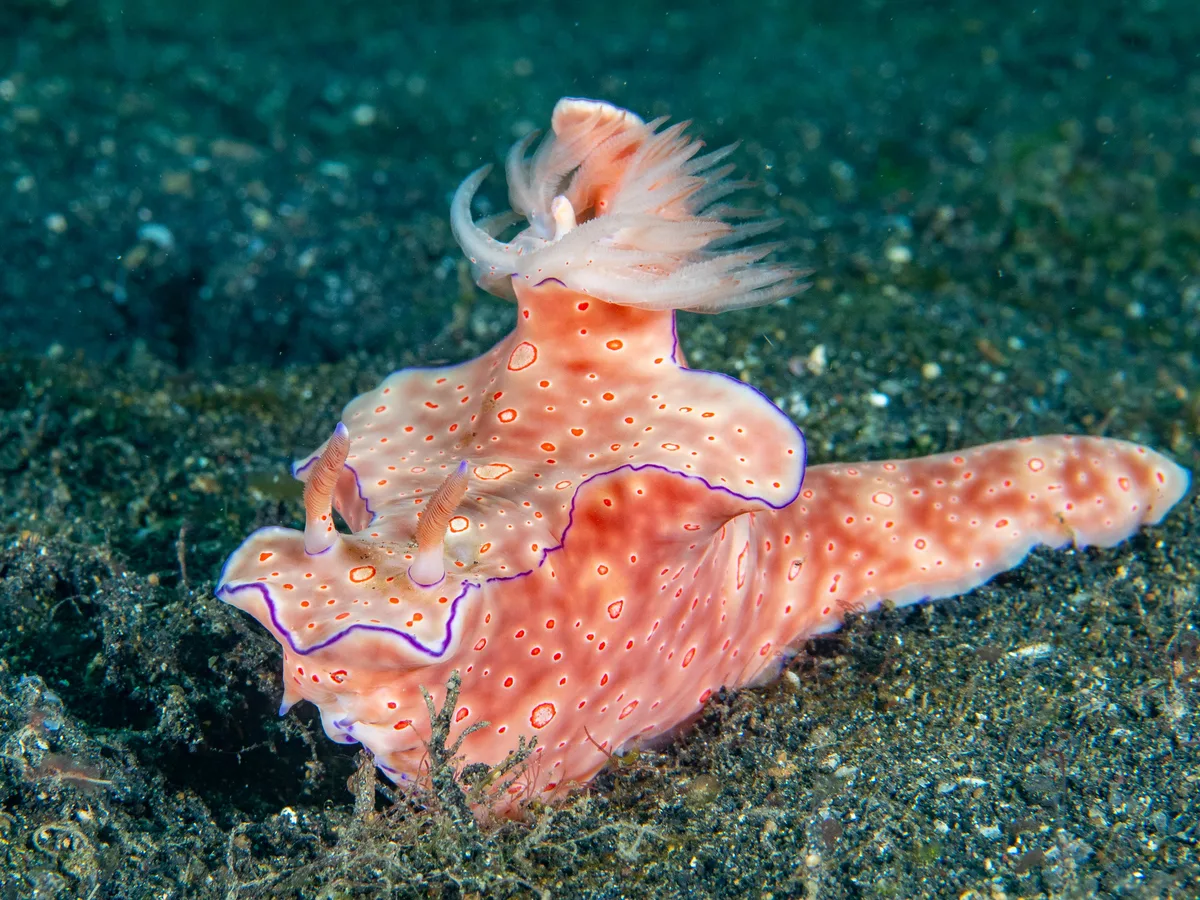
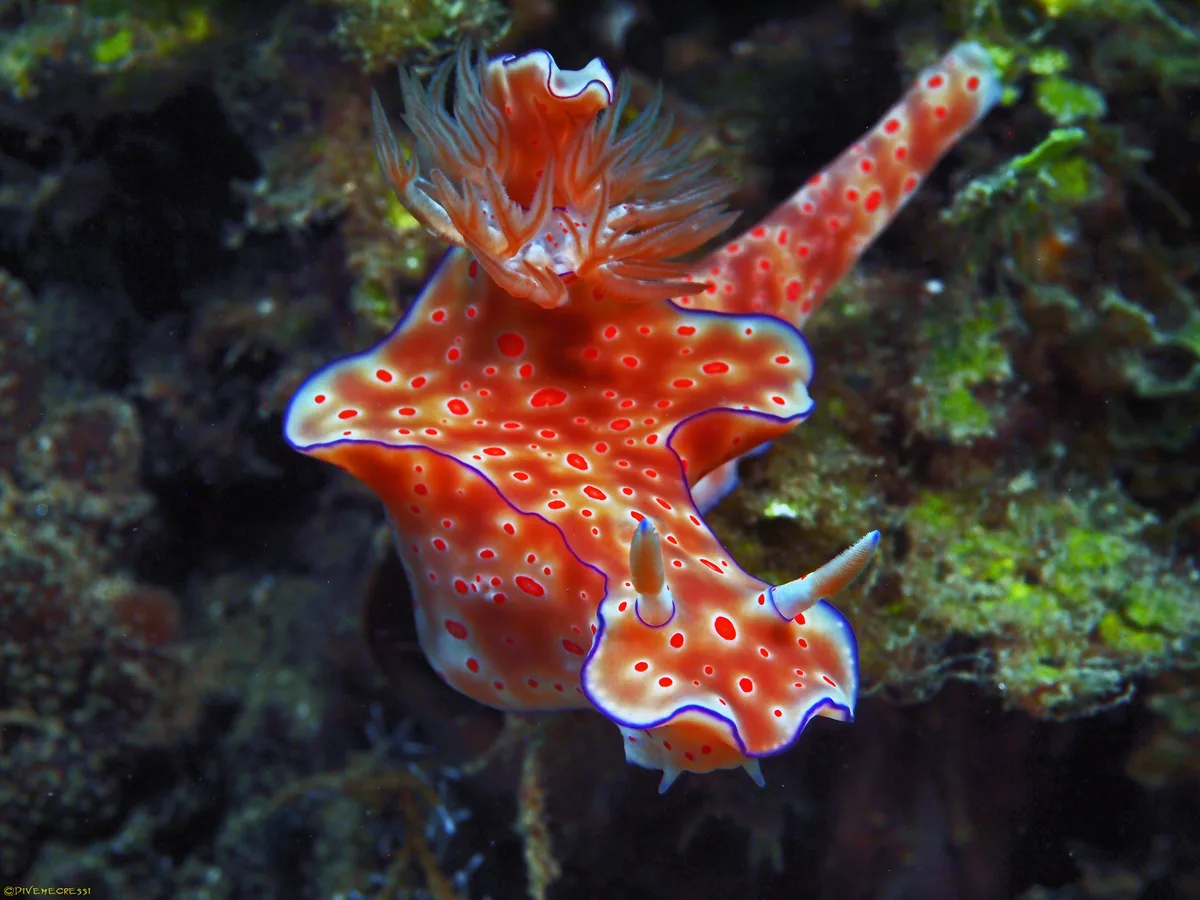
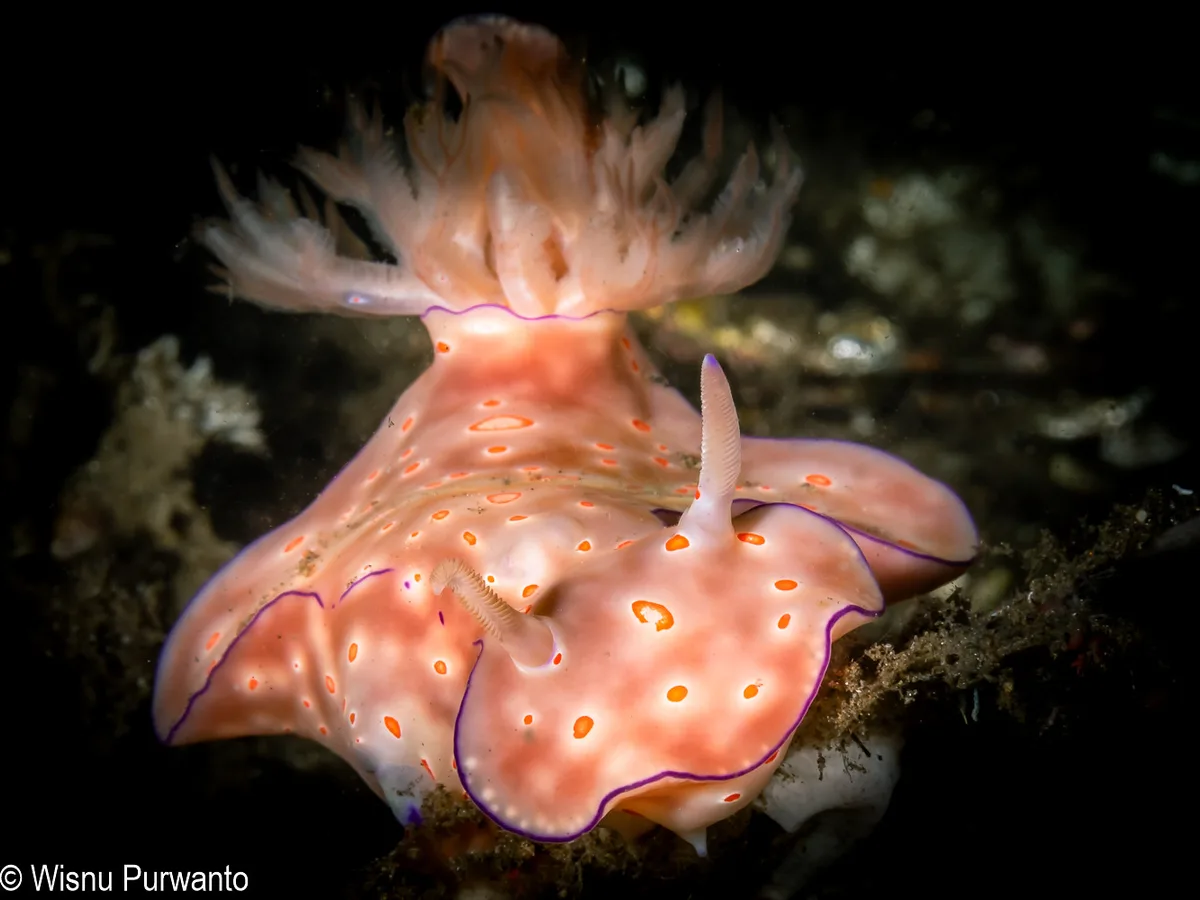
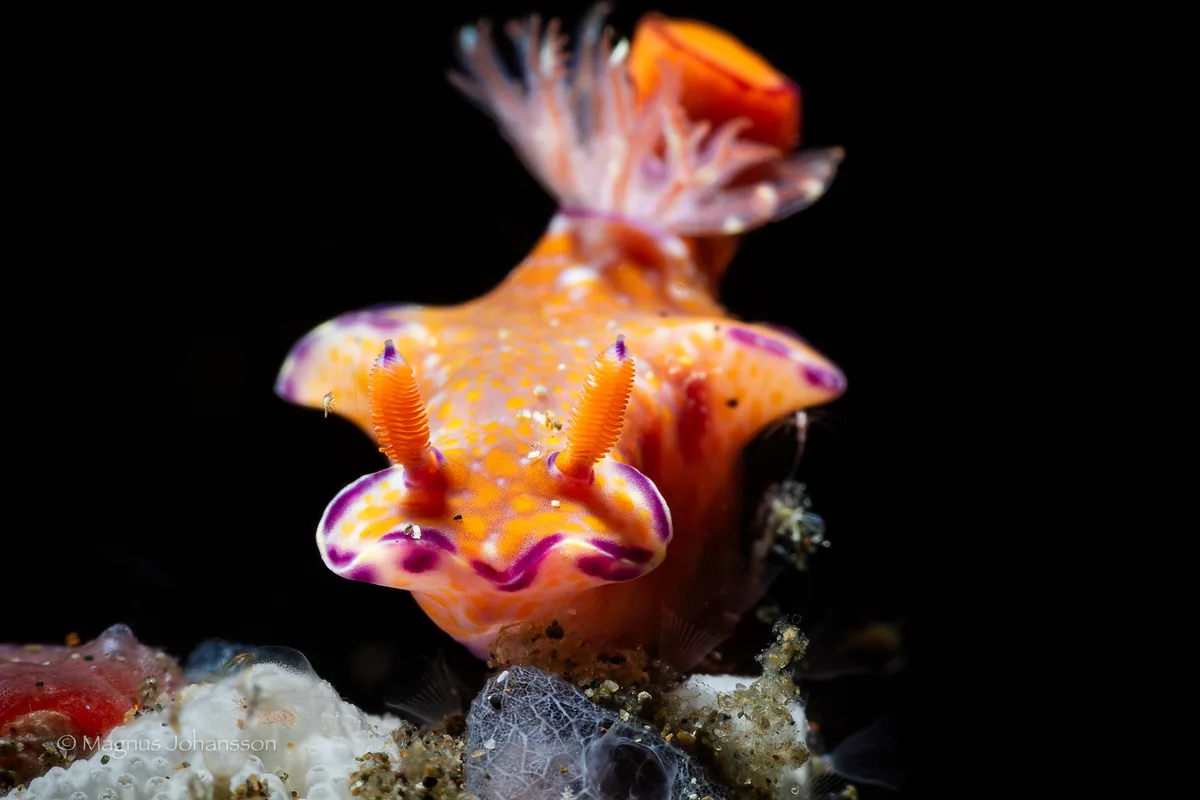
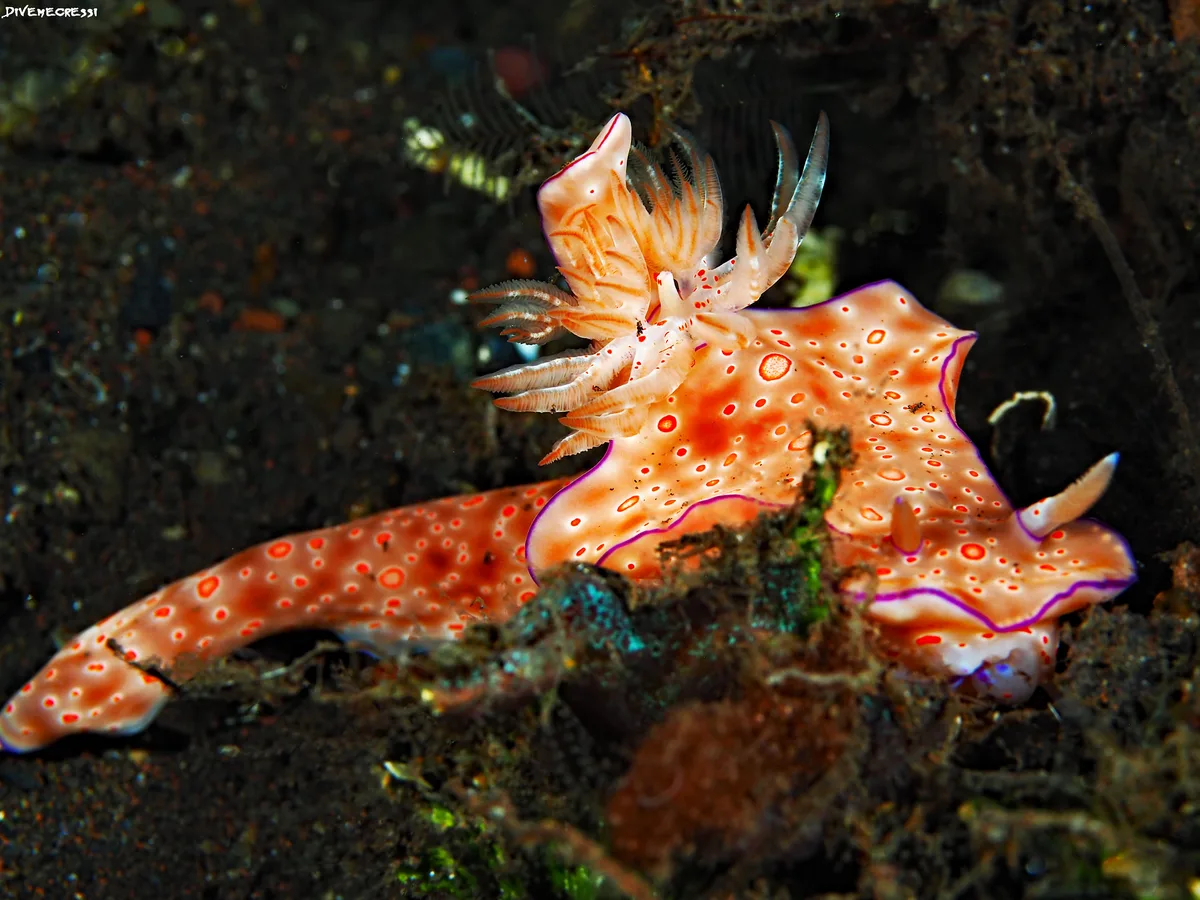
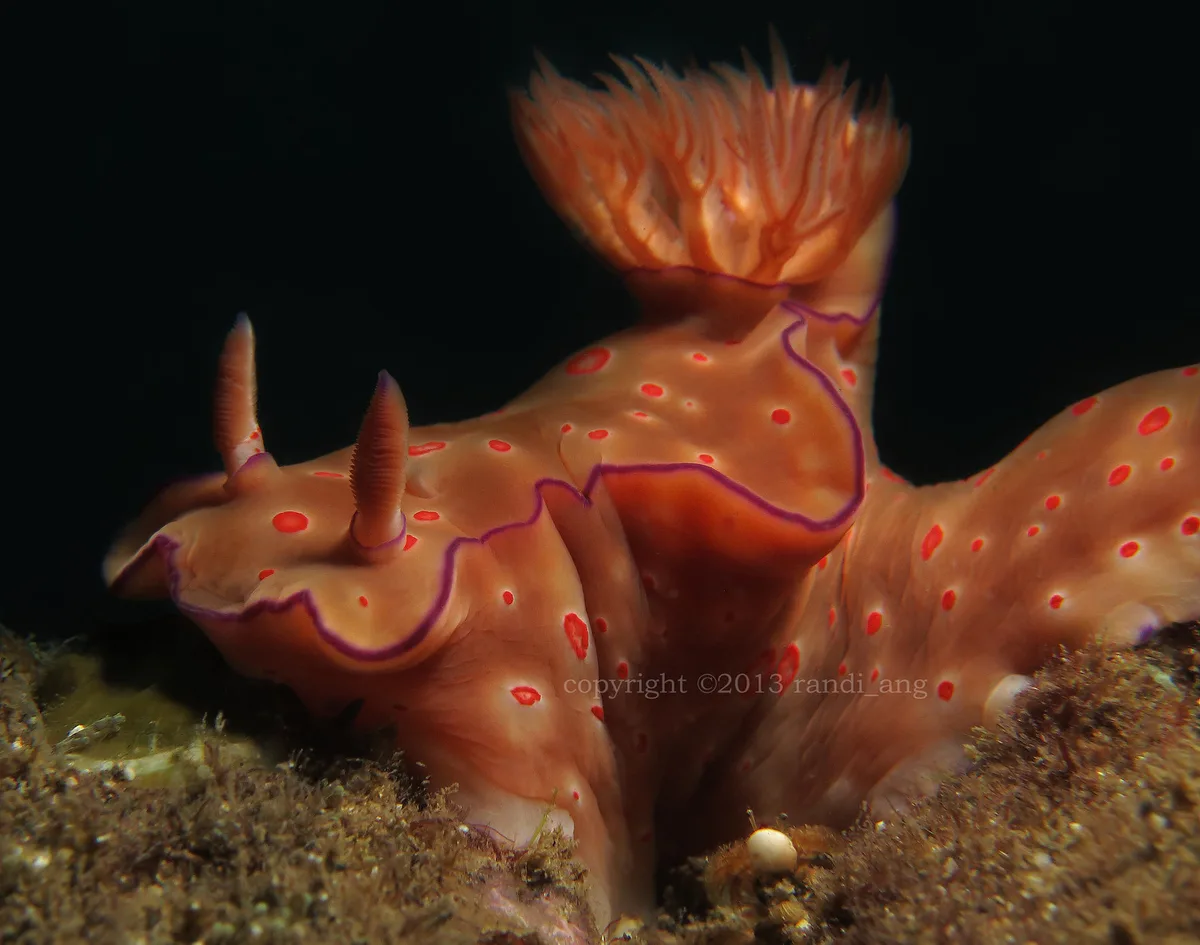
Ceratosoma slugs carry the mantle drawn up into a lobe behind the gills that stands clear of the body. It is not a weapon and it is not a sense organ. The glands holding the chemistry taken from the sponges the animal eats are concentrated in it more densely than anywhere else, and the lobe is held out where a fish trying its luck will take that mouthful first. The gills sit just in front of it, tucked into the shelter it makes. An attacker gets the most repellent tissue on the animal and the slug keeps the part it actually needs.
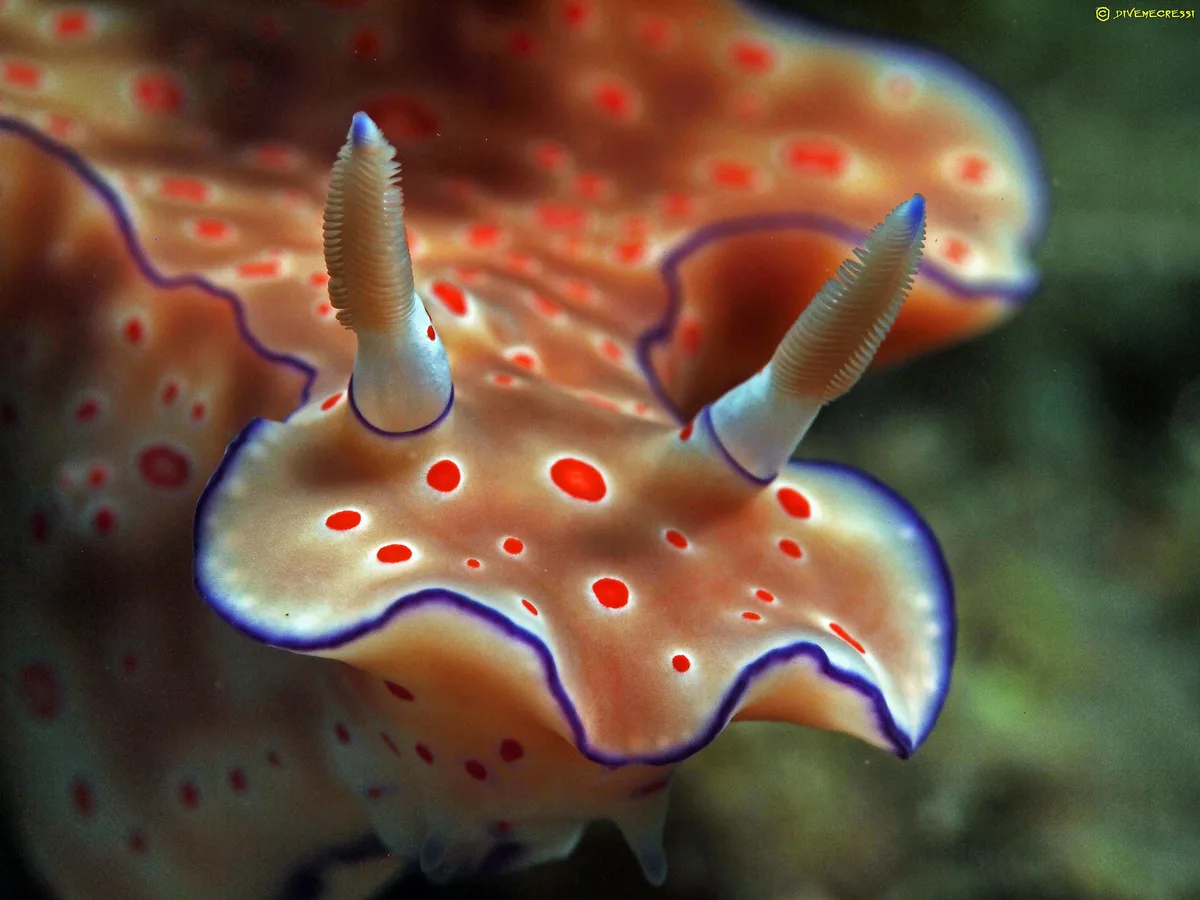
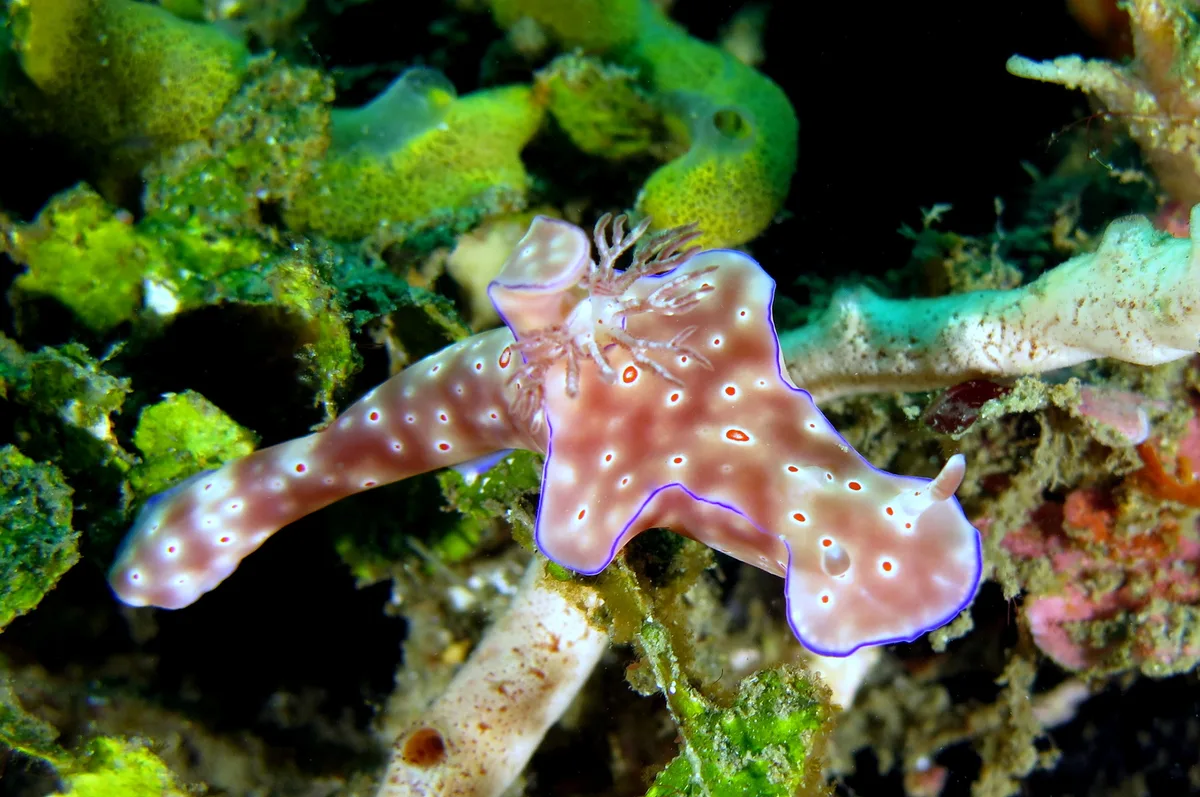
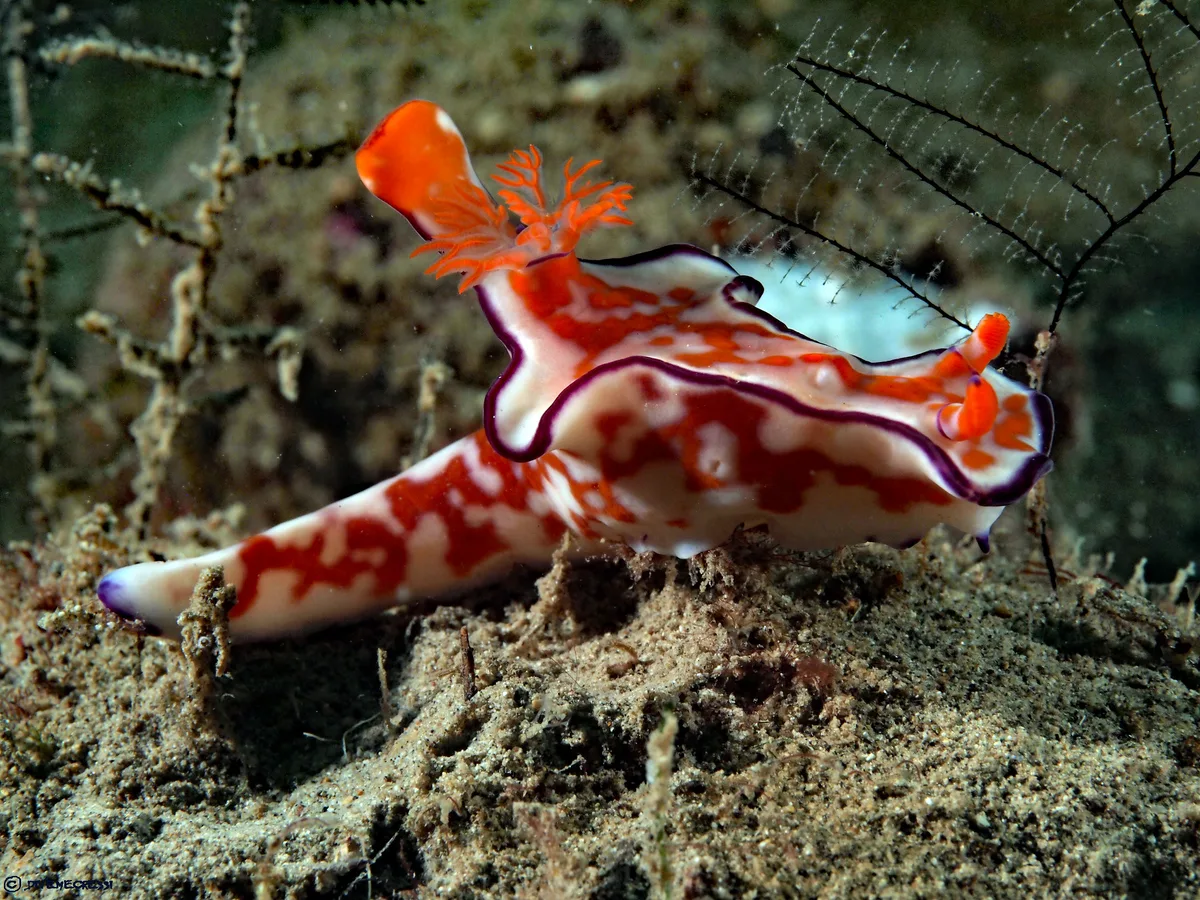
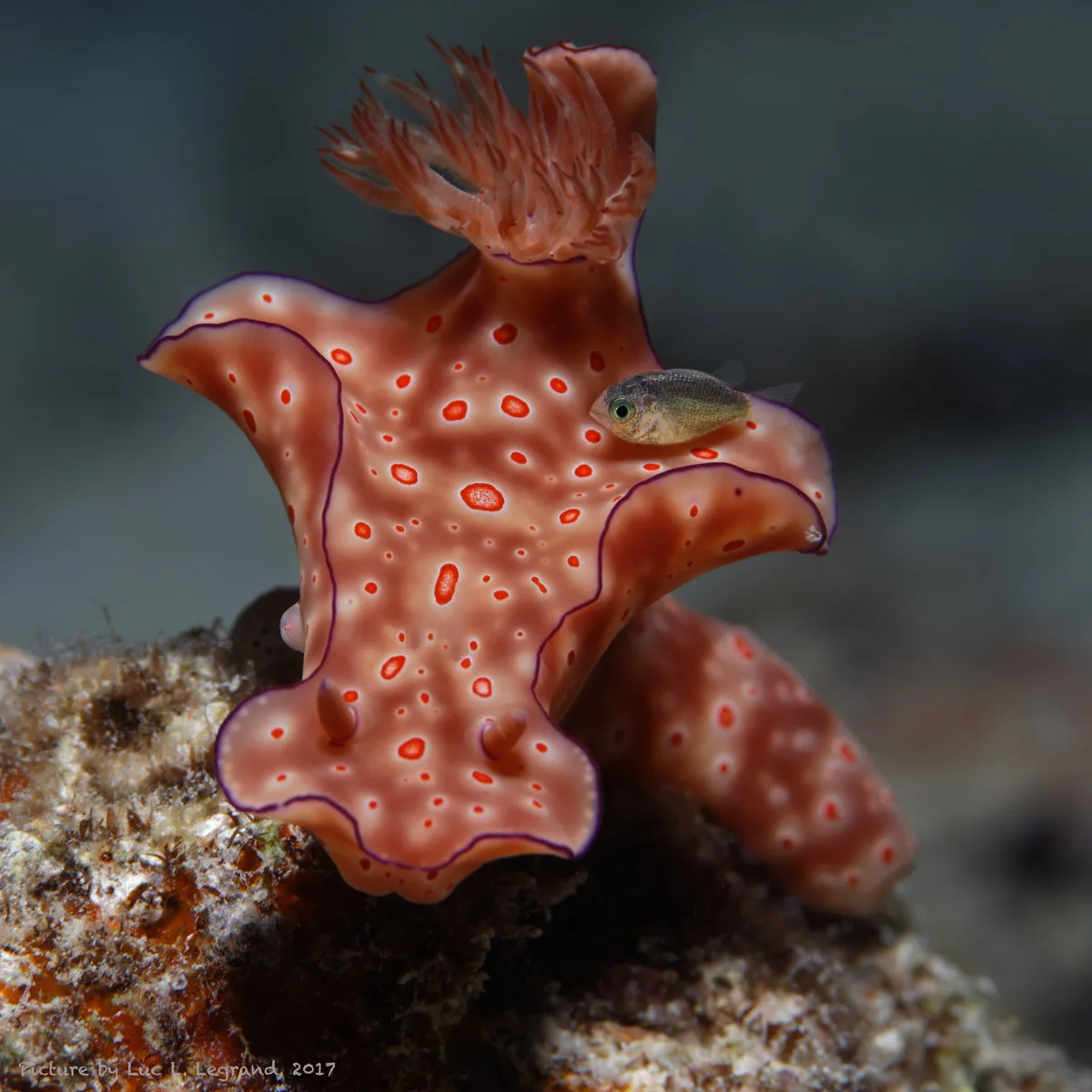
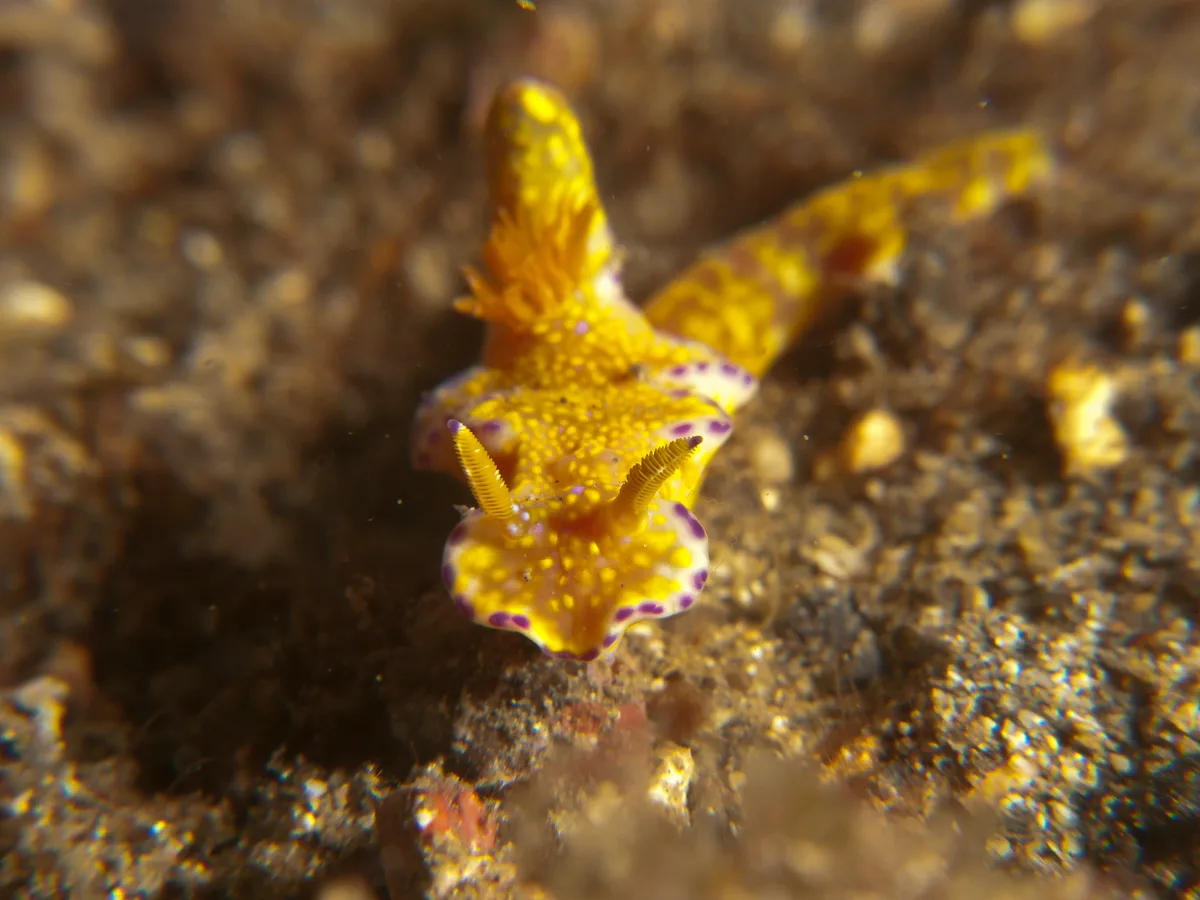
At twelve centimeters this is one of the largest chromodorids anywhere and by far the largest in this catalogue, orange to red-brown, built in lobes rather than as a flat oval, with a purple line running the whole way around the margin.
The defense is entirely borrowed. It eats sponges, and sponges load their tissue with compounds to keep from being eaten; this family takes them intact, moves them through the gut without harm and stores them in the skin. That is why a soft, slow, conspicuous animal crawls about in daylight without concealment and does not react when a camera arrives.
One oddity of scale: a slug this size can be found by eye from several meters away, which is not true of anything else on these pages.
- large, up to 12 cm, and shaped in distinct lobes rather than a flat oval
- a raised horn on the back, behind the gills, leaning back over them
- purple line running around the mantle margin
- orange to red-brown body, often with a paler center