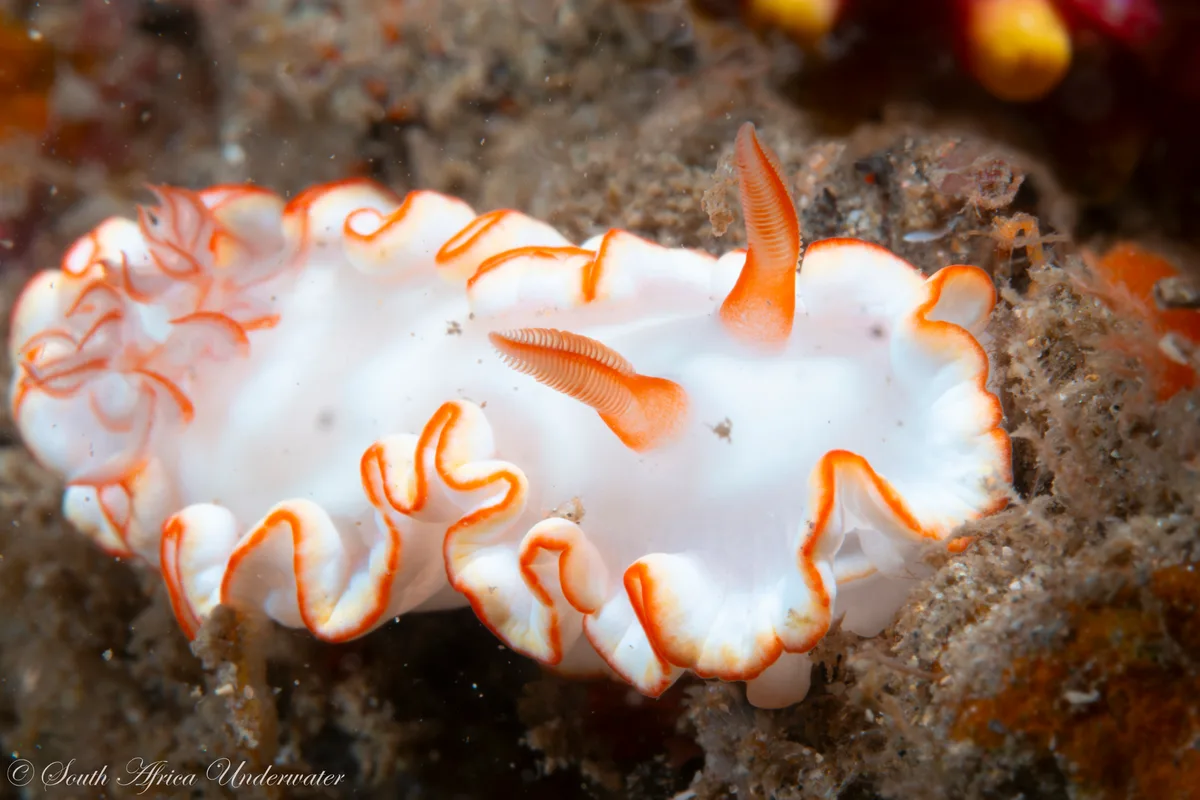
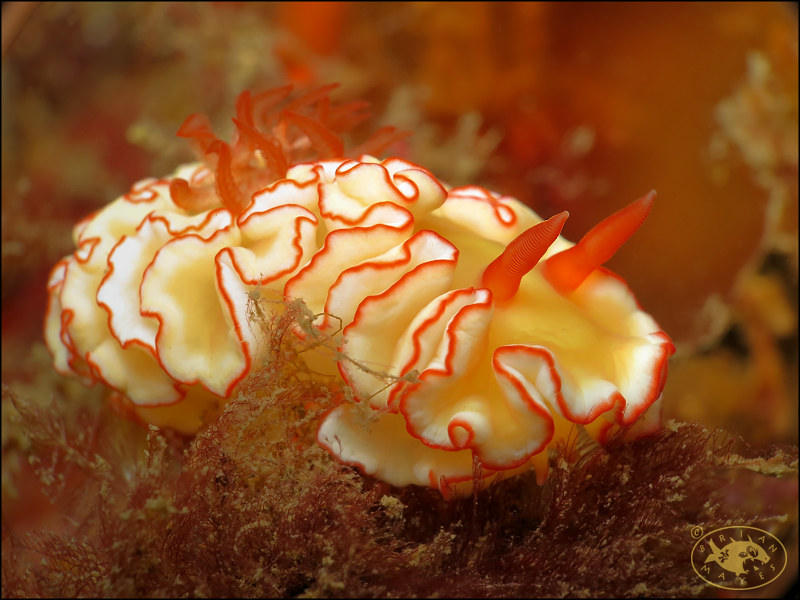
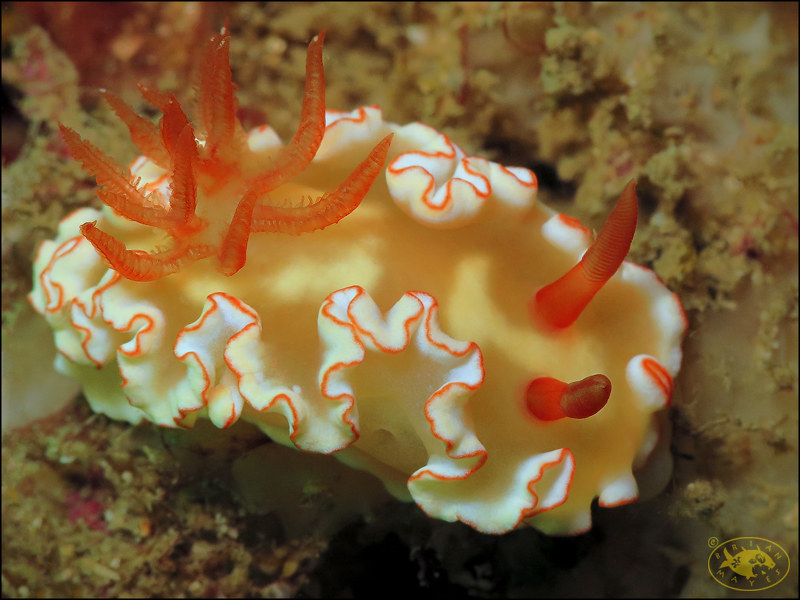
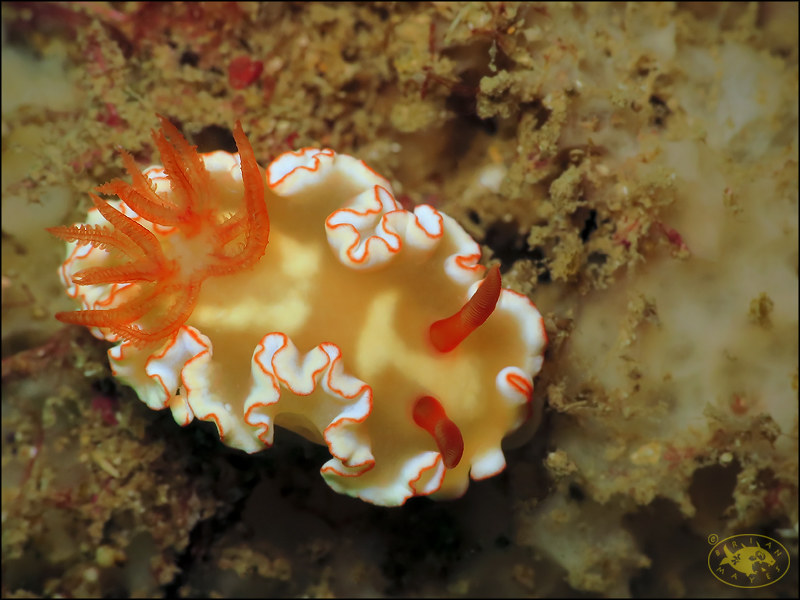
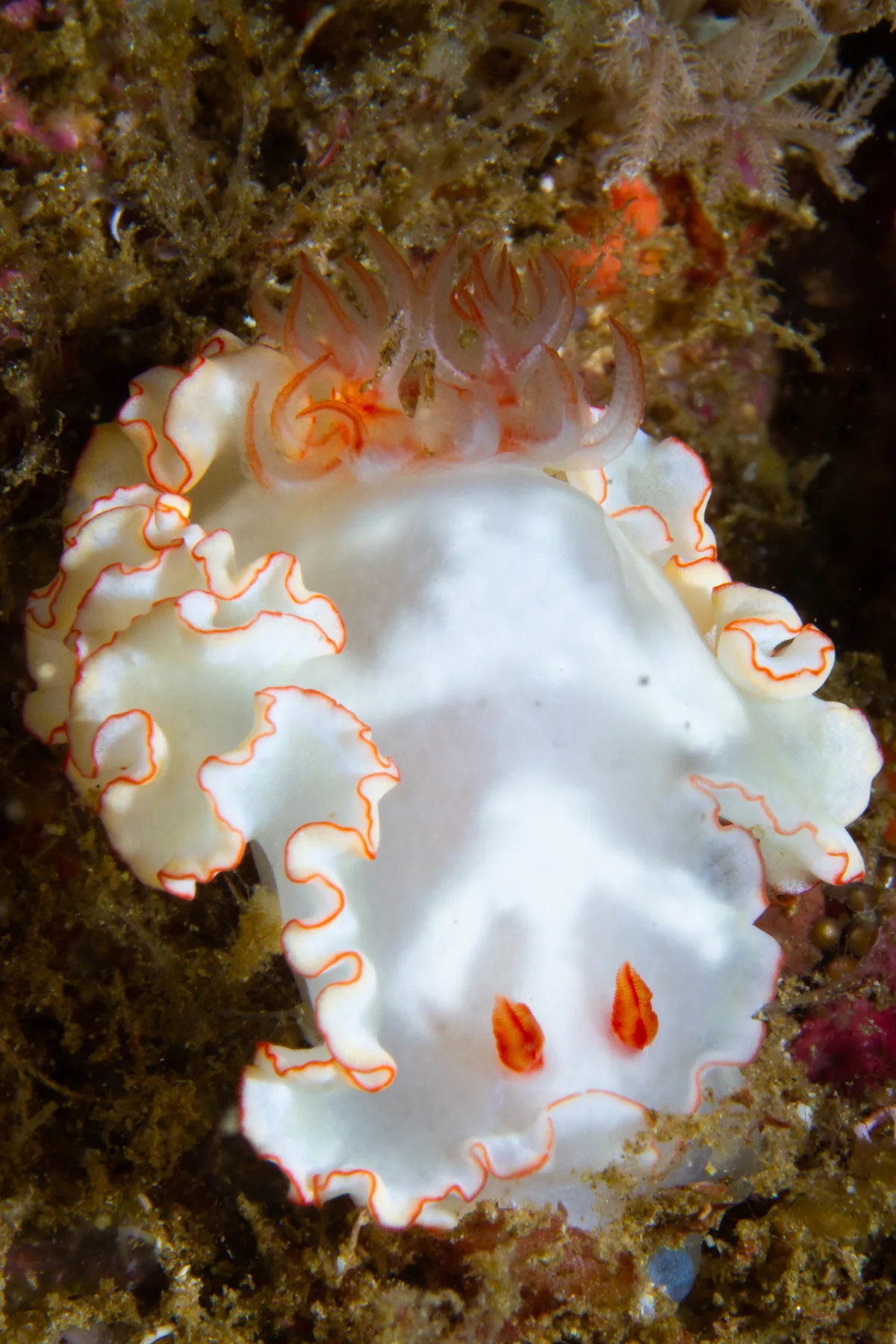
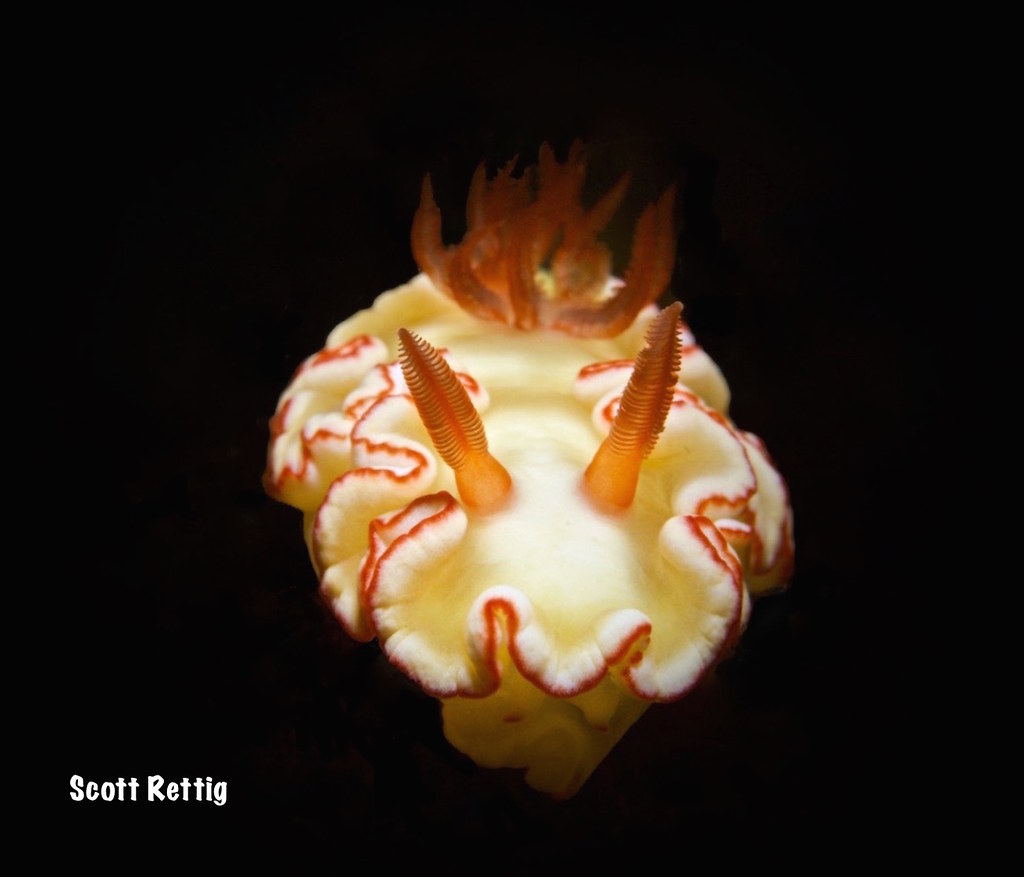
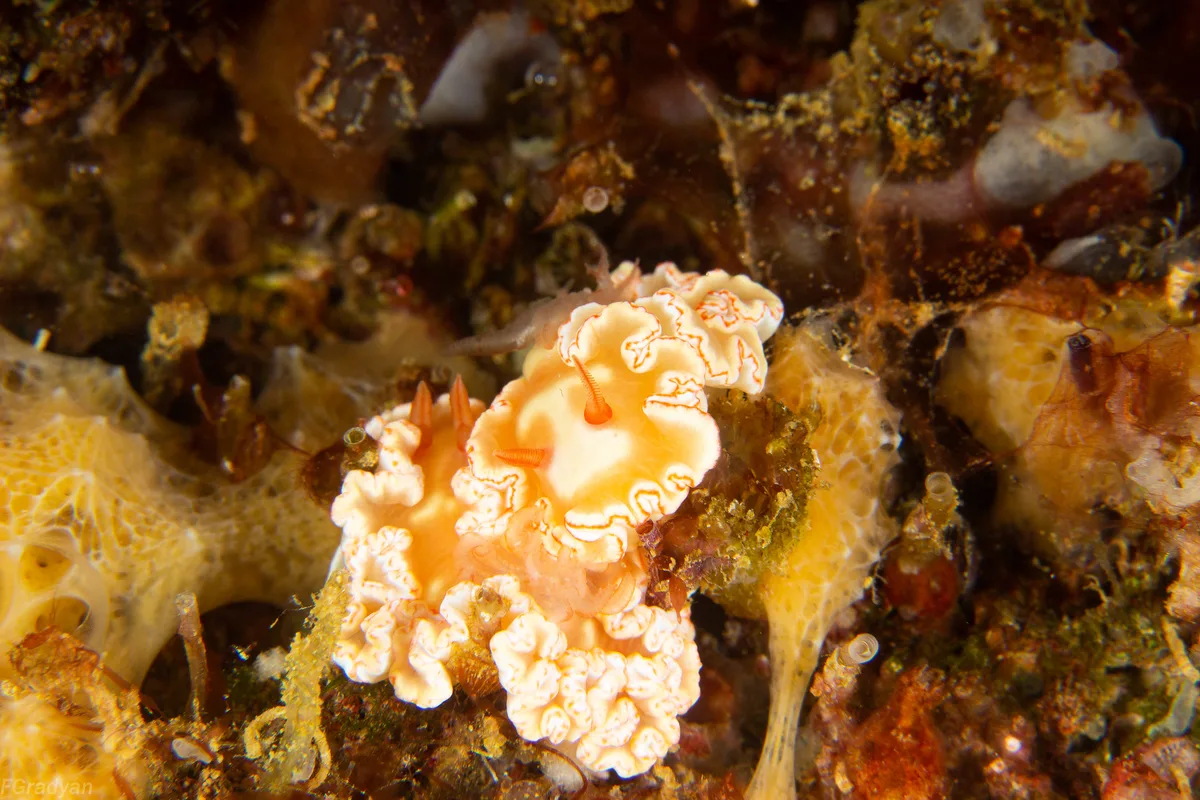
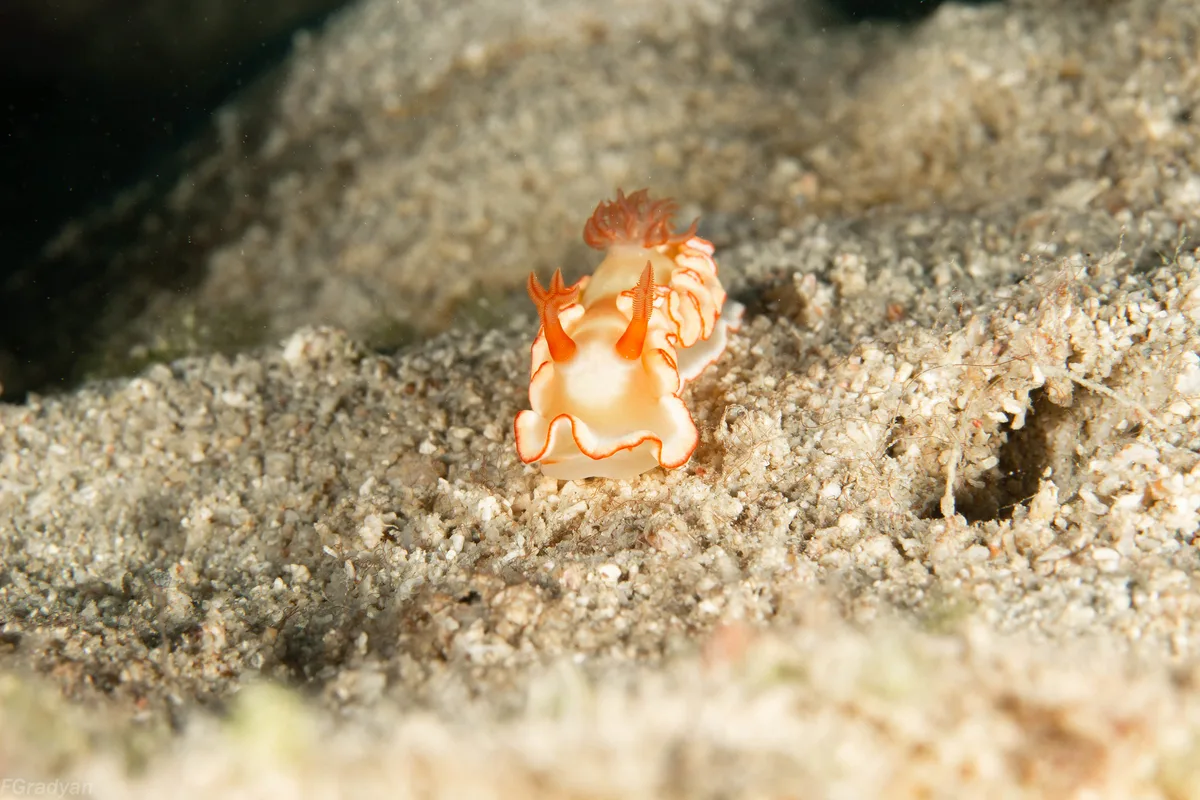
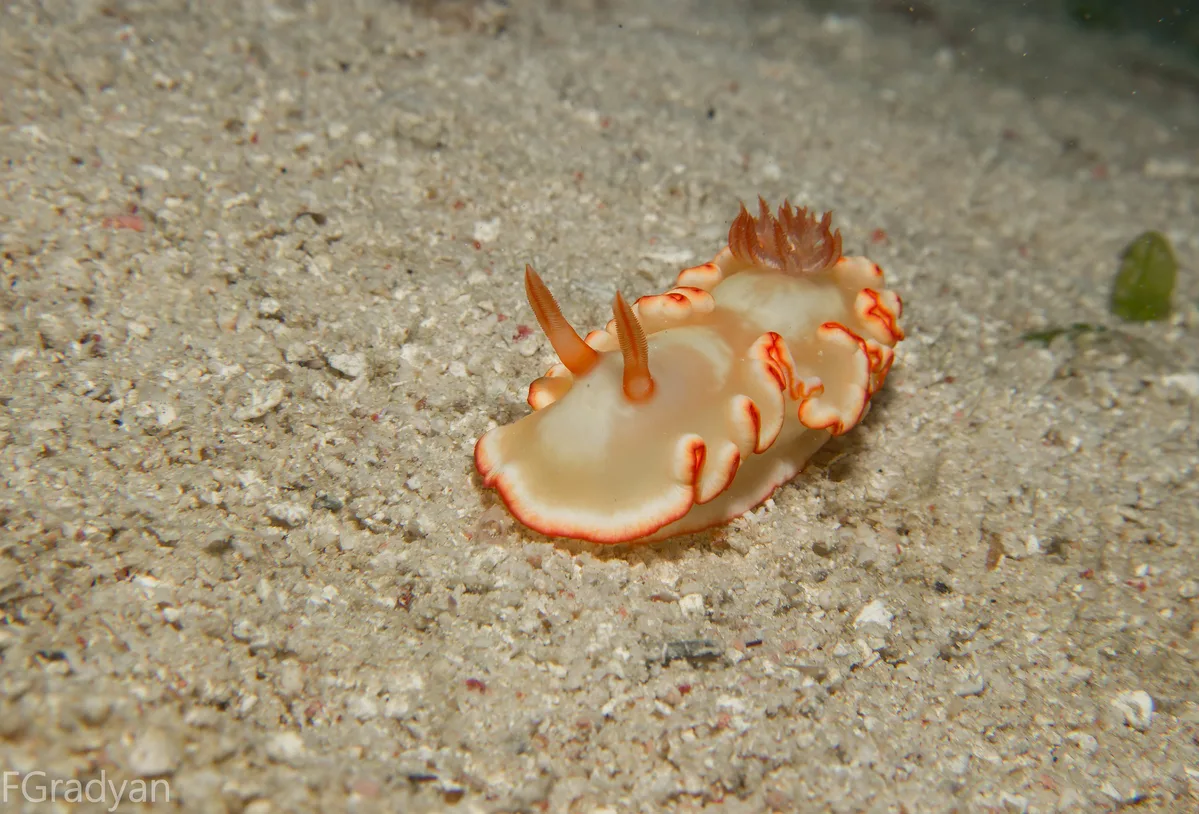
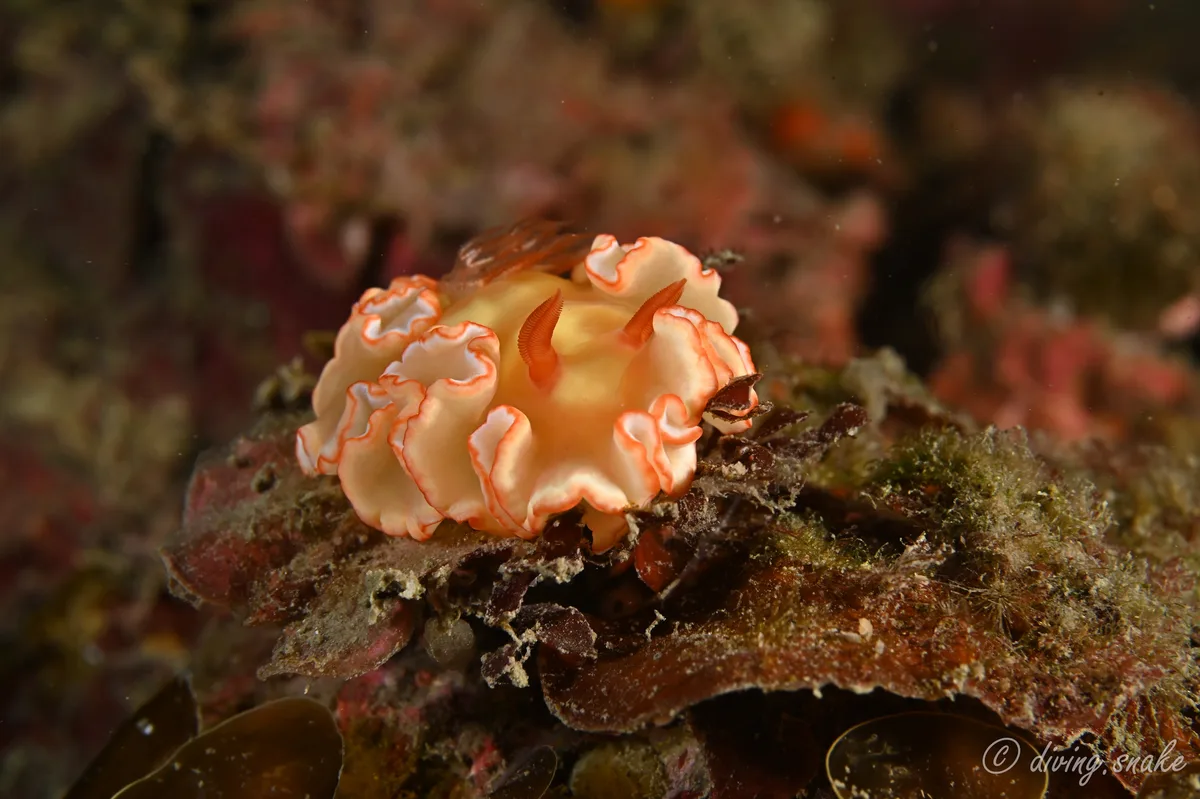
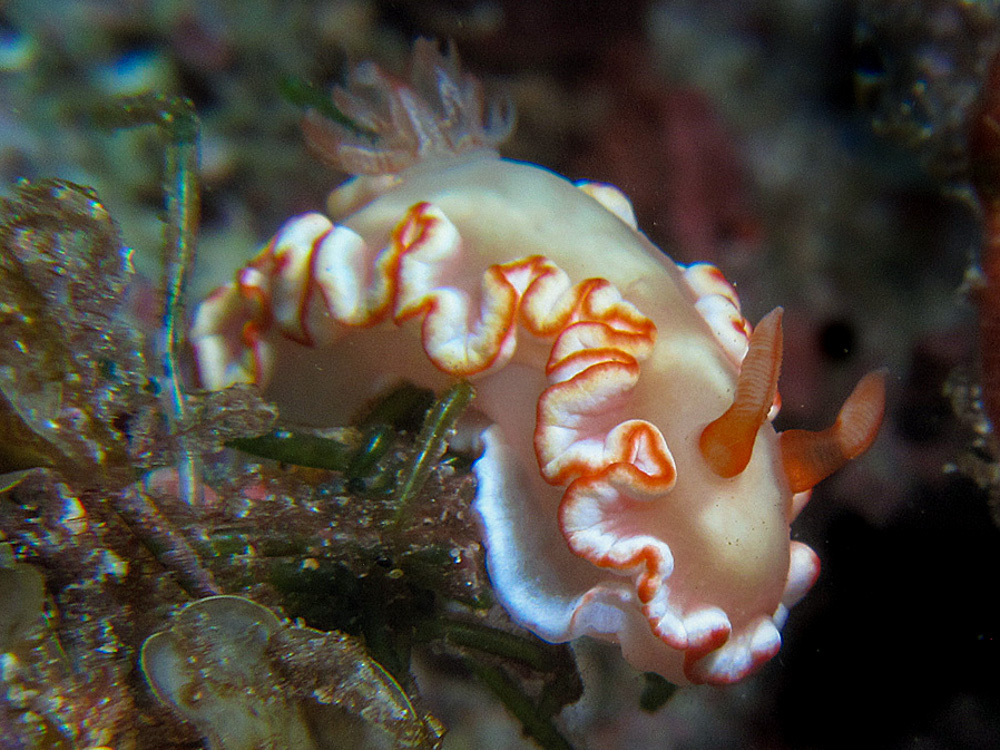
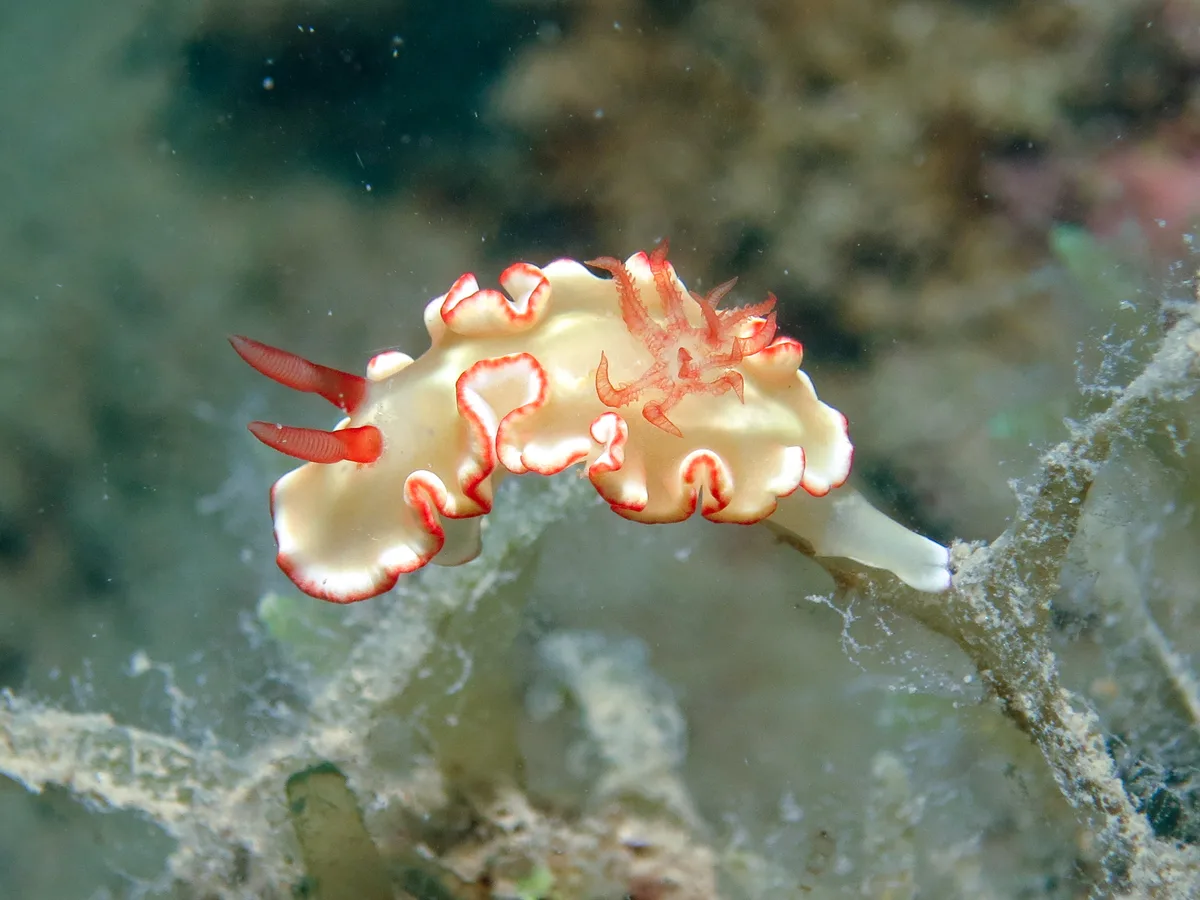
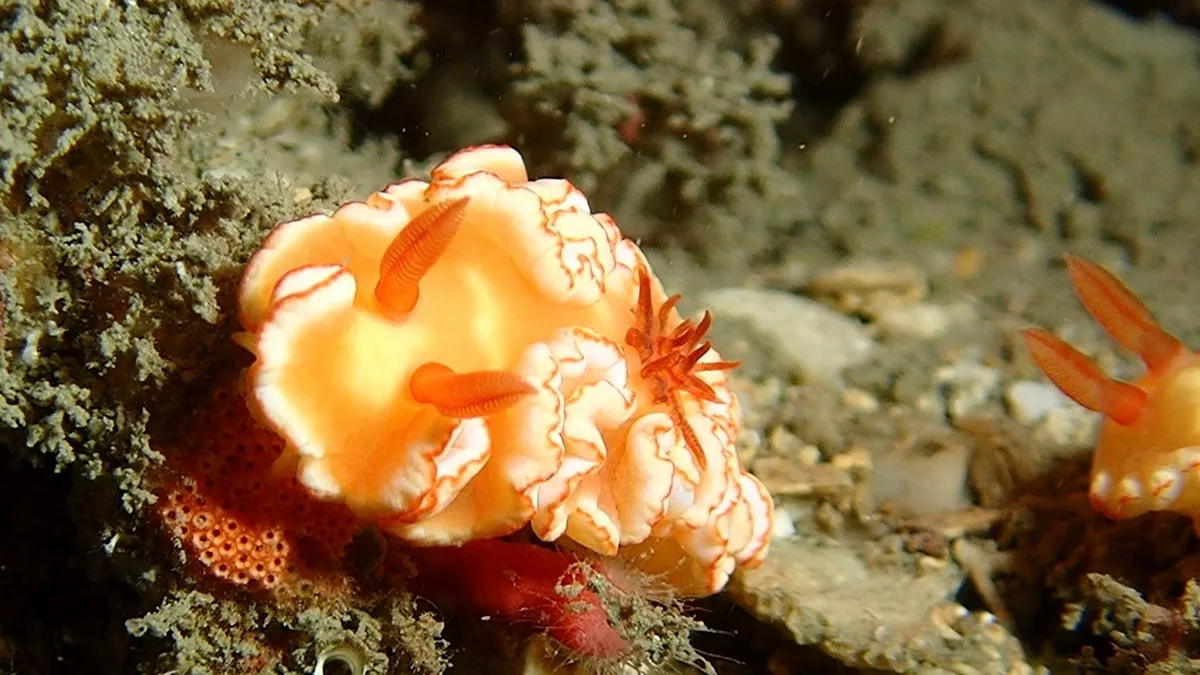
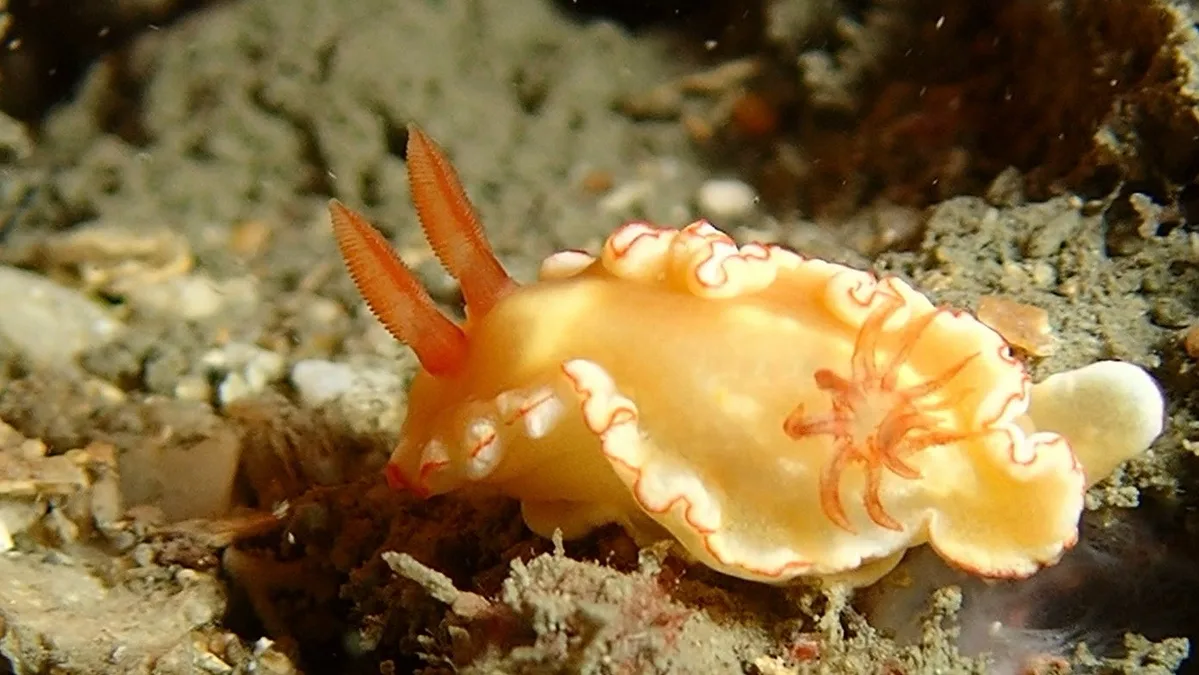
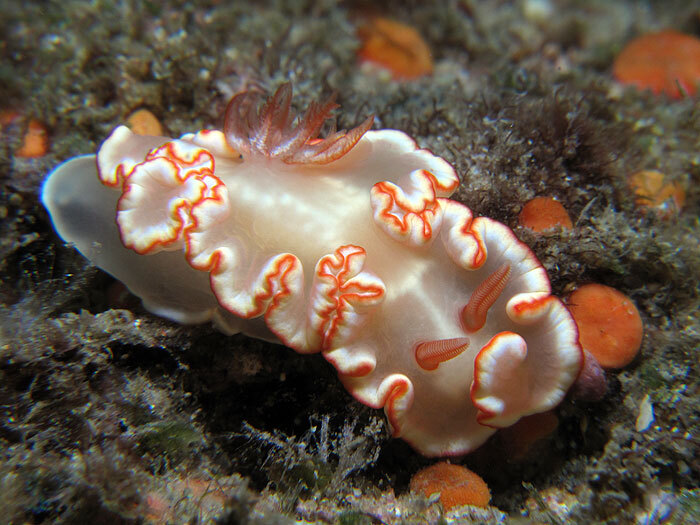
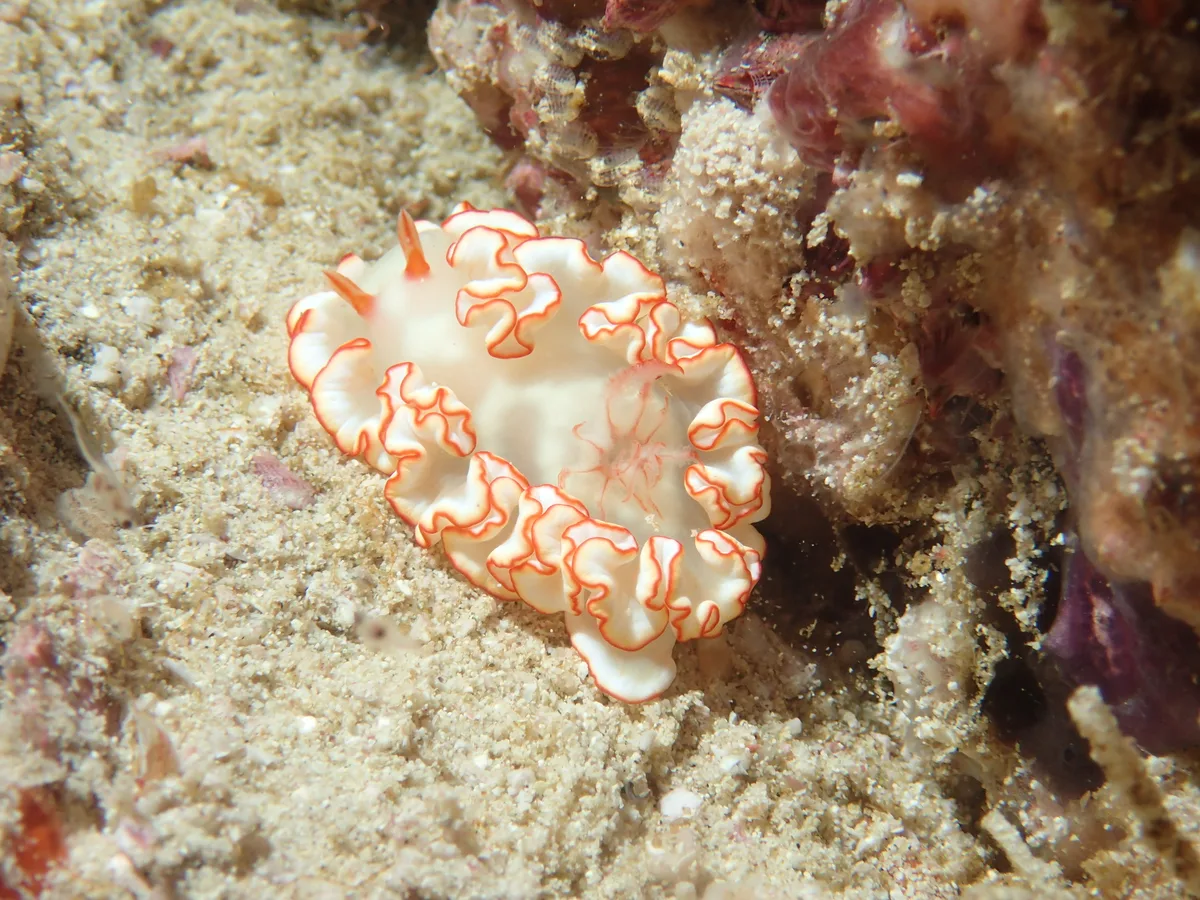
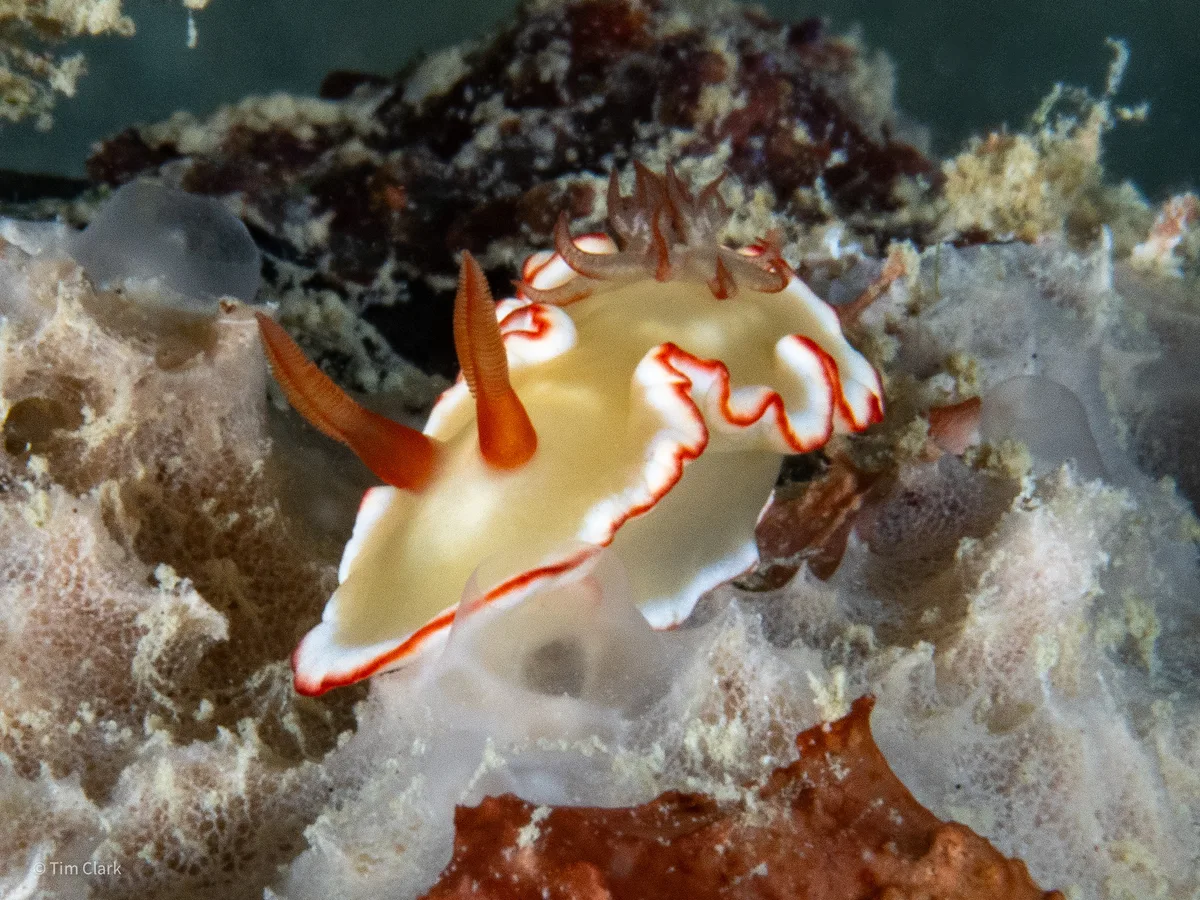
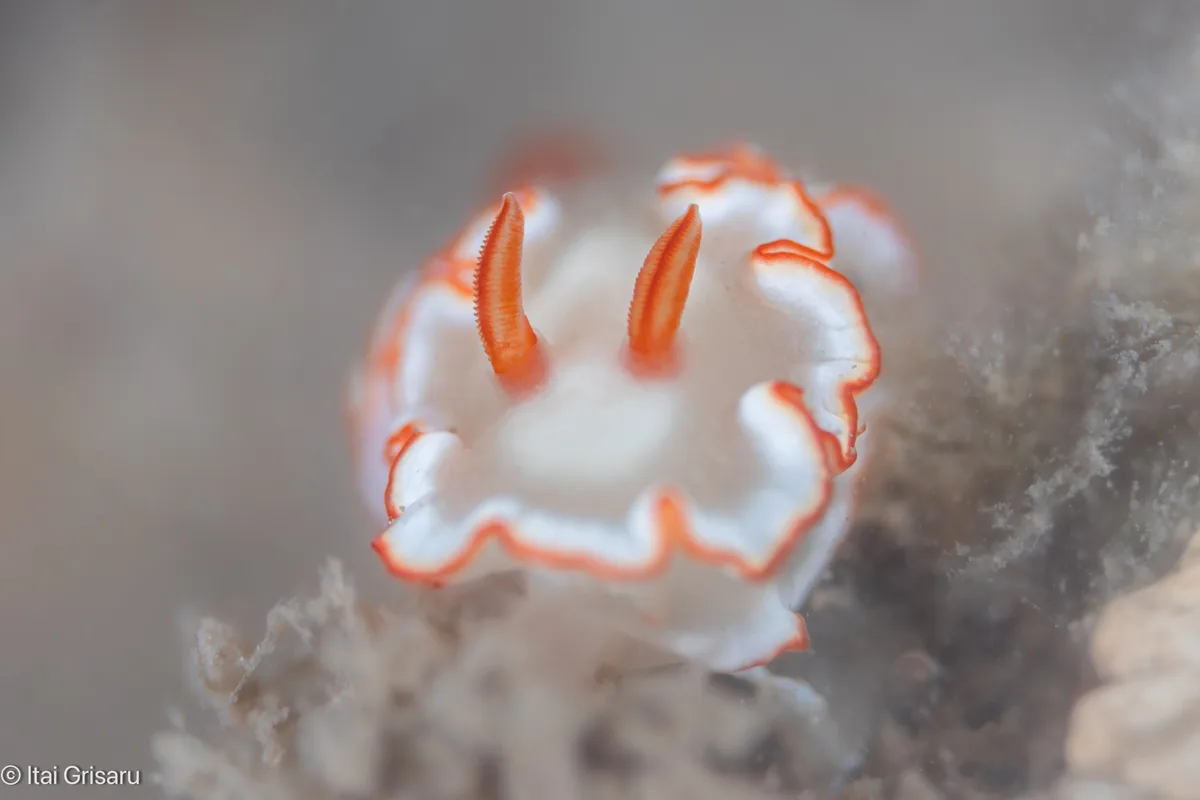
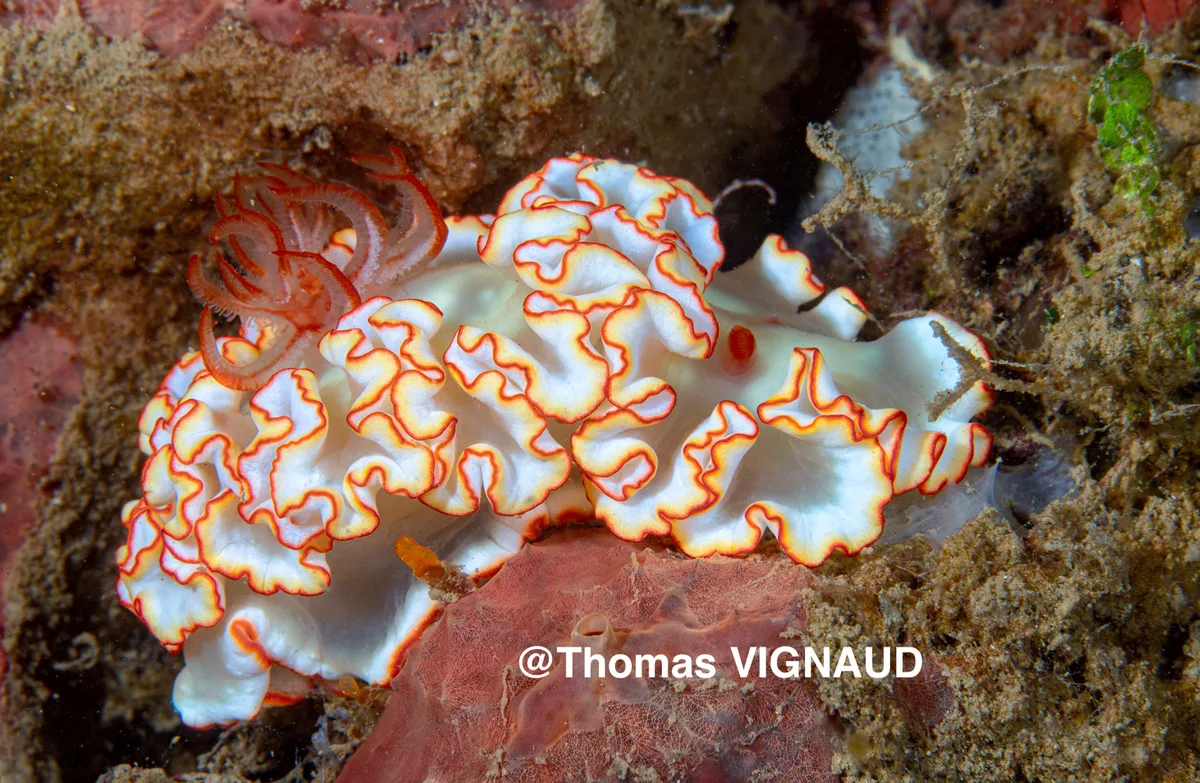
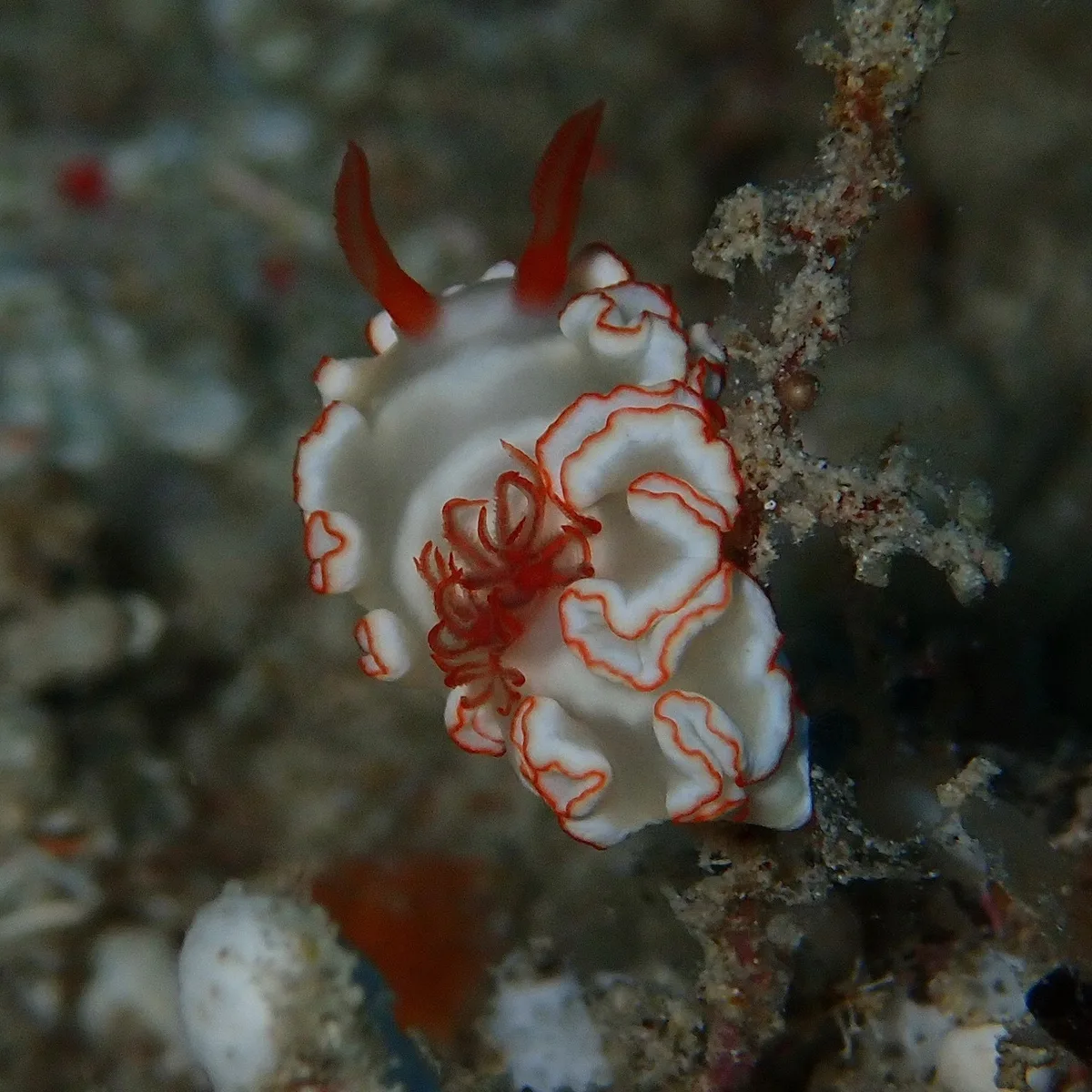
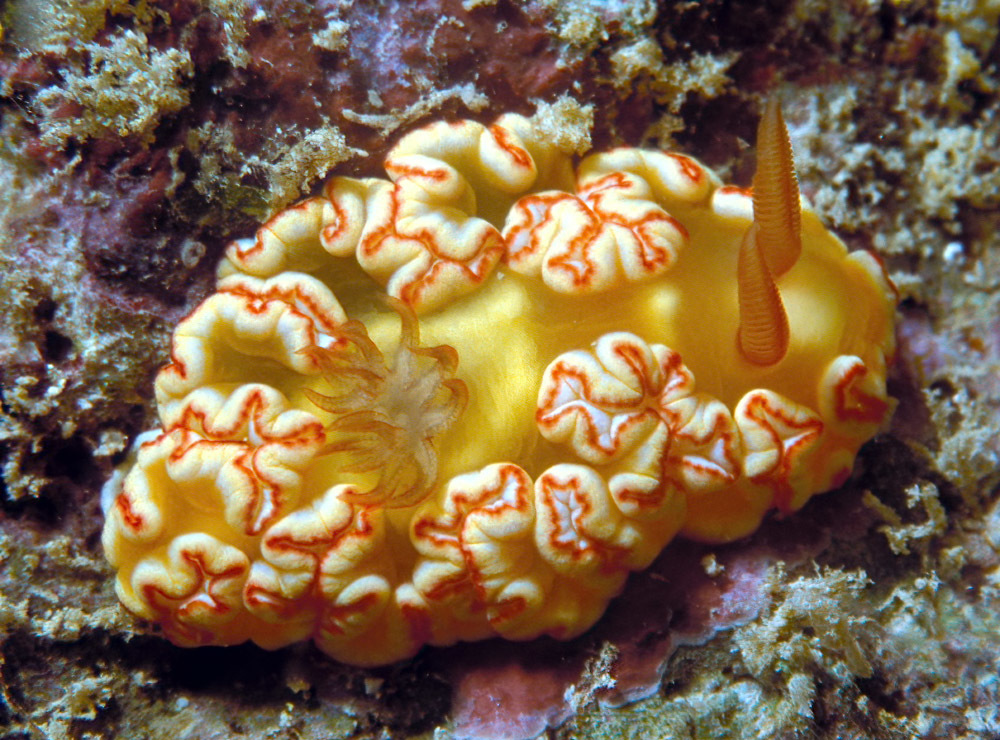
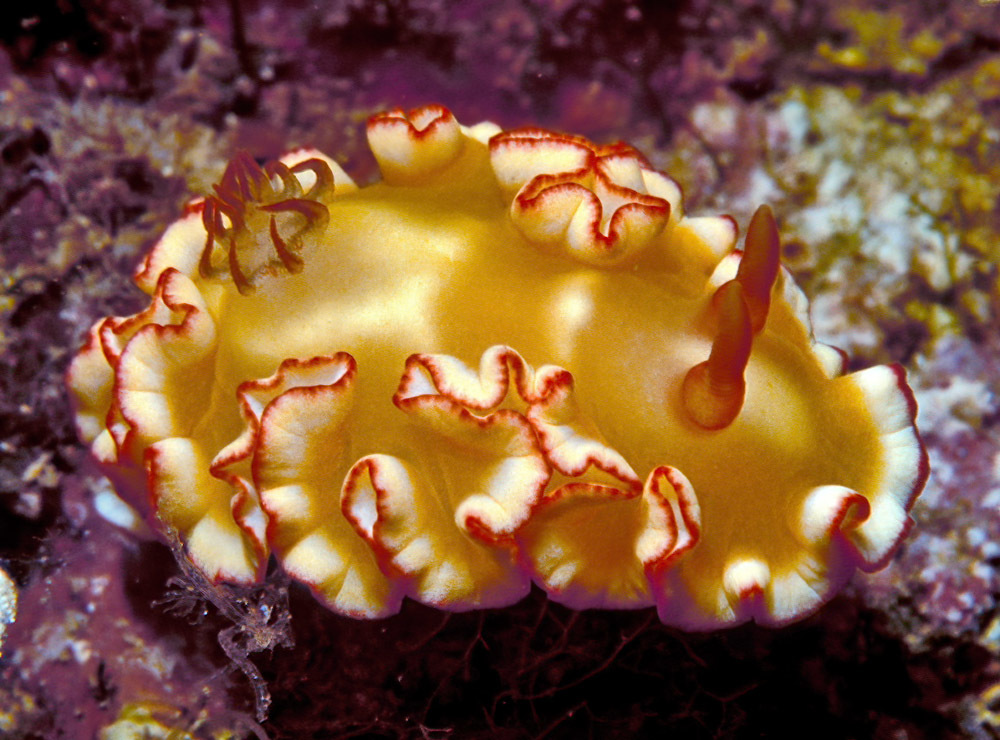
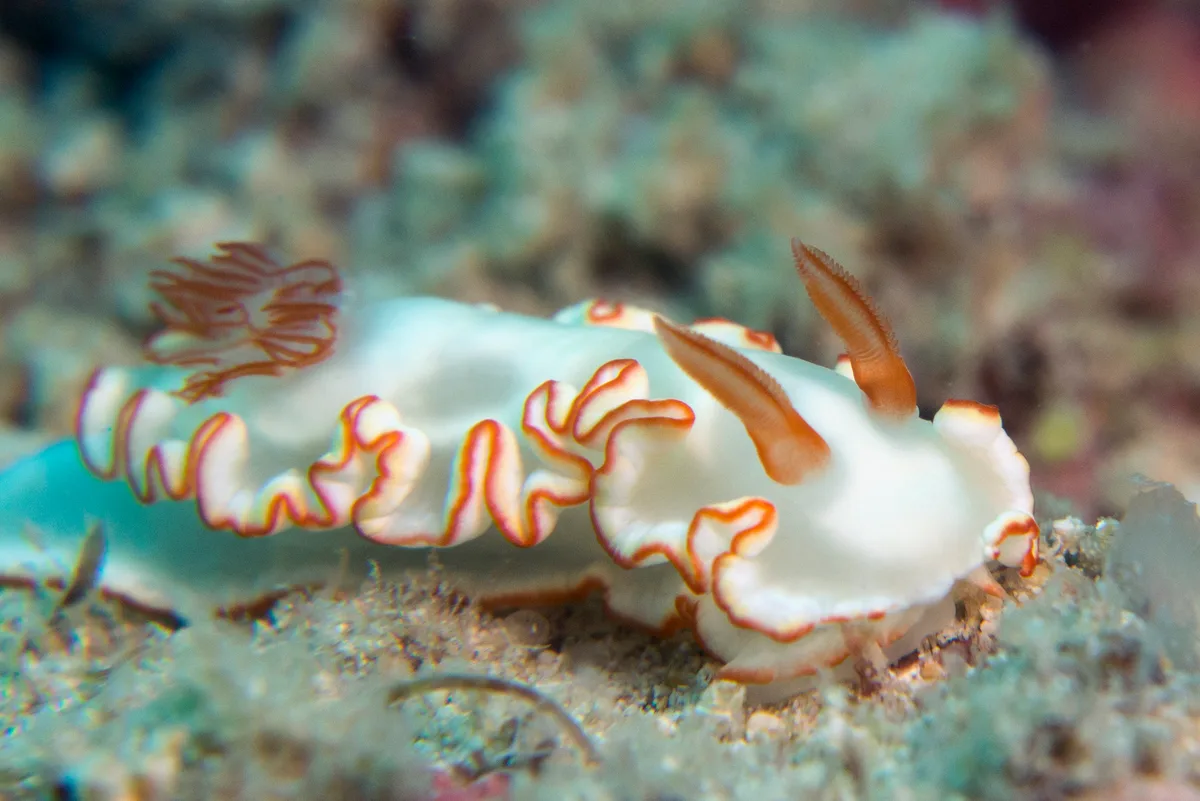
The red is not only around the edge. It is on the rhinophores and on the tips of the gills as well, and that is the design working properly.
A chemically defended slug advertises with color, but the advertisement has to sit where an attack lands. The mantle rim is one place, because that is what a fish bites first. The other two are the parts that cannot be pulled in fast enough or at all: the pair of sensory clubs at the front and the plume of gills at the back, which stand up above the body and are the most exposed tissue the animal has. Marking those in the same red as the margin means a predator approaching from any angle reads the same warning.
Everything else about the animal is deliberately plain: an unmarked white back, no spots, no lines, nothing to distract from the three red signals. It is one of the cleanest patterns in the family and one of the easiest to recognize.
The chemistry behind it comes from sponges, taken intact and stored in the skin, which is the arrangement across this whole family and the reason none of them hurry.
Four and a half centimeters, on sponge-covered rock, walls and overhangs. Its close relative here is the same animal with a yellow margin instead of a red one.
- plain white back with a clean red margin and no pattern between
- red rhinophores
- gill plume white with red tips
- up to 4.5 cm