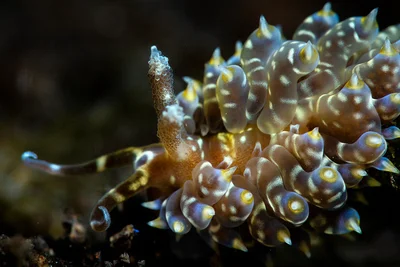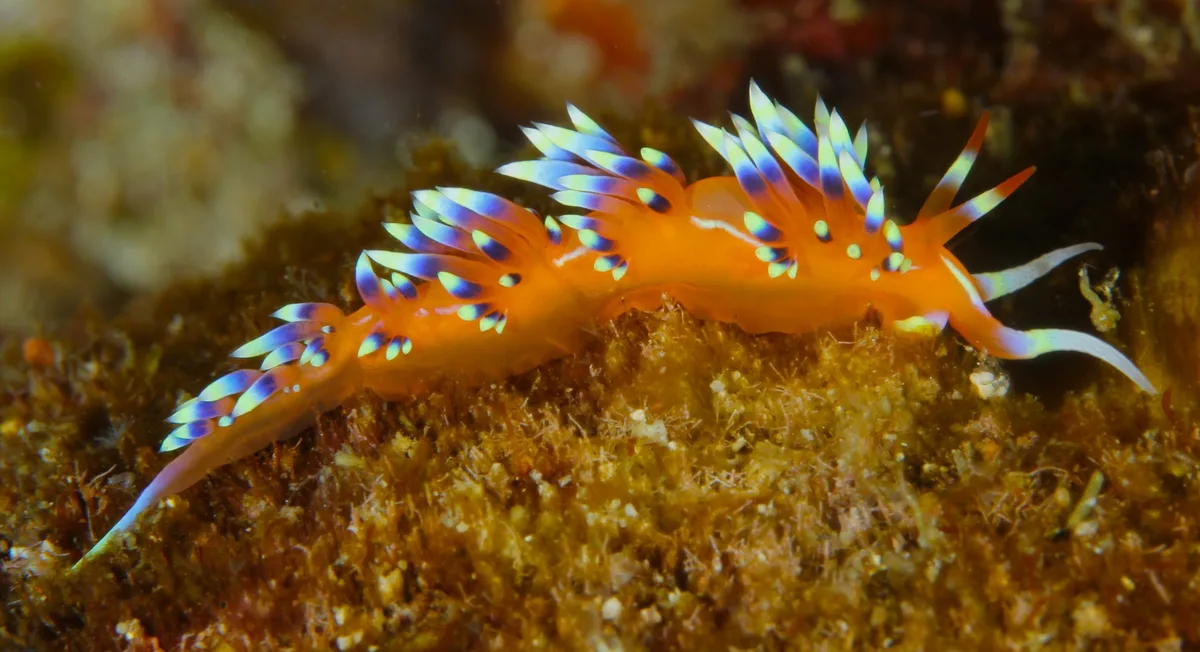
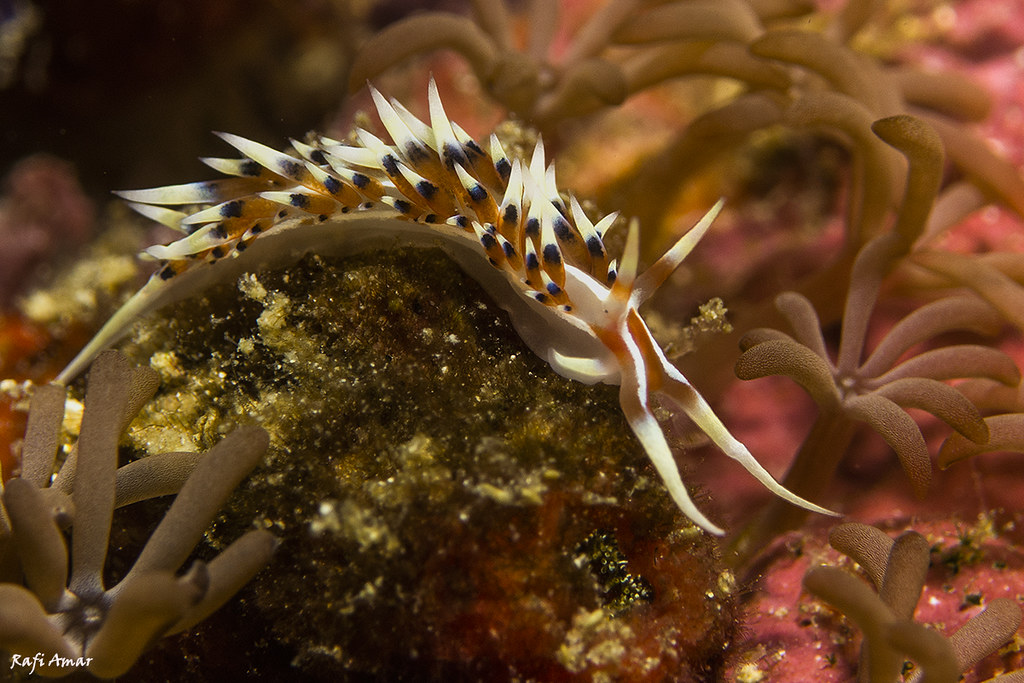
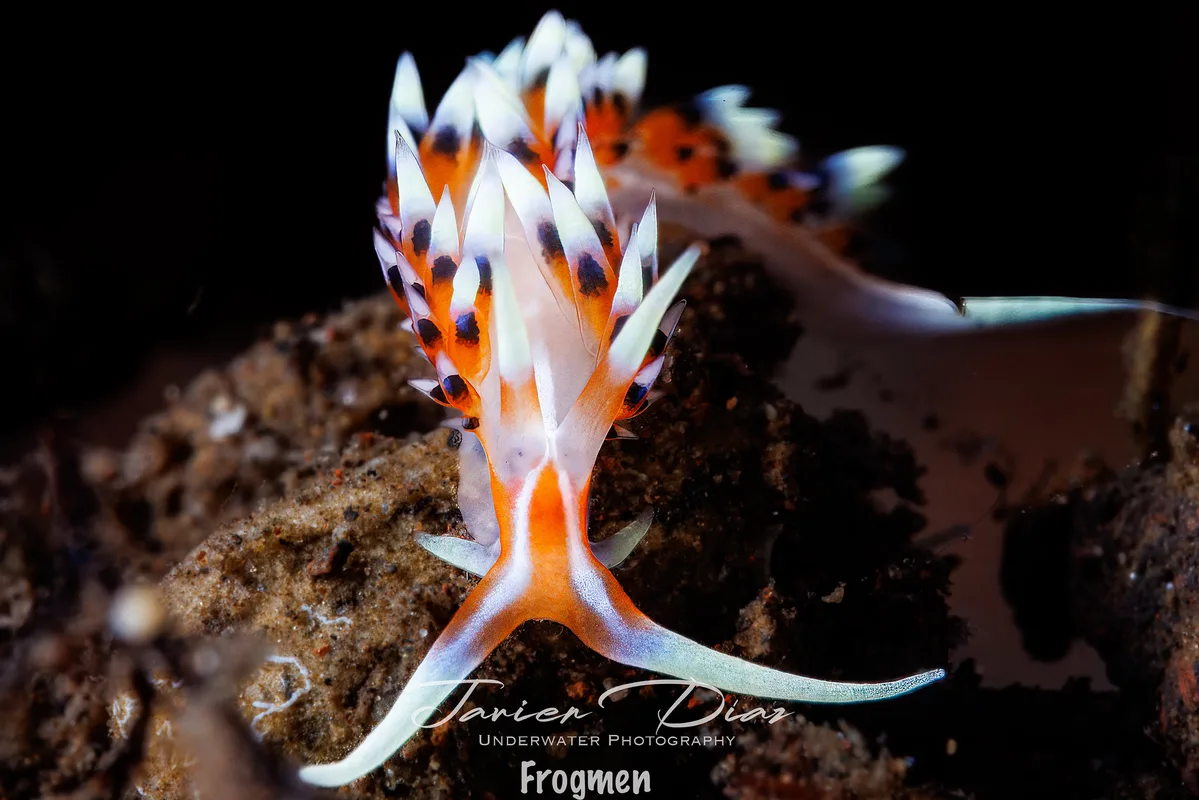
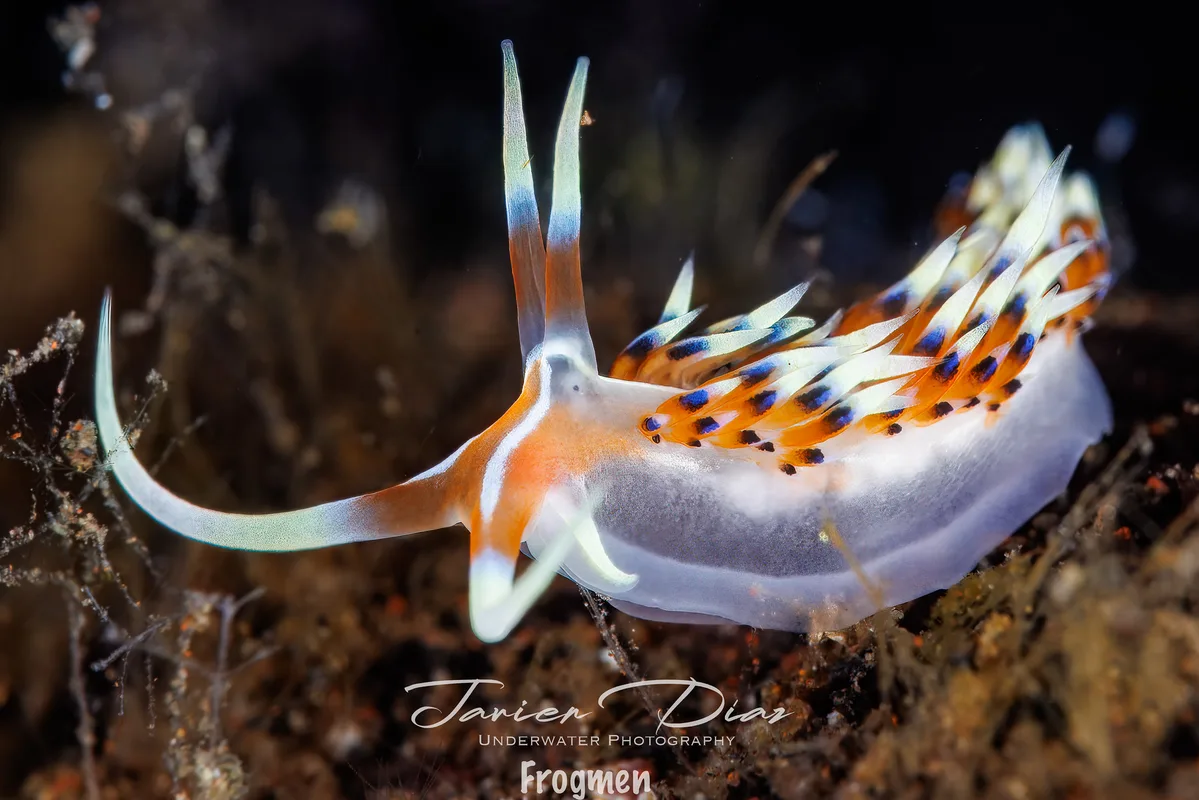
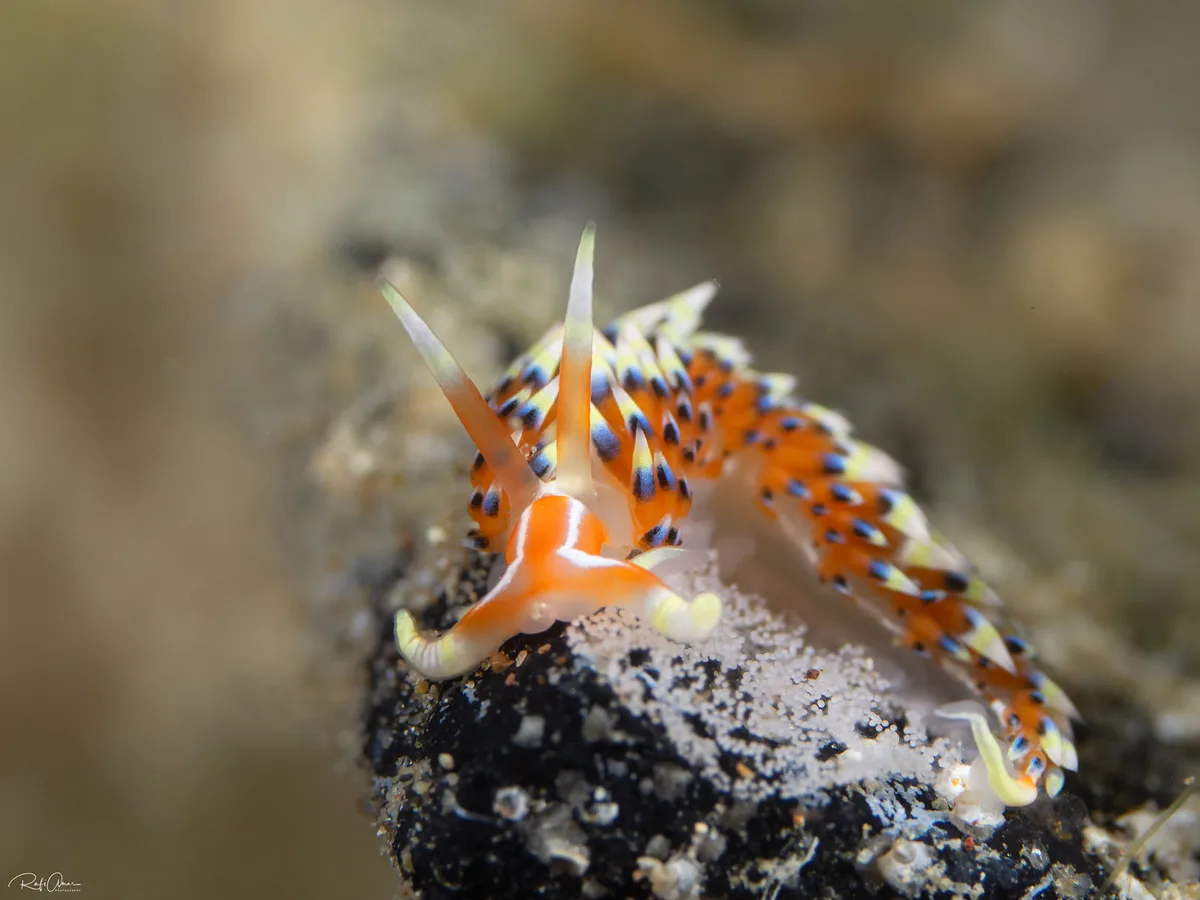
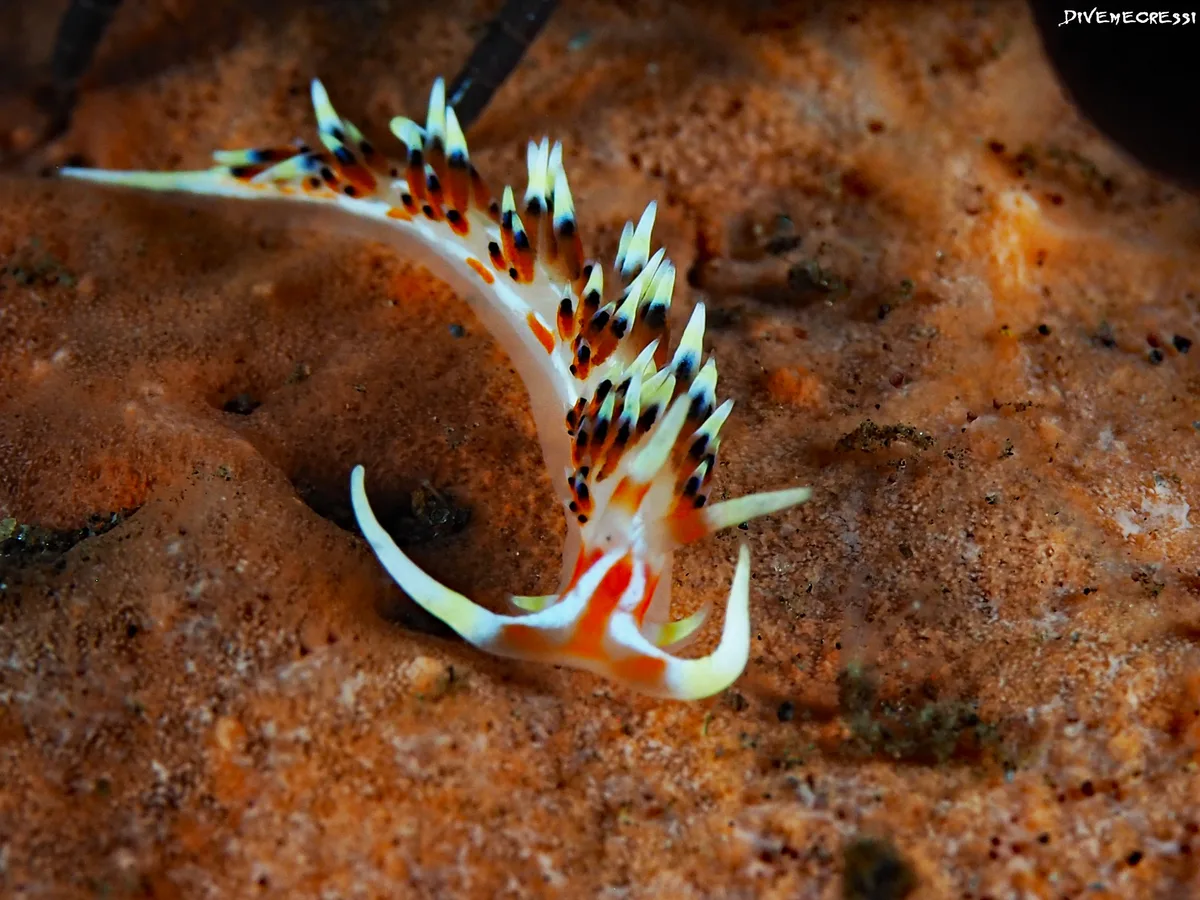
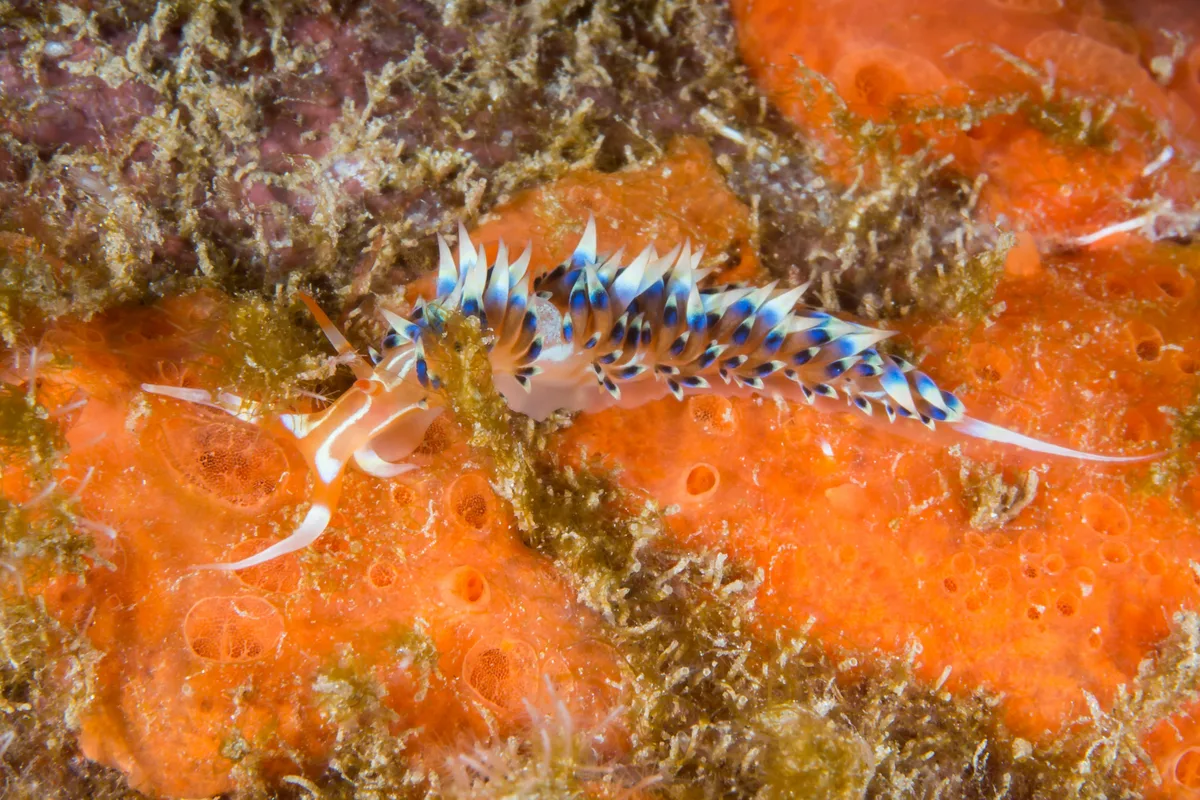
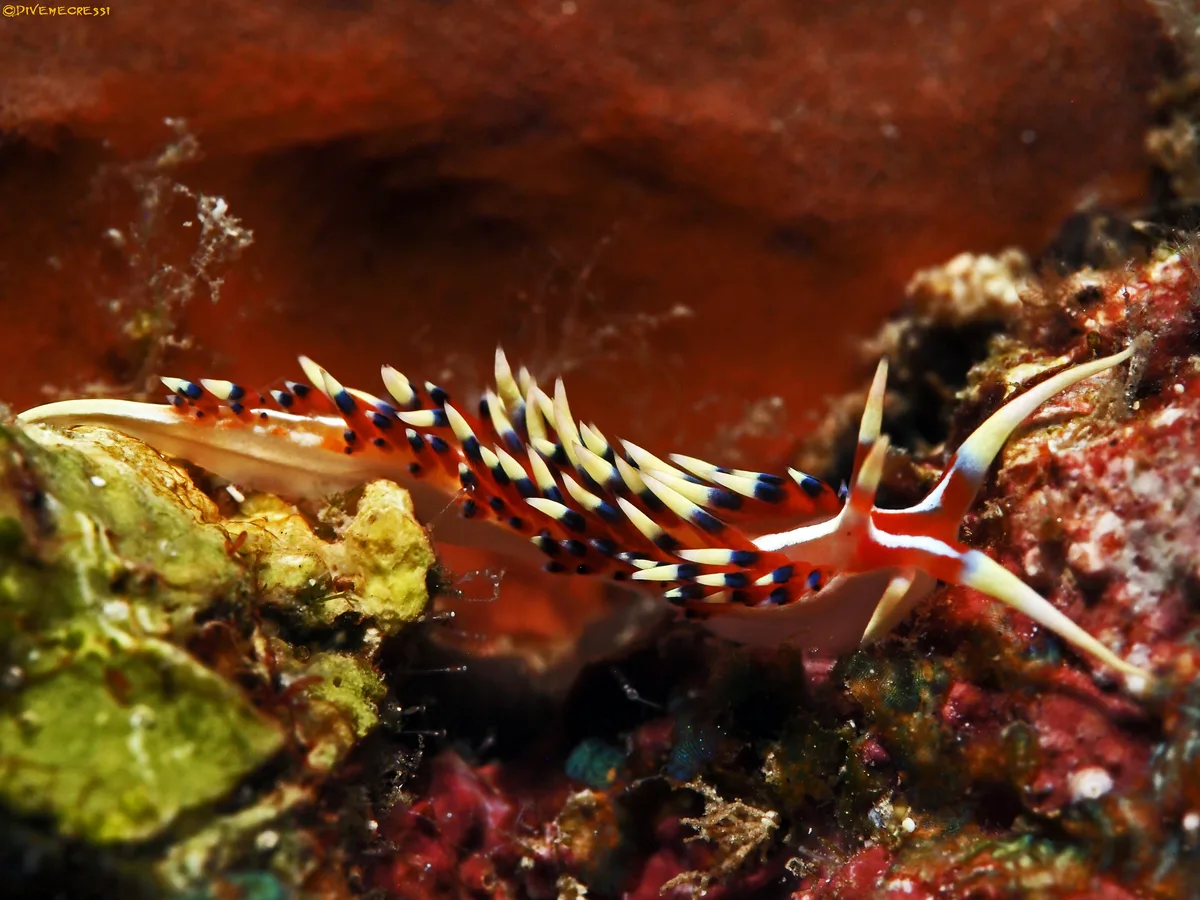
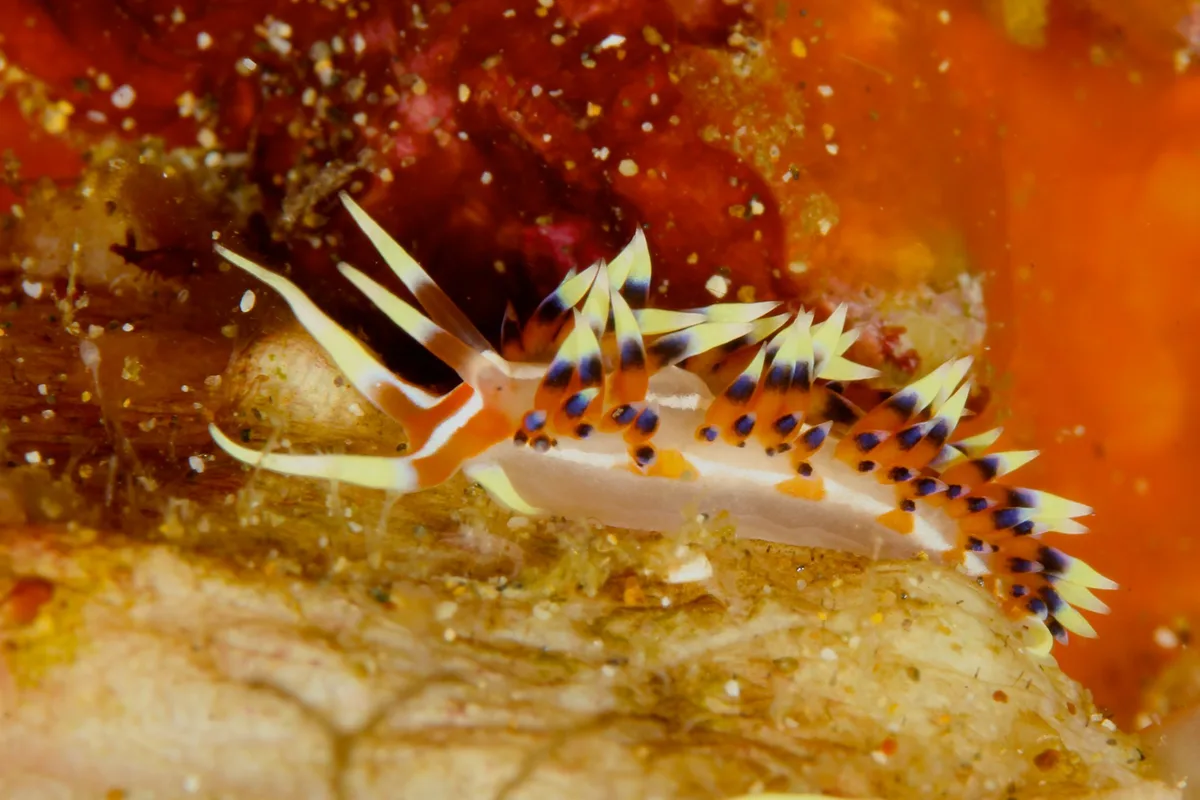
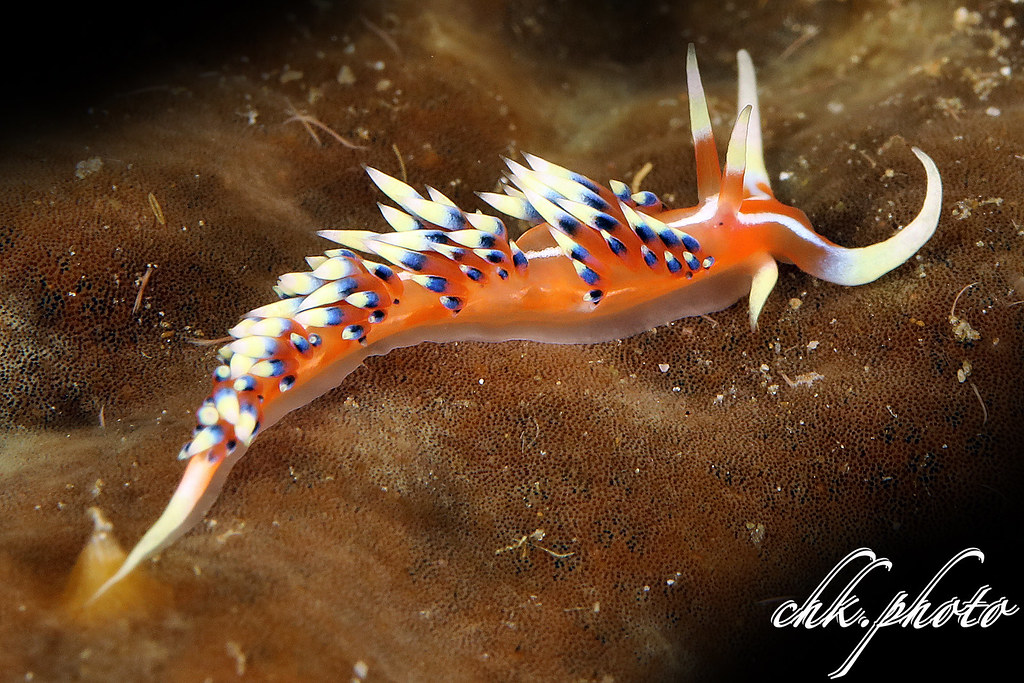
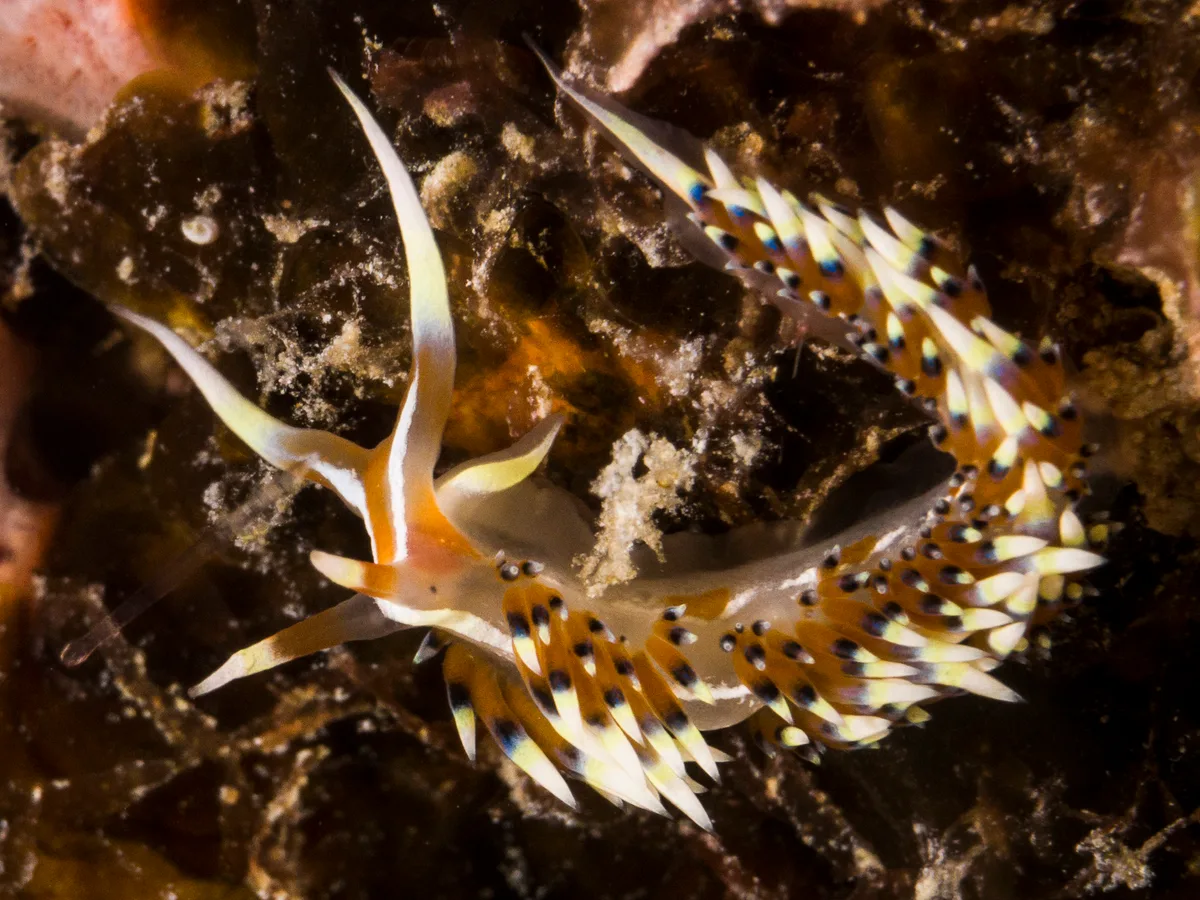
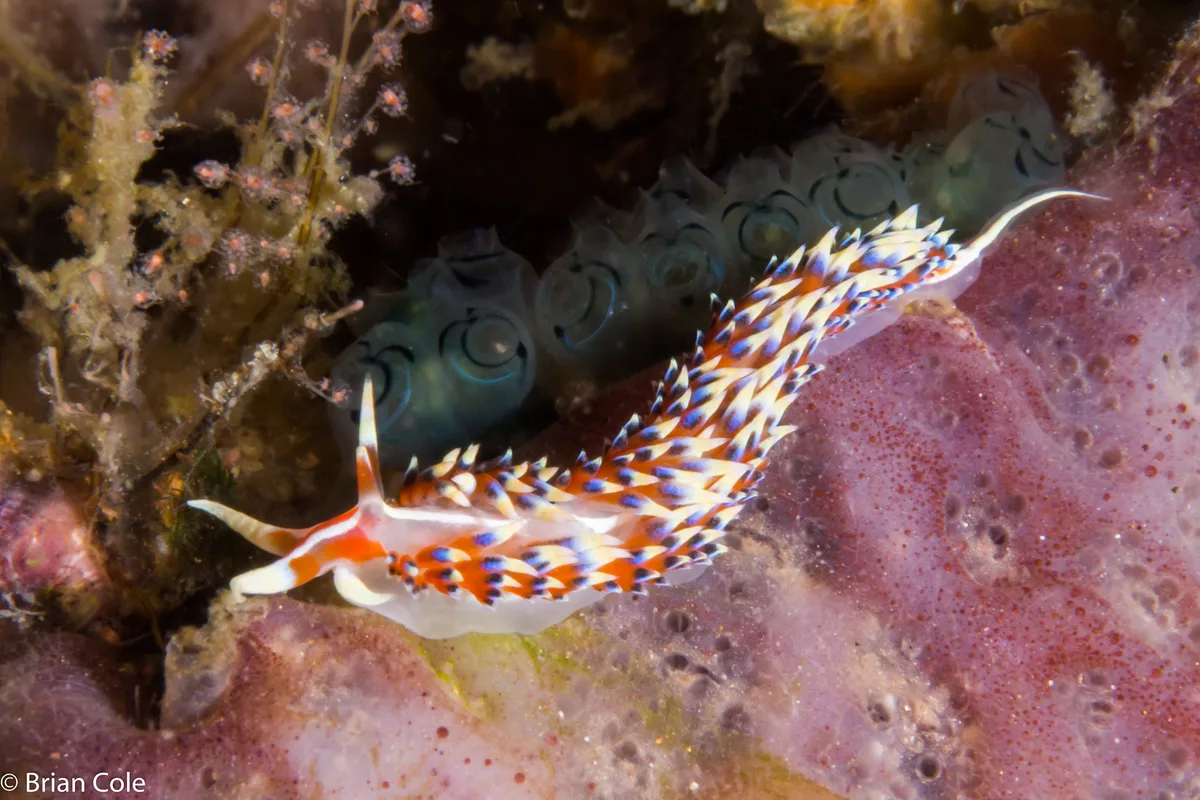
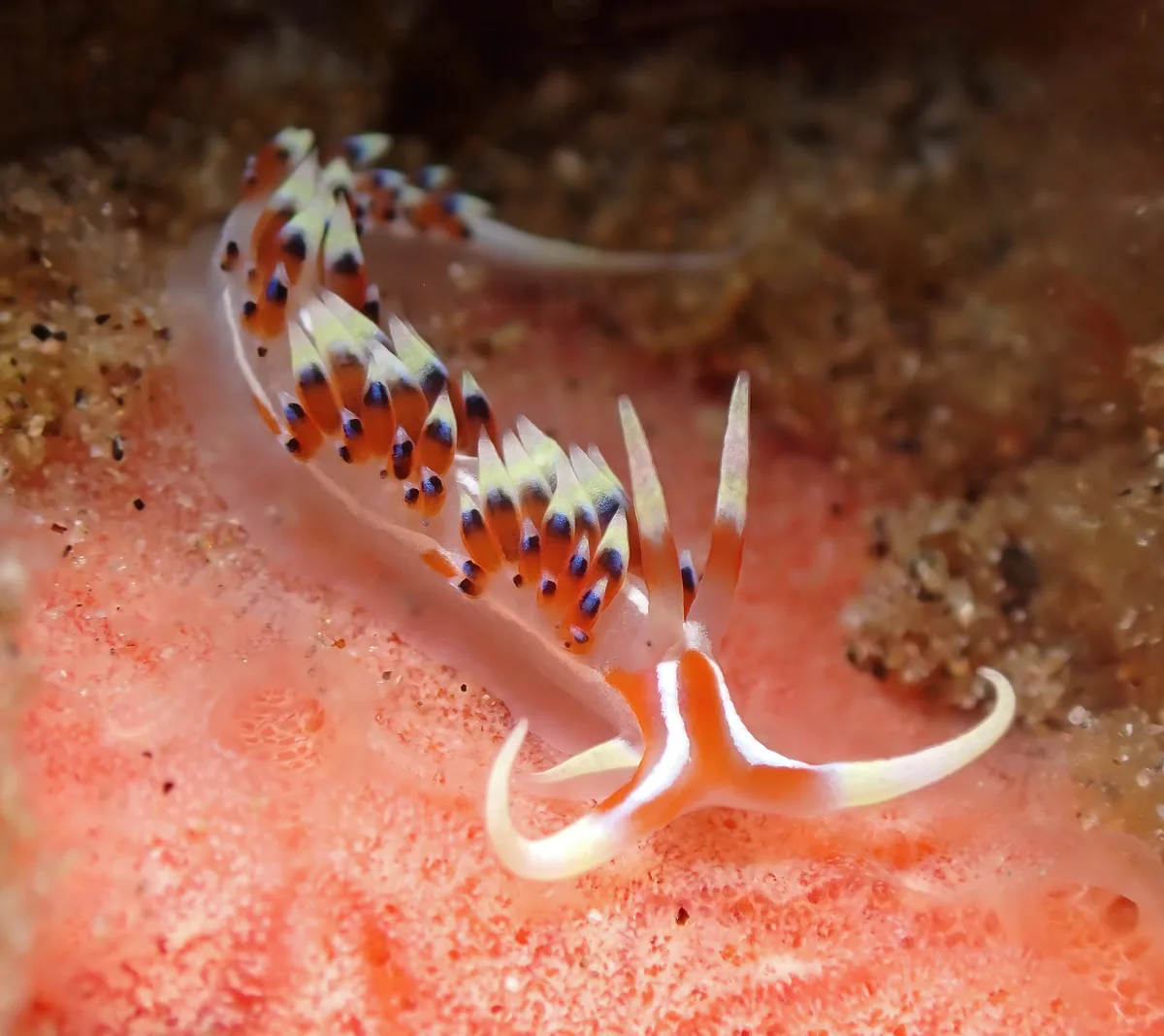
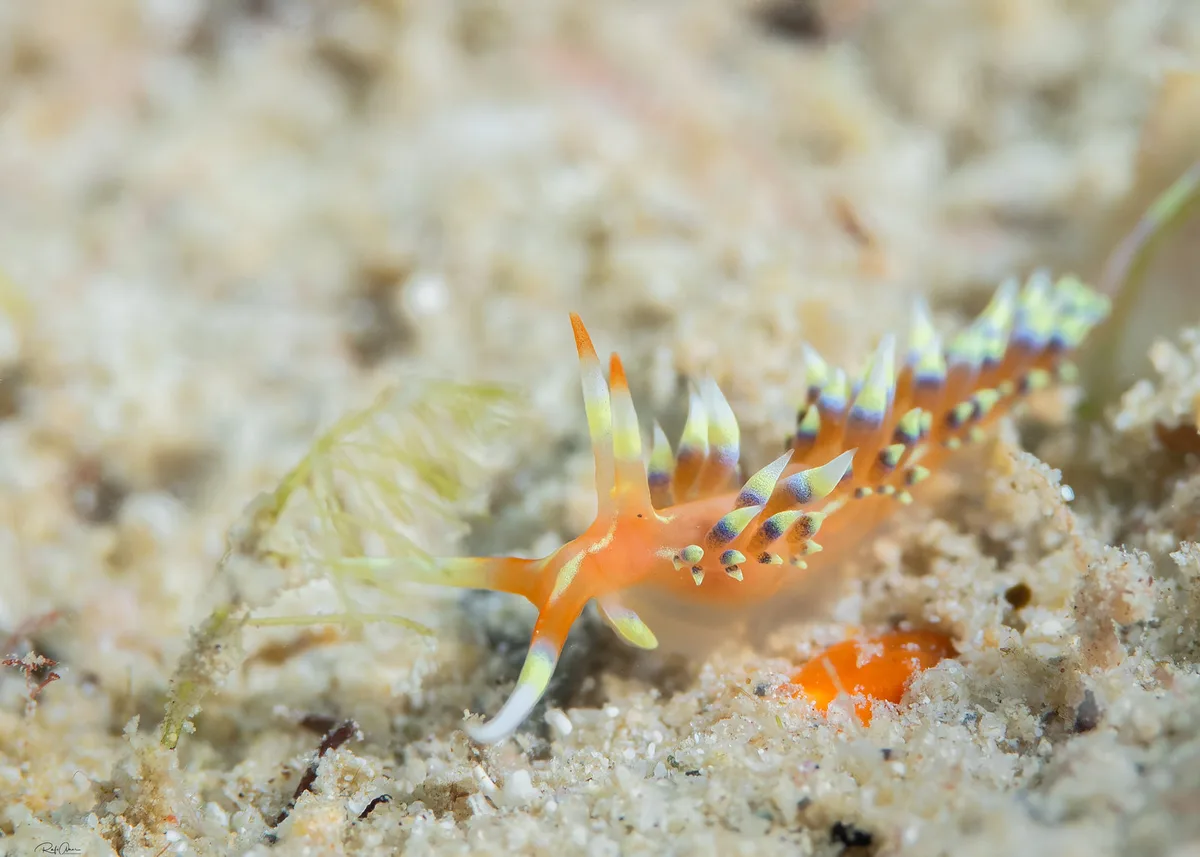
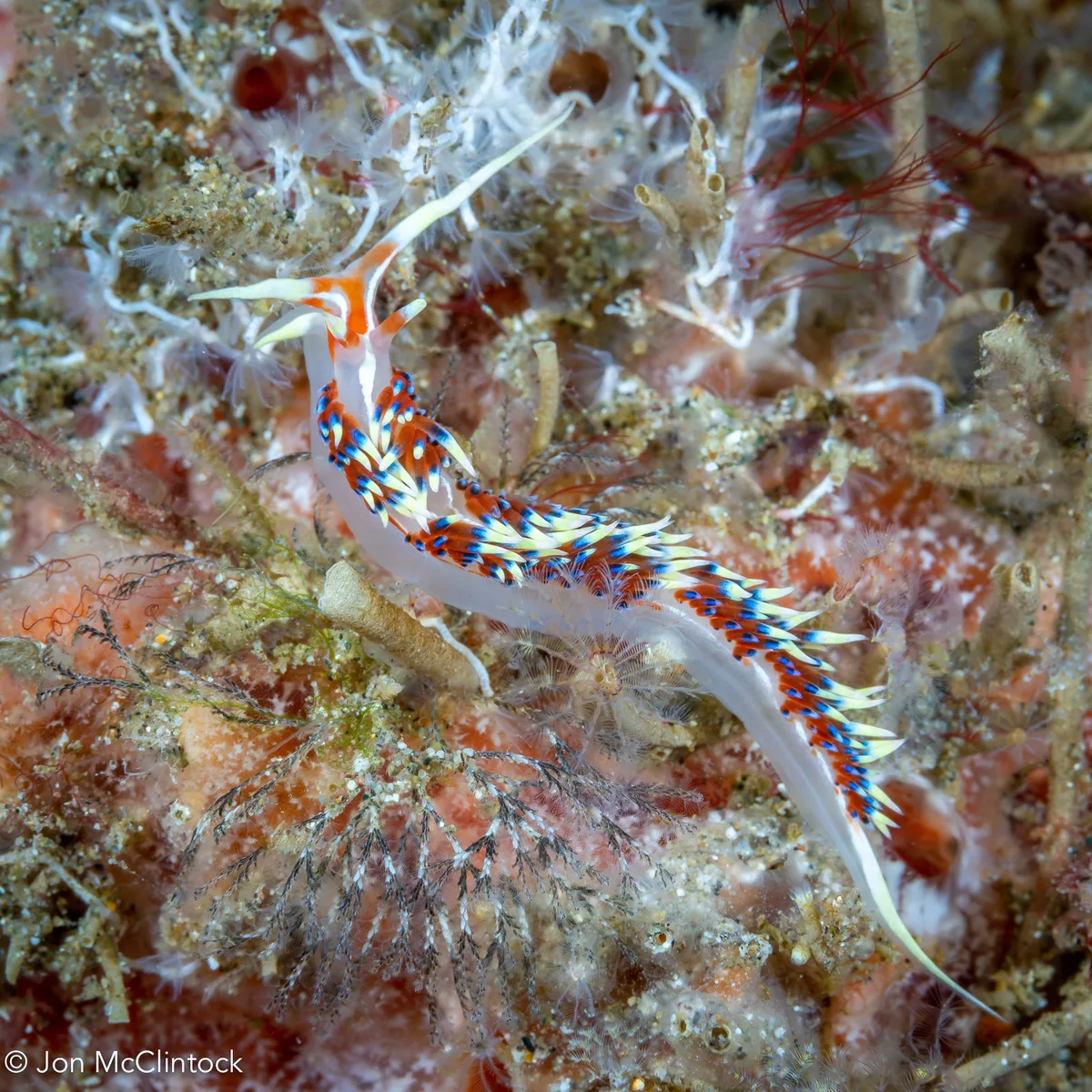
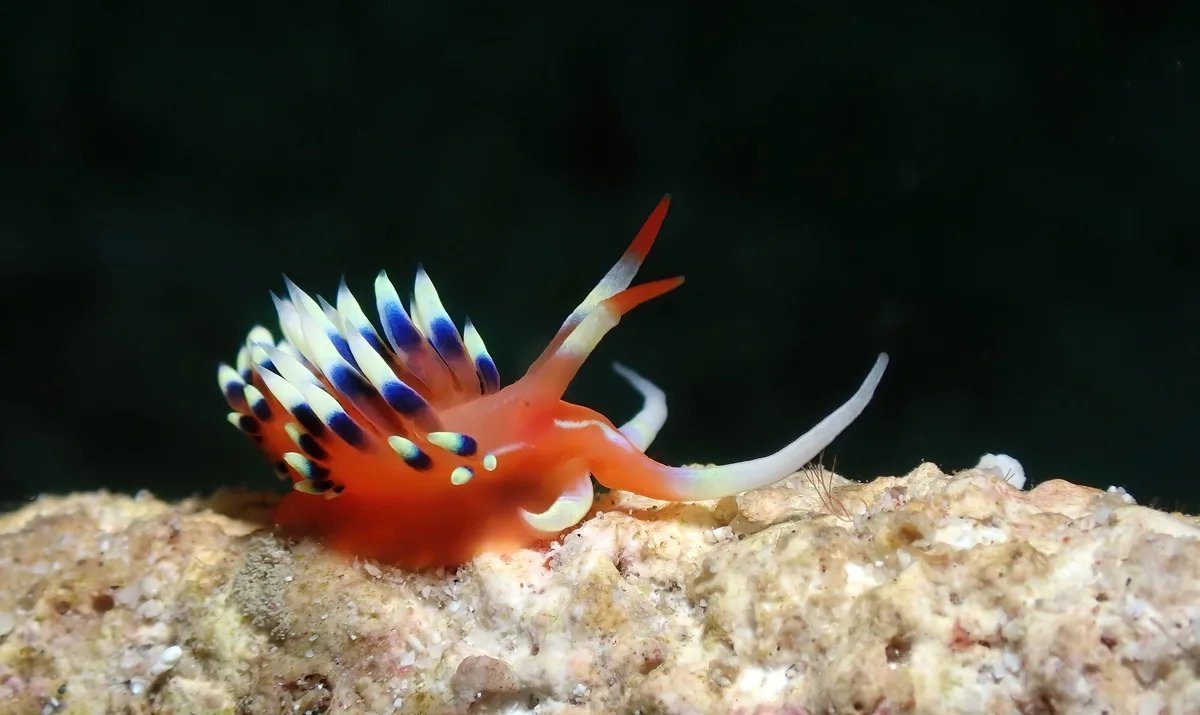
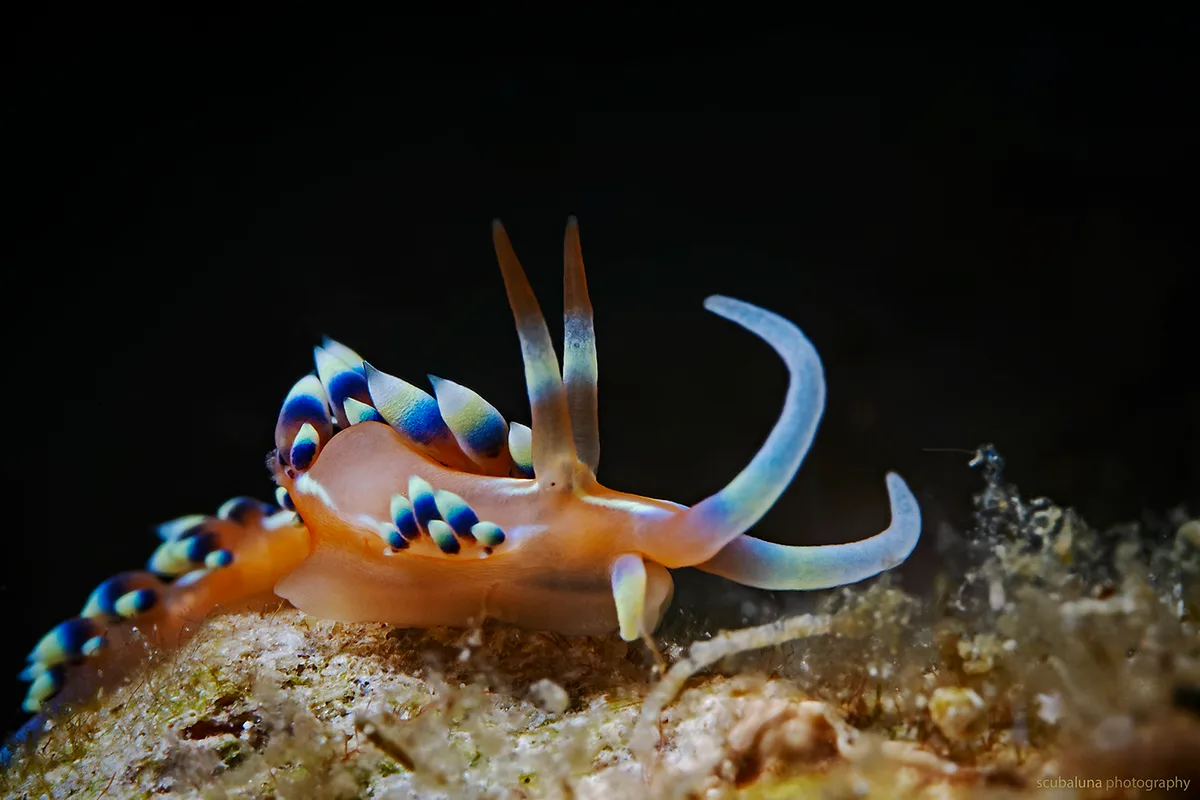
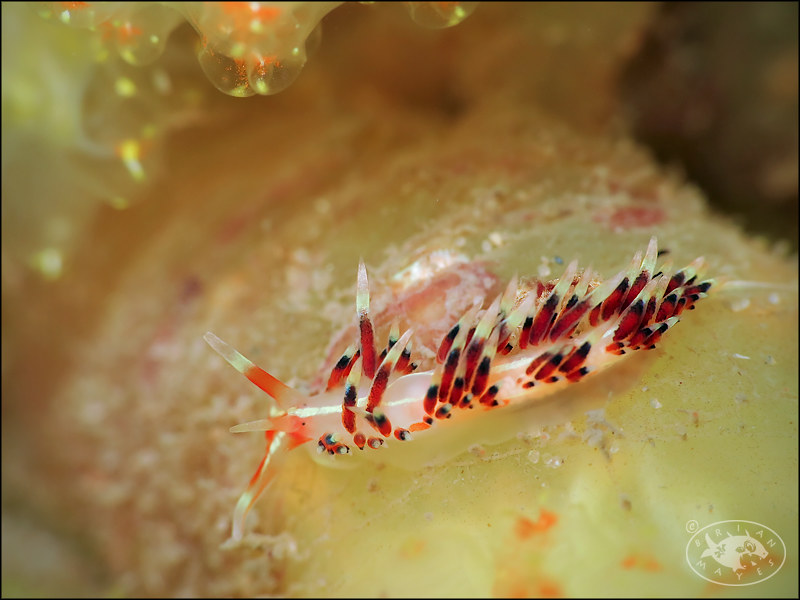
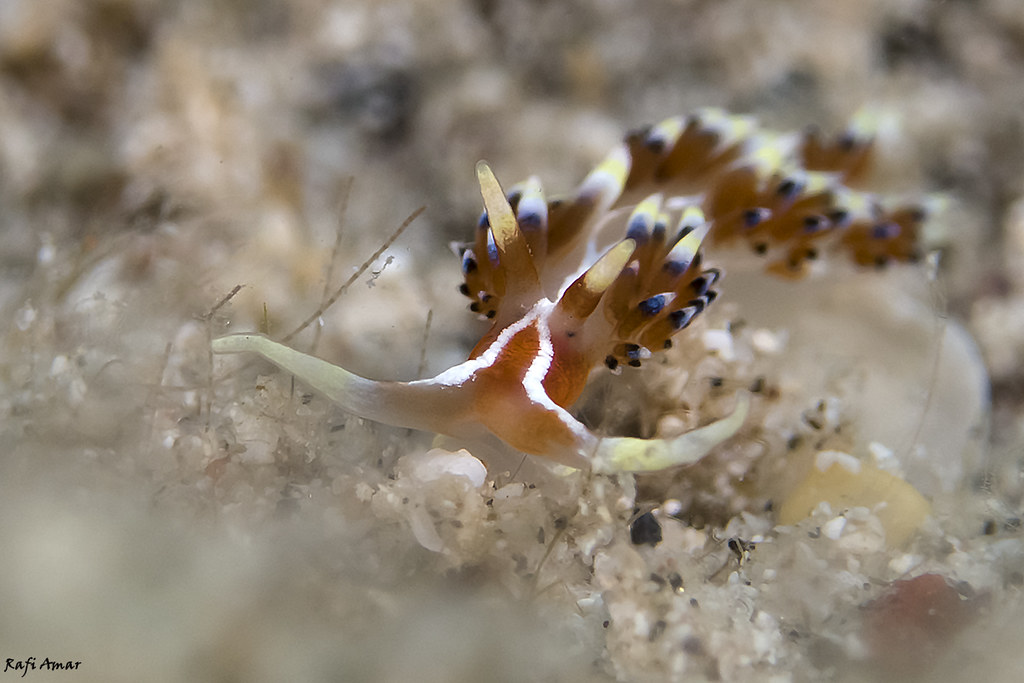
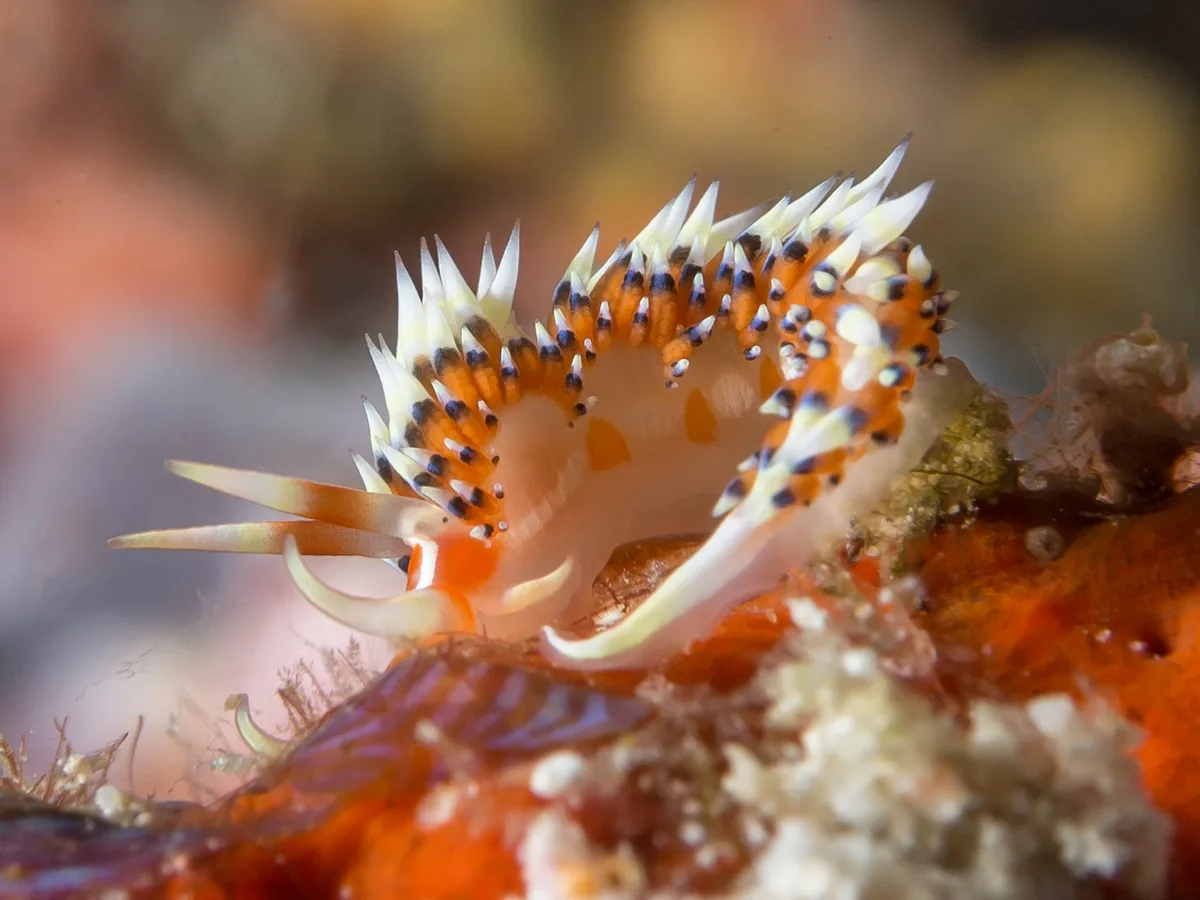
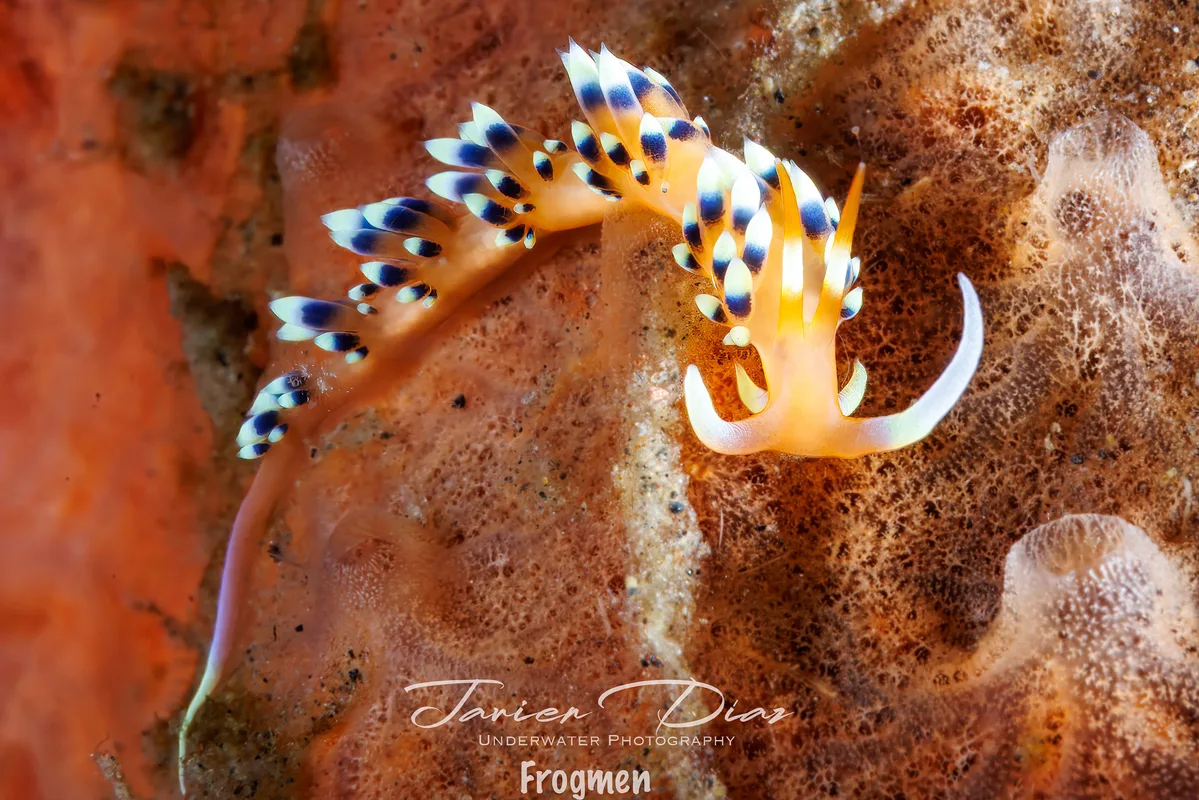
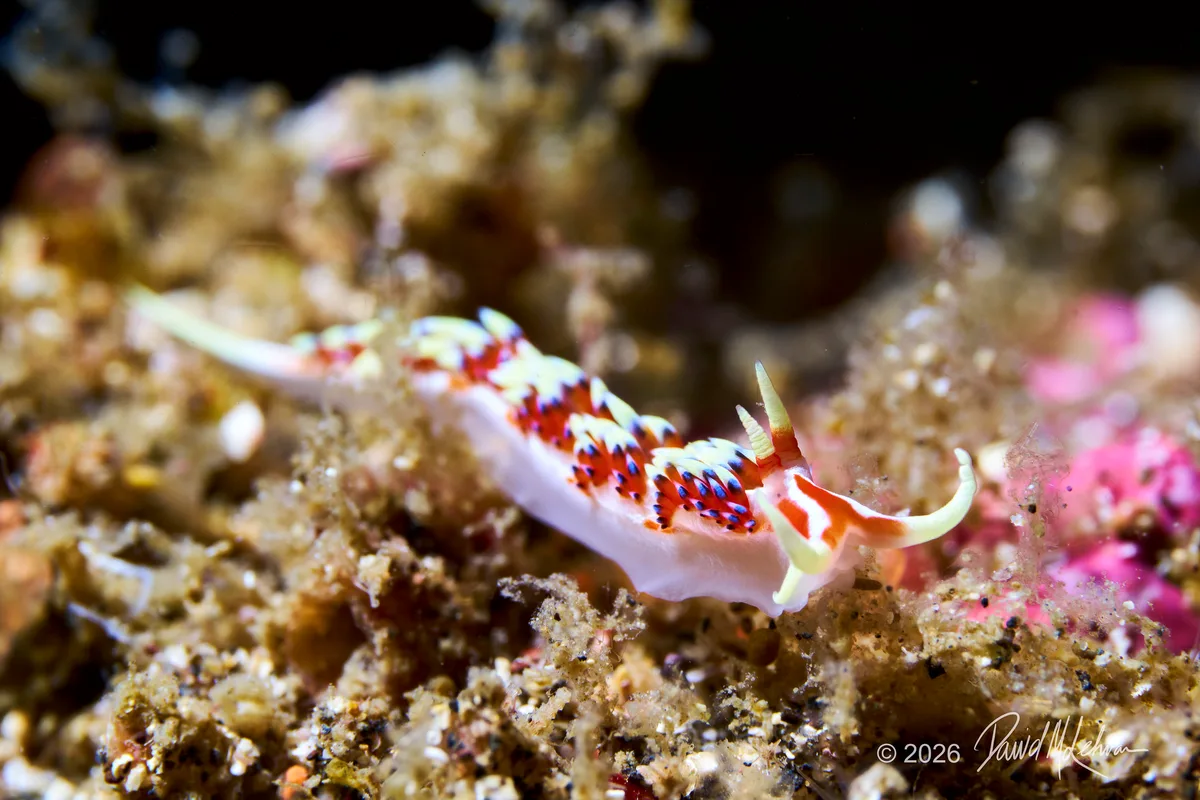
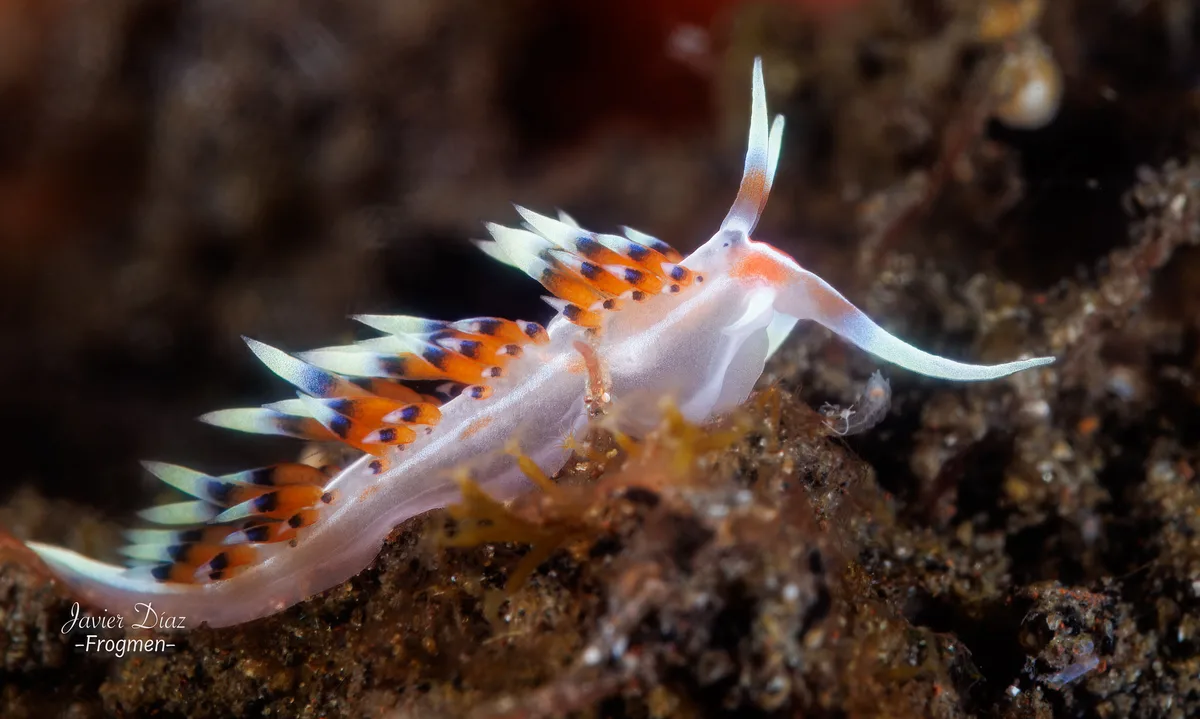
Read a single ceras from the base up and the whole animal is explained, because on this species the inside is on display.
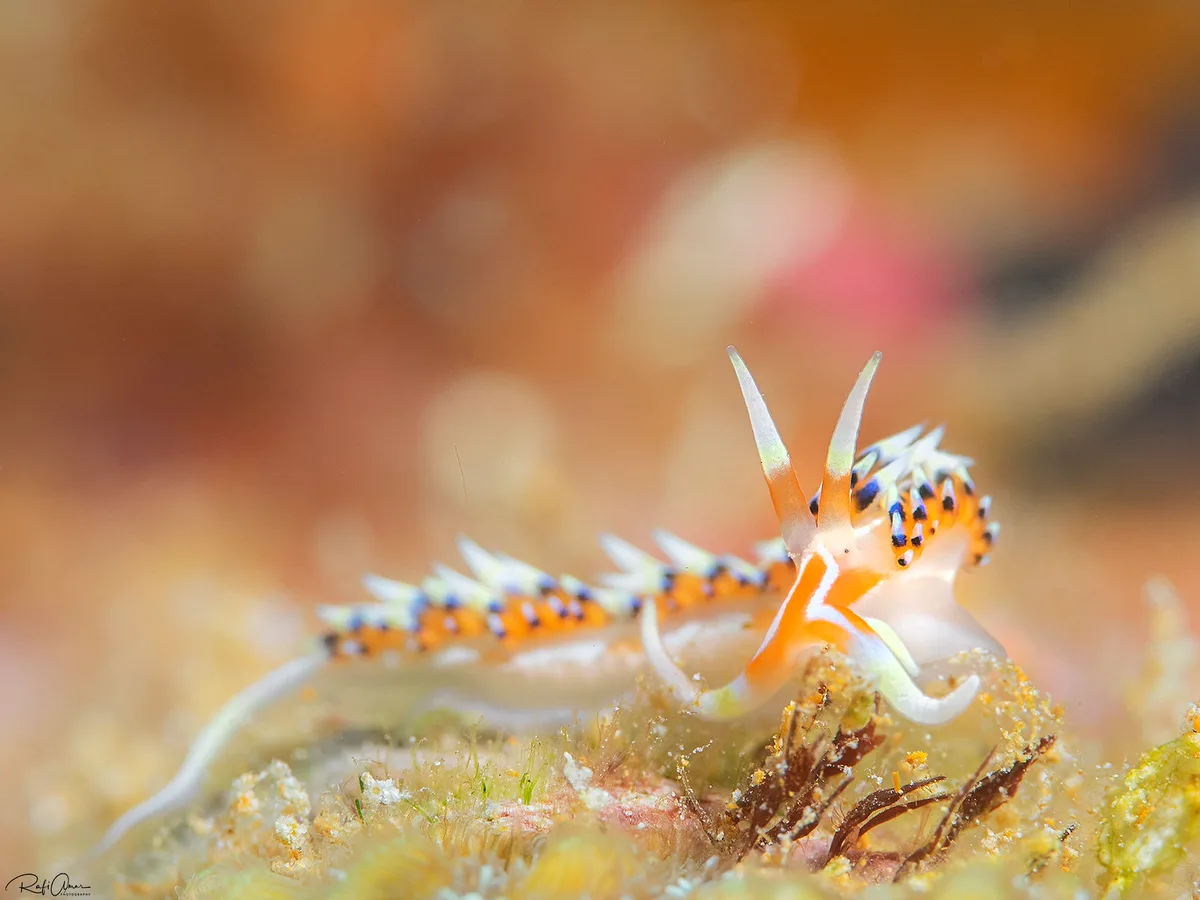
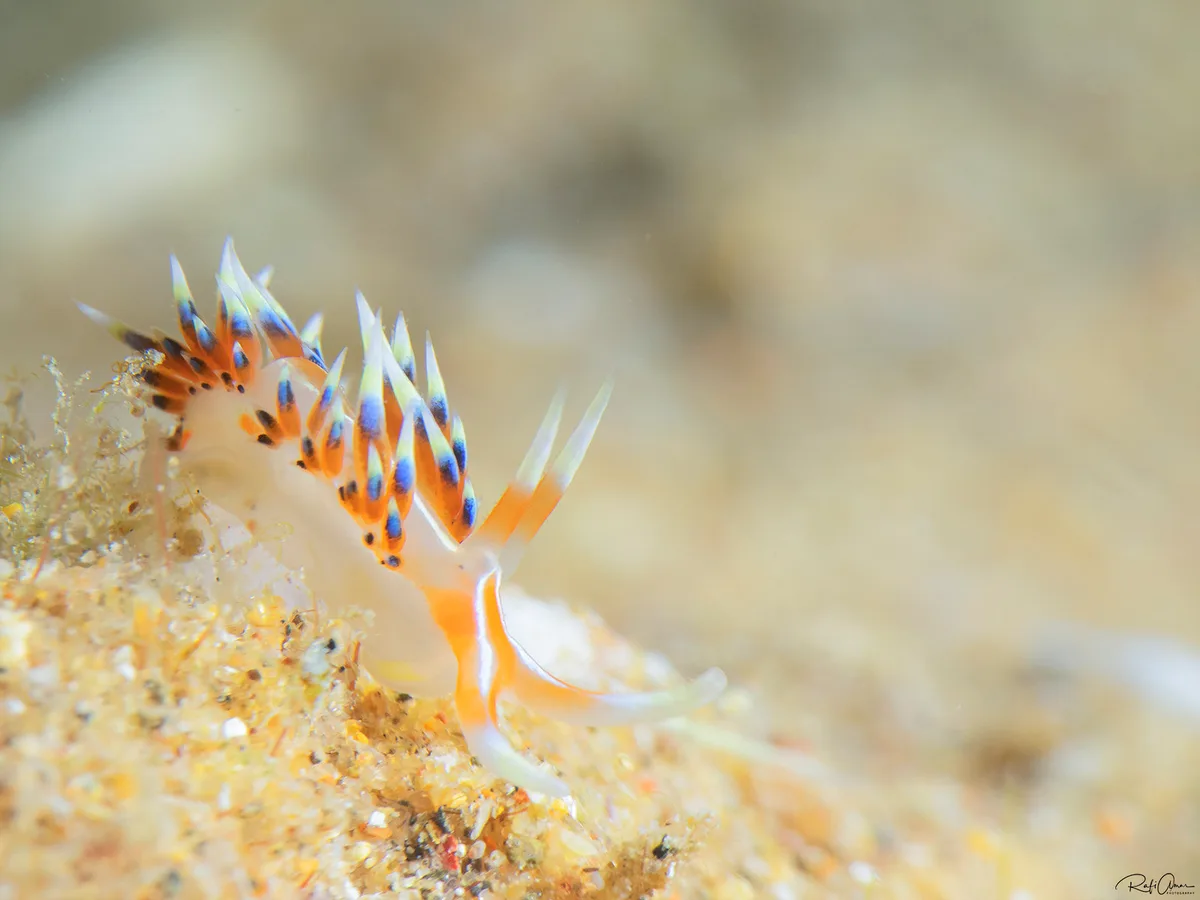
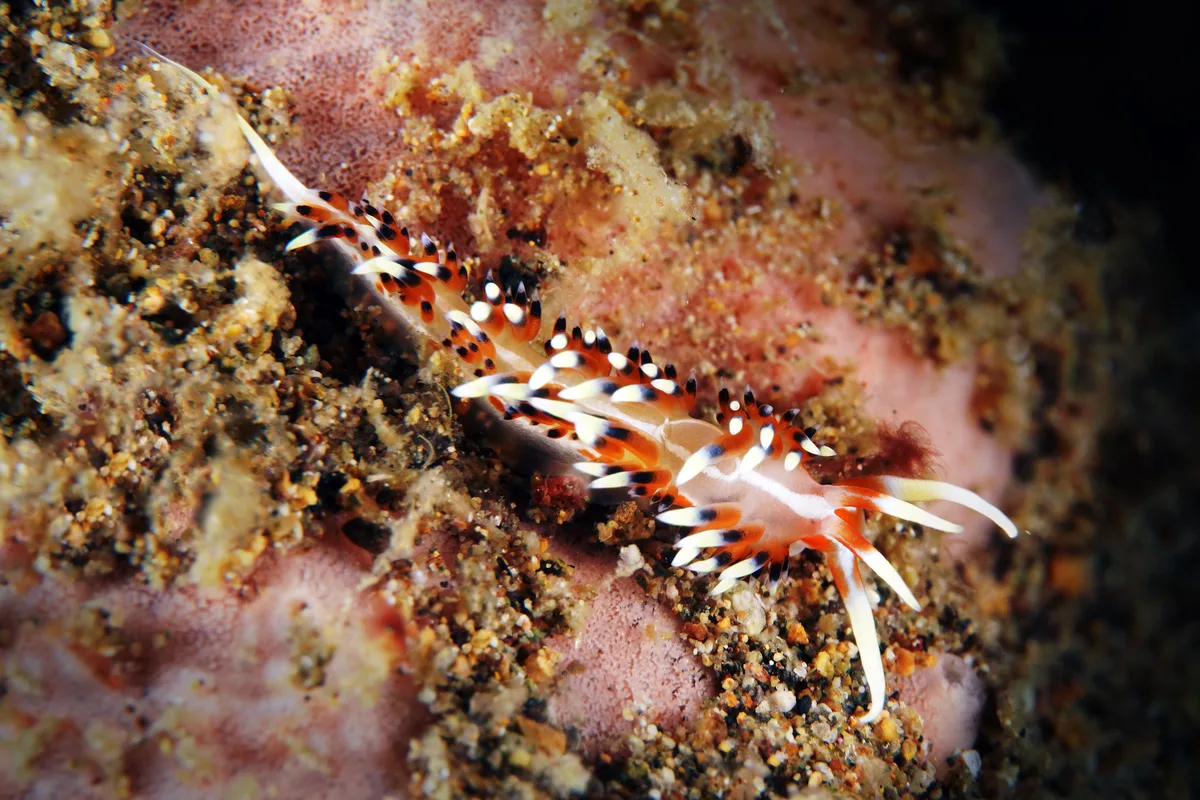
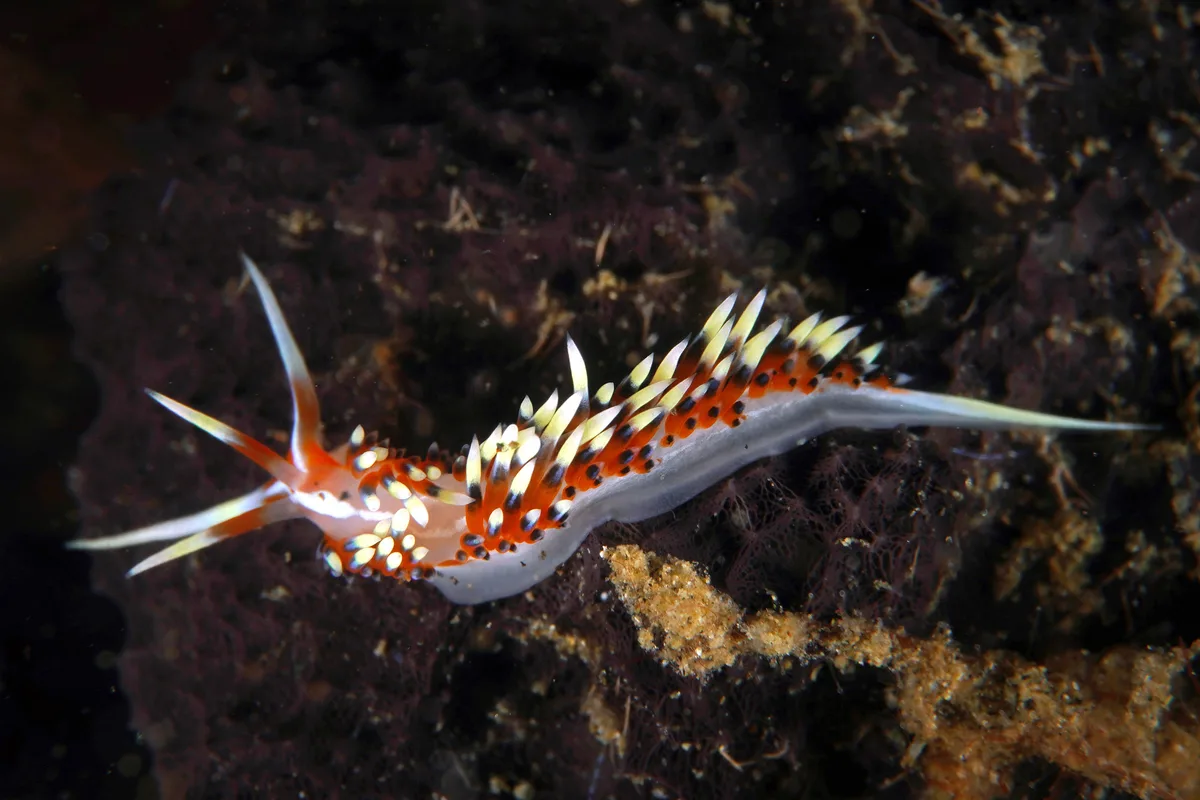
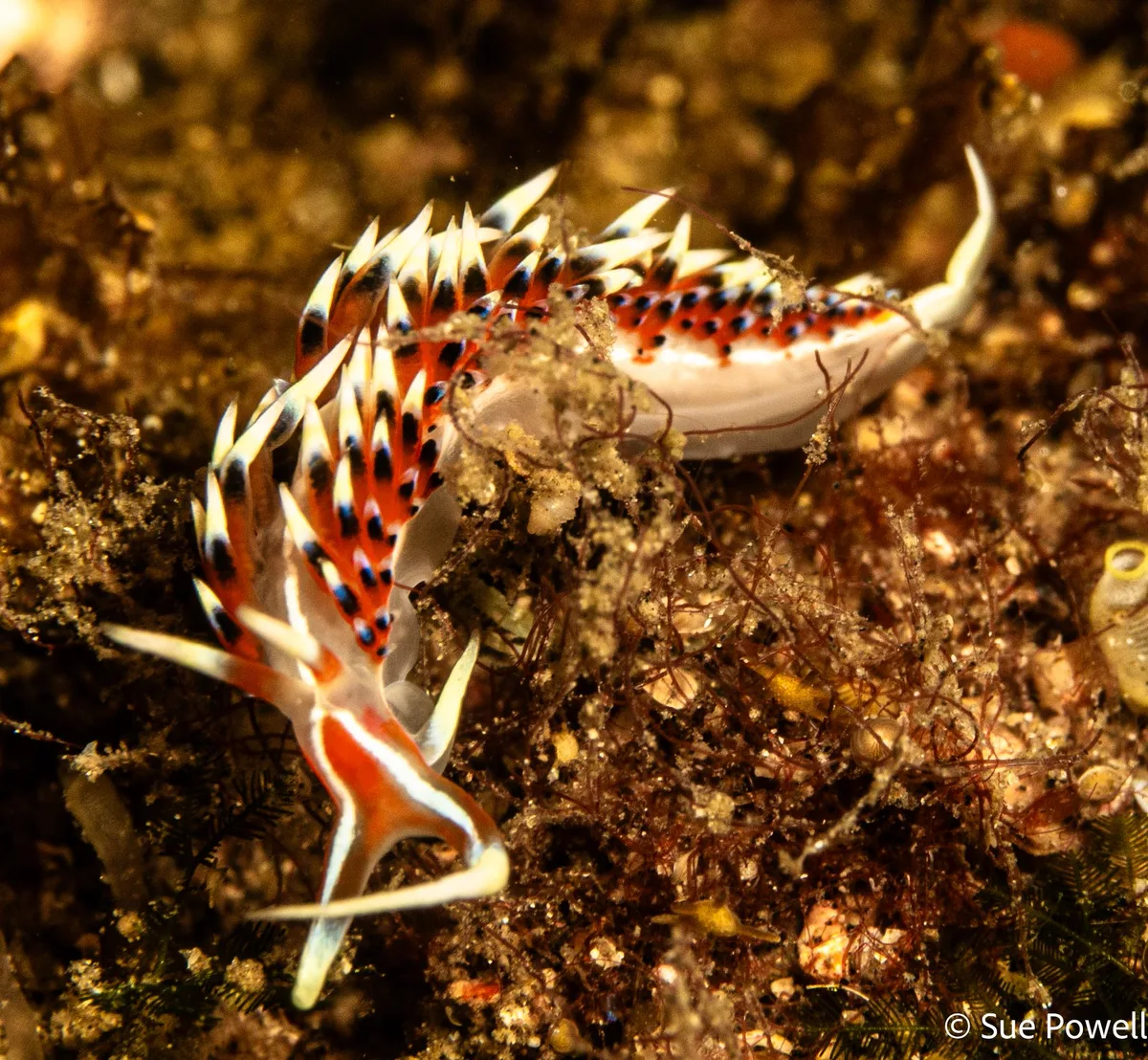
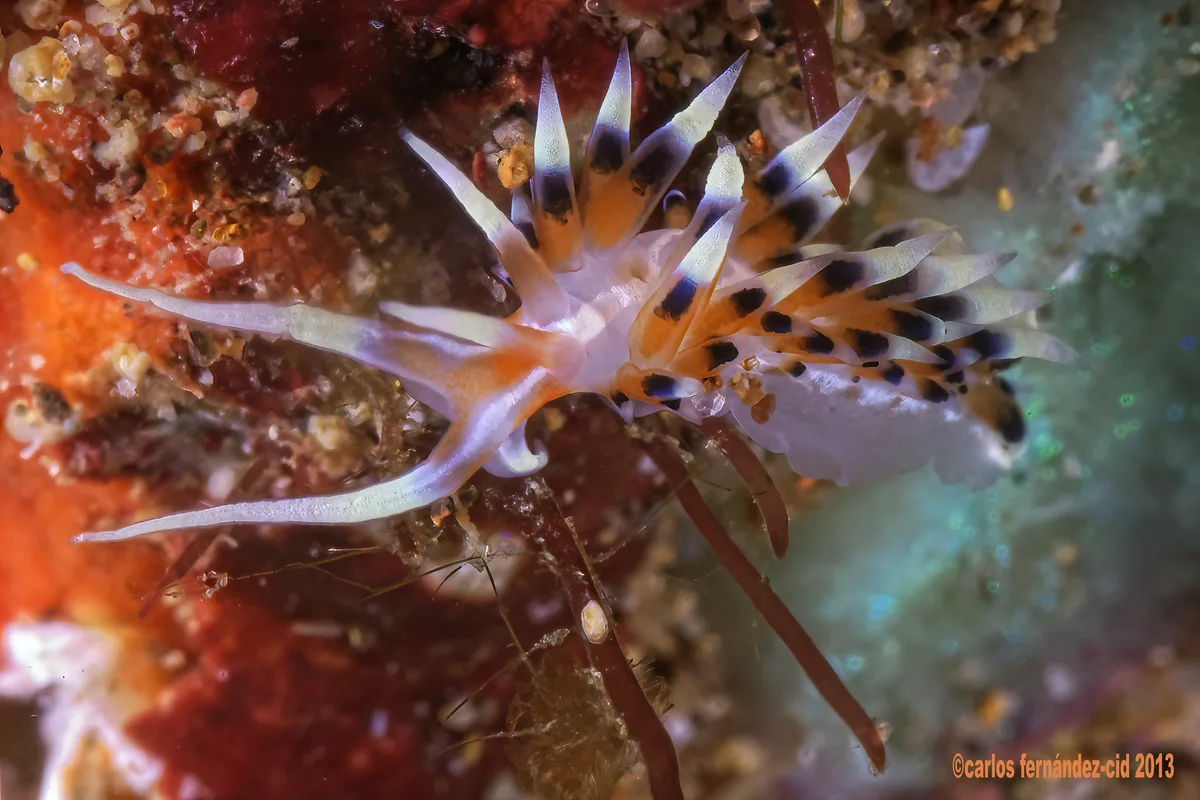
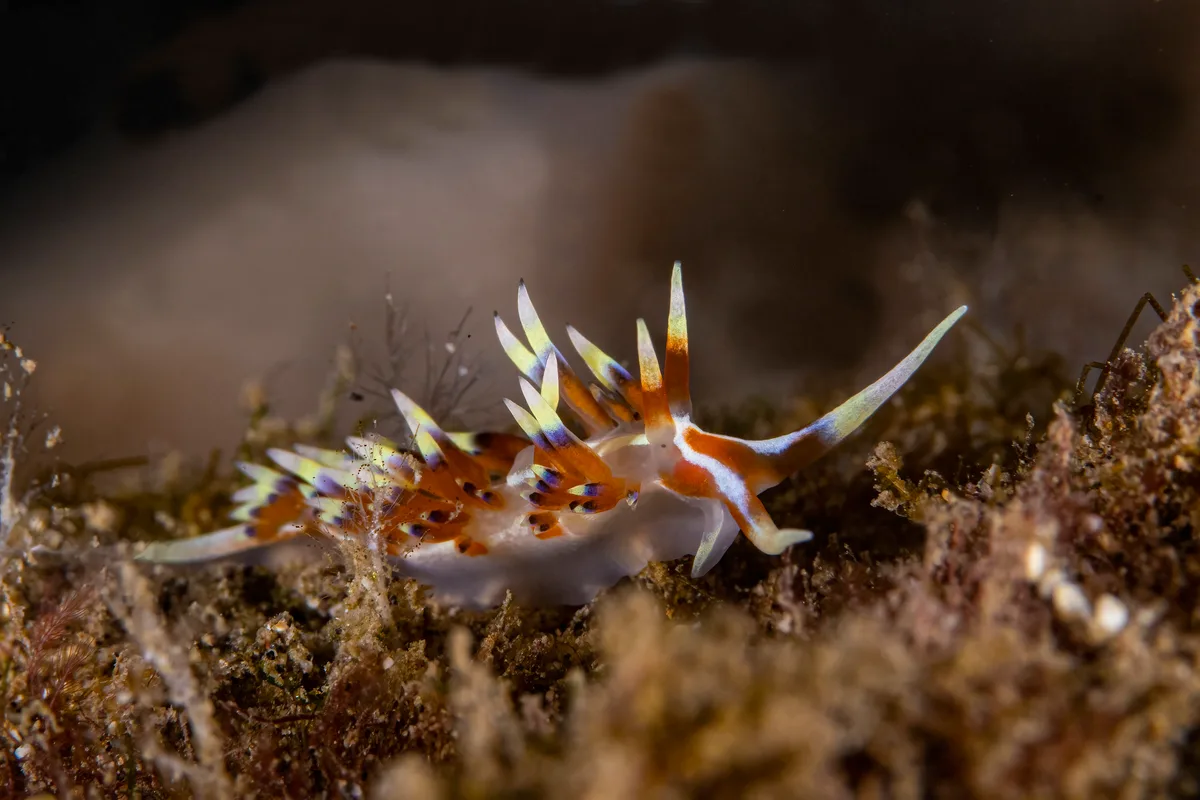
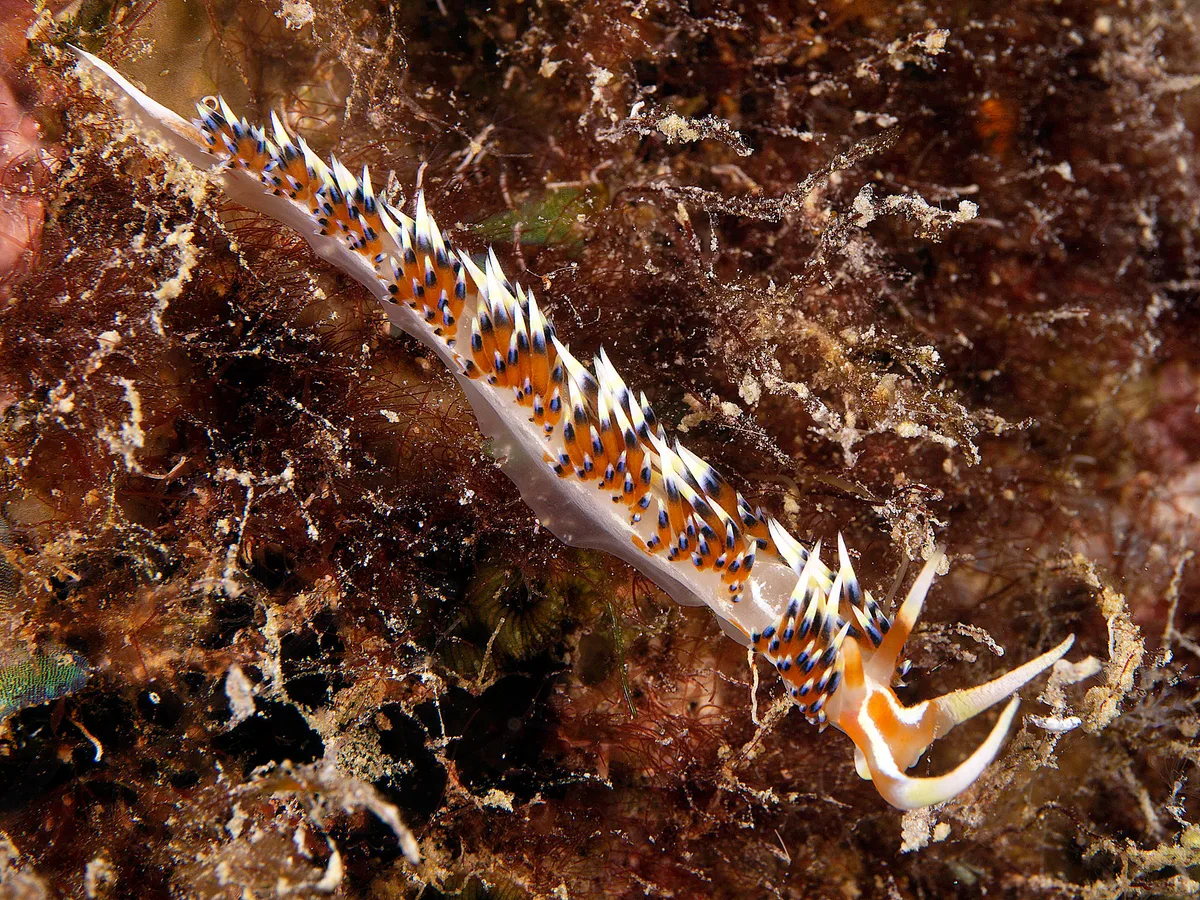
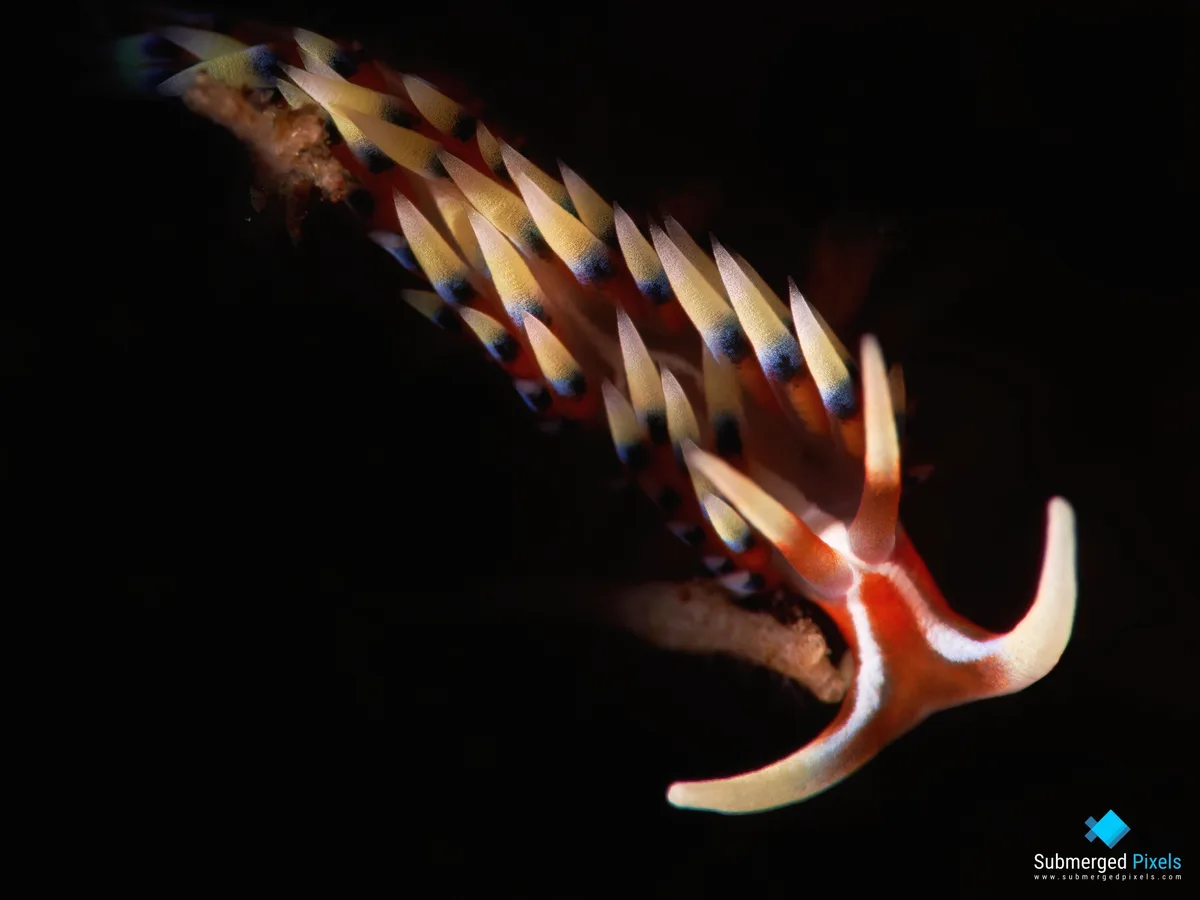
At the bottom it is orange and translucent. Above that sits a dark blue-black band, and above that the tip is capped opaque cream-white. Neither of those two colors is paint. The dark band is a branch of the digestive gland running up inside the ceras, and the white cap above it is the sac where the animal keeps the stinging capsules it has stolen. Gut below, weapon above, in that order, on every one of the dozens of cerata packed down its back.
Aeolids feed on animals armed with stinging capsules and do not digest them. The capsules pass through the gut without discharging, get pushed out into that apical sac, and sit there live, ready to fire into whatever bites down. On a translucent animal the loaded sac shows through as an opaque tip, so this is one of the few places on a reef where you can look straight at a defense through the wall of the container holding it.
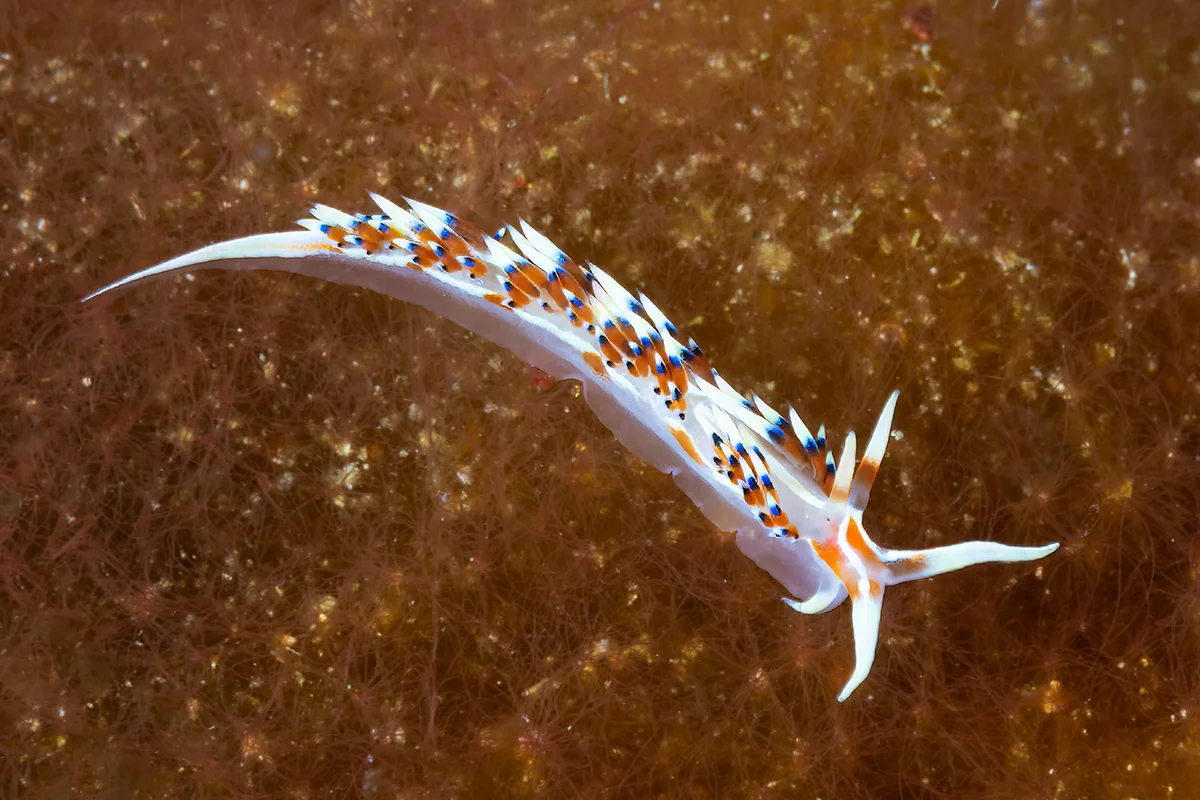
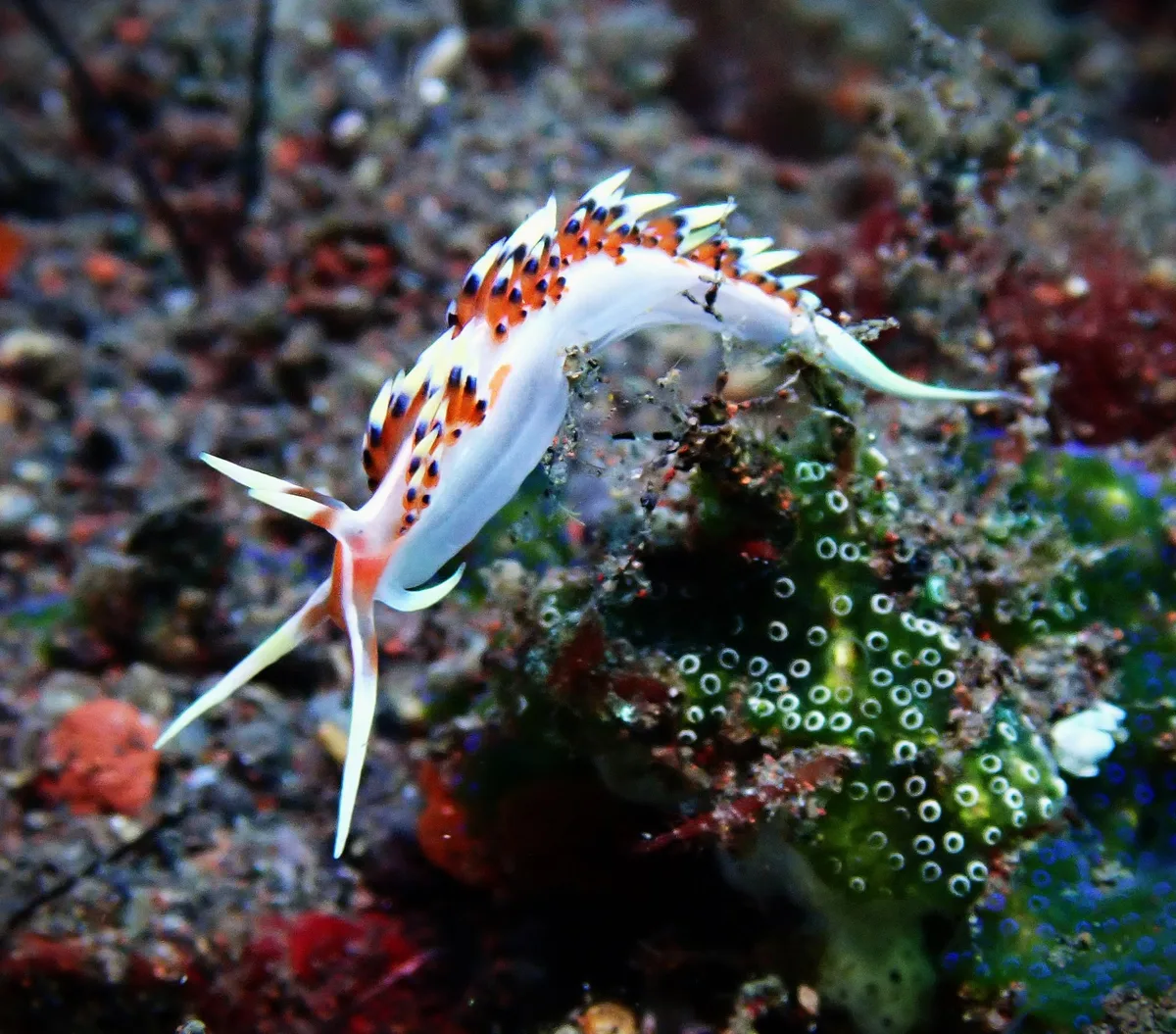
The rest is three centimeters (1.2 in) of orange body with a white line down the midline and long white oral tentacles reaching forward past the rhinophores. It grazes hydroid growth on rock, rubble and wreck plating, which is where the capsules come from in the first place.
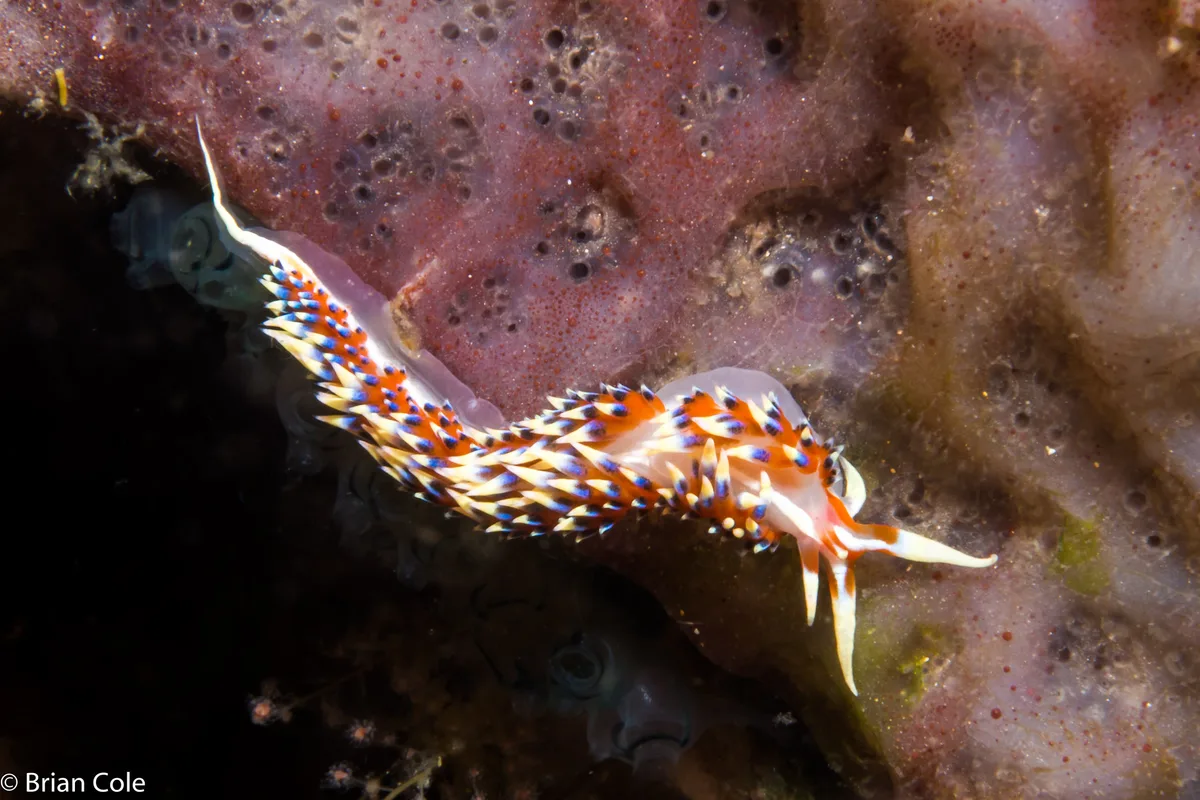
It is also one of the most photographed sea slugs in this section, which is worth knowing when you are trying to learn it: there is no shortage of material to compare against.
- each ceras carries a dark blue-black band directly below a cream-white tip
- orange body with a white line running down the midline of the back
- oral tentacles long, white and held forward, reaching past the rhinophores
- cerata in dense rows down both sides; three centimeters overall