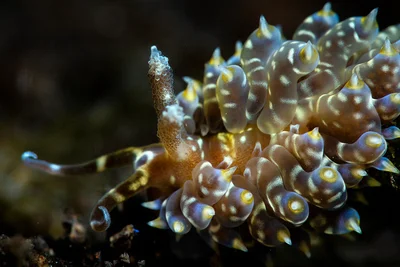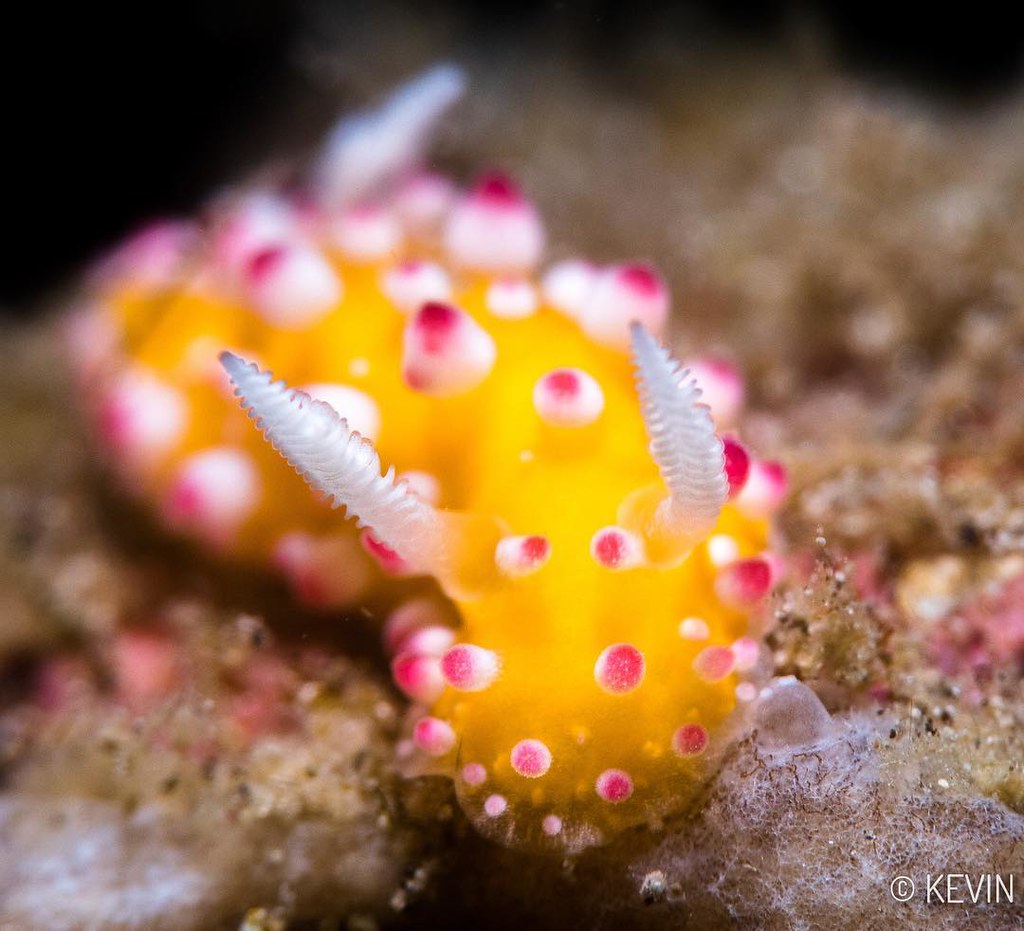
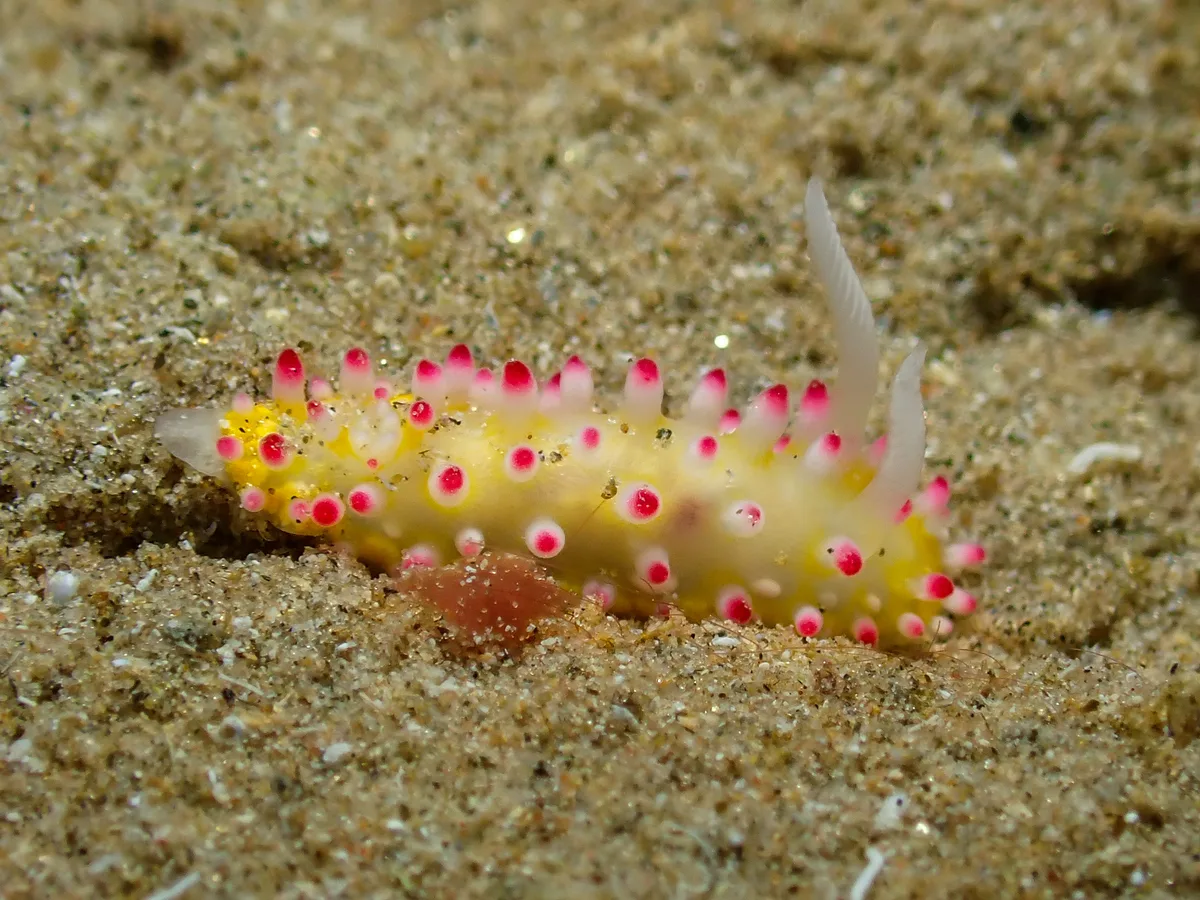
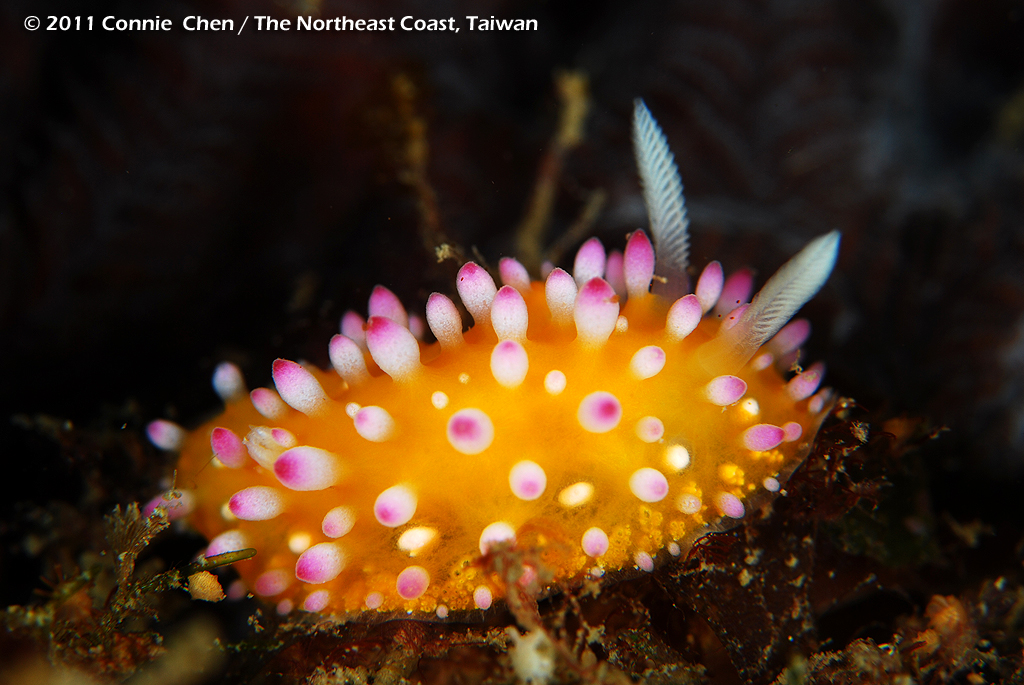
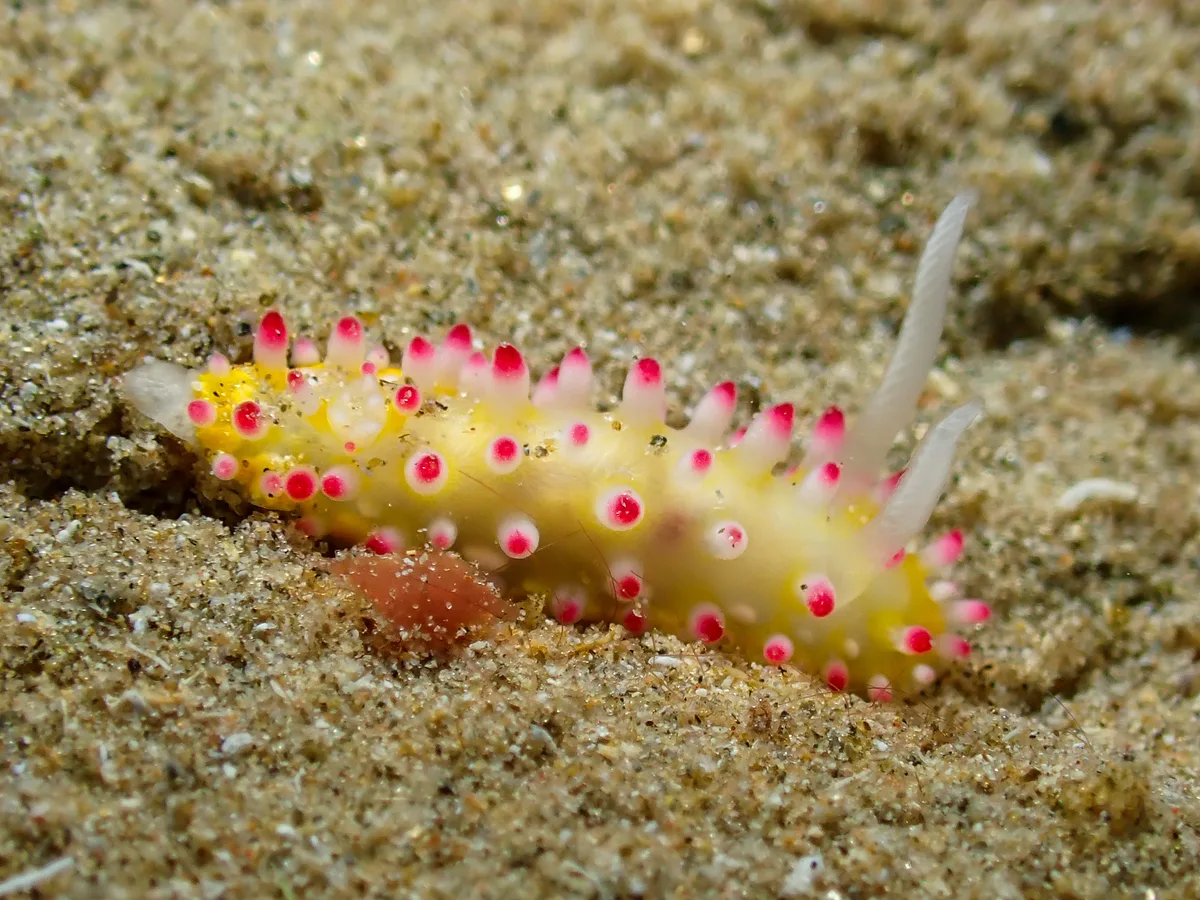
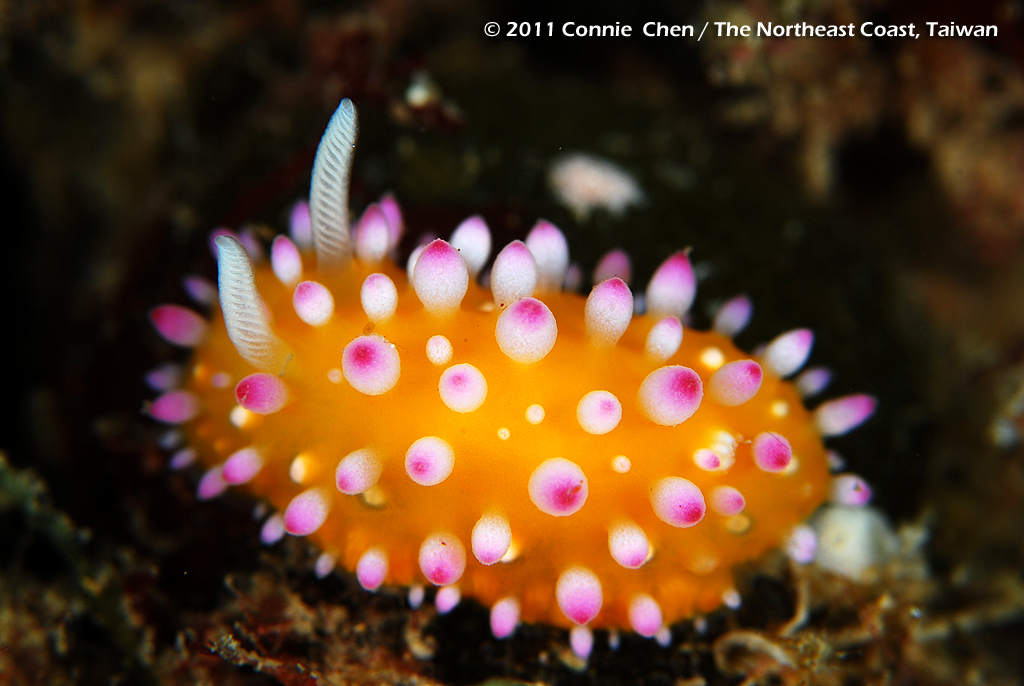
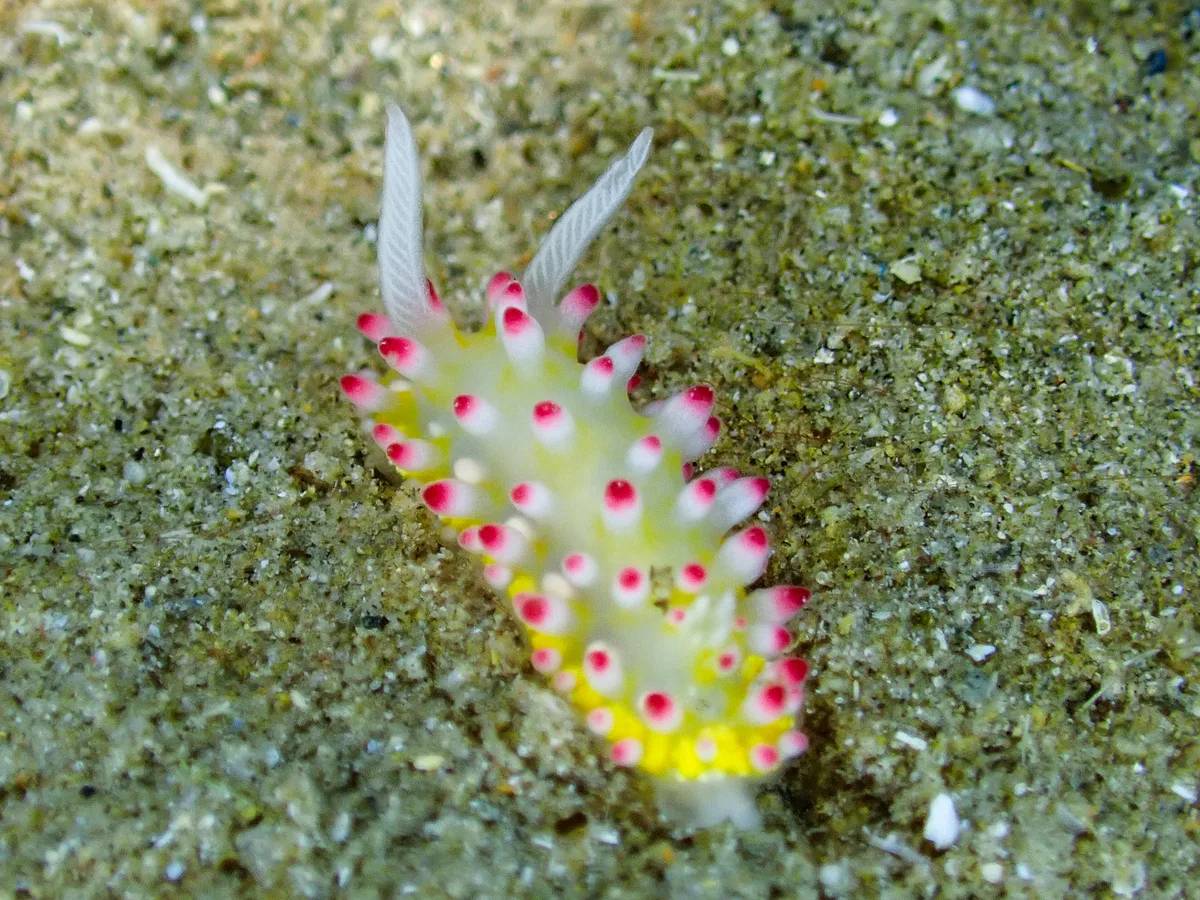
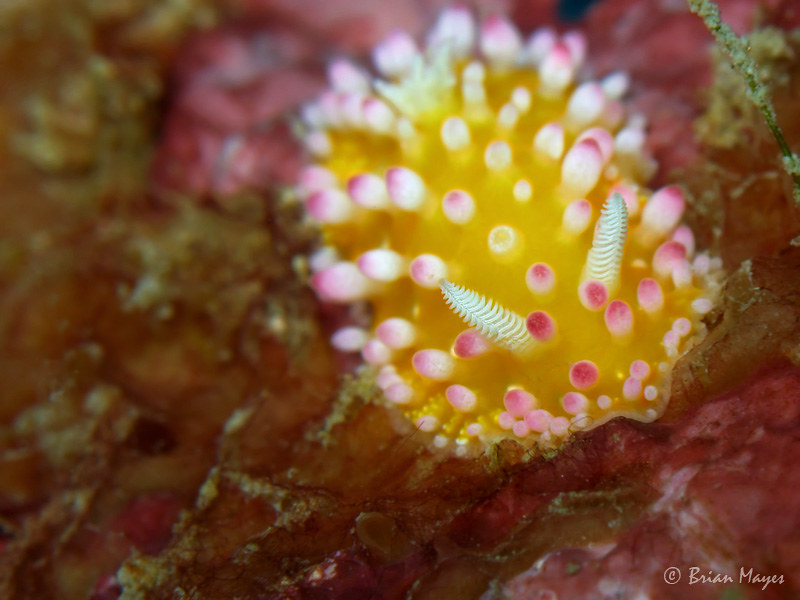
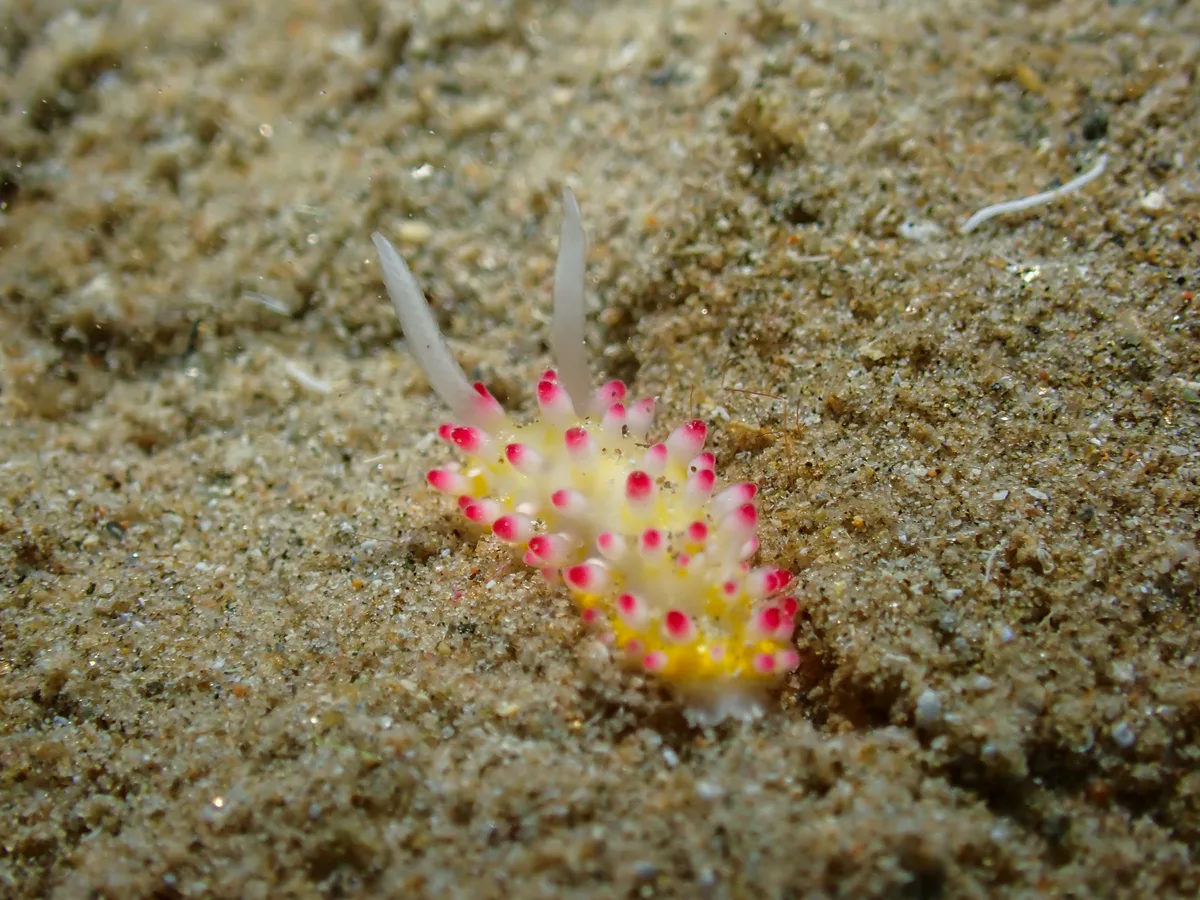
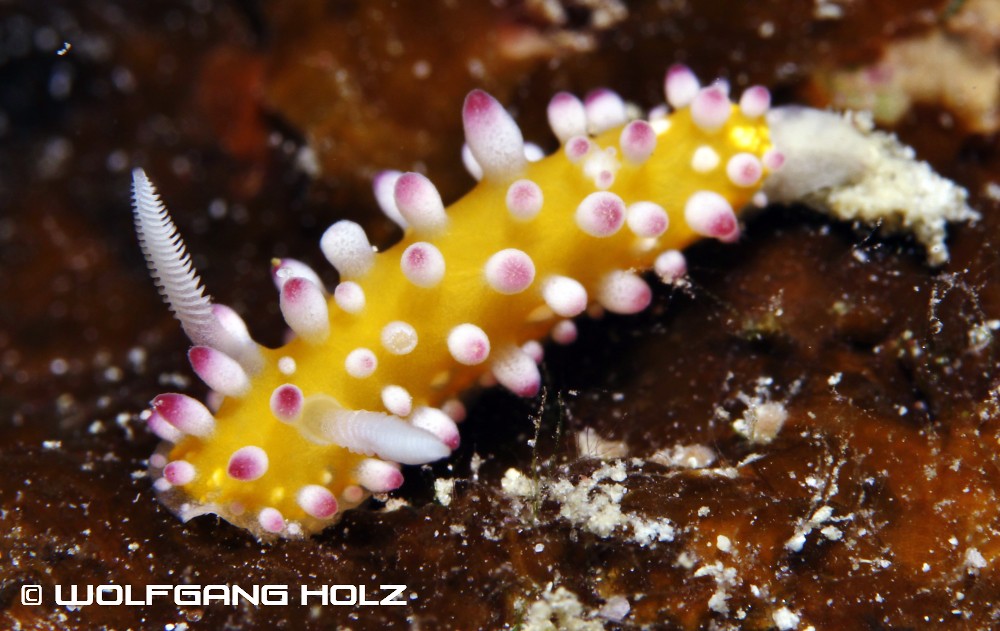
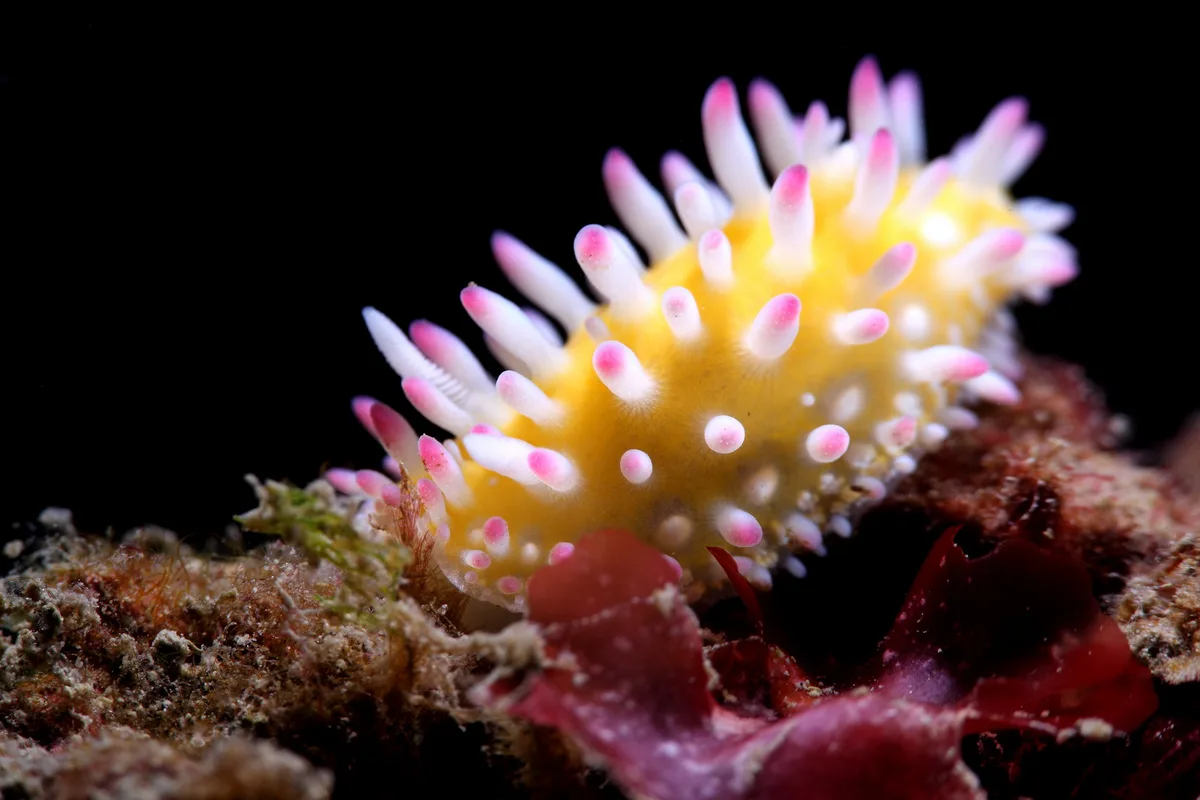
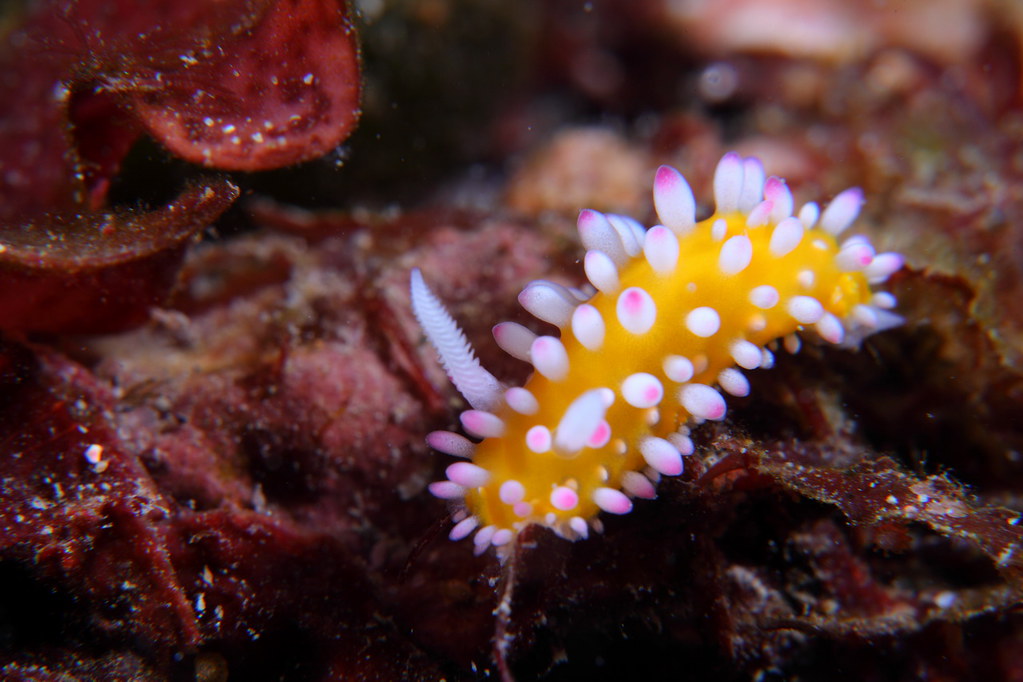
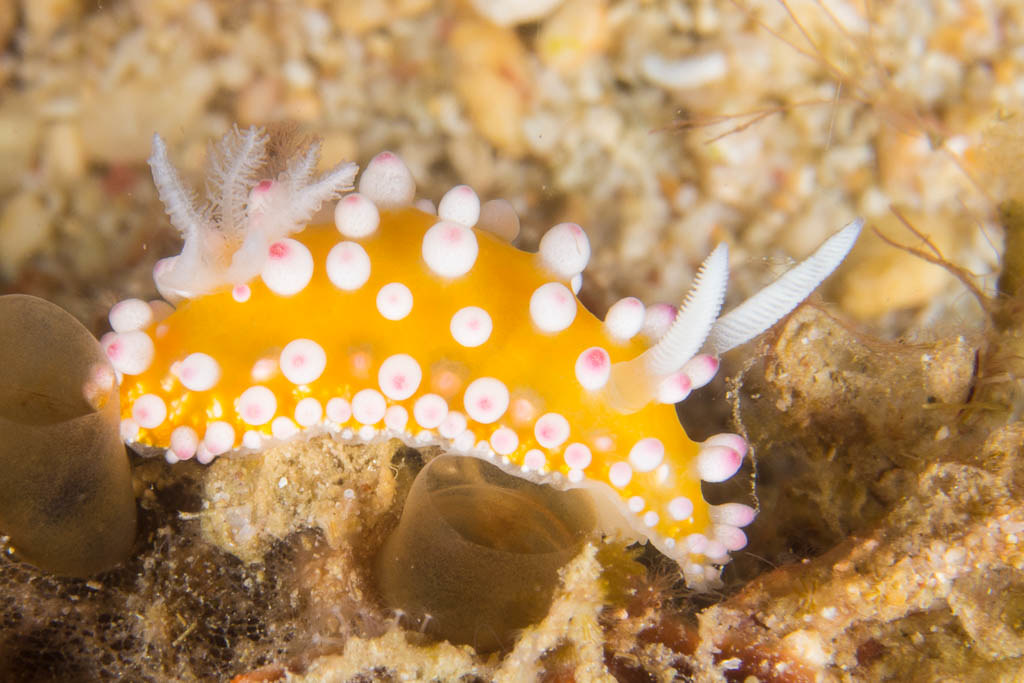
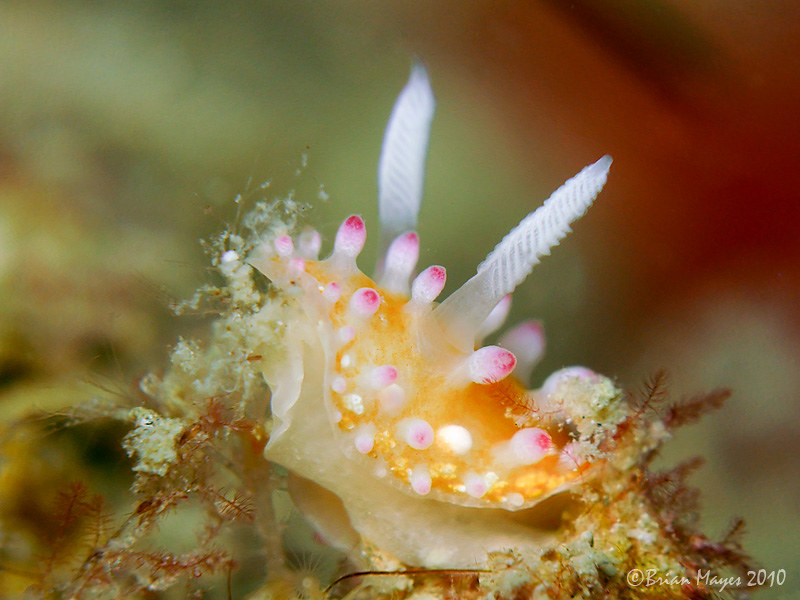
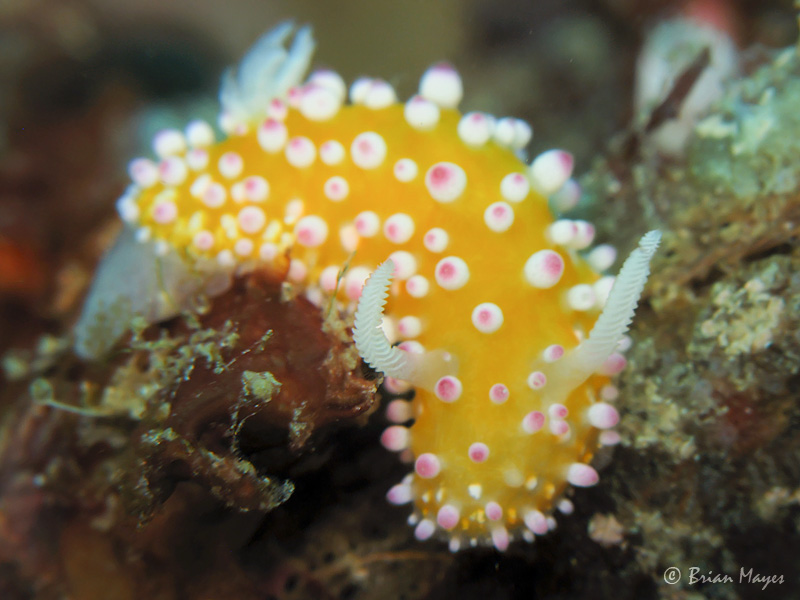
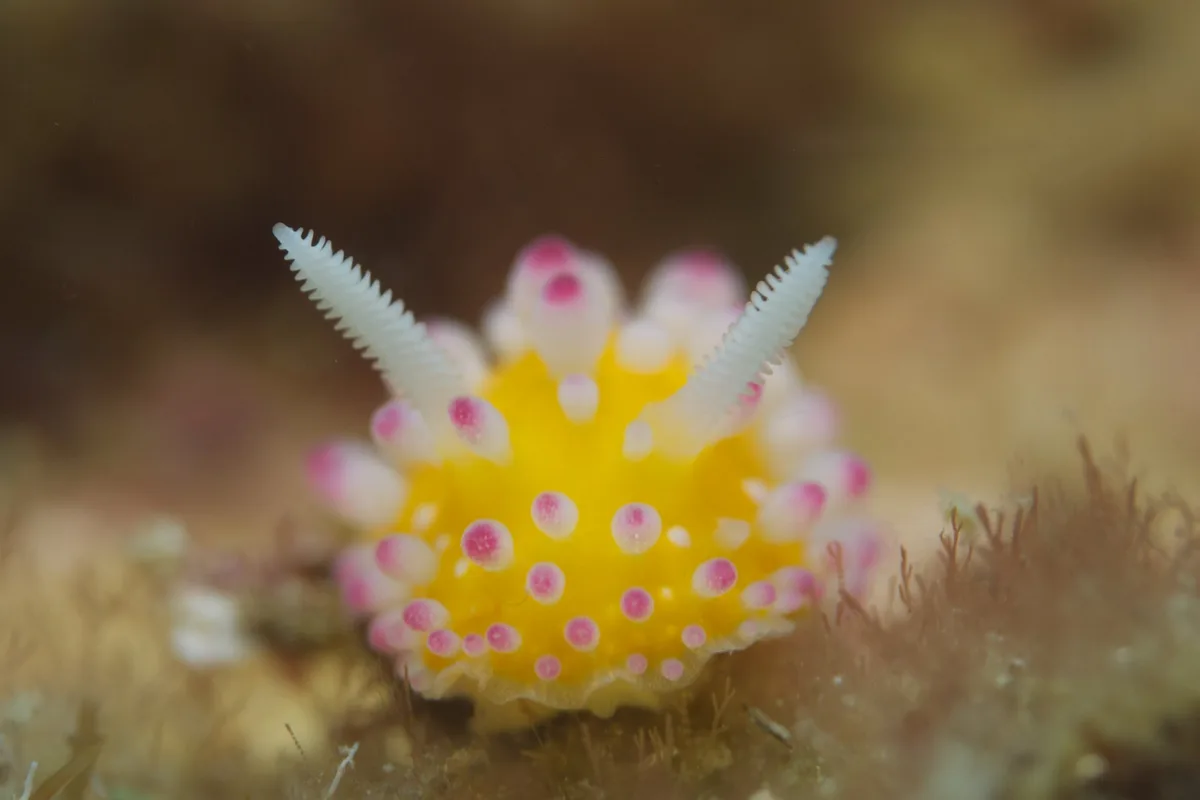
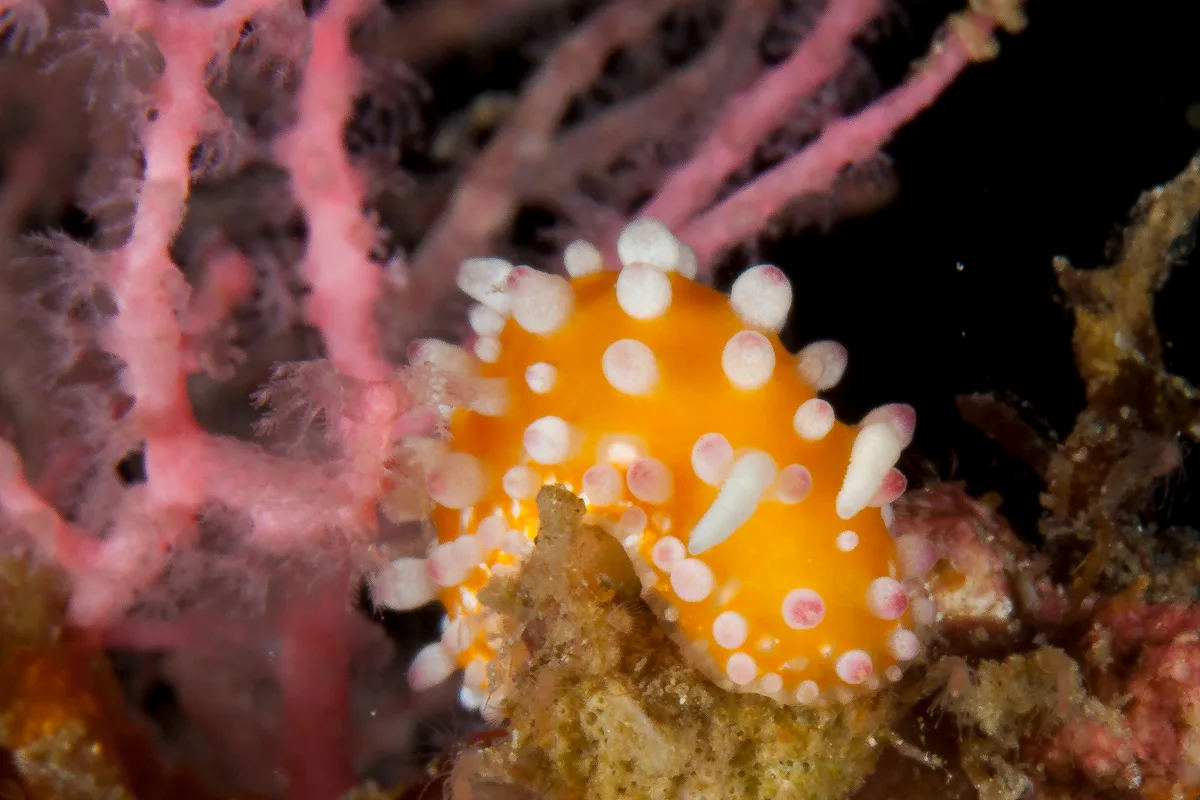
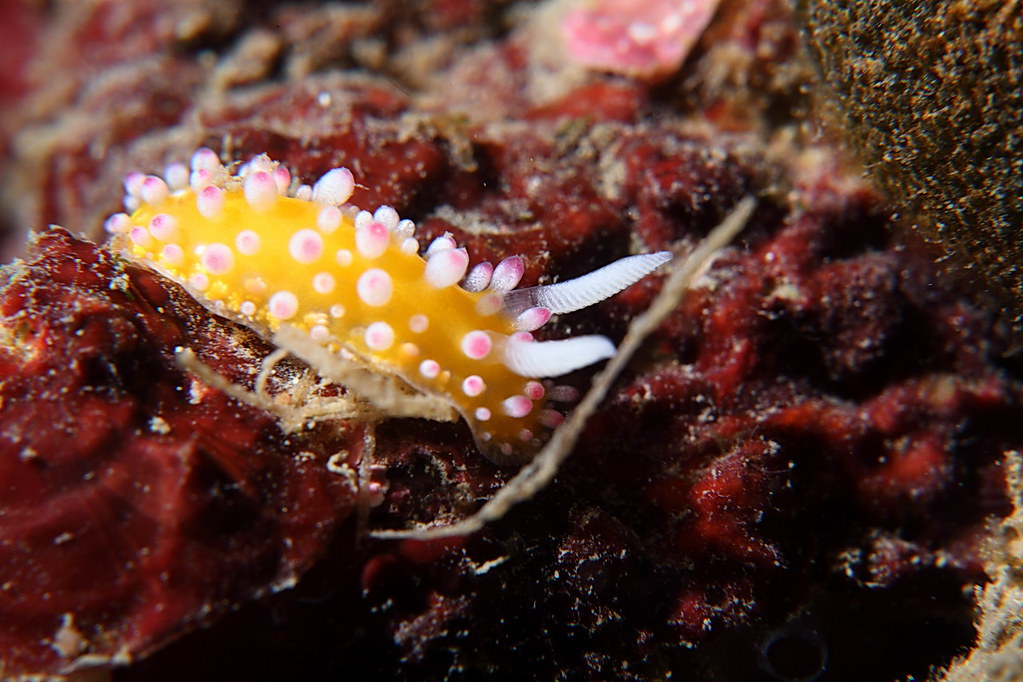
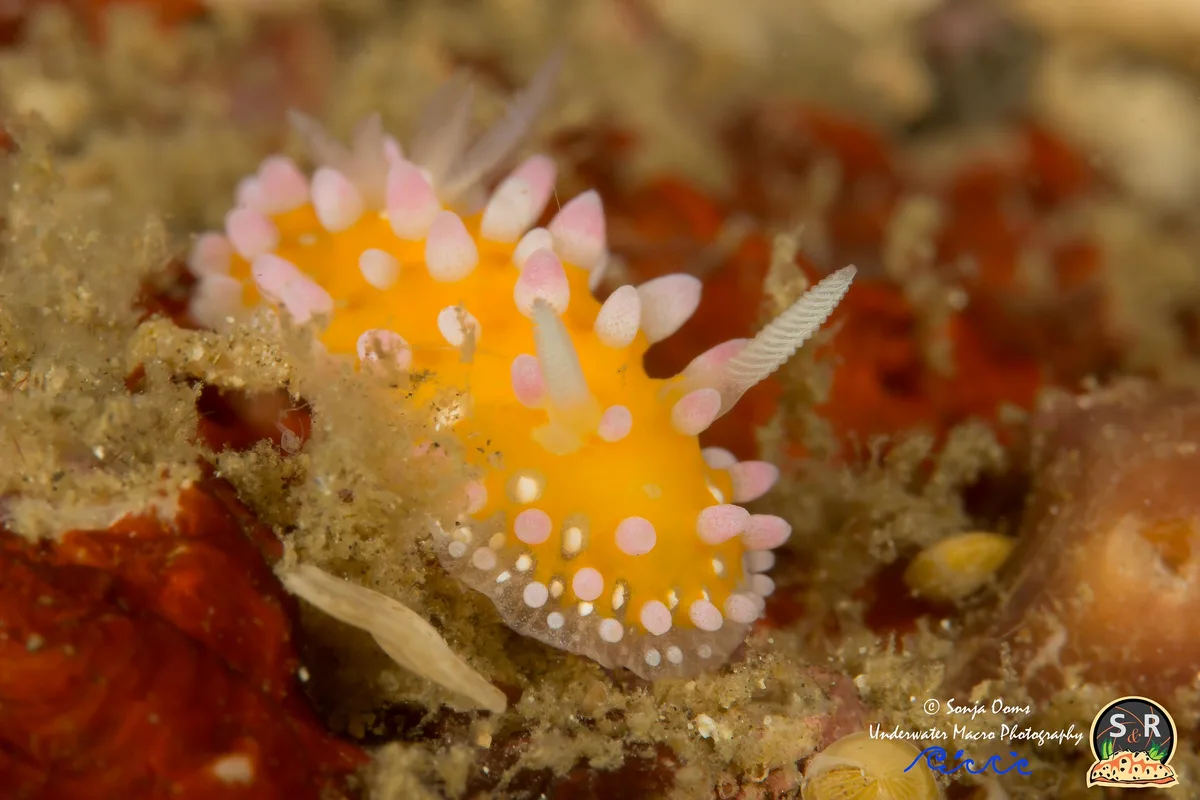
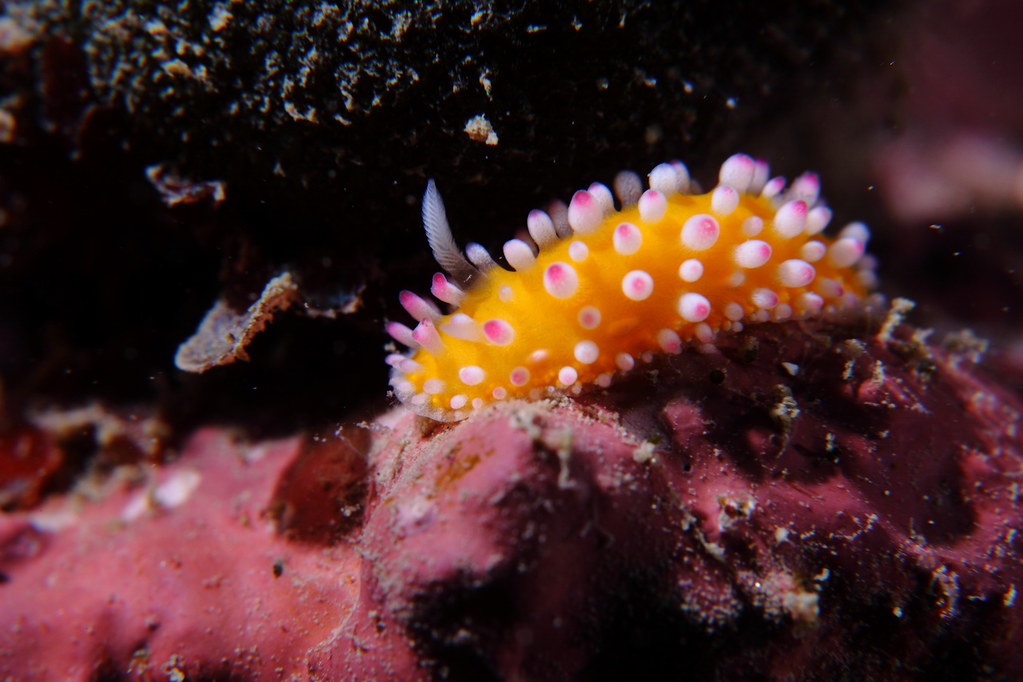
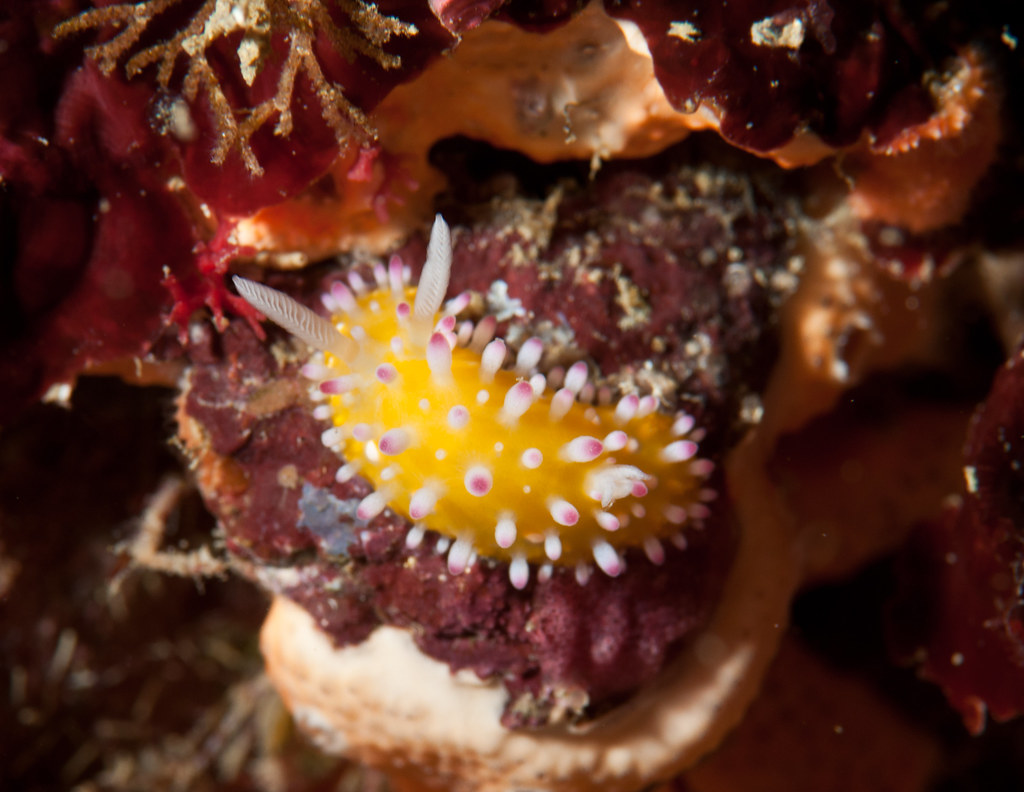
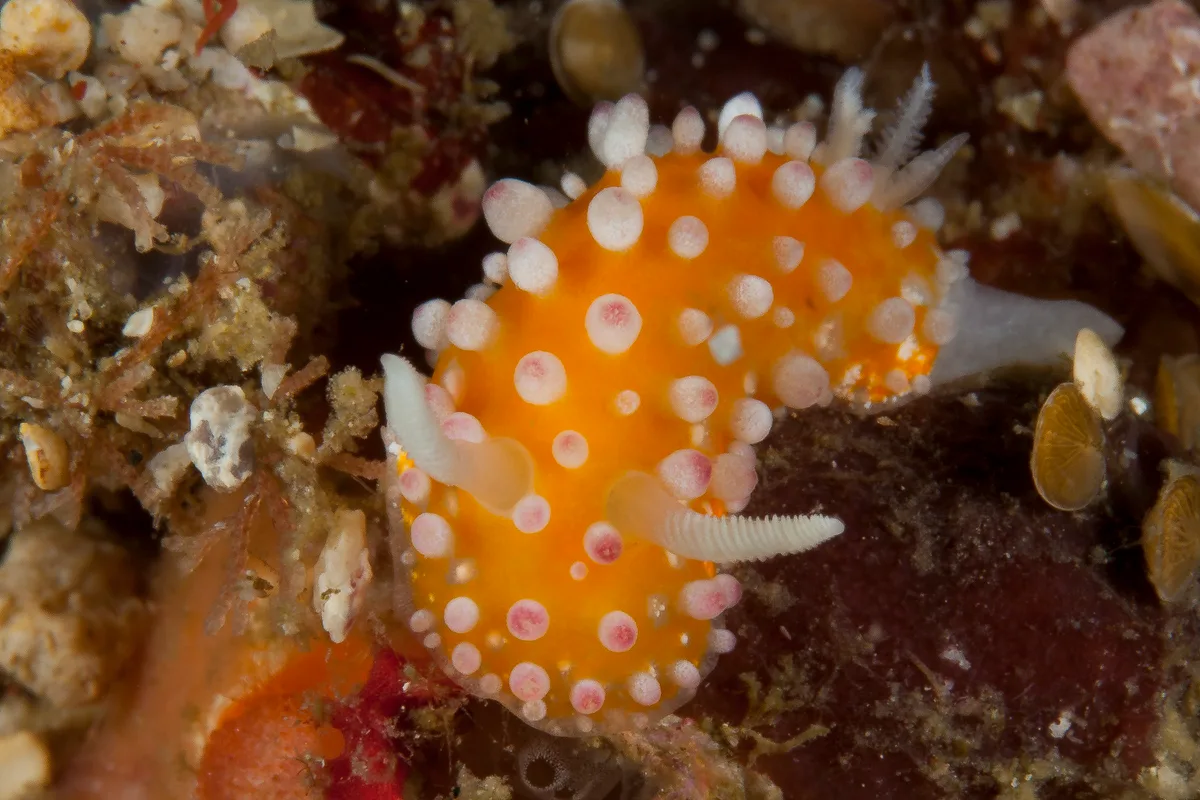
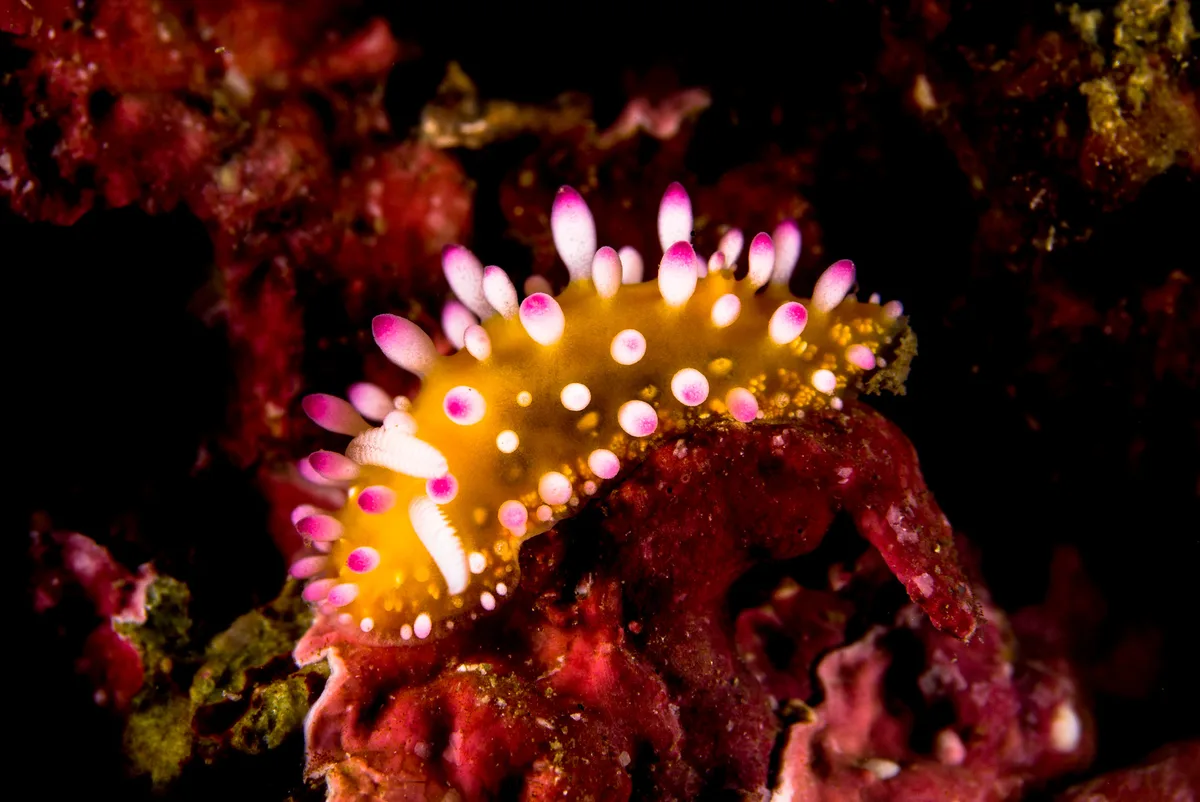
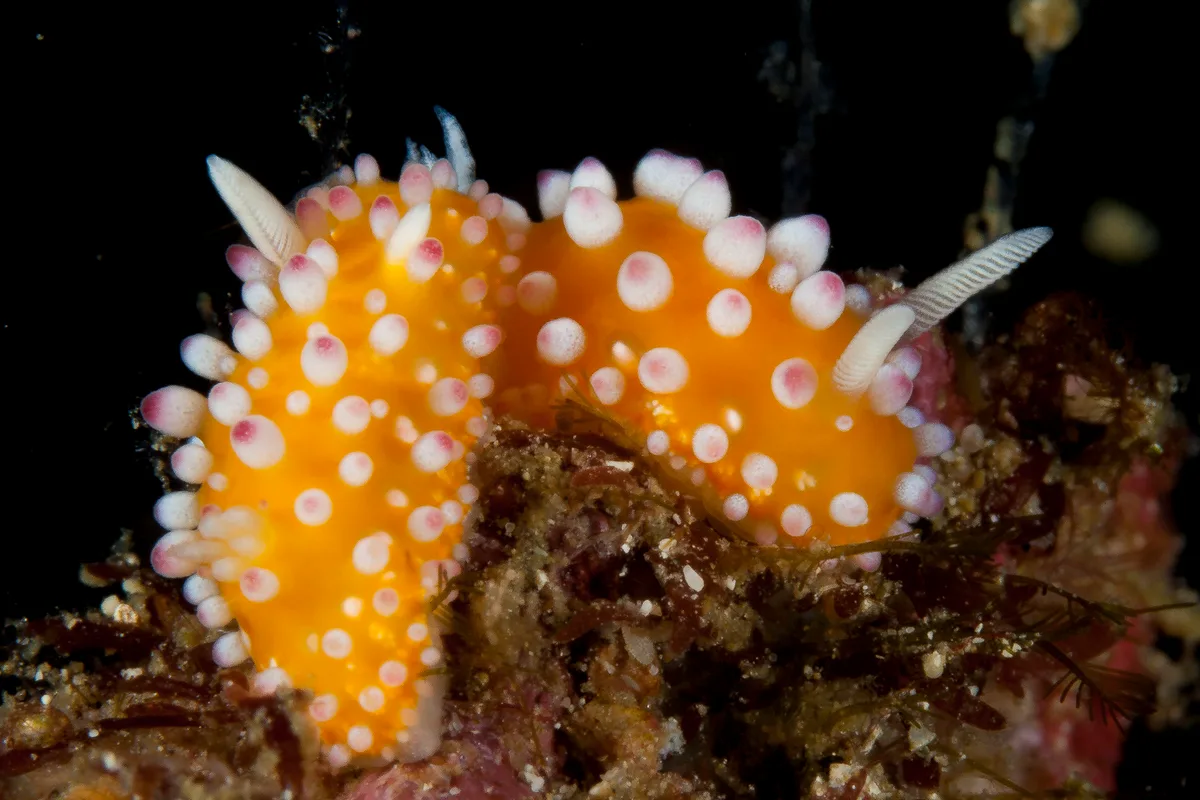
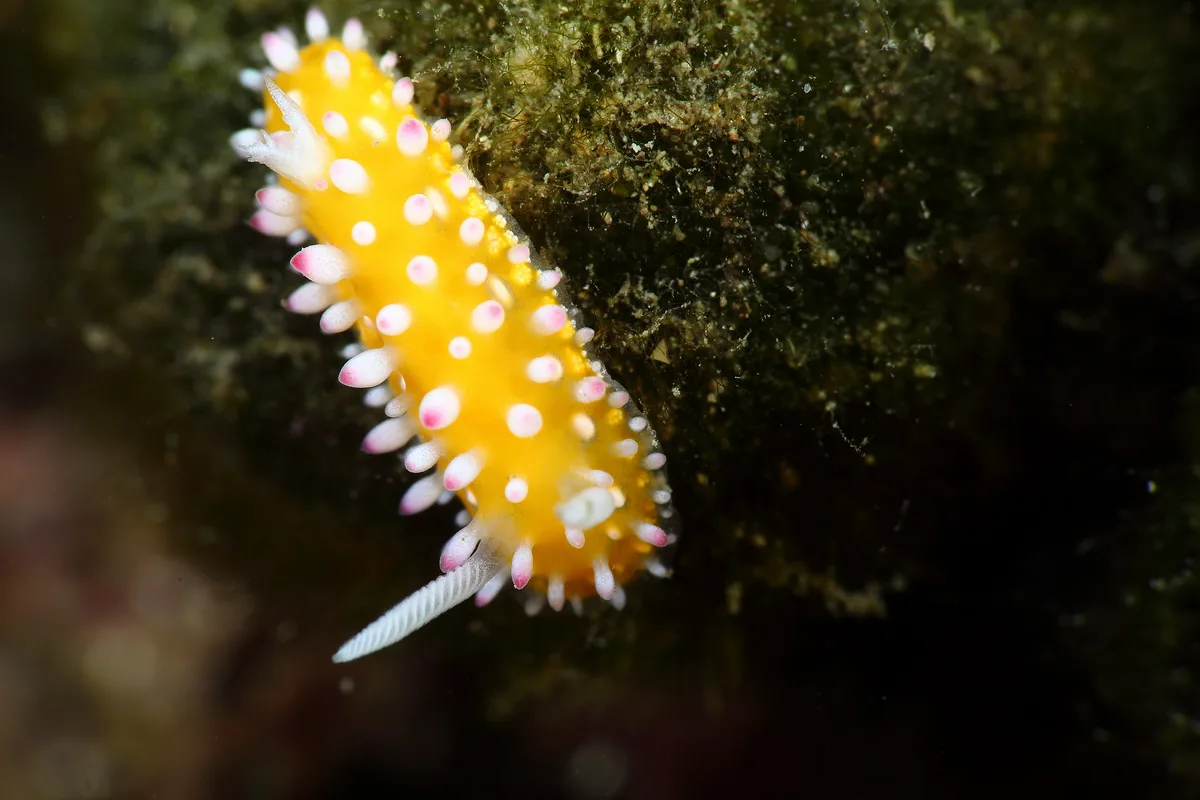
This is one of the few slugs on the reef you can name from a poor photograph: a lemon-yellow body under a forest of long, soft papillae, every one of them tipped pink.
It lives under things. The records put it on the undersides of rocks and coral rubble on shallow reef and lagoon pinnacles, most of them between 4 and 12 m, and it is beneath the slab far more often than on top of it. Its food is sponge, and for a nudibranch the food is the address: one animal was recorded eating Halisarca metabola, a thin, soft encrusting sponge with no spicules in it, and thin encrusting sponges of that kind are what to search. Turn your light onto the roof of a low undercut rather than onto the reef face.
The papillae separate it from everything else yellow. They are soft, slightly translucent, and long enough to sway in surge, which is different from the hard, rounded warts of the phyllidias and from the flat mantle of the chromodorids. The gill plume sits in a ring toward the rear and the rhinophores stand at the front, both yellow to pink, and both can be pulled in when the animal is touched. Along the rim of the mantle sit rows of glands that store the chemistry it takes out of its sponge, which is the usual arrangement in a slug that has given up its shell.
It used to be filed with the chromodorids, the family that holds most of the reef's brightly patterned slugs. It now has a family to itself, the Cadlinellidae, though nearly every photograph online still carries the old name.
Be honest about your chances. This animal is widespread in the Indo-Pacific and genuinely rare in the 🌊 Red Sea; the first record from this sea was made at Eilat in 2007, and the regional guide carries it on 🌊 Red Sea photographs. It is also small, 35 mm at the largest and usually well under that, and somebody working this coast for years may never turn one up.
- lemon-yellow body under long soft papillae, every one tipped pink
- papillae soft and translucent, not hard bumps
- gill plume and rhinophores yellow to pink, both retractile
- usually found upside down on the underside of a slab
- up to 3.5 cm