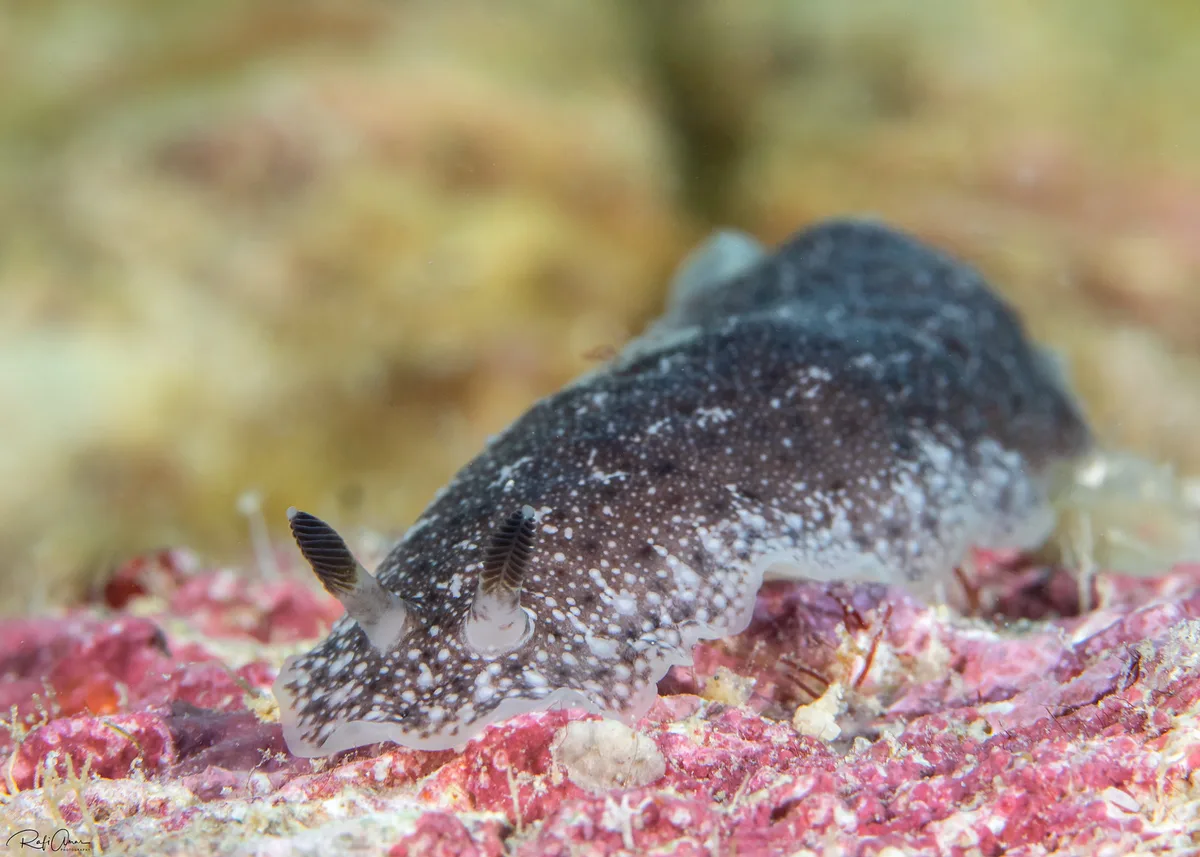
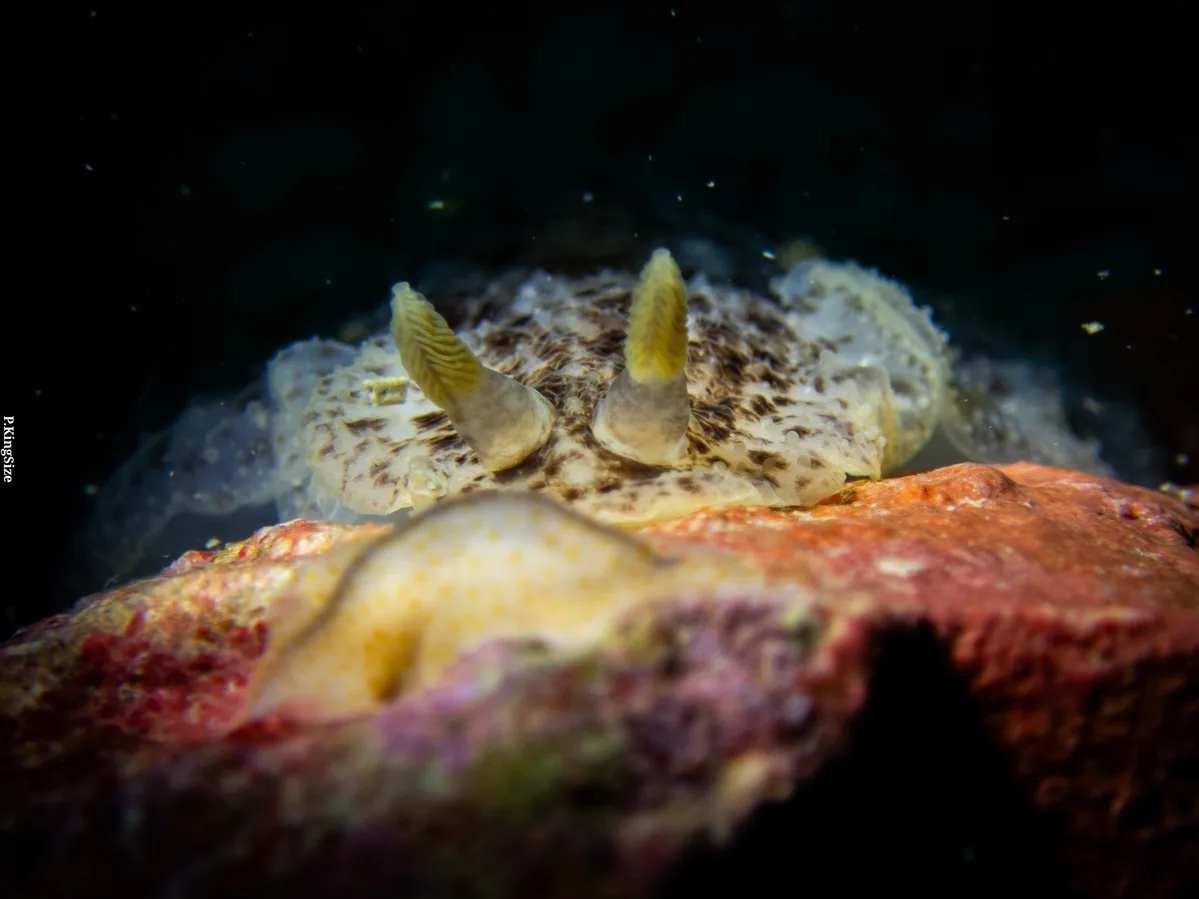
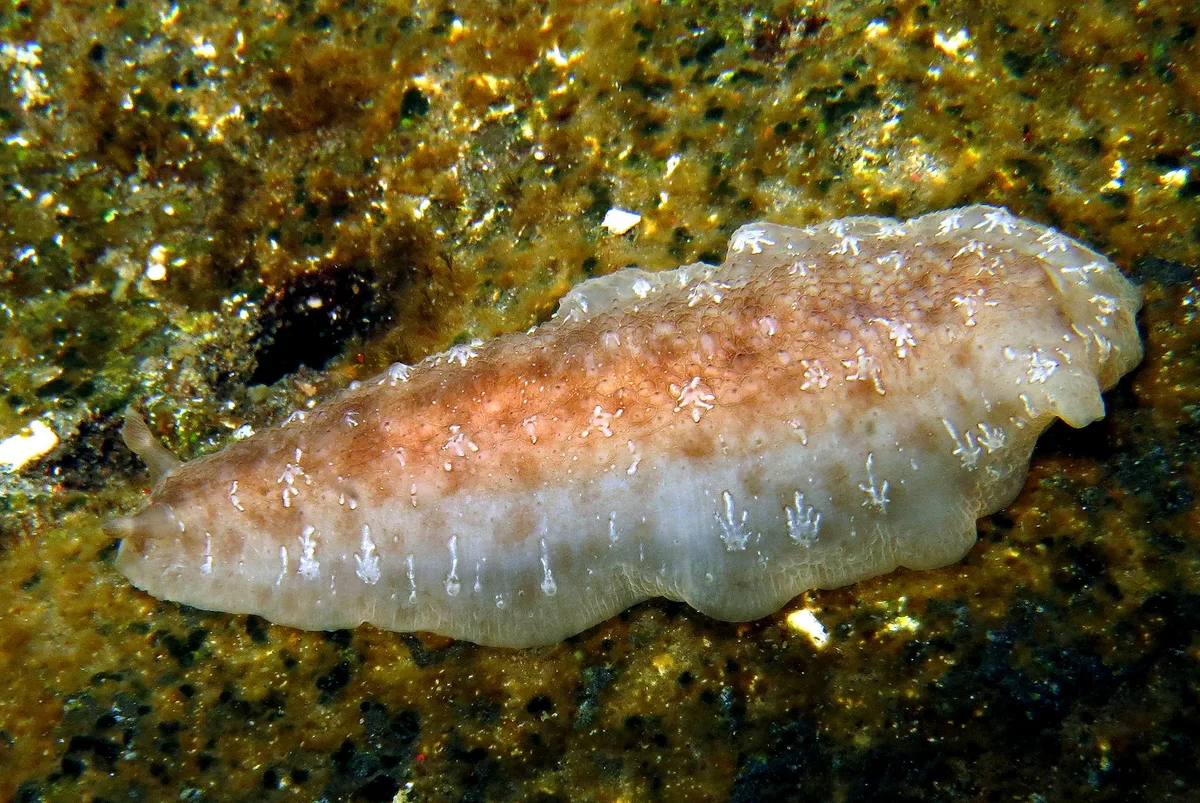
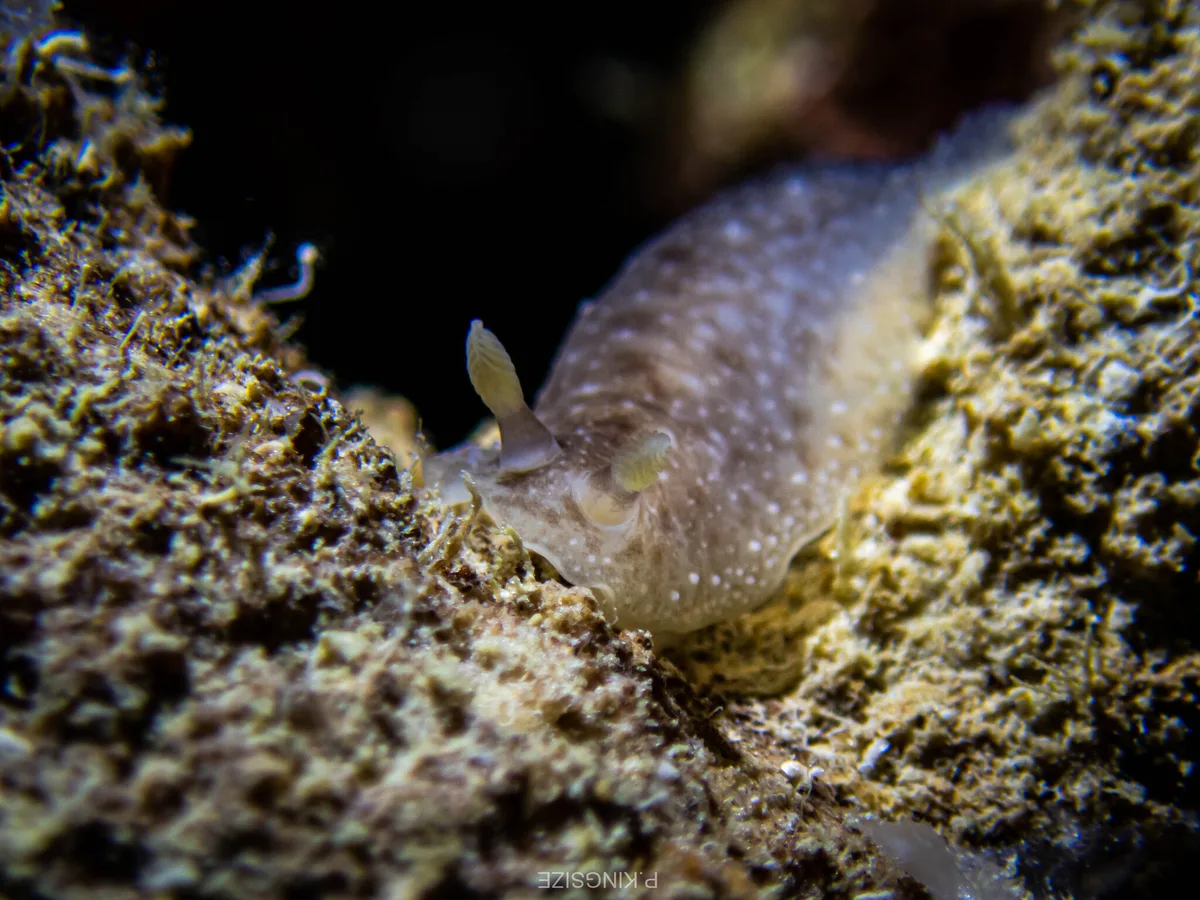
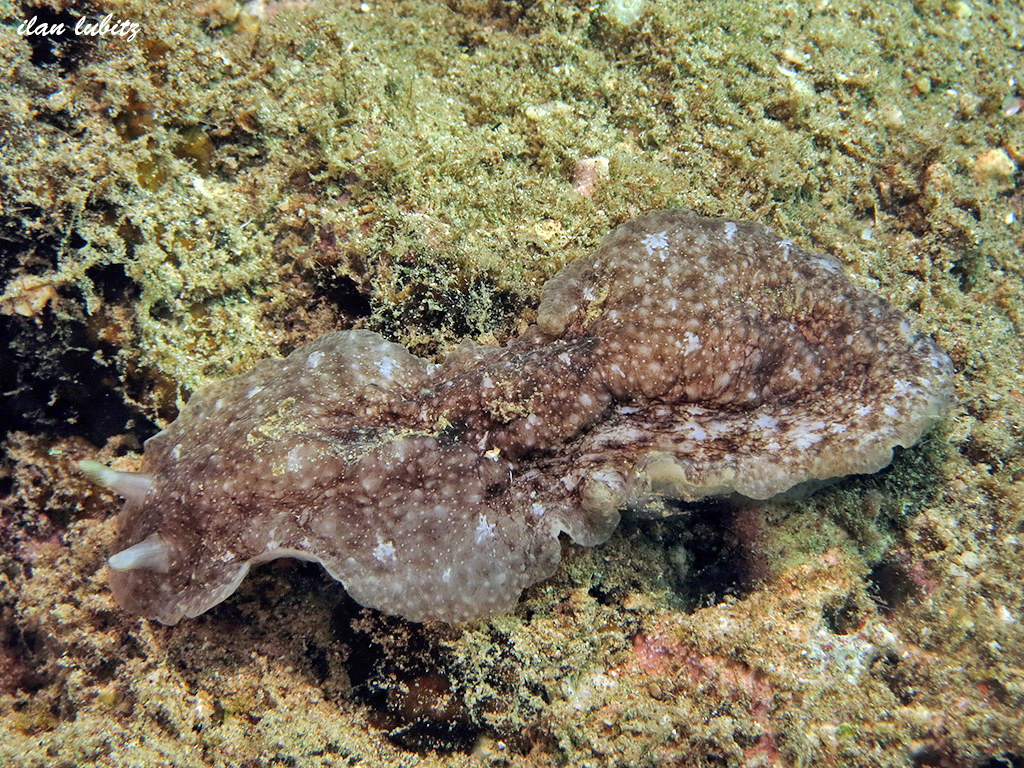
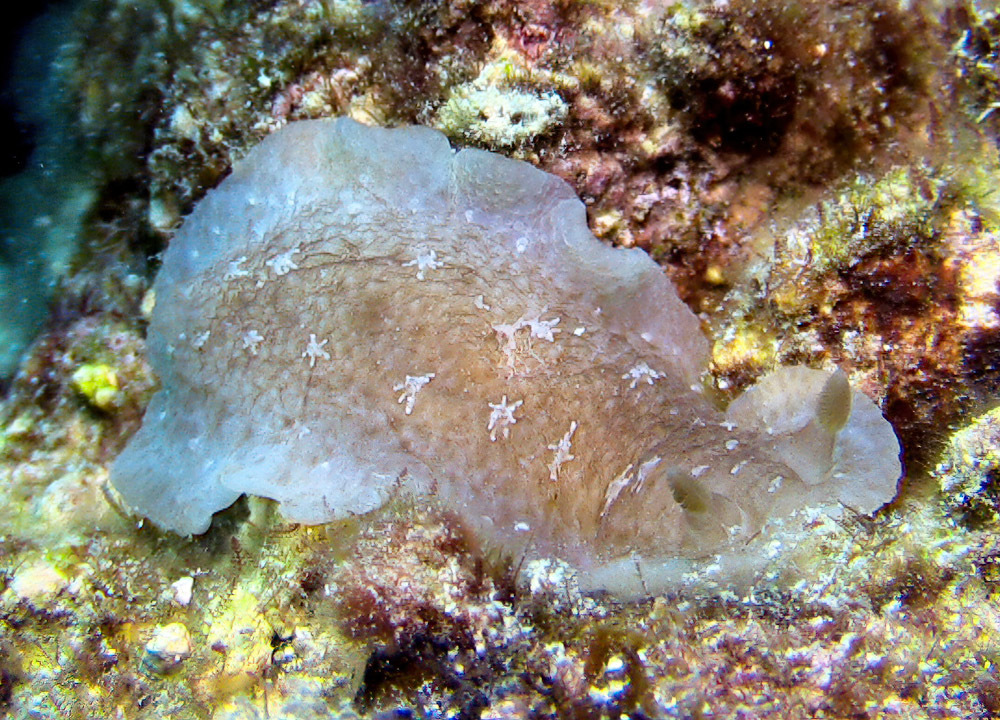
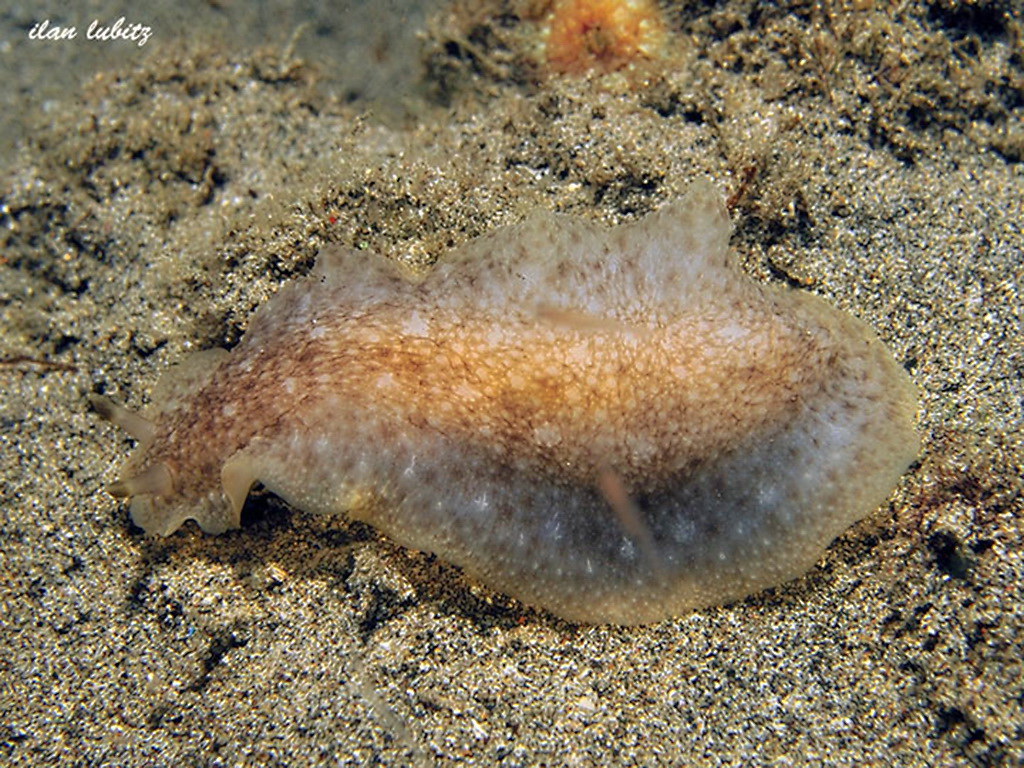
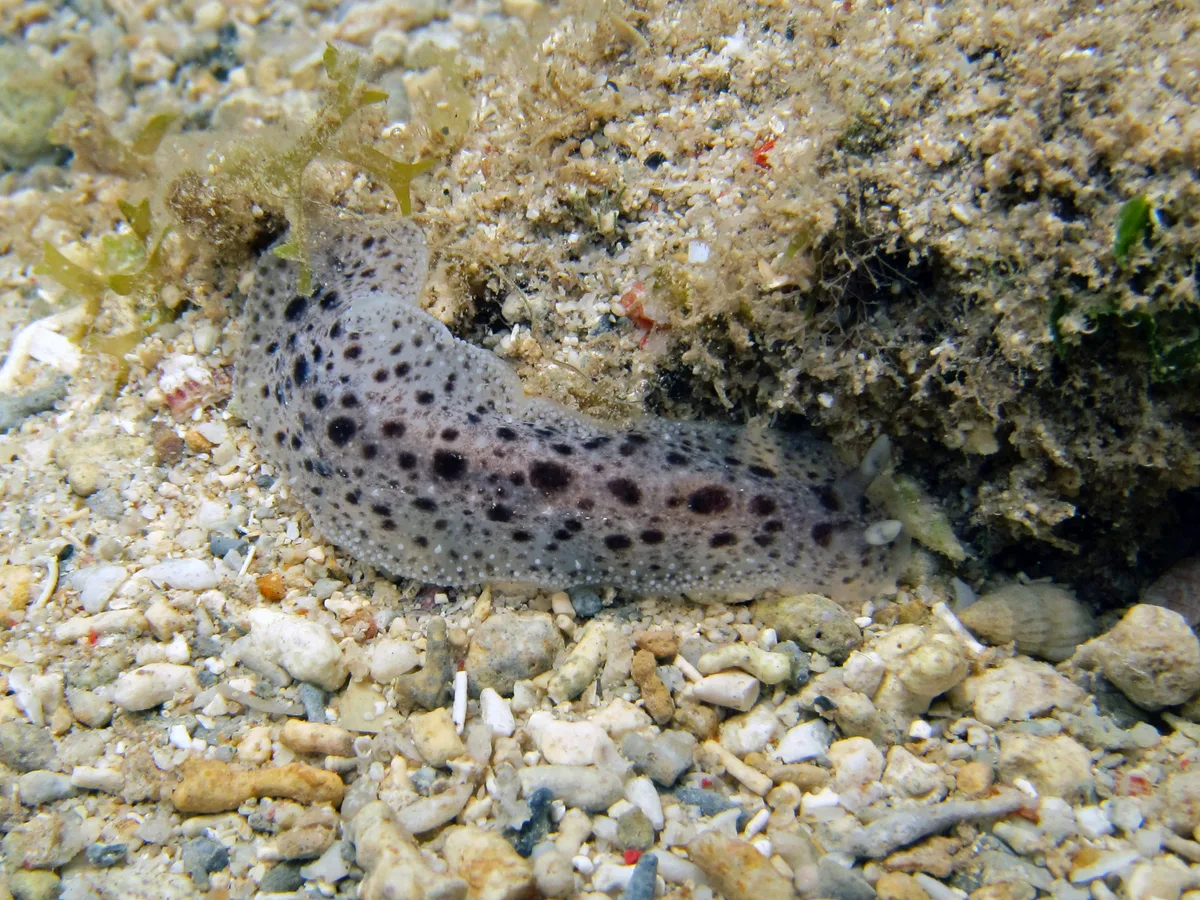
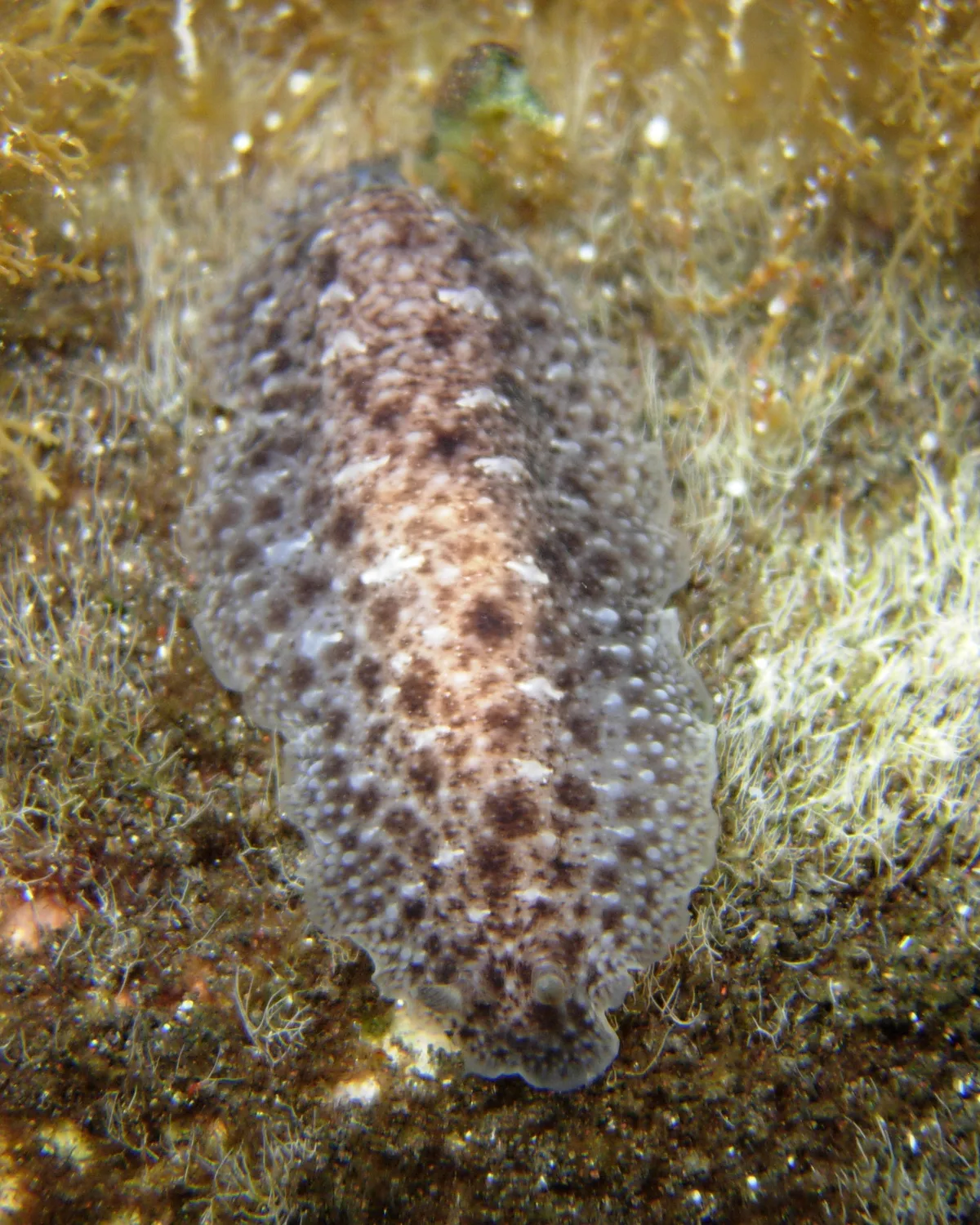
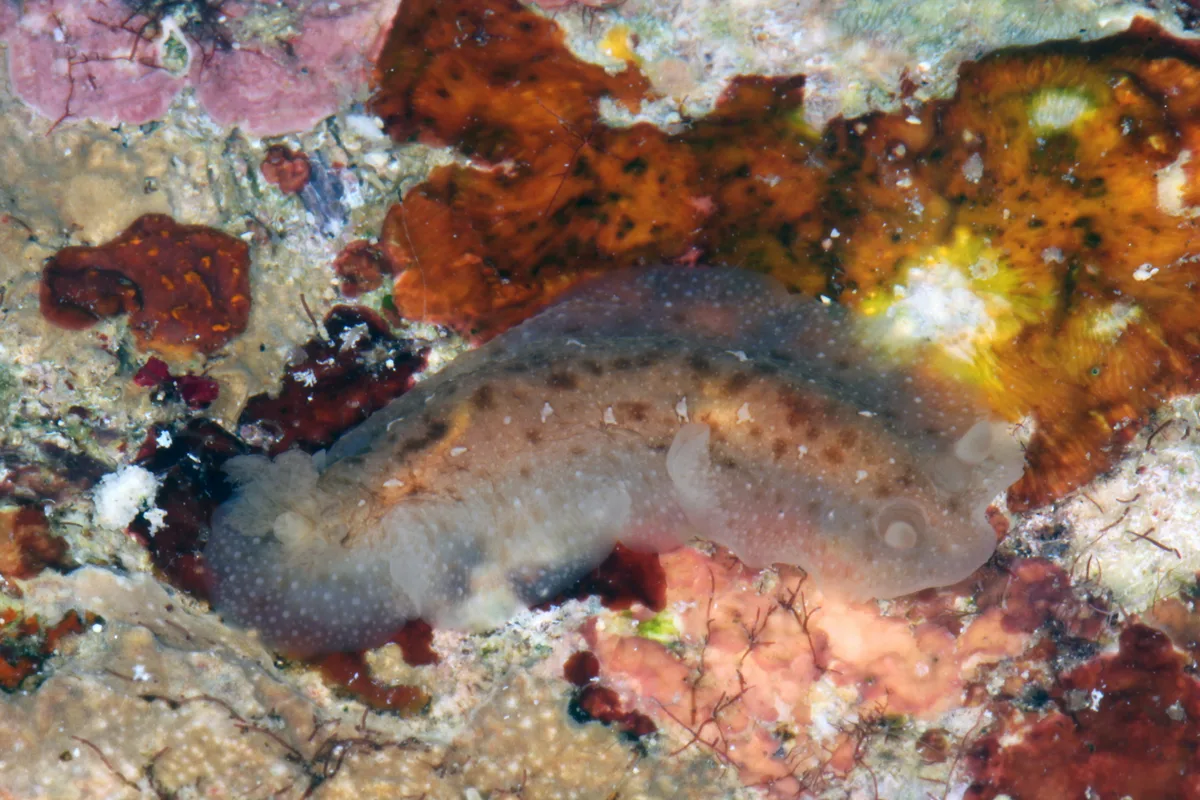
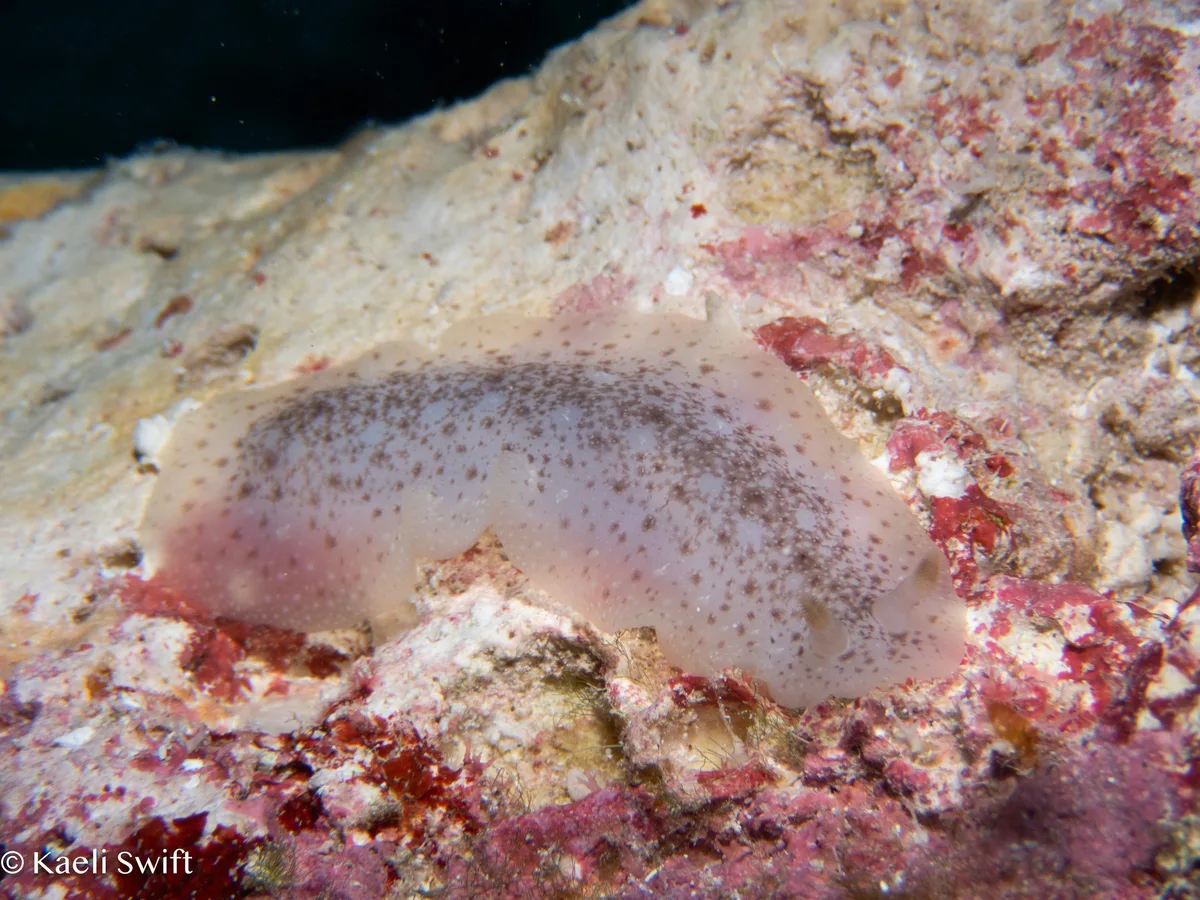
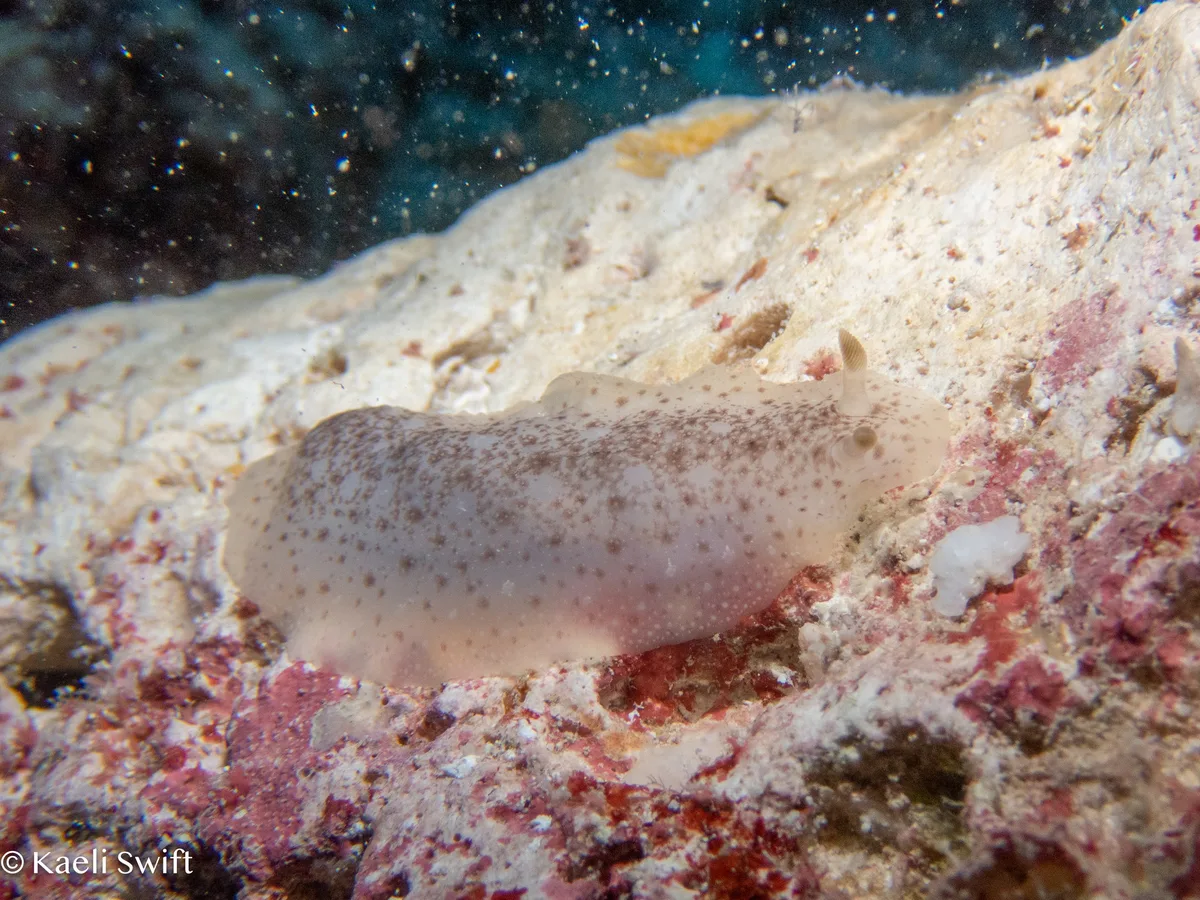
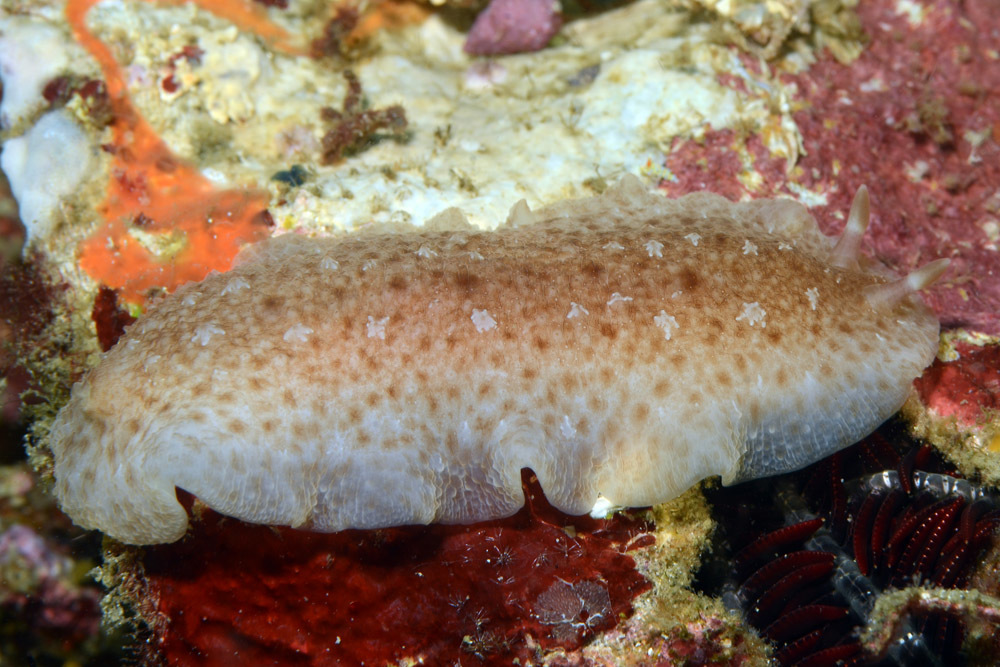
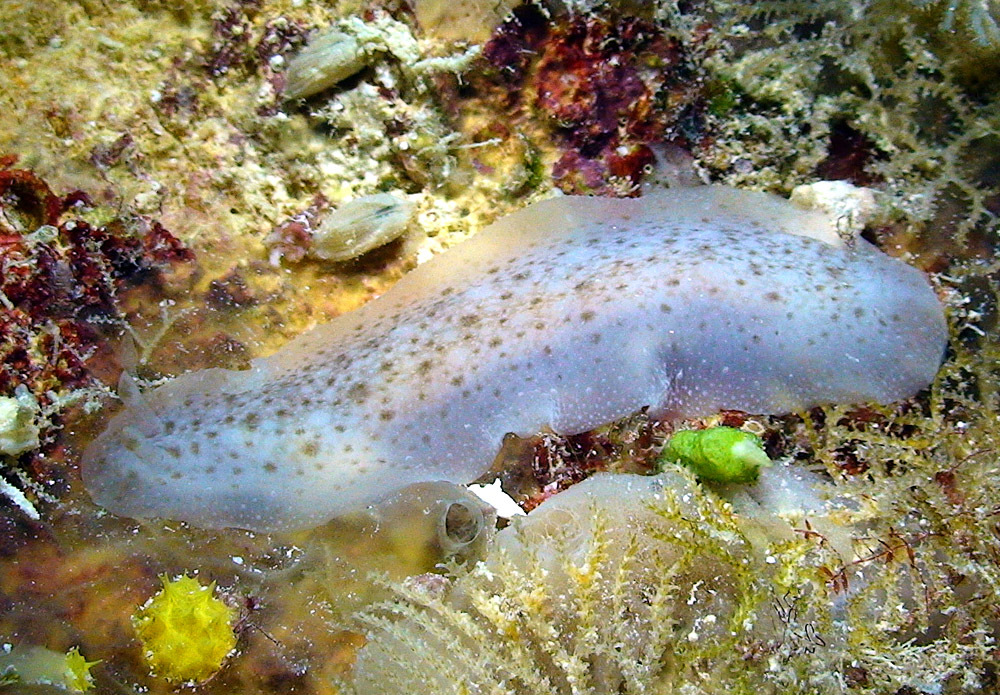
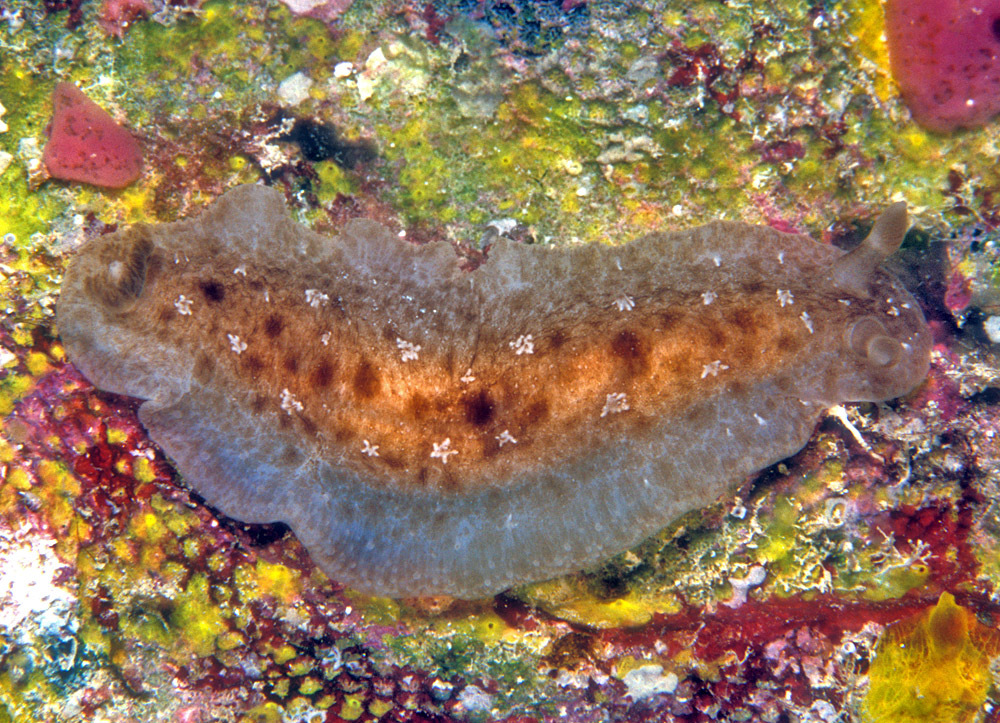
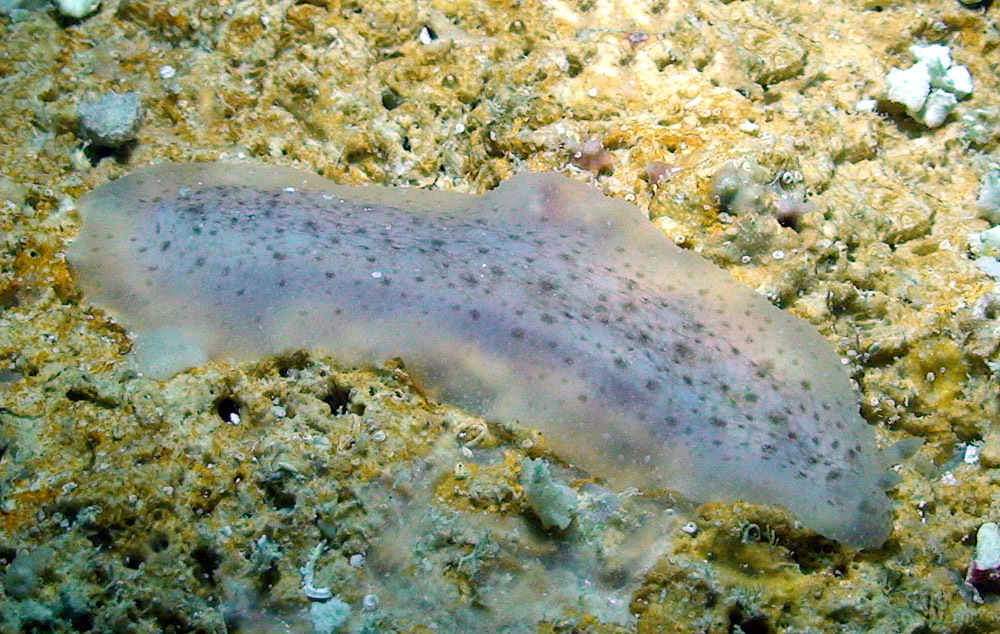
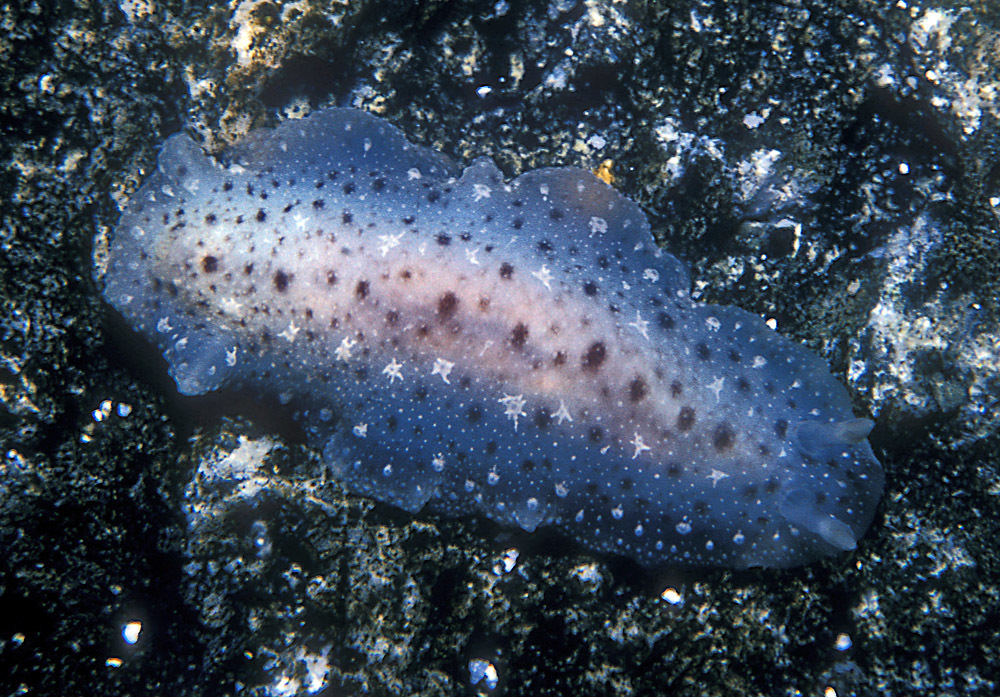
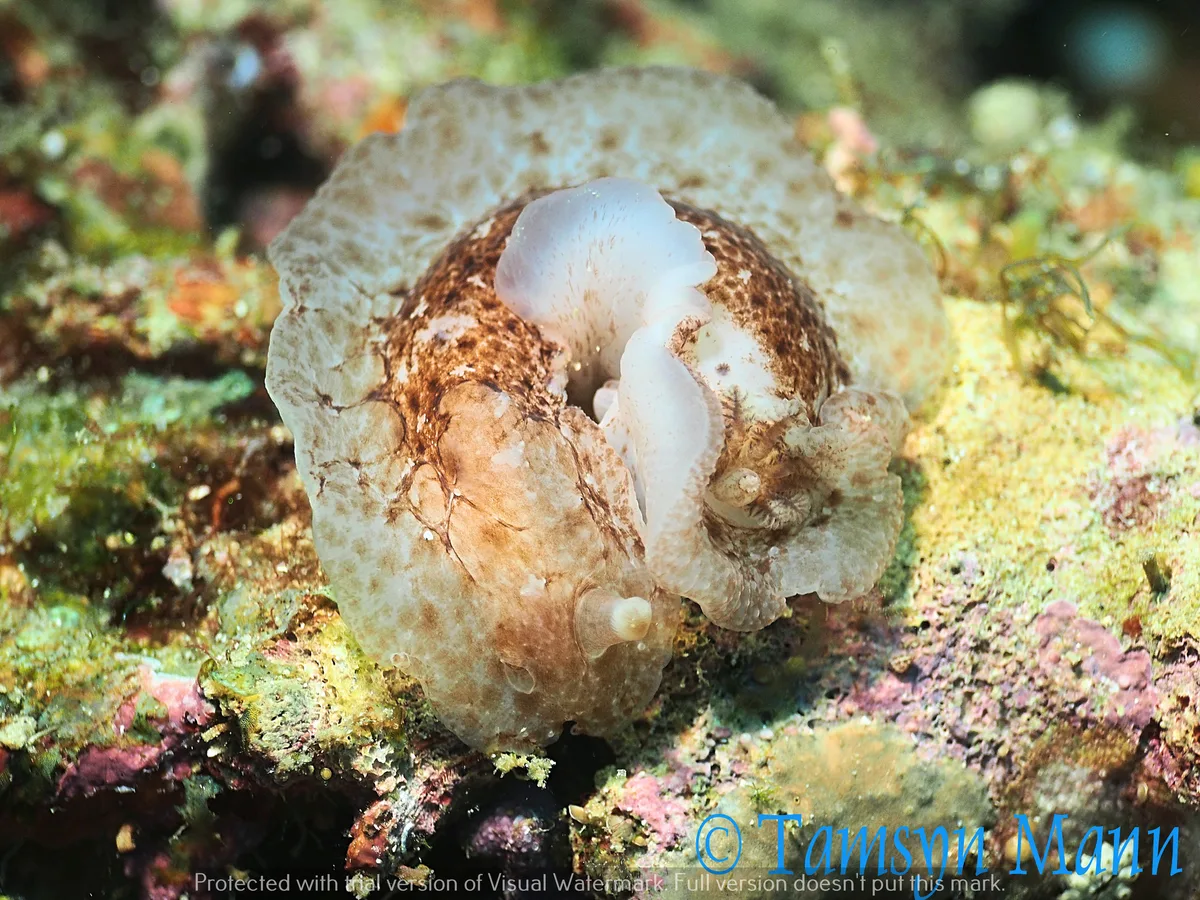
The marks on this one are the reason to look at it. Scattered over a white back, between the brown spots, are opaque white figures with points radiating from a center, each one like a small starburst or a snowflake pressed into the surface. Nothing else in the genus carries them, and they name the animal in English.
What those marks are for is not settled, and it is worth being honest about that rather than inventing a reason. Broken white figures on a pale ground do a reasonable job of preventing the eye from resolving an outline, which is the ordinary explanation for disruptive markings, but nobody has tested it on this species.
The rest is standard for a genus that does something genuinely strange. Dendrodoris feeds without teeth. The rasping belt that every other snail and slug uses is gone, and the animal instead presses its mouth to a sponge, floods it with digestive fluid and drinks back the liquefied tissue, leaving the sponge's mineral skeleton where it stood. There is nothing hard anywhere in its own body either, no tubercles and no stiffening, and its chemical defenses are built by the animal itself rather than taken from its food.
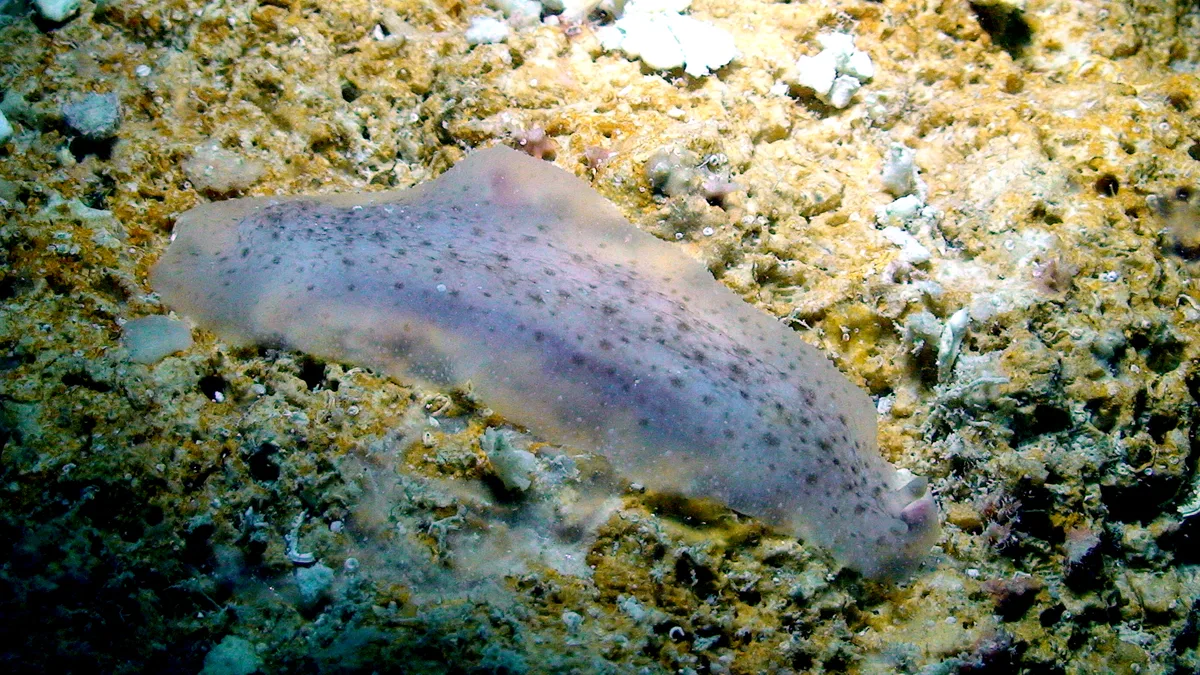
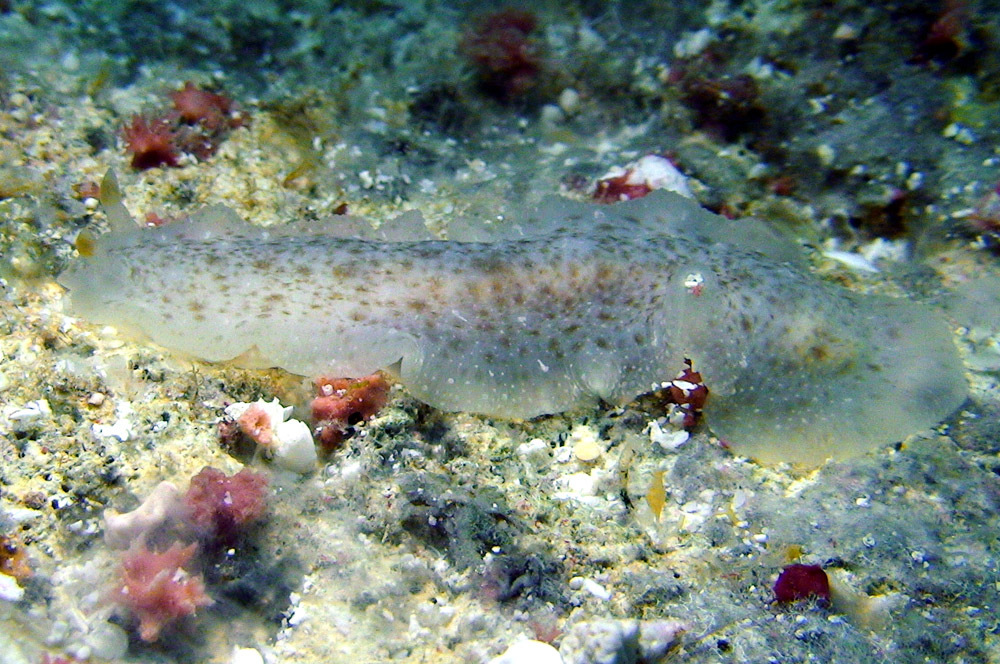
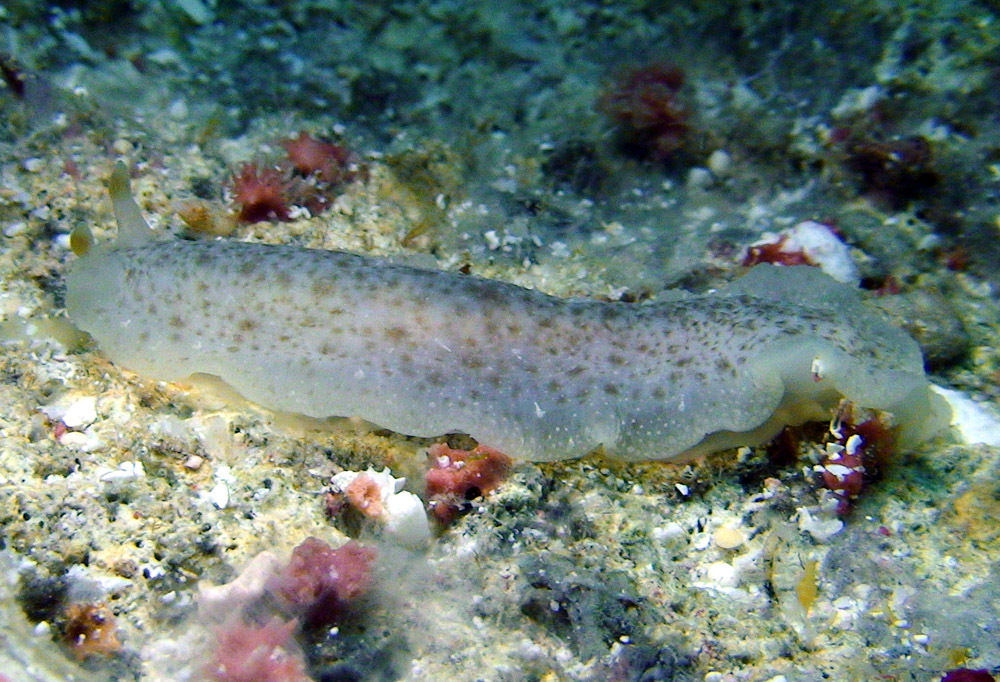
Six centimeters (2.4 in), longer and narrower than its relatives, which is what elongata records. It is out on the rock at night and under something during the day.
- opaque white marks shaped like small starbursts scattered over the back
- white ground with brown spots between the star marks
- longer and narrower than the rest of the genus, as the name says
- soft throughout, with no hard tubercles