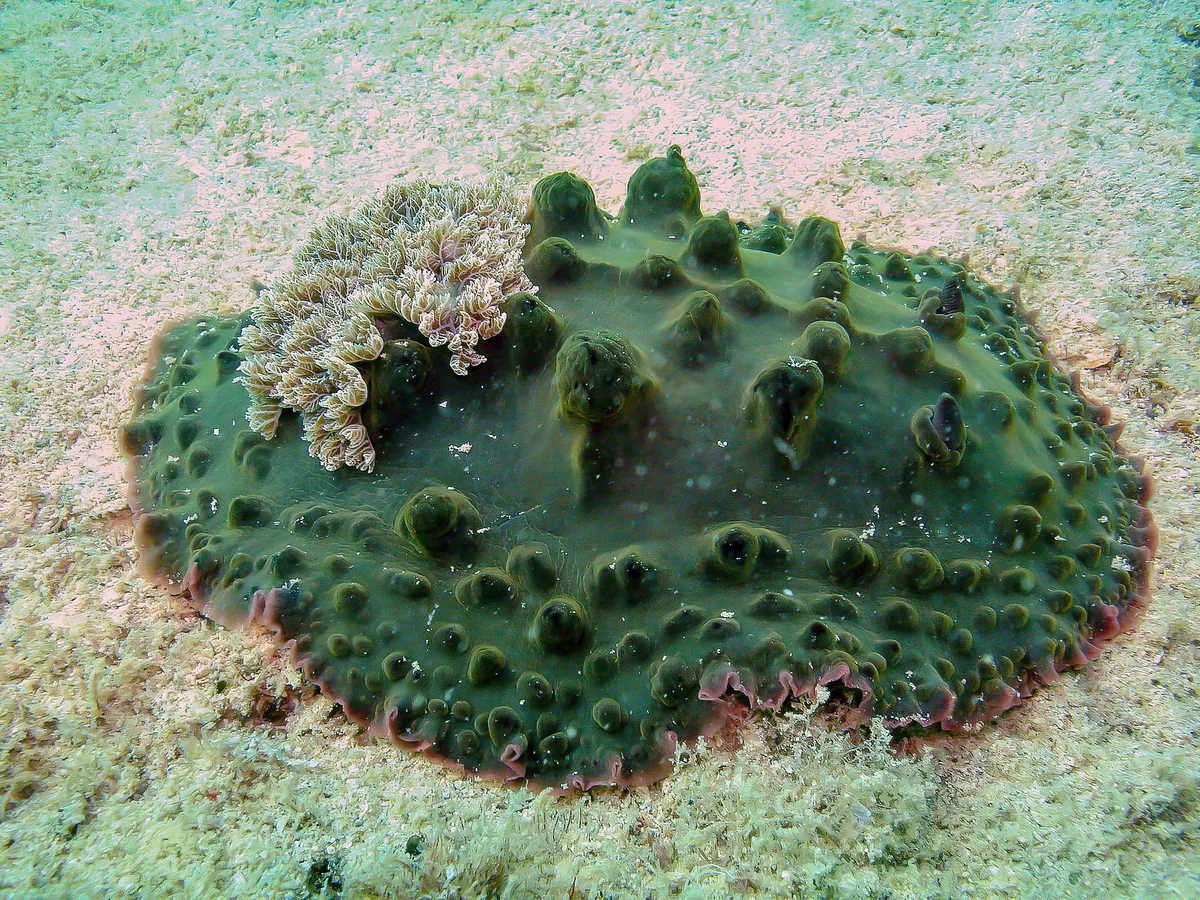
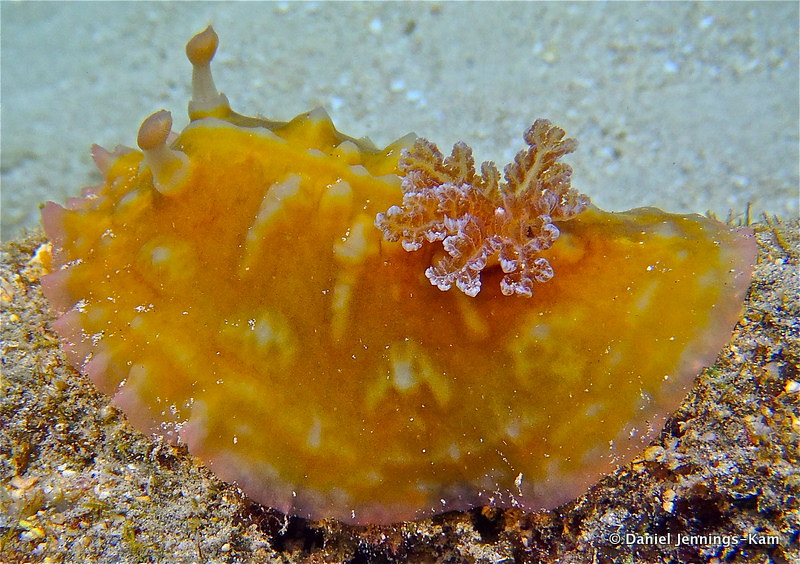
Forty centimeters. This is the largest sea slug in the catalogue and one of the largest anywhere, and almost nobody has seen one.
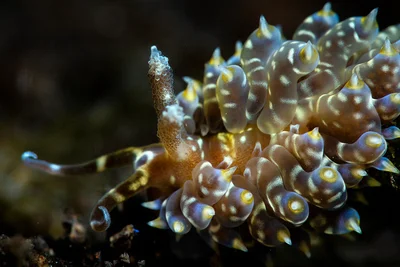
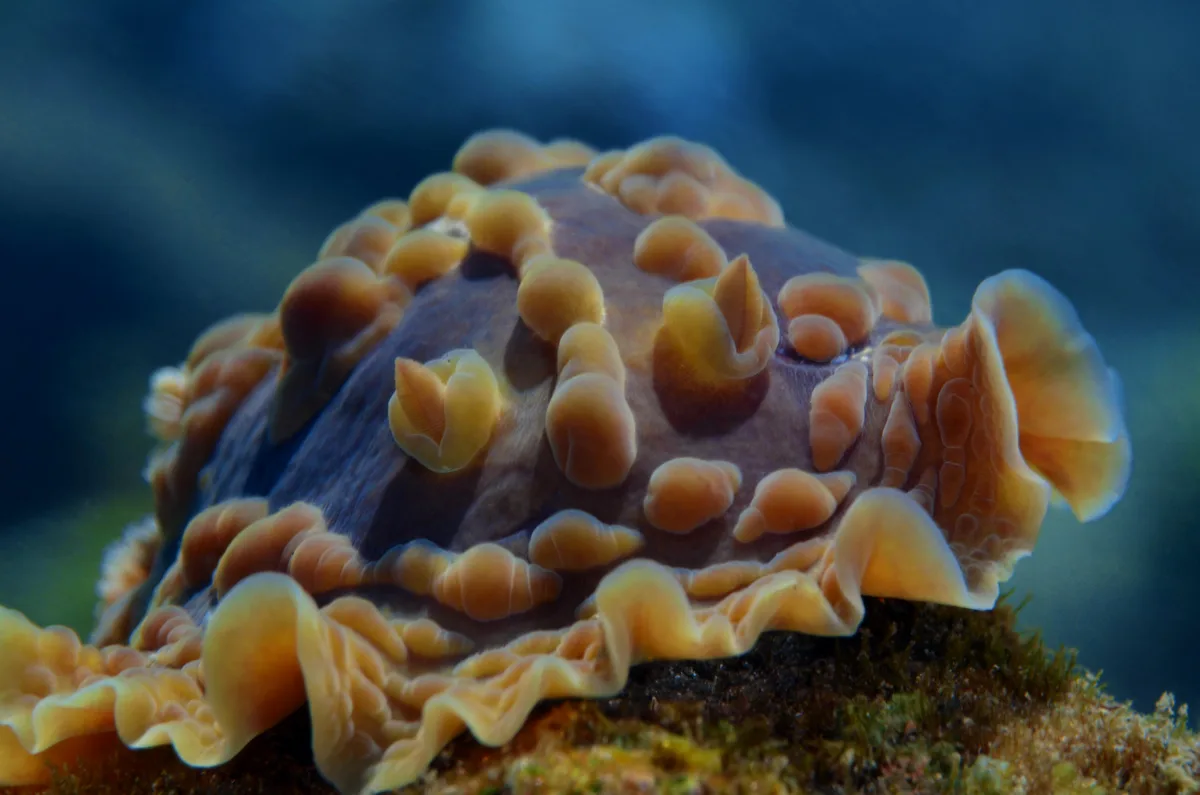
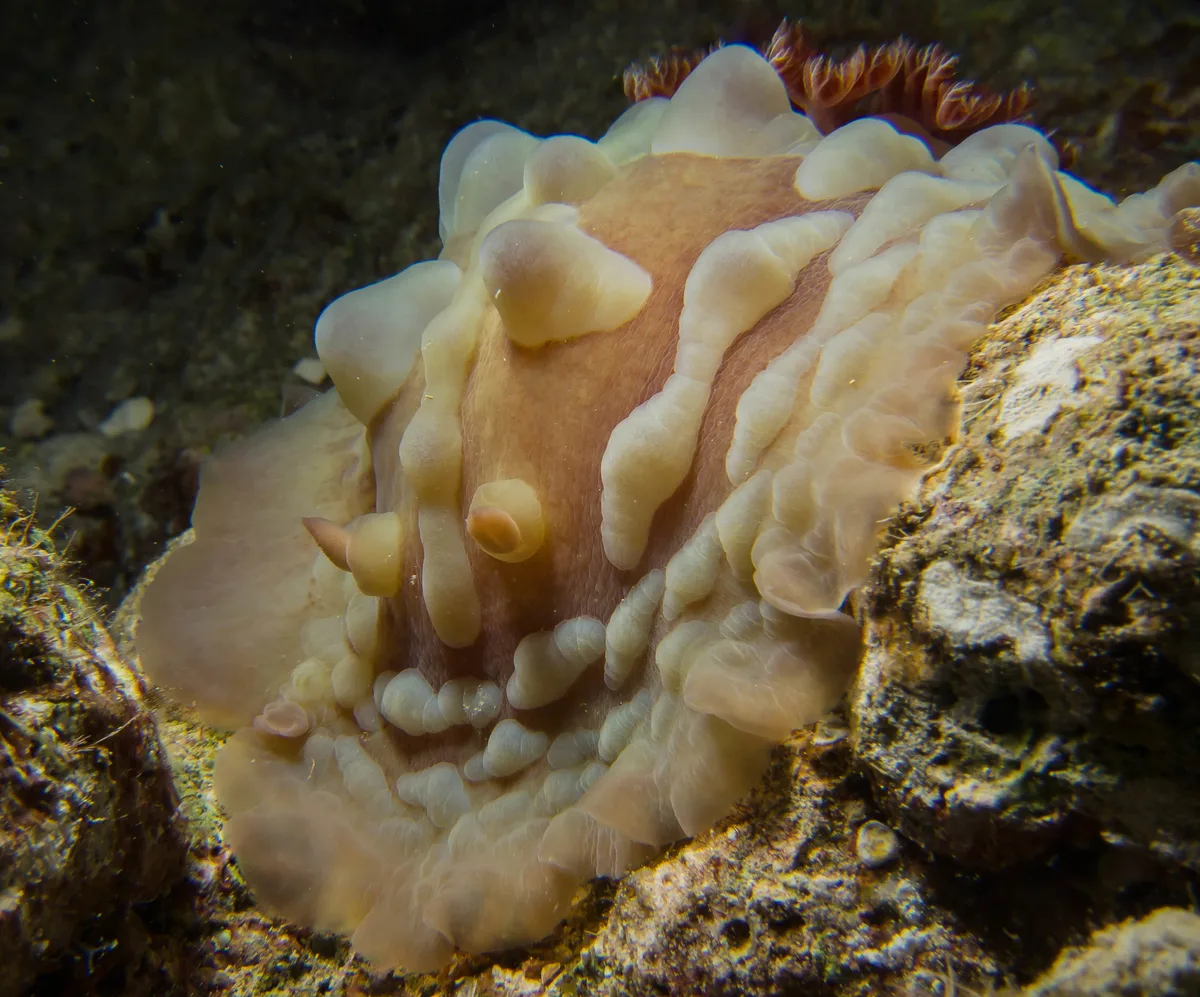
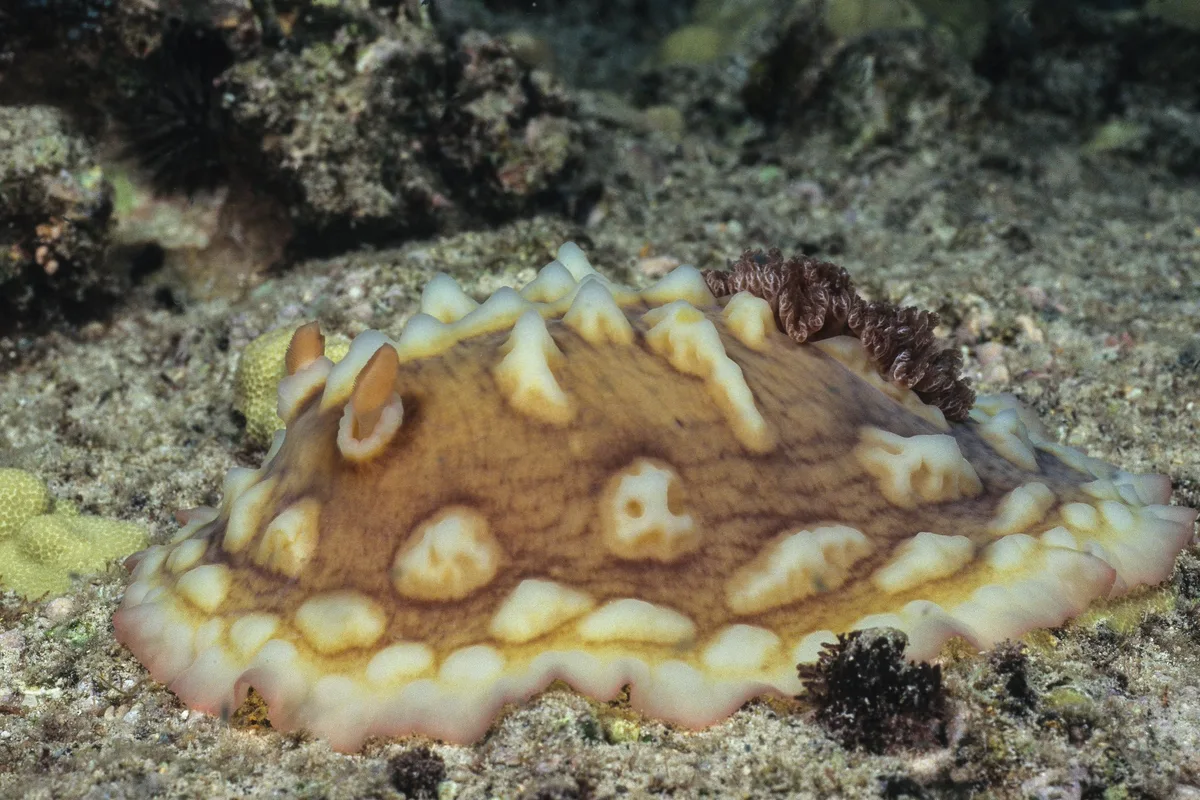
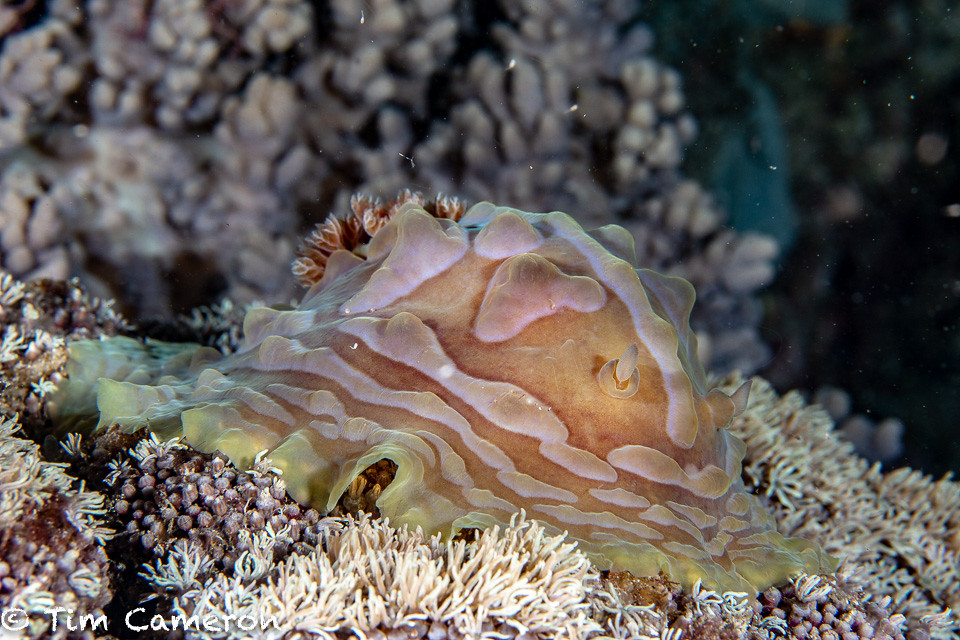
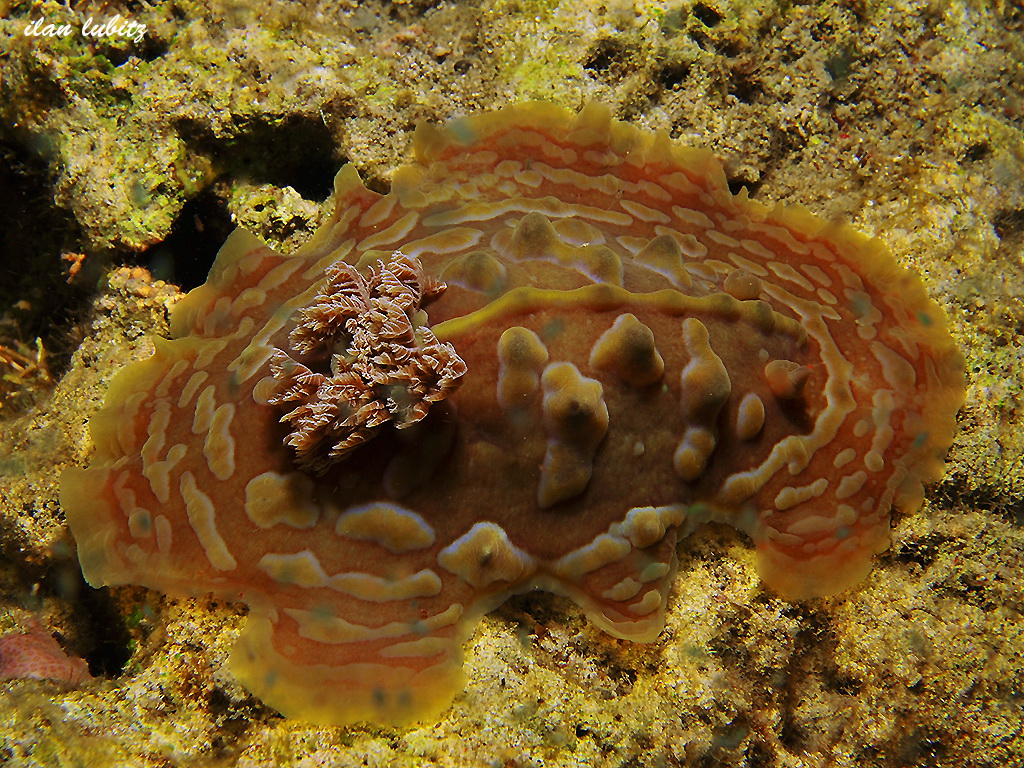
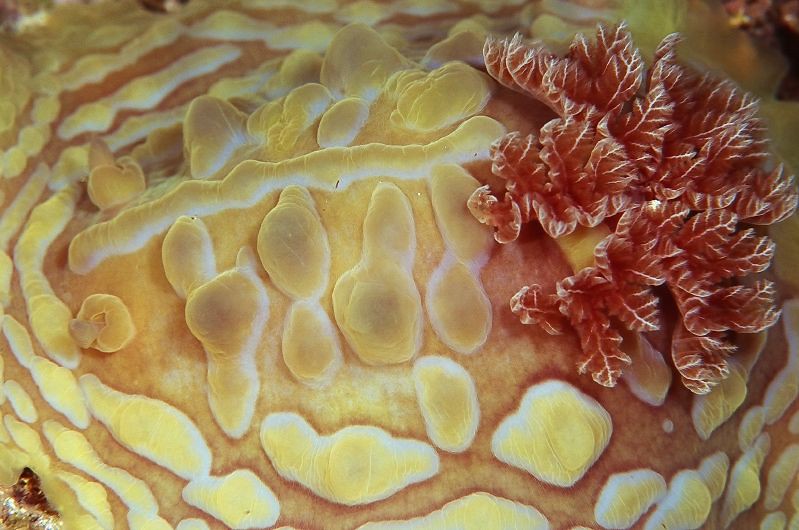
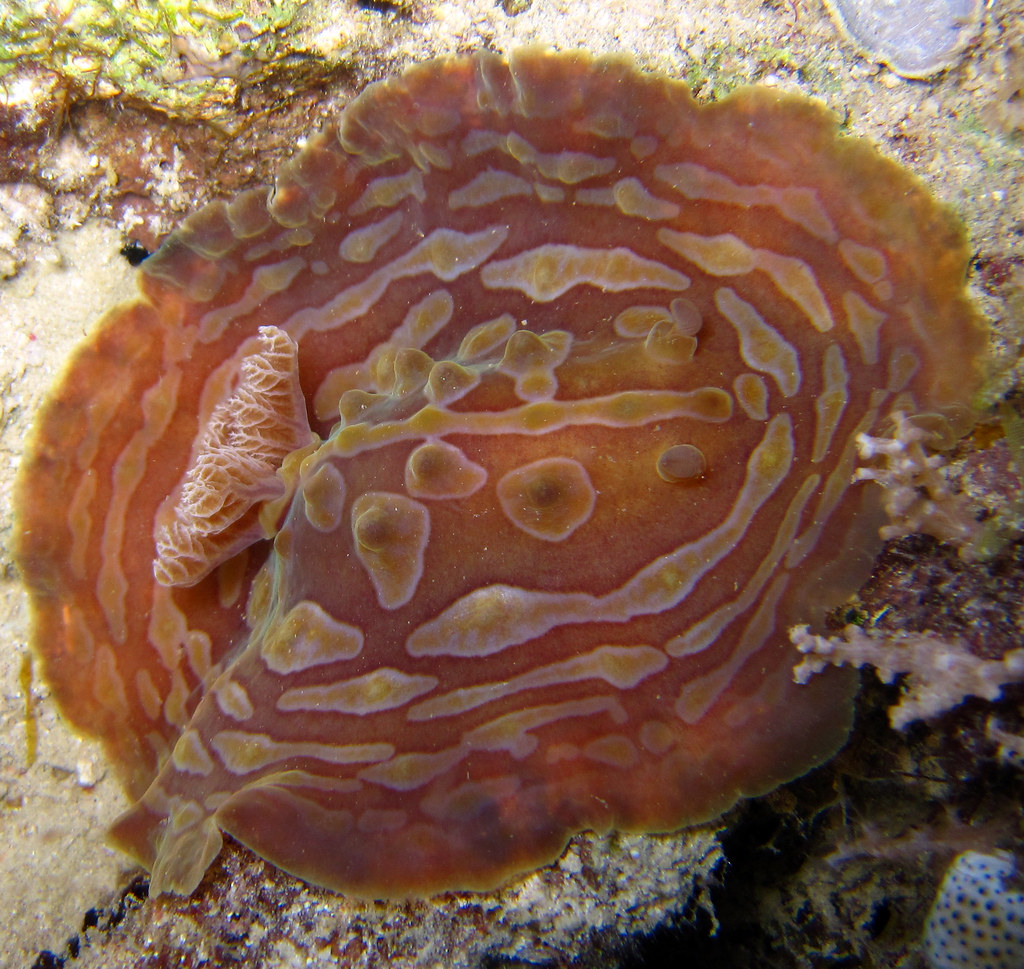
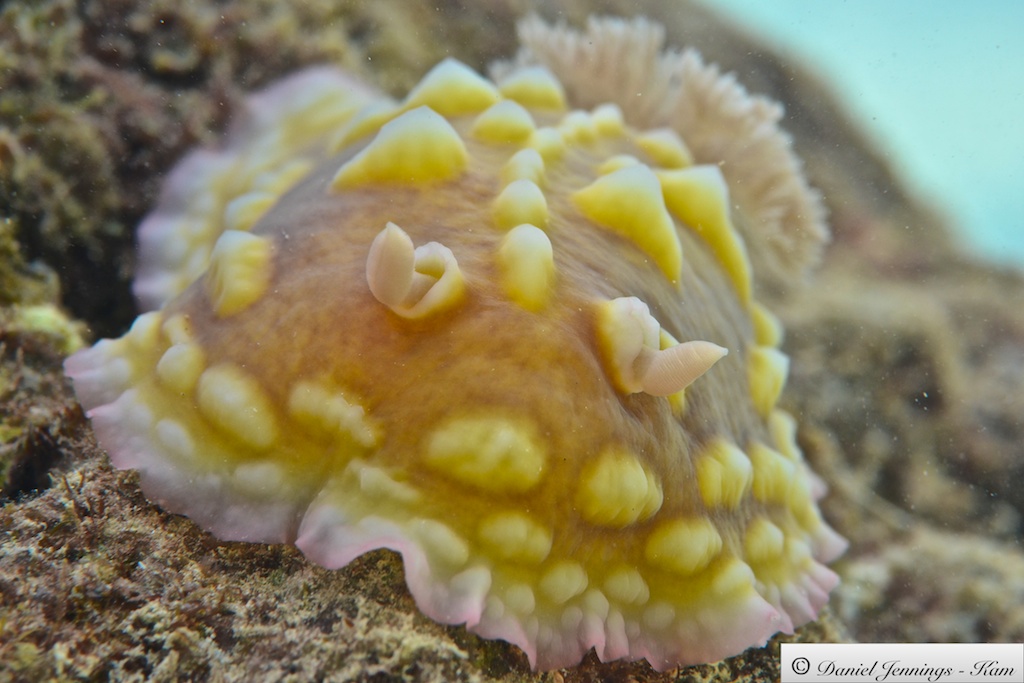
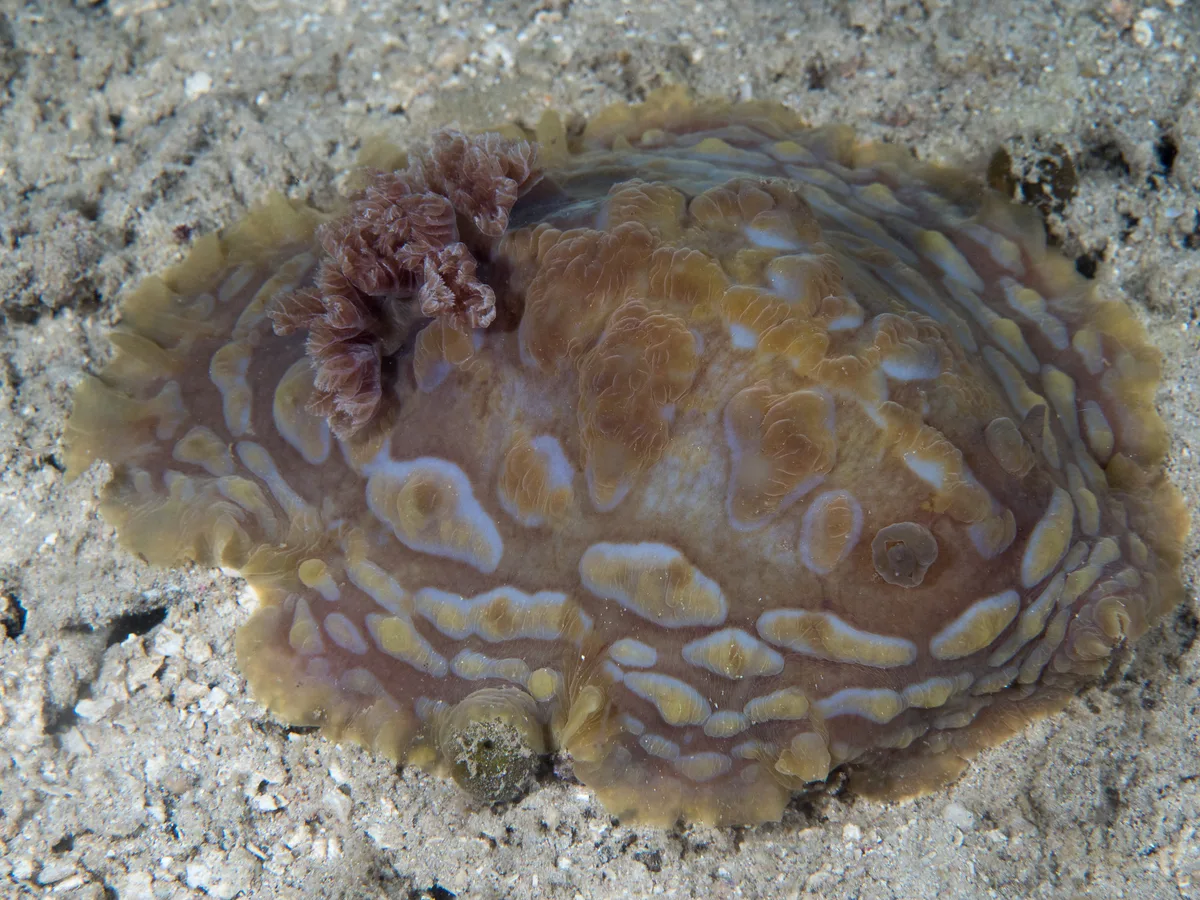
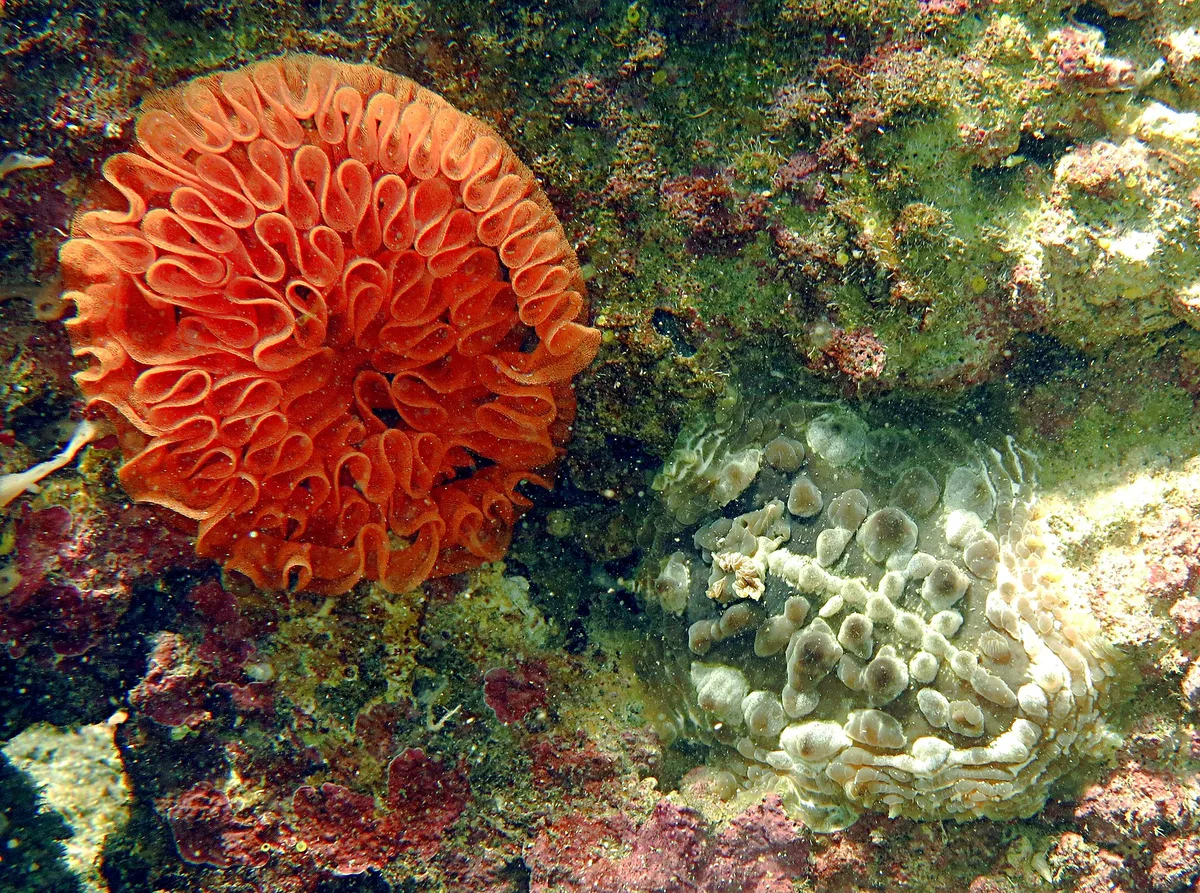
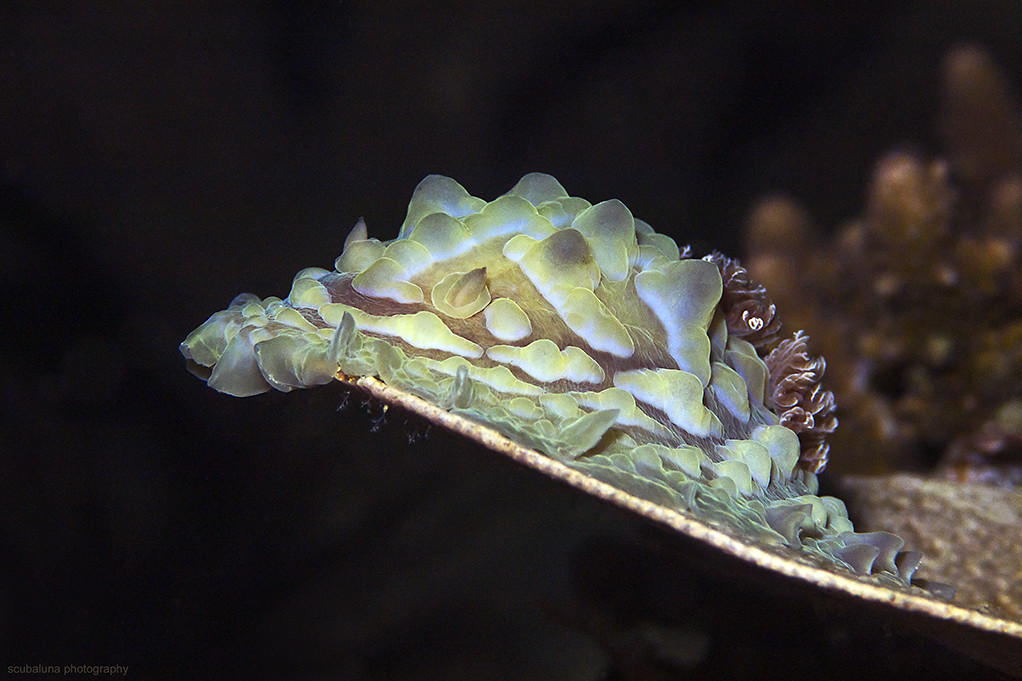
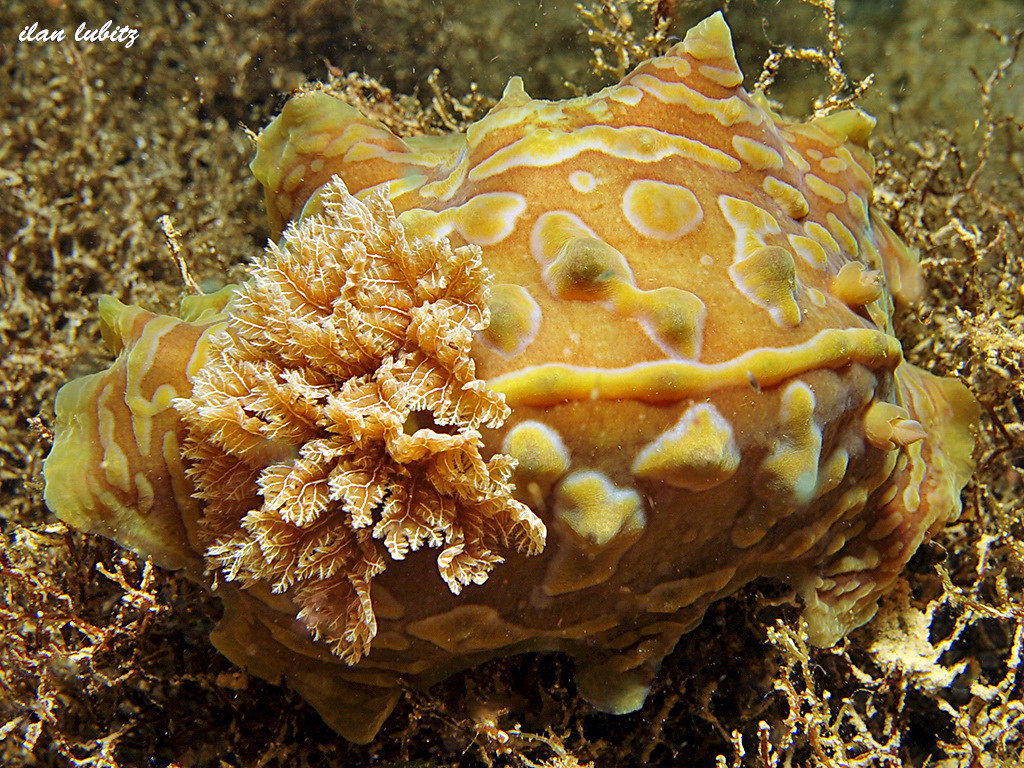
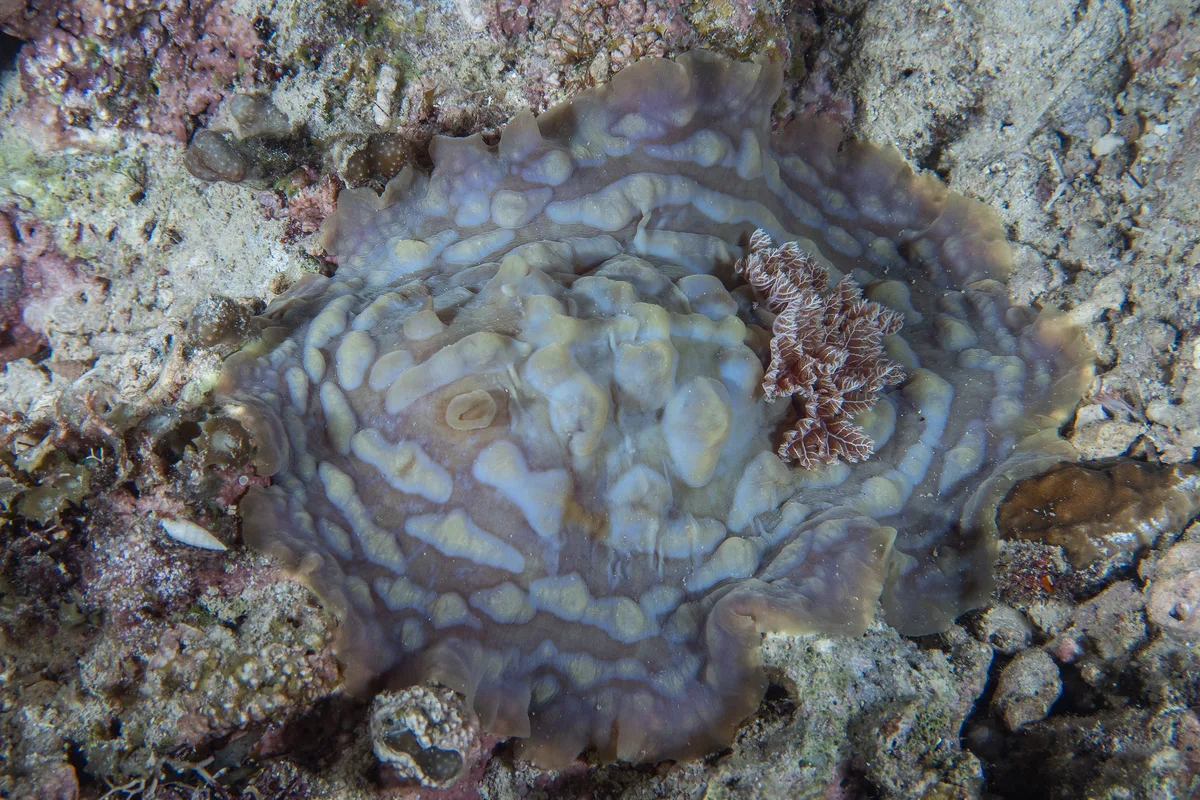
The reason is the schedule. It spends daylight wedged under a large rock or slab and comes out onto open surfaces after dark, so a reef can hold several without a single day diver ever meeting one. What you find at night is a heavy yellowish to brown animal with big tubercles arranged in rings across the back, moving slowly over sponge-covered rock.
Size on that scale changes what the animal is doing. A forty-centimeter slug is not hiding from anything small, it is simply too large to be worth attacking, and the chemistry it takes from sponges makes the point again. Very large sea slugs are almost always nocturnal sponge feeders for the same reasons: sponges are an unlimited food nobody competes for, and the size that comes with eating them is only affordable if you do not need to be quick.
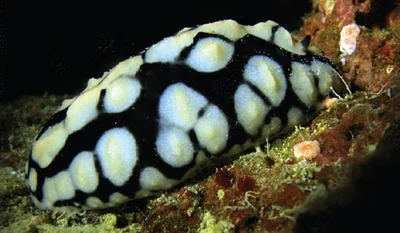
Juveniles look like a different species, patterned far more strongly than the adults, which is worth knowing because a young one and a full-grown one on the same reef will not read as the same animal.
On a night dive over rubble and rock, this is the thing to hope for.
- enormous for a sea slug, recorded to 40 cm
- yellowish to brown, with large tubercles arranged in rings
- under big rocks in daylight, out after dark
- juveniles far more strongly patterned than adults