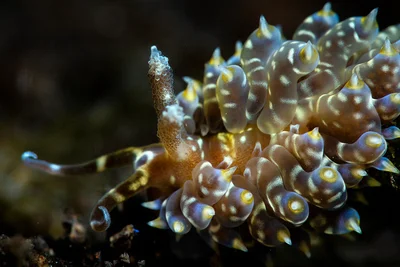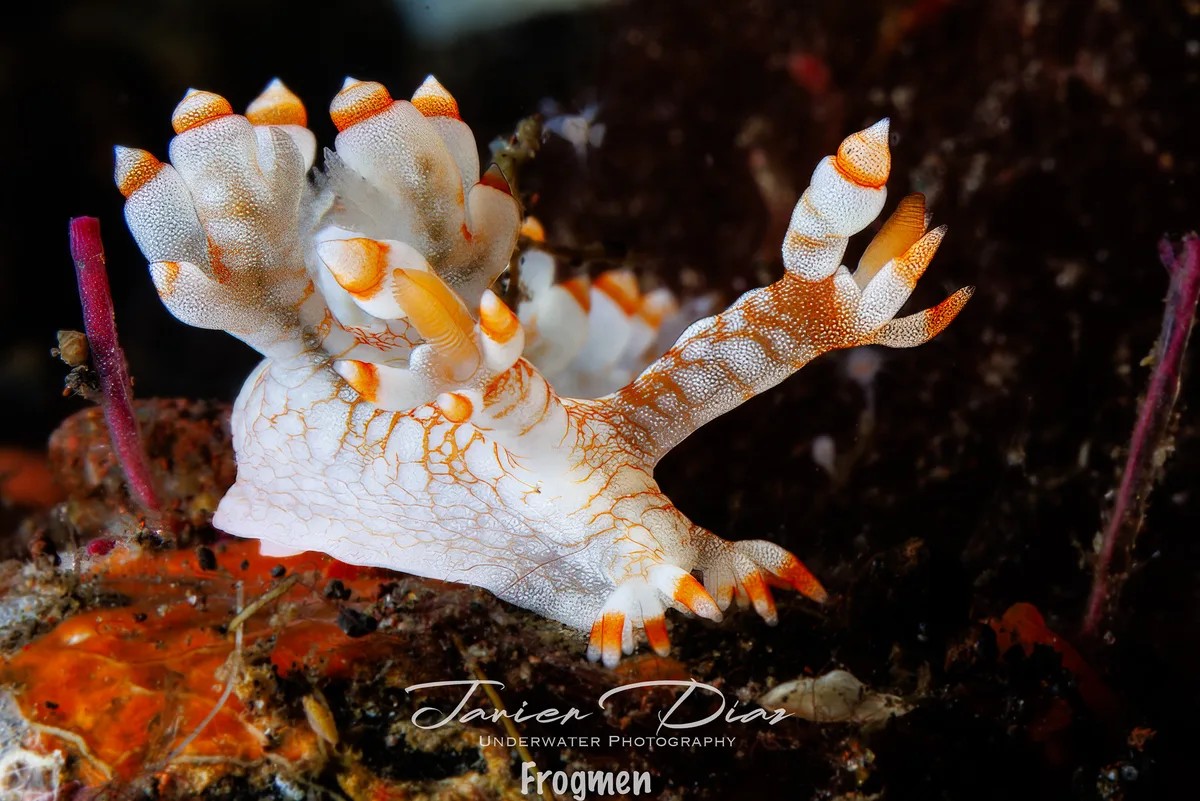
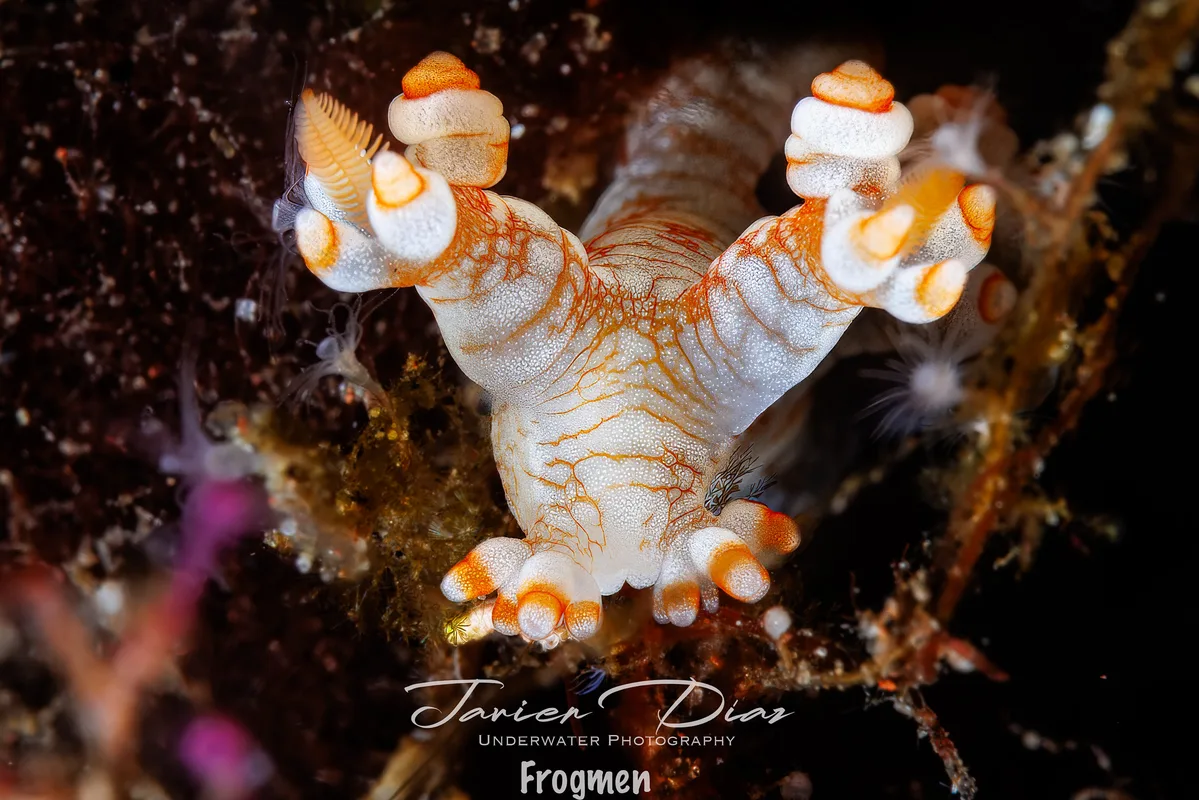
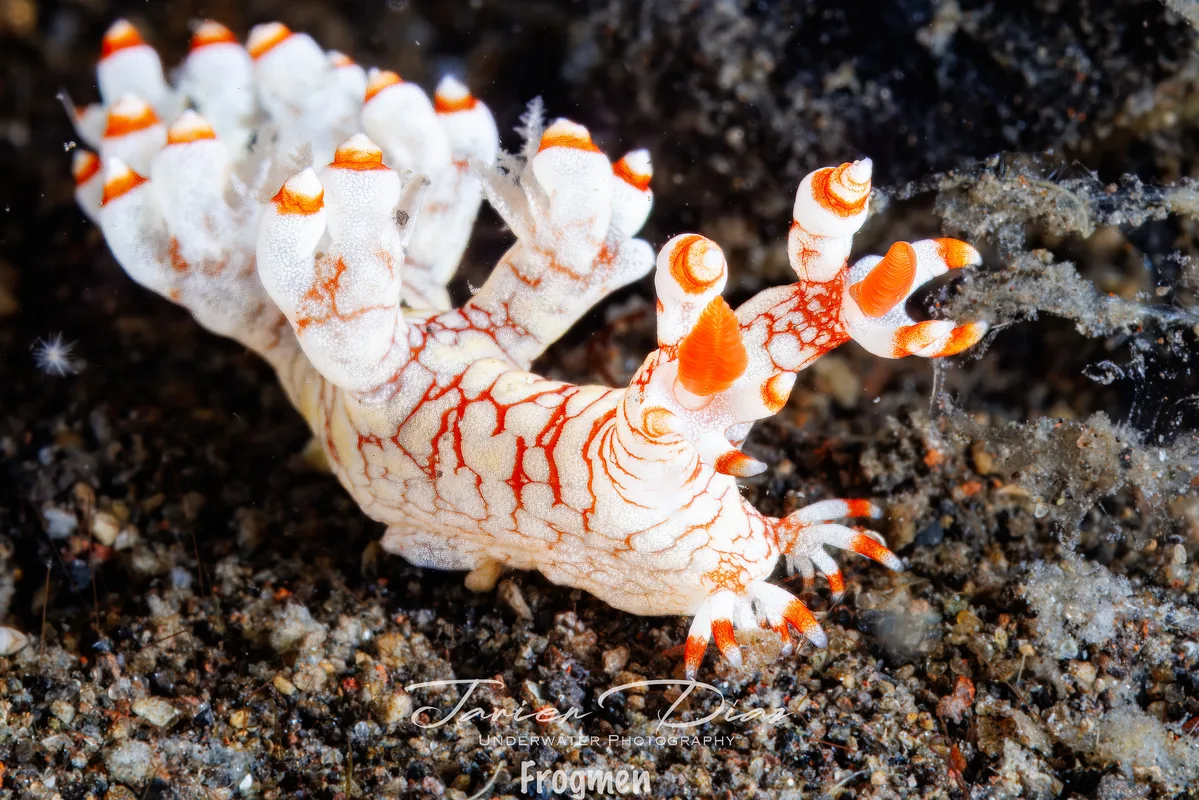
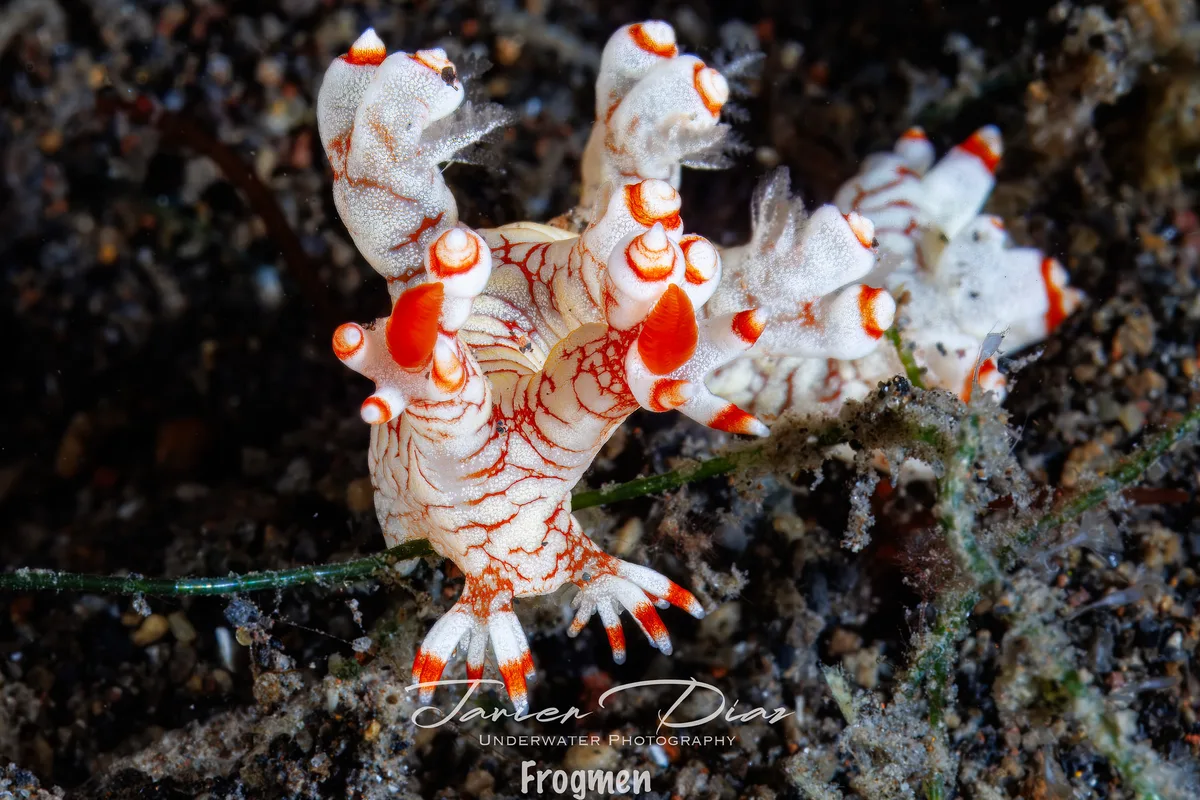
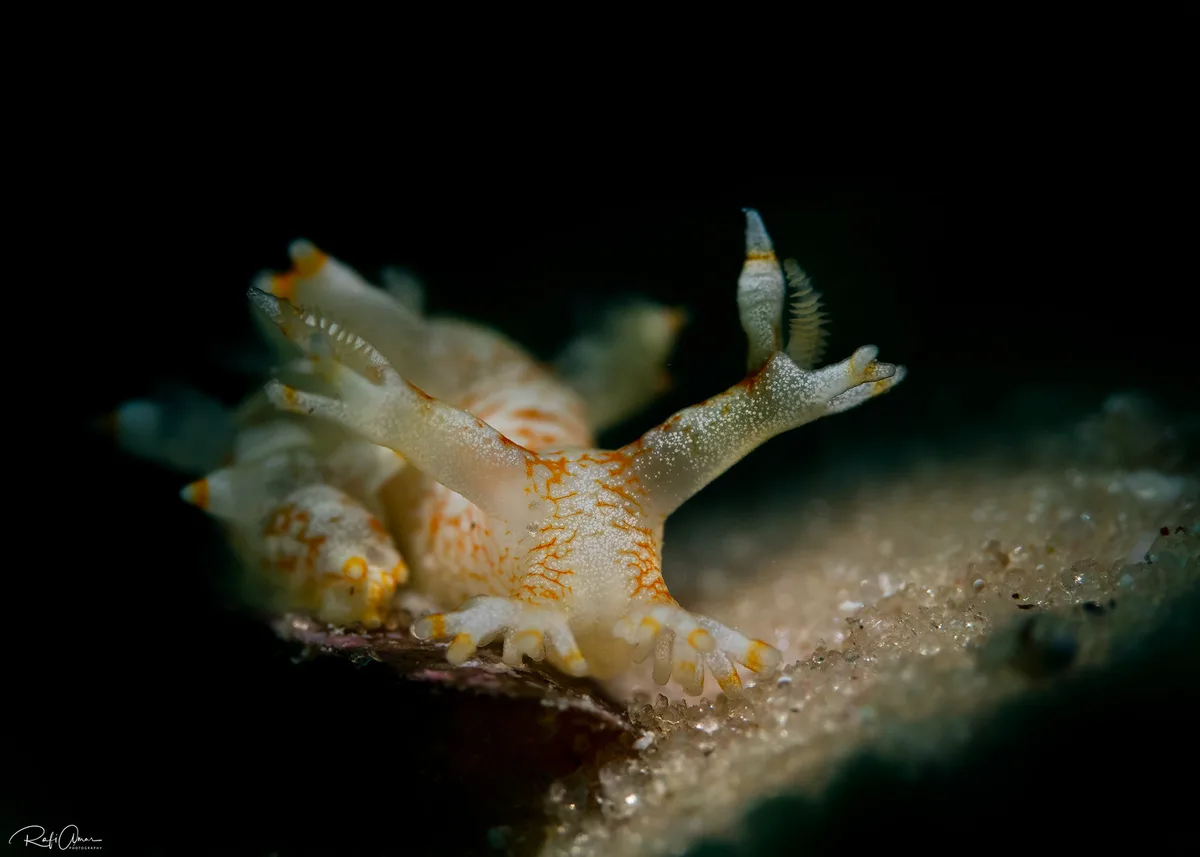
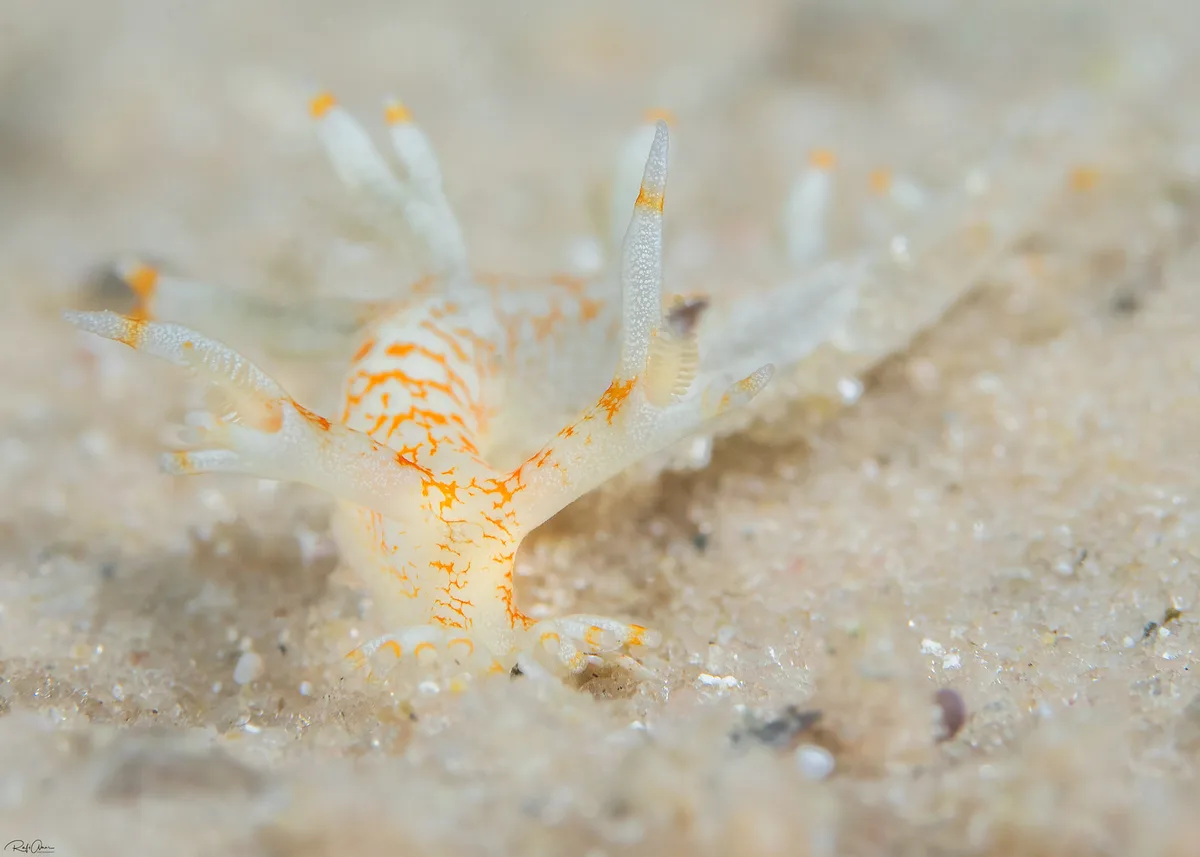
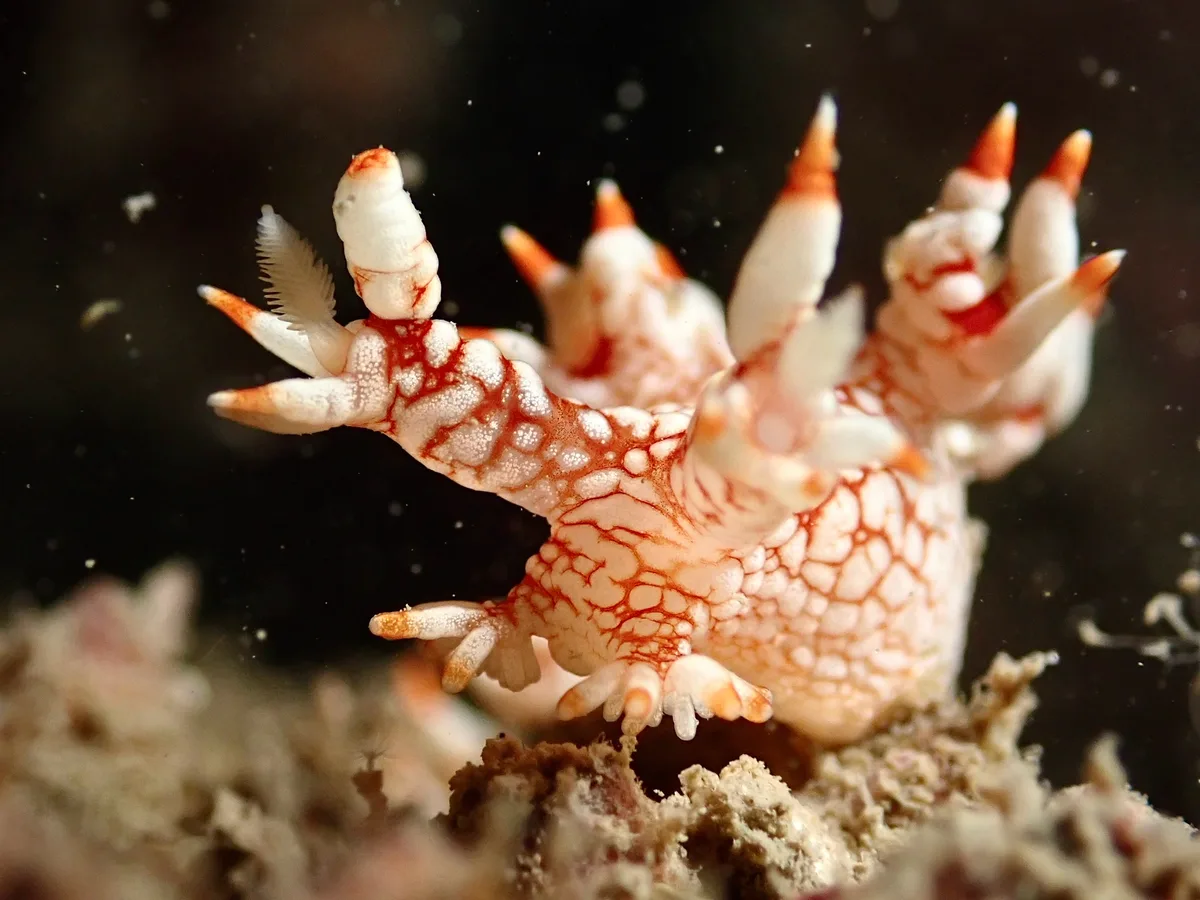
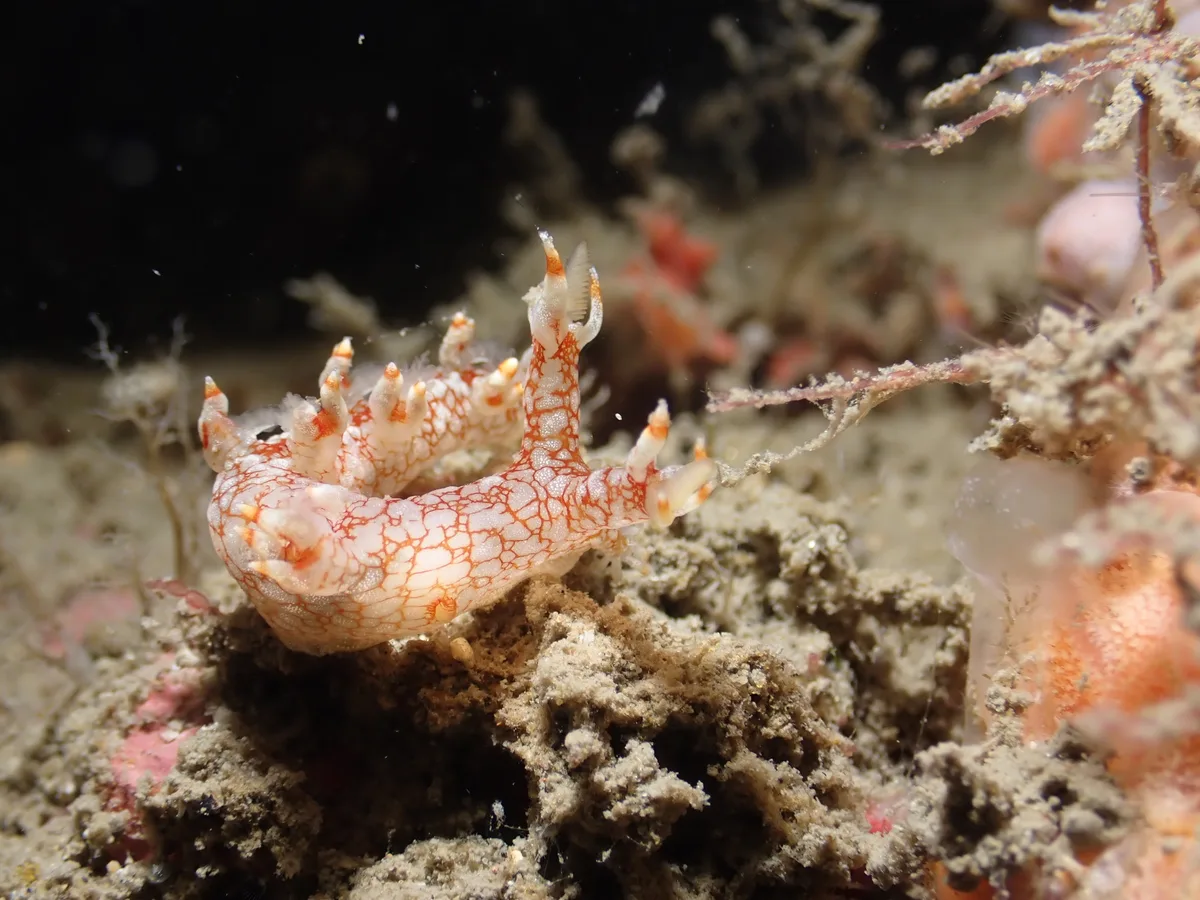
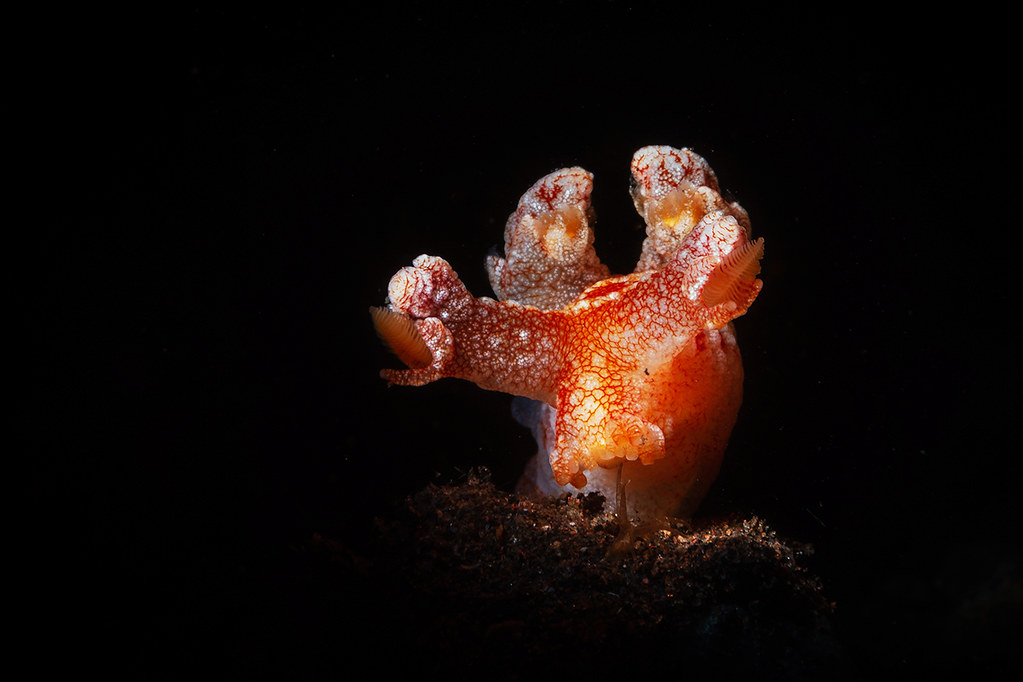
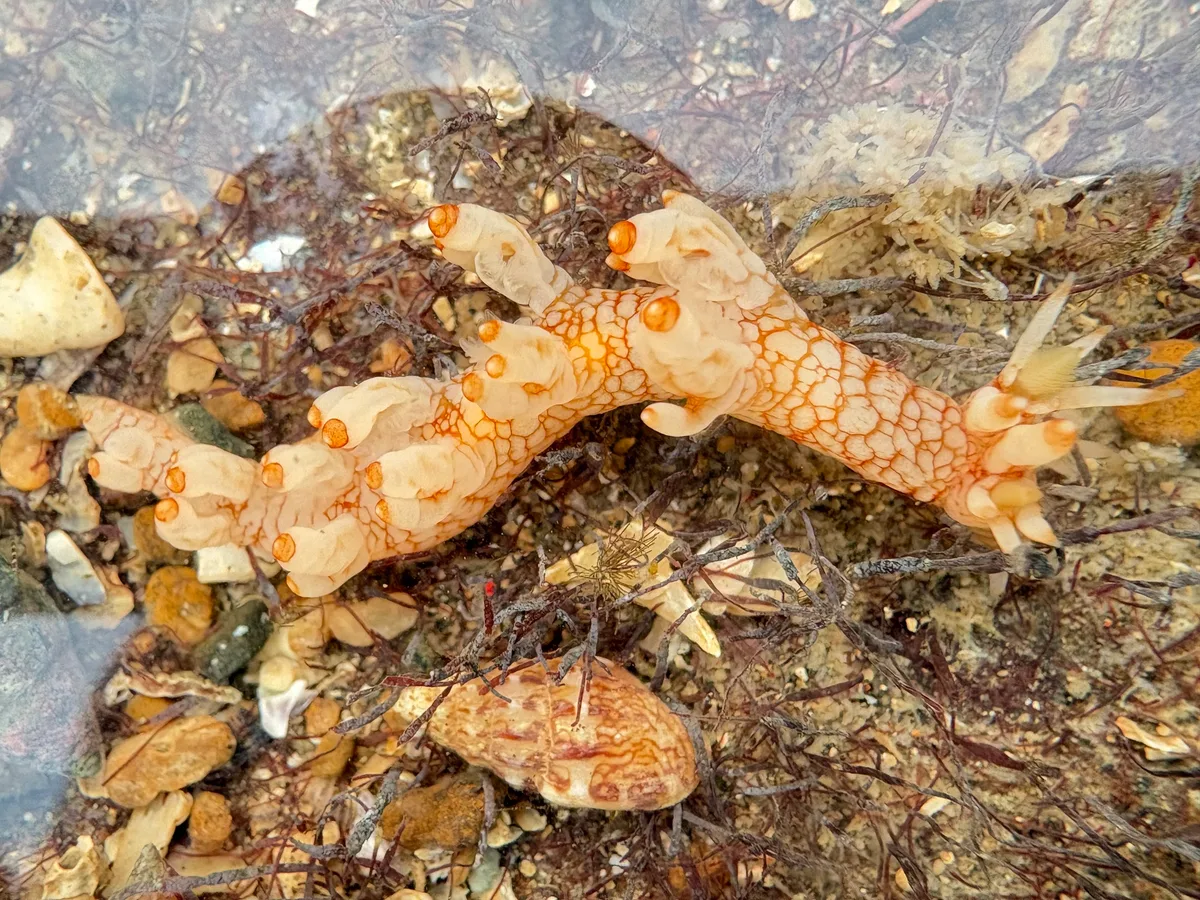
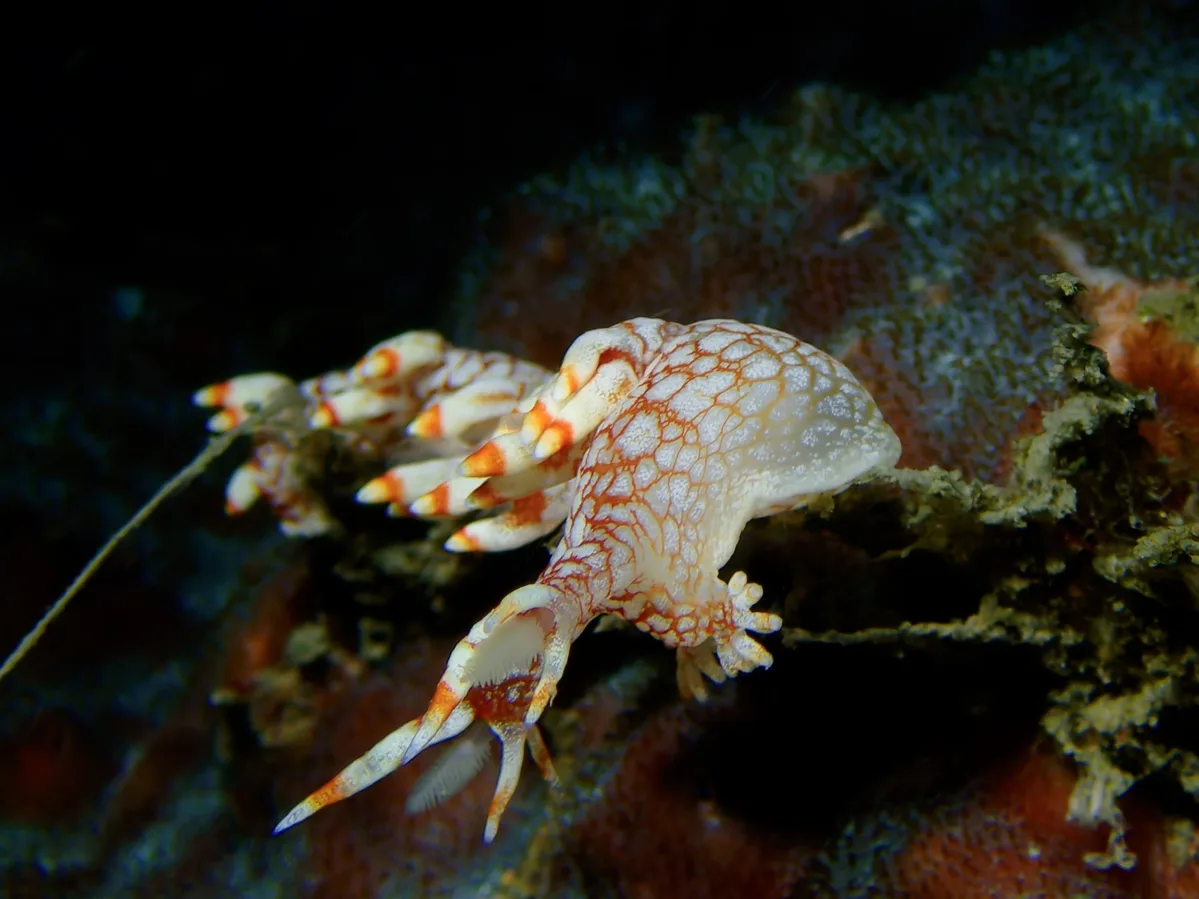
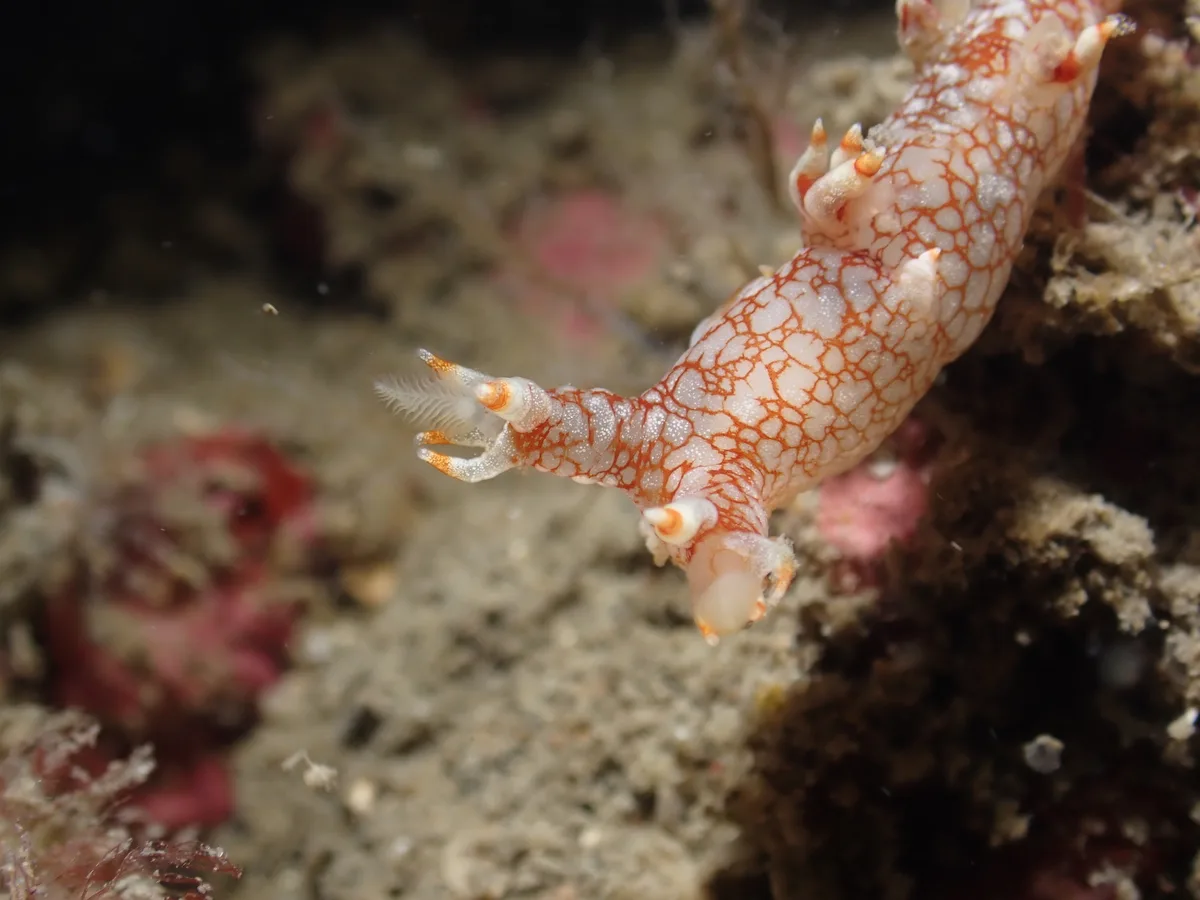
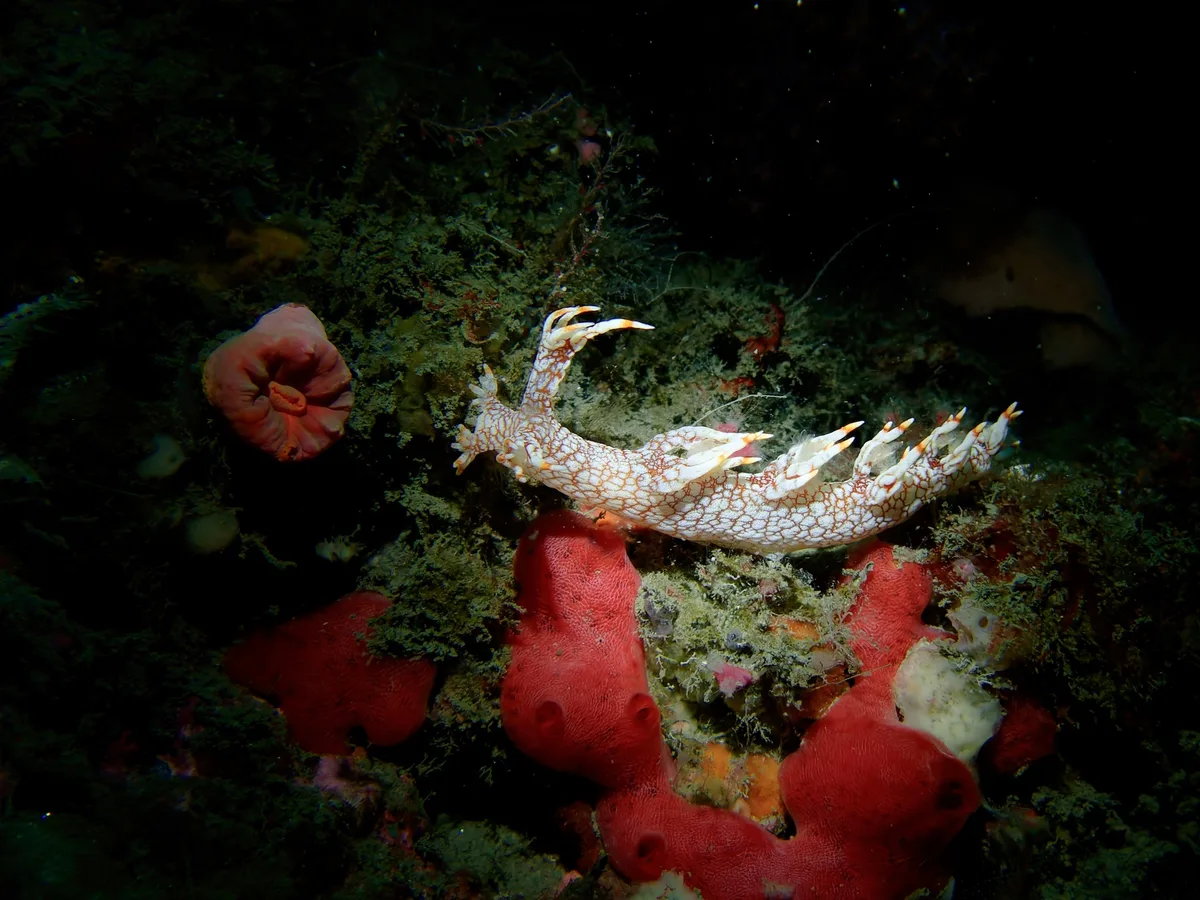
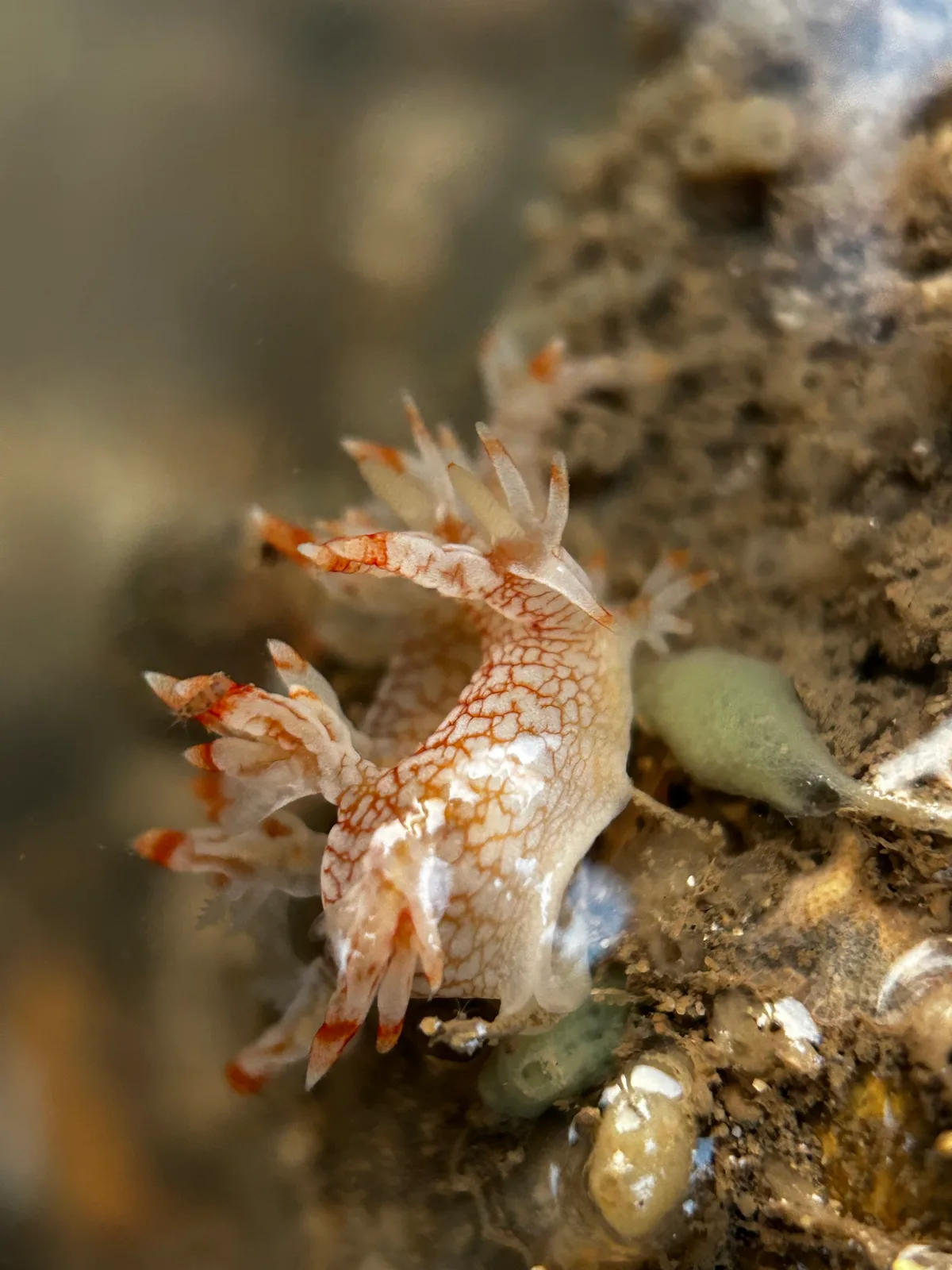
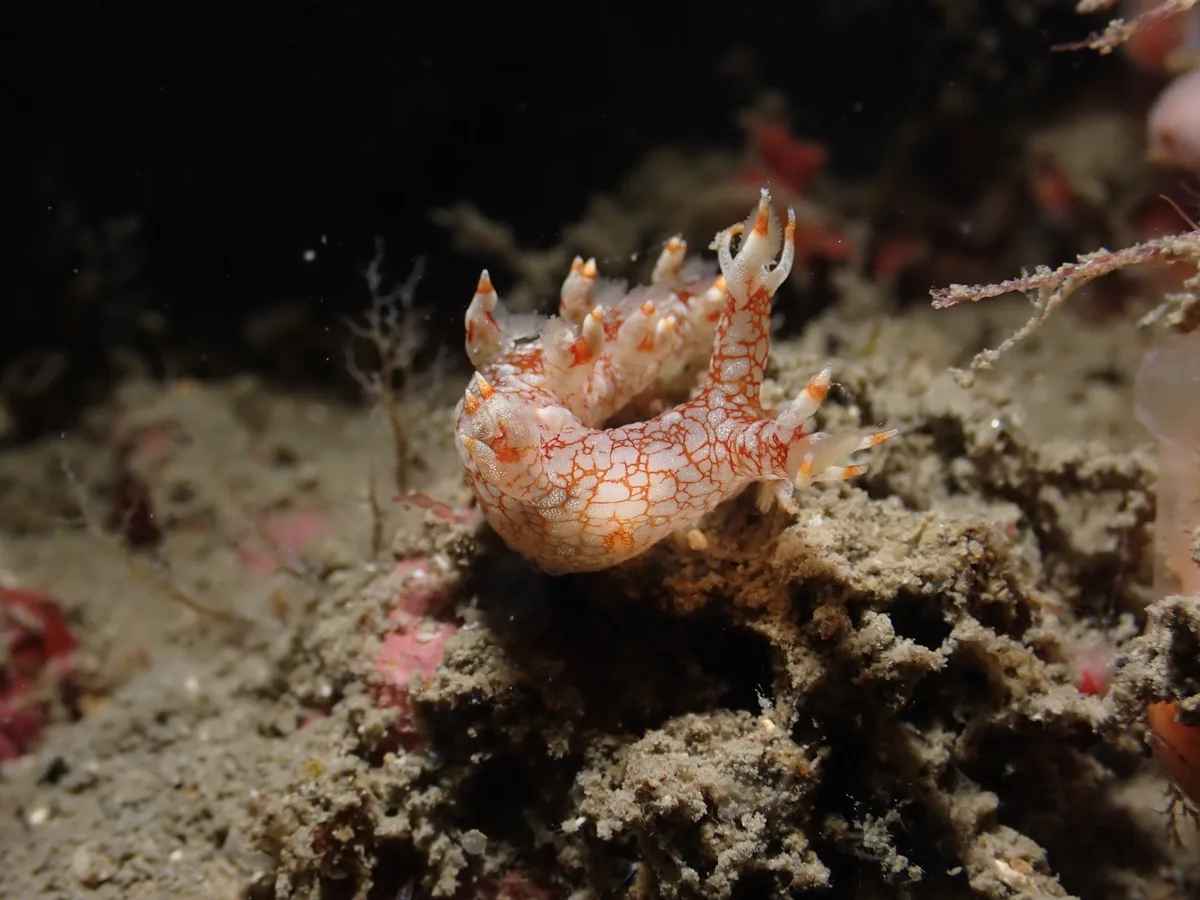
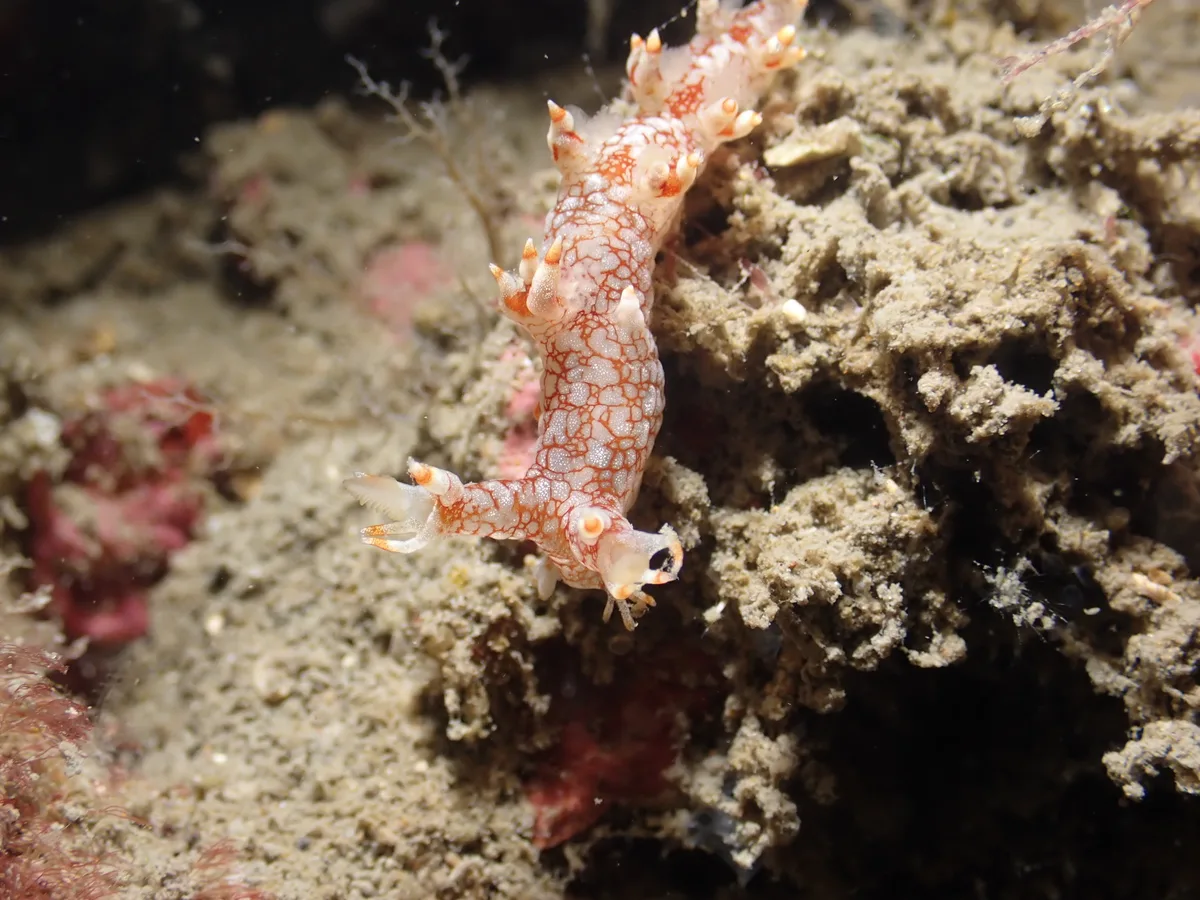
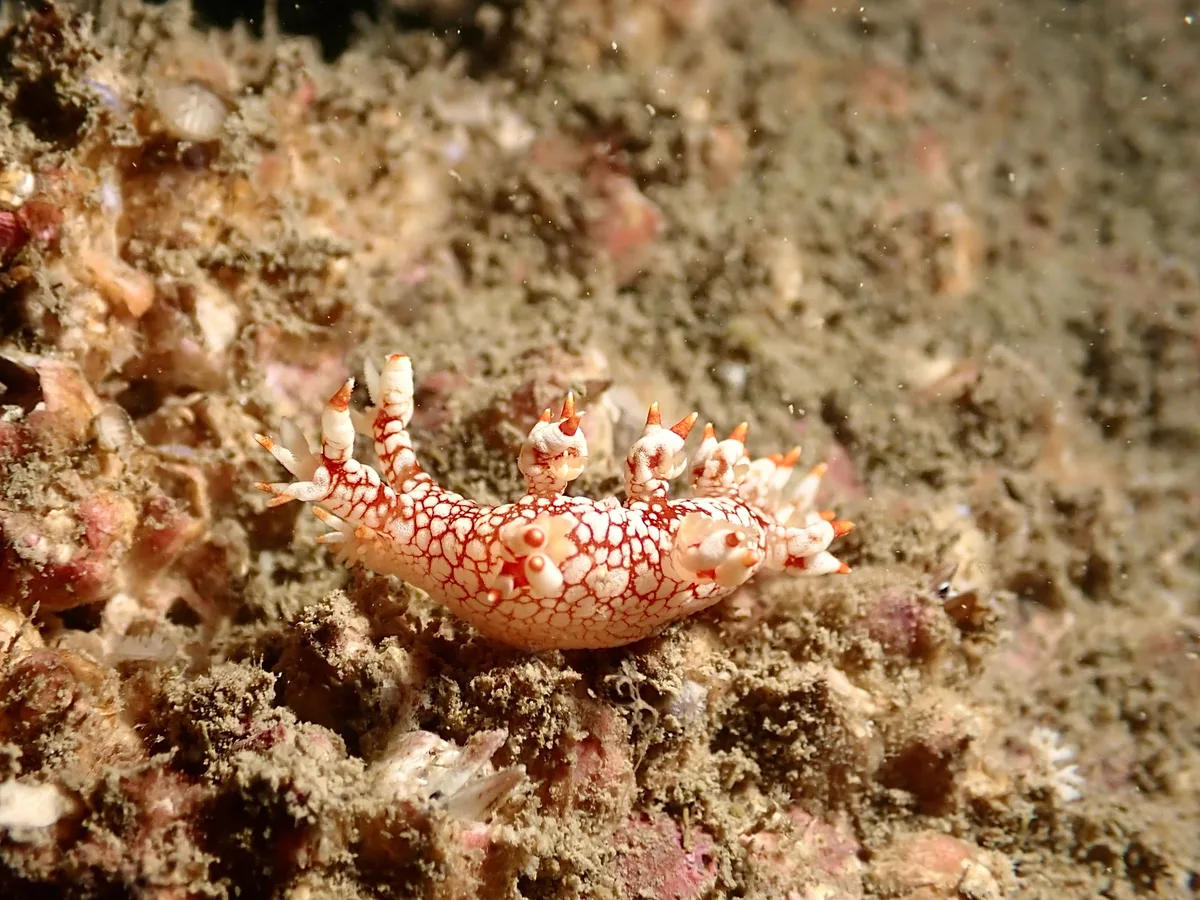
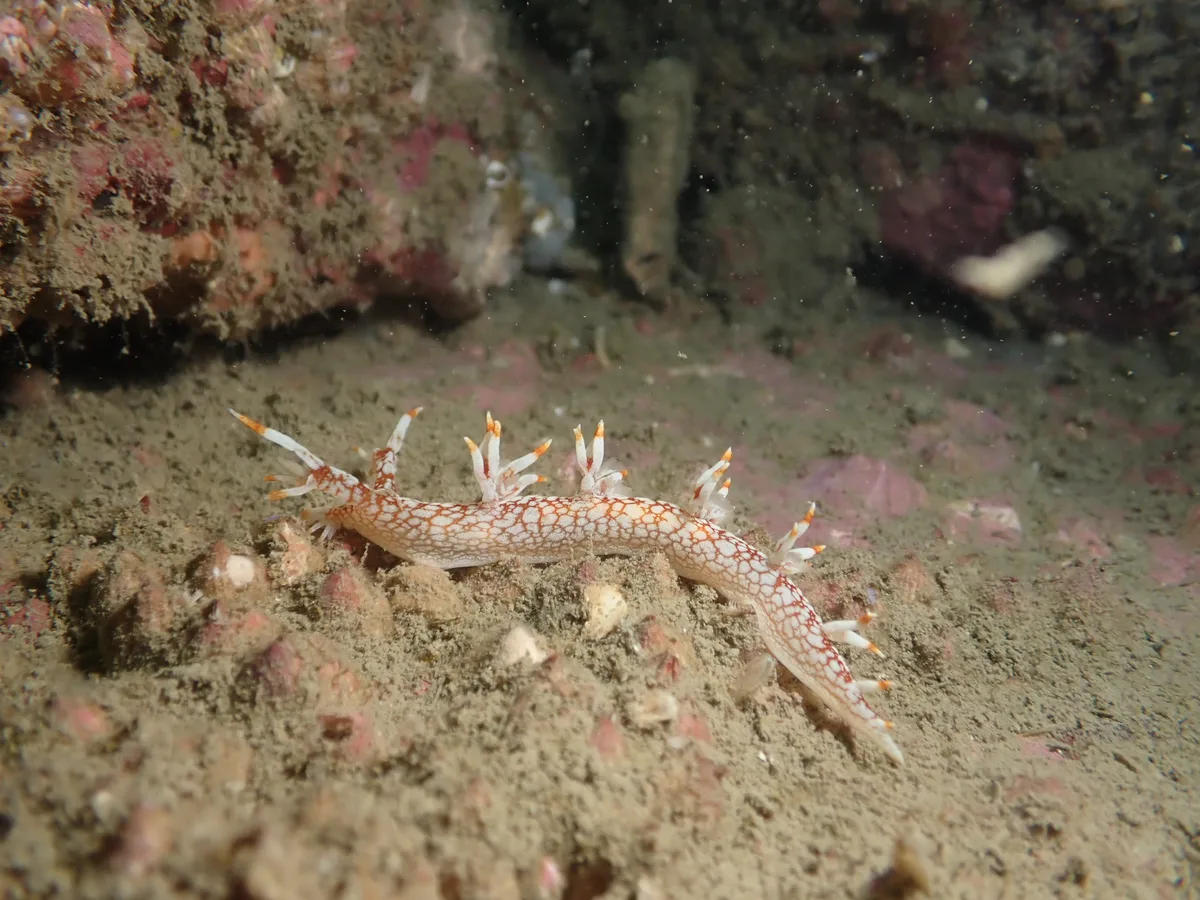
Look at the collars the sensory horns stand in. On this genus the rim of each rhinophore sheath is drawn out into a ring of sharp points, so the animal appears to be wearing two small crowns. Stellifera means star-bearing, and that is what it is named for.
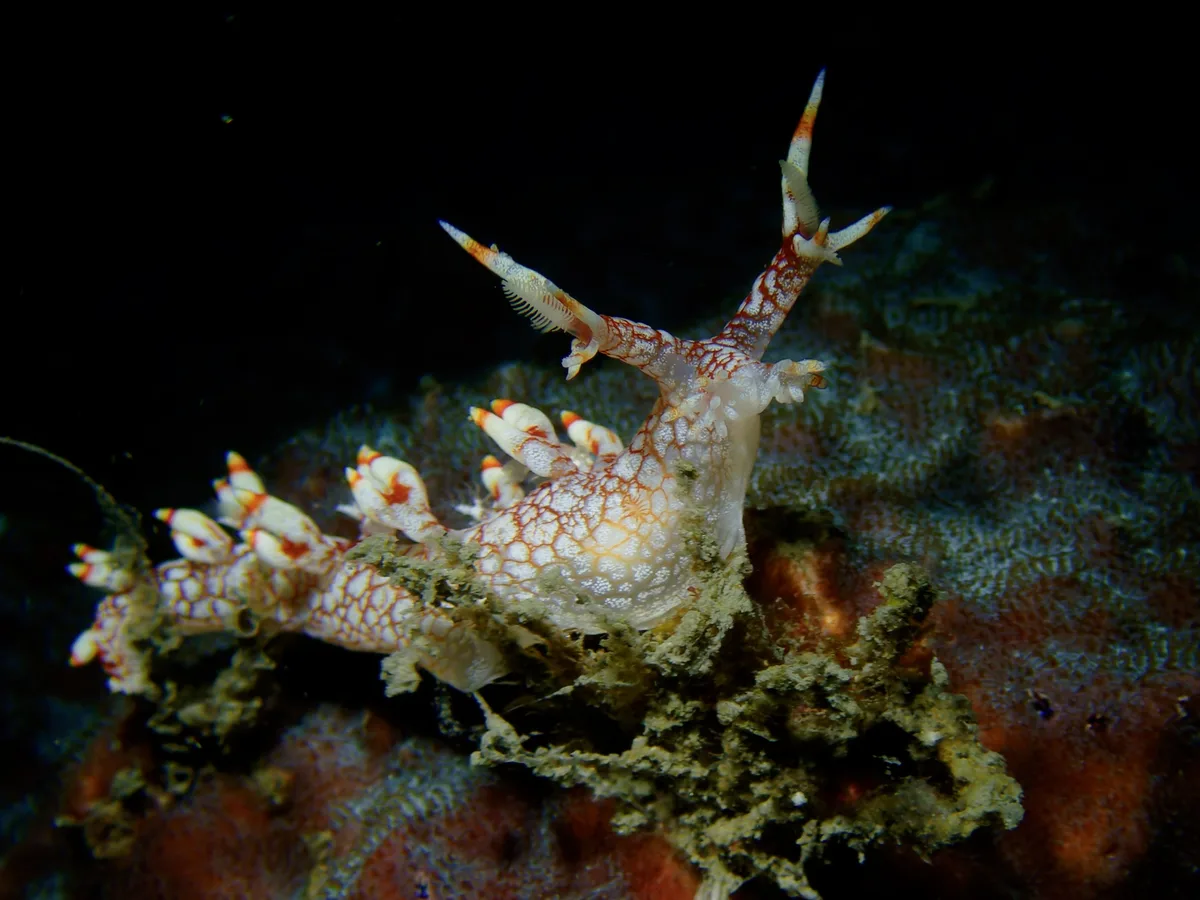
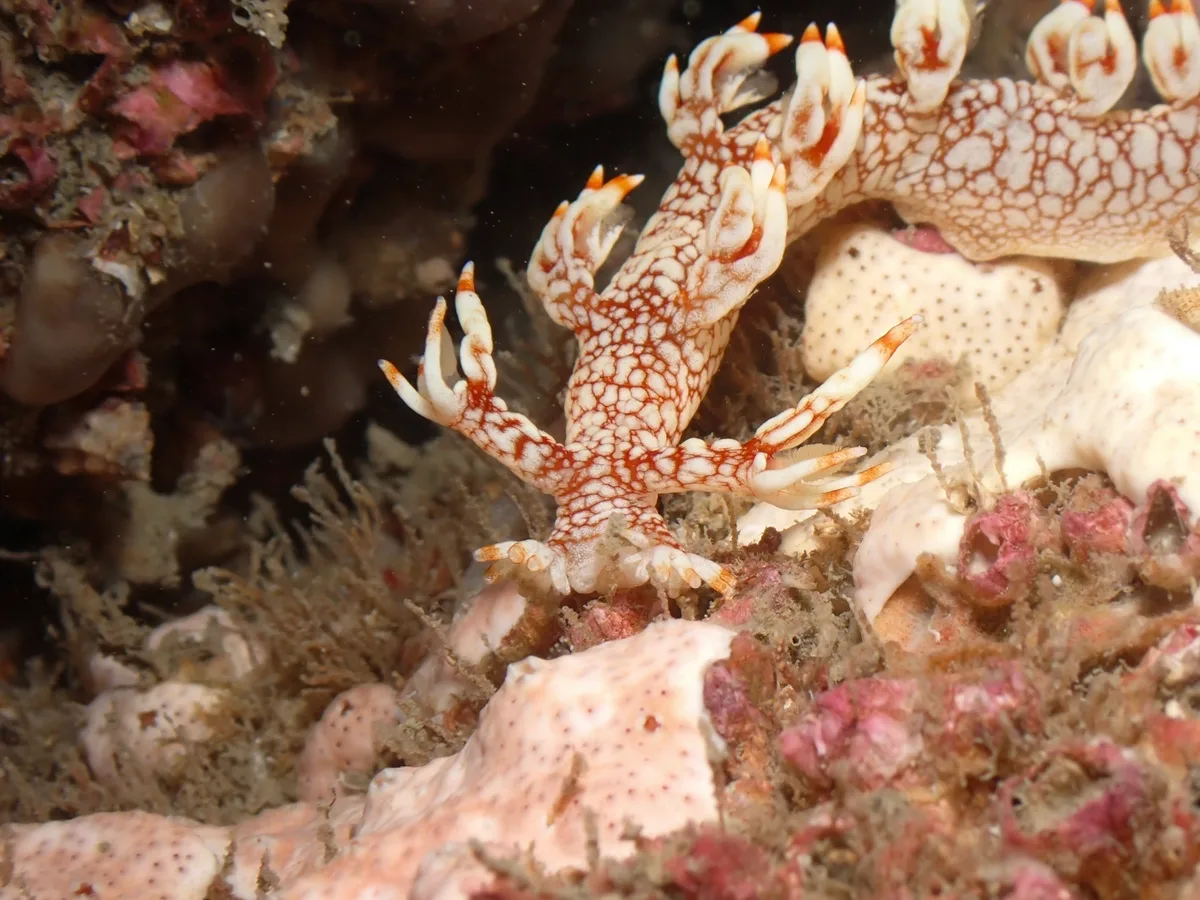
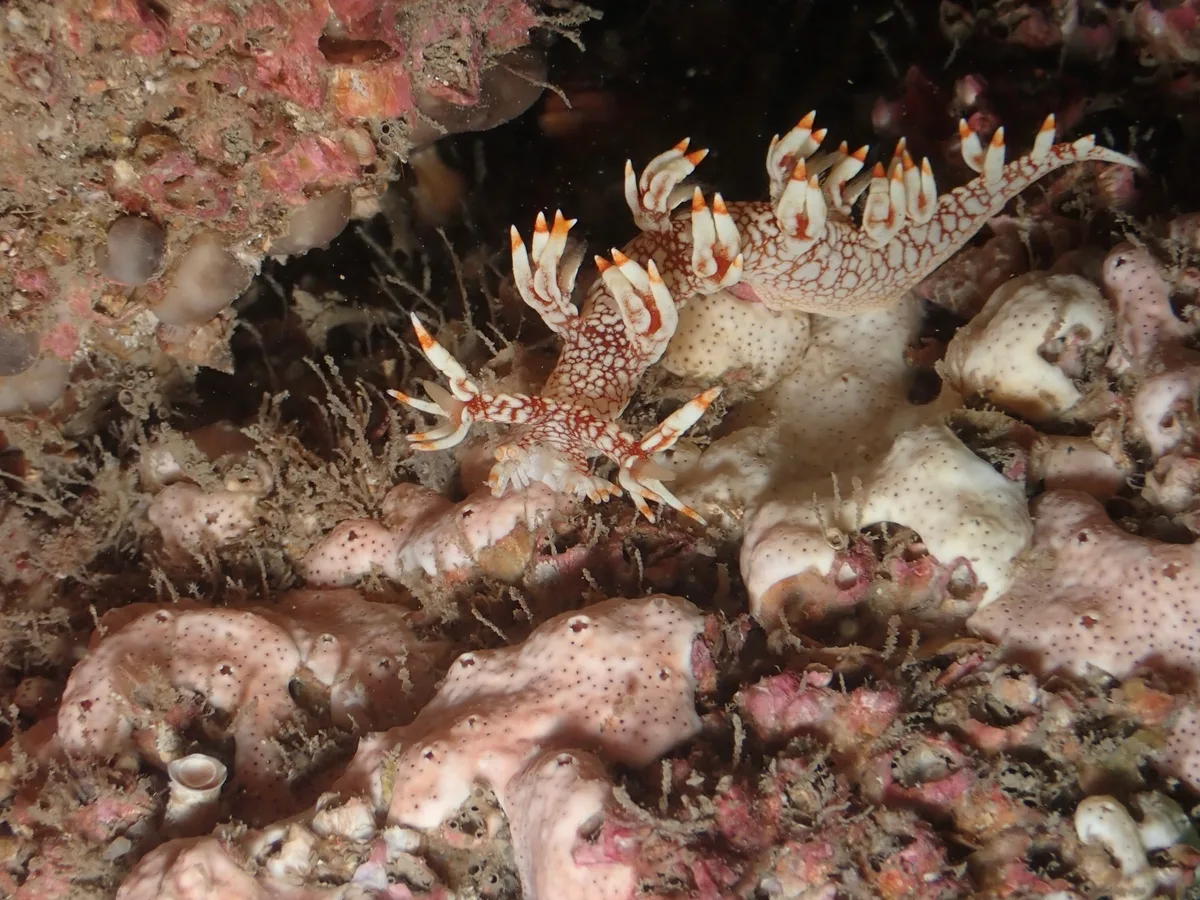
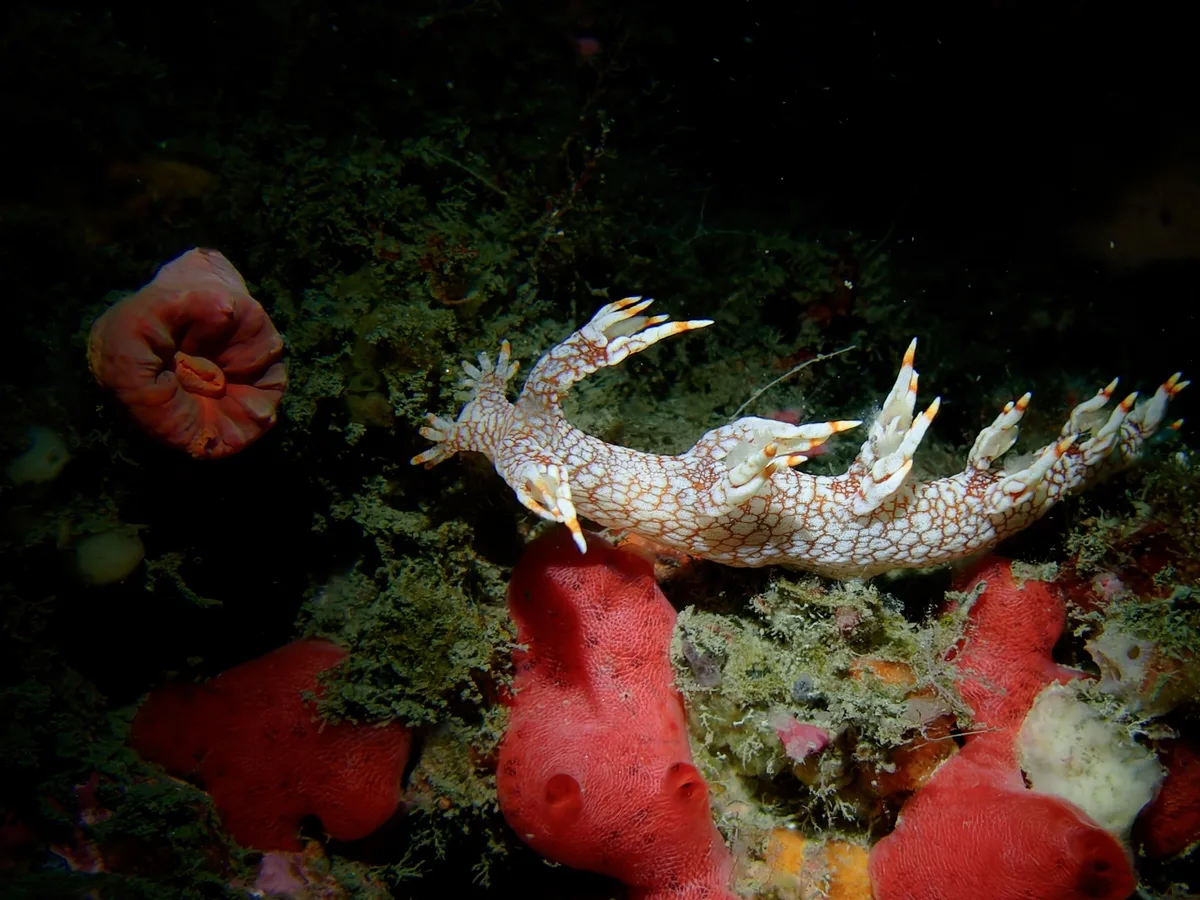
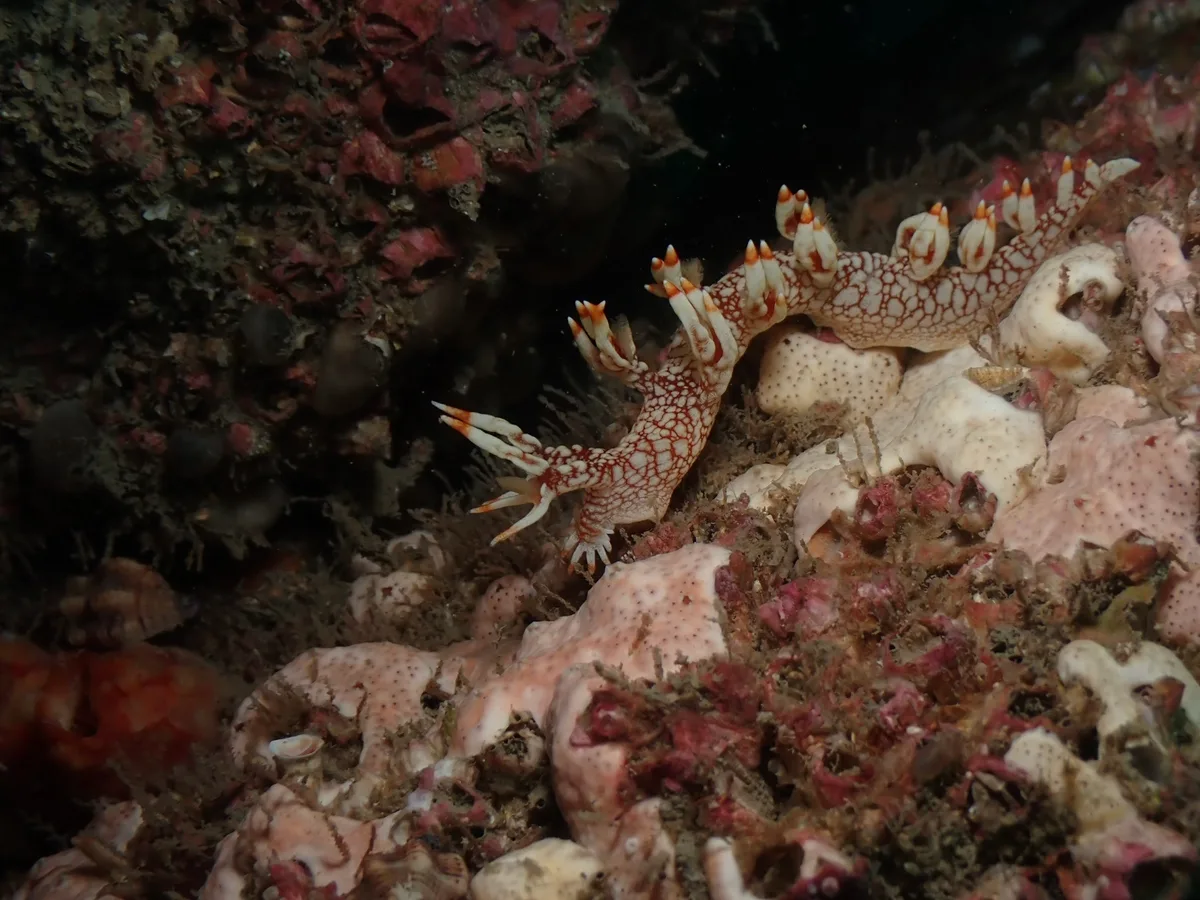
The rest of the layout is unlike the dorids that make up most of this section. There is no feathery rosette on the back. Instead a row of branched appendages stands along each side, and a small tuft of gill sits at the base of each one, so the breathing surface is broken up and distributed down the length of the body rather than gathered in one place. It is a different answer to the same problem, and it comes with an advantage: there is no single vulnerable plume to lose.
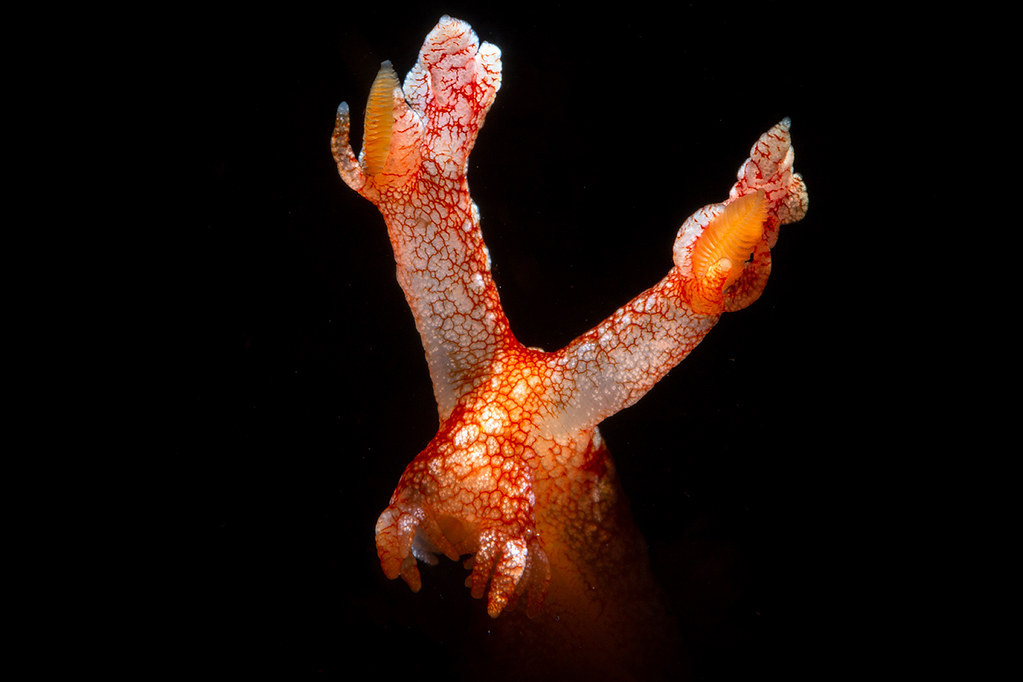
It also swims. Startled off its perch, the animal throws its body into deep side-to-side curves and travels through open water like an eel, which is a strange thing to watch from something three centimeters (1.2 in) long that spent the previous ten minutes creeping.
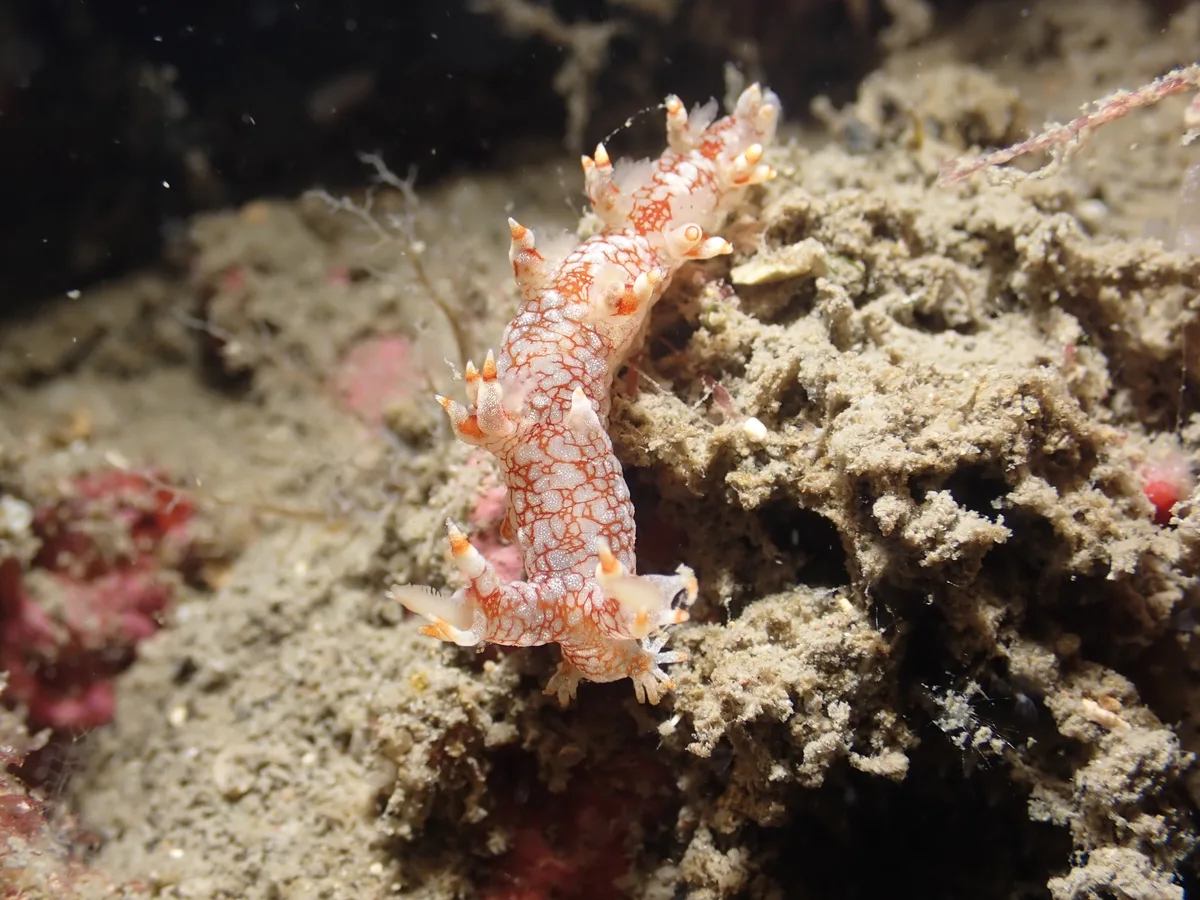
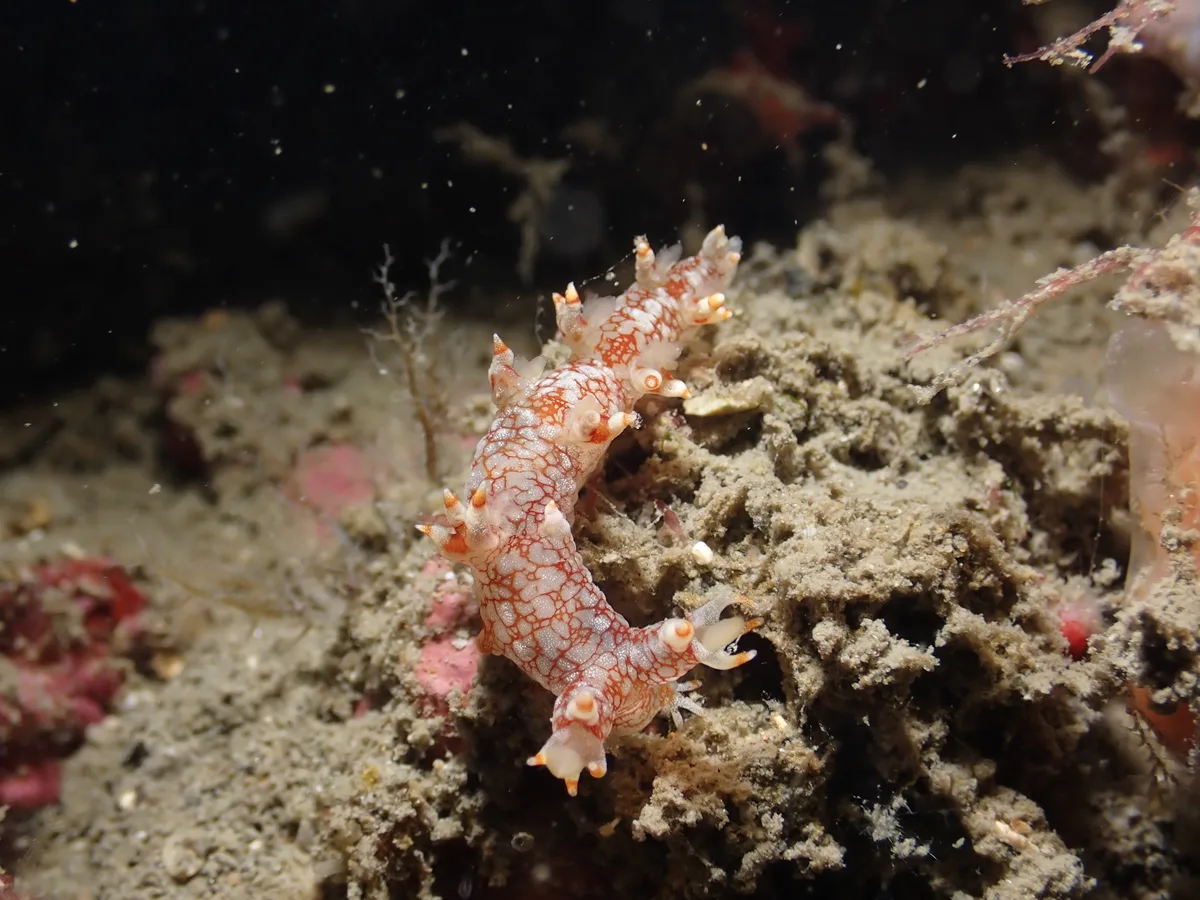
The color makes sense once you see where it lives. Translucent white to pale brown with a fine red network drawn over the whole body, sitting among the branching hydroids it feeds on: the lines break up the outline against a background that is itself all thin branches and shadows. On a night dive it turns up on wreck plating and rock faces, working through the hydroid fur that grows on everything left standing in the current.
- rhinophores stand inside sheaths whose rims are drawn out into points, like a crown or a star
- translucent white to pale brown with a fine network of red lines all over
- red-orange rings near the tips of the lateral appendages
- no gill plume on the back: small gill tufts sit at the base of each side appendage