Its food is the strangest soft coral on the reef. Xeniids are the colonies whose polyps open and close in a slow continuous rhythm, hundreds of small hands clenching and unclenching all day, and nobody has fully settled what the pulsing is for. The leading explanation is that it stirs the water around the polyps to move oxygen and waste, letting the algae living in the tissue keep photosynthesizing without the colony having to feed much at all.
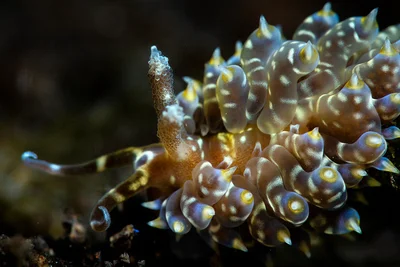
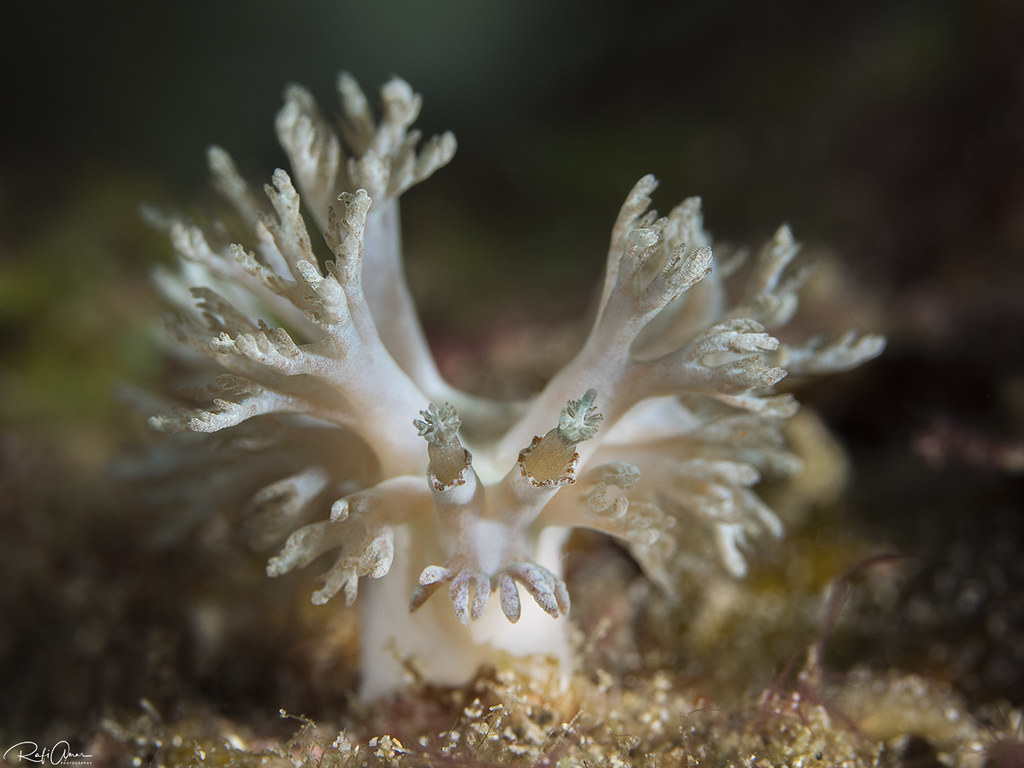
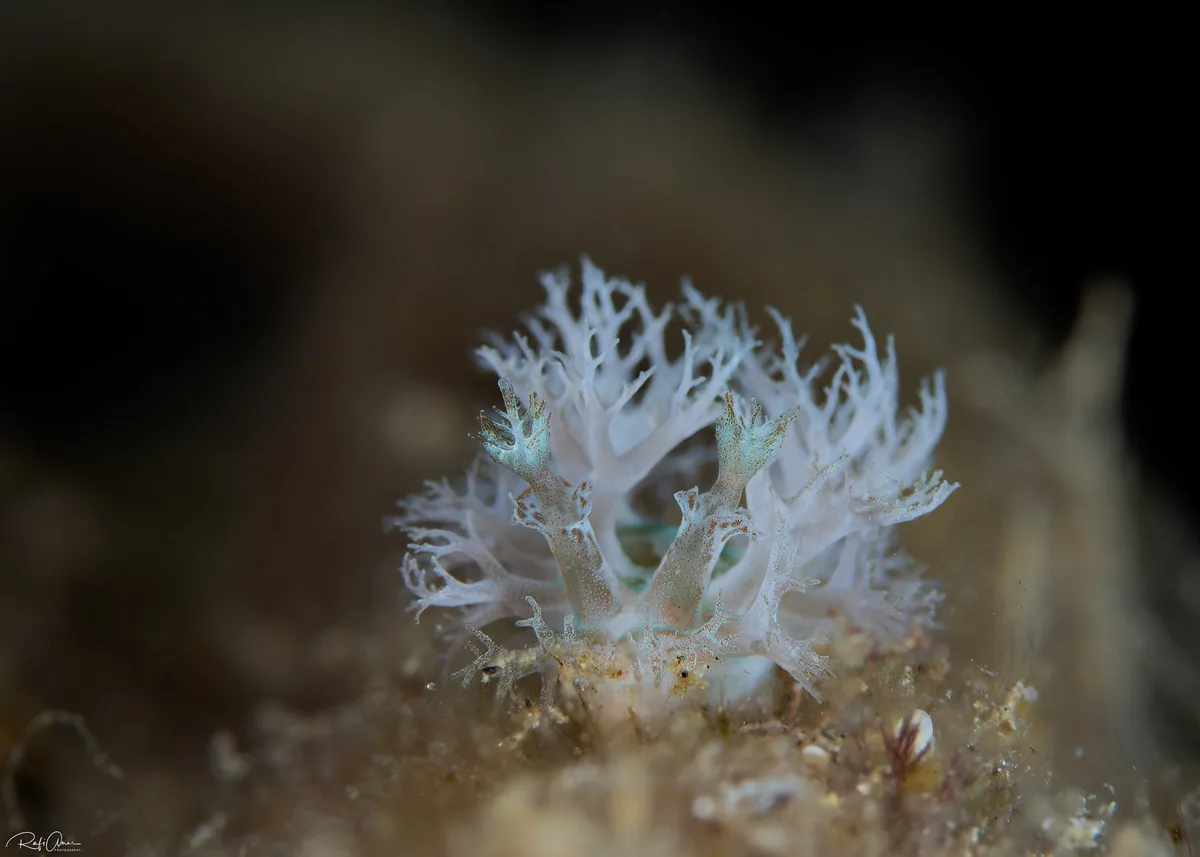
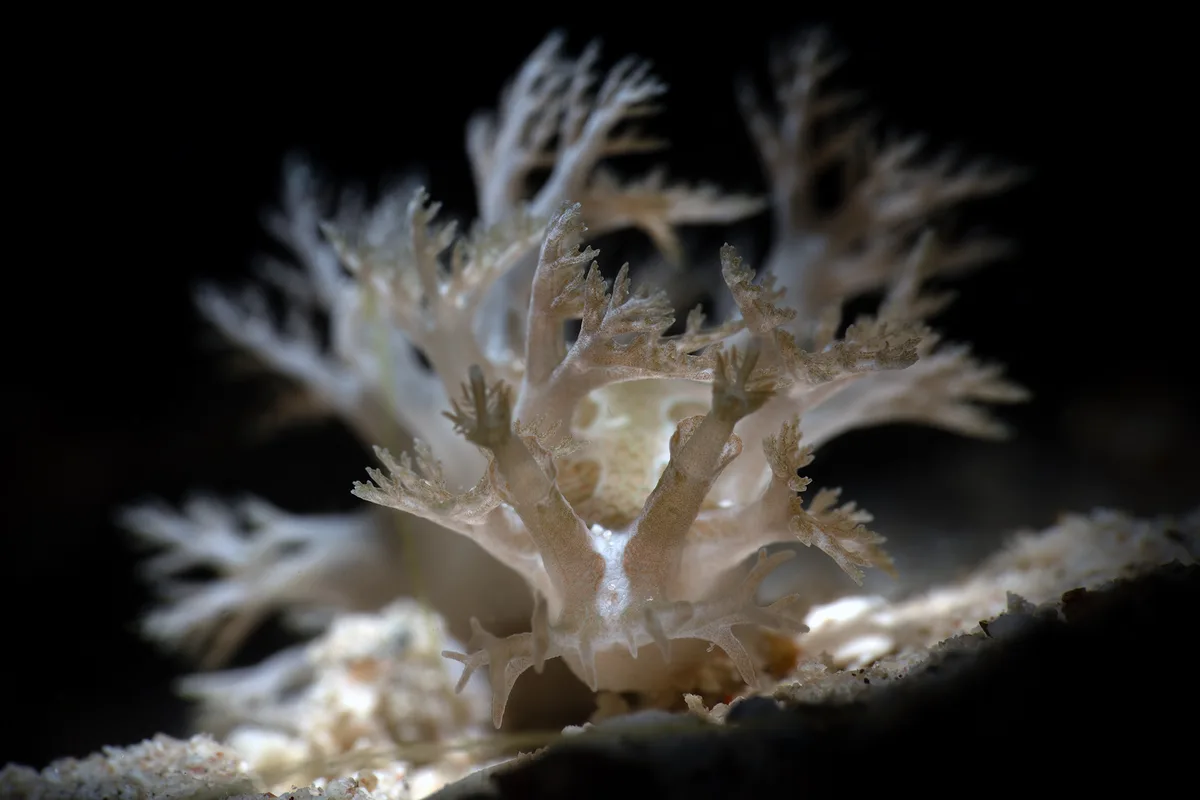
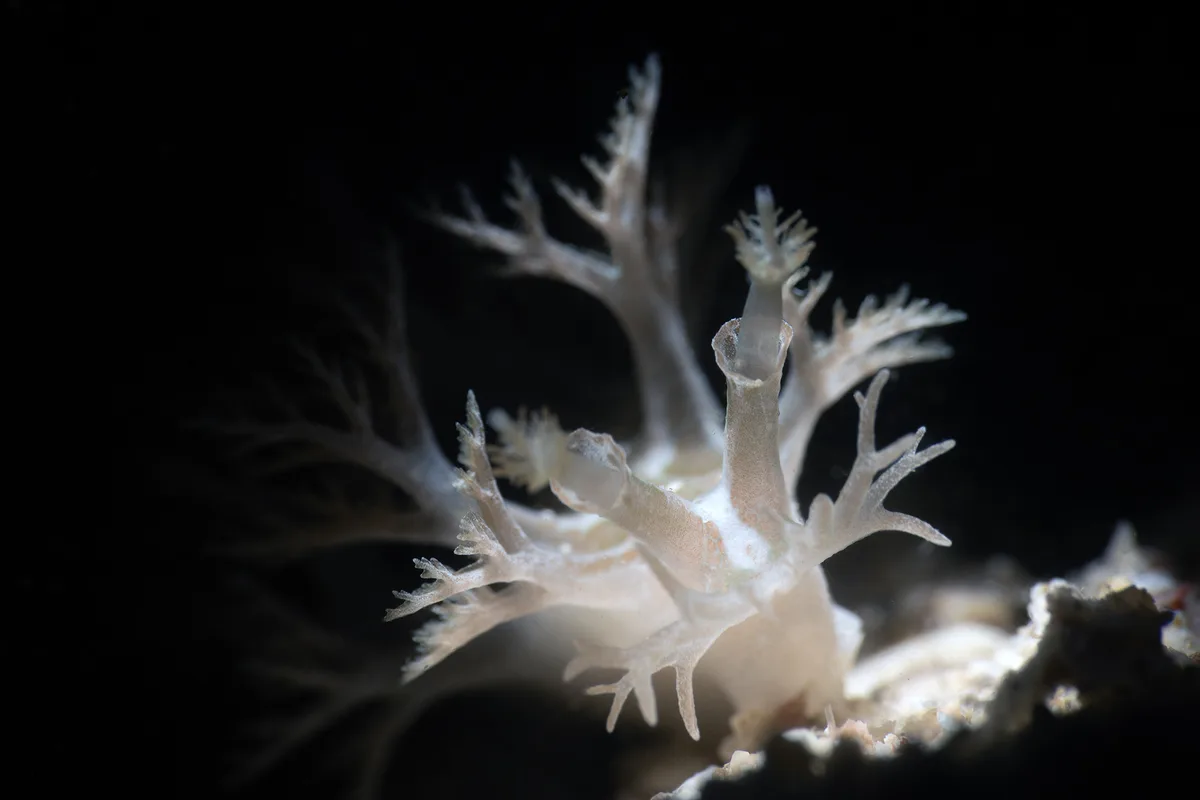
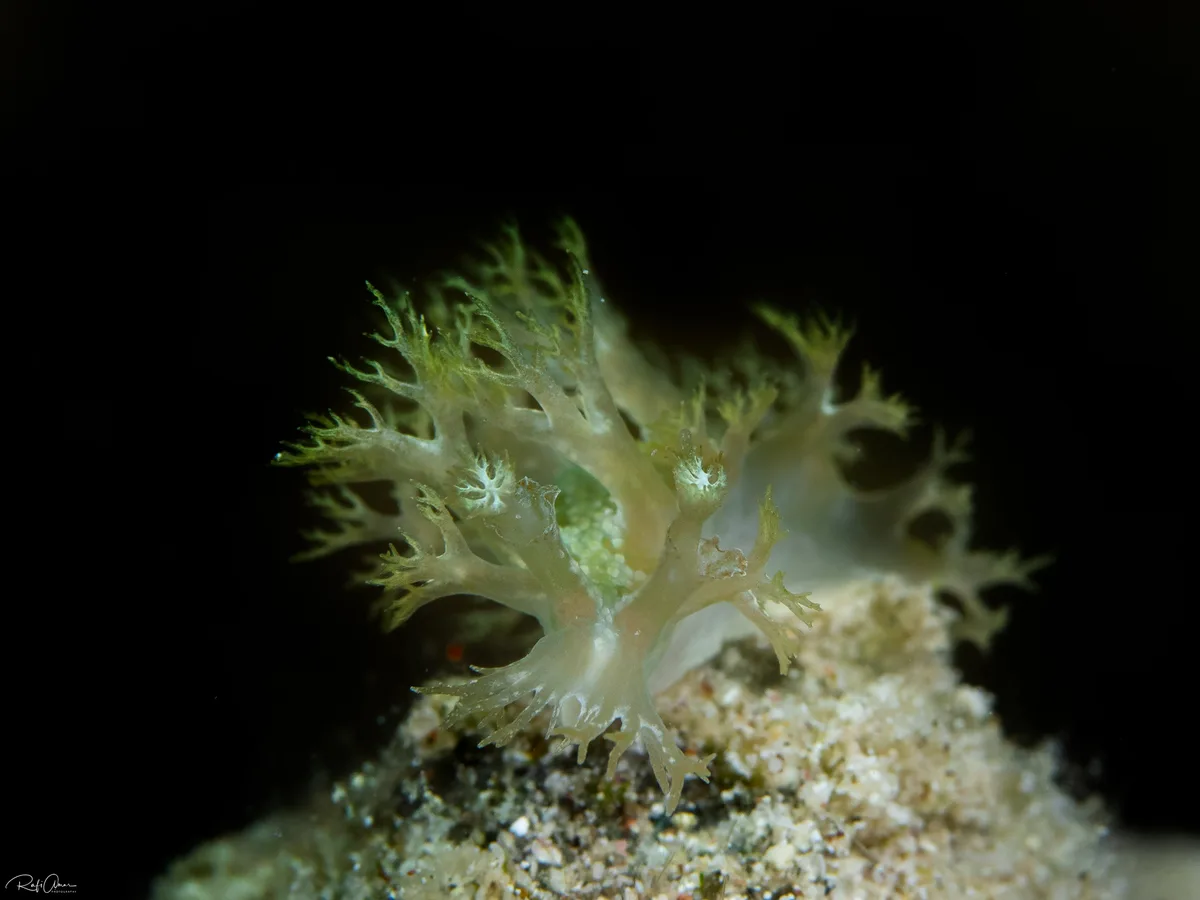
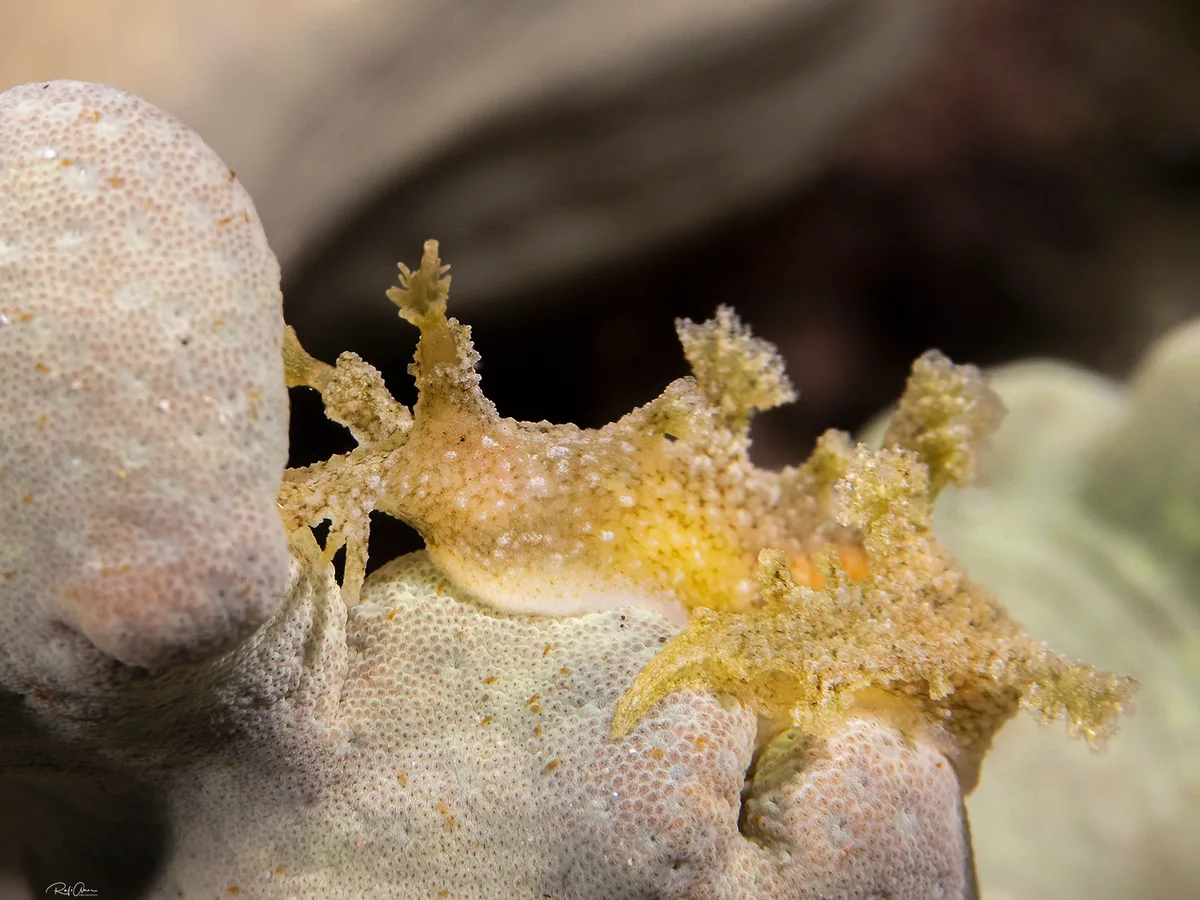
This slug lives in that pulsing field and eats it, and it is shaped and colored to disappear into it. Beige to brown, with a pale area through the middle of the back and dark spots arranged symmetrically to left and right, sitting among polyps of the same shade: the resemblance is close enough that the book describing it uses the word perfectly.
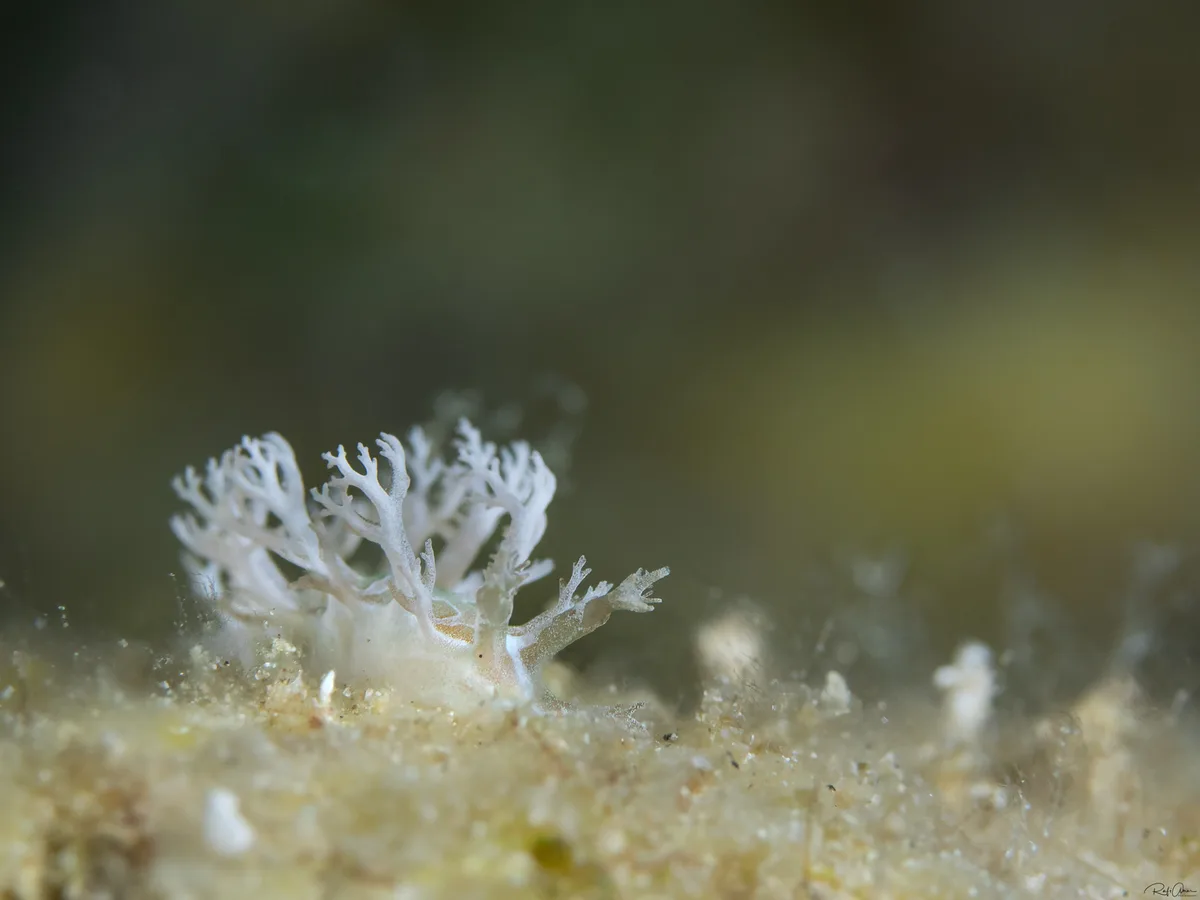
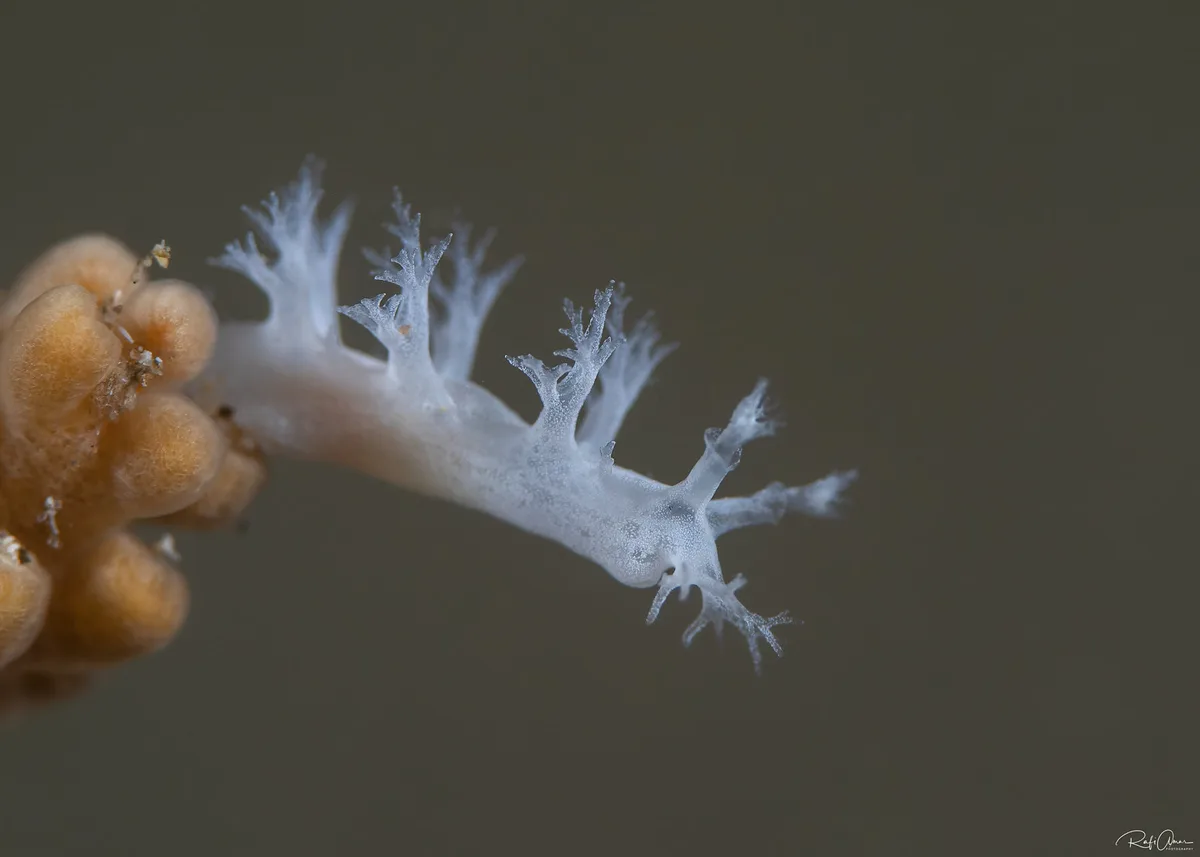
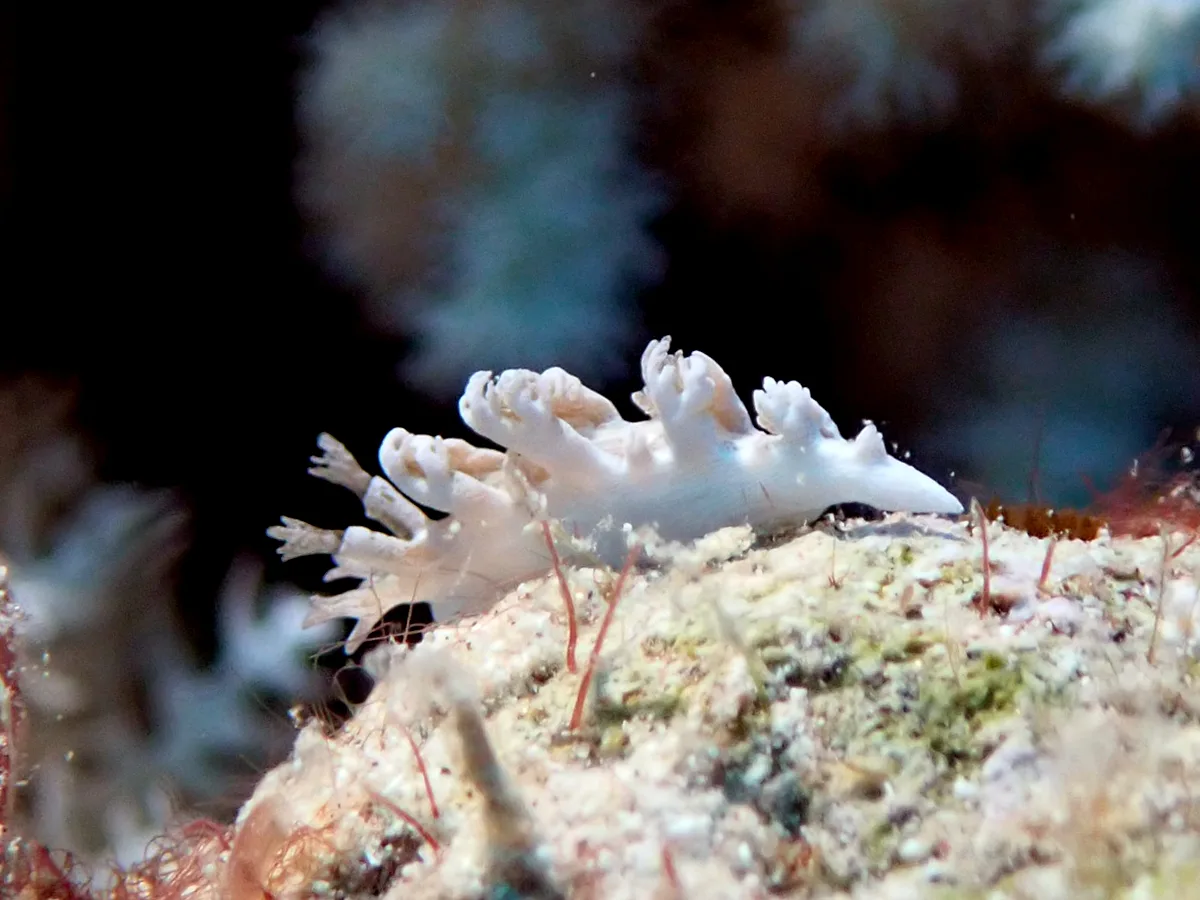
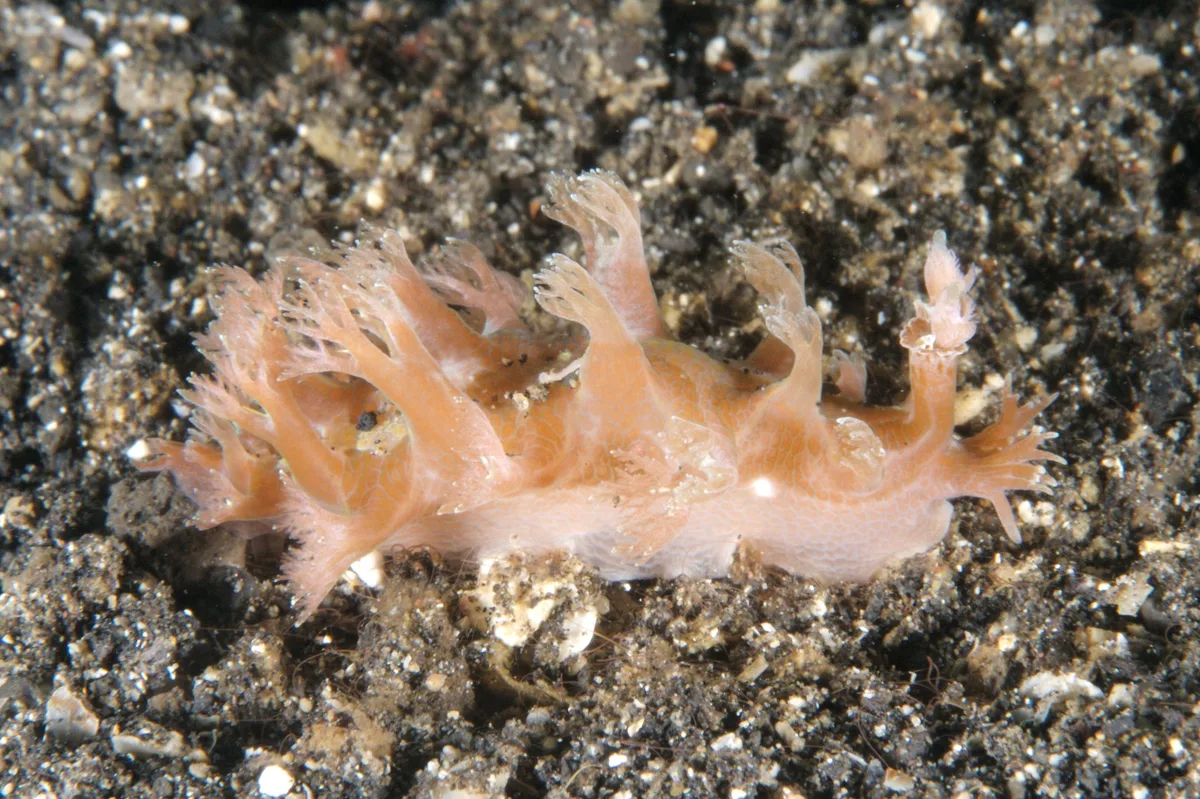
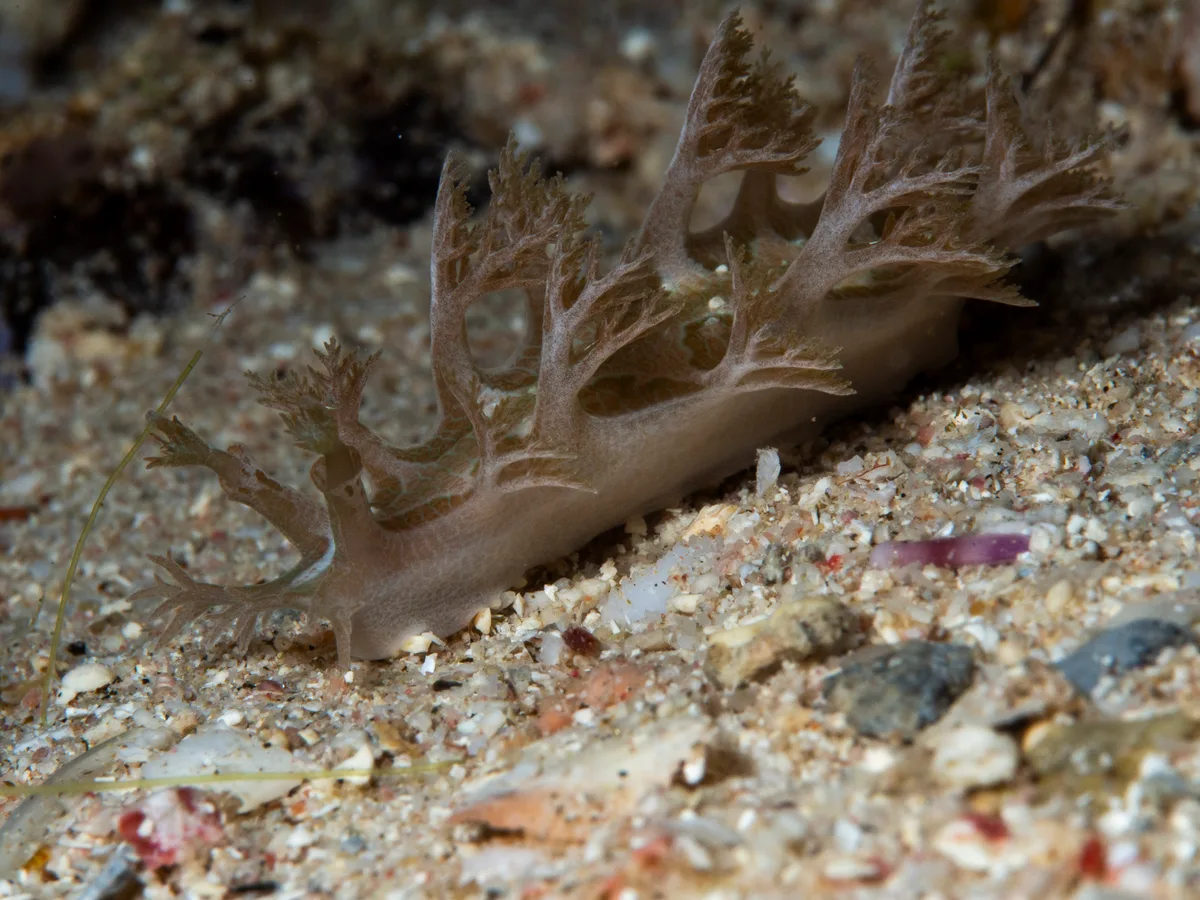
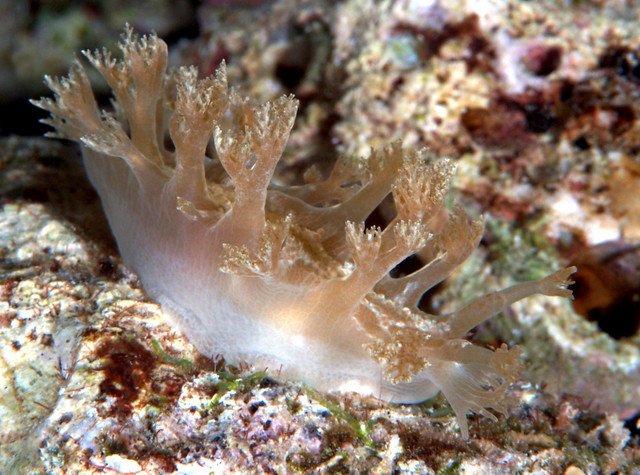
The body is tritoniid underneath the camouflage. Gills as a row of branched tufts down each side rather than a plume on the back, and a finely divided sensory veil across the front of the head for finding soft corals in the dark. It works the colony at night and hides through the day.
At two and a half centimeters (1 in) it is the small one in a family whose other members here reach five and twelve, which suits an animal that has to be a convincing piece of a colony rather than a lump on top of it.
Taxonomists have moved the species to the genus Marioniopsis; the regional book and the photo databases still use Marionia, and so does this page.
- dark spots arranged symmetrically down the back, matched left and right
- a pale white area through the center of the back
- beige to brown, the color of the xeniid colony it sits in
- small for the family, and always on the coral rather than beside it