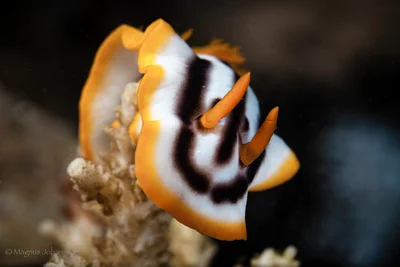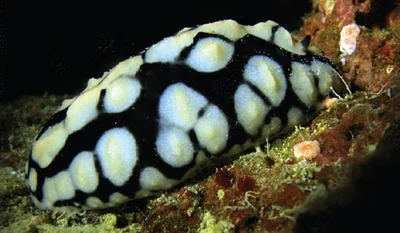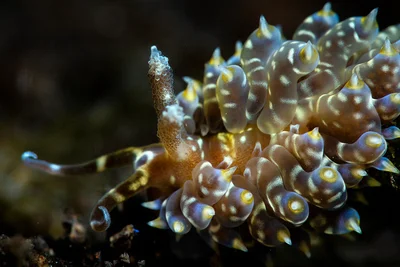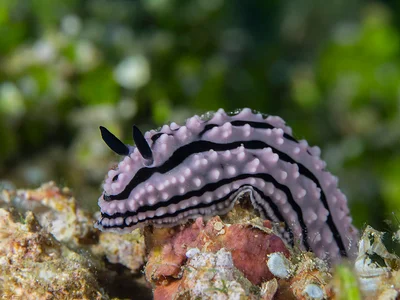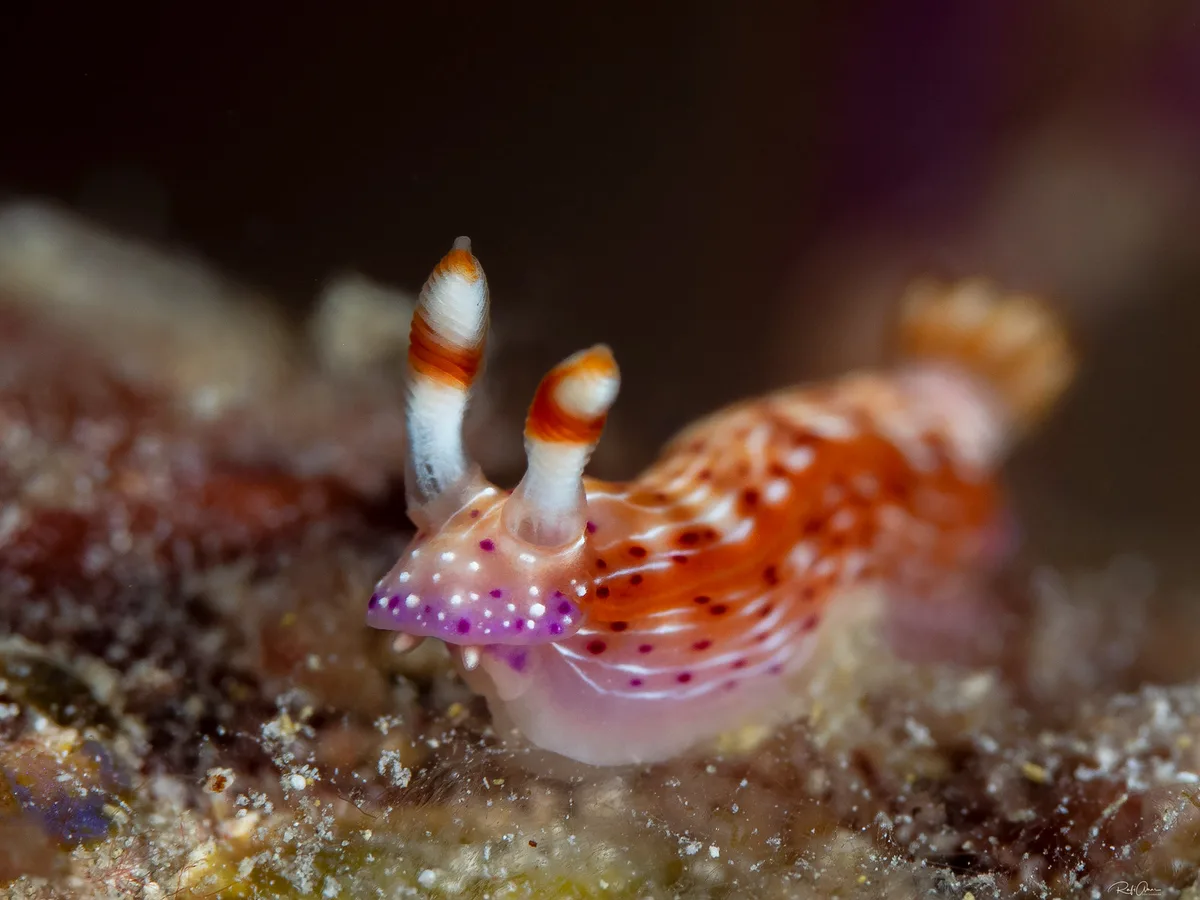
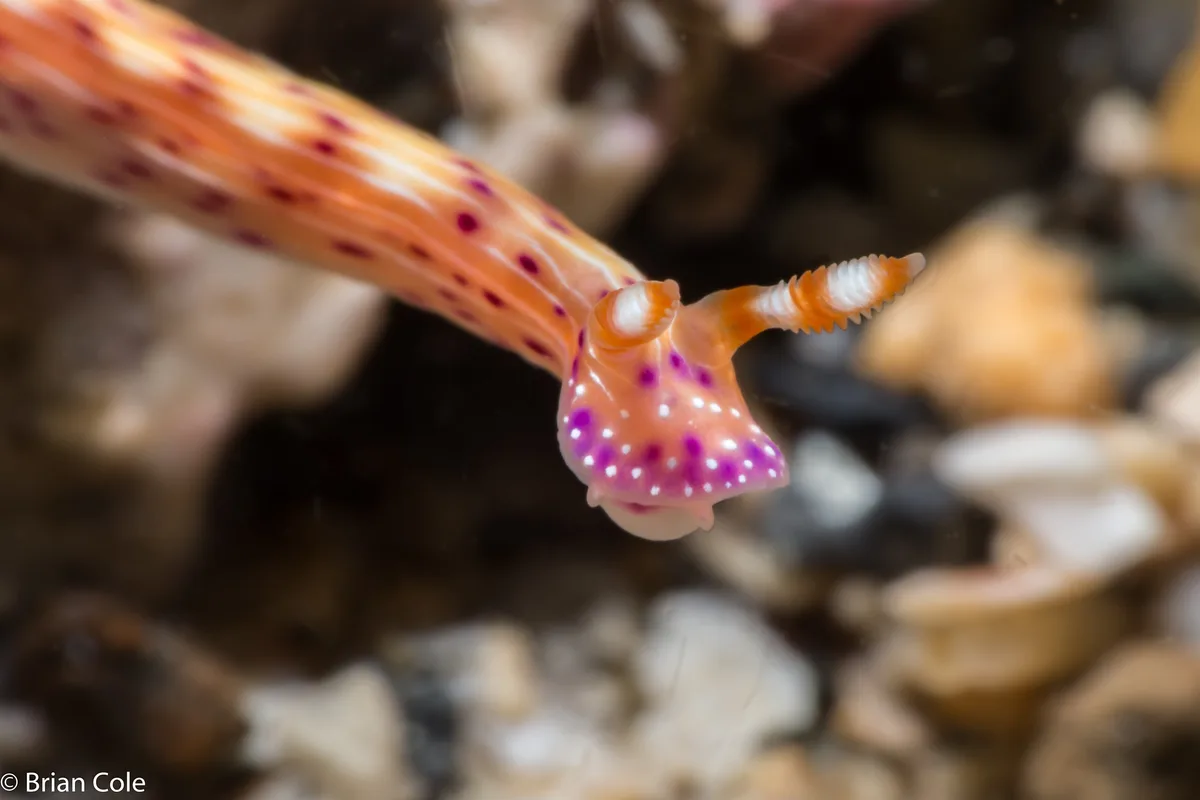
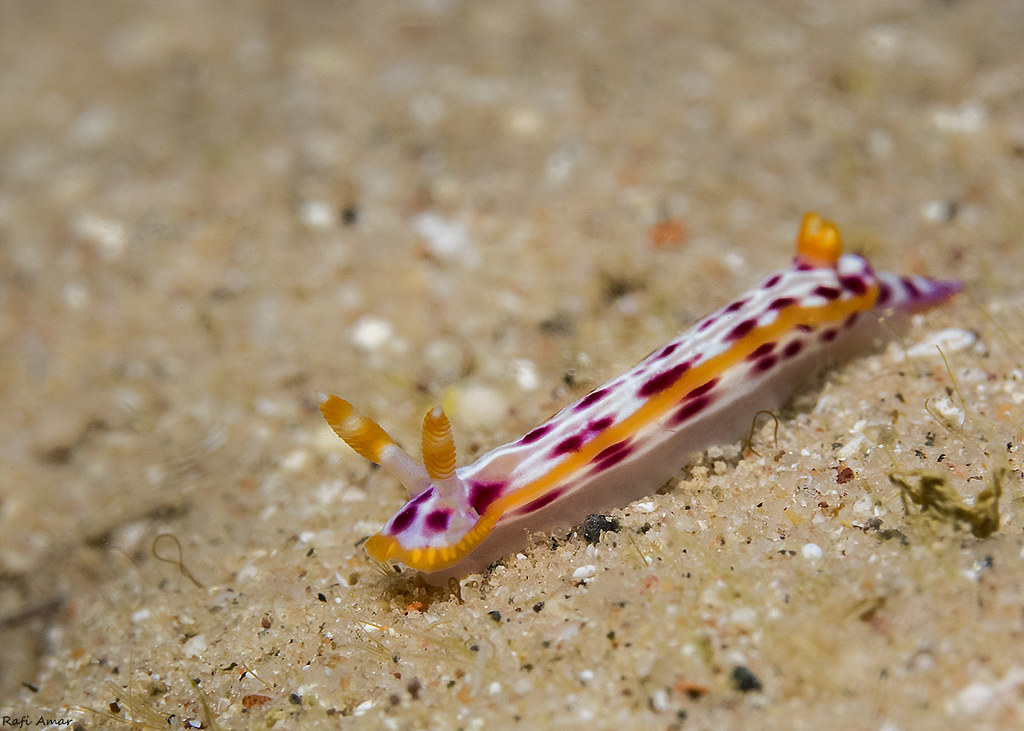
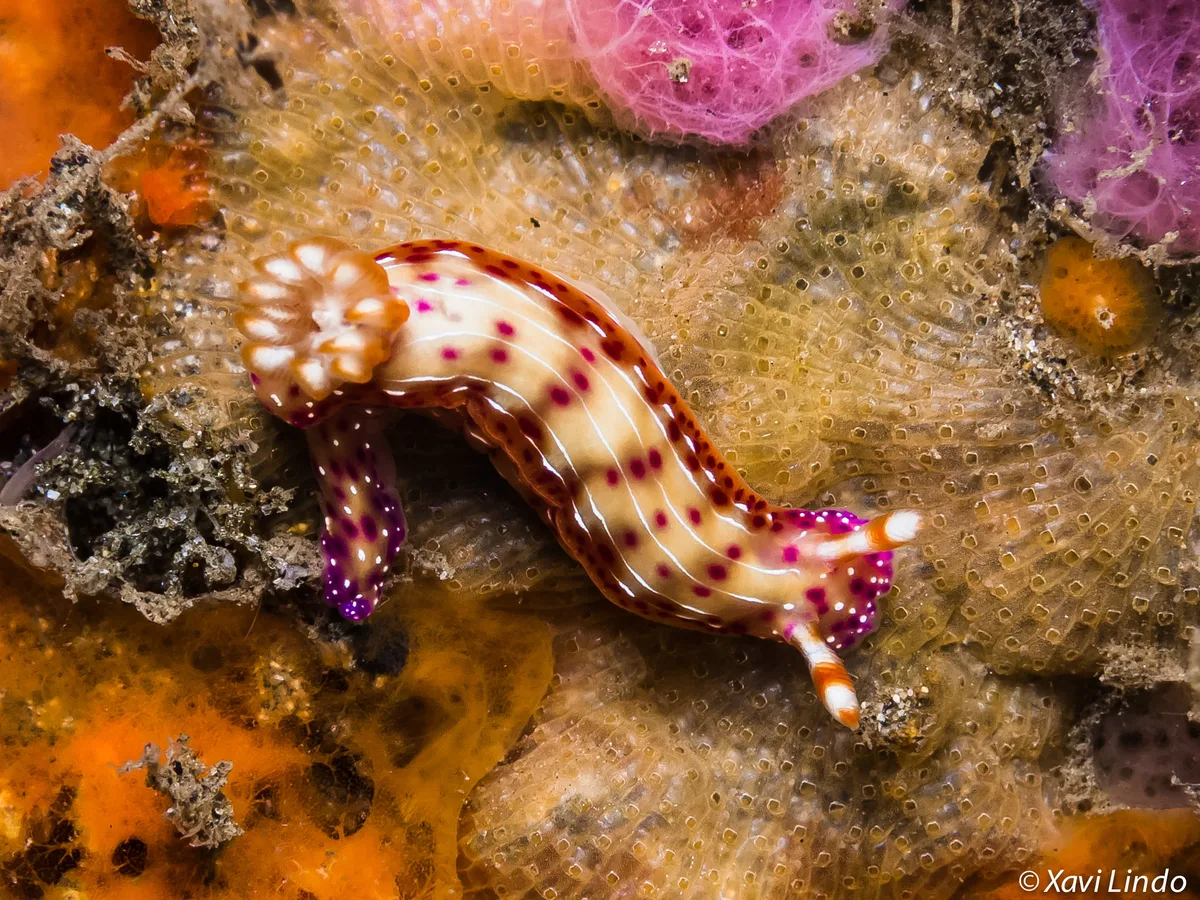
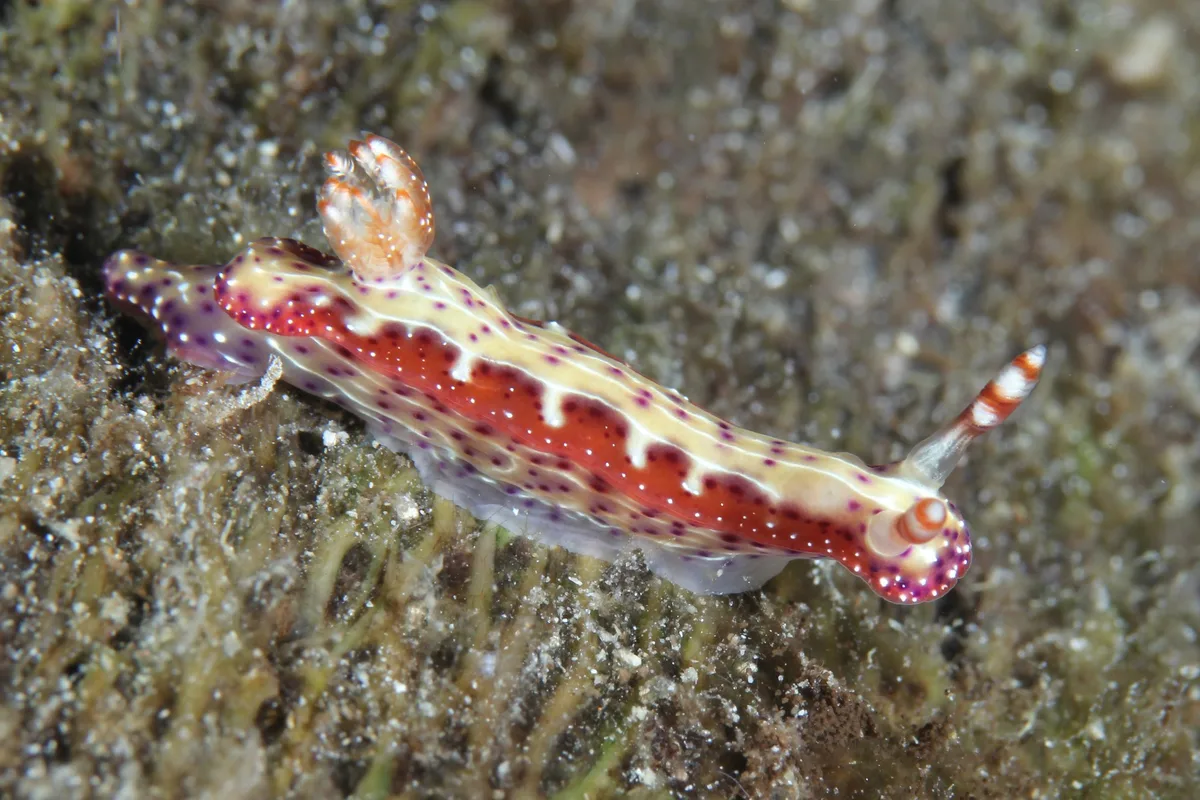
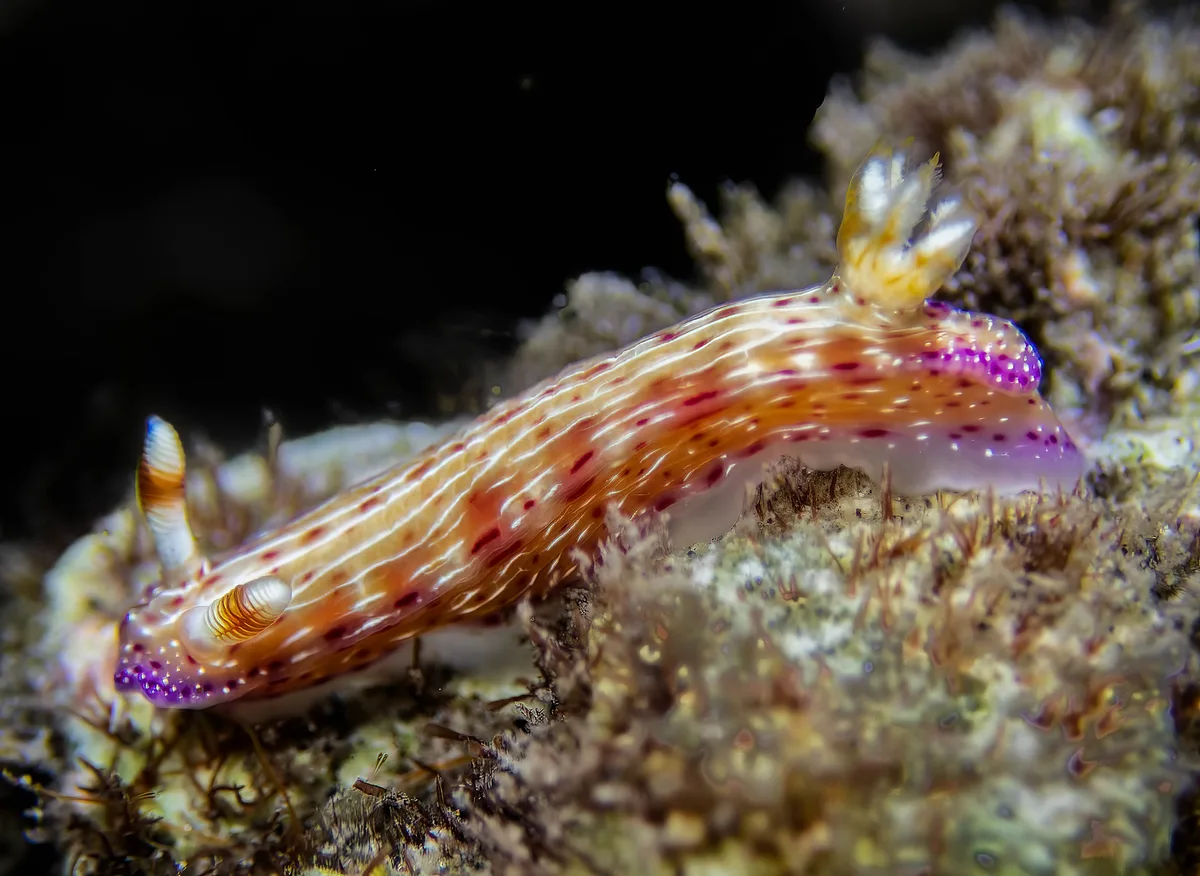
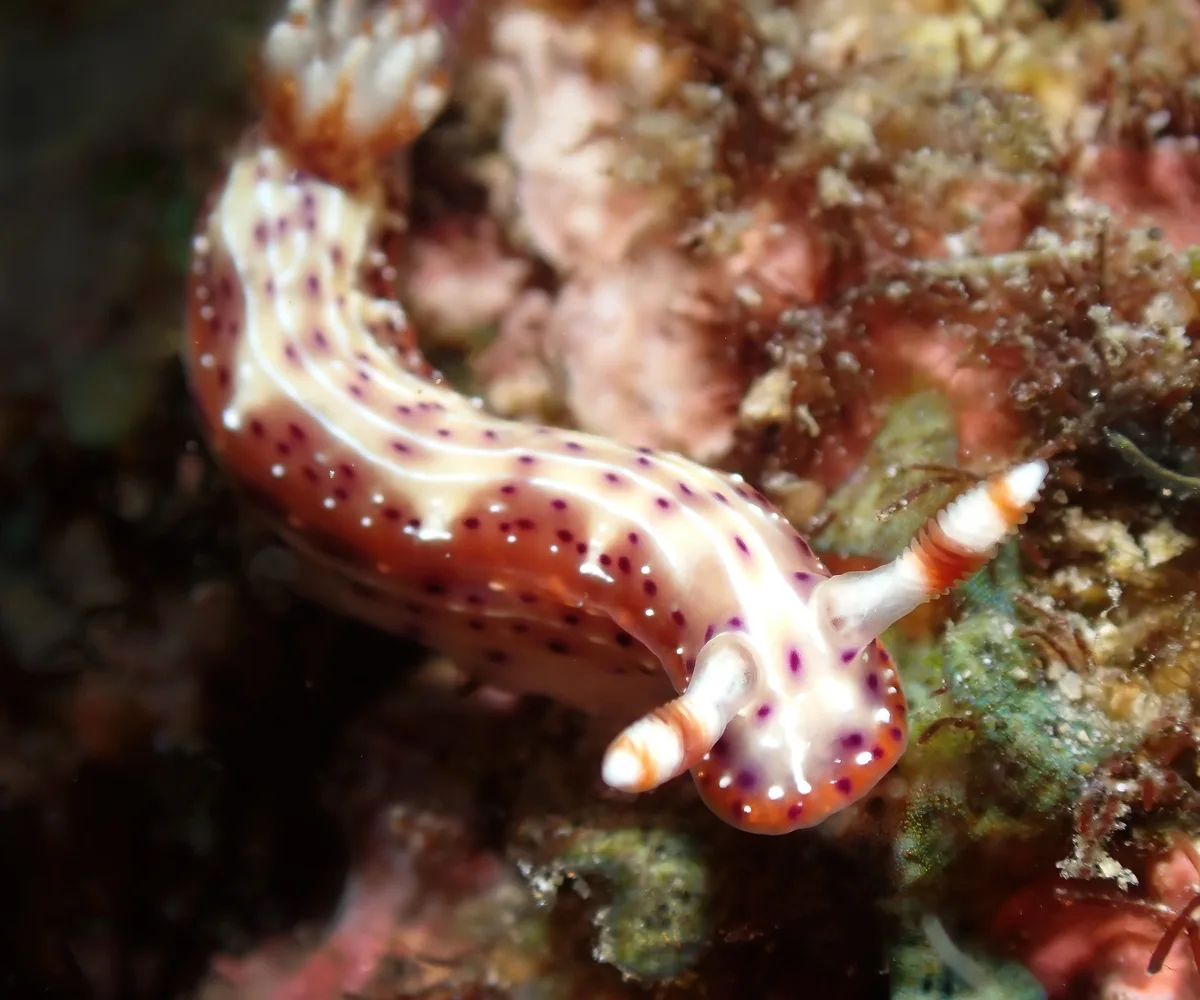
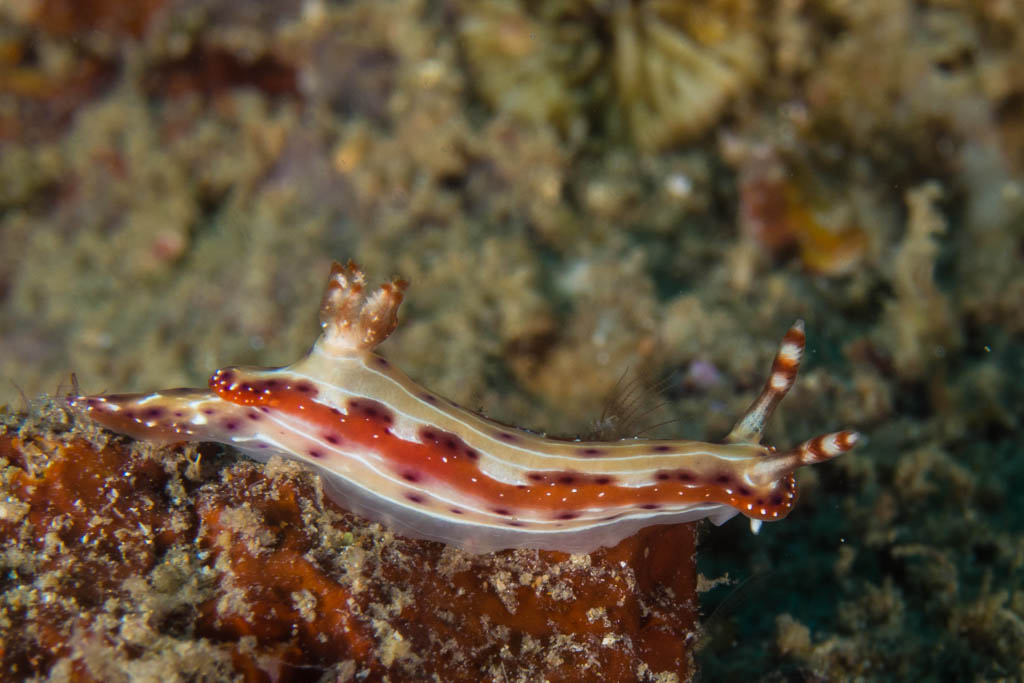
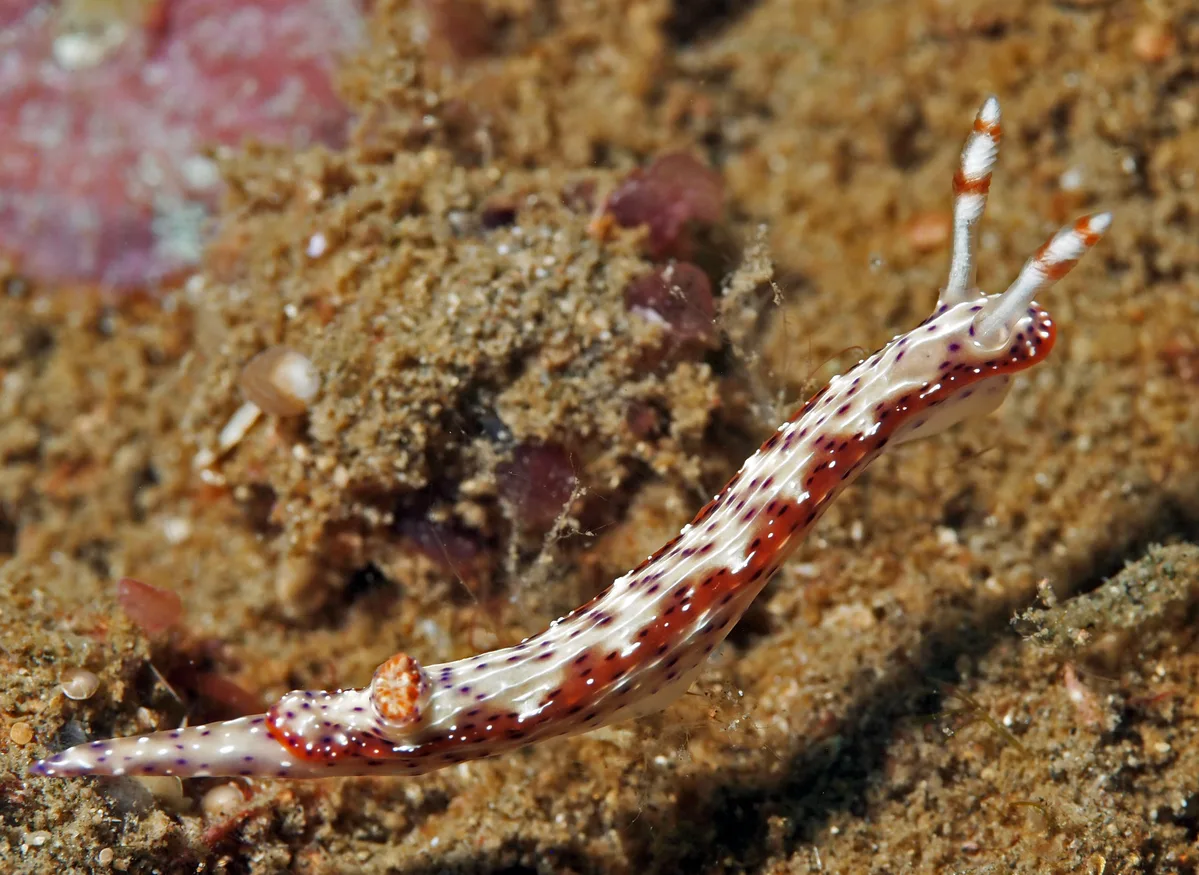
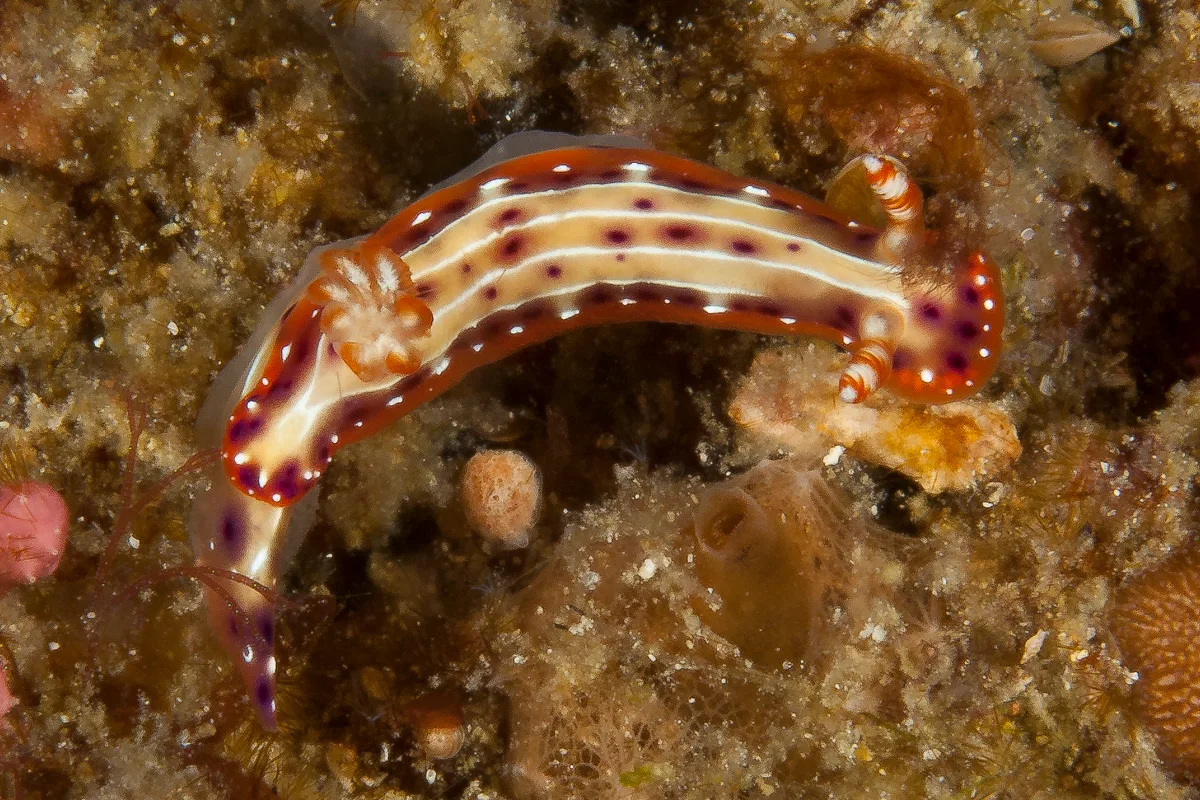
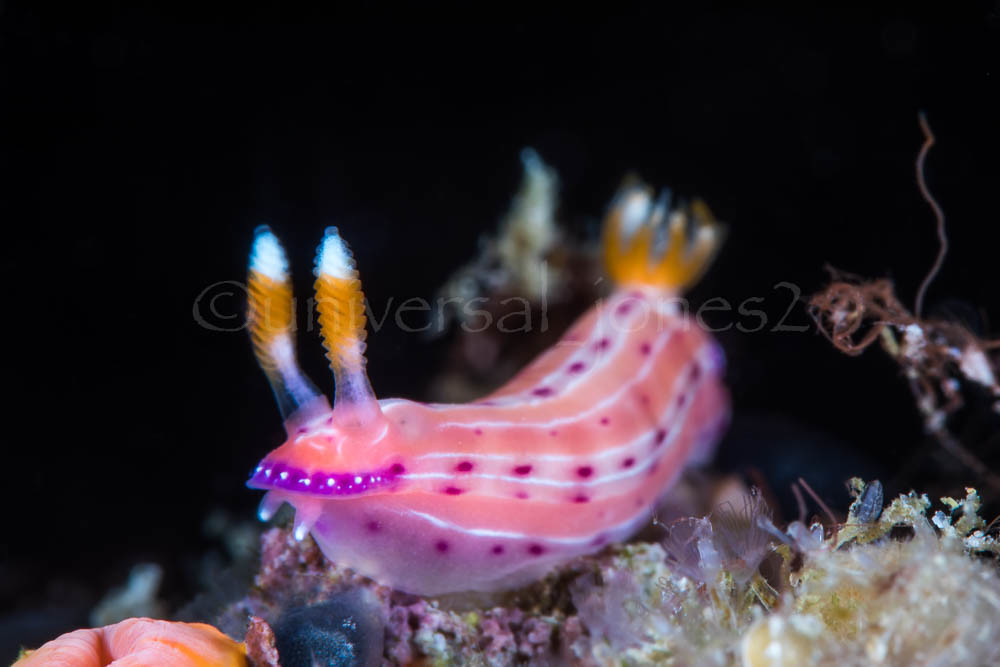
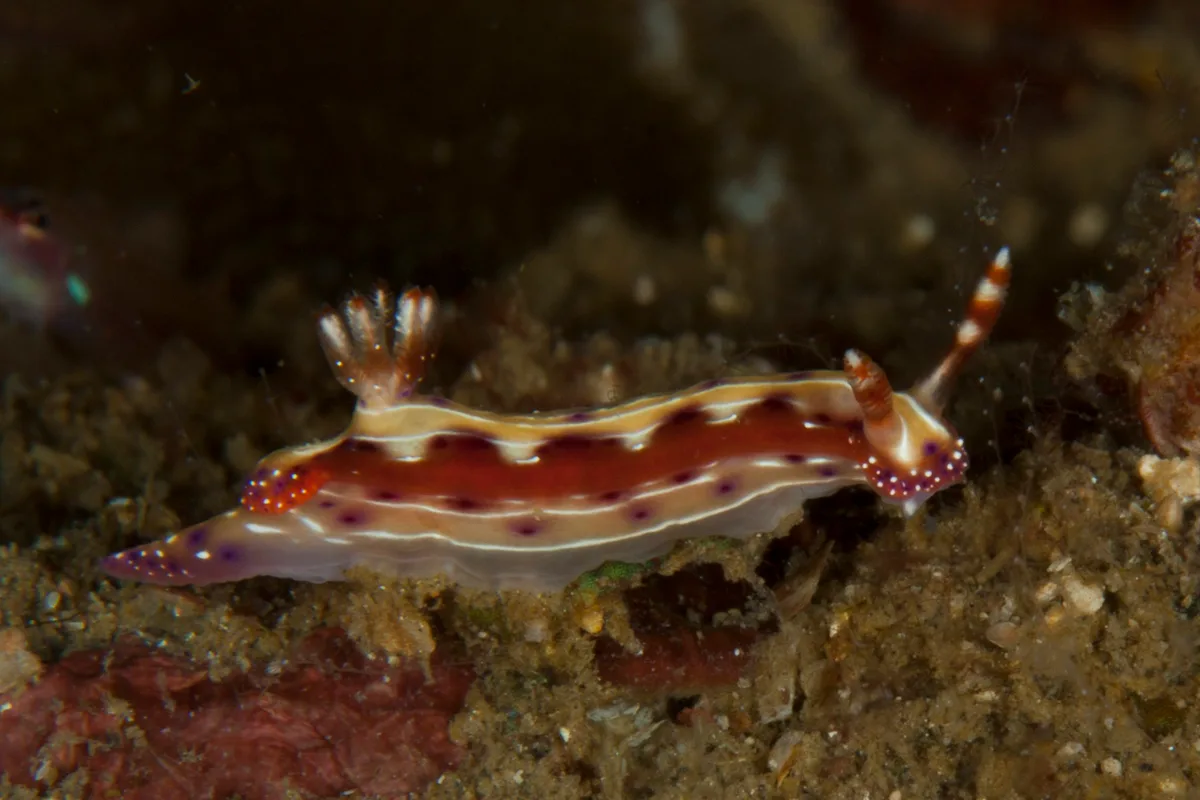
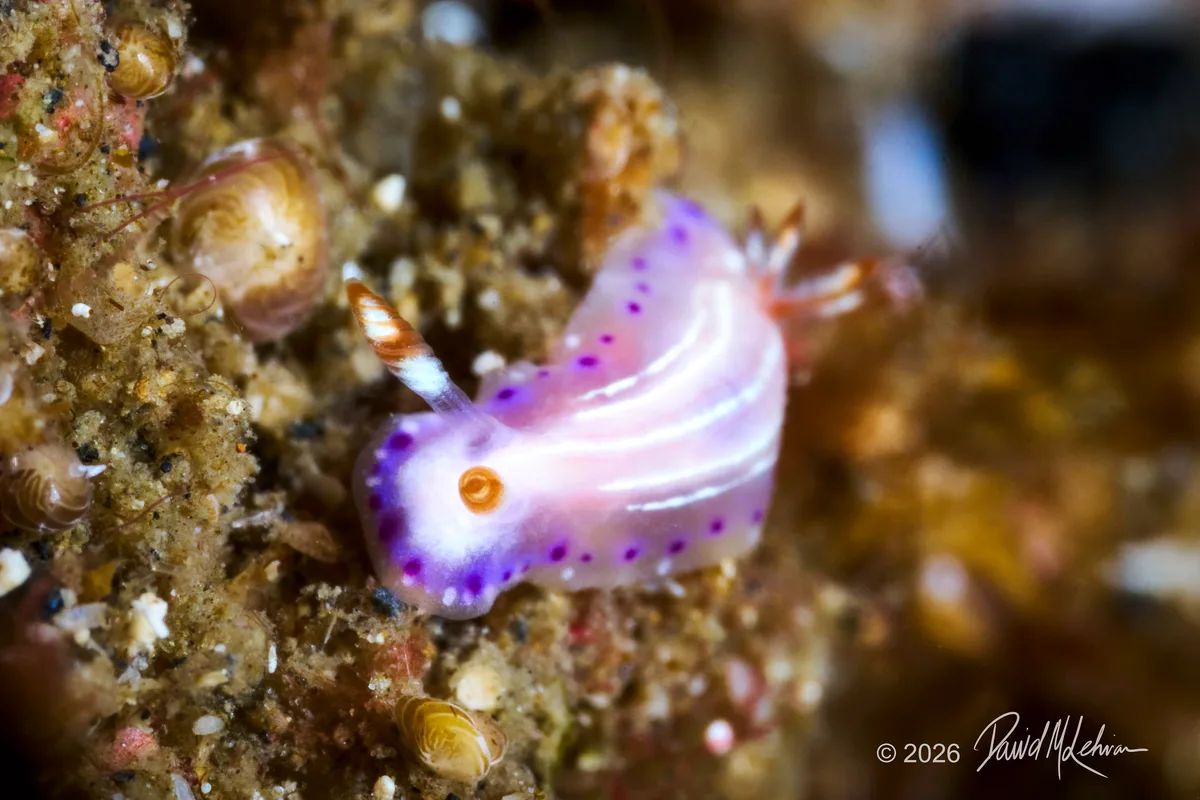
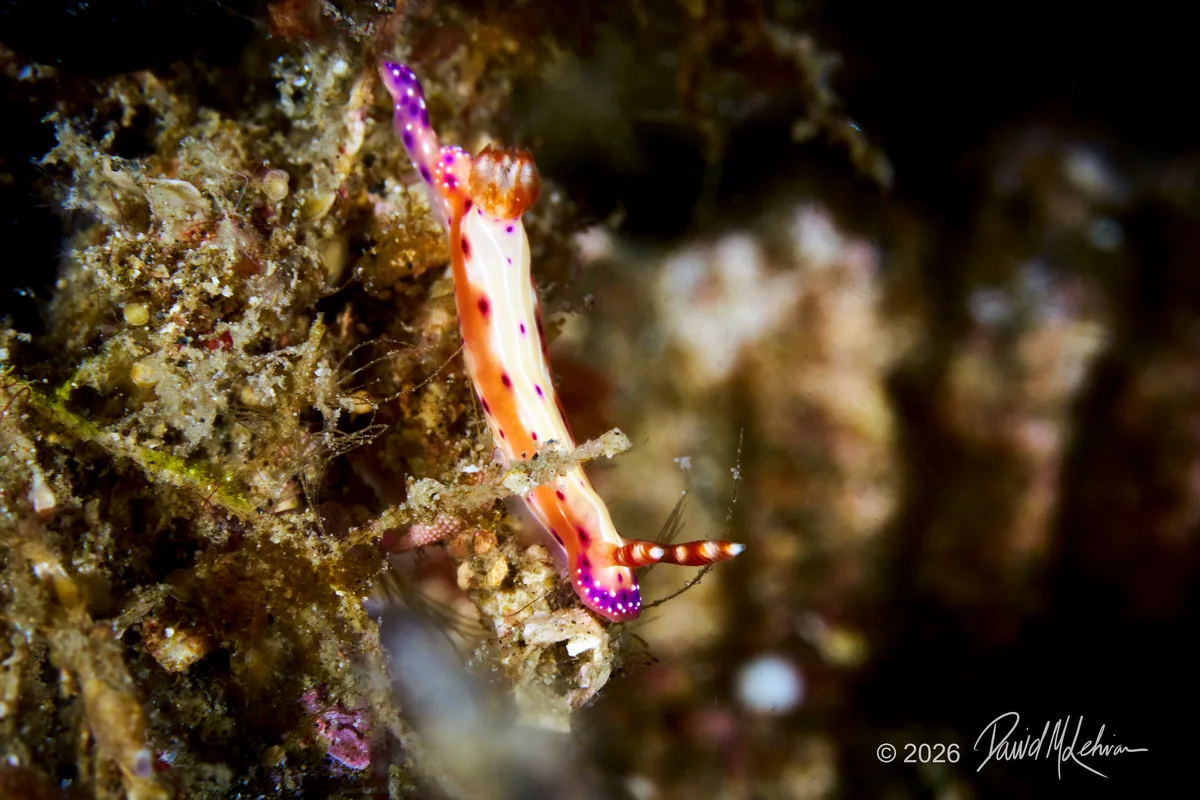
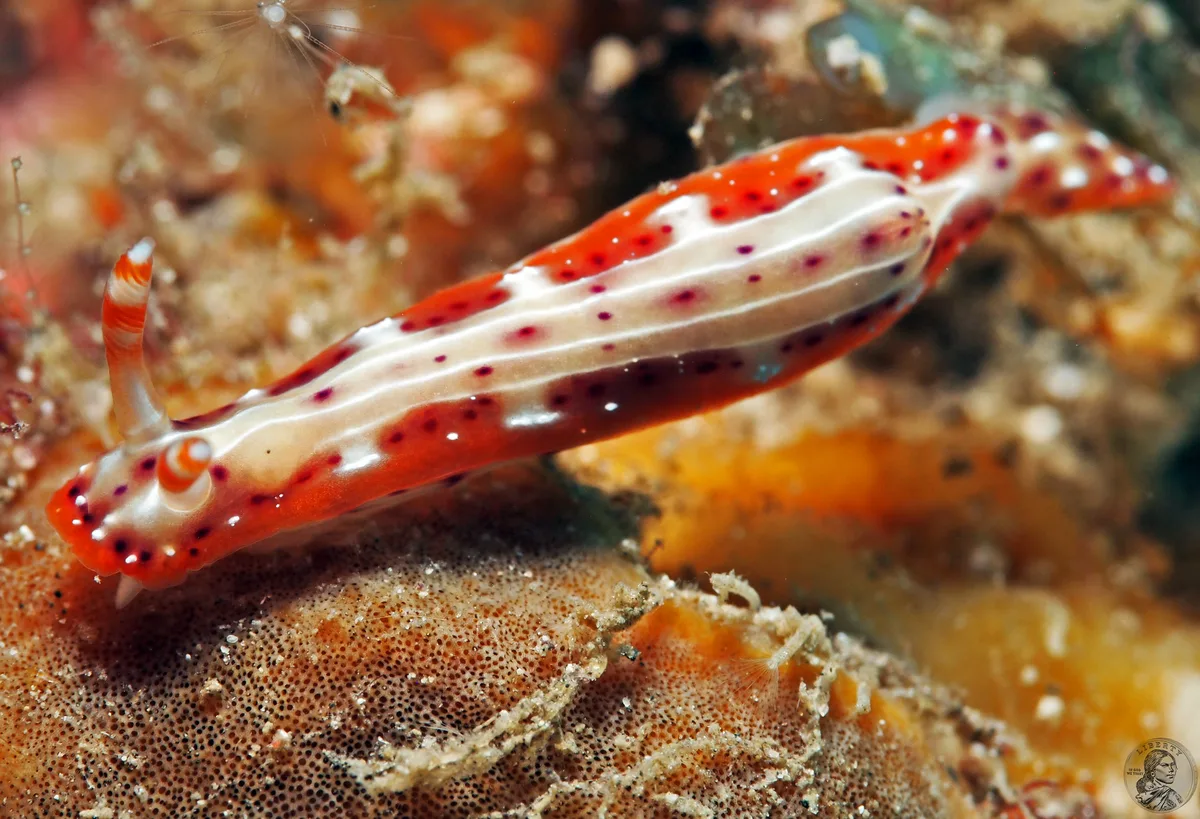
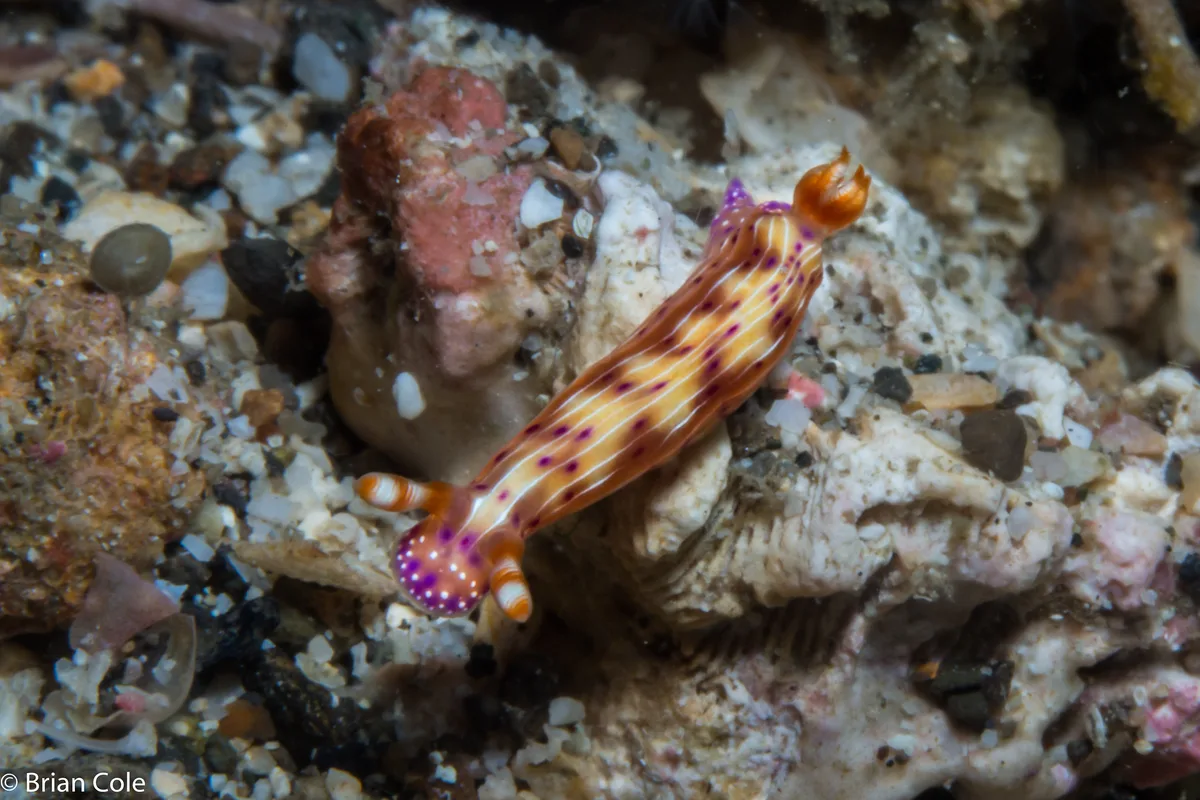
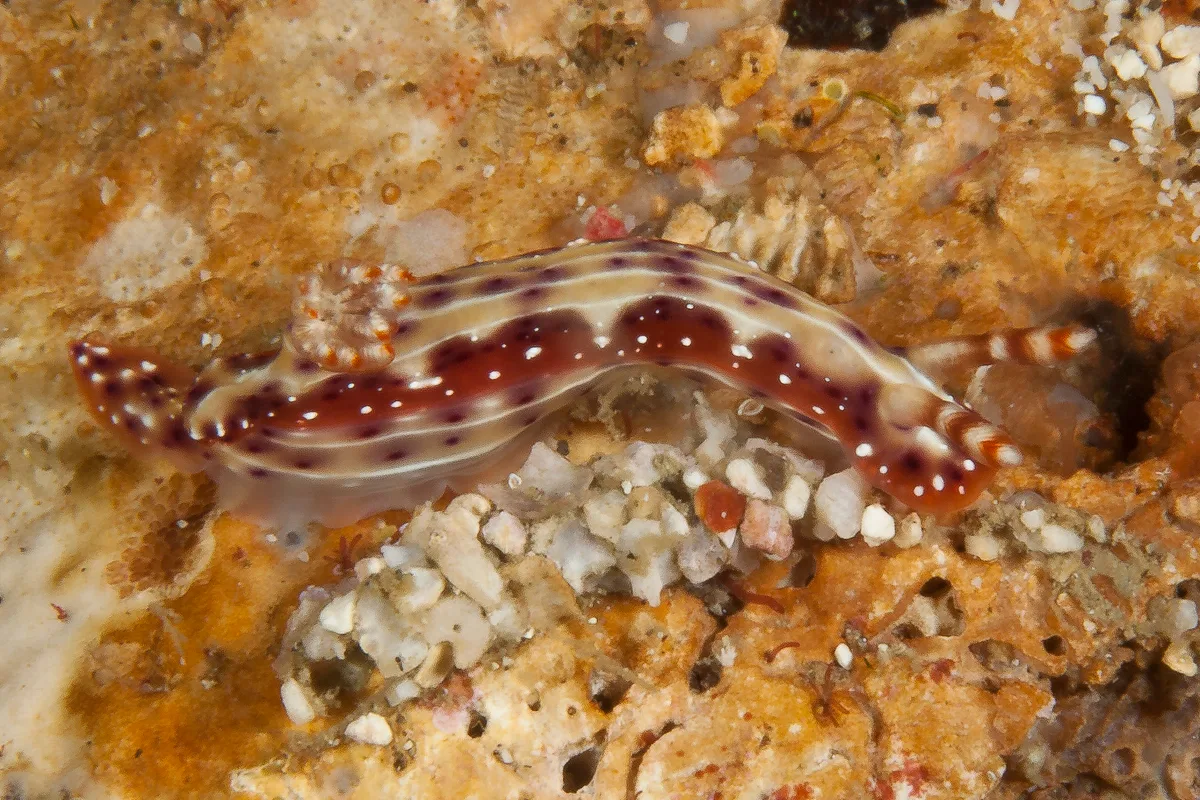
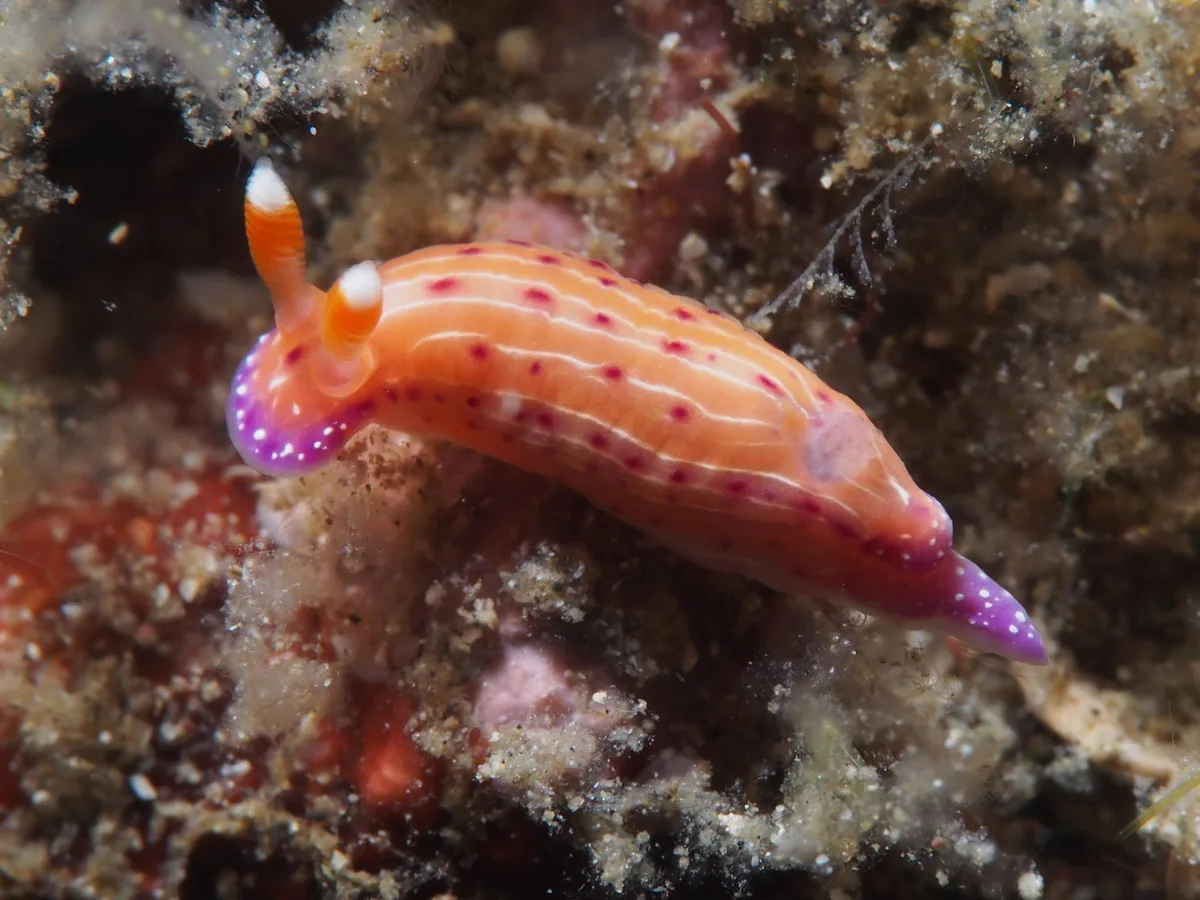
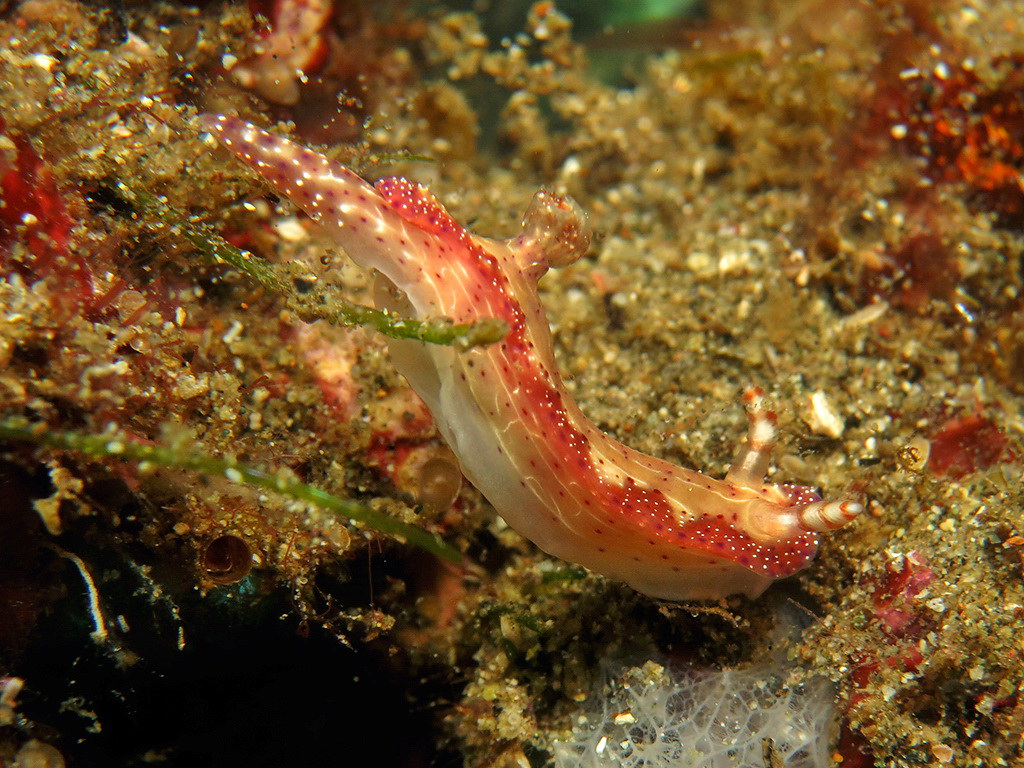
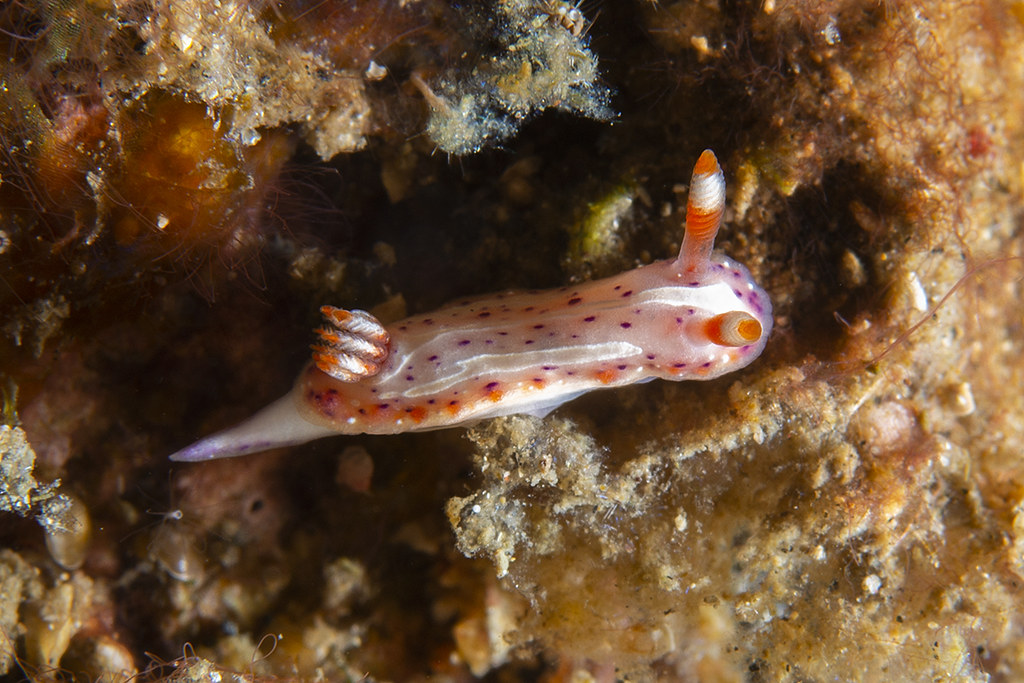
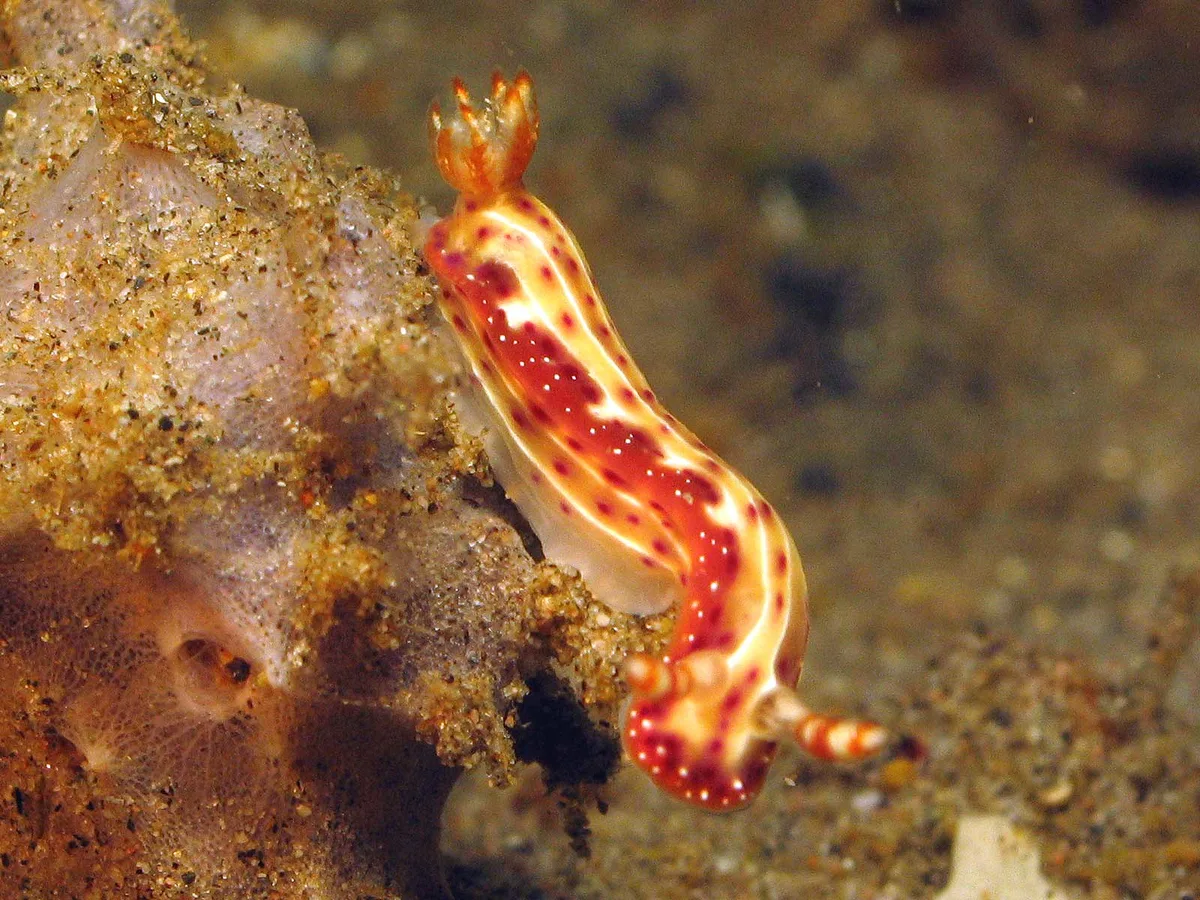
Identify this one by its horns, not by its spots.
The two clubs standing up at the front end are rhinophores, and they are the animal's chemical sense: they read the water for the scent of the sponge it eats and for other slugs of its own species. On this species each one carries two orange bands, and that detail holds when almost nothing else does. The mantle pattern, which is what everyone photographs, varies from brown spots to purple ones and from many to few, and slugs of the same species from two reefs can look like two species.
Rhinophores are also the first thing to disappear. They retract into pockets at the slightest touch, which is why a photograph taken after somebody has poked the animal loses the only reliable character on it. Approach without contacting the rock and they stay up.
Between the spots run thin white lines down the length of the back, and the gill plume at the rear is tipped in orange. Four centimeters, on sponge-covered rock and rubble, out in daylight because a slug carrying sponge chemistry in its mantle rim has no reason to hide.
It occurs from this sea down the East African coast and east across the Pacific, and it is one of the species that recent genetic work has been busy splitting, so the animal here may not carry this name forever.
- two orange bands on each rhinophore, which is the reliable mark
- brown or purple spots set between thin white lines running down the back
- gills tipped or banded in orange
- up to 4 cm