The name on this label is the most interesting thing about it, and it takes two people and a century to explain.
The genus is Pruvotfolia, named for Alice Pruvot-Fol, a French zoologist who came to sea slugs late, published on them for four decades into her eighties, and described a great many of the species other people were finding. She worked mostly from preserved material sent to her in jars, which was how it was done, and she got some of it wrong in ways that specialists are still untangling: one of the animals on this very page carries a name she gave that turned out to sit on top of somebody else's.
The species was described in 2000 by Nathalie Yonow, who has spent her career on the sea slugs of this sea specifically and whose name is on several of the 🌊 Red Sea animals in this catalogue. Two women, one at each end of the twentieth century, on the same small label.
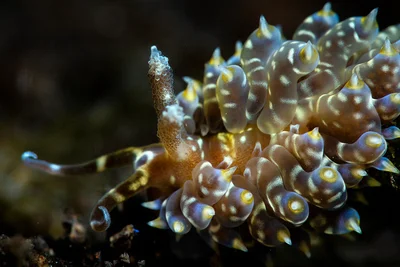
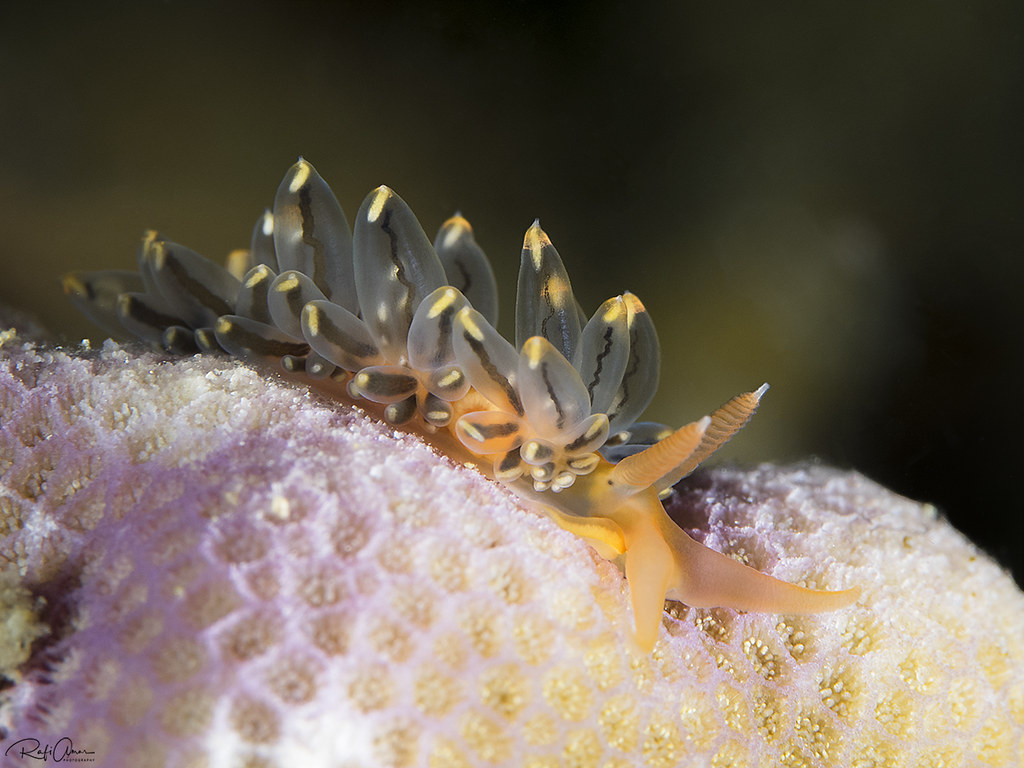
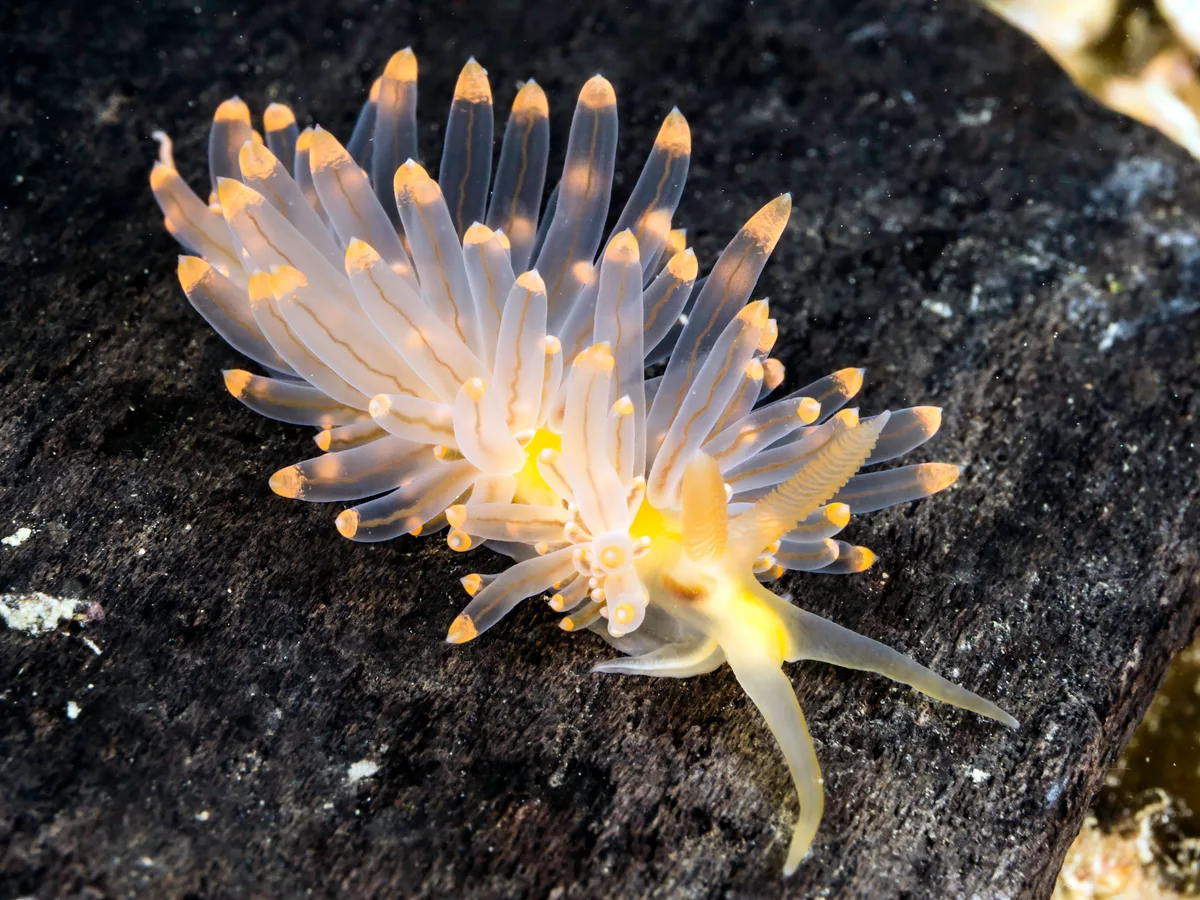
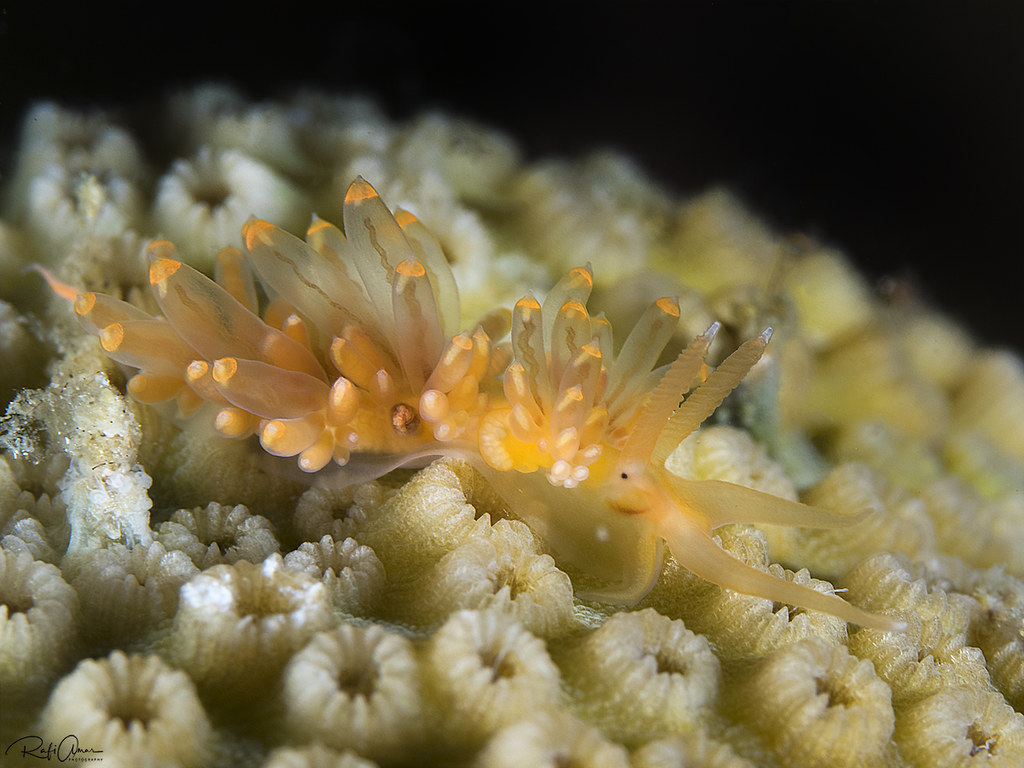
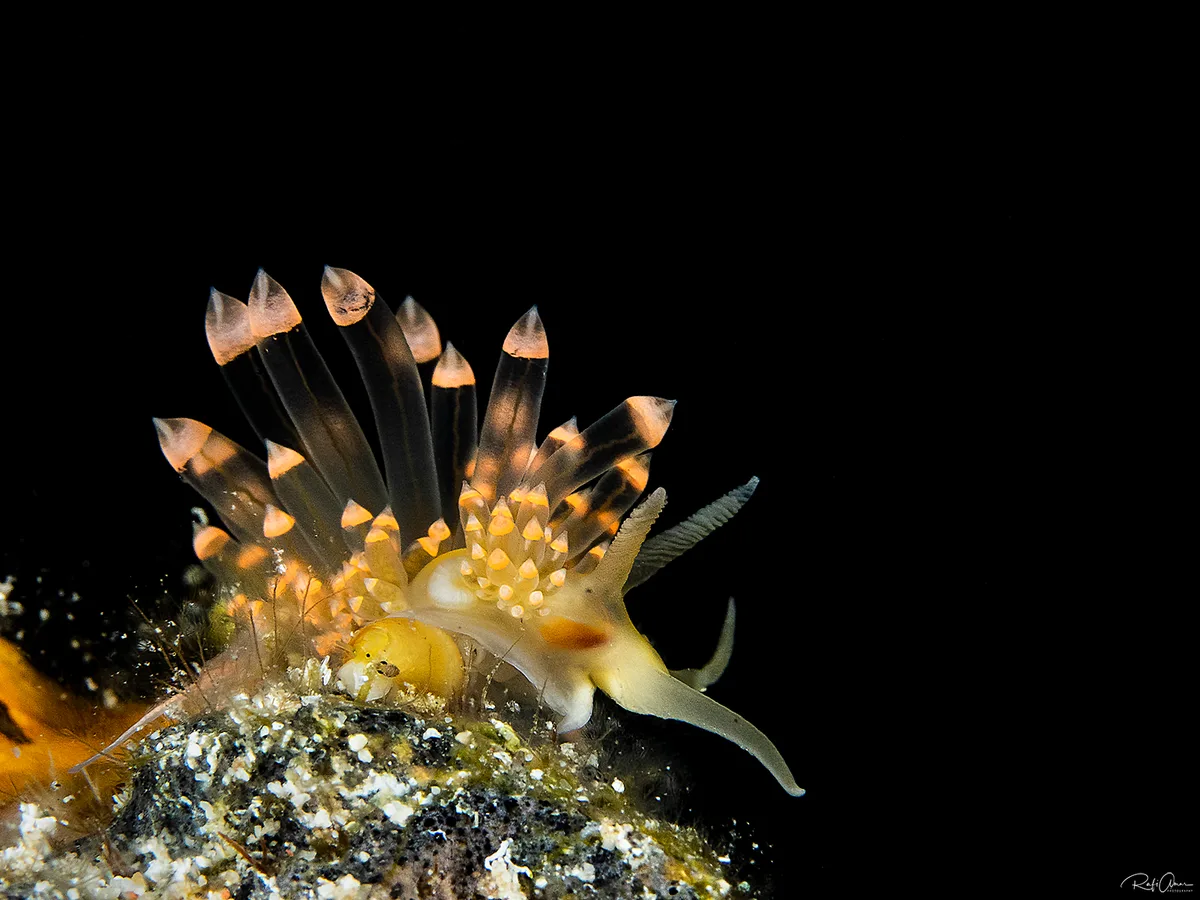
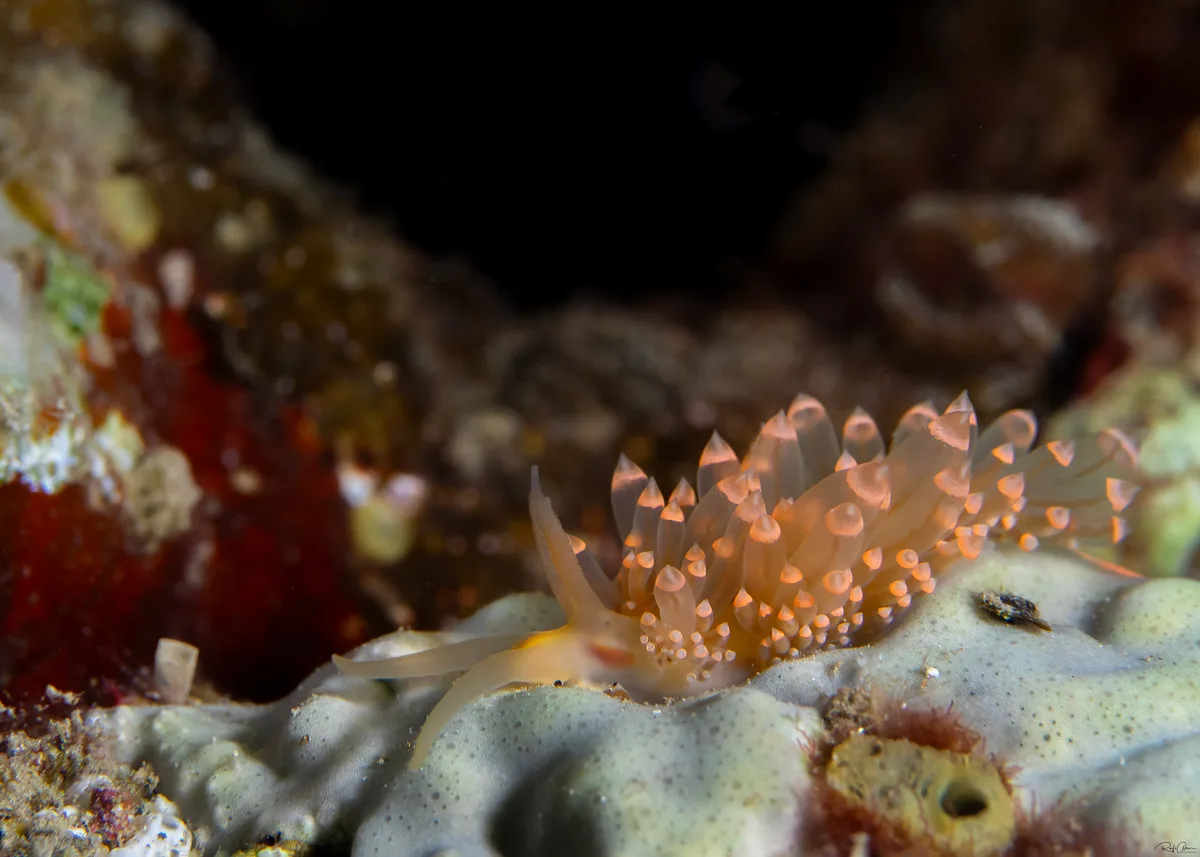
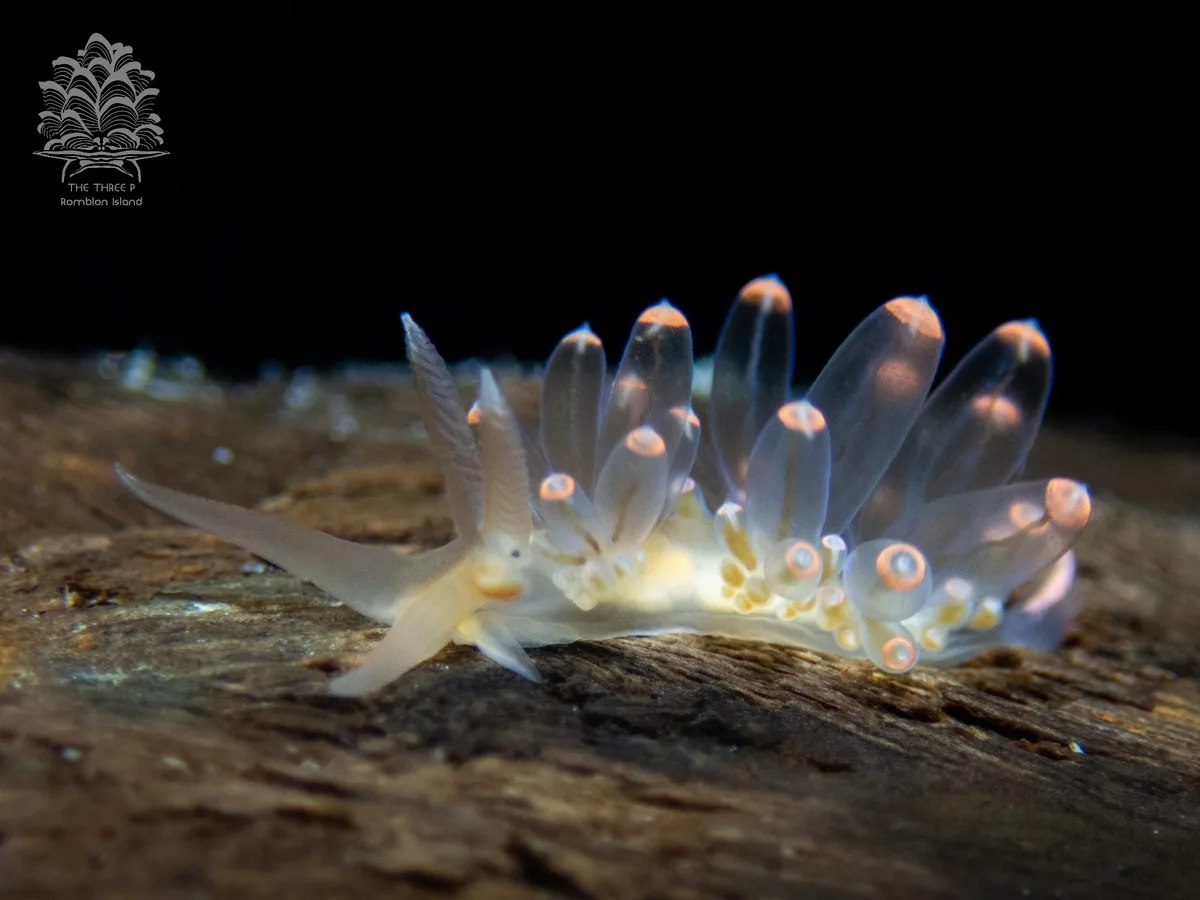
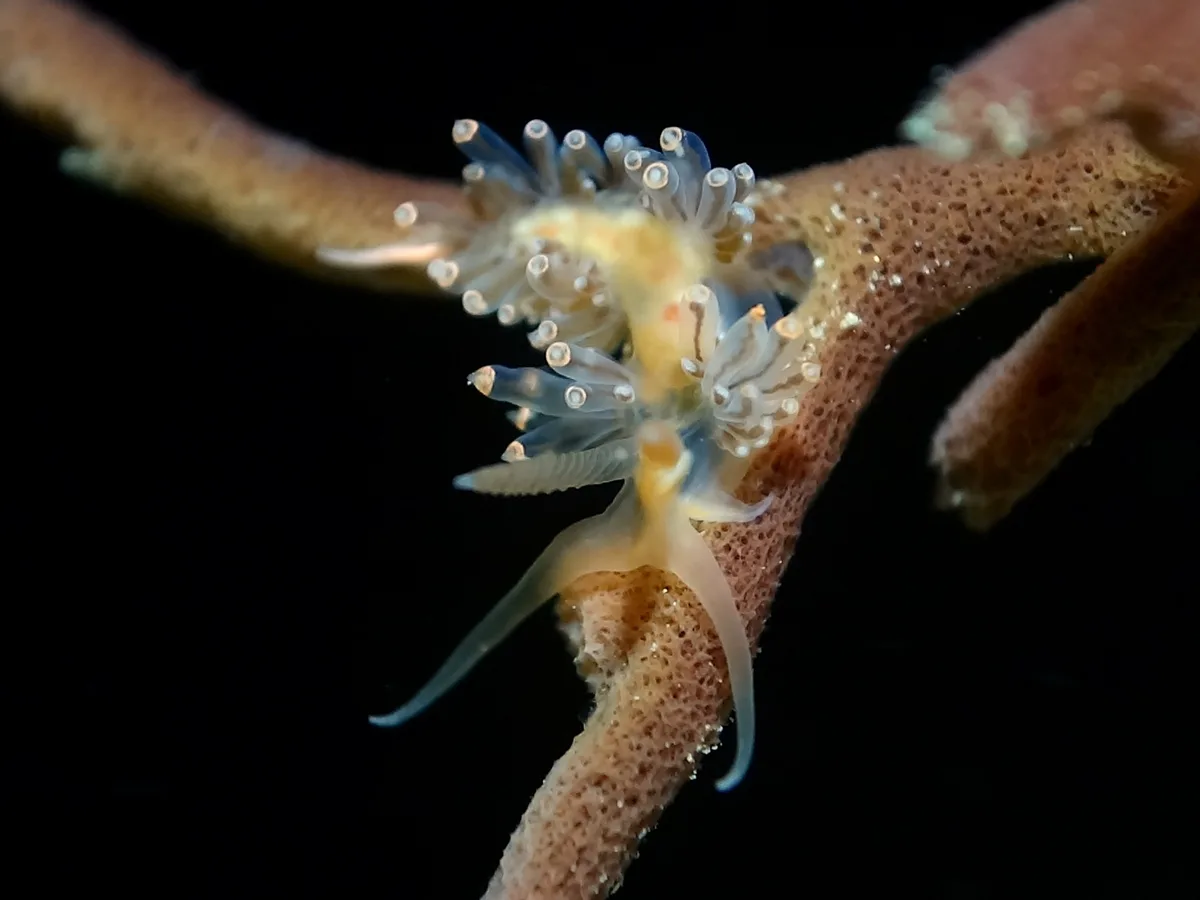
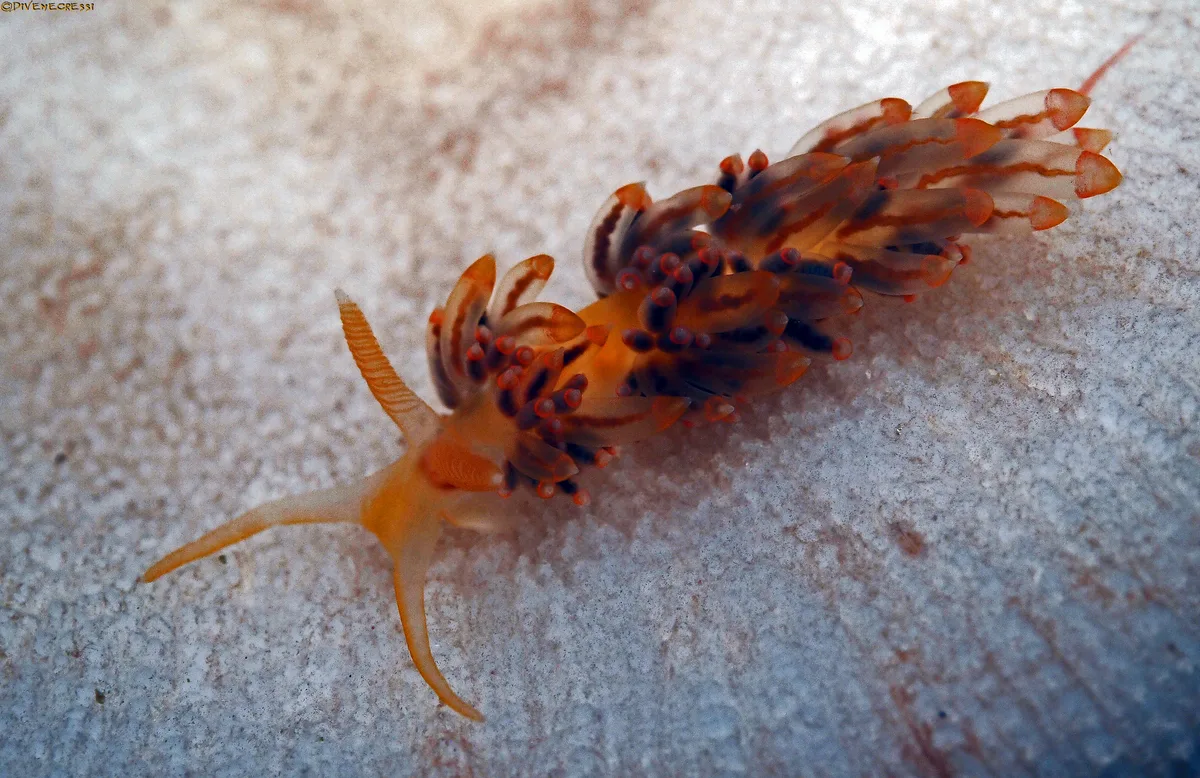
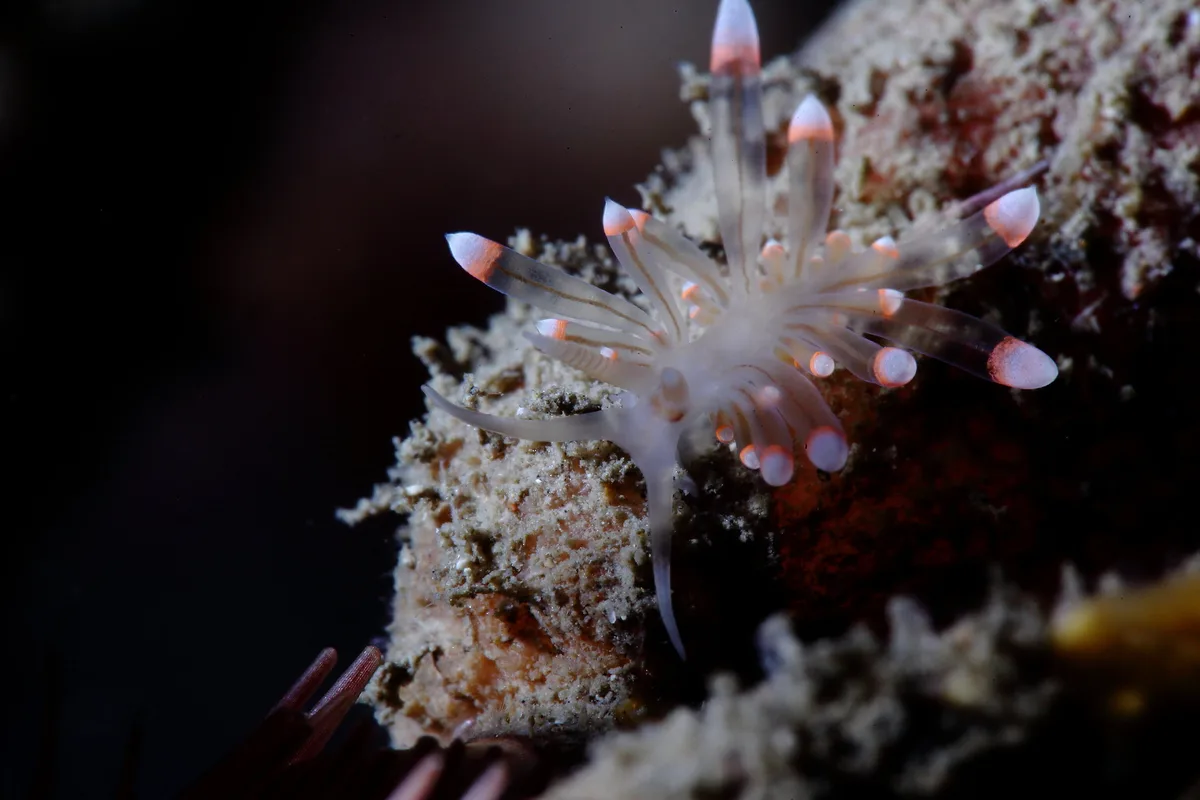
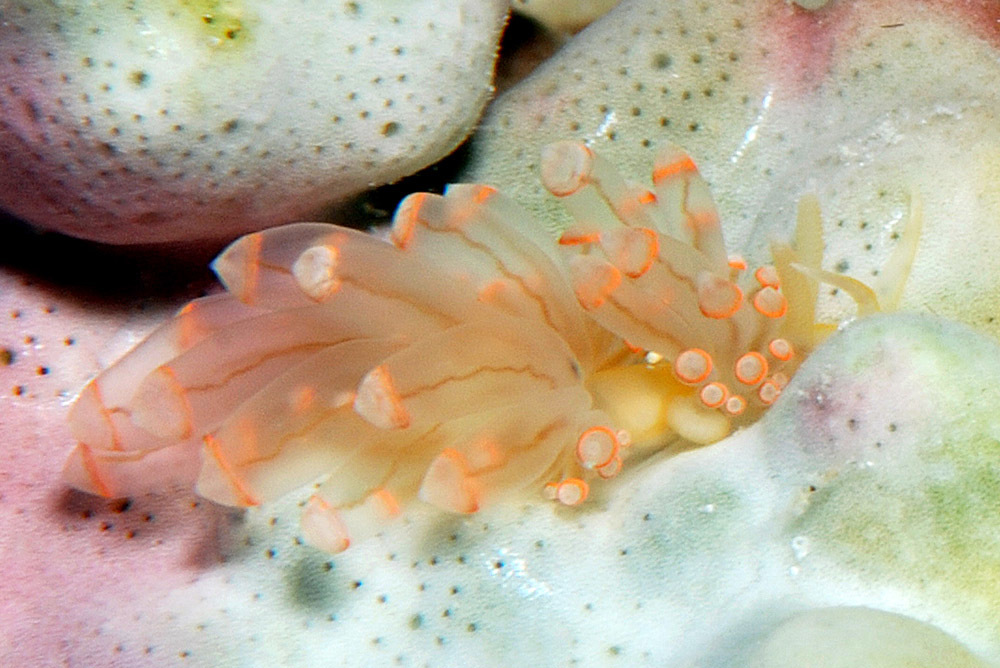
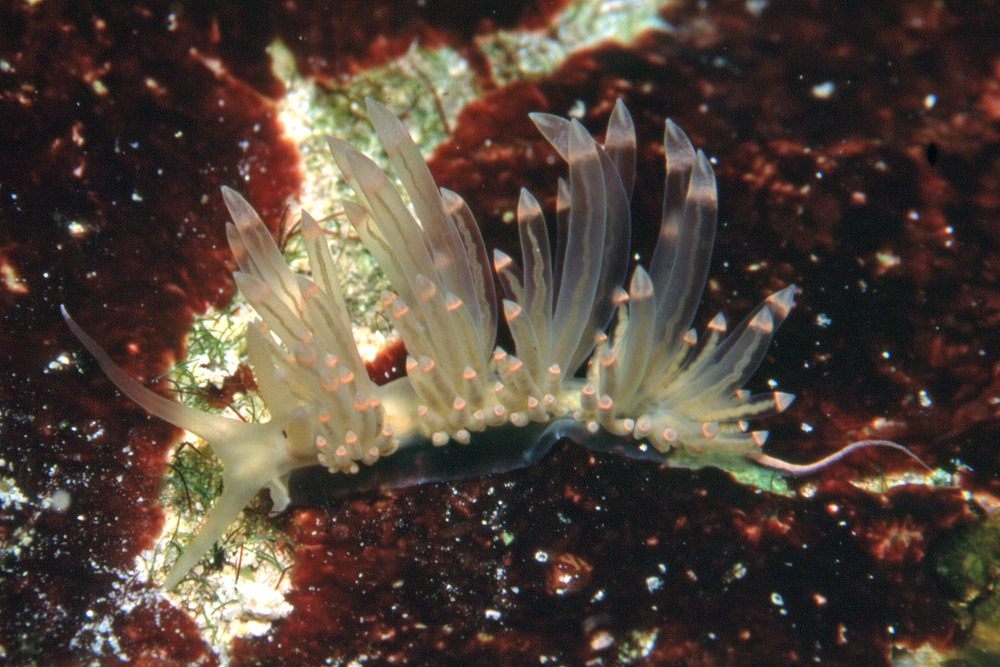
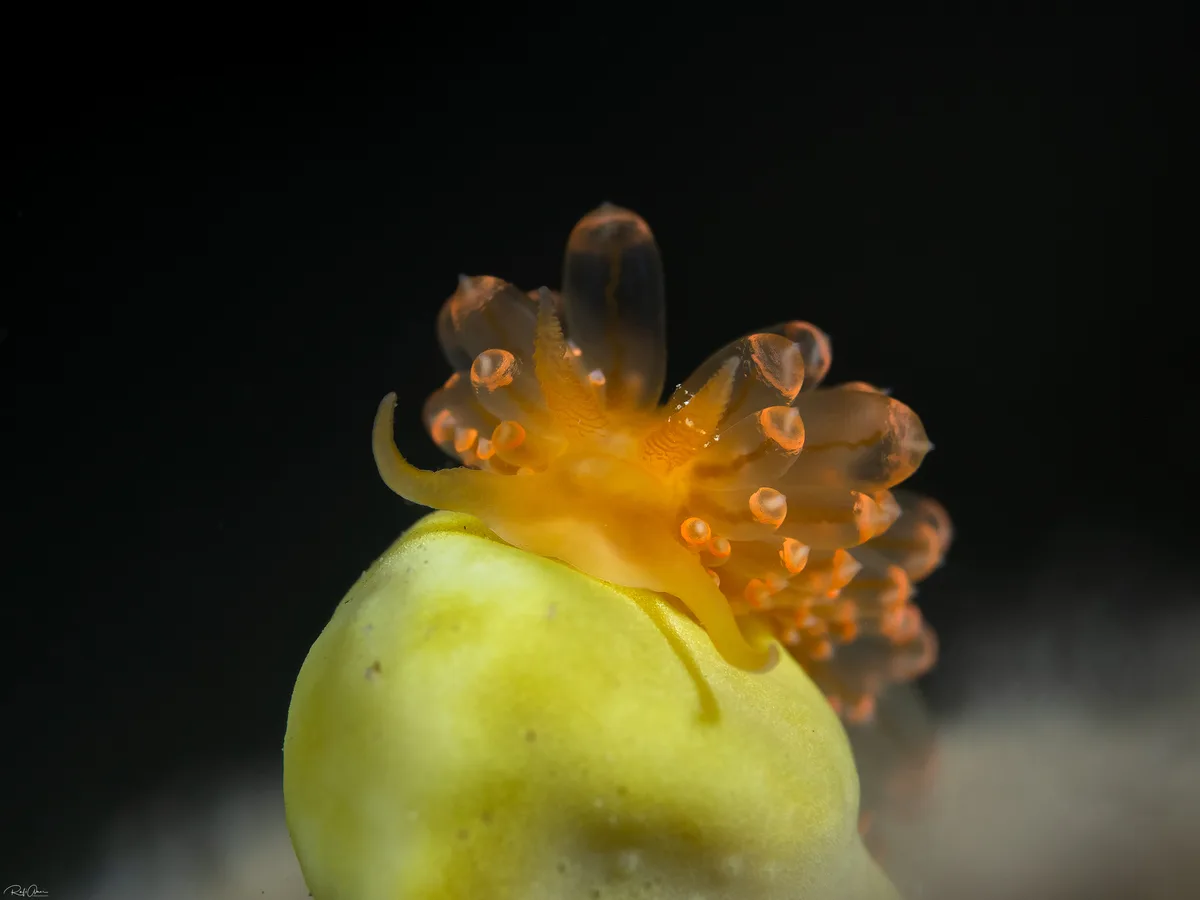
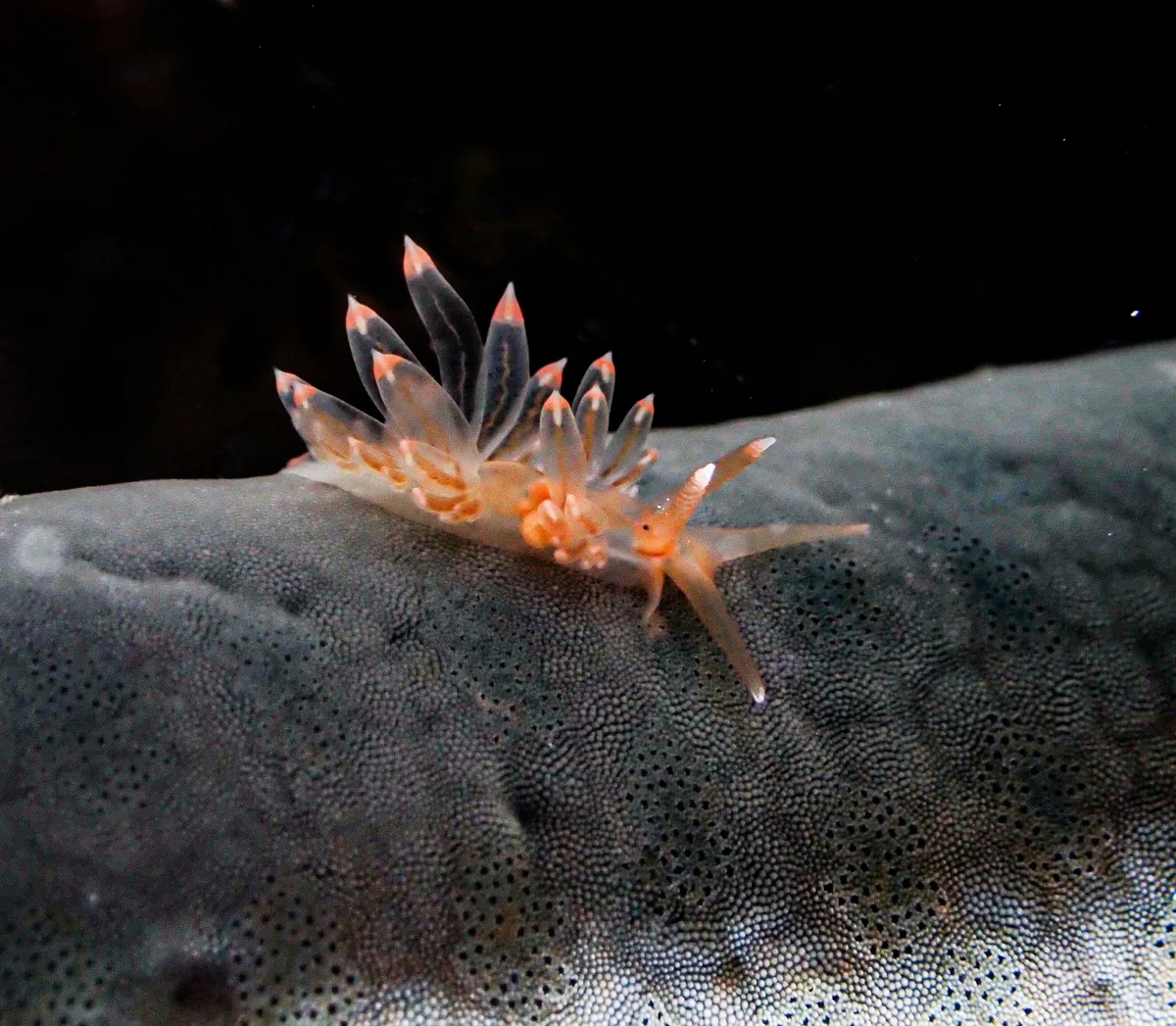
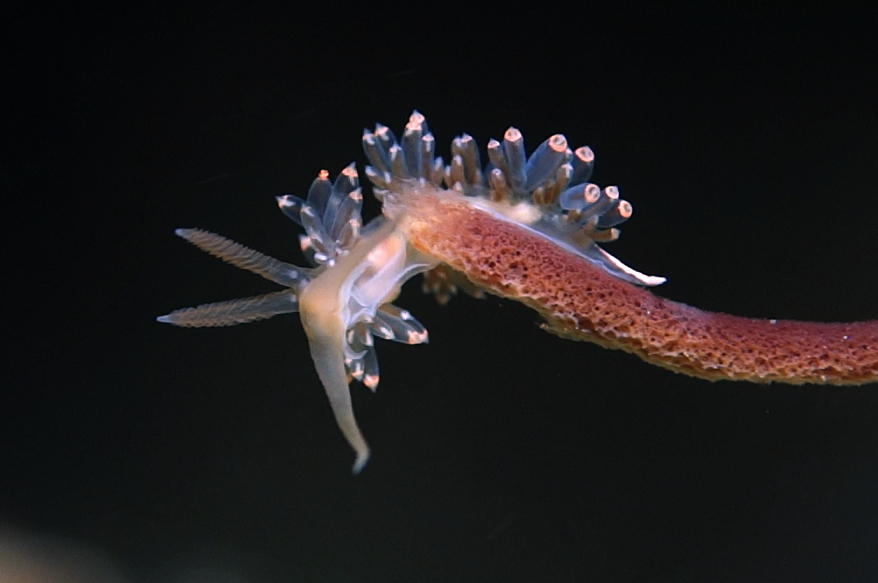
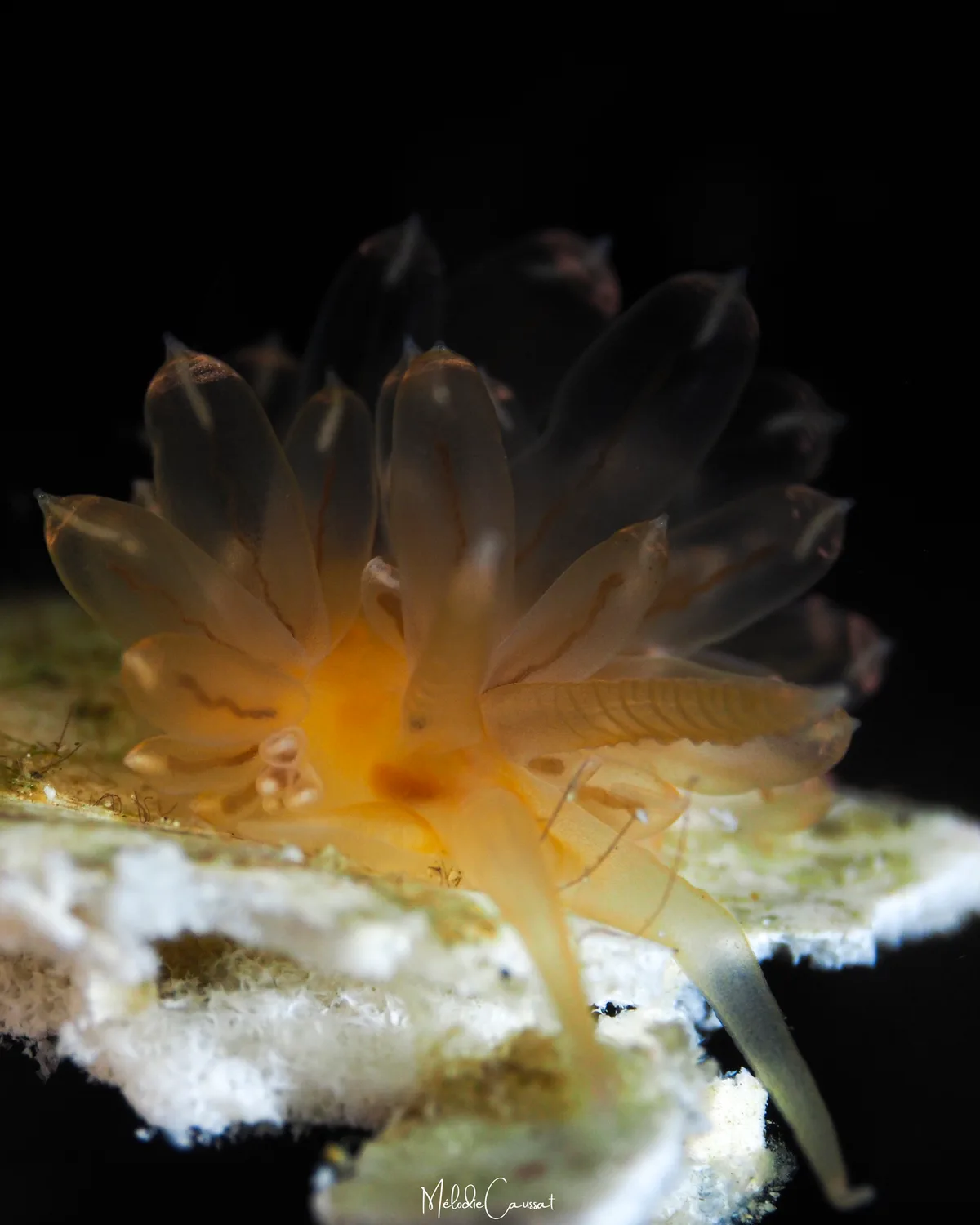
The animal itself is two centimeters (0.8 in) of translucent white with cerata banded in pink or yellow below an opaque white tip. Read the order: color first, then white at the very end. That white cap is the sac of stolen stinging cells showing through the skin, because like the rest of the family this one grazes hydroids and keeps their unfired capsules as its own defense.
Rhodopos means rose-foot, and if you get low enough to see the sole, that is what it is.
- cerata banded pink or yellow below the tip, with the tip itself opaque white
- translucent white body
- two bands on each ceras, in that order: color first, then white
- two centimeters, on hydroid growth