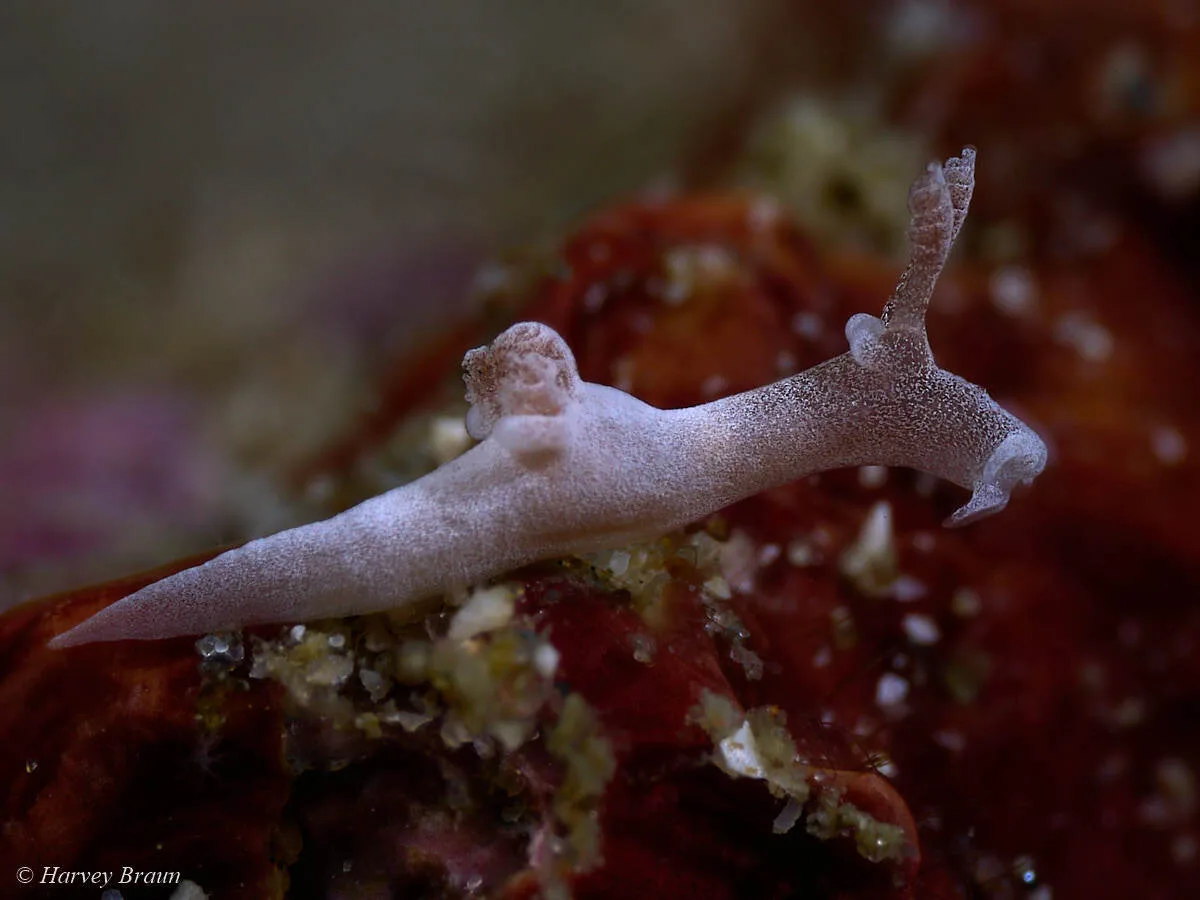
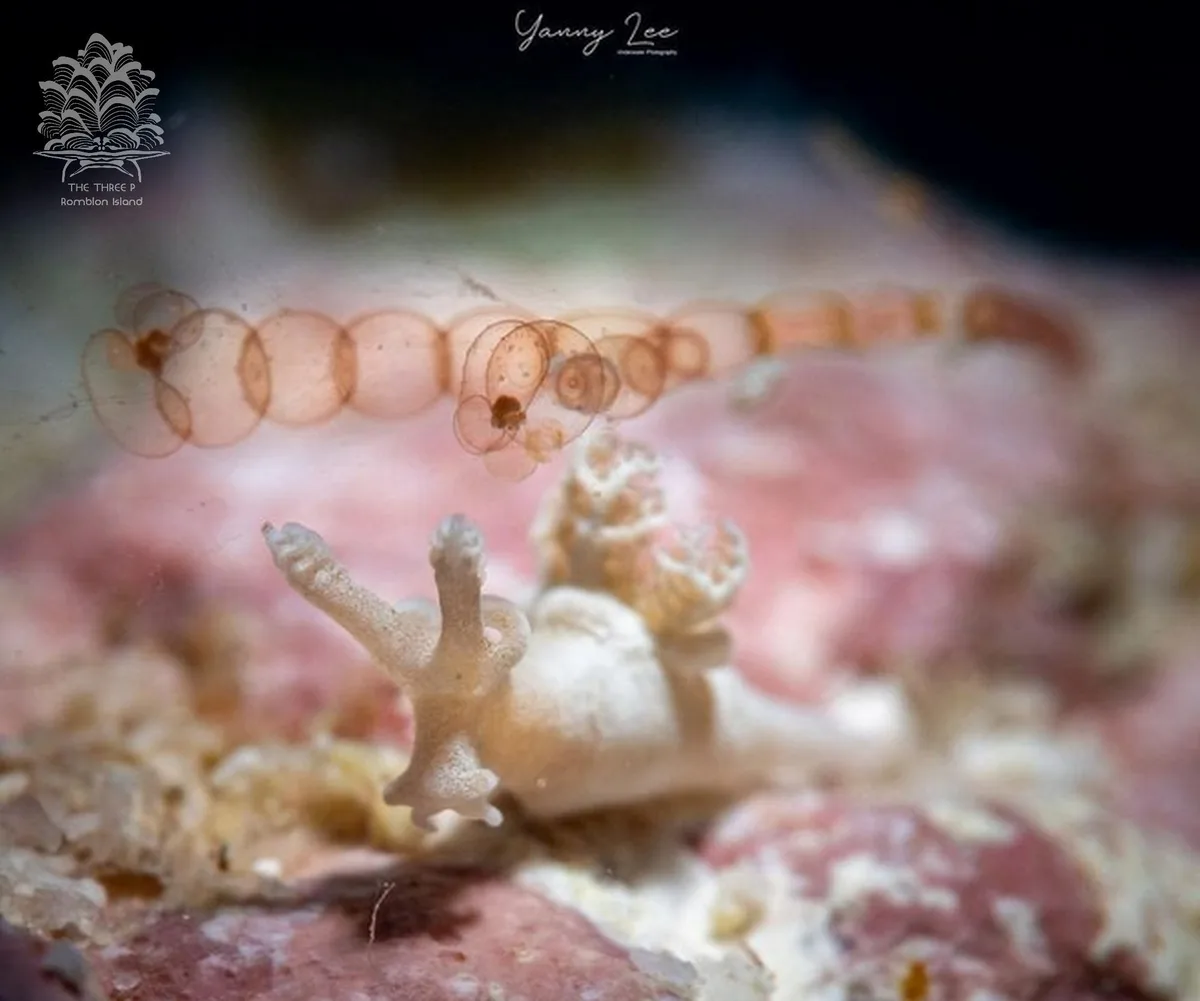
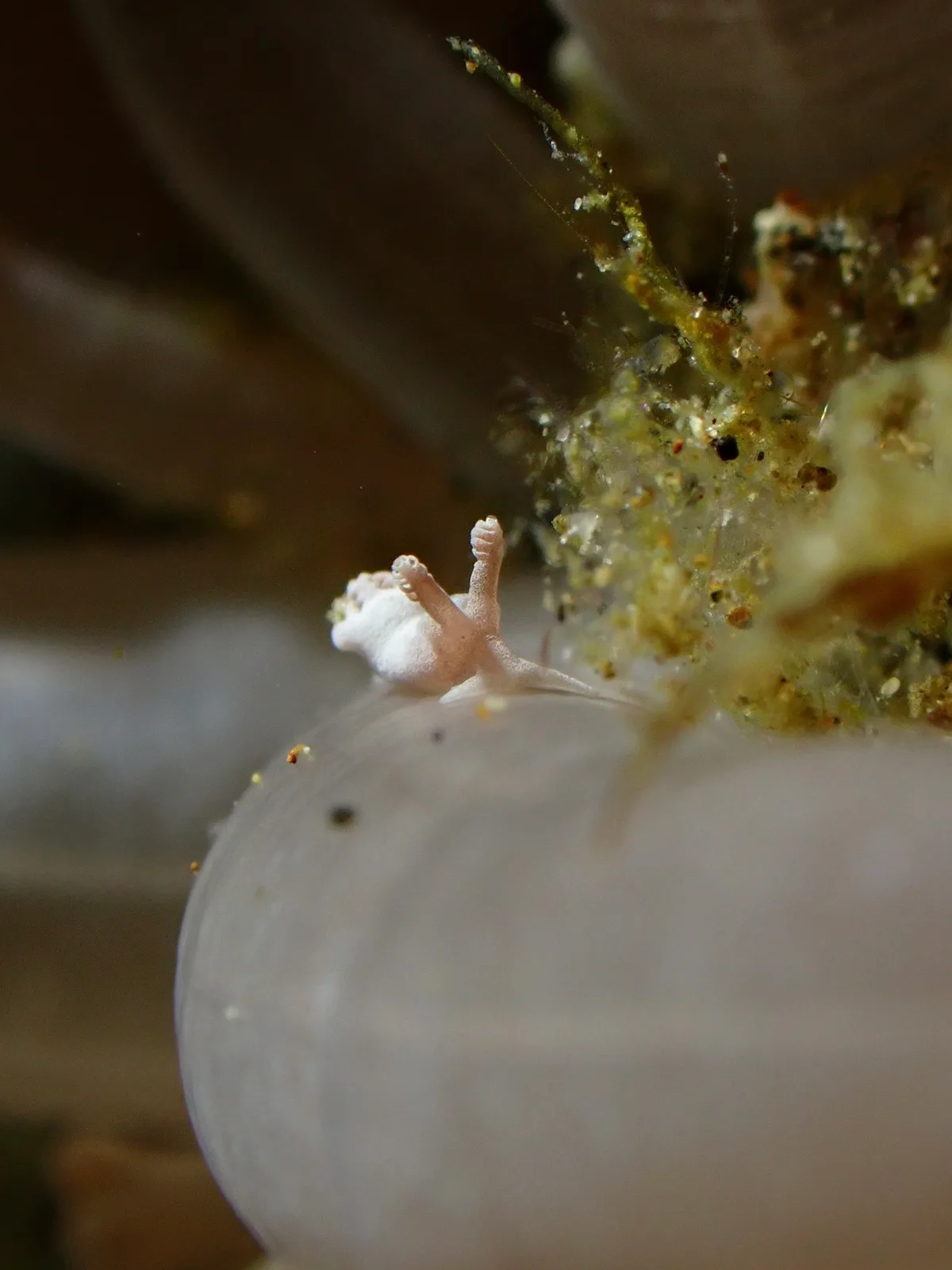
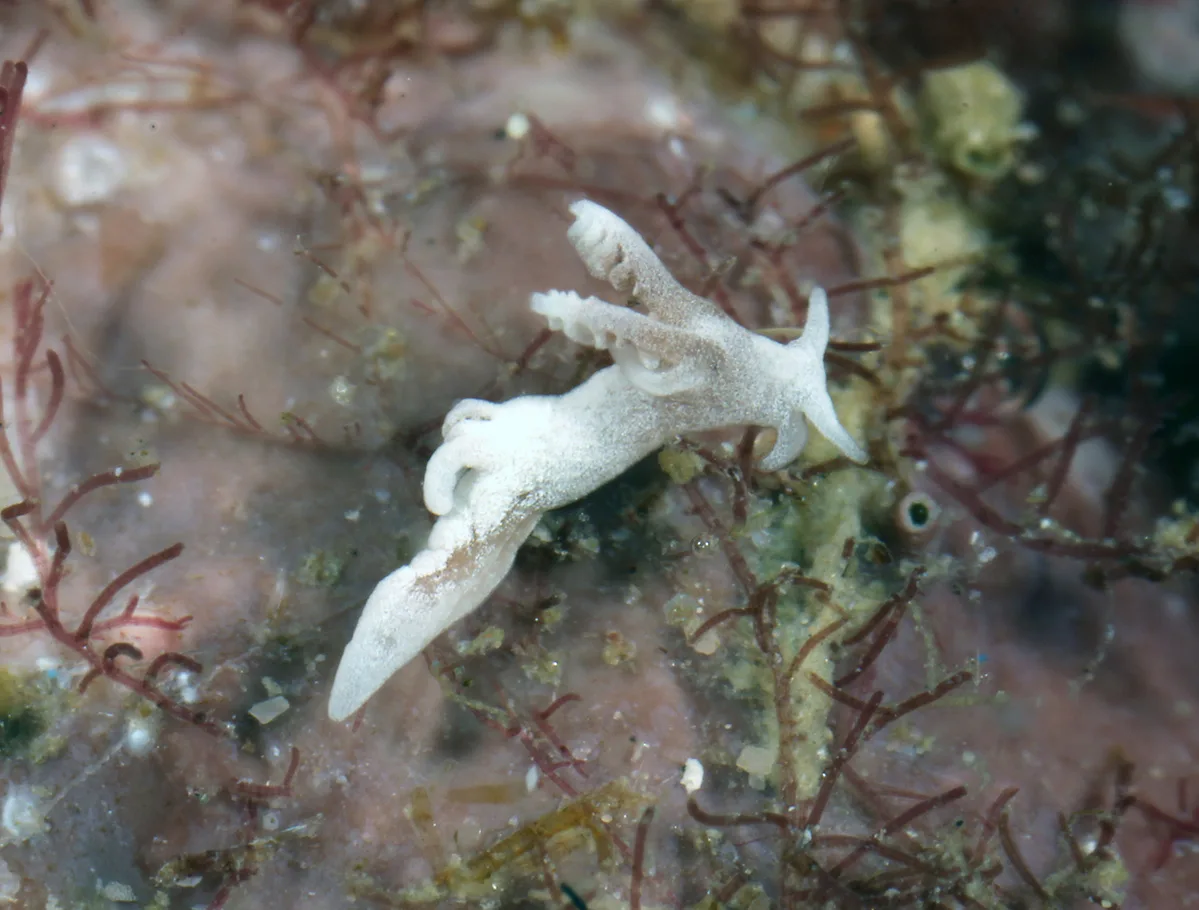
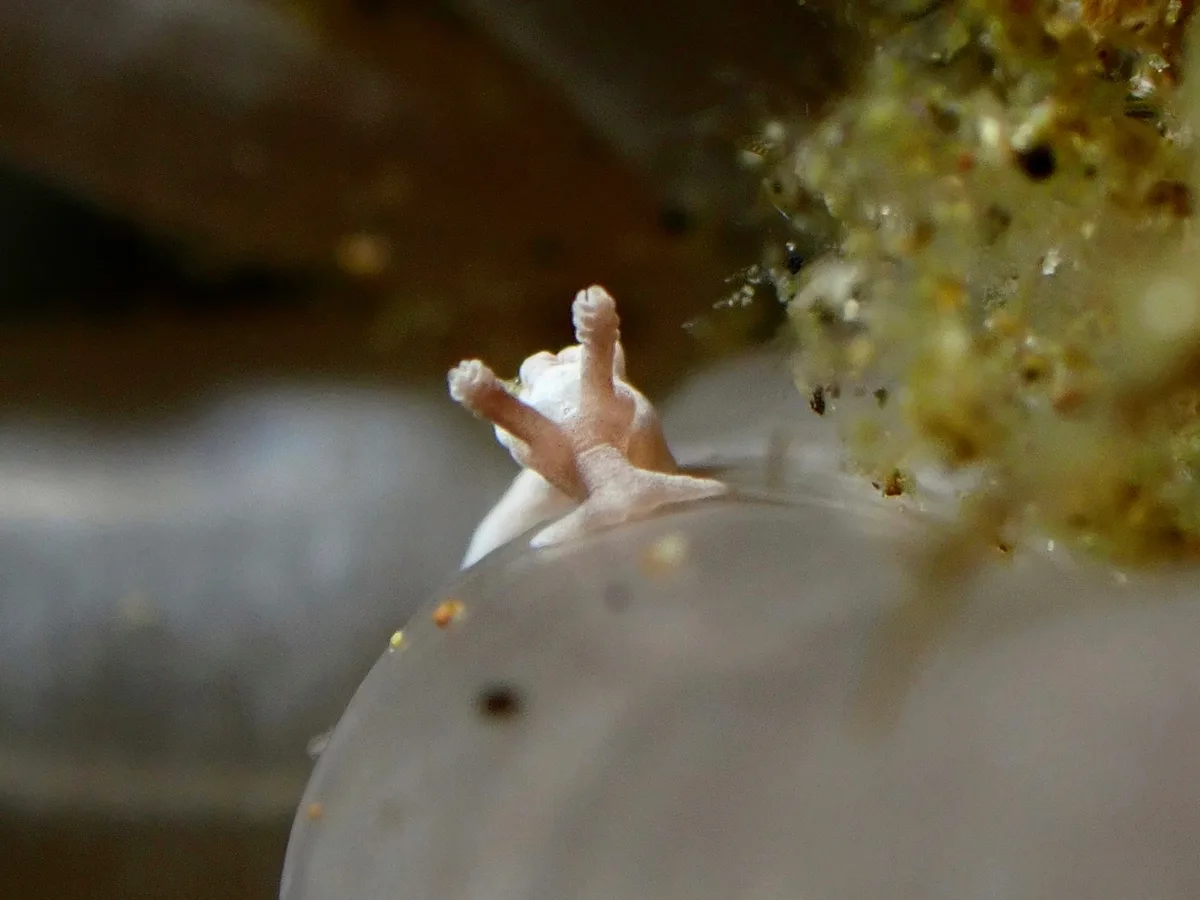
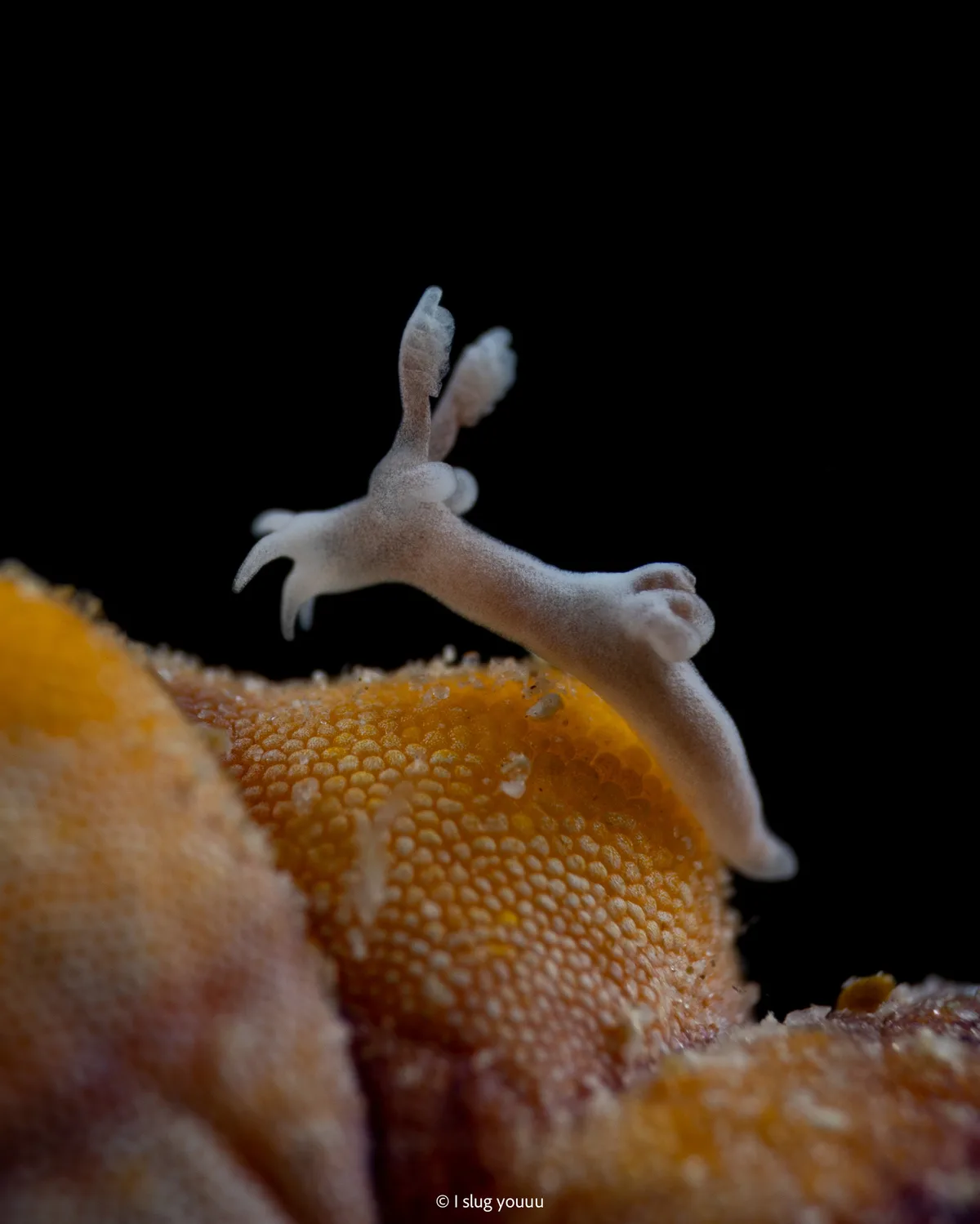
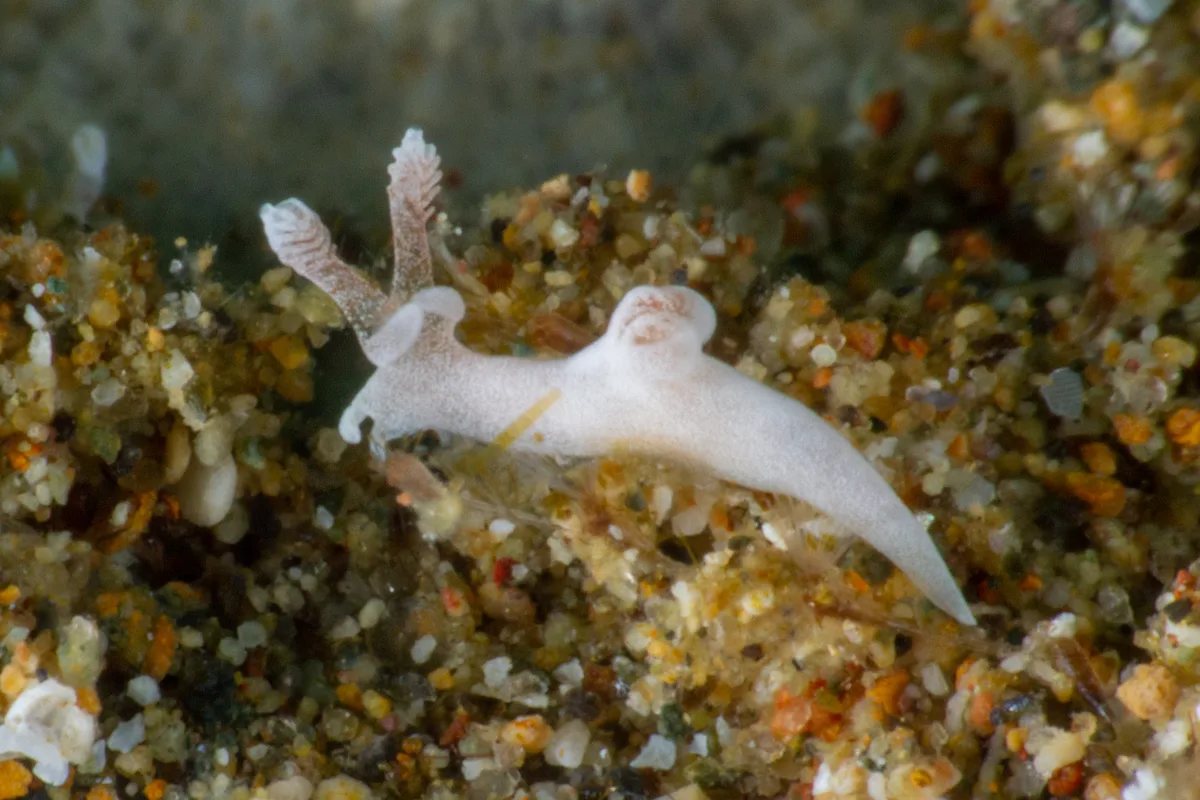
Every other member of this genus lives on sponge, eating the entoprocts that grow there. This one moved to soft coral, and the regional book flags it in as many words: a unique Trapania species, found on soft corals.
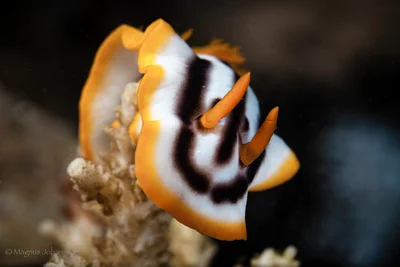
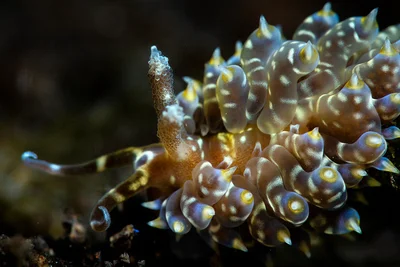
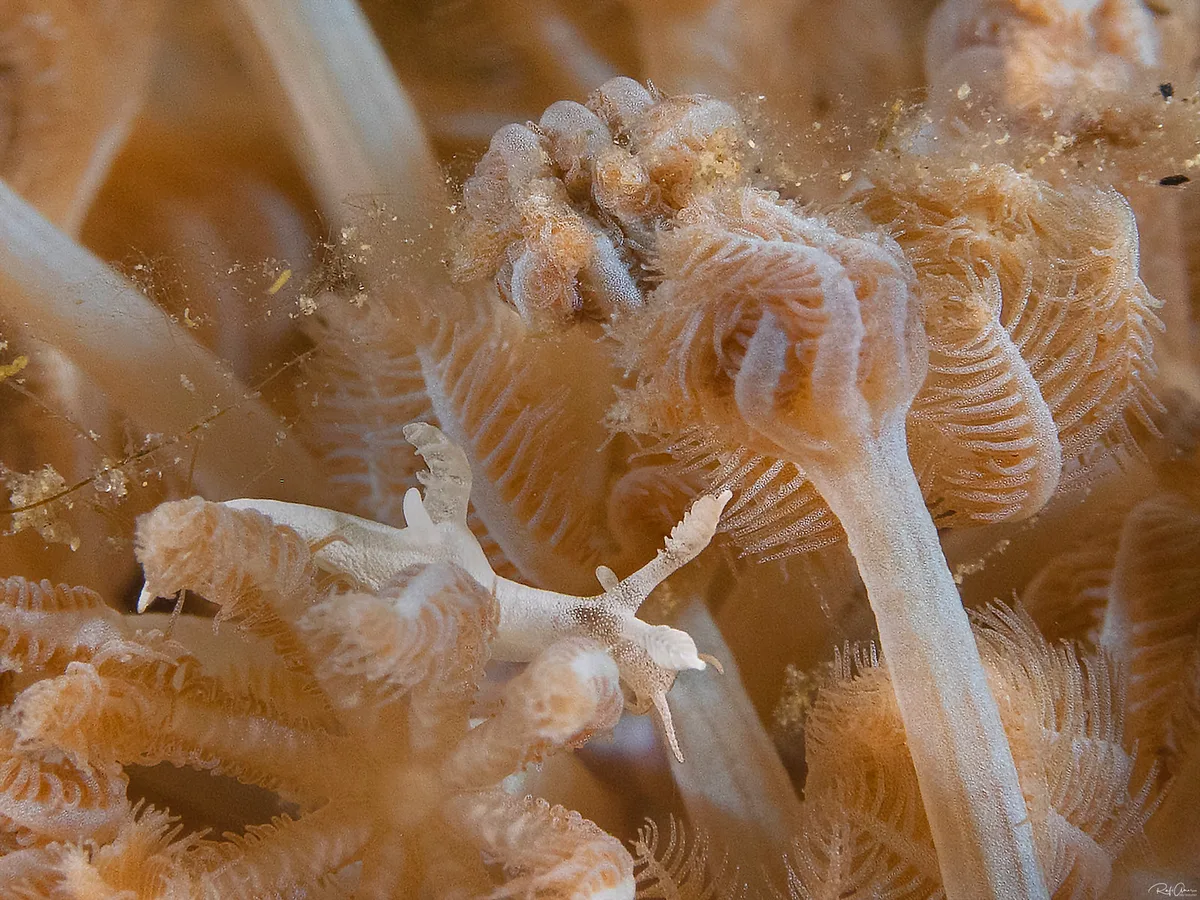
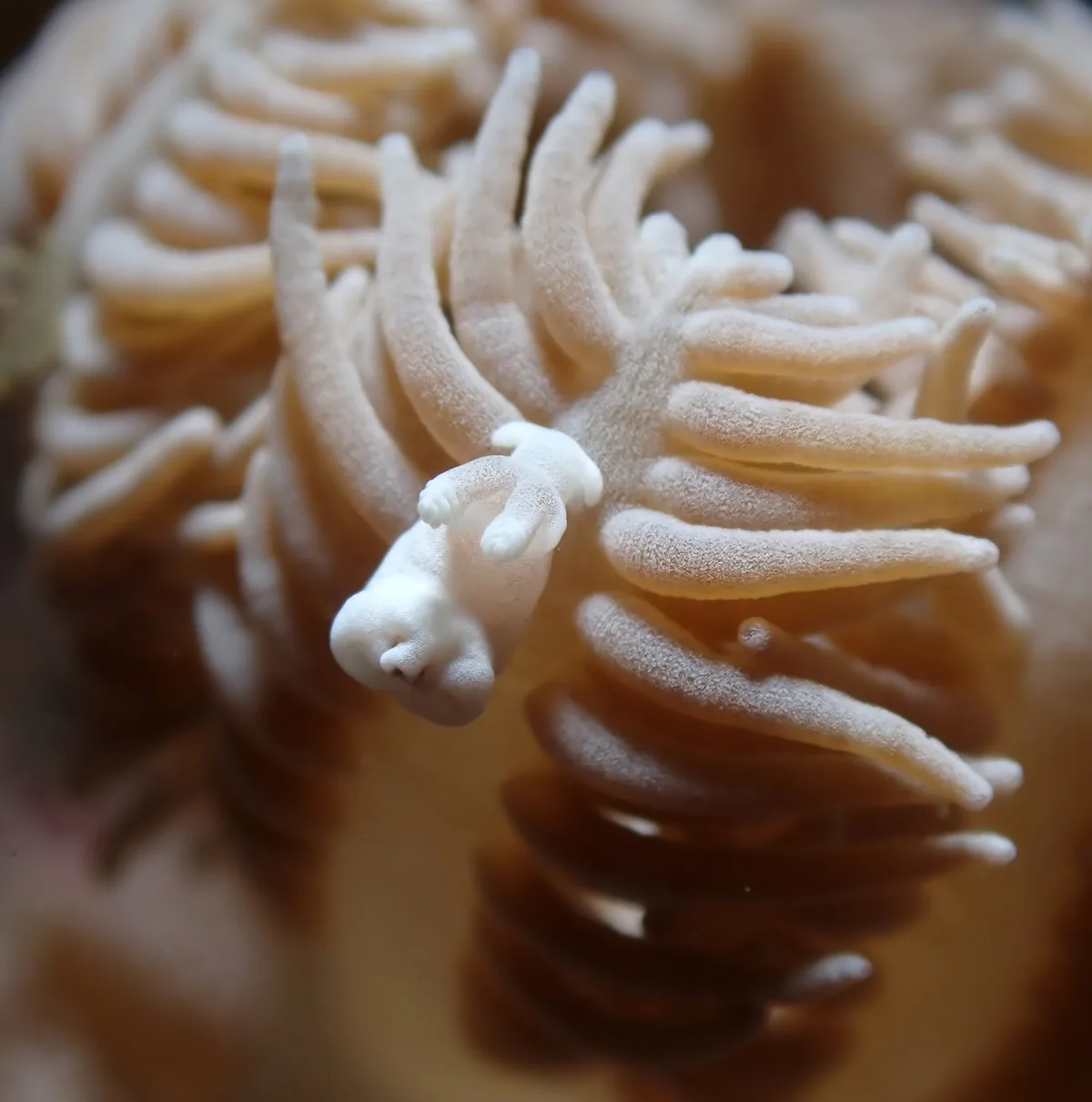
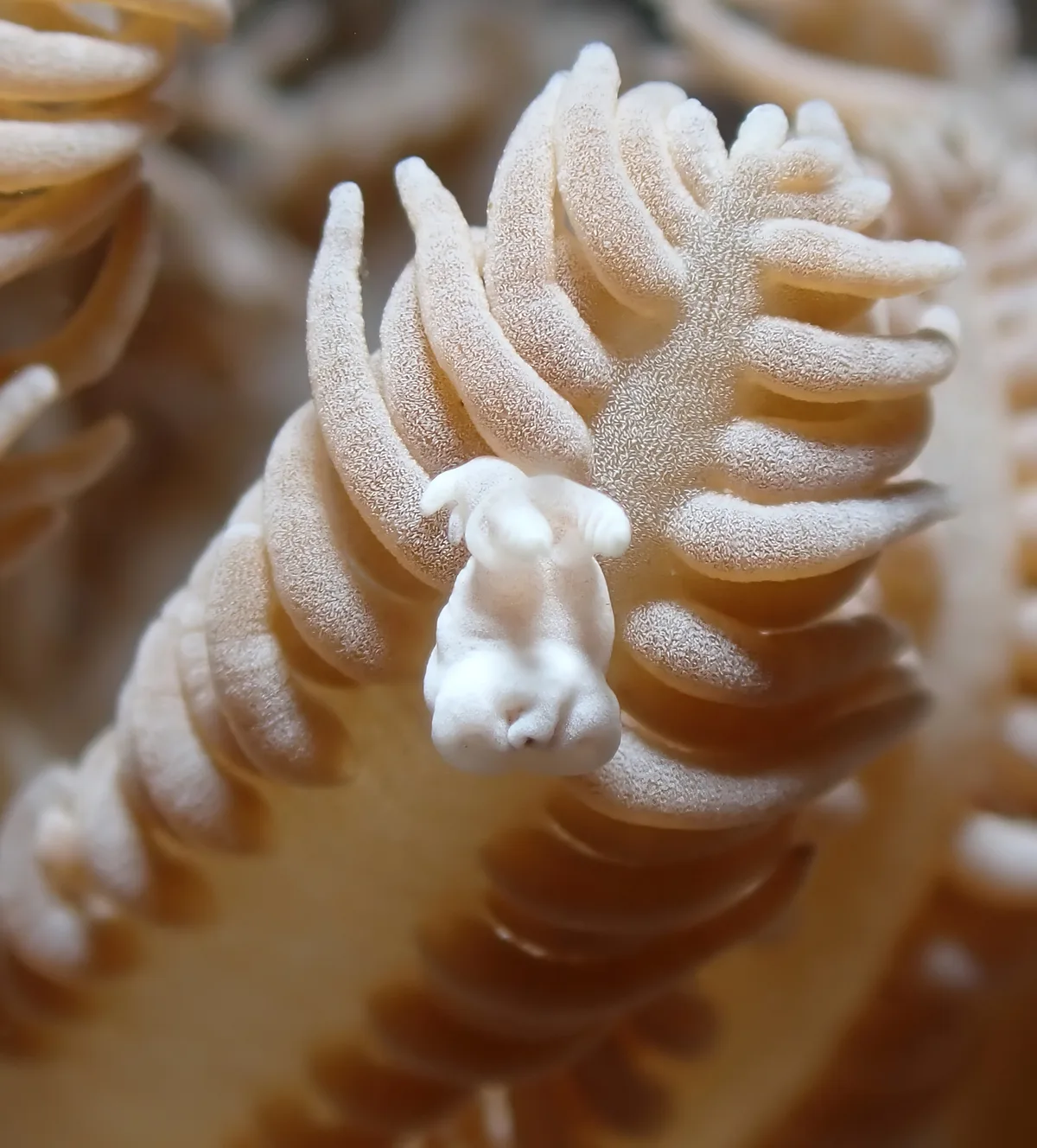
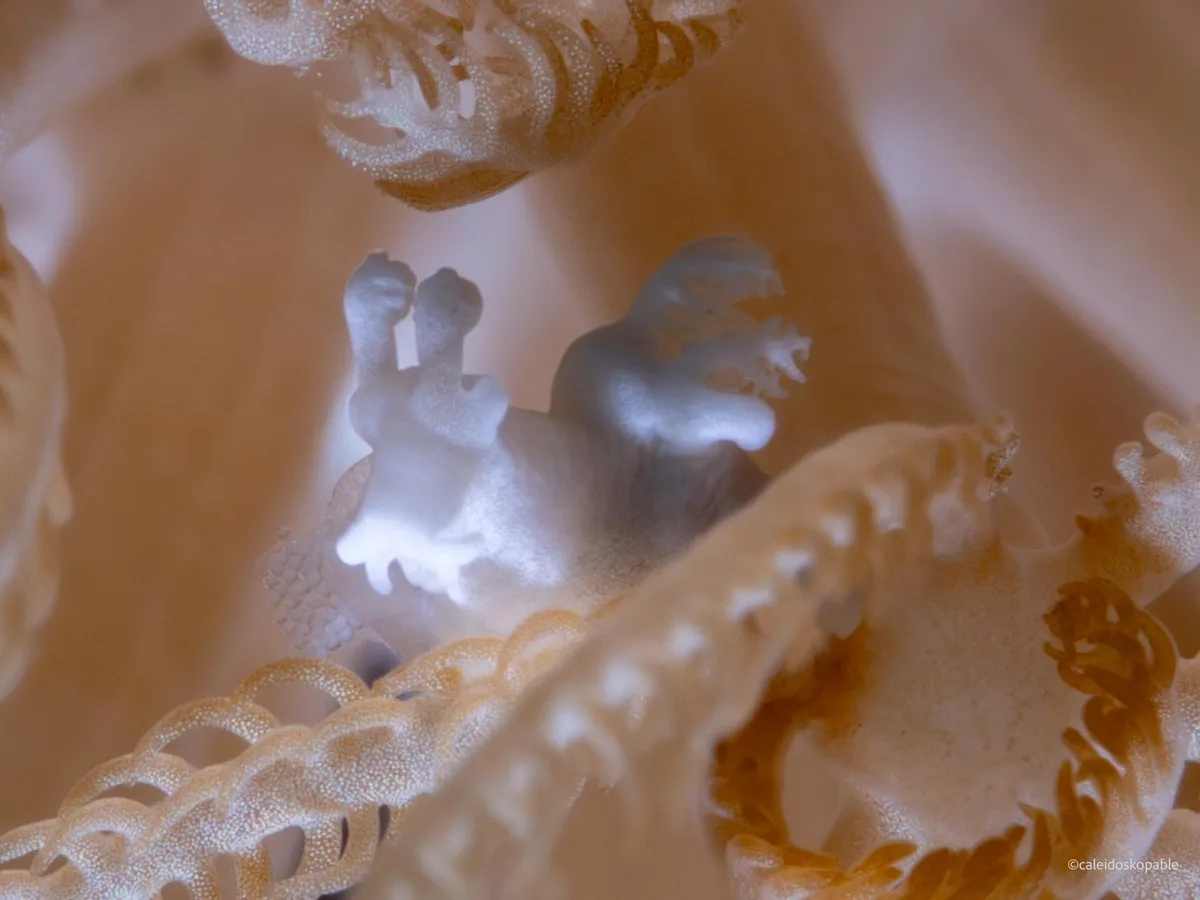
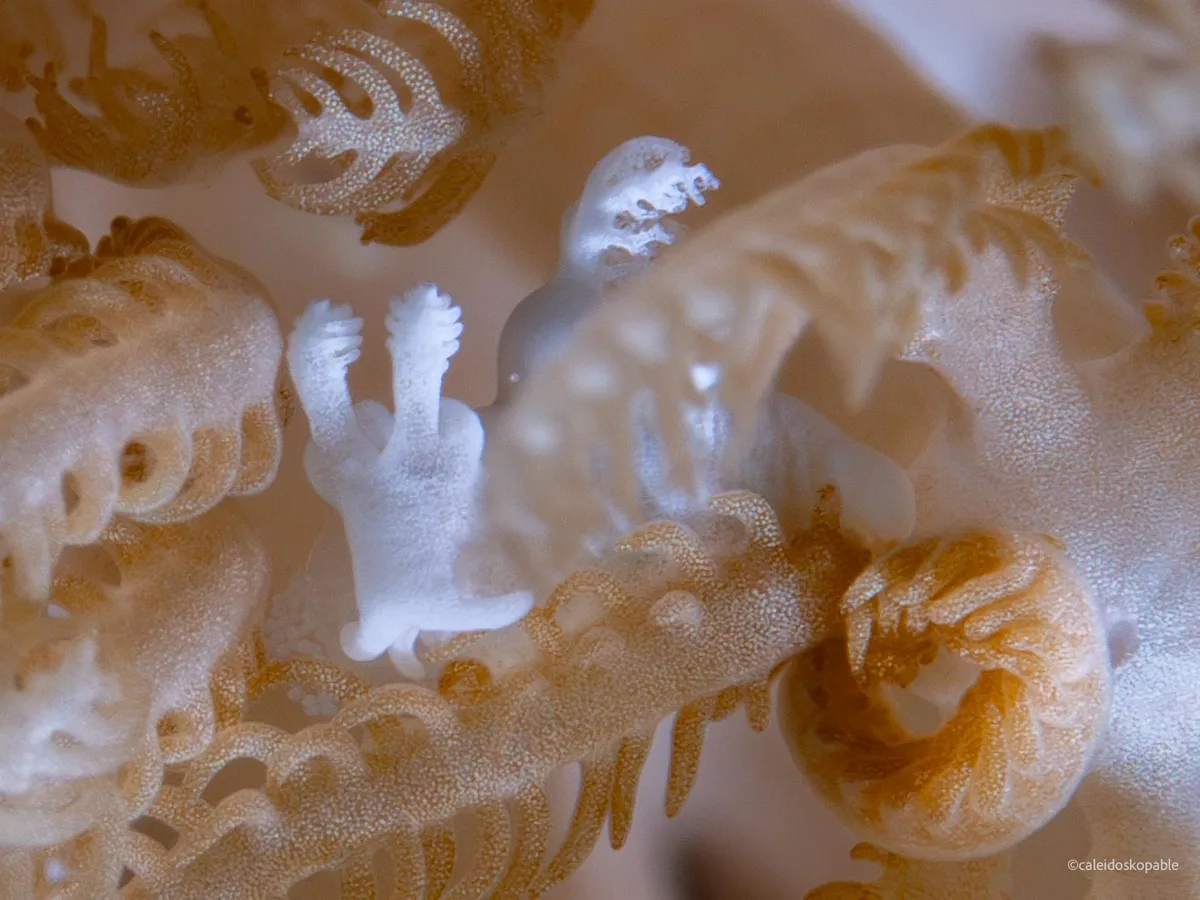
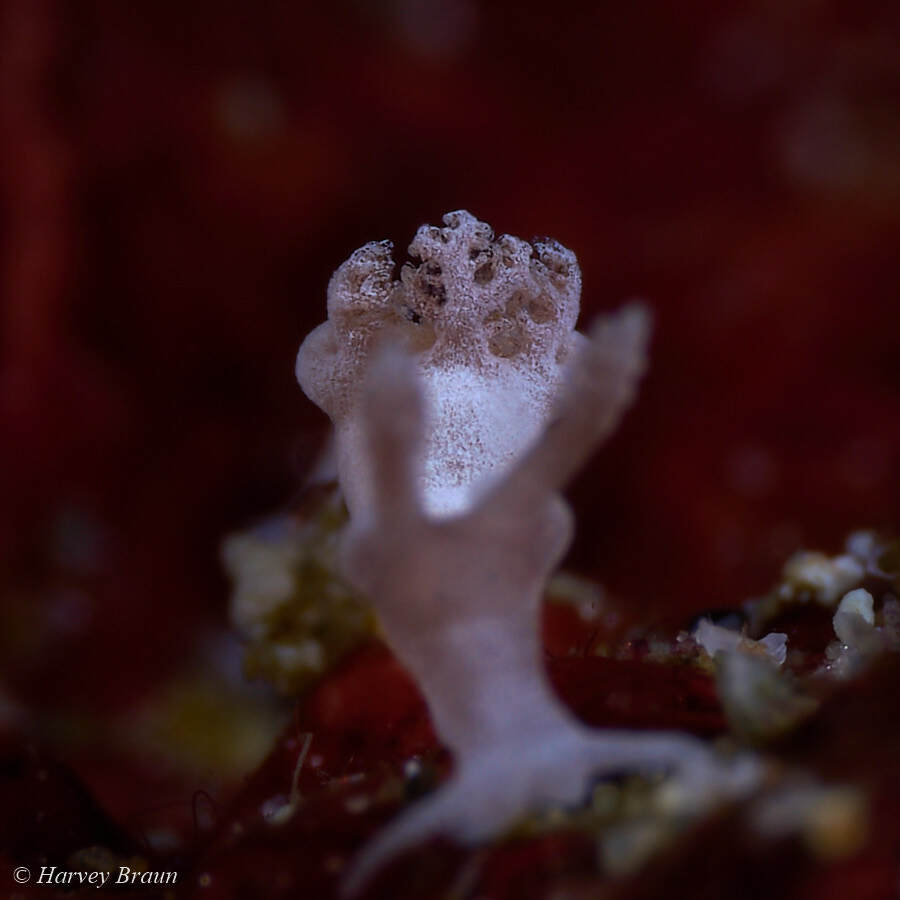
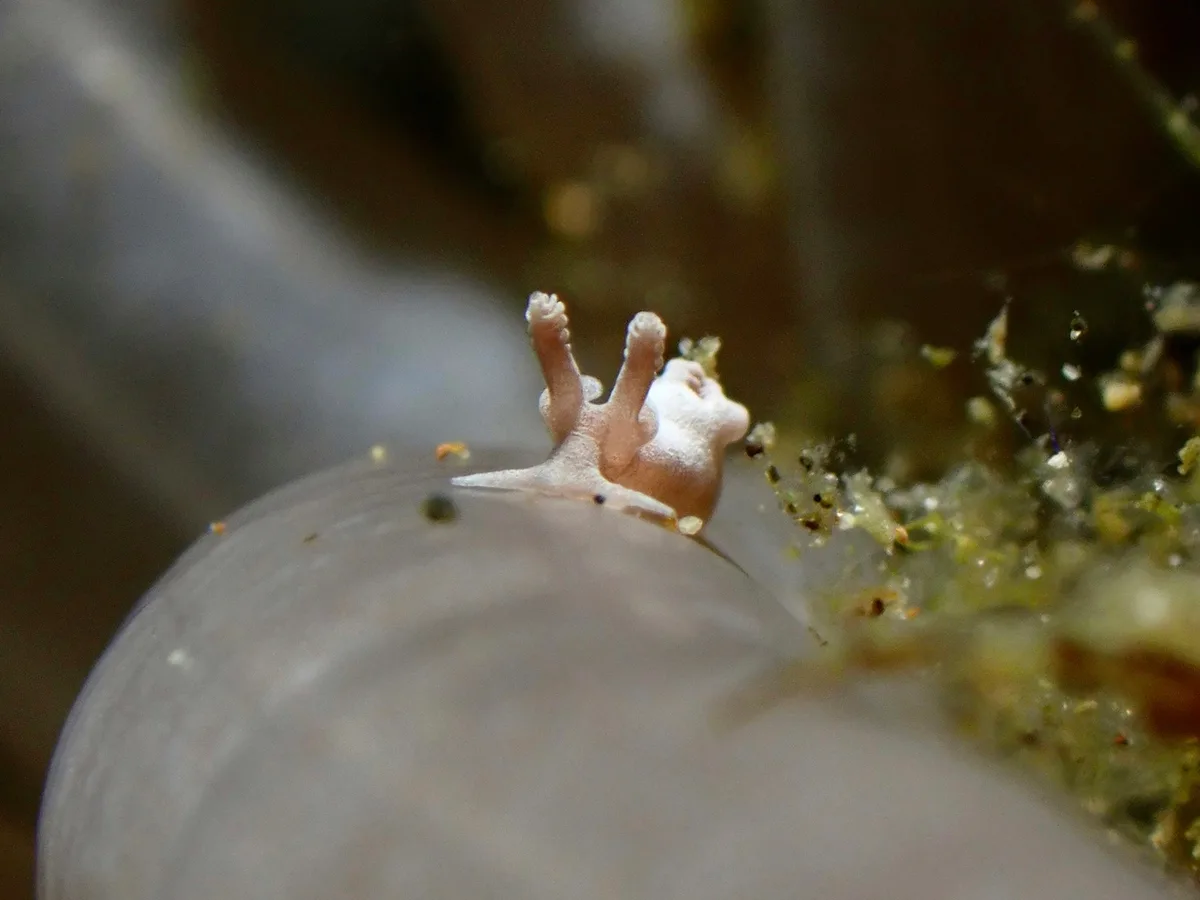
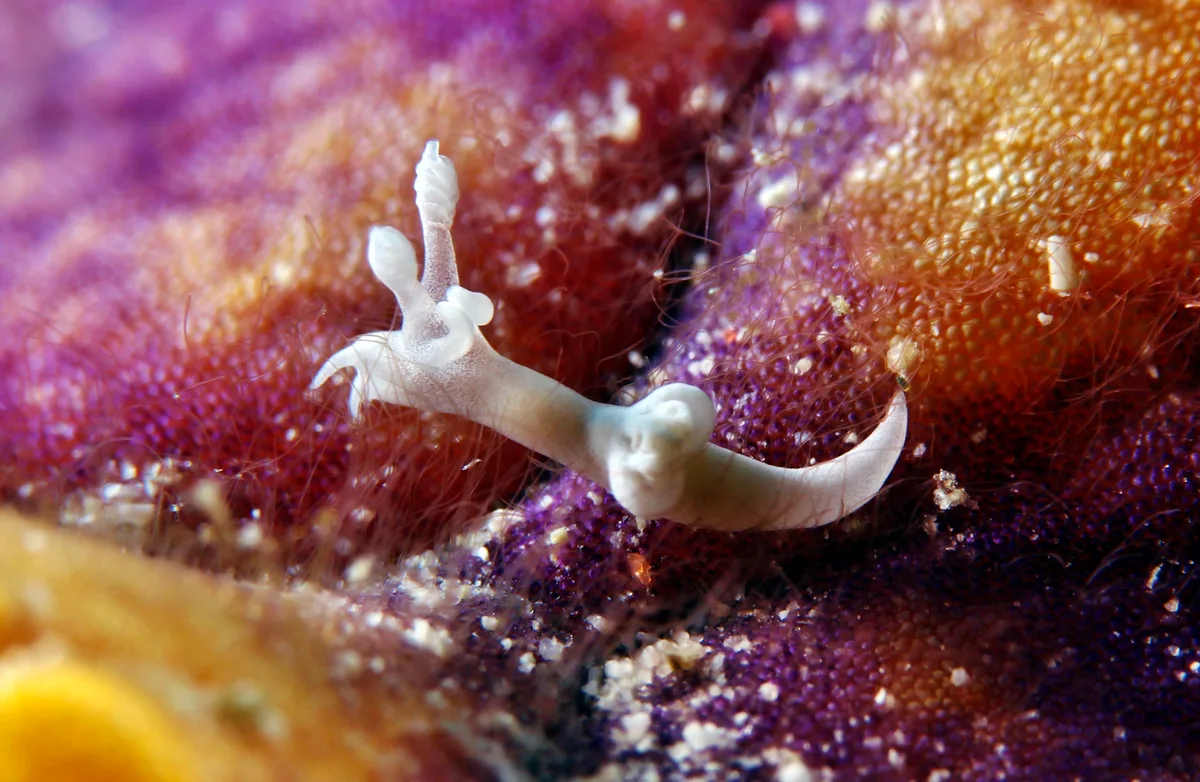
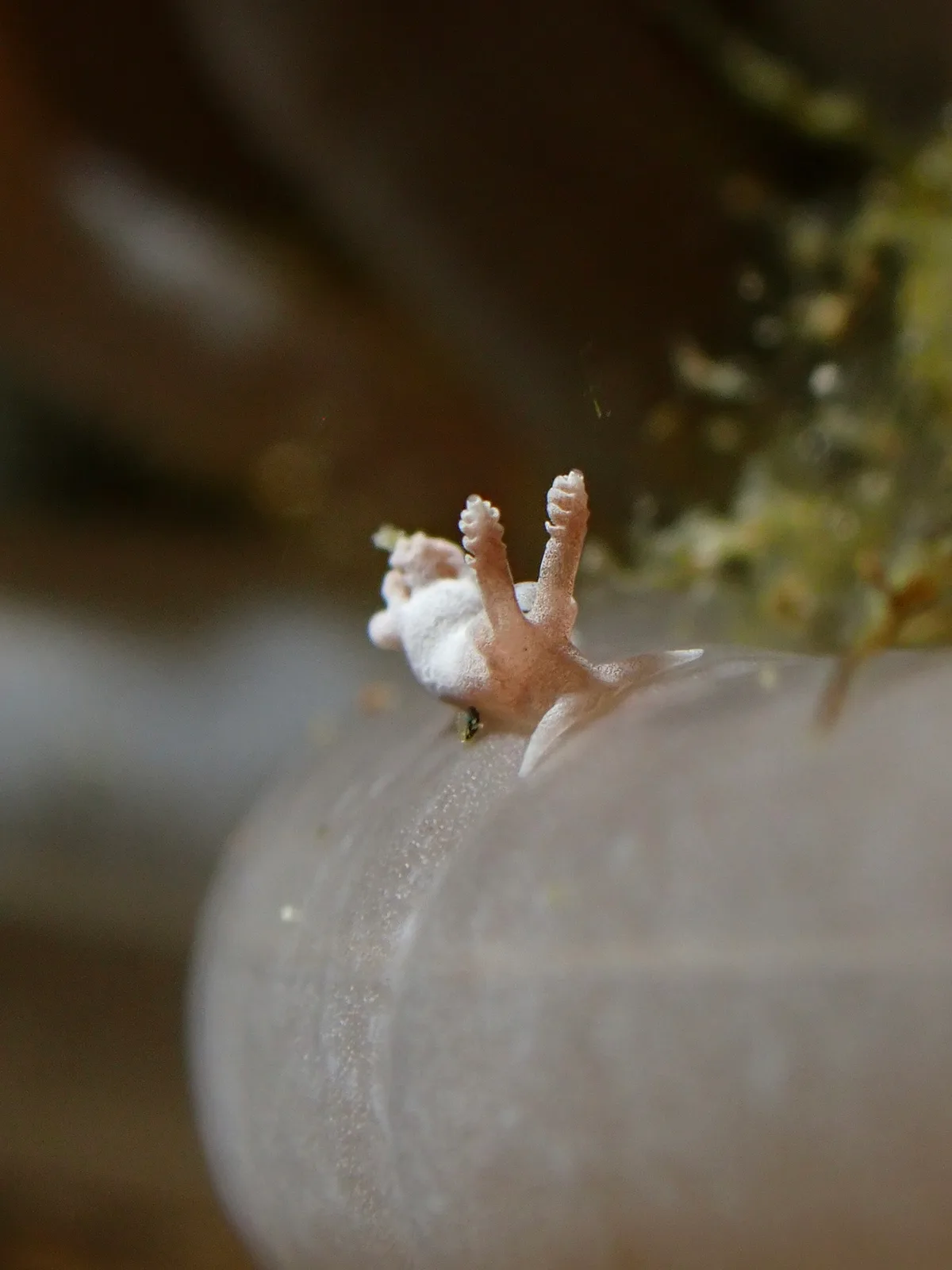
The name records what it looks like rather than what it is. Lemnalioides means resembling Lemnalia, and Lemnalia is a soft coral, the pale branching kind whose polyps stand up off the colony in a tangle of fine arms. The slug sits among them, white with a pale orange stripe, its four appendages held up in the same posture as the polyp arms around it, and at eight millimeters (0.3 in) the resemblance is complete. Photographs of it look like photographs of a soft coral until you find the animal.
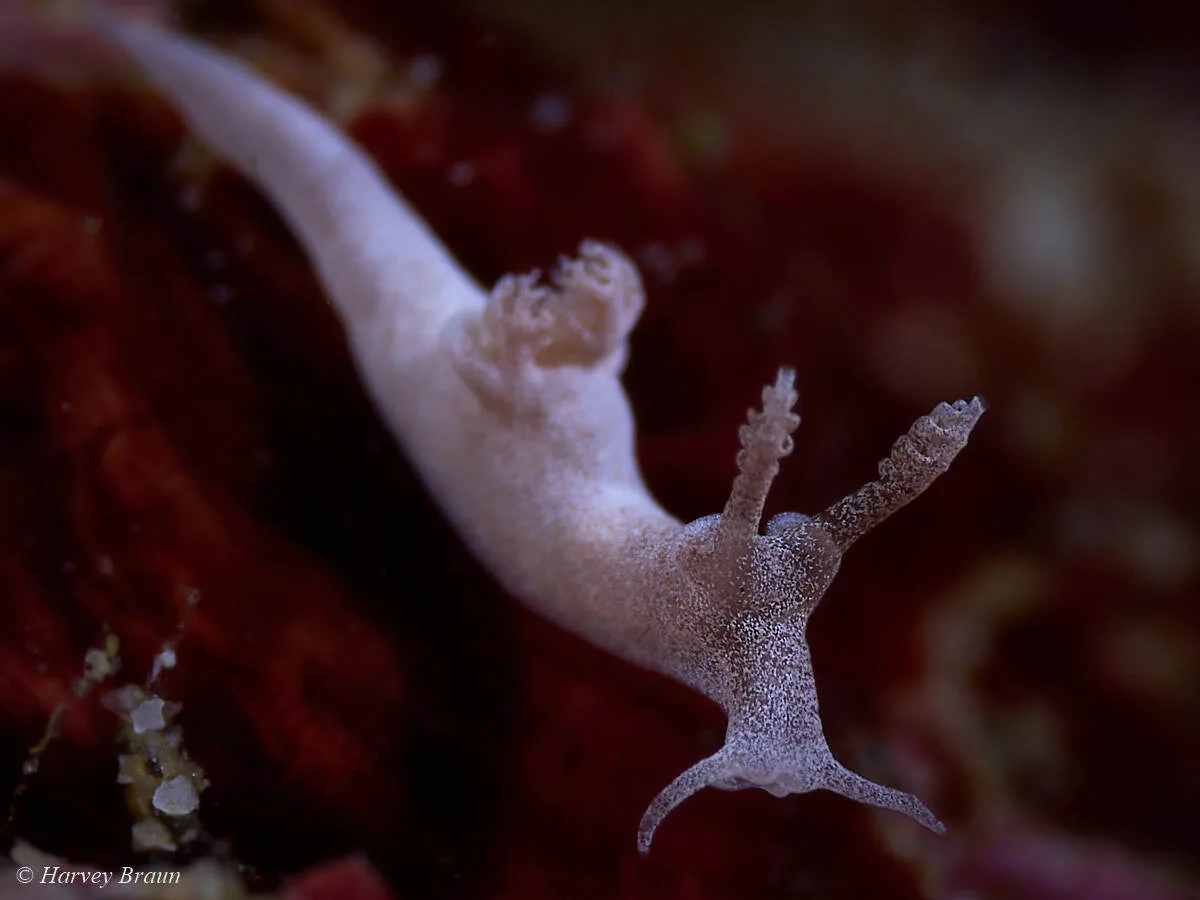
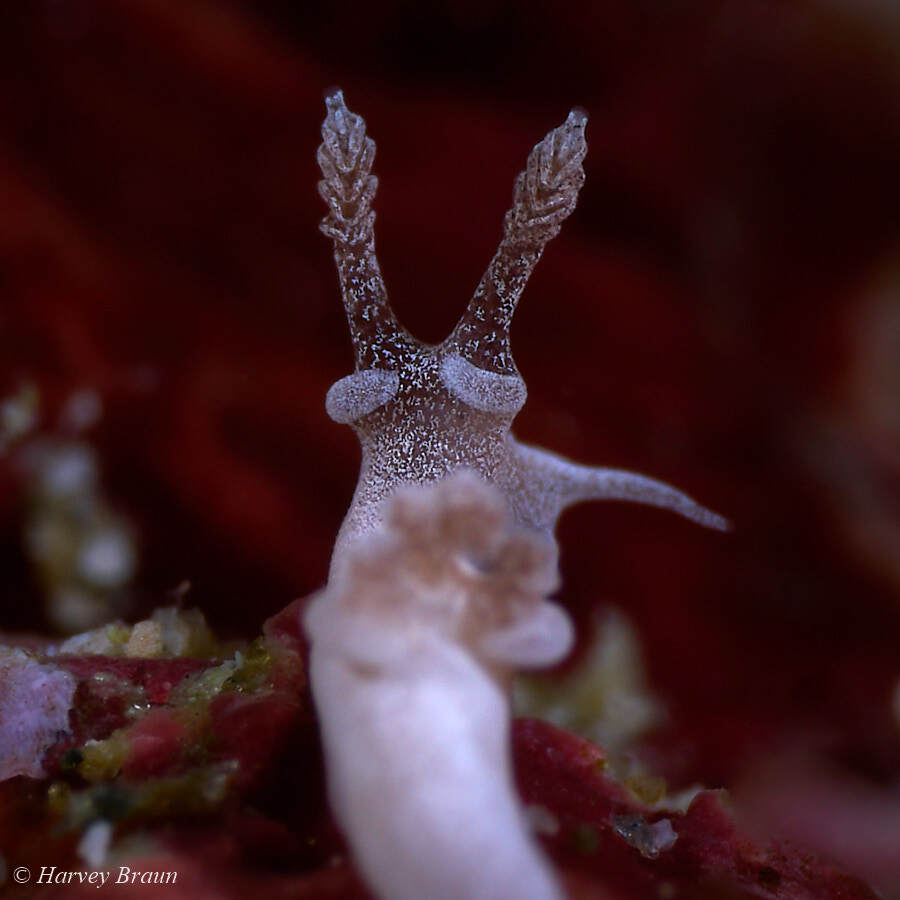
The genus mark is still what places it: one long process on each side beside the gills, and a second pair beside the rhinophores, carried by no other dorid on this reef.
What it eats on that host has not been settled. Entoprocts do grow on soft corals as well as on sponges, so the diet may not have changed at all, only the address.
It was described in 2022, which makes it the most recently named animal in this section, and the sort of species that only turns up when somebody starts examining the polyps of a coral instead of the coral.
- found on soft coral, not on sponge, which no other Trapania here does
- white body with a pale orange stripe, the colors of the polyps around it
- the four extra appendages of the genus, held up among the polyp arms
- eight millimeters, and effectively invisible on its host