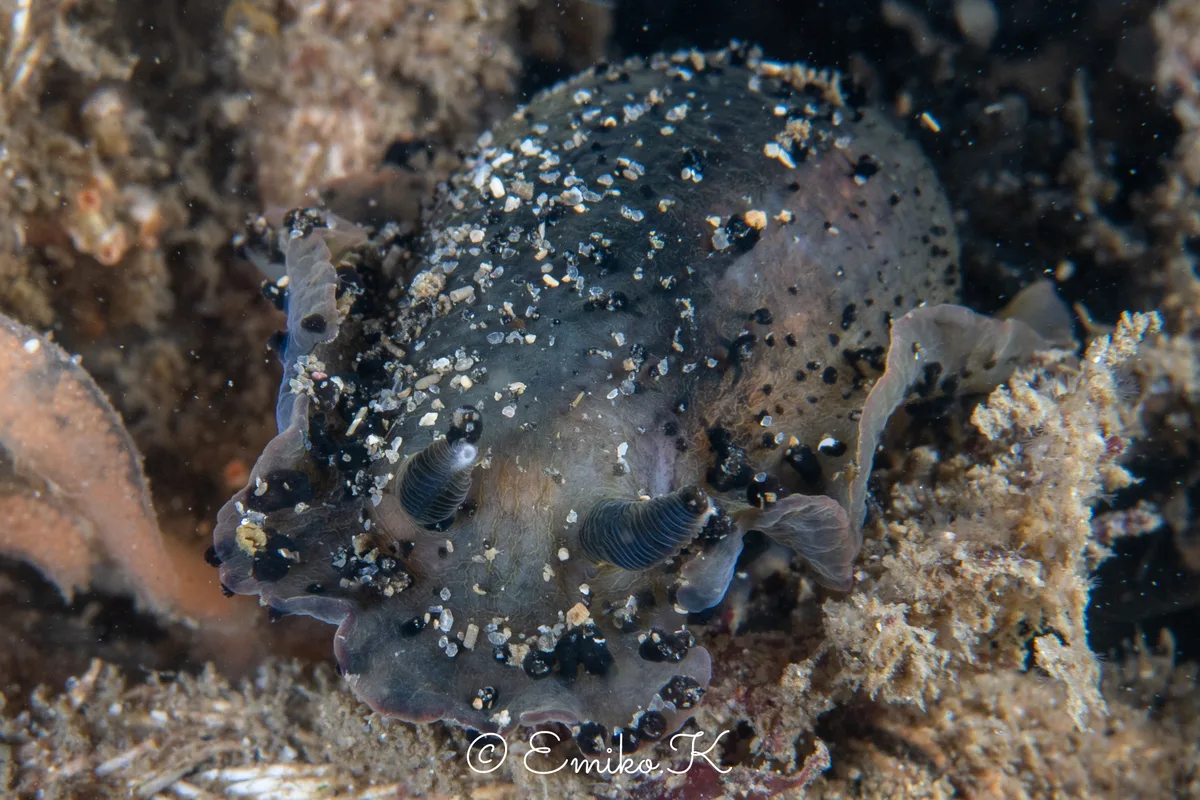
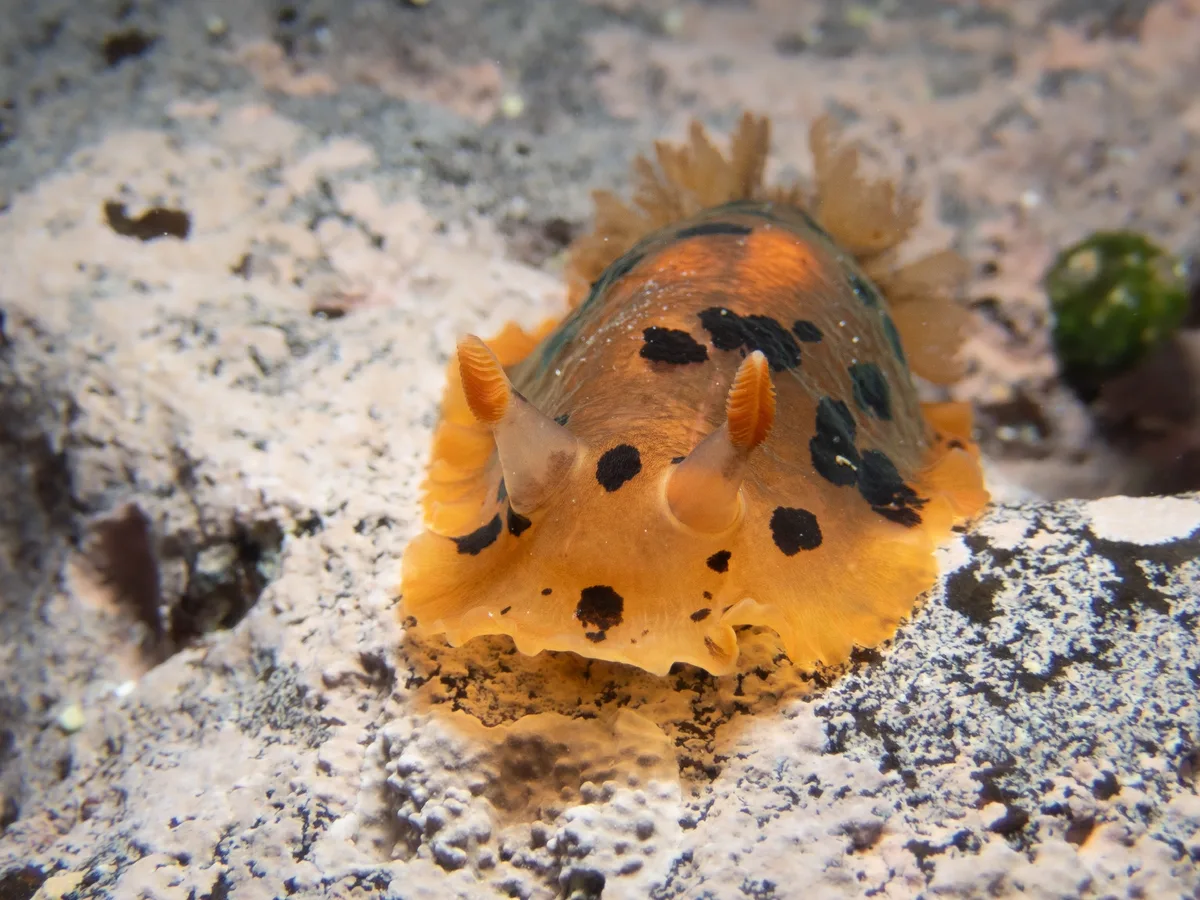
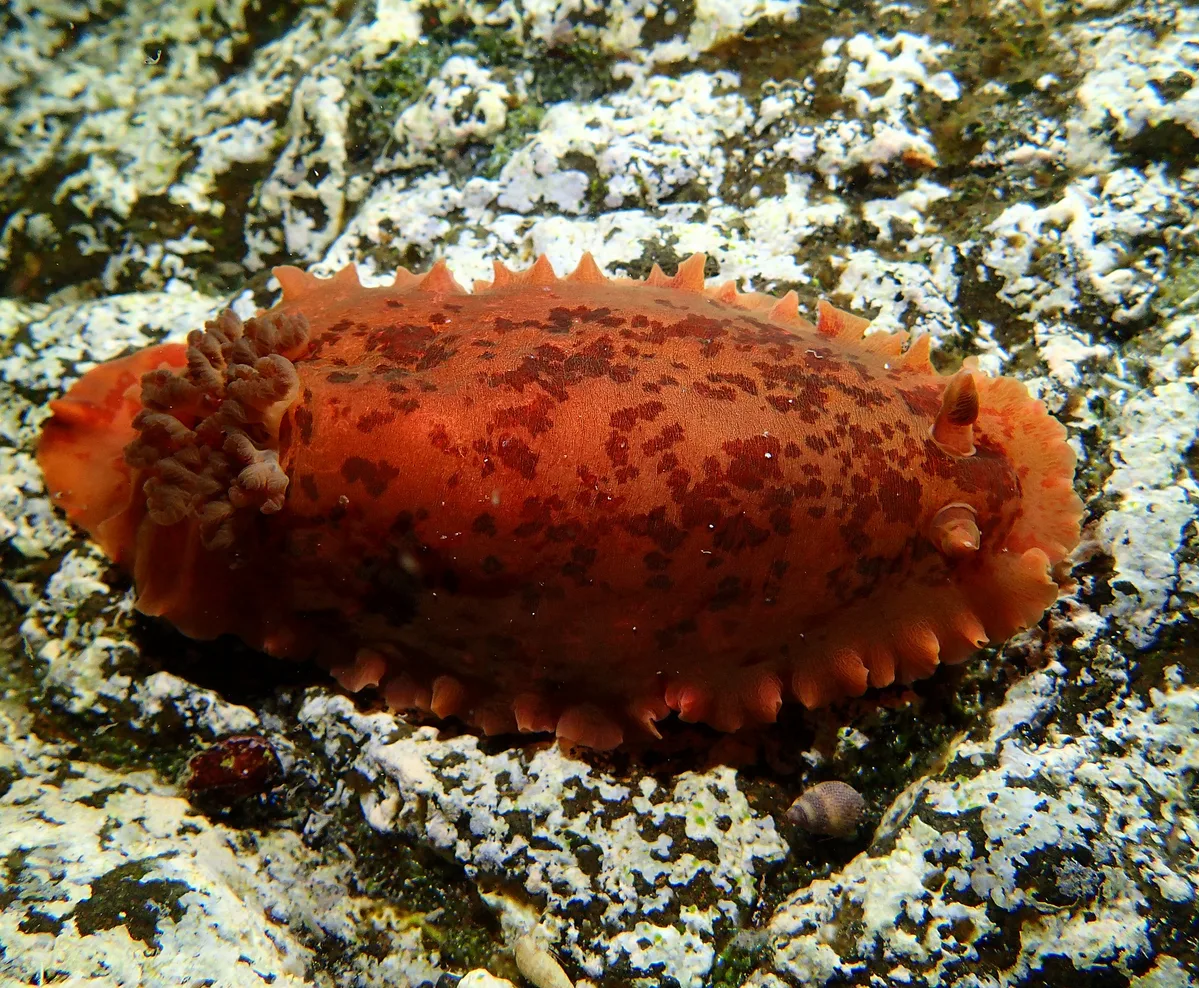
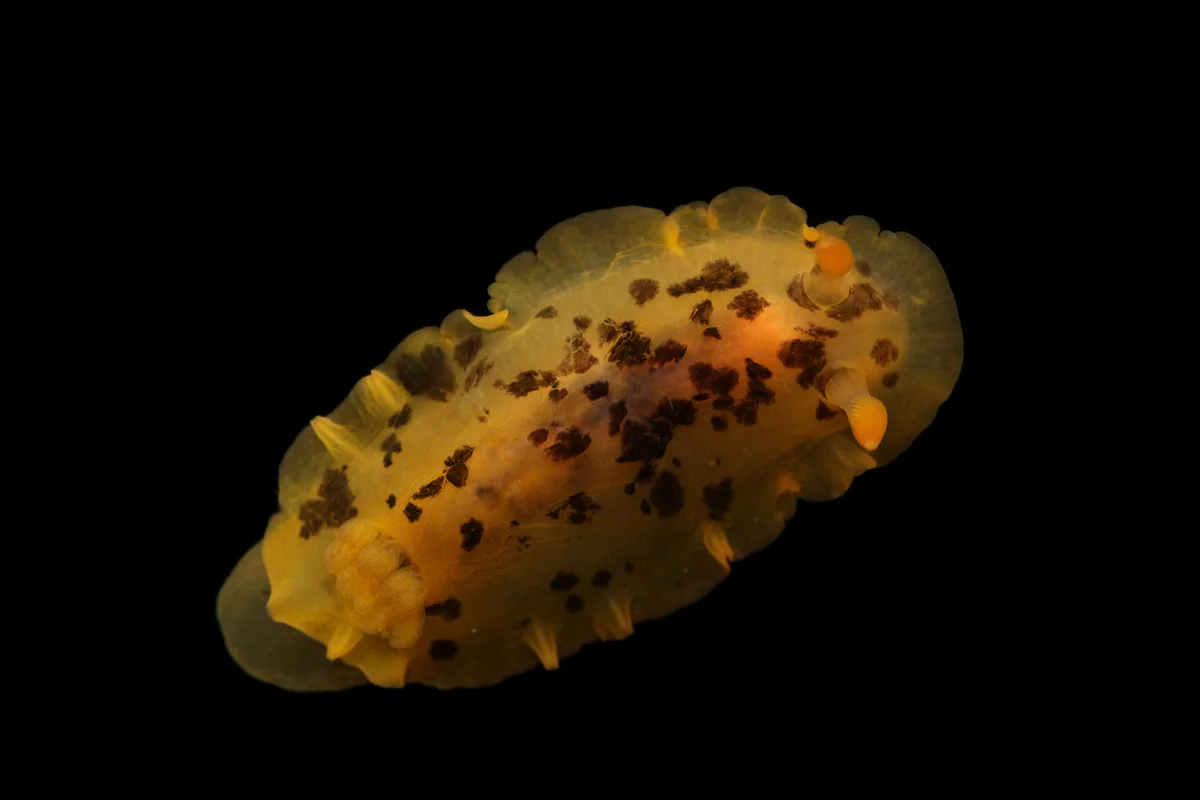
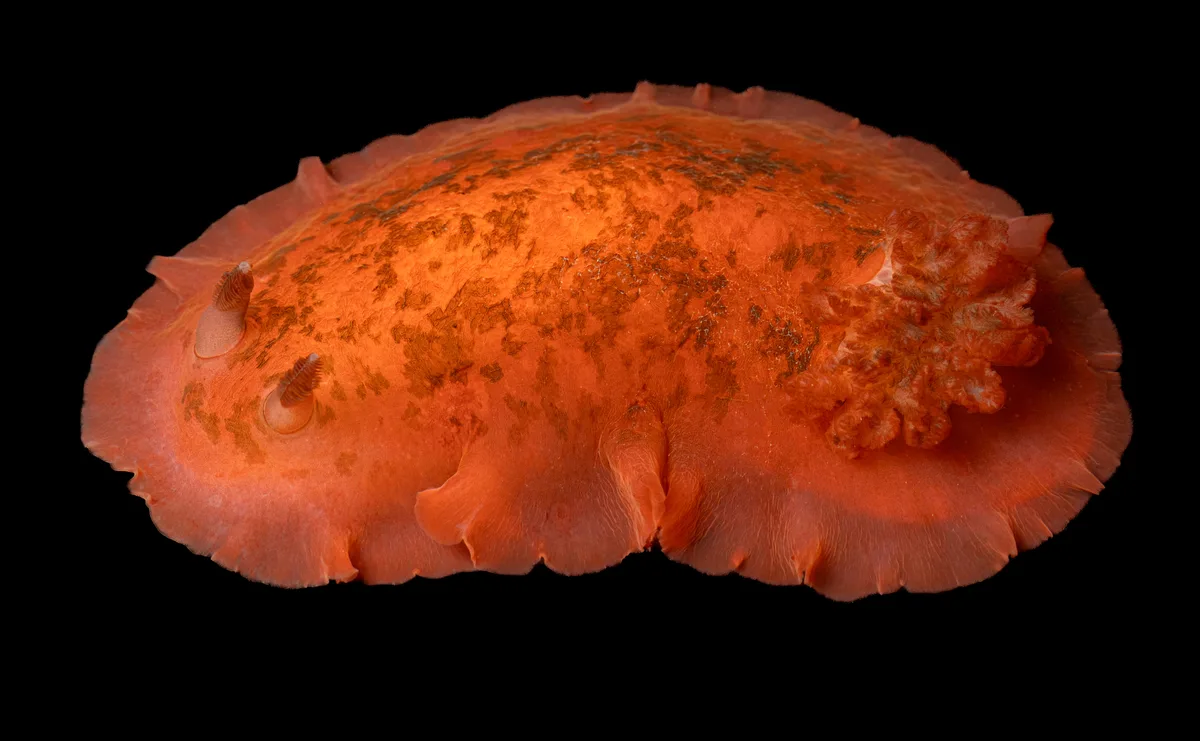
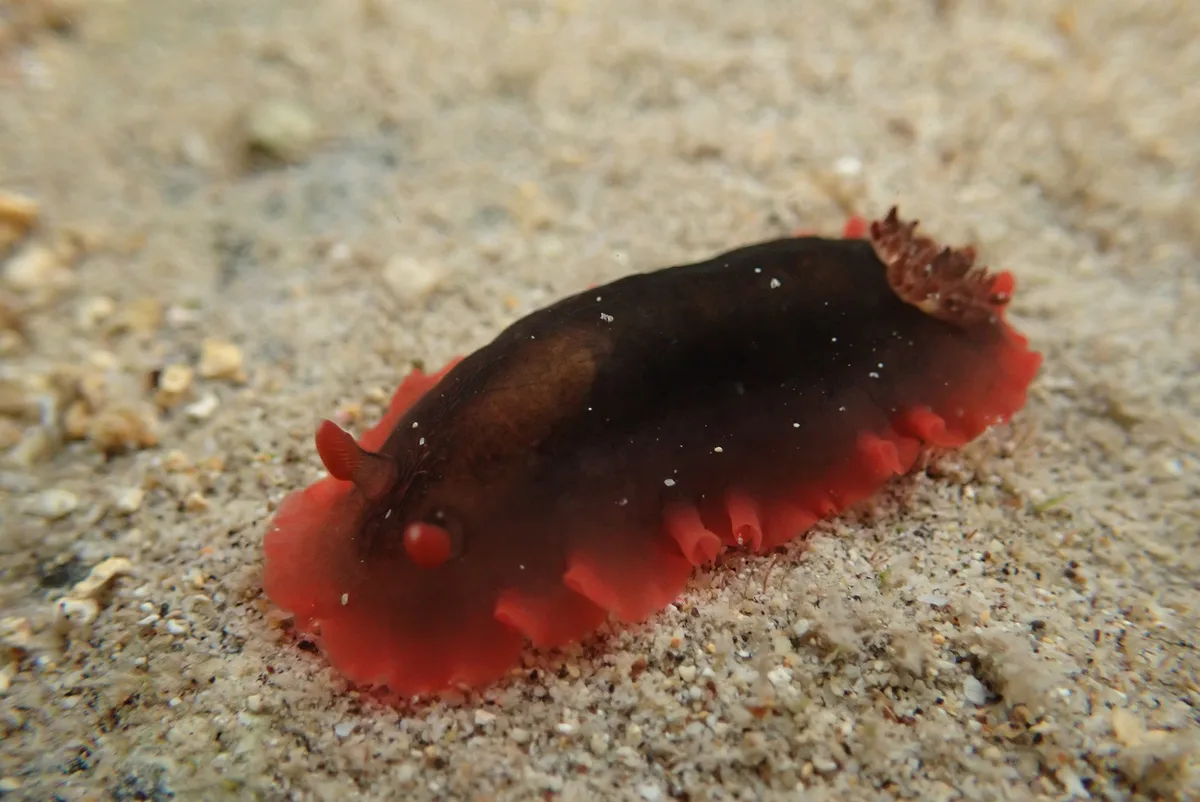
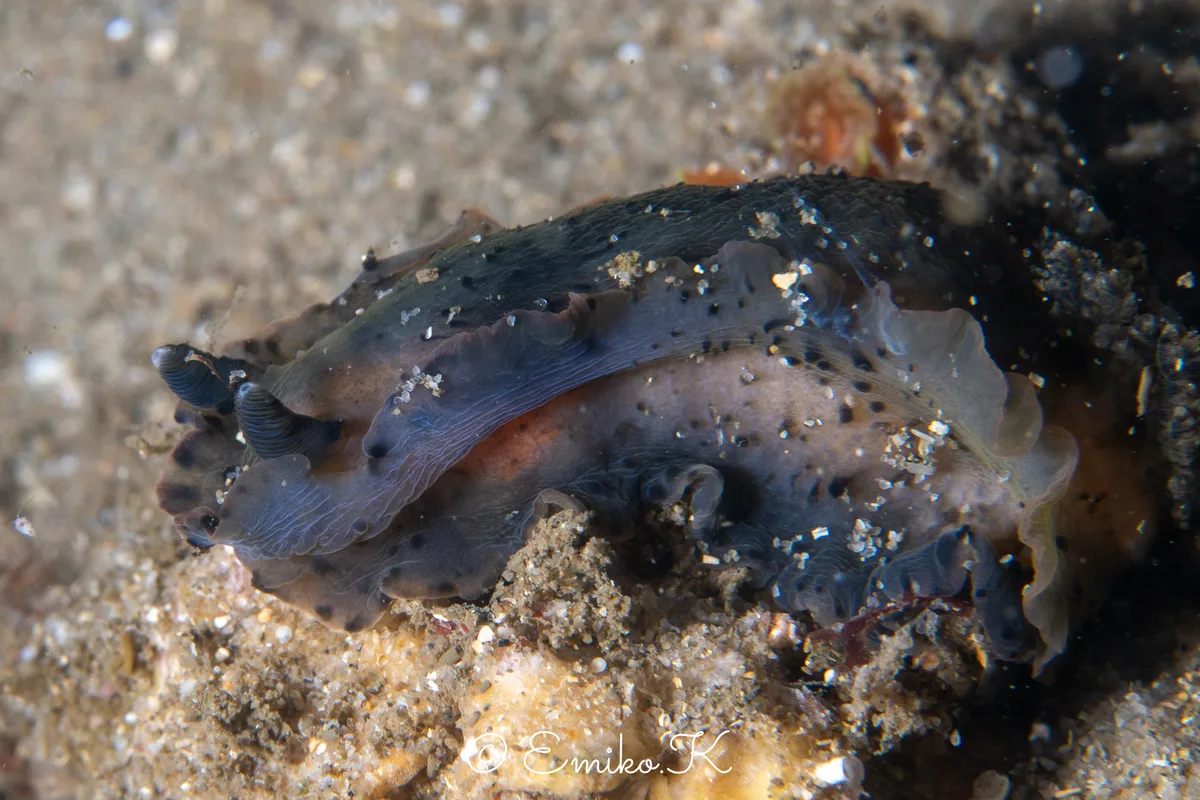
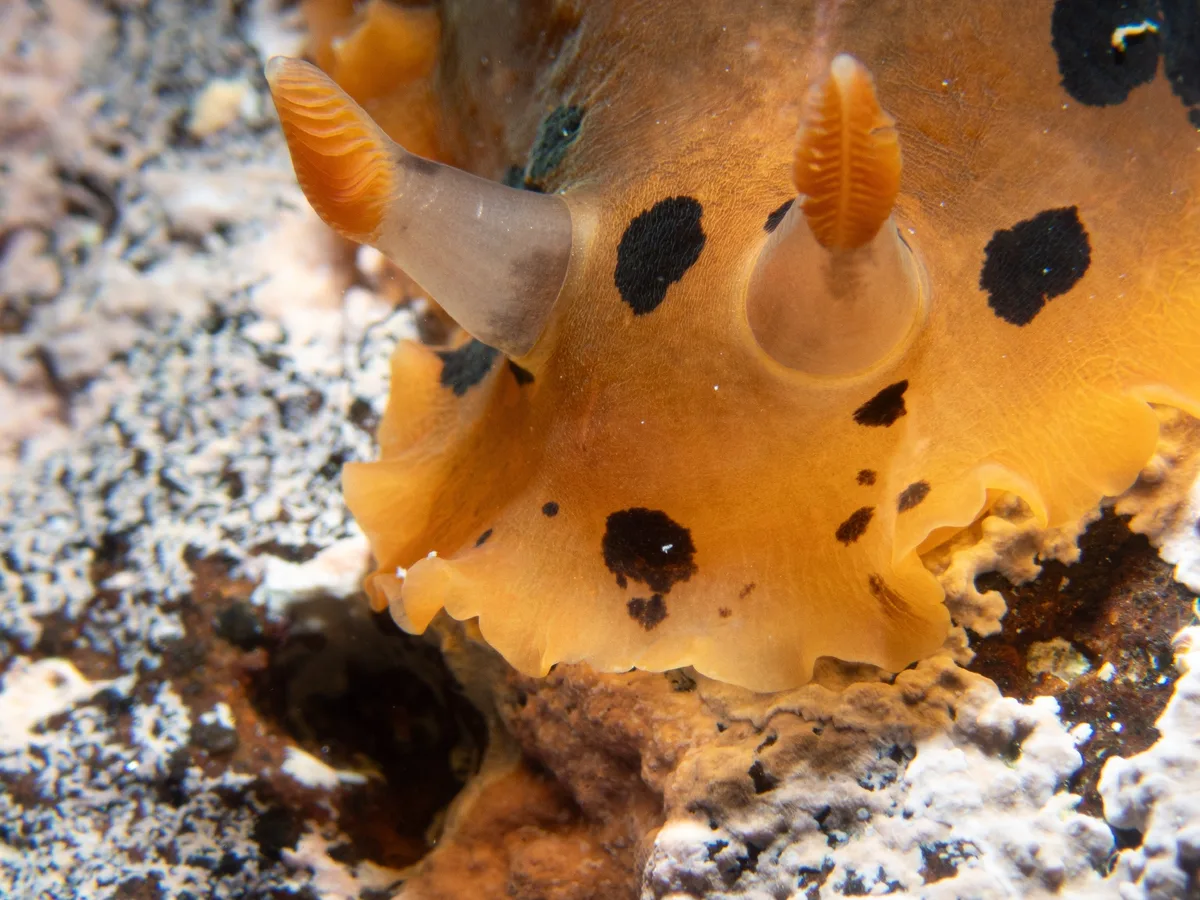
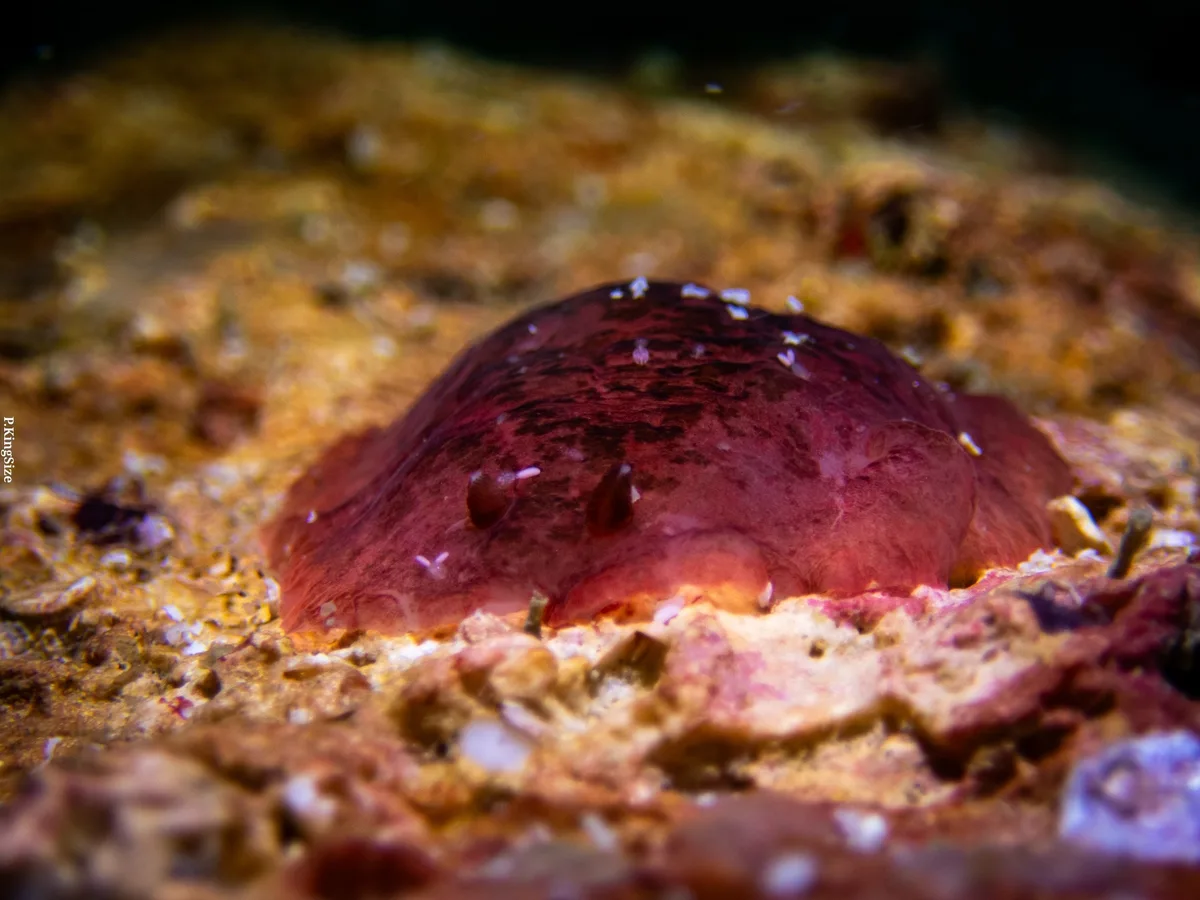
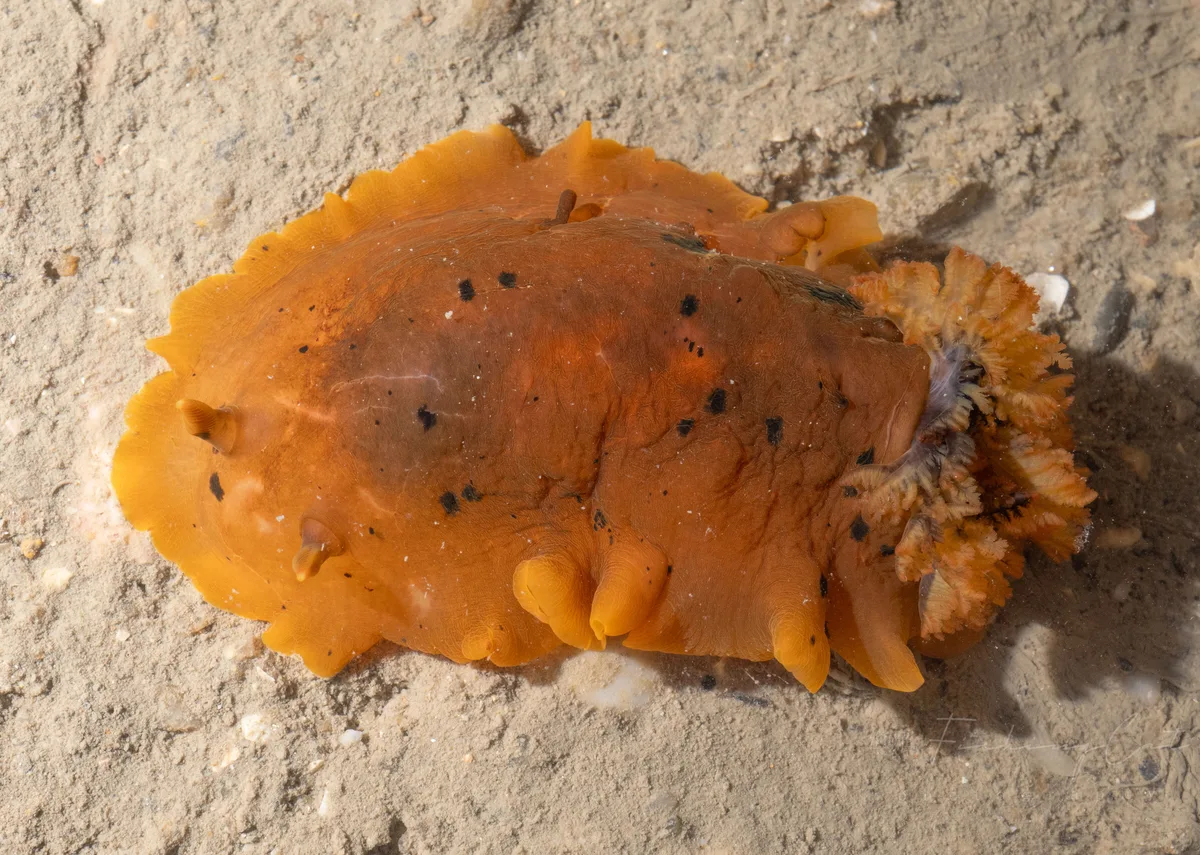
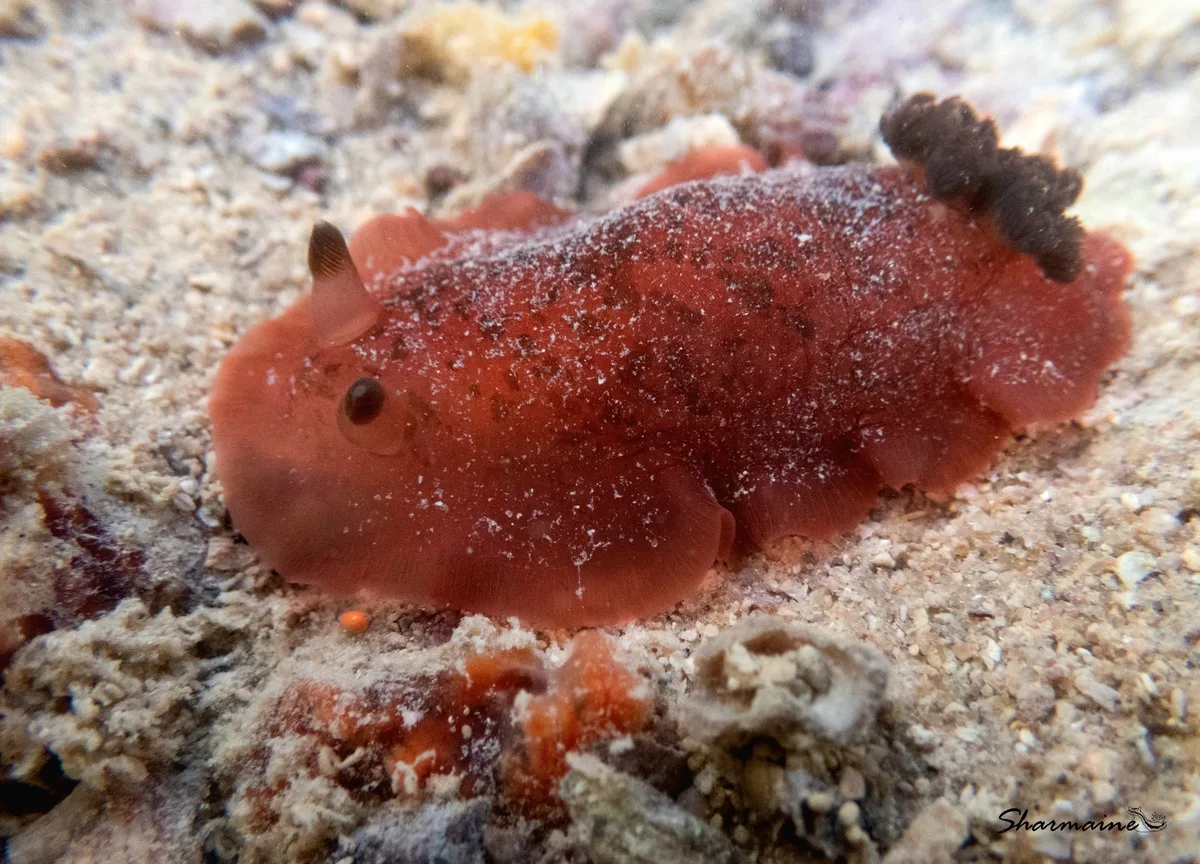
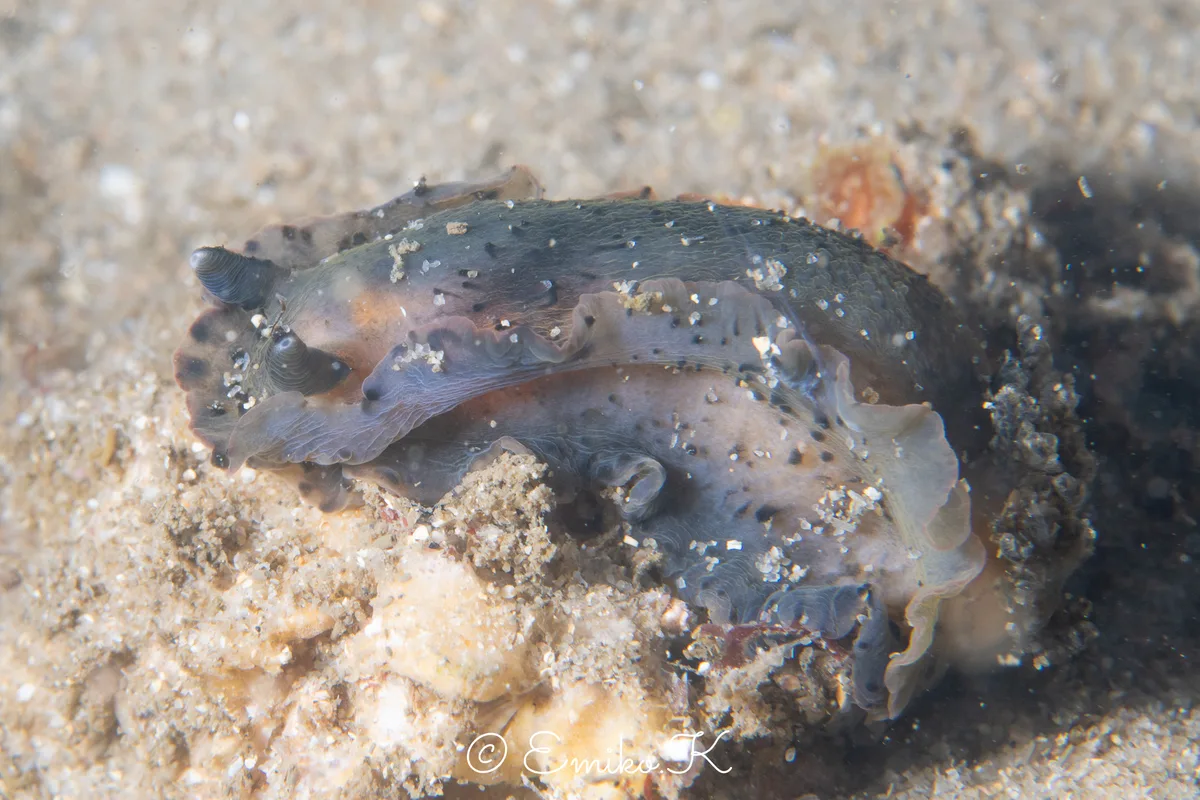
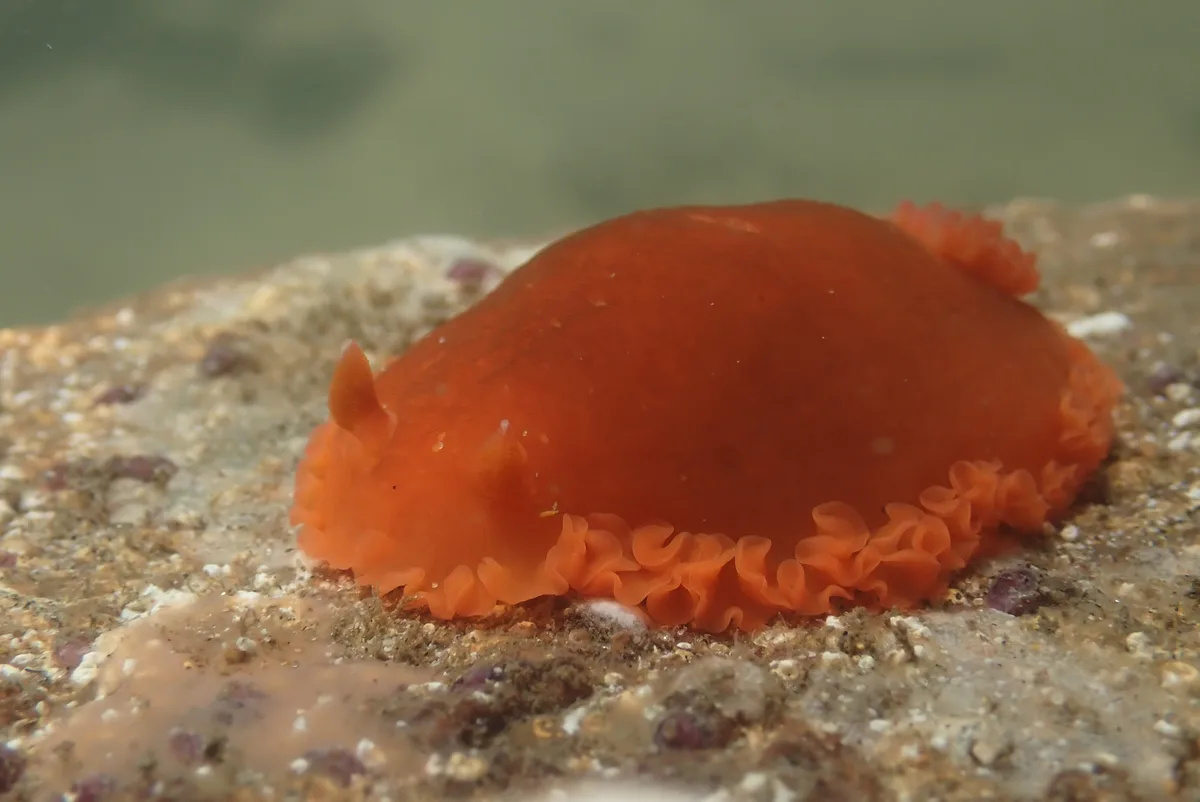
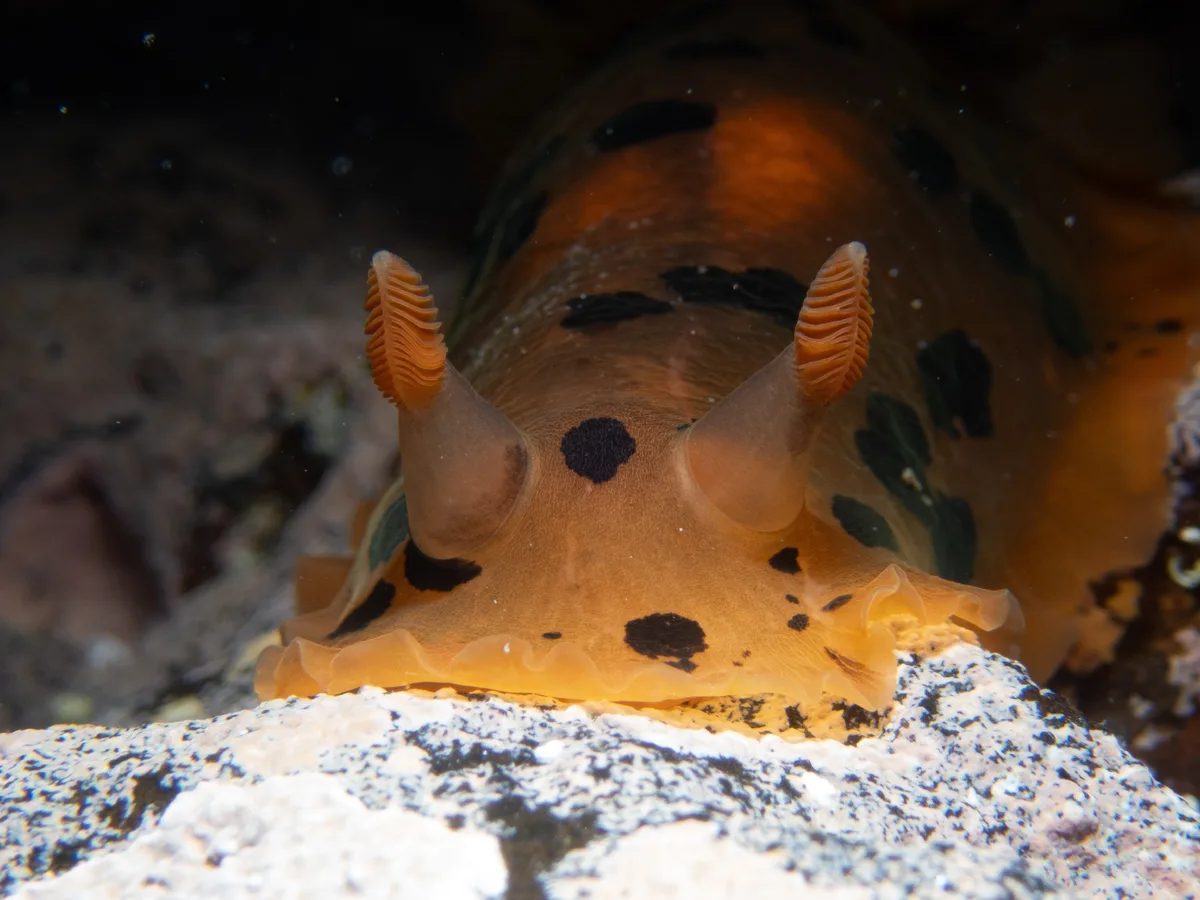
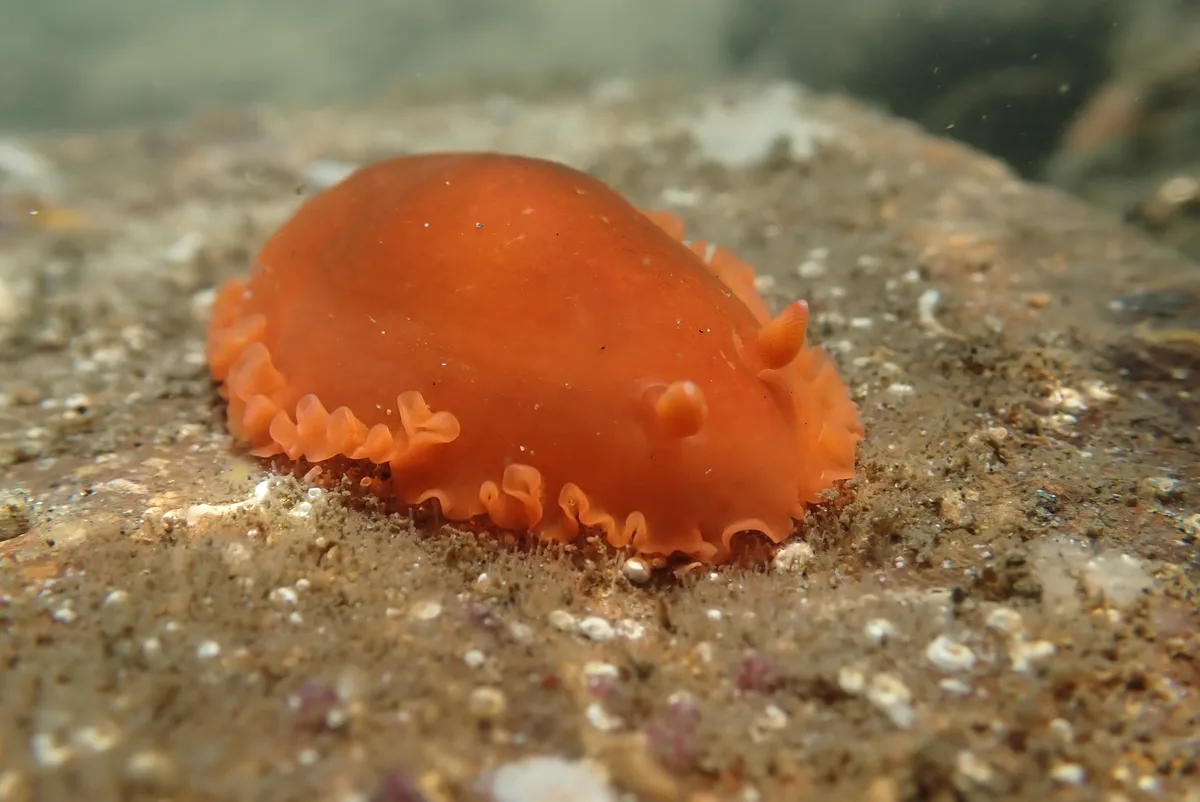
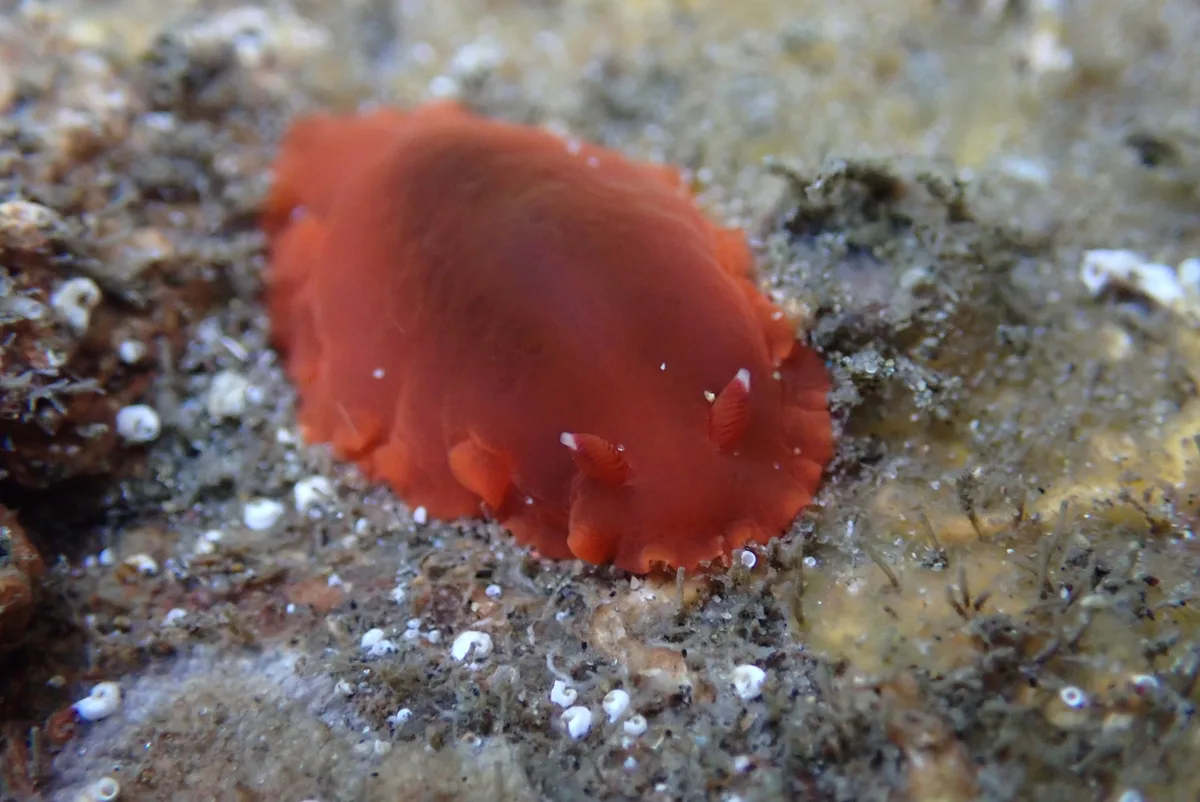
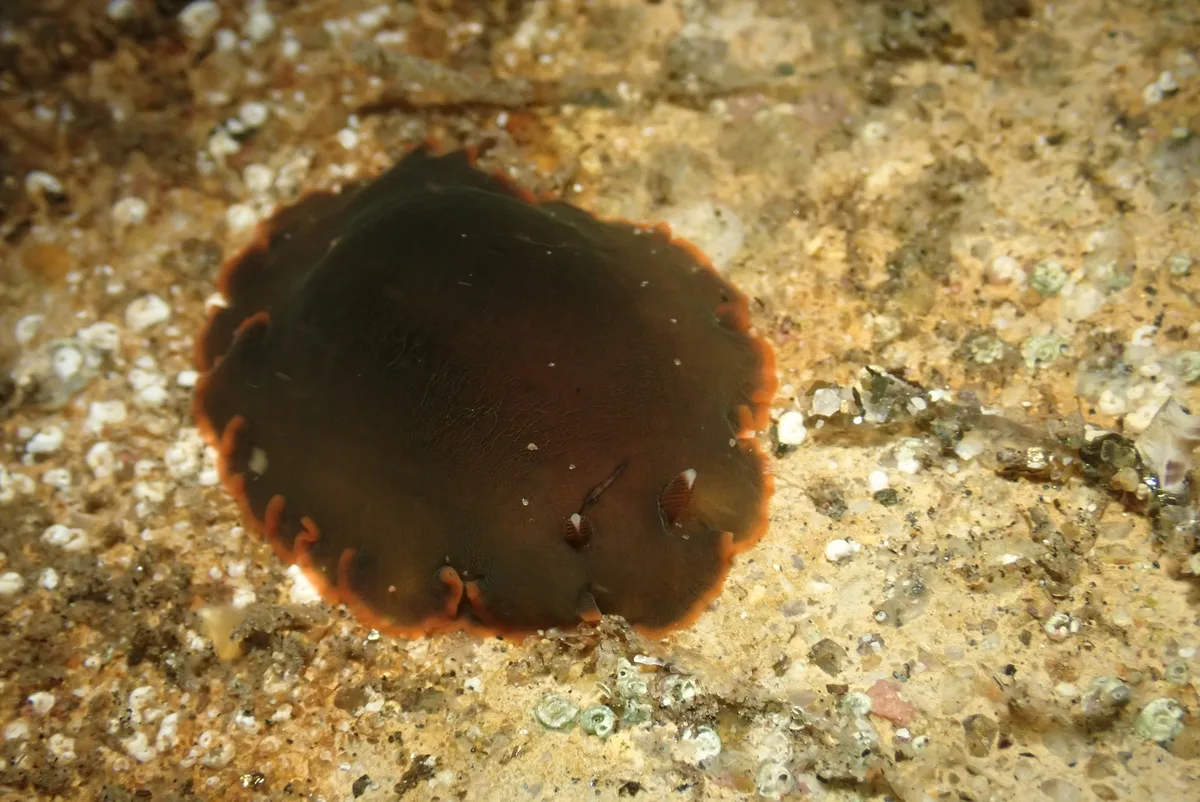
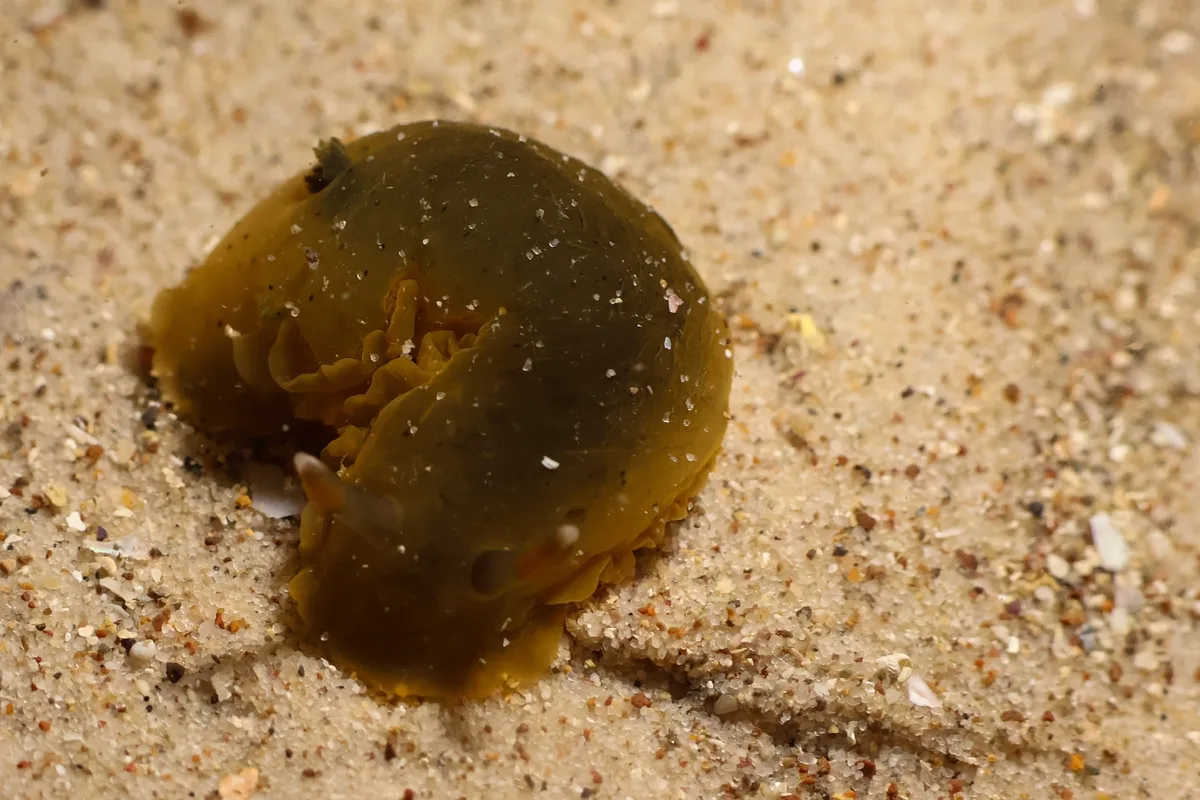
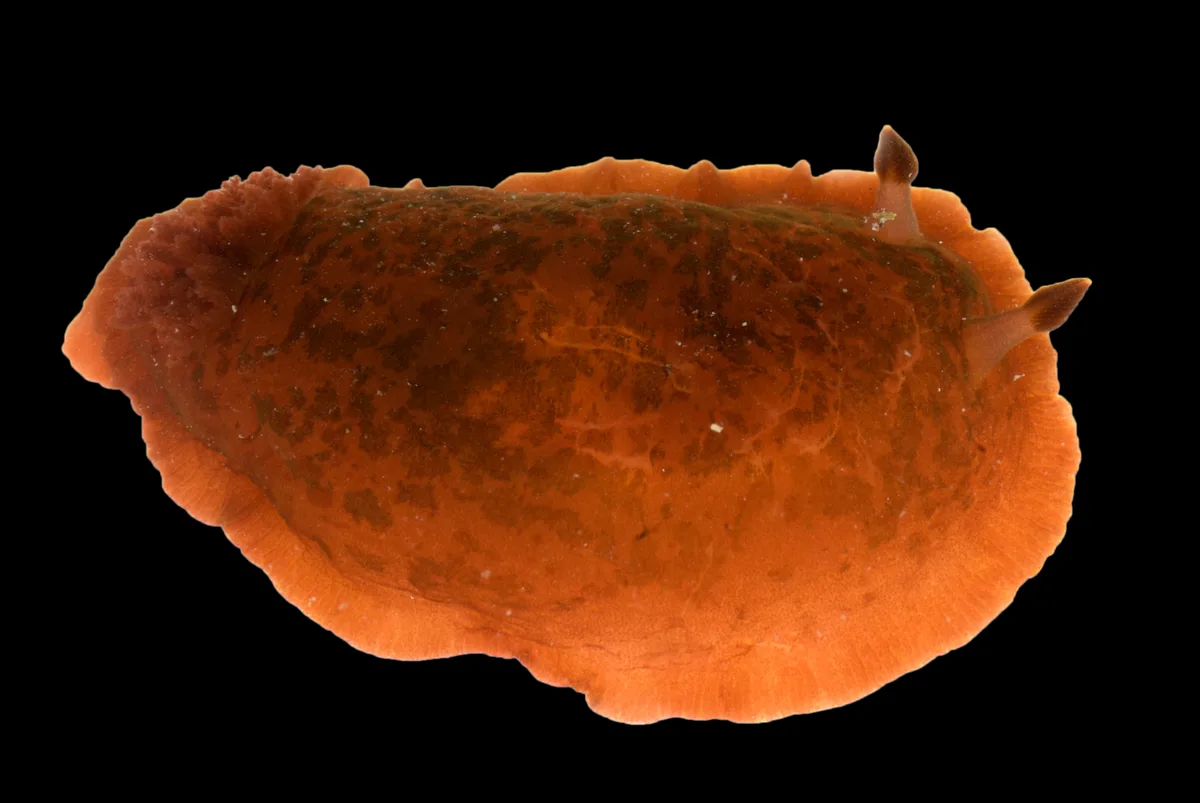
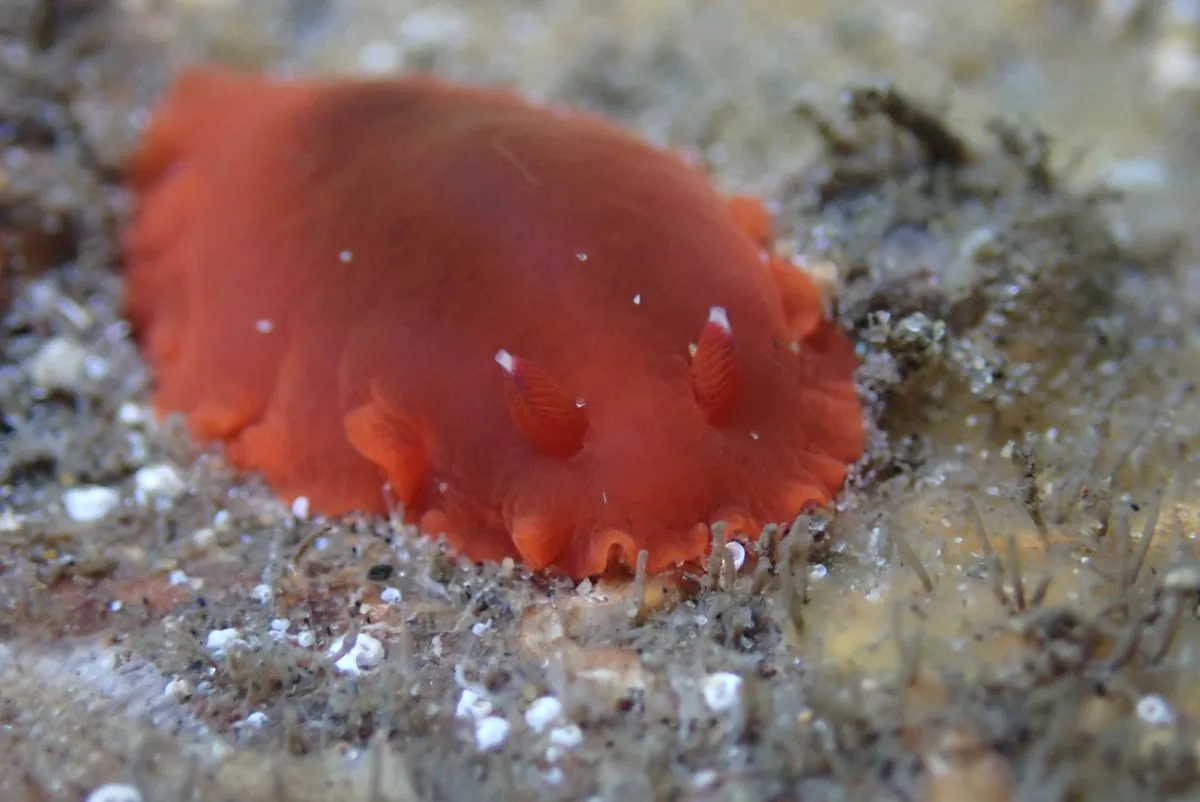
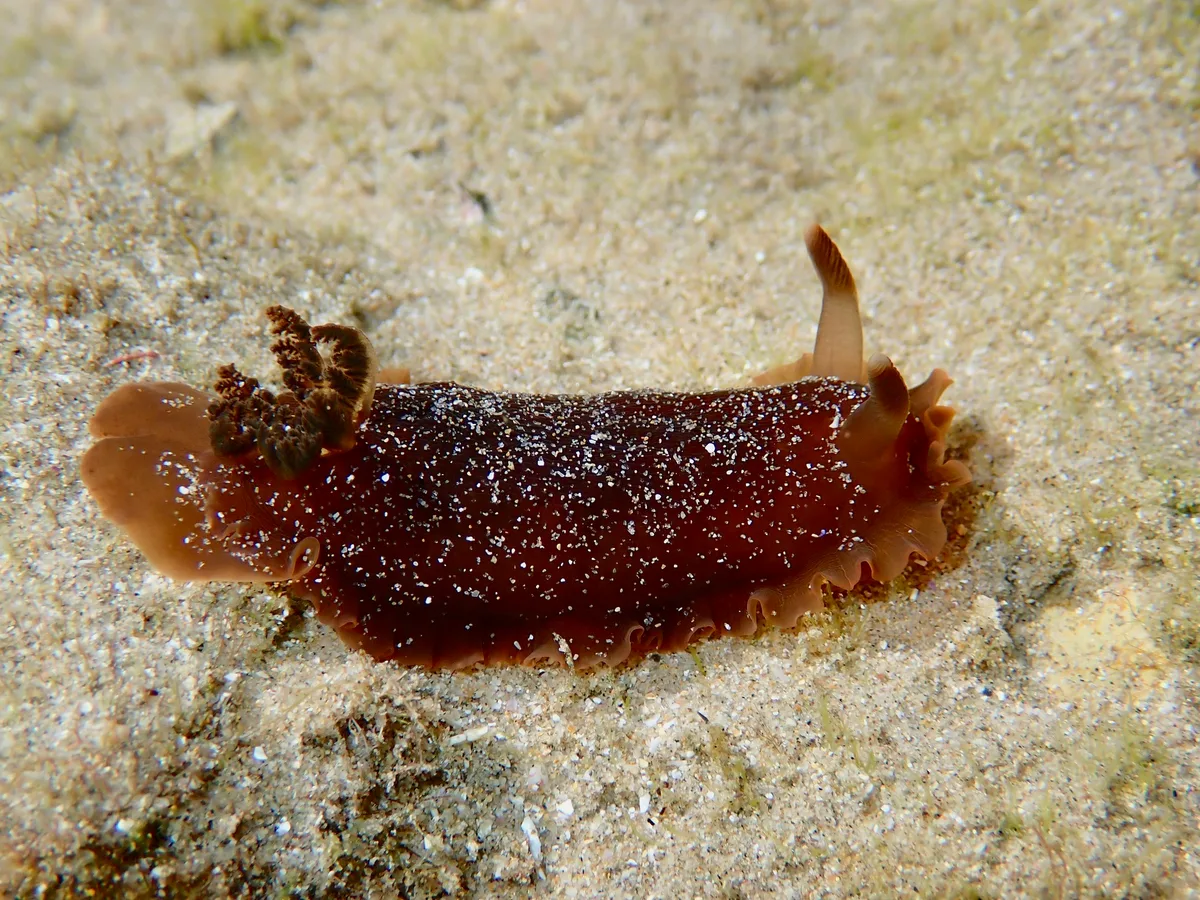
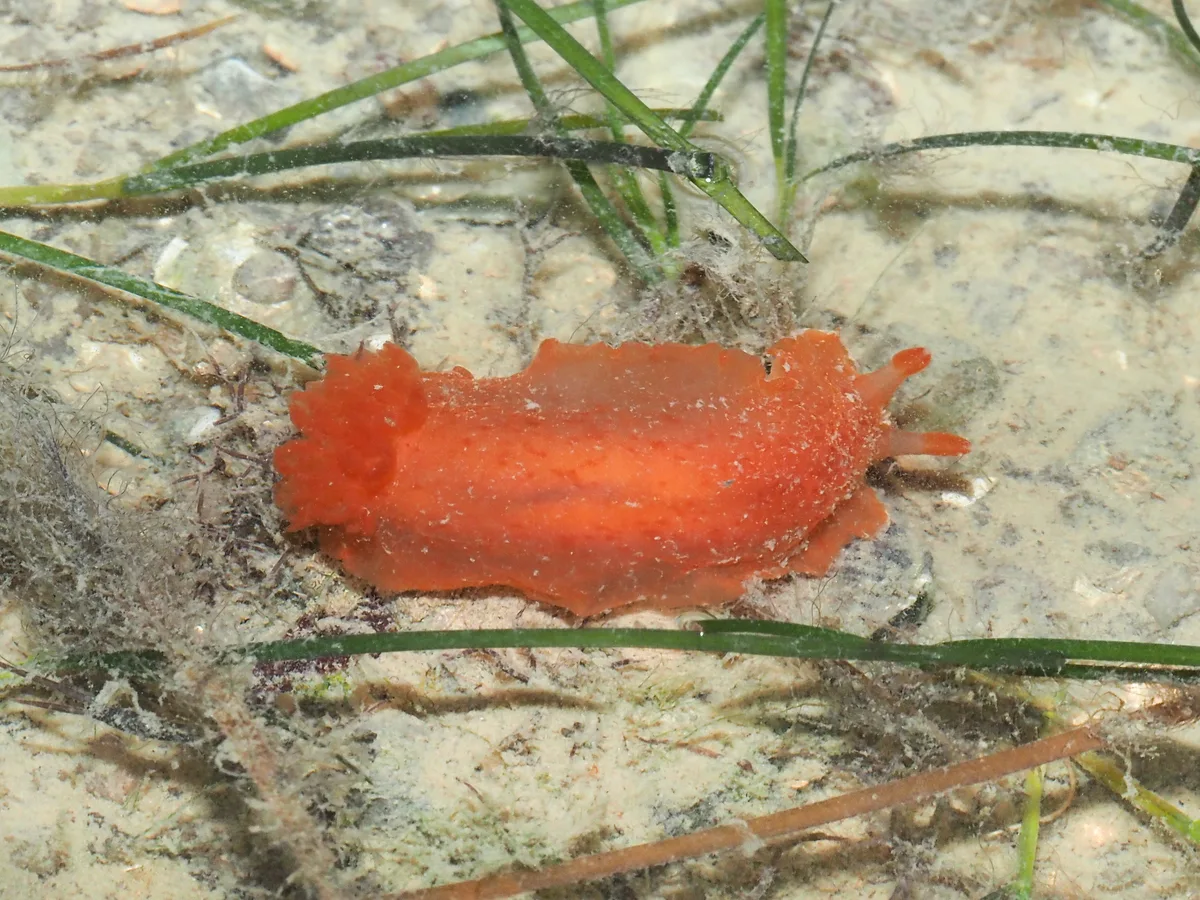
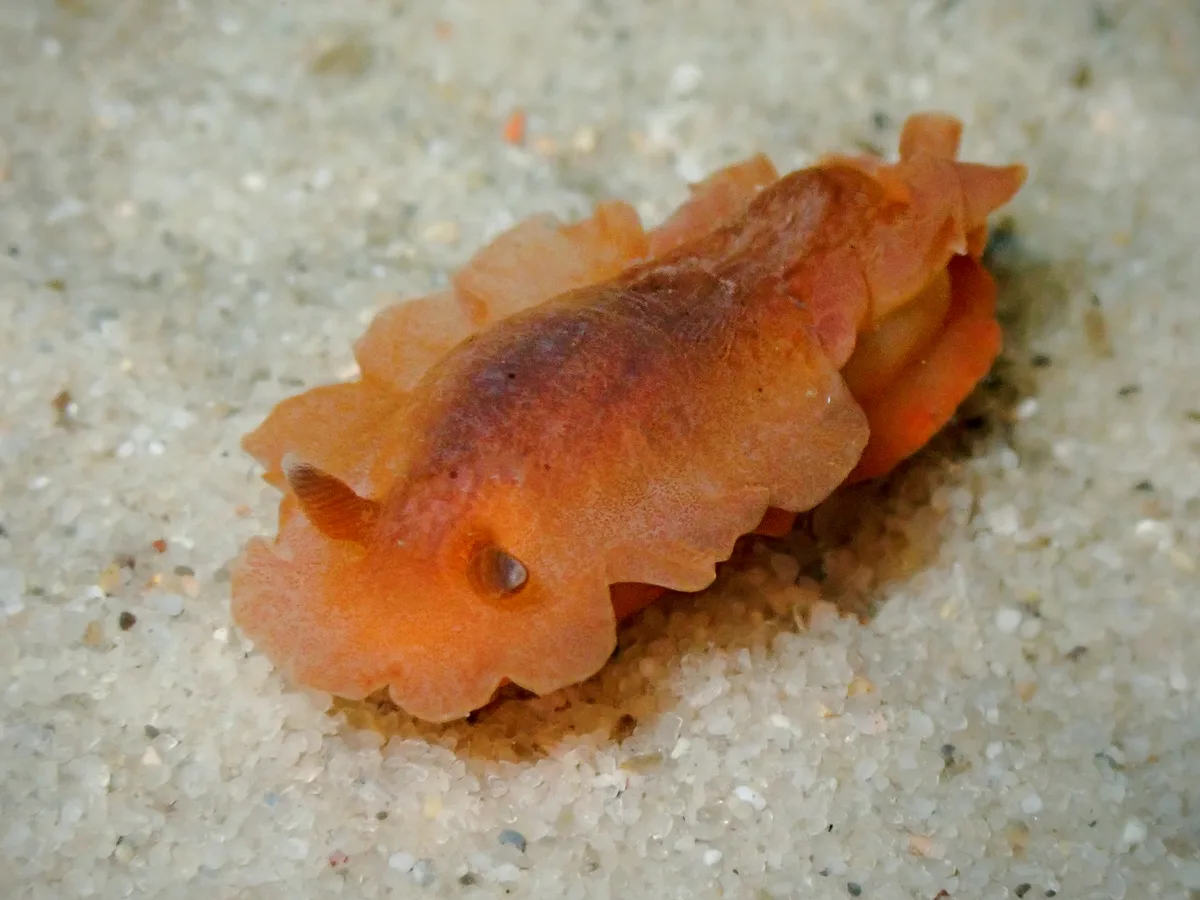
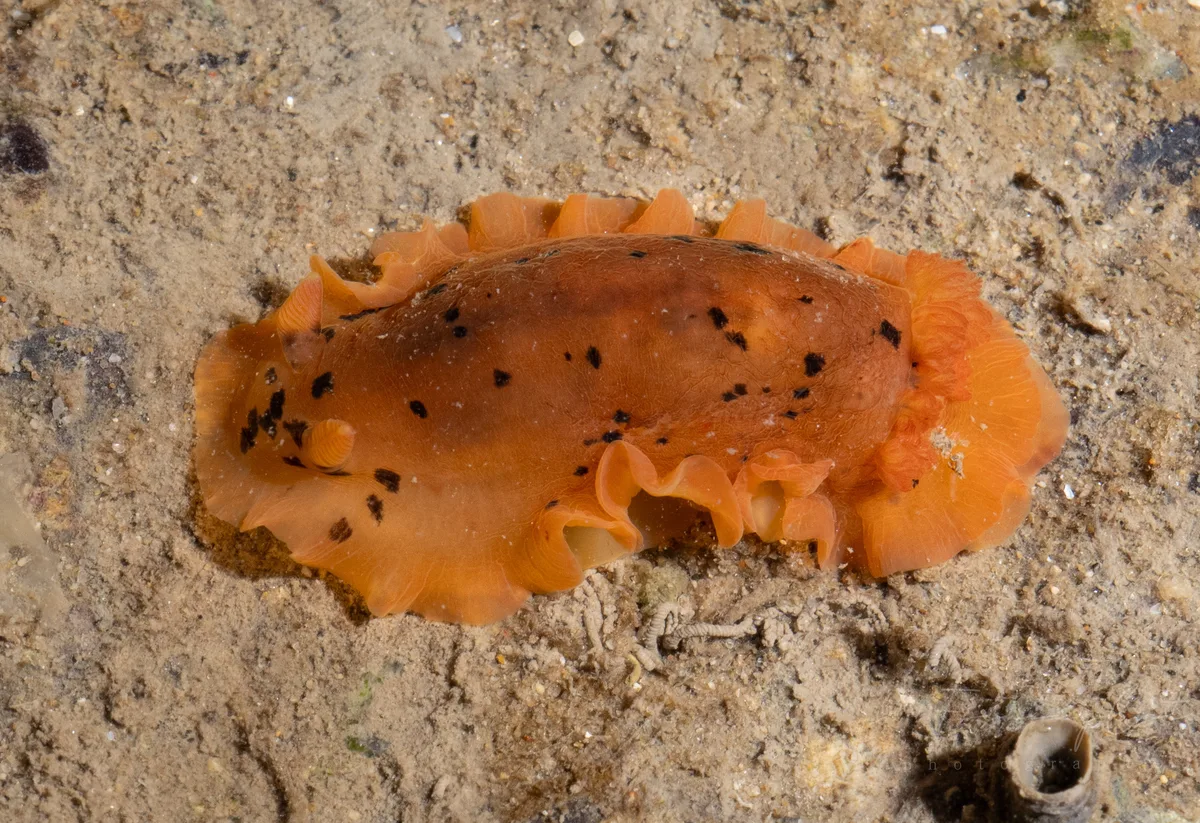
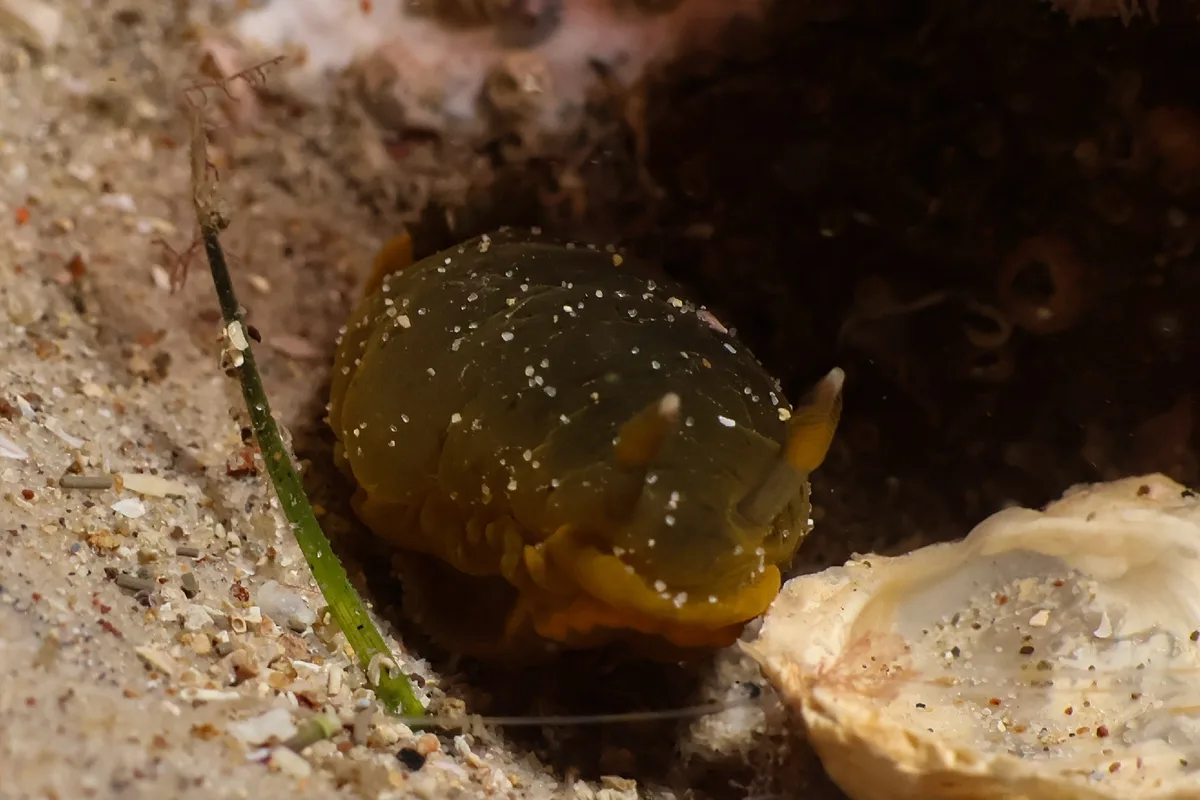
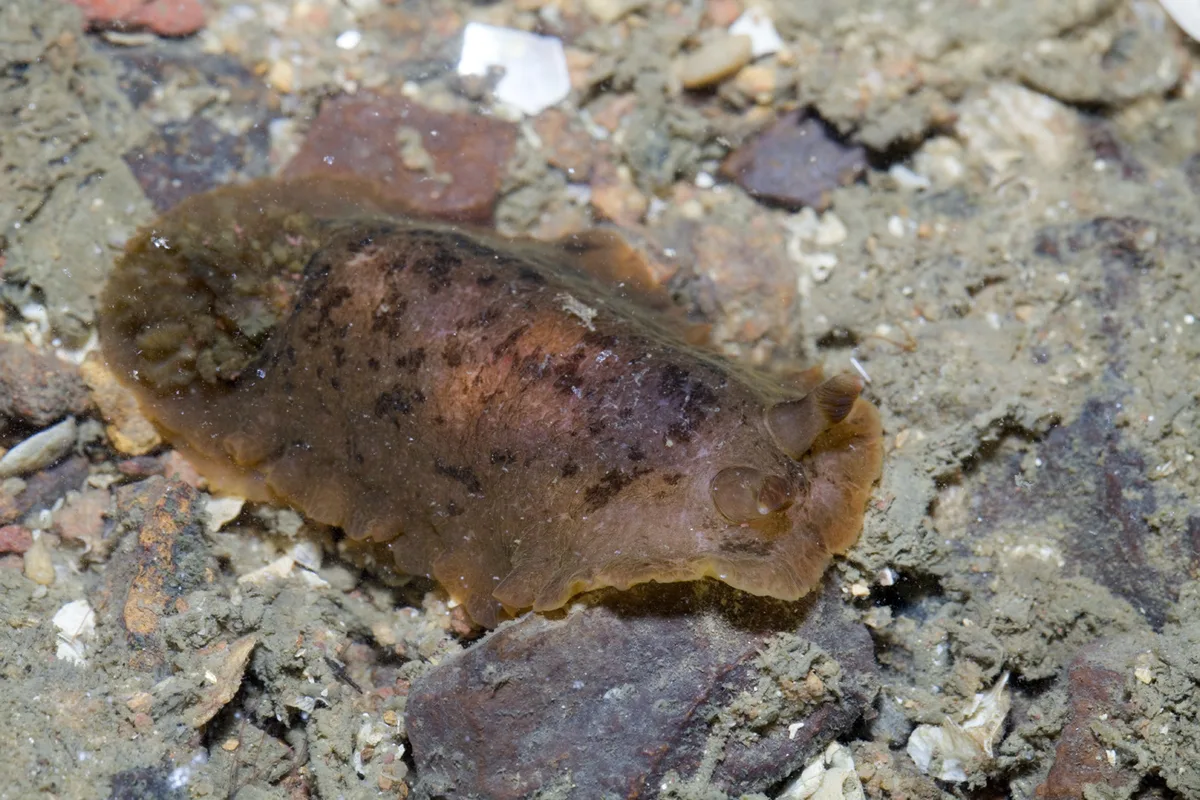
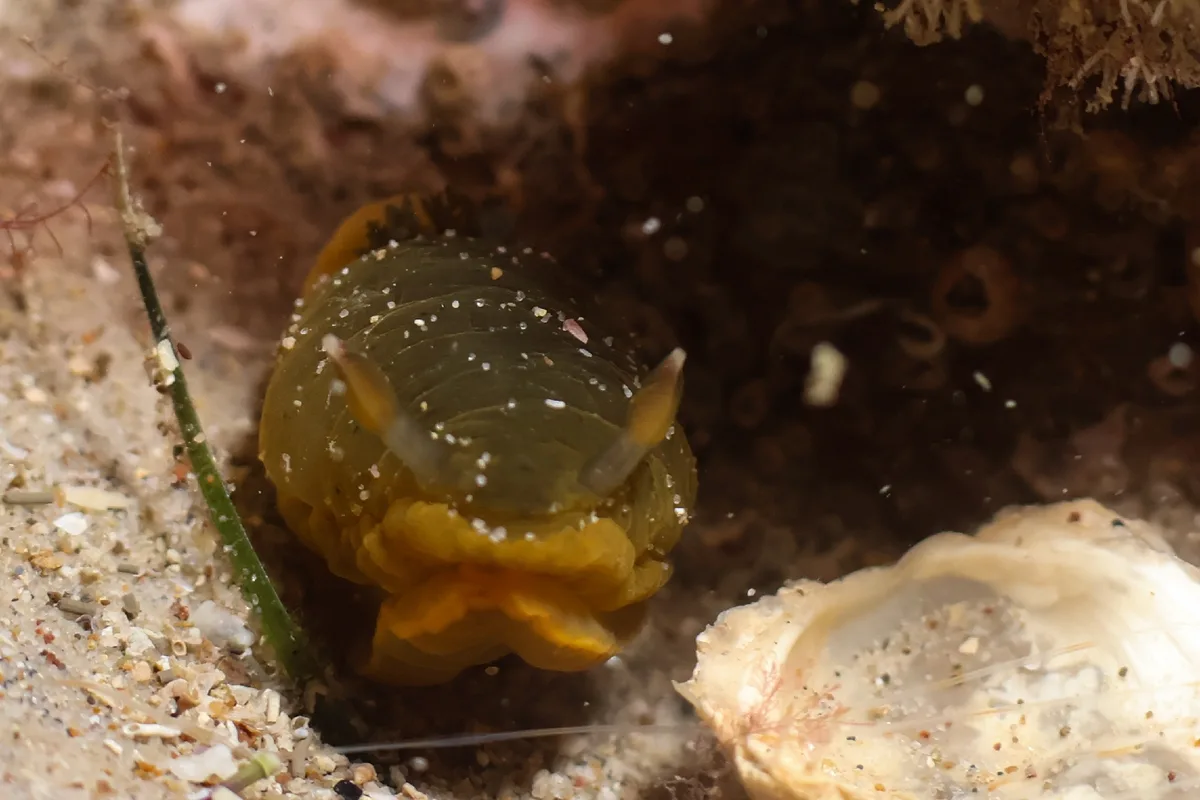
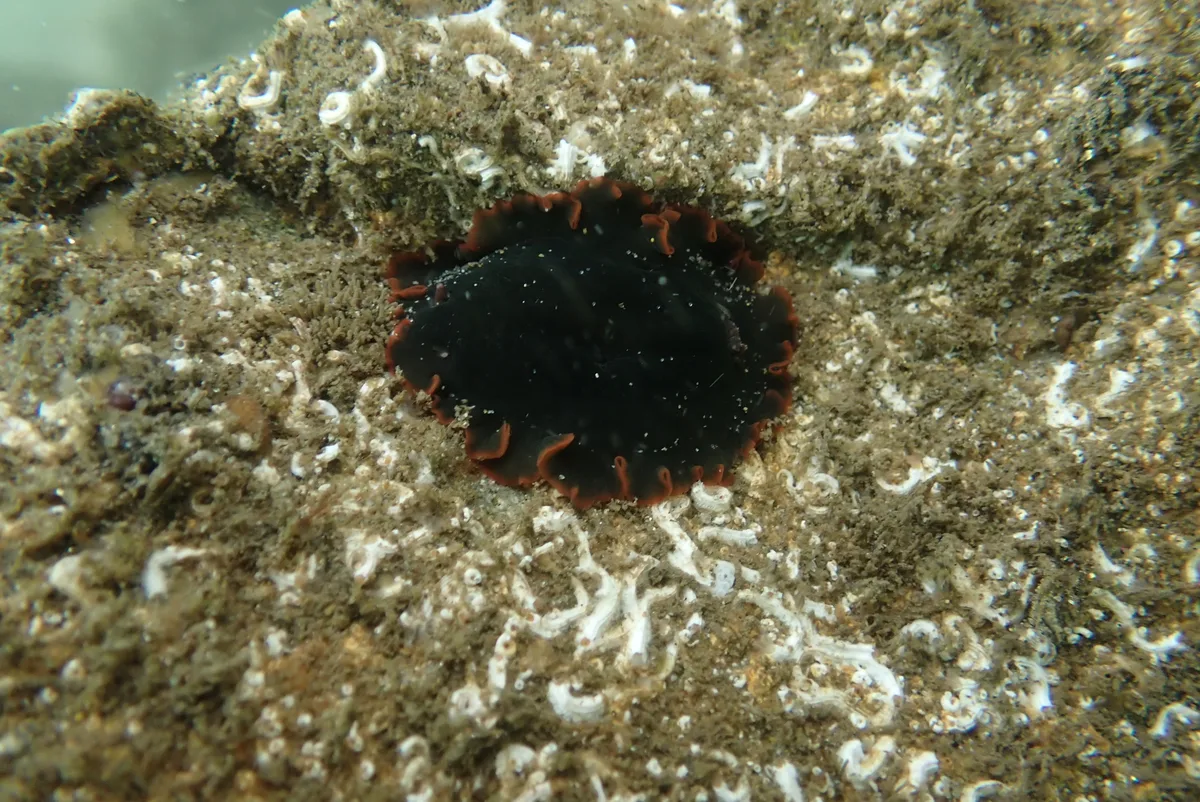
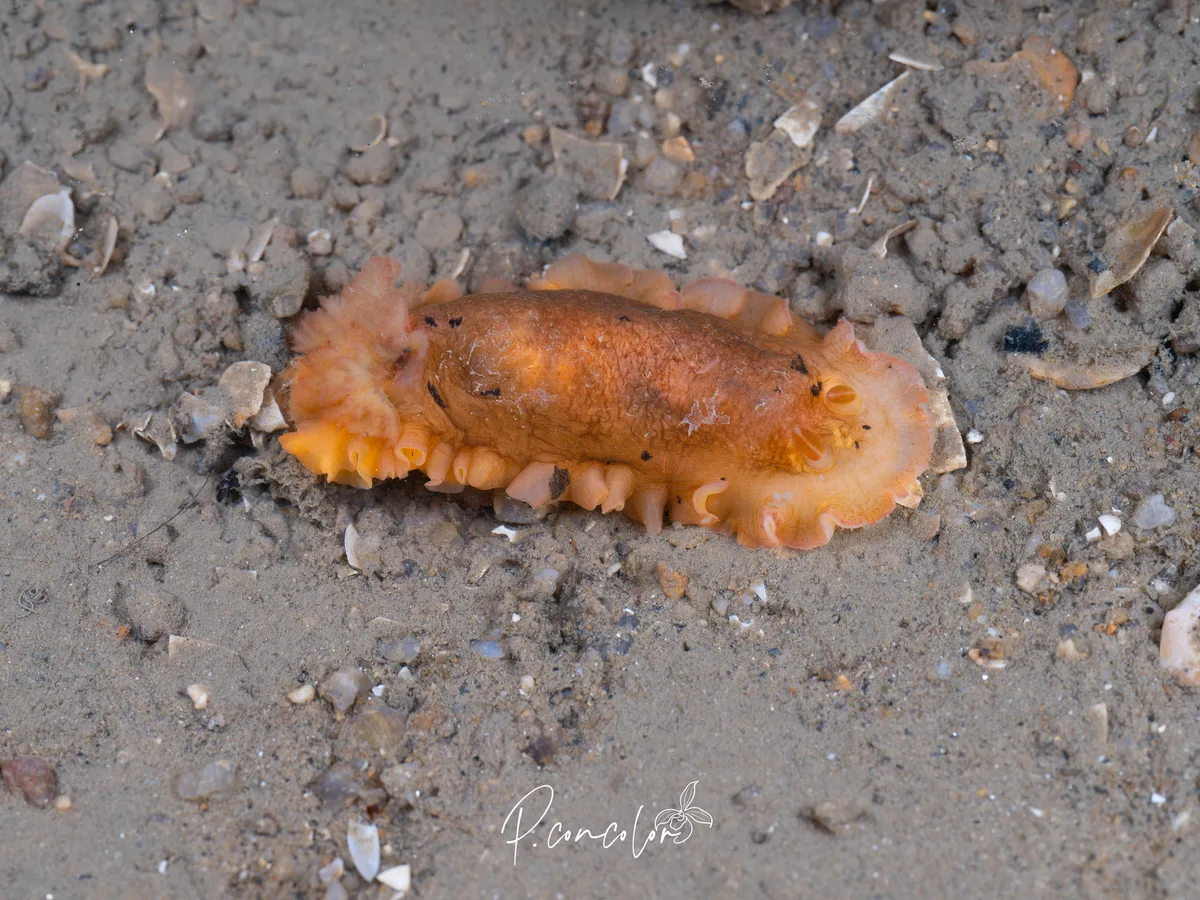
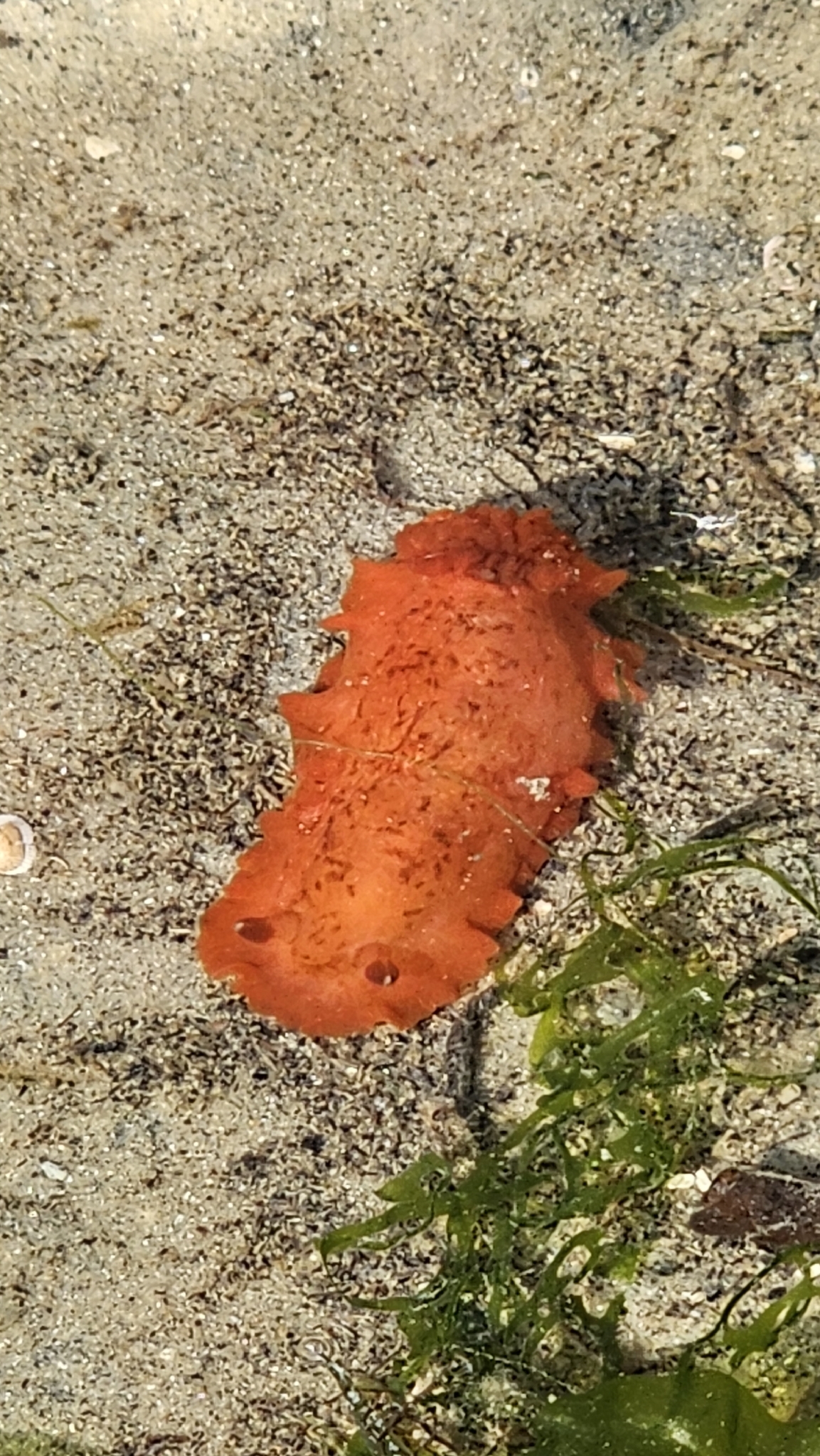
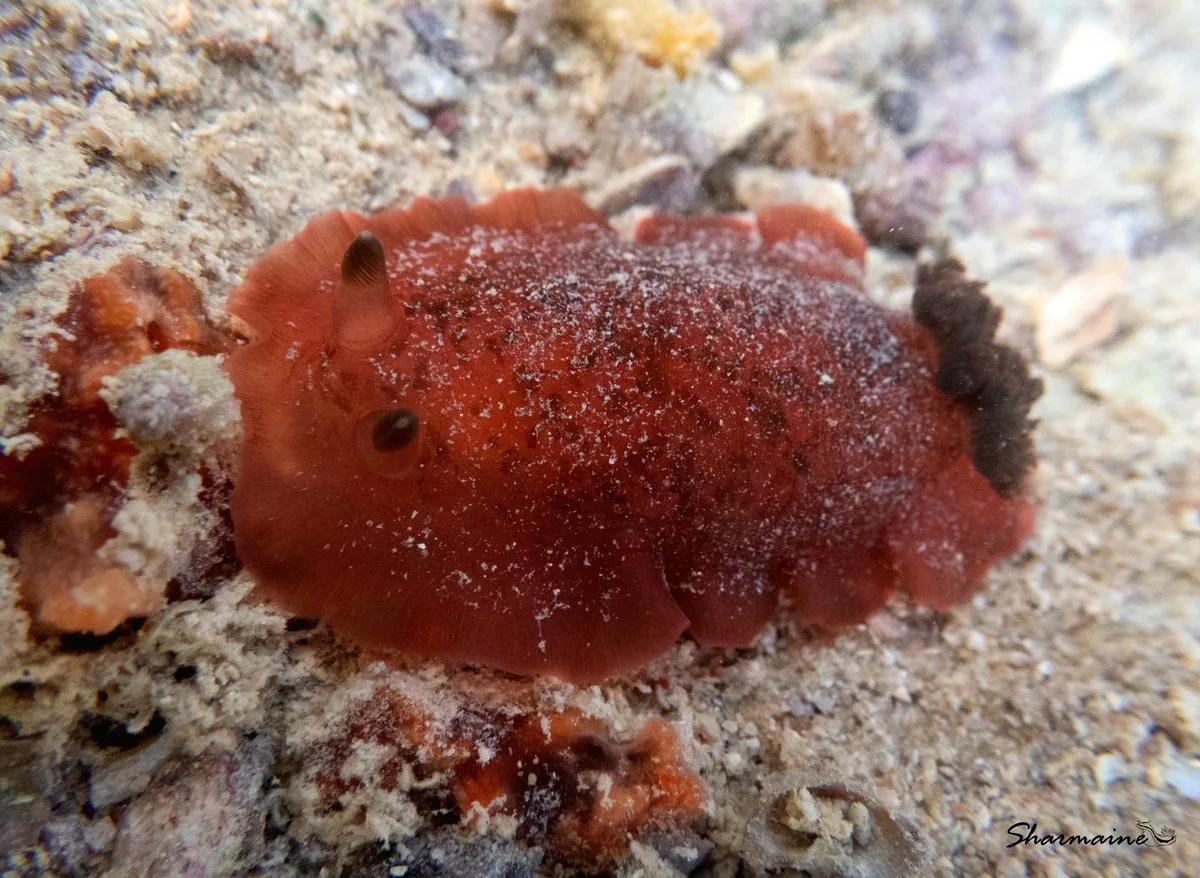
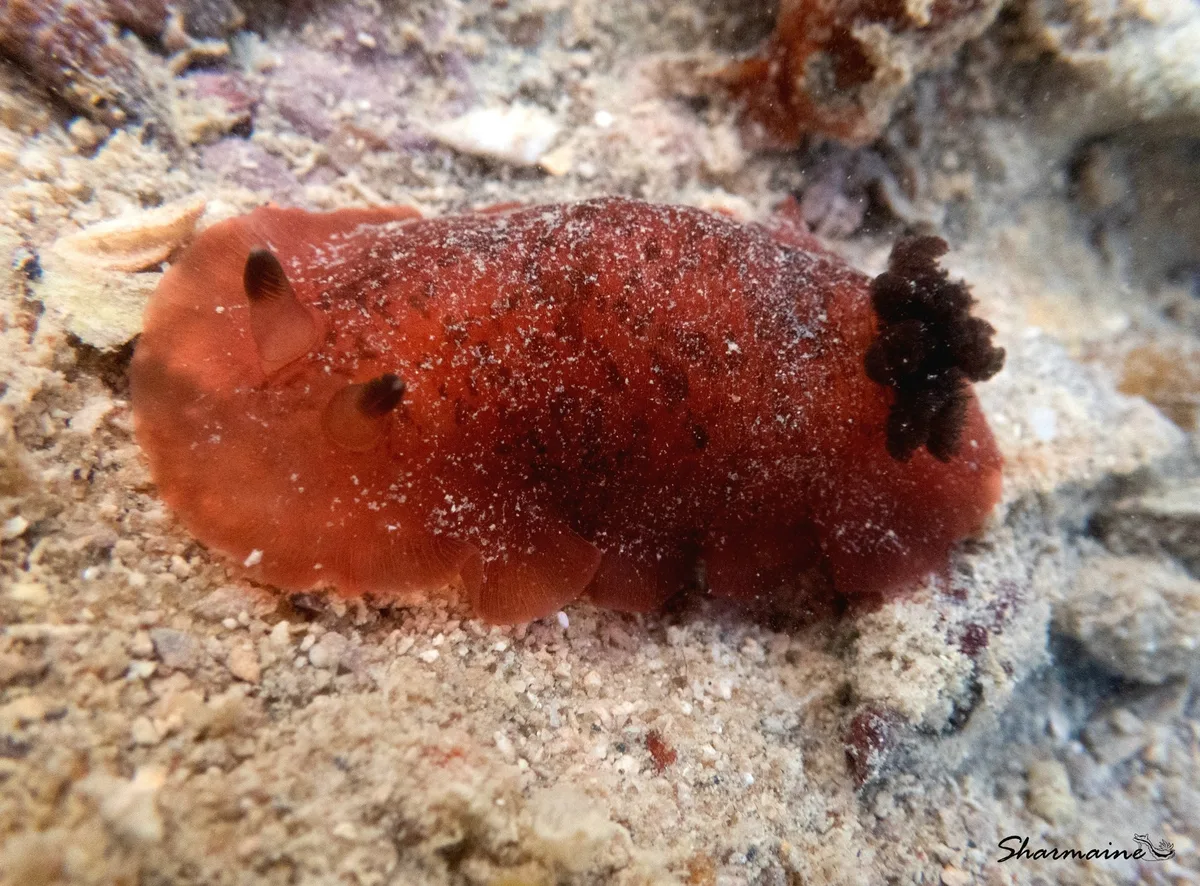
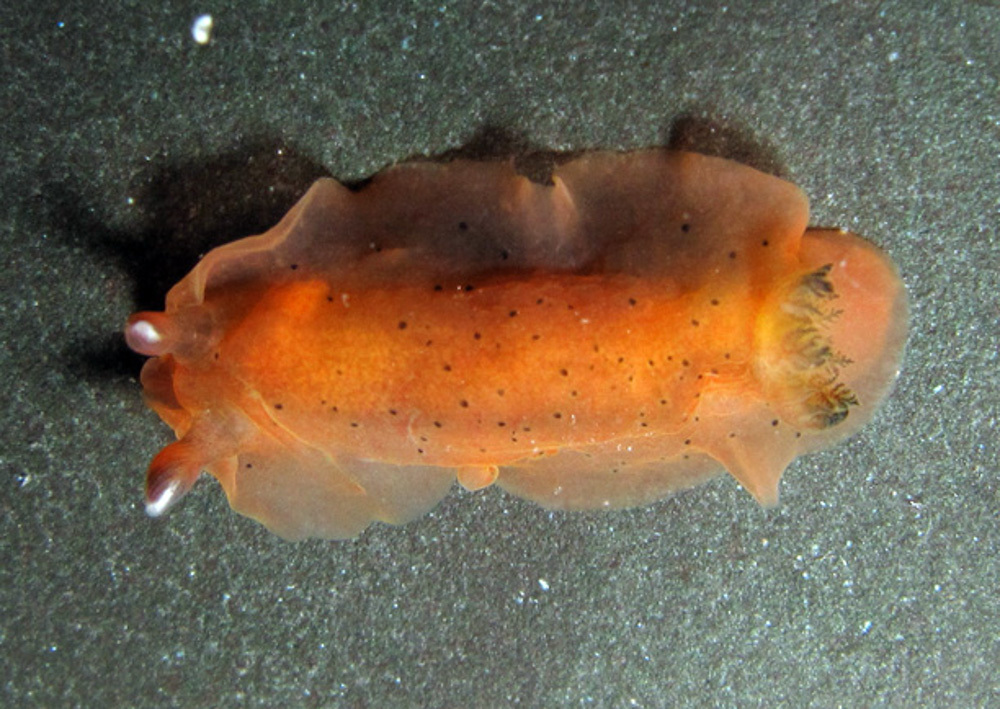
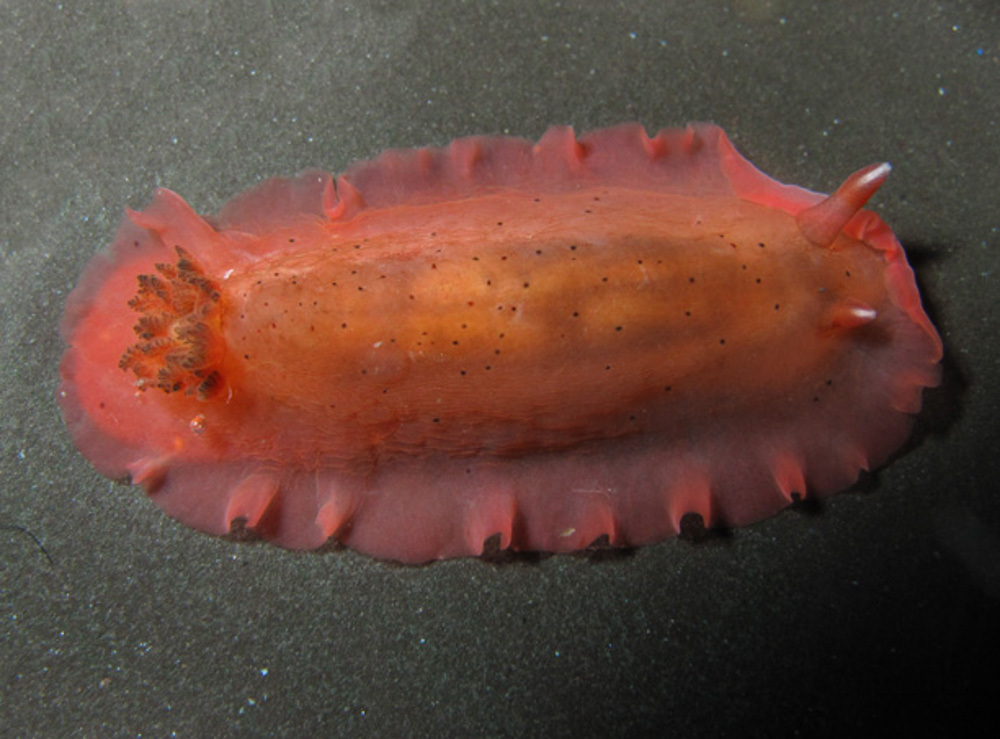
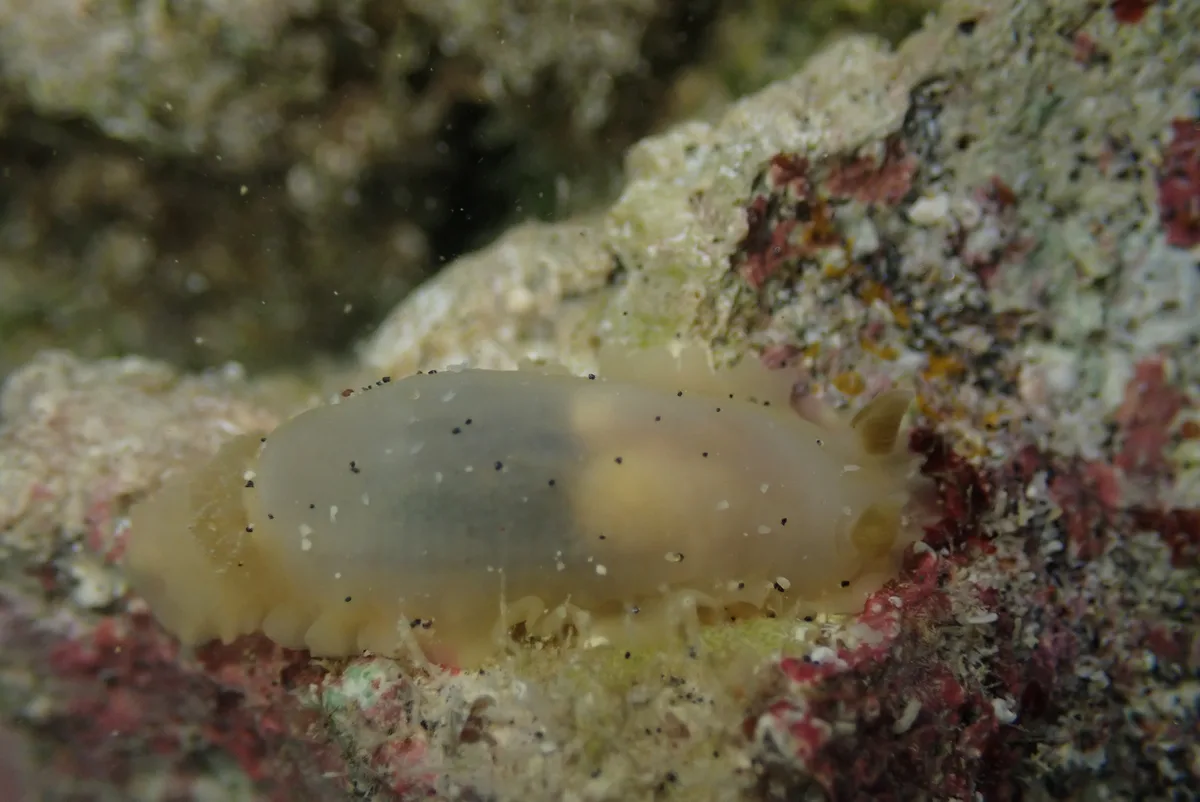
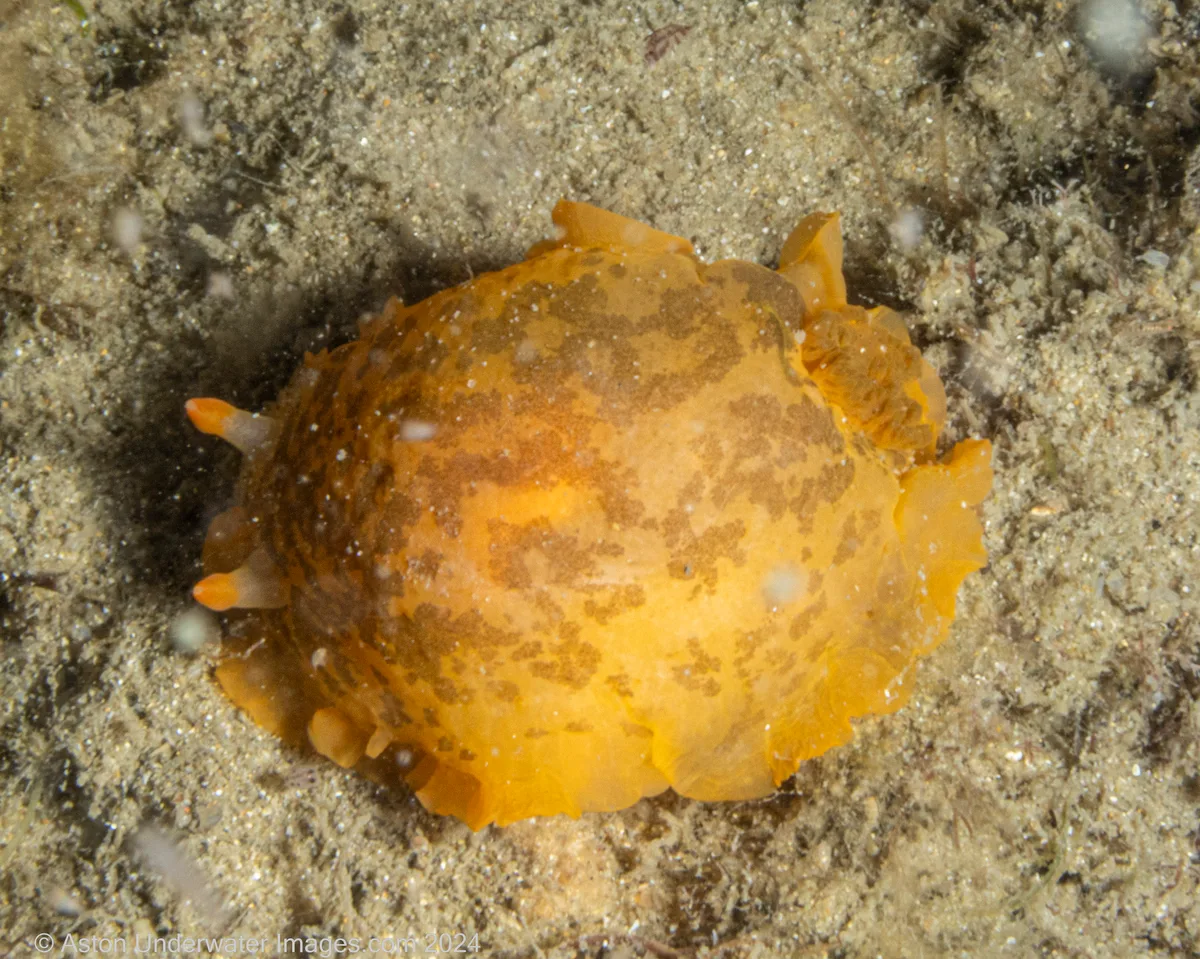
This is the one that gets misidentified, and it is worth knowing why before you photograph it.
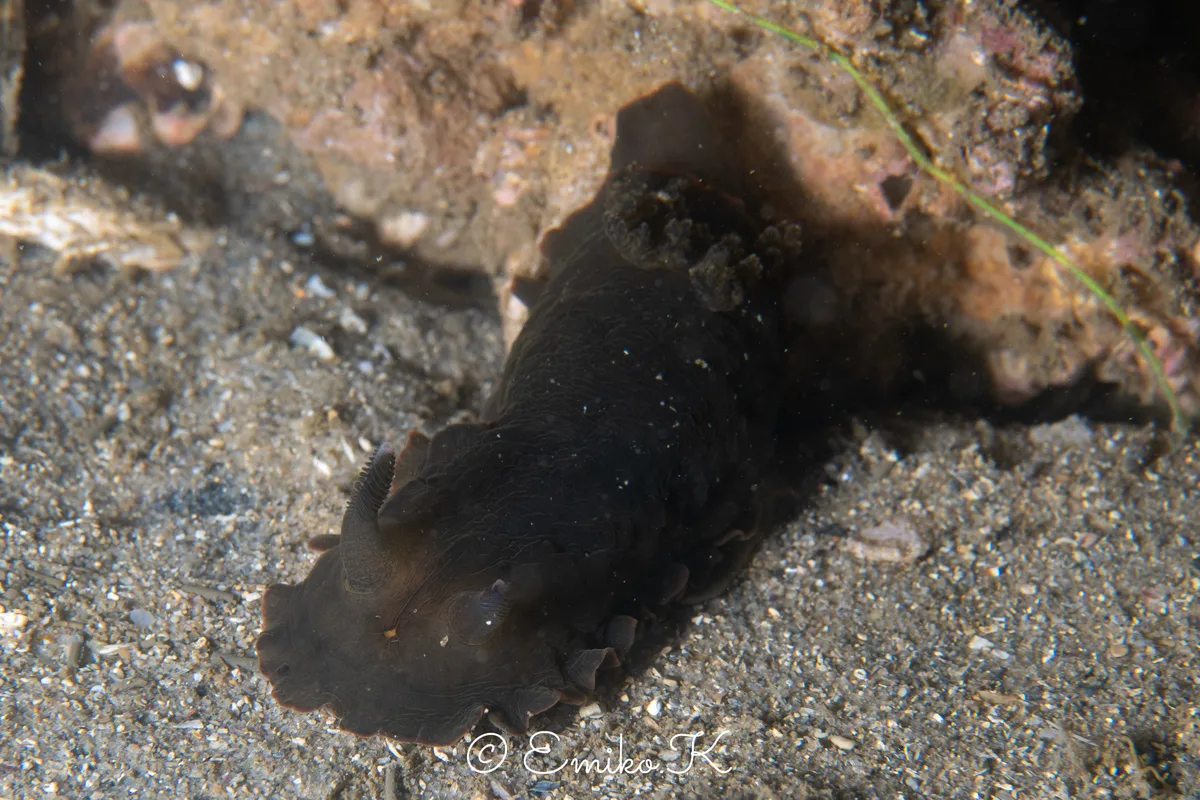
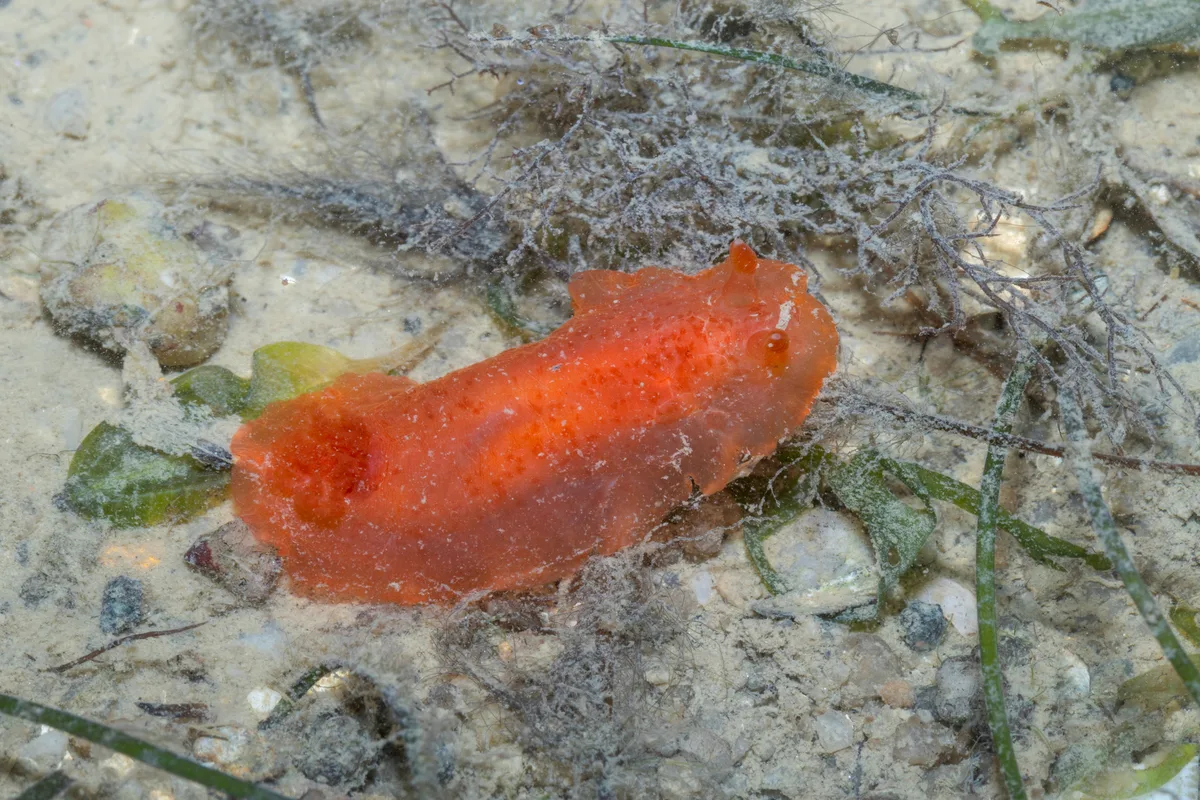
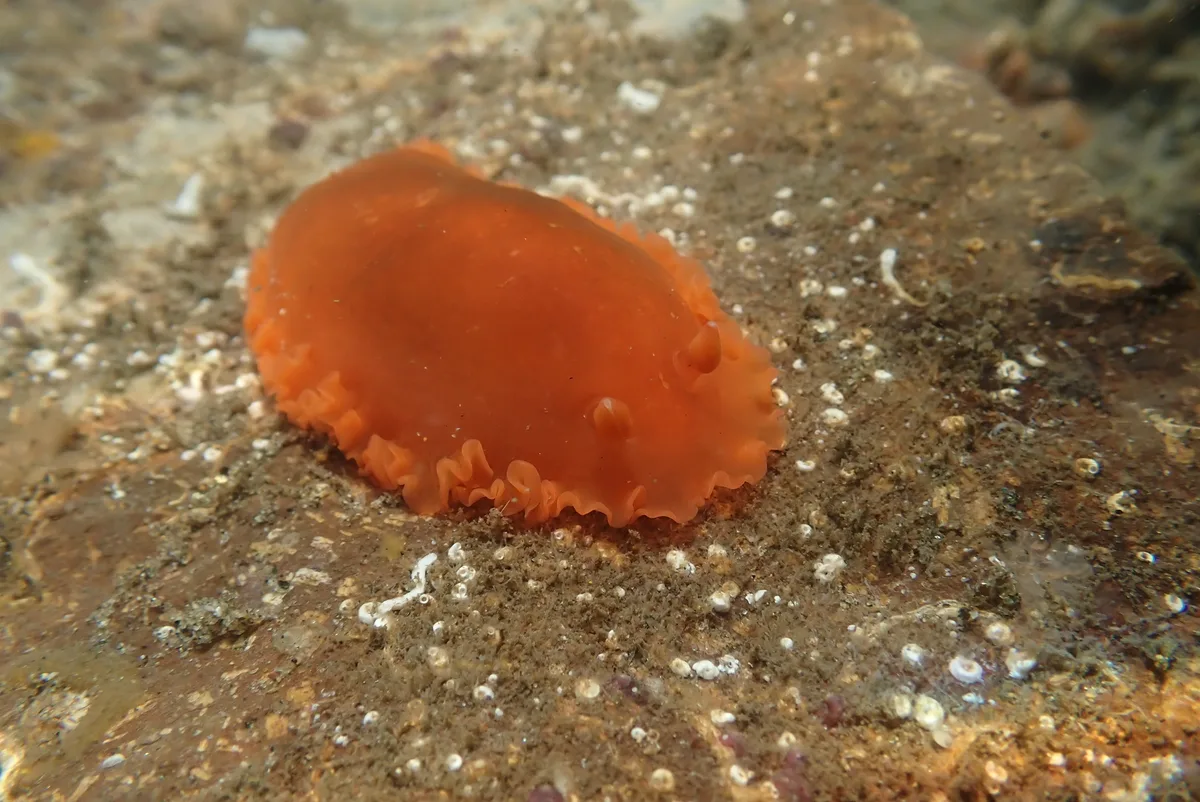
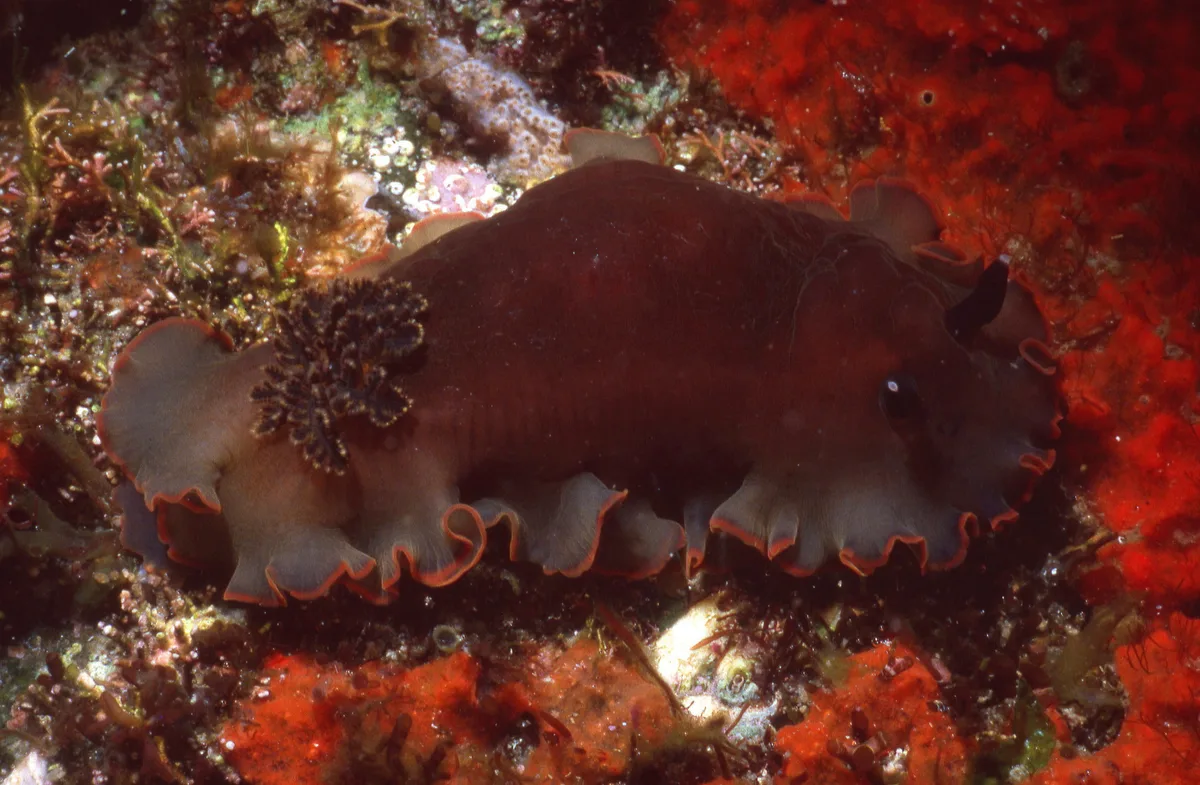
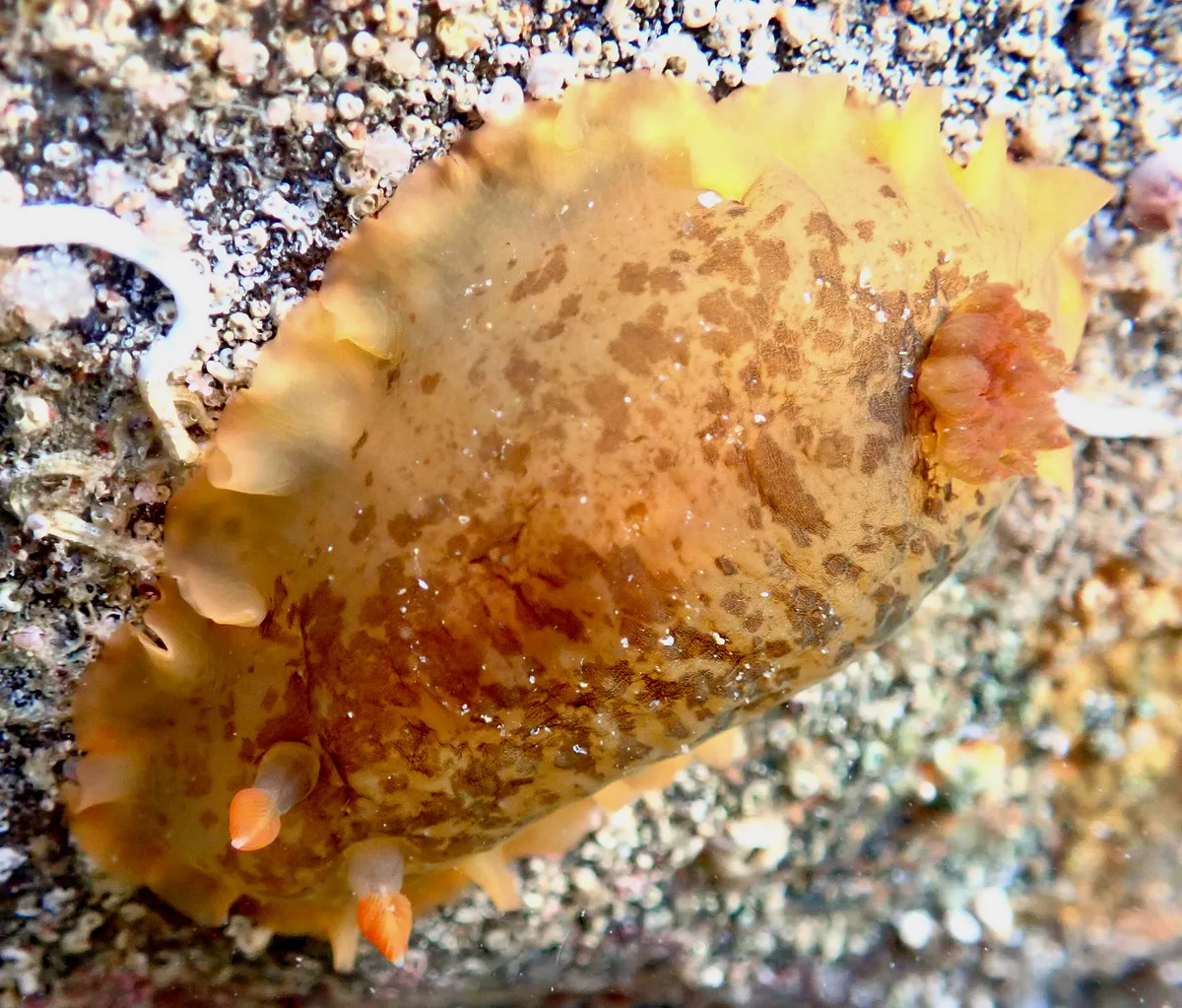
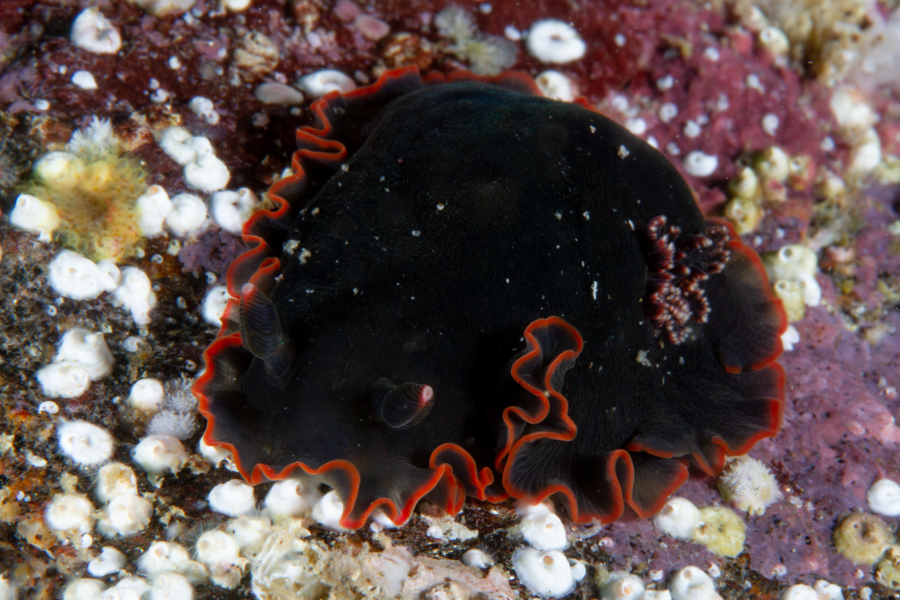
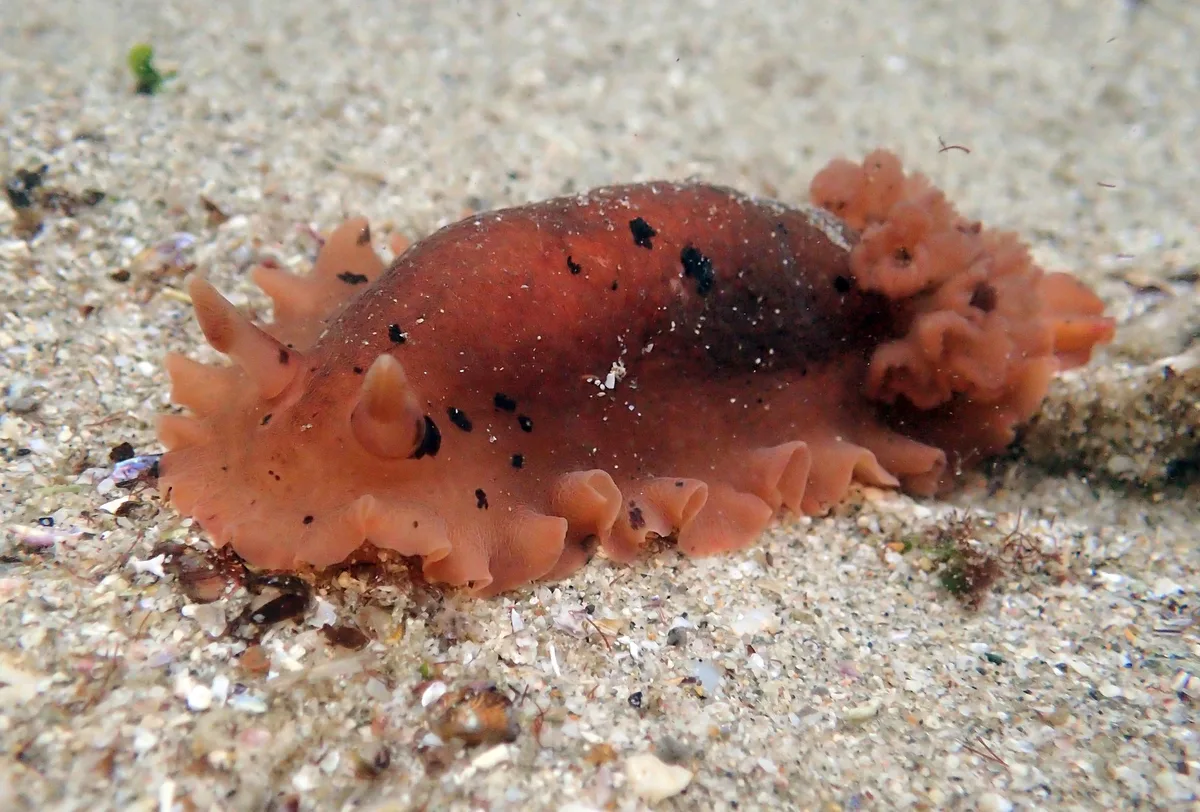
On this reef there is a common black Dendrodoris that everyone learns early. This species can be red, brown, gray or so dark it reads as black, and when it is dark and small it looks like that animal. The two have been confused in books, in photo databases and in dive briefings for decades, and a good share of the pictures filed under one name show the other.
What helps is size and edge. This one reaches ten centimeters (4 in) against roughly eight for the other, and it habitually lifts and ripples its mantle margin as it moves rather than keeping the skirt pressed flat. Neither is decisive on its own. Both together, on a large animal, are usually enough.
Underneath the confusion it does what the genus does, which is remarkable in its own right: it feeds with no teeth at all. The rasping belt that defines molluscan feeding is absent. The animal puts its mouth to a sponge, releases digestive fluid, and drinks the tissue back already broken down, leaving the sponge's glass skeleton standing.
Rüppell and Leuckart described it from 🌊 Red Sea material in 1830, which puts it among the older names in this catalogue, and it has been getting mixed up with its neighbor ever since.
- color unreliable: red, brown, gray or nearly black, often with dark spots
- mantle edge frequently rippled and lifted, not held flat
- soft throughout, no tubercles, no ridges
- ten centimeters, larger than the black slug it is confused with