Verconia simplex
Verconia simplex
Verconia simplex
Verconia simplex - קיסריה, ישראל
Verconia simplex - חוף גורדון, ישראל
Verconia simplex - Mediterranean Sea, Tel Aviv-Yafo, Tel Aviv District, IL
Verconia simplex - קיסריה, ישראל
Verconia simplex - Tantabiddi, Exmouth, WA, Australia
Verconia simplex - Tingloy, PH-BT, PH
Verconia simplex - TW
Verconia simplex - Woolgoolga
Verconia simplex - Main Beach-South Stradbroke, Queensland, Australia
Verconia simplex - Gold Coast Seaway, Seaworld Dr, Main Beach QLD 4217, Australia
Heterobranchia | Nudibranchia | Chromodorididae | Verconia simplex (Pease, 1861) - Bare Bluff (Solitary Islands Marine Park) NSW, Australia
Verconia simplex - Lembeh Strait, Indonesia
Verconia simplex - Gold Coast QLD, Australia
Verconia simplex - Lembeh Strait, Indonesia
Verconia simplex - Ligaya, Mabini, 4202 Batangas, Philippines
Verconia simplex - Main Beach-South Stradbroke, Queensland, Australia
Verconia simplex
Verconia simplex - Burleigh Heads, Queensland, Australia
Verconia simplex - Gold Coast QLD, Australia
Verconia simplex - Angourie Rock Pool, NSW 2464, Australia
Verconia simplex - Elbow Cave, North Solitary Island, NSW
Verconia simplex - Coffs Harbour - Pt B, AU-NS, AU
Verconia simplex
Verconia simplex
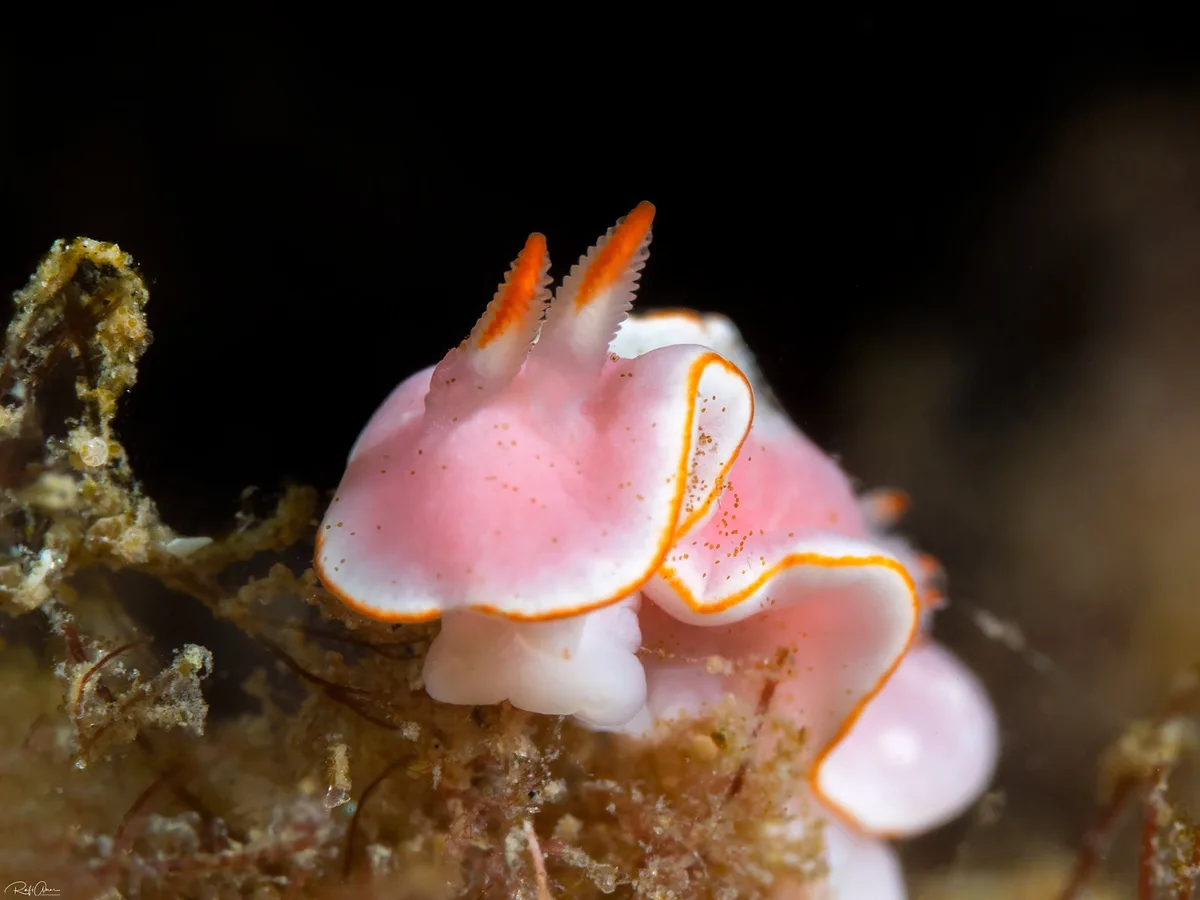
Poisonous© Rafi Amar
Invertebrate · Molluscs · Nudibranch

Simple Rainbow Dorid

Verconia simplex (Pease, 1871)
syn. Chromodoris simplex, Hypselodoris kayae, Noumea simplex
up to 1.2 cmPoisonous
0

Twelve millimeters (0.5 in) and there is nothing on it. That is not a failure of description; it is the species.

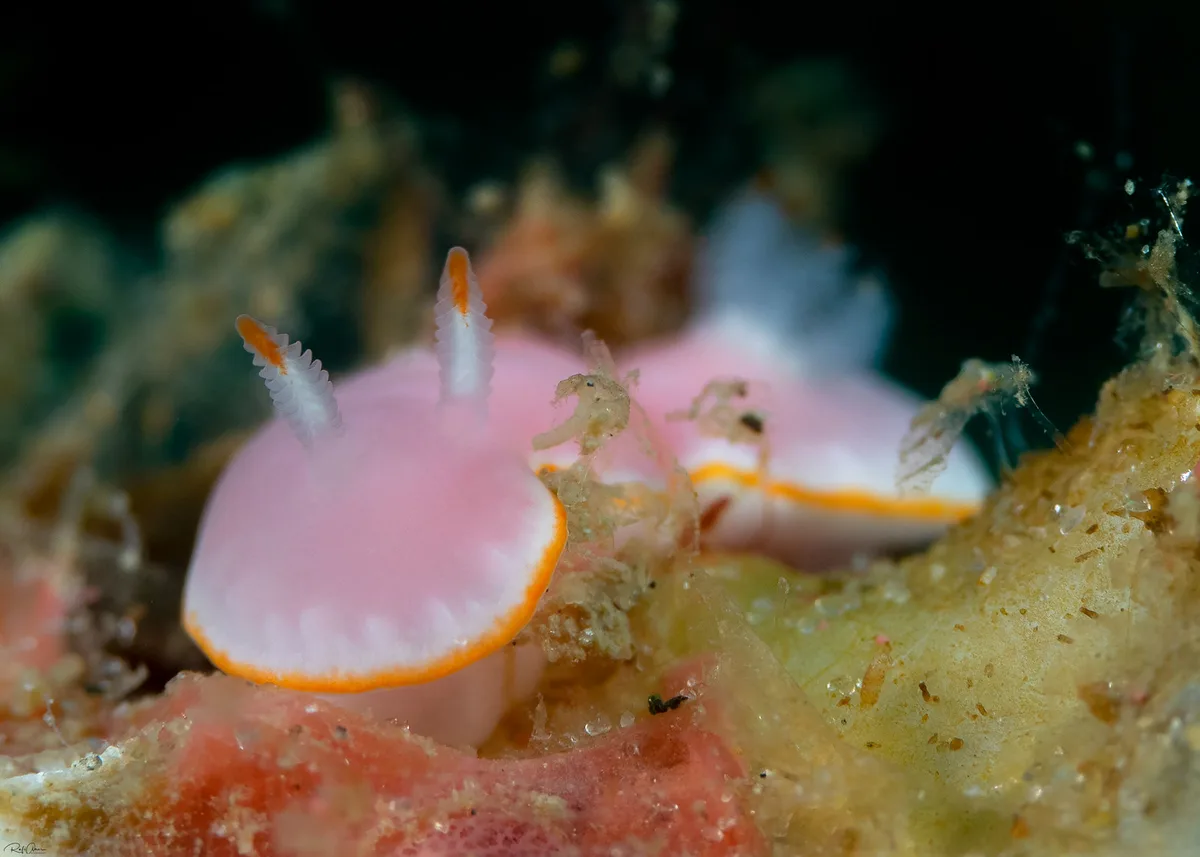
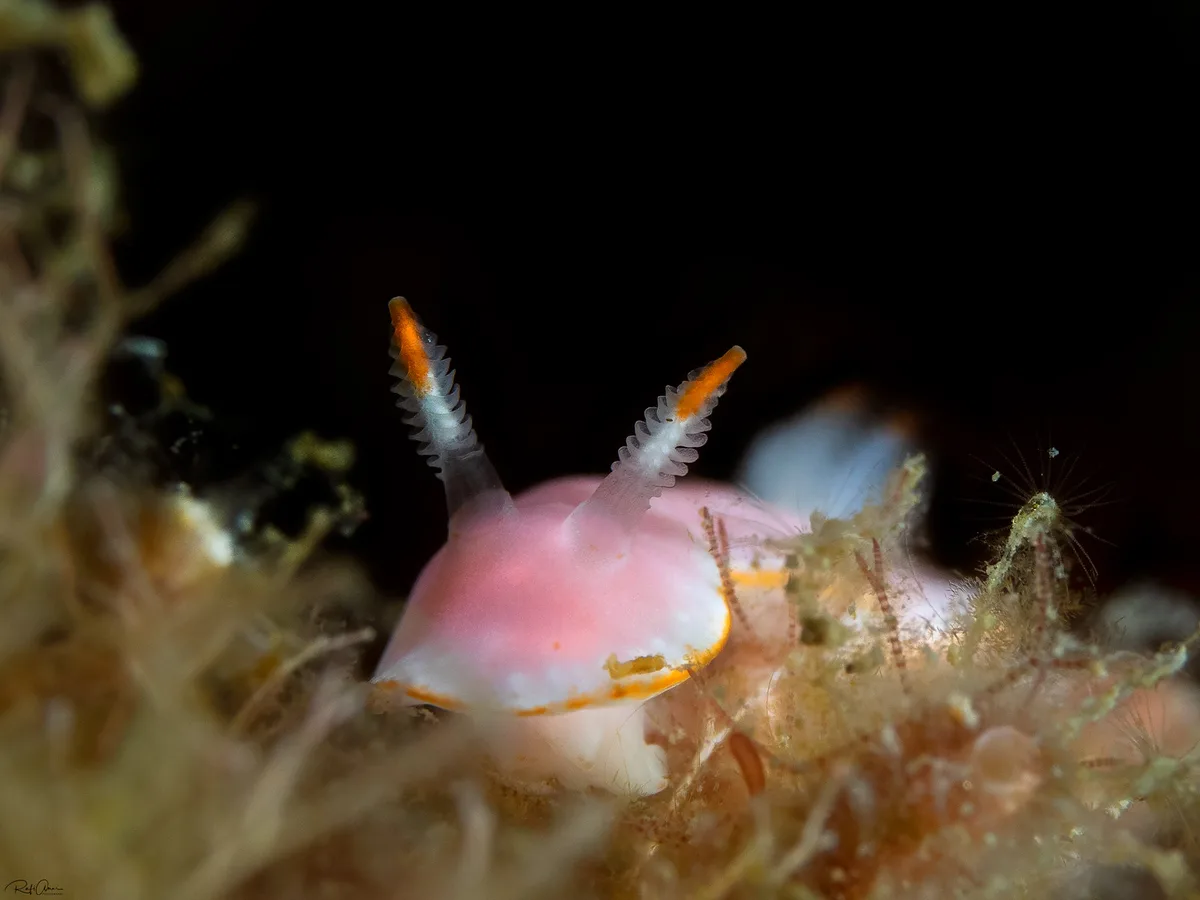
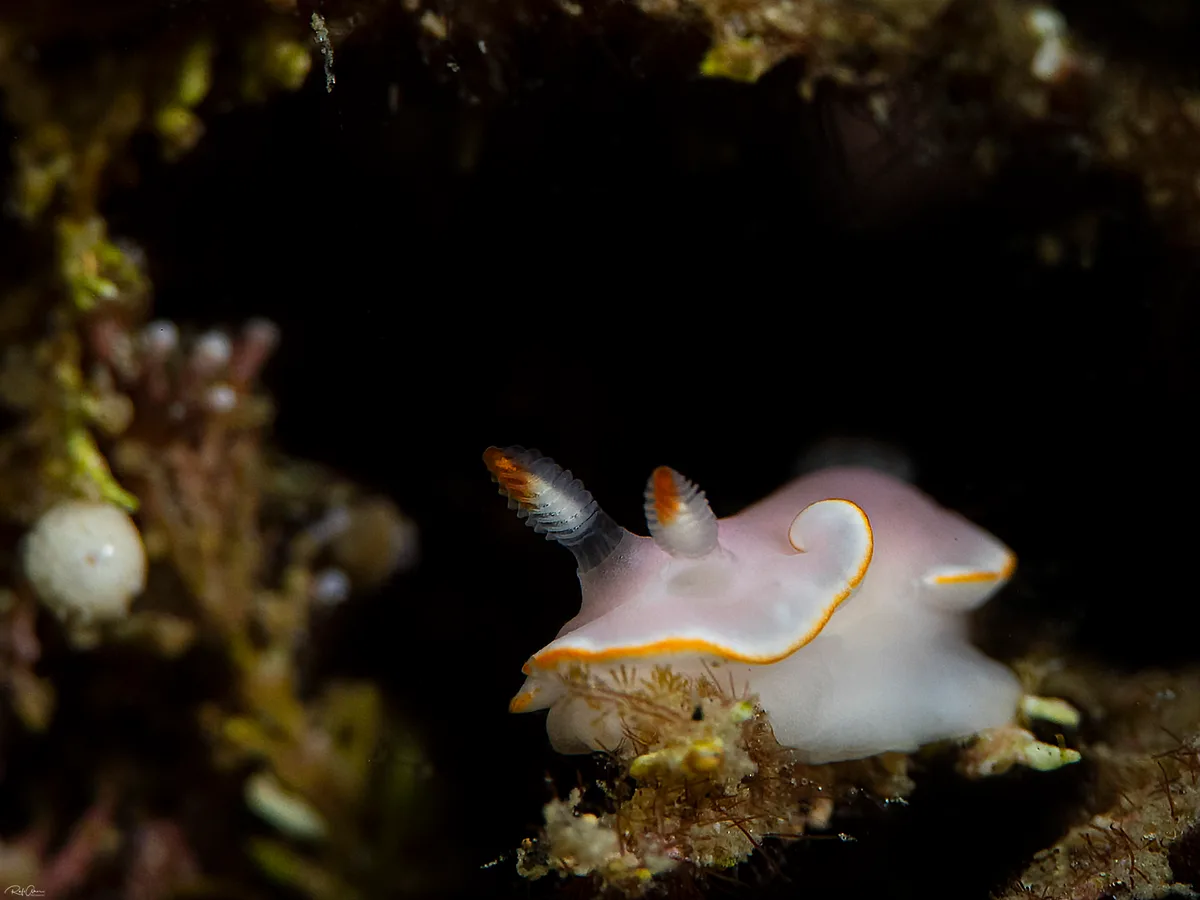
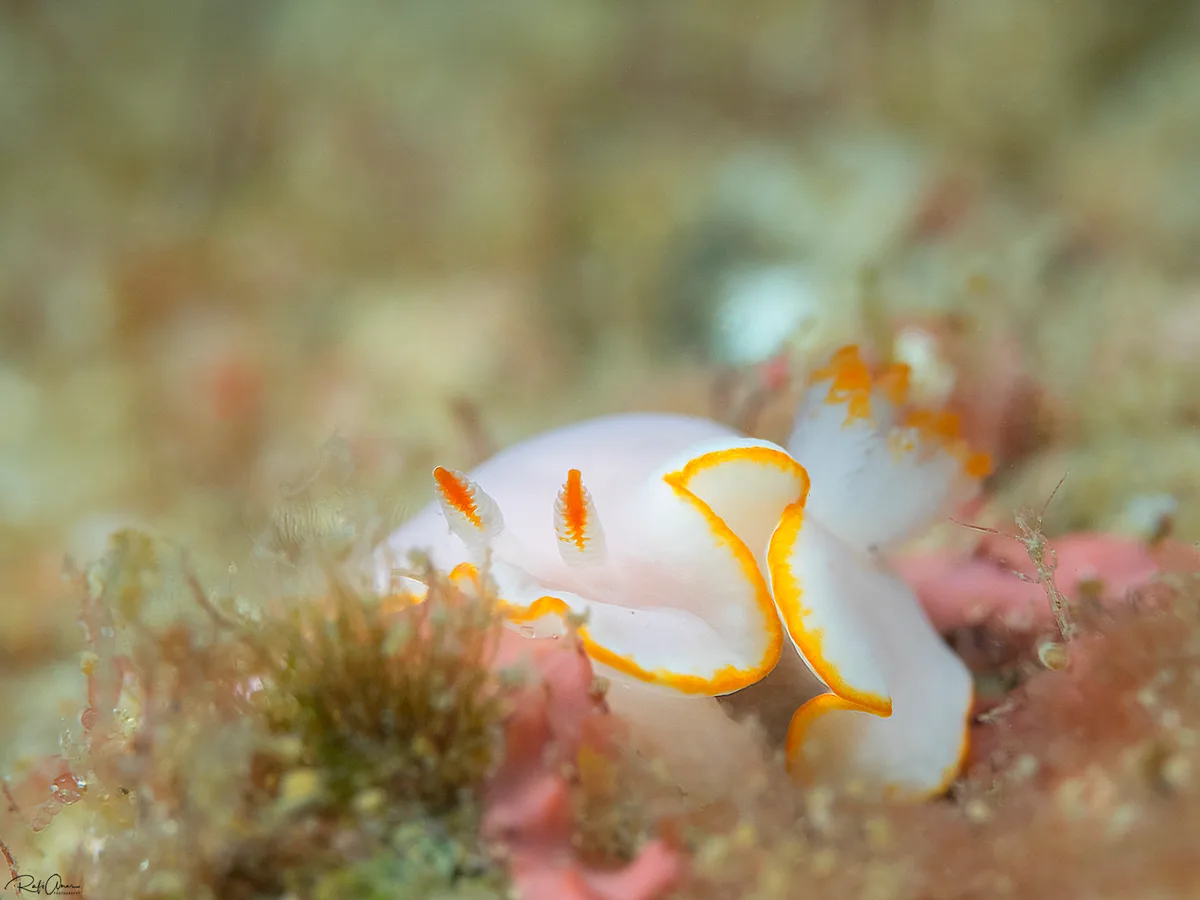
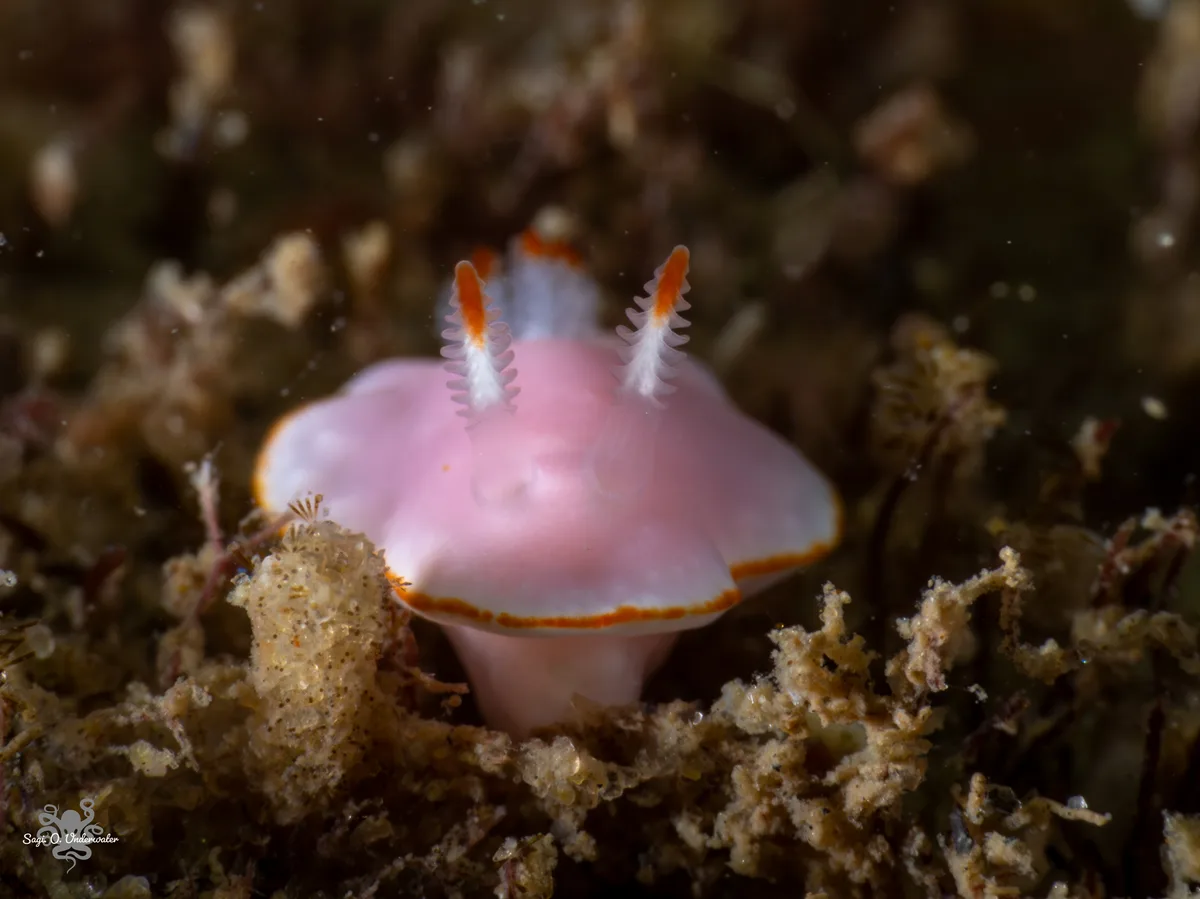
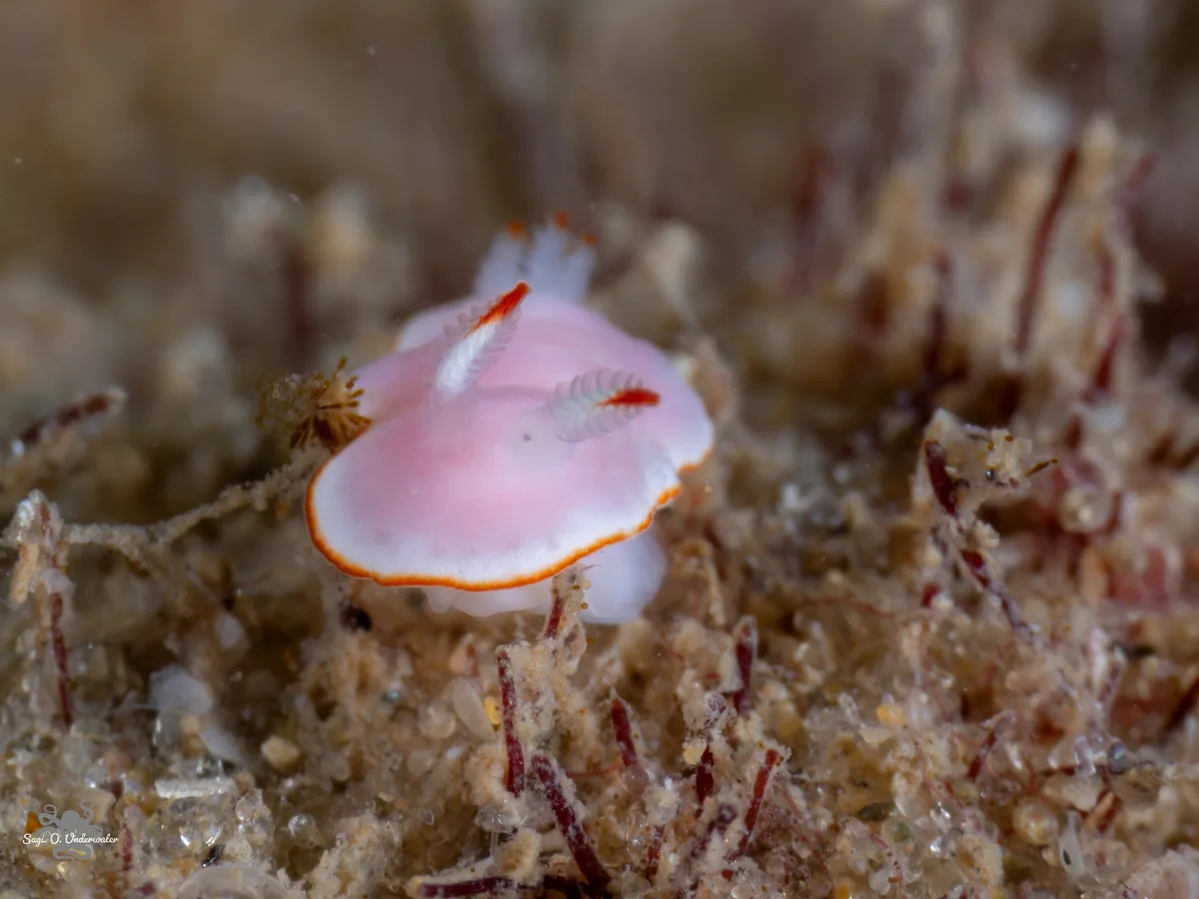
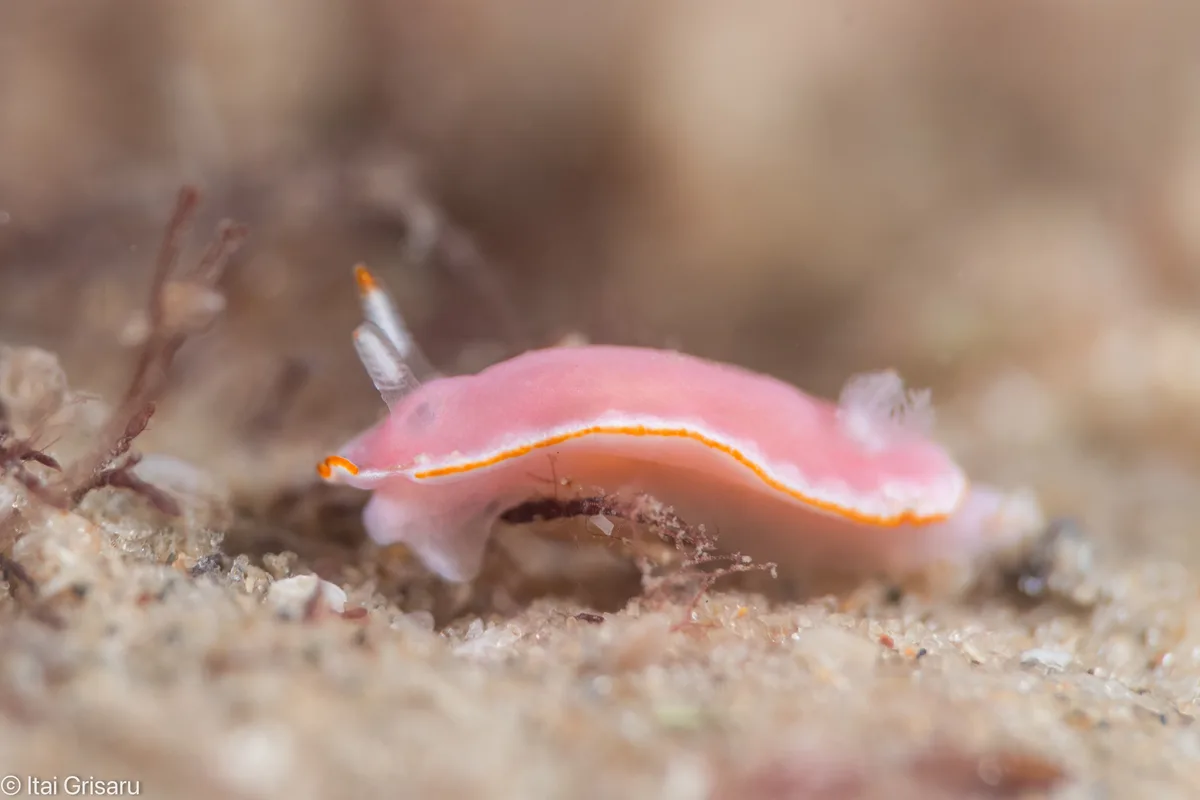
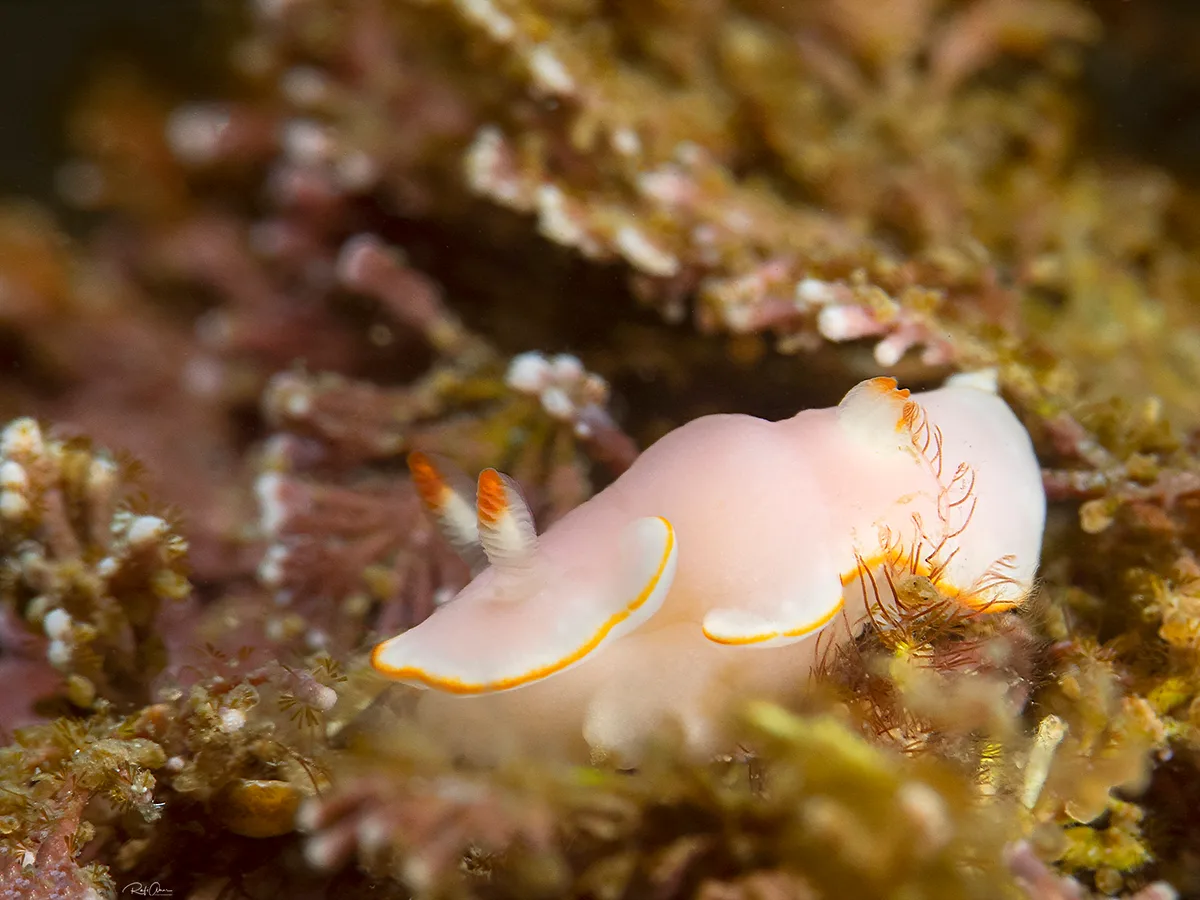
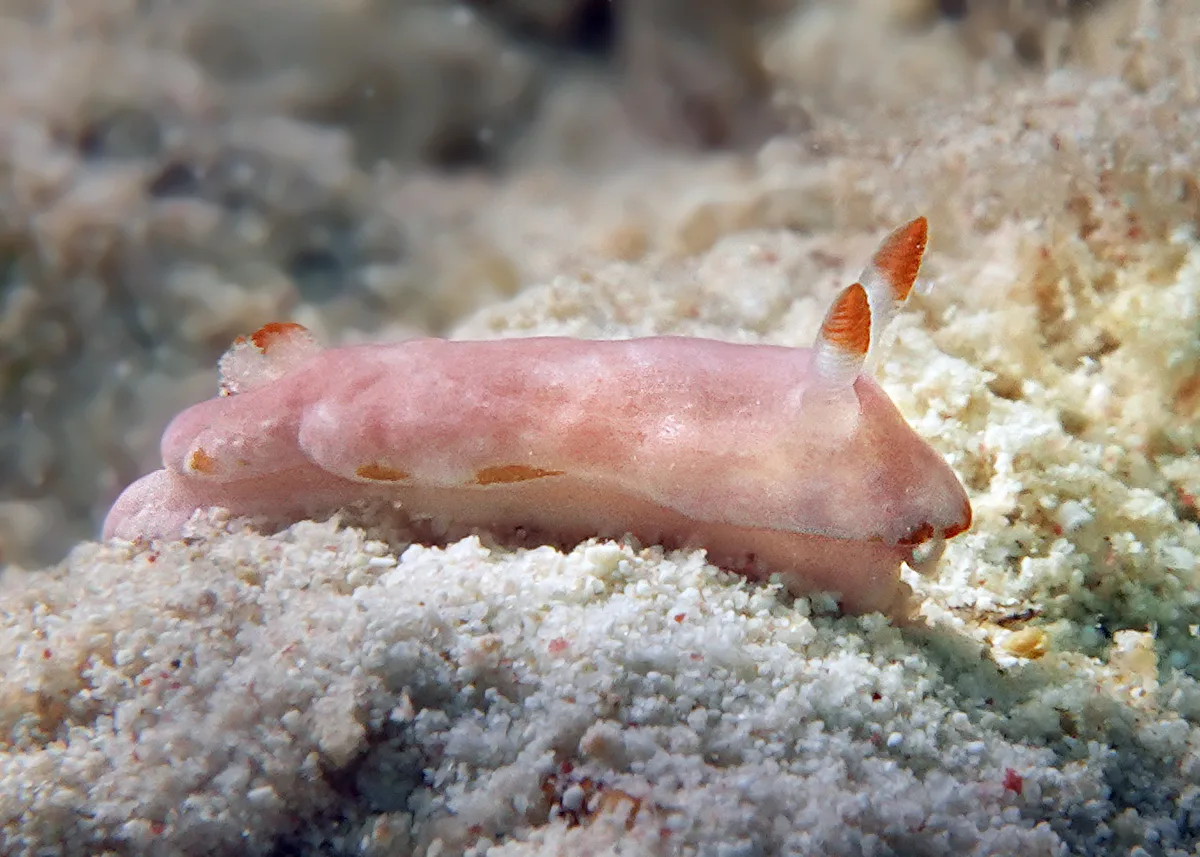
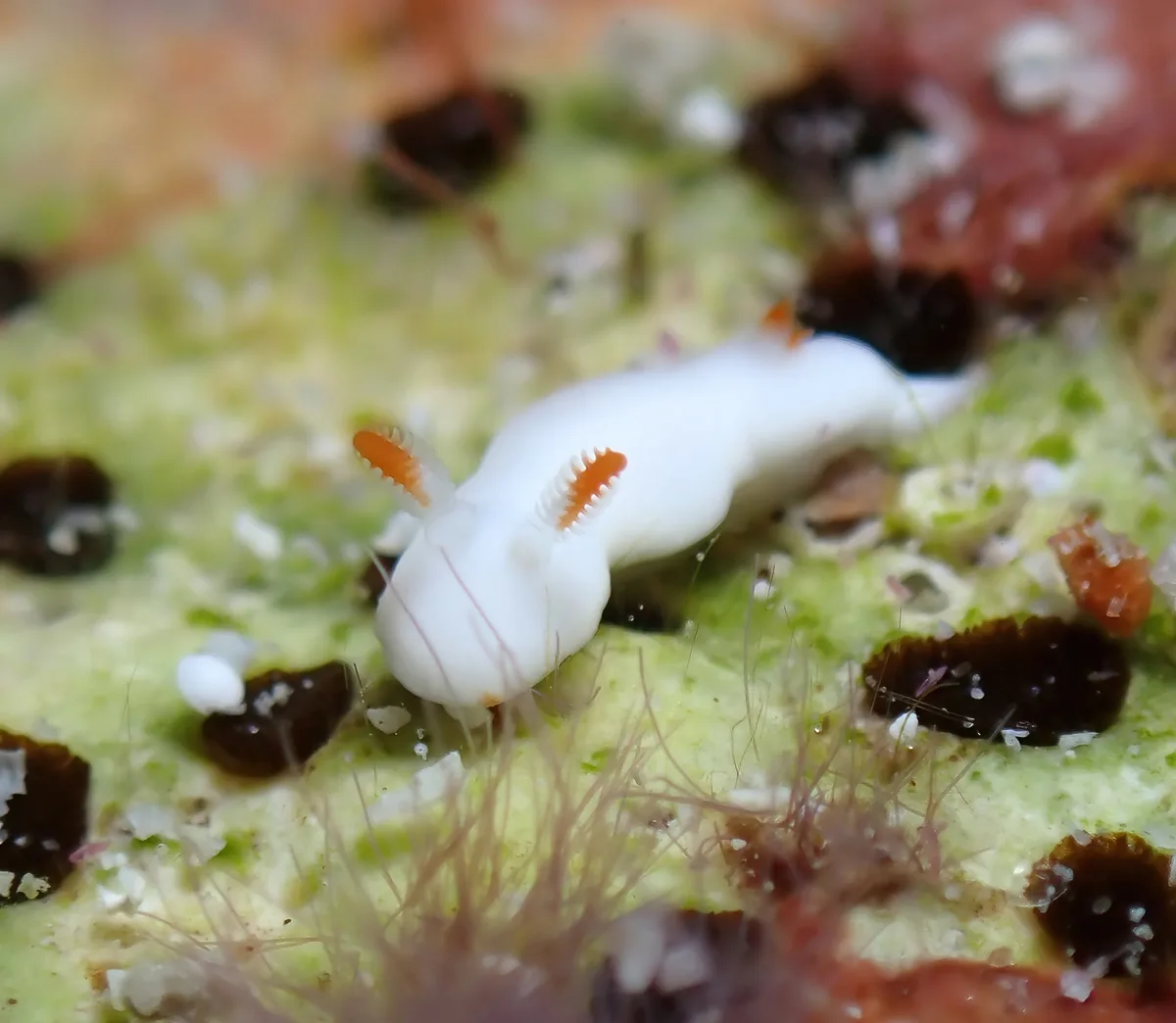
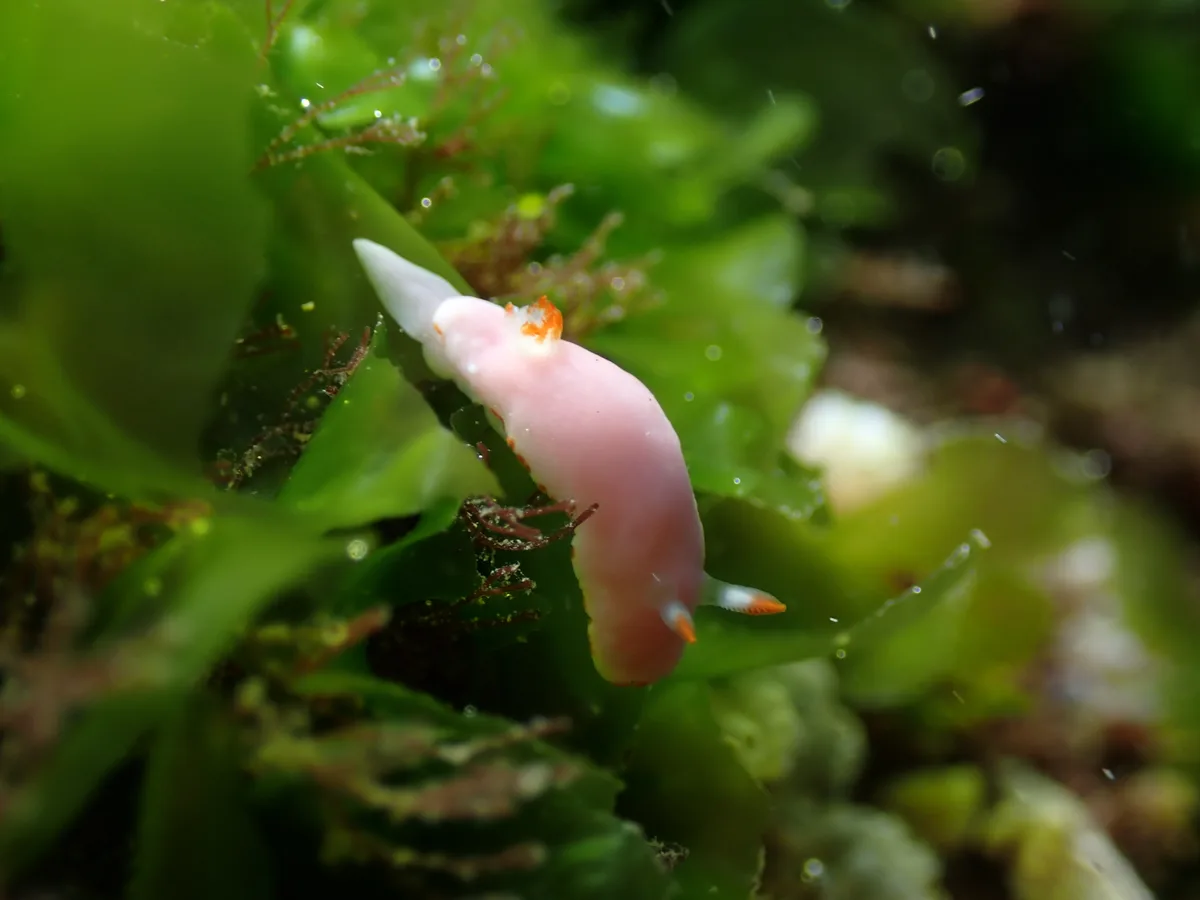
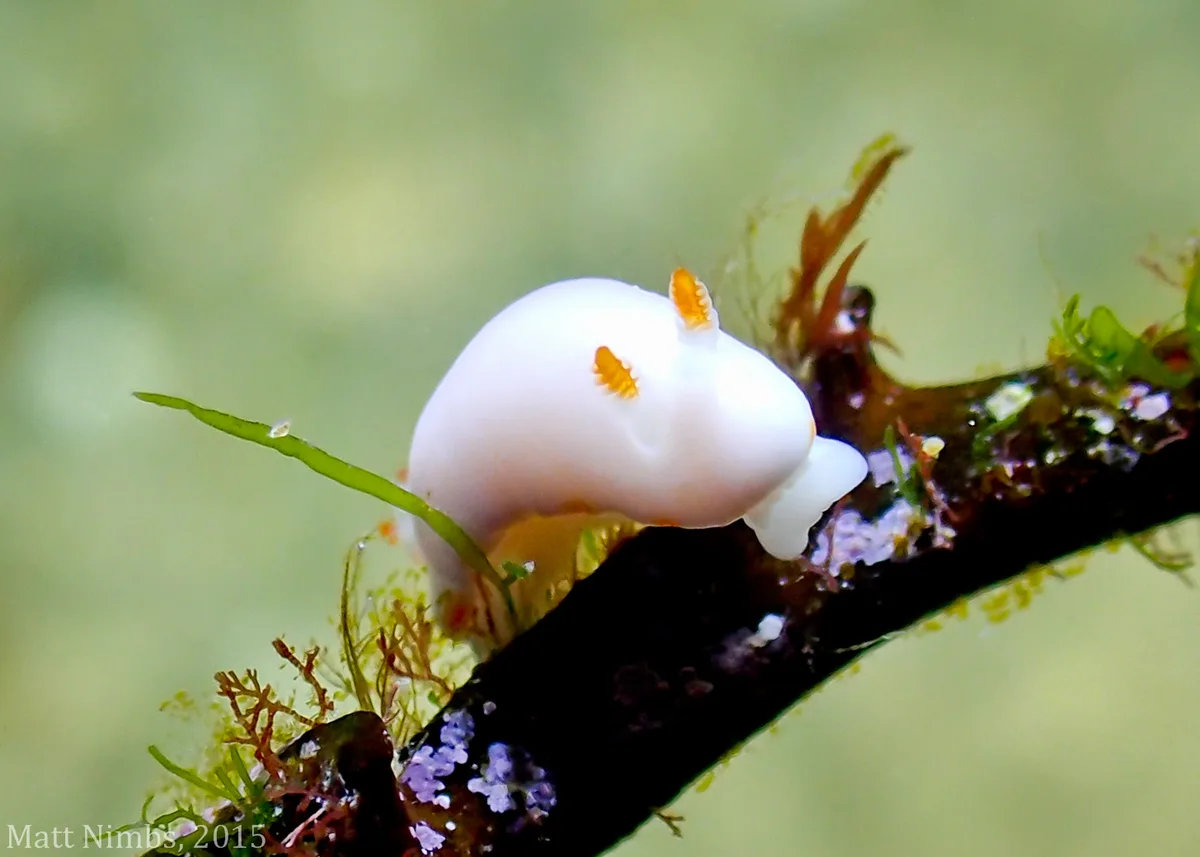
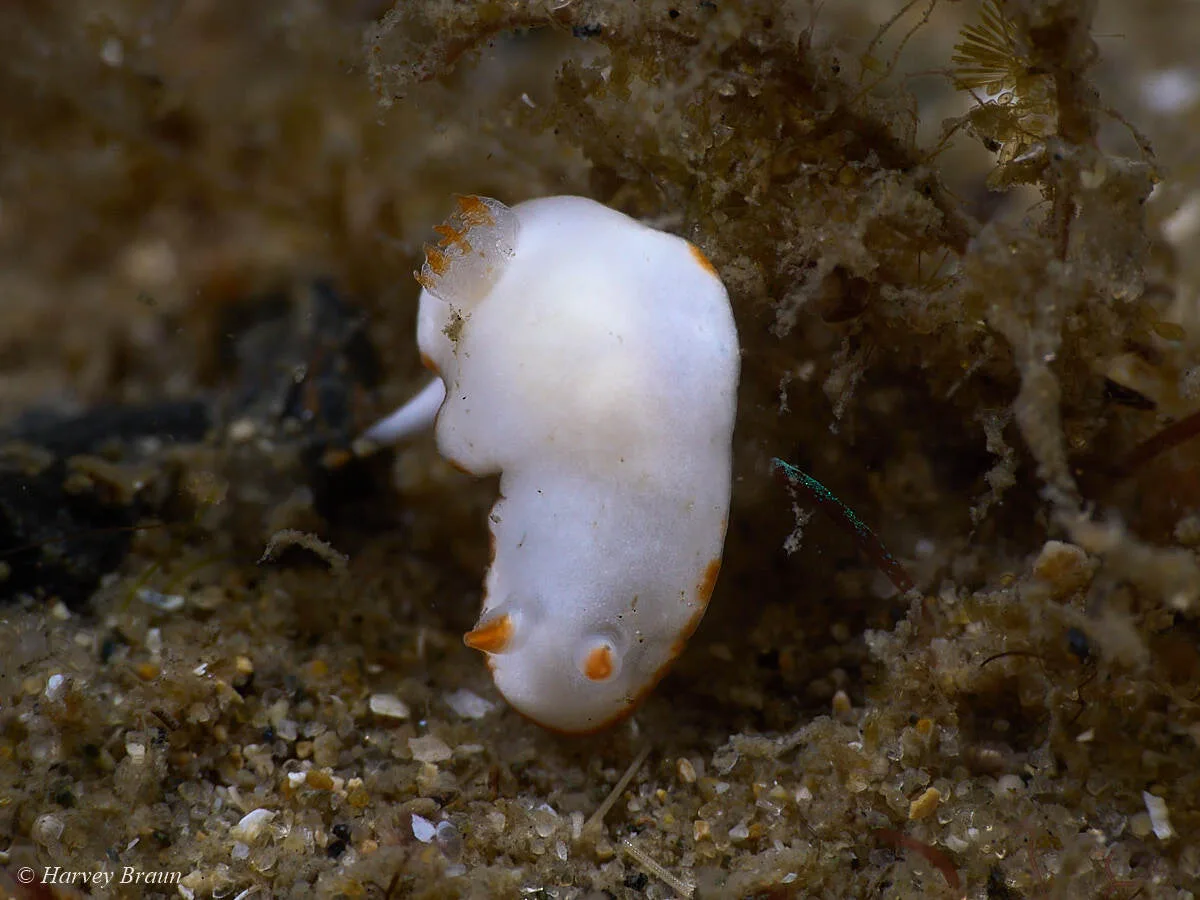
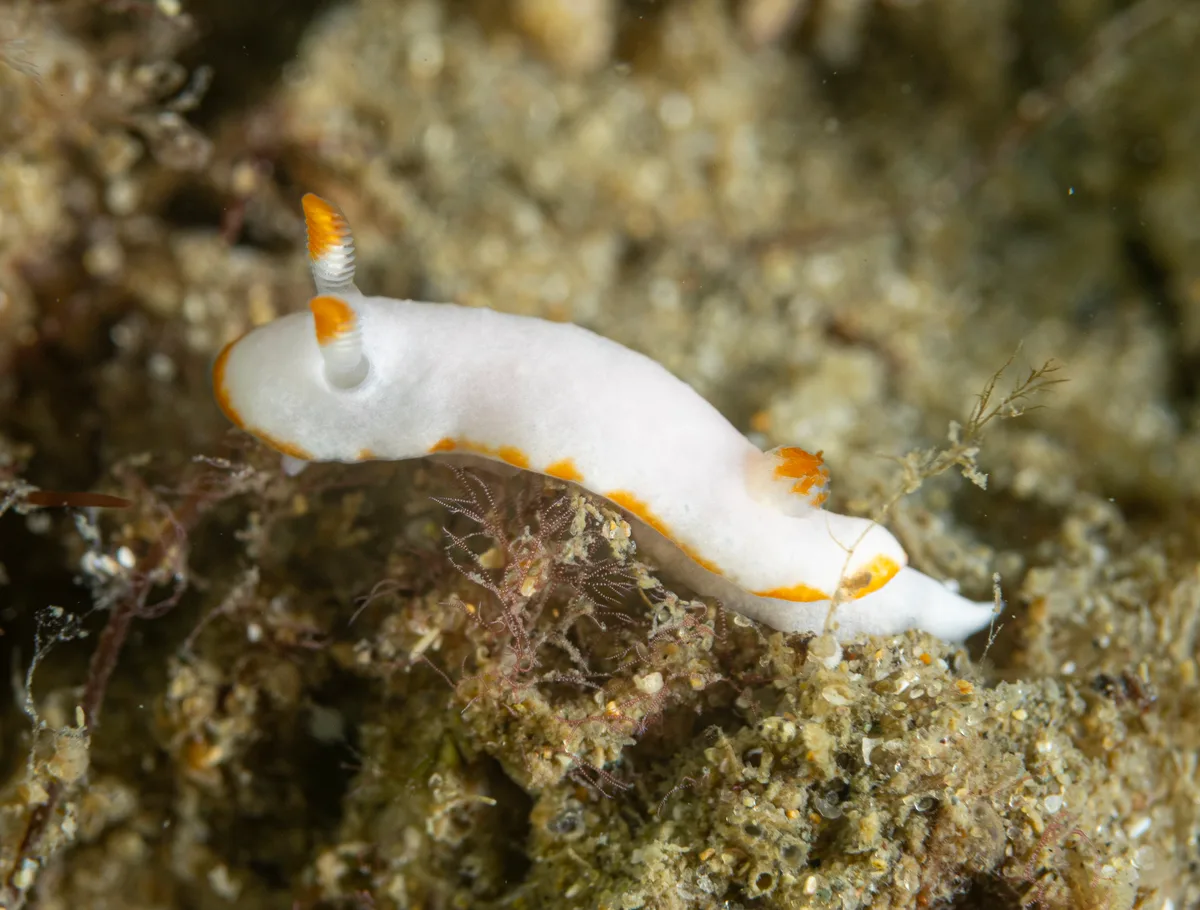
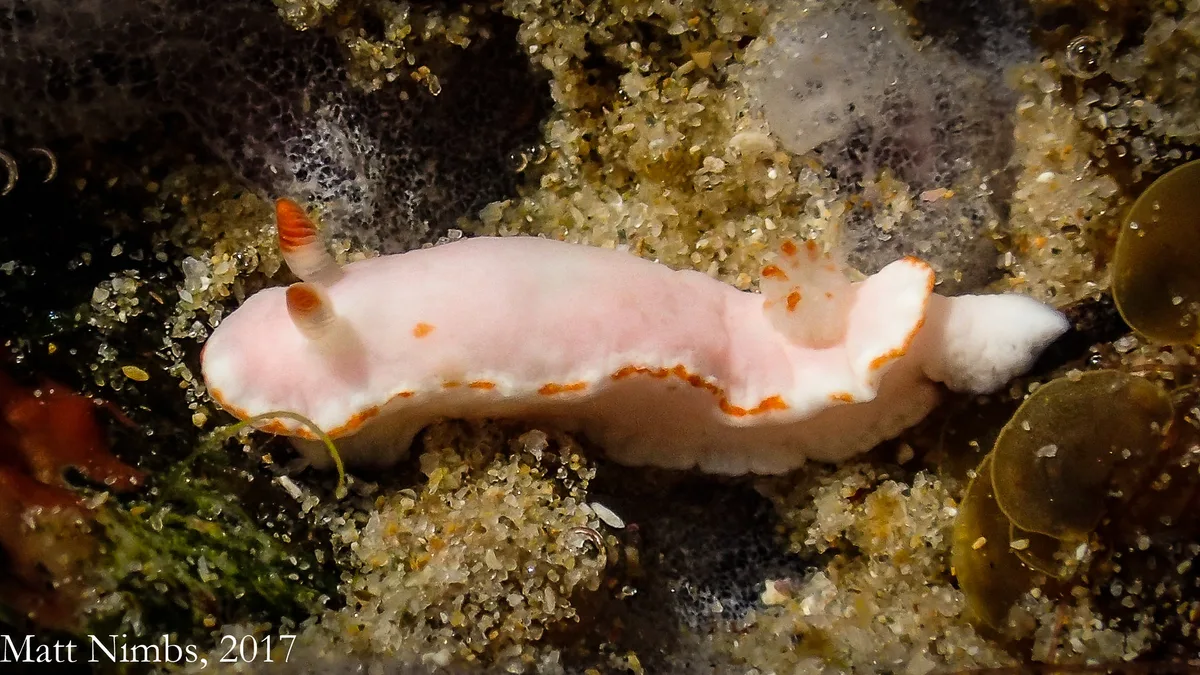
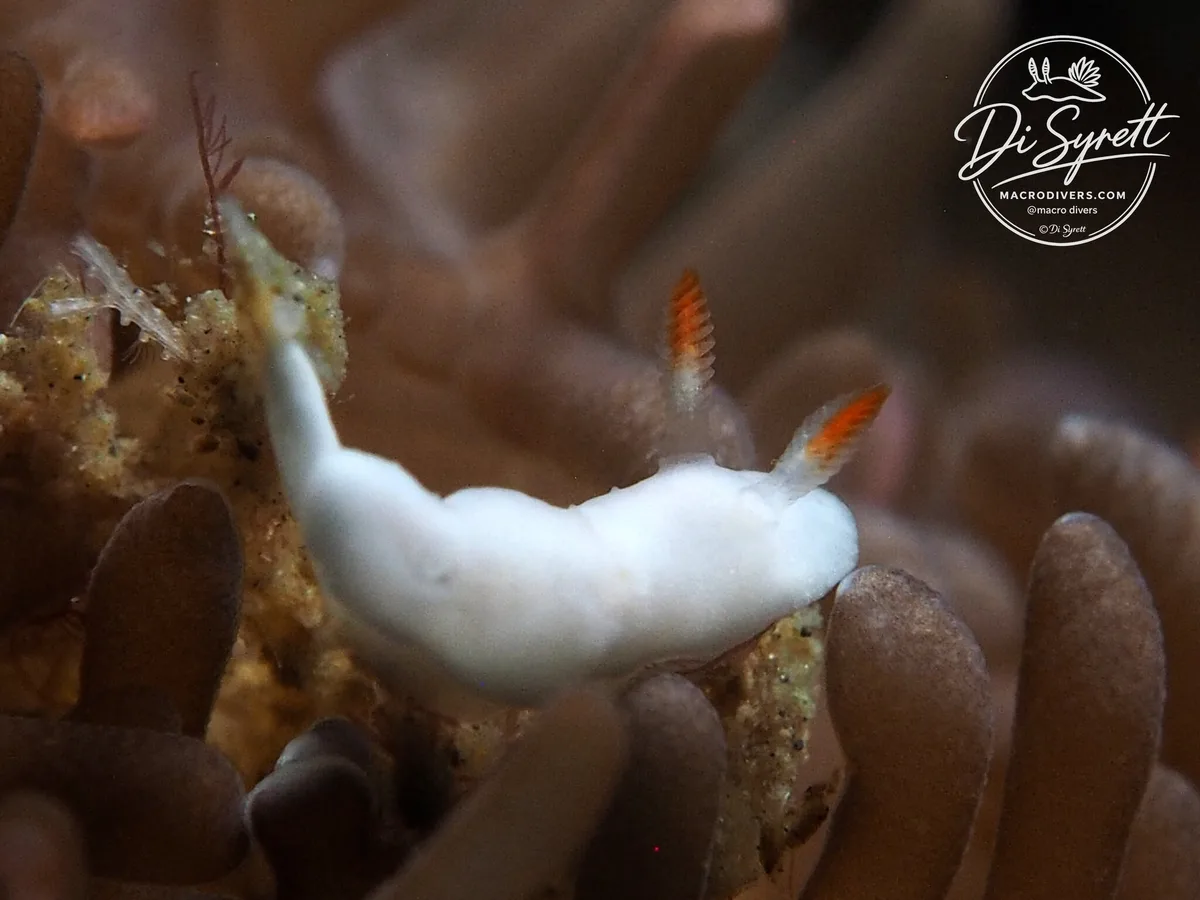
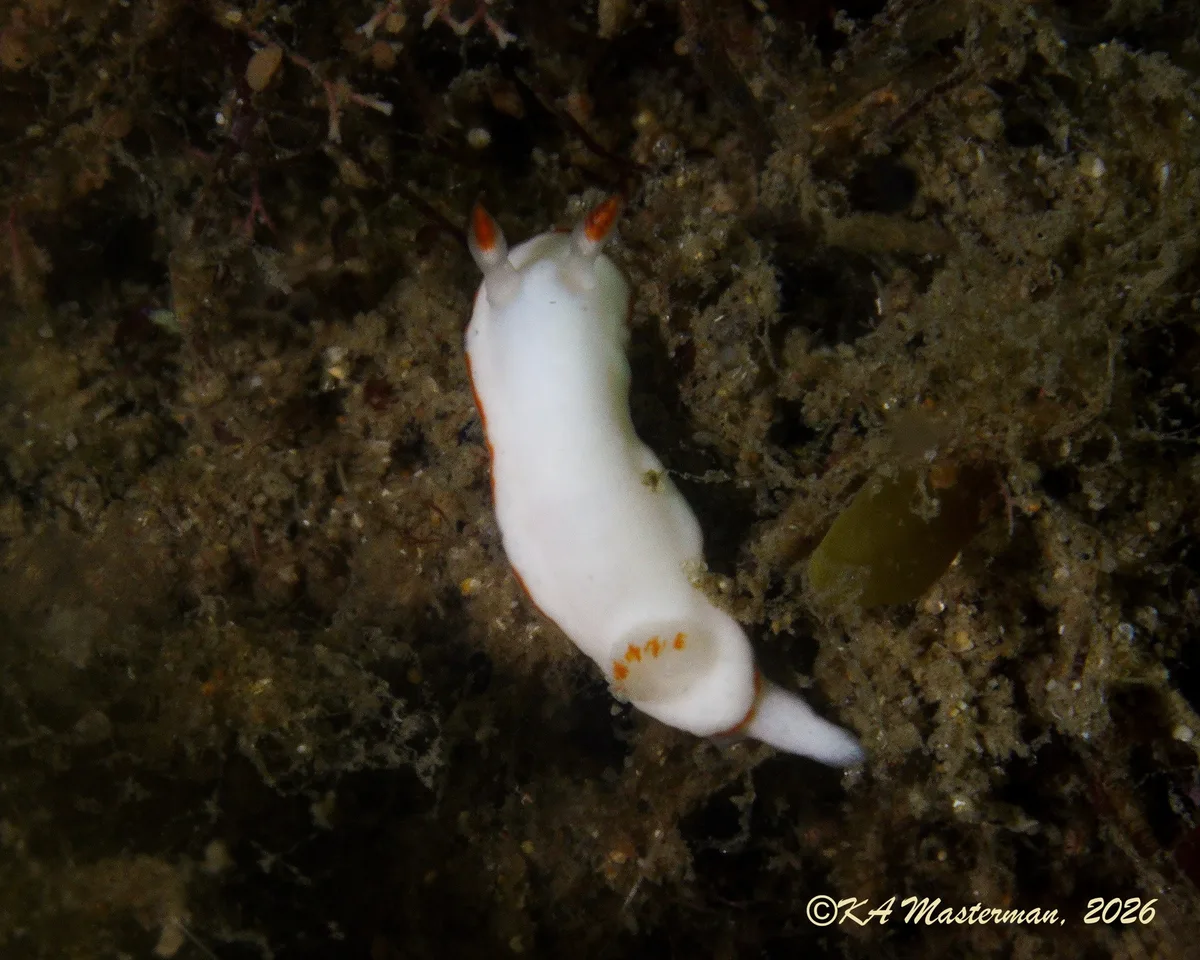
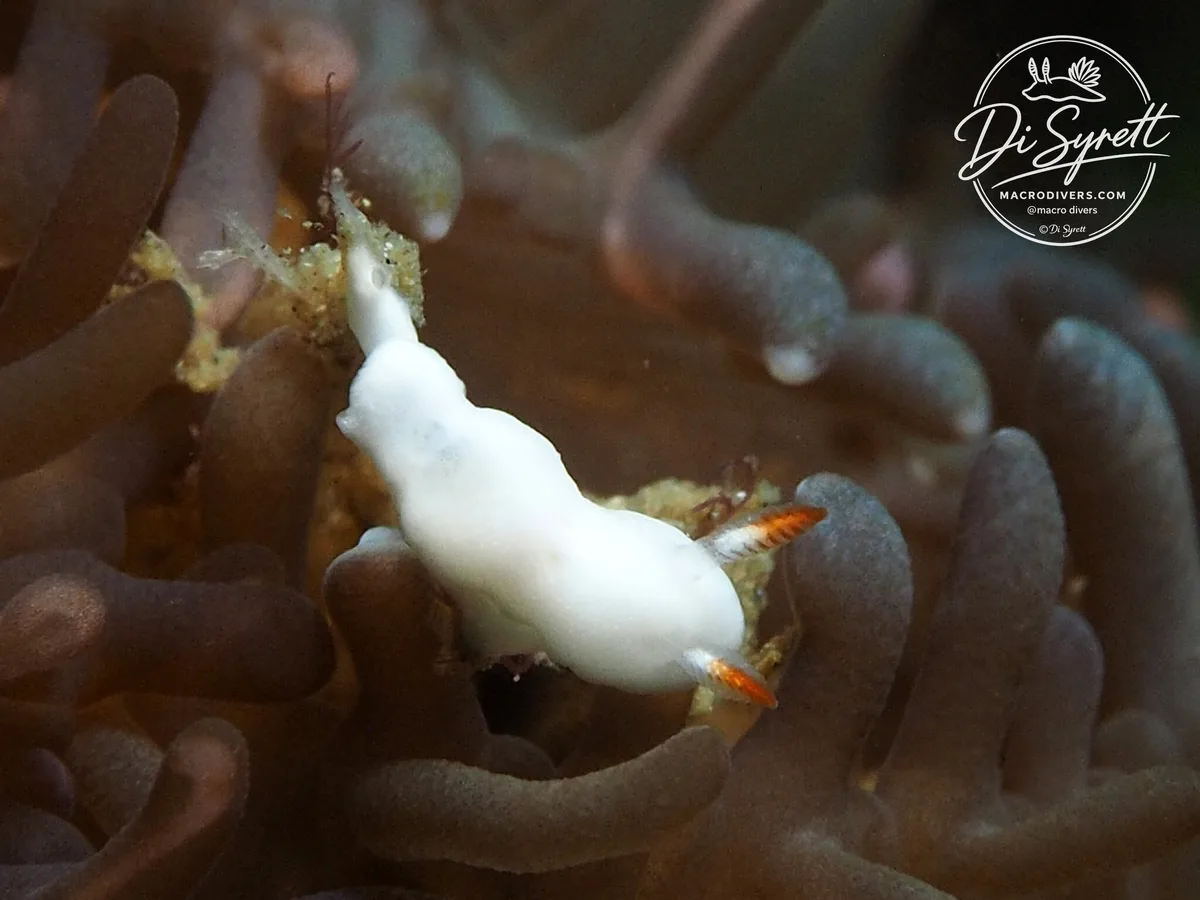
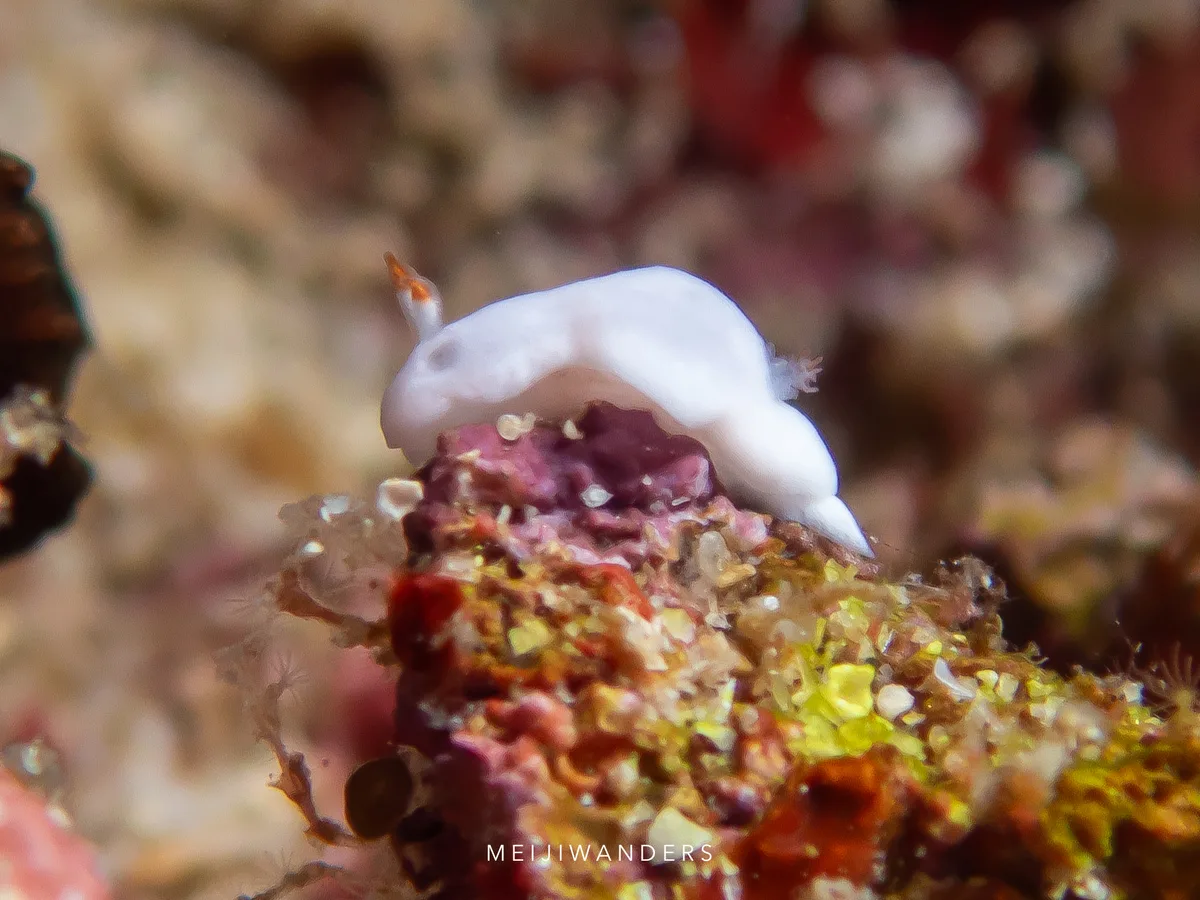
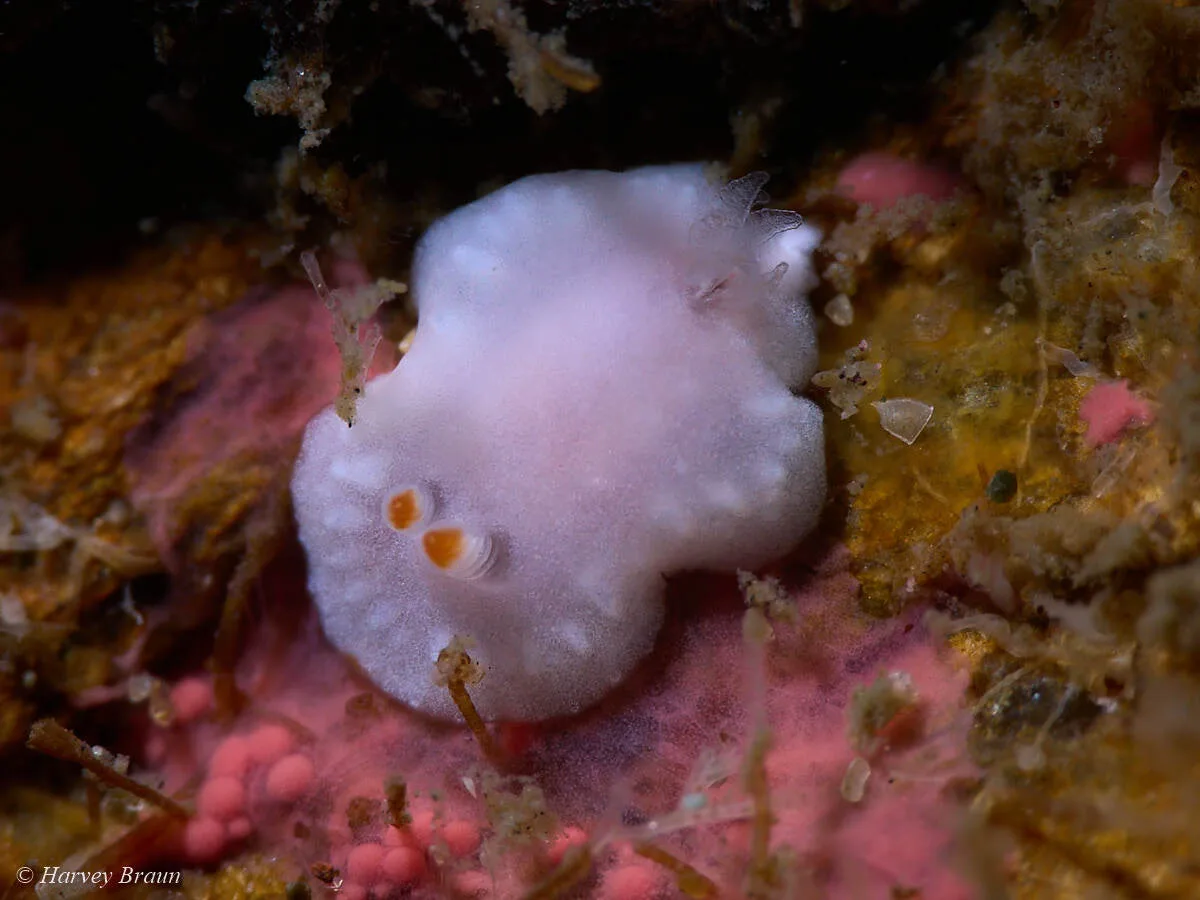
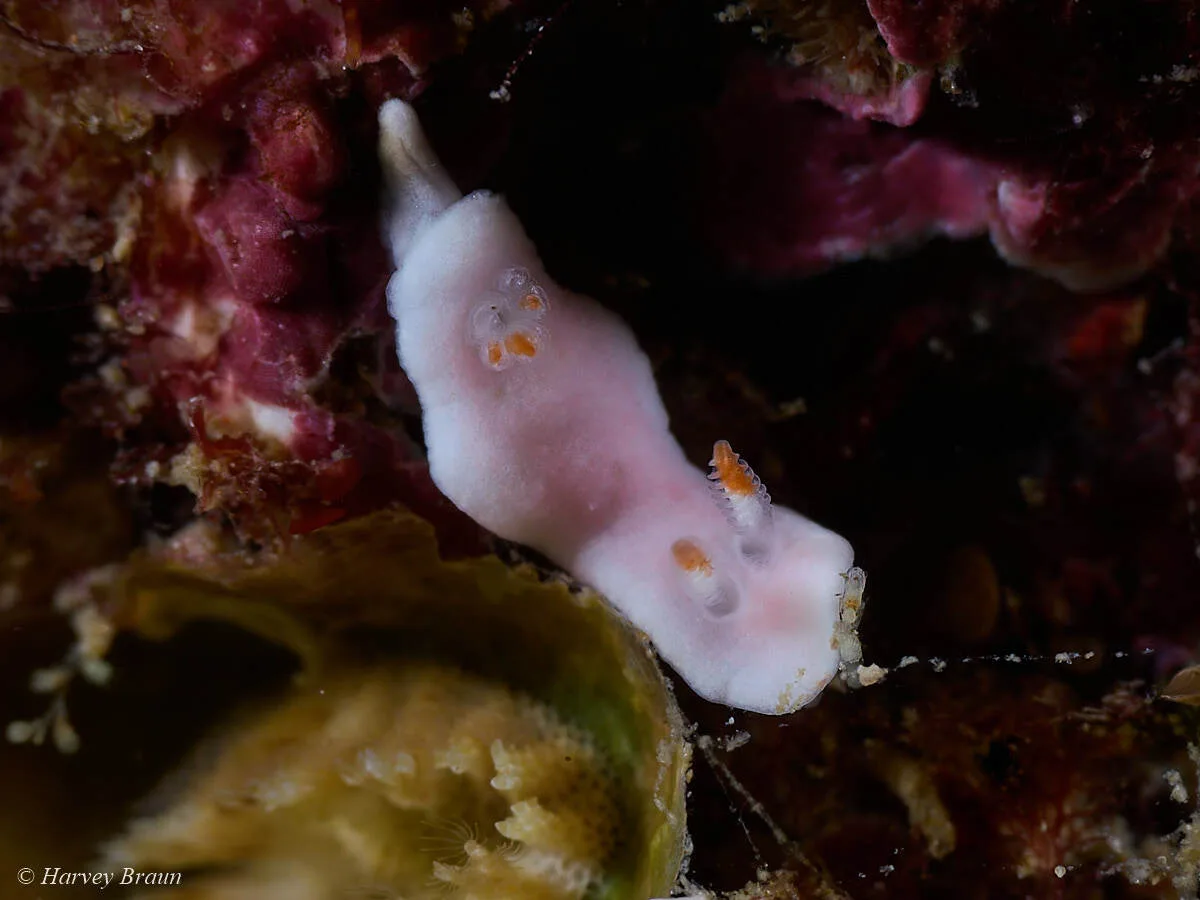
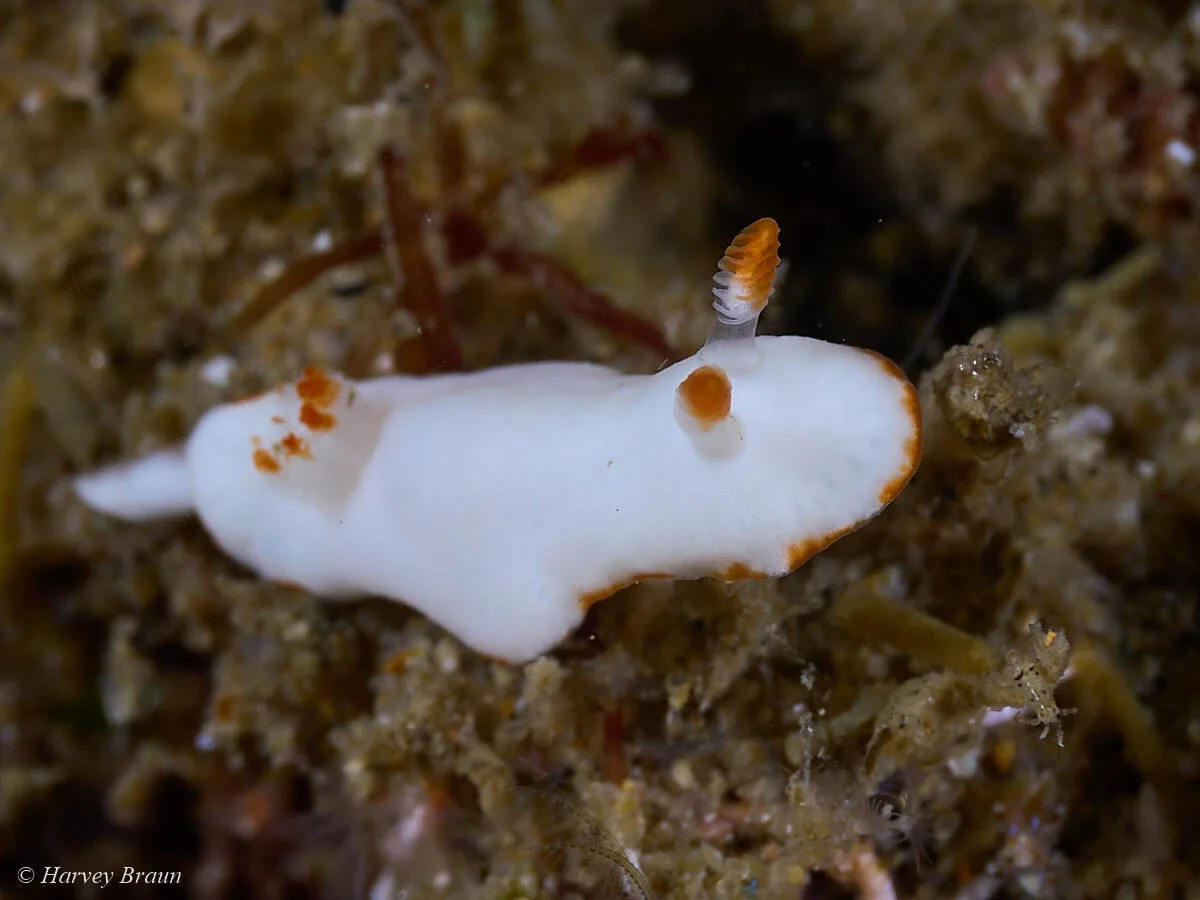
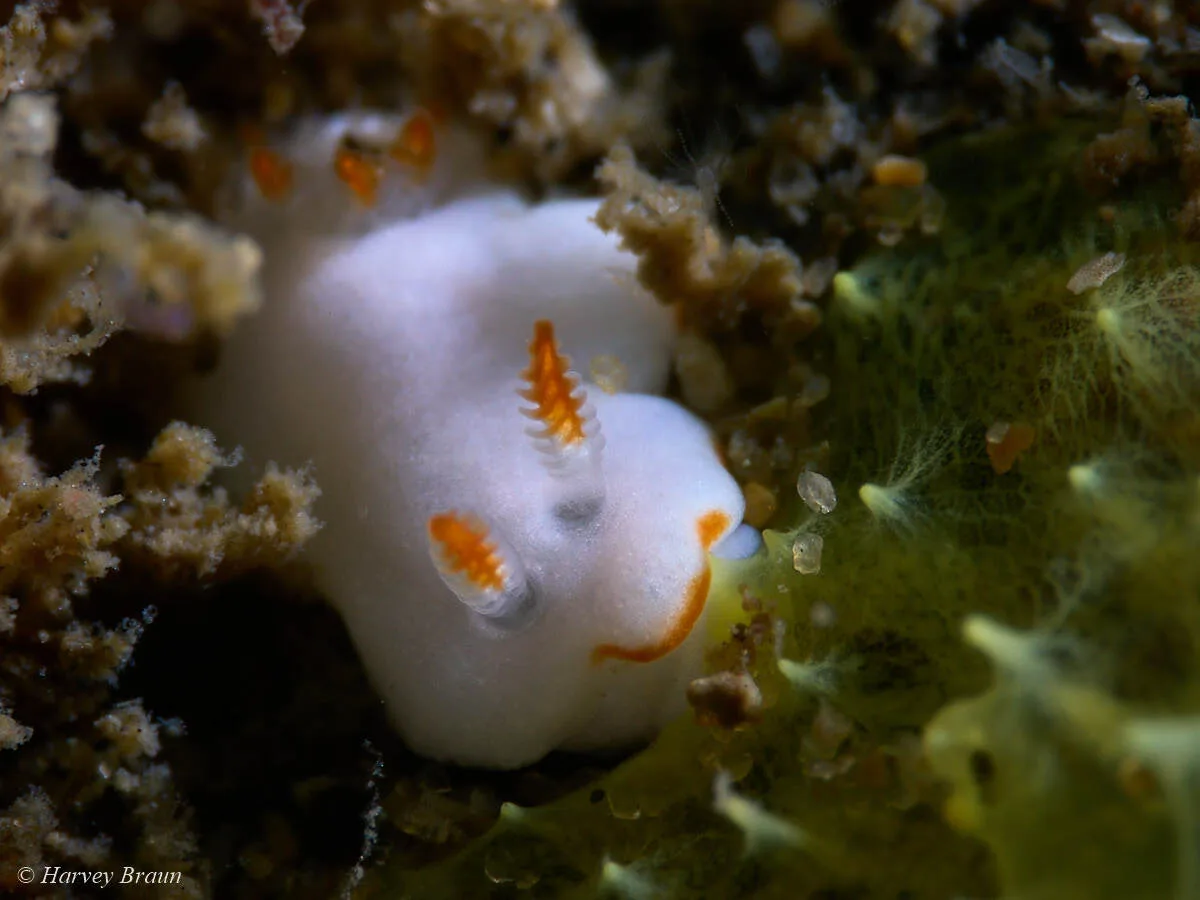
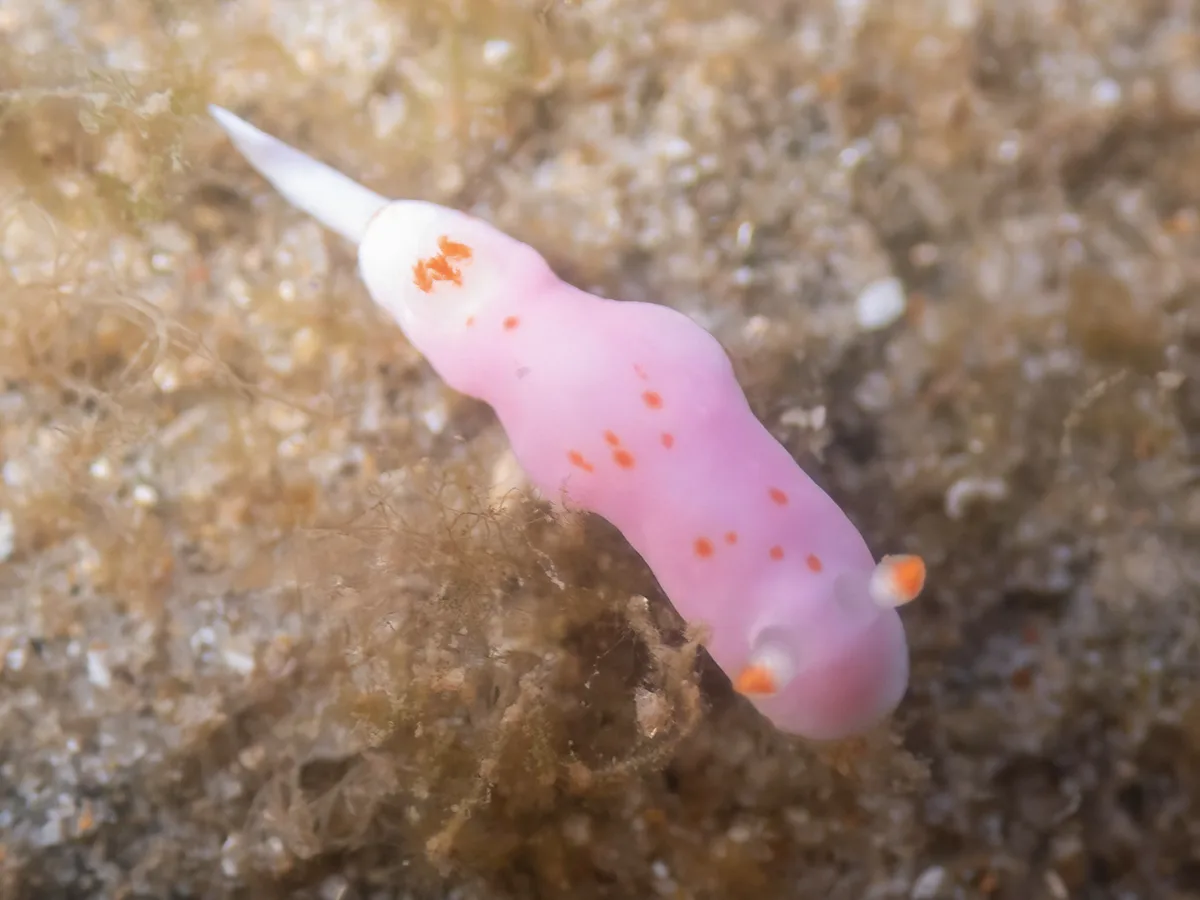
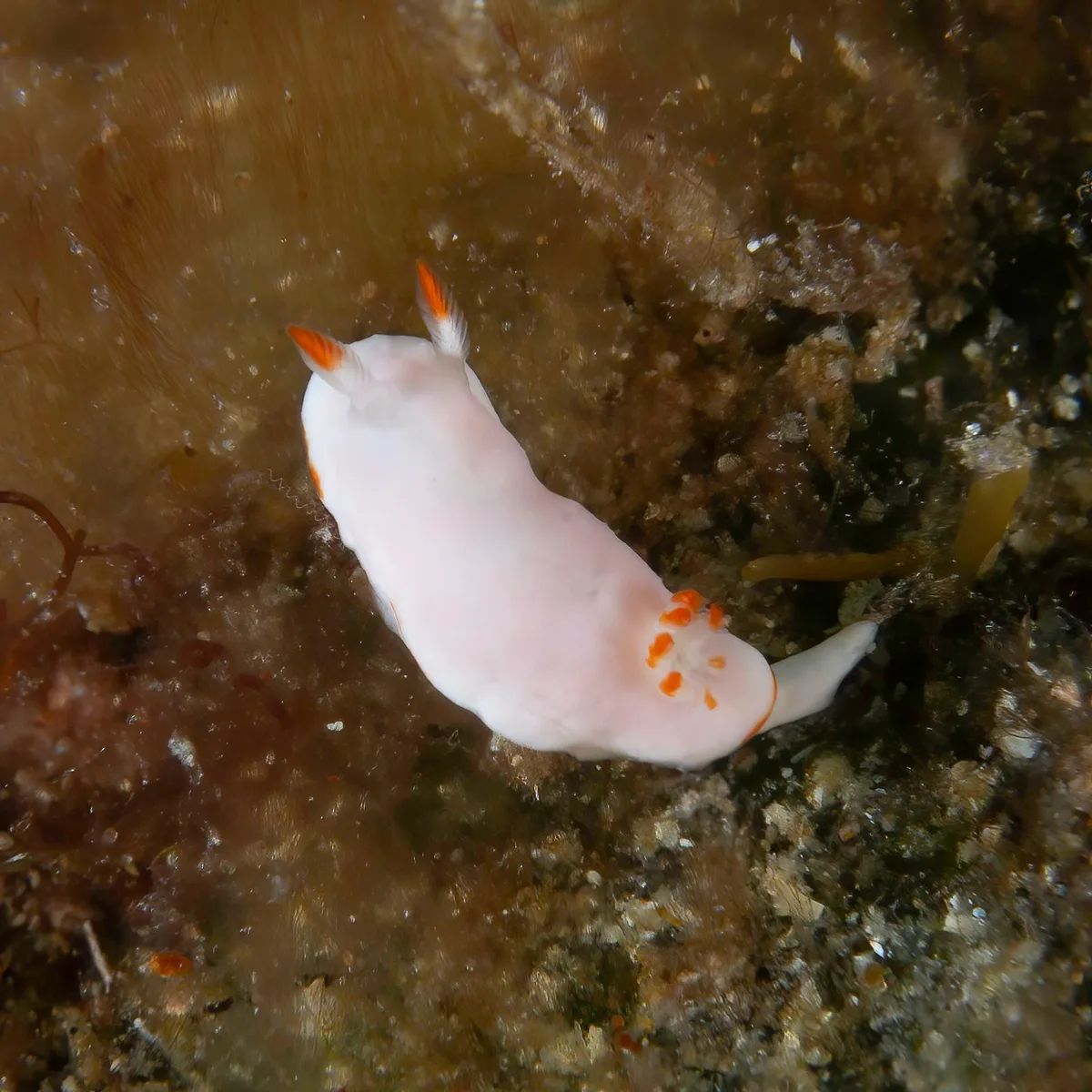
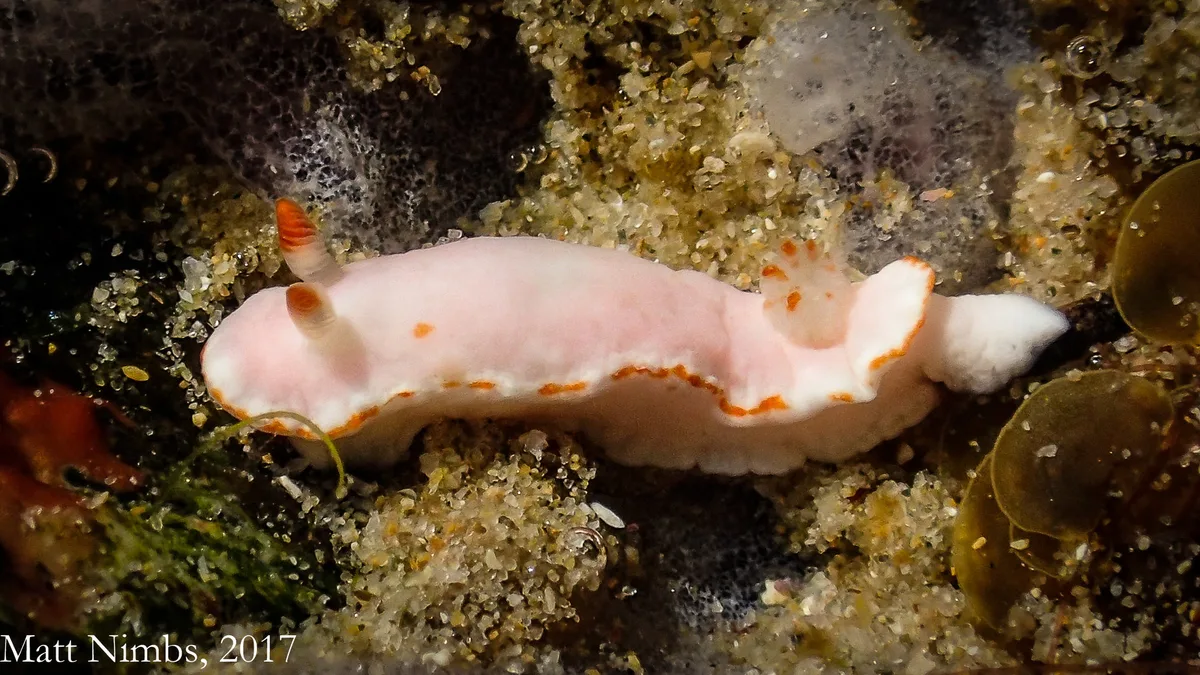
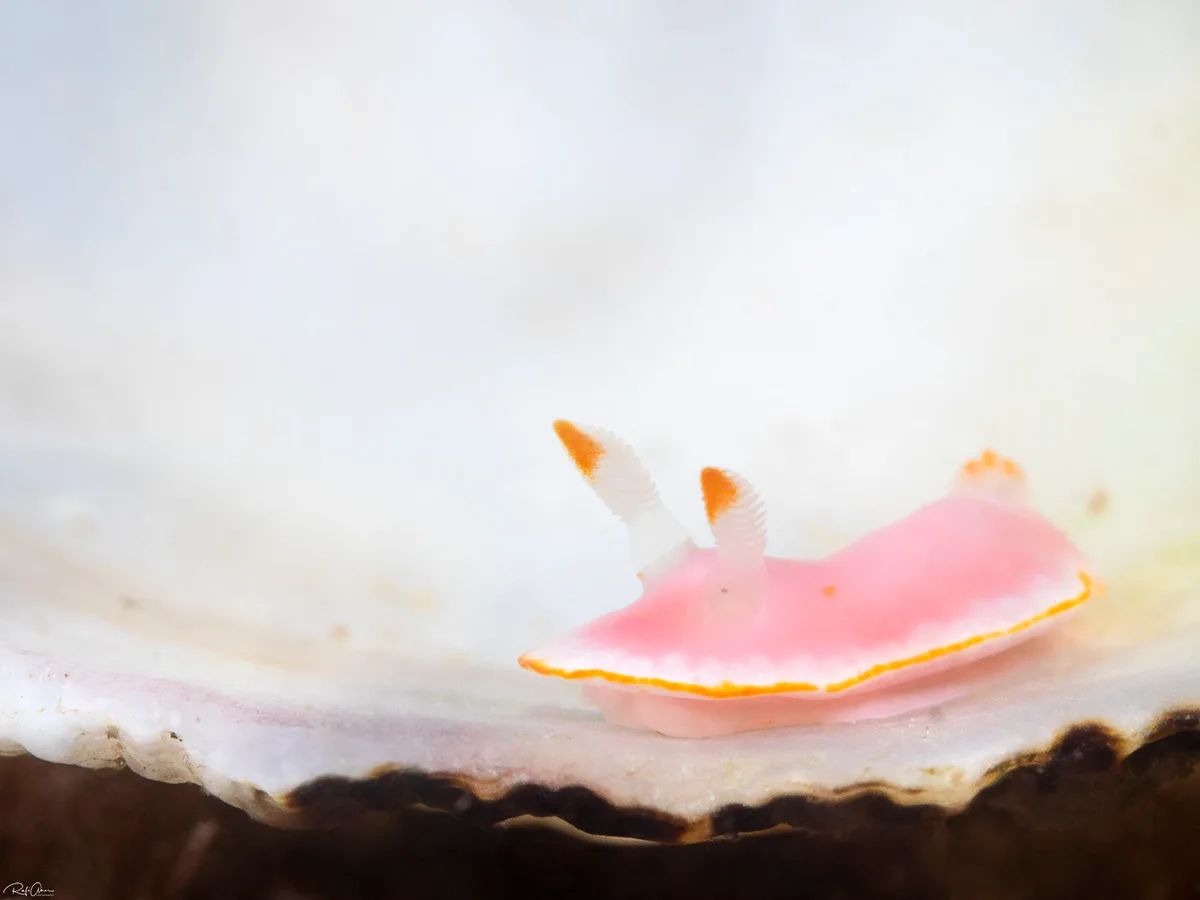
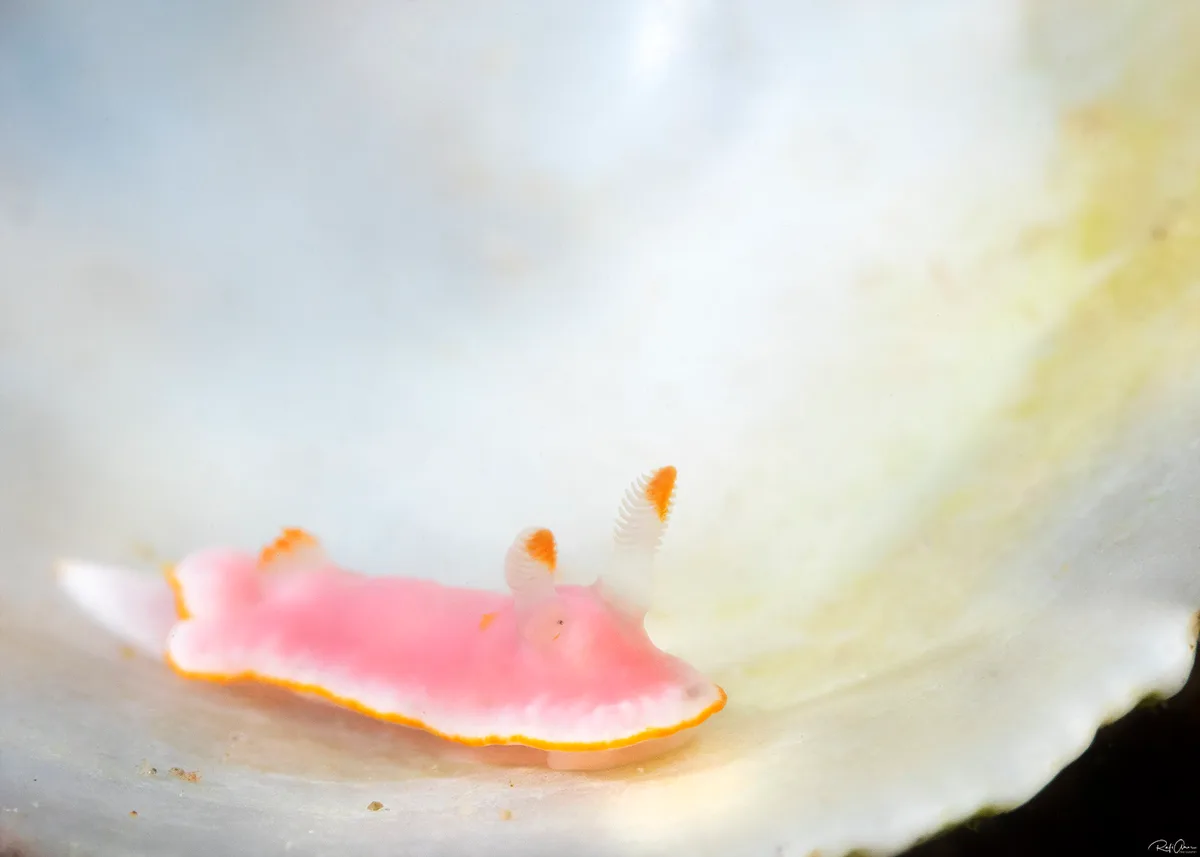
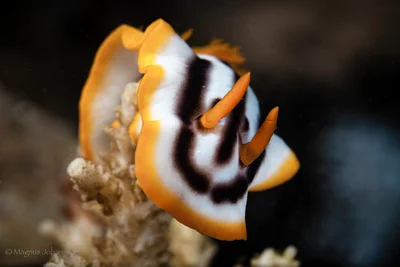
The body is white to pale pink and translucent. There is an orange band around the mantle margin. The tips of the gills are orange. Between those two things the back is empty: no spots, no lines, no second band, no markings of any kind. The name means exactly what it says.

That emptiness is a diagnosis rather than a gap, because the small pale chromodorids on this reef are separated precisely by what is drawn on them. One of its relatives carries a white ring around the gills, another a white stripe down the midline with purple spots inside the rim, a third a plain yellow-orange margin at twice this size. If the animal is under a centimeter and a half, has an orange rim, orange gill tips and a blank back, the list is finished.

What it does is what the whole family does. It grazes sponges, keeps their defensive chemistry instead of digesting it, and packs the compounds toward the mantle edge, which is why something the size of a lentil crawls about in daylight where anything could see it.

It is well recorded across the tropical Pacific, from 🇦🇺 Australia to 🇳🇨 New Caledonia (🇫🇷 Overseas France) and the 🇲🇭 Marshall Islands, and thinly so at this end of its range.

How to recognise it
  • orange band at the mantle margin and orange tips on the gills
  • nothing at all on the back between them
  • white to pale pink body, translucent
  • twelve millimeters, the smallest chromodorid here
Comments

Please, sign in to leave a comment

Continue with a social account - yours will be created automatically.

No comments yet — be the first.

Last Update: August 28, 2026