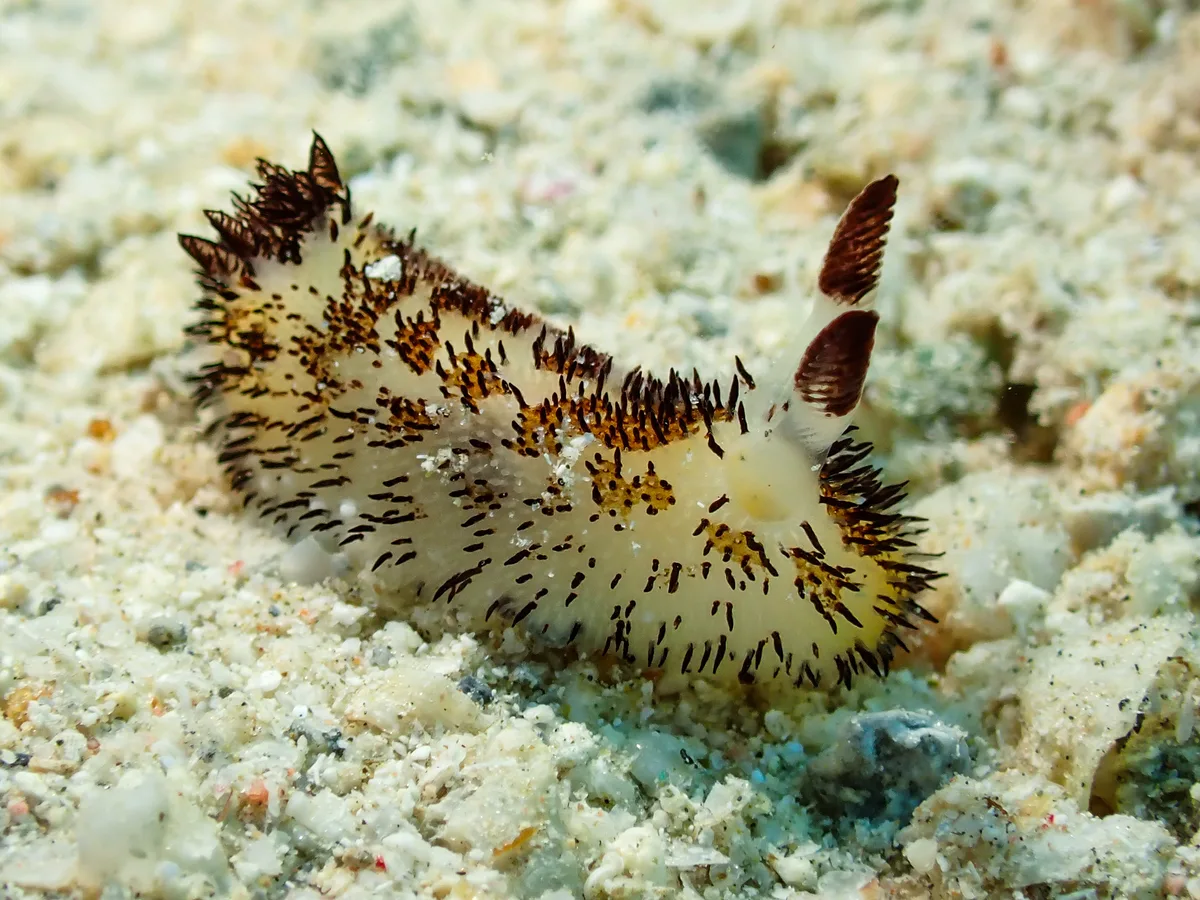
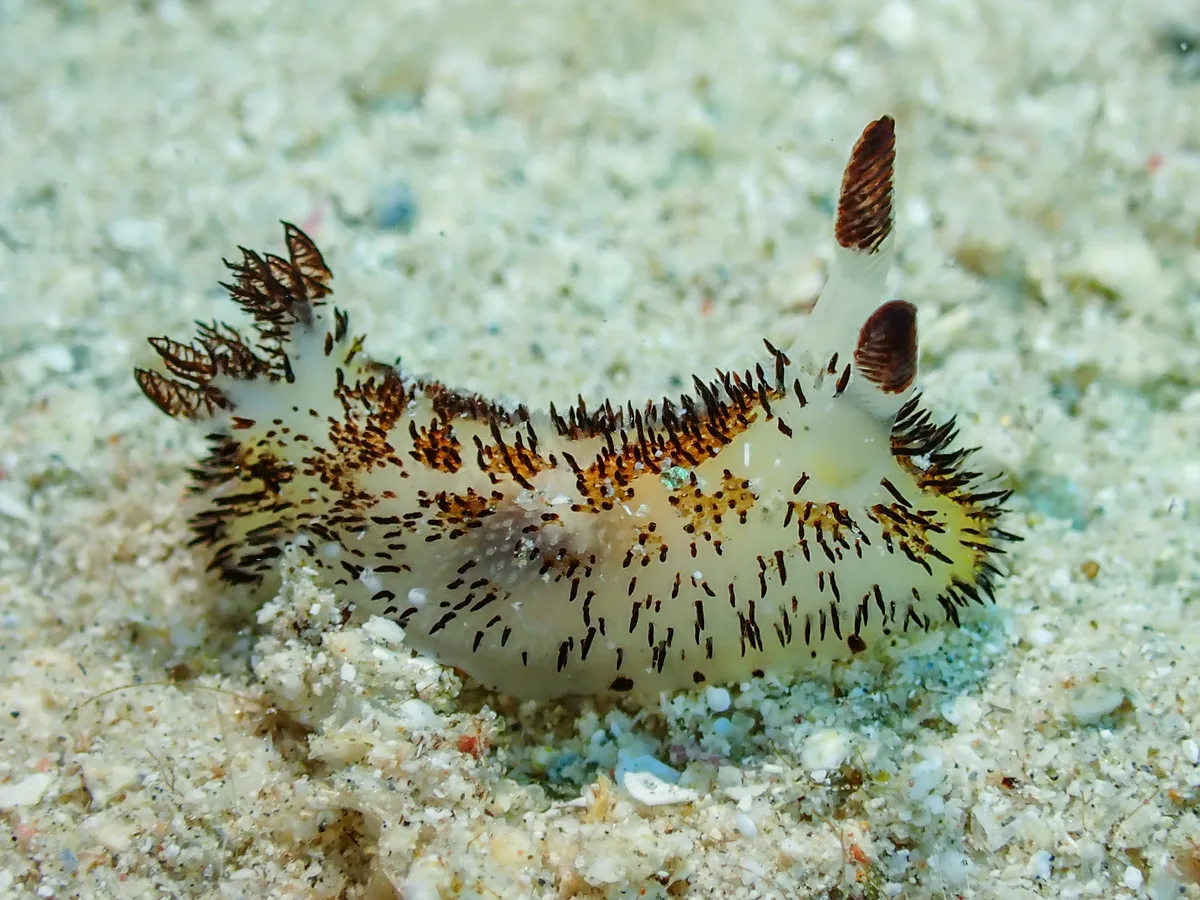
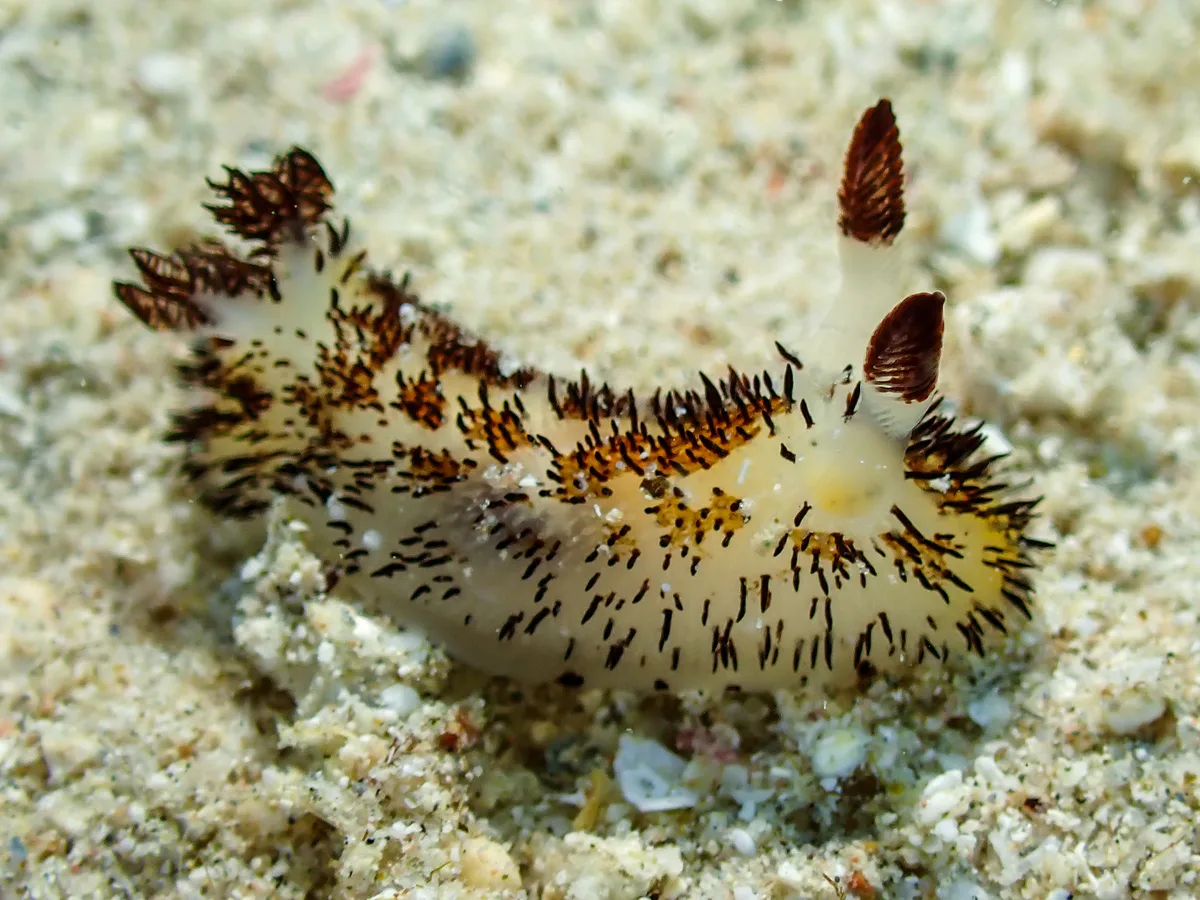
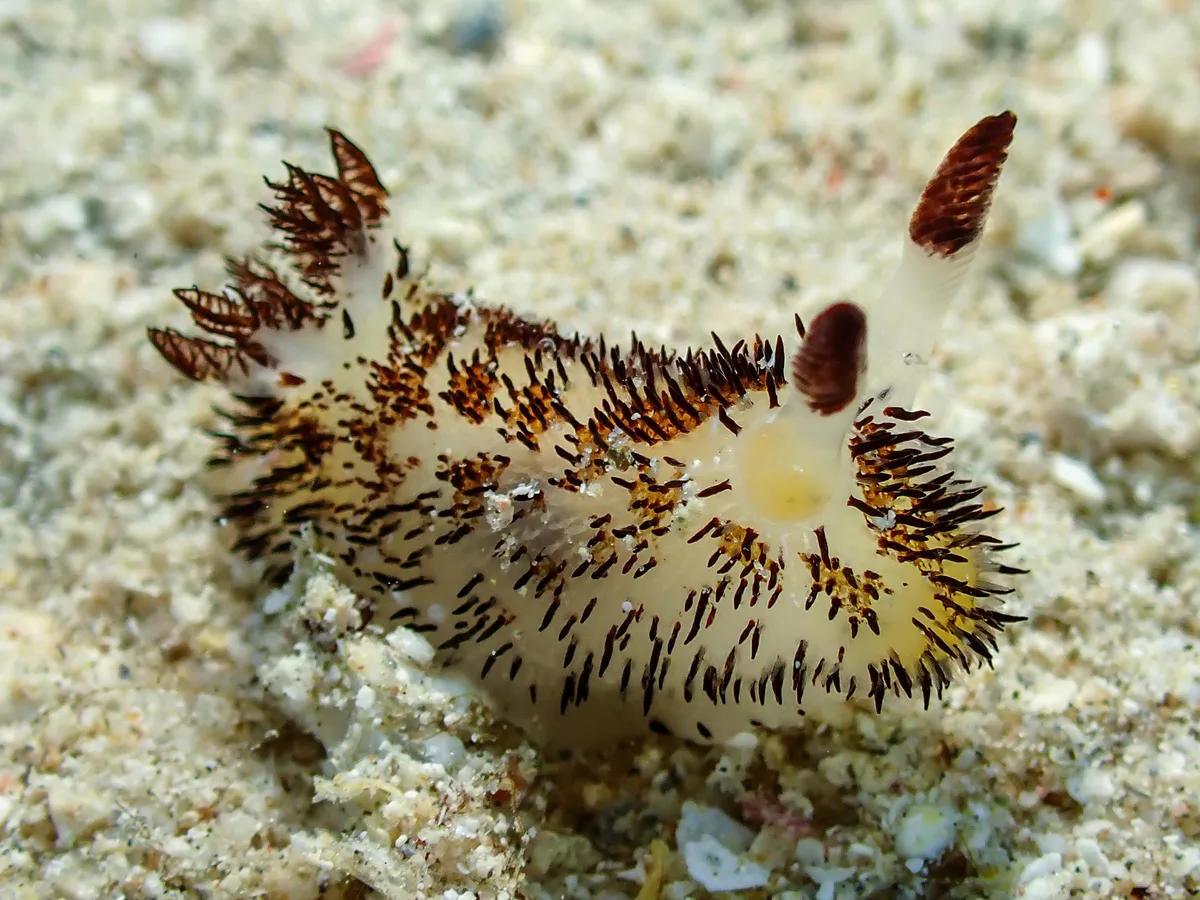
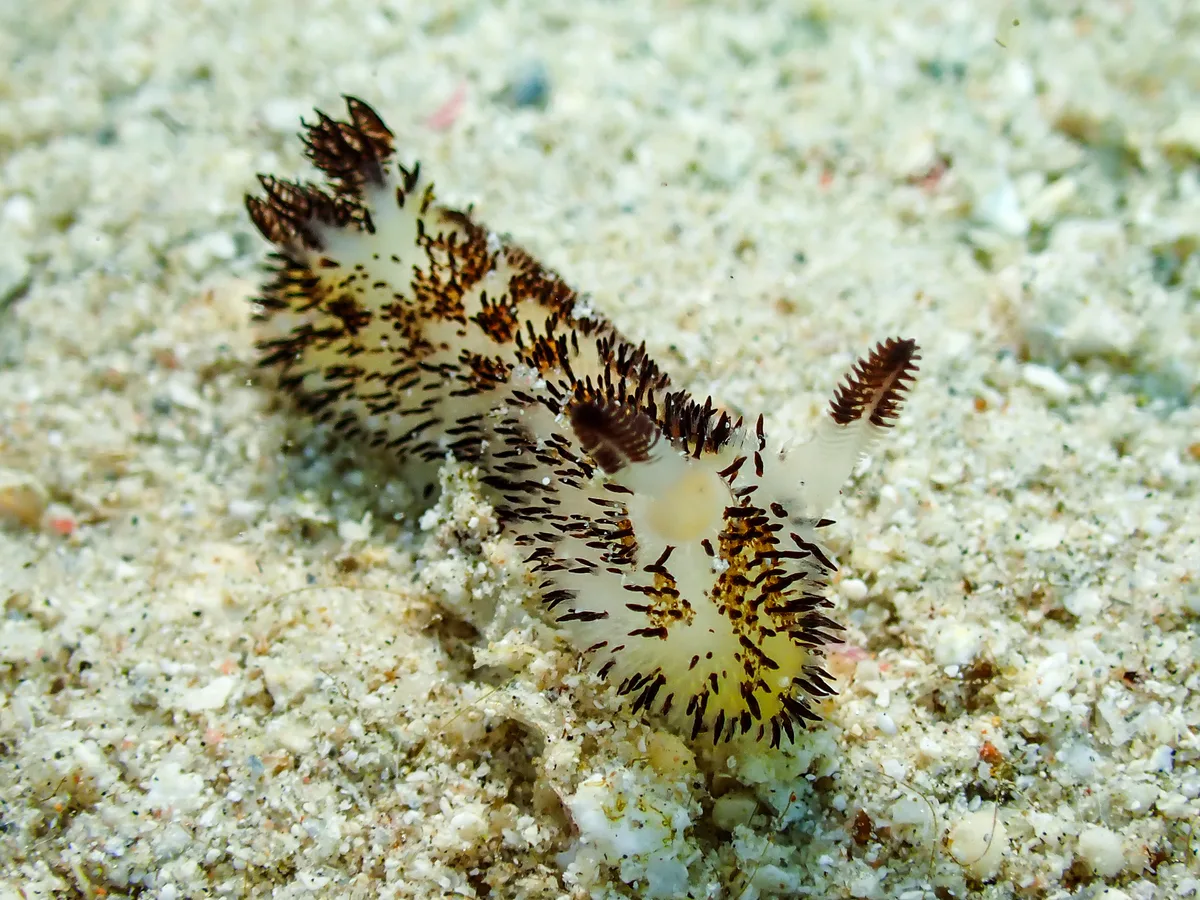
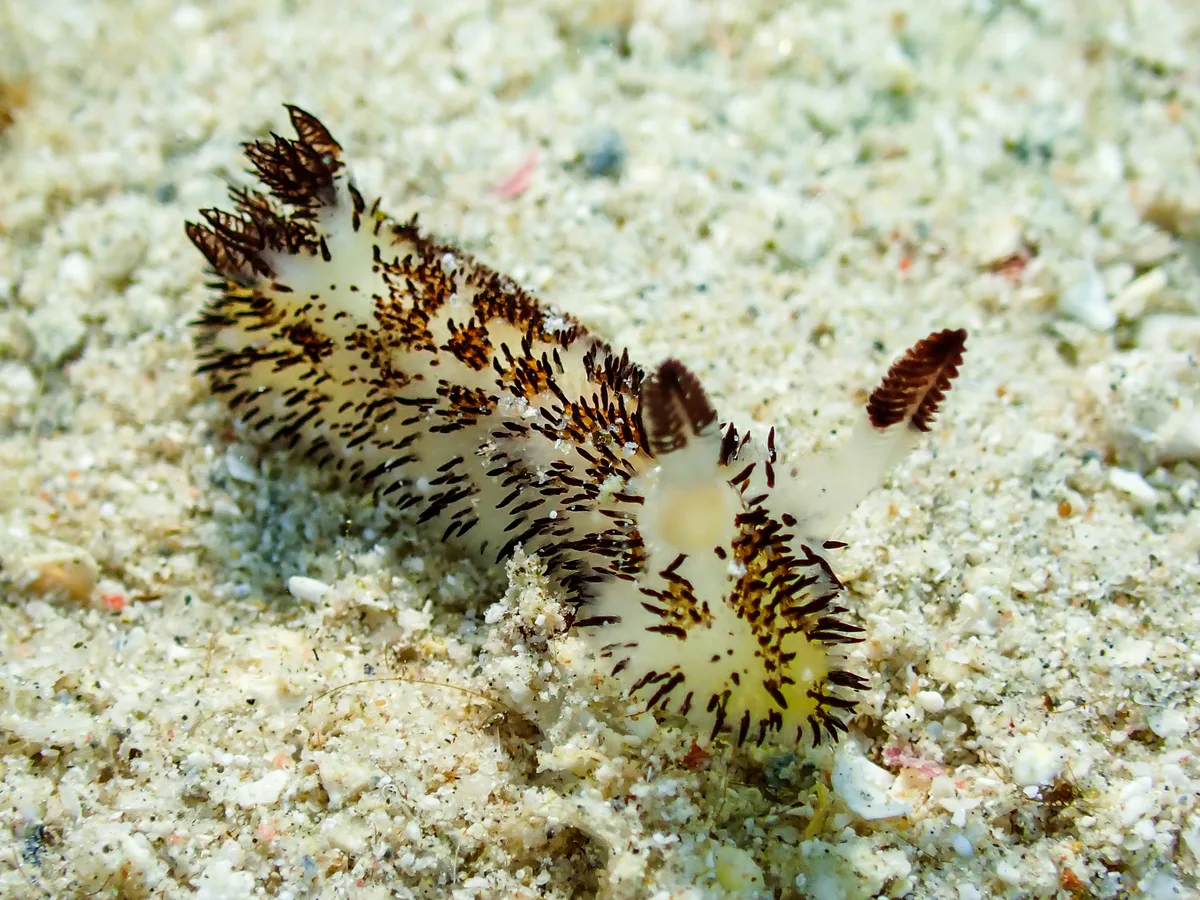
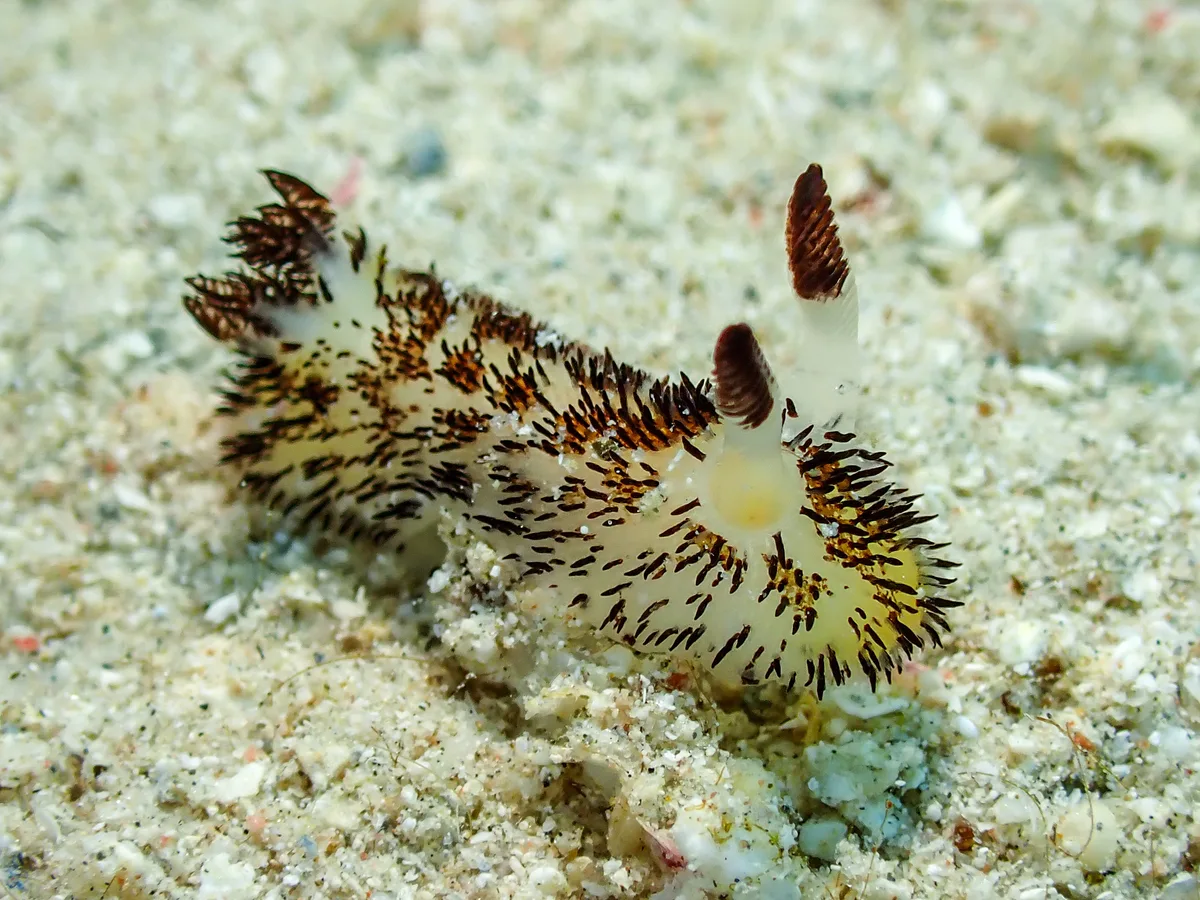
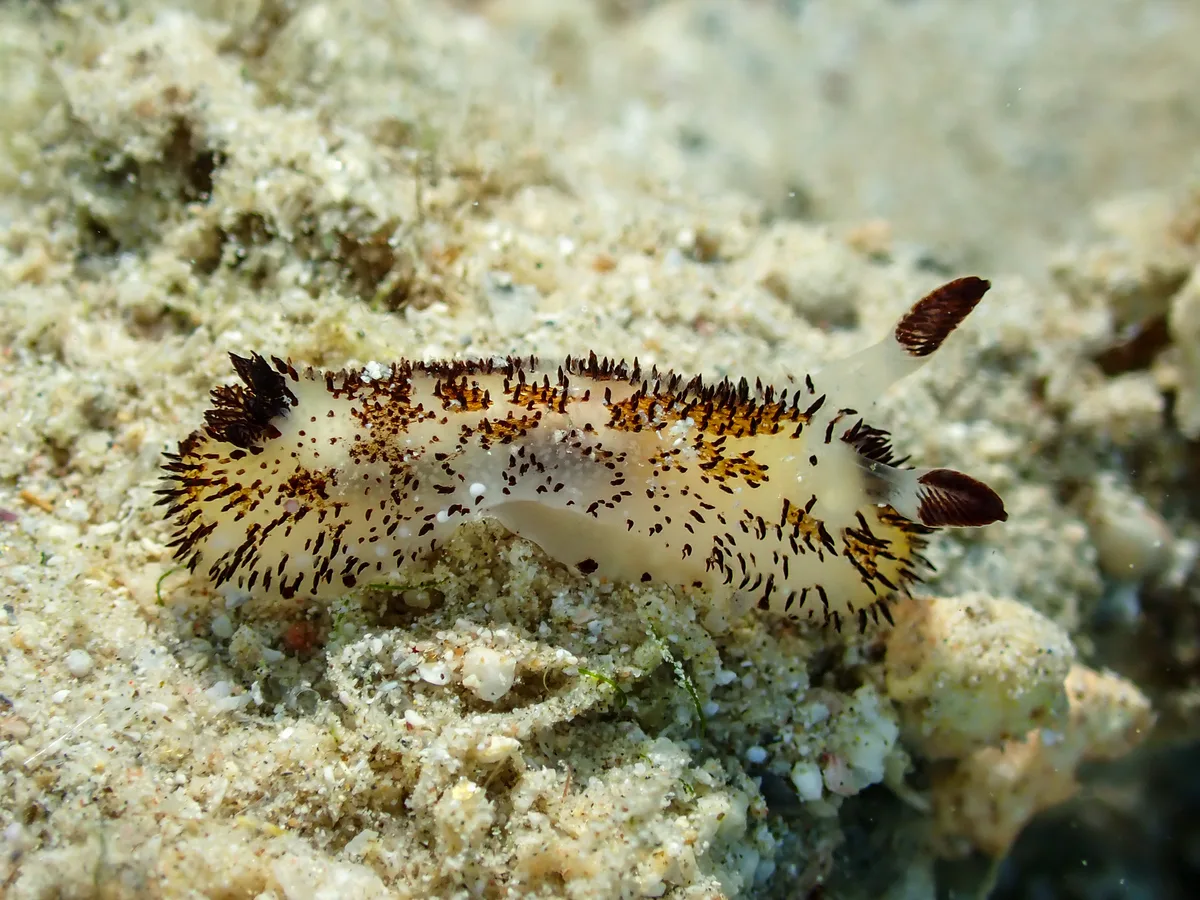
The sea bunny went around the world in 2015 and most people who shared it had no idea what they were looking at.
The fur is not fur. Each hair is a caryophyllidium: a stiff papilla stiffened by a ring of calcareous spicules with a sensory knob on top, and the back of the animal is covered in thousands of them. What looks like a soft coat is a field of chemical and touch receptors, and its softness is exactly the opposite of the truth.
The ears are not ears either. They are rhinophores, the paired chemical sensors every nudibranch carries on its head, used to follow the scent trail of a sponge or another slug across the rubble. The flower at the back end is the gill, and it pulls into a pocket in the body the moment anything touches it.
And the scale is the part photographs never convey. This is a sea slug under 25 mm long, grazing sponges at the speed sea slugs manage, which is to say barely.
The cf. in the name is honest bookkeeping: the animals in this sea look like Jorunna parva but have not been confirmed as that species, and the group is likely to be split further.
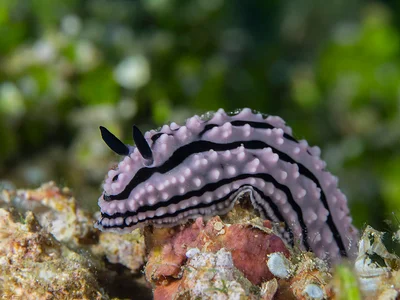
- dense velvet coat of black-tipped papillae over cream or white
- two black ears at the front, which are rhinophores
- ring of feathery gills at the rear that vanish into the body when touched
- up to 25 mm