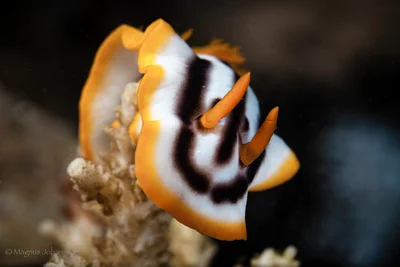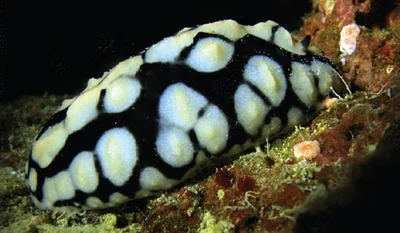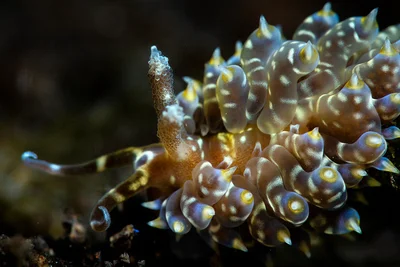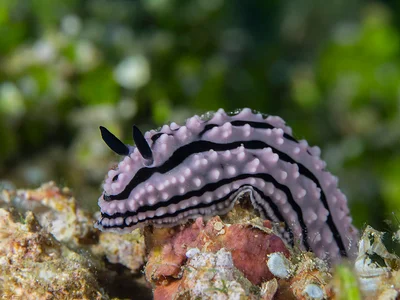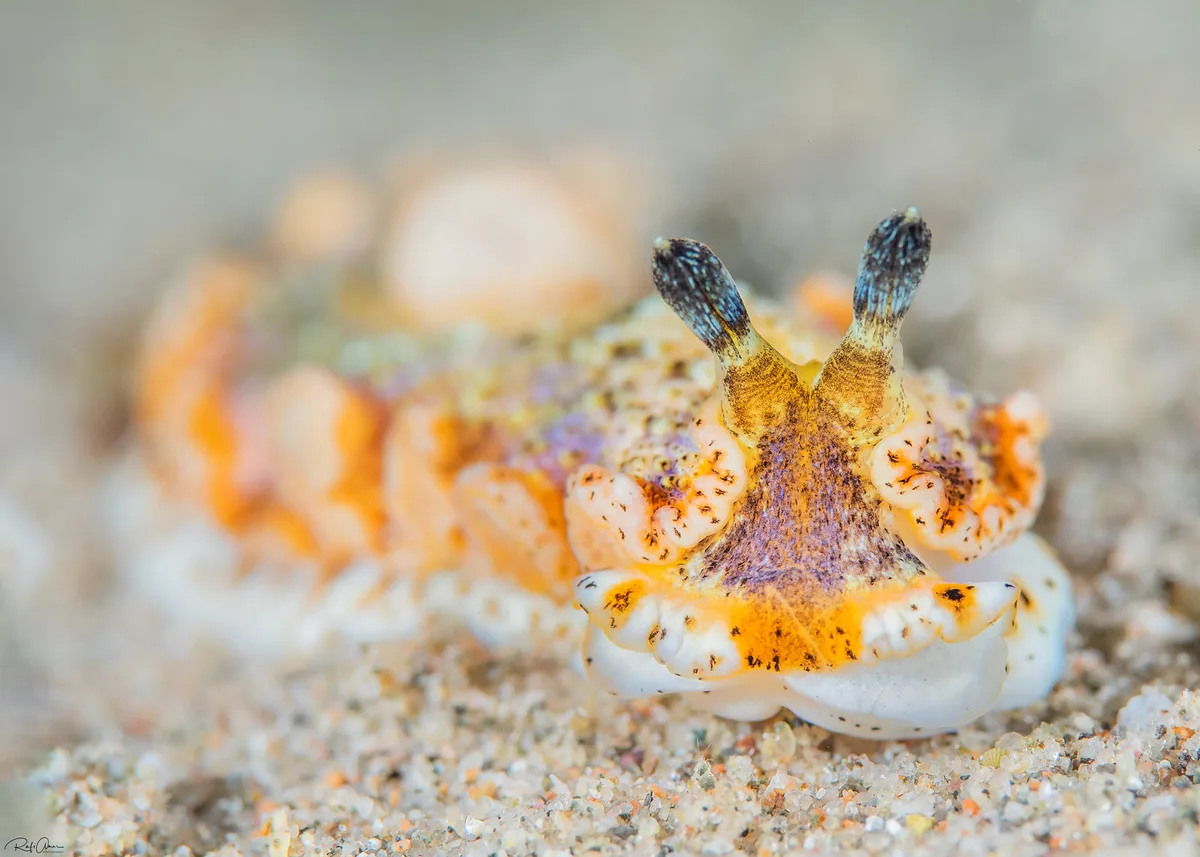
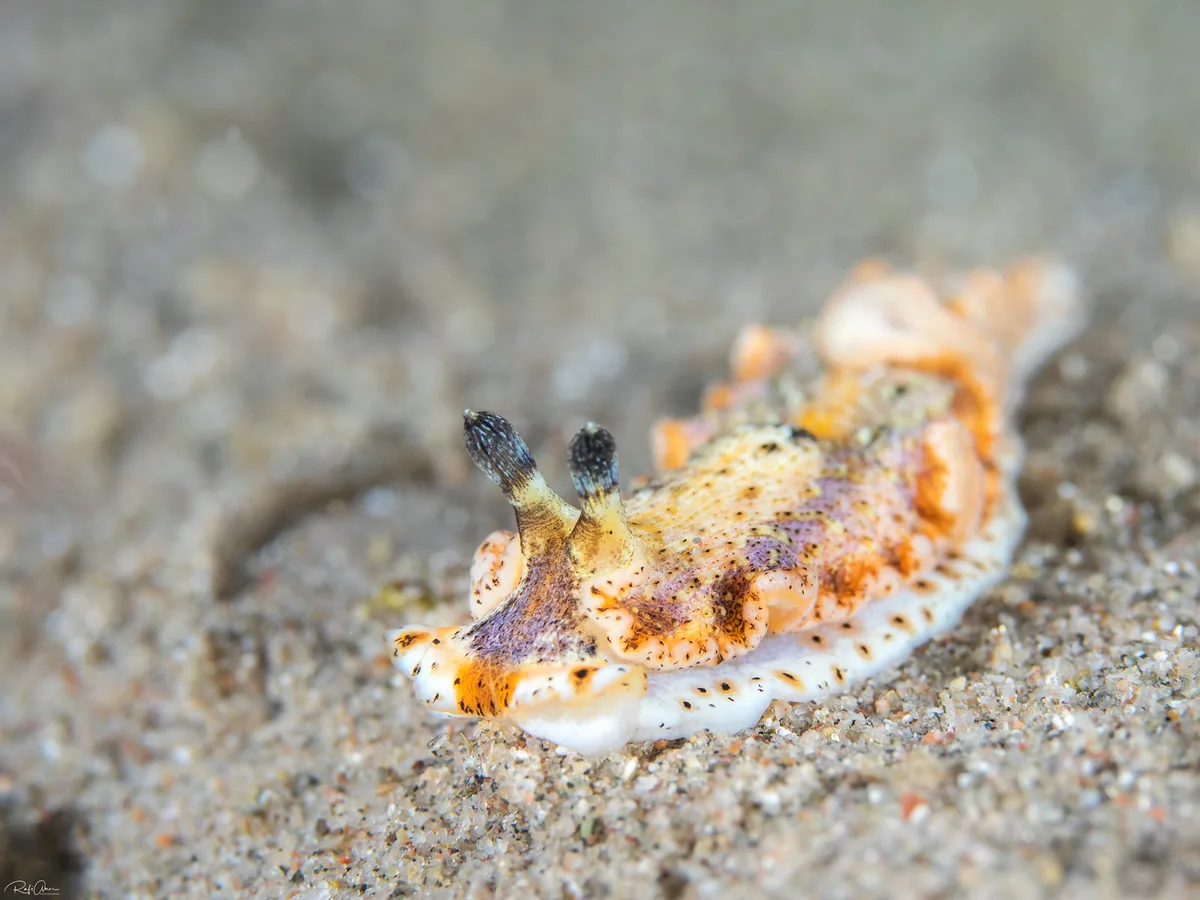
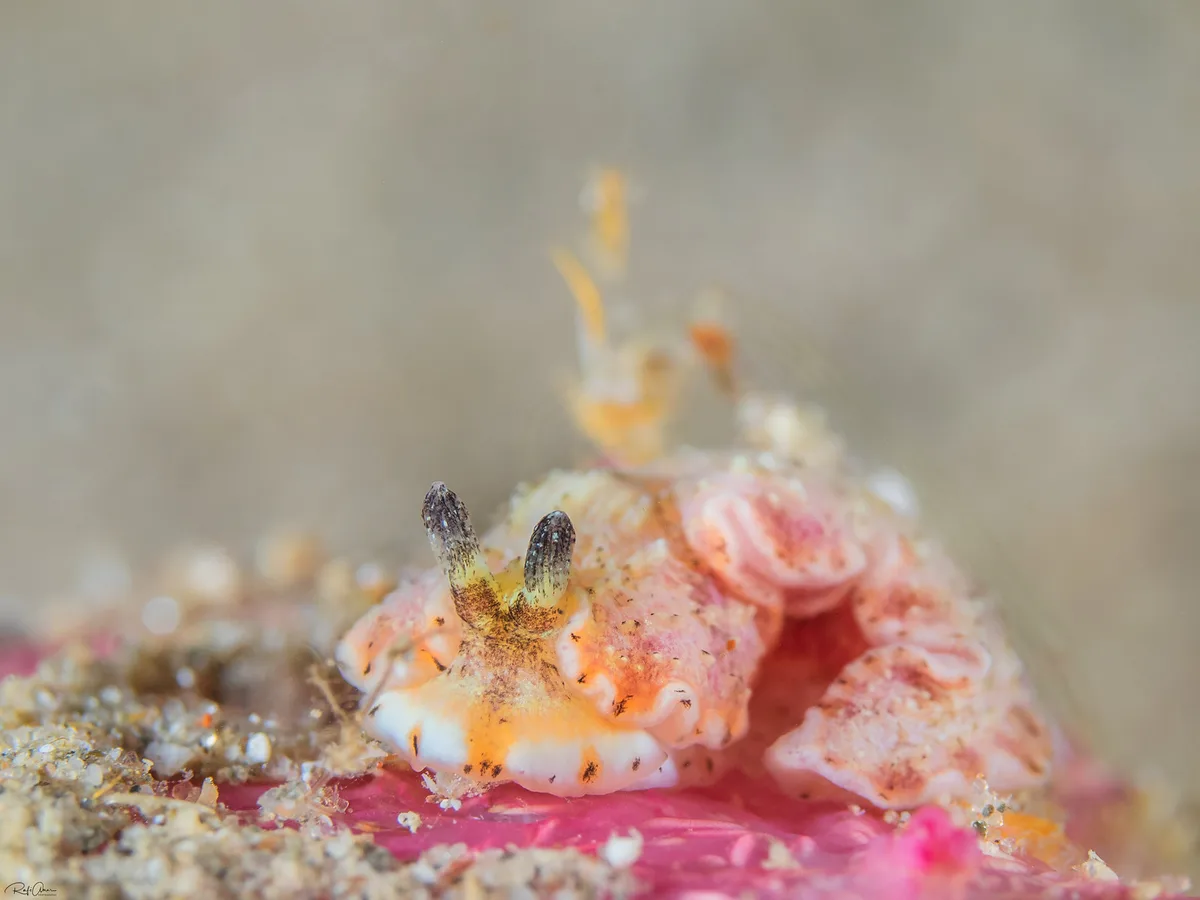
The pattern here is a dot inside a ring, repeated. Black spots scattered over the mantle and over the oral veil, each one encircled by orange, so the animal reads as a field of small targets rather than plain spotting. Several arminids carry black dots; the ring around each one is what makes this species.
The name records something else again. Semistriatus means half-striped, and it refers to the ridging: where its relatives are ribbed from end to end, on this animal the ridges run only part of the way along the back and give out. In a genus whose English name is built entirely on those lines, a species that has them only halfway is worth the label.
Under that, the usual arminid arrangement. No gill plume on the back, the breathing surfaces folded away underneath in the groove between mantle skirt and foot, a broad sensory veil pushed out in front for ploughing sand, and a diet of octocorals that most other grazers will not touch.
Four centimeters (1.6 in), out after dark, Baba, 1949.
One caution about photographs. There are around forty five observations of this name in the largest sea slug archive and none of them have been confirmed by the community. Every image is provisional, so treat what you find under this name as a starting point and check the rings.
- black dots each sitting inside an orange ring, on the mantle and on the oral veil
- the rings are the diagnosis: dots without rings belong to something else
- ridges running only part of the way along the back, which the species name records
- four centimeters