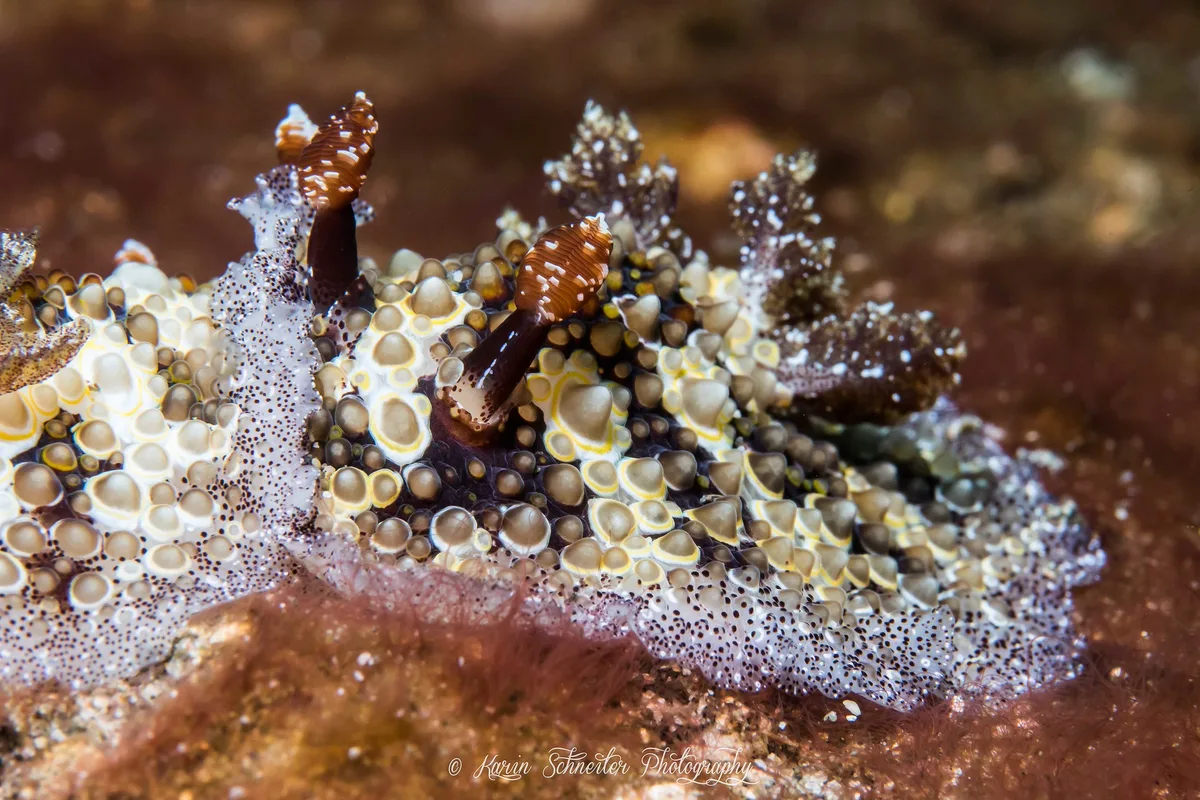
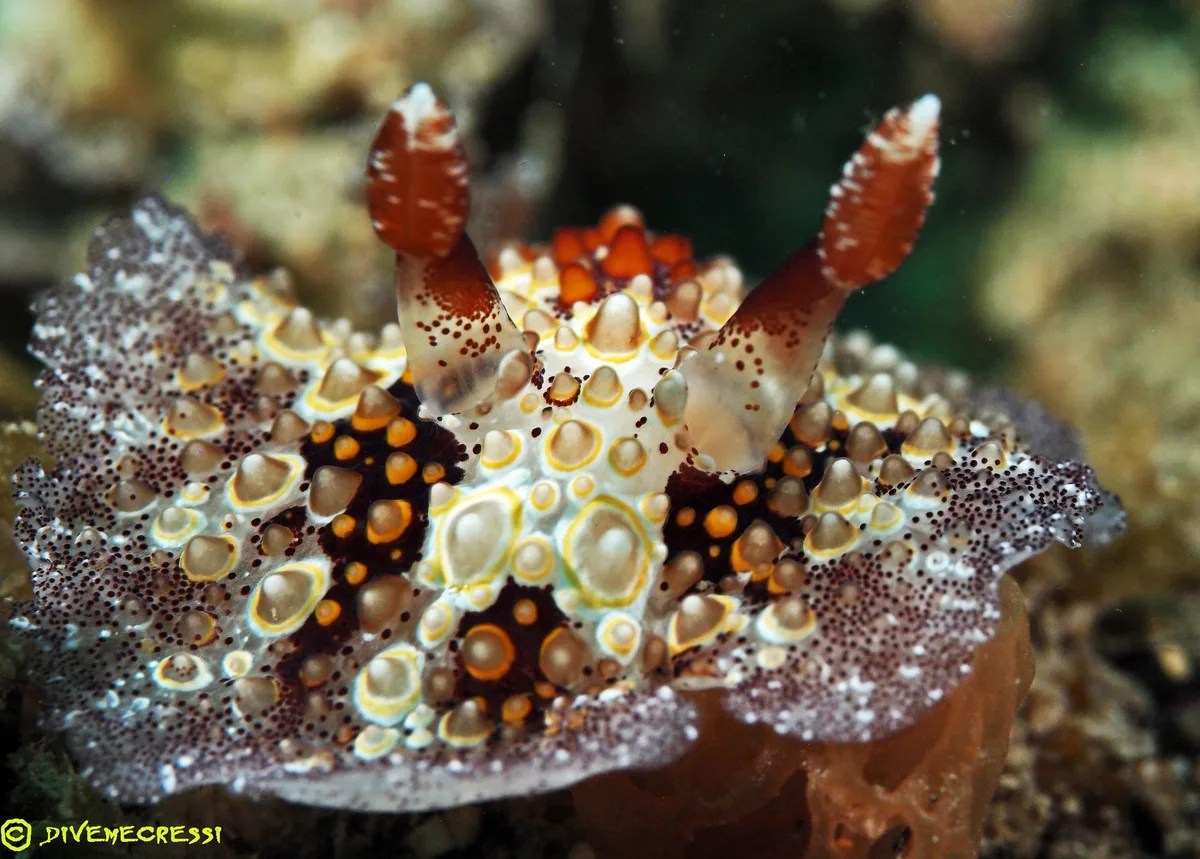
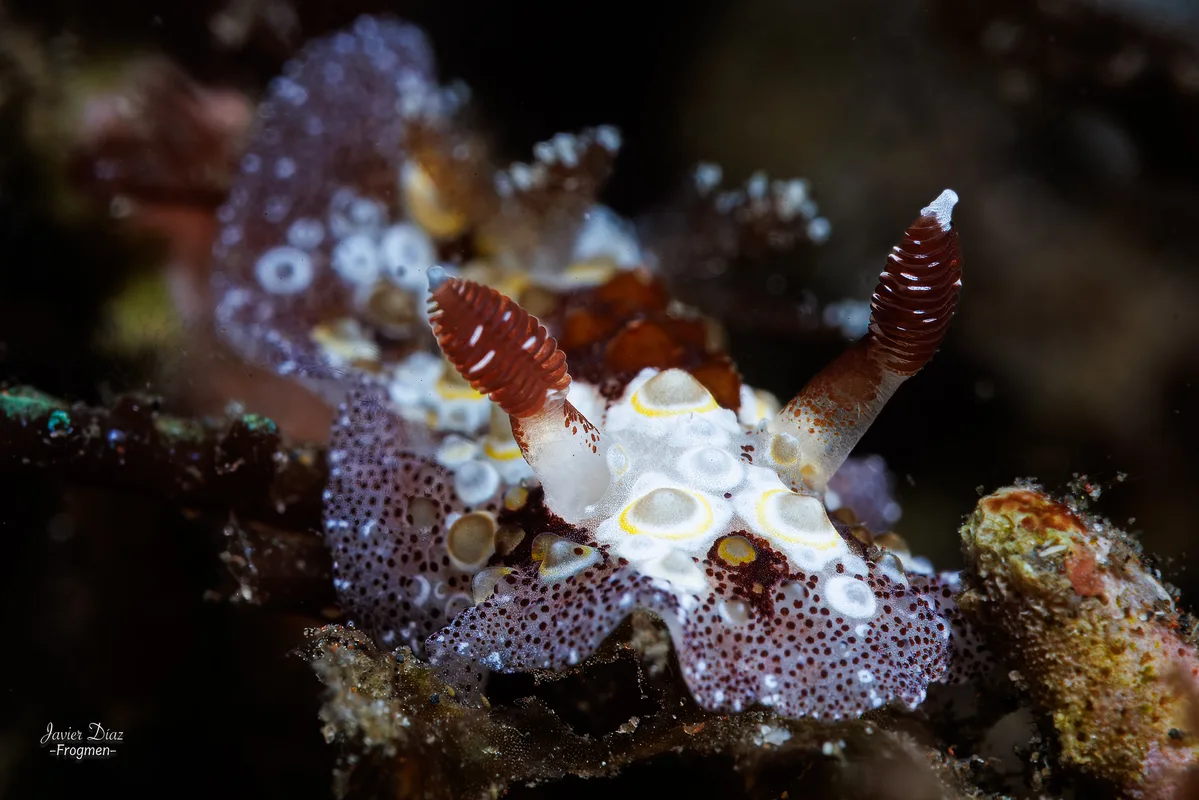
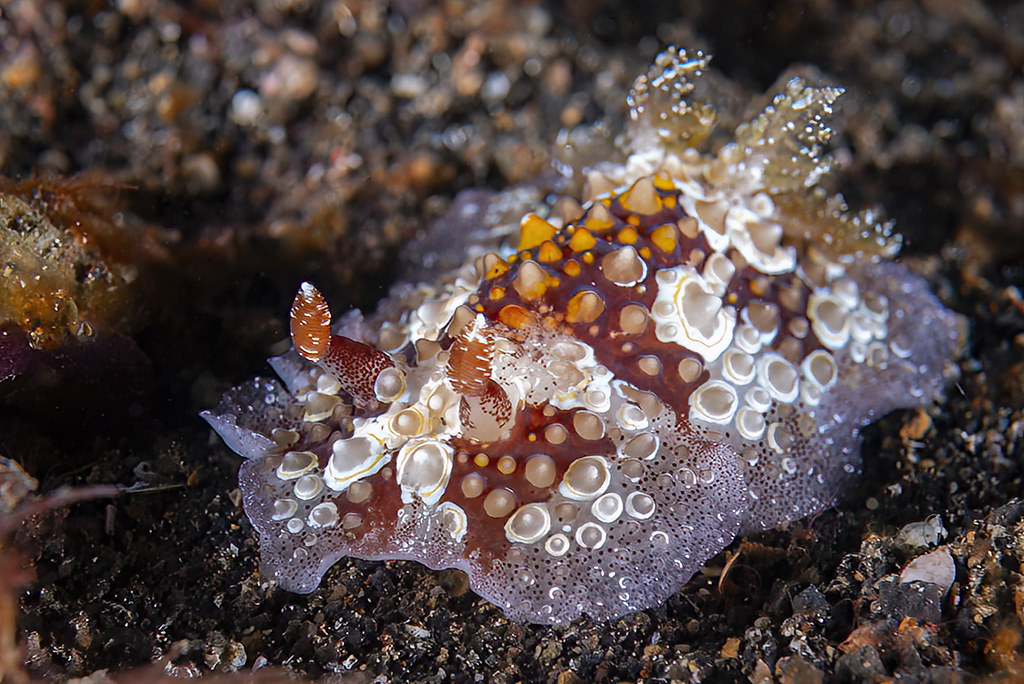
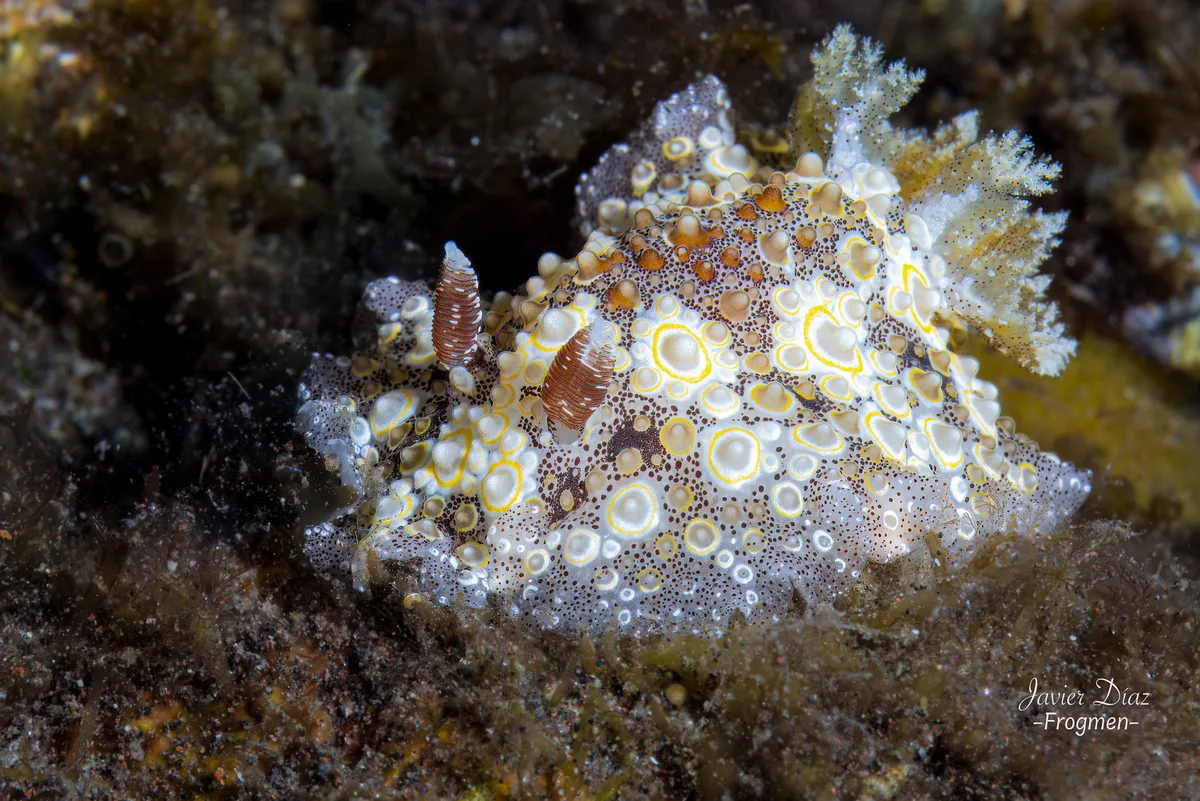
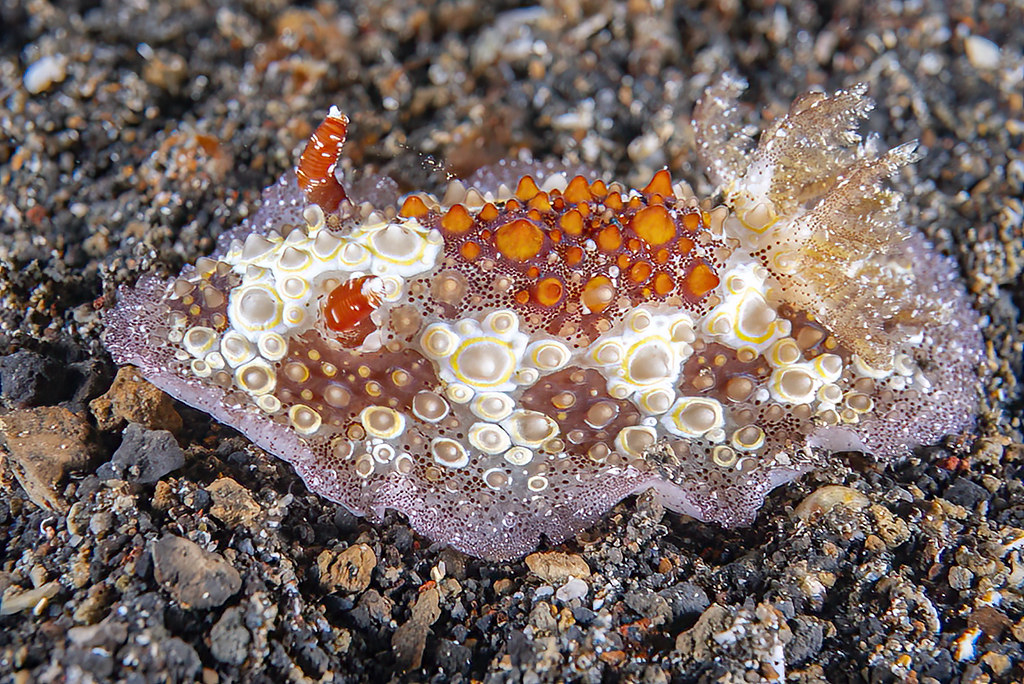
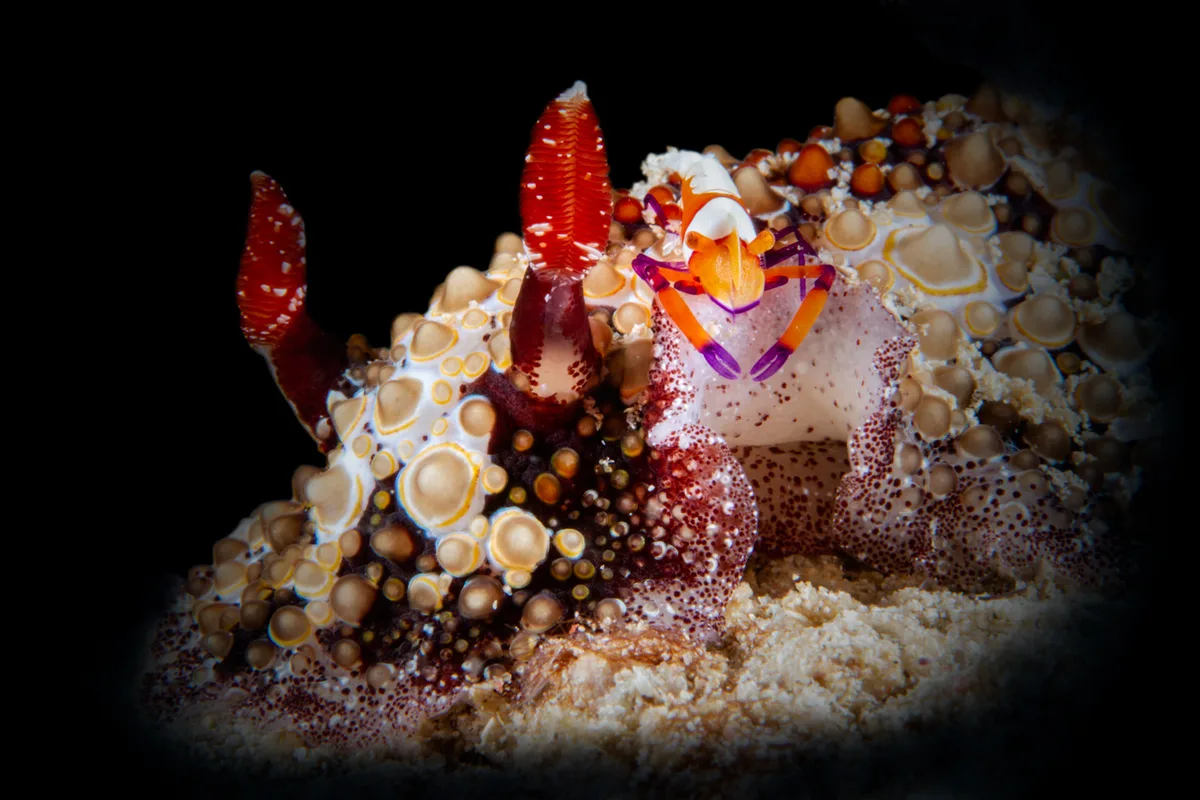
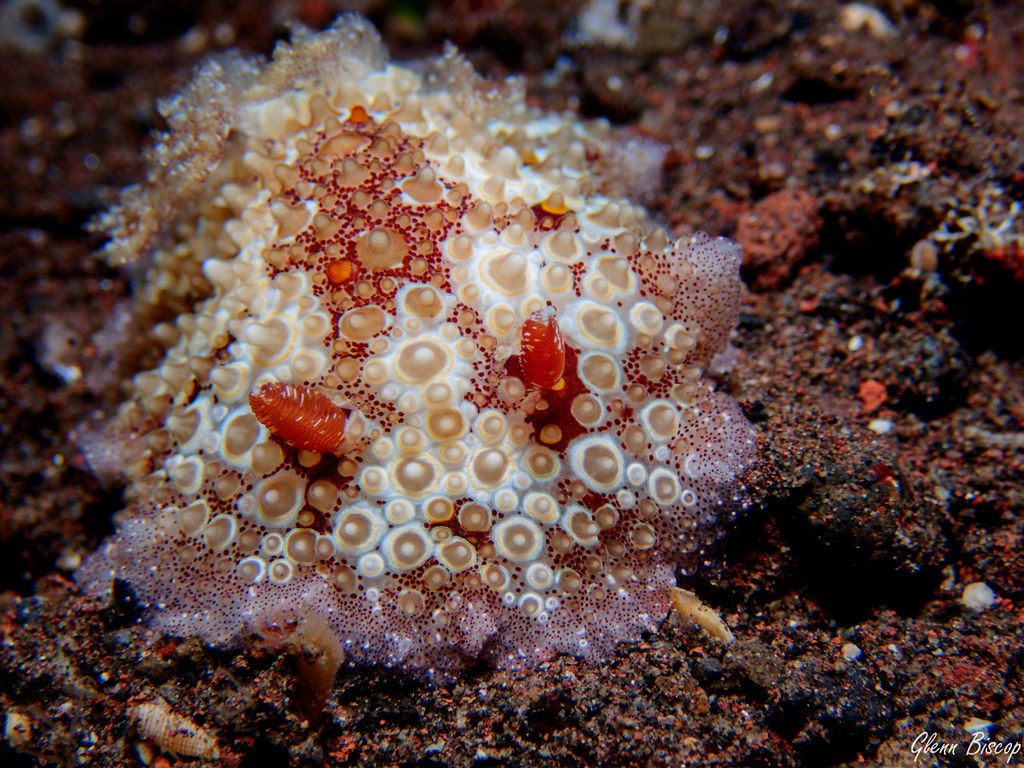
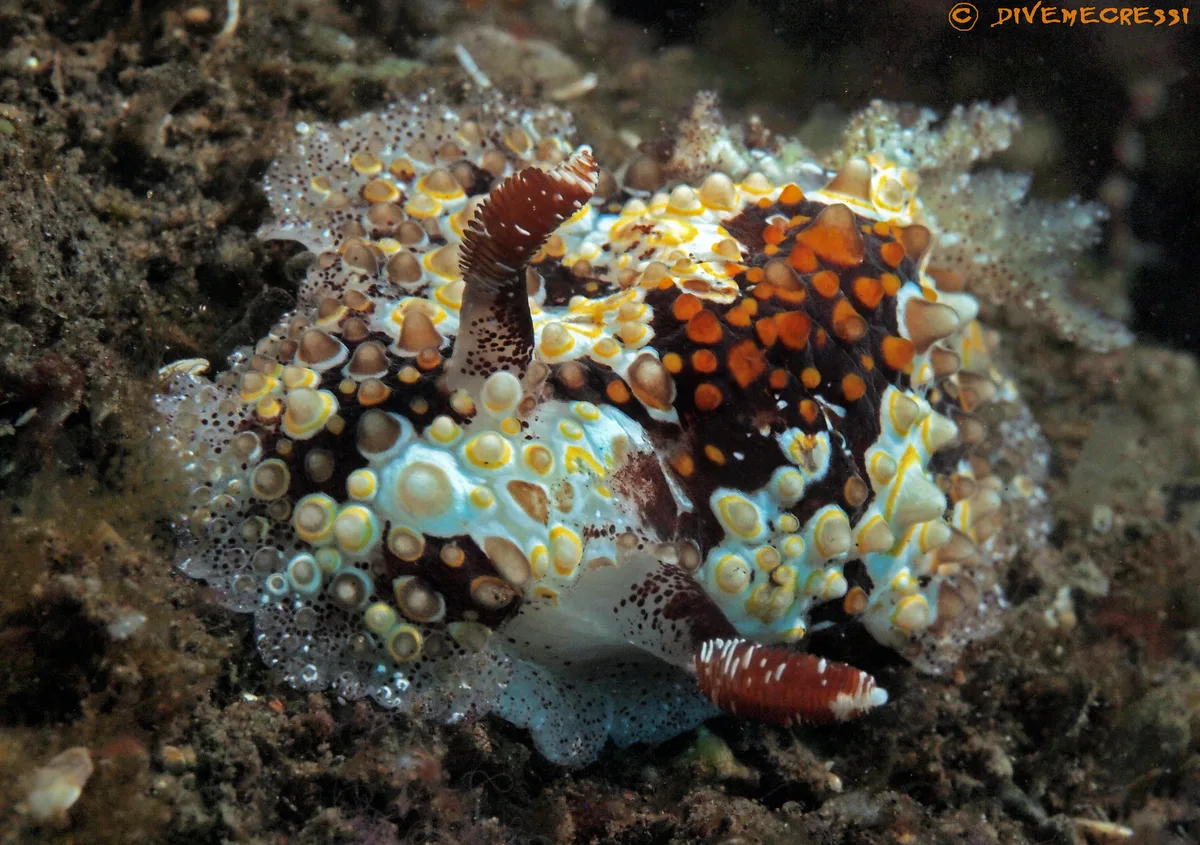
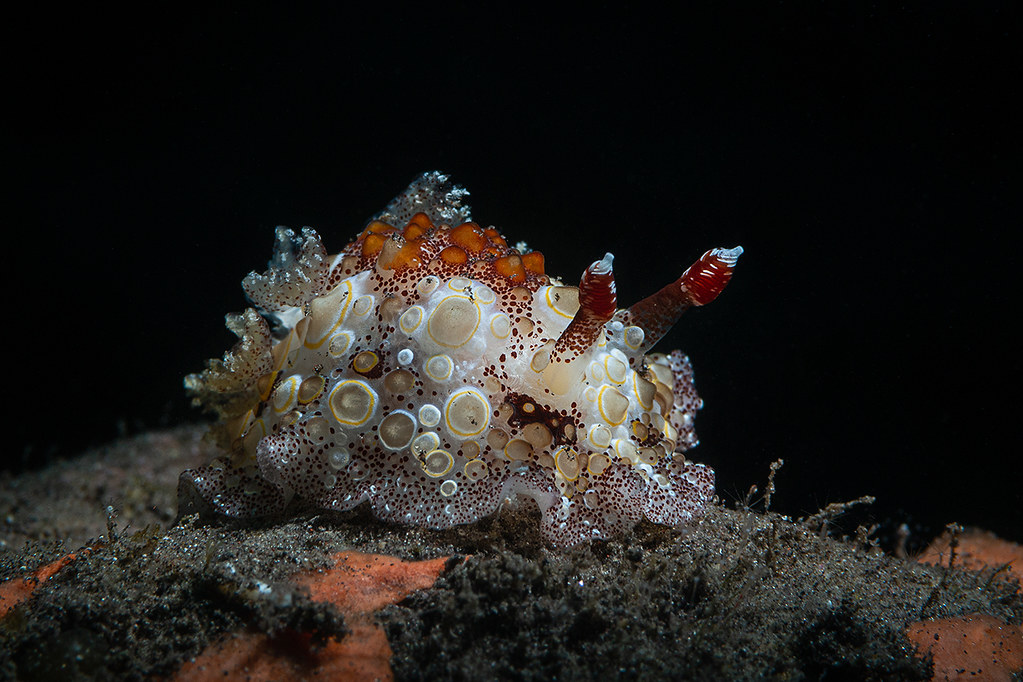
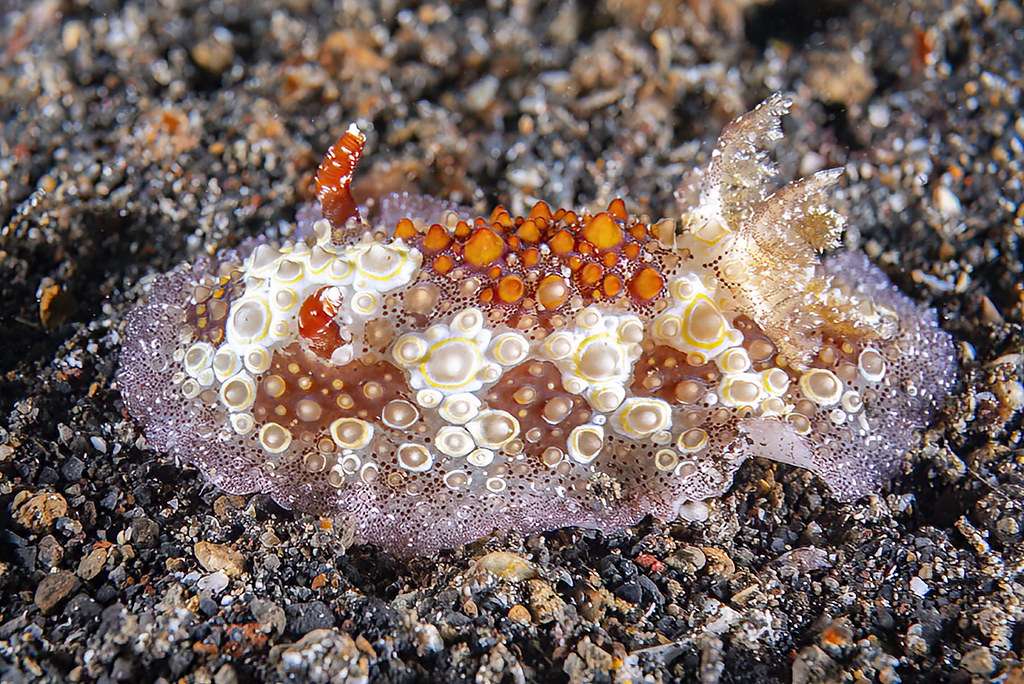
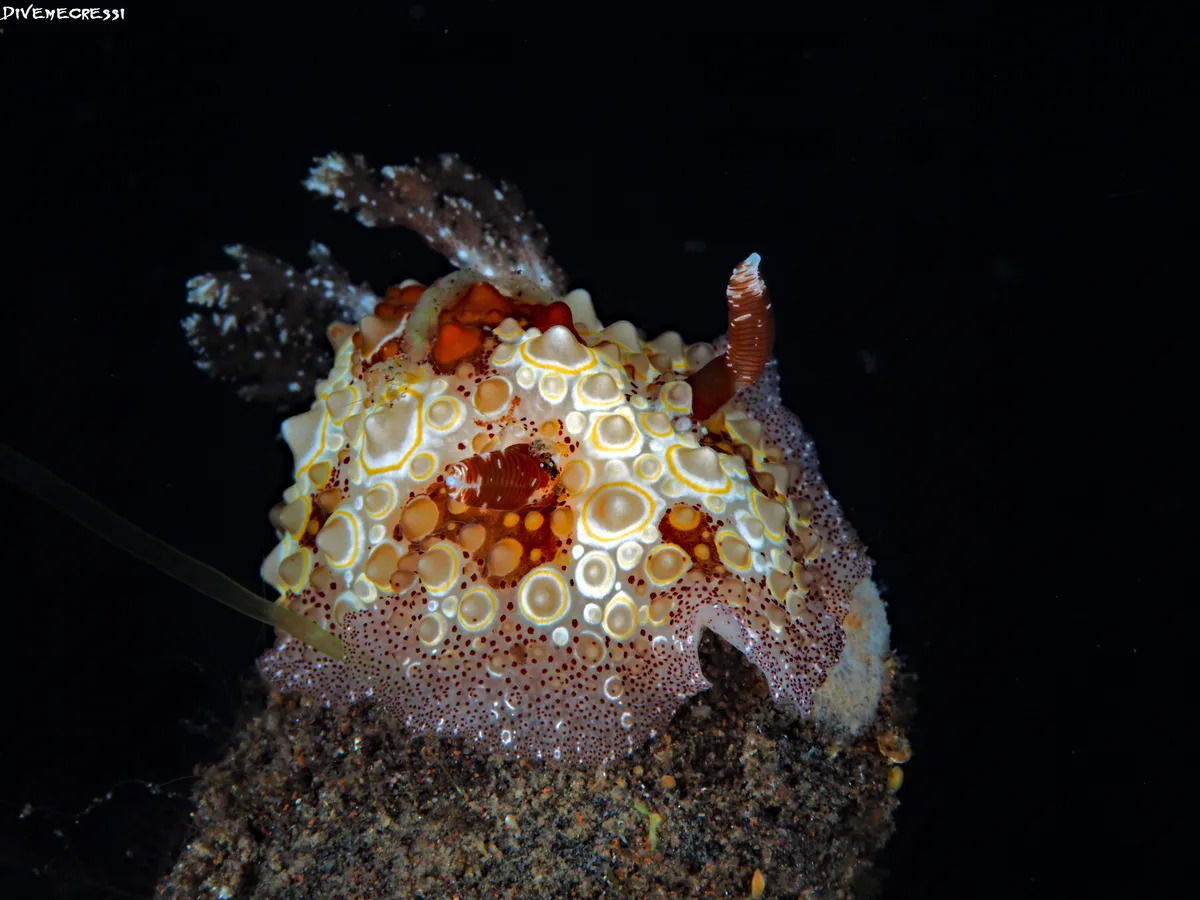
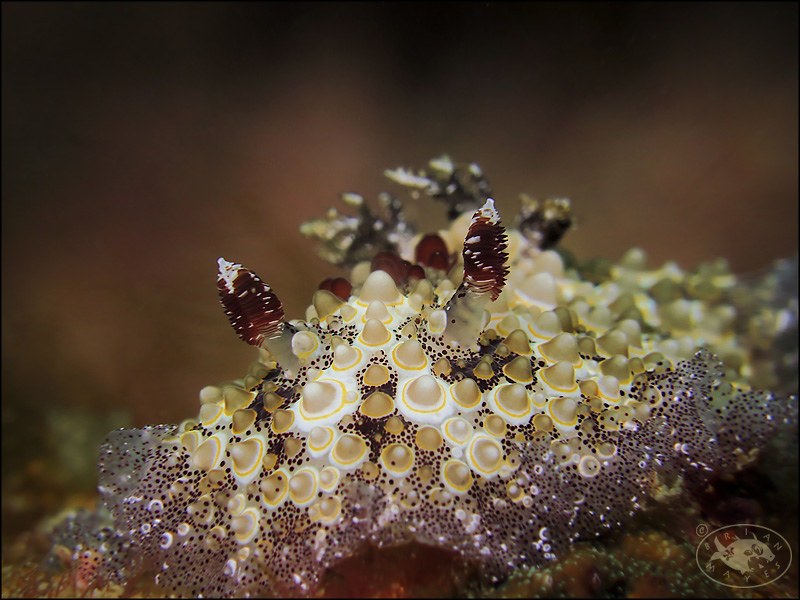
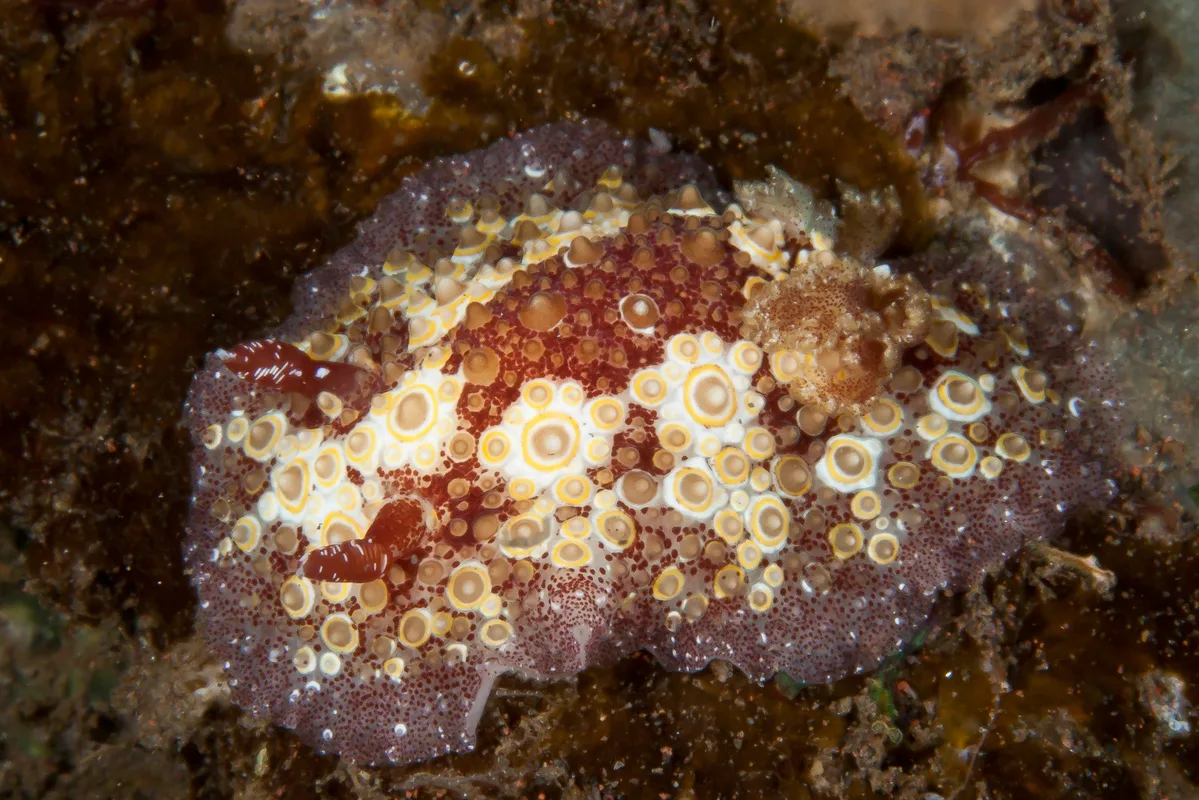
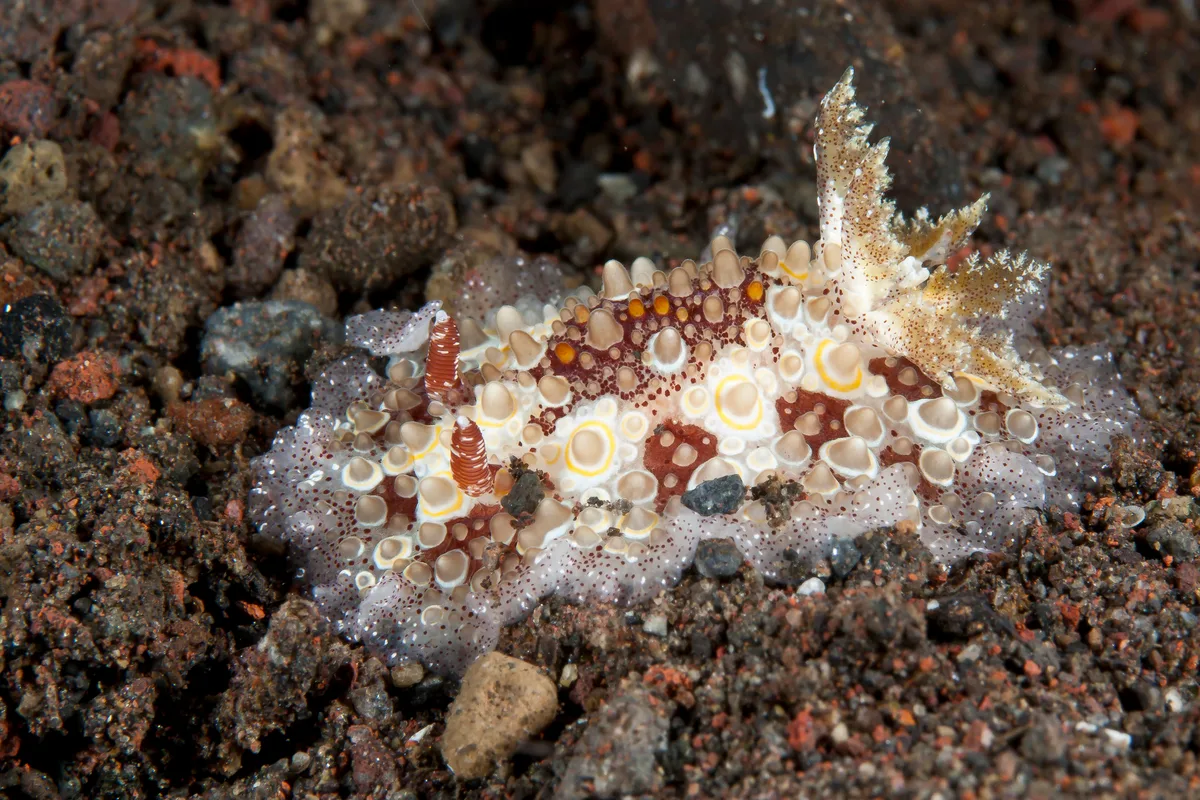
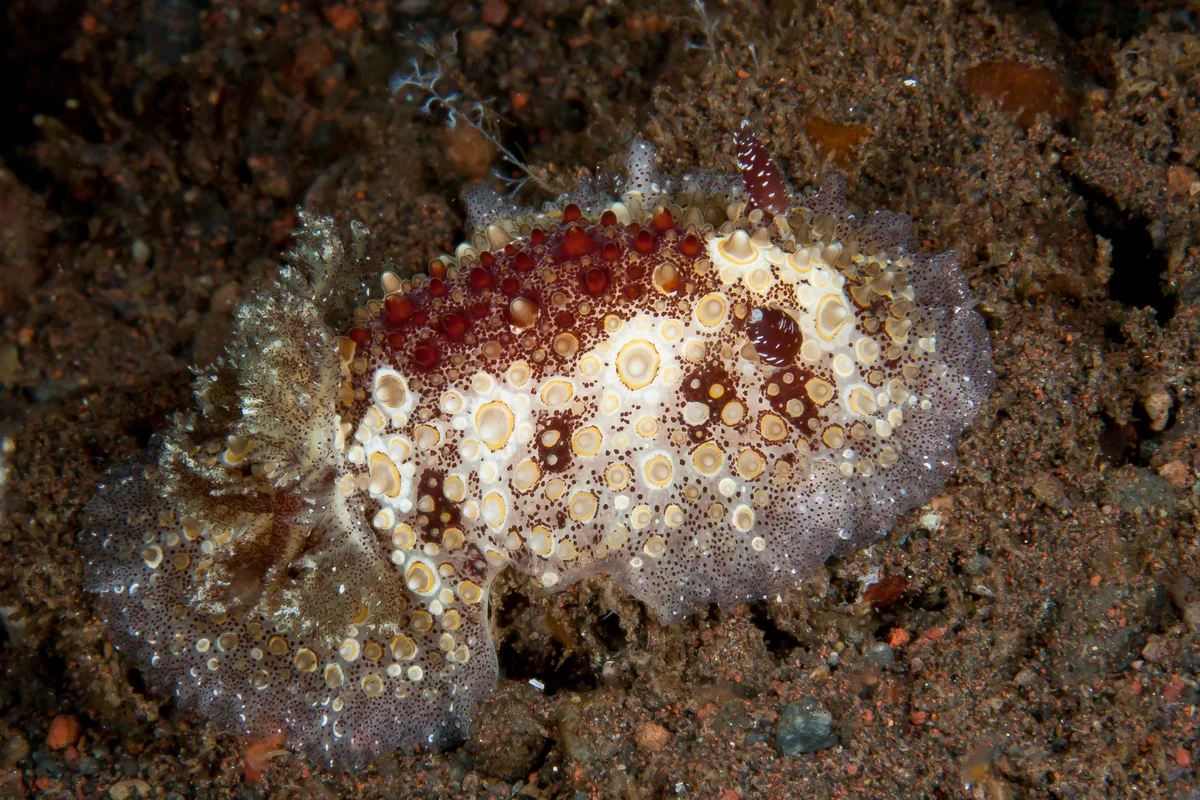
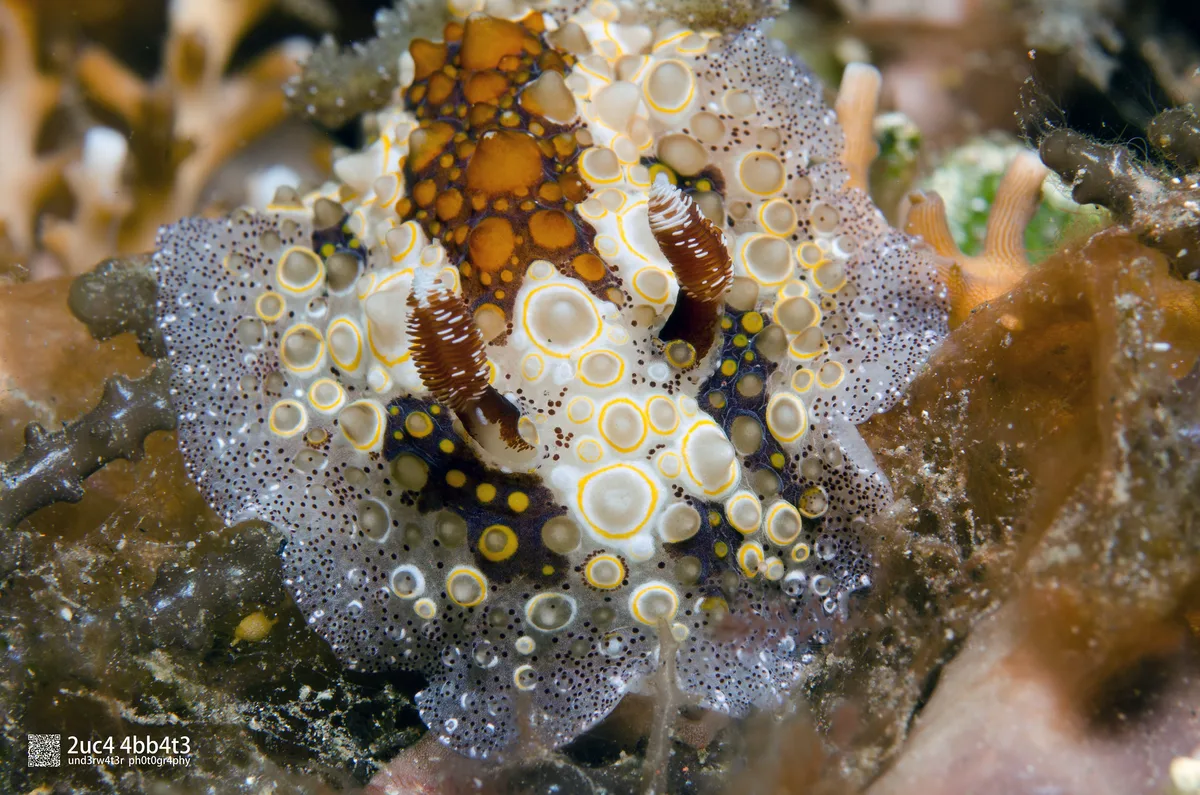
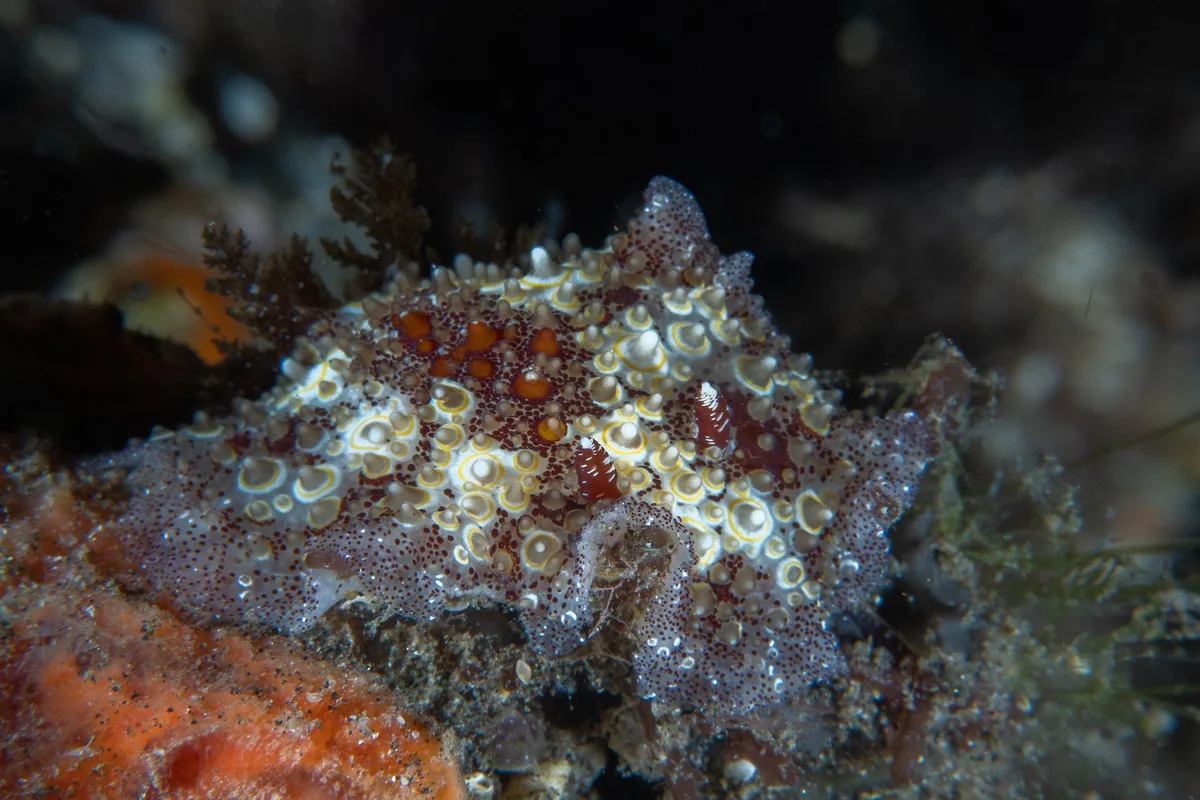
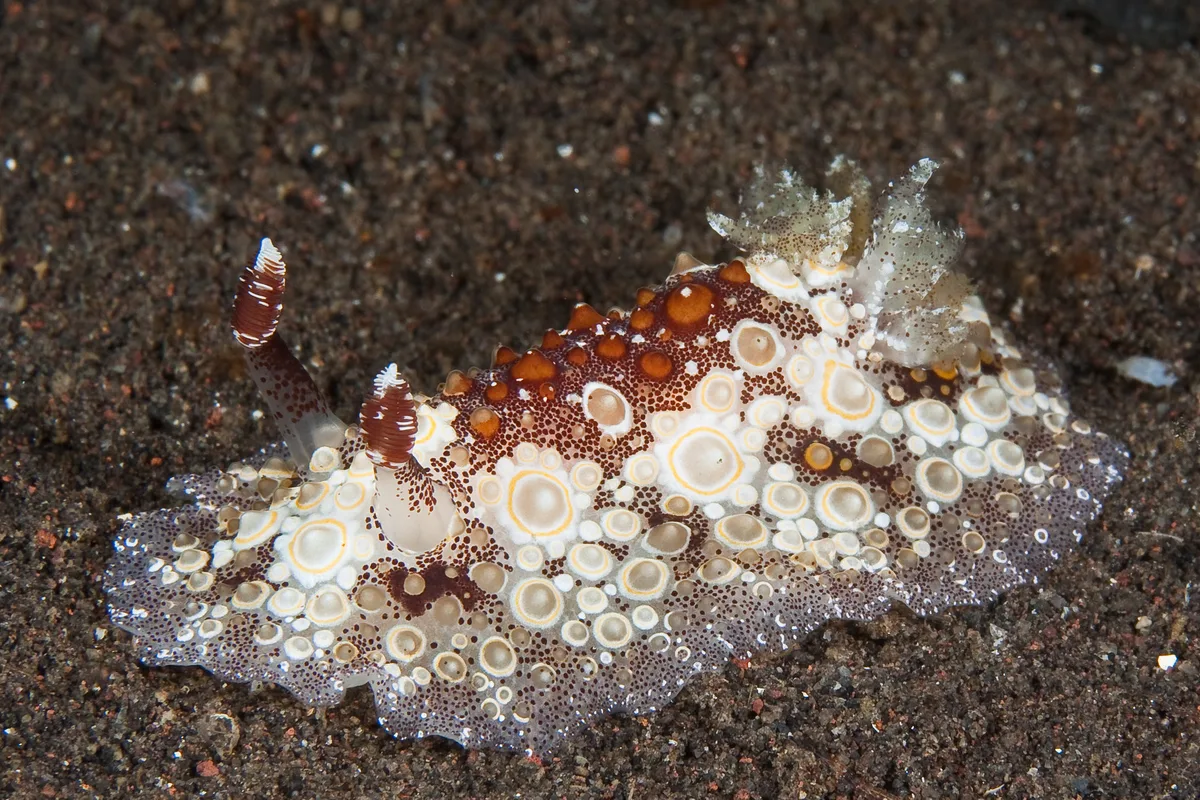
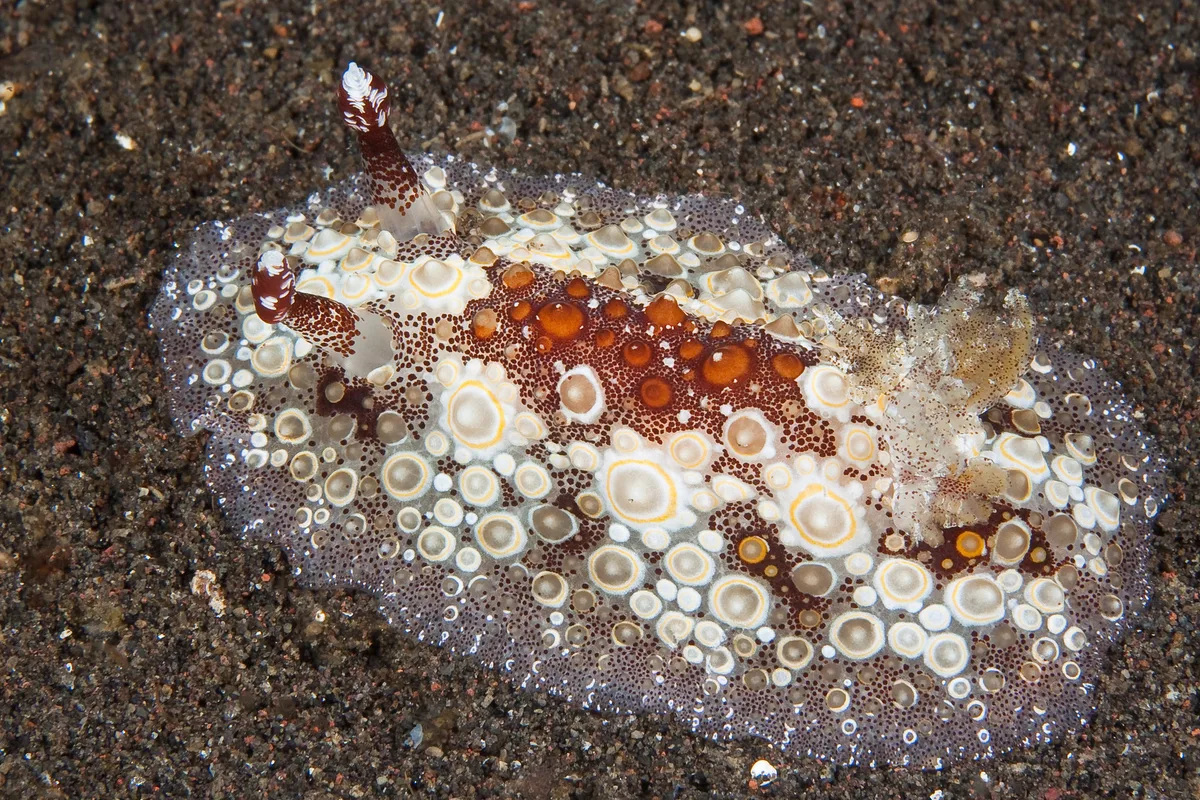
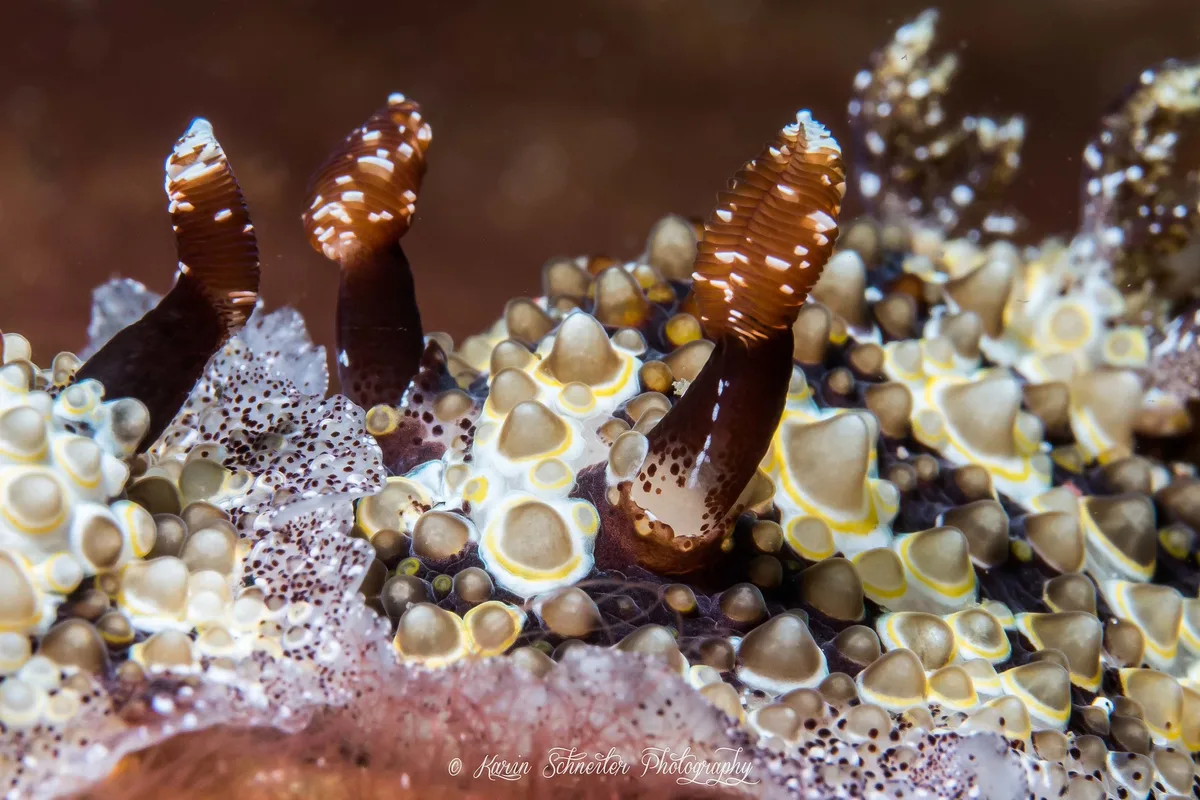
Look at where the yellow sits. That is the whole separation between this animal and its relative on this reef, and it is a question of one pigment placed two ways.
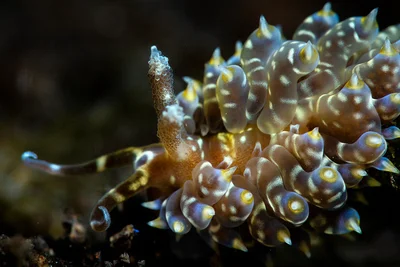
Here each rounded tubercle is encircled by a yellow ring at its base, so the back reads as a field of pale eyes on a dull ground, with the domes themselves staying the body color. On the other species the yellow is speckled across the tops of the tubercles instead. Same genus, same texture, same dull brown animal underneath, and the arrangement of a single color is what tells them apart.
That texture is the genus. Carminodoris are covered in large rounded bumps and carry no bright color and no clean margin, which is a strategy of looking like encrusting growth rather than of advertising. They graze sponges, take the sponges' chemistry with the meal, and spend daylight underneath things.
The species name is the interesting piece of the label. Estrelyado is Filipino, from the Spanish, and it means starred or star-patterned, though it is also what a fried egg is called there. Gosliner and Behrens described the animal from the 🇵🇭 Philippines in 1998 and named it for the way the ringed tubercles look, which makes it one of the very few names in this catalogue drawn from a local language rather than from Latin, Greek or a collector's surname.
- rounded tubercles each encircled by a yellow ring at the base
- the ring is the mark: the tubercle itself stays the body color
- four centimeters, dull-colored, low and rounded
- under rubble in daylight, out on the rock after dark