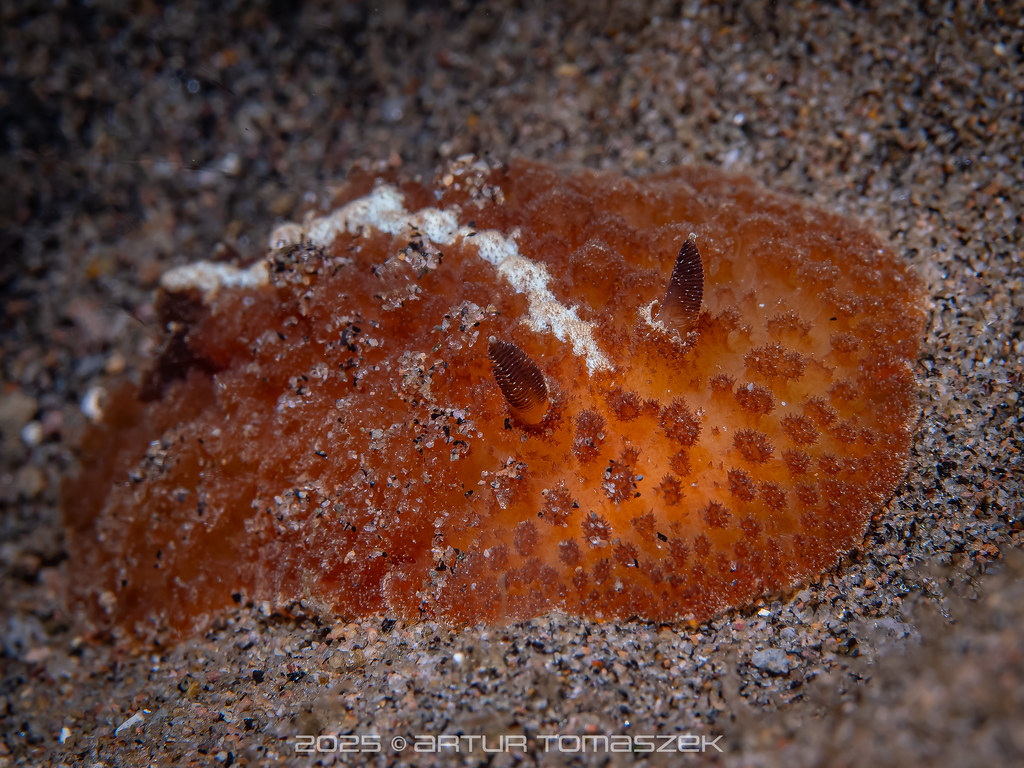
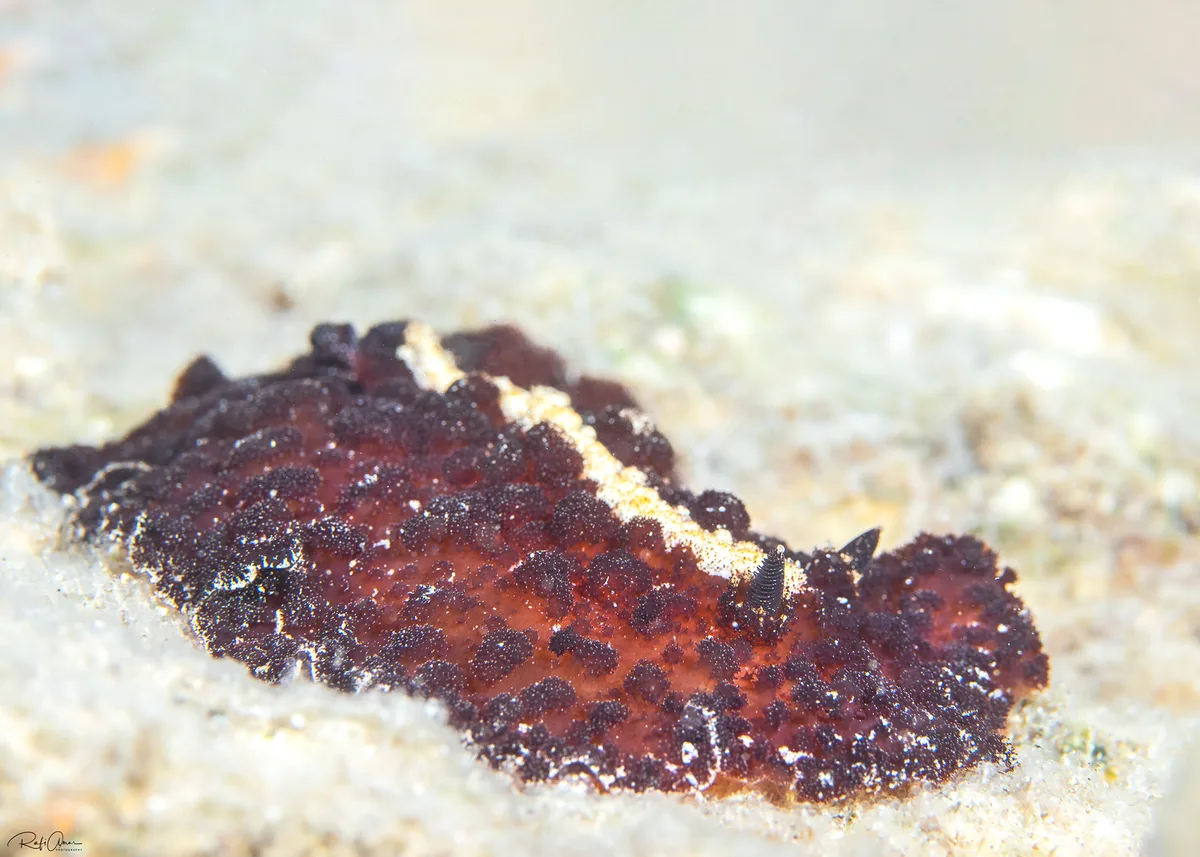
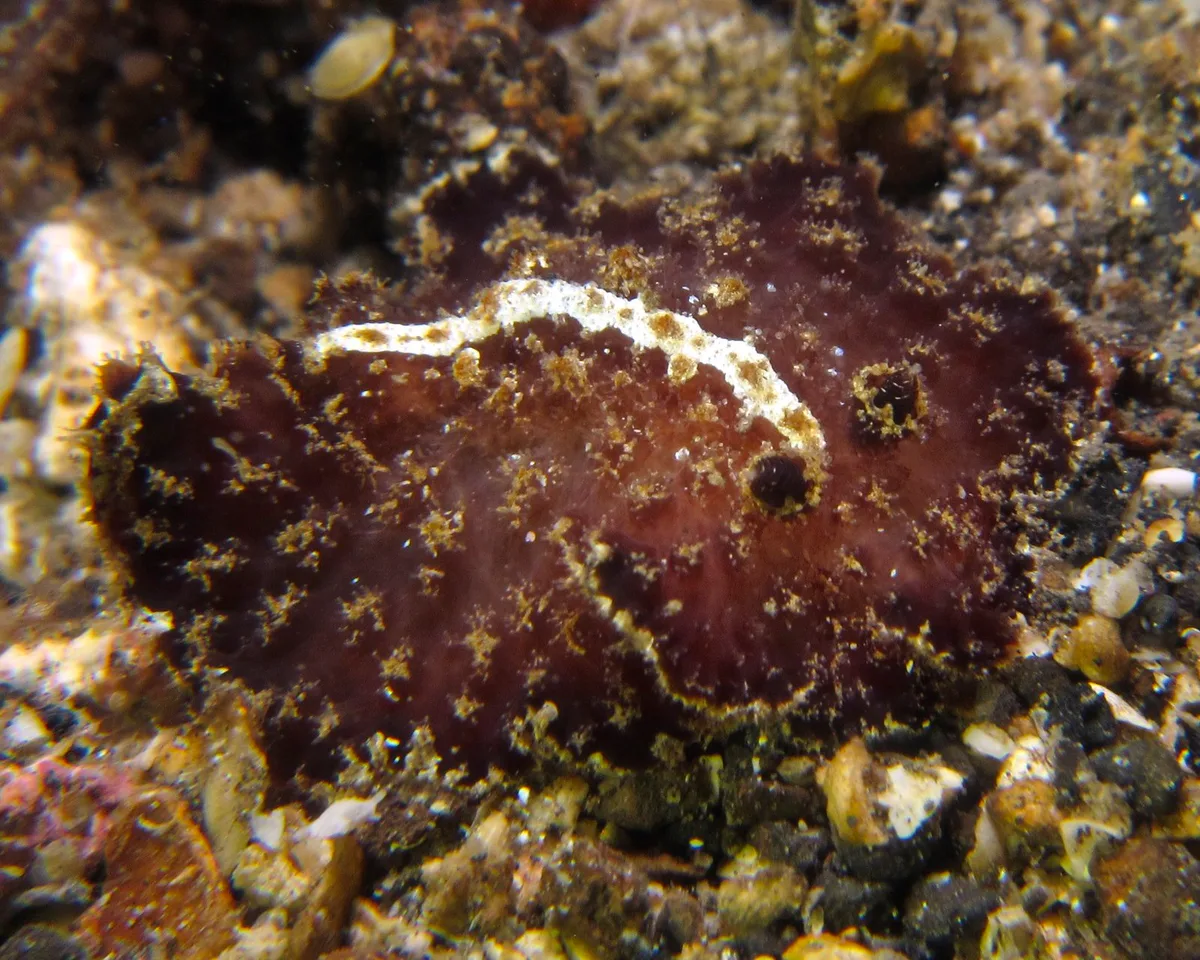
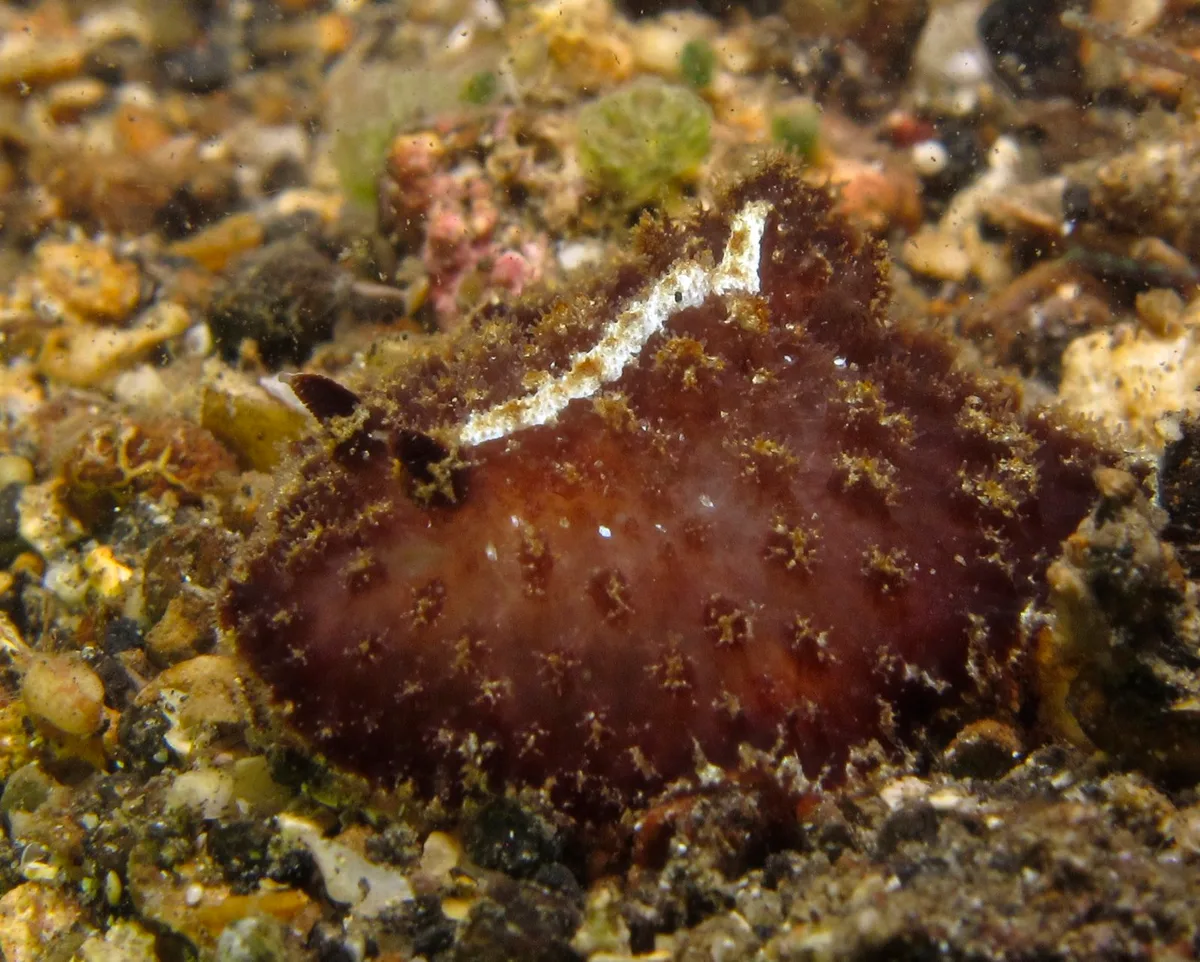
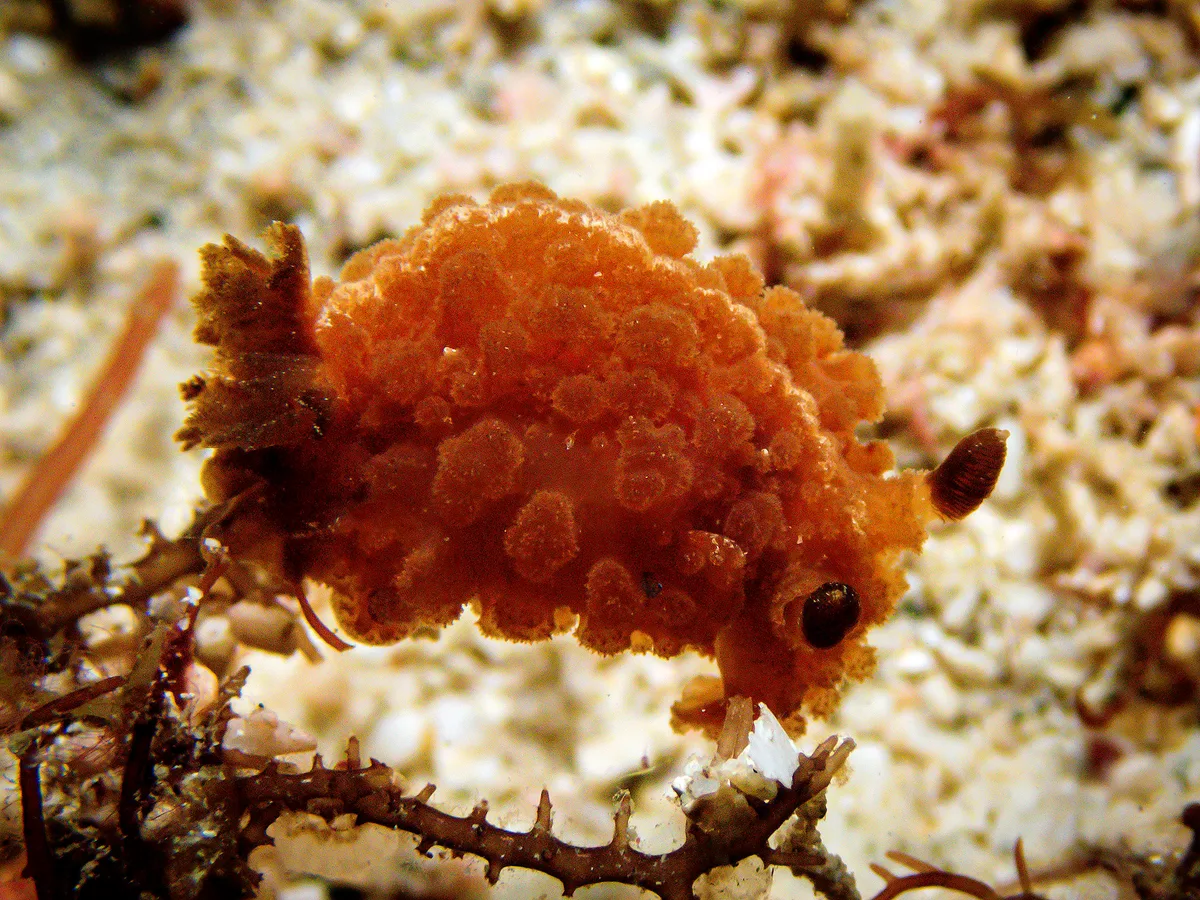
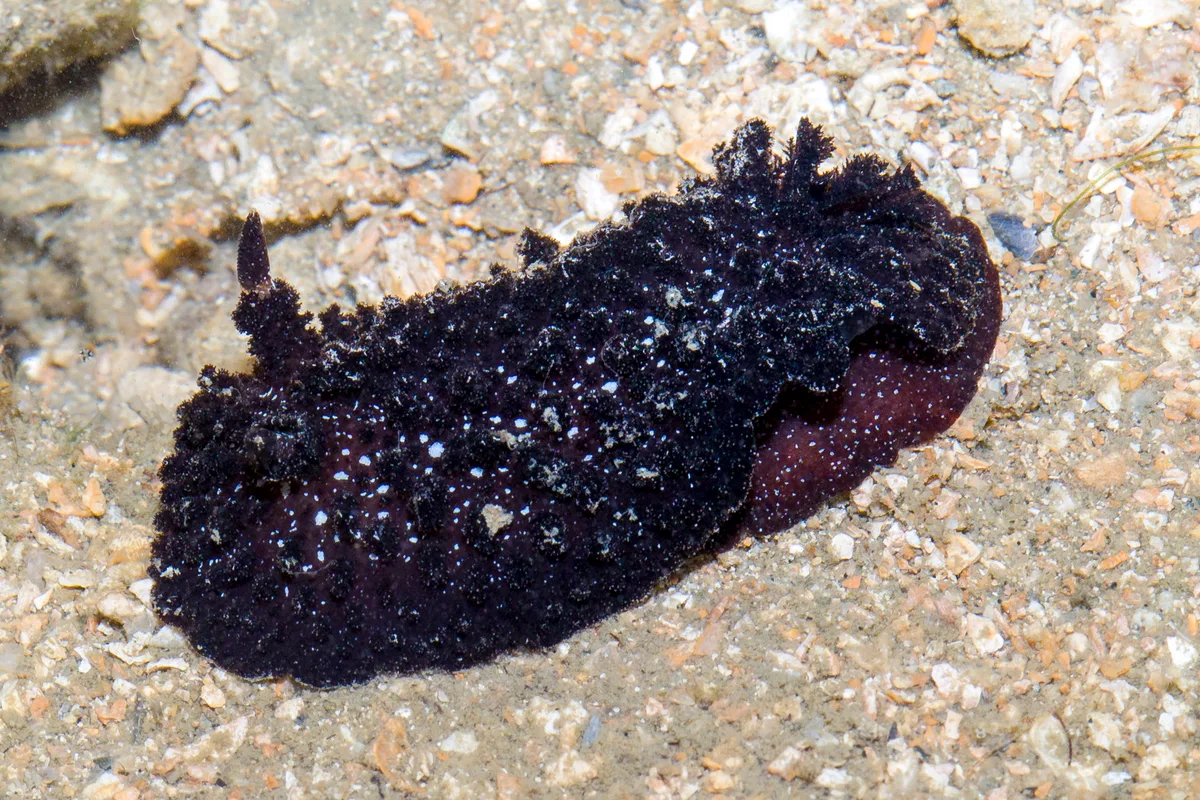
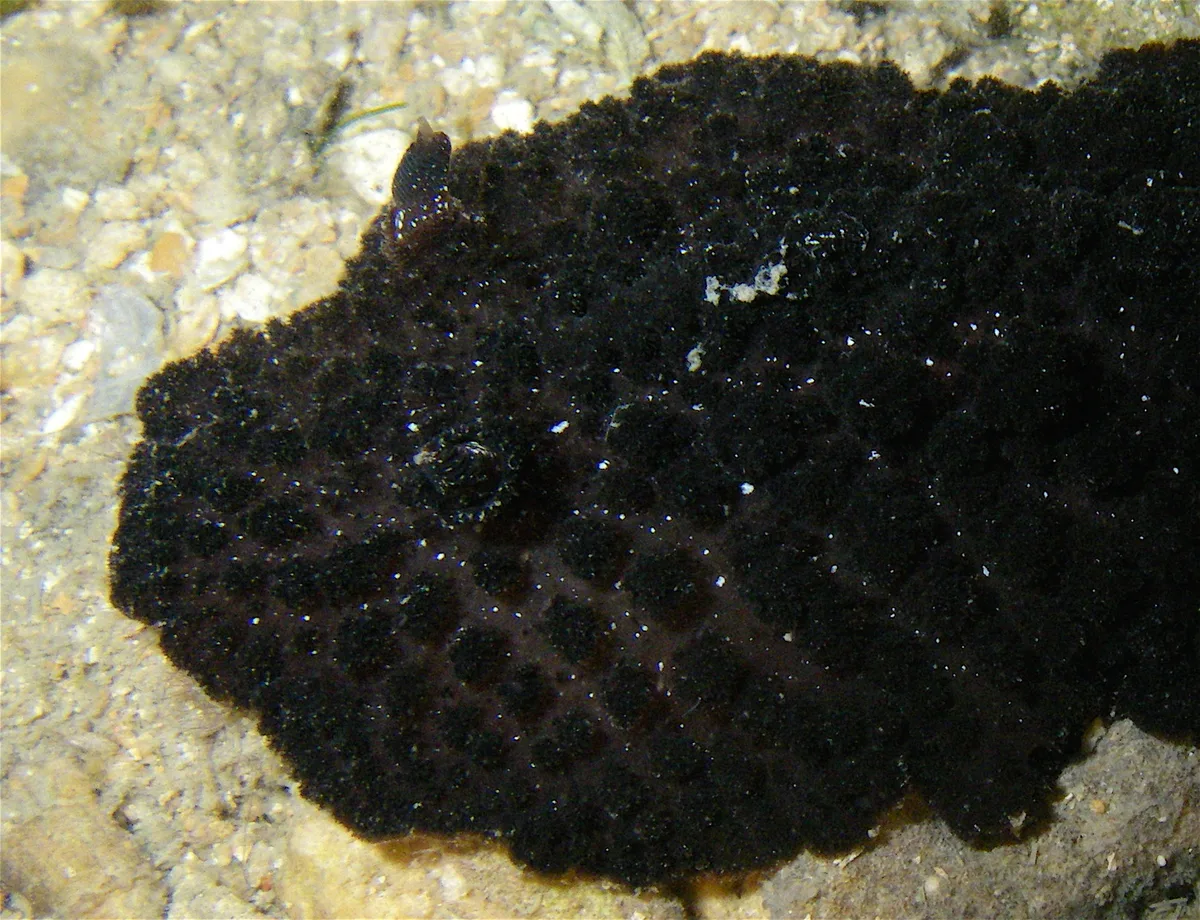
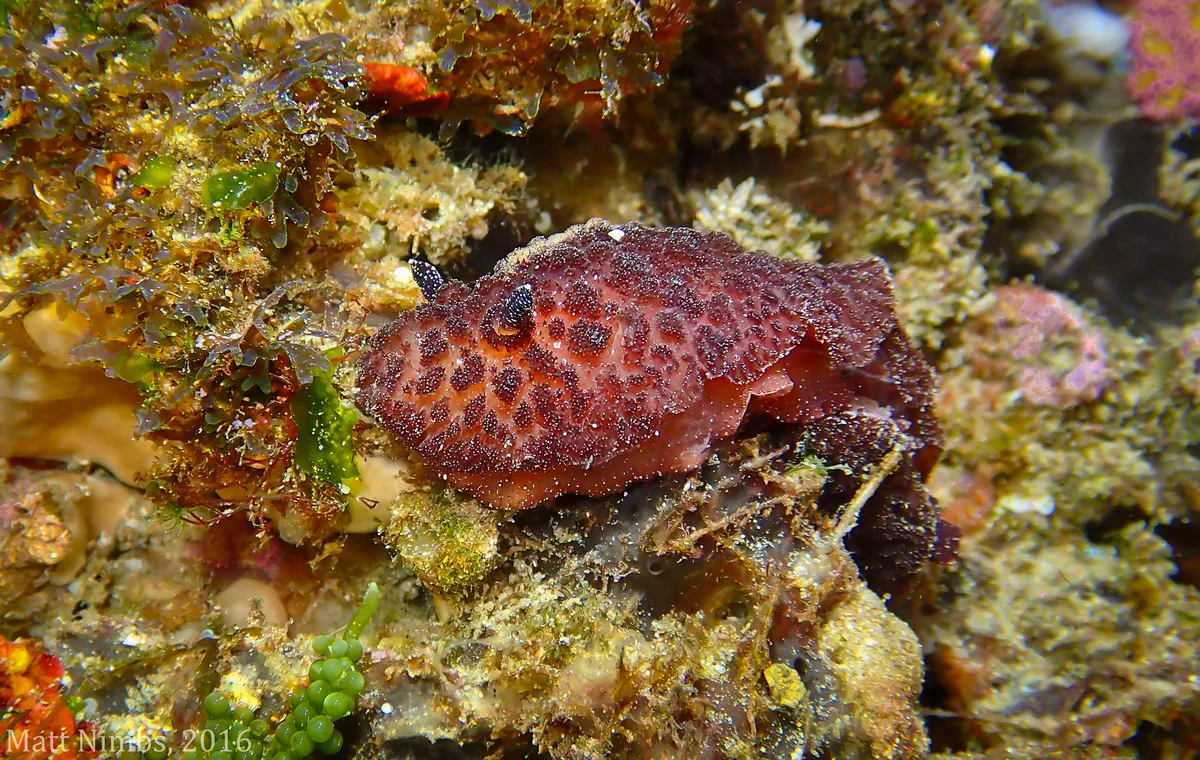
Eight centimeters (3 in) is a substantial animal, and this is one of the larger sea slugs on the reef that almost nobody sees. It has solved the problem of being conspicuous by not being an object at all.
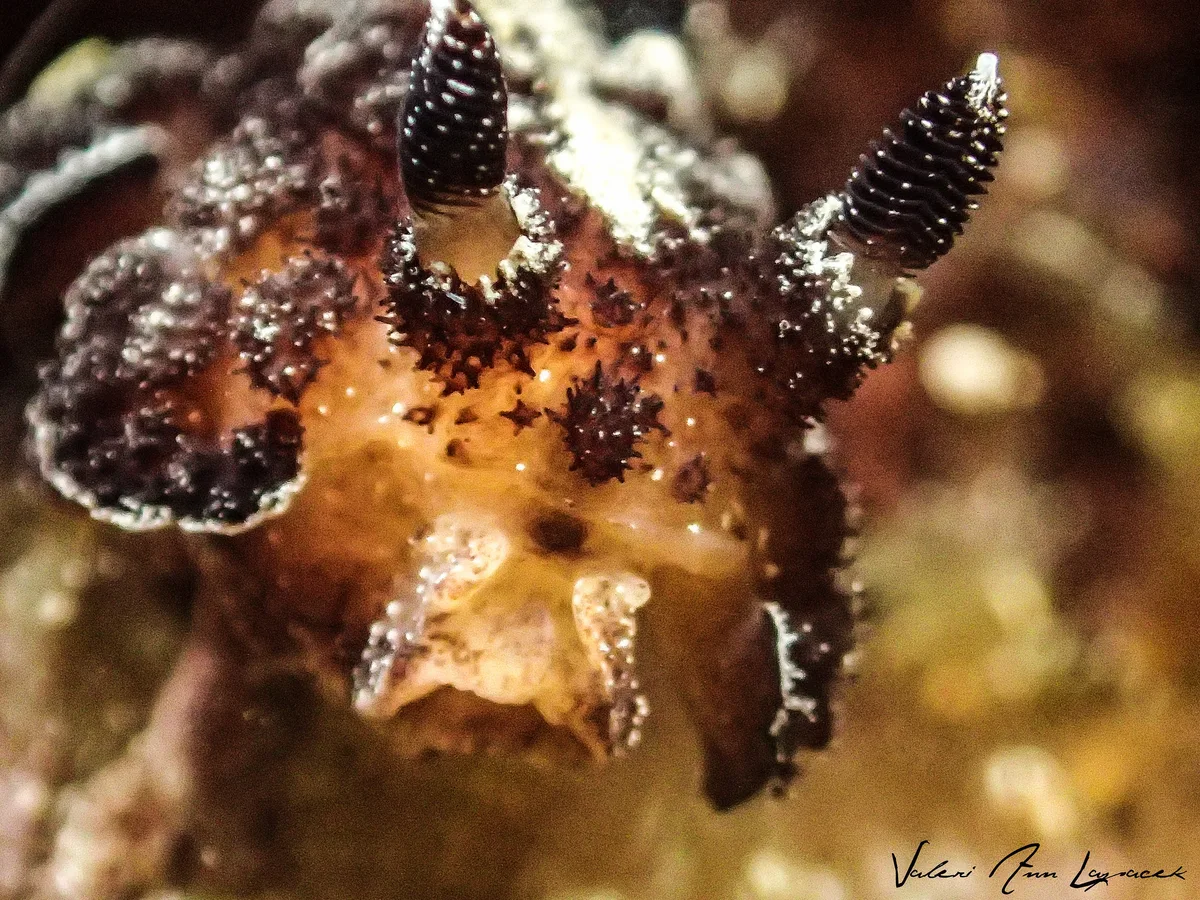
Start with the body. Where most slugs in this section are soft, this one is stiffened throughout with calcareous spicules, tiny mineral rods set in the flesh that make the mantle hard, gritty and reluctant to deform. That is a mechanical defense rather than a chemical one, and it changes the shape of the animal: instead of a smooth oval that flows over the rock, it holds a fixed, angular, lumpy outline with a distinct ridge running down the midline.
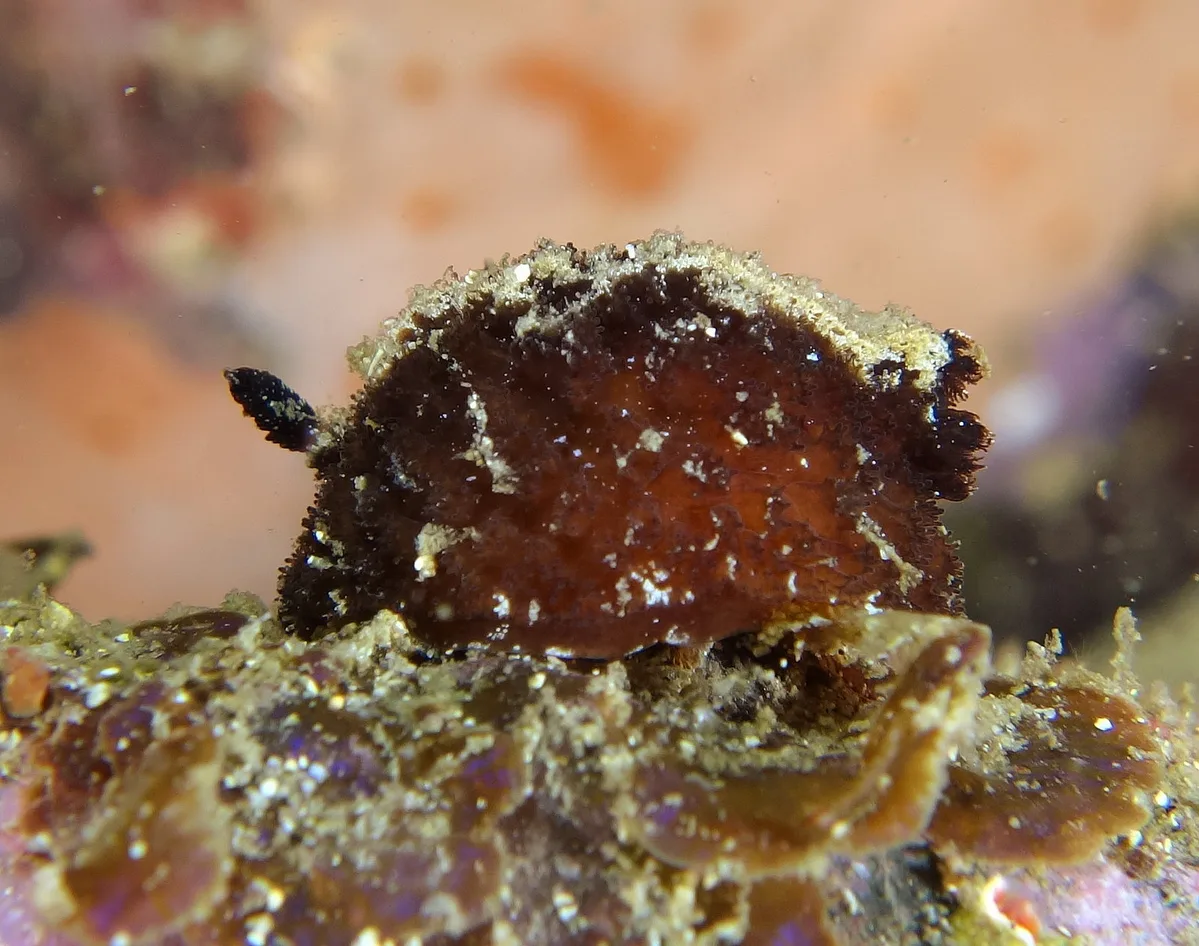
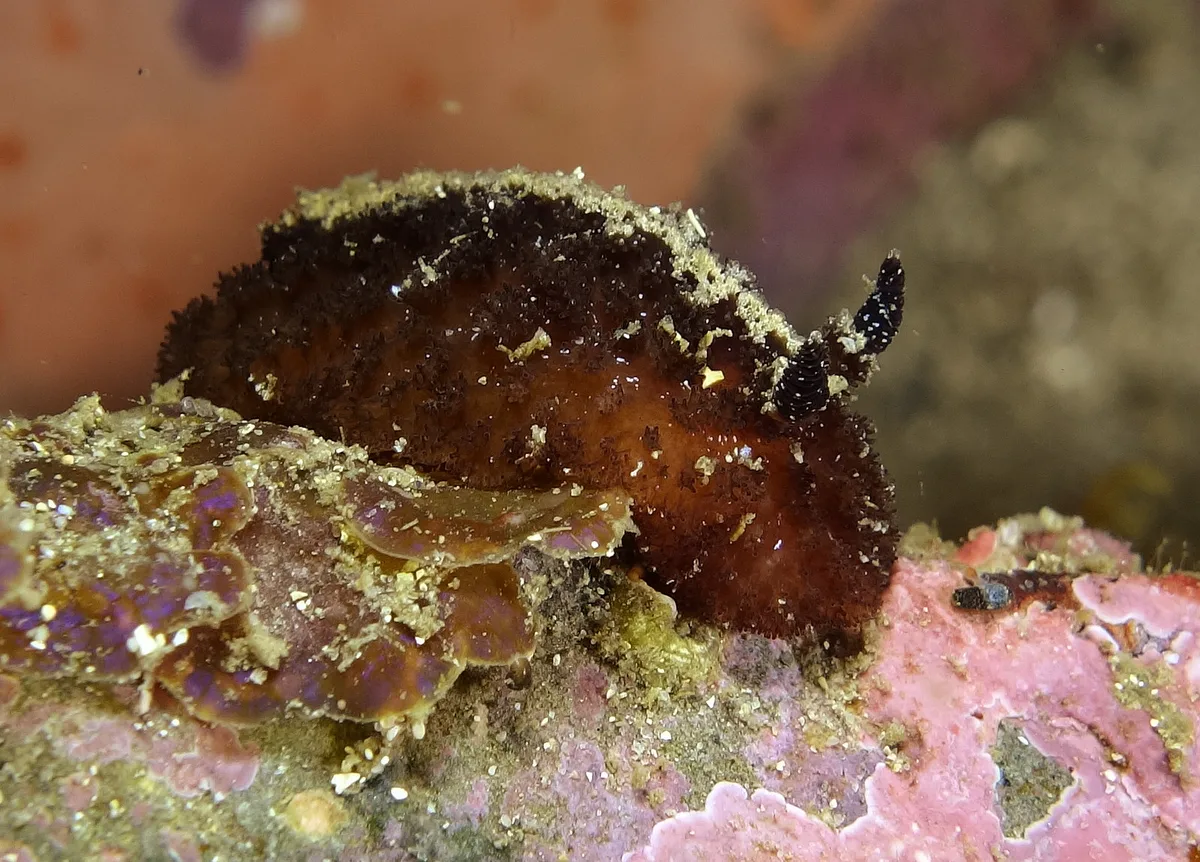
Then it lets itself get dirty. The granular surface collects silt and fine debris, and the animal does nothing about it. The camouflage is not painted on; it accumulates. A red-brown, ridged, silt-covered lump on a silty ledge is not something a fish reads as food, and it is not something a diver reads as anything at all.
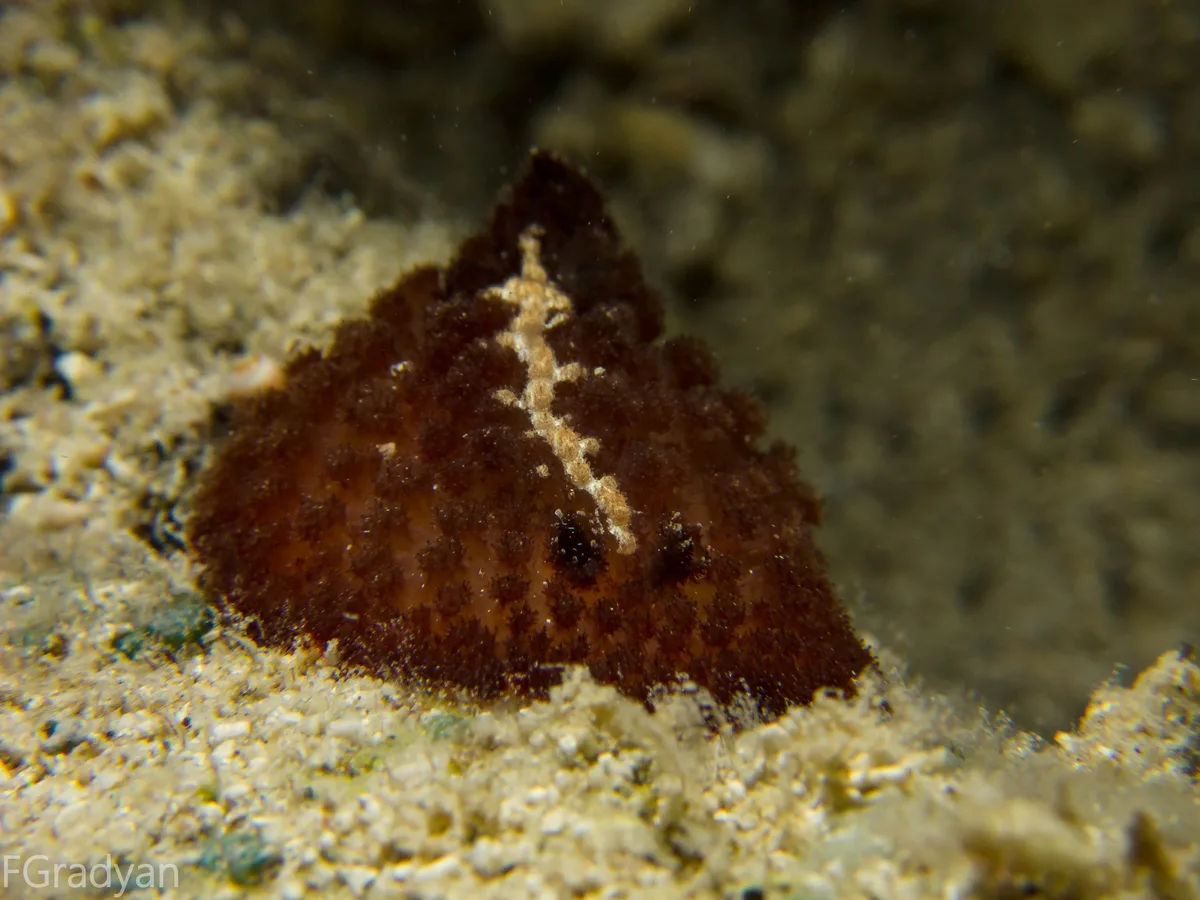
The white line along the ridge is the mark to check when you think you have found one. It is not always there, but when it is, it is the clearest thing on the animal.
It feeds on sponges and comes out at night, and it is worth remembering that most of the reef's largest sea slugs live exactly like this: slow, hard, filthy and effectively invisible, while the ones everybody photographs are the small bright ones that can afford to be seen.
- a low ridge running down the midline of the back, often marked with a white line
- red-brown with darker tubercles, and usually a coating of silt on top of that
- body stiff and gritty rather than soft, holding its shape
- large, but shaped and colored like a piece of dead sponge