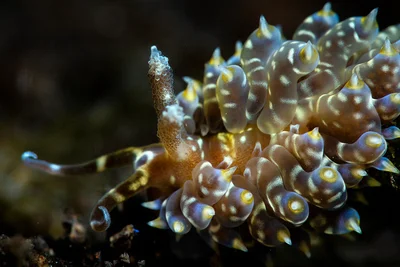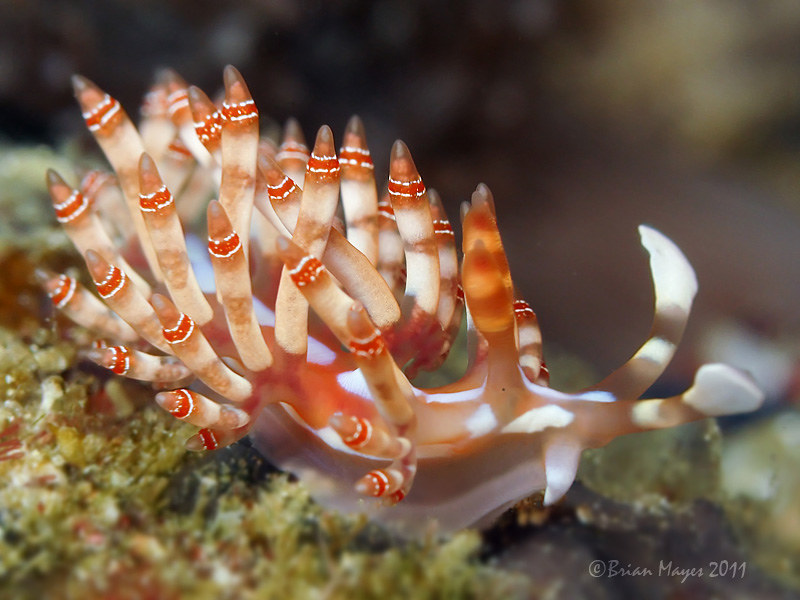
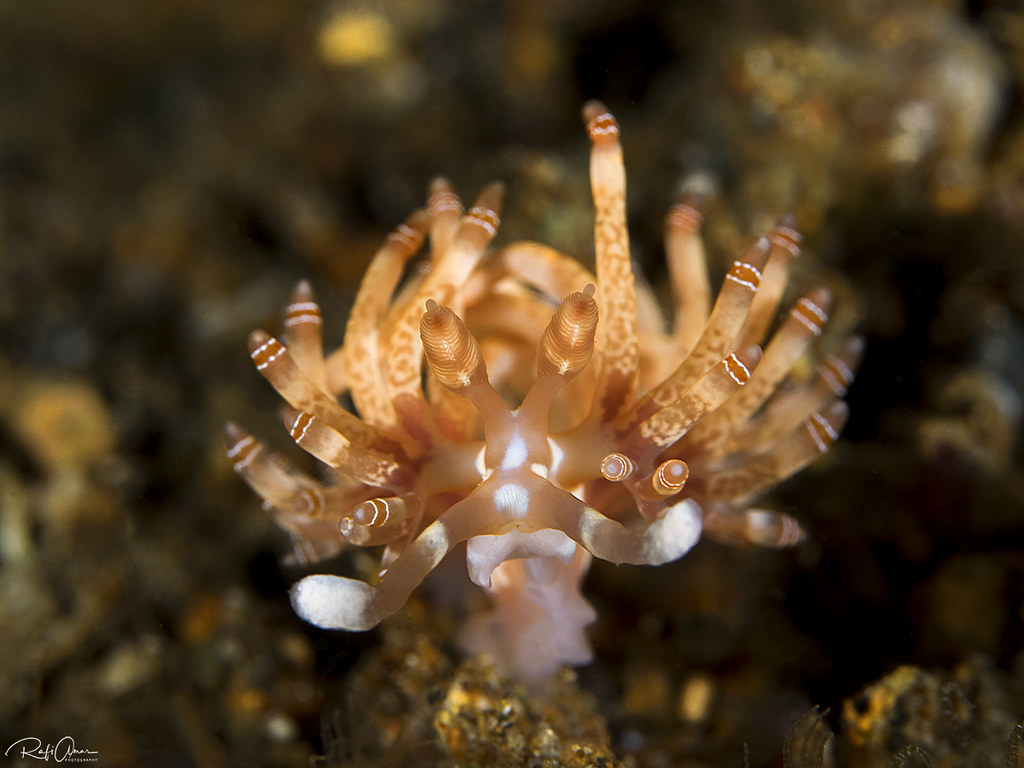
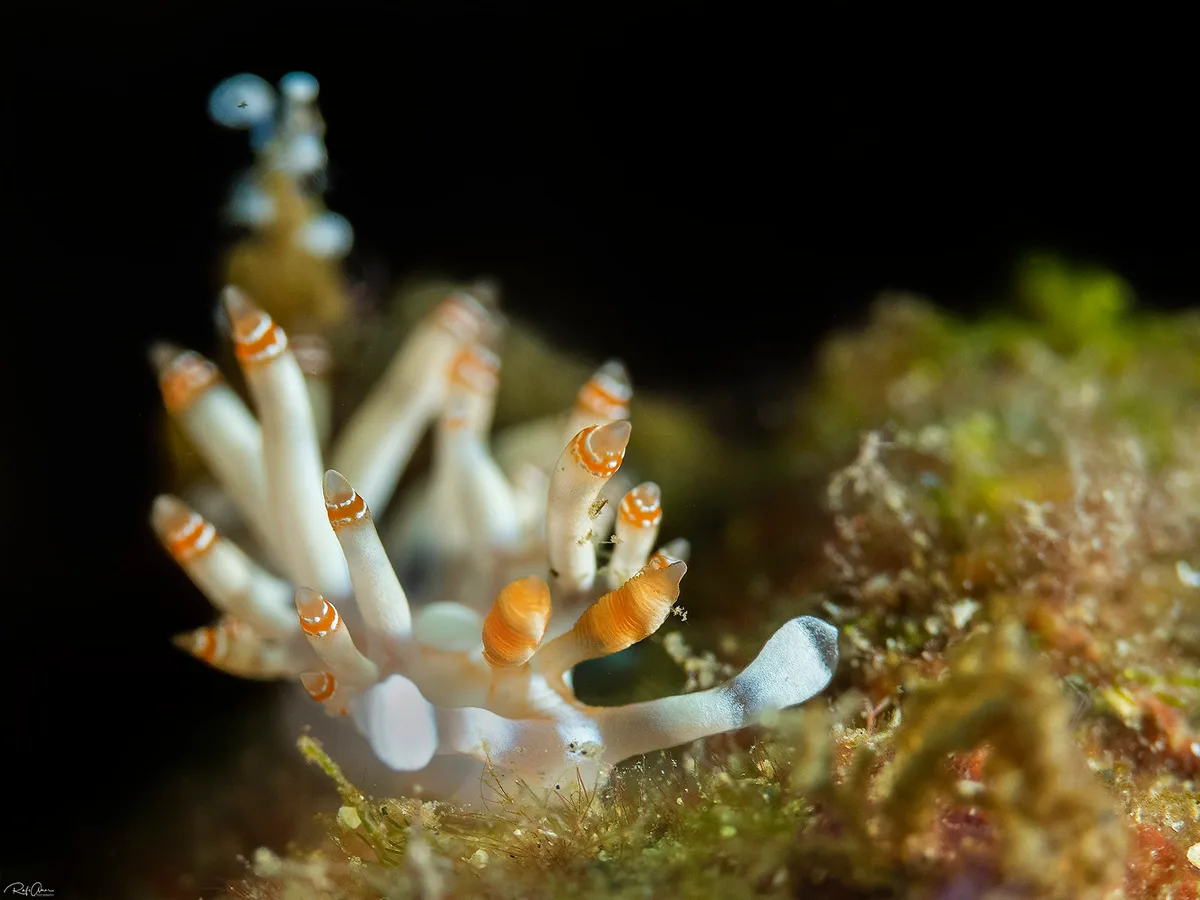
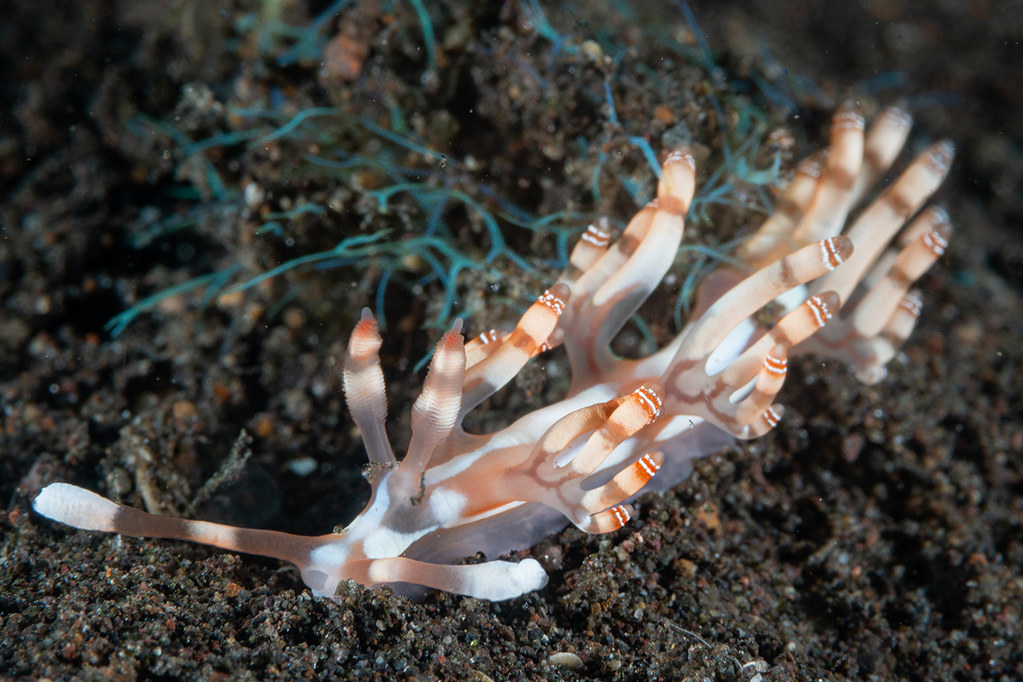
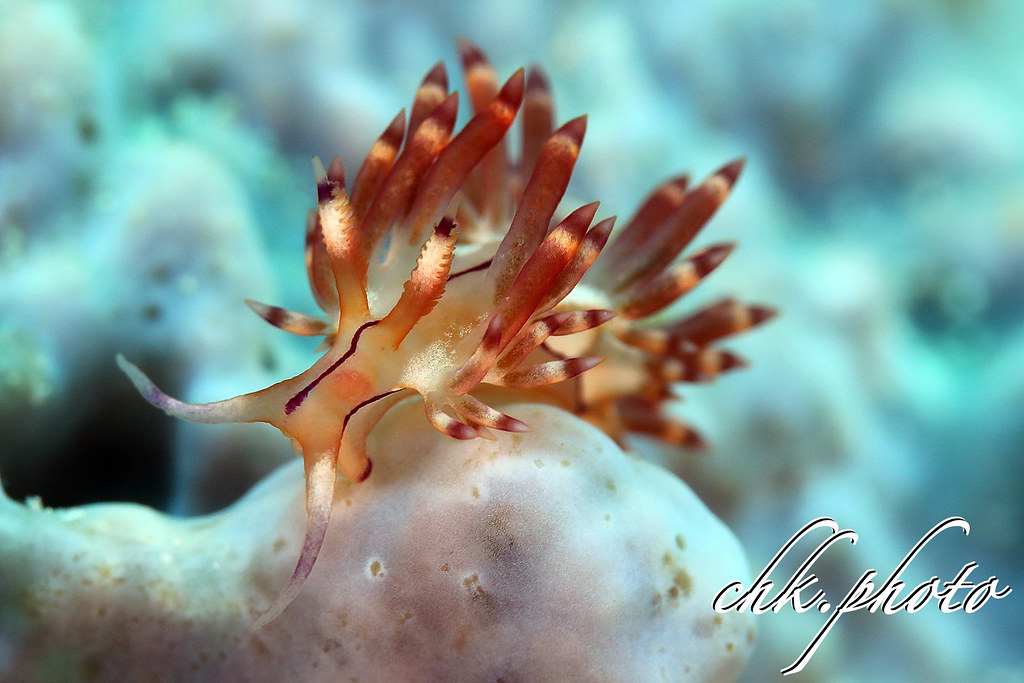
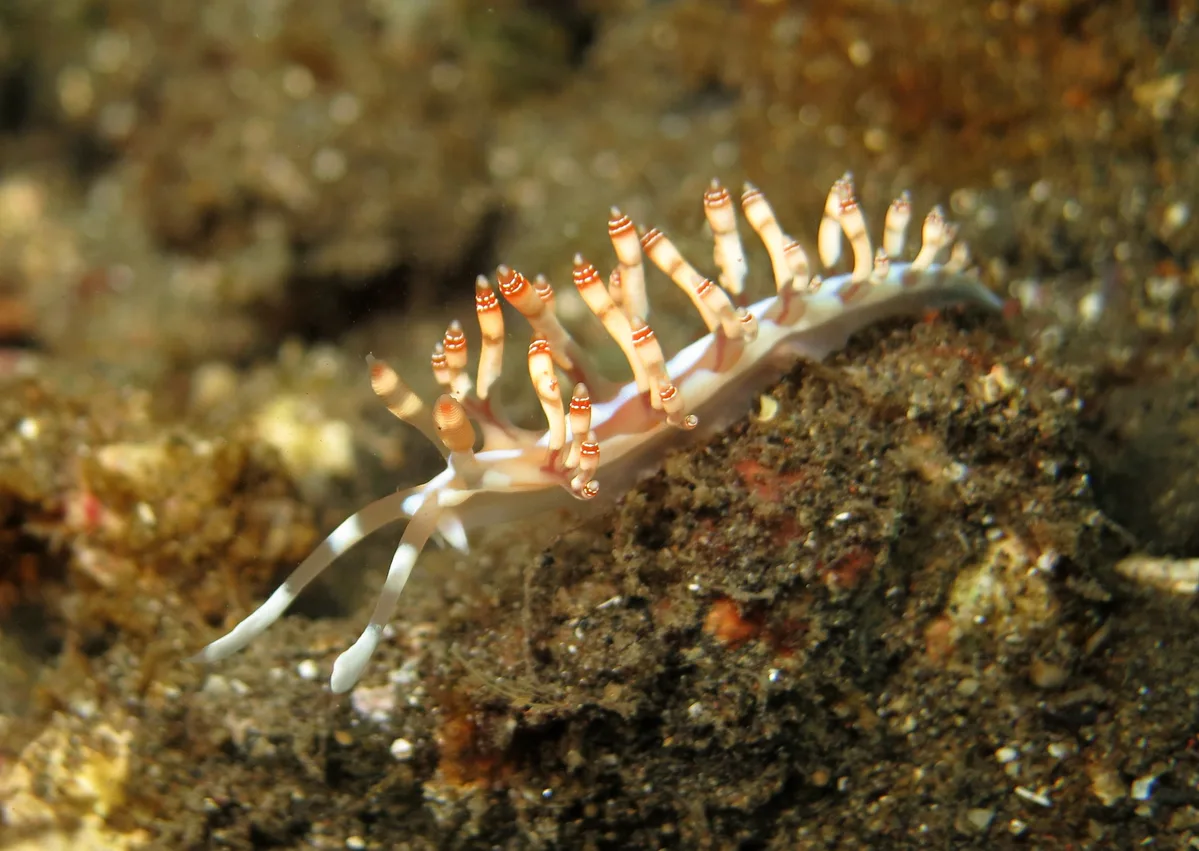
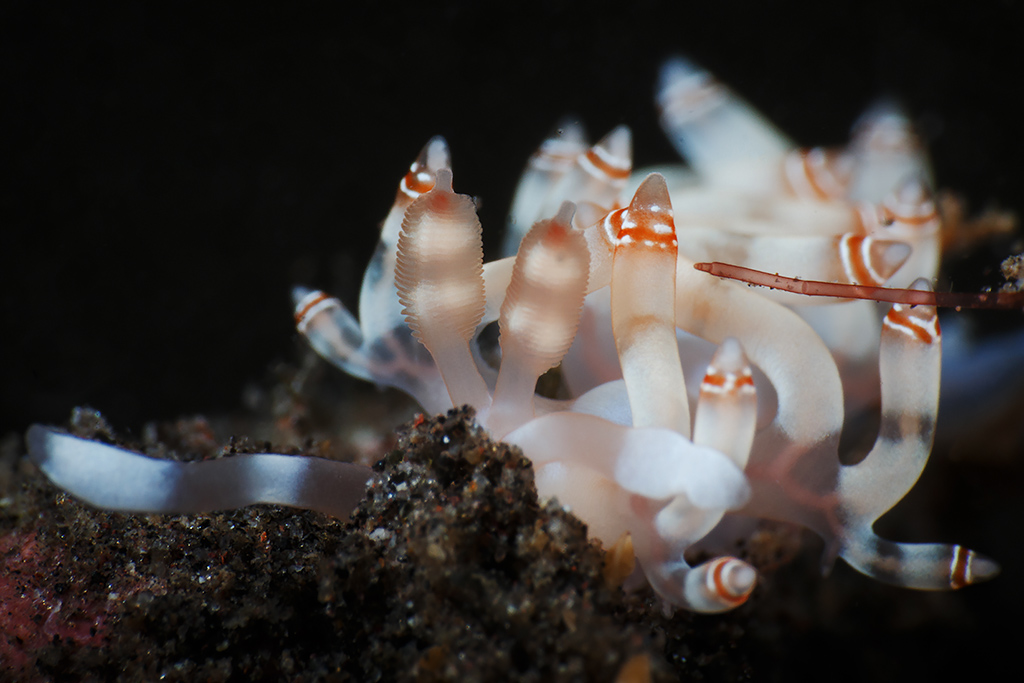
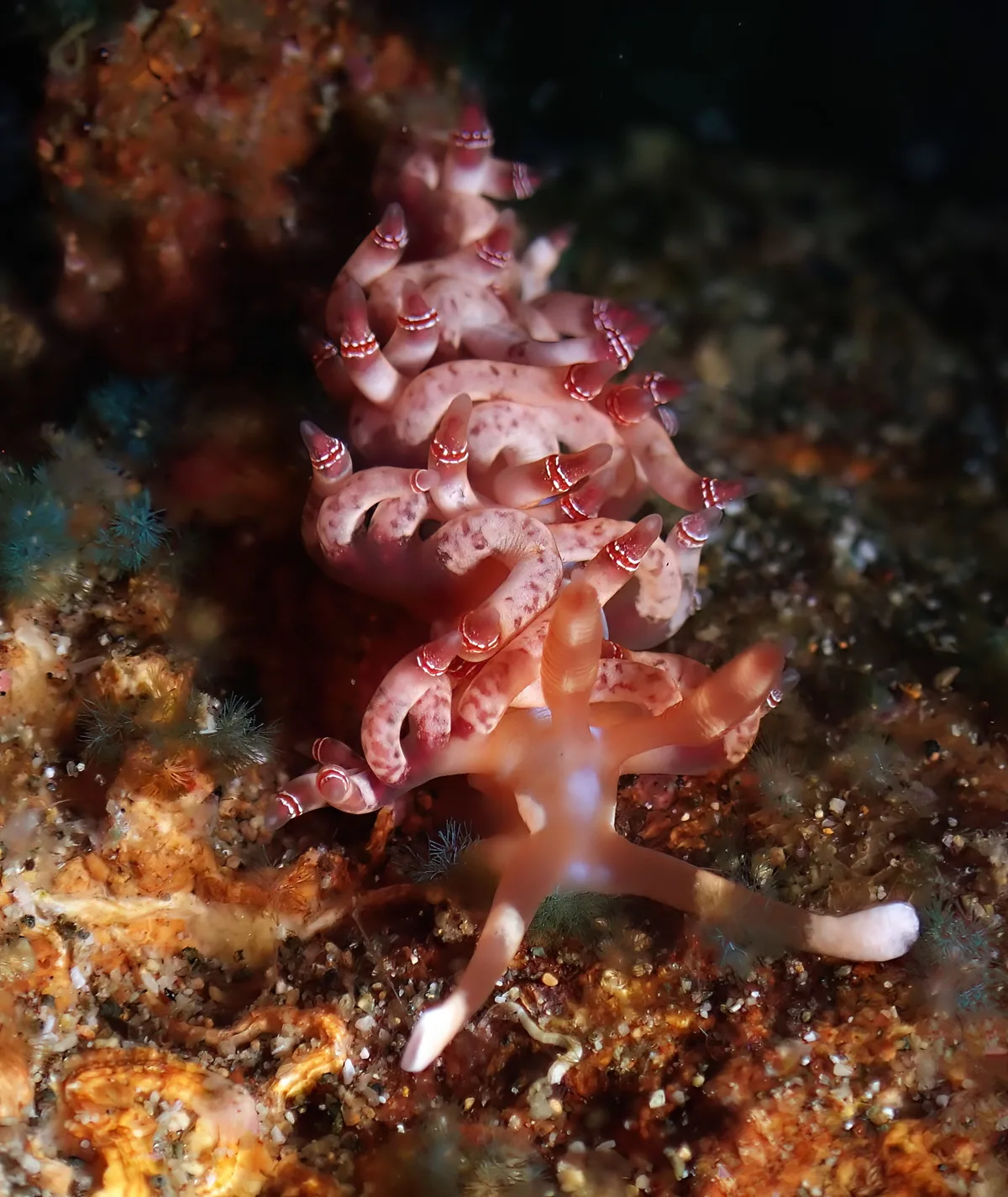
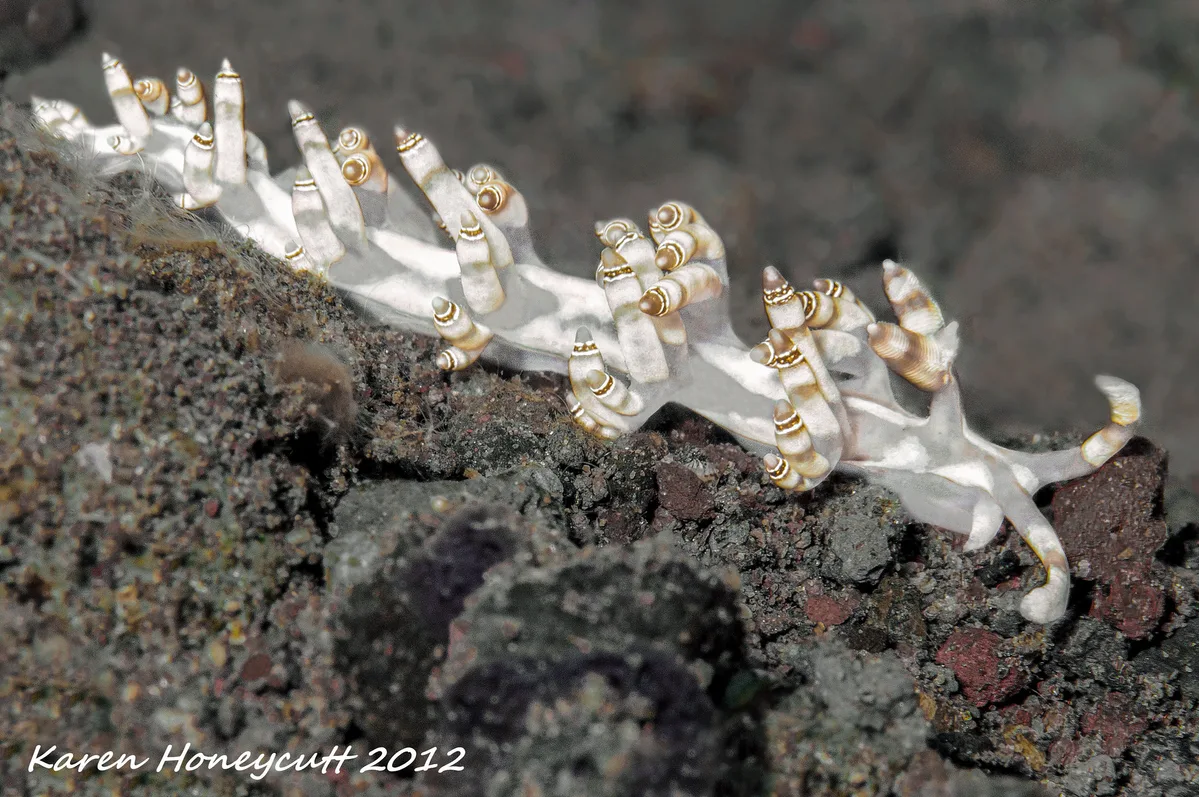
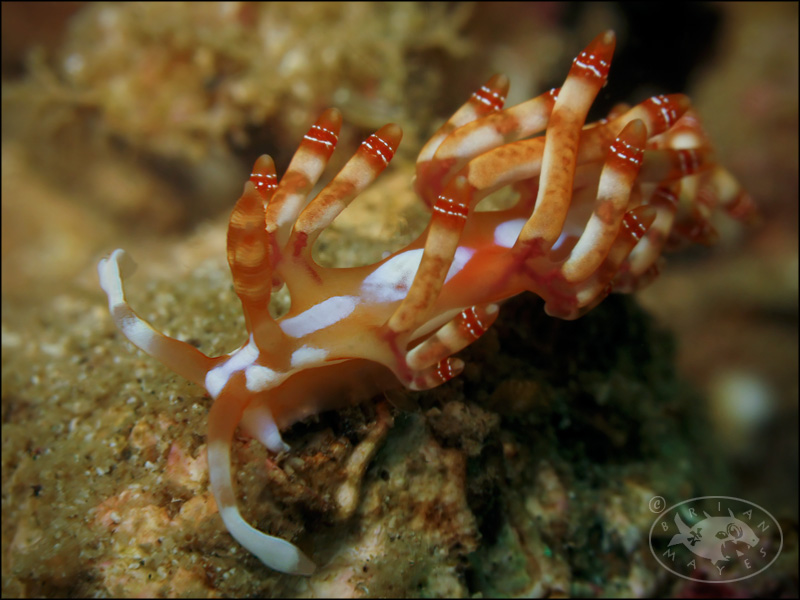
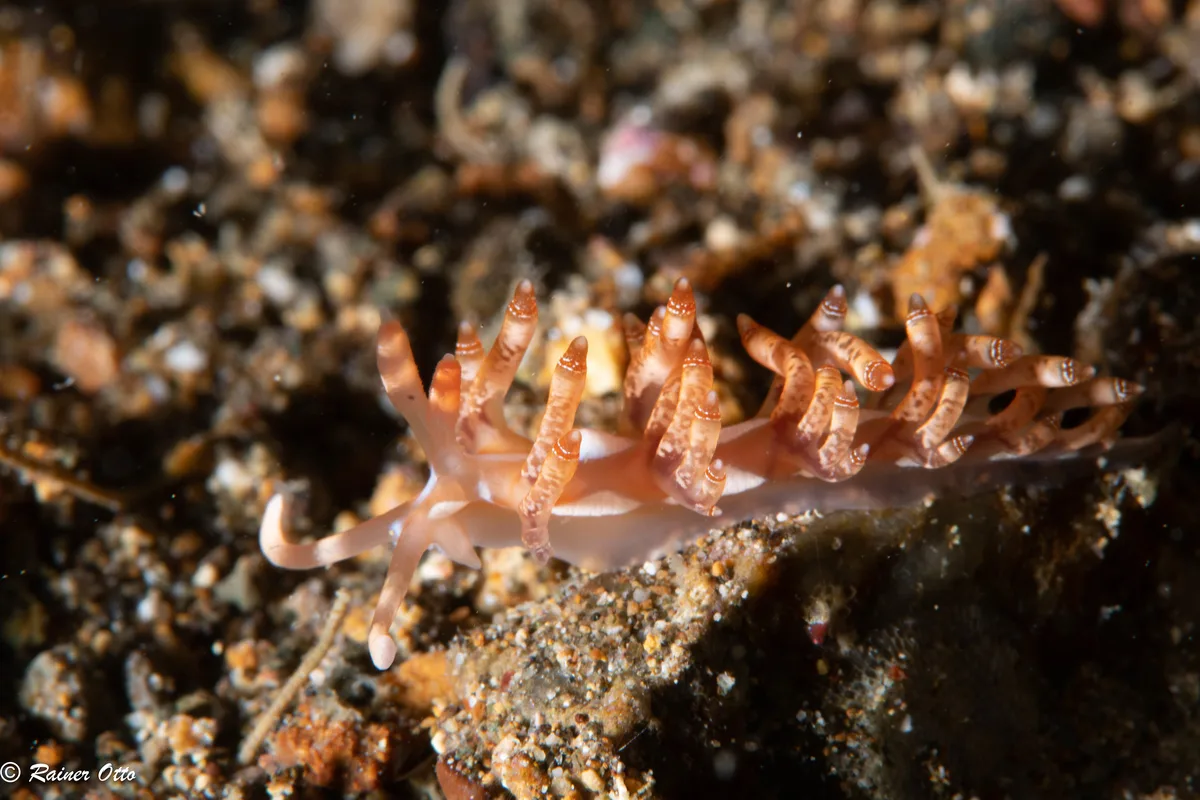
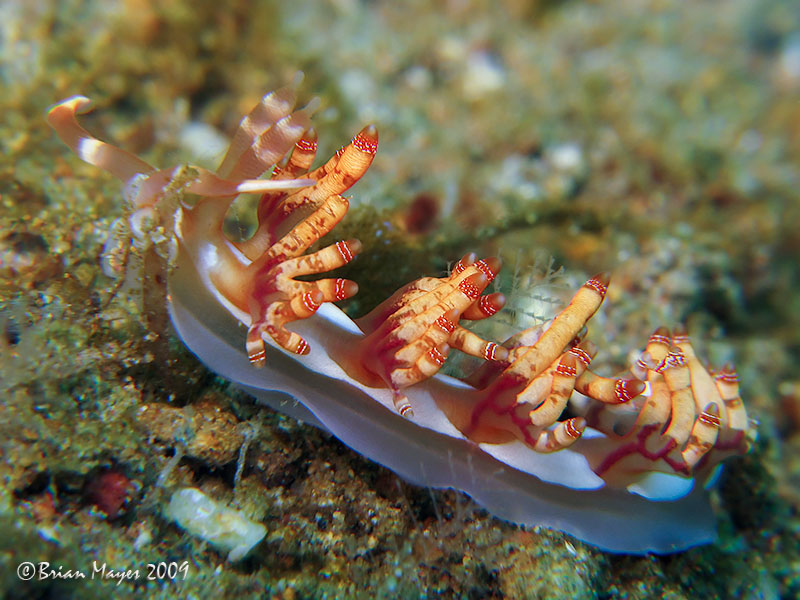
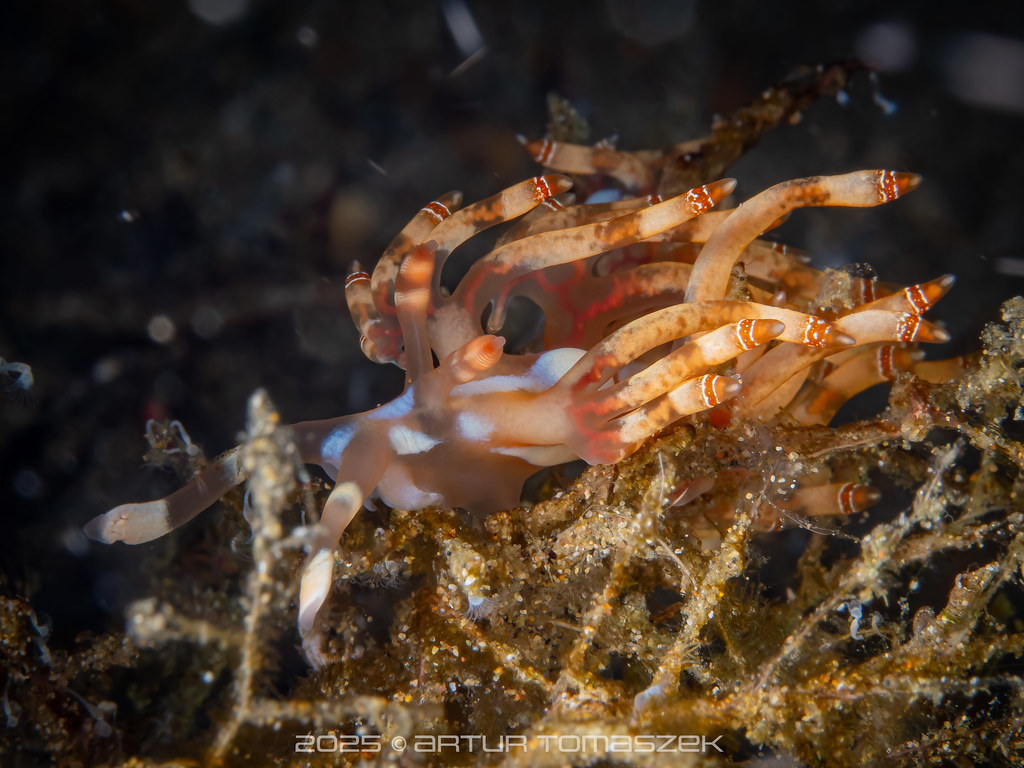
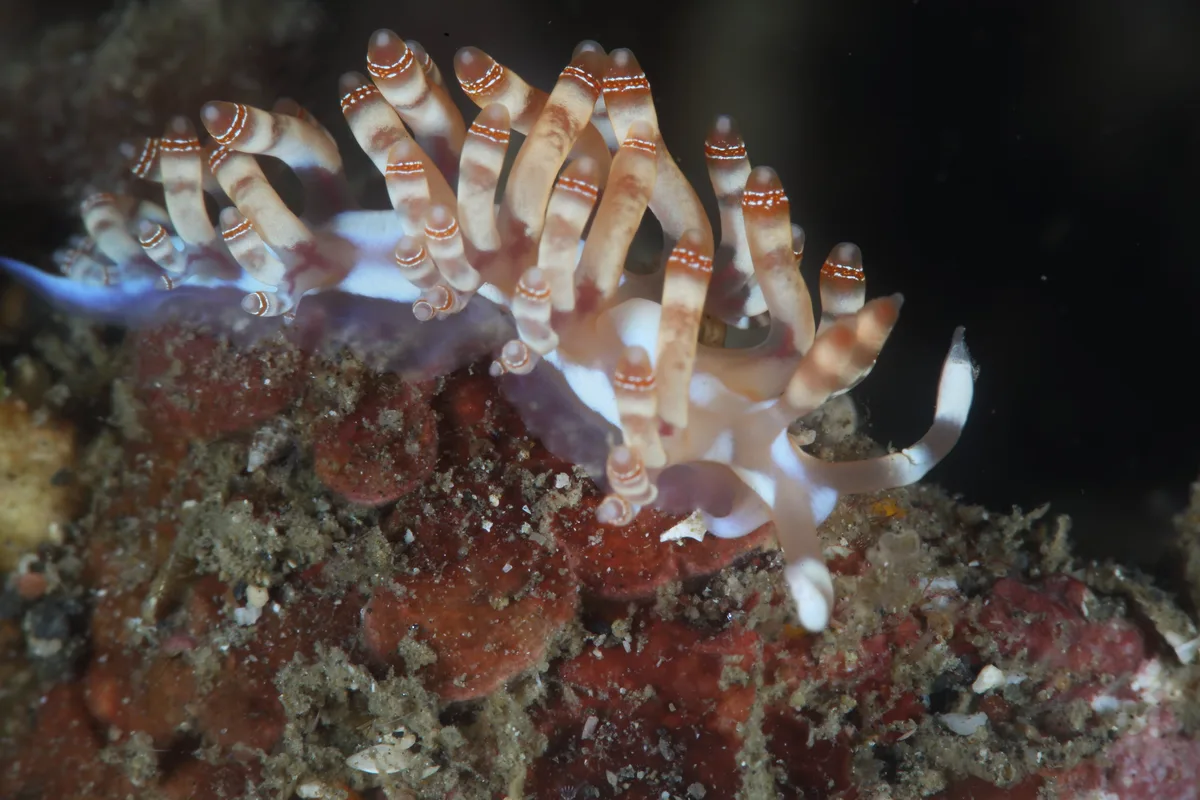
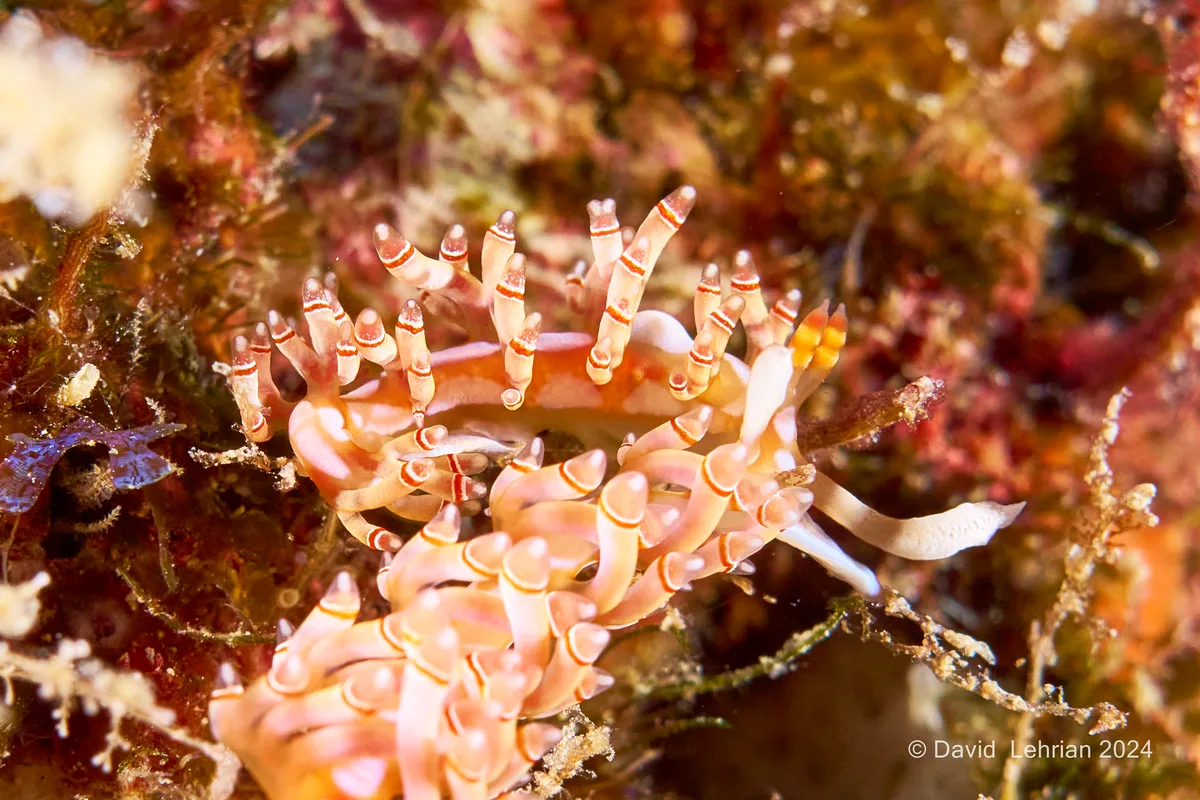
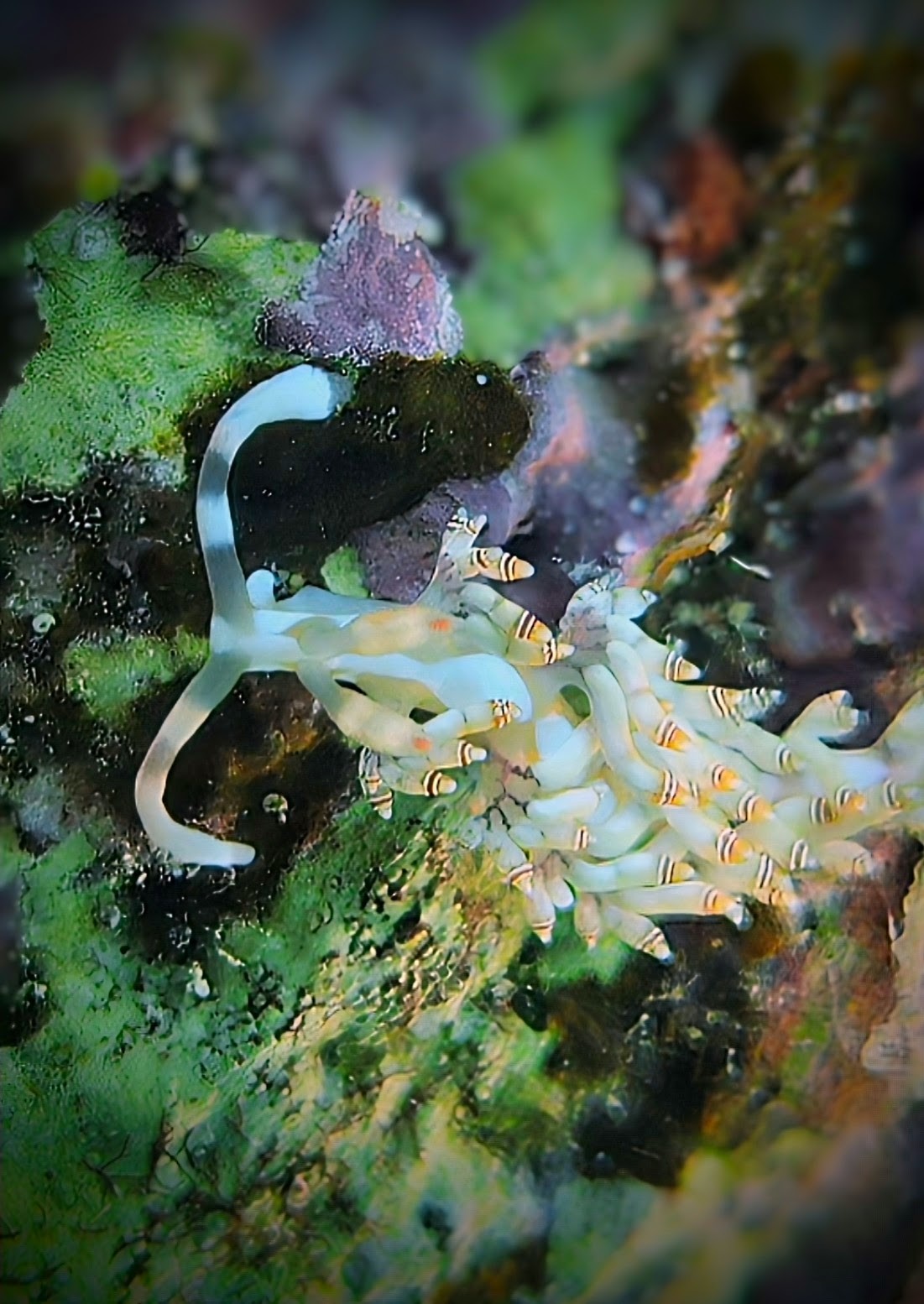
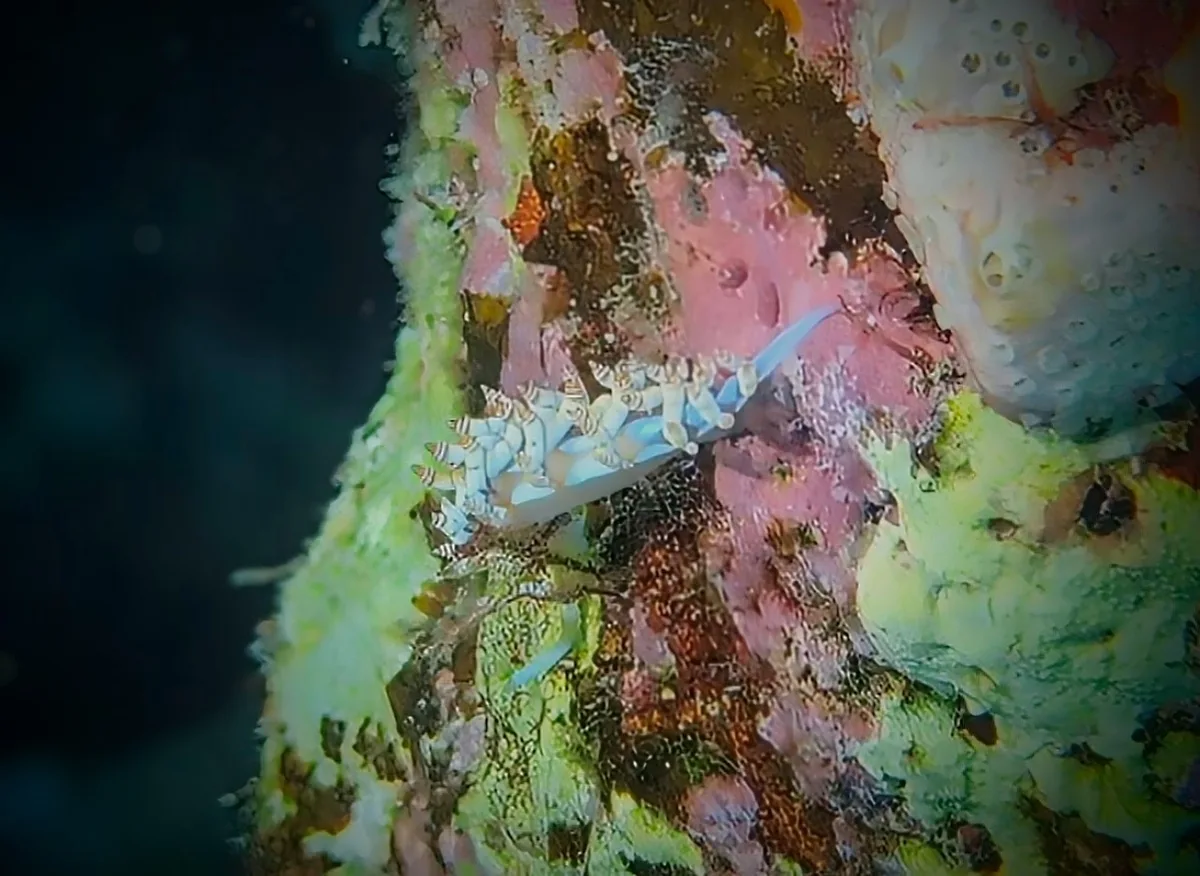
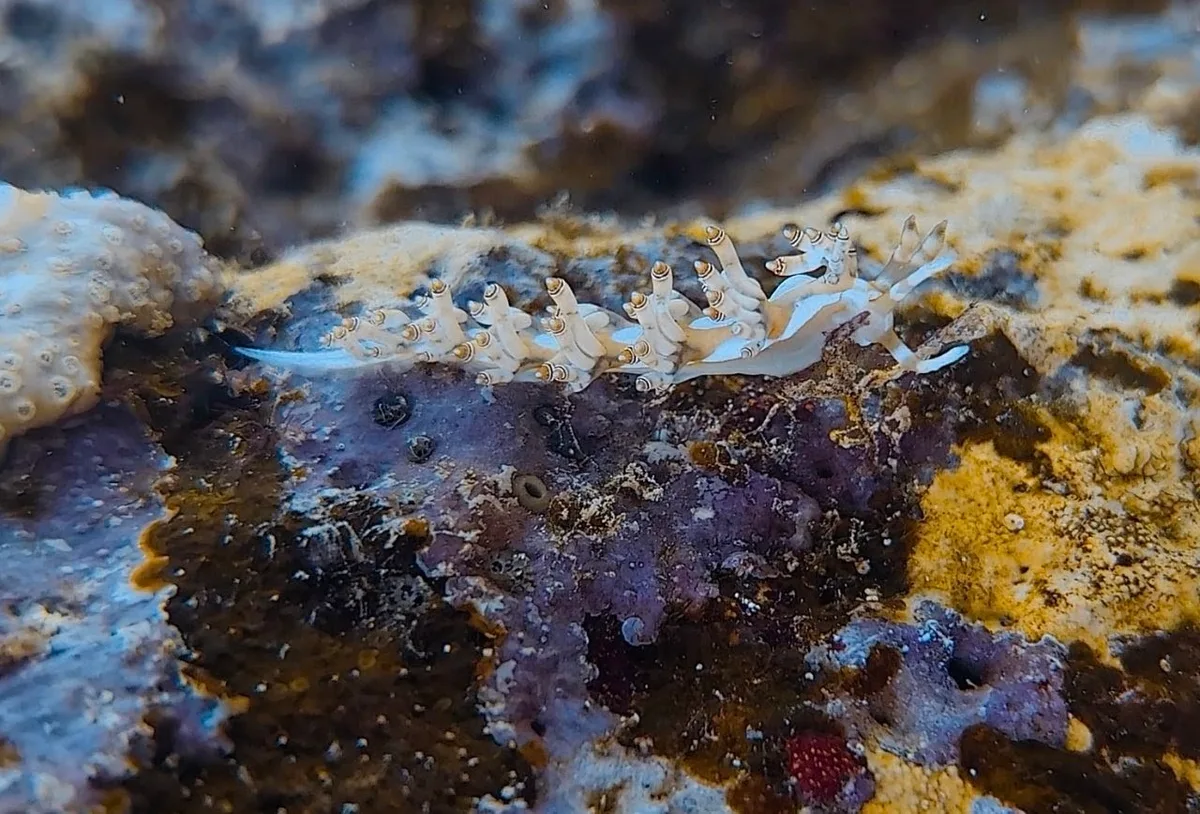
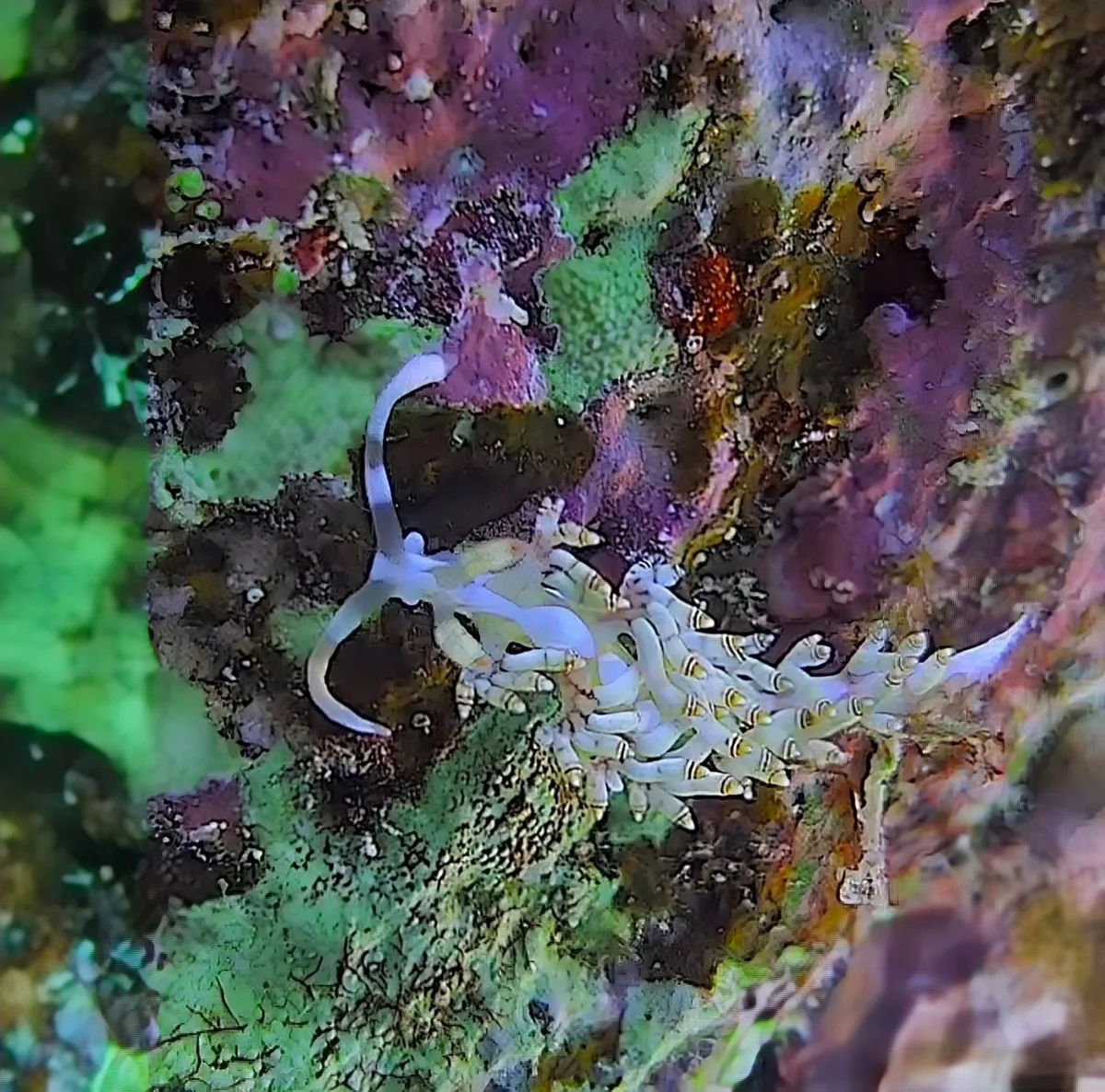
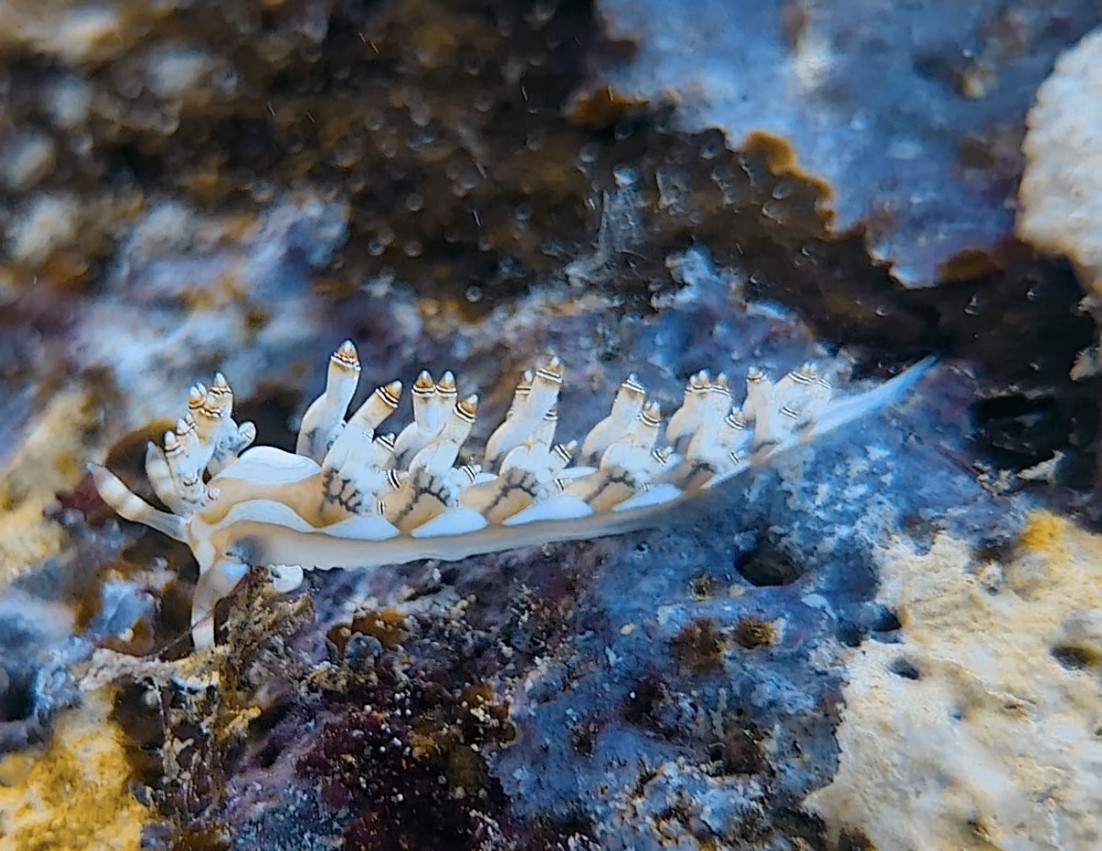
Two and a half centimeters (1 in) of orange-brown aeolid with a white line down the spine and red bands ringing the cerata. That combination is the identification, and the banding is what the English name records.
What it does is the aeolid trade. It eats hydroids, the branching colonies that fur over anything left standing in current, and it keeps their weapons. Stinging capsules pass through the gut unfired, get pushed out into sacs at the tips of the cerata, and stay there loaded. An animal with no shell, no speed and no hard parts ends up carrying a working defense that it did not have to grow.
The cerata sit in clusters and each cluster detaches, so the defense has a second stage: bitten, the slug leaves a writhing armed tuft in the predator's mouth and crawls off with the rest.
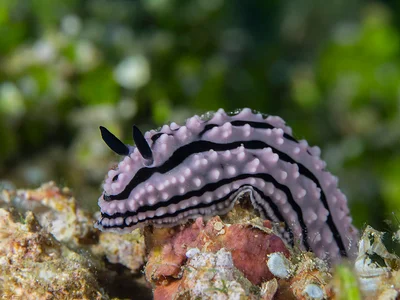
Its relative on this reef is smaller and translucent purple with white patches and orange-tipped cerata, so the two separate on color rather than on structure.
The species name is worth a note. Bilas is Tok Pisin, the language of Papua 🇵🇬 New Guinea, and it means decoration or finery, the ornaments worn at a celebration. Gosliner and Willan described the animal from there in 1991. It is one of the very few names in this catalogue that came out of a Pacific language instead of out of Latin.
- an opaque white line running down the midline of the back
- cerata crossed by distinct red bands
- orange-brown ground color
- cerata in clusters, each cluster detachable