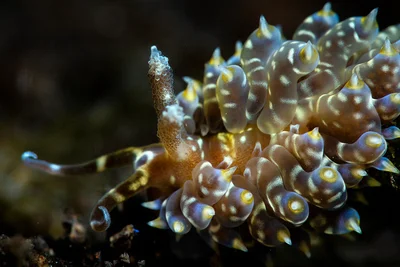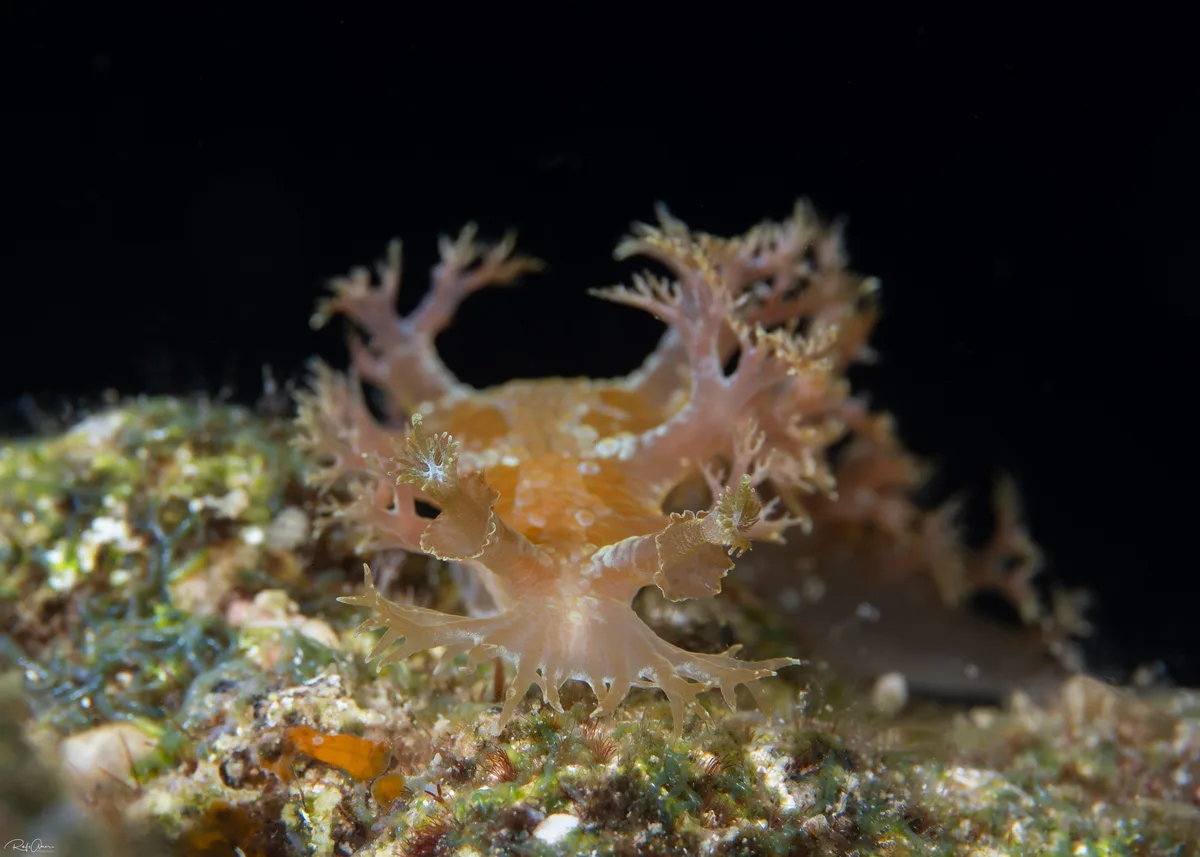
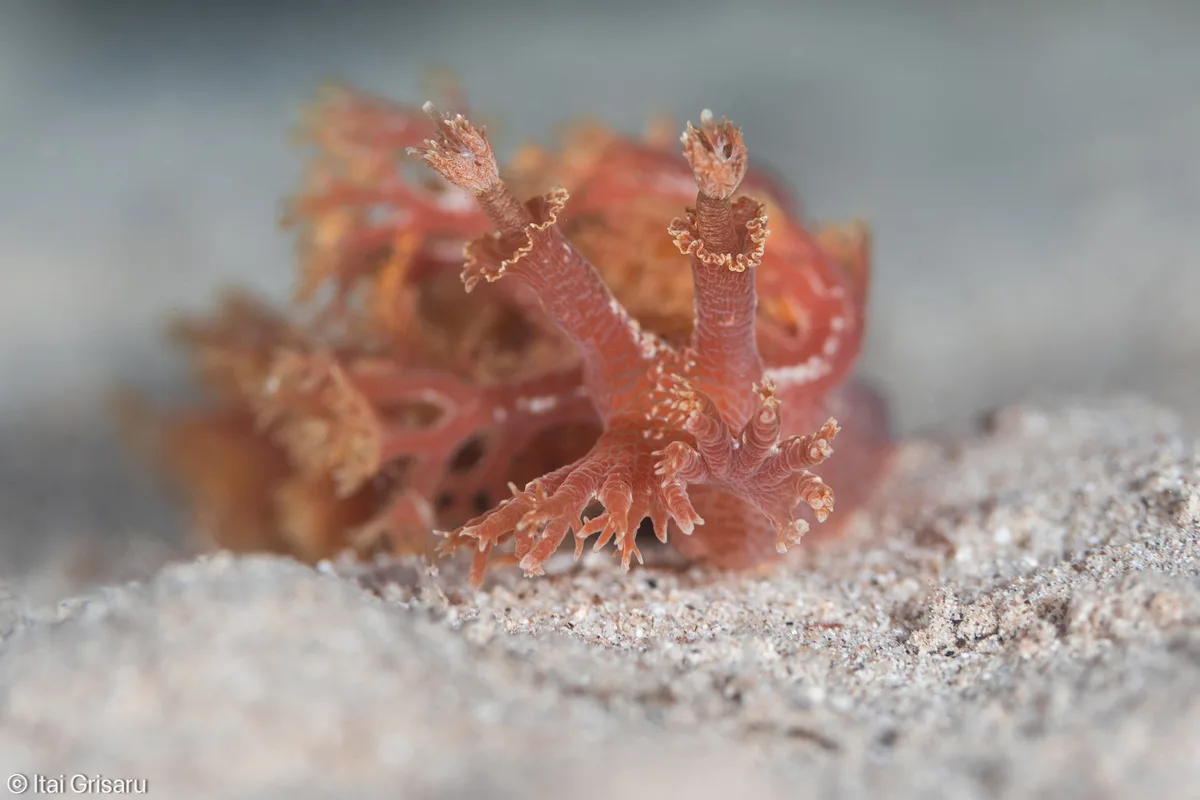
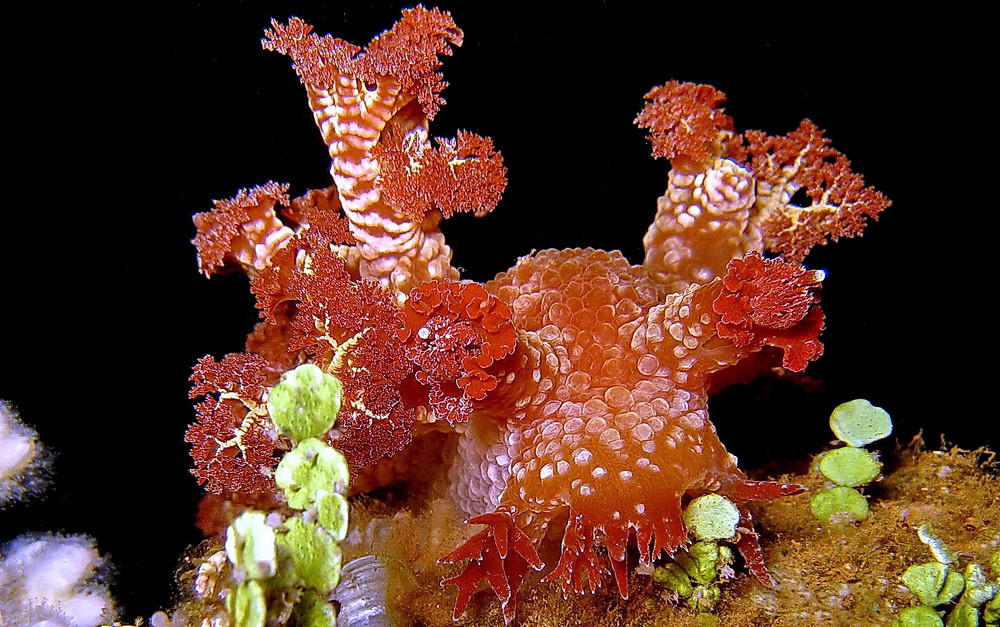
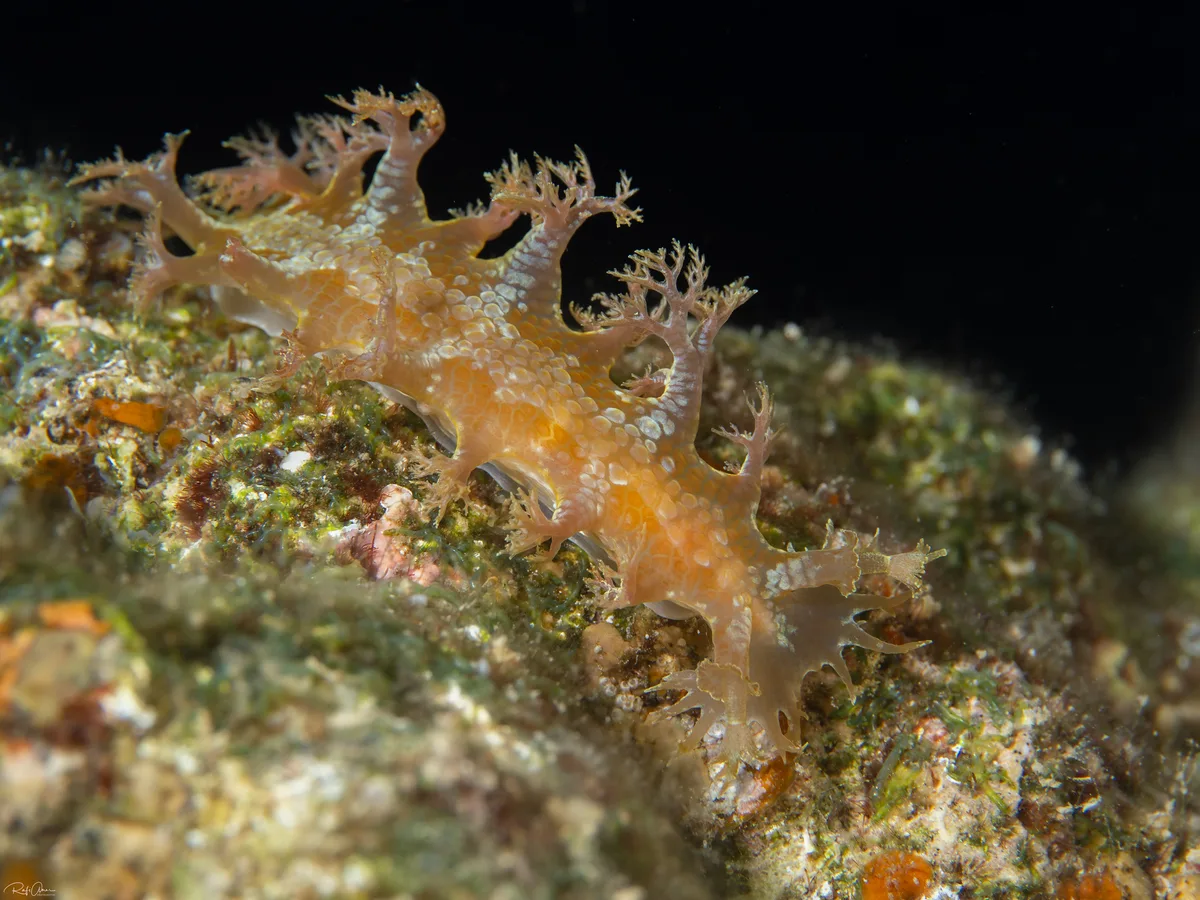
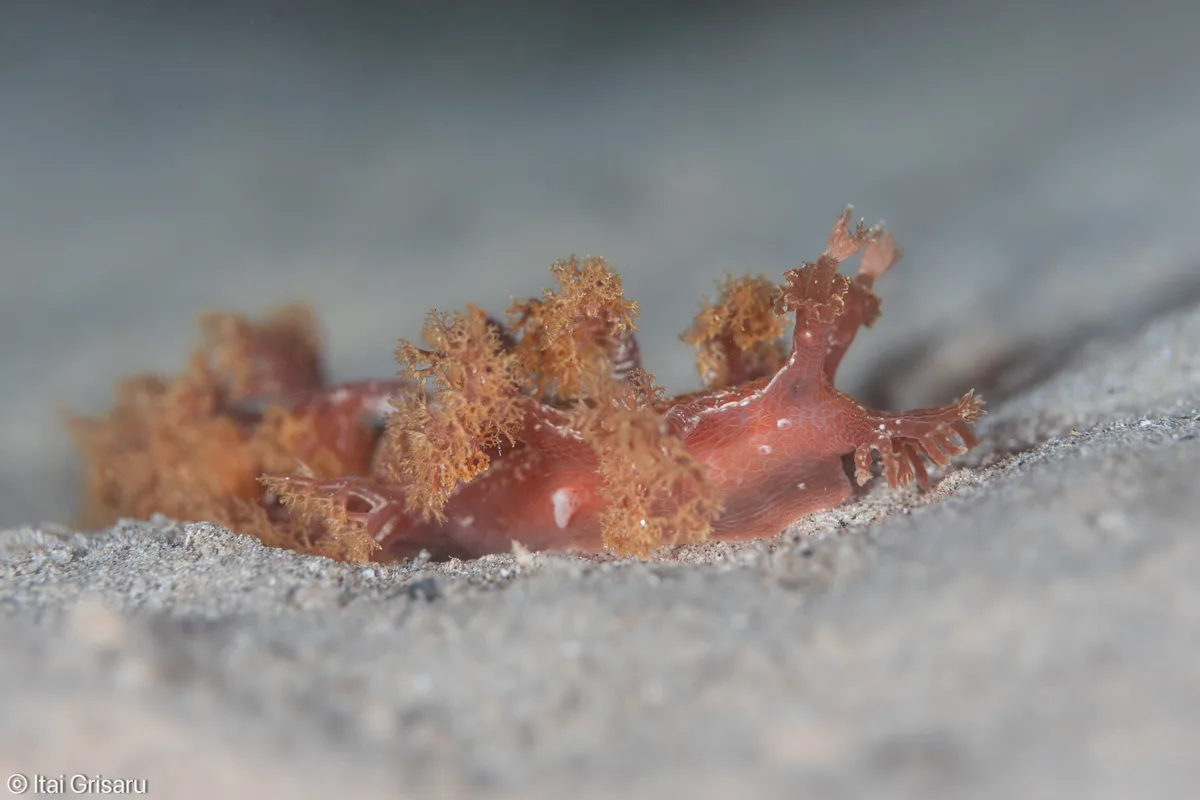
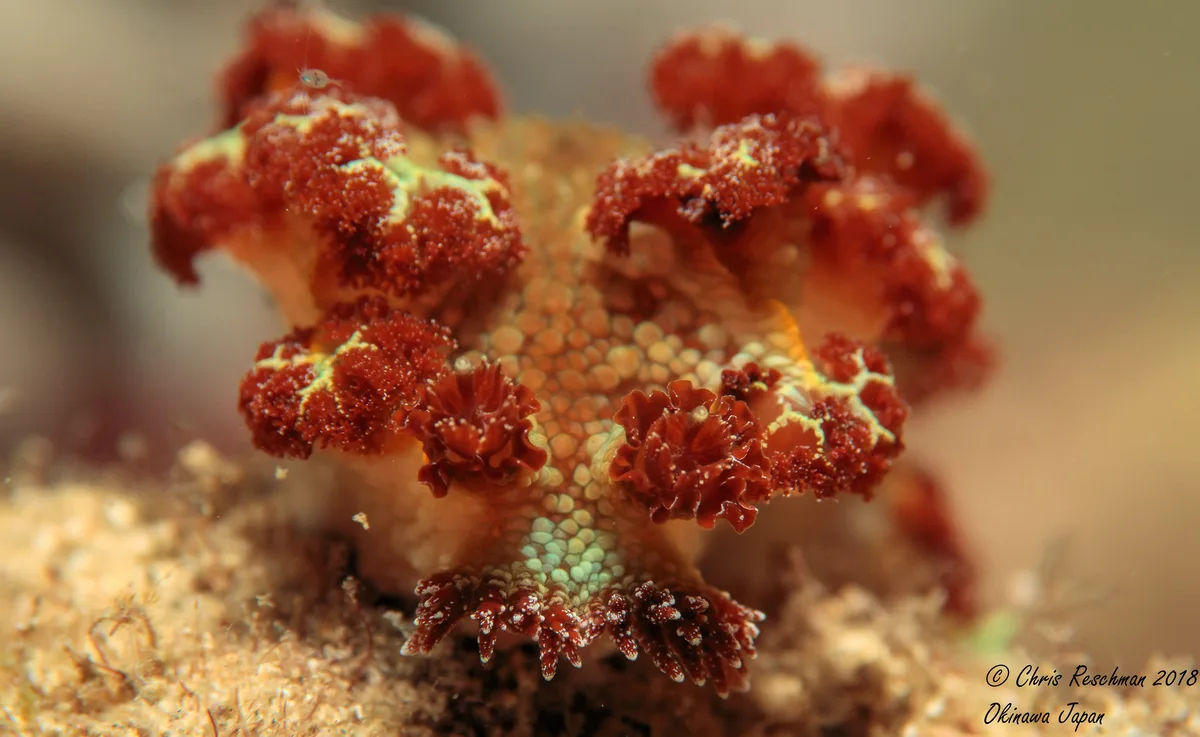
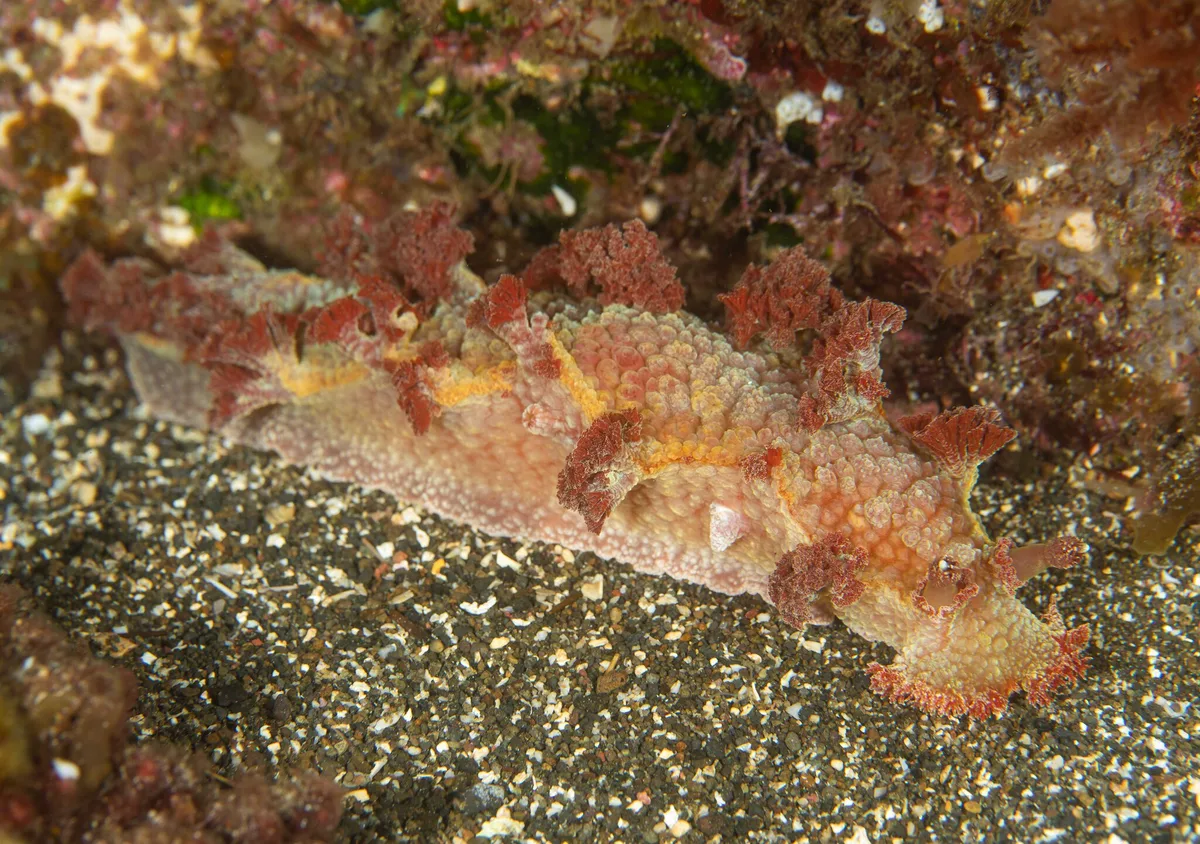
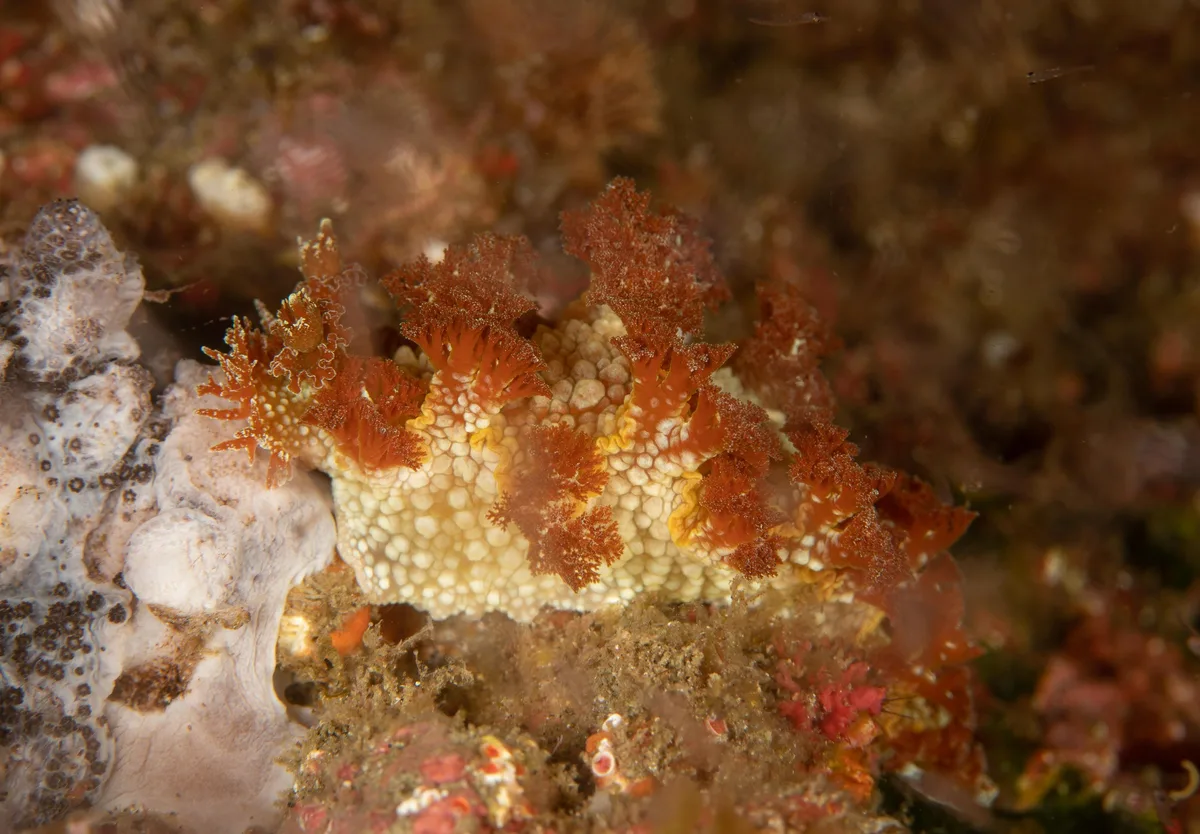
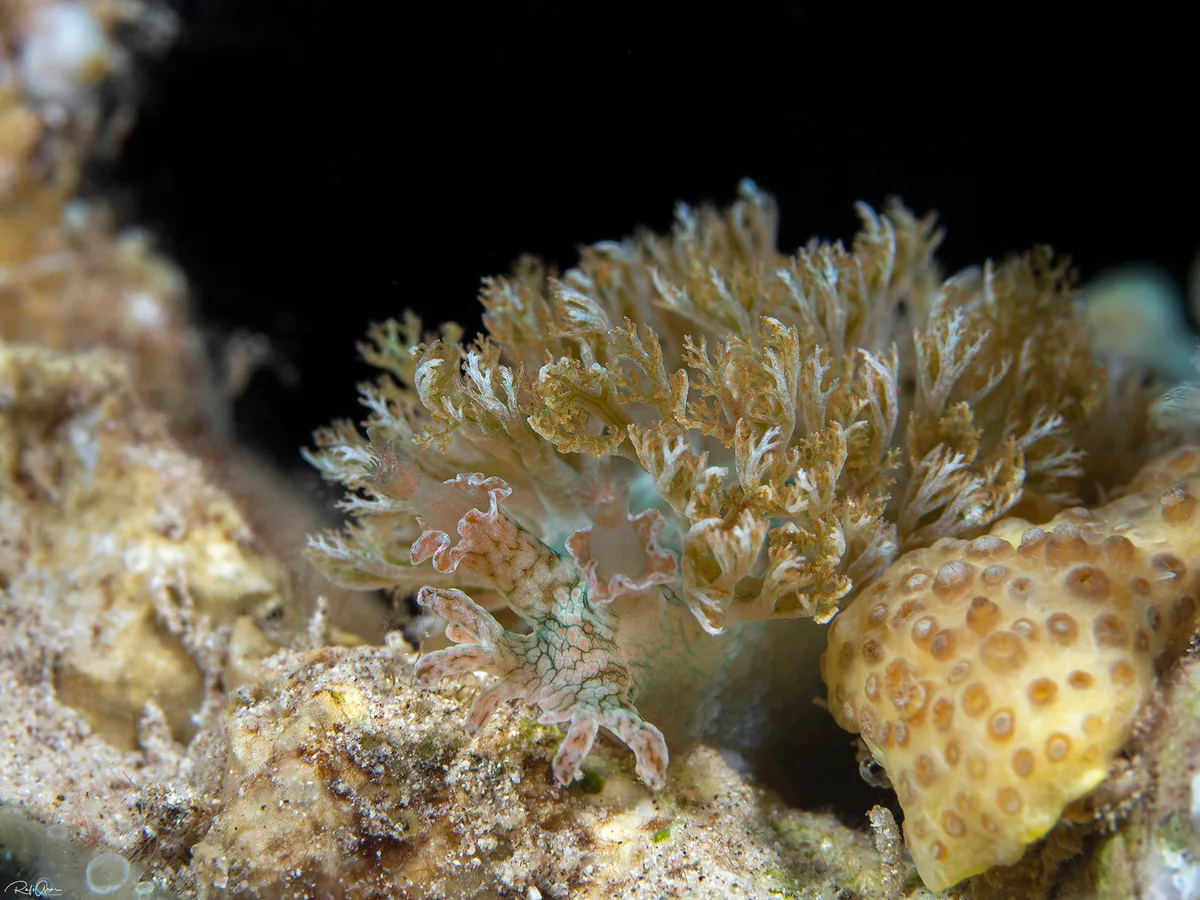
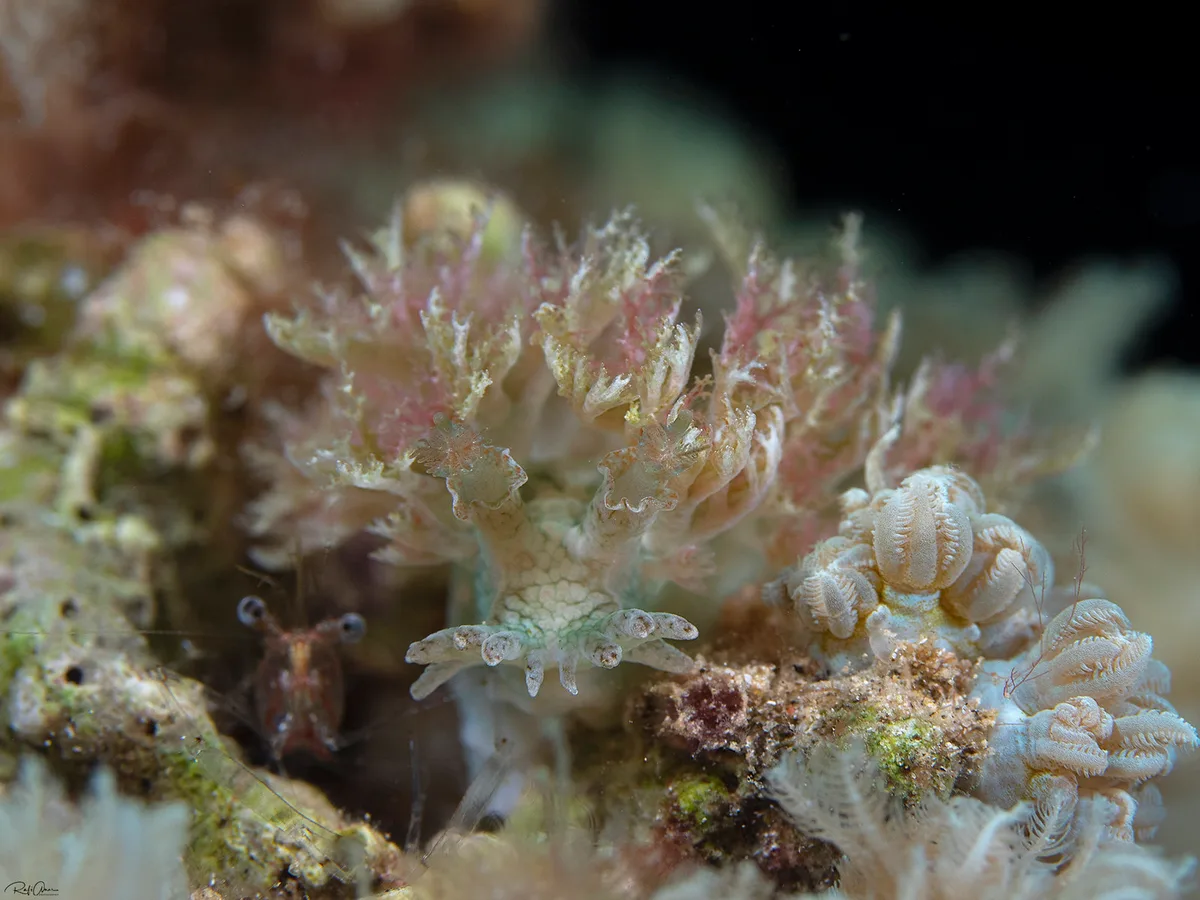
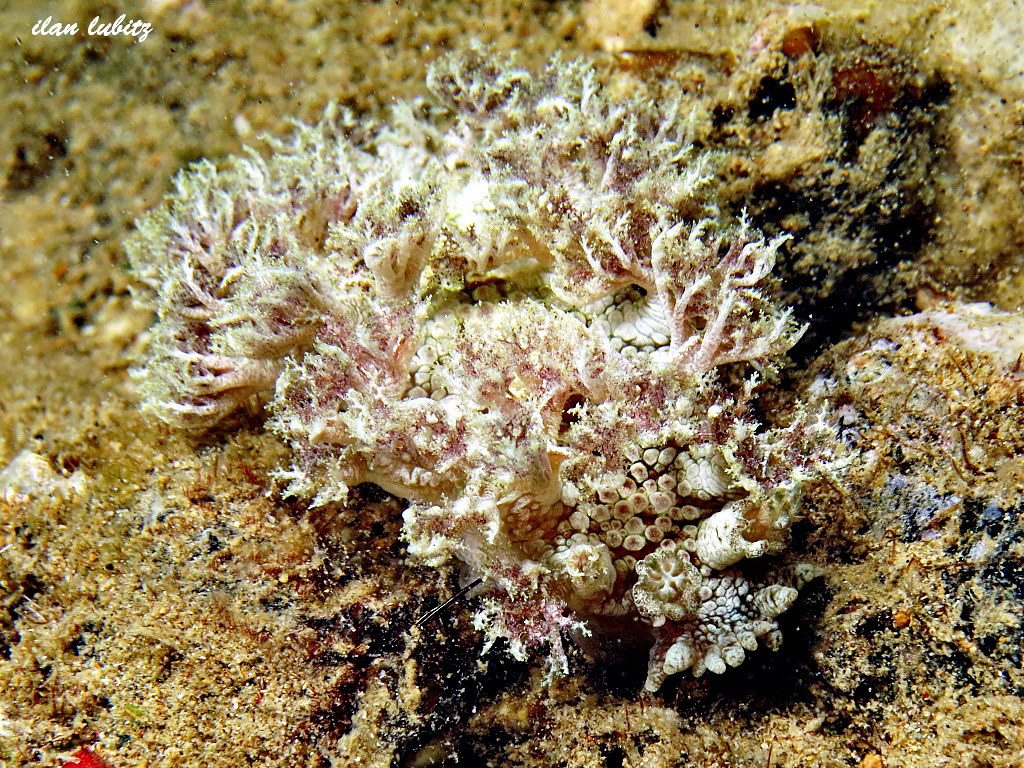
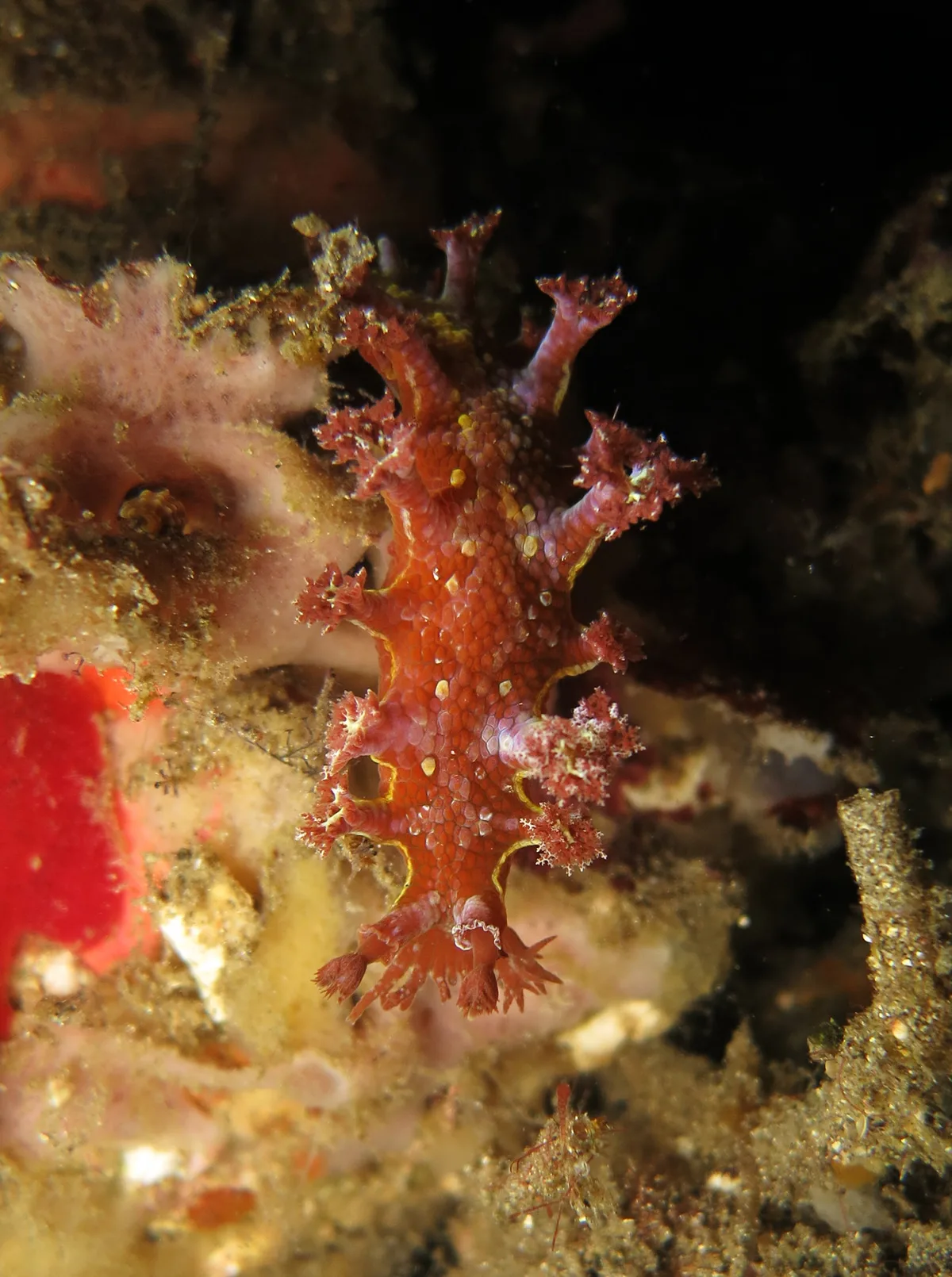
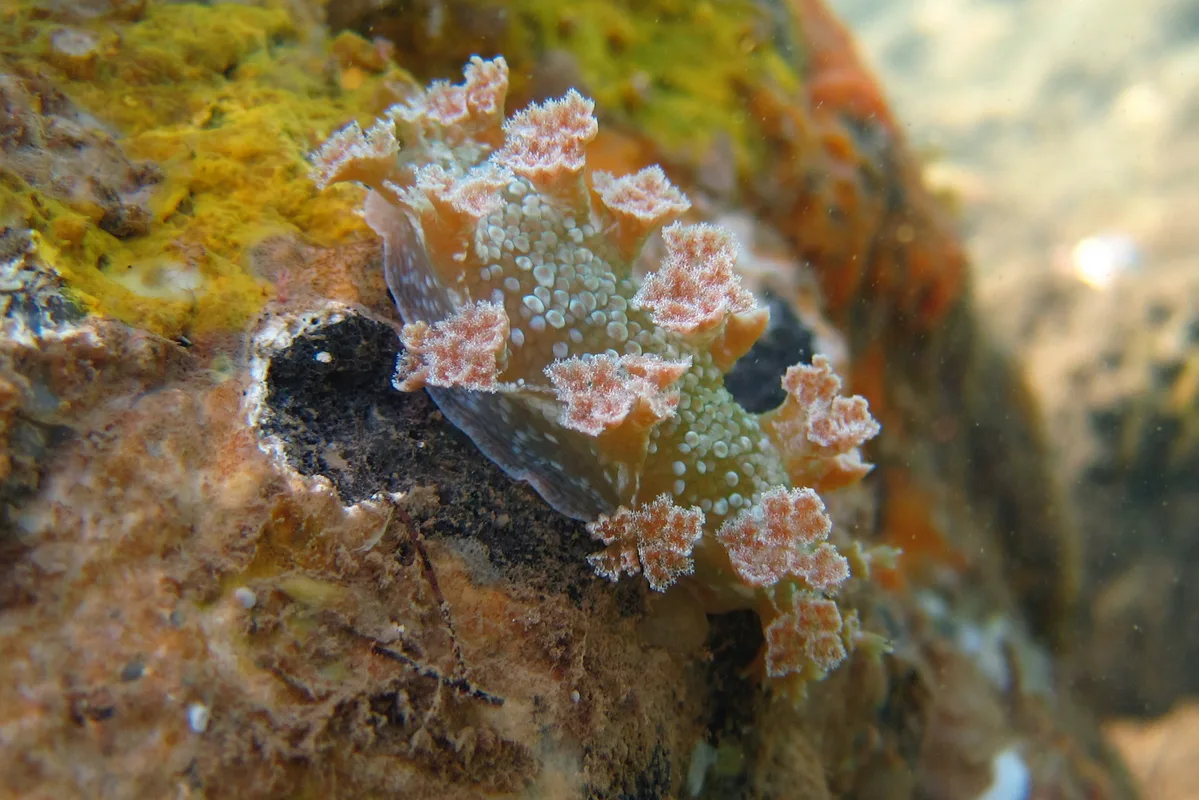
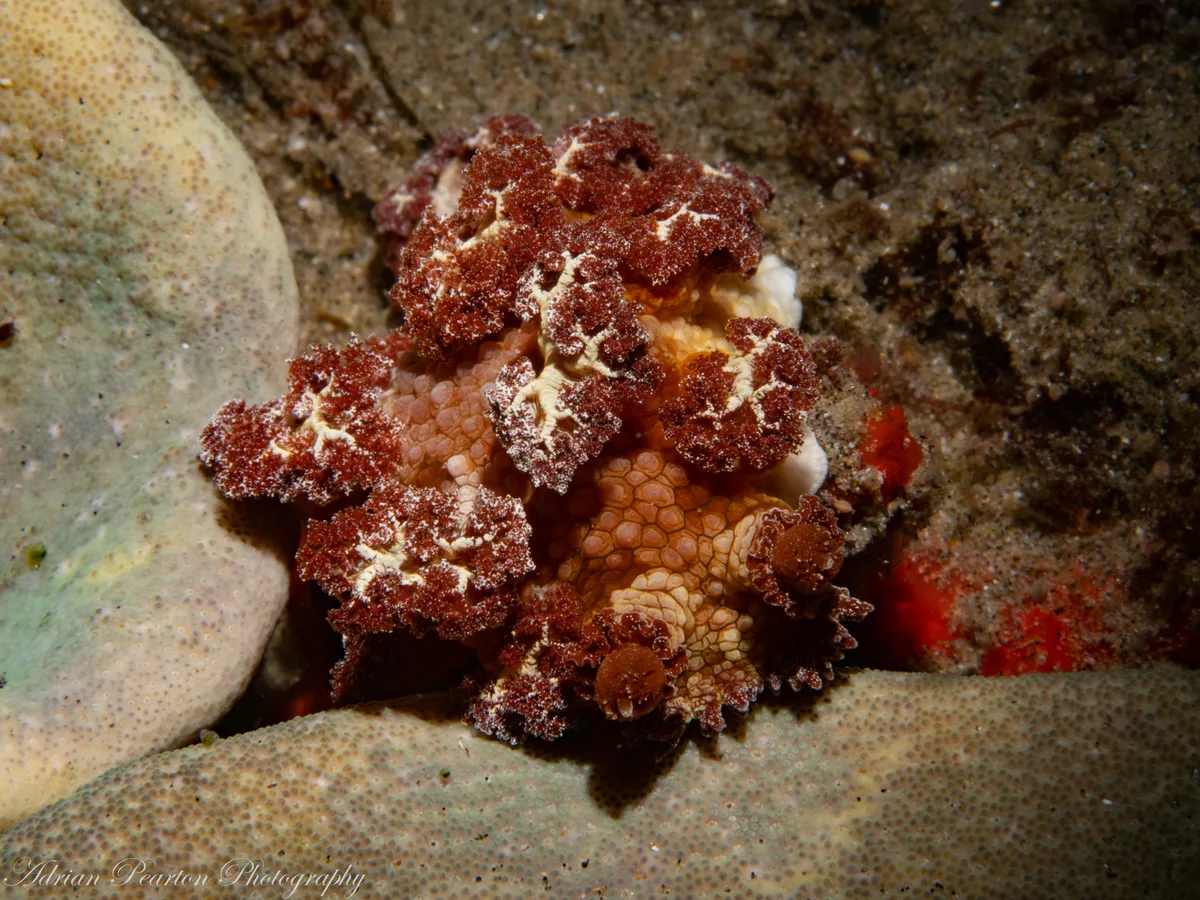
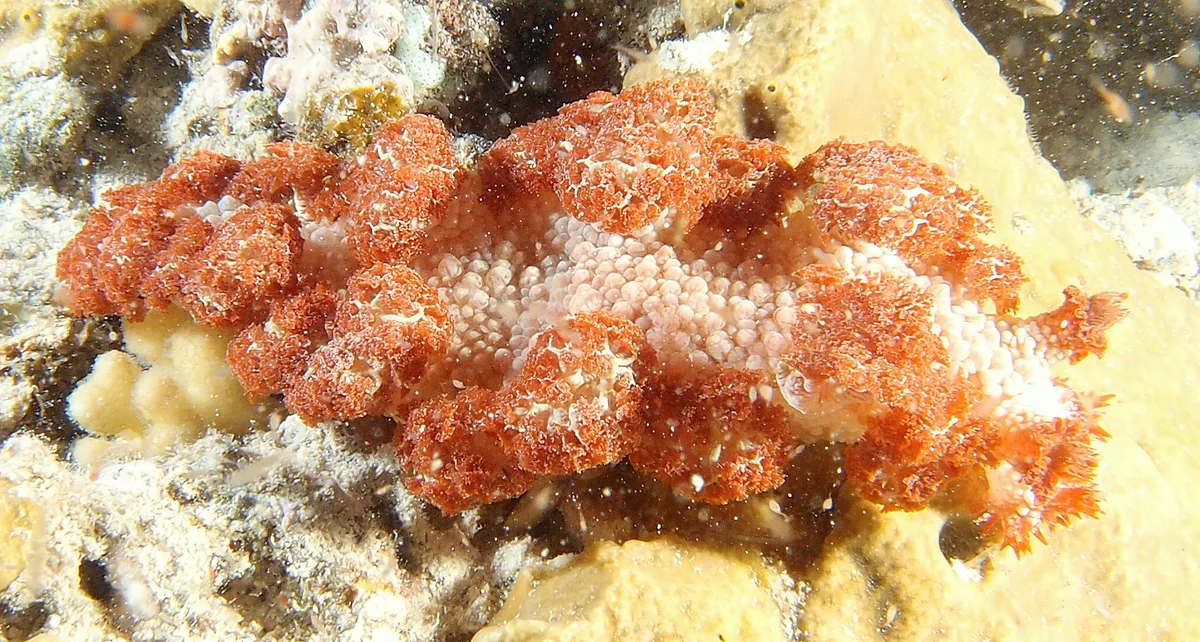
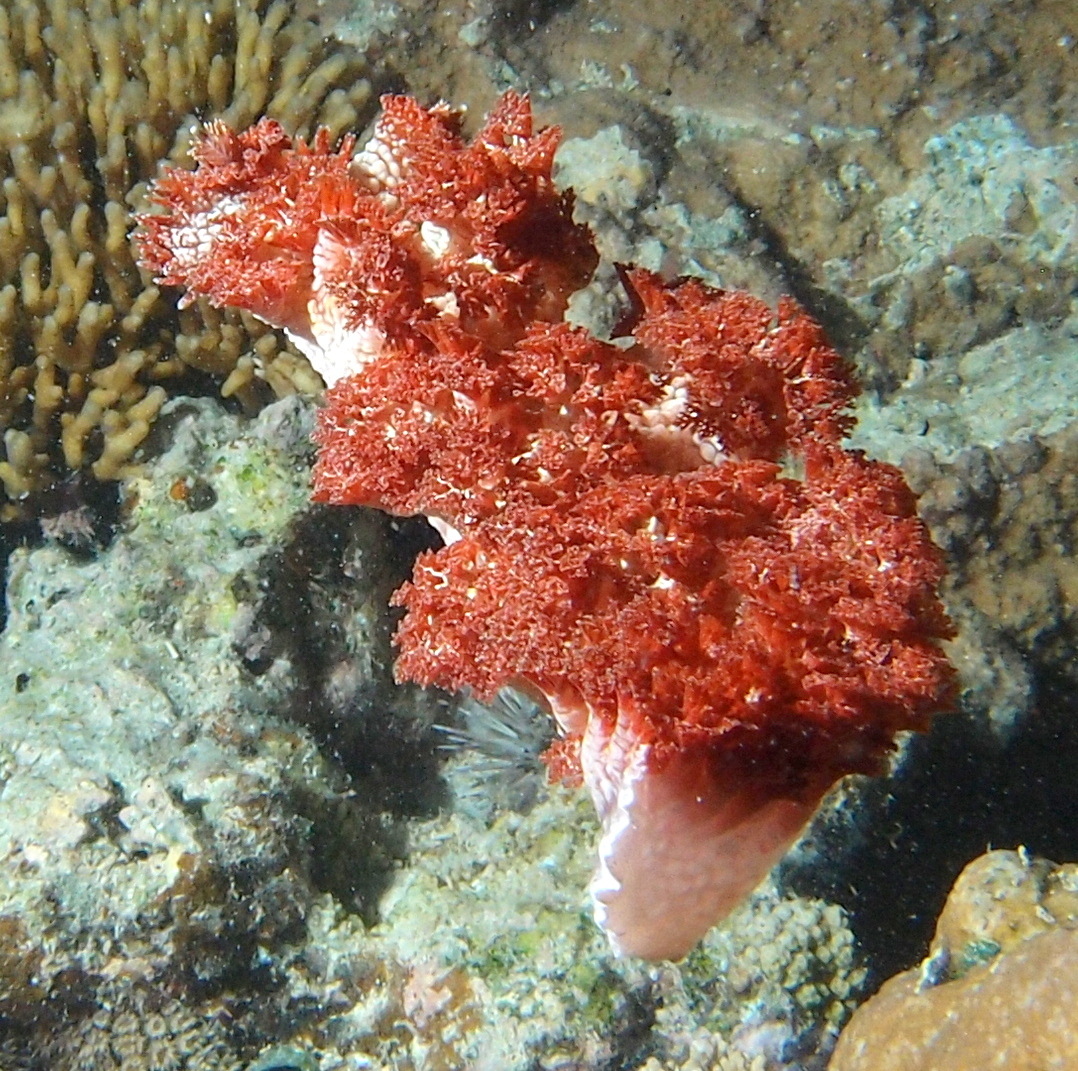
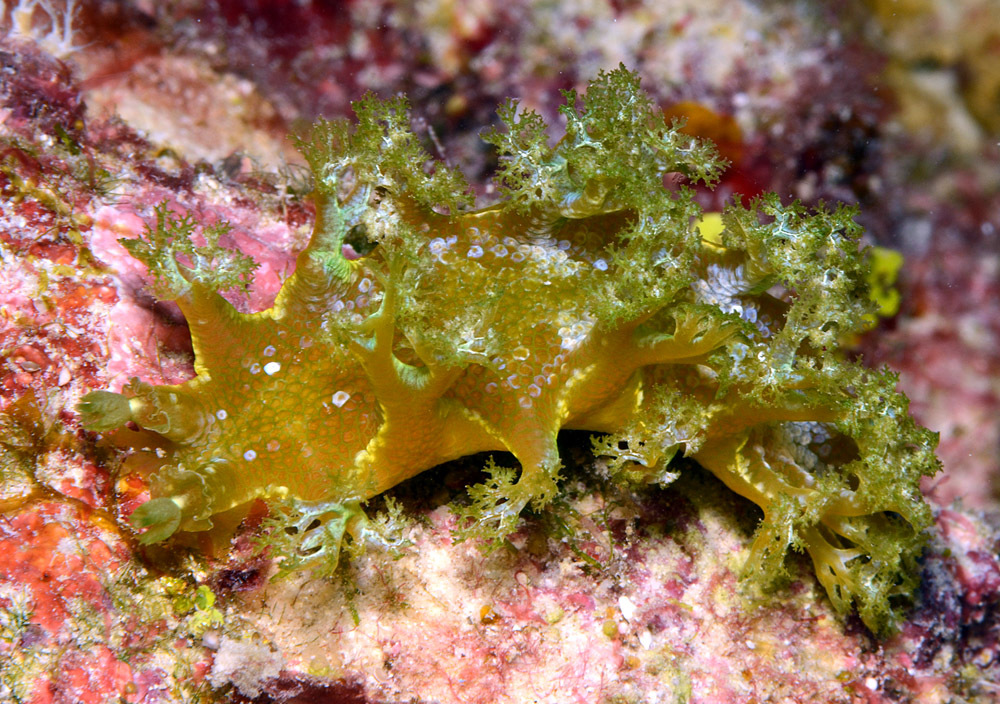
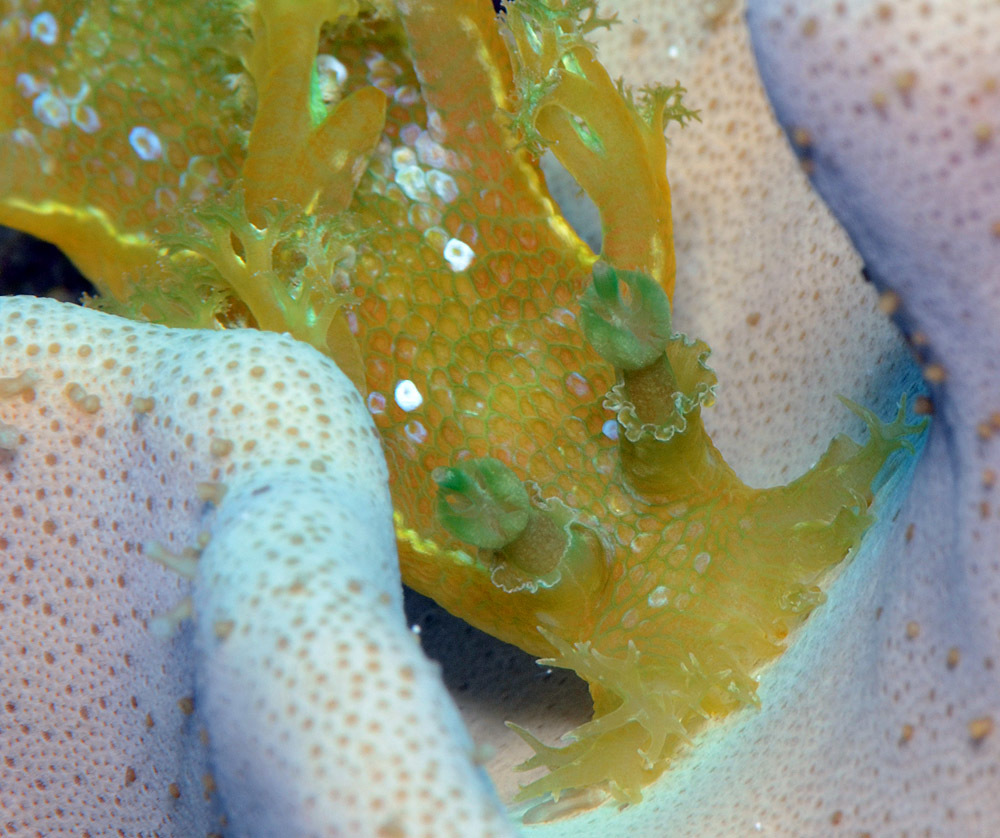
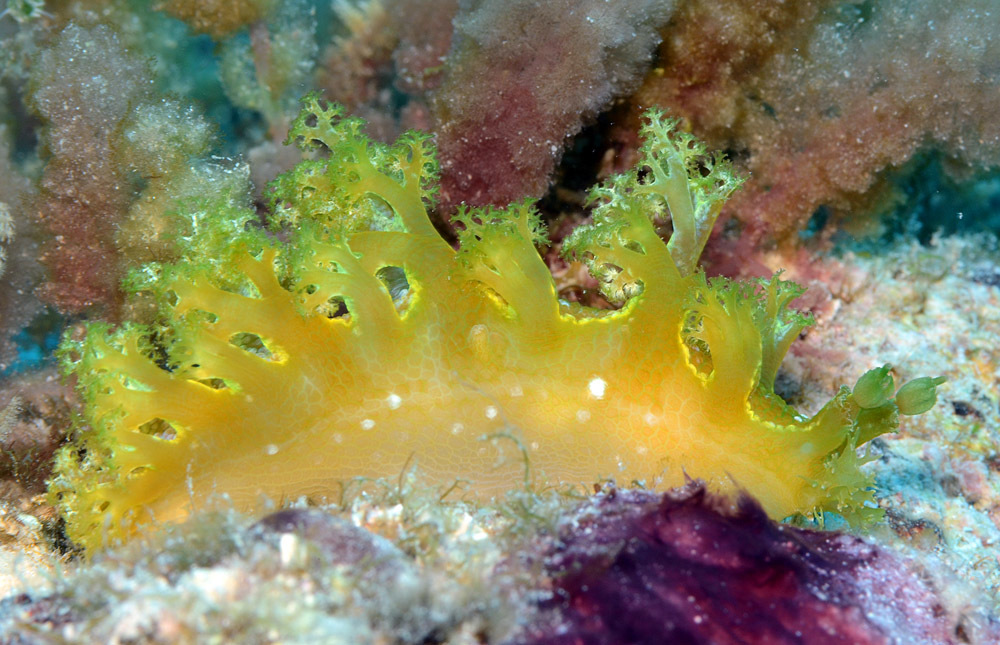
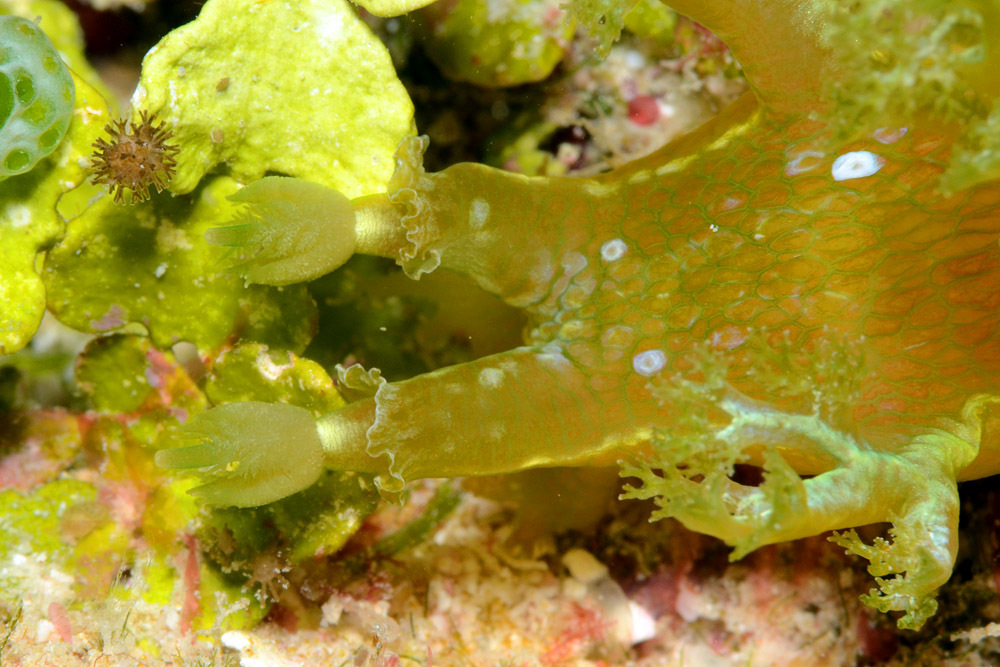
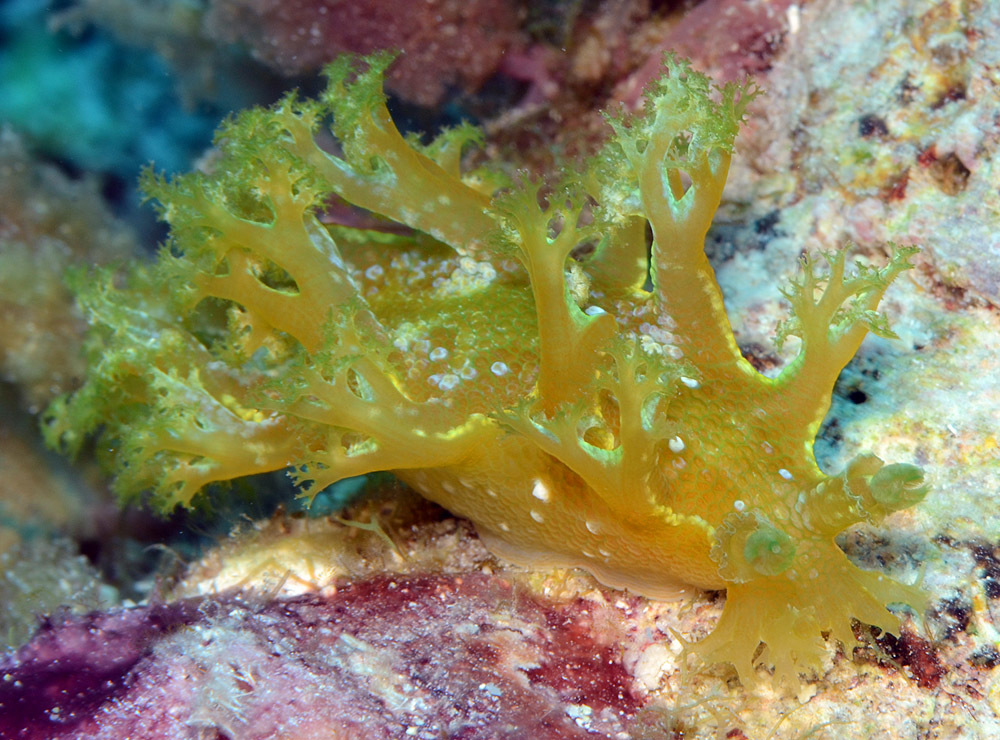
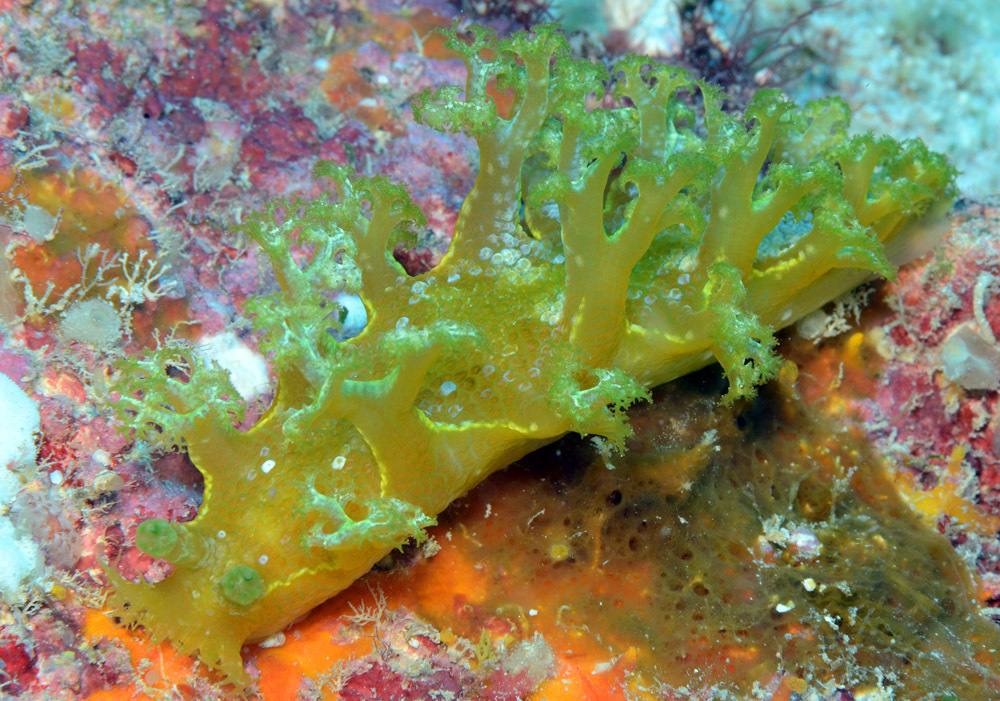
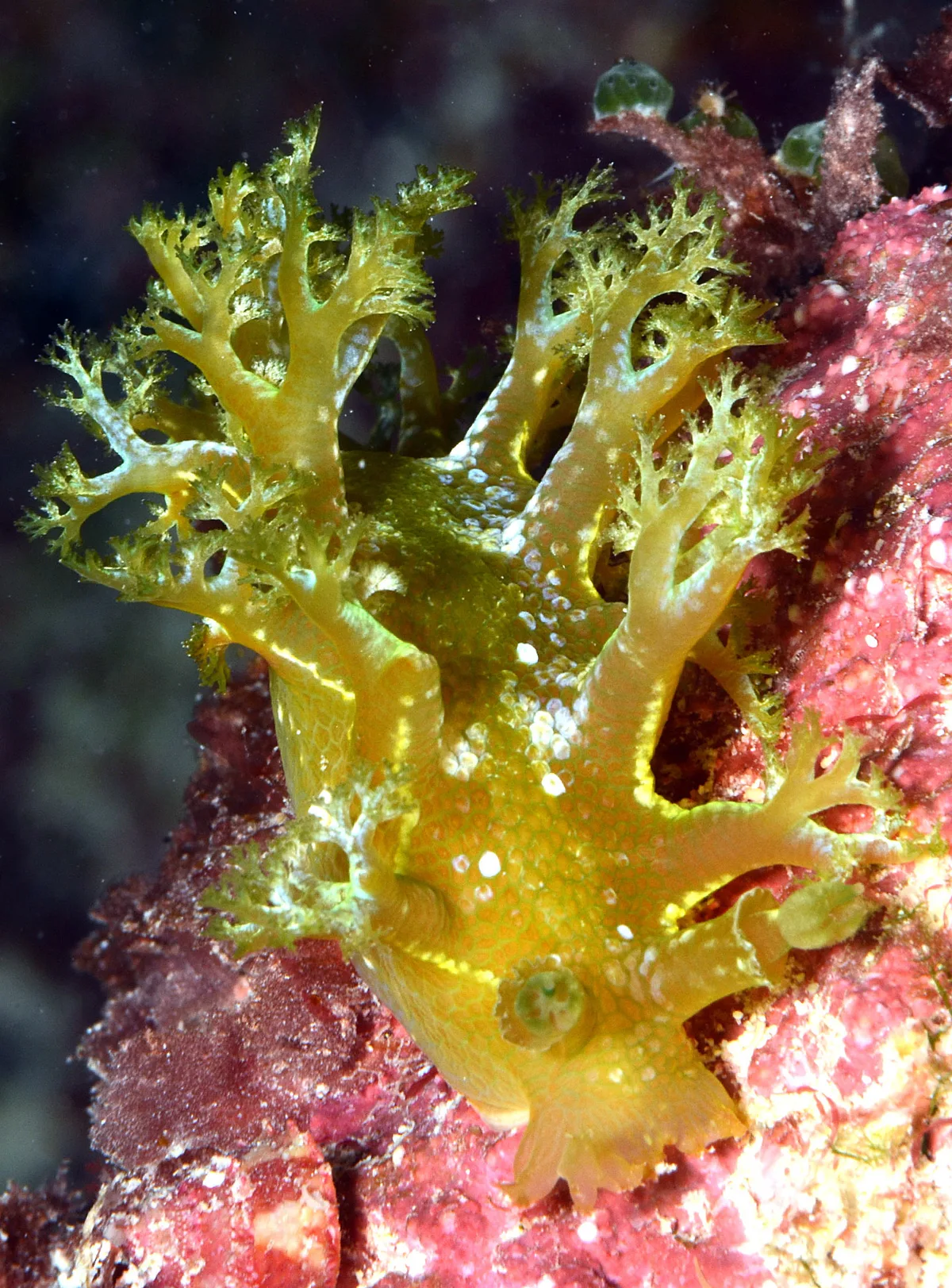
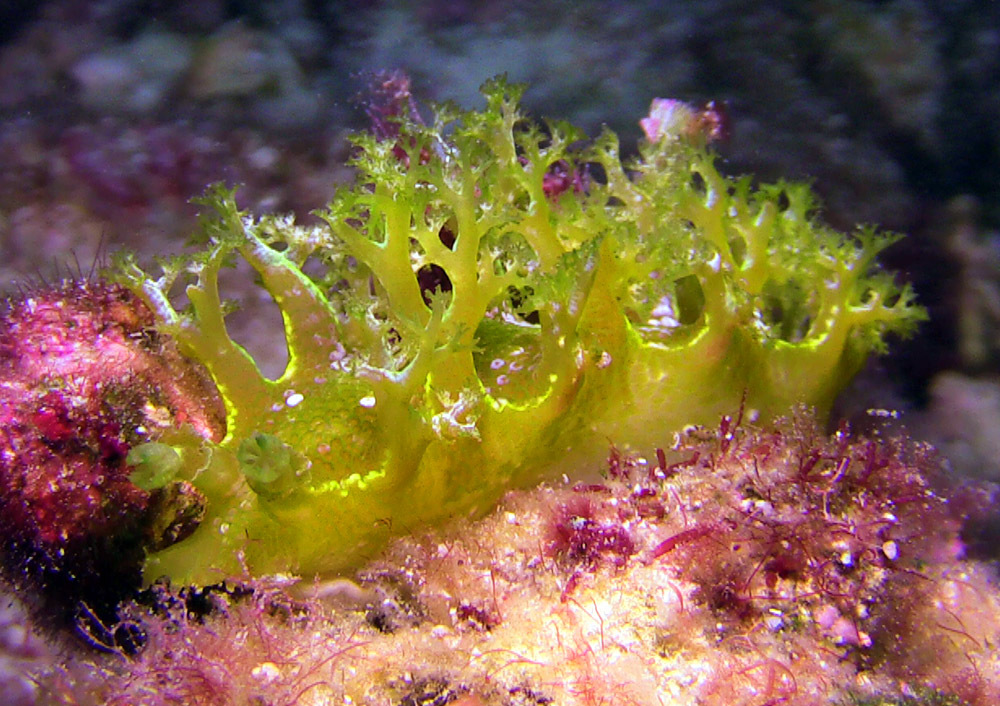
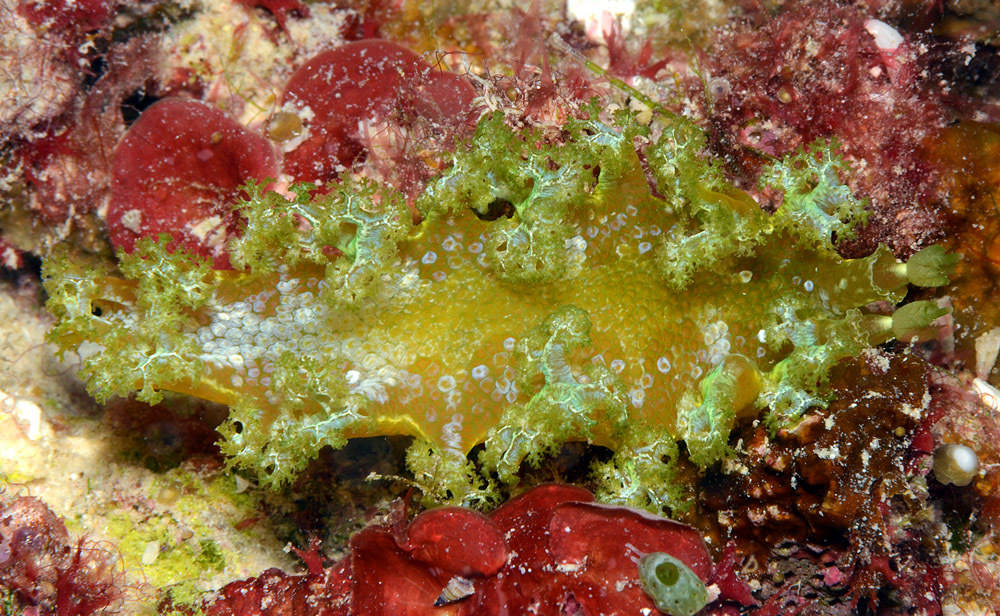
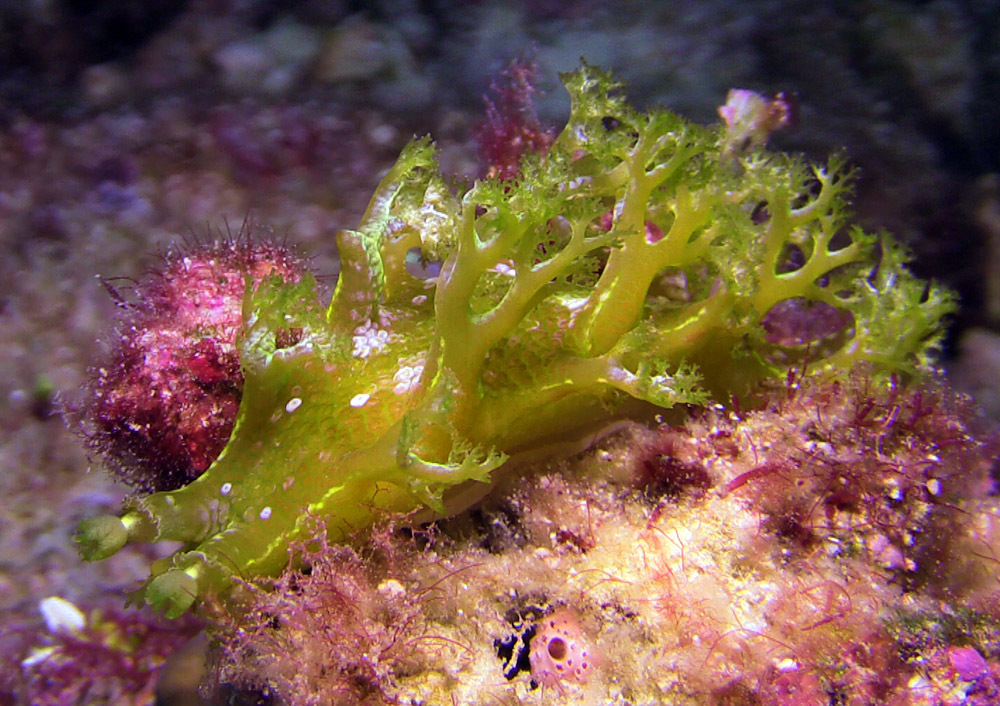
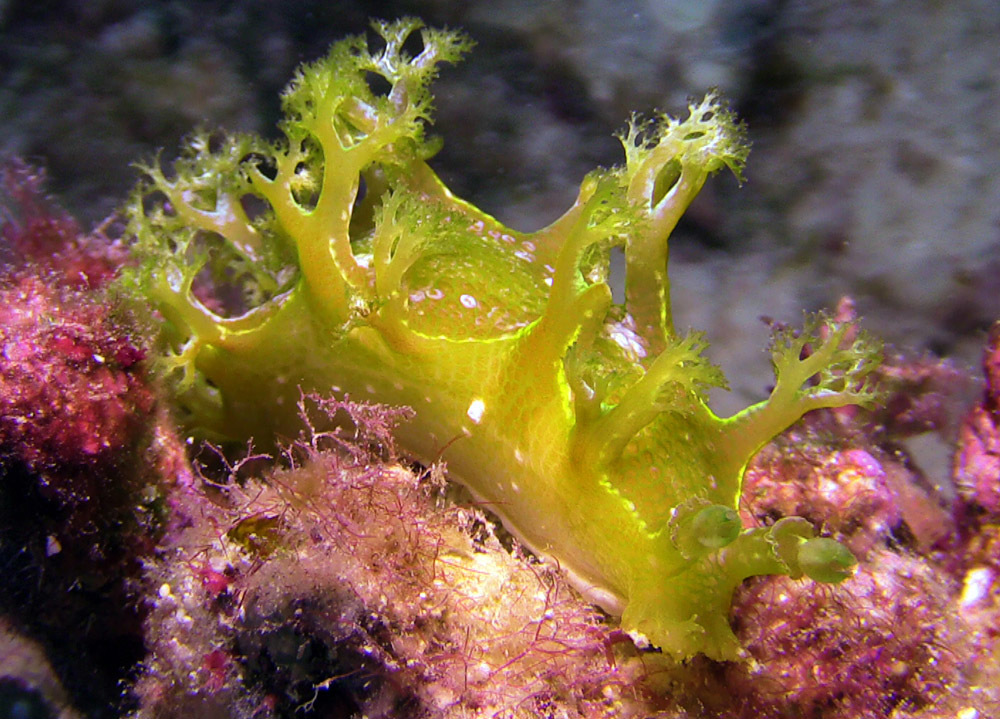
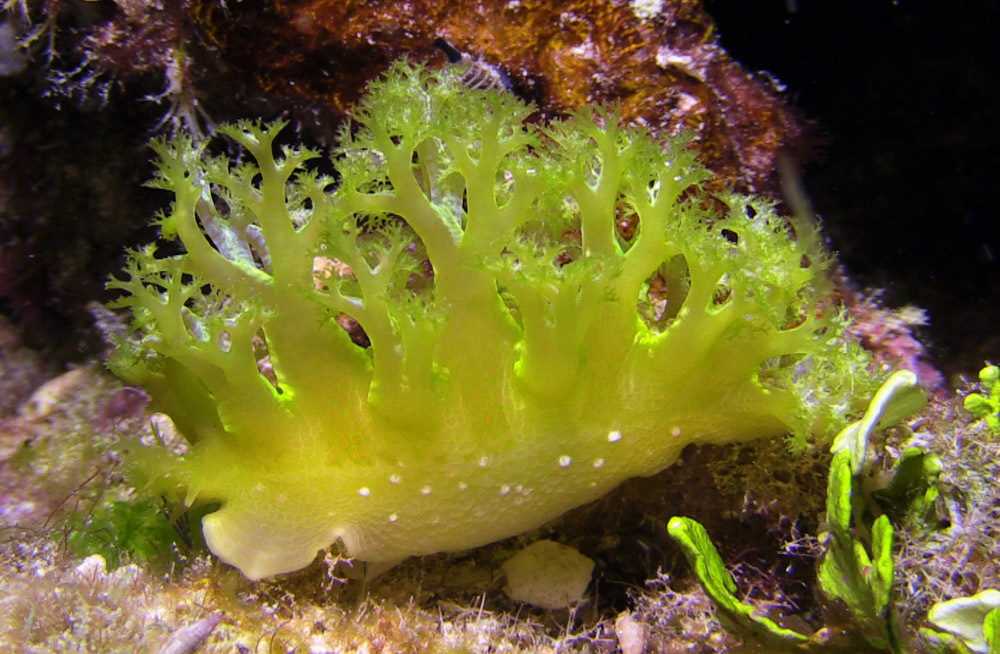
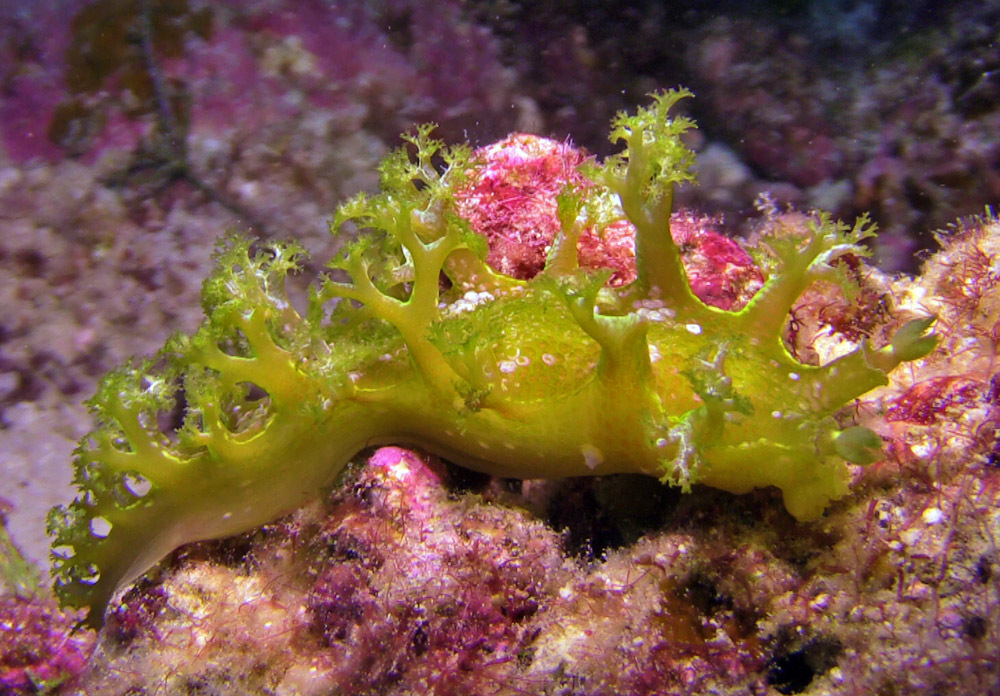
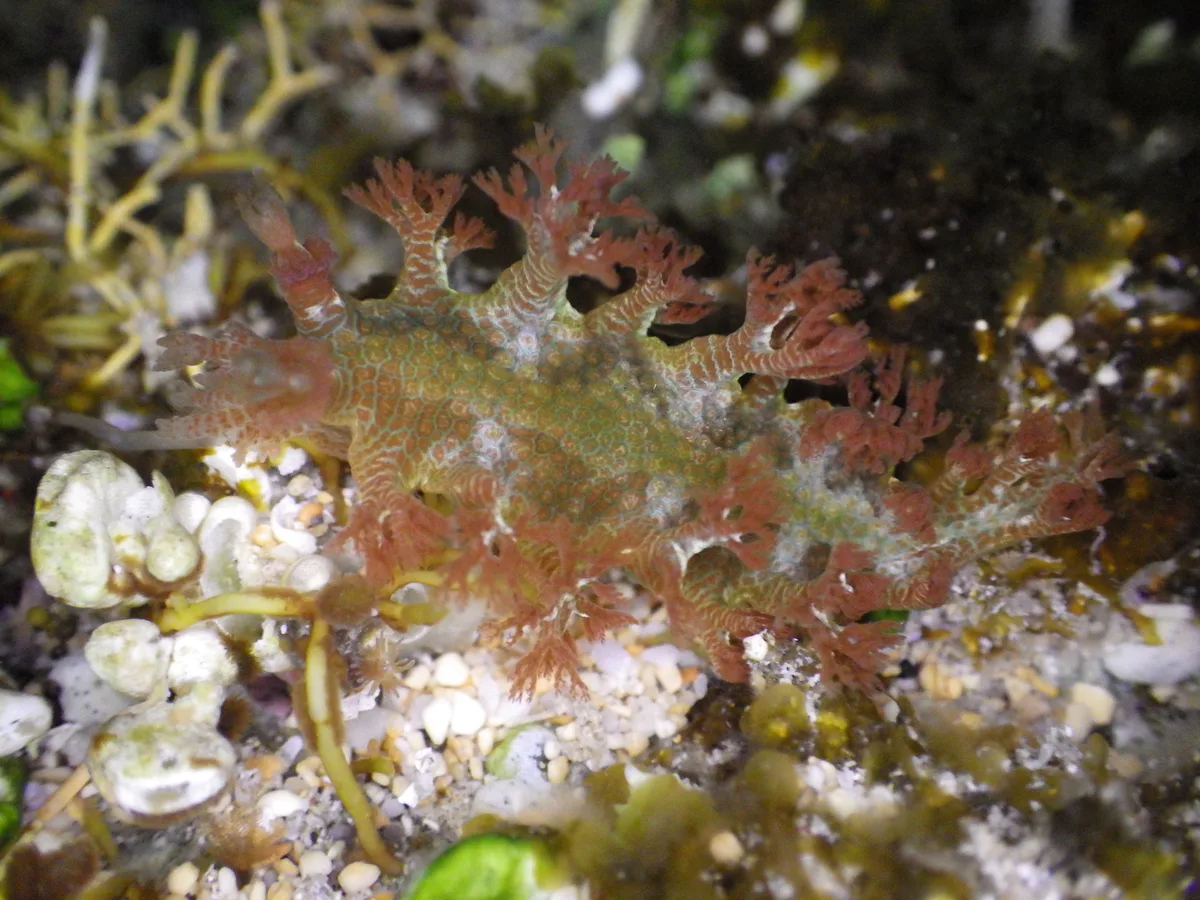
Two features tell you this is a tritoniid and not one of the dorids that fill the rest of this section. The gills are not a rosette on the back; they are a row of branched tufts running down each side. And the front of the head carries a veil so finely divided that it looks like a piece of soft coral stuck on the animal.
That veil is a search tool. It is covered in chemical sensors, and the animal uses it to feel out its food in the dark: soft corals of the genus Lemnalia, the pale branching colonies that stand up off the reef and pull in at dawn. It works over them polyp by polyp, and it is doing that at night, having spent the daylight hours pushed back into a crevice.
The resemblance is not a coincidence. A twelve centimeter (5 in) slug sitting on a soft coral all night has to be something other than an obvious meal, and it is covered in large rounded tubercles with white patches between them, in colors that run from greenish and brown to deep red depending on what it is living on. From above, a Marionia on Lemnalia is a lump on a branch.
The name at the end of the label is worth a moment. Rüppell and Leuckart, 1828: this species was described from 🌊 Red Sea material almost two hundred years ago, in the wave of collecting that produced the first serious account of this fauna and that still has scientists' names all over the reef today. There are not many animals in this catalogue whose paperwork is older.
- a heavily branched veil across the front of the head, like a bunch of soft coral
- row of branched gill tufts down each side, not a plume on the back
- back covered in large rounded tubercles with opaque white patches between them
- color anything from greenish and brown to deep red