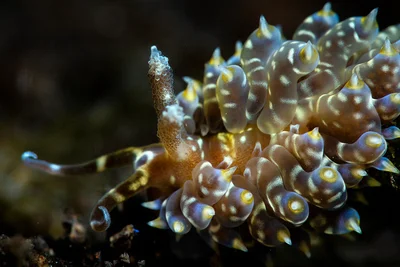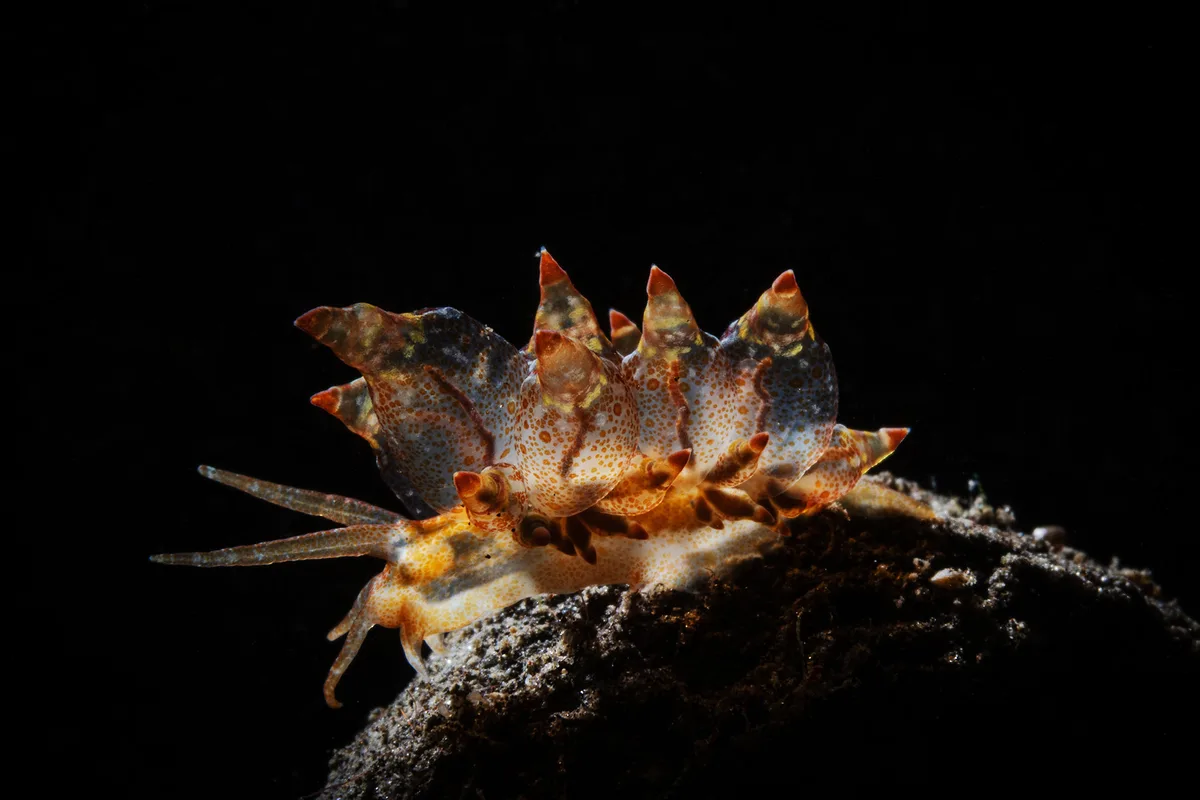
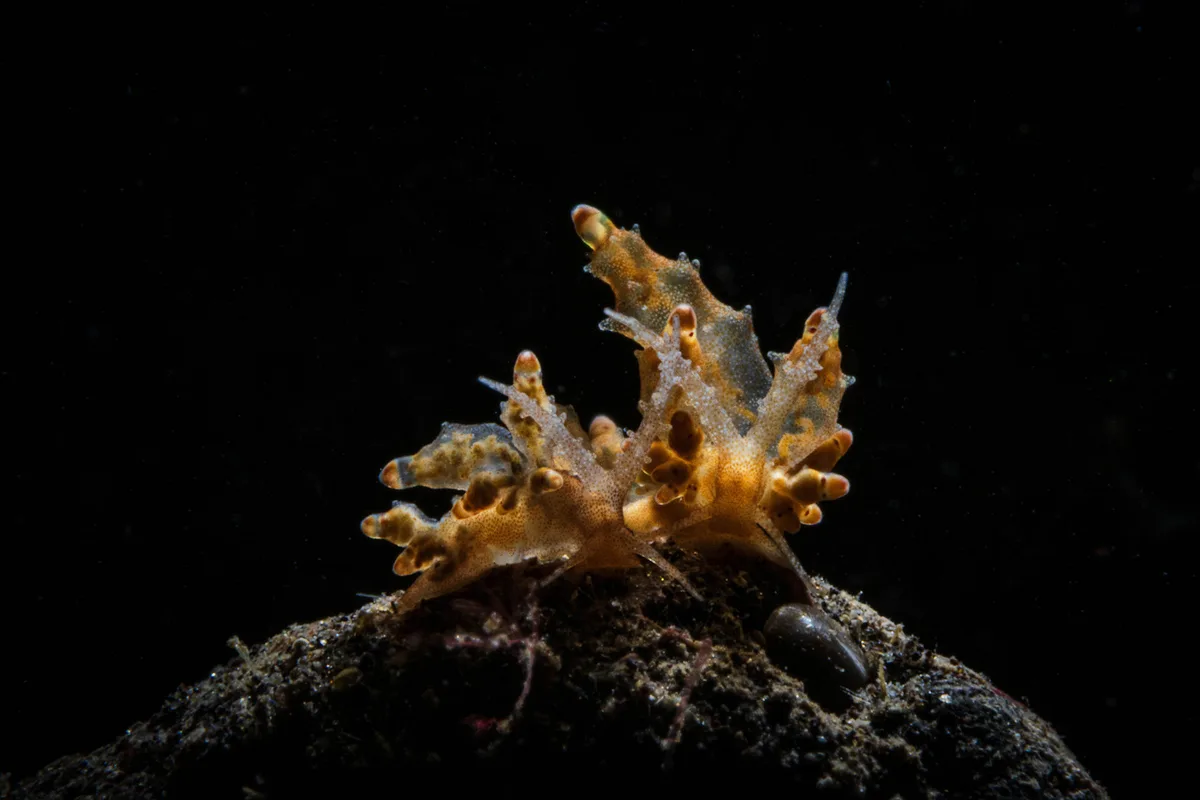
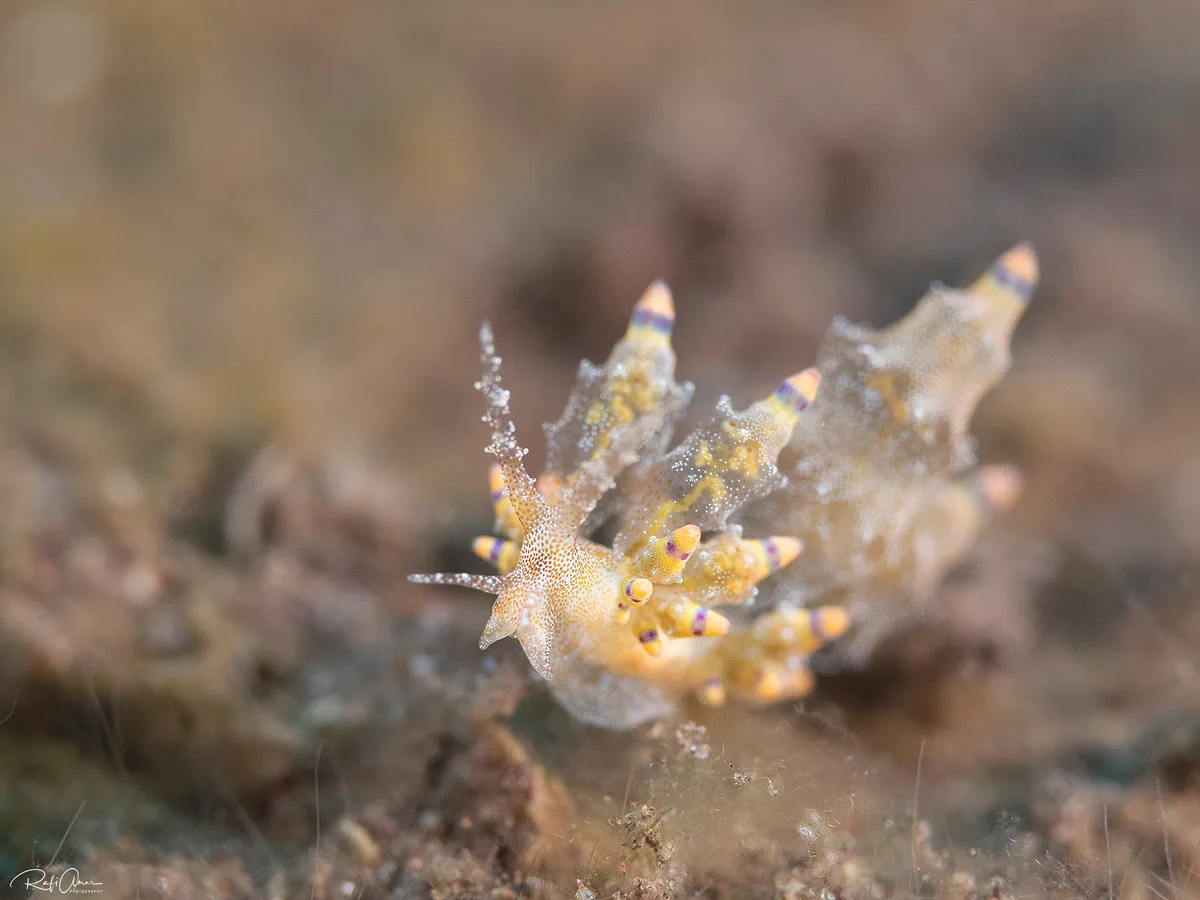
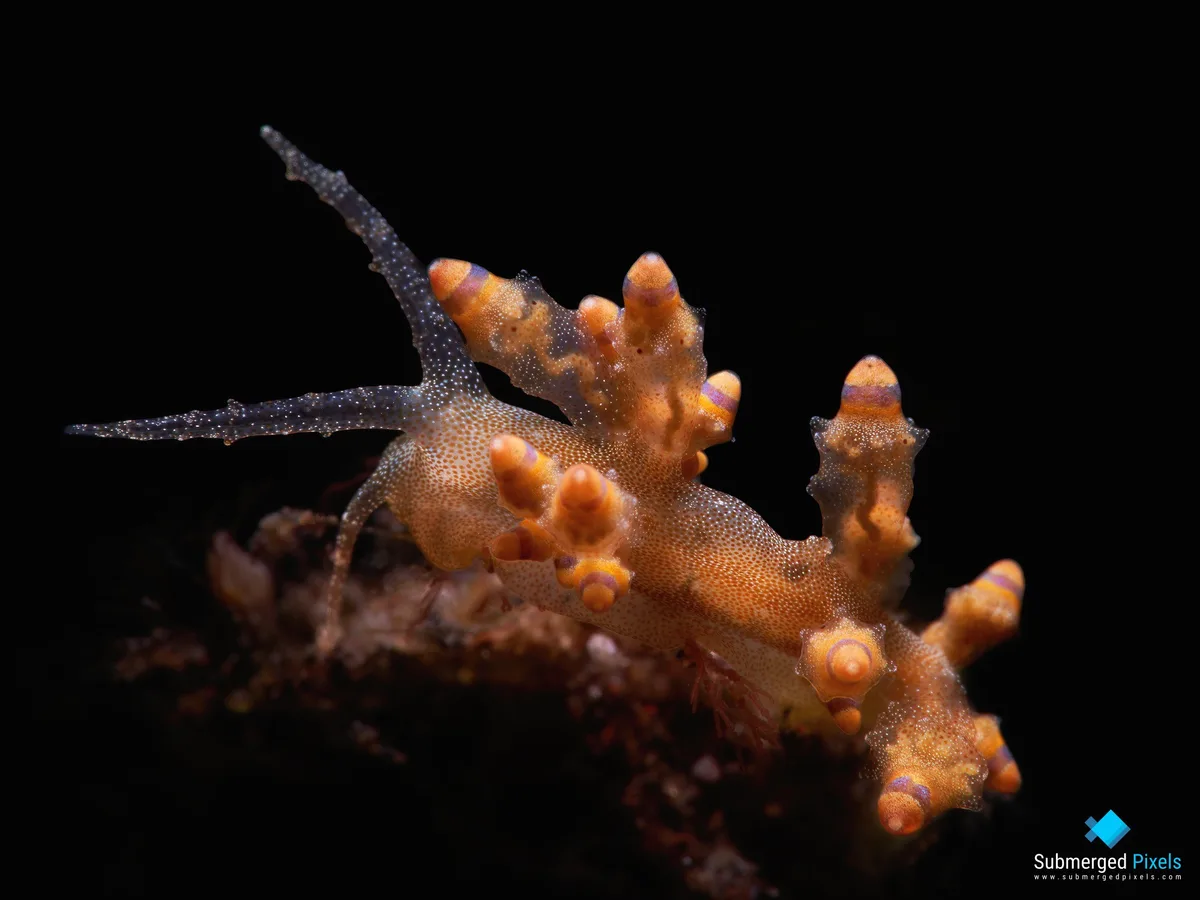
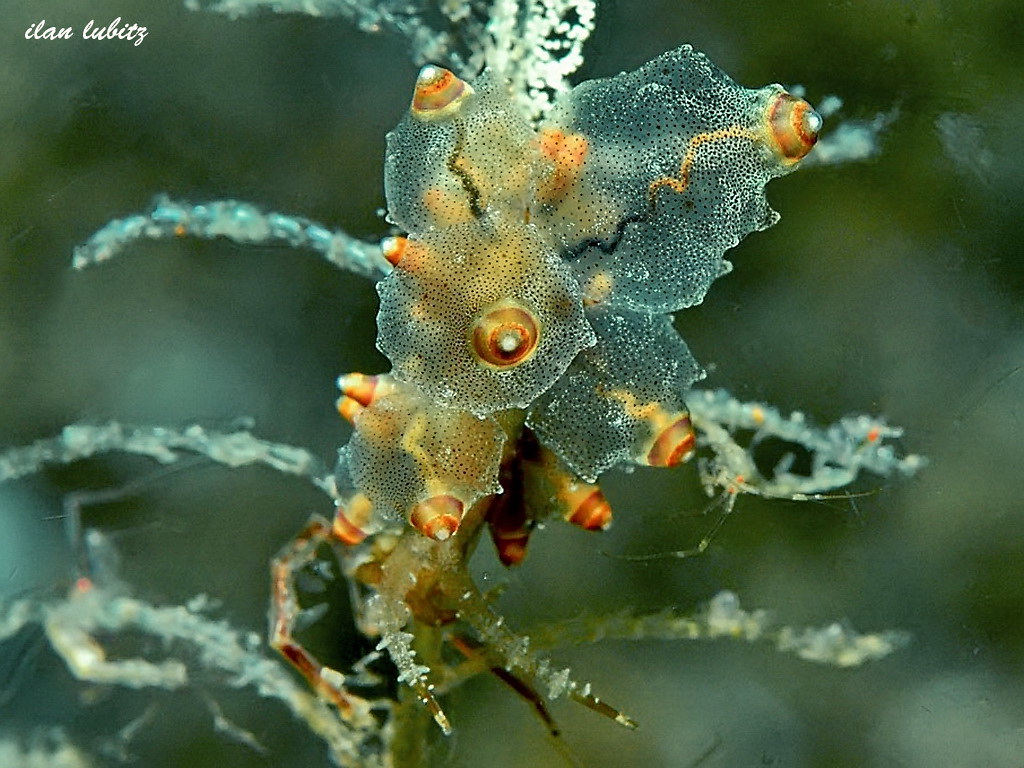
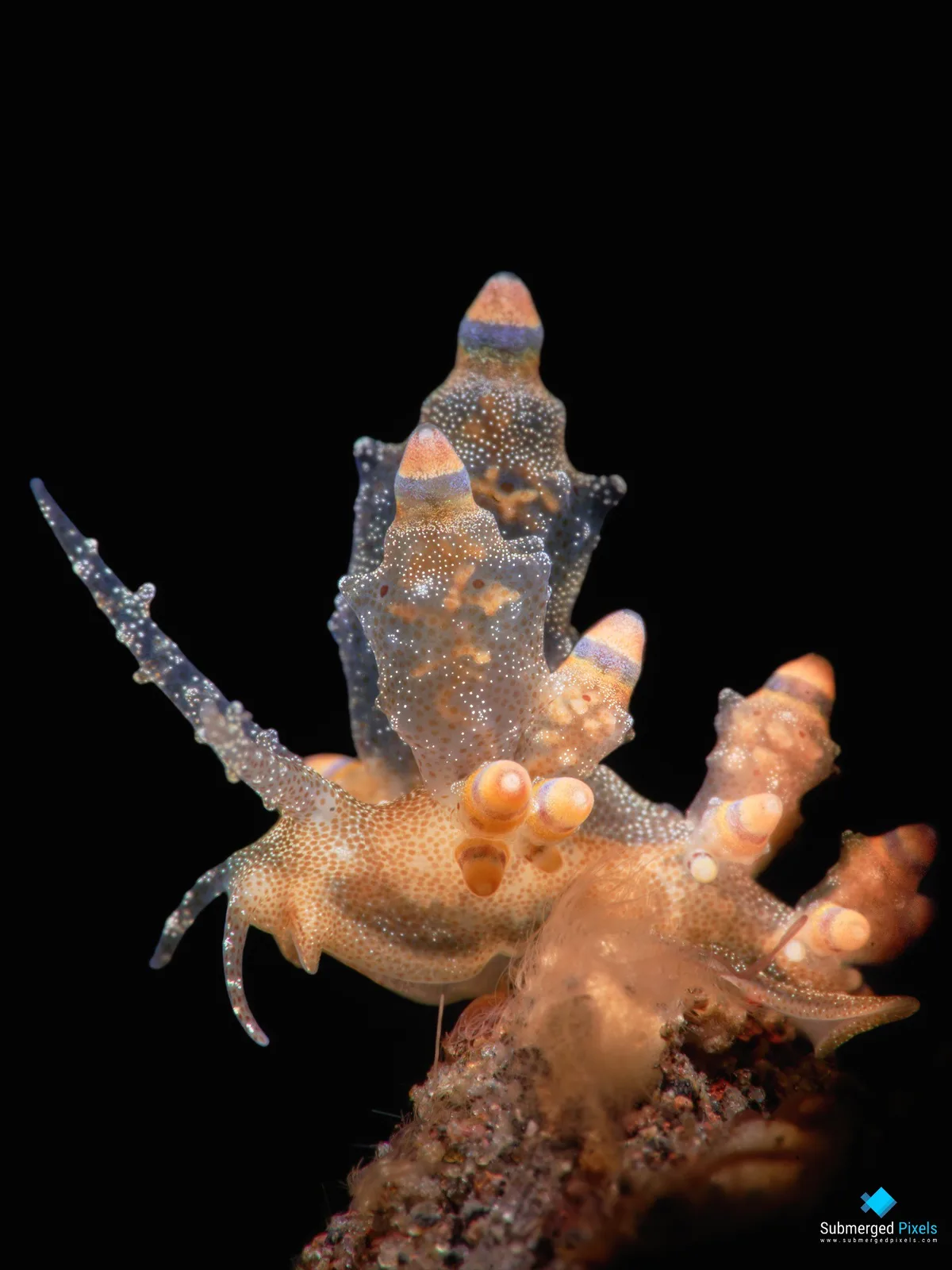
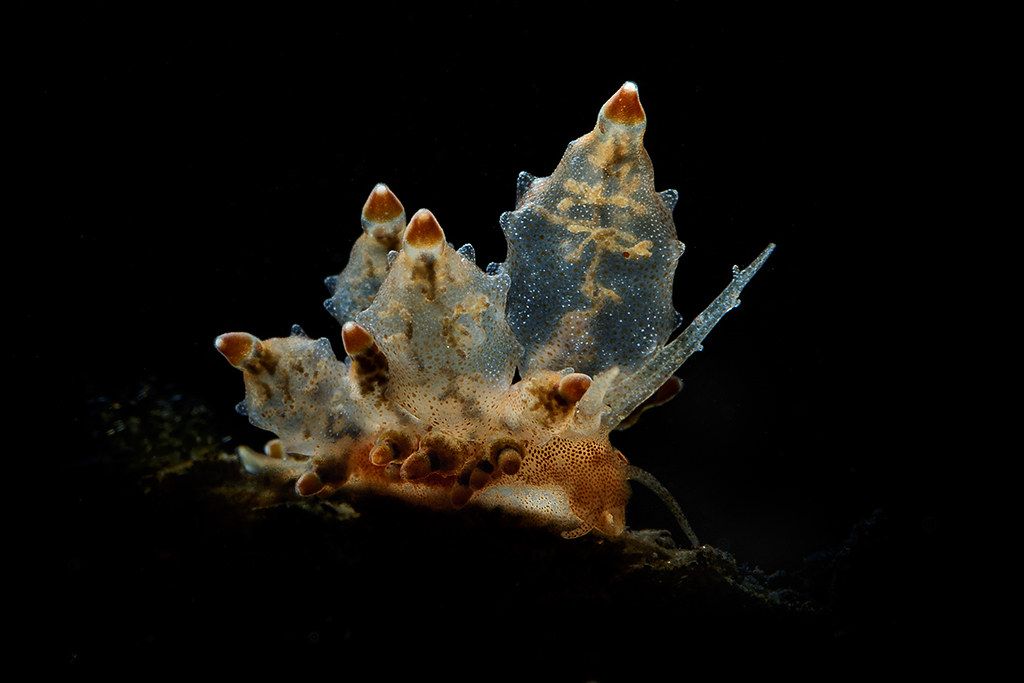
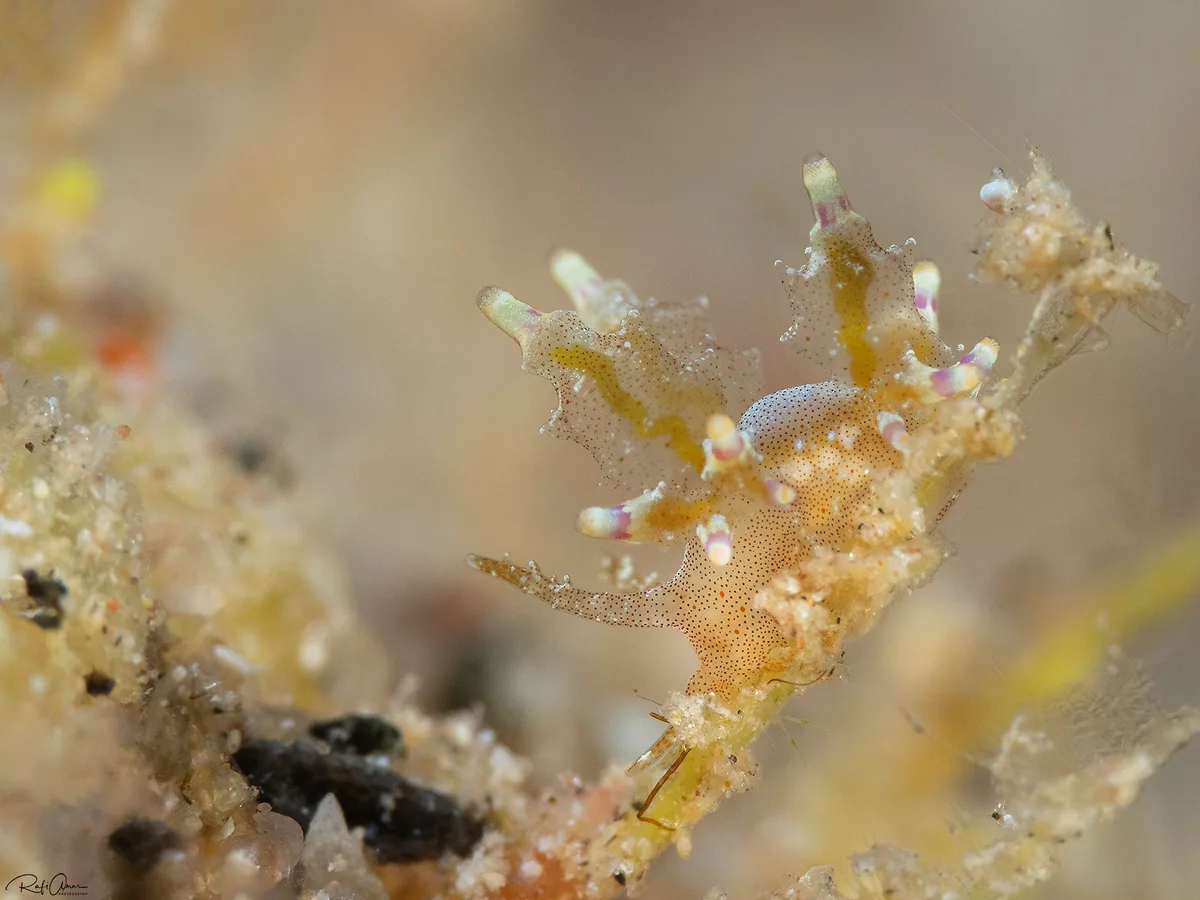
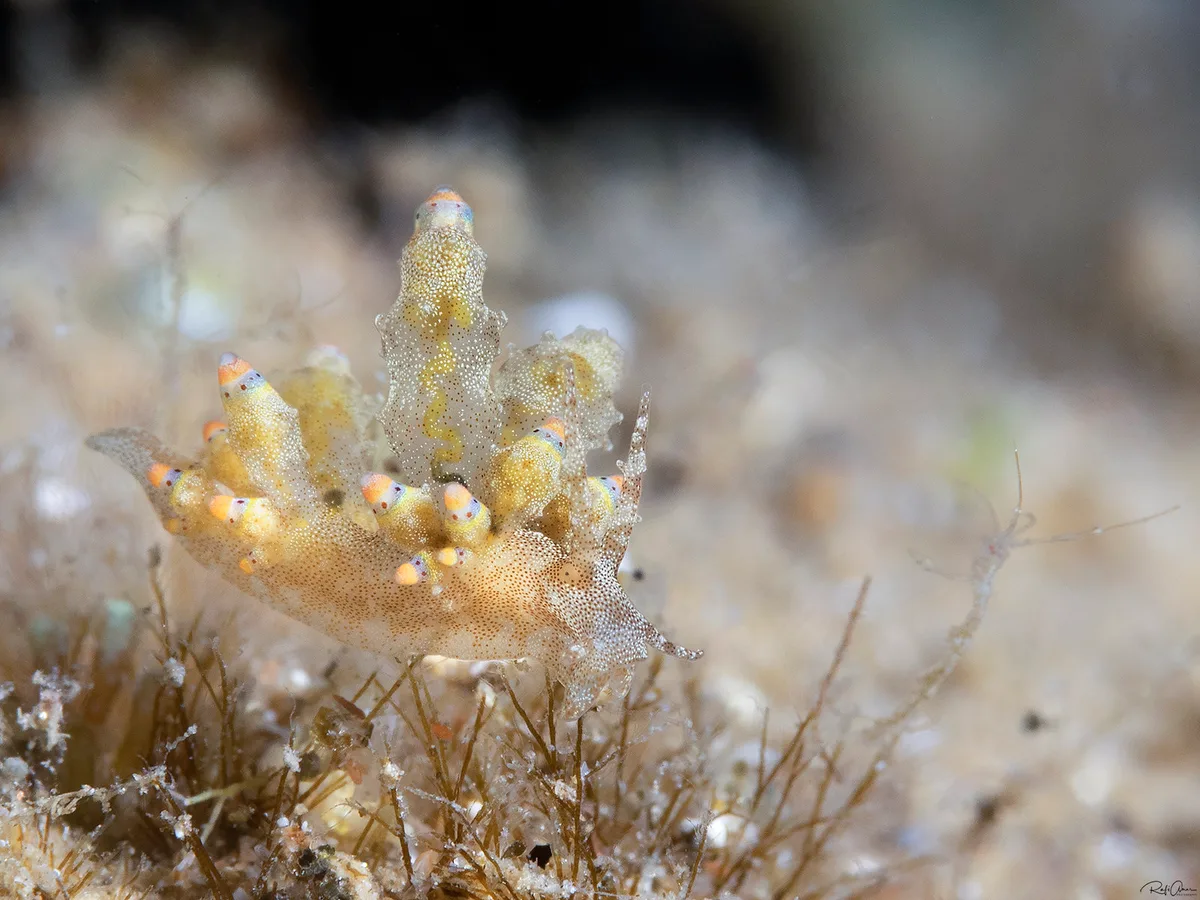
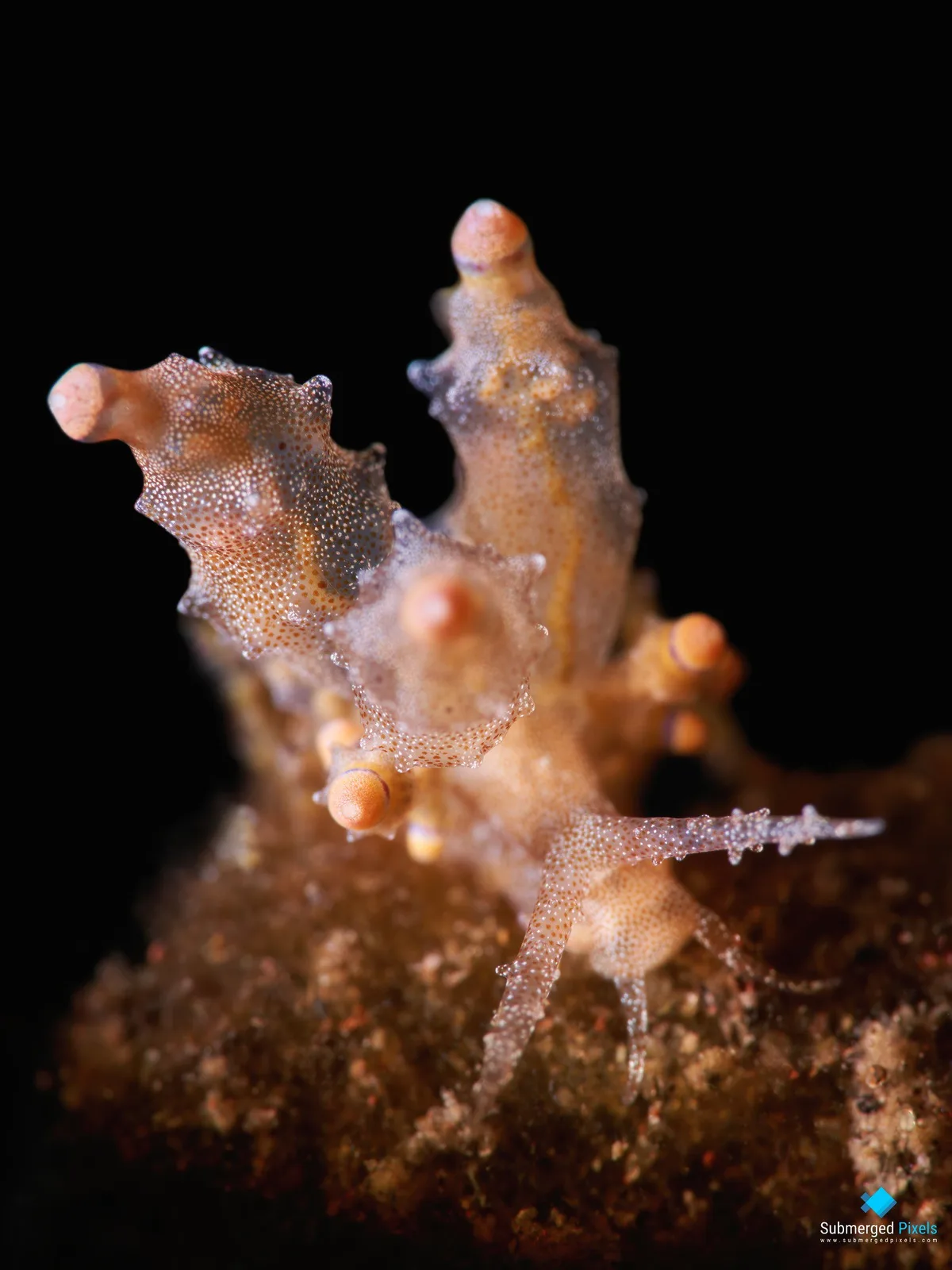
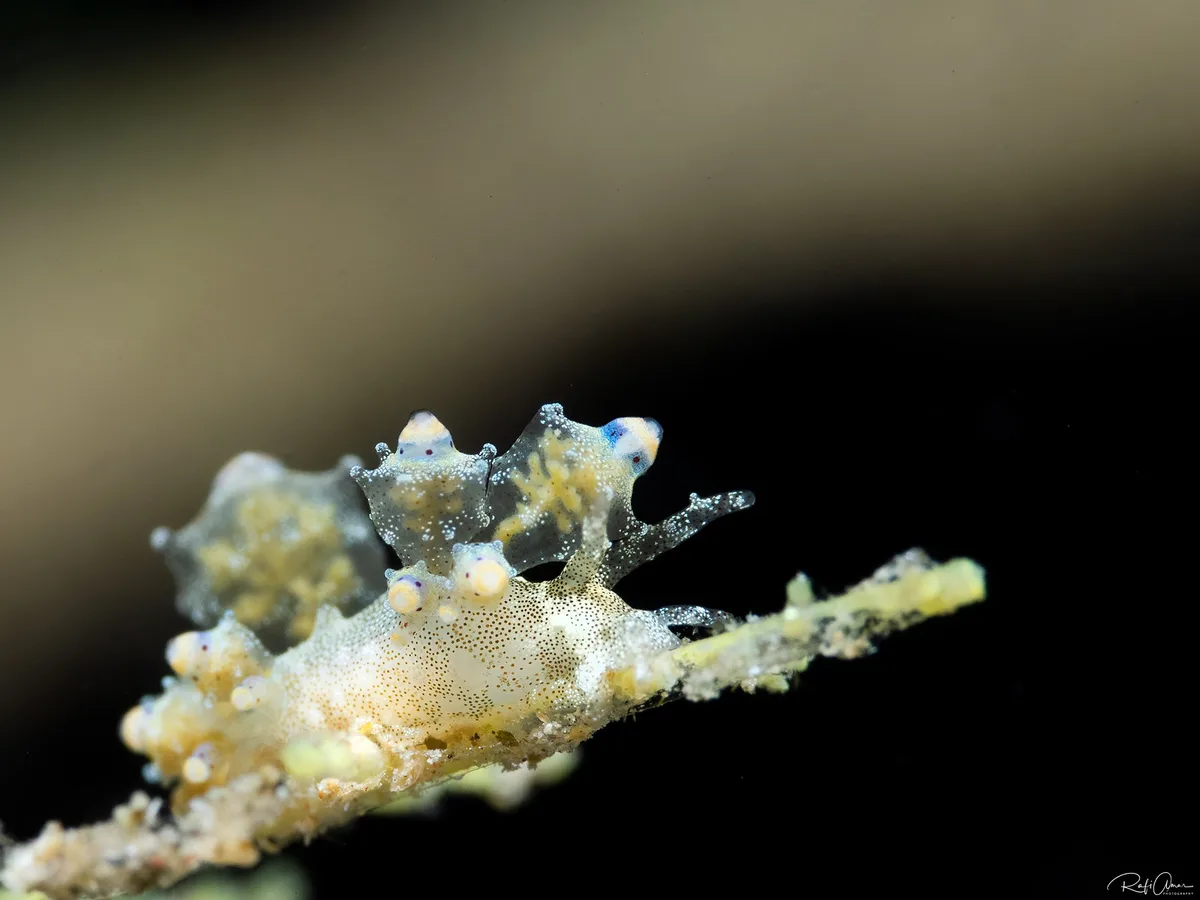
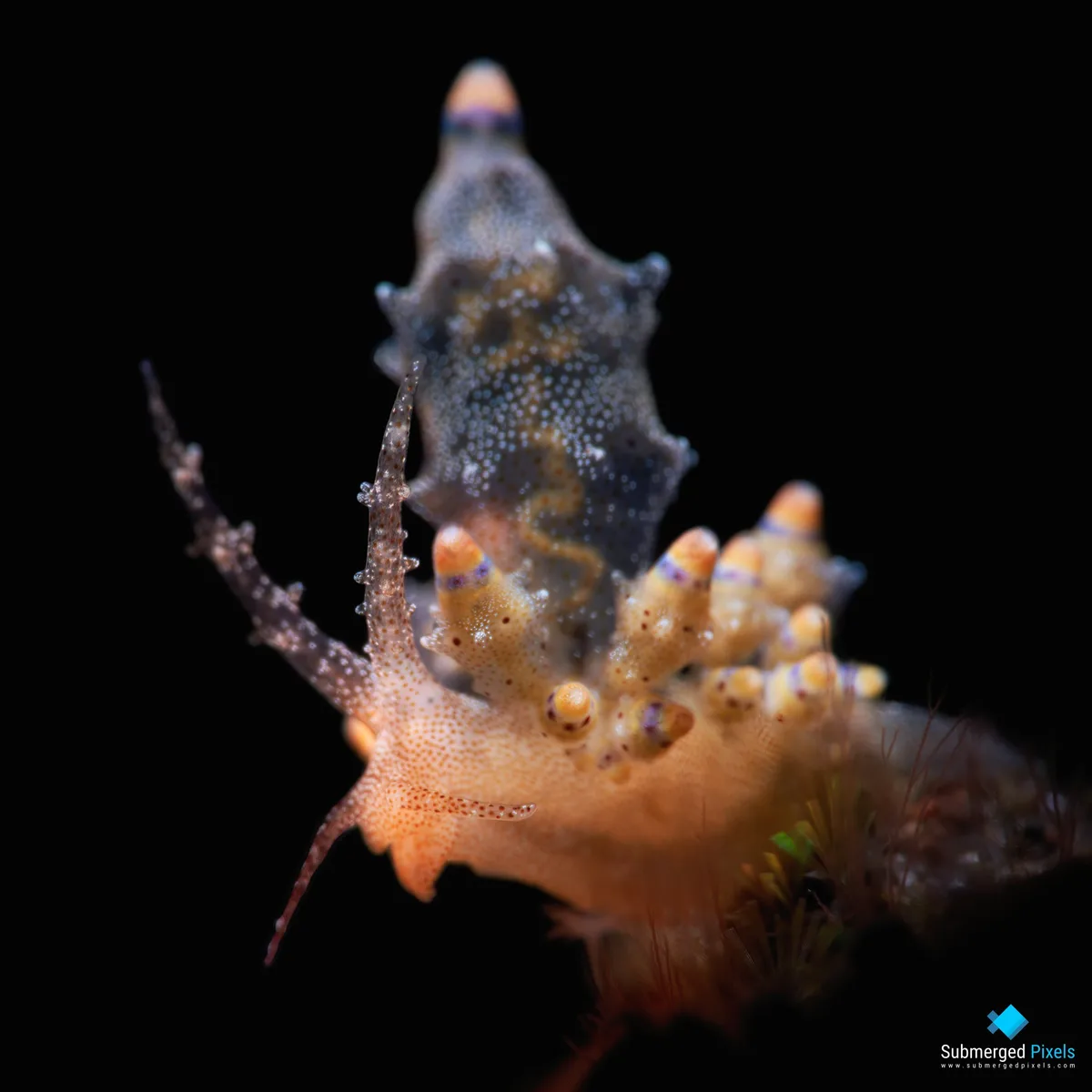
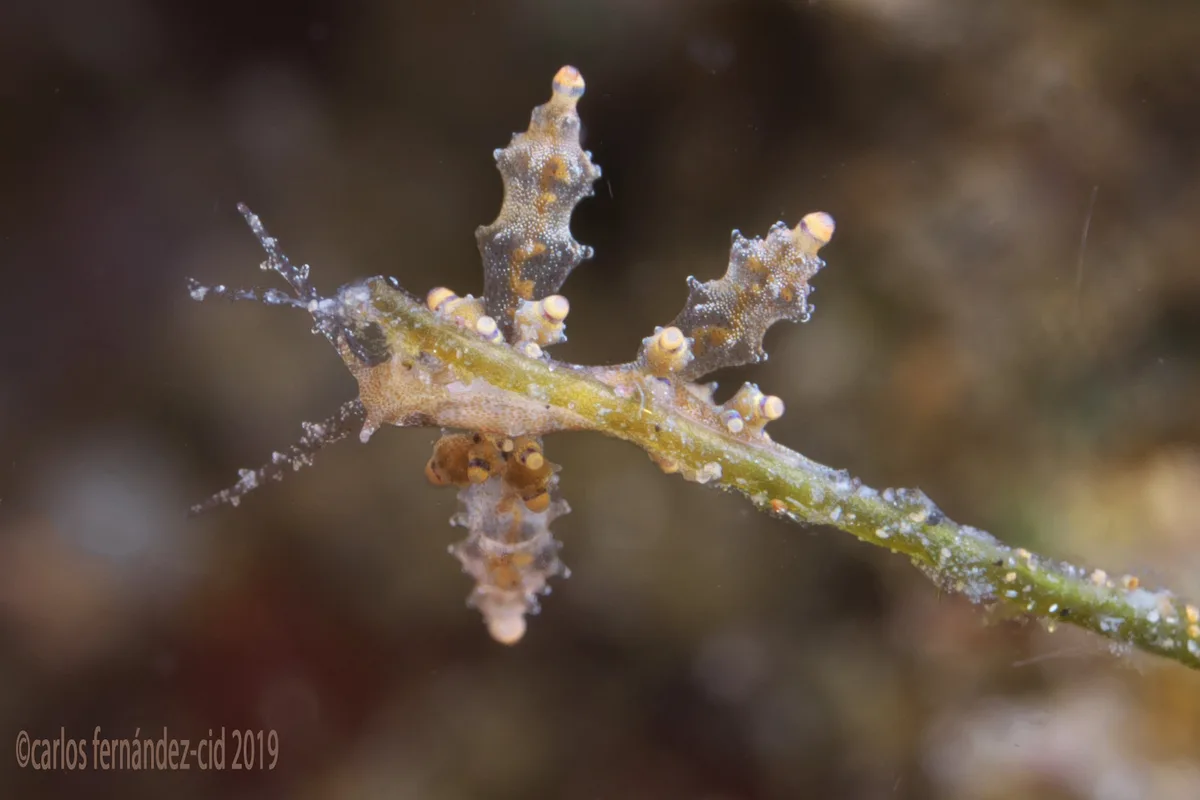
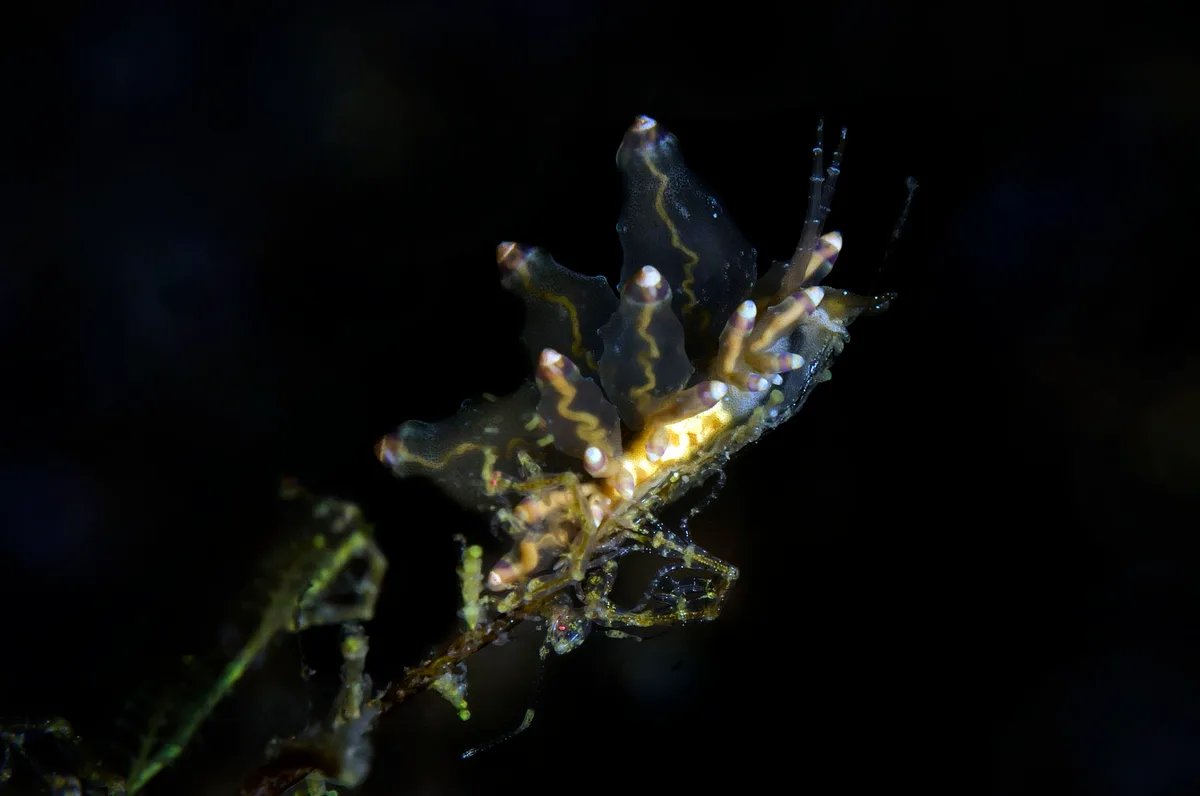
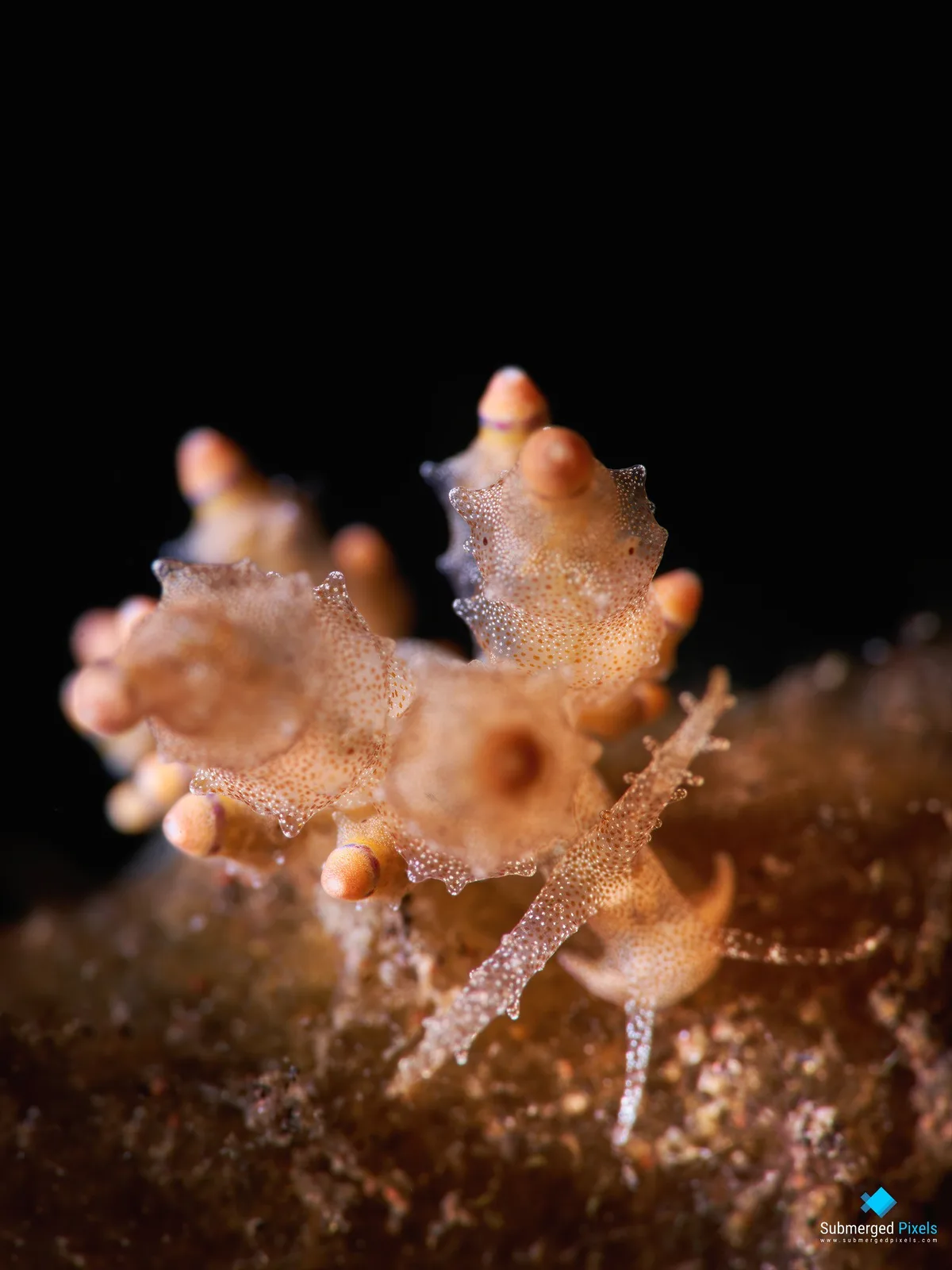
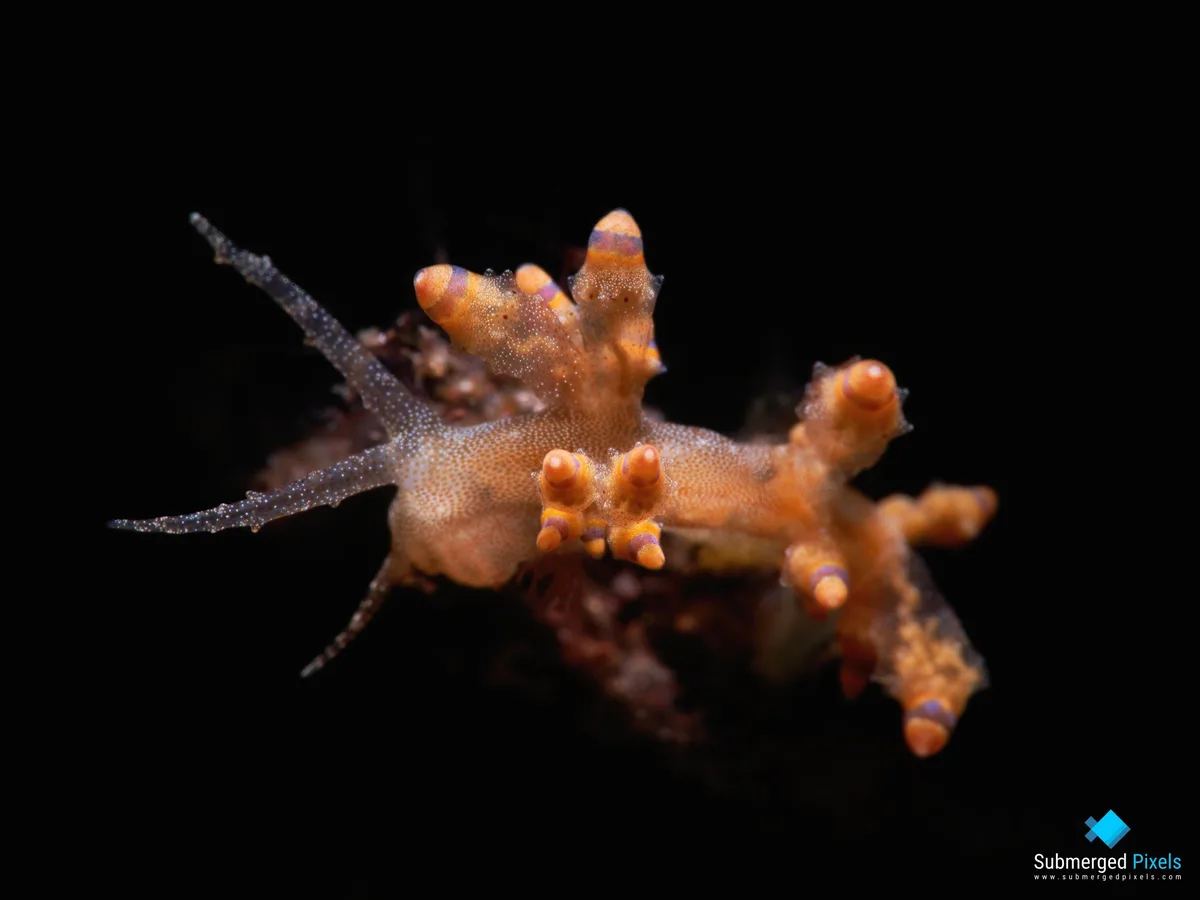
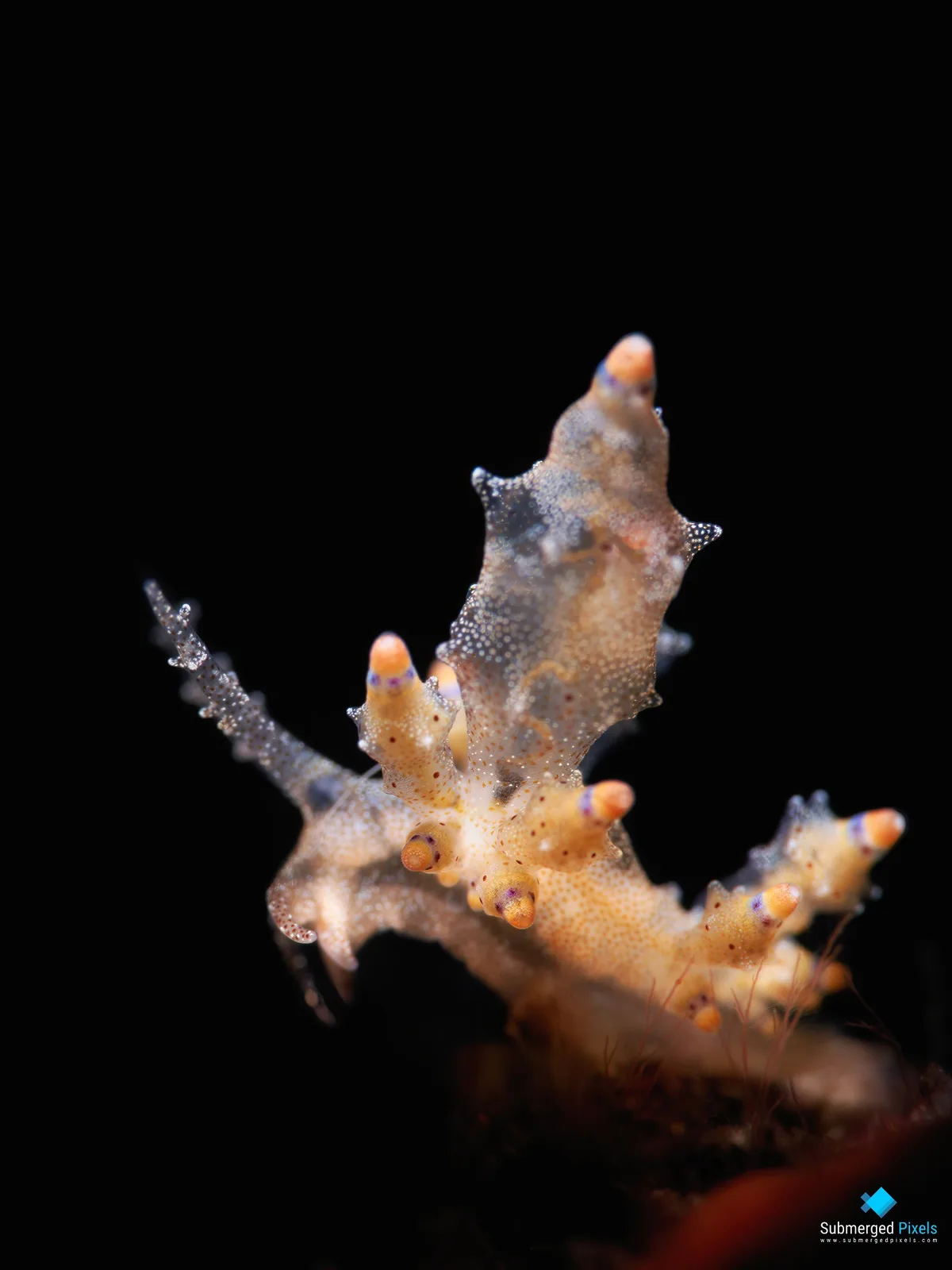
Fifteen millimeters, and look at what it is wearing.
The body is translucent and dusted with red dots. The cerata on its back each carry a blue band below the tip, and sitting on that blue band are purple spots. The rhinophores are not smooth but covered in small papillae. That is four separate decorative systems on an animal the size of a grain of rice, and it is a reasonable question what any of it is for at a scale where almost no predator can resolve the pattern at all.
The likeliest answer is that it is not decoration. Broken color on a transparent body sitting among the fine branches of a hydroid colony does not read as an outline, and an animal that cannot be seen as a shape does not need to be seen as anything.
What it does for a living is the aeolid trade. It grazes hydroids, swallows their stinging capsules without setting them off, and stores them live in the swollen tips of its cerata, so a defenseless soft animal ends up carrying its food's weapons.
A note on the name, because it has moved. Taxonomists have transferred this species out of Eubranchus into the genus Produnga, and the regional book files it under a third family again. The name here follows the book and the photographic databases, which is what you will need to search on; the identifier behind the page points at the currently accepted taxon.
- cerata banded blue below the tip, with purple spots sitting on the blue
- translucent body scattered with red dots
- rhinophores covered in small papillae rather than smooth
- fifteen millimeters, always on a hydroid colony