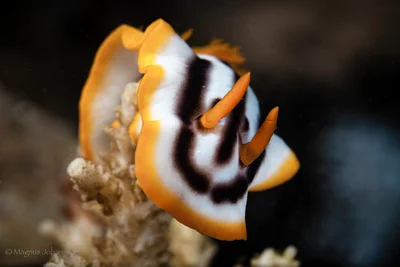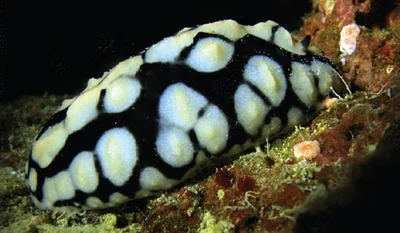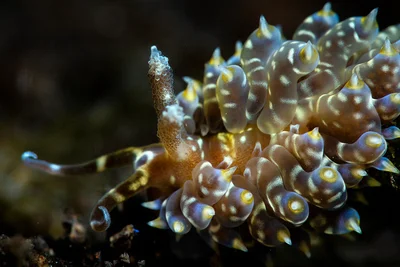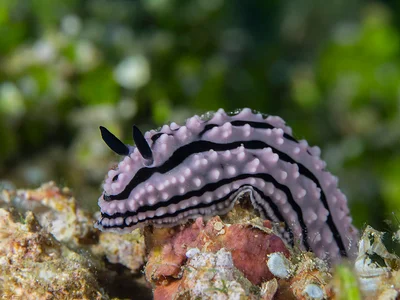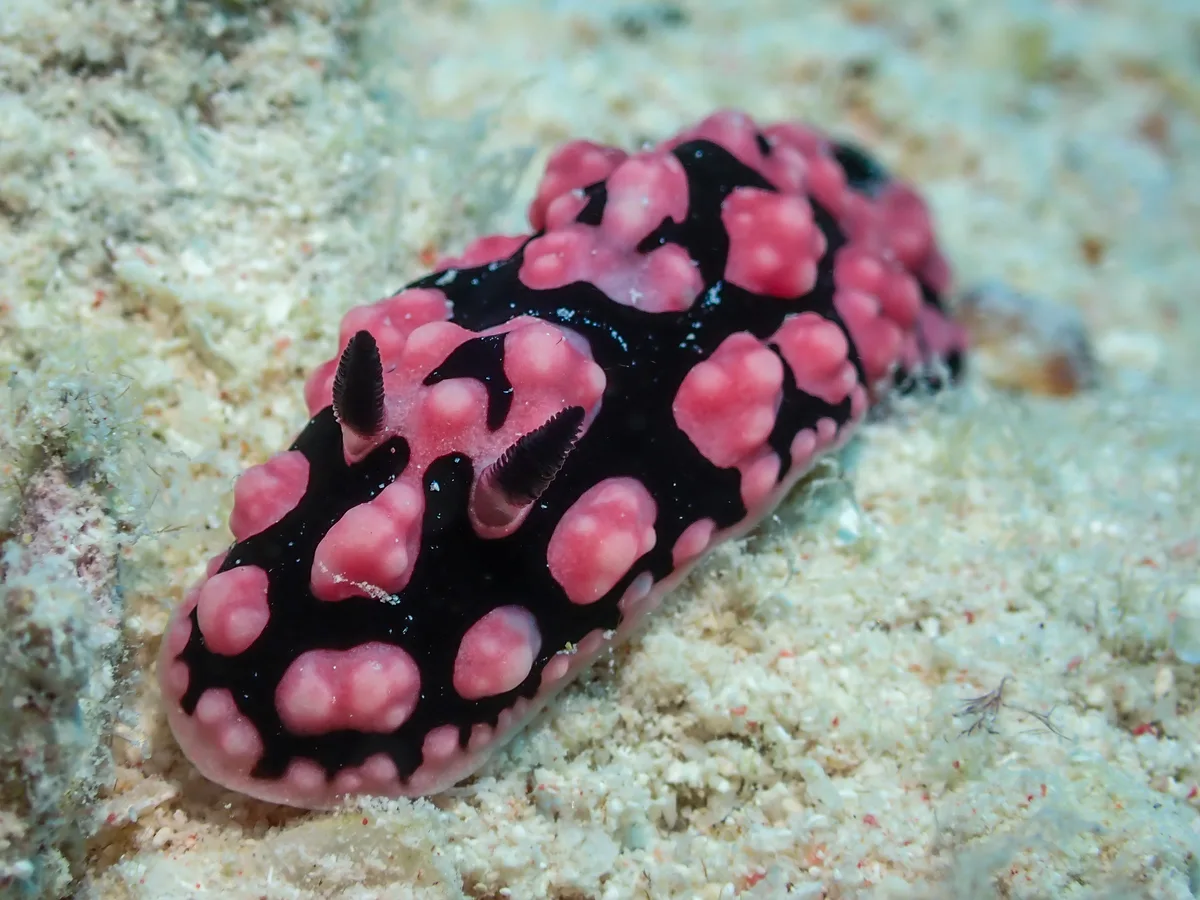
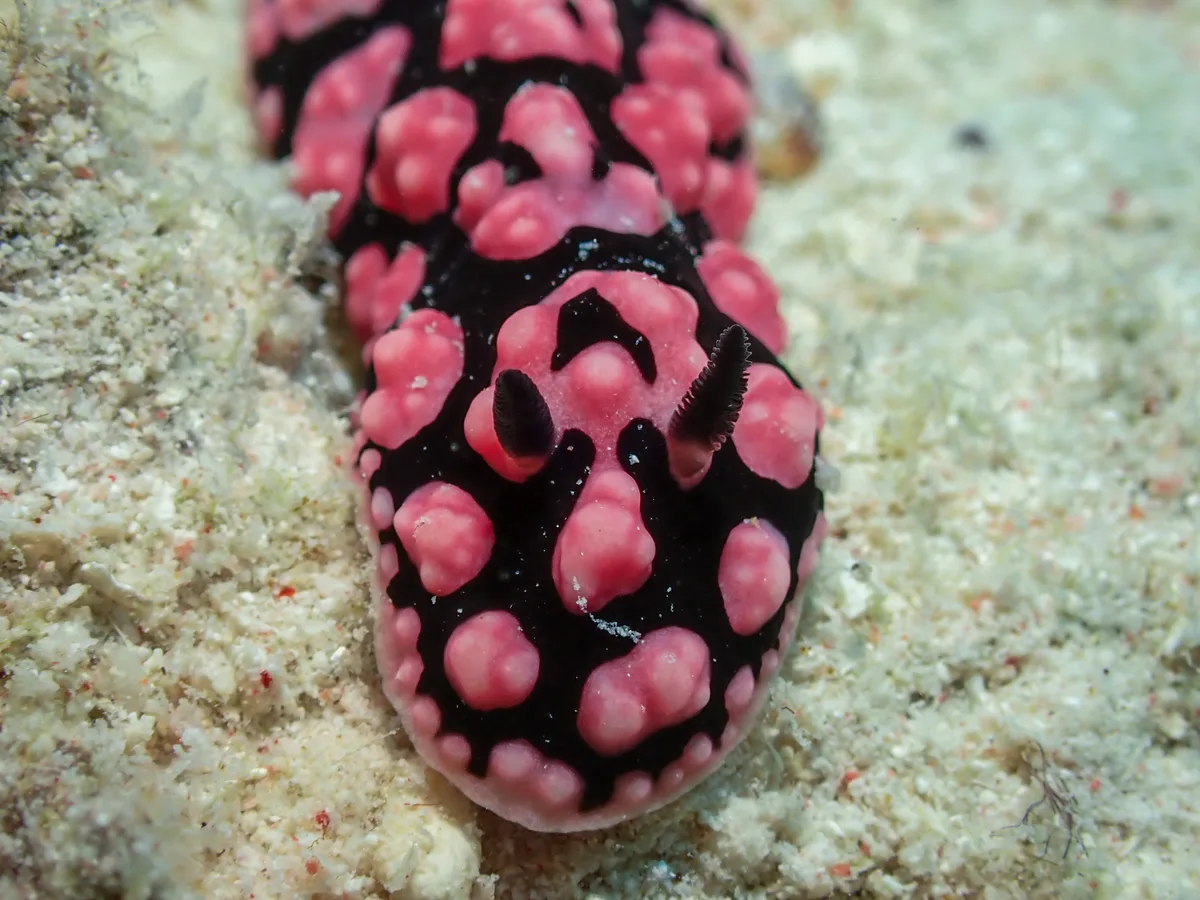
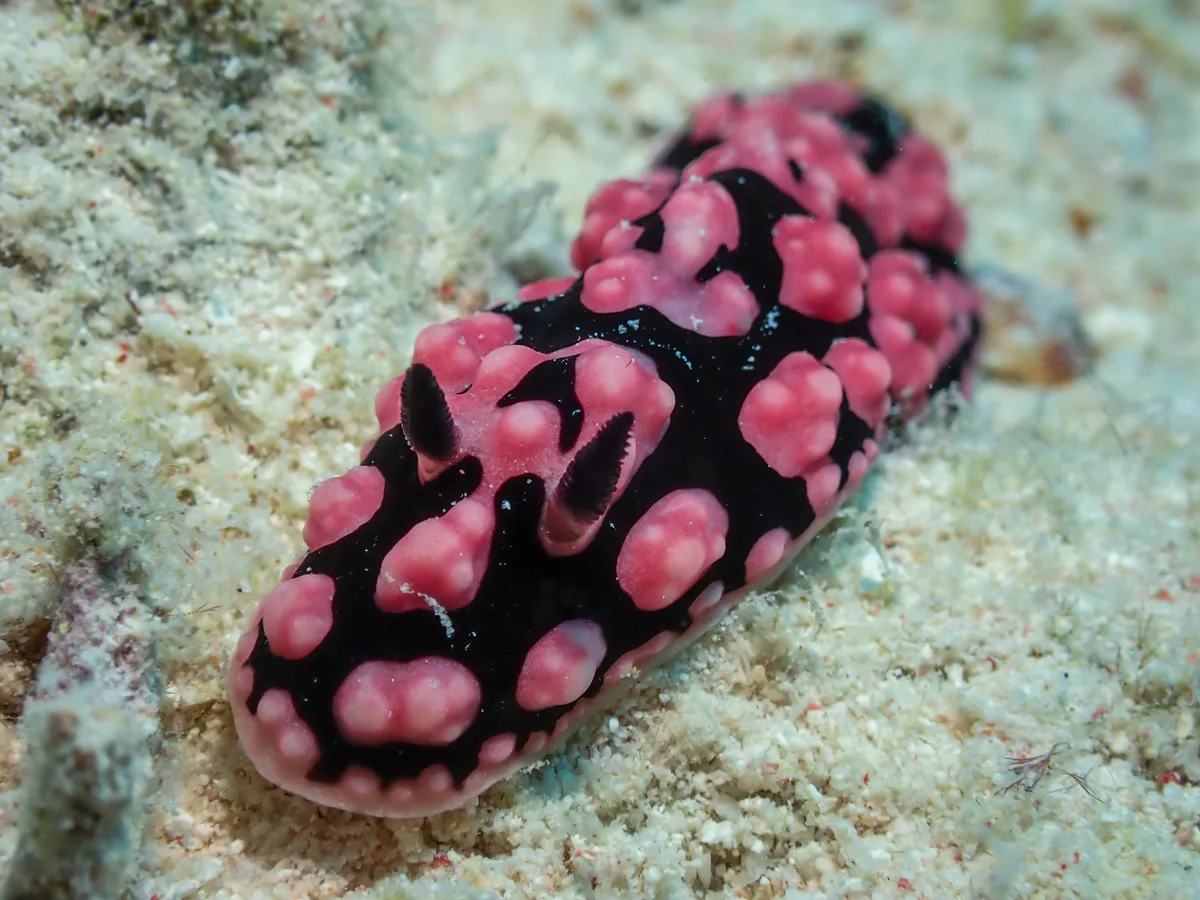
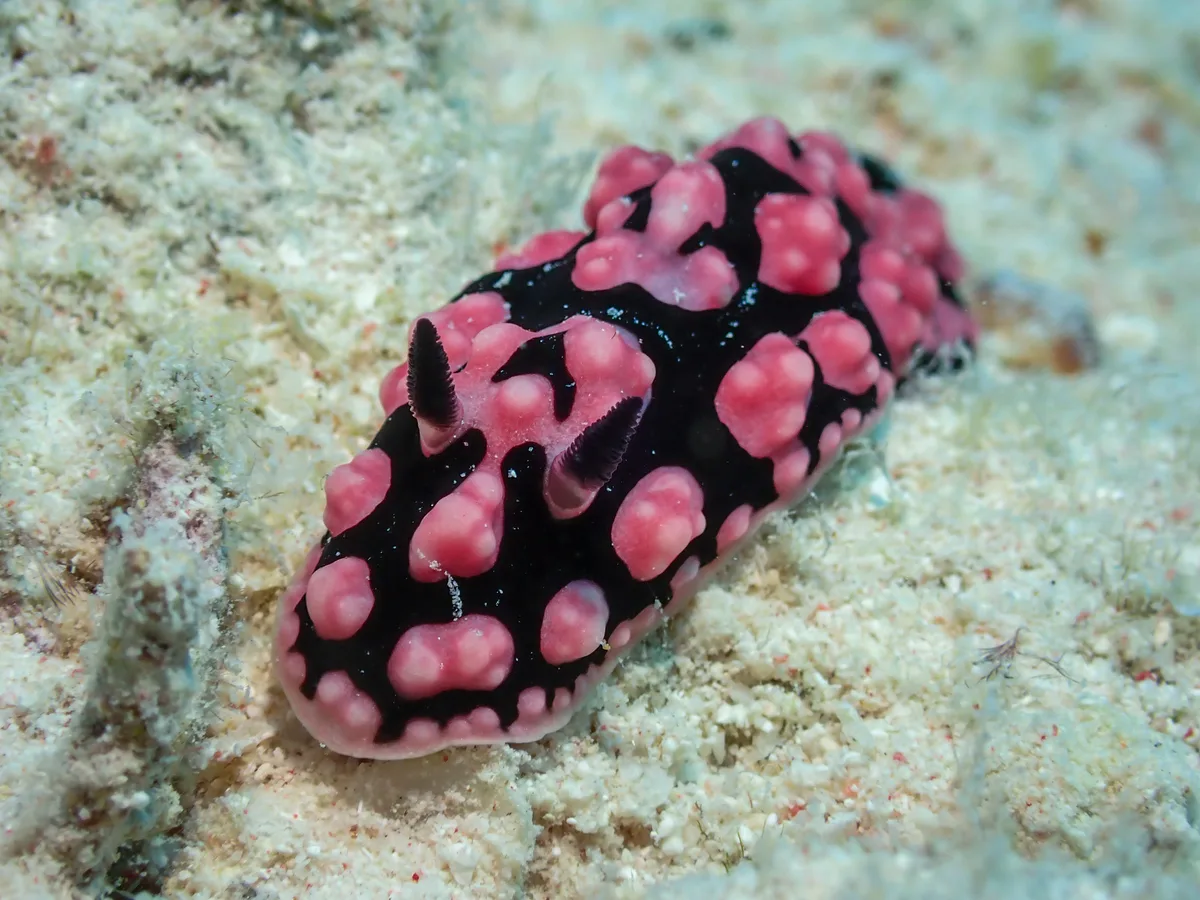
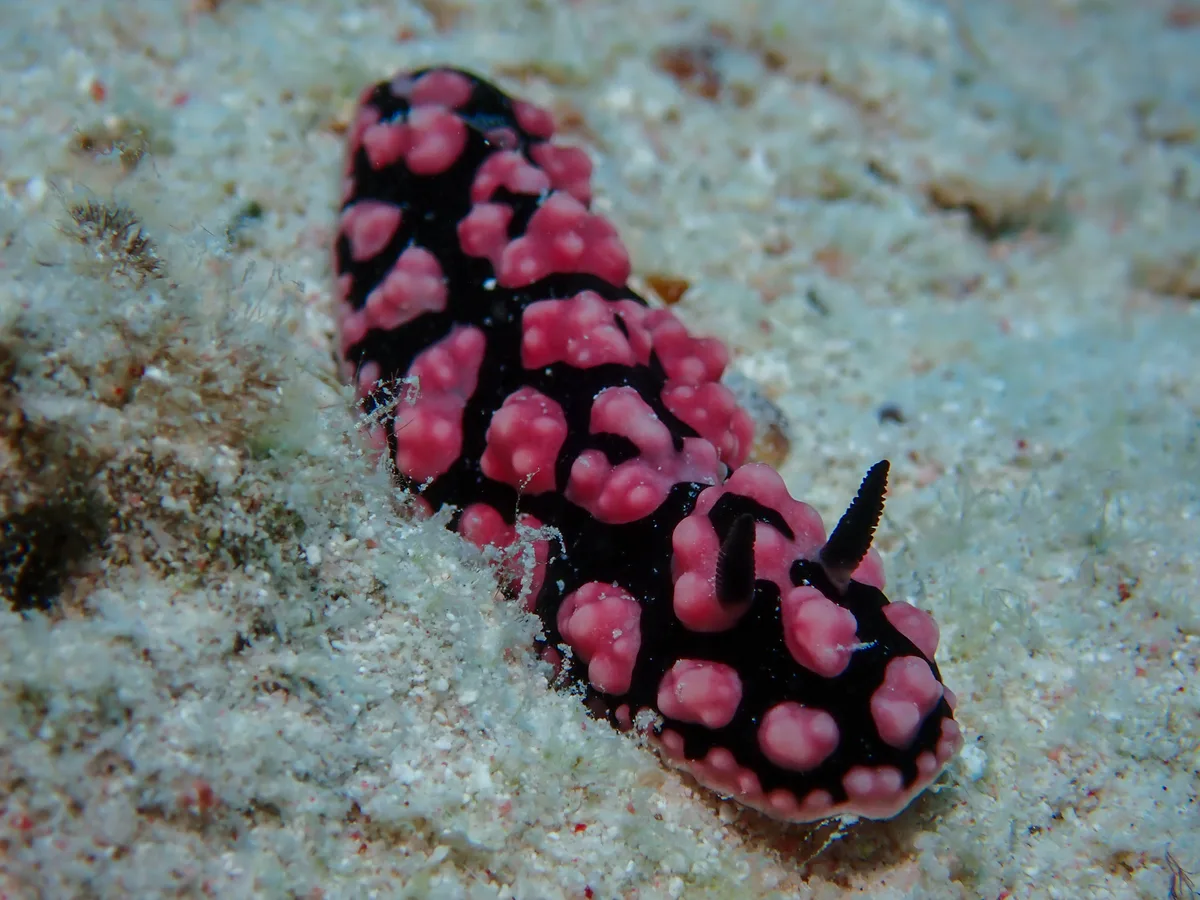
A black slug covered in clusters of pink knobs, six centimeters (2.4 in), moving slowly over rubble in the open. It looks nothing like the soft, frilly nudibranchs beside it, and it is built on a different plan.
There are no gills on its back. The phyllidiids gave them up and breathe through folds tucked under the mantle edge instead, which leaves the whole upper surface free to be armor - hard, rubbery and studded with tubercles.
What fills those tubercles is the point. This animal eats sponges and stores their sesquiterpenes at the surface, and it will release them into the water when it is disturbed. In the open sea that is nothing; in a bucket or a tank it is lethal. Phyllidiids are notorious among aquarists for exactly this - one stressed slug can kill everything in a closed volume, itself included.
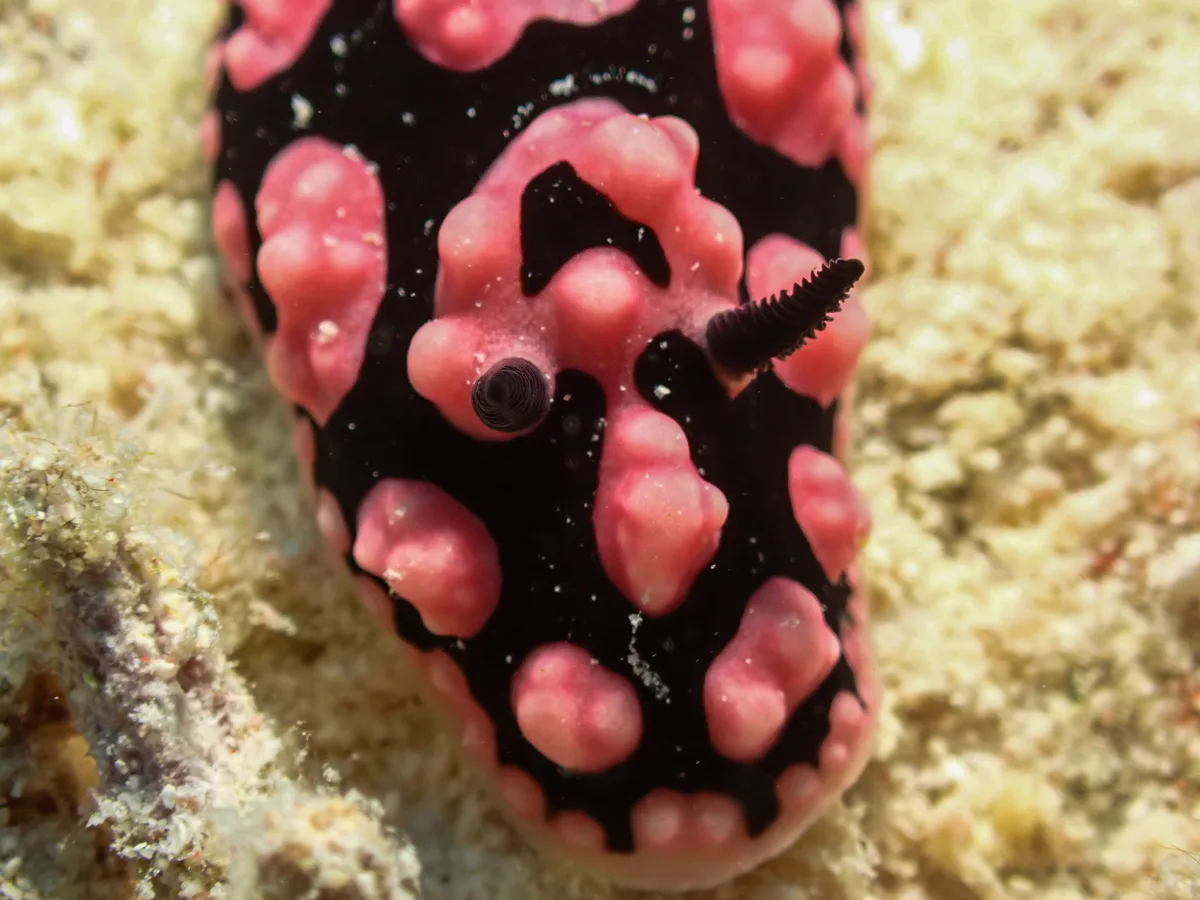
On the reef the rule is simply to look. The pattern varies enough between individuals that several species were long confused with this one, and the reliable characters are the shape of the tubercle clusters and the color of the rhinophores.
- black body covered in clusters of pink-gray tubercles
- no visible gills on the back at all
- hard, rubbery texture, unlike the soft chromodorids
- length up to 6 cm