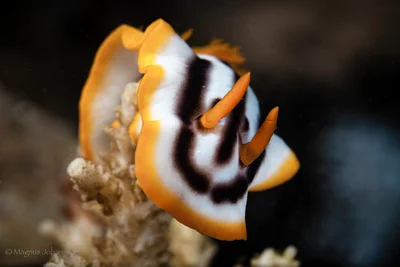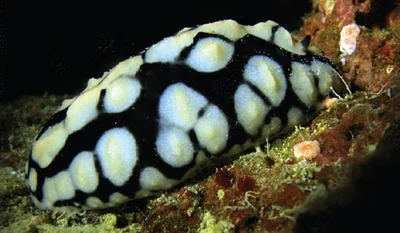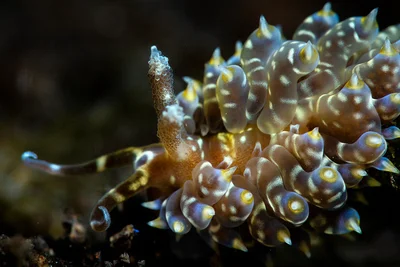
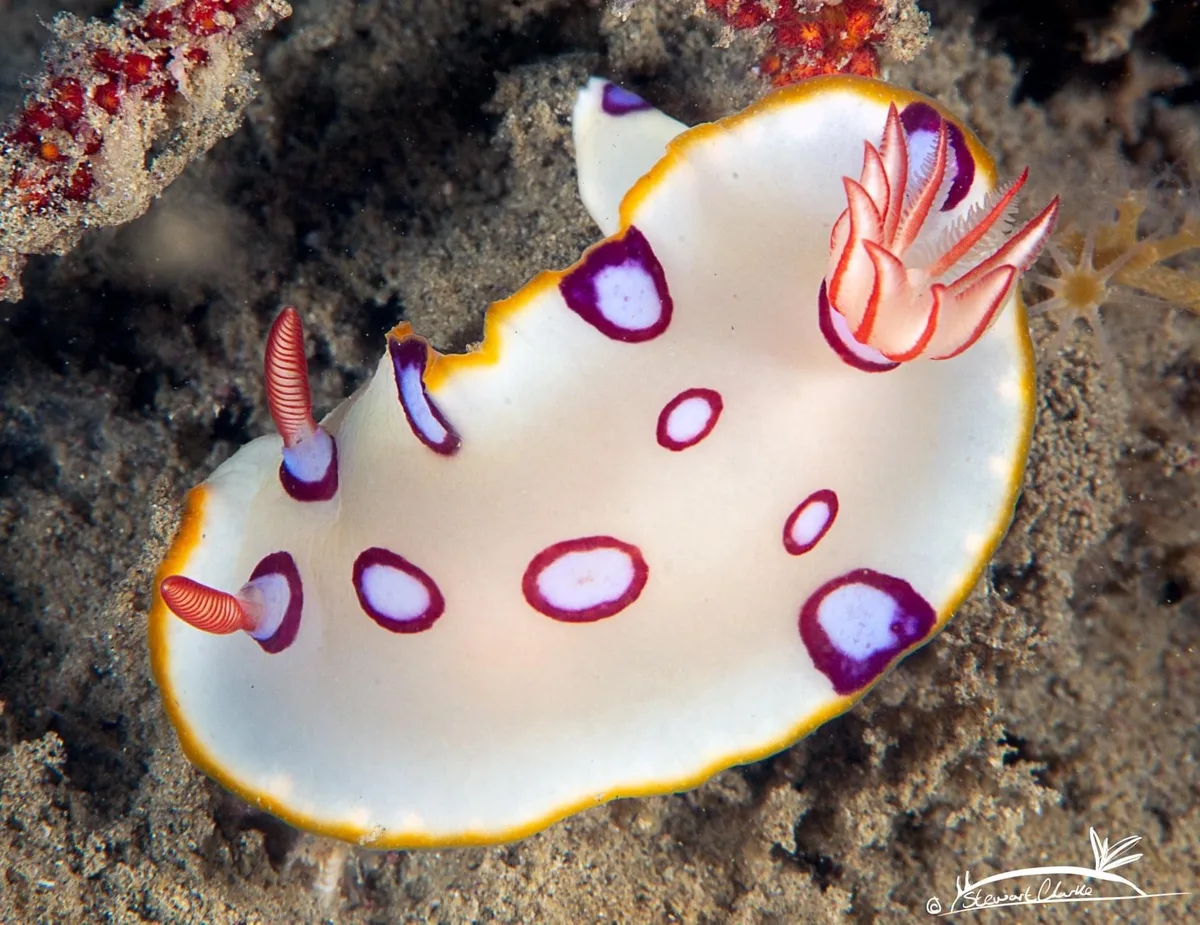
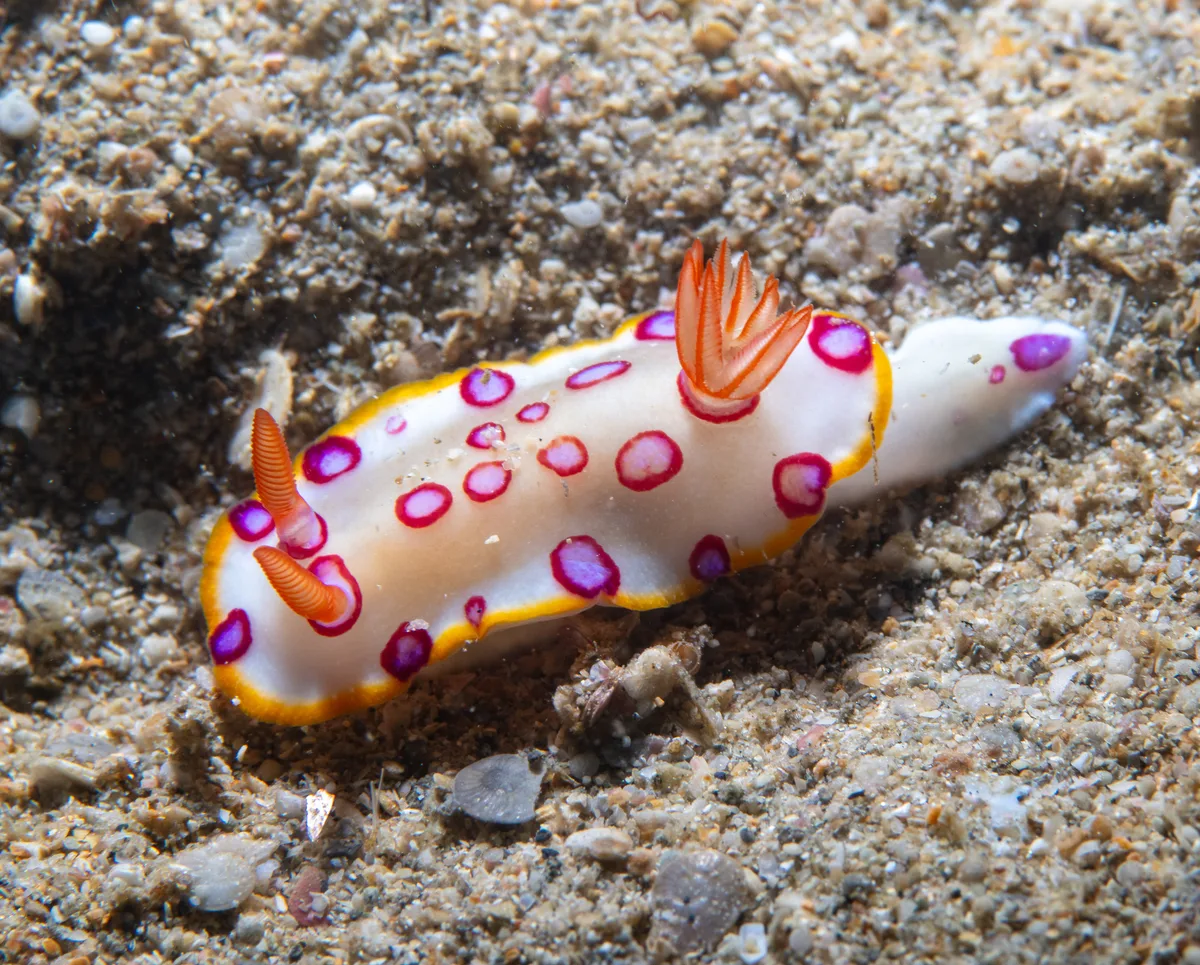
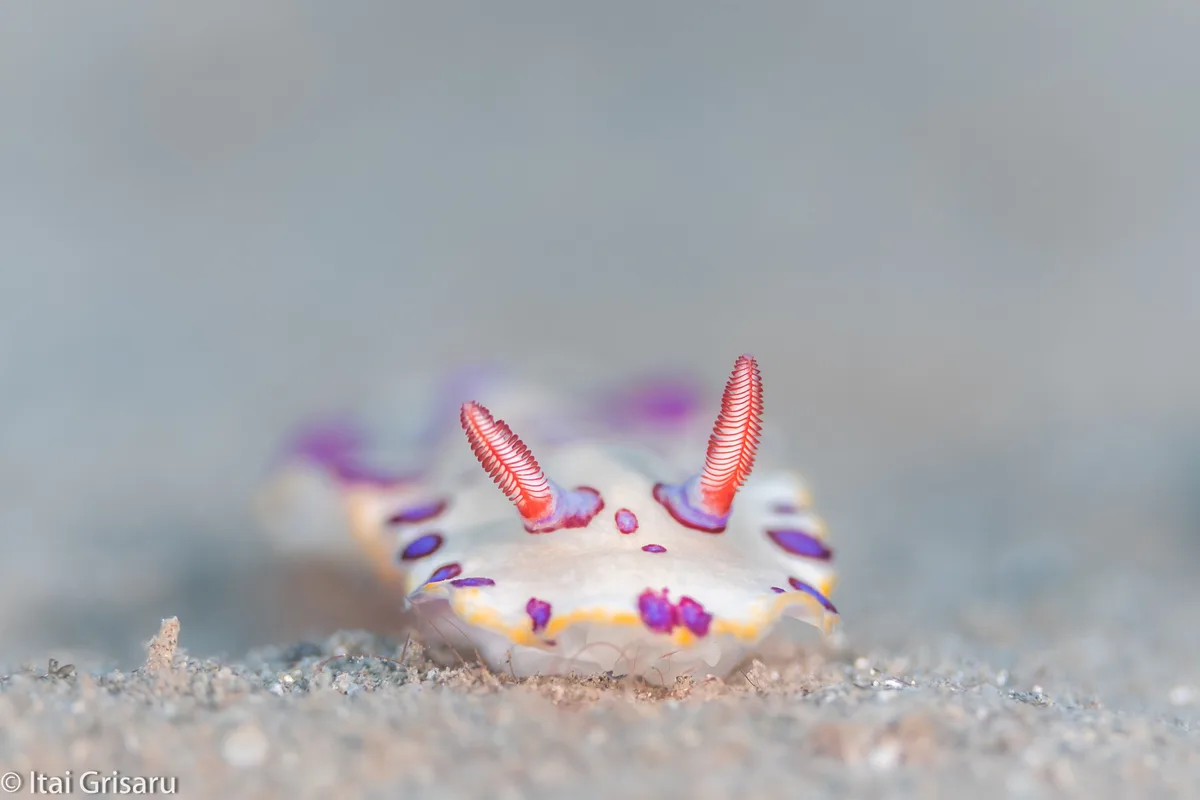
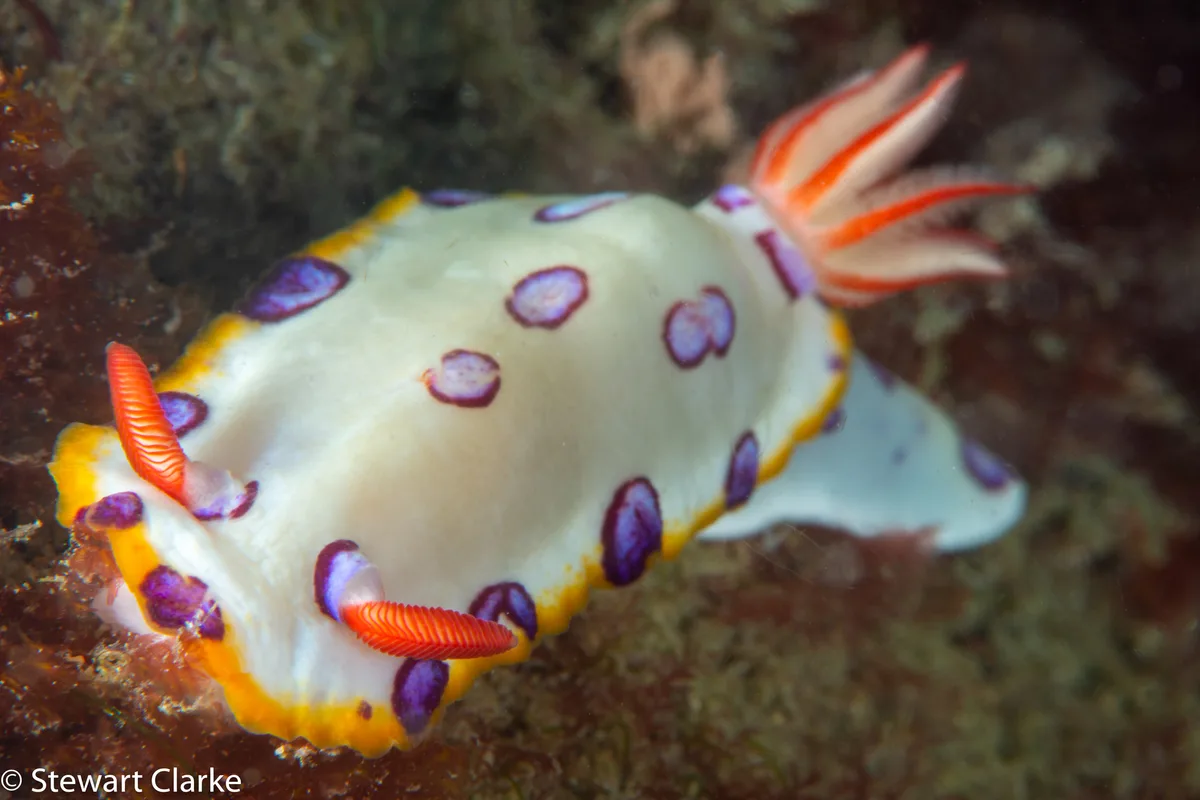
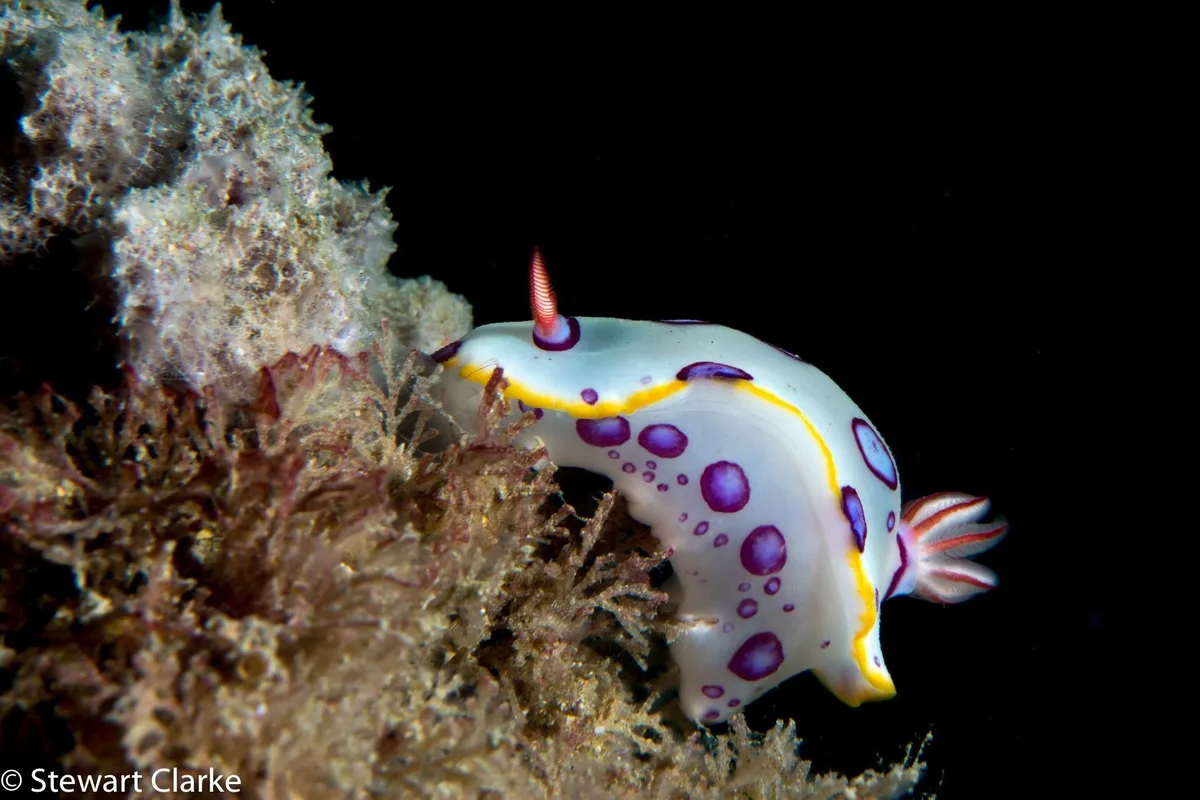
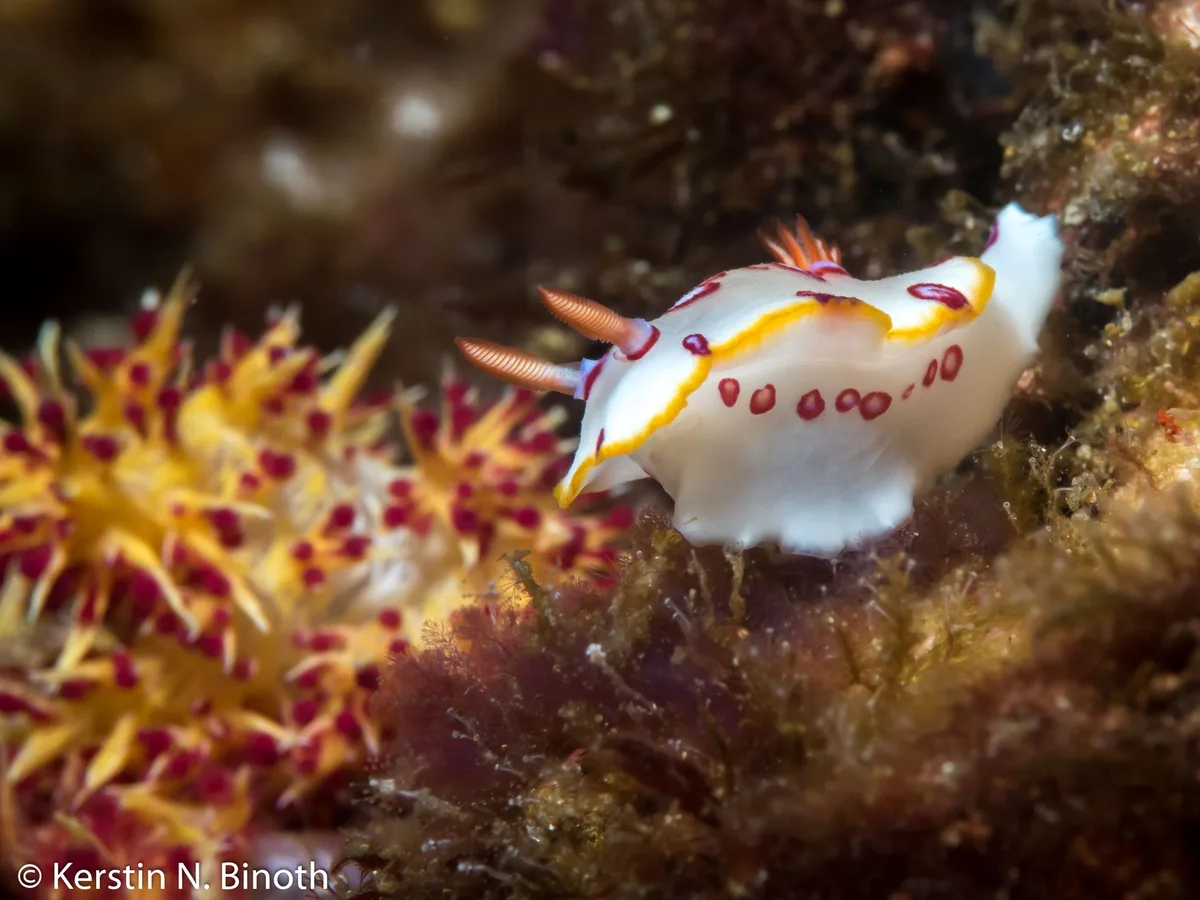
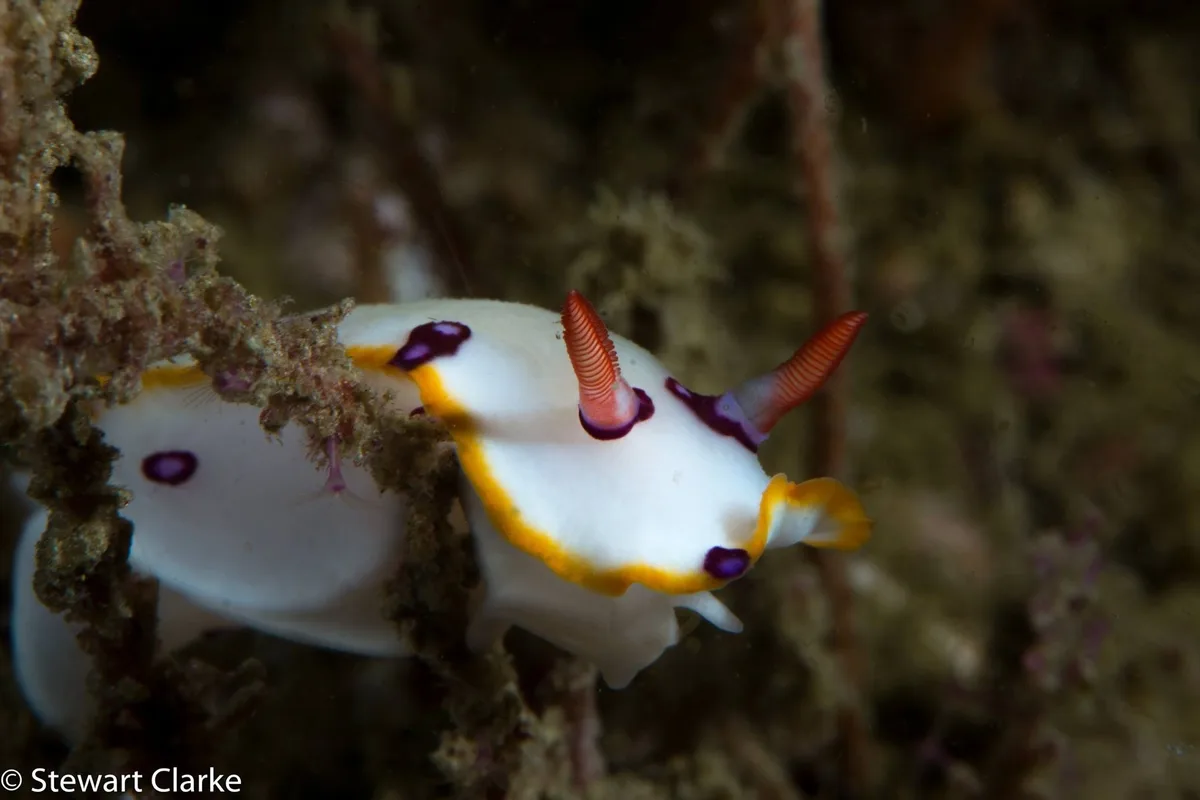
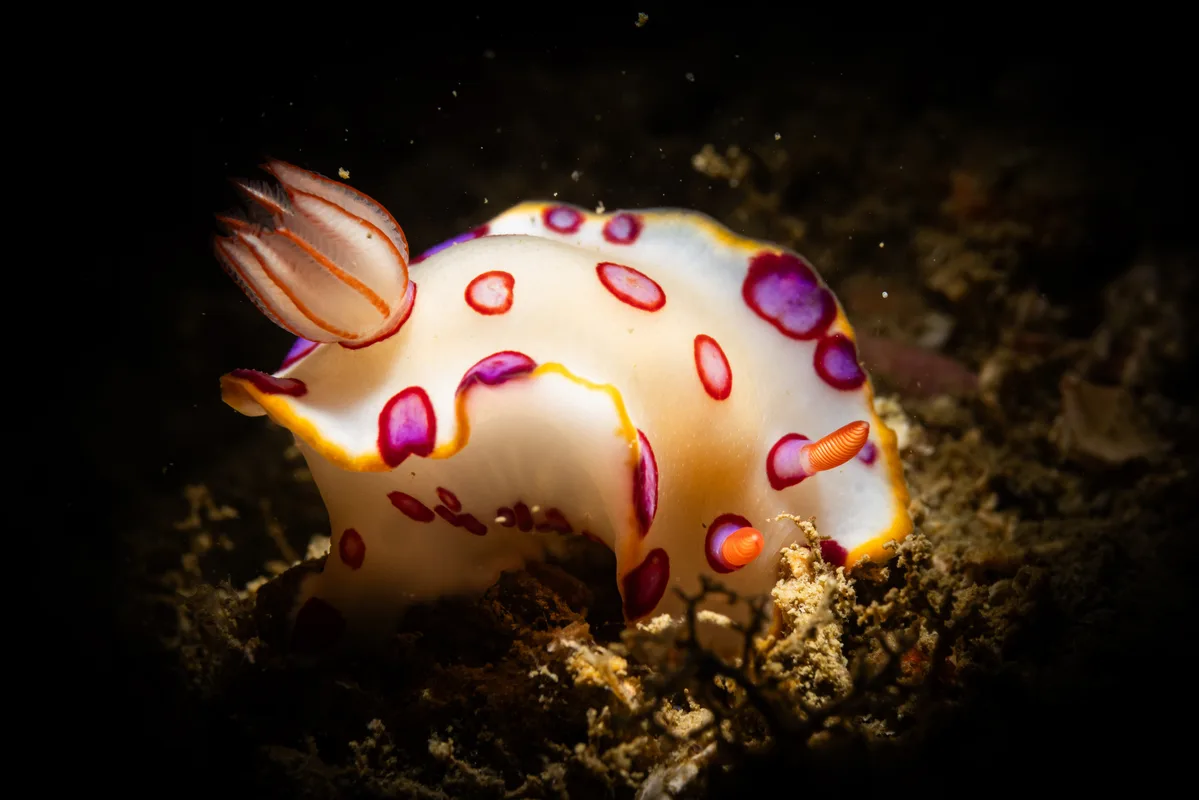
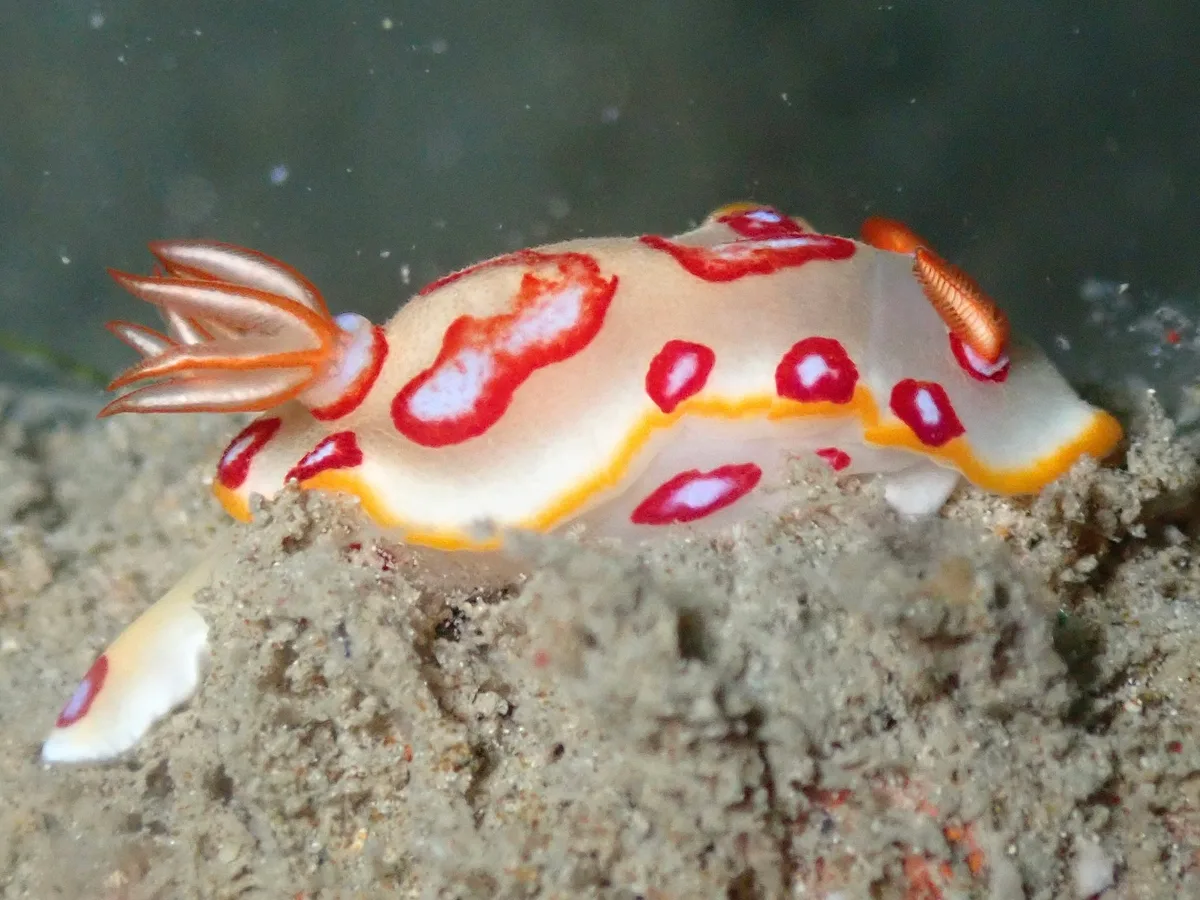
A slug this size crawling across open reef in the middle of the day is making a statement, and the statement is backed up along the edge of the mantle.
Hypselodoris species eat sponges and keep the sponges' chemical defenses instead of breaking them down. What makes the genus worth understanding is where the stolen material ends up. It is not spread evenly through the animal. It is concentrated into glands packed along the outer rim of the mantle, right at the margin, so the highest dose sits exactly in the part a fish would take first. A slug that is attacked arches that rim up toward the attacker rather than pulling away from it, which looks like the wrong instinct and is not.
That arrangement is the reason the whole family can behave as it does: crawl slowly, in daylight, in the open, on top of the sponge rather than under the ledge, painted in colors that cannot be missed. The color is a label on a container, and the container is the mantle edge.
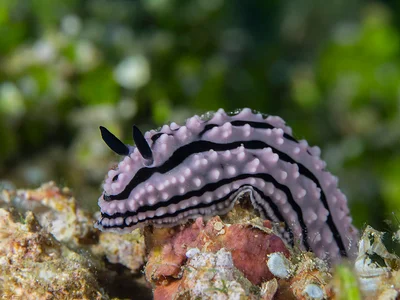
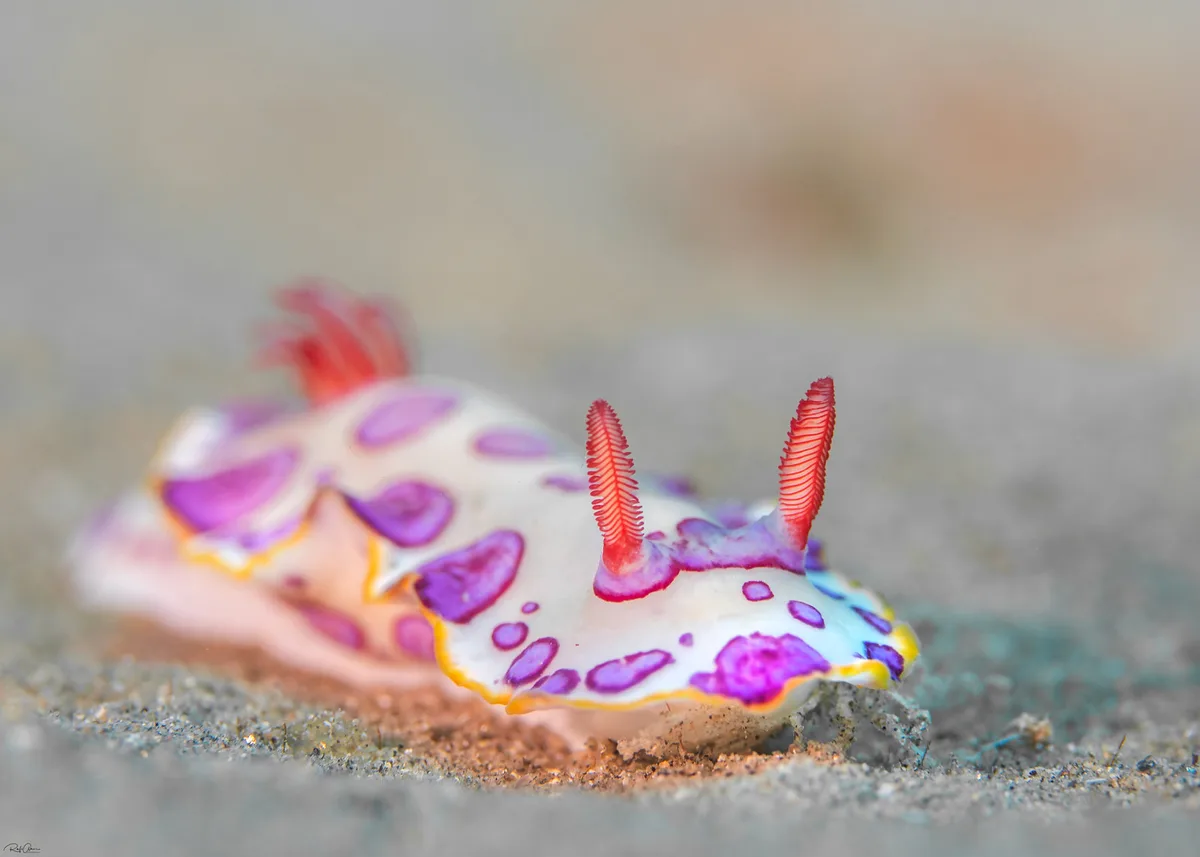
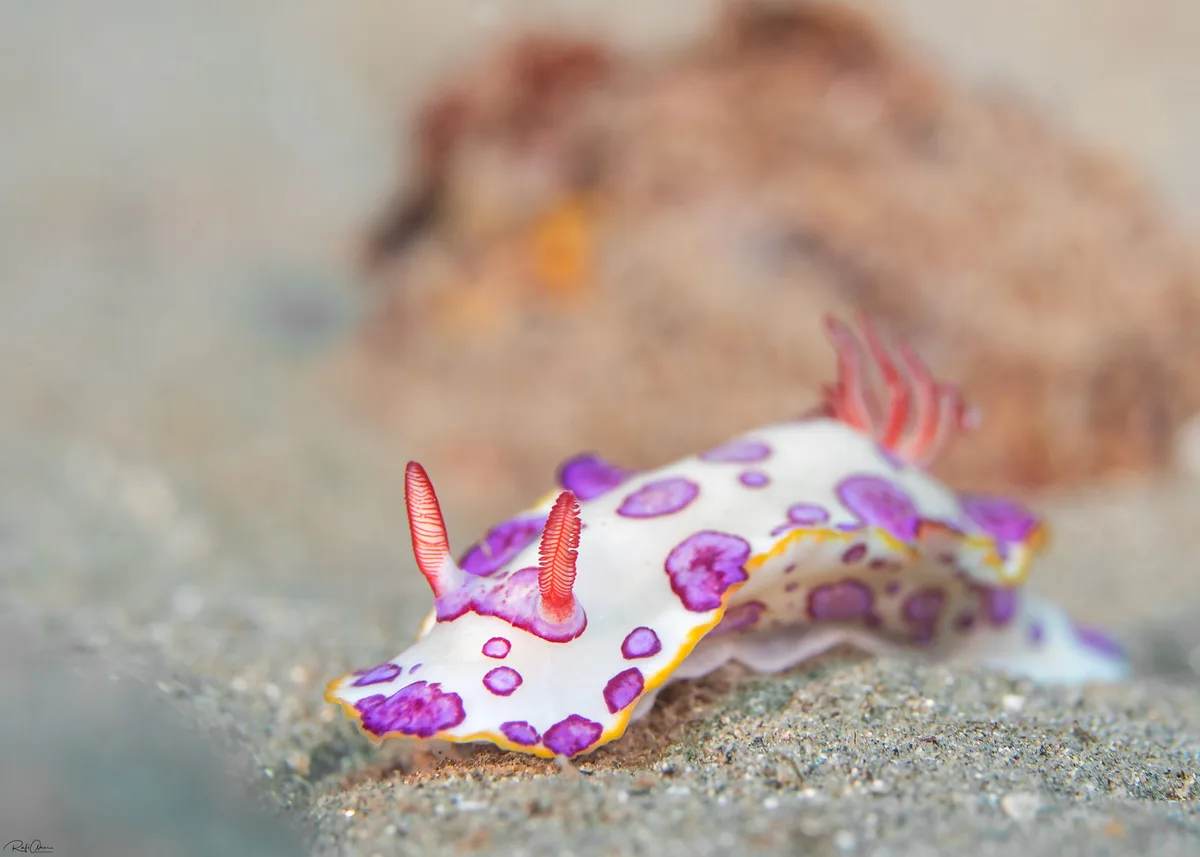
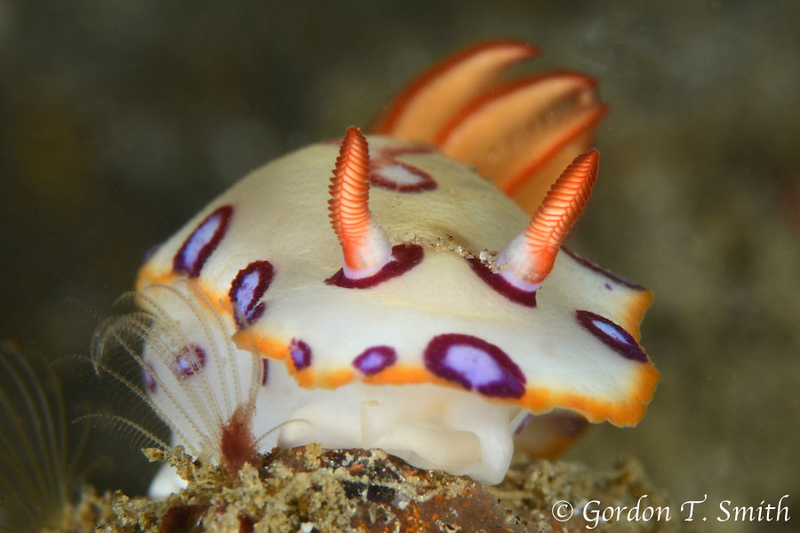
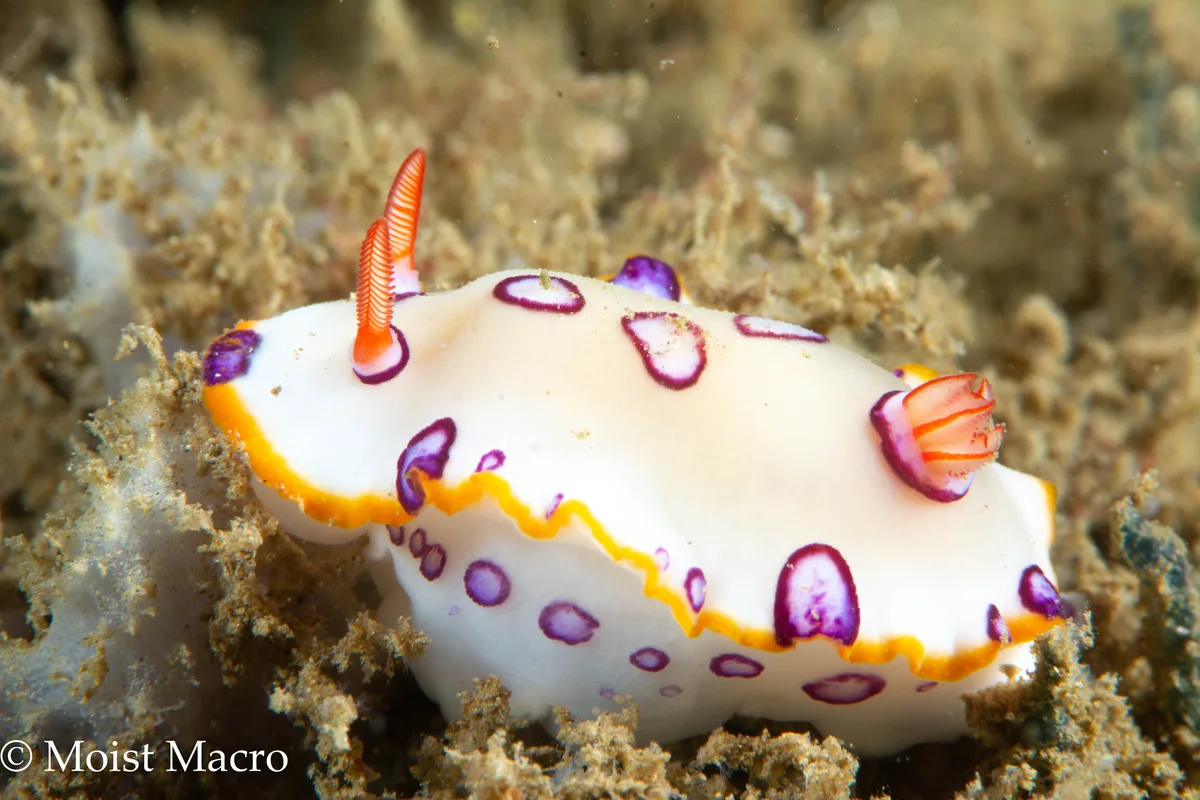
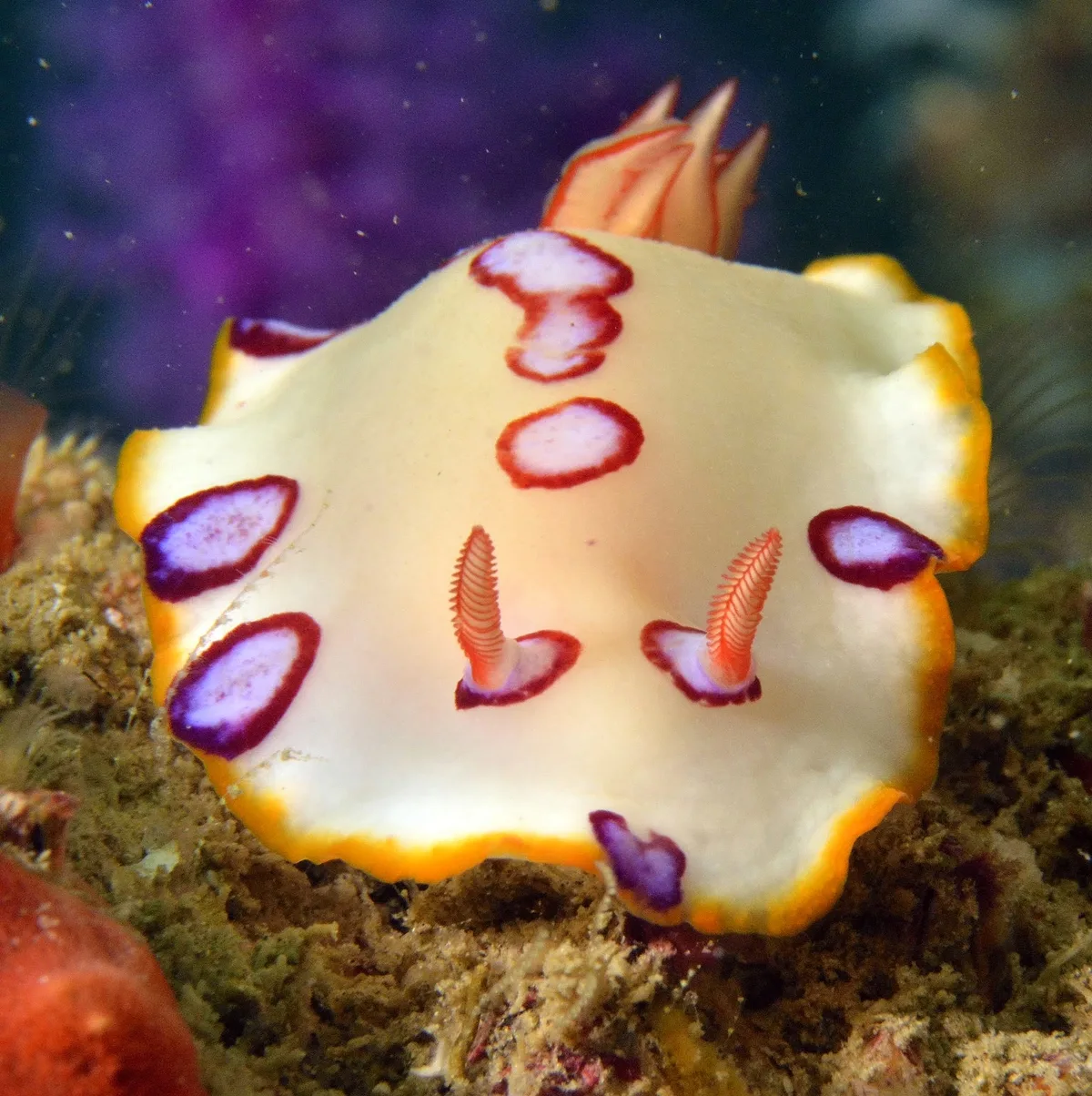
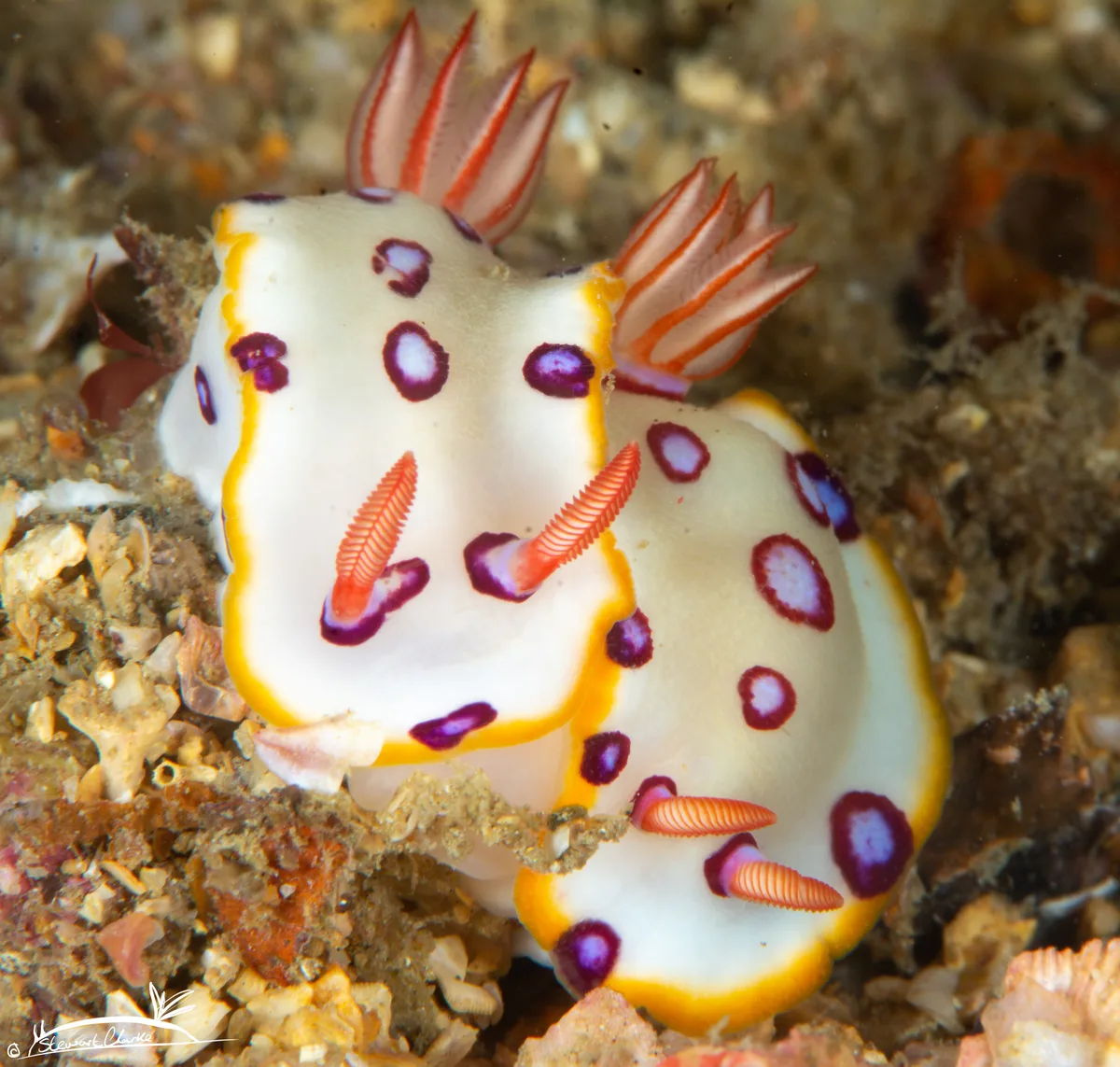
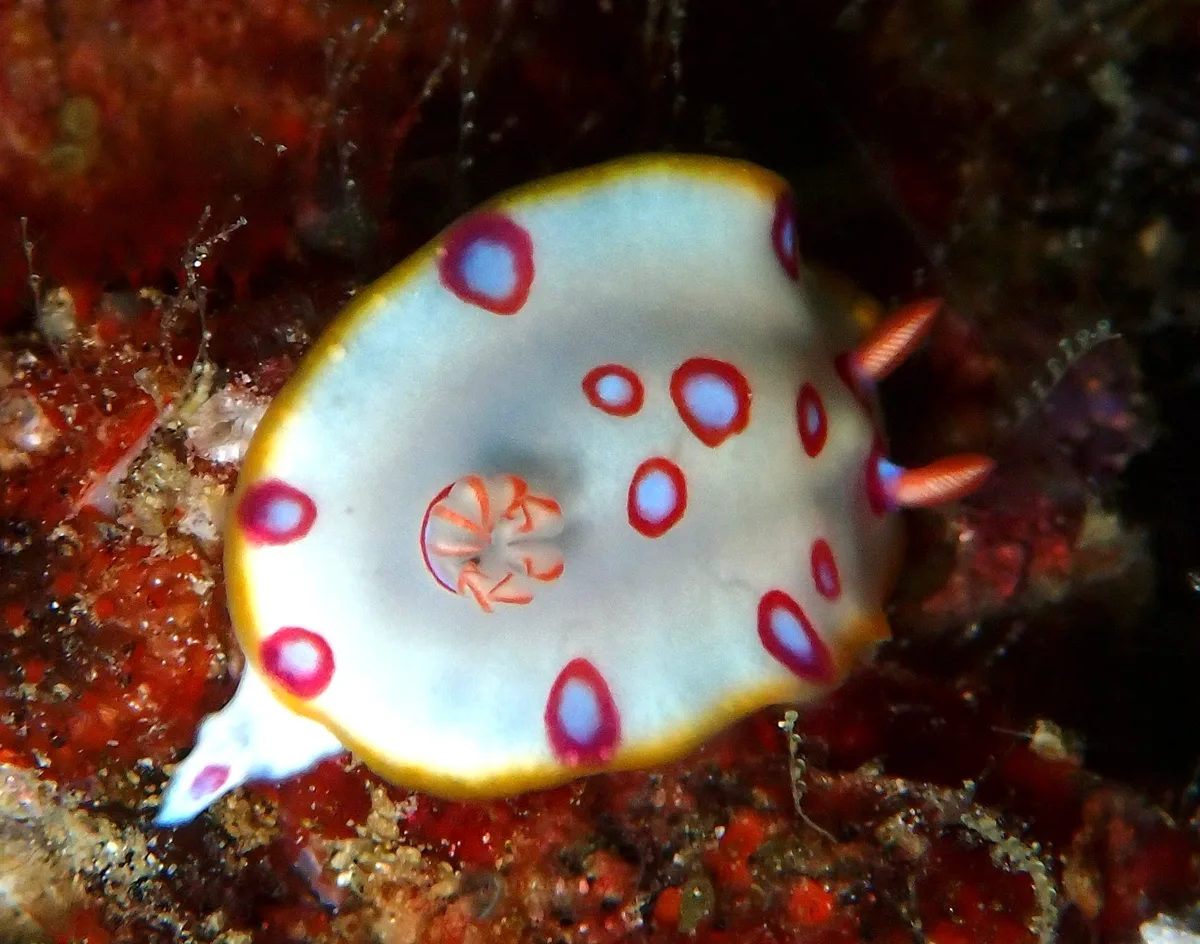
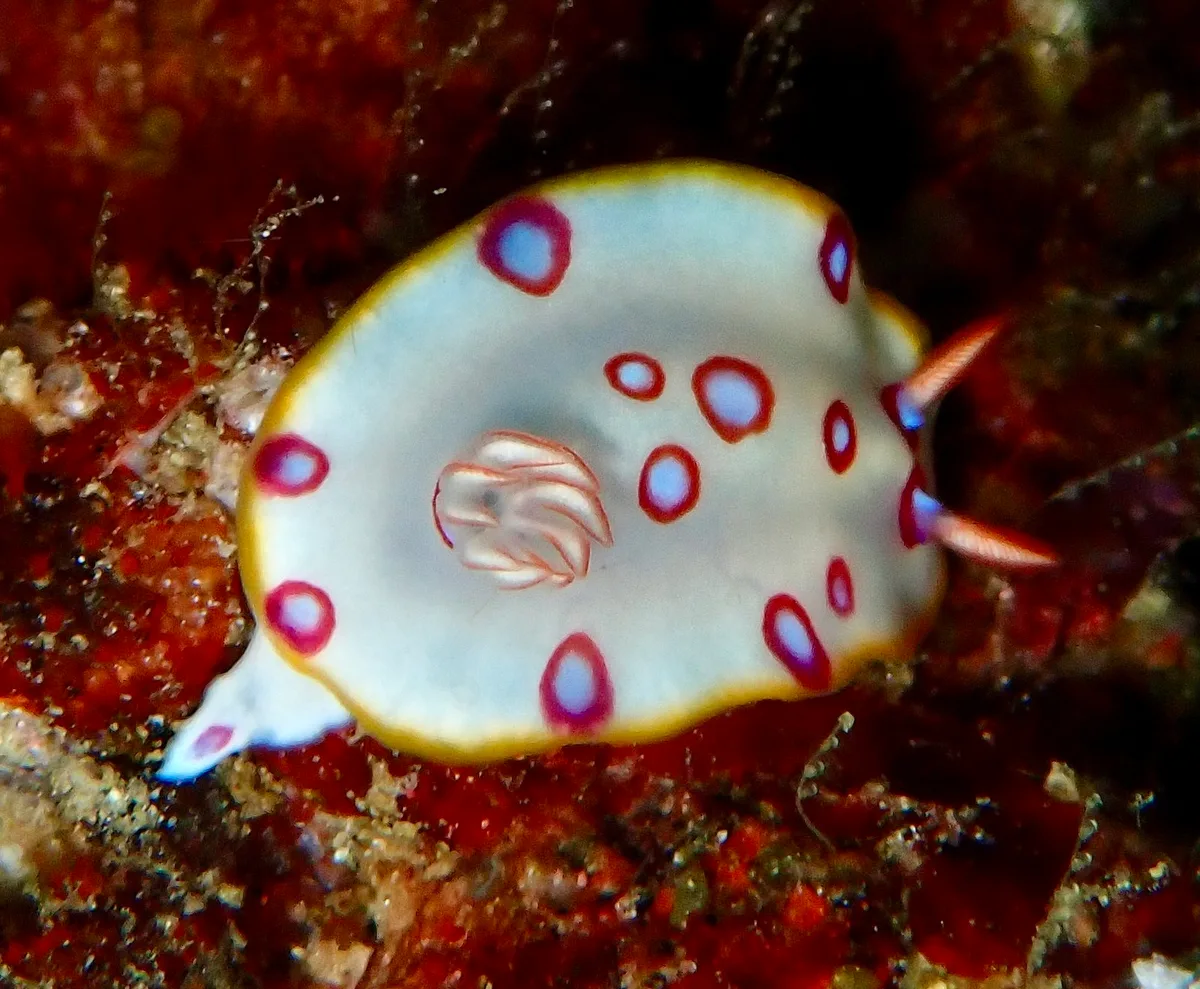
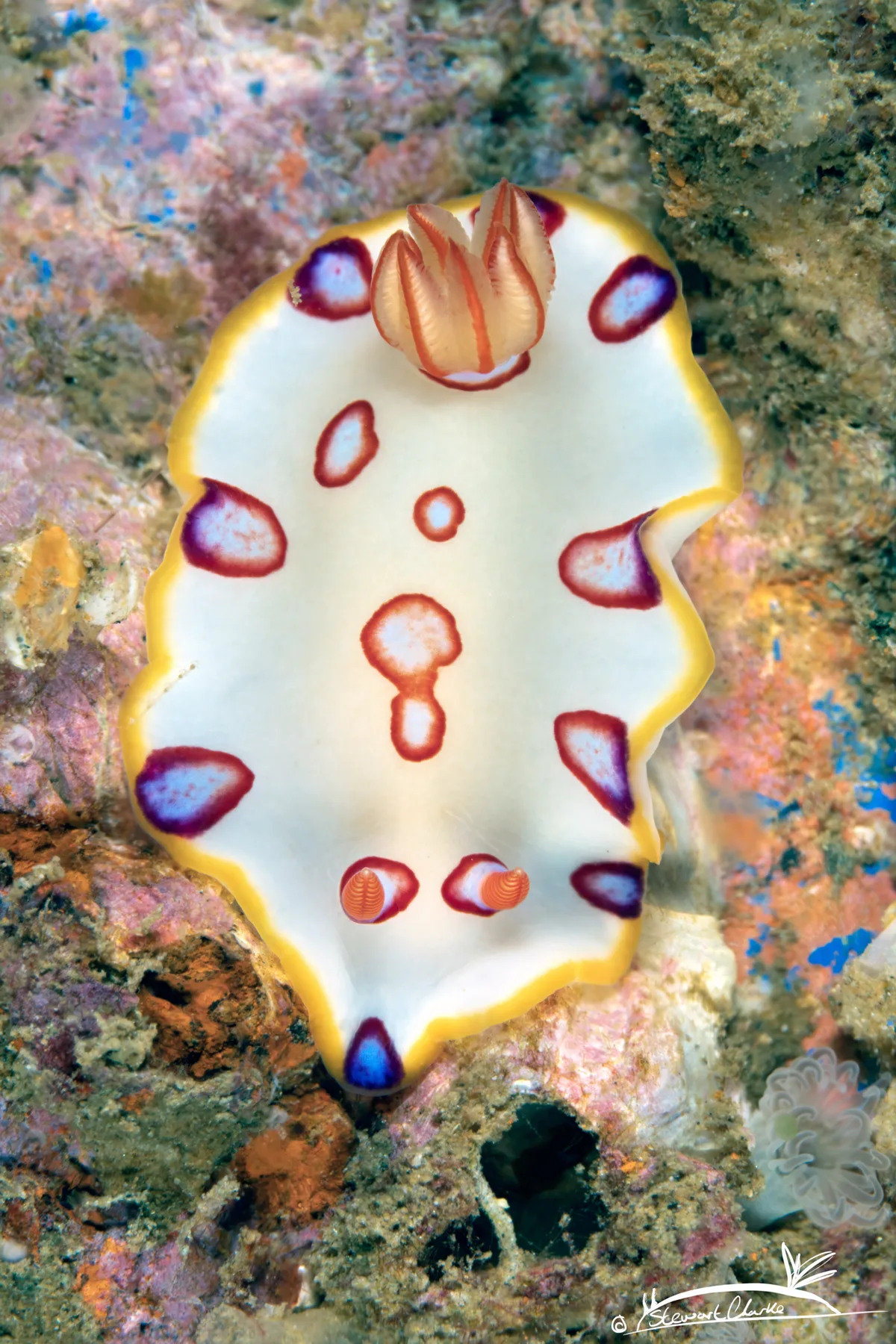
This species is one of the larger ones, up to five centimeters (2 in), pale with big rounded purplish blotches spaced well apart. That spacing is the identification. Several of its relatives here are also spotted, but they carry small crowded dots, fine lines or rings with the body color showing through the middle. These are solid, round and separate.
It is an 🌊 Indian Ocean animal that reaches east to Bali (🇮🇩 Indonesia), and in this sea it turns up on sponge-covered rubble and reef where the current runs.
- large rounded purplish spots on a pale body, well separated rather than crowded
- spots are round blotches, not rings and not lines
- five centimeters, large for the genus
- gills and rhinophores contrastingly colored, held up while crawling